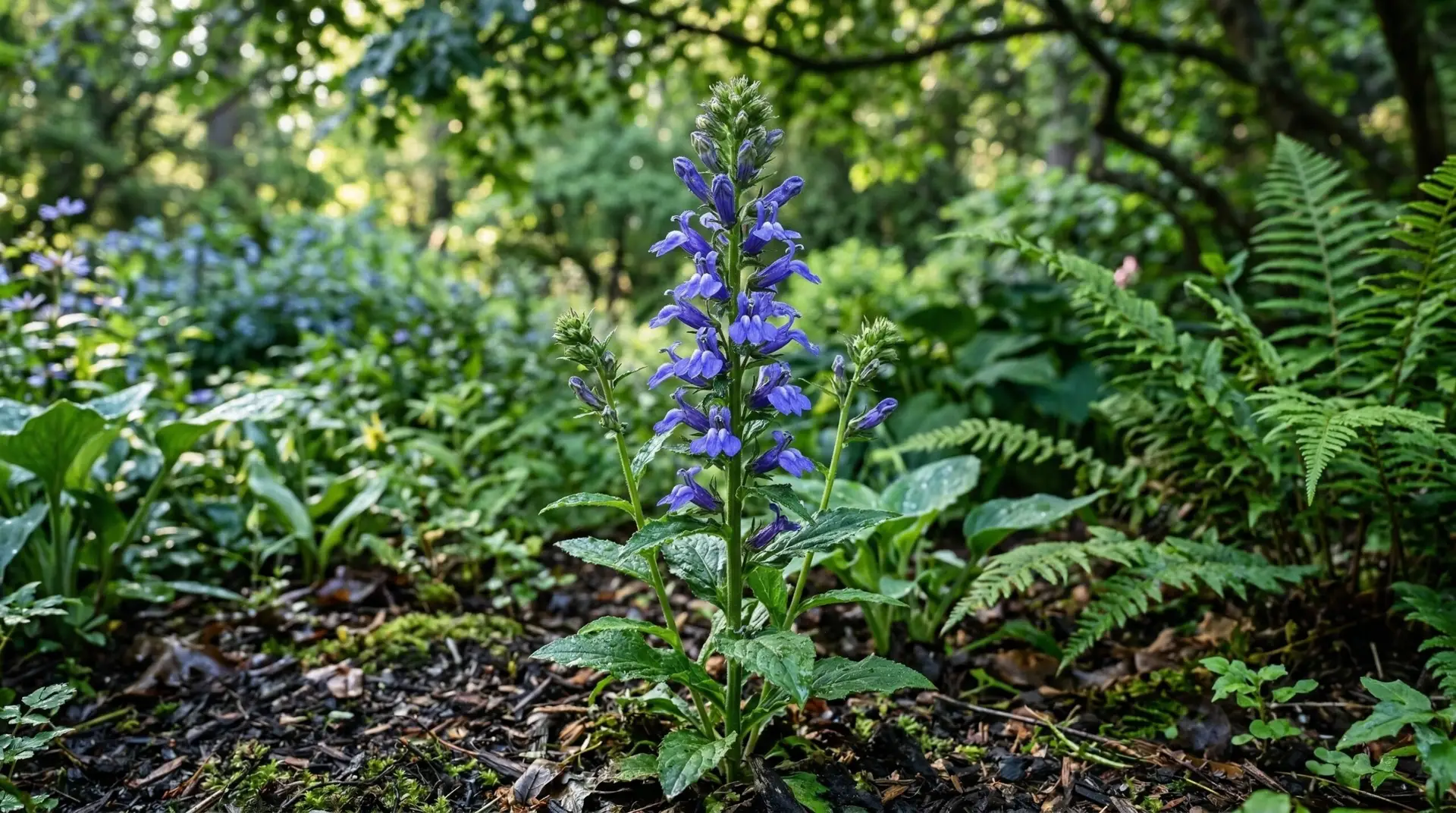
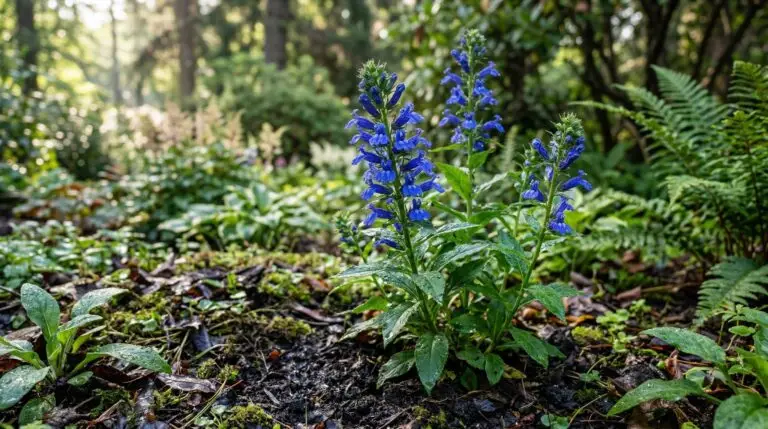
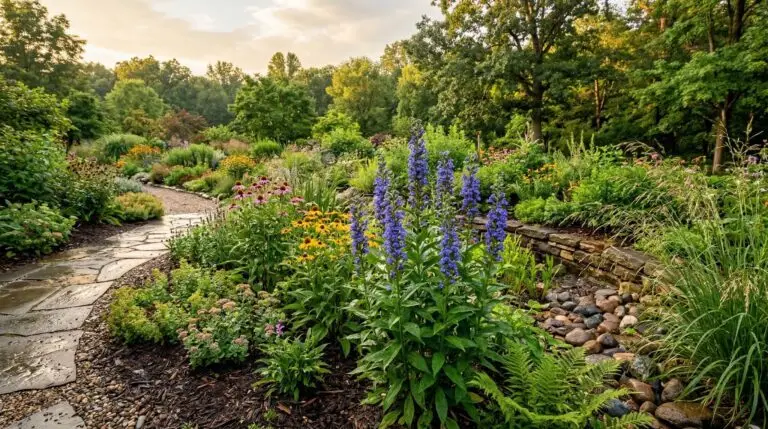
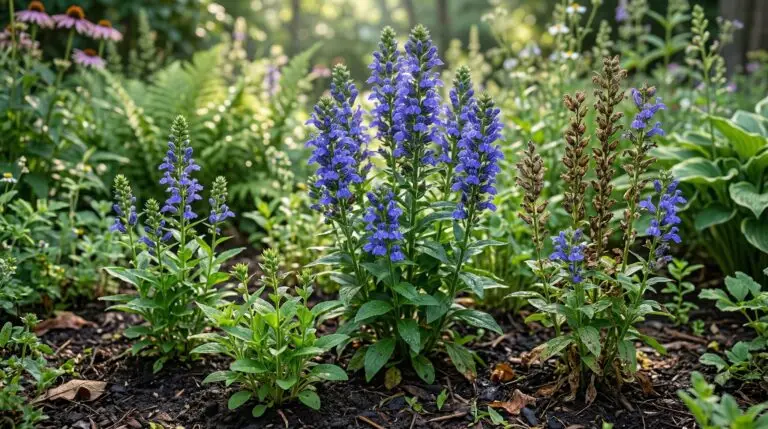
Growing conditions dictate everything in a garden. A plant that thrives in the acidic bogs of Maine will struggle in the alkaline clays of Texas. Great blue lobelia is a perfect example of a plant that requires a specific set of environmental conditions to succeed. It demands consistent moisture and protection from harsh afternoon sun, making it a reliable choice for shady wet gardens where most blue flowers refuse to grow. Finding true blue flowers for shade is notoriously difficult because most shade plants lean toward white or pale pink to attract low-light pollinators. When you provide the right local conditions, great blue lobelia produces tall spikes of clear blue flowers in late summer. Understanding how your specific climate and soil interact with this plant is the only way to ensure it returns year after year.
Contents 3 sections
Adapting to the heavy soils of the Southeast and Mid-Atlantic
In the humid Southeast and Mid-Atlantic regions, gardeners frequently battle dense clay soils and oppressive summer heat. Great blue lobelia actually performs quite well in these heavy soils because clay holds moisture longer than sand or loam. The primary challenge in Zones 7 and 8 is managing the intense summer temperatures that can scorch the foliage. You must plant great blue lobelia in areas that receive morning sun and deep afternoon shade to prevent the leaves from crisping. While the high humidity of these regions mimics the plant’s natural habitat along stream banks, periods of drought are common in late summer. Gardeners in these zones need to monitor soil moisture closely and water deeply when rain is scarce. If the clay soil completely dries out and cracks, the shallow root system of the lobelia will suffer irreversible damage.
Moving into the cooler climates of the Northeast and Midwest, the rules for growing great blue lobelia shift considerably. In Zones 4 and 5, the summer sun is far less intense, allowing this plant to tolerate much more light as long as the ground remains wet. Gardeners in these northern regions can successfully grow blue lobelia in full sun if it is planted in a dedicated bog garden or a naturally low-lying depression that collects rainwater. The winter cold in these zones poses no threat, as the plant goes completely dormant and handles freezing temperatures with ease. This makes it an excellent late-season successor to spring ephemerals like Virginia bluebells that fade away as the summer progresses. A thick layer of shredded leaf mulch over the crown will help regulate soil temperature swings during the erratic freeze and thaw cycles of early spring.
Overcoming challenges in the arid West and Southwest
The dry Mountain West and Southwest present the most hostile environments for growing moisture-loving woodland plants. In these regions, the combination of low humidity, alkaline soil, and relentless sun means great blue lobelia requires significant intervention to survive. The native soils across much of the Southwest have a high pH that restricts the plant’s ability to absorb nutrients. You will need to amend the planting area with elemental sulfur to lower the pH closer to the slightly acidic range this plant prefers. Creating a suitable microclimate is absolutely necessary for success in these arid zones. Planting on the north side of a building or behind a dense windbreak protects the lobelia from drying winds and harsh afternoon light. You must also commit to regular, deep irrigation, as the natural rainfall in these areas is entirely insufficient to support a plant adapted to eastern stream banks.
Gardeners in dry climates often use sunken beds or lined swales to capture and hold whatever moisture is available. By digging a shallow trench and incorporating heavy amounts of compost, you create a sponge that retains water around the root zone. This technique mimics the wet shade conditions the plant naturally seeks out in the wild. You can also pair it with other moisture-tolerant shade plants like impatiens to create a dense canopy that shades the soil and reduces evaporation. Drip irrigation systems placed directly under the mulch layer provide the consistent water delivery required without wasting water to evaporation. If you live in a dry climate and cannot provide these specific moisture modifications, it is better to choose native drought-tolerant species instead of forcing a wetland plant to adapt.
Navigating the seasonal shifts of the Pacific Northwest
The Pacific Northwest offers a unique set of conditions with its distinct wet and dry seasons. During the winter and spring, the constant drizzle and overcast skies provide an ideal environment that perfectly matches the needs of great blue lobelia. The challenge in Zones 8 and 9 of the Pacific Northwest arrives in July and August when the rain completely stops for months at a time. Because this plant blooms in late summer, the dry season coincides exactly with its period of highest energy demand. Gardeners here must transition from relying on natural rainfall to providing supplemental watering just as the flower spikes begin to form. Placing the plant in the dappled light of a woodland edge helps conserve soil moisture during the dry summer stretch. It grows beautifully alongside early bloomers like forget-me-not, taking over the floral display just as the spring plants finish their cycle.
While great blue lobelia loves water, the winter conditions in the Pacific Northwest require careful attention to soil structure. The plant thrives in wet shade, but sitting in stagnant, freezing water for six months can lead to crown rot. Amending the native soil with coarse compost helps maintain the delicate balance between moisture retention and necessary drainage. Raised beds are an effective solution in areas where winter rains create standing puddles that refuse to drain. The elevation of a raised bed allows excess winter water to flow away while still providing the deep, rich soil the plant needs to build a strong root system. Observing where water naturally pools and drains in your garden during the winter will tell you exactly where to site this plant for summer success.
The success or failure of any garden plant ultimately comes down to understanding the specific hydrology and light patterns of your local site. You cannot change your regional climate, but you can observe how water moves through your property and how shadows lengthen across the seasons. Matching a plant to the microclimate that most closely resembles its native habitat is the only reliable method for long-term cultivation. When you respect the local environment and work within its parameters, you eliminate the constant struggle of artificial life support. Gardening becomes much easier when you stop fighting your site conditions and start choosing plants that actively want to grow in the soil and climate you actually have.
More About Great Blue Lobelia
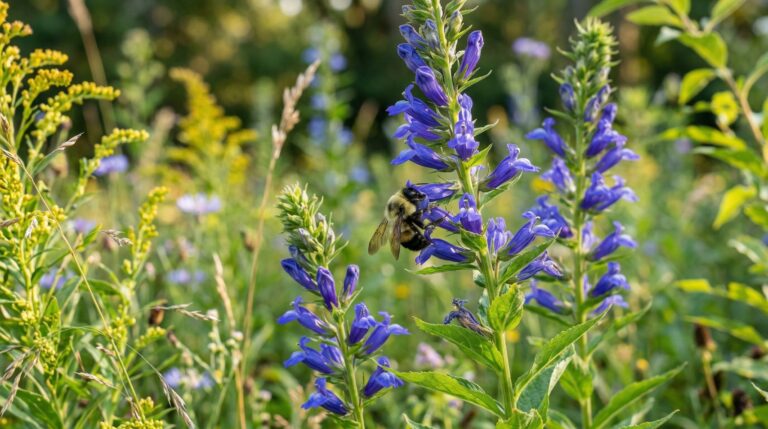
Great blue lobelia for hummingbird and pollinator gardens in late summer
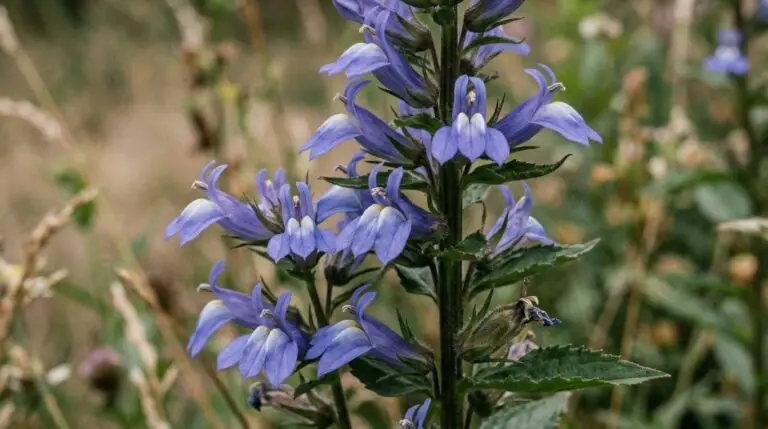
The medicinal history of lobelia siphilitica and how it got its unusual name
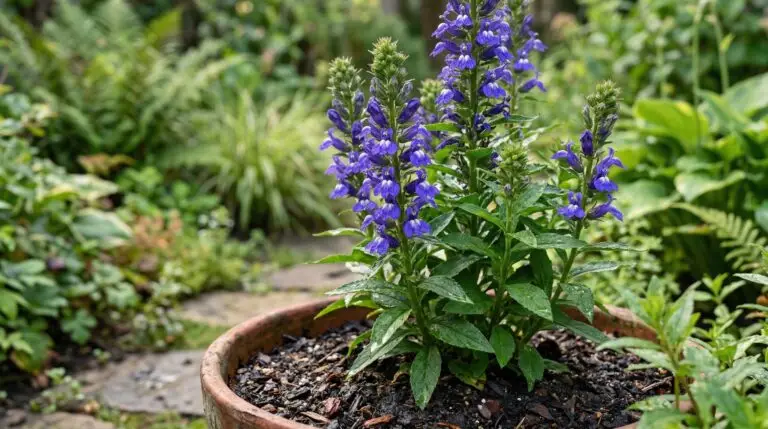
Growing great blue lobelia in containers for a native plant patio garden
How to grow great blue lobelia for tall sapphire spikes in moist garden borders
Great blue lobelia as a native plant for rain gardens and wet problem areas

Growing great blue lobelia from seed and the cold treatment they need to germinate
Great blue lobelia versus cardinal flower and choosing the right lobelia for your garden
Great blue lobelia companion plants: what to grow and avoid
Why great blue lobelia is short-lived and how to keep it going through self-seeding
Enjoying our flower guides? Add YourFlowersGuide as a preferred source on Google. It helps more readers find us.
Add to Preferred Sources