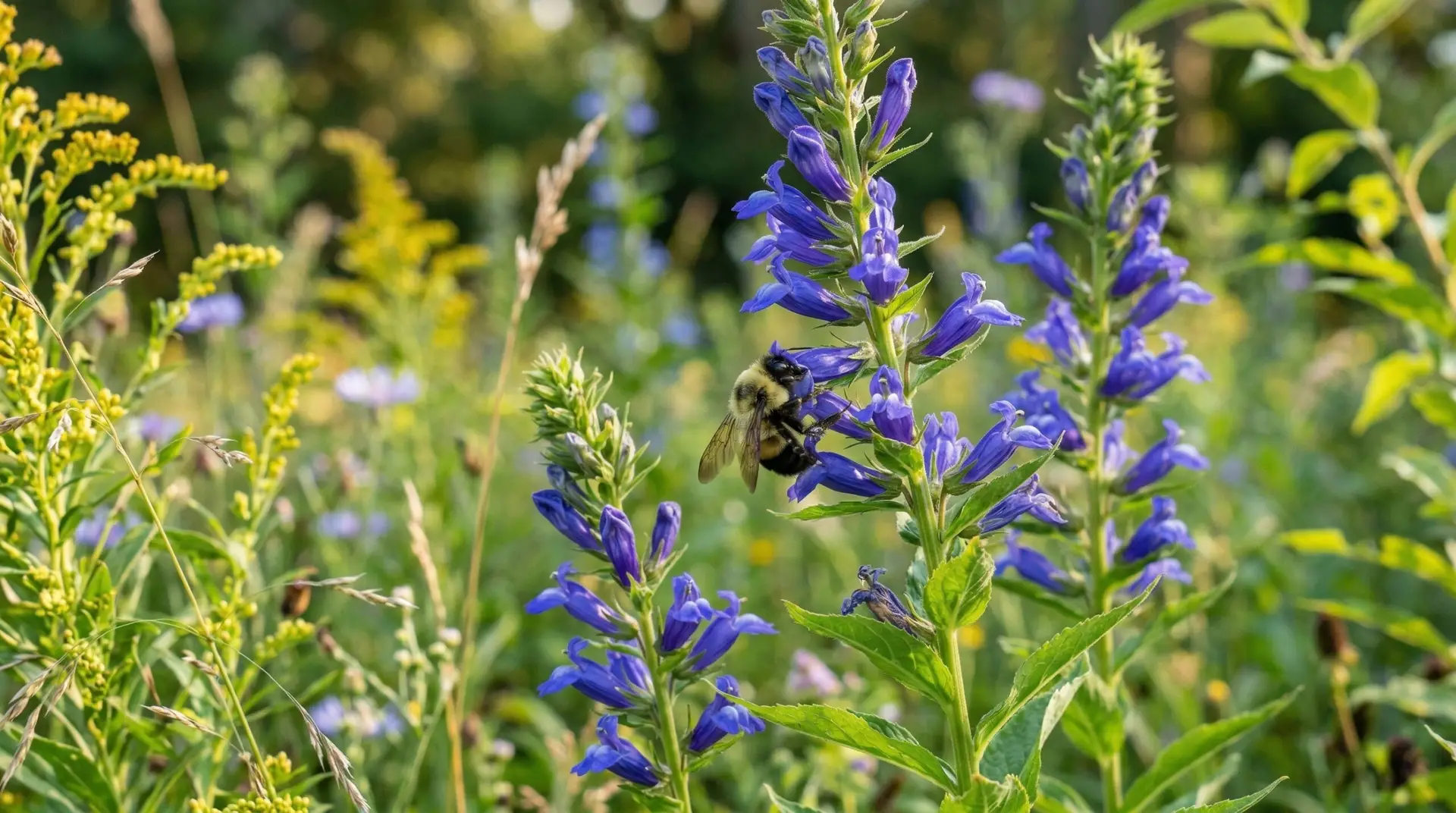
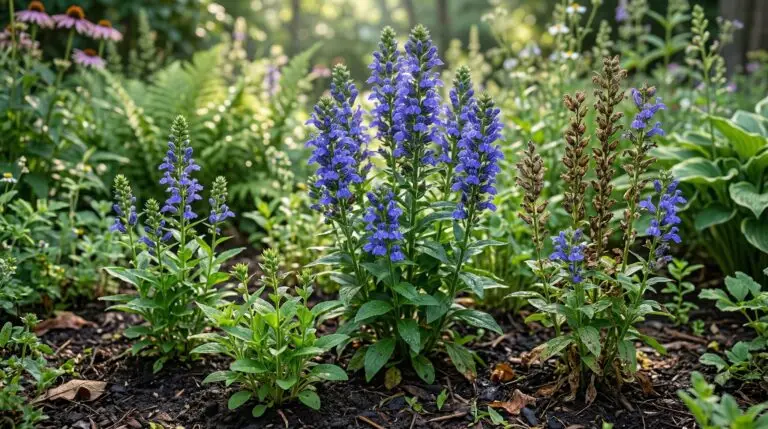
The September morning air carries a distinct chill that settles low in the garden, turning the soil dark and heavy with overnight dew. I step out before the sun clears the tree line, watching the shadows retreat across the damp grass. At the edge of the woodland border, a tall spike of great blue lobelia leans slightly under the weight of water droplets and waiting insects. A worker bumblebee, sluggish from the cool night, clings securely to the lower lip of a single blue blossom. She is waiting for the warmth to activate her flight muscles, resting on a petal structure that evolved precisely to support her considerable weight. The flower offers a perfect landing pad, striped with subtle white nectar guides that point directly into the deep floral tube. This plant actively participates in the morning routines of the creatures that share this space.
Observing this interaction requires a willingness to stand still and simply watch the mechanics of survival play out. When the sun finally reaches the lobelia, the bee vibrates her wings and pushes her head deep into the blossom to drink. As she does, the hooded upper lip of the flower presses down against her fuzzy thorax, depositing a tiny smear of pale pollen. She backs out, hovers for a fraction of a second, and moves to the next flower up the stalk to repeat the exchange. This precise physical fit makes the plant a true bumblebee specialist, relying heavily on these strong insects to force their way into the bloom. The relationship is a quiet agreement forged over thousands of years of shared history in damp meadows and streambanks. Watching them work the vertical spikes brings a sense of order to the wilder edges of the late summer garden.
Contents 4 sections
The architecture of a late summer garden
The timing of this nectar flow matters immensely to the local ecology. By late August, the flush of early summer blooms has exhausted itself, leaving a gap in the available food supply for foraging insects. The great blue lobelia steps into this void, raising its densely packed racemes just as the days begin to shorten noticeably. Providing sustenance during this transition period reveals the true value of blue lobelia wildlife habitat, offering a reliable bridge between the summer abundance and the final autumn aster bloom. The deep blue color acts as a beacon for native bees rushing to provision their nests before the first hard frost arrives. Planting for this specific seasonal window requires a shift in perspective, moving away from spring-focused borders toward a garden that sustains life until the very end of the growing year.
Cultivating this plant means learning to read the soil the way the wild seeds do. Great blue lobelia demands moisture and resents the dry, baked earth of a typical foundation planting. I find it grows best where the ground stays cool and damp, perhaps near a downspout or at the lowest point of a gentle slope where rainwater naturally gathers. It will tolerate full sun if the roots are constantly wet, but it truly thrives in the dappled afternoon shade of larger shrubs. Gardening with moisture-loving natives teaches you to stop fighting the natural hydrology of your land and instead plant what belongs in the wet depressions. The rosettes of leaves hug the ground through the winter, waiting for the spring thaw to send up their tall, leafy stems.
Unexpected visitors to the blue spikes
We are often taught that hummingbirds operate strictly on a color code, seeking out brilliant reds and ignoring the cooler tones of the spectrum. While they certainly flock to the tubular red blooms of scarlet sage, their foraging habits are far more adaptable and observant than we realize. I have spent many afternoons watching a ruby-throated hummingbird systematically probe every single blossom on a great blue lobelia stalk. The bird hovers with an audible hum, ignoring the bumblebees, and slips its long bill into the blue tubes with practiced efficiency. This interaction proves that lobelia hummingbirds are a frequent and reliable pairing in a diverse habitat. The birds are simply looking for the richest nectar sources available, regardless of the advertising color. Providing these deep, nectar-rich tubes gives the migrating birds the calories they desperately need for their long journey south.
Building a garden that supports these winged visitors requires layering different shapes and bloom times throughout the beds. A hummingbird might start its morning feeding on the bright, arching sprays of crocosmia before moving into the shaded corners to visit the lobelia. The yard becomes a continuous circuit of calories, carefully mapped out by the birds and defended vigorously against rivals. Watching a hummingbird chase an intruder away from a patch of blue lobelia reveals the high value these tiny birds place on the nectar hidden inside. They remember exactly where the best food sources are located from year to year, passing through our yards on their migratory routes. Our role as gardeners is simply to ensure the table is set when they arrive, offering a reliable feast in an increasingly unpredictable world.
The quiet rhythm of naturalizing plants
Great blue lobelia is technically a short-lived perennial, a fact that frustrates gardeners who expect plants to remain exactly where they were placed. Individual plants may only survive for three or four years before the central crown loses its vigor and fades away into the soil. However, the plant possesses a remarkable ability to persist through prolific self-seeding, dropping thousands of dust-like seeds onto the damp earth each autumn. These seeds require the cold, wet months of winter to break their dormancy, a process that ties their germination directly to the turning of the seasons. In the spring, tiny green rosettes appear in unexpected places, sometimes feet away from the parent plant, wherever the soil conditions happen to be perfect. Allowing this slow migration requires the gardener to relinquish total control and let the plant choose its own home.
Thinning these wandering seedlings feels like a small act of cruelty, but crowded plants compete for light and water until none of them thrives. I carefully lift the extras with a trowel, transplanting them to bare spots or giving them away to neighbors who have the right damp soil. The plants that remain grow strong and sturdy, sending up unbranched stems that can reach three feet tall by late summer. They mingle beautifully with the fading seed heads of coneflower, creating a striking contrast between the stiff brown cones and the vivid blue floral spikes. This spontaneous arrangement always looks more natural and grounded than anything I could have deliberately designed on paper. The garden becomes a collaboration between my initial intentions and the wilder instincts of the plants themselves.
Sustaining life at the edge of autumn
As September gives way to October, the lower flowers on the lobelia stalk wither and turn brown, while the tip continues to produce fresh blue blooms. This sequential blooming strategy ensures a steady supply of food over many weeks, rather than a single brief explosion of pollen. The bumblebees become more frantic as the air cools, joining a diverse group of lobelia pollinators with a visible urgency before the frost finally stops their foraging. The fertilized flowers swell into rounded seed capsules, turning from green to papery brown as the plant draws its energy back down into the roots. The hollow stems will eventually collapse under the weight of winter snow, returning their organic matter to the damp soil that sustained them. Even in death, the plant provides shelter for overwintering insects hidden within the decaying stalks.
To grow great blue lobelia is to accept a quiet role in the larger ecological cycles of your local environment. It is a commitment to providing sustenance when the days grow short and the wild creatures are preparing for the long cold months ahead. The deep blue spikes offer no flashy horticultural tricks, just a steady, reliable presence in the damp corners of the yard. The garden becomes a place of provision rather than mere decoration. When I watch the hummingbirds and bumblebees share the heavy blossoms on a late summer afternoon, I understand the true purpose of cultivating this soil. We plant these seeds to weave our small plots of land back into the living, breathing fabric of the natural world.
More About Great Blue Lobelia
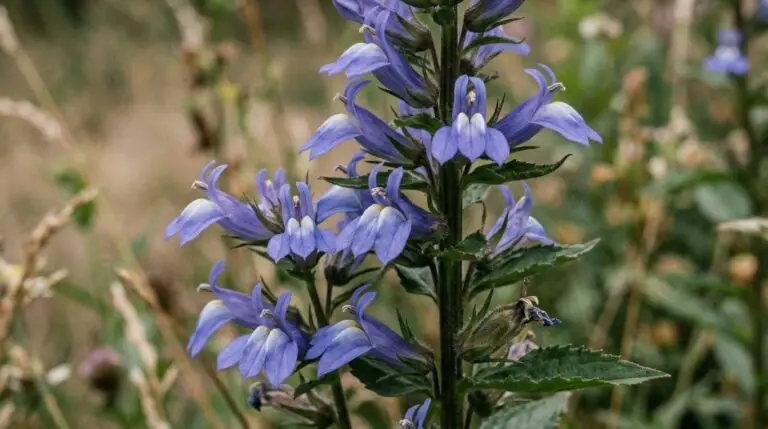
The medicinal history of lobelia siphilitica and how it got its unusual name
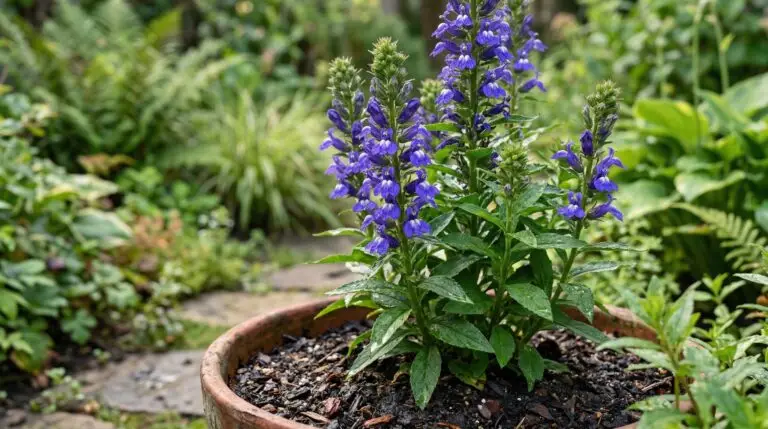
Growing great blue lobelia in containers for a native plant patio garden
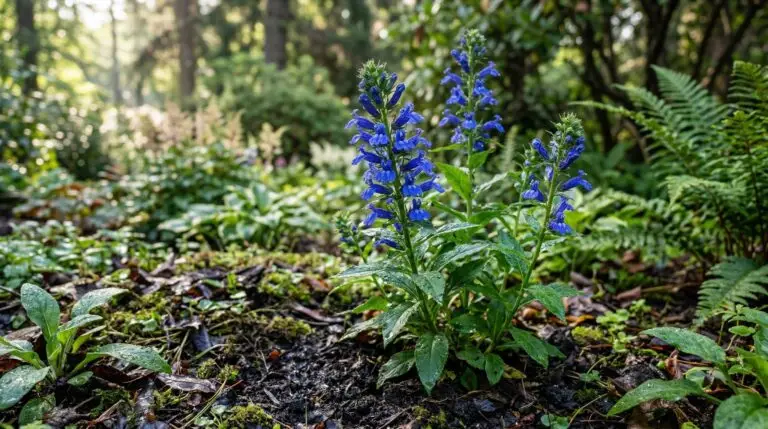
How to grow great blue lobelia for tall sapphire spikes in moist garden borders
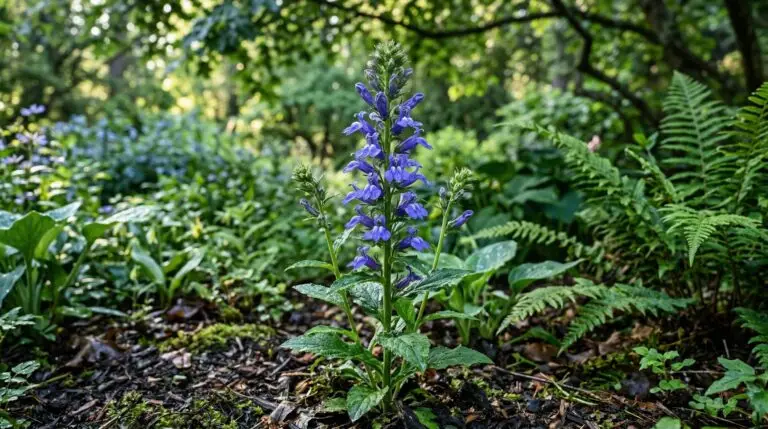
Great blue lobelia in shady wet gardens where most blue flowers refuse to grow
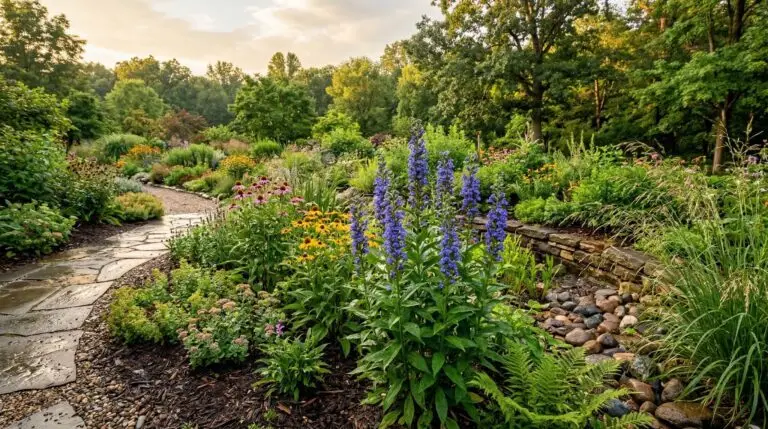
Great blue lobelia as a native plant for rain gardens and wet problem areas

Growing great blue lobelia from seed and the cold treatment they need to germinate
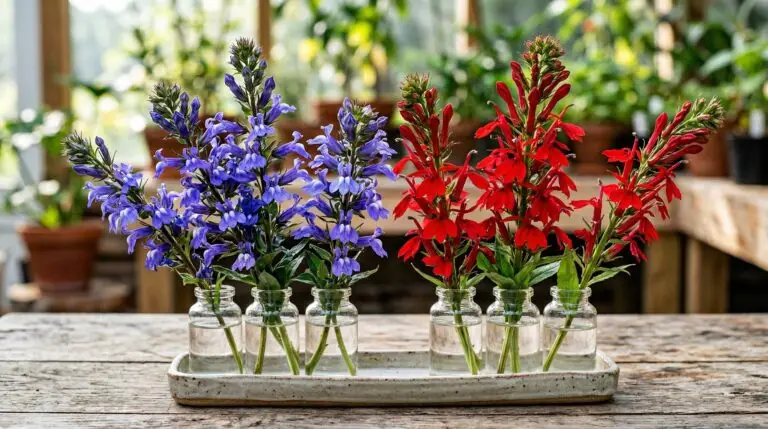
Great blue lobelia versus cardinal flower and choosing the right lobelia for your garden
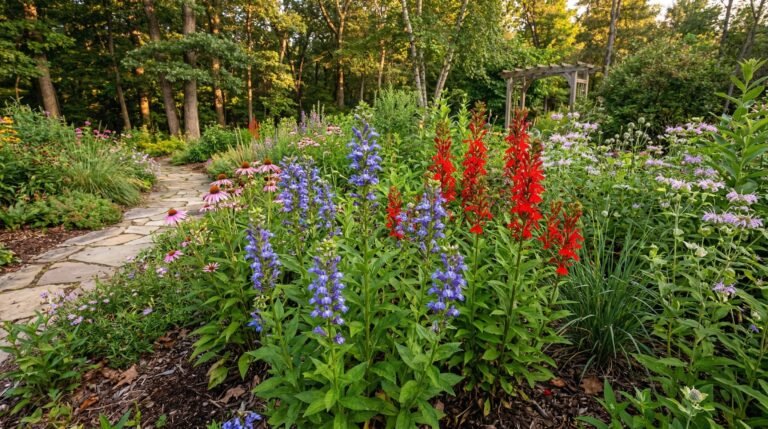
Great blue lobelia companion plants: what to grow and avoid
Why great blue lobelia is short-lived and how to keep it going through self-seeding
Enjoying our flower guides? Add YourFlowersGuide as a preferred source on Google. It helps more readers find us.
Add to Preferred Sources