Funeral Flowers Guide | Step-by-Step

Funeral Flowers

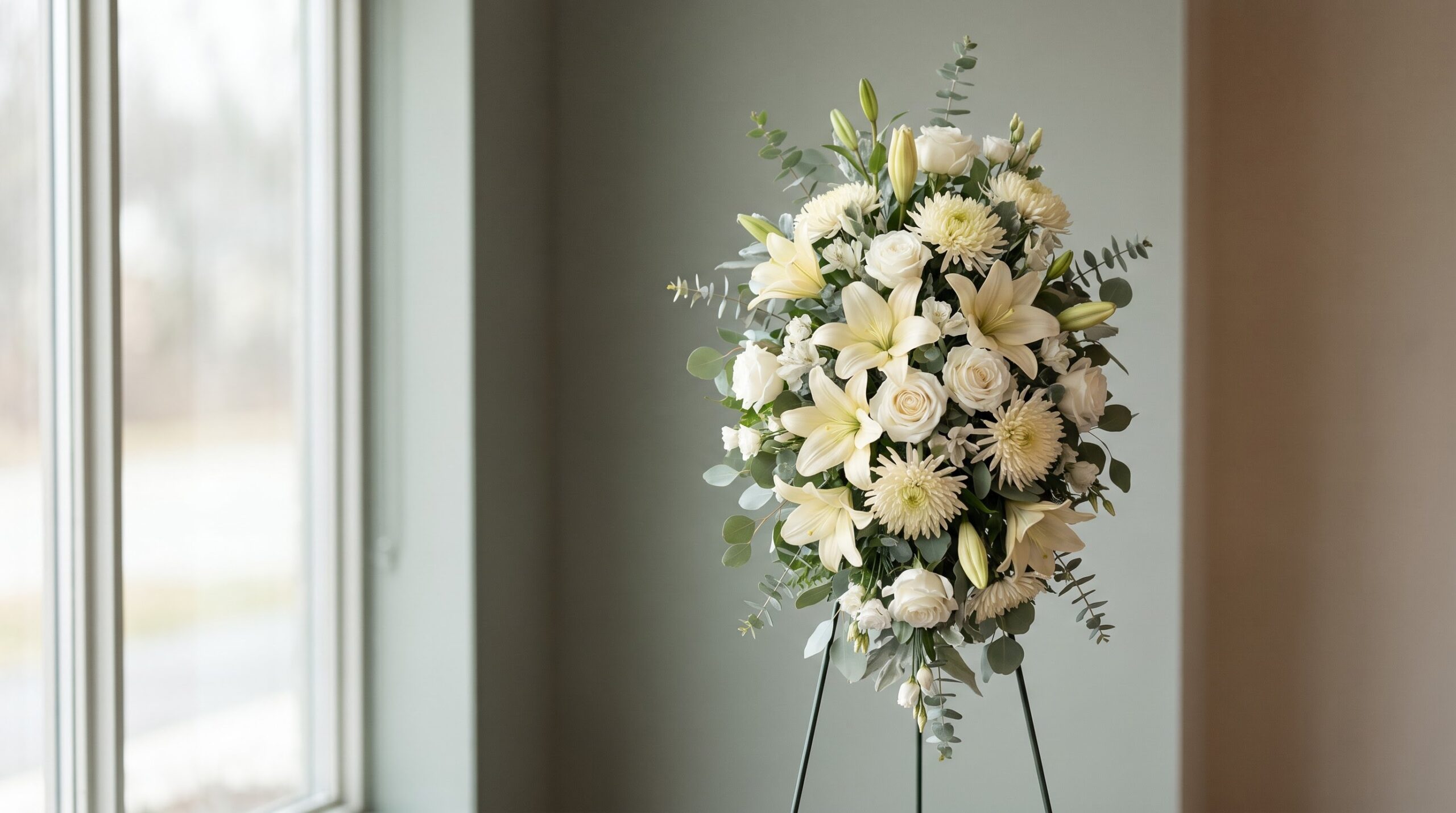
When details are unknown, the safest approach is to choose flowers that read as quiet, respectful, and easy to live with. Traditional sympathy designs tend to use clean shapes, soft textures, and a limited palette so nothing feels showy. Widely accepted choices include white roses, carnations, chrysanthemums, lisianthus, and alstroemeria. These flowers hold their shape well, photograph calmly, and fit most venues without drawing attention to themselves.

If the service is soon, seasonal and easy-to-source stems help the florist deliver on time without substitutions that change the look. In many US markets, roses, carnations, mums, alstroemeria, and greens are dependable year-round. In cooler months, stock and snapdragons may be available, but scent can be stronger. In spring, tulips and daffodils can be appropriate when used in softer colors and stable designs. In late summer and fall, mums are common and practical because they last, travel well, and come in muted tones.

For long-lasting choices that hold up through a service, look for stems that do not bruise easily and can go several days with basic care. Carnations, chrysanthemums, alstroemeria, and lisianthus are strong performers. If the arrangement will sit in a warm room, ask for sturdy greenery like eucalyptus alternatives with lower scent, or classic greens such as leatherleaf fern and ruscus.

Low-fragrance and allergy-friendlier options matter in churches, funeral homes, and tight visitation rooms. A good direction is roses, carnations, mums, lisianthus, and hydrangea with minimal strongly scented accents. Some families also prefer fewer pollen-heavy blooms. If pollen sensitivity is a concern, ask the florist to avoid heavy pollen stamens or remove them when possible.

Budget-smart picks can still look dignified when the design is simple and balanced. Carnations and mums create a full look without requiring many premium stems, and alstroemeria adds detail without raising cost quickly. A smaller arrangement with better structure often reads more respectful than a large, loosely filled bouquet.

Sympathy-appropriate potted plants are often a good choice when the family is receiving many arrangements at once. Peace lily, phalaenopsis orchid, and a green plant dish garden are common options because they can be kept for weeks and do not create the same aftercare burden as multiple vases.

For memorial planting framed as remembrance, gentle options include daffodil bulbs, a small hydrangea shrub (when climate and yard space allow), or a simple packet of forget-me-not seeds for a later moment. The goal is not a gardening project. It is a small, quiet symbol that can be handled when the family is ready.

Table of Contents

A clean, premium infographic titled "Funeral Flowers | Quick Chooser" on a warm off-white background. At the top is a rounded headline bar, followed by three small "style chips" that show muted palette swatches for Traditional Sympathy, Modern Memorial, and Celebration of Life. The center is a large rounded-corner table with columns for recipient and setting, best format, best flowers, palette, budget tier, vase life, fragrance, delivery timing, and a short risk note. Each header uses a small icon to support quick scanning on a phone. At the bottom, a slim strip shows an icon legend and a boxed "Safe default formula" summary. A small "yourflowersguide.com" watermark sits in the bottom-right corner.

The Step-by-Step Plan: From Service Details to Delivery

The first decision is not which flower, but where the tribute needs to go and who will handle it. A funeral home or church often has limited space and a schedule. A family home needs something easy to carry, set down, and keep alive without effort. The three tribute paths help solve this. Cut flowers suit immediate visual tribute. A potted plant reduces aftercare and can be kept longer. Memorial planting is best treated as an optional, later gesture.


Service type also shapes the safest format. Visitation or wake settings often favor low, stable pieces that do not block conversation. A graveside service adds weather and wind. A celebration of life can allow a little more color, but the tone should still stay steady and respectful unless the family clearly requests otherwise.


  1. Confirm the service type and destination, even if it is only “funeral home” or “family home.”
  2. If sending to a venue, call the venue to ask about delivery hours, where items are placed, and any size or fragrance rules.
  3. Decide on the tribute path: cut flowers for immediate presence, a plant for longer support, or a simple memorial planting item for later.
  4. Choose the safest color direction: white and green, cream and soft blush, or gentle blue and white.
  5. Pick a format that matches the destination: vase arrangement for home, low centerpiece for venue tables, or a venue-only piece if specifically appropriate.
  6. Keep the message short and respectful, and include the family name and service details if delivering to a venue.
  7. Share practical constraints with the florist: low fragrance, stable base, easy-to-carry size, and minimal loose petals.
  8. Set delivery timing so the arrangement arrives 2 to 4 hours before the service window, or the evening before if the venue prefers.
  9. If unsure about the family’s preferences, choose a smaller, home-friendly arrangement and avoid bold colors or novelty themes.


To adapt this plan to budget and urgency, simplify the design and keep the palette tight. A compact arrangement built from sturdy stems often looks more thoughtful than a larger, mixed bouquet that needs constant care. If the family requests “no flowers” or asks for donations, the safest move is to respect that request and send a simple card instead.

Safe Color Palettes and When to Avoid Certain Colors

White and Green Classic feels calm, formal, and widely accepted. It fits almost any relationship and works for both a funeral home and a family home. The common mistake is adding bright accents or glittery wrap that shifts the tone from respectful to decorative.


Cream and Soft Blush reads gentle and supportive without feeling romantic when kept muted. It can suit a specific mourner or a close family member when the relationship is personal, especially for home delivery. The common mistake is pushing the blush too pink or pairing it with red roses, which can read like a romantic gesture.


Ivory, Taupe, and Soft Sage feels modern-classic and understated. It is a good match for workplace memorials or when the sender is a coworker, manager, or organization that wants to stay neutral. The common mistake is using too many dried elements that shed or look rustic in a formal venue.


Blue and White Quiet Comfort can be appropriate for many services and often photographs well, especially when the venue has strong lighting. It can work for a group send or when the family prefers a cooler tone. The common mistake is choosing saturated royal blue or bright novelty dye that can look casual or themed.


Lavender and White Gentle Tribute suggests calm and reflection and can be suitable for a celebration of life when the family appreciates softer color. It works well in a family home setting where the arrangement will be seen over several days. The common mistake is combining lavender with strong fragrance stems, which can be overwhelming in a crowded room.


In general, avoid very bright red, hot pink, and neon mixes unless the family has clearly requested a specific color theme. Also avoid strongly festive rainbow palettes when faith or cultural expectations are unknown.

Funeral Flowers

Arrangement Types: What to Send (and Where It Goes)

A good sympathy arrangement does two jobs at once. It honors the person being remembered, and it keeps the practical burden low for the family. That is why home-friendly formats are often the safest default when details are limited.


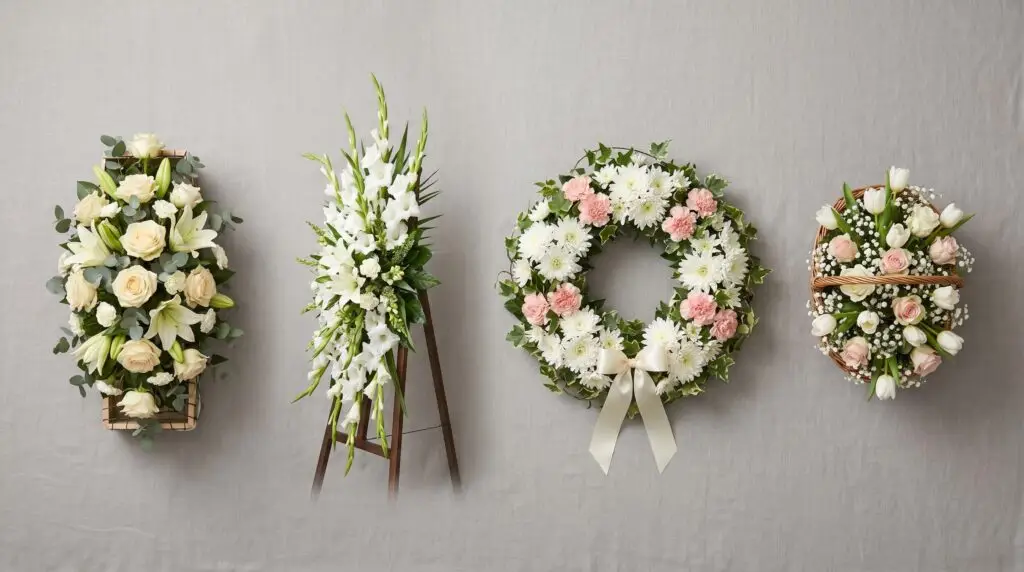
Vase arrangement (family home friendly)

A vase arrangement is easy because it arrives ready. It can be placed on a counter or table and moved without rewrapping. This format is especially appropriate when sending to the family home or when the sender is not sure what the venue allows. A medium size that sits about 14 to 18 inches tall (36 to 46 cm) is usually manageable, and it fits into most homes without blocking space.


Basket or low centerpiece (easy transport, stable)

A low piece in a basket or sturdy container is a practical choice for visitations and wakes. It sits securely, does not tip easily, and works well on side tables or sign-in tables. The lower profile also avoids blocking sight lines in smaller rooms.


Standing spray or wreath (venue-focused, if appropriate)

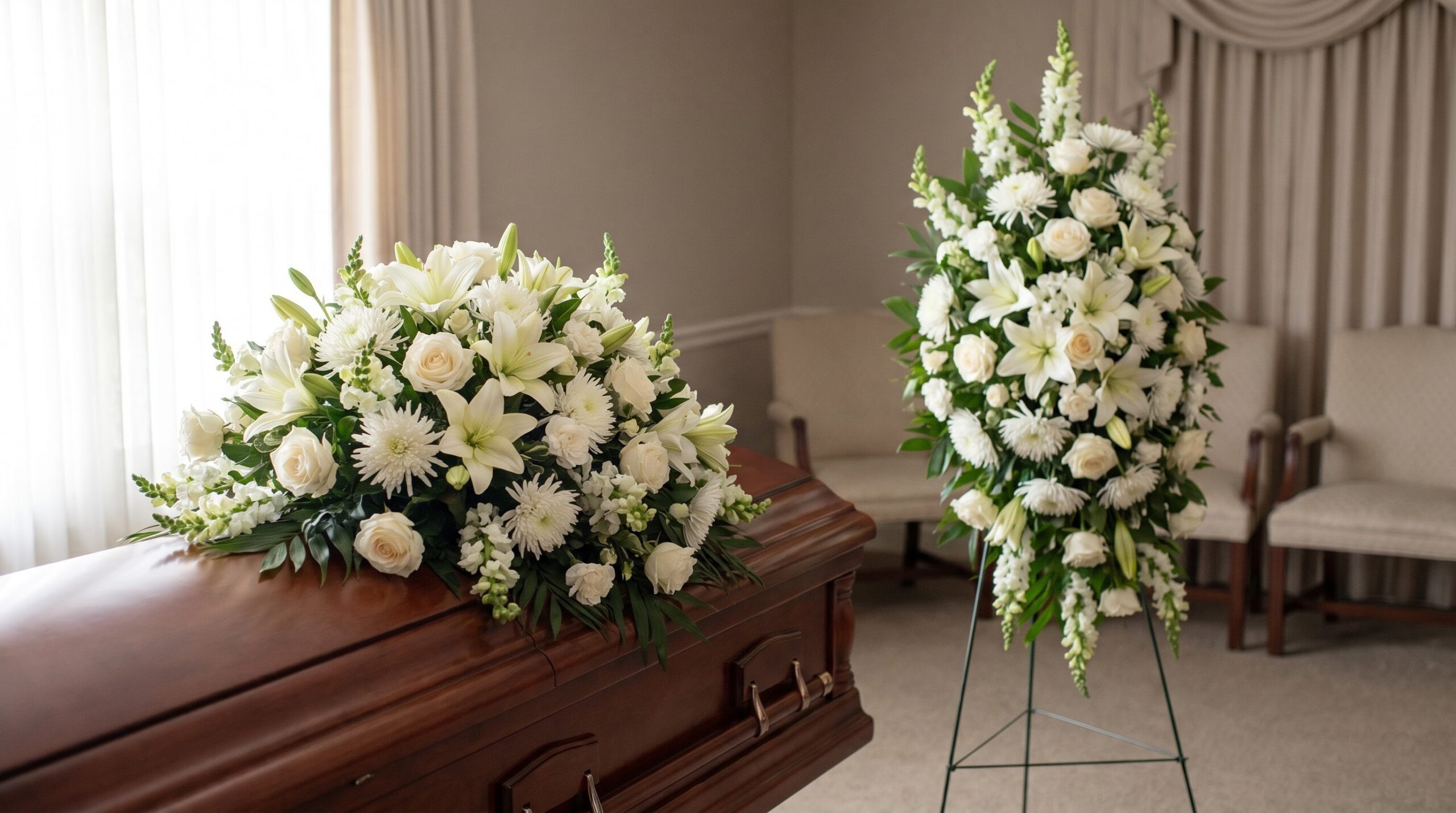
Standing sprays and wreaths are visually prominent and are typically ordered by immediate family, very close friends, or groups coordinating a main tribute. If sending one as a non-immediate family member, it helps to confirm venue rules and placement. When unsure, a home-friendly arrangement is often a better choice.


Small accent pieces (guest book table, office memorial)

Small accents work when a workplace memorial, reception area, or shared space needs something respectful but not large. A compact arrangement can also be paired with a card when the family has requested simplicity.


If choosing a “premium look without premium price,” ask the florist for a tight palette with strong greenery and one focal flower type repeated. Repetition reads polished and intentional, even with budget-friendly stems.

By Relationship: What Fits the Sender's Role

Immediate family often chooses the primary tribute for the service, such as a standing spray, large wreath, or a coordinated set of pieces. If cut flowers are chosen, a controlled palette using white roses, lilies only if allowed, and greenery is common, with structure that holds through the day. A potted orchid can also be kept afterward as a quiet reminder.
“With love and always in our hearts.”


Extended family usually fits well with a medium vase arrangement or a low centerpiece that can be moved from venue to home. Good directions include cream roses, lisianthus, and mums in soft whites, creams, and gentle greens. Memorial planting can be thoughtful when framed as optional, such as bulbs for a later season.
“Thinking of you and holding you close.”


A close friend often wants something personal but still appropriate. A home-friendly vase arrangement with white and soft blush tones can feel supportive without stepping into the immediate family’s role. Consider alstroemeria, lisianthus, and roses in muted shades, or a potted peace lily that is easier to manage.
“With sympathy and care.”


A neighbor’s best approach is usually practical and neutral. A smaller cut arrangement using white carnations, mums, and calm greens is respectful and does not create a large burden. A plant dish garden can also be suitable if the family prefers low maintenance.
“Please accept heartfelt condolences.”


A coworker typically aims for neutral, steady support. A compact arrangement in white and green, or ivory and soft sage, works well. Choose sturdy stems like carnations and mums, and keep fragrance low for office or venue settings.
“Thinking of you during this difficult time.”


A manager, client, or professional contact should stay formal and simple. A tasteful vase arrangement or plant is usually safest, with restrained colors and a short message. Consider white roses with greenery, or a phalaenopsis orchid for a longer-lasting presence.
“With sincere condolences.”


A group or organization can coordinate one larger piece or several smaller home-friendly arrangements, depending on what the family can manage. Group gifts often work well as a single, medium-to-large arrangement with sturdy flowers like mums, carnations, and roses, and a card that clearly lists the group name.
“With sympathy from everyone at [Group Name].”

Funeral Flowers

By Destination: Funeral Home, Church/Temple, Graveside/Cemetery, Family Home, Workplace Memorial

A funeral home typically has a delivery window and a set placement plan. Deliveries are often received at a service entrance, then arranged by staff in viewing rooms or near a tribute area. In this setting, medium sizes are easier to place, and low fragrance matters because rooms can be crowded and enclosed. Stable designs with sturdy bases reduce the risk of tipping when staff move items.


A church or temple often has tighter space around aisles, altars, or lecterns. Height and footprint matter. Tall, wide pieces can block walkways or create visual clutter. The safest approach is a low and controlled arrangement or a medium vase piece that can be placed to the side. Fragrance and pollen also matter here because attendees may be seated close together. A simple white and green arrangement using low-scent stems is usually appropriate.


A graveside or cemetery destination adds weather. Wind can tip light containers, and cold or heat can stress delicate blooms. For outdoor services, choose a heavier base and avoid designs with loose petals that blow away. Low arrangements with a wide footprint are more stable. If temperatures are extreme, a shorter service-friendly piece can be better than a large arrangement that wilts quickly.


A family home is often the safest default because it reduces the risk of venue rules and timing problems. The priority here is easy handling. A vase arrangement that arrives ready, in a manageable size, is helpful when the family is already overwhelmed. If the home will receive many arrangements, a potted plant can reduce the number of vases and refresh tasks.


A workplace memorial or office reception area usually needs smaller, simpler pieces. Choose an arrangement that sits securely on a counter or table and stays neat with minimal shedding. Keep fragrance low, and avoid heavy pollen flowers because shared spaces often have varied sensitivities.

Faith and Cultural Sensitivity: Neutral Defaults + What to Ask

When faith or cultural details are unknown, neutral choices reduce the risk of sending something that conflicts with expectations. A restrained palette, calm shape, and simple message are usually appropriate across many settings. White and green arrangements, cream tones, and low-scent flowers tend to be safe defaults, especially when paired with a respectful card that avoids assumptions.


It helps to ask a few practical questions without putting pressure on the family. If a close contact is available, a simple question like “Are there any venue rules or family preferences about flowers?” can prevent problems. If the service is at a funeral home or place of worship, staff can often answer basic logistics questions such as where flowers are placed and whether there are size limits.


Symbolic elements can be sensitive. Religious symbols, specific icon shapes, and highly themed items may not match the family’s expectations. If details are unknown, skip overt symbols and focus on simple, classic design. Also avoid using strong color meanings as if they apply universally. What reads as respectful in one community may read as out of place in another.


A “celebration of life” can create confusion around color and tone. It may allow softer blues, gentle lavenders, or a small amount of warmer cream, but it does not automatically mean bright or festive. A good approach is to keep the design calm and modern, then let the message carry the personal support. If the family has requested a specific color, ask the florist to keep it muted and balanced with neutrals so the overall tribute still feels steady.


If unsure, treat the arrangement as venue-appropriate and family-friendly. Neutral design, low fragrance, and a manageable size are respectful choices when information is limited.

Funeral Flowers

Fragrance, Pollen, and Venue Rules (Always Include)

Fragrance is one of the most common reasons a well-meant arrangement becomes difficult in a service setting. Crowded rooms, warm indoor temperatures, and close seating can make even pleasant scent feel intense. A low-fragrance direction is to focus on flowers like roses with minimal scent, carnations, mums, lisianthus, and hydrangea, and to avoid heavily scented accents. If the florist suggests strongly fragrant stems, a simple request for “low scent, please” usually leads to safer substitutions.


When sensitivity is unknown, assume someone in the room may be sensitive. That does not mean avoiding flowers completely. It means choosing cleaner designs, fewer pollen-heavy blooms, and stable containers that keep flowers from shedding. Pollen reduction can be practical. Ask the florist to remove visible pollen stamens when possible, to limit dusty filler, and to use closed or partially open blooms for travel.


Venue rules can be specific and sometimes change by room or event. Common constraints include tight spaces, “no strong scent,” “no lilies,” and size limits for tables or aisles. If the rule is “no lilies,” it is easy to keep the same respectful look using roses, mums, carnations, and lisianthus. If space is limited, choose a low centerpiece or a compact vase arrangement rather than a wide design.


A safe default arrangement plan is a medium, low-scent vase arrangement in white and green, built from sturdy stems with minimal shedding. It can be delivered to a venue or a home, moved without difficulty, and divided later if the family receives many flowers. This kind of design is respectful, practical, and less likely to create complications.

After the Service: What Happens to the Flowers

After the service, families often bring home multiple arrangements at once, and the volume can feel overwhelming. A practical approach is to divide larger arrangements into smaller vases. This reduces clutter and makes it easier to place flowers throughout the home. If there is floral foam, it can be kept intact for a day or two, then flowers can be removed, recut, and moved into clean water when the family is ready.


Not everything needs to be saved. Some blooms may be bruised or shedding, and that is normal. It can help to keep the pieces that still look fresh and discard what is messy without guilt. Removing wilted stems early also keeps the rest of the arrangement looking cleaner and reduces odor.


For potted plants, the first week is about stability, not perfection. Keep the plant in a bright room with indirect light, away from heating vents and cold drafts. Water only when the top inch of soil feels dry, and avoid overwatering out of caution. A simple routine is enough while the family is still in the hardest days.


Memorial planting is best treated as a gentle two-week starter plan, not a project with deadlines. A simple approach is to set the plant or bulbs aside in a calm spot, then choose one small step each week. Week one can be as small as choosing a container and placing it where it will not be forgotten. Week two can be planting bulbs in a pot or setting a small shrub outdoors if conditions are safe. The point is remembrance at a pace that feels manageable.


If flowers are going to a home with pets, caution helps. Some common sympathy flowers and many houseplants can be unsafe if chewed. A practical swap is to keep arrangements up high, avoid loose petals on the floor, and choose a plant that can be placed out of reach. When unsure, a cut-flower arrangement in a stable vase placed safely can be simpler than a plant that stays within reach for weeks.

Funeral Flowers

FAQ + Common Mistakes

When details are limited, the family home is often the safest choice. A vase arrangement arrives ready and avoids venue rules and timing issues.

The safest response is to respect that request. Send a simple card, or follow any donation guidance if it is provided.

Not always. Some venues request “no lilies,” and fragrance or pollen can be a concern. If unsure, choose lower-scent flowers like roses, carnations, mums, or lisianthus.

A compact to medium vase arrangement is usually appropriate. A tight palette and sturdy flowers often look more polished than a larger, mixed bouquet.

Keep it short and respectful. A simple line of sympathy is enough, and it avoids accidental tone mistakes.

It can be, especially if the family may receive many arrangements. Plants last longer, but only if the household can place them safely and water lightly.

Sometimes, if the family has asked for it. If not, keep color muted and balanced with neutrals so the tribute still feels steady.

One coordinated arrangement is often easier for the family to manage. It also reduces the number of containers and cards to handle.

A ready-to-go vase arrangement is usually easiest. It can be placed immediately and divided later if needed.

For venue delivery, aim for 2 to 4 hours before the service window unless the venue requests the day before. For home delivery, any daytime window is usually fine.

Common mistakes

Timing and addressing issues cause many problems. Flowers arrive after the service, go to the wrong entrance, or lack the family name needed for staff to place them correctly. A clear card line with the family name and service details helps, and confirming delivery windows prevents last-minute stress.


Size and style mismatches are also common. Oversized arrangements can block aisles or crowd small rooms, while very casual bouquet wraps can look out of place in formal settings. When unsure, choose a medium, stable arrangement with a clean container and restrained shape.


Color and tone mistakes usually happen when the sender tries to personalize too much without confirmation. Bright reds, neon mixes, or novelty themes can read as casual. Neutral palettes, muted tones, and simple greenery are safer when faith and preferences are unknown.


Scent, pollen, and venue rules are an avoidable source of discomfort. Strongly scented flowers can be overwhelming in enclosed rooms, and pollen-heavy choices can be irritating for some attendees. Asking for low fragrance, minimizing pollen, and respecting “no lilies” or size rules keeps the tribute appropriate and easier for everyone to handle.


A respectful choice is achievable with a simple plan and steady defaults. When details are unknown, a modest, low-fragrance arrangement in a calm palette is usually appreciated. The most important part is showing support without creating extra burden for the family.

Written by: Your Flowers Guide editorial team
We are a small independent group of flower lovers who research and review each guide using trusted horticultural and educational sources. Learn more about us