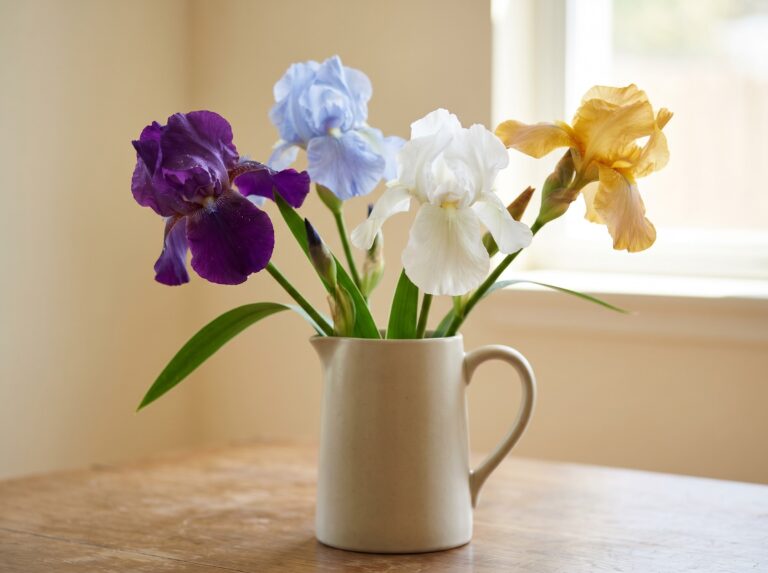
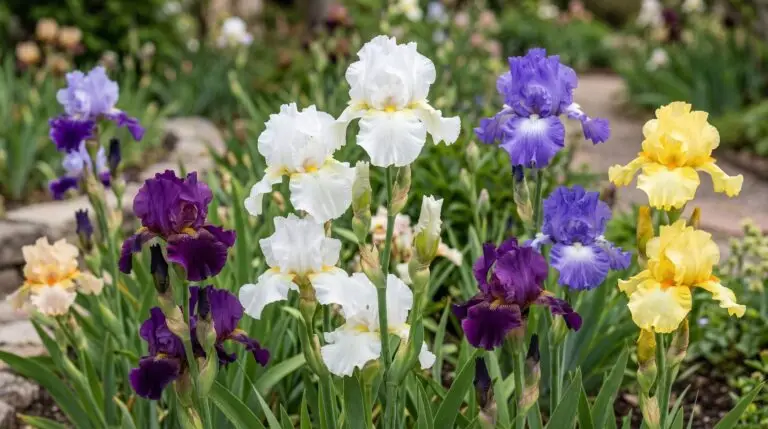
Morning light in mid-May catches the dew resting on the ruffled falls of a bearded iris, turning the water droplets into tiny prisms. The garden at this hour is quiet, heavy with the scent of damp earth and the sweet, grape-like fragrance that many older iris varieties carry. Most gardeners discover early on that leaving these blooms entirely to the mercy of spring wind and rain often results in bruised petals and snapped stems. Bringing them indoors transforms them from garden subjects into intimate companions, allowing you to observe the subtle veining and velvet textures up close. Using them as iris cut flowers requires a shift in how you view the plant, looking past the fully open blooms to the tight, promising buds hiding lower on the stalk. The transition from garden bed to kitchen table is a simple ritual that captures the essence of spring. A well-placed iris bouquet changes the atmosphere of a room, bringing a sculptural presence that few other seasonal flowers command.
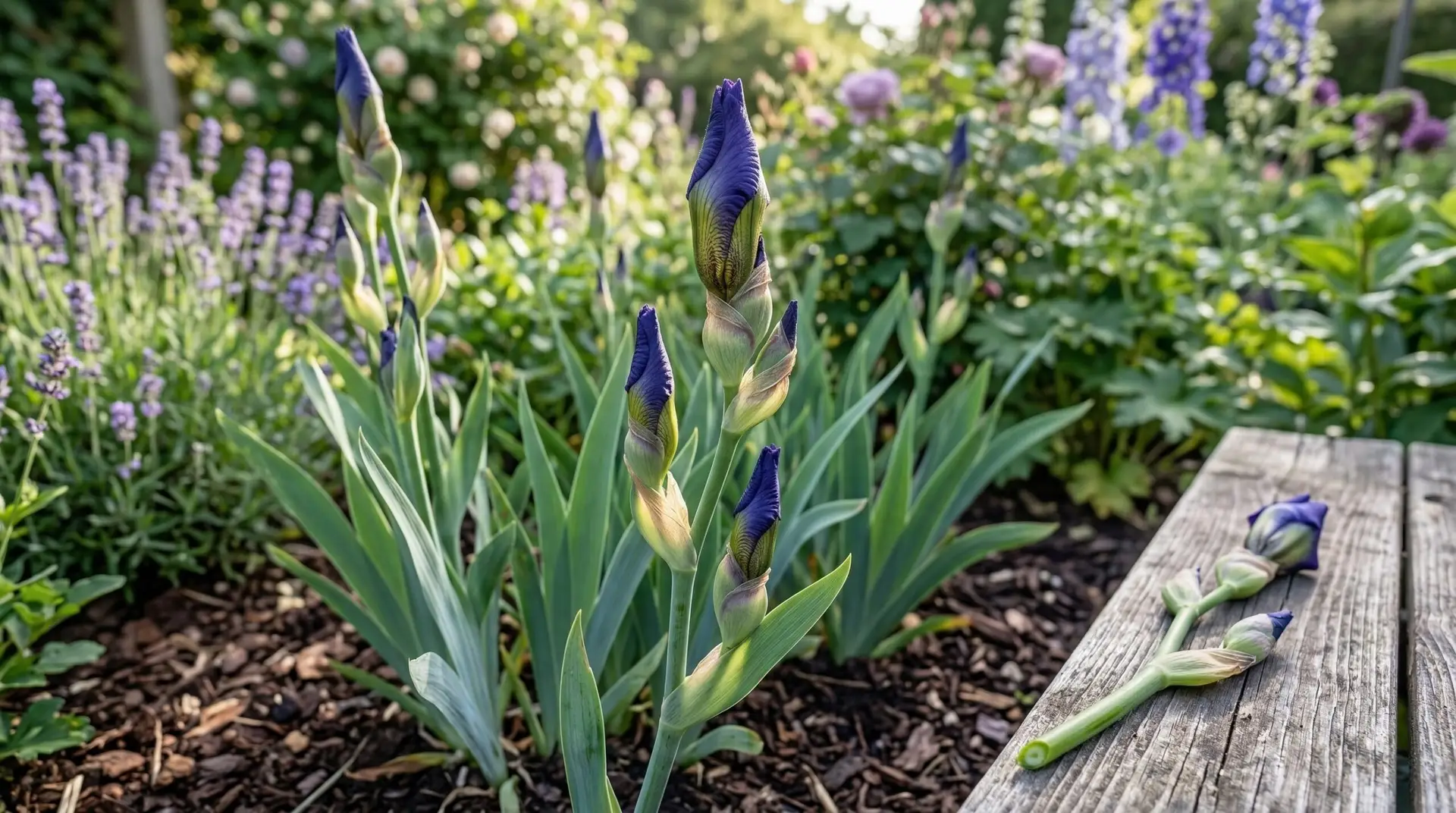
The secret to success begins long before the flower unfurls its standards and falls. Waiting until the blossom is wide open in the garden usually guarantees a short vase life and a high risk of damaging the delicate petals during transport. You want to look for stalks where the primary bud has emerged from its papery sheath and shows strong color, resembling a tightly rolled cigar. At this stage, the flower is fully formed but protected, holding all its energy in reserve for the vase.
Catching the bud at the perfect stage
Cutting iris demands an early start, ideally stepping out with your shears just as the sun clears the horizon. The plants are fully hydrated from the cool night, their cells plump with water, which gives the stems the rigidity they need to stand tall in an arrangement. Slide a sharp, clean blade down the stalk, cutting near the base while being careful to leave the fan of sword-like leaves intact to feed the rhizome for next year. As you gather the stems, you will notice a sticky sap weeping from the cut ends. This is a natural response, and carrying a bucket of cool water into the garden allows you to plunge the stems immediately, preventing air bubbles from blocking the vascular tissue. The tight buds may look unimpressive in the bucket, but they will begin their slow opening sequence within hours of coming inside.
Once indoors, the conditioning process dictates how long your blooms will last. Fill a clean vase or resting bucket with tepid water and a standard floral preservative to keep bacteria at bay. Strip away any small leaves or papery bracts that would sit below the water line, as decaying plant matter quickly fouls the water and shortens the life of the flowers. Recut each stem at a sharp angle under running water before placing it in the resting bucket, giving the stalks a few hours in a cool, dark room to drink deeply before you begin arranging.
Designing with strong spring forms
The architecture of the bearded iris makes it a dominant presence in any vessel. The tall, straight stems and large, complex blooms draw the eye immediately, meaning they often work best as the primary structural element in a design. When pairing them with other spring bloomers, you need companions that can hold their own against such strong forms without creating visual clutter. Fluffy, romantic peonies offer a perfect textural contrast to the crisp, ruffled edges of the iris. The heavy, rounded heads of peonies anchor the base of the arrangement, while the iris stems rise above them to create a varied skyline. Spherical alliums also make excellent partners, adding a different geometric shape that echoes the upright posture of the iris.
If you prefer a simpler aesthetic, a dedicated iris bouquet arranged in a tall glass cylinder allows the stems themselves to become part of the visual appeal. The clean, green lines of the stalks crisscrossing in the water provide a minimalist foundation for the elaborate blooms above. You can weave in a few stems of a late-blooming tulip to soften the edges, choosing colors that pull from the subtle undertones in the iris petals. Even a single stem placed in a narrow bud vase commands attention on a bedside table or a desk.
Managing the daily rhythm of the blooms
An iris flower arrangement is never static, changing its profile daily as new buds open and older ones fade. Each individual flower typically lasts only two to three days, but a healthy stalk carries multiple buds that open in succession down the stem. As the top blossom begins to shrivel and lose its color, you simply pinch it off at the base of its individual short stem. This grooming keeps the arrangement looking fresh and redirects the water and energy to the developing buds below. You might also find that the overall height of your design needs adjusting as the week progresses. Trimming an inch off the bottom of the stems every other day while changing the water keeps the vascular system open and naturally lowers the flowers as the uppermost blooms are removed.
Sometimes the secondary buds need a little encouragement to open fully in the final days of the arrangement. Moving the vase to a slightly warmer room often provides the gentle push required to coax the last bits of color from the tightest sheaths. You might also transition the remaining shorter stems into smaller vessels, perhaps pairing them with an early lily that is just beginning its own season. There is something deeply satisfying about following a single stem through its entire life cycle, appreciating the quiet, papery finish of the last bloom just as much as the pristine opening of the first.
More About Bearded Iris
Why bearded iris stops blooming and the six most common causes
Tall bearded iris versus dwarf bearded iris and choosing the right size for your garden
How to identify and prevent iris borer the most destructive bearded iris pest
How to grow bearded iris in hot southern climates where summer heat is intense
How to plant bearded iris rhizomes for a stunning spring flower show
Bearded iris color combinations and how to design a rainbow iris bed
Reblooming bearded iris varieties that flower twice in a single growing season
Dividing bearded iris in summer for healthier plants and more blooms next spring