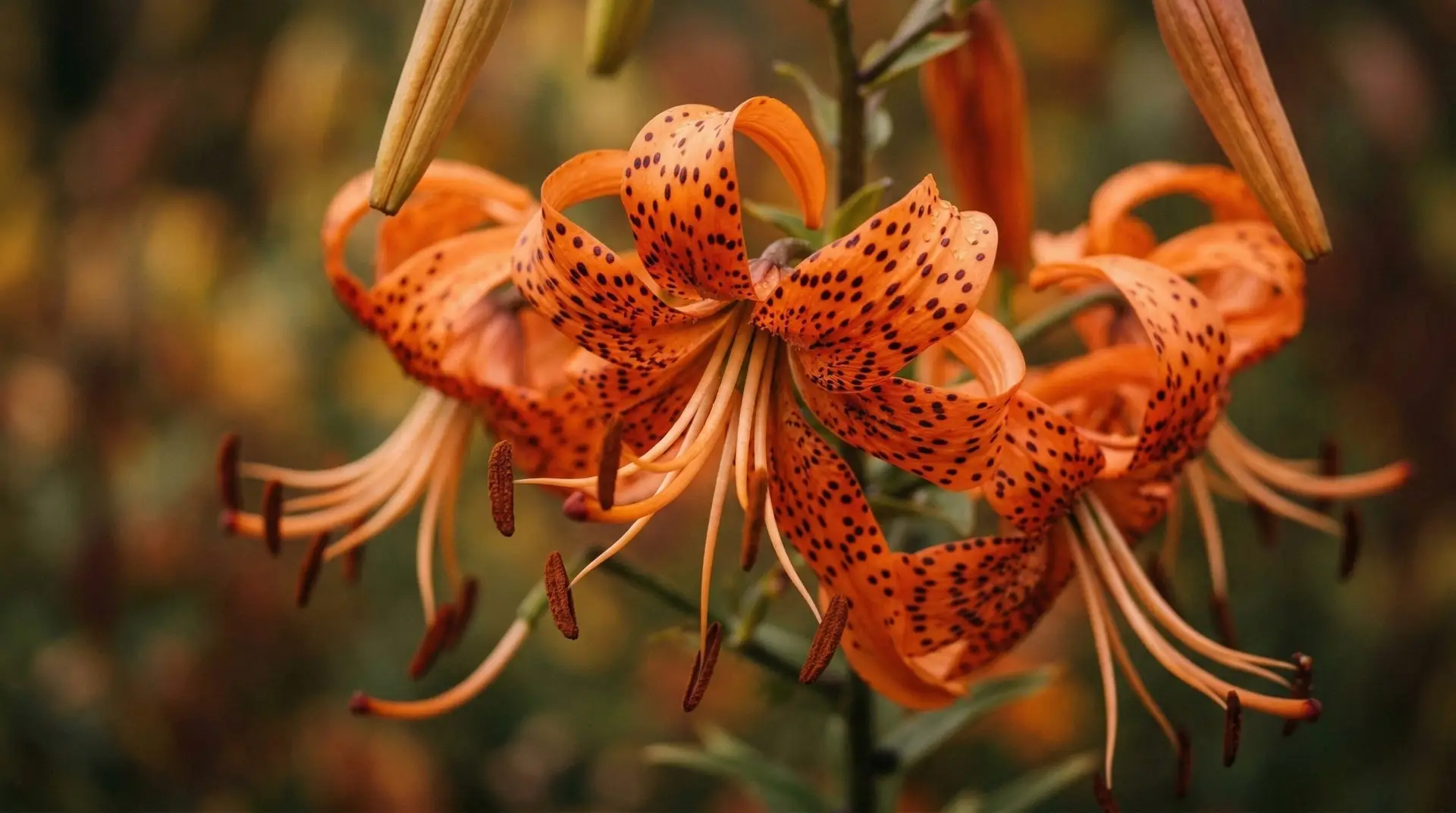
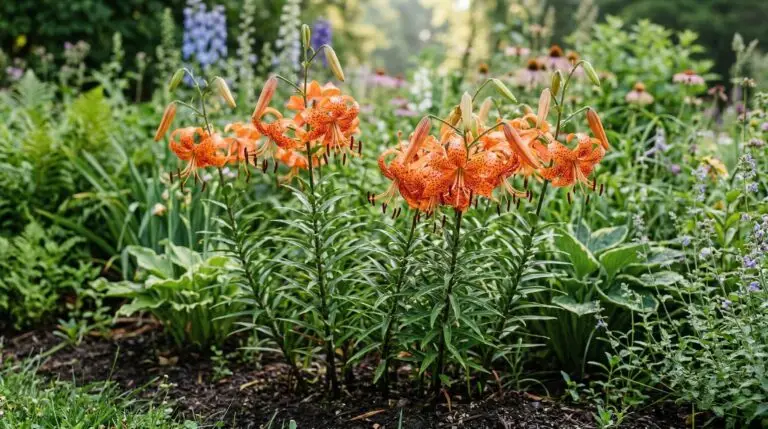
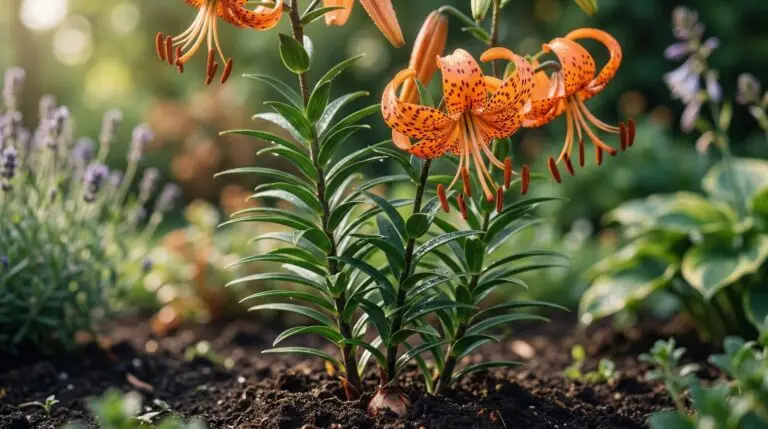
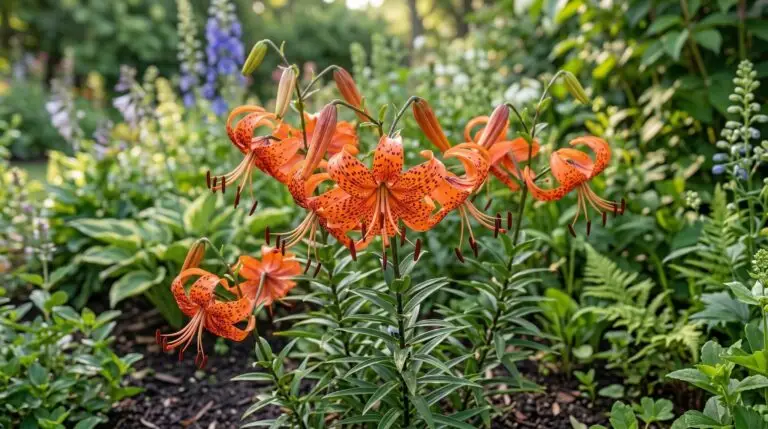
A Korean folk tale speaks of a hermit who lived deep in the mountains, spending his days in quiet isolation until he found a wounded tiger with an arrow lodged in its side. The hermit carefully removed the weapon and tended to the animal, forging an unlikely bond that lasted until the tiger eventually died of old age. Unable to bear the loss of his companion, the hermit used his magic to transform the tiger’s body into a striking flower to keep his friend near his home. The resulting blossom bore the bright orange coat of the wild cat, scattered with dark, raised spots that perfectly mimicked its markings. When we look at Lilium lancifolium today, that ancient story of friendship and transformation makes perfect sense. The petals curve backward almost aggressively, exposing prominent stamens that reach outward like long whiskers feeling the air. This bold appearance gave the plant its common name and shaped the tiger lily meaning we still recognize today. To grow this plant is to invite a small piece of that ancient wilderness into a cultivated space.
The language of spots and confidence
In the rigid social structures of the nineteenth century, people used the tiger lily flower language to communicate feelings they could not easily speak aloud. While a white lily communicated quiet purity and innocence, the orange spotted version sent a completely different, louder message. Giving someone this bright flower meant recognizing their wealth and pride, or perhaps pointing out their vanity if the relationship was strained. The sheer volume of the color orange, combined with those dark, raised spots, communicates an undeniable confidence that refuses to be ignored. A person who gifts this bloom is making a loud declaration rather than a subtle suggestion of affection. The plant itself behaves exactly like its meaning, standing tall above the fading foliage of July and August. It demands attention when most other garden plants are wilting under the heavy summer sun, proving its resilience and pride in equal measure.
A quiet plea for affection
Beyond wealth and pride, the tiger lily symbolism carries a surprisingly vulnerable secondary meaning hidden behind its fierce exterior. In certain traditions, handing someone these spotted petals translates directly to the desperate phrase “please love me back.” There is a strange contrast between the aggressive, fiery appearance of the petals and this quiet plea for unrequited love. The flower opens wide, completely exposing its most delicate reproductive parts to the harsh elements and any passing pollinator. This physical vulnerability mirrors the emotional risk of asking for someone’s heart when you are completely unsure of their answer. The deep orange color burns like an intense infatuation, while the spots might be the bruises of rejection or the marks of a love that has weathered difficult seasons. Every time the heavy summer wind catches the tall stalks, the nodding heads seem to bow in a physical gesture of longing.
Crossing oceans to reach American soil
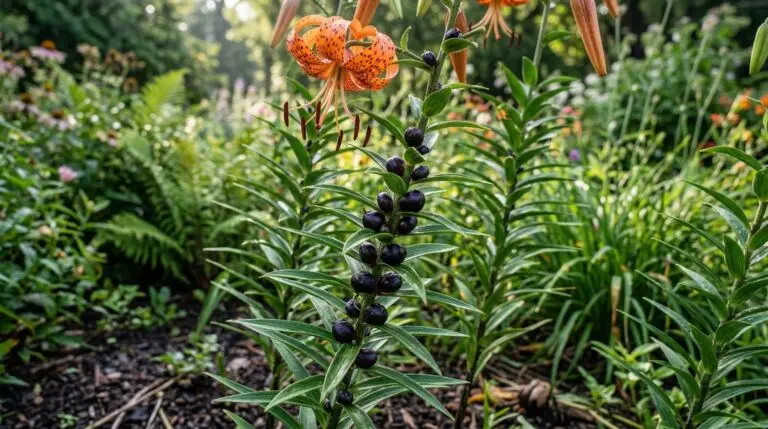
The travels of this wild plant from the mountains of eastern Asia to the backyards of North America are a story of botanical endurance. Plant hunters working for European nurseries first brought the bulbs back from China, Japan, and Korea in the early nineteenth century. By the 1840s, the species had crossed the Atlantic and found its way into American catalogs, where gardeners eagerly planted the exotic new arrivals in their Victorian borders. Unlike the delicate daylily that blooms for a single afternoon, this tall plant brought a different kind of staying power to the garden. The stalks produce tiny, dark bulbils right in the leaf axils, holding them tightly until late summer before dropping them directly onto the soil. These small black pearls root themselves wherever they fall, allowing the plant to colonize roadside ditches and abandoned farmsteads across the country over the decades. The flower that once signaled aristocratic wealth soon became a familiar, unpretentious sight along rural country roads, proving its adaptable nature.
Finding courage in the late summer garden
As the gardening year pushes past the soft pastels of spring, the yard requires plants with more fortitude to carry the visual weight of the season. The tiger lily provides exactly the kind of courage and confidence needed to anchor a garden in the exhausting heat of August. The thick stems push upward through the soil in early spring, looking like clusters of dark asparagus, before unfurling into whorls of glossy green leaves. They wait patiently through the early summer, gathering strength in their bulbs while the earlier flowers take their turns in the sun. When the buds finally swell and color up, they open from the bottom of the stalk upward, extending the display over several hot weeks. Watching these fierce orange blossoms open day after day reminds the gardener that endurance has its own specific kind of beauty. The spots on the petals act as a visual anchor, drawing the eye in and holding attention long after the sun has started to set.
The true narrative of this spotted flower exists in the quiet moments of observation at the end of a long, hot summer day. When the evening light hits the curved orange petals, the dark spots seem to absorb the shadows while the orange surface catches the final rays of the sun. You can run your thumb over the raised speckles and feel the physical texture of a plant that has survived centuries of travel and changing tastes. It does not ask for special soil, perfect pruning, or constant attention to thrive in modern garden beds. The tiger lily simply emerges from the warming earth each spring, grows taller than the weeds around it, and eventually opens its spotted petals to declare its presence to the world. Planting one is a small act of faith in your own garden, a way of bringing that ancient, wild courage right up to your back door. You become part of the long story of people who have admired this fierce, spotted bloom and found strength in its unyielding brightness.
More About Tiger Lilies
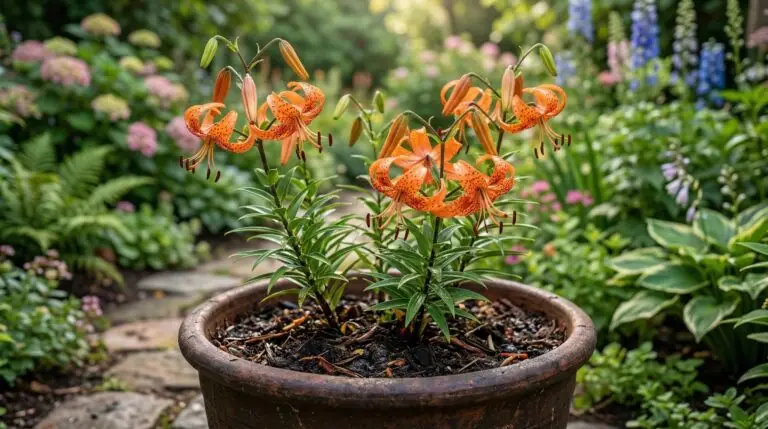
Growing tiger lilies in containers for bold orange summer drama on patios
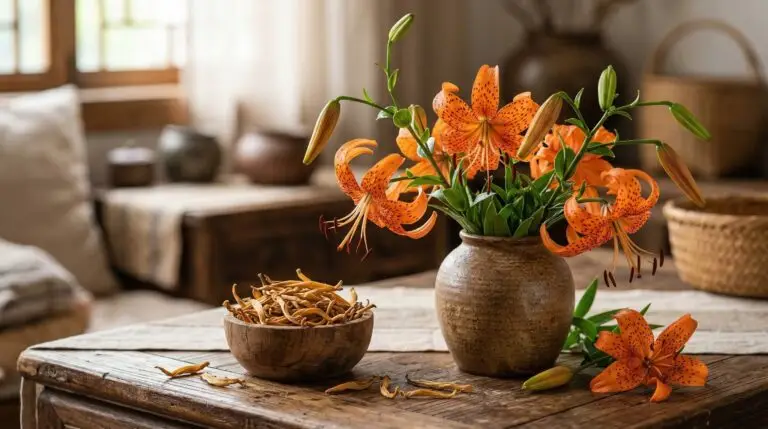
Edible tiger lily buds in Asian cuisine and the centuries-old tradition of cooking with lilies
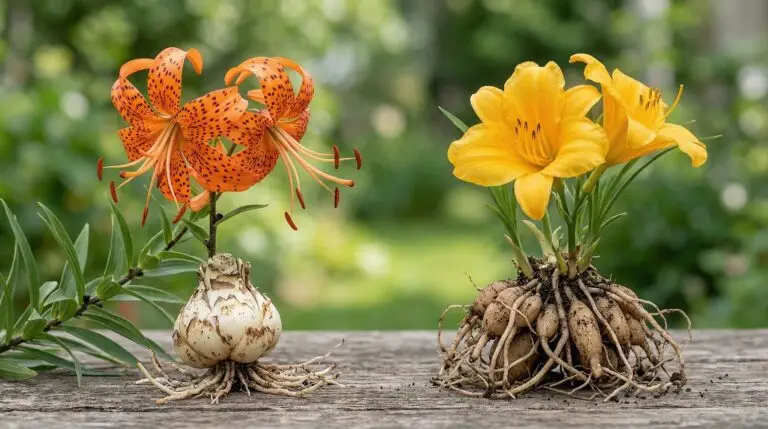
Tiger lilies versus daylilies and the common confusion between these two orange flowers
How to grow tiger lilies for dramatic orange spotted flowers that multiply on their own

Tiger lilies in cottage and farmhouse gardens and why old gardens always have them
Tiger lilies that are toxic to cats and the urgent warning every cat owner needs to know
Propagating tiger lilies from the tiny black bulbils that form along the stem
Warning about tiger lilies near other lilies and the virus they can silently carry