What to plant with Iris
The pairing · pick a flower
All Iris companions
What not to plant near Iris
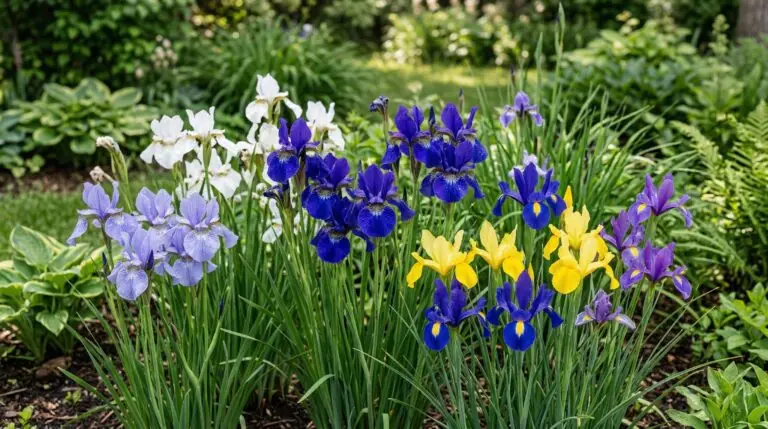
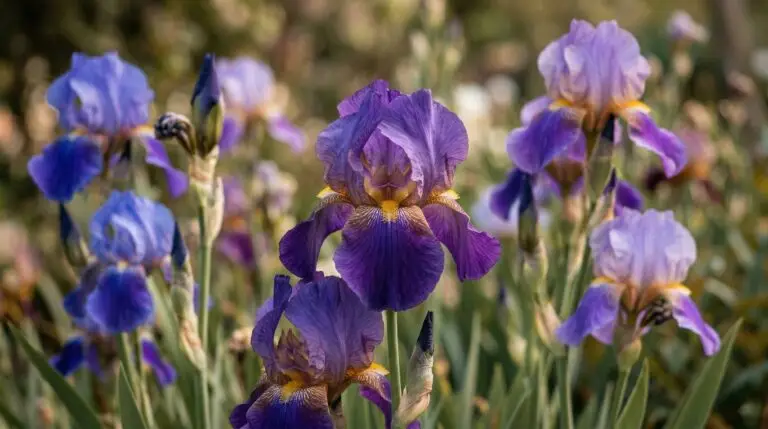
Iris blooms hard for two or three weeks and then goes quiet, its sword-shaped leaves standing there for the rest of the season while the border moves on without it. That is the genus-wide anxiety behind most "what to plant with iris" searches, and it holds true whether the iris in question is a tall bearded hybrid, a fine-leaved Siberian clump, or a boggy Japanese type by the pond. But before any companion advice is useful, there is a more basic question this page exists to answer honestly: which iris do you actually have. Bearded iris wants dry, sun-baked soil with its rhizome exposed at the surface. Japanese and Louisiana iris want the near opposite, consistently wet, acidic ground that would rot a bearded rhizome outright. Siberian iris sits comfortably in between. A companion list built for one type can be wrong, sometimes badly wrong, for another, and that mismatch is the real trap hiding inside every generic "iris companion plants" list on the internet.
The best companions for iris, explained
A small set of plants pairs honestly across most garden iris types, and that cross-type reliability is what makes them worth naming first. Peonies are the most consistently repeated companion for a reason: they want the same full sun and well-drained soil that bearded and Siberian iris both prefer, they open in the same late-spring window, and their bushy, upright foliage stays attractive all summer, doing real work to cover the iris’s strappy leaves once the flowers drop. Daylily follows close behind, tolerant enough of both drier and slightly damper soil to sit comfortably next to nearly any iris type, and it blooms right as the iris flush ends, carrying color forward instead of leaving a gap. Alliums and catmint round out the safest picks: allium is a bulb rather than a spreading perennial, so it never crowds a rhizome, and catmint tolerates the same lean, dry conditions bearded and Siberian iris want while stretching bloom well past the short iris show.
Hardy geranium earns its place as a living mulch, a low, shallow-rooted mound that knits in around the iris’s base and hides the bare, browning foliage that shows up first at the bottom of the clump, all without the deep roots that would actually compete with a rhizome. For structure and season-extending color, black-eyed Susan and coneflower share the leaner, sun-loving end of the range and pick up the display from midsummer into fall, once every iris type in the bed has gone quiet. Clematis works differently, climbing on its own support rather than competing at ground level, and its shaded-root, moist-soil preference makes it a better match for a Siberian iris bed than for a lean bearded one. And a genuinely distinctive move only a genus page can suggest honestly: mixing iris types by bloom time, early dwarf varieties first, tall bearded in the concentrated late-spring show, then Siberian iris with its finer, narrower foliage adding a second wave of color, stretches the entire iris season rather than compressing it into one two-week event.
What not to plant near iris
The single most important avoid at the genus level is not a plant at all, it is a mismatch: pairing a companion suited to one iris type’s water and light needs with a different iris type. Lavender, rosemary, thyme, and most sedum want sharp, dry drainage and will genuinely struggle or rot if planted next to a Japanese or Louisiana iris, whose beds stay consistently moist to wet and sometimes hold standing water on purpose. The reverse mismatch is just as real: hosta, astilbe, and fern all want steady moisture and shade, close to the opposite of what a bearded or dwarf iris needs, and planted too close they both fail to thrive themselves and shade or dampen a crown that needs to stay dry. Neither failure is really about a bad plant choice in the abstract. It is about applying one iris type’s rules to a different iris type, which is the mistake a generic, type-agnostic companion list makes almost by default.
For bearded and dwarf iris specifically, there is a second, more mechanical risk: the rhizome sits exposed at or just below the soil surface by design, and heavy mulch or a spreading companion packed against it traps moisture at the crown and invites bacterial soft rot, the most serious disease this iris type gets. This is a bearded and dwarf iris rule, not a genus-wide one; Siberian iris is fibrous-rooted and tolerates ordinary mulching without the same risk, and Japanese and Louisiana iris want consistently damp soil regardless of what sits nearby. Readers growing bearded iris specifically can find the full rot mechanics and a dedicated avoid list on the bearded iris companion guide rather than repeated here in less detail. Beyond these two mismatches, the usual physical risks apply across every type: aggressive spreaders like mint, vinca, and English ivy will crowd out the room any iris rhizome or root system needs to multiply, and tall, dense, or overhanging neighbors block the sun and airflow that bearded and dwarf types especially depend on to bloom and stay disease-free.
Do they like the same conditions?
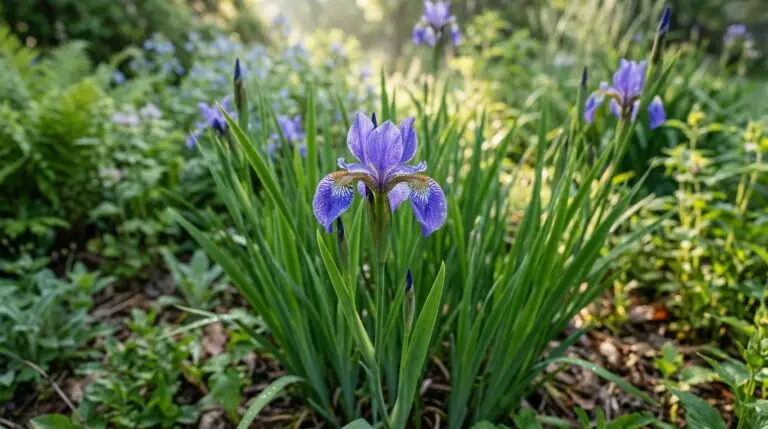
This is where a genus-level page has to do more honest work than a single-type page, because "iris" as searched can mean four materially different plants. Bearded iris wants full sun, at least 6 to 8 hours, and low-to-moderate water leaning dry, with soil pH in a comfortable near-neutral range, and the rhizome itself has to sit exposed to bake in open air rather than buried or mulched. Siberian iris tolerates that same full sun but is noticeably more forgiving of average garden moisture and light part shade, closer to a genuine middle ground than an extreme. Japanese iris flips the water profile entirely: it wants acid soil, roughly pH 5.0 to 6.5, and consistently moist to wet conditions, tolerating periods of standing water during the growing season, the near opposite of what keeps a bearded rhizome healthy. Louisiana iris follows the same wet, damp-to-boggy pattern, thriving in ditches, along pond edges, and in beds that never dry out, with yellowing and poor growth showing up if the soil pH climbs above 6.0.
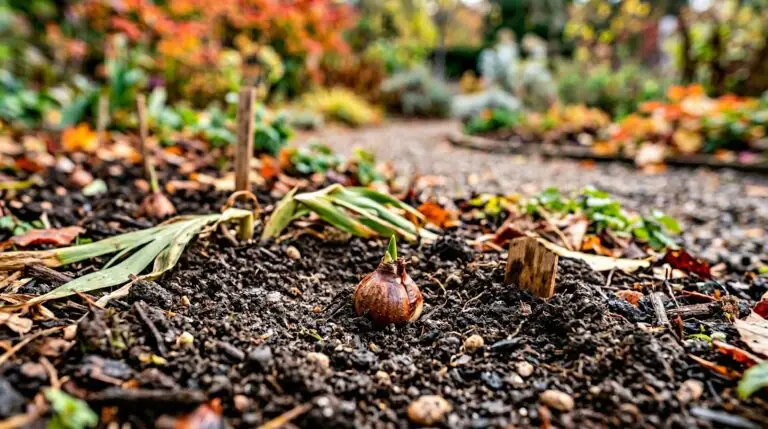
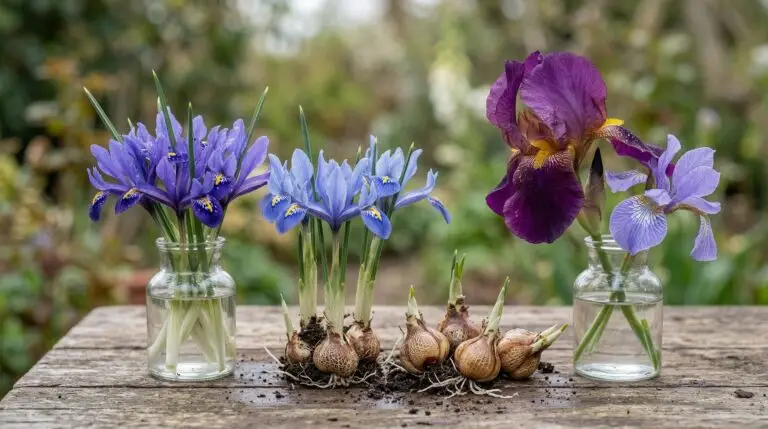
Every companion recommended above was tested against this split rather than against a single generic "iris" standard. Peony, allium, and catmint genuinely share the drier, sun-loving end that covers bearded and Siberian iris, which is why they rate as strong, cross-type picks rather than merely popular ones. Daylily’s wide tolerance for both drier and slightly damper soil is what lets it work across nearly the whole range. Ferns and, more cautiously, hosta belong only at the wet end, next to Japanese or Louisiana iris, since hosta itself dislikes truly soggy ground and does better at the moist, not waterlogged, margin of a bog bed. Dutch iris and dwarf or reticulata types are the real outliers here: true bulbs rather than rhizomes, planted in fall and blooming in spring, they behave far more like tulip or daffodil companions than like a border perennial, and treating them as interchangeable with bearded or Siberian iris in a companion plan is its own honest mismatch worth naming.
How to plant them together
Space every companion against your actual iris type’s habit, not a generic rule. For bearded and dwarf iris, keep low, non-spreading companions like allium within 8 to 12 inches of the clump, since bulbs clear their own space and never shade the crown; give mid-height perennials like catmint and hardy geranium 12 to 18 inches so their own foliage never leans in over the rhizome; and reserve 18 to 24 inches or more for larger plants like peony, daylily, and coneflower. Siberian iris, with its fibrous roots rather than an exposed rhizome, tolerates slightly tighter spacing and ordinary mulching without the same rot concern. Japanese and Louisiana iris planted at a pond edge or in a bog bed should be paired only with genuinely moisture-tolerant neighbors at similar spacing, never with the dry-loving group above.
Layer the bed by bloom time as much as by height, since that sequencing is what actually solves the short-bloom problem every iris type shares. Spring bulbs open first and clear out before most iris foliage fills in. Bearded iris and peony bloom together for a concentrated late-spring show, with allium adding height in the same window. Siberian iris follows a few weeks later, extending the display without a design overhaul. Daylily, catmint, coreopsis, coneflower, and black-eyed Susan then carry color from early summer into fall, well past the point every iris type has gone quiet for the year. Iris in general performs poorly in containers, since a bearded rhizome’s need to bake and dry quickly between waterings, and a Japanese or Louisiana iris’s need for constant wet feet, are both hard to replicate in a pot; treat this as a border and bog-bed plant and keep serious companion pairings in open ground.
Does companion planting actually work for iris?
The shared-conditions logic holds up well once you stop treating iris as one plant. Peony, allium, catmint, daylily, and hardy geranium are genuinely Proven matches for bearded and Siberian iris, each backed by extension sources describing the same full-sun, well-drained preference iris itself needs. The genus-wide water-and-pH split between bearded, Siberian, Japanese, and Louisiana iris is equally solid ground, confirmed independently by extension horticulture writing that treats these as materially different plants with different requirements, not interchangeable varieties of the same flower. The bearded-specific rhizome-rot mechanism is just as well documented, though it belongs to that one iris type rather than the whole genus, which is why it gets routed to a dedicated page rather than repeated here as if it applied everywhere.
What is folklore, or close to it, is the idea that a companion actively protects iris from pests through some repel mechanism, or that mixing iris types with columbine and lupine carries any proven horticultural benefit beyond the honest, plausible logic of similar bloom timing and full-sun tolerance. Iris resists deer because its rhizome and leaves carry irritating compounds that make them unappealing and mildly toxic to browse, not because a neighboring plant is doing protective work, so building a deer-resistant zone around iris using catmint, allium, and other independently unpalatable plants is a legitimate strategy, but it works because those plants are unappealing on their own, not because iris or its neighbors repel anything. Where a claim is genuinely thin, this page says so rather than dressing up a popular pairing as settled fact.
FAQ
What can I plant with iris after it finishes blooming?
Daylily, catmint, coreopsis, coneflower, and black-eyed Susan all bloom from early summer into fall, right as most iris types finish their short spring show, and all tolerate the same lean-to-average soil bearded and Siberian iris prefer, so they carry the bed forward without fighting the iris for the same conditions.
Does it matter which type of iris I have when choosing companions?
Yes, significantly. Bearded and dwarf iris want dry, sun-baked soil with an exposed rhizome, while Japanese and Louisiana iris want consistently wet, acidic ground and tolerate standing water. A companion right for one type, lavender for bearded or fern for Japanese, is often wrong for the other.
What should you not plant near iris?
Avoid pairing dry-loving plants like lavender or sedum with a Japanese or Louisiana iris, and avoid moisture-loving shade plants like hosta or astilbe next to a bearded or dwarf iris. Aggressive spreaders like mint and vinca, and tall crowding neighbors that block sun and airflow, are risks across every type.
Can I mix different types of iris in the same bed?
Yes, and it is one of the more useful genus-specific techniques: pairing early dwarf iris, mid-season bearded iris, and later Siberian or Japanese iris extends the overall bloom season, provided each type is planted in soil that actually matches its own water and light needs rather than a single shared bed.
Are peonies really a good companion for iris?
Yes, for bearded and Siberian iris specifically. Both want the same full sun and well-drained soil, bloom in the same late-spring window, and peony’s bushy summer foliage helps cover the iris’s fading leaves. The pairing is weaker for Japanese or Louisiana iris, which want wetter soil than peony tolerates well.
Is iris deer resistant, and does that help its companions?
Iris is genuinely deer resistant because its rhizome and leaves contain irritating, mildly toxic compounds that discourage browsing, not because it protects nearby plants. Pairing it with other independently unpalatable plants like catmint and allium builds a real deer-resistant zone in that part of the garden, a useful strategy even though it is not iris actively repelling anything.
Sources
NC State Extension Gardener Plant Toolbox: Iris sibirica (Siberian Iris) · NC State Extension Gardener Plant Toolbox: Iris ensata (Japanese Iris) · Mississippi State University Extension: Louisiana Iris in the Home Landscape · American Iris Society: How to Plant and Grow Bearded Iris · NC Cooperative Extension (Beaufort County): Irises, a Garden Classic with Endless Variety · Wisconsin Horticulture Extension: Peony · Wisconsin Horticulture Extension: Dividing Bearded Iris · NC State Extension Gardener Plant Toolbox: Hemerocallis (Daylily) · NC State Extension Gardener Plant Toolbox: Geranium sanguineum (Hardy Geranium) · NC State Extension Gardener Plant Toolbox: Nepeta x faassenii (Catmint)
More About Irises
Iris problems from borers to rot and keeping your iris collection healthy
How to grow irises for elegant sword-leaved plants and flowers in every color of the rainbow
Dividing and transplanting irises at the right time for healthy plants and more blooms
Iris flower meaning and why the rainbow goddess gave this flower its name
Dutch iris bulbs for spring cutting gardens and the easiest iris to grow in bouquets
Miniature and dwarf iris for rock gardens and early spring color at ground level
Louisiana iris for southern gardens and warm humid climates where bearded iris fails
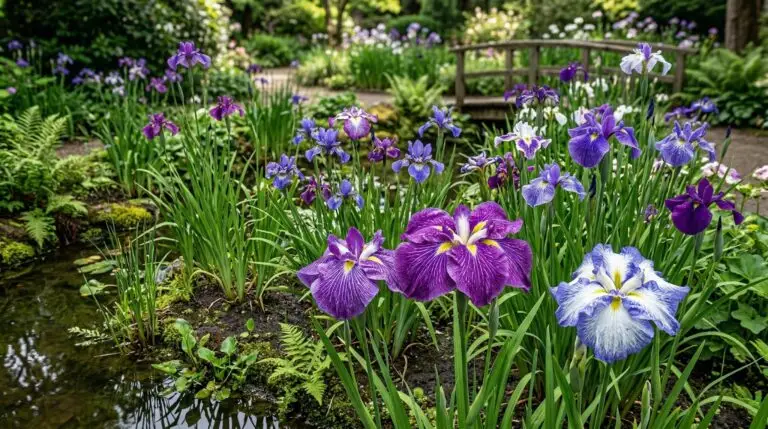
Japanese iris for dramatic waterside blooms with the largest flowers in the iris world