By the end of this reading, you will understand exactly how scarlet sage begins its life and why choosing between a seed packet and a nursery pot is about more than just your gardening budget. Many gardeners look at a flat of bright red flowers at the garden center and wonder if they could have grown the same plants for pennies at home. The short answer is yes, but the process requires understanding what these specific plants need to wake up from dormancy. Scarlet sage is a tropical perennial that we grow as a warm-season annual, meaning it operates on a different biological clock than cold-hardy plants. We are going to look at the exact mechanics of growing scarlet sage from seed so you can decide if the investment of time makes sense for your growing space. You will see how the upfront cost of supplies balances against the price of nursery plants over a single growing season.
The biology behind salvia seed starting
To grow these plants successfully, we first need to look at what salvia splendens seeds require to break dormancy. Think of a seed as a tiny, tightly packed suitcase that contains everything a baby plant needs to survive its first few days of life, but it will not open until it receives the correct environmental signals. For many familiar garden vegetables, that signal is simply warmth and moisture buried in the dark soil. Scarlet sage operates differently because it requires light to germinate. If you bury these seeds under a layer of potting mix, they will assume they are buried too deep to survive and will simply stay asleep in the dirt. When planting them, you must press them gently into the surface of your moist seed-starting mix so they make good contact with the soil while still being exposed to the light above. This might seem contradictory to everything you learned about planting seeds as a child, but the reason is tied to how the plant evolved to reproduce in its native environment.
Because they sit on the surface, these seeds are incredibly vulnerable to drying out before they can push their first root down into the soil. You have to maintain a delicate balance of keeping the surface consistently moist without creating a soggy environment that encourages mold. A clear plastic dome over your seed trays acts like a miniature greenhouse, trapping the humidity right at the soil surface where the seeds rest. Once the seeds sprout and you see tiny green leaves emerging, you must remove the dome so air can circulate and prevent fungal diseases from attacking the fragile stems. Getting this moisture balance right takes a season or two to get a feel for, and that is completely normal for anyone learning to start seeds indoors. The plants will also need strong overhead light immediately after sprouting to prevent them from stretching out and becoming weak, spindly seedlings that fall over under their own weight.
Timing the indoor growing window
Scarlet sage is a slow starter, which dictates exactly when we need to begin the process. Unlike a marigold that can pop out of the ground and bloom in just a few weeks, scarlet sage needs a substantial head start before the weather warms up outside. You need to plan for an eight to ten week indoor start before your region’s last expected frost date. This long runway gives the plant enough time to develop a robust root system and multiple sets of true leaves before it faces the harsh realities of outdoor wind and sun. If you start them too late, you will spend half the summer waiting for your plants to reach a size where they can actually produce flowers. This extended indoor growing period means you need a dedicated space with artificial grow lights, as a sunny windowsill rarely provides enough direct light for ten solid weeks of healthy growth.
During these weeks indoors, the seedlings go through distinct phases of development that require your attention. After the initial germination phase, the plants will grow their first set of true leaves, which look like miniature versions of the adult foliage rather than the simple oval leaves that first emerged from the seed. At this stage, the nutrients packed inside the original seed are completely depleted, and the plant relies entirely on its roots to find food. You will need to introduce a very weak, water-soluble fertilizer to the watering routine to support this vegetative growth. You also need to monitor the root development by gently checking the bottom of the pots to see if white roots are circling the plastic. If the plants outgrow their initial cells before the outdoor weather is warm enough for planting, you must move them into slightly larger pots so their growth does not stall permanently.
Comparing the real costs of both methods
Understanding the financial difference between seeds and transplants requires looking beyond the price tag on a single seed packet. A packet of scarlet sage seeds might cost three or four dollars and contain fifty to one hundred potential plants, making the cost per plant just a few cents. However, you must factor in the cost of seed starting mix, plastic trays, a humidity dome, and the electricity for your grow lights over a ten-week period. If you are starting from absolute scratch and need to buy lights and shelving, your first-year cost per plant will actually be much higher than buying mature transplants. The financial advantage of seed starting really reveals itself in the second and third years, when your only recurring costs are the seeds themselves and a fresh bag of sterile soil medium. Once you own the equipment, growing fifty scarlet sage plants at home costs a fraction of what a nursery would charge for the same volume of flowers.
Buying transplants at the garden center presents a completely different economic model that makes sense under certain conditions. Think of buying transplants like paying for a meal at a restaurant, while growing from seed is like cooking from scratch at home. When you purchase a flat of young plants, you are paying for the nursery’s heated greenhouse space, their professional lighting, and the labor required to tend the plants for two months. A standard six-pack of scarlet sage might cost four to six dollars, putting the cost per plant at roughly one dollar. If your garden design only requires six to twelve plants to fill a few specific containers or edge a small walkway, buying transplants is mathematically and practically the smarter choice. You bypass the need for indoor equipment and skip the ten weeks of daily monitoring required to keep seedlings alive. The nursery route also eliminates the risk of a complete crop failure, which is a real possibility when you are first learning how to manage indoor lighting and watering schedules.
Making the right choice for your garden space
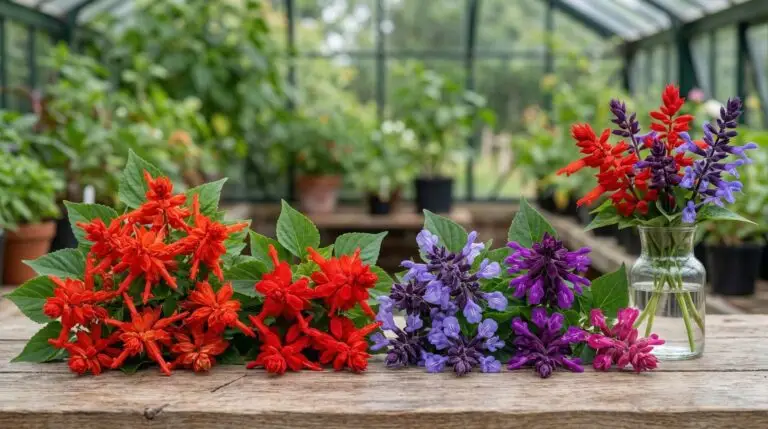
The decision often comes down to the specific varieties you want to grow and the scale of your planting project. Garden centers typically stock one or two reliable, uniform varieties of scarlet sage that appeal to the mass market and look good in small plastic pots. When you shop for seeds through specialty catalogs, you unlock access to a much wider genetic pool, including exceptionally tall varieties, different foliage colors, and subtle variations in the red blooms. Growing from seed allows you to experiment with these unique cultivars that you will never find on the racks at a local home improvement store. If you are trying to replicate a massive, sweeping border of red flowers seen in public parks, the seed route is the only economical way to generate the dozens of plants required for that visual impact. You might even decide to grow your red salvia from seed while purchasing a few blue salvia transplants from the nursery to create an immediate color contrast in your beds.
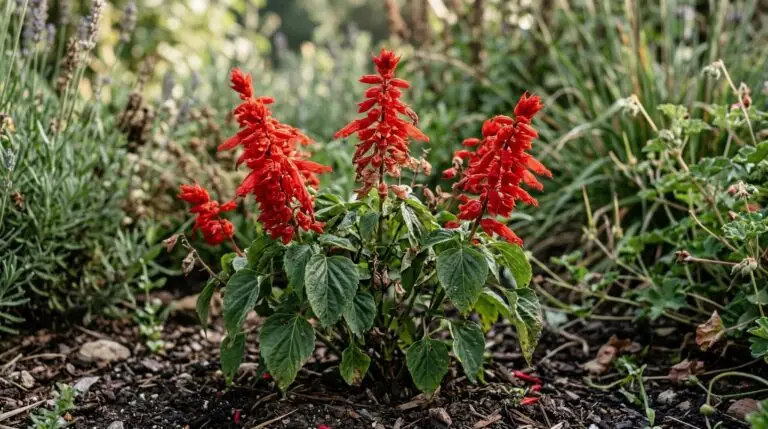
Ultimately, choosing how to bring these bright red spikes into your garden is about matching your available time and resources with your gardening goals. Growing plants from a tiny speck of dormant matter teaches you how water, light, and temperature interact to create life, building your foundational skills as a gardener. Buying transplants offers immediate gratification and predictable results, allowing you to focus your energy on garden design and soil preparation rather than indoor plant care. Both methods result in beautiful, nectar-rich flowers that will draw hummingbirds and pollinators to your yard throughout the heat of summer. The core principle to take away is that seed starting is an investment in your gardening education and future capacity, while transplants are a direct purchase of a finished product for immediate use in the landscape.
More About Scarlet Sage
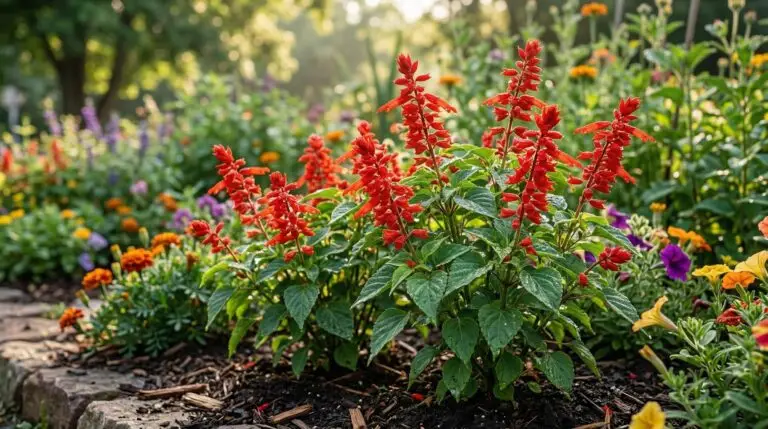
How to grow scarlet sage for blazing red spikes that hummingbirds fight over
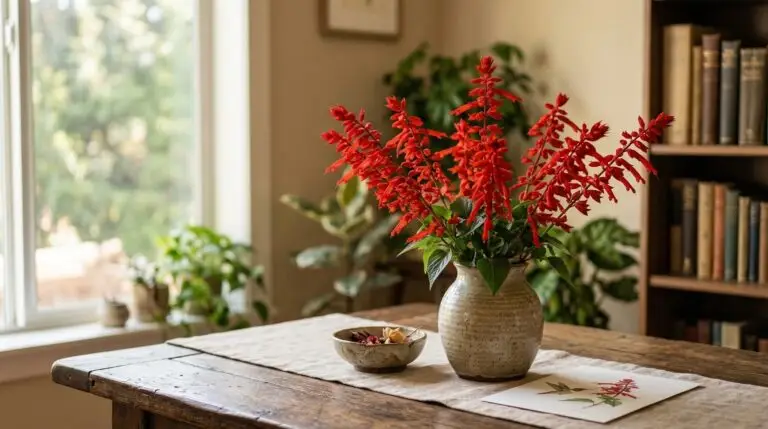
Scarlet sage as a hummingbird garden essential for non-stop feeder-free attraction
Companion plants for scarlet sage: what to grow and avoid
Best scarlet sage varieties beyond basic red including salmon coral and burgundy
Scarlet sage flower meaning and the fiery passion this red bloom represents
Growing scarlet sage in containers for fiery patio displays and front door drama
Why scarlet sage gets leggy in midsummer and the pinch-back method for bushy plants
Scarlet sage versus blue salvia and choosing the right salvia for your garden design