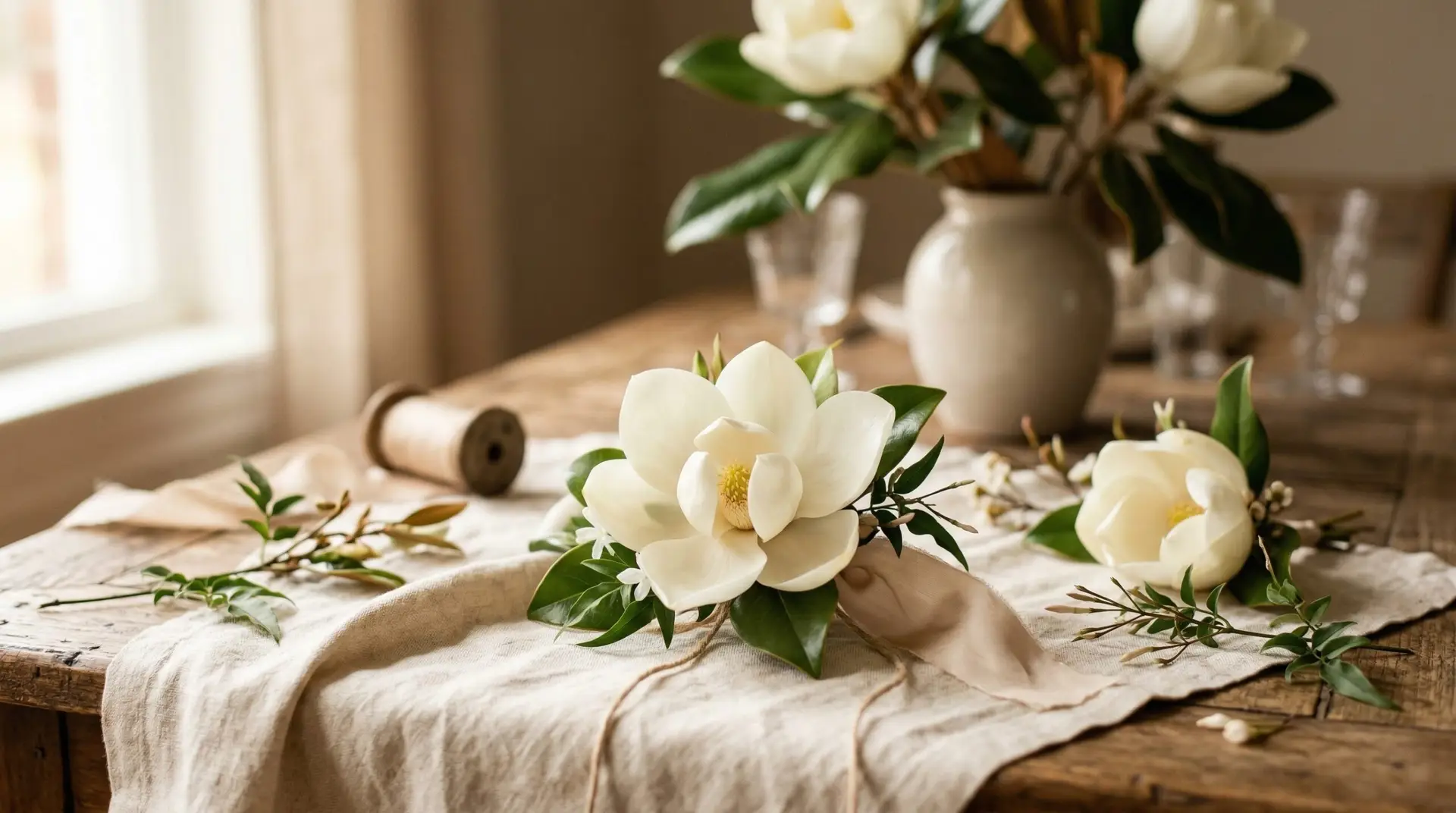
The morning air of a late spring wedding often carries a heavy, sweet perfume before the first guest even arrives. This fragrance belongs to the Southern magnolia, a tree that produces blooms so large and white they look like porcelain plates resting against dark foliage. A true magnolia wedding begins with this sensory experience, setting a tone of grounded elegance and deep regional roots. The flowers open wide in the morning light, revealing a center cone surrounded by thick, creamy petals that seem almost too perfect to be real. Brides have sought out these magnificent blossoms for generations, drawn to their scale and their undeniable connection to the local earth. There is something deeply satisfying about carrying a flower that might have been gathered from the very trees shading the ceremony. The pristine white cups offer a visual weight that delicate spring stems simply cannot match.
Incorporating these blooms into a celebration requires both admiration and a gentle touch. Florists understand that magnolia wedding flowers demand a specific approach to design and handling. The blooms are unapologetically large, meaning they dictate the style of whatever arrangement they join. A designer must let the magnolia take the lead, building the rest of the floral story around its massive, waxy perfection.
The southern bridal tradition
The tradition of the magnolia bridal bouquet stretches back through decades of family histories and backyard ceremonies. Many brides grew up climbing the sturdy branches of a grandiflora tree, making the inclusion of its flowers a deeply personal choice rather than just an aesthetic one. These trees can live for over a century, standing as silent witnesses to generations of family gatherings, summer afternoons, and whispered secrets. Bringing those familiar branches into a wedding space bridges the gap between the wildness of the outdoors and the formality of a marriage celebration. While a fragrant gardenia might be tucked into a lapel or pinned in the hair, the magnolia commands the center stage of the bridal march. Families often time their celebrations specifically to coincide with the brief window when the trees are covered in white buds. The presence of these native flowers grounds the entire event in a specific time and place.
There is a quiet confidence in choosing a local, seasonal flower over something imported and predictable. The large blooms do not need to be clustered together to make a visual impact. A single, fully opened blossom can carry the weight of an entire bouquet all on its own. This minimalist approach allows the natural architecture of the flower to draw the eye without distraction.
Designing with the grandiflora bloom
When a florist begins working with a fresh magnolia, the first consideration is always scale. The blossoms can easily measure eight to twelve inches across when fully expanded, dwarfing conventional bouquet components. Designers often treat them as solitary focal points, creating single bloom corsages or carrying bouquets that feature just one perfect flower surrounded by its own leaves. This technique echoes the traditional elegance of a single white rose, but it amplifies the drama to suit a large venue or a grand cathedral aisle. The petals possess a thick, waxy texture that catches the light beautifully in photographs, giving them a sculptural quality. Because the flowers are so visually heavy, they require strong, structured ribbons or heavy silk wraps to balance their proportions. The result is an arrangement that feels both opulent and entirely natural.
Placing these blooms in centerpieces requires equally thoughtful mechanics to keep them stable. The thick stems do not bend gracefully into delicate glass vases, so designers often float the severed blooms in wide, shallow bowls of water. This presentation mimics how the flowers look when they naturally fall from the tree after a rainstorm. It also keeps the stems perfectly hydrated throughout a long, warm evening of dining and dancing.
Handling short-lived perfection
The greatest secret behind a flawless magnolia wedding is the extreme care taken to protect the petals from human hands. Despite their thick and sturdy appearance, magnolia petals are incredibly sensitive to the oils present on human skin. A careless touch will cause the pristine white surface to oxidize, turning a bruised, rusty brown within a matter of minutes. Florists often wear soft cotton gloves when wiring or arranging the blooms to prevent any accidental discoloration before the ceremony begins. This fragility makes them much more challenging to work with than a durable stephanotis or other traditional white wedding blooms. The flowers also have a remarkably short lifespan once cut, often lasting only a single day before they begin to naturally fade and drop their petals. Professionals usually harvest the blooms while they are still tightly closed buds, allowing them to open in a cool, dark room just hours before the bride walks down the aisle.
Managing this brief window of perfection requires precise timing and a backup plan. Experienced designers always order or forage twice as many blooms as they actually need for the final arrangements. If a petal bruises during transport or a bud opens too quickly in the heat, a fresh replacement must be ready in the cooler. This careful orchestration ensures that the flowers look unblemished exactly when the photographer starts taking portraits.
The lasting beauty of magnolia greenery
While the white blossoms demand careful timing and gentle handling, the foliage offers endless, durable possibilities for wedding decor. Magnolia leaves are thick, leathery, and entirely forgiving of heat, wind, and rough treatment. Their dual-sided coloring provides a built-in textural contrast that florists love to use in large-scale installations. The top of each leaf is a slick, glossy emerald green, while the underside reveals a soft, suede-like texture in shades of copper and rust. Designers frequently wire hundreds of these leaves together to create massive, sweeping leaf garlands that frame chapel doors or drape across long banquet tables. These greenery runners can be assembled days in advance without any water source, making them a highly practical choice for elaborate tent setups. The rich brown undersides of the leaves tie in beautifully with wooden farm tables, brass candlesticks, and other warm metallic accents.
Using the foliage generously allows a couple to achieve the signature magnolia bridal aesthetic even if their date falls outside the blooming season. A winter celebration can feature thick magnolia wreaths tied with velvet ribbons, bringing a touch of southern warmth to the coldest months. The leaves dry perfectly over time, maintaining their shape and shifting to a uniform, muted bronze. Many couples save a branch from their wedding arch to display in their home as a permanent memory of the day.
As the reception draws to a close and the evening cools, the sweet citrus scent of the magnolia often lingers in the air long after the music stops. The grand white blooms may begin to soften at their edges, gracefully yielding to the end of their short, spectacular life. There is a specific romance in choosing a flower that demands to be appreciated strictly in the present moment. The fleeting nature of the blossom makes its presence at a wedding feel like a rare and intentional gift. Long after the tables are cleared, the dark, glossy leaves remain behind, sturdy and unchanged by the passage of the day. The memory of that heavy, perfect white cup against the dark green branches stays fixed in the mind, a quiet reminder of a celebration rooted deeply in the soil of the south.
More About Magnolia
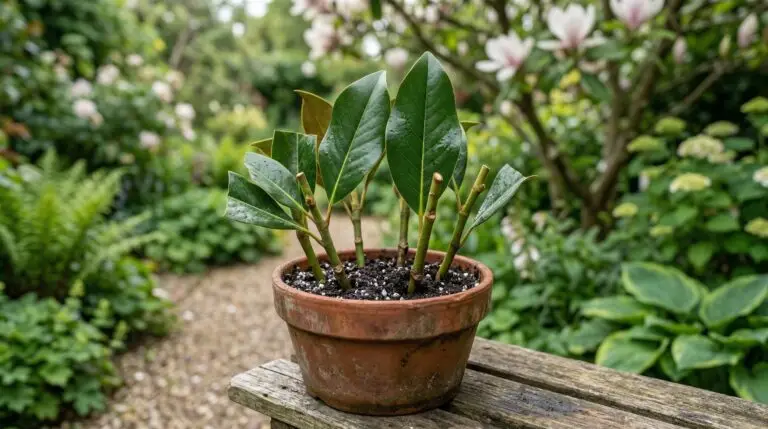
How to propagate magnolias from cuttings and layering for new trees from your favorite
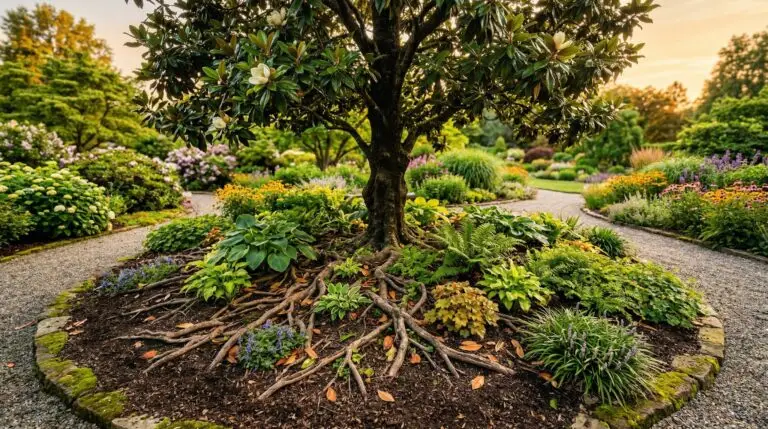
Companion plants for magnolia trees: what to grow and avoid
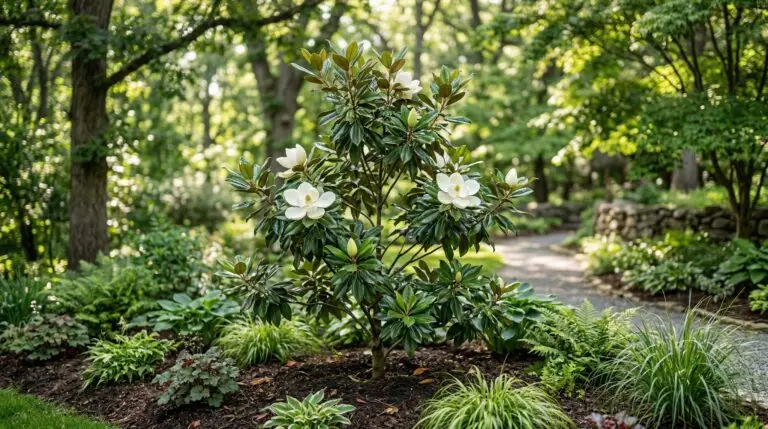
How to grow magnolia trees for breathtaking spring blooms on bare branches
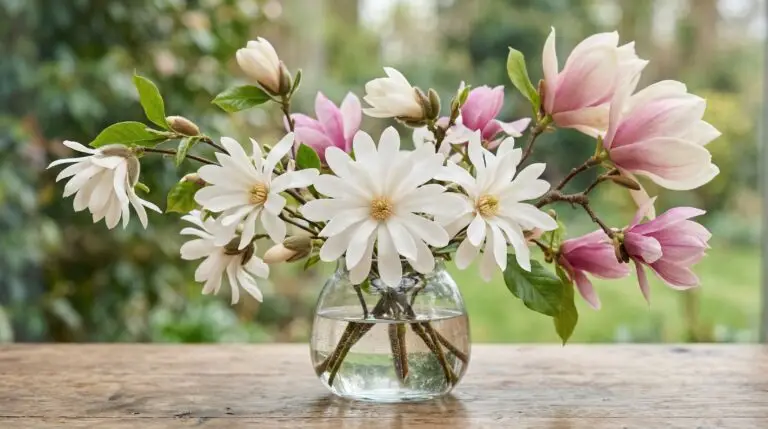
Small magnolias for compact gardens that fit any yard with room to spare
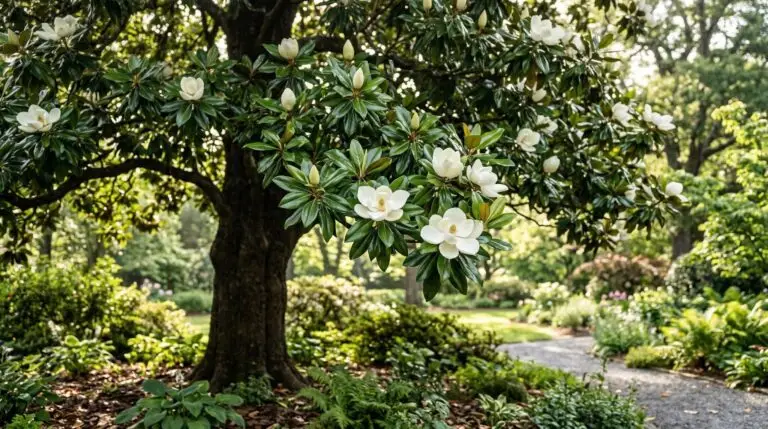
Southern magnolia grandiflora and growing the iconic evergreen of the American South
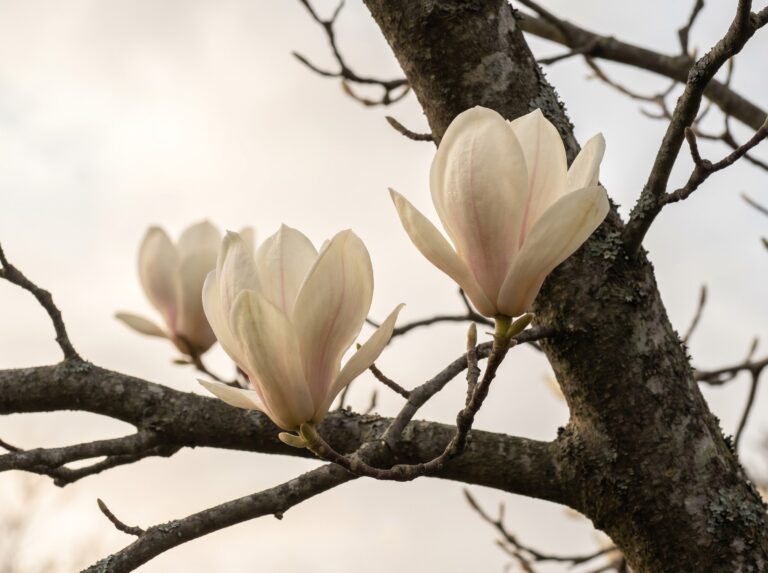
Magnolia meaning, from dignity and perseverance to its place in the American South
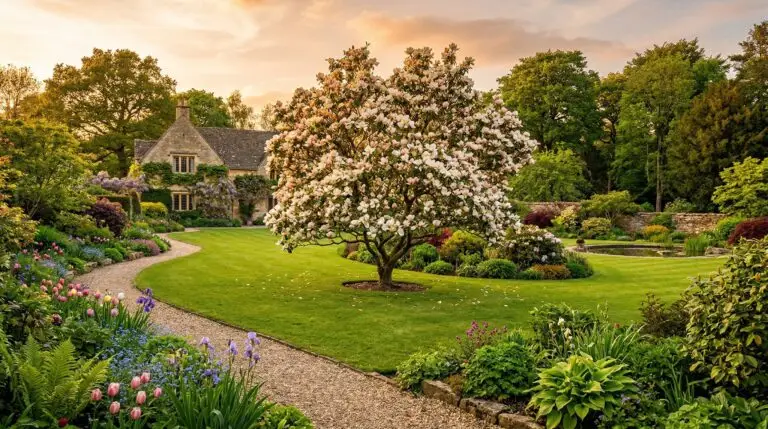
Magnolia trees in landscape design and placing them for maximum dramatic impact
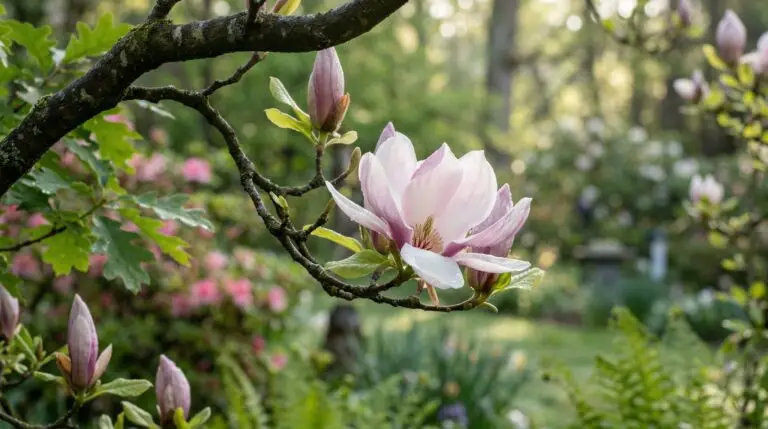
Why magnolia flower buds freeze in late spring frost and how to protect your tree