The pairing · pick a flower
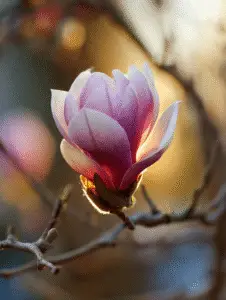 Magnolia+
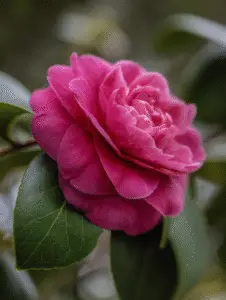 CamelliaProven
Wants the same acid-leaning, well-drained soil and part shade as magnolia, and its glossy evergreen form and rounded blooms echo the tree's own leaves and flowers while filling the calendar magnolia leaves empty most of the year.
Magnolia+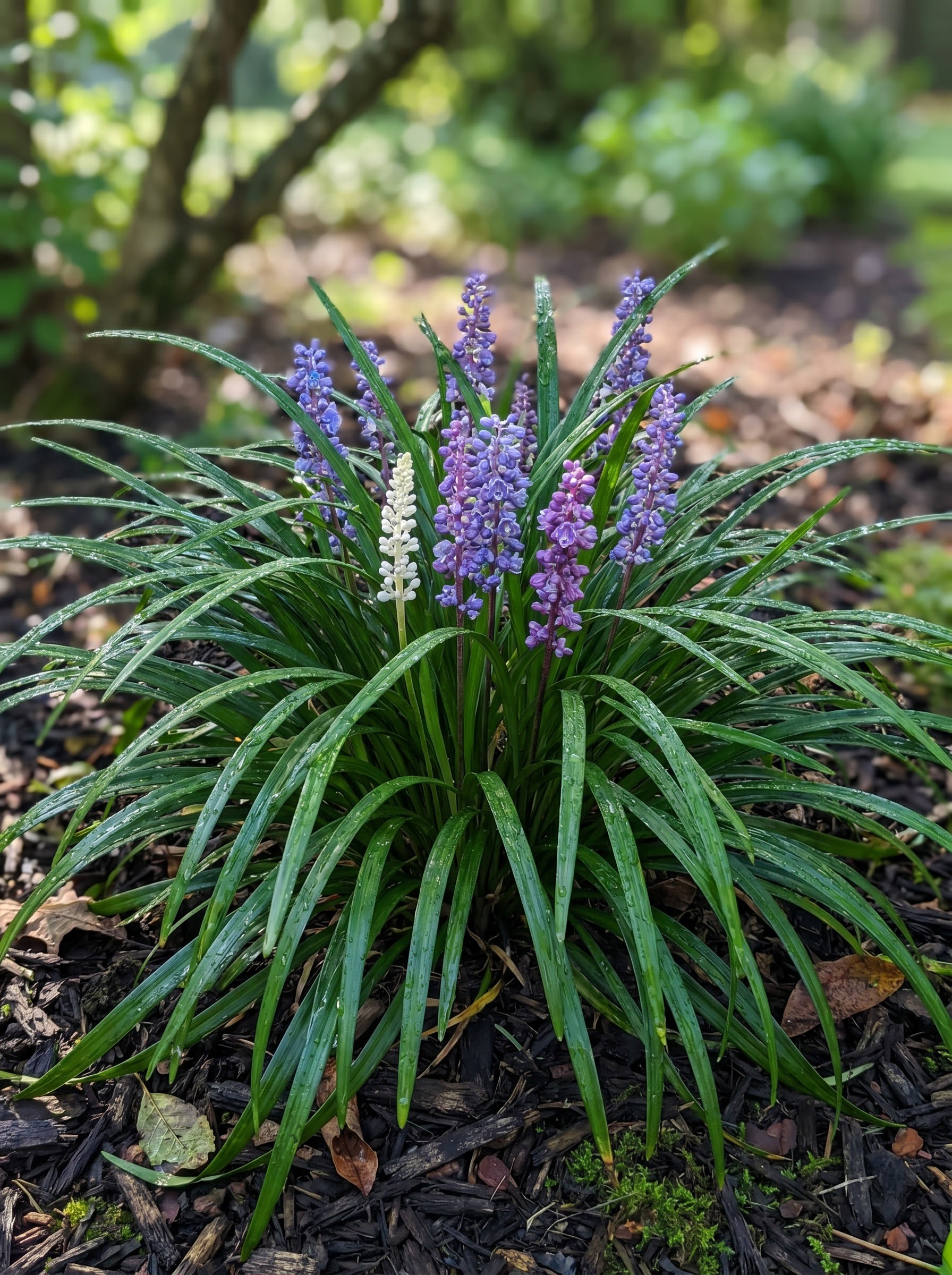 LiriopeProven
One of the few groundcovers extension sources actually name for the root-filled, dry-shade zone under an established tree, tolerating shade, drought and direct root competition once it settles in.
Magnolia+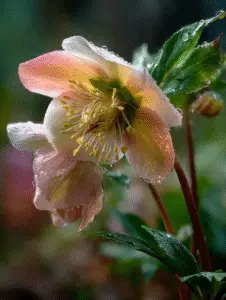 HelleborePartial
Named repeatedly as one of the few perennials that can take the combination of shade, dry soil and root competition under a mature tree, though even hellebore's own growers call underplanting a mature specimen genuinely limited, not easy.
Magnolia+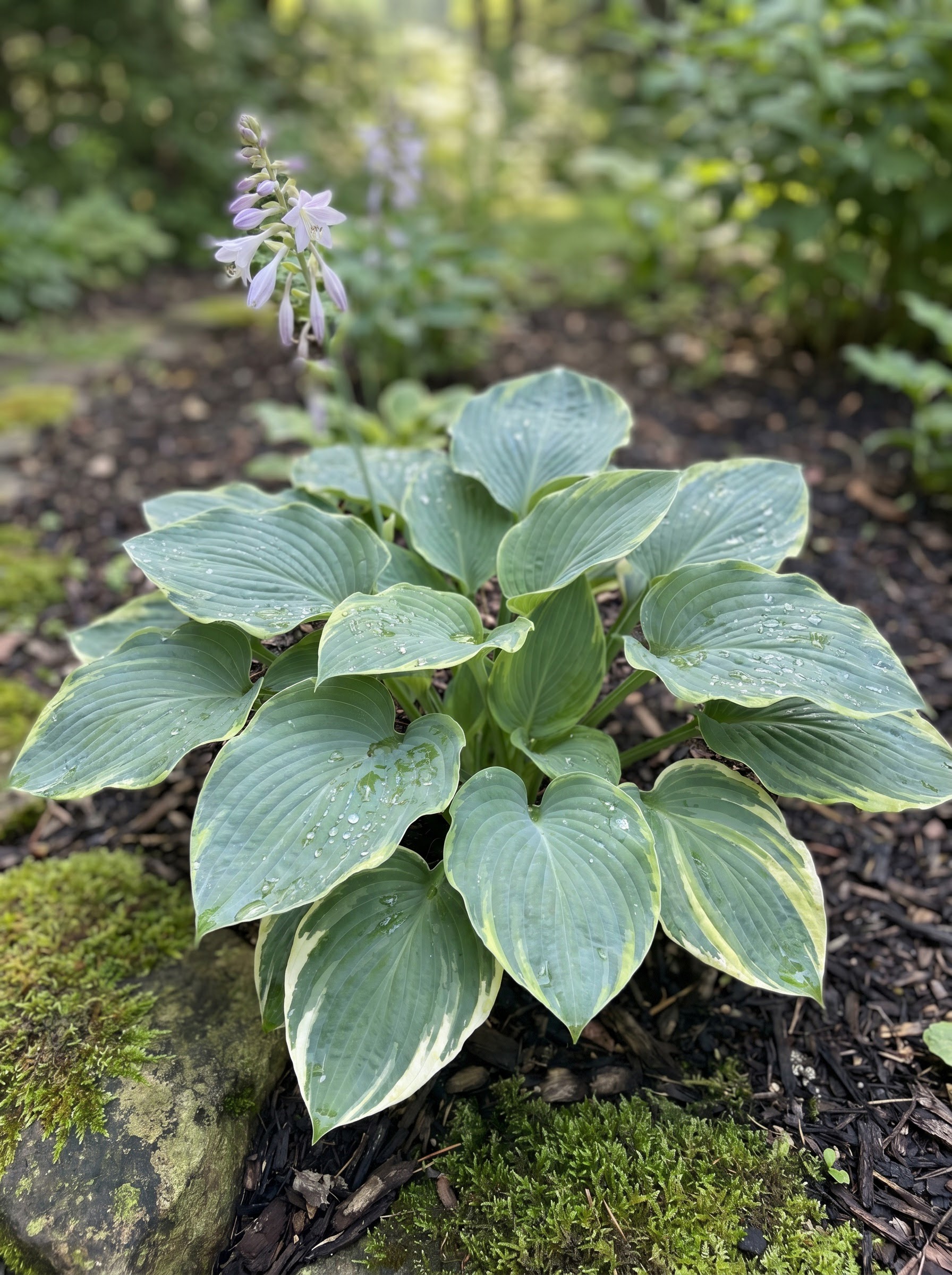 HostaProven
Broad ribbed leaves want the same deep shade a mature canopy creates and scale up to echo magnolia's own big leathery leaves, but plant well away from the trunk to avoid disturbing the tree's shallow roots.
Magnolia+ DaffodilPartial
Completes its bloom and starts going dormant before deep shade and root competition peak for the season, a well-established bulb-under-tree technique that works in the small planting pockets between a magnolia's fleshy surface roots.
Magnolia+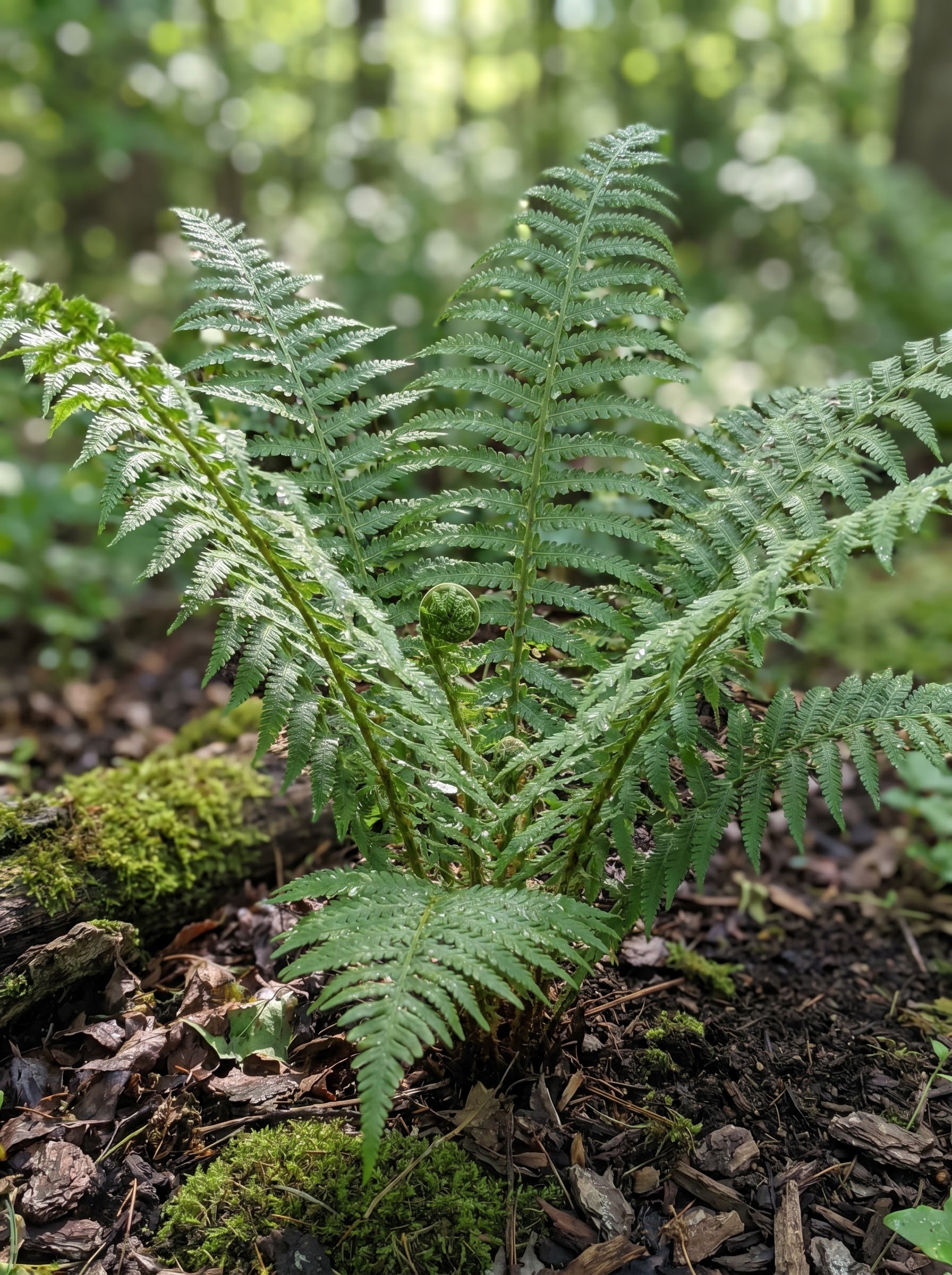 Lady fernProven
Fine, feathery fronds tolerate the deep, dry shade under an evergreen canopy better than most flowering perennials and cut a soft contrast against magnolia's coarse, leathery leaves.
Magnolia+ AzaleaPartial
Shares magnolia's acid-leaning soil and part shade, and its own shallow, delicate roots mean it wants a dedicated mulched bed of its own rather than sharing tilled soil with the tree's surface roots at all.
All magnolia trees companions
7 flower companions, best match first
What not to plant near magnolia trees
Most bad neighbours are not evil, they just want the opposite light, water or root run. Here is what to keep away, and what to do instead.
Full-sun perennials, shrubs and lawn grass
A mature canopy's shade is dense and evergreen, with none of the bare-branch winter sun a deciduous shade tree allows, so sun-loving perennials, shrubs and turf grass thin out, stretch and stop flowering underneath it.
Digging planting holes or tilling a bed near a mature trunk
This is a gardener-habit warning more than a plant-versus-plant one: the shallow, fleshy surface roots are easily damaged by digging once the tree is established, and extension guidance on underplanting mature trees generally recommends small hand-dug pockets or mulch over tilling shared soil.
Thirsty, shallow-rooted flowering perennials in the root zone
The tree's own wide, shallow roots out-compete similarly shallow, water-hungry perennials for moisture and nutrients even in adequate shade, which is why the plants that hold up here tend to be drought-tolerant once established rather than thirsty bloomers.
Species documented as sensitive to magnolia leaf-litter allelopathy (variegated spirea, Stokes' aster, hydrangea)
Magnolia leaves contain the sesquiterpene lactones costunolide and parthenolide, chemicals confirmed in a peer-reviewed study (Biochemical Systematics and Ecology, 2007) to significantly inhibit seed germination and root and shoot growth in test plants, and a university-affiliated source names variegated spirea, Stokes' aster and hydrangea specifically as species observed to decline near a magnolia's leaf litter [VERIFY: the peer-reviewed study tested wheat, lettuce, radish and onion, not these three ornamentals directly, so the ornamental-species pairing rests on the secondary NPIN source, not the primary study itself].
True alkaline-soil plants (lilac named specifically)
Magnolia leans acid-preferring, ideally pH 5.5 to 6.5, while lilac wants neutral to distinctly alkaline soil, so the two chase different soil chemistry even though magnolia itself tolerates the mismatch better than a true acid-obligate plant would.
Cacti, succulents and other true dry-soil specialists
Magnolia wants soil that stays evenly moist and never fully dries, the opposite of the fast-draining, dry-between-waterings conditions cacti and succulents need, so both would suffer in shared ground.
The best companions for magnolia, explained
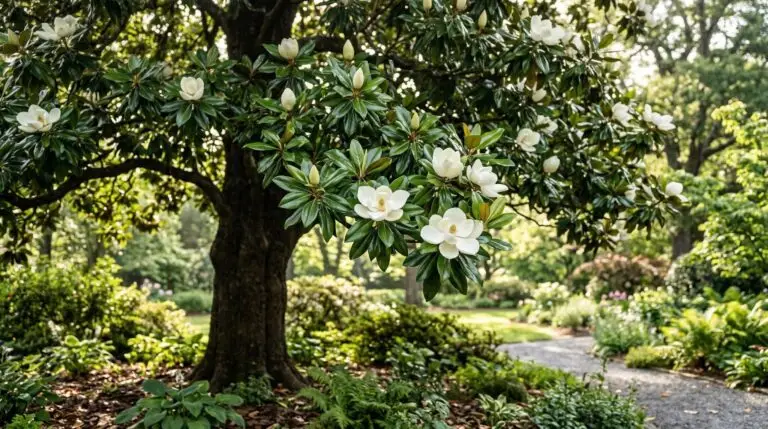
A mature southern magnolia sets terms nothing else on this site does. The tree itself wants sun, real sun, to bloom well, yet its own canopy grows so dense and evergreen that the ground beneath sits in near-permanent shade with no bare-branch winter reprieve the way it would under a deciduous shade tree. That inversion, a sun-loving tree that manufactures its own shade problem, is the reason the honest companion list here is shorter than most on this site, and why the plants that do work earn their place through genuine toughness rather than a pretty catalog photo. Camellia is the clearest standout: it wants the same acid-leaning, well-drained soil and part shade magnolia prefers, its glossy evergreen leaves and rounded blooms echo the tree’s own form, and its bloom calendar, sasanqua types running fall into early winter and japonica types carrying late winter into spring, fills almost the entire stretch of the year magnolia’s own late spring to early summer flowering leaves empty. Few pairings on this site have that much genuine season-succession logic behind them.
Below the acid-loving shrub layer, the honest list narrows to plants that can actually handle root competition and dry shade, not just shade alone. Liriope is one of very few groundcovers extension sources name specifically for this exact niche: tolerant of shade, drought and direct competition from a tree’s surface roots once it settles in, it works best planted while a magnolia is still young or in the small soil pockets a mature tree’s roots leave open. Hellebore gets named repeatedly for the same harsh combination of shade, dry soil and root competition, though even hellebore’s own growers describe underplanting a mature specimen as genuinely limited rather than easy, a caveat worth keeping rather than smoothing over. Hosta and a mix of lady fern and autumn fern round out the texture layer at the drip line and beyond, hosta’s big ribbed leaves scaling up to echo magnolia’s own leathery foliage, the ferns cutting a fine, feathery contrast against it, both best treated as drip-line and edge plants rather than a true underplanting directly beneath a low, mature canopy. Daffodils are the one bulb worth naming on their own: they finish blooming and start going dormant before the tree’s summer shade and root competition peak, and gardeners genuinely do slip them into the gaps between a magnolia’s fleshy surface roots by hand rather than digging a bed. Azalea shares the acid soil and earns a spot too, though its own shallow, delicate roots mean it wants a dedicated mulched pocket of its own at the drip line, not shared ground with the tree.
What can you plant in front of a magnolia, as opposed to underneath it? That question has a much easier answer than the underplanting one, since the ground beyond the drip line escapes both the deepest shade and the worst root competition. Camellia and azaleas both work best treated exactly this way, sited just outside the canopy’s edge in their own amended soil, and a hydrangea bed nearby, well clear of the leaf-litter zone, can pick up where magnolia’s own bloom leaves off without ever competing with it for root space.
What not to plant near magnolia
The single cleanest rule here has nothing to do with soil chemistry: a mature canopy’s shade is dense and year-round, so full-sun perennials, flowering shrubs and lawn grass planted under or near it will thin out, stretch toward whatever light they can find, and stop flowering. This is basic light physiology, true of any dense evergreen canopy, but it hits harder under magnolia specifically because there is no winter sun window the way there would be under a bare-branched maple or oak. The fix is simple and non-negotiable: give sun-lovers their own bed in the open yard and use mulch, liriope or hosta where the canopy actually is.
The more important warning, and the one most companion-planting content skips entirely, is about digging rather than about any specific plant. How close can you plant near a magnolia tree without hurting it? A mature magnolia’s roots are shallow, fleshy and wide-spreading, often rising near the surface as the tree ages, and they are genuinely easy to damage with a shovel. Penn State Extension’s guidance on underplanting mature trees is direct about this: dig planting holes as small as possible, and if a root two inches or thicker turns up, refill the hole and move on rather than cutting through it. Applied to magnolia specifically, that means mulching two to three inches deep is usually the better move on an established tree, with any actual planting limited to small, hand-dug pockets between roots rather than a tilled bed. This single practical warning arguably matters more than any individual plant on an avoid list, because it protects the tree itself, not just whatever gets planted near it.
Then there is the allelopathy question, which is real for magnolia in a way it isn’t for most flowers on this site. Do magnolia trees actually poison other plants, or is that garden folklore? Magnolia leaves contain sesquiterpene lactones, specifically costunolide and parthenolide, and a peer-reviewed study published in Biochemical Systematics and Ecology confirmed both compounds significantly inhibit seed germination and root and shoot growth in test plants at concentrations found in leaf tissue. A university-affiliated source names variegated spirea, Stokes’ aster and hydrangea specifically as species observed to decline when planted directly under a magnolia’s accumulated leaf litter, though it’s worth being precise: the peer-reviewed study tested agricultural species, wheat, lettuce, radish and onion, not these three ornamentals directly, so the ornamental pairing rests on a secondary, university-affiliated source rather than the primary research itself. Either way, the practical fix is consistent across every source that discusses it: raking up fallen leaves, twigs and flowers regularly measurably reduces the effect, which is a genuinely useful, actionable piece of advice rather than a reason to write off the whole area as poisoned ground. Beyond those two mechanisms, thirsty, shallow-rooted flowering perennials struggle simply from losing the water competition to the tree’s own wide roots, even in otherwise adequate shade, which is why the plants that hold up tend to be drought-tolerant once established rather than needy bloomers. True alkaline-soil plants, lilac being the named example, are a softer mismatch: magnolia leans acid-preferring but tolerates the gap well enough that this is a caveat rather than a hard rule, and true dry-soil specialists like cacti and succulents simply want the opposite of magnolia’s steady moisture and belong in their own bed entirely.
Do they like the same conditions?
The rule that filters this whole list is age and pruning, more than light or soil alone. Why won’t anything grow under a magnolia tree in the first place? A young magnolia, or one that has been limbed up to expose a trunk, behaves like an ordinary shade tree with real plantable ground beneath it. A mature, unpruned specimen with limbs draping to the ground is a different problem entirely, because "under the canopy" on that tree can mean literally inaccessible, unplantable space. Extension guidance from Arkansas Cooperative Extension puts it plainly: it is virtually impossible to grow anything under a mature, low-branched magnolia, which is a more honest starting point than most companion-planting content offers, and exactly why this page separates a short, genuinely workable companion list from a longer avoid list rather than pretending every reader has the same tree.
Light itself carries a myth-busting twist worth stating clearly. Magnolia grandiflora wants full sun to light shade to thrive and bloom well as a tree; it is not a shade-loving species. The shade problem belongs entirely to what the tree’s own mature canopy does to the ground beneath it, dense and evergreen, never opening up the way a deciduous canopy does each winter. That distinction matters because it explains why so many well-meaning "shade garden" companion lists fail here: they assume ordinary tree shade with a seasonal break, and magnolia doesn’t offer one. Soil pH tells a gentler story. The ideal is rich, slightly acidic soil, roughly pH 5.5 to 6.5, which is exactly why camellia and azalea, both genuinely acid-preferring plants, pair so cleanly. But magnolia is not a strict acid-obligate plant the way azalea is; it tolerates neutral and even mildly alkaline soil without real trouble, which is why lilac’s alkaline preference reads as a soft caveat rather than a hard conflict. Water follows a similar shape: moist, well-drained soil is ideal, and the tree is reasonably drought-tolerant once established with room for its roots to spread, but it does not want to dry out completely, especially as a young planting, which rules out true dry-soil specialists more firmly than it rules out anything else on this page.
How to plant them together
Distance from the trunk matters more than height here, a genuine departure from how most companion pages on this site are organized. On a young magnolia or one with real open soil beneath it, liriope, daffodil bulbs and hosta can go closer in, tucked into planting pockets rather than a dug bed, with daffodils specifically slipped by hand into the gaps between the tree’s fleshy surface roots and left to bloom and fade before the canopy’s summer shade and root competition peak for the season. Hellebore and ferns belong at the drip line, hand-dug into small pockets rather than trenched, with a full season of consistent watering while they establish, since even the toughest candidates on this list need real help getting through their first year in root-filled ground.
Camellia and azalea earn their own separate treatment, because both genuinely want the acid soil magnolia can live without: give each its own mulched, amended pocket at or beyond the drip line rather than tilling one shared bed for the whole understory, and expect to place camellia and azalea three to six feet out on a mature tree, closer if the specimen is young or high-pruned. Wherever planting happens, mulch two to three inches deep over the whole area rather than digging more than necessary; it holds moisture, keeps weeds down, and does double duty by reducing how much fallen leaf litter sits directly against the soil, which is part of what tempers the allelopathic effect. On a genuinely mature, low-branched specimen where none of this feels realistic, mulch alone, with no planting bed at all, is a legitimate and honest answer rather than a failure to find the right plant.
Does companion planting actually work for magnolia?
Some of it, clearly, and some of it is closer to a shade-garden habit borrowed from other trees than a fact specific to magnolia, which is worth separating out plainly. The acid-soil match between magnolia, camellia and azalea is real and well documented, and camellia’s bloom-succession benefit, carrying color through the exact months magnolia goes quiet, is a genuine, verifiable overlap rather than a design-blog flourish. The root-competition-tolerant candidates, liriope, hellebore, daffodil bulbs, hold up for a specific, honest reason: they were named by sources actually grappling with the harshest version of this problem, dry shade plus aggressive surface roots, not generic shade-plant lists repurposed for a tree they were never tested against.
Where the evidence gets thinner is the assumption, implicit in a lot of consumer garden content, that a magnolia’s understory is a normal shade garden waiting to be filled. It usually isn’t, at least not on a mature, unpruned tree, and the honest verdict is that age and pruning decide more of what’s plantable here than any individual companion choice does. Does underplanting really work differently on a young magnolia versus a mature one? Genuinely, yes, more than almost any other pairing decision on this page: a young or newly limbed-up tree still has open soil and a developing root system, while a decades-old, low-branched specimen has already claimed the ground beneath it. The allelopathy claim is real at the mechanism level, a peer-reviewed study backs the specific compounds and their effect on plant growth, but the leap from that study’s test plants to a fixed list of ornamental victims is thinner than it first appears, which is why raking up litter is the actionable, well-supported takeaway rather than treating the ground as permanently toxic. The single most useful thing this page can tell a reader before they pick up a shovel is not which plant to choose, but whether to dig at all: on a young or high-pruned tree, plant with real confidence; on a mature, low-branched one, mulch is often the more honest answer than any plant on this list.
Sources
- Clemson Cooperative Extension (HGIC), Magnolia
- University of Florida IFAS Extension, ENH-530/ST371: Magnolia grandiflora, Southern Magnolia
- Penn State Extension, Underplanting Trees: Respect the Roots
- Lady Bird Johnson Wildflower Center (NPIN), University of Texas at Austin, Magnolia species are allelopathic
- Lady Bird Johnson Wildflower Center (NPIN), University of Texas at Austin, Plants that will grow under a magnolia tree
- NC State Extension Gardener Plant Toolbox, Liriope muscari
- Clemson Cooperative Extension (HGIC), Azalea Care
- Arkansas Cooperative Extension Service, Magnolia
- University of Minnesota Extension, Growing Lilacs for Minnesota Landscapes
More About Magnolia
Magnolia in wedding decor and the southern tradition of magnolia bridal flowers
How to propagate magnolias from cuttings and layering for new trees from your favorite
How to grow magnolia trees for breathtaking spring blooms on bare branches
Small magnolias for compact gardens that fit any yard with room to spare
Southern magnolia grandiflora and growing the iconic evergreen of the American South
Magnolia meaning, from dignity and perseverance to its place in the American South
Magnolia trees in landscape design and placing them for maximum dramatic impact
Why magnolia flower buds freeze in late spring frost and how to protect your tree
Best magnolia varieties from small garden stars to grand southern shade trees