I wish you could stand beside me on the front steps just as the sun clears the tree line on a crisp October morning. The air carries that distinct edge of woodsmoke and damp earth, a scent that signals the turning of the year. Heavy dew clings to the tight, spherical buds of the chrysanthemums, turning each drop into a tiny prism catching the pale morning light. A well-planned fall mum display transforms a simple entryway into a quiet celebration of the season. The rounded, dense cushions of foliage sit low and heavy in their pots, grounding the space with a sense of quiet abundance. When you brush your hand over the leaves, they release a sharp, herbal fragrance that smells exactly like autumn feels. The petals themselves are stiff and papery, packed so tightly together that rain simply beads up and rolls away into the dark soil below.
Building color stories at the autumn front door
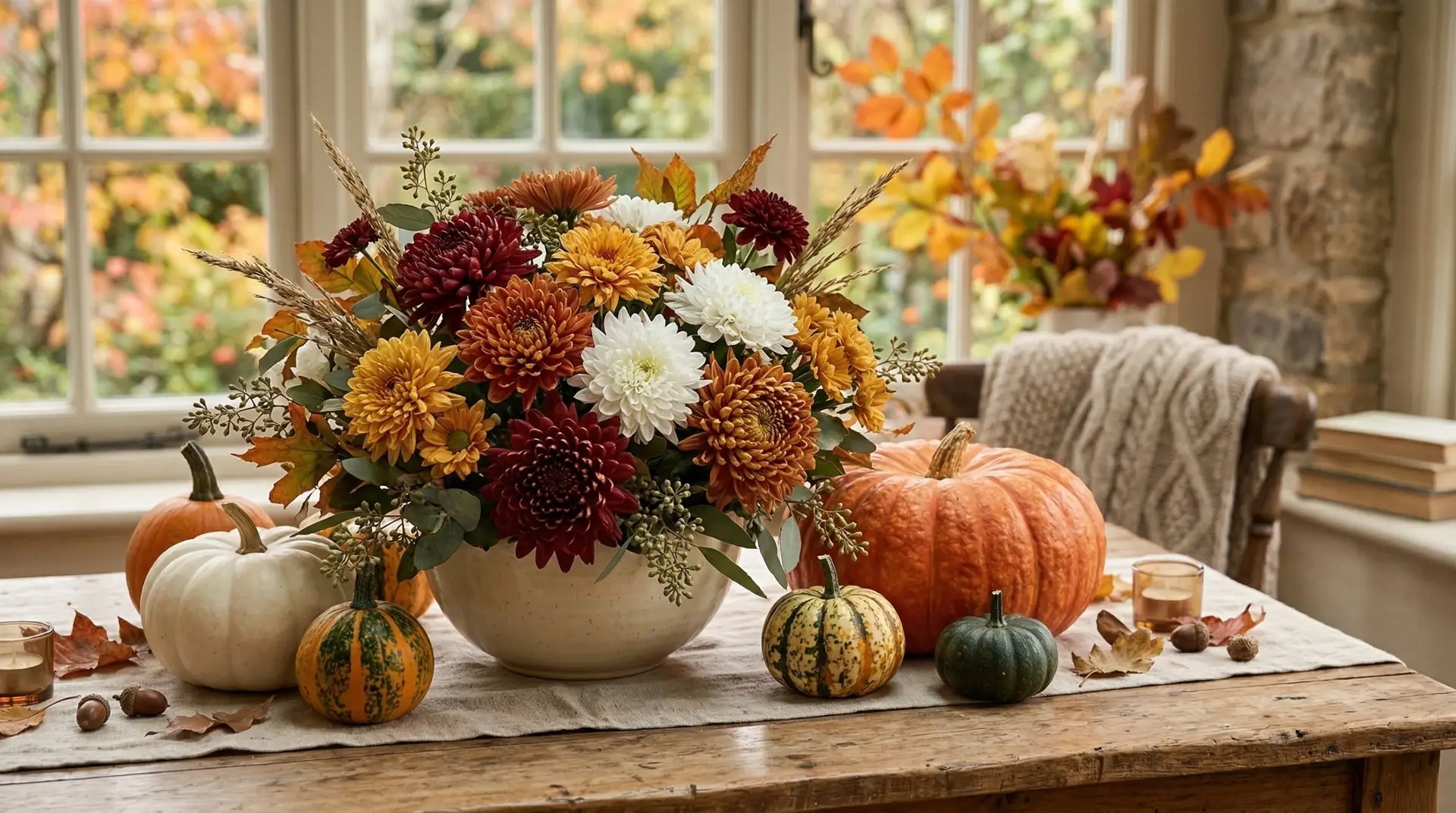
When you begin gathering pieces for your autumn front door, the color palette dictates the mood of the entire space before a single bloom opens. You might choose the deep, saturated tones of a late harvest, pulling together rust reds, burnt oranges, and a yellow so dark it borders on amber. These rich hues echo the warmth you find in a fading marigold bloom just before the first frost takes it. Placing these warm-toned mums and pumpkins together creates a visual heat that pushes back against the cooling weather. The pumpkins offer broad, smooth surfaces that catch the afternoon sun, contrasting sharply with the thousands of tiny, shadowed crevices between the chrysanthemum petals. You can almost feel the weight of the season in these groupings, especially when you choose heirloom gourds covered in rough, corky webbing or deep, waxy ribs. The light shifts across these varied surfaces as the day progresses, turning the orange rinds into glowing lanterns by late afternoon.
Alternatively, you might find yourself drawn to the cooler, quieter side of the autumn spectrum. Picture a cluster of chrysanthemums in shades of crushed blackberry, soft lavender, and pure, icy white resting against pale green and ghost-white pumpkins. This combination catches the silver light of an overcast afternoon beautifully, glowing with a soft luminescence when the sky turns gray. The cooler tones share a visual kinship with a late-blooming aster standing tall in a fading meadow. These pale arrangements feel serene and elegant, especially when framed by the dark, glossy leaves of the mum plants. When the first autumn fogs roll in, the white petals seem to float above the foliage, while the deep purple blooms recede into the shadows. The smooth, chalky skin of a white lumina pumpkin resting against the delicate, fringed petals of a spider mum creates a quiet tension between solid mass and airy texture.
Textures of the harvest season
The most compelling fall porch decor mums rely on a physical contrast of materials to make the soft flowers stand out. Think of the dry, brittle rustle of dried cornstalks tied to the porch pillars, their papery leaves whispering every time the wind catches them. Against this tall, vertical roughness, the dense, domed shapes of the blooming plants provide a reassuring solidity. You might tuck dried seed heads from a summer sunflower among the pots, letting their rough, bristly centers add another layer of tactile interest. Scratchy, golden hay bales offer the perfect elevated stage, their coarse stems grabbing onto stray leaves and providing a warm, earthy smell that mingles with the herbal scent of the flowers. When you set a heavy terracotta pot onto the prickly surface of the hay, the porous, weathered clay absorbs the morning moisture and darkens to a deep brick red. The eye travels over the smooth curve of a waxy gourd, catches on the rough twine binding the cornstalks, and finally rests on the soft, velvety cushion of the blooming chrysanthemums.
Tending your display through November
Keeping this gathering of textures and colors alive deep into November requires a physical connection to the plants. You will know the soil is right when you press your fingers into the pot and it feels just like a wrung-out sponge, cool and damp but never pooling with water. Chrysanthemums are thirsty plants, and their dense root balls will pull moisture from the soil rapidly on dry, windy autumn afternoons. When you water them, push the heavy canopy of leaves aside and aim the spout of your can directly at the dark earth, listening to the soft hiss as the dry potting mix drinks it in. As the earliest blooms begin to fade, their petals will lose their stiff, waxy finish and turn soft and brown at the edges. Pinching these spent flowers off right at the stem base releases a sharp, green scent and keeps the plant putting its energy into the tight, green buds waiting below. This daily ritual of touching the leaves and checking the soil ensures the display remains fresh even as the surrounding trees drop their leaves and bare branches scratch against the sky.
The true magic of this seasonal gathering reveals itself just as the sun dips below the horizon and the evening chill settles in. The warm glow of the porch light clicks on, casting long, dramatic shadows behind the stacked pumpkins and illuminating the rounded profiles of the flowers. A quiet stillness takes over the entryway, broken only by the dry rustle of the cornstalks shifting in the night breeze. As the temperature drops toward freezing, a fine layer of silver frost begins to form on the smooth shoulders of the gourds and the stiff edges of the chrysanthemum leaves. The colors deepen in the twilight, turning the rusty reds into dark mahogany and the bright oranges into muted copper. You can smell the sharp bite of impending winter in the air, yet the display on the steps holds onto the warmth of the harvest. It is a fleeting, beautiful pause between the abundance of autumn and the quiet sleep of winter, waiting quietly at your door.
More About Chrysanthemum
Chrysanthemum tea and edible flowers from garden to cup and kitchen
Chrysanthemum pest and disease guide including aphids leaf miners and white rust
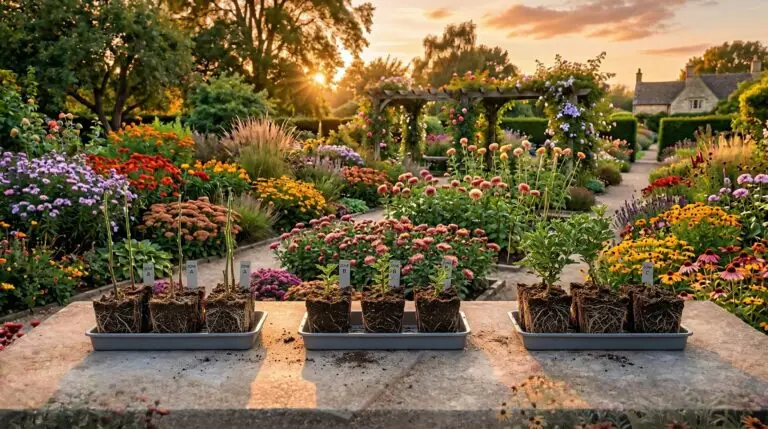
How to pinch chrysanthemums for bushy plants loaded with fall flowers
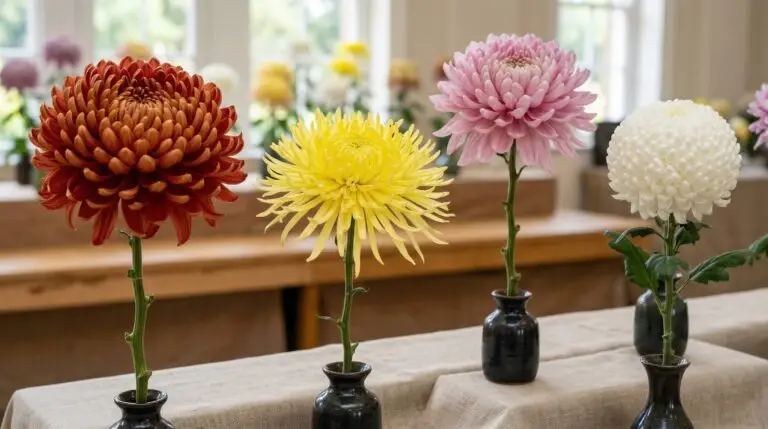
Exhibition chrysanthemums and the art of growing show-stopping single blooms
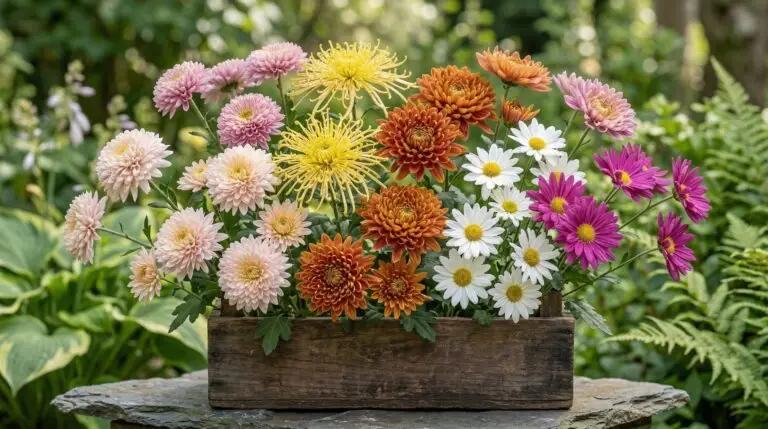
Hardy garden chrysanthemum varieties that survive winter and come back stronger

Companion plants for mums: what to grow and what to avoid
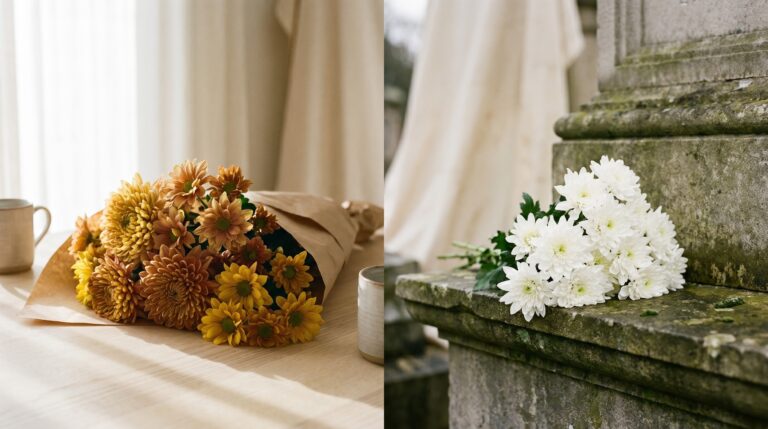
Chrysanthemum meaning, and why it says joy in one country and death in the next
How to divide chrysanthemums in spring for healthier plants and more blooms