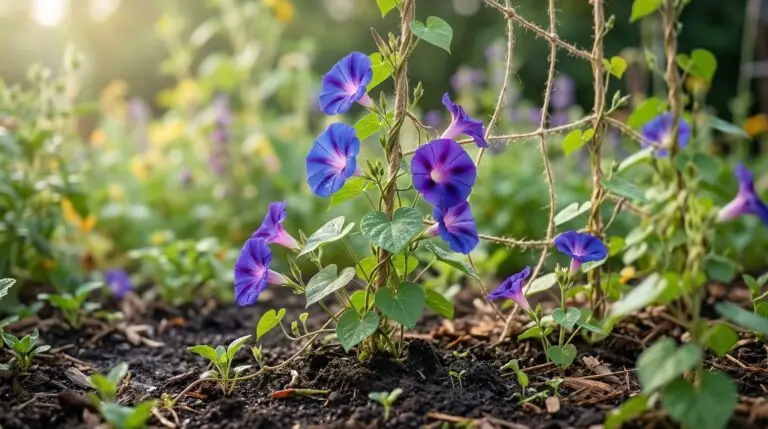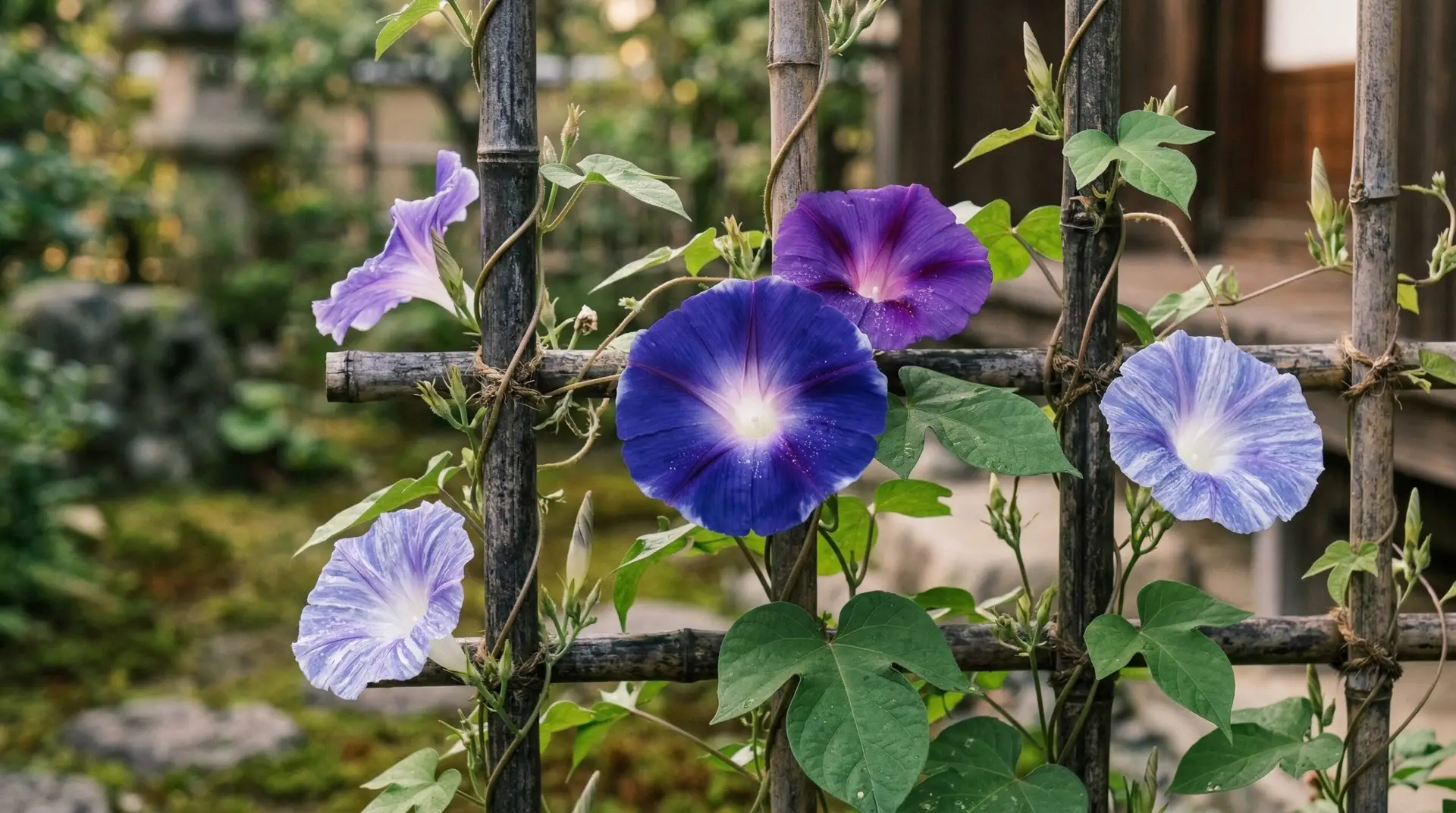
The story begins not with a delicate blossom, but with a handful of hard, angular seeds carried by monks across the sea from China to Japan in the eighth century. These early travelers did not prize the vine for its blue or purple petals, but for the potent laxative properties hidden within its dark seeds. The plant was a functional tool of ancient Chinese medicine, prescribed to clear the body of illness. Yet, as the vines grew in the temple gardens of Kyoto, the monks and courtiers began to notice the quiet drama unfolding each morning along the trellises. A flower would unfurl just as the sun broke over the horizon, opening a perfect trumpet to the sky, only to wither and collapse upon itself by noon. This daily cycle of birth and death captured the imagination of a culture that deeply understood the beauty of impermanence. The morning glory meaning was born from this exact observation, transforming a humble medicinal herb into a profound meditation on the fleeting nature of life.
From ancient medicine to imperial poetry
By the time the Heian period flourished in Japan, the vine had shed its purely medicinal reputation and claimed a place in the poetry of the imperial court. The Japanese named the flower asagao, which translates directly to “morning face,” a reference to its habit of greeting the dawn. Courtiers began to weave the brief life of the flower into their verses, using it to articulate the pain of a brief romance or a love that fades too quickly. To give someone a morning glory was to acknowledge that the affection between them was intense but destined to vanish, much like the dew that gathered on the petals. This early morning glory symbolism laid the groundwork for centuries of artistic interpretation across different cultures. Painters captured the twisting vines on silk scrolls, freezing the ephemeral bloom in a medium that would outlast the morning sun. The plant had rooted itself firmly in the artistic consciousness, entirely divorced from the bitter medicinal seeds that first brought it across the water.
Cultivating the perfect morning face
The true obsession with the asagao took hold during the Edo period, when a long era of peace allowed both samurai and commoners to turn their attention to horticulture. A sudden genetic mutation produced a wave of unusual leaf shapes and flower colors, sparking a gardening craze that swept through the capital city. Growers began saving seeds from the most unusual vines, carefully documenting the parentage and resulting traits in woodblock-printed catalogs. The Japanese art of training these blooms to perfection became a highly formalized practice, complete with strict rules and fierce competitions. Gardeners constructed precise bamboo frames, coaxing the fast-growing vines into specific shapes that displayed the single morning bloom to its best advantage. Much like the intense dedication required to shape a chrysanthemum for autumn exhibitions, training the asagao demanded constant, daily intervention. A grower had to pinch back the leading stems, guide the tendrils, and manipulate the light to ensure the flower opened exactly when the judges arrived.
These historic morning glory competitions dictated the rhythm of the summer for those who participated. Because the flowers opened so early and wilted as the day warmed, the judging had to take place in the quiet hours just after dawn. Growers would wake in the dark, carefully transporting their potted vines through the cool streets to the exhibition grounds. Men of all social classes stood close together in the early light, examining the size of the bloom, the purity of the color, and the harmony between the vine and its bamboo support. The fleeting nature of the flower meant the exhibition lasted only a few hours, disappearing entirely before the rest of the city had finished its morning meals. This practice elevated the plant from a wild, scrambling weed into a disciplined work of art. The memory of the perfect bloom lived on only in the minds of the growers, a shared secret among those willing to wake before the sun.
A language of unrequited affection
While Japanese gardeners were busy perfecting the physical form of the vine, the flower eventually made its way to Europe and the Americas, where it acquired a slightly different cultural weight. During the Victorian era, when the exchange of flowers operated as a silent, coded language, the morning glory meaning centered almost entirely on love in vain. To hand a bouquet of these quickly fading trumpets to a suitor was a gentle but firm rejection, signaling an unrequited affection that could not last. The physical reality of the plant dictated this interpretation, as a picked morning glory wilts almost immediately, making it impossible to arrange in a vase or wear in a buttonhole. The sender was essentially offering a beautiful disappointment, a flower that collapsed in the hand of the receiver. This meaning of love in vain echoed the poetry of the Heian court, proving that the flower’s brief lifespan inspired the same melancholy reflection across entirely different continents. The message was clear that some things are beautiful precisely because they cannot be held onto.
The botanical family of these vines offers a sharp contrast in how we interpret the timing of a bloom. While the morning glory opens to the sun and speaks of daytime sorrow, its close relative the moonflower waits for the dusk to unfurl its large white petals. Gardeners often plant the two vines together on the same fence, creating a continuous cycle of opening and closing as day transitions into night. The morning vine dominates the early hours with bright blues and deep pinks, attracting bees and early rising hummingbirds to its deep throats. As the afternoon heat sets in, those colorful trumpets twist tightly shut, leaving the structure bare until the evening vine opens its white discs to the moths. This pairing creates a physical clock in the garden, marking the passage of time through the mechanical movement of petals. The contrast shows how deeply our understanding of a plant is tied to the exact moment it chooses to reveal itself.
The quiet rhythm of the late summer garden
Growing these vines today requires a submission to their particular schedule and a willingness to appreciate what is right in front of you. The seeds still retain their hard, impenetrable coats, demanding to be soaked in water overnight or lightly nicked with a file before they will sprout. Once placed in the warming spring soil, the vines grow with an aggressive urgency, wrapping their green tendrils around anything they can reach. They spend the early summer building their leafy architecture, climbing up drainpipes, woven fences, and the sturdy stalks of sunflowers. The gardener must wait patiently until the days begin to shorten in late summer, which triggers the plant to finally produce its buds. When the blooming begins, it is a daily, repetitive performance that demands the gardener’s early attention. If you sleep in, you will miss the display entirely, finding only the shriveled remnants of the day’s effort.
There is a specific kind of peace found in standing beside a trellis of morning glories with a cup of coffee at sunrise. The air is still cool, the dew is heavy on the large, heart-shaped leaves, and the flowers are stretched wide open, catching the first angled rays of light. You know that by lunchtime, the brilliant blue or deep magenta petals will be gone, replaced by the swelling green seed pods that will eventually drop to the soil and start the cycle over next year. The morning glory symbolism of fleeting beauty is no longer an abstract concept from a Victorian dictionary or an ancient poem, but a physical reality happening right against your own fence. You cannot cut the flower and bring it inside, and you cannot save it for someone who will arrive later in the afternoon. The vine asks you to simply be present in the garden at that exact moment, accepting the bloom for the brief, perfect thing that it is.
More About Morning Glories
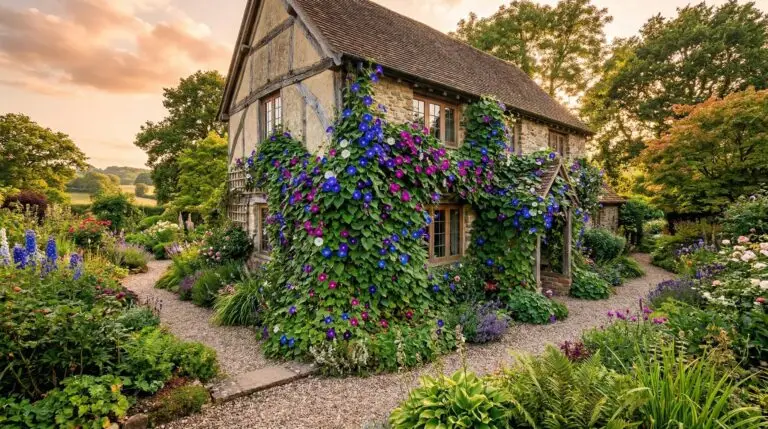
Morning glories as living sunshade screens for windows and south-facing walls
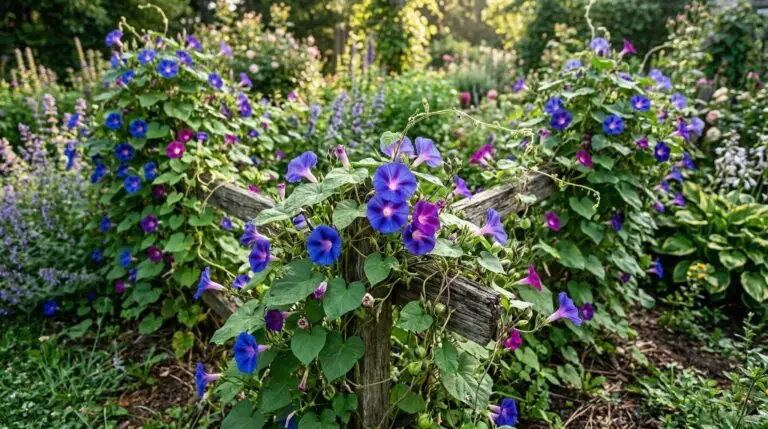
How to control invasive morning glory and stop it from taking over your garden
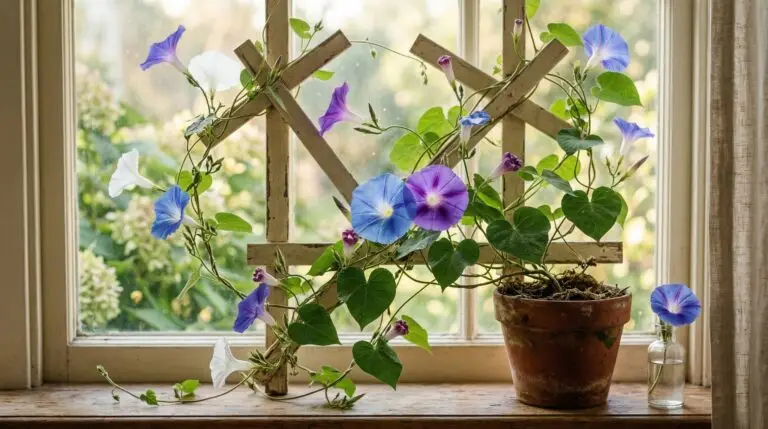
Why morning glory flowers only last one day and the daily renewal that makes them special
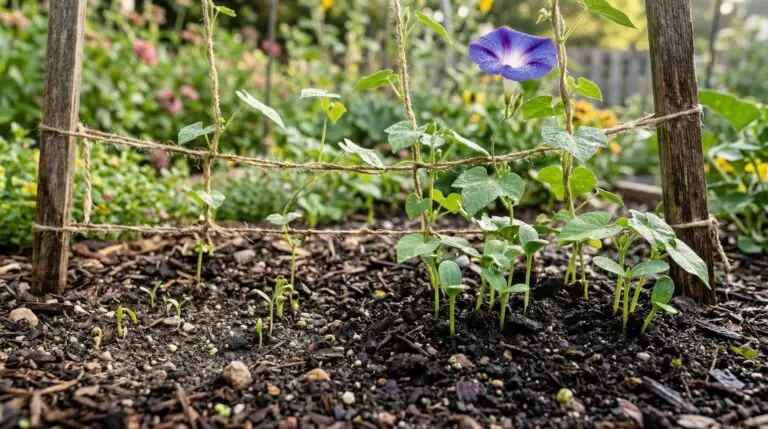
Growing morning glories from seed with the easy soak-and-plant method
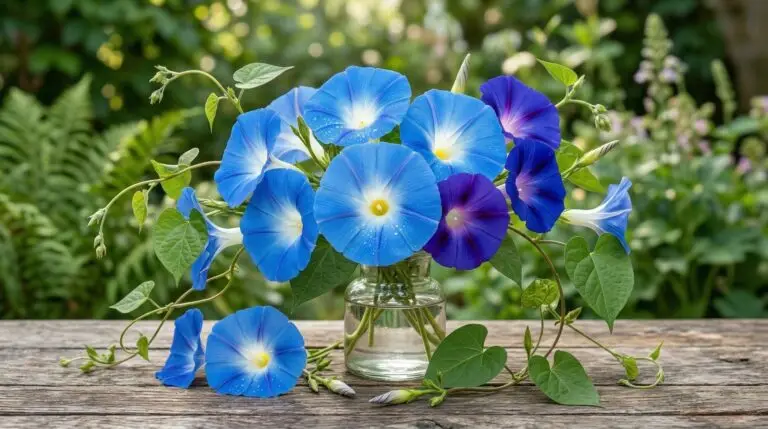
Best morning glory varieties from classic Heavenly Blue to rare chocolate Knowlian’s Black
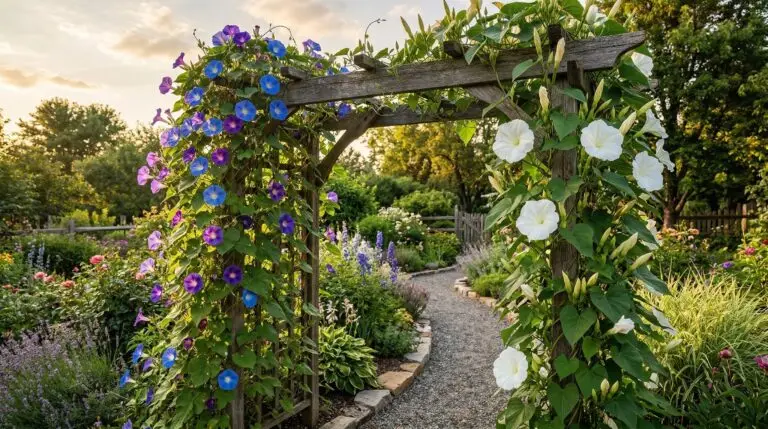
Companion plants for morning glories that create a colorful summer vine garden
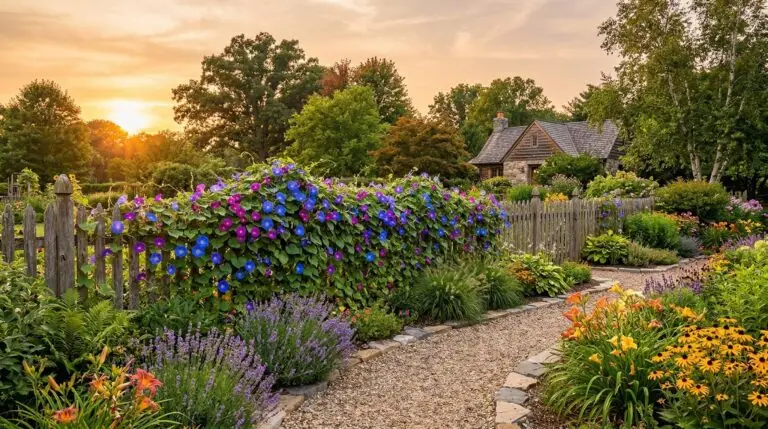
Training morning glories on fences mailboxes and trellises for vertical garden magic
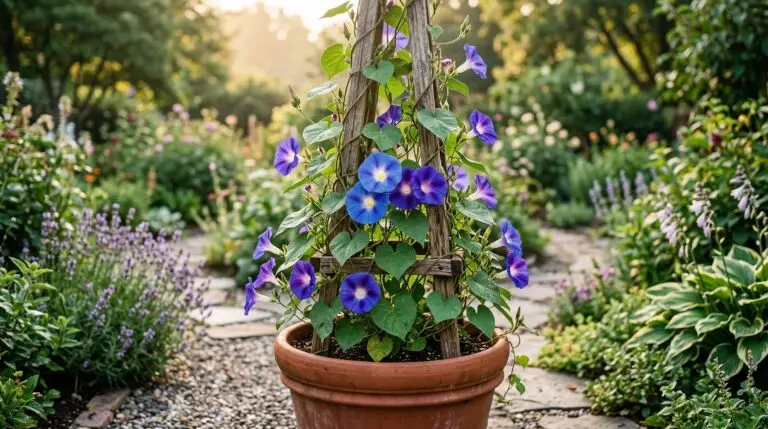
Growing morning glories in containers for balcony vines that bloom all summer