Contents 4 sections
Choosing between two classic tropical houseplants
Many indoor gardeners find themselves deciding between an anthurium and a peace lily when looking to add a flowering plant to their collection. Both belong to the arum family, meaning they share a similar floral structure consisting of a modified leaf called a spathe and a central spike called a spadix. They both offer lush green foliage and the promise of long-lasting indoor blooms when given the right conditions. Deciding between an anthurium or spathiphyllum comes down to your specific home environment, your watering habits, and the visual impact you want to create in your space. Understanding the nuances of each plant will help you determine which one will thrive under your care.
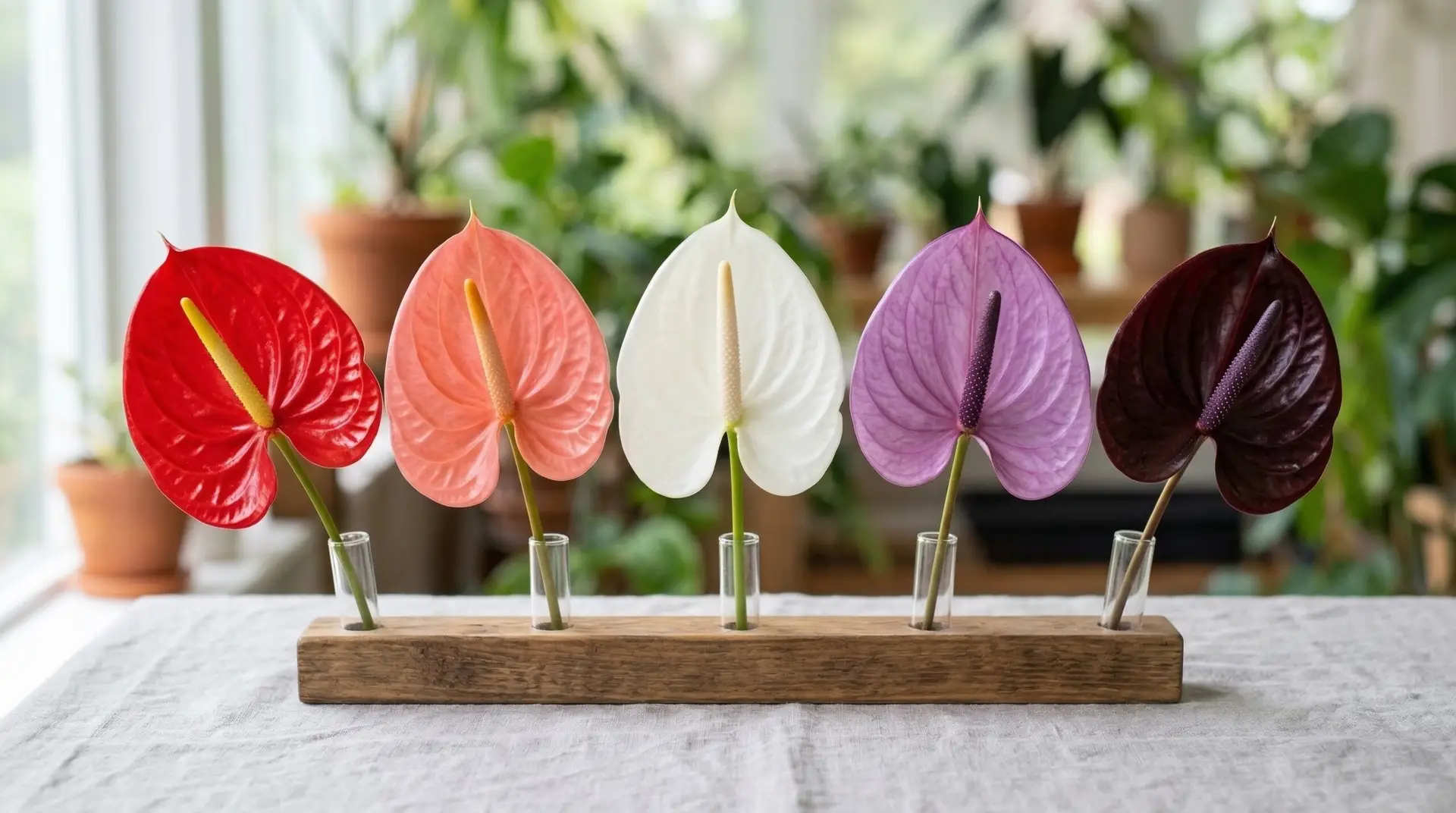
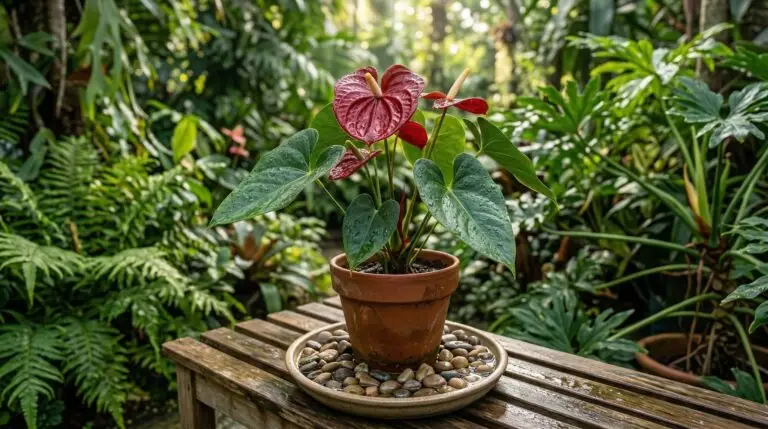
Anthuriums are recognized by their thick, leathery leaves and waxy, heart-shaped spathes that look almost artificial. The color range for anthuriums is broad, offering bright reds, soft pinks, deep purples, and pure whites. These colorful spathes can last for several months on the plant, providing a nearly continuous display of color if the plant receives adequate light. The foliage itself is sturdy and stands somewhat upright, creating a compact, structured silhouette that fits well on narrow shelves or small accent tables. If you appreciate the bold, structural look of a Calla Lily but want a reliable year-round houseplant, the anthurium provides a very similar aesthetic.
The peace lily presents a much softer, more relaxed appearance with its arching, deeply veined green leaves. Its spathes are exclusively white, emerging with a delicate, almost tissue-paper texture before gradually fading to a pale green as they age. While the blooms do not last quite as long as those of an anthurium, a mature peace lily can produce multiple flowers simultaneously, creating a cloud of white above the dark green foliage. The overall growth habit is bushy and spreading, meaning a peace lily will occupy significantly more horizontal space as it matures. The visual effect is less about rigid structure and more about creating a lush, jungle-like atmosphere in the corner of a room.
Evaluating light requirements and watering habits
Light availability is often the deciding factor when choosing the best tropical houseplant for a specific room. Anthuriums strictly require bright, indirect light to produce their colorful spathes and will simply revert to being plain green foliage plants if kept in a dim environment. They need to sit near an east-facing or west-facing window where they can receive plenty of ambient light without being scorched by direct afternoon sun. Peace lilies are much more forgiving of lower light conditions and will survive in north-facing rooms or offices with only fluorescent lighting. However, it is a common misconception that peace lilies prefer the dark, as they also need bright, indirect light to actually produce their white flowers.
Watering habits strongly influence which of these two plants will survive your care routine. Peace lilies are known for their dramatic communication style, collapsing into a severely wilted heap when their soil dries out. This immediate visual cue makes them highly suitable for people who forget to water their plants until they see a problem. Once given a thorough soak, a wilted peace lily will stand back up within a few hours, completely recovering from the ordeal. You do need to pay attention to the water quality, as peace lilies are sensitive to fluoride and chlorine in tap water, which causes their leaf tips to turn brown and crispy.
Anthuriums require a much more measured approach to watering and will not give you a dramatic fainting spell when they are thirsty. They prefer their soil to be consistently lightly moist but will quickly develop root rot if left sitting in water. You have to actively check the soil of an anthurium, watering only when the top two inches feel dry to the touch. Because they are epiphytic in their natural habitat, growing on trees rather than in the ground, they demand a very airy, well-draining soil mix rich in orchid bark and perlite. If you are someone who enjoys tending to plants like the Moth Orchid that require careful moisture management and specialized chunky soil, you will find the anthurium’s needs quite familiar.
Space considerations and household safety
The mature size of the plant is a practical consideration for indoor gardeners with limited space. Anthuriums generally remain quite compact, rarely exceeding two feet in height and width when grown indoors in containers. Their slow growth rate means you will not need to repot them frequently, and they will happily live on the same small side table for years. Peace lilies, depending on the specific variety, can grow into massive floor plants that dominate a corner of a room. Varieties like the ‘Sensation’ peace lily can reach up to six feet tall with leaves that are two feet long, requiring a large, heavy pot and plenty of floor space to accommodate their wide, arching canopy.
Safety is an area where neither the anthurium nor the peace lily holds an advantage over the other. Both plants belong to the Araceae family and contain insoluble calcium oxalate crystals in all their parts. If chewed or ingested by cats, dogs, or curious children, these crystals cause immediate, intense pain and swelling in the mouth and throat. This means both plants require careful placement out of reach of pets, either on high shelves or in rooms where animals are not allowed. If you have a household where cats regularly chew on foliage, you will need to treat both the anthurium and the peace lily with equal caution.
Selecting the right plant for your environment
Making your final decision requires matching the plant’s natural characteristics to your home environment and your personal care style. If you want a structured, colorful plant that acts as a permanent floral arrangement, the anthurium is the clear choice. It works perfectly for careful waterers who have bright, indirect light and limited shelf space. On the other hand, if you want a large, leafy floor plant that communicates exactly when it needs water, the peace lily is the better option. The peace lily will tolerate the darker corners of your home better than an anthurium will, even if it means sacrificing frequent blooms for lush green foliage.
More About Anthurium
Anthurium flower meaning and why it is the perfect gift for lasting love
How to repot anthurium plants and when to know it is time for a bigger pot
Best soil mix for anthurium plants that prevents root rot and promotes growth
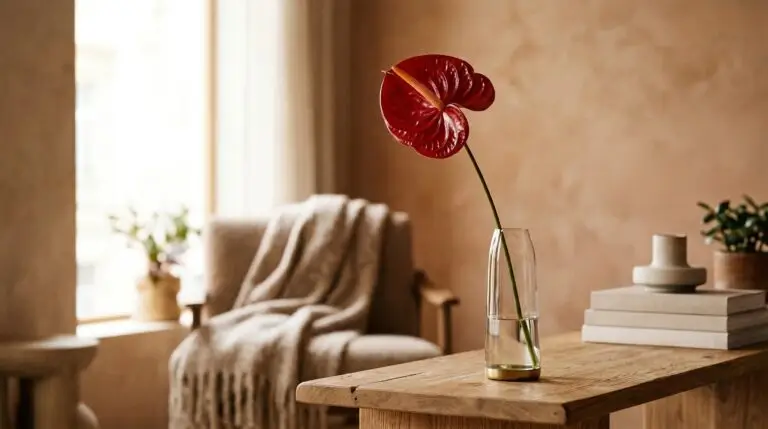
Using anthurium flowers in modern minimalist home decor and arrangements
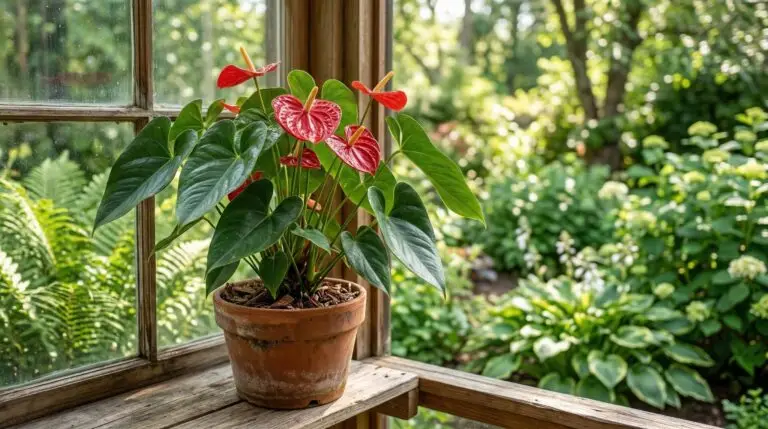
How to care for anthurium houseplants so they bloom all year long
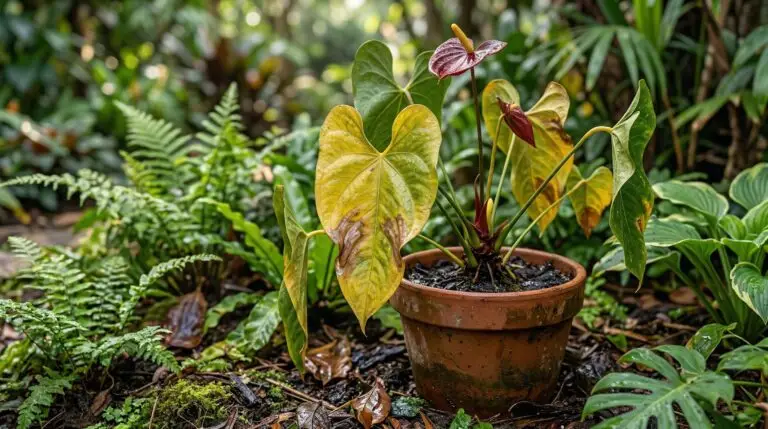
Why your anthurium leaves are turning yellow and brown and what to do about it
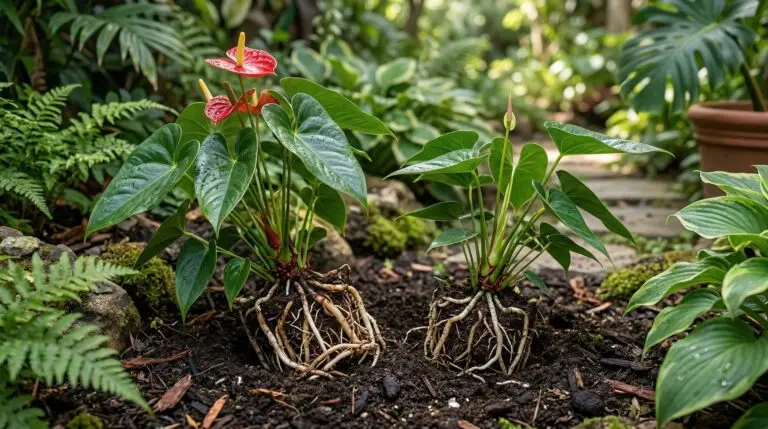
How to propagate anthurium by division and stem cuttings for more plants
How to increase humidity for anthurium plants without a greenhouse
Enjoying our flower guides? Add YourFlowersGuide as a preferred source on Google. It helps more readers find us.
Add to Preferred Sources