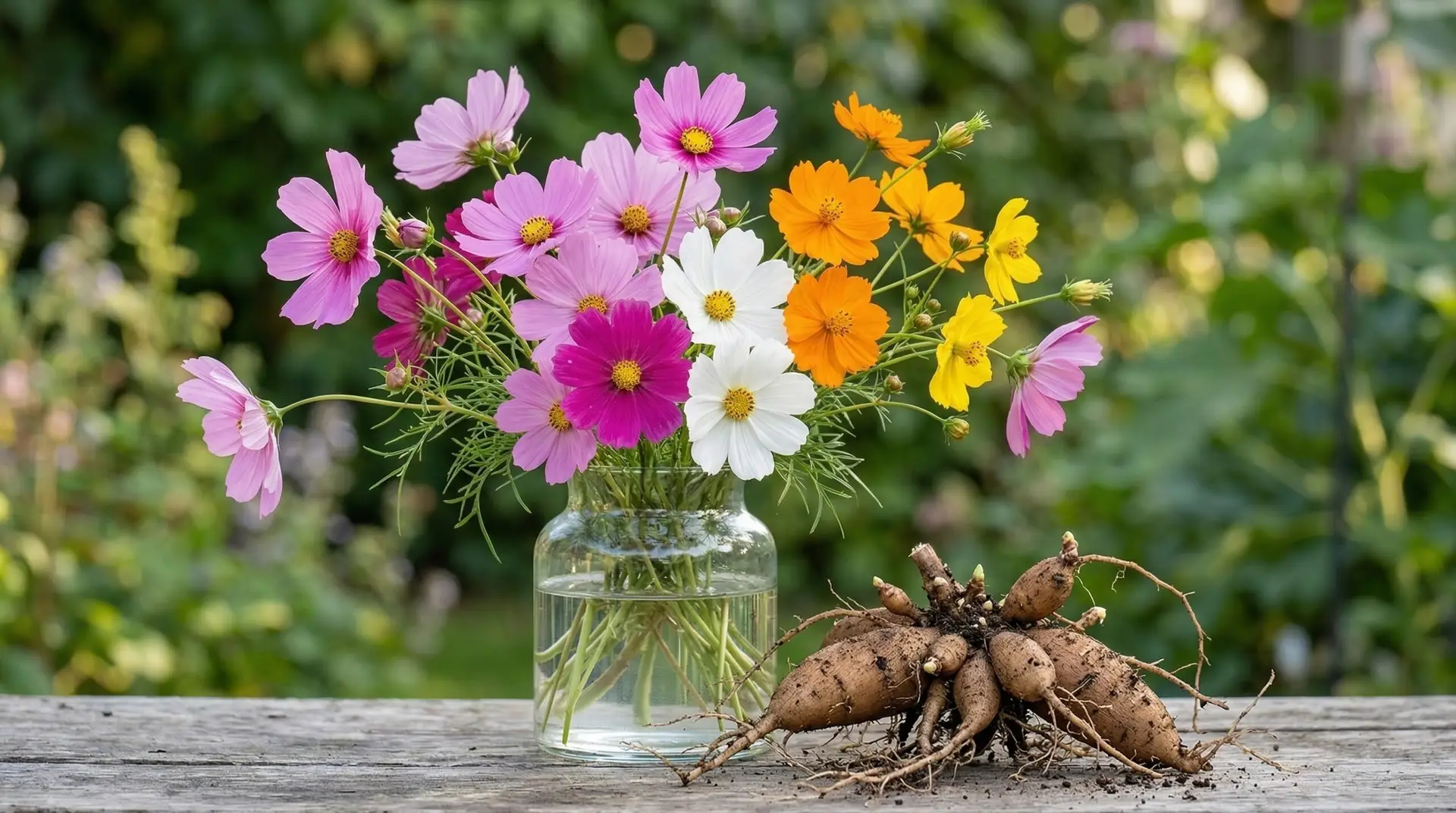
Most gardeners assume that a flower smelling like cocoa is a modern breeding trick, but the fragrance of the chocolate cosmos is an entirely natural evolutionary adaptation. Cosmos atrosanguineus produces a complex mix of volatile organic compounds, including vanillin, which our human noses interpret as rich dark chocolate. This dark red flower originally evolved in the pine-oak forests of Mexico to attract specific pollinators, likely flies or beetles drawn to the scent of decaying organic matter. What smells like a bakery to us was actually a chemical signal meant to mimic something much less appetizing in the wild. The deep maroon, almost black coloration of the petals works in tandem with the scent to complete the illusion of rotting meat or overripe fruit for these specific insects. Today, this unique chemical profile makes it the most famous chocolate scented flower in cultivation. Understanding the specific biology of this plant reveals exactly why it behaves so differently from the common pink and white annual cosmos that reseed freely in summer gardens.
Contents 4 sections
The tuberous biology of a tender perennial
The familiar garden cosmos are annuals with fibrous root systems that complete their life cycle in a single season, but the chocolate cosmos is a tender perennial with a completely different underground architecture. Below the soil surface, Cosmos atrosanguineus develops thick, fleshy tuberous roots designed to store water and carbohydrates to survive dry seasons in its native habitat. This biological strategy is nearly identical to what you find in a dahlia, which belongs to the same broader botanical family. Recognizing this tuberous structure is the key to successfully growing the plant, because these fleshy storage organs are highly susceptible to rot if they sit in cold, wet winter soil. The roots require excellent drainage, particularly during their dormant period when they are not actively pulling moisture from the earth. Gardeners who treat this species like a standard annual often lose it over the winter simply because the underground tubers suffocate and decay in heavy clay. To prevent this, planting the tubers in raised beds or amending the soil heavily with coarse sand ensures the water moves rapidly away from the root zone.
Replicating the Mexican highland environment
The original habitat of the chocolate cosmos was the high-altitude region of Zimapan in Hidalgo, Mexico, an environment characterized by distinct wet and dry seasons with cool nights. Replicating these conditions in a modern garden requires a balance of intense sunlight and well-draining soil that dries out moderately between waterings. The plant needs at least six hours of direct sun daily to generate the energy required to produce its volatile scent compounds, which are most noticeable on warm afternoons when the heat helps vaporize the oils. Because it is only hardy in USDA zones seven through nine, many northern gardeners find that growing chocolate cosmos in containers is the most logical approach to matching its environmental needs. A container allows the soil to warm up faster in the spring and makes it much easier to control moisture levels around the sensitive root system during heavy summer rainstorms. While we often associate heavy fragrance with tropical plants like the gardenia, the scent of this high-desert native relies entirely on dry heat rather than humidity to volatilize its chemical oils into the surrounding air. The foliage also remains healthier in dry air, as the deeply lobed leaves are prone to powdery mildew if they sit in stagnant, humid conditions.
The sterile clone and propagation challenges
One of the most unusual botanical facts about Cosmos atrosanguineus is that the plant is actually extinct in the wild and has survived for over a century primarily as a single genetic clone. The species is naturally self-incompatible, meaning a single plant cannot pollinate itself to produce viable seeds. Because only a single clone was originally introduced to European horticulture in the early twentieth century, the plant could never produce seed and had to be propagated entirely by root division. Every chocolate cosmos grown for decades was genetically identical to that original collected specimen, making commercial production slow and expensive since growers had to manually divide the tubers. Plant scientists eventually utilized tissue culture techniques in laboratories to multiply the plant on a larger scale from microscopic cellular samples, finally making it widely accessible to home gardeners. Recent breeding efforts have introduced new fertile strains by crossing the plant with closely related species, allowing for seed production, but the traditional pure Cosmos atrosanguineus remains a sterile entity. This means that if you buy a traditional tuber, you are growing a direct genetic copy of a plant that was pulled from a Mexican pine forest over a hundred years ago.
Winter dormancy and root protection
When daylight hours shorten and temperatures drop in autumn, the chocolate cosmos begins a natural physiological shift into dormancy by pulling nutrients from its leaves down into its tuberous roots. As the top growth dies back and turns brown, the plant enters a period of suspended animation where it requires almost no water at all. Gardeners in cold climates must intervene at this stage by carefully digging up the tubers before the ground freezes solid and destroys the cellular structure of the roots. The lifted roots should be brushed clean of excess soil and stored in a cool, dark location packed in dry peat moss or wood shavings to prevent them from desiccating completely over the winter months. Even in warmer zones where the plant can remain in the ground year-round, adding a thick layer of dry mulch helps insulate the shallow-rooted tubers from fluctuating freeze-thaw cycles. It is vital to wait until the spring soil has completely warmed before watering these overwintered tubers, as cold water on a dormant root will almost certainly trigger fungal rot. Understanding this strict biological need for a dry, protected rest period completely changes how a gardener approaches the end of the growing season.
The survival of the chocolate cosmos is a fascinating example of how a plant’s specific chemical traits can completely alter its evolutionary trajectory. The vanillin and pinene compounds that originally evolved to attract specific Mexican flies happened to perfectly mimic a human culinary obsession. Because we found that scent so compelling, we intervened to save a species that had lost its natural habitat and its ability to reproduce on its own. Every time you smell those dark maroon petals on a warm summer afternoon, you are experiencing a fragrance that exists today only because humans decided a flower that smells like cocoa was too interesting to let disappear. The plant traded its wild independence for a permanent place in our gardens, relying entirely on our understanding of its tuberous roots and dormant cycles to see it through the winter. By learning to read its biological signals and mimicking its native highland environment, we get to participate directly in the ongoing survival of this botanical rarity.
More About Cosmos

Cosmos for pollinators and why butterflies and bees cannot resist these flowers

Why cosmos grows tall and leggy and how to get compact bushy plants instead

How to save cosmos seeds at the end of the season for free flowers next year

Cosmos as the perfect cut flower for beginners who want armloads of bouquets

Creating a cosmos flower field effect in your backyard for photogenic garden magic
Growing cosmos in containers and hanging baskets for balcony flower gardens

How to grow cosmos from seed for effortless clouds of color all summer long

Best cosmos varieties from classic Sensation to chocolate-scented Cosmos atrosanguineus
Enjoying our flower guides? Add YourFlowersGuide as a preferred source on Google. It helps more readers find us.
Add to Preferred Sources