
Late July mornings offer a specific kind of quiet before the heat settles into the soil. Walking through the garden with a pair of sharp shears, the dew still dampens the cuffs of your jeans while the early light catches the papery petals of cosmos standing tall at the back of the border. Their fern-like foliage brushes against your legs, releasing a faint, green scent into the humid air. There is an immediate reward in growing these airy, daisy-like flowers, especially for anyone just learning to gather their own arrangements. A single seed packet scattered in spring transforms into an absolute thicket of stems by midsummer. You can fill a bucket with white, pale pink, and deep magenta blooms before breakfast and barely make a dent in the patch. The plants seem to defy the usual rules of garden mathematics, multiplying their output the more aggressively you harvest them. For a beginner wanting armloads of flowers without fuss, there is simply no better companion in the soil.
Contents 4 sections
The generous nature of a cosmos cutting garden
Most gardeners discover early on that a zinnia yields a solid return on investment, but a cosmos operates on an entirely different scale of generosity. Every cut you make signals the plant to send out two new shoots in its place, creating a sprawling network of fresh buds. Leaving the flowers to fade on the stem tells the plant its reproductive job is done, prompting it to slow down and set seed. Armed with a clean pair of snips and a bucket of cool water, you become the engine that keeps the cosmos for cutting garden producing well into autumn.
This vigorous growth habit makes them highly forgiving for those learning how to harvest. You do not need to worry about taking too much or ruining the display for the rest of the season. If you accidentally cut a stem too short or strip away a few too many leaves, the plant recovers with remarkable speed. They thrive in average soil and ask for very little supplemental fertilizer, focusing all their energy on producing blooms rather than lush leaves. The stems themselves have a wiry strength that belies their delicate appearance, bending gracefully rather than snapping in a stiff breeze. As the weeks pass, the plants grow taller and bushier, often requiring a simple corral of twine and stakes to keep them upright under the weight of their own blooms. Wading into a mature patch feels like stepping into a cloud of color that hovers waist-high above the garden beds. The sheer volume of material allows you to experiment freely with different vase shapes and arrangements without the pressure of ruining a precious, solitary bloom.
Catching the blooms at the perfect moment
Harvesting a cosmos cut flower requires a bit of observation to catch the bloom at the exact right stage. If you cut them when they are fully open and flat like a saucer, they will drop their petals on your kitchen counter within a day or two. The secret is to look for buds that are just beginning to crack open, showing a clear glimpse of the color inside. The petals should be unfurling but still somewhat cup-shaped, with the yellow center tight and completely unpollinated.
Cutting at this cracked-bud stage ensures the flower will continue to open in the vase, extending its indoor life significantly. When you inspect the patch, you will notice bees hovering around the older, wide-open flowers where the yellow centers have become fuzzy with pollen. Leave those older blooms for the pollinators to enjoy, as their vase life is already spent. Instead, run your fingers down the stem of a newly opening bud, following it deep into the foliage to find a spot just above a set of lateral leaves. Using sharp, clean shears prevents crushing the delicate vascular system of the stem, allowing the flower to drink freely once submerged. Making your cut low on the plant encourages those long, elegant stems that look so graceful arching out of a pitcher. The buds might look a little understated in your bucket at first, but they will unfurl completely overnight once brought indoors. Learning to read the subtle changes in the bud structure becomes a quiet morning meditation.
Crafting arrangements with summer companions
A cosmos bouquet rarely looks stiff or formal, bringing a wild, meadow-like quality to any room it occupies. Their thin stems allow them to dance above heavier, more solid focal flowers, creating movement and space within an arrangement. When you pair them with the dense, geometric heads of a dahlia, the cosmos are a softening agent, breaking up the heavy blocks of color. They fill the empty spaces with a light, fluttering texture that makes the whole composition feel freshly gathered from a country lane.
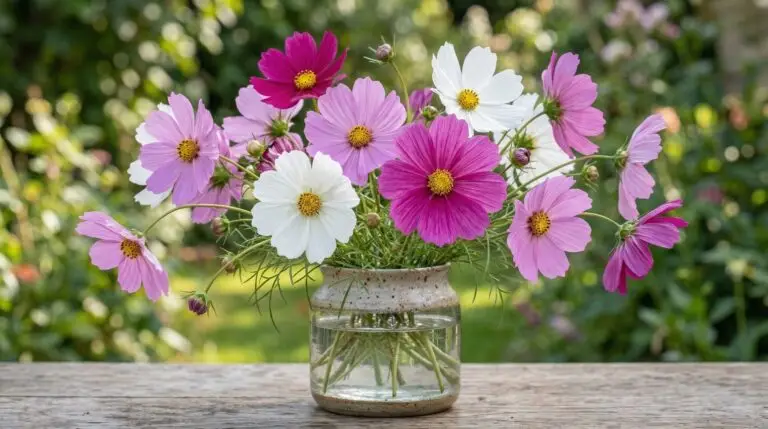
Building an arrangement starts with creating a sturdy base in your vessel, often using the branching foliage of the cosmos themselves if you strip the lower leaves. You can mix in the upright, vertical spikes of a snapdragon to establish the height and overall shape of the design. Once the heavier focal flowers are settled into place, you thread the cosmos stems through the gaps, letting them reach out slightly higher than the rest of the blooms. Their natural curve and tendency to face different directions give the arrangement a sense of life and breath. You might find that a simple mason jar filled entirely with cosmos of varying heights is just as satisfying as a complex mixed bouquet. The feathery green foliage, if kept clean and out of the water, adds an airy filler that eliminates the need for any other greenery.
Extending the life of delicate stems
Treating the stems properly from the moment they leave the garden makes a noticeable difference in how long they last. Stripping every single leaf that might fall below the water line is an absolute requirement, as the delicate foliage rots quickly and fouls the water. The stems benefit from a long drink in a cool, dark room before they are arranged into their final display. This conditioning period allows the plant tissues to hydrate fully without the stress of bright sunlight or warm drafts pulling moisture from the petals.
Even with the best care, cosmos are naturally fleeting, usually lasting about five to seven days in a vase. The water needs to be changed completely every two days, and giving the stems a fresh cut at the bottom helps keep the hydration pathways open. You will notice that the petals become slightly translucent and papery as they age, eventually dropping off one by one onto the table. There is something satisfying about sweeping away those fallen petals, knowing there are dozens more buds waiting out in the garden to take their place. You do not need to rely on chemical preservatives if you maintain clean water and start with fresh, properly timed cuts. The rhythm of bringing fresh stems indoors and composting the spent ones becomes a natural part of the weekly household routine. The kitchen table never has to be empty from July until the first hard frost stops the plants in their tracks.
More About Cosmos
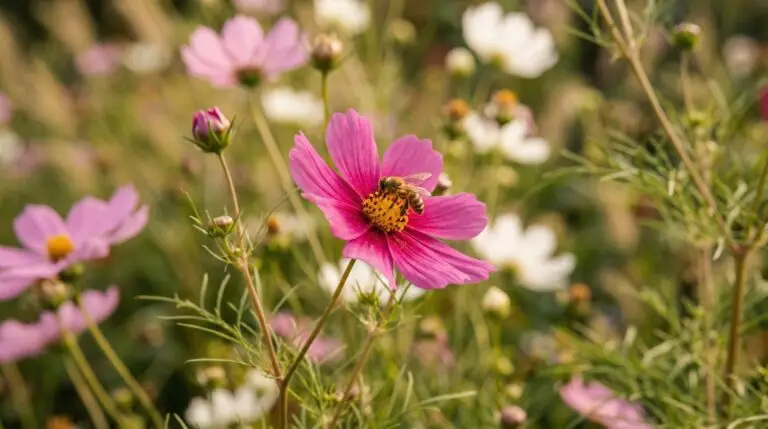
Cosmos for pollinators and why butterflies and bees cannot resist these flowers

Why cosmos grows tall and leggy and how to get compact bushy plants instead

How to save cosmos seeds at the end of the season for free flowers next year
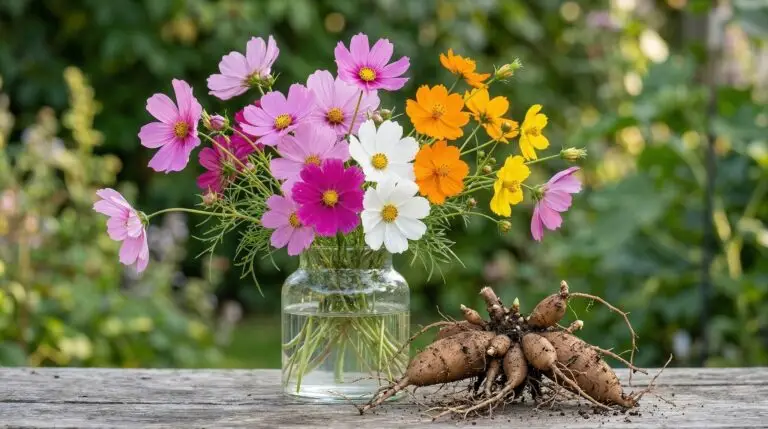
Chocolate cosmos the rare perennial with flowers that smell like dark chocolate

Creating a cosmos flower field effect in your backyard for photogenic garden magic
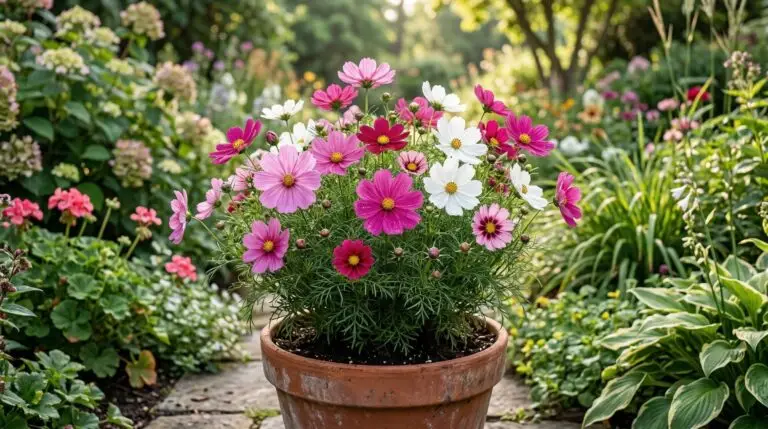
Growing cosmos in containers and hanging baskets for balcony flower gardens
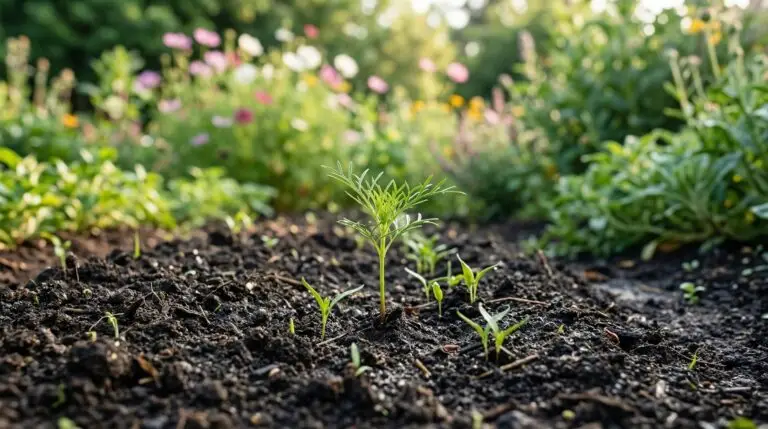
How to grow cosmos from seed for effortless clouds of color all summer long
Best cosmos varieties from classic Sensation to chocolate-scented Cosmos atrosanguineus
Enjoying our flower guides? Add YourFlowersGuide as a preferred source on Google. It helps more readers find us.
Add to Preferred Sources