
Most gardeners plant cosmos expecting a neat row of daisy-like blooms, but what they often get is a towering, tangled mess of green foliage that eventually collapses across the pathway. When a cosmos plant gets too tall and starts falling over, the instinct is usually to blame the wind or a lack of sunlight. The real issue almost always comes down to how we treat the soil before the seeds even go into the ground. People are trained to amend their garden beds with rich compost and generous doses of fertilizer, which works beautifully for demanding crops or heavy feeders like a classic zinnia. Cosmos, however, actively resents rich soil and responds to high nitrogen levels by churning out massive amounts of weak, spindly stem growth at the expense of flowers. Understanding this basic trait is the first step to keeping your plants manageable and upright for the entire summer season.
Contents 4 sections
Why rich soil creates towering green monsters
When you plant cosmos in highly amended garden beds, the excess nitrogen acts like a massive energy drink for the foliage. The plant prioritizes vertical growth, stretching its stems rapidly to absorb more sunlight while completely forgetting its primary job of producing flowers. This rapid stretching creates weak cell walls within the stems, resulting in a leggy cosmos plant that cannot support its own weight once the weather turns rough. If you have ever watched a six-foot cosmos falling over after a mild summer storm, you have seen the direct result of soil that is simply too fertile for this specific plant. To fix this problem in future seasons, you must unlearn the habit of feeding every plant in your garden and instead relegate your cosmos to the poorest, driest corners of your yard. They will stay much shorter, develop thicker stems, and produce significantly more blooms when they have to struggle just a little bit for their survival.
Aside from soil fertility, sunlight and day length play a massive role in how tall these plants get before they finally decide to bloom. Many traditional cosmos varieties are short-day plants, meaning they are triggered to start forming flower buds only when the days begin to shorten in late summer. If you plant them very early in the spring, they will spend the entire long-day period of June and July doing nothing but growing taller and taller. By the time August arrives and the days shorten enough to trigger blooming, the plants are already massive and prone to flopping under their own weight. You can manage this by waiting to sow your seeds until early summer, which reduces the vegetative growing time before the late summer blooming trigger kicks in. This slight delay in planting keeps the overall height of the plant much more compact while still delivering a massive show of autumn color.
How pinching young plants prevents leggy growth
Even if you get the soil and timing right, you still need to intervene early in the season to force the plant to grow wide rather than tall. When a cosmos plant is left to its own devices, it will send up one primary central stem that reaches for the sky. You can stop this vertical race by pinching out the growing tip of that main stem when the plant is roughly twelve to eighteen inches tall. Taking a pair of sharp scissors or just your thumb and index finger, snap off the top few inches of the plant right above a set of leaves. This simple action removes the dominant growth hormone concentrated in the tip, forcing the plant to redirect its energy into the lower leaf nodes. Within a week, you will see multiple side branches pushing outward from the base, creating a sturdy, shrub-like structure that is highly resistant to wind damage.
Many people hesitate to cut the tops off their healthy young plants because it feels counterproductive to destroy new growth. The reality is that skipping this step is the most common reason gardeners end up with a cosmos too tall to manage by midsummer. Pinching delays the very first bloom by perhaps a week or two, but the tradeoff is a plant that produces five times as many flowers on a frame that actually stays upright. If you are growing other cut flowers like a tall snapdragon, you might already be familiar with this technique, as it works on the exact same principle of forcing lateral branching. Make pinching a mandatory chore on your garden checklist every June, and you will completely eliminate the spindly, single-stemmed plants that plague so many borders. You will also find that these heavily branched plants produce longer, straighter stems that are much easier to cut for indoor arrangements.
Choosing the right variety from the start
Sometimes the problem is not your technique, but the actual genetics of the seeds you bought at the garden center. The most widely available cosmos seeds belong to the Sensation series, which are genetically programmed to reach heights of four to six feet even in ideal, poor-soil conditions. If you plant these in a front border or a small raised bed, no amount of pinching or starving will keep them perfectly compact. To guarantee shorter plants, you need to purchase seeds specifically bred for dwarf or compact growth habits. The Sonata series is the most reliable option for home gardeners, consistently topping out at just two feet tall while still producing full-sized, classic blooms. By reading the seed packet carefully and avoiding the giant heritage varieties, you instantly solve the height problem before you even pick up a trowel.
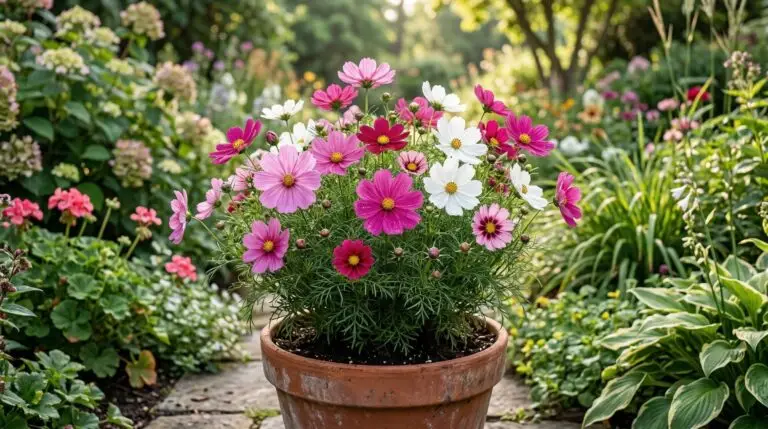
Growing a compact cosmos variety like Sonata also changes where you can successfully use these plants in your yard. Because they stay short and bushy naturally, they are excellent candidates for container gardening or the very front edge of a foundation bed. You do not have to worry about them shading out their neighbors or requiring an elaborate support system as the season progresses. While the taller varieties are fantastic for the back of a large cottage garden where they can lean on sturdy shrubs, the dwarf types give you total control over the space. Always match the mature height listed on the seed packet to the specific location you have in mind, and remember that those heights are calculated based on unamended, average garden soil. If you plant a dwarf variety in heavily fertilized potting mix, it will still stretch and become somewhat leggy.
Managing and staking plants that are already too tall
If your plants are already chest-high and leaning precariously, pinching and soil correction will not save you this year. When a leggy cosmos plant starts to tip over, the stems will often bend at the base and then start growing upward again, creating a messy, tangled elbow that takes up entirely too much space. You need to provide mechanical support immediately before a heavy rain snaps the brittle stems completely off at the root crown. The most effective method for supporting a massive cosmos patch is the Florida weave technique, using sturdy wooden stakes driven deep into the ground at the corners of the bed. You then run heavy garden twine back and forth between the stakes, weaving it through the plants to create a supportive grid that holds the stems upright.
Individual plants growing on their own need a different approach, usually involving a thick bamboo cane or a coated metal stake. Drive the stake into the ground a few inches away from the main stem, being careful not to pierce the central root mass. Use soft plant ties or strips of old cotton fabric to secure the main stem to the stake in two or three different places, leaving a little bit of slack so the plant can still sway gently in the breeze. Tying the stem too tightly with thin wire or rigid plastic will eventually girdle the plant as it continues to grow and expand its girth. While staking is a tedious chore that most of us would rather avoid, it is the only reliable way to salvage a top-heavy plant and keep the flowers off the mud until the first frost arrives.
The most useful piece of advice for anyone struggling with overgrown cosmos is to completely ignore them once they are established in the garden. We are conditioned to water, feed, and coddle our plants constantly, but cosmos thrive on neglect and actively punish you for paying too much attention to their root zone. Give them the worst soil in your yard, pinch them once when they are young, and then step back and let them fend for themselves. When you stop treating them like delicate greenhouse specimens and start treating them like the rugged wildflowers they actually are, you will finally get the sturdy, bloom-heavy plants you wanted in the first place. You will save yourself time, save money on fertilizer, and enjoy a much better display of flowers all season long.
More About Cosmos

Cosmos for pollinators and why butterflies and bees cannot resist these flowers

How to save cosmos seeds at the end of the season for free flowers next year

Chocolate cosmos the rare perennial with flowers that smell like dark chocolate

Cosmos as the perfect cut flower for beginners who want armloads of bouquets

Creating a cosmos flower field effect in your backyard for photogenic garden magic
Growing cosmos in containers and hanging baskets for balcony flower gardens

How to grow cosmos from seed for effortless clouds of color all summer long

Best cosmos varieties from classic Sensation to chocolate-scented Cosmos atrosanguineus
Enjoying our flower guides? Add YourFlowersGuide as a preferred source on Google. It helps more readers find us.
Add to Preferred Sources