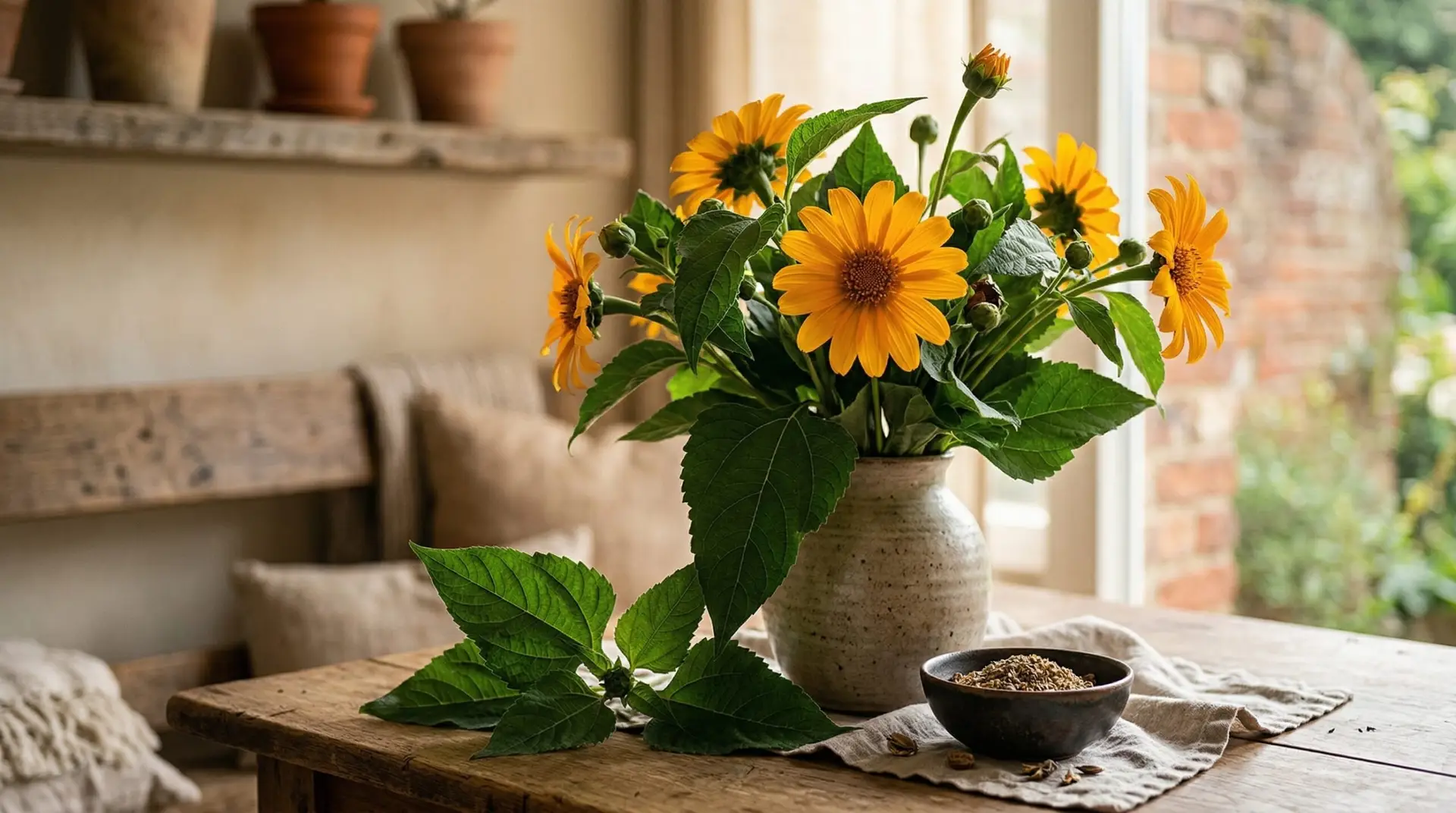
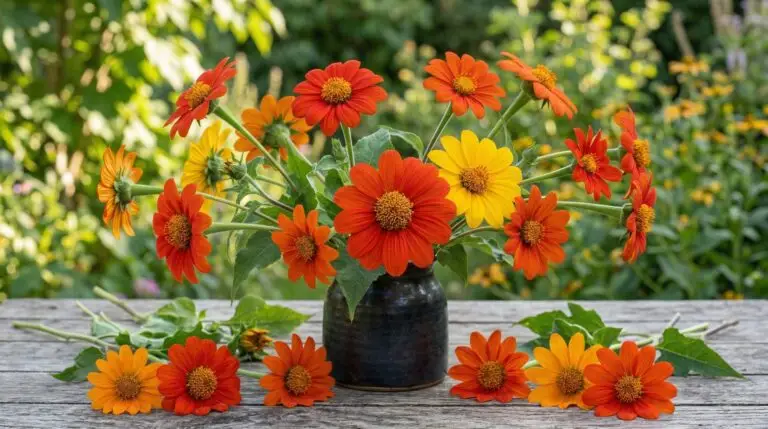
Mexican sunflower leaves contain comparable levels of phosphorus and nitrogen to commercial synthetic fertilizers. Most gardeners know the annual ornamental variety, but the true agricultural powerhouse is its perennial cousin, Tithonia diversifolia. Both species accumulate massive amounts of nutrients in their foliage, though the perennial shrub produces the sheer volume of biomass required for serious soil building. Much like a standard sunflower, the plant acts as a dynamic accumulator, sending deep taproots into the subsoil. These roots extract phosphorus, potassium, and calcium from mineral layers that shallow-rooted vegetables cannot reach. The plant converts these raw subterranean minerals into bioavailable nutrients stored directly in its soft green tissue. When you harvest and apply these leaves to the soil surface, those trapped nutrients become immediately available to your crops. You bypass the need to purchase external inputs by growing your own tithonia fertilizer on site.
Contents 4 sections
Biomass production and nutrient composition
The agricultural use of tithonia green manure originated in African farming systems where synthetic inputs were either unavailable or cost-prohibitive. Researchers discovered that the fresh leaves contain about 3.5 percent nitrogen, 0.3 percent phosphorus, and 3.8 percent potassium on a dry weight basis. This specific ratio makes the foliage richer in essential nutrients than most farmyard manure or standard garden compost. The high phosphorus content is particularly unusual for a plant leaf, making it an ideal top dressing for fruiting crops like tomatoes, peppers, and squash that require high phosphorus for flower development. Tithonia also produces a high volume of mucilage, a sticky substance that helps bind loose soil particles together to improve overall soil structure. Unlike woody materials, tithonia leaves lack complex lignins and break down entirely within a few weeks of soil contact. This rapid decomposition means the nutrients enter the soil food web almost immediately rather than requiring a long breakdown period. You must apply the leaves while they are green and fresh to capture the maximum volatile nitrogen before it off-gasses into the atmosphere.
Applying fresh leaves as a green mulch
The chop-and-drop method is the most efficient way to utilize Mexican sunflower compost in a garden setting without the labor of building a traditional pile. Harvest the stems and leaves just before the plant begins to form flower buds. The nutrient concentration in the foliage peaks right before the reproductive phase begins, as the plant pulls mobile nutrients upward to support seed production. Cut the soft green branches using sharp loppers and chop them into pieces roughly four inches long to increase the surface area for microbial attack. Spread this chopped material directly on the soil surface around your vegetable plants, keeping it a few inches away from the main stems to prevent fungal rot. A layer two to three inches thick suppresses weeds, retains soil moisture, and feeds the crop simultaneously as earthworms pull the decaying leaves underground. Despite what many sources claim about needing to till green manures into the soil, leaving tithonia on the surface works better. Surface application prevents the sudden nitrogen tie-up that occurs when fresh, uncomposted organic matter is buried directly in the root zone.
Accelerating cold compost piles
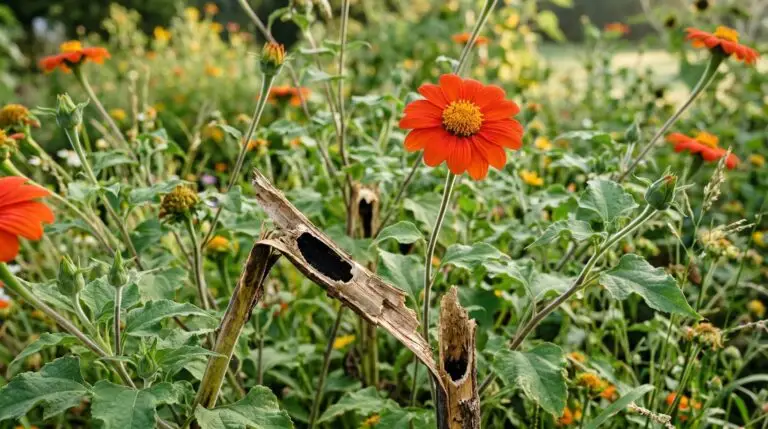
Tithonia serves perfectly as a high-octane activator for compost piles that have stalled or cooled down due to an imbalance of carbon. The high moisture and nitrogen content of the fresh leaves feeds the thermophilic bacteria responsible for breaking down stubborn materials. If you have a pile overloaded with dry autumn leaves, straw, or wood chips, adding a thick layer of chopped tithonia will restart the heating process within forty-eight hours. Treat the Mexican sunflower exactly as you would grass clippings, mixing it thoroughly with brown materials to prevent it from matting into an anaerobic, foul-smelling sludge. The hollow stems of the plant provide an unexpected benefit by trapping air, which helps maintain necessary oxygen flow through the center of a dense compost pile. You can harvest the plant aggressively every four to six weeks during the active growing season to guarantee a steady supply of green activator. Using tithonia this way eliminates the need to purchase boxed compost starters or blood meal to keep your decomposition cycle moving.
Managing the plants for maximum yield
Growing tithonia for biomass requires a different approach than growing it for visual appeal in a traditional flower bed. You should plant it in dedicated hedgerows or along the northern perimeter of your garden where its massive height will not cast unwanted shade on your primary crops. The plant responds vigorously to hard pruning, often called coppicing, which forces it to push out dense, leafy side shoots rather than tall, woody central leaders. Cut the entire plant back to about eighteen inches above the ground whenever it reaches four feet in height. This constant pruning prevents the plant from flowering, which keeps its energy directed entirely toward producing nutrient-dense foliage. You can easily propagate new plants by taking hardwood cuttings from mature stems and sticking them directly into moist soil. Interplanting the base of these hedgerows with a marigold border creates a functional living wall that deters nematodes while generating continuous fertility above ground. A well-managed patch of Mexican sunflower turns poor perimeter dirt into a permanent nutrient pump for your most demanding vegetable beds.
More About Mexican Sunflower
Mexican sunflower as the ultimate butterfly magnet for late season pollinator gardens
Mexican sunflowers as cut flowers with the trick to prevent hollow stems from wilting
How to grow Mexican sunflowers for towering walls of blazing orange in late summer
Mexican sunflower versus common sunflower and why you should grow both
How to keep Mexican sunflowers from flopping over when they get tall and top-heavy
How to save Mexican sunflower seeds for next year’s free butterfly garden
Growing Mexican sunflowers from seed and the tropical annual that needs no pampering
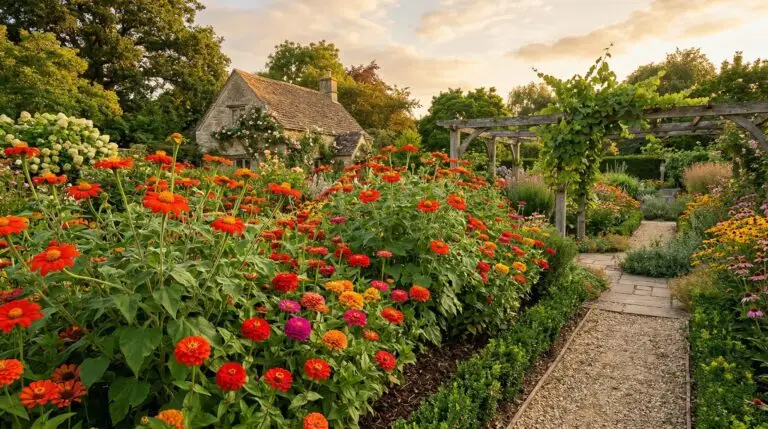
Companion plants for Mexican sunflower: what to grow, avoid
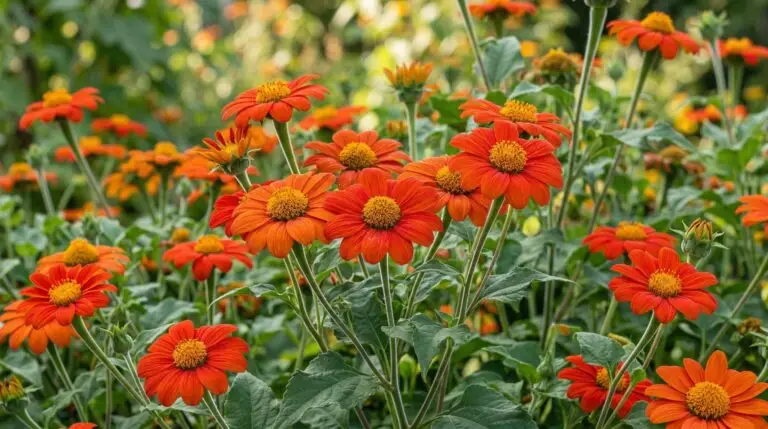
Compact Mexican sunflower varieties for smaller gardens that still attract butterflies
Enjoying our flower guides? Add YourFlowersGuide as a preferred source on Google. It helps more readers find us.
Add to Preferred Sources