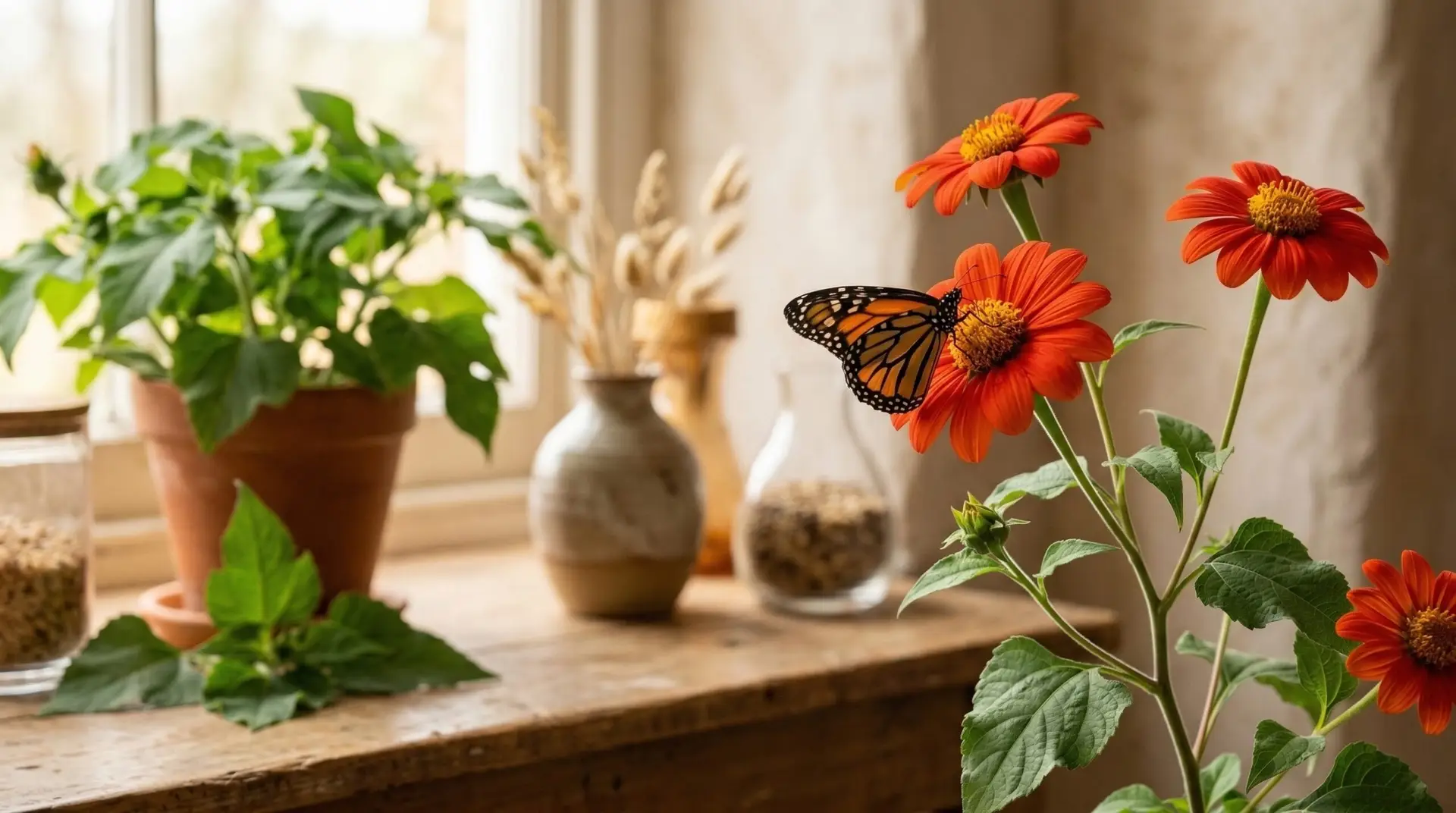
The dew is heavy on the September garden, bending the grass blades toward the soil. The morning light arrives late now, slipping sideways through the oak canopy to strike a patch of brilliant orange at the edge of the vegetable beds. A female eastern tiger swallowtail rests on the broad disk of a Mexican sunflower, her wings slowly opening and closing as she absorbs the pale heat. She probes the golden center of the blossom with her long proboscis, drinking the nectar that pooled there overnight. The plant she rests upon is massive, towering a full two feet above my head with thick, hollow stems branching in every direction. This is Tithonia rotundifolia, a creature of the deep summer that waits until the days begin to shorten before revealing its true purpose. It does not simply bloom in the garden, but rather commands the space entirely.
Growing Mexican sunflower requires a certain surrender of control to the wilder impulses of the season. When the seed is pushed into the warming earth of May, it looks like nothing more than a sliver of dried wood. The seedling emerges slowly, vulnerable to slugs and late cold snaps, demanding patience from a gardener eager for color. I often thin the seedlings with a heavy heart, pulling up perfectly good sprouts so the remaining plants have the three feet of breathing room they will eventually need. Crowded plants compete for light and water until none of them thrives, and they grow spindly and weak instead of developing their characteristic sturdy trunks. Left to its own devices with adequate space, the plant transforms by August into a dense thicket of velvety, triangular leaves. It becomes a small forest at the border of the yard, waiting for the migration to begin.
Contents 3 sections
The architecture of a late season feast
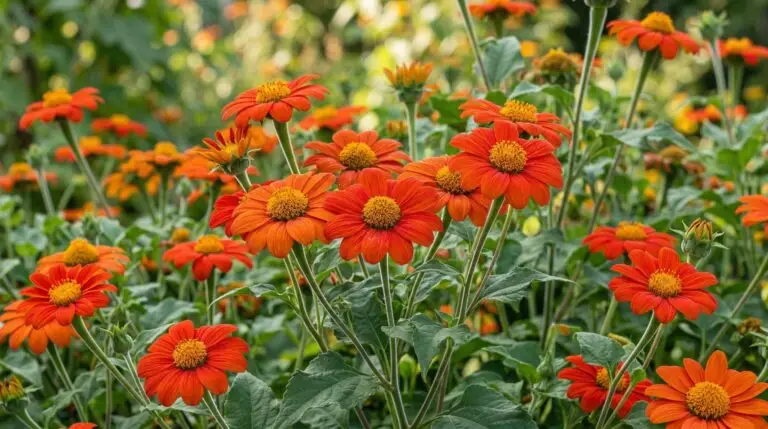
The structure of the Mexican sunflower is built for the specific mechanics of heavy, winged insects. The flower stalks swell just below the bloom, creating a hollow, reinforced pedicel that can support the weight of a resting monarch or a foraging bumblebee without snapping. The petals themselves are a saturated, luminous orange, radiating outward from a yellow central disk composed of hundreds of tiny, nectar-rich florets. This broad landing pad offers a secure foothold for butterflies that struggle to balance on smaller, more delicate blossoms when the autumn winds pick up. As the purple petals of the coneflower droop and turn to dry seed heads, the Tithonia is just hitting its stride. It produces a continuous succession of new buds. This steady production guarantees that the nectar supply remains abundant even as the surrounding vegetation begins to senesce and turn brown.
You can stand beside a mature Mexican sunflower on a sunny afternoon and simply listen to the hum of the ecosystem it supports. Ruby-throated hummingbirds dart aggressively between the blooms, defending the rich food source from rivals with sharp, chattering calls. Native solitary bees sleep inside the closed petals at night, emerging covered in yellow pollen when the morning sun warms the flower. The rough, hairy leaves provide shelter for praying mantises and crab spiders, predators that wait in the shadowy interior for smaller insects drawn to the pollen. It is an entire world contained within a single root system. The plant acts as a busy intersection of life in the waning days of the growing season. It asks for very little in return, thriving in poor soils and shrugging off periods of drought that leave more delicate species wilted and crisp.
Fueling the great autumn migration
The true ecological value of Tithonia becomes apparent when the monarch butterflies begin their long flight south to the mountains of Mexico. These insects require massive amounts of nectar to build the lipid reserves necessary to survive the migration and the long winter ahead. The autumn fields can be a desert for a traveling butterfly, with many traditional food sources already gone to seed. A stand of Mexican sunflower acts as an essential refueling station, its bright orange beacons visible from high above the tree line. I have counted a dozen monarchs at once clinging to the swaying branches of a single plant. They drink deeply before riding the thermal currents higher into the sky. They share the space with painted ladies, gulf fritillaries, and giant swallowtails, all drawn by the same urgent need to feed before the cold sets in.
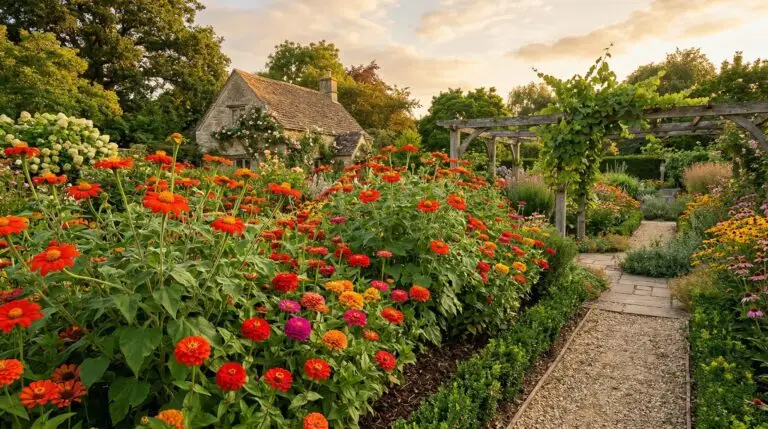
Planting for these late arrivals requires a shift in how we think about the garden’s timeline. We often design our beds for the explosive peak of June, forgetting the quiet desperation of October. Tithonia fills this gap perfectly, especially when grown alongside other heat-loving, late-blooming species. A sprawling patch of lantana at the feet of the towering sunflowers creates a tiered buffet for pollinators of different sizes. Similarly, a border of tall zinnia offers complementary landing pads and a steady nectar flow. Together, these plants form a cohesive unit that sustains the local insect population long after the spring perennials have retreated underground. The garden becomes less about human aesthetics and more about ecological function, a place of sustenance rather than just visual pleasure.
Sowing seeds and accepting the frost
There is a particular melancholy that comes with tending a plant so deeply tied to the end of the year. The Mexican sunflower grows with a frantic energy in September, pushing out dozens of blooms a day as if it knows its time is strictly limited. The hollow stems become heavy with the weight of rain and flowers, sometimes leaning precariously over the pathways. I rarely stake them, preferring to let them lean and sprawl, finding their own balance in the changing light. When a branch snaps in a heavy storm, the plant simply heals the wound and sends a new shoot upward from the nearest node. It is a lesson in resilience and adaptation, a reminder that perfection is rarely the goal of a living system. The plant continues its work, feeding the travelers, right up until the very last moment.
That moment always arrives with the first hard frost of November. The change is sudden and absolute, turning the magnificent, towering structure into a blackened ruin overnight. The velvet leaves shrivel and drop, and the hollow stems collapse inward, returning their stored water to the soil. It is a difficult morning to walk through the garden, seeing the sudden absence of the butterflies and the end of the bright orange blooms. Yet, the seeds have already fallen to the ground. They are scattered by the wind and the foraging goldfinches, resting quietly in the cold earth. The Mexican sunflower has completed its contract with the season, offering up its life to fuel the wings that carry the summer away. We cut the dead stalks down, add them to the compost pile, and wait for the earth to tilt back toward the sun.
More About Mexican Sunflower
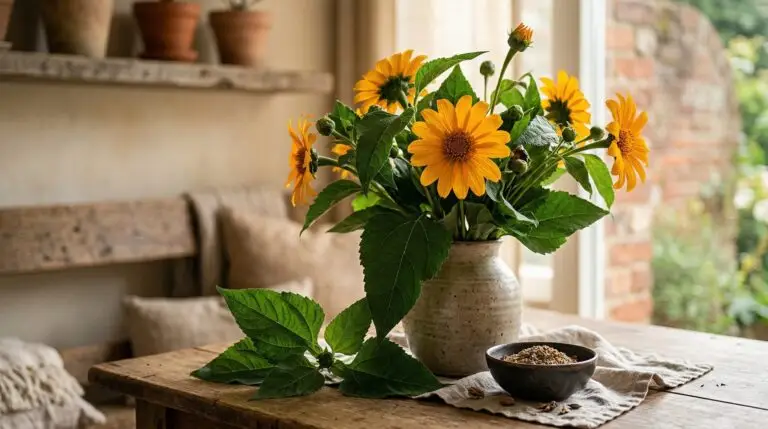
Mexican sunflower leaves as a natural fertilizer and green mulch for vegetable gardens
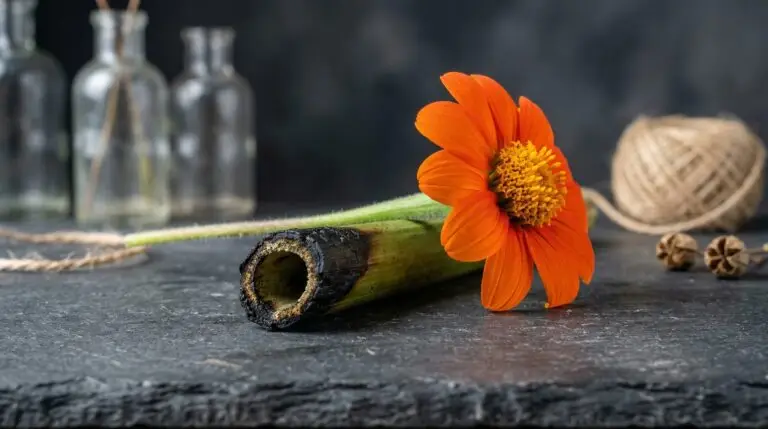
Mexican sunflowers as cut flowers with the trick to prevent hollow stems from wilting
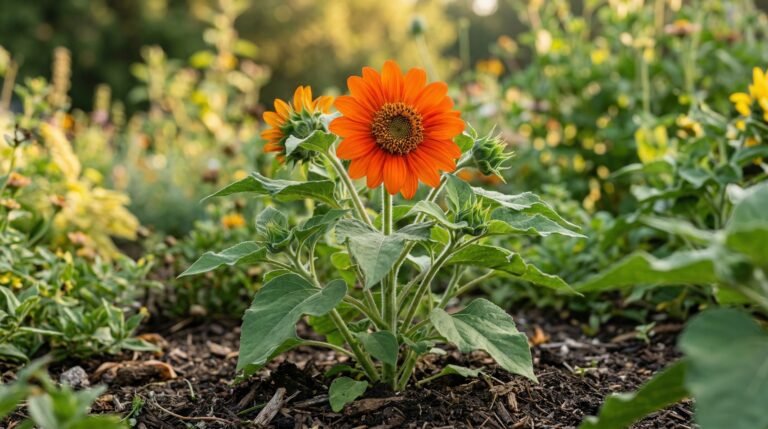
How to grow Mexican sunflowers for towering walls of blazing orange in late summer
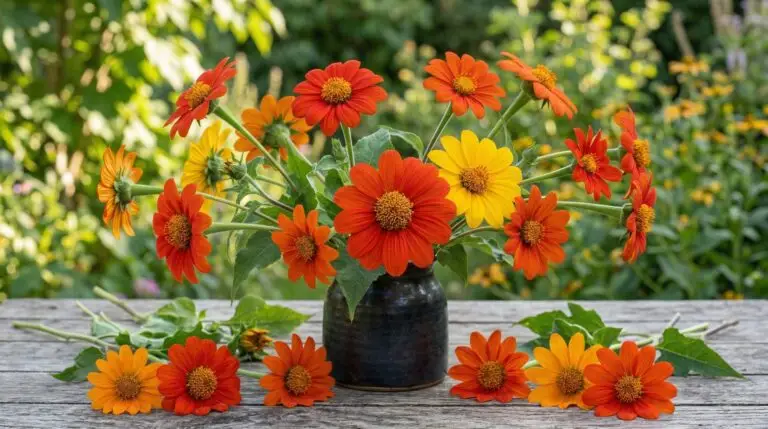
Mexican sunflower versus common sunflower and why you should grow both
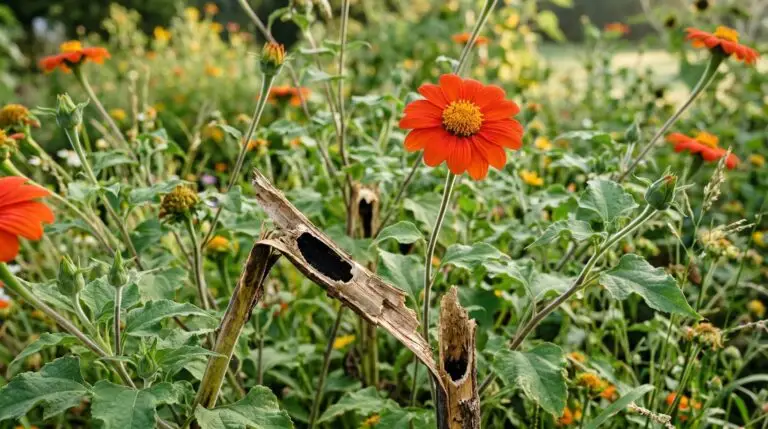
How to keep Mexican sunflowers from flopping over when they get tall and top-heavy
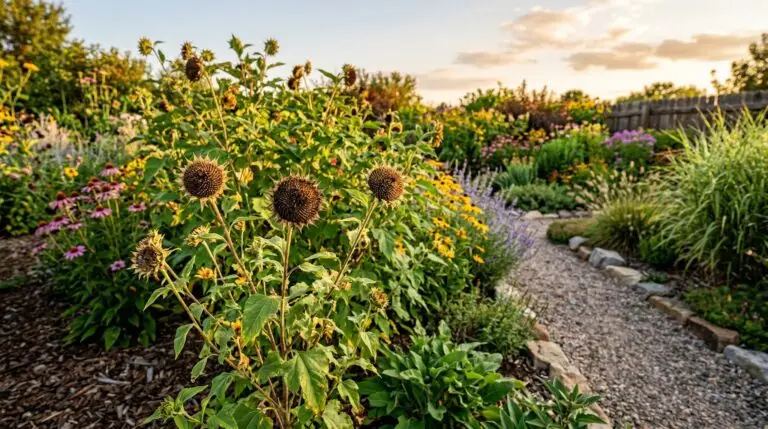
How to save Mexican sunflower seeds for next year’s free butterfly garden
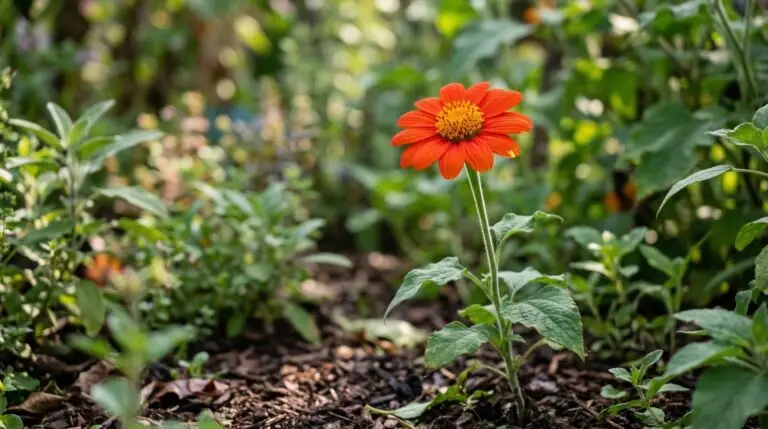
Growing Mexican sunflowers from seed and the tropical annual that needs no pampering
Companion plants for Mexican sunflower: what to grow, avoid
Compact Mexican sunflower varieties for smaller gardens that still attract butterflies
Enjoying our flower guides? Add YourFlowersGuide as a preferred source on Google. It helps more readers find us.
Add to Preferred Sources