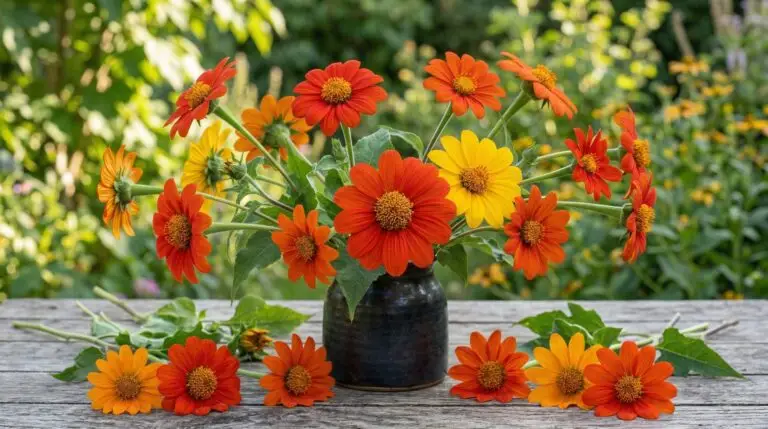
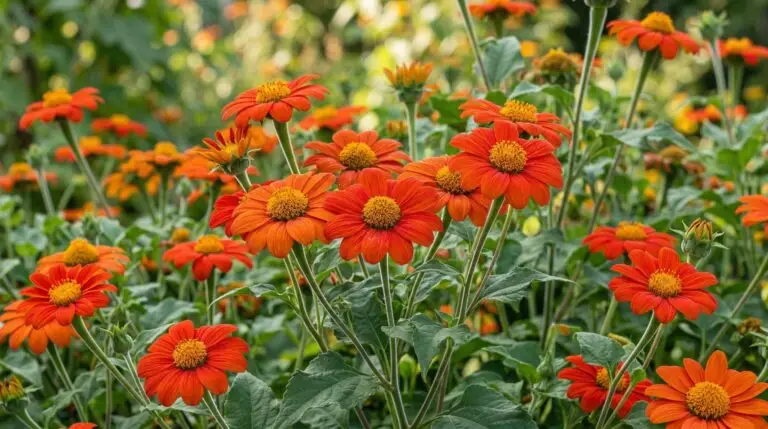
Late August afternoons bring a specific kind of heavy heat to the garden, a weather pattern that makes most plants slump in exhaustion. This is exactly the environment where the Mexican sunflower thrives, pushing out bright, fiery orange blooms on towering stalks that seem to touch the sky. The petals have a soft, almost velvety texture that catches the harsh afternoon sunlight and turns it into a glowing lantern. Cutting these bold flowers to bring indoors feels like capturing a piece of that late summer energy for your kitchen table. Many gardeners quickly discover a frustrating reality when they place those freshly cut stalks into a vase of water. Within hours, the thick stems bend over the rim of the glass, and those bright orange petals droop in a posture of complete defeat. Learning to use the Mexican sunflower cut flower in arrangements requires understanding the unique structure of its stem and applying a very specific conditioning technique. Once you master this simple trick, you can bring the wild energy of the late summer garden straight into your home.
Contents 3 sections
The secret of the hollow stem
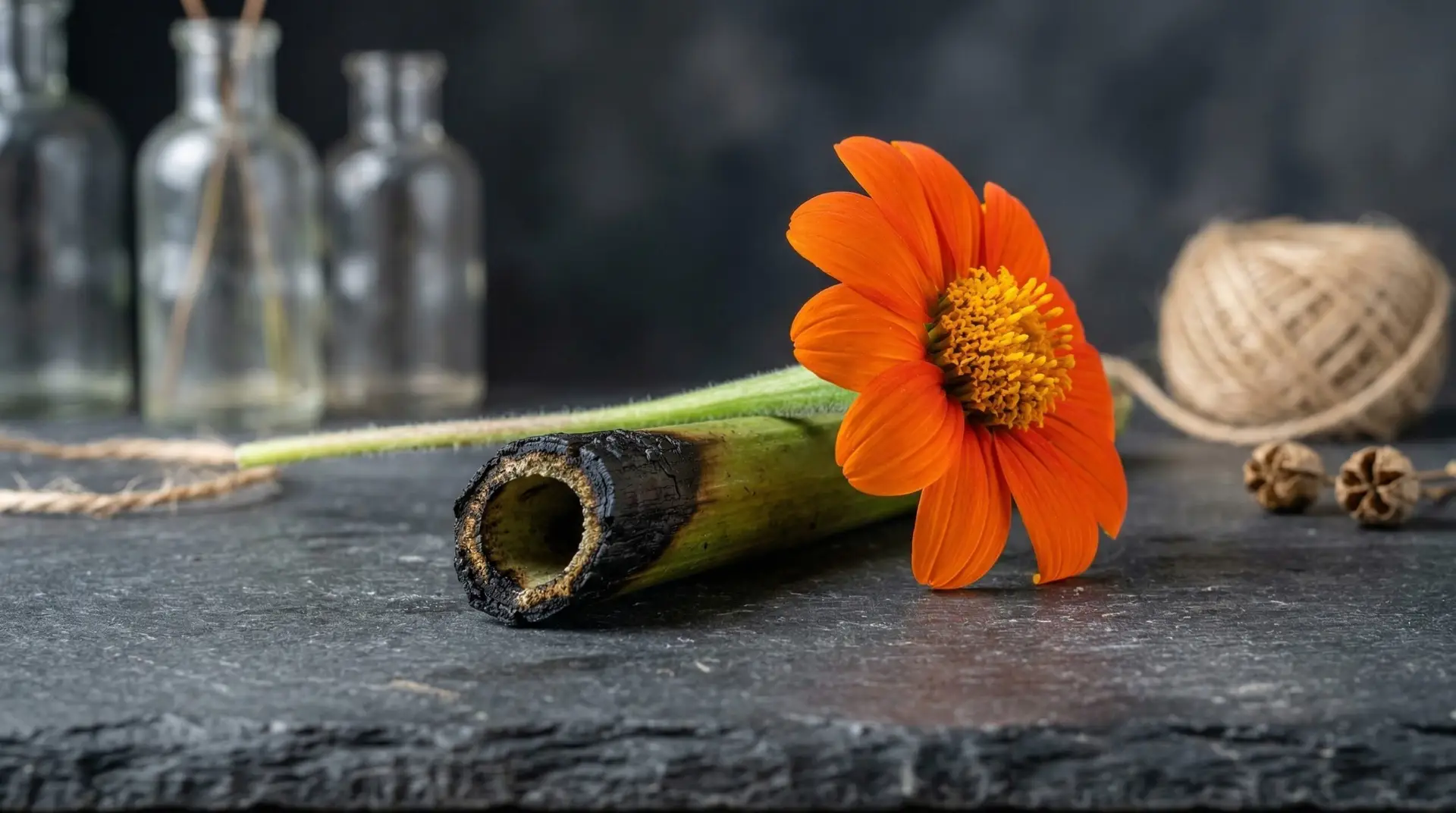
The rapid wilting of a cut Tithonia happens because the plant has a completely hollow stem, much like a thick drinking straw. When you sever the stalk from the main plant, air rushes into that empty central cavity and creates an immediate vapor lock. This bubble of air sits at the base of the cut, physically blocking the plant tissue from drawing up any water from your vase. To bypass this botanical defense mechanism, you must force the trapped air out and seal the base of the stem using extreme heat. Searing the stems sounds harsh, but it is the only reliable way to keep a tithonia arrangement looking fresh and upright.
The searing process requires a bit of preparation before you even head out to the garden with your clippers. You need a heatproof mug filled with an inch or two of boiling water waiting on your kitchen counter. As soon as you cut the flowers, bring them inside and plunge the bottom inch of the hollow stems directly into the boiling water. You will immediately see tiny bubbles escaping from the submerged stems, which is the trapped air being forced out by the expanding heat. Leave the stems in the hot water for about ten to fifteen seconds, just until the submerged portion turns a dark, cooked green. After this quick hot bath, immediately transfer the flowers into a clean vase filled with cool, fresh water. The heat treatment destroys the cells at the very base of the stem, preventing them from forming a callous, while simultaneously clearing the air block. The upper portion of the stem remains firm and can now freely pull hydration up to the heavy flower head.
Making the most of a short display
Even with the most careful searing technique, you should adjust your expectations regarding the vase life of these fiery blooms. A Mexican sunflower cut flower will typically look fresh for three to four days, making it a flower of the moment rather than a long-lasting staple. You can maximize this short window by keeping the water exceptionally clean and removing any leaves that fall below the water line. The fuzzy foliage decays rapidly when submerged, creating a murky environment that clogs the stems and accelerates the wilting process. Stripping the lower leaves also directs all the available water straight up to the blooms, keeping the petals crisp for as long as possible.
The timing of your harvest plays a significant role in how well these flowers hold up indoors. You must cut them in the cool, quiet hours of early morning before the sun has a chance to draw moisture out of the petals. Look for buds that are just beginning to unfurl their outer ring of petals, rather than selecting fully open flowers with visible pollen centers. The blooms will continue to open in the vase, giving you the pleasure of watching their geometric centers expand over a few days. Use very sharp bypass pruners to make a clean, angled cut, avoiding any crushing or tearing of the fragile hollow stalk. If you plan to gather a large bundle, carry a bucket of warm water with you into the garden and place the stems in immediately after cutting. You will still need to perform the boiling water treatment once you get back to the kitchen, but the field bucket prevents premature wilting during your harvest.
Designing with fiery late summer colors
The intense, saturated orange of a tithonia demands strong companions in a floral arrangement. Pale pastels and delicate cool tones often look washed out when placed next to such a dominant, saturated color. Instead, lean into the heat of the season by building a palette of deep reds, bright yellows, and rich burgundies. You can create a classic late summer feel by mixing them with a traditional sunflower, which shares a similarly rustic texture and bold presence. The combination of these large, disk-shaped flowers anchors an arrangement and gives it a heavy, substantial base.
Arranging hollow-stemmed flowers requires a gentle touch, as the stalks can easily crease or snap if you force them into a tight grid. Start by building a supportive network of woody foliage or sturdy filler flowers in your vase to hold the fragile stems upright. Once your base is secure, you can thread the seared tithonia stems through the gaps, letting them sit slightly higher than the rest of the materials. They look particularly striking when paired with a deeply colored dahlia in shades of crimson or copper, creating a rich gradient of warm autumn tones. To fill in the middle ground of the bouquet, tuck in a few stems of a brightly colored zinnia, which will easily last as long as the other flowers in the mix. Allow the Mexican sunflowers to stretch out naturally, mimicking the wild, branching habit they display in the garden. The final arrangement should feel loose and gathered, a direct reflection of a sprawling August flower border.
There is something deeply satisfying about mastering the quirks of a difficult flower to bring it indoors. The extra effort of boiling water and precise timing forces you to slow down and pay close attention to the physical nature of the plants you grow. When the late afternoon light hits a glass vase on the dining table, the orange petals of the tithonia seem to generate their own internal heat. The display will fade in a few days, but that brevity makes the sudden burst of intense color feel all the more valuable.
More About Mexican Sunflower
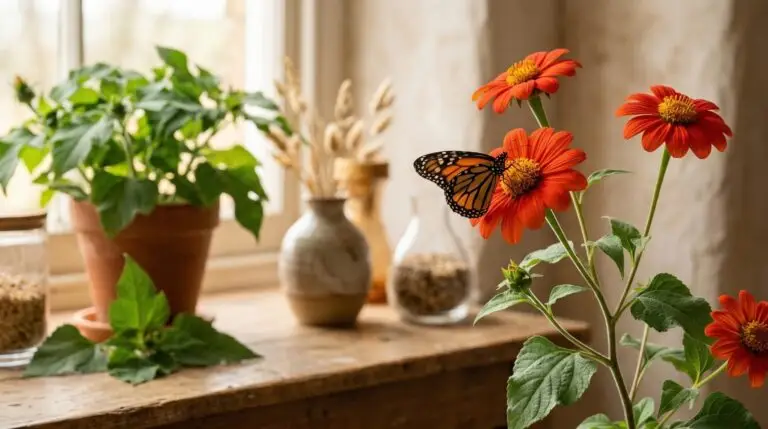
Mexican sunflower as the ultimate butterfly magnet for late season pollinator gardens
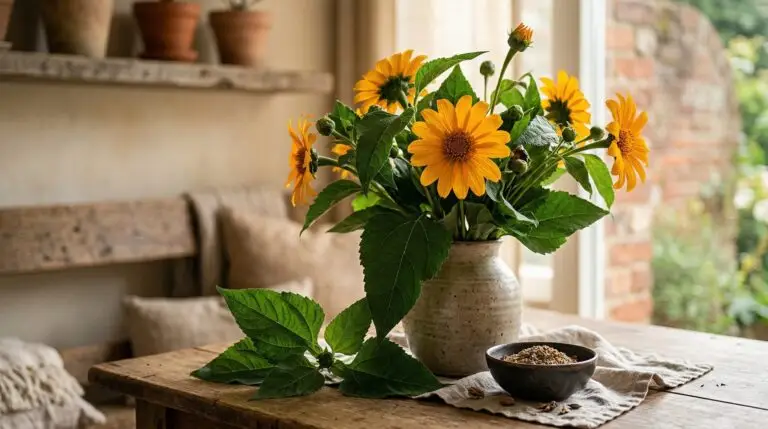
Mexican sunflower leaves as a natural fertilizer and green mulch for vegetable gardens
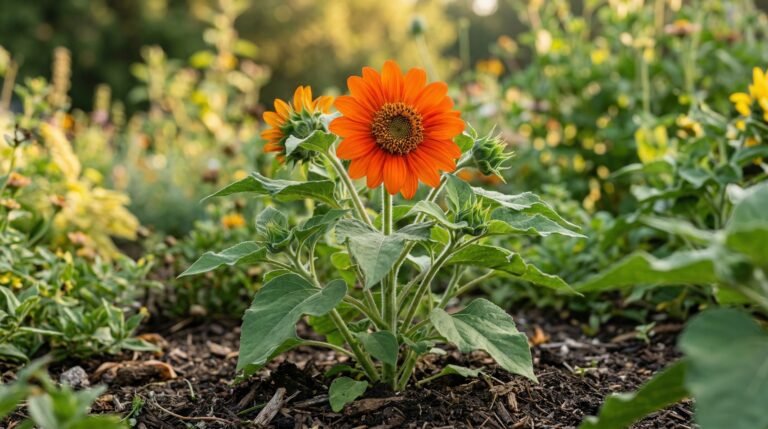
How to grow Mexican sunflowers for towering walls of blazing orange in late summer
Mexican sunflower versus common sunflower and why you should grow both
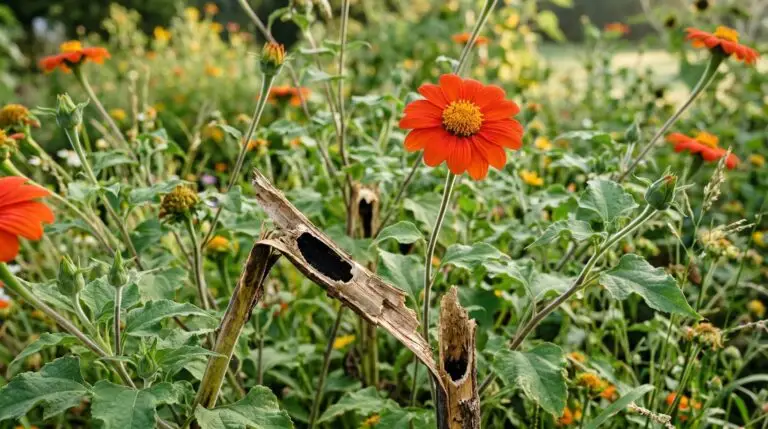
How to keep Mexican sunflowers from flopping over when they get tall and top-heavy
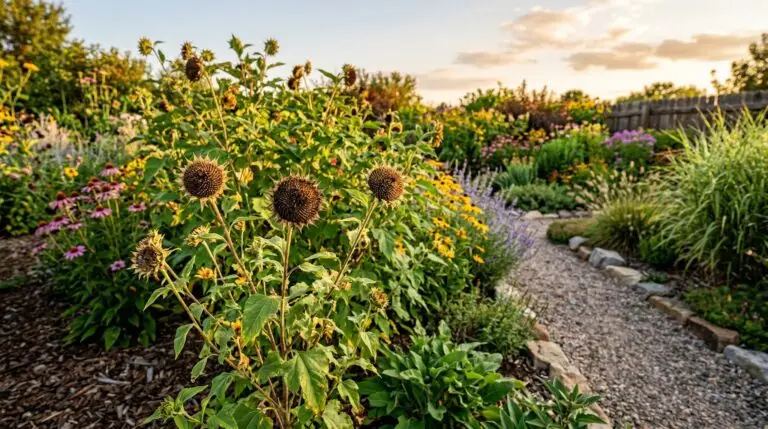
How to save Mexican sunflower seeds for next year’s free butterfly garden
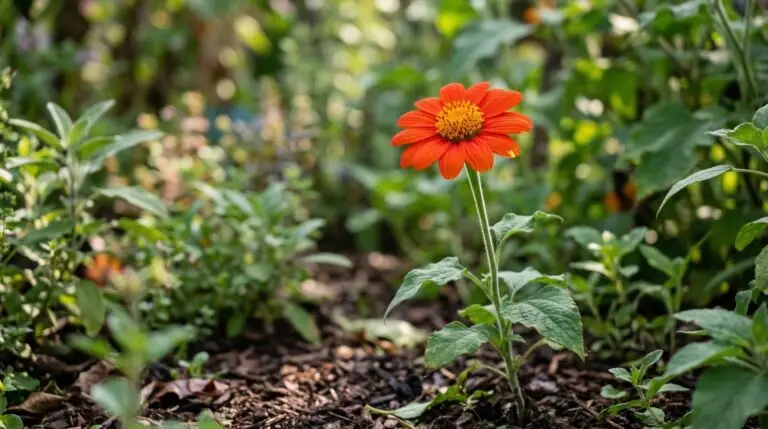
Growing Mexican sunflowers from seed and the tropical annual that needs no pampering
Companion plants for Mexican sunflower: what to grow, avoid
Compact Mexican sunflower varieties for smaller gardens that still attract butterflies
Enjoying our flower guides? Add YourFlowersGuide as a preferred source on Google. It helps more readers find us.
Add to Preferred Sources