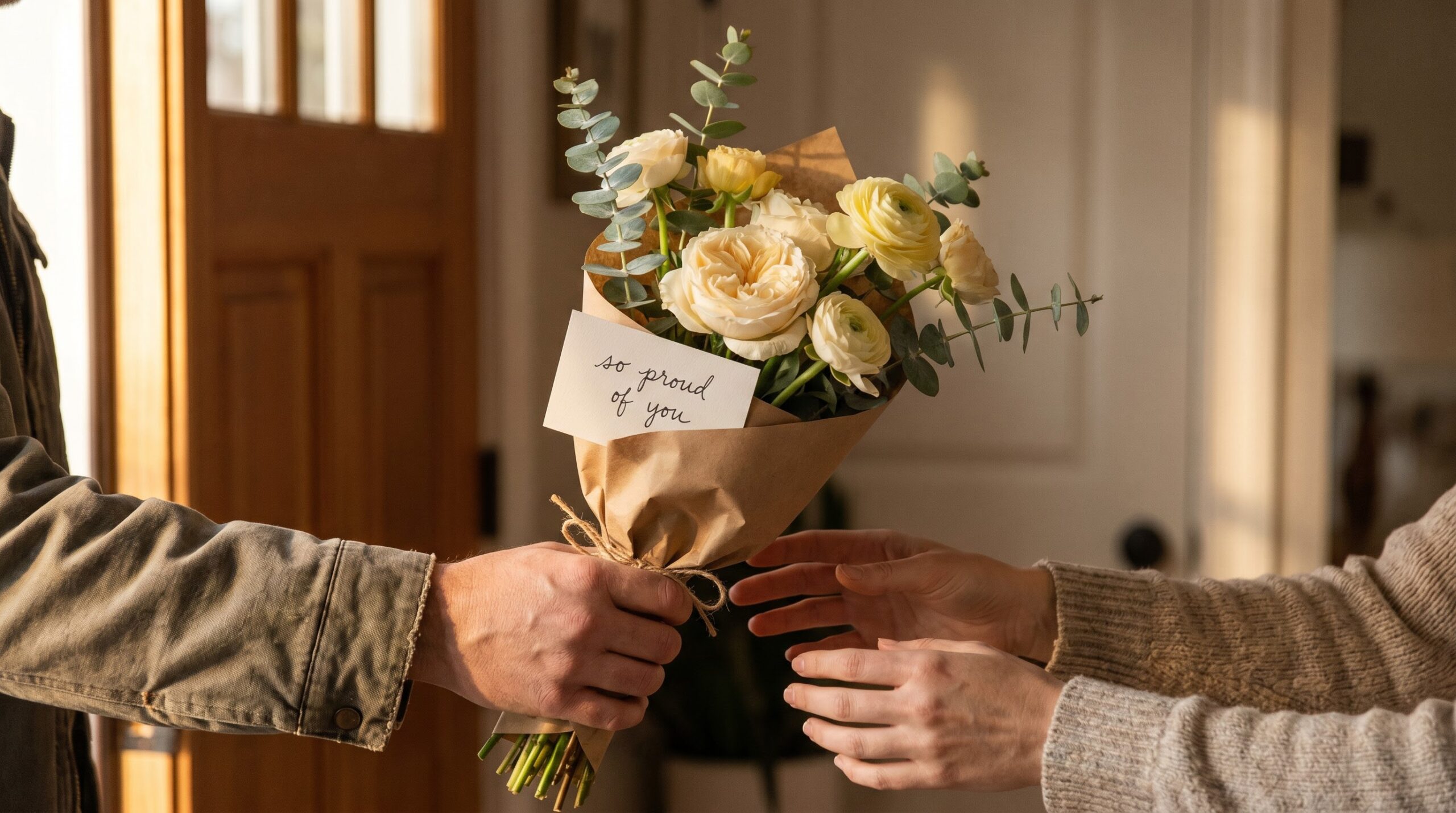
Congratulations flowers say one thing, and they say it whether the occasion is a new job, a promotion, an engagement, a new home, a shop's first morning open, or someone's last day after thirty years on the job: I saw what you did, and I'm proud of you. That single message is narrower than a birthday bouquet's all-purpose warmth and gentler than a sympathy arrangement's weight, which is why the same stems can move between those three occasions and still land completely differently depending on which one you're marking.
The doubt that actually stalls most people out isn't which flower to pick. It's a specific, recognizable worry about the gesture itself, and Reddit carries it in nearly identical language across dozens of threads. "Wait, people send flowers for new jobs? To the workplace? I would really not want that kind of spectacle," one commenter wrote on r/AmItheAsshole, and the top reply agreed without much softening: "NTA who the f*** sends flowers for a new job?" But the same site holds an equally confident opposite camp. "My friends and I send each other flowers for new jobs, commiserations, thank yous etc so I tend to default to them," someone answered on r/AskMen, describing an office where a bouquet on a desk barely registers as unusual. Both are telling the truth about their own workplace. The trick is knowing which one yours resembles before you order anything.
Is sending flowers to work actually too much?
Venue is the variable that decides it, not the gesture itself. It's not the flowers that misfire in a shared office, it's the size. A small arrangement or a single stem in a jar delivered to one specific desk reads as a private note that happens to be visible for a moment. A floor-filling bouquet carried in through the lobby turns the same gesture into an announcement, and that's the version people online are reacting to when they call it a spectacle. If there's real doubt about the office's temperature on this, sending to the person's home sidesteps the question entirely, and several of the "who does that" replies said exactly that they'd have felt fine about a bouquet arriving off the clock instead.
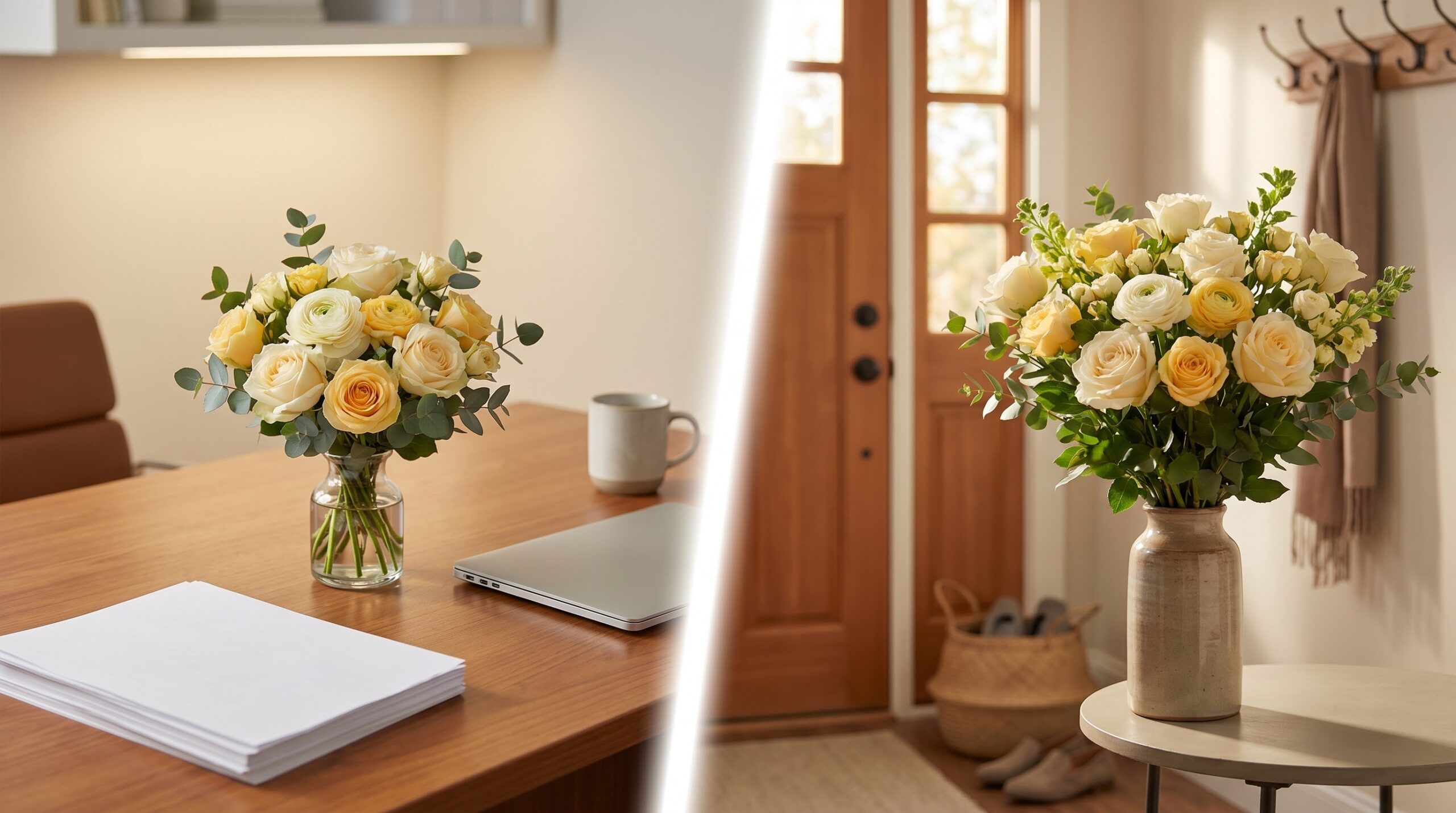
There's a second layer once you're past the size question: what the flowers themselves might imply about the relationship. On r/gaybros, someone congratulating a coworker put it plainly: "As far as flowers, I'd avoid roses or anything traditionally especially romantic. You want to come across as supportive but not clingy." That advice holds well past the context it was written in. Red roses are the one flower nearly everyone reads as romance first, so for a coworker, a boss, or anyone you're not dating, they're worth skipping regardless of how relaxed the office otherwise is. And plenty of offices genuinely do treat flowers as routine, not remarkable. "I buy all of the 'Congratulations on the New Home, Baby, Spouse' cards, along with cards and flowers for promotions, birthdays and work anniversaries," one person wrote on r/jobs, describing exactly the kind of low-key habit that never becomes a story anyone tells later. If that sounds like your office, the spectacle fear probably doesn't apply to you at all.
What flowers actually say when the occasion is congratulations
There isn't one official "congratulations flower" the way there's a birth-month flower assigned to every month of the year, but a handful of blooms have settled into that role through consistent use rather than decree. The iris comes closest to answering the question people are really asking, which is closer to "what flower says I'm proud of you" than "what flower means congratulations" in the abstract. Iris tradition carries faith, hope, wisdom, and courage, and that older idea of a message riding along with it is why an iris suits good news, encouragement, and congratulations more than romance. Sunflowers do similar work from a different angle: their symbolism grew out of the way a young flower head turns to track the sun through the day, so giving one reads as backing someone's effort rather than admiring a finished result, which fits a promotion or a new job better than it fits an anniversary. Yellow roses land here too. The color's old Victorian association with jealousy faded out completely over the past century, and what's left is a flower that reads as friendship and warmth without any romantic undertone, useful precisely because it can't be misread the way a red rose can.
Orchids and peonies show up constantly in florist listicles under "flowers for congratulations," and they're not wrong exactly, but the reasoning matters more than the name. An orchid reads as refined admiration, the flower you send to say someone is rare rather than that you love them, which is a genuinely different message than the iris or sunflower's more energetic go get it. Peonies lean toward good fortune and a happy life more broadly, which is why they turn up at engagements and new homes more than at a work promotion. None of this is a strict rulebook. It's closer to a set of connotations worth knowing before grabbing whatever's cheapest at the counter, because the flower does say something, even when nobody reads the card.
The basic etiquette of sending congratulations flowers
Sending congratulations flowers has always had a when built into it, not just a what. That distinction also marks the edge of what these flowers are for: a congratulations bouquet celebrates something that already happened and turned out well, a different gesture from flowers sent to support someone through an illness or a hard stretch, even though the instincts behind both overlap. The Emily Post Institute's graduation etiquette guidance, the one occasion in this cluster where the timing question has an actual documented answer, notes that it's tradition to present a corsage or boutonniere before a ceremony and a full bouquet afterward rather than mixing the two up. The instinct behind that rule generalizes past graduations: give the flowers room to be seen on their own, not folded into a moment already crowded with the main event. For a promotion or a new job, that usually means sending on the day the news becomes official rather than the day a rumor starts circulating, and it means attaching a short, specific line rather than a blank card, since the flowers alone say pride but not what, exactly, you're proud of.
There isn't a rigid rulebook past that. A card is expected but not required. Same-day delivery reads as more urgent and personal than something that trickles in a week later. And if there's no home address but there is a desk, sending small and specific beats not sending anything. The stacked-occasion problem comes up often enough to name directly. "Wife starting her new job/promotion on 2/10. Do I get her flowers for promotion and Valentine's or just for Valentine's?" one person asked on r/WaterCoolerWednesday, and the answer is that the two occasions don't cancel each other out. A congratulations bouquet is about the achievement specifically, so if the timing overlaps with something else already being marked, say so on the card rather than letting one gesture quietly do double duty.
Matching the flowers to the occasion
Graduation carries enough weight to deserve its own answers rather than a squeeze into this list: choosing graduation flowers, including matching a school's colors, when to hand over flowers at a graduation ceremony, and graduation lei etiquette, on the West Coast and beyond each get the full treatment on their own pages. The gendered hesitation that shows up constantly around gift-giving, giving flowers to a man for graduation or any other congratulations, gets its full answer there too rather than a repeat here. What's left is six occasions that share a category but not a playbook, and the differences are mostly about where the flowers are going and what they need to survive once they get there.
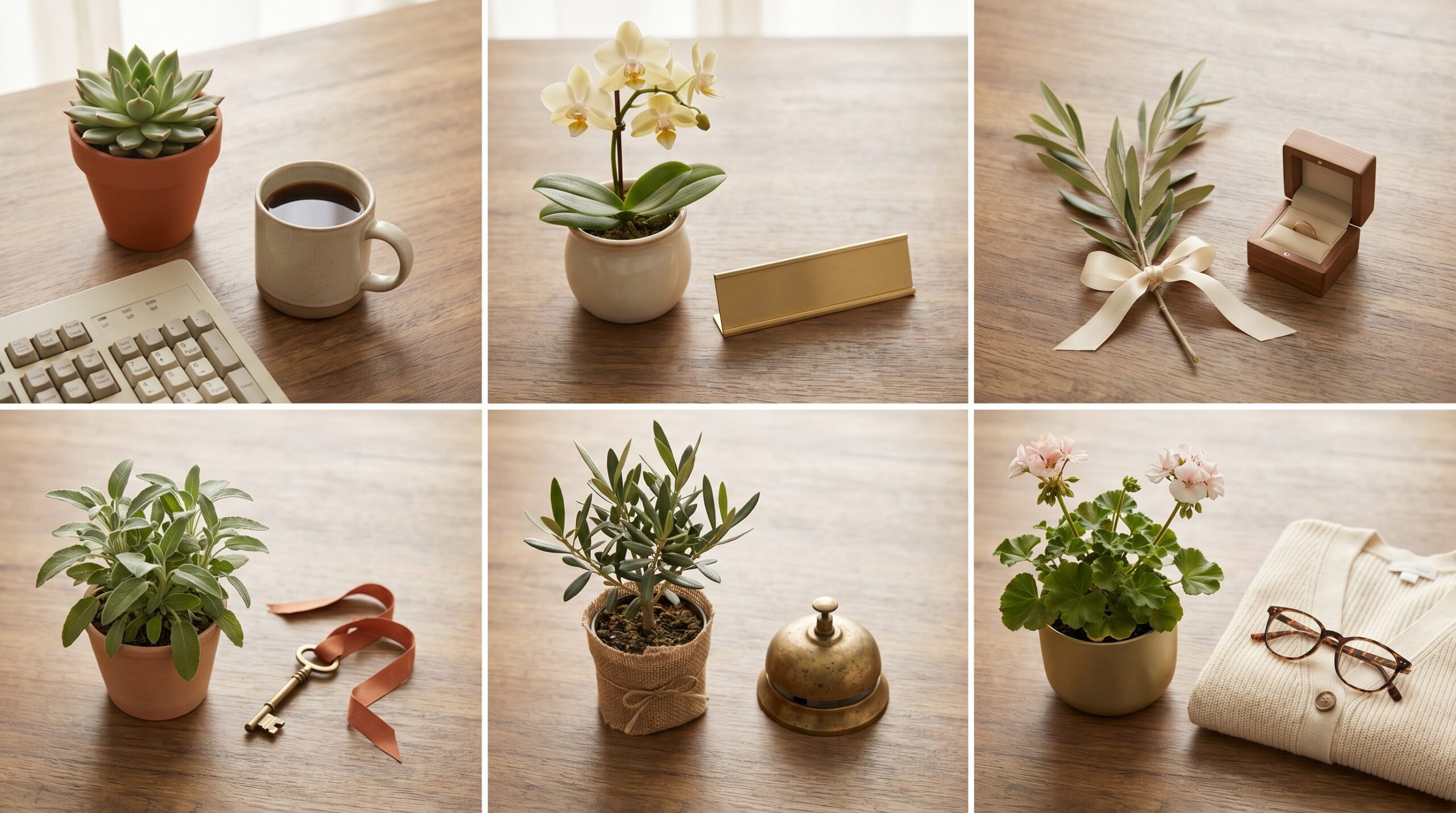
| Occasion | What it's really saying | A safe pick | What to skip | Where it lands |
|---|---|---|---|---|
| New job | I believe in this before it's even proven itself | A compact mixed bouquet or a potted gerbera, sized for one desk | An arrangement too big to fit near a keyboard | Office is fine if it's small; home if the culture is unclear |
| Promotion | I noticed the work that earned this | A small orchid plant, or roses in any color but red | Red roses, or anything else read as romantic | Same as new job, lean smaller in a shared office |
| Engagement | Simple, unguarded happiness for someone else's news | Whatever bright, seasonal bloom fits good news generally | Overthinking it; the gesture matters more than the flower | Almost always the person's home, not a workplace |
| New home | Welcome, and I hope this already feels like yours | A potted plant, or a bouquet already arranged in its own vase | Another loose cut bouquet if they're likely getting several | The new home, ideally on or near move-in day |
| Grand opening | May this thing you built do well | A potted plant that can sit at the register for weeks | Cut flowers built to be photographed once and binned in days | The business itself, at or near the entrance |
| Retirement | Thank you for the years, here's to what's next | Something they can keep and grow at home, not office-party flowers | Anything sized for a cubicle they're leaving behind | Home, where the gesture will actually be enjoyed |
Swipe →
The new home slot deserves an extra line, because it's the one where good intentions collide most often with practical reality. "Flowers and/or a bottle of wine is a safe bet," reads one piece of standard advice on r/etiquette, with the caveat that it applies "unless you know the host doesn't drink." But the same forum carries the flip side just as clearly: "they brought flowers and I had so many flowers I ran out of vases," one host wrote, describing the exact moment a kind gesture becomes one more thing to manage during a move. A potted plant, or an arrangement that already comes in its own container, solves that outright and tends to outlast a cut bouquet by weeks.
Engagement sits at the edge of this list on purpose. The full weight of that occasion, color choices, timing, what to write, belongs to flowers for an engagement or a wedding, a much deeper subject than one section here can cover. What's worth knowing before clicking through is that the gesture itself reliably lands, even for people who don't think of themselves as flower people. "My aunt sent flowers to congratulate us and it... I love receiving flowers but pretty much never get them for myself, so having flowers definitely feels special," one newly engaged person wrote on r/EngagementRings. This one doesn't need a strategy so much as permission to just send something.
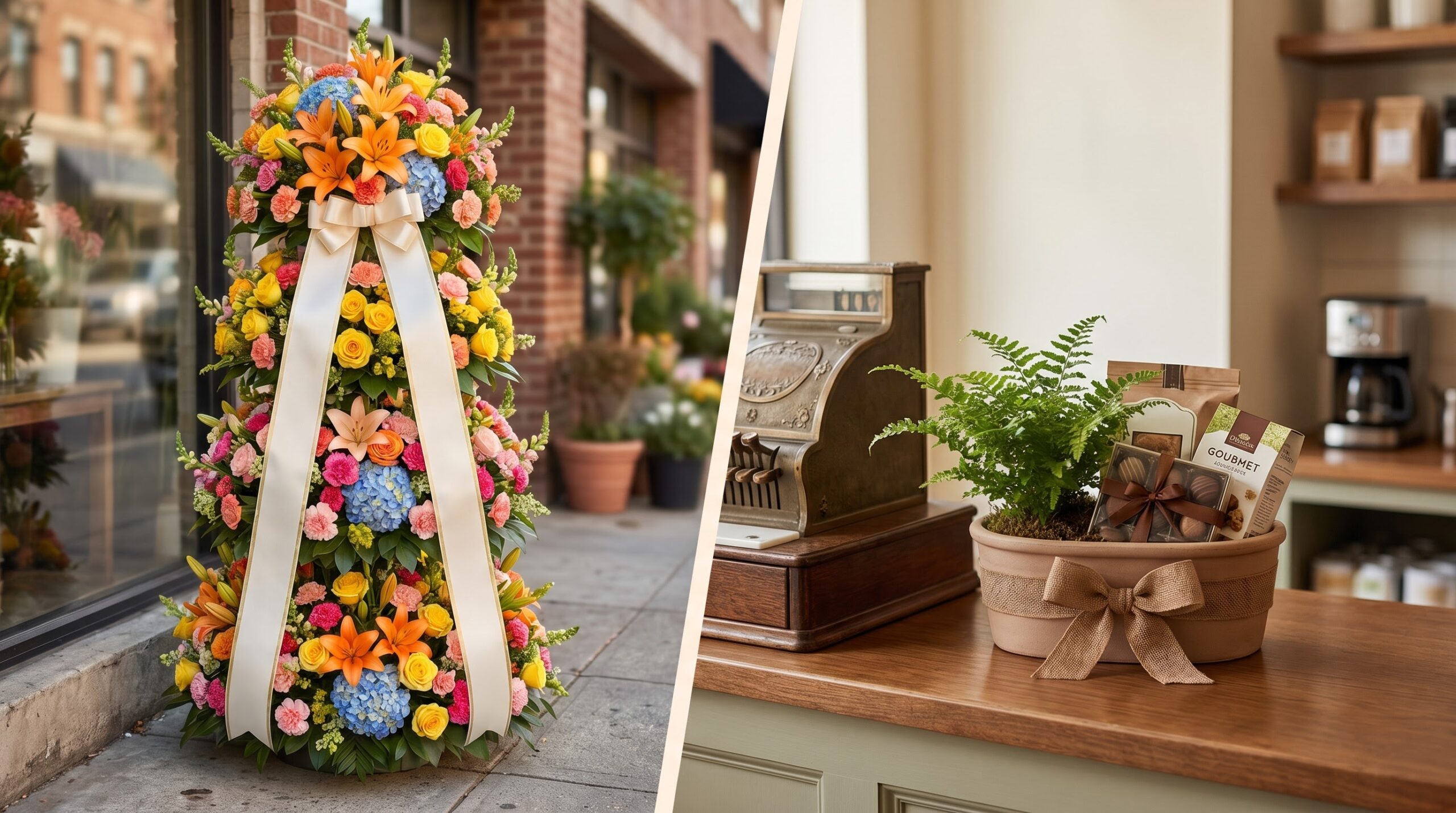
Grand opening is the outlier most US readers haven't met yet. In parts of Korea and Singapore, a business opening is marked with a tall, tiered flower stand, sometimes several feet high, with the sender's name printed on a ribbon banner across it, and several of them lined up outside the entrance on opening day as a visible tally of who showed support. There's no real equivalent custom in most of the US, so the honest translation is a compact arrangement or a potted plant that can live at the register for weeks, rather than a bouquet built to be photographed once and thrown out with the first week's trash.
Does the color you pick change the message?
Color is where the guidance stops being universal, and pretending otherwise is how a well-meant bouquet turns into an accidental insult. In US-mainstream framing, white reads as clean, classic, and appropriate for almost any celebration, congratulations included. In much of East Asian tradition the same color reads the opposite way: white flowers, and white chrysanthemums specifically, lean toward mourning and funerals rather than purity and peace, so a white congratulations bouquet sent to a family carrying that tradition can land as a genuine mix-up rather than a compliment. Red runs the same split in the other direction. It reads first as romance and passion in the US, which is exactly why it's worth avoiding for a coworker, but in Chinese tradition red is the color of luck and celebration, the color of weddings and the New Year, carrying none of the romantic weight there that it carries here.
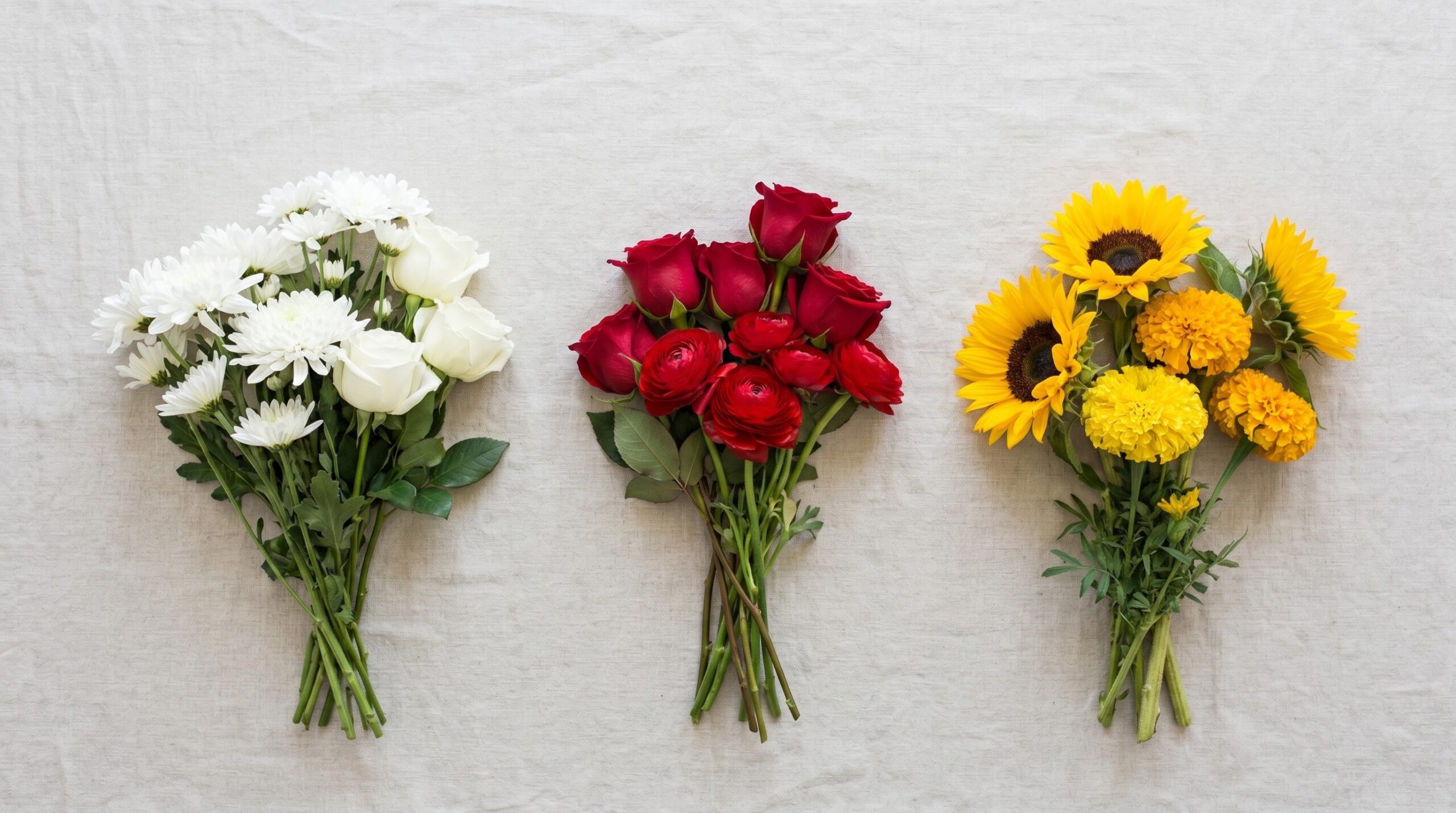
Yellow is the gentlest of the three, though it isn't neutral either. In Mexican tradition, marigolds in this exact shade of yellow and orange are tied specifically to Dia de los Muertos, the fall holiday that honors the dead, and a university library guide on the tradition describes the occasion as combining remembrance with celebration rather than being purely somber. So the color itself isn't a hard no the way white is in East Asian framing, but a reader who knows the marigold's specific role might still read a heavy dose of pure marigold-yellow as remembrance before they read it as congratulations. Outside that specific context, yellow carries almost none of white's or red's baggage and reads as warmth and encouragement nearly everywhere.
None of this argues for one universal safe color, because there isn't one. It argues for knowing the recipient's frame before picking. If the family's background carries East Asian tradition, steer around all-white and especially white chrysanthemums. If the connection is Mexican or ties closely to that tradition, a little restraint with pure marigold-yellow in October and early November costs nothing and avoids a real mixed signal. Outside those specific cases, any of the three reads fine, and the gap between a good pick and a great one comes down to the occasion, not the color wheel.
One thing worth checking before anything leaves your hands: if the flowers are headed into a house with a cat, skip lilies specifically. The FDA's veterinary guidance is unambiguous that every part of a true lily or daylily, including the pollen and even the water sitting in the vase, can cause fatal kidney failure in a cat within days, and there's a fuller version of that warning, including when flowers for a new baby are the wrong call, on the new-baby flowers page, where the same risk comes up even more often. Past that single check, the decision comes down to what's already worked out above: pick the scenario that matches what's actually happening, choose a color the recipient's own frame of reference clears, and write one specific line on the card naming what you're proud of them for. That's the whole gesture. Everything else is packaging.
Enjoying our flower guides? Add YourFlowersGuide as a preferred source on Google. It helps more readers find us.
Add to Preferred Sources