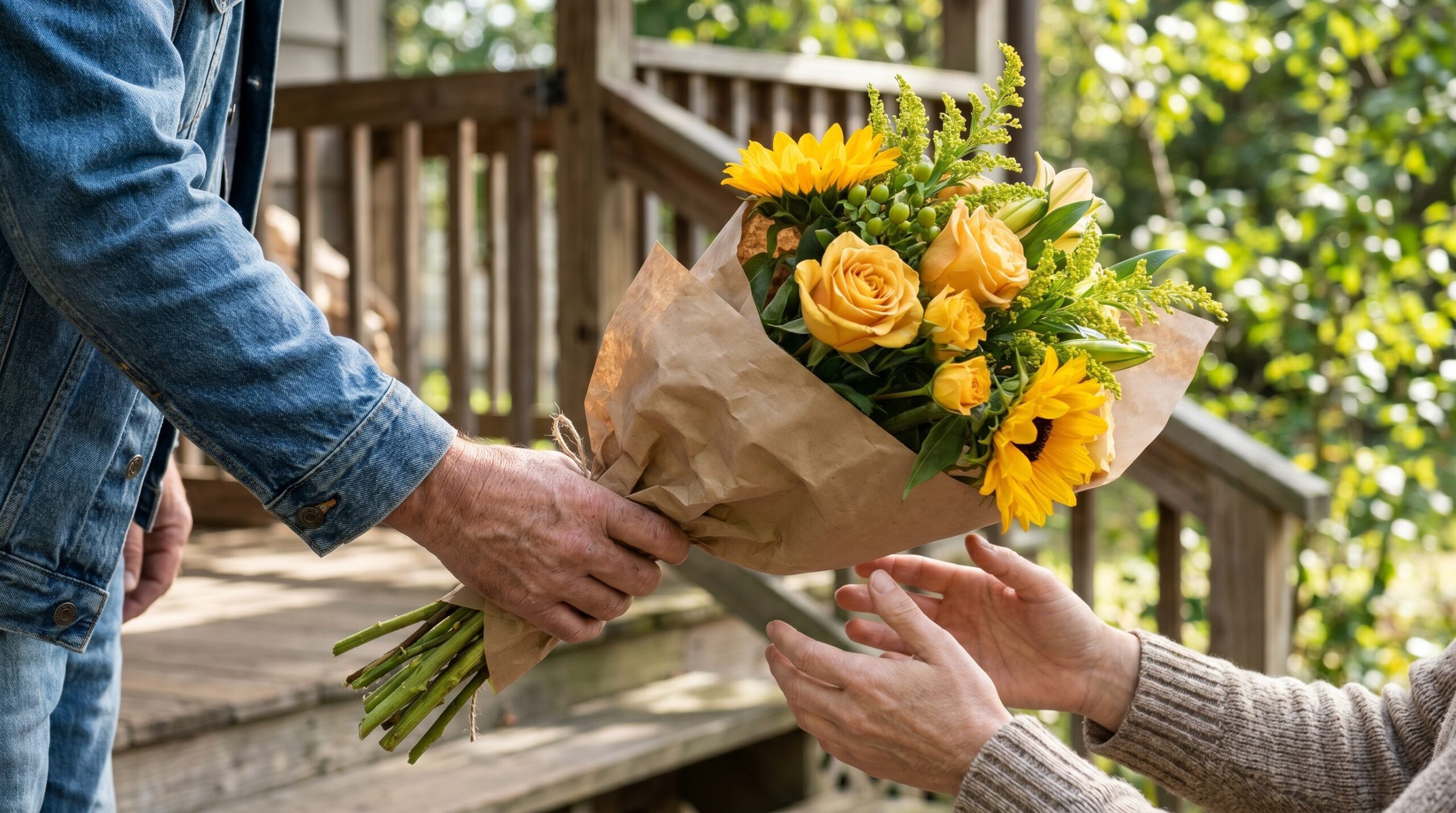
Yes, friendship flowers are a real thing, and the rule that keeps them from being misread is short enough to remember on the drive to the shop: skip a dozen red or pink roses, and almost anything else reads as pure platonic warmth. A yellow rose does the job. So does a bright mixed bouquet, a fistful of sunflowers, or whatever's cheapest and cheeriest in the cooler by the register. One Reddit poster summed up the whole dilemma in a sentence that's since been upvoted past two hundred times: "I thought about getting her flowers because they're pretty and thoughtful etc, but they have romantic connotations that I'd rather avoid as I don't want to give her the wrong idea... Are there like - friendship flowers?" The answer is yes. Buy them today, hand them over without ceremony, and the rest of this page is detail.
Not every "friendship flower" making the rounds online earns the label the same way, though. Some names, ivy and zinnia among them, come straight out of the Victorian dictionaries that invented the whole language of flowers in the first place. Others, yellow rose and alstroemeria especially, are real associations that only took hold in the twentieth century, long after Victoria herself. And a few, sunflower chief among them, show up on nearly every florist blog's friendship list with nothing historical behind them, added because a catalog needed a flower to put there. None of that changes what you should buy today. It changes which claims deserve to be believed the next time a website tells you a flower "means" something.
Which friendship flowers are real history, and which are just marketing
Sort every commonly claimed friendship flower into the tier it actually belongs to, the way you'd sort evidence rather than repeat whatever the last gift-shop blog said, and the picture gets a lot clearer.
| Tier | Flower | What it actually traces to |
|---|---|---|
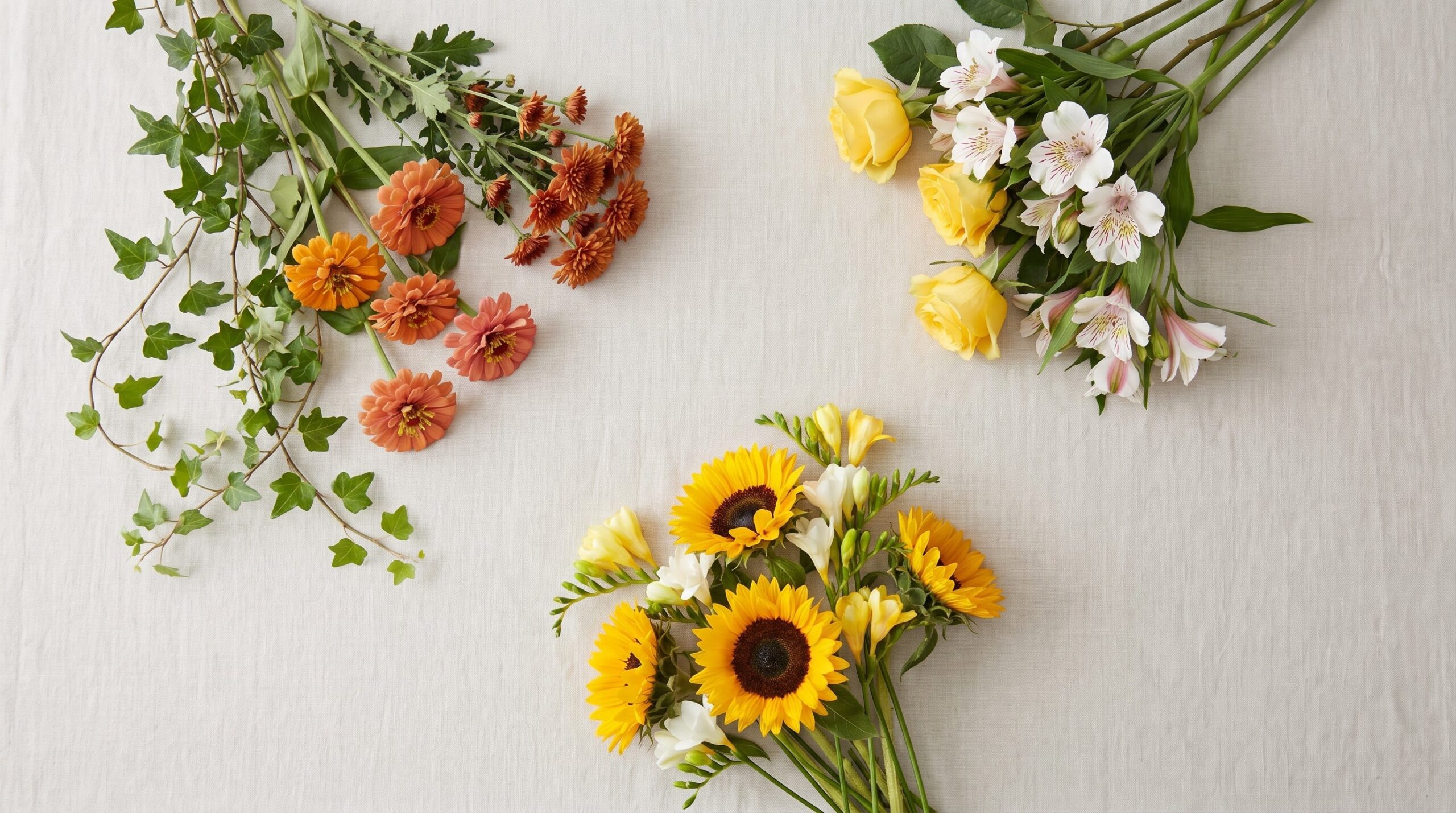
| Victorian canon (documented, 1880s) | Ivy | Kate Greenaway's 1884 "Language of Flowers" lists it for fidelity; period glossaries extended that to loyal friendship |
| Victorian canon | Zinnia | Greenaway's dictionary gives it outright: "thoughts of absent friends" |
| Victorian canon | Chinese chrysanthemum | Listed by Greenaway as "cheerfulness under adversity," a warmer reading than the plain red, white, or yellow chrysanthemum entries in the same book |
| Modern convention (real, 20th century) | Yellow rose | Shifted from a Victorian code for jealousy to a florist-trade convention for friendship sometime in the past hundred years |
| Modern convention | Alstroemeria | No Victorian meaning at all; the friendship reading is a later floral-trade invention, and a genuinely useful one |
| Marketing only (no documented lineage) | Sunflower | Appears on nearly every friendship listicle with nothing behind it beyond "it looks cheerful" |
| Marketing only | Freesia | Same pattern: common on retail sites, absent from every period floriography source checked |
Swipe →
Start with what's genuinely old. Kate Greenaway's 1884 "Language of Flowers," the illustrated dictionary that Cornell University Library's history of the Victorian floriography tradition calls one of the last real entries in the genre, gives ivy the meaning "fidelity," a word later glossaries softened into loyal friendship. Zinnia gets a more direct entry: "thoughts of absent friends," almost word for word what a modern greeting card would say. Chrysanthemum splits by variety in Greenaway's own list. Red meant "I love," white meant "truth," and yellow meant the considerably less friendly "slighted love". Only the Chinese chrysanthemum specifically carried "cheerfulness under adversity," the entry that actually supports a friendship reading. Miss that distinction and you'll cite the wrong variety for the wrong reason, which is exactly what happens across most of the sites that reach for "chrysanthemum means friendship" without checking which chrysanthemum Greenaway meant. The deeper split, how the flower reads as friendship across parts of Asia and as mourning in parts of continental Europe, is its own subject, not this page's.
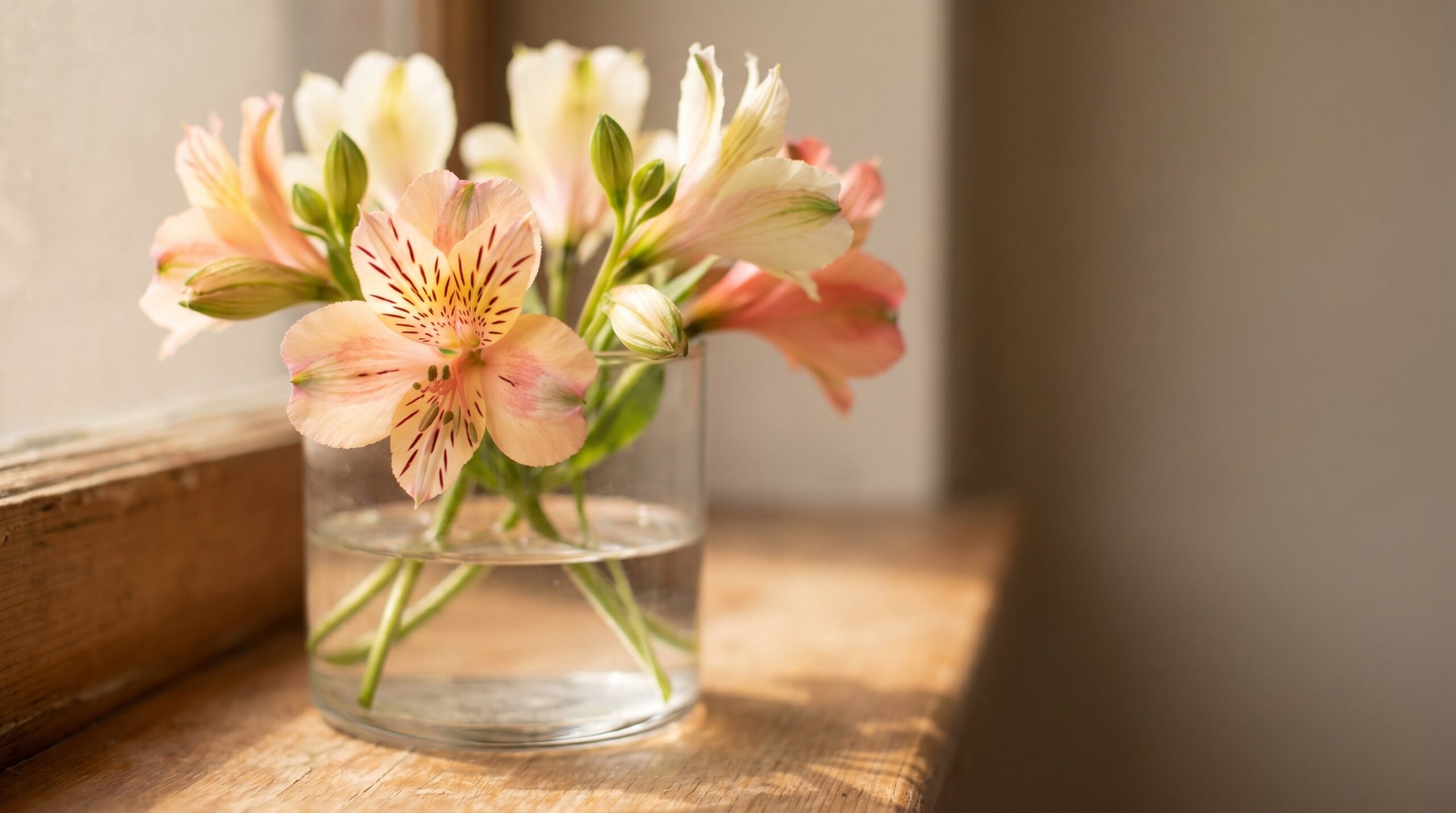
Yellow rose and alstroemeria sit a tier down, and that's not an insult. Both are real, current, widely understood friendship signals; neither has a Victorian pedigree behind it. Alstroemeria is the more interesting case, because one of the very sites that sells the flower admits as much. Its entry on flowermeaning.com states plainly that because the plant only reached wide cultivation outside Peru in modern times, "there is no meaning for the flower in the classical Victorian tradition," and that the friendship association is something "modern flower fans" assigned later. That's an honest sentence sitting in the middle of a page trying to sell you flowers, and it deserves credit for saying it. The plant earns its spot on this list anyway. Alstroemeria routinely holds for two weeks or longer in the vase, longer than almost anything else at the grocery store, which gives the twentieth-century friendship reading a genuinely practical case behind it. Buy it because it holds that long in a vase; the Victorian pedigree has nothing to do with it.
Sunflower and freesia round out the list, and neither traces to anything. Search every period floriography source available and neither flower turns up with a friendship meaning attached; they show up on modern retail sites because a sunflower photographs well and a listicle needed one more entry. Even the single article in this whole topic written by a named person rather than a generic "team," Gardening Know How's guide credited to editor Kayleigh Dray, repeats the sunflower claim without citing anything behind it. That gap says less about her and more about the genre: five open competitor pages on this exact topic, zero floriography citations among them, one real byline.
The one rule that keeps a bouquet from reading as a confession
Every worry this page exists to solve collapses down to a single boundary, and it comes from the people who actually live with the consequences of getting it wrong. Across at least eight separate Reddit threads on the topic, the advice lands on nearly identical wording every time: "so long as they're not red, pink, or roses I'd say you're probably fine." Red carries the strongest single signal in American floral custom, strong enough that a dozen matching red roses reads as a declaration even from a stranger's hand. Pink drifts the same direction, softer but still coded romantic in most contexts. And the rose itself, regardless of color, carries more romantic baggage than any other flower, which is why even a non-red rose in a large enough bunch can start to feel like more than a friendly gesture.
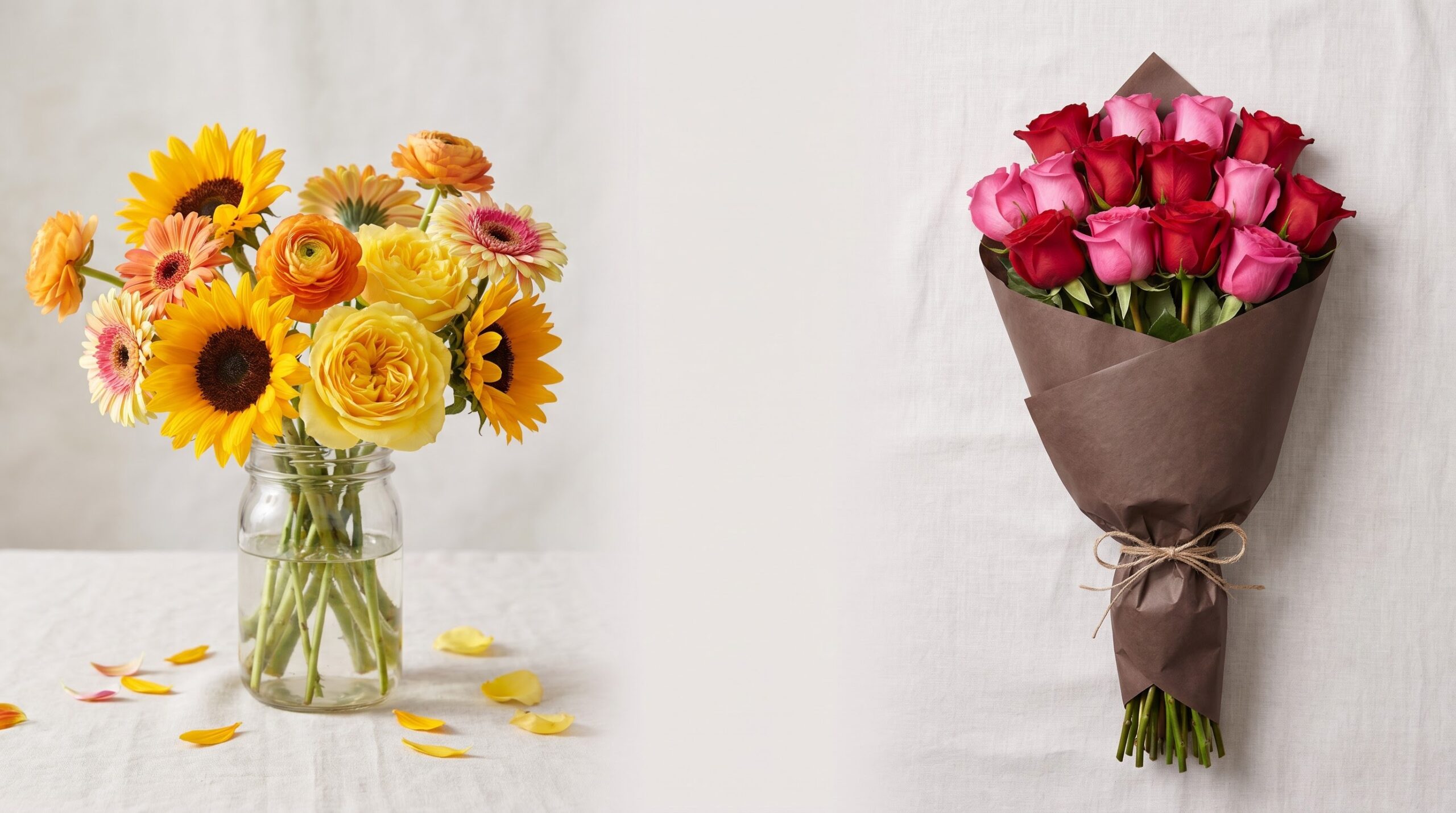
Outside that narrow zone, the field is wide open. Gerbera daisies, tulips, ranunculus, a loud mixed seasonal bunch, ivy, zinnia, sunflowers by the armful: none of it reads as anything but friendly at a normal size. Scale matters almost as much as color. A small hand-tied bunch passed over with "happy birthday!" or "thinking of you" reads as friendly in nearly any flower short of the red-rose zone. The identical stems delivered in a towering arrangement with a sealed card start to look like a statement, whether or not that was the intent. When you're genuinely unsure, shrink the bouquet before you touch the color.
The card, the timing, and the frequency that keep it platonic
The card does almost as much work as the flower itself. One commenter's advice on r/CasualUK has become something close to a formula in threads like this one: "Just sign the card with 'Many happy returns mate' to remain well and truly in the correct zone." That kind of line leans into casual affection rather than anything tender. A first name, an inside joke, or a plain "thinking of you" all land fine. What doesn't land is a card that reads like it took real courage to write.
Timing carries more weight than most people expect walking in. A birthday, a rough week, a promotion, or a plain "just because" are all green lights; nobody in these threads reports a friend flinching at flowers on any of those days. Our guide to what to give a friend specifically for their birthday covers that occasion on its own. One date, though, is a genuine trap: Valentine's Day itself. "A flower on their birthday = not weird. A flower on Valentine's Day = definitely awkward," one commenter on r/Advice put it, and another was blunter still: "Valentines day? Yeah, that's a holiday exclusive to lovers IMHO." If you want to mark the day with a friend anyway, Galentine's Day, the informal February 13th tradition of celebrating friendship rather than romance, carries none of the same risk.
Frequency is the boundary people misjudge most. A single bouquet, whatever the occasion, reads as a nice gesture and nothing else. A pattern reads differently. "That's too frequent. You're indicating you have intentions. Once a month would be a romantic partner thing," one commenter explained on r/AskWomenNoCensor, answering someone who asked about sending flowers to a friend on a recurring basis. Once is sweet. Monthly is a different conversation, whether you mean it to be or not.
One more line closes off any remaining ambiguity, and it's specific to married givers. If you're married and sending flowers to a friend of another gender, sign the card from both of you. "You could always put that it's from you AND your husband and then it takes any weirdness out of it," as one commenter put it, in a thread where the suggestion alone gathered more than a hundred upvotes. Your spouse never has to touch the flowers. The two names on the card do all the work.
The friend who's never gotten flowers, man or woman
Two specific readers get more out of this gesture than anyone else, and both deserve their own space, because the stakes for them run higher than "is this weird."

The first is any man. "The first time most men receive flowers is at their funeral. Just buy flowers," one commenter wrote, and the joke keeps resurfacing because it's closer to true than most people realize. Gift-giving in the US still runs hard along gender lines, and a man can reach sixty without a single stem ever addressed to him. Ask men directly, though, and the answer flips almost every time. "I've honestly never been more touched in my life. Flowers, I get it now," one man wrote after finally receiving a bouquet, and versions of that sentence turn up across dozens of similar threads. Whether men enjoy flowers as a category is its own broader question. Here the case is narrower, a friend giving to a friend, and the narrower case is the easier one to get right: reach for something with structure rather than softness, saturated color over pastel, and skip anything that reads as delicate. If he's genuinely not a flowers guy even after all that, one commenter's workaround still gets quoted years later: "Apparently the male version of flowers is banana bread. Send him some banana bread. Or cookies."
The second is anyone, any gender, who has simply never been given flowers before, and it happens more often than the flower industry likes to admit. "Apparently, no one gave her flowers. Ever," read one post that went on to collect 4,626 upvotes on r/CasualConversation, the internet recognizing a familiar story the moment it saw it. Another reader put her own version more starkly: "I (f) am 44yo and I have never had a person (friend, SO, family) buy me flowers. I buy myself flowers since I got sick of waiting." For a recipient like that, a modest grocery-store bunch from a friend doesn't read as a consolation prize. It reads as the first time, and first times are the ones people remember for decades. If there's any chance your friend falls into that category, that alone is reason enough to stop weighing the etiquette and just buy the flowers.
Is yellow really the safest color, or is that outdated too
Yellow is the shortcut most people reach for, and for a US reader it still holds up. "Yellow roses typically symbolise friendship. They're a goto for one of my friends buying me flowers," one commenter wrote, describing exactly the instinct that likely brought you to this page. That reading is genuinely modern, not Victorian. The fuller history of the yellow rose, from Victorian jealousy to modern joy, traces how a color that once meant fading affection or outright jealousy flipped to mean the opposite over the twentieth century, and almost nobody alive today learned the old meaning first. The one honest counterweight comes from the same threads: one commenter recalled "a friend of mine in high school being SUPER ANGRY at her boyfriend for getting her a bouquet of yellow roses, crying and saying that yellow roses are the kind you give to your grandma," a reminder that a small minority still reads yellow as an unromantic downgrade rather than a friendship signal. For most recipients, though, yellow reads exactly the way you want it to: warm, cheerful, unmistakably platonic.
How many flowers, which day, and what to actually write
A handful of smaller questions round out the anxiety, and each has a short answer. How many flowers you give carries almost no coded meaning for friendship specifically. Number symbolism in floristry is largely a romance-only tradition; our breakdown of what different rose counts traditionally mean covers it in full, and even there color outweighs count. A dozen yellow roses reads as friendship despite the number twelve's romantic reputation in red. There's no equivalent friendship number to hit. Buy what looks good and fits the budget.
Friendship Day causes more confusion than it resolves. The US observance traces to 1930, when Hallmark founder Joyce Hall proposed it as a card-buying holiday, an idea Congress later formalized in 1935 by designating the first Sunday of August as National Friendship Day. A separate, older thread runs through Paraguay, where Dr. Ramon Artemio Bracho proposed a global version on July 30, 1958. The United Nations eventually adopted that July date in 2011, designating it the International Day of Friendship. Almost no American marks either occasion with flowers, which means showing up with a bouquet on the first Sunday of August reads as thoughtful precisely because nobody expects it. The holiday itself barely registers on anyone's calendar.
When it's time to write the card, borrow directly from what's already worked in these threads. For a birthday, a first name and "happy birthday, thought of you today" does the job. For a rough week, "saw these and thought you could use something bright." For no reason at all, often the strongest version of this gesture, "no occasion, just wanted you to have these." If you're married and sending them to a friend of another gender, close with both names, and the entire question of what the gesture means answers itself before anyone has to ask.
None of this requires a florist consultation or a special trip. The bouquet that gets praised over and over in these threads is the unglamorous one, a handful of stems grabbed from a grocery store cooler on the way to see a friend; a curated sixty-dollar arrangement never enters the conversation. Pick a color that isn't red or pink, skip the dozen roses, write one honest line, and hand it over. If the occasion turns out to be something else, a friend's wedding or engagement calls for its own etiquette, a grieving friend needs a different kind of arrangement entirely, a friend who's sick or in the hospital needs a get-well approach rather than a celebratory one, and a coworker or someone you've only just started dating raises a more specific set of questions than a friend does, worth its own read rather than a rushed answer here. For anything else this page didn't cover, the full occasion flowers guide has the rest.
Frequently asked questions
What if I don't know my friend's favorite flower? Default to color over species. Anything bright and warm that isn't red or pink works on almost anyone. If you want a stronger hint, check what's in the background of photos she's posted, or ask a mutual friend without tipping off the surprise.
Is there a flower that represents best friends specifically, as opposed to friends generally? Not in any documented tradition. Alstroemeria comes closest in modern florist trade, since each stem carries several blooms at once, an image some retailers stretch into a "many moments together" reading, but that's convention, not canon.
Can the same flower mean both friendship and romance? Yes, and color usually does the deciding. A rose reads as romance in red and friendship in yellow. Even Greenaway's own 1884 dictionary lists ivy for both fidelity and marriage in the same entry, which is a reminder that most Victorian meanings were never as fixed as modern retellings make them sound.
Is it weird for a woman to give a woman flowers, or a man to give a man flowers? No. Every thread behind this page includes examples running in every gender direction, and the same red-or-pink-rose boundary applies no matter who's giving or receiving.
Enjoying our flower guides? Add YourFlowersGuide as a preferred source on Google. It helps more readers find us.
Add to Preferred Sources