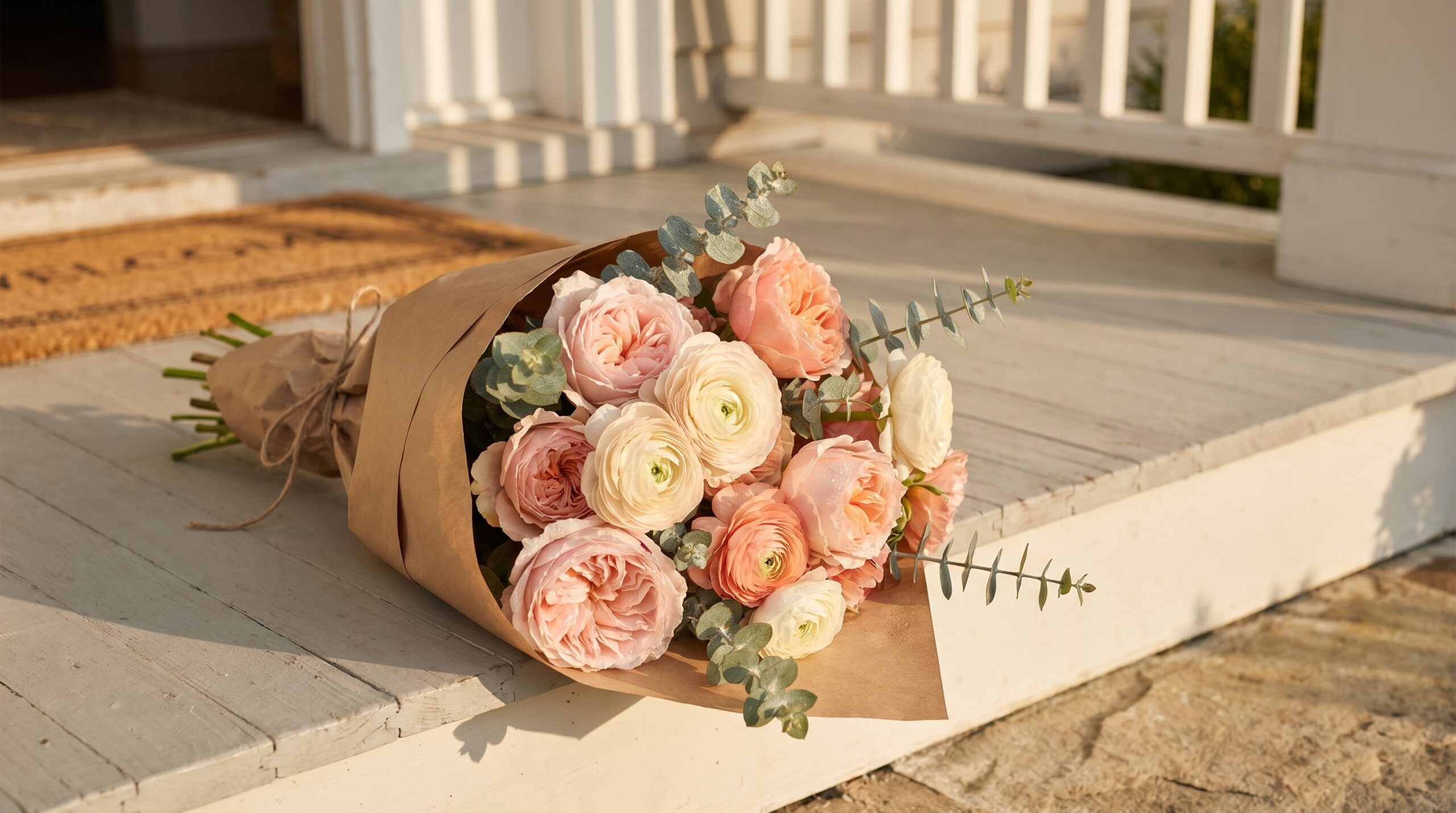
If Mother's Day is still more than a few days away, you have time to do this right. If it's the week of, you still have real options, just fewer good ones, and by Saturday night you're choosing between a gamble and a backup plan. But the clock is only half the problem. The bigger risk sits in where you click order, not when. Route a Mother's Day arrangement through a wire-service aggregator instead of a real local shop, and the industry has a name for what can happen to it: "Fill to Value," florist shorthand for filling a vase with whatever the driver judges is worth the price you paid, whether or not it looks anything like the photo you picked. That's the fact worth knowing before the date on the calendar.
The delivery gamble matters more than the deadline
This page sticks to timing and money. Picking the right stems or colors is its own question, and our Mother's Day flowers guide covers what actually makes sense for the person on your list, alongside the rest of our occasion flowers guides for whatever else is coming up on the calendar.
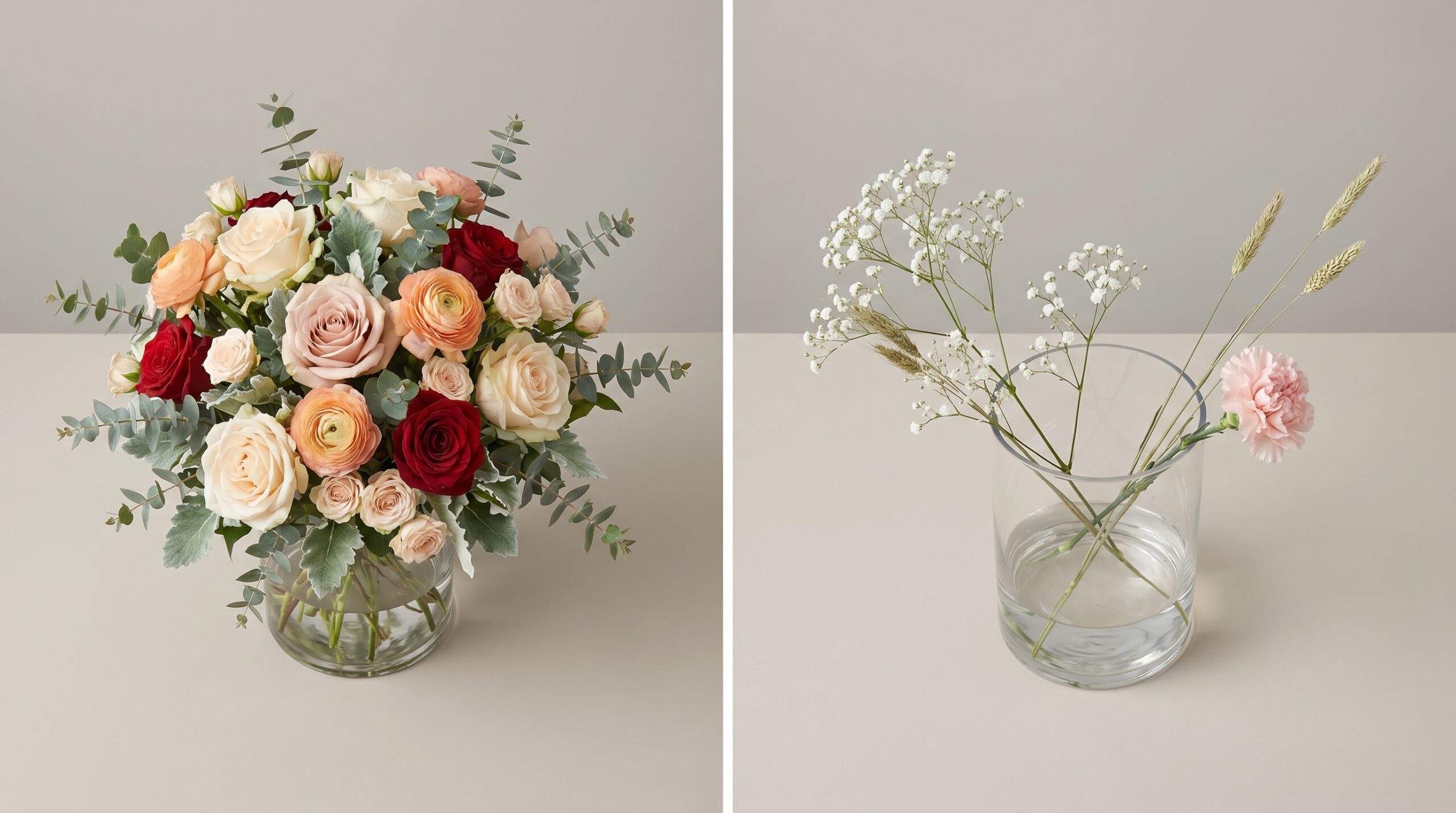
Search "flowers for Mother's Day" and most of what loads first isn't a local shop. It's a wire service: Teleflora, FTD, 1-800-Flowers, and the smaller sites that run on the same network. These businesses don't grow or arrange anything themselves. They collect the order, take a cut, and hand the rest to whichever local florist is willing to fill it for what's left. On a normal Tuesday that system mostly works. On Mother's Day week, the industry's second-biggest single day of the year for florists behind Valentine's Day according to the Society of American Florists, it strains. Shops bring on temporary drivers, order volume spikes for days rather than hours, and the arrangements that get squeezed are the cheap ones and the oddly specific ones, the orders a busy shop has the least incentive to get exactly right.
That's where "Fill to Value" comes in. One former florist, writing online about how the wire-service system actually works from the inside, put the math bluntly: on a $75 order routed through a national dispatch service, the local shop filling it might only see around $17 to $20 worth of actual flowers once every layer takes its cut. If a shop decides that isn't worth filling properly, it eventually lands with someone who fills the vase to match the number on the receipt rather than the photo the customer picked. This isn't a rare horror story. Search any large flowers subreddit around Mother's Day and you'll find dozens of nearly identical threads: a bouquet ordered from photos, a sparse, unrecognizable arrangement delivered instead, and a customer left arguing with a call center that has never seen the actual flowers.
Two habits cut that risk down. First, ask specifically for "designer's choice" when you order, whether you're calling a shop directly or using its own website. A designer's-choice request tells the florist to build the best arrangement they can from what's genuinely fresh and in season that day, rather than trying to force-match a stock photo with whatever's left in the cooler. Real local shops build their whole business around offering this option. If a site claiming to be a neighborhood florist doesn't offer it at all, that pattern is worth paying attention to on its own. Second, don't trust a "local florist, your city" search result on faith. A cluster of sites with names like Ava's Flowers and Ruth's Roses built a well-documented reputation for exactly this pattern, presenting themselves as neighborhood shops while actually operating as national brokers; Ava's Flowers has drawn repeated consumer-fraud complaints over exactly this practice. A quick look at the "about" page, or a phone call asking where the shop physically sits, usually clears it up in under a minute. And to be fair, going local isn't a guarantee either. A small, rural shop can get just as overwhelmed on the year's busiest weekend as any call center, so the vetting matters more than the zip code.
If the calendar allows it, request delivery for the Friday before Mother's Day rather than the day itself. Flowers arrive fresher, shops still have full stock to choose from, and the recipient wakes up Sunday with everything already there instead of waiting on a truck during the industry's most overloaded 48 hours. The same wire-service math shows up whenever flowers need to arrive on a fixed date, birthdays included, so the habit of asking for designer's choice and confirming who's actually filling the order is worth carrying past this one holiday.
Are you actually being overcharged, or is this just what flowers cost now
Every spring, a version of the same argument plays out online. One side says florists jack up prices unnecessarily around Mother's Day the way restaurants inflate a prix fixe menu on Valentine's Day. Florists answering back in the same threads tell a more specific story: they aren't charging more because it's Mother's Day, they're charging what they paid for the flowers plus labor and hard goods, and both of those costs went up for reasons that have nothing to do with the calendar.
The florists have the government data behind them, at least in part. Bureau of Labor Statistics figures, reported by CNN Business this spring, showed indoor plant and flower prices up 7.5% year over year in March, more than double the 3.3% rise in overall consumer prices over the same period. That gap holds up in the data, spring after spring. More than 80% of cut flowers sold in the US are imported, the large majority from Colombia and Ecuador, with roughly 90% of that supply routed through Miami before it ever reaches a shop cooler. According to abc10's reporting on tariffs and flower pricing, roses from Ecuador currently face tariffs of about 15%, Dutch imports face at least 10%, and diesel prices are pushing toward their highest levels since 2022, adding trucking cost on top of the jet fuel that's already the second-largest expense in the import chain after labor. None of that is the local florist's fault, and none of it is invented.
But the two arguments aren't really opposites, and both hold up at the same time. Real cost increases are pushing up what a fair, fully-filled arrangement costs this year. At the same time, the wire-service markup described above is a separate problem layered on top, one that has nothing to do with the price of a rose in Ecuador and everything to do with how many hands an order passes through before it reaches a vase. A buyer can get hit by both at once: a genuinely pricier flower, and a chunk of that price never buying flowers at all. Treating the whole bill as one number hides that distinction, and it's the distinction that decides where to spend the extra care when ordering.
One Mother's Day thread about a $73 splurge drew hundreds of replies arguing over value and gouging. But the comment that quieted the whole thread down came from someone else entirely: a reader who said only that they wished they still had a mother left to spend $73 on. That's a different kind of Mother's Day question than a price debate can answer, and it deserves its own space rather than a line in this one; our guide to funeral flowers speaks to that more directly.
The order-by calendar, and the Monday "half off" myth
Timing changes what you're actually choosing between. Here's where things stand at each point on the calendar, matched against the actual delivery risk at that point, which is more useful than a generic order-early nudge.

| When | What's really happening | Delivery risk | What to do |
|---|---|---|---|
| Two or more weeks out | Full selection, normal pricing, no rush anywhere in the chain | Lowest; plenty of buffer if a shop drops the ball | Order now from a vetted local shop, and request designer's choice up front |
| About a week out | Stock still solid, but this is when the florist industry's busiest week starts ramping up | Low to moderate | Lock in your date this week if you want a specific look rather than whatever's left |
| Week-of, Monday through Wednesday | Prices hold steady, but popular stems start selling down and substitutions get more likely | Moderate | Confirm the delivery date directly with the shop and ask what's actually in stock |
| Thursday or Friday | Order earlier if you can, but aim delivery here; it's the best window all week for flowers to arrive fresh and on time | Lowest for on-time, as-pictured delivery | Request Friday delivery so the arrangement is fresh and already there Sunday morning |
| Saturday | Order volume peaks; shops bring on temporary drivers to keep up | Highest of the week | If ordering this late, ask for designer's choice explicitly and call to confirm same-day capacity |
| Sunday, the day itself | Most local shops are sold out or close to it by mid-morning | Very high for standard delivery | Switch to the fallback plan below rather than gambling on a same-day order |
| Monday after | Availability, more than price, is what actually shifts | Not applicable | Skip waiting on a discount; most shops report selling out Sunday and restocking fresh each morning rather than carrying leftover stock |
Swipe →
That last row answers a question that circulates every year: whether Mother's Day flowers go half off the Monday after, the way end-of-season stock sometimes does elsewhere. Florists posting in their own professional communities describe the opposite pattern. Shops report selling completely out by Sunday afternoon and restocking fresh again the next morning instead of marking anything down, because there usually isn't anything left to mark down. Worth remembering too: unlike Valentine's Day, which really is a single-day crunch, Mother's Day functions across three usable weekends in a lot of regions, the one before, the day itself, and the one after, so a plan that slips by a few days isn't automatically a failure.
If it's already too late for standard delivery
If Sunday is here and nothing is arranged, a rushed order through the first sponsored link often ends up costing more, in money and in disappointment, than the few extra minutes a smarter option takes. A few real options still work.
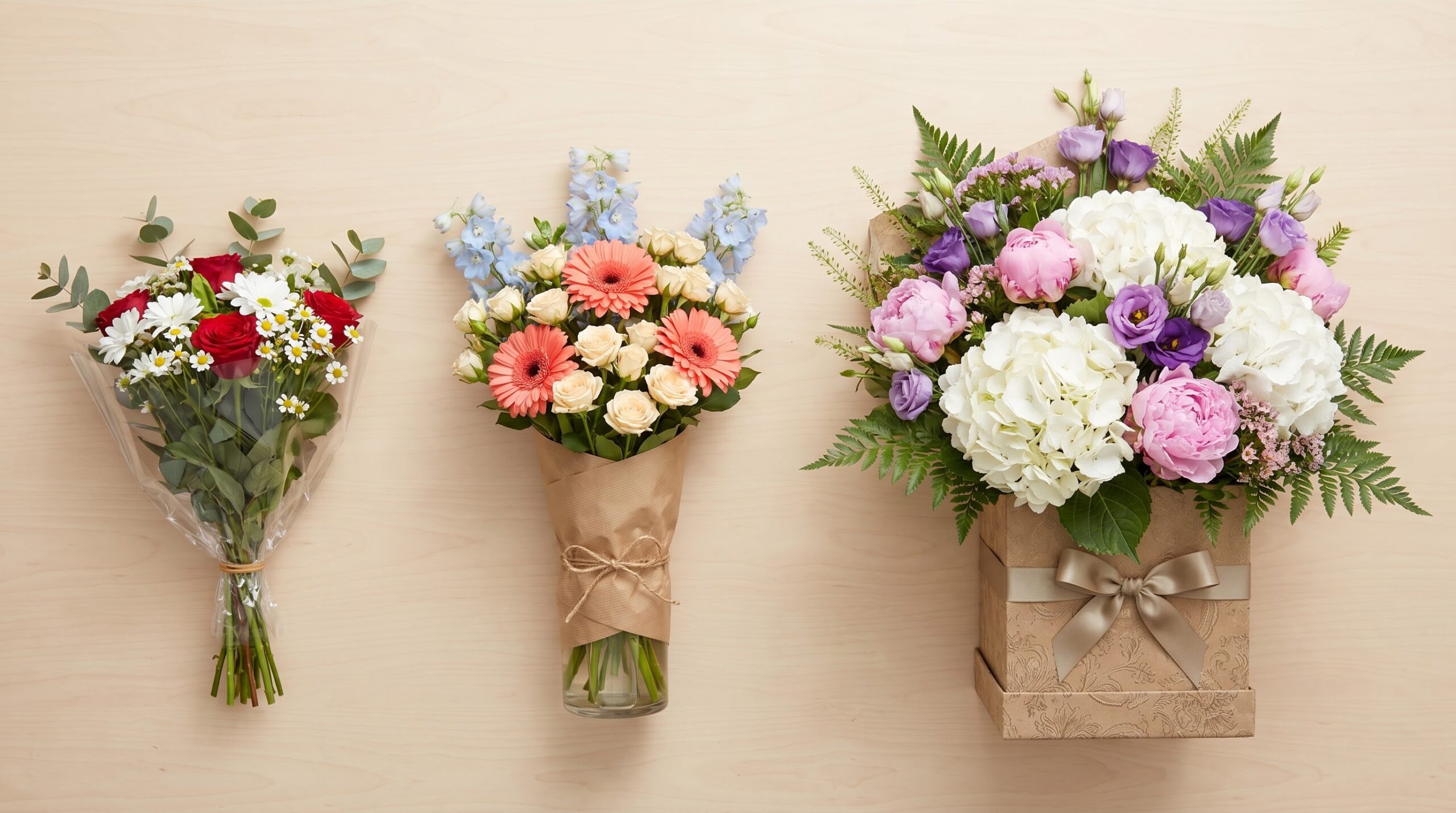
Call a local shop directly, even on the day, and ask plainly what's available for pickup or same-day delivery with designer's choice. Capacity that's gone from a website by Saturday afternoon sometimes still exists over the phone, especially earlier in the day. If driving is possible, a grocery store or warehouse club bouquet is a genuinely solid fallback, no apology needed; Reddit's frugal-flower regulars compare notes on this every year, pointing to chains like Trader Joe's, Aldi, Costco, and Walmart for arrangements that, dollar for dollar, often contain more actual flower than a rushed wire-service box does, for the reasons already covered above. One more trick worth knowing, especially outside normal business hours: call a local funeral home and ask who their preferred florist is. Funeral homes receive floral deliveries daily, year-round, and they know which shops are reliable and which aren't in a way a five-star online rating never quite captures. And when the gesture matters more than any single bouquet, a live potted plant picked up locally sidesteps the delivery problem completely; it doesn't need a truck or a driver, just a car and a few minutes.
None of this needs to turn into a bigger decision than it is. Place the order today with something specific already decided: a local shop reached directly, designer's choice requested, Friday delivery locked in if the date still allows it. If it's genuinely down to the wire, pick up the phone and ask what's really in the cooler right now, or walk into a store today. Both beat a rushed gamble on a site that has never touched an actual flower.
Frequently asked questions
Is it too late to order Mother's Day flowers? Only for standard next-day wire-service delivery once Sunday morning arrives. Local shops can often still fill a same-day or pickup order if you call directly and ask what's actually available, and grocery or warehouse-club bouquets remain a same-hour option almost anywhere.
How much are Mother's Day flowers at a store like Walmart? Prices shift by location and change year to year, so treat any specific number as a rough guide rather than a promise. Budget-focused shoppers consistently point to grocery and warehouse chains as the cheapest reliable option, often well under what a wire-service arrangement costs for a comparable amount of actual flower.
Are more flowers sold on Mother's Day or Valentine's Day? Valentine's Day edges it out industry-wide, according to the Society of American Florists, but Mother's Day is close behind as the second-biggest single day of the year for florists, and unlike Valentine's, it isn't a one-day crunch.
Enjoying our flower guides? Add YourFlowersGuide as a preferred source on Google. It helps more readers find us.
Add to Preferred Sources