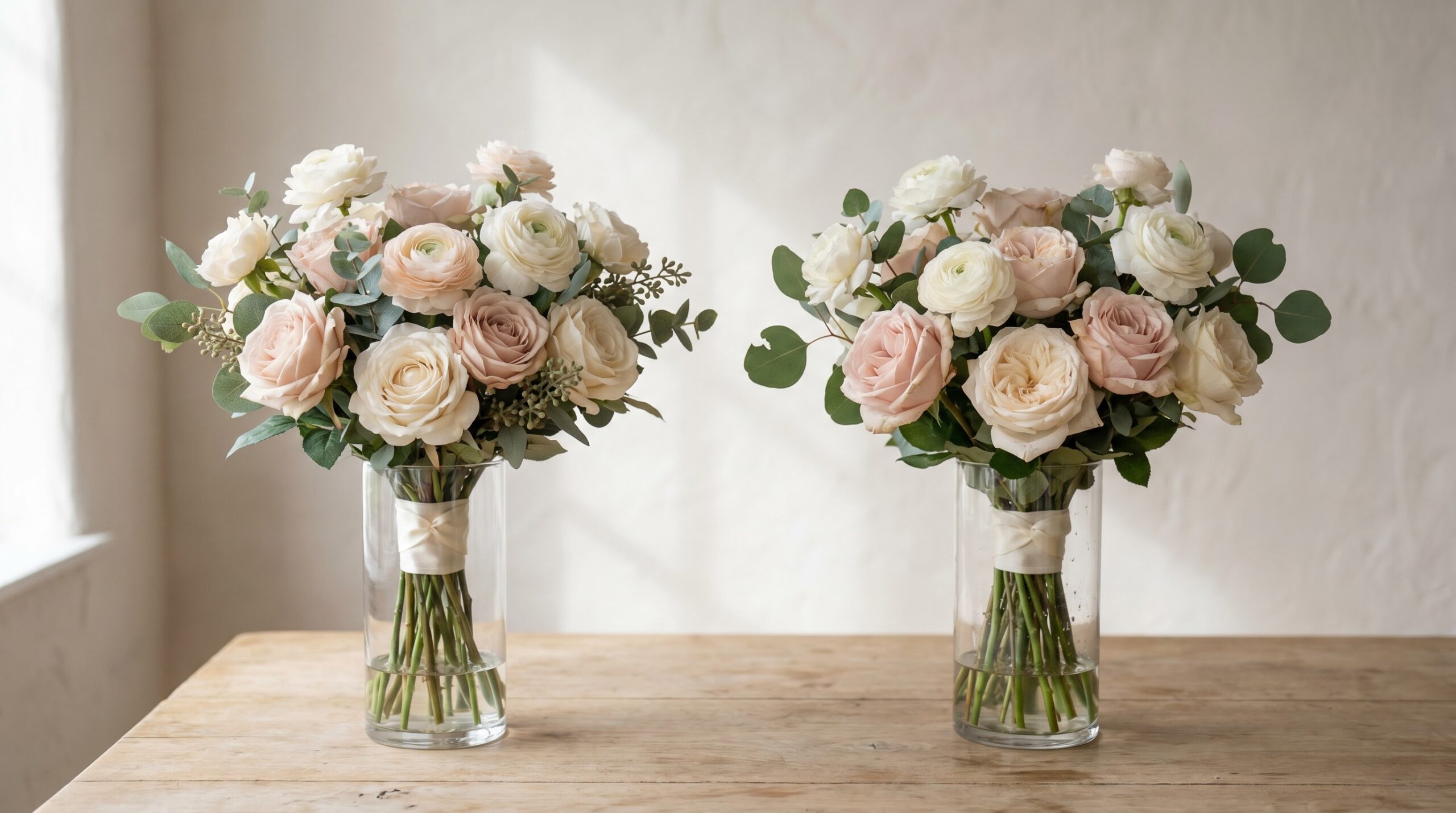
No, fake wedding flowers are not tacky, and the judgment you're bracing for mostly never arrives. One bride who carried silk put it this way three years on: "people are still asking me who my florist was and are surprised I had fake flowers." The fear is real, though, and worth naming, because most of us have felt it from the other side. In one heavily upvoted thread, a bride admitted she'd been "100% guilty" of judging fake flowers at other people's weddings, then wrote, "I've been shamed" for choosing them herself. What reads as cheap at a wedding is not the material. It's the quality tier and the placement. A shiny $2 stem sitting at nose height on a dinner table gives itself away in seconds. A well-made arrangement ten feet up an arch never does, and no guest is walking the aisle pinching your petals.
The money question deserves more suspicion than the taste question. If silk landed on your list as the obvious budget move, slow down, because nearly every comparison published on this topic was written by someone selling one of the two sides. Silk shops claim savings of 50 to 70 percent and up. Florists answer that fresh from a wholesaler beats fake outright. Both camps quote real numbers. Both hide the variable that actually moves the price. The scenarios below lay it all out side by side, including the rental, secondhand and resale routes that almost no article touches.
Where the tacky reputation comes from
The reputation was earned by a specific product. Shiny polyester stems with visible seams and a plastic sheen, bought by the bag, then placed where guests sit for an hour with nothing to study except the centerpiece. That tier still exists. It still reads exactly the way you fear, and brides who tested both ends of the market say so flatly: "the cheaper ones looked very obviously fake to me." So the shame has a real ancestor. It just no longer attaches to the whole category, because the category split. Real-touch stems, coated so the petal sits matte and cool and slightly fleshy in the hand, have spent a decade closing the gap, and at normal viewing distance they've closed it.
Placement finishes the job. Arch pieces, aisle markers, cake flowers and anything photographed from more than a few feet away are the safest territory for artificial stems. Table centerpieces and the bouquet in your hands are the most exposed, because that's where eyes and cameras get close. Spend your quality budget in that order and the tacky scenario has nowhere to happen.
If the pressure is coming from one specific person rather than from the internet at large, you have company there too. "She hates that we are doing silk flowers instead of real," one bride wrote about her future mother in law, and the replies under her filled with brides shrugging in solidarity. Two things can be true at once. An older relative watched the bag-of-polyester era happen, so the flinch is sincere. And it's your budget. The shaming cuts both ways here: nobody gets to sneer at silk, and nobody gets to pressure you into a $700 orchid order either.
Same labor to same labor, same tier to same tier. The material stops being the headline.
Is silk actually cheaper? The comparison no seller will run
The viral savings claims rest on one sleight of hand: they price a box of silk stems you assemble yourself against a full-service florist who designs, builds, delivers and installs fresh. That chart compares two different amounts of human labor, dressed up as a comparison of flowers. Strip the labor difference out and the gap shrinks fast. The Knot, which has no stems to sell you, concedes that silk wedding flowers "can be just as expensive, if not more so". Brides keep making the same discovery on their own: "I considered doing silk flowers but found them to be more expensive than real. They definitely are not always a 'budget' thing." And when working florists answer this exact question in a long-running WeddingWire forum thread, the recurring point is that design and labor drive a wedding invoice far more than what the stems are made of.
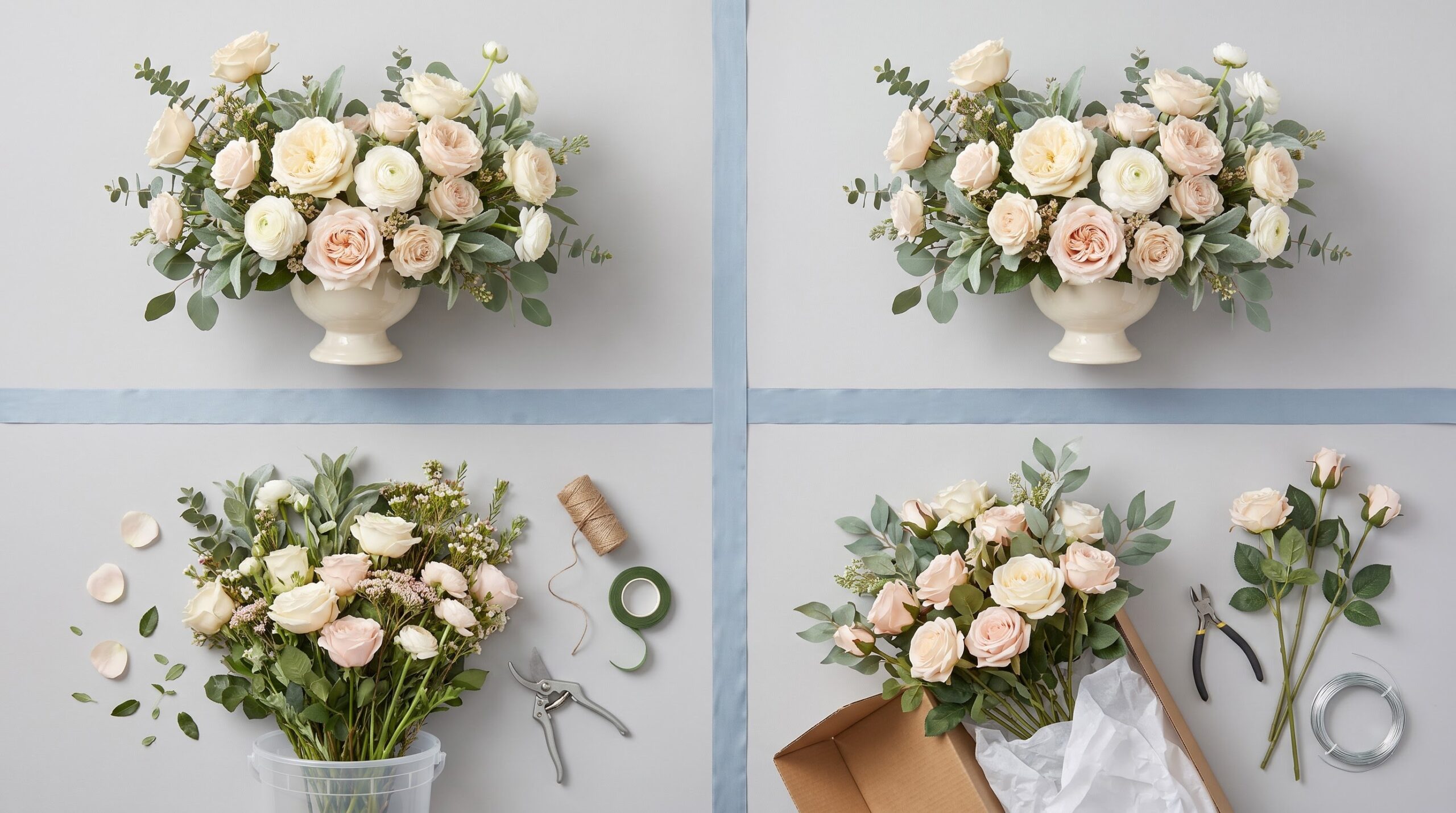
The reader evidence pulls in both directions at once, and every voice is right about its own comparison. One bride: "My florist was telling me it would have been $700 for the orchids I wanted and they were $2 a stem on temu. It was an easy choice." Another, staring at a cart two tiers up: "how is this artificial bouquet over $200?! Isn't saving money the whole point?" And the top voted comment in one of Reddit's biggest fake-versus-fresh fights lands on the fresh side entirely: "Fresh flowers from a local grocery store florist or local flower wholesaler open to the public are cheaper than fake." Route and tier set the price. The material tags along.
Put the routes side by side and the pattern shows itself:
| The route | What you'll actually spend | Where the money goes | Watch out |
|---|---|---|---|
| Full-service fresh florist | $2,400 to $7,000+ for a full wedding; bridal bouquets $120 to $300 | Design hours, skilled labor, delivery, setup; the stems are the smaller half | Only compare this against other full-service quotes. You're buying a team, and what real flowers actually cost, quote by quote breaks the invoice down |
| Full-service silk florist | Level with fresh, sometimes above it | The same design hours and labor; real-touch stems cost more than people expect | The savings mostly evaporate in this quadrant. Full service is the expensive part, whatever the petals are made of |
| DIY fresh | $1,200 to $2,000 in materials for a 100-guest wedding, plus 20-30% extra stems for waste, plus roughly a work week of assembly | Wholesale stems, tools, vases, a cooler rental, your own hours | Counted fully, true savings against an online florist can shrink to $400 to $800 |
| DIY silk | Quality bouquets $75 to $179 to buy; whole weddings roughly $500 to $2,500 in pieces | Stems and your time, spent months ahead instead of the week of | Price the tier you'd actually use, never the $2 stem. Bargain silk on dinner tables is the one move guests reliably clock |
| Rented silk | Bridal bouquet $65 to $75, centerpieces $28 to $55, large statement pieces around $130 | A round trip: professionally designed pieces arrive days early and ship back after | Nothing to keep, resell, or hand to your mother on the way out |
| Secondhand silk | About half of retail, typically listed as "used once" | Someone else's wedding, one day old | No returns, colors only as photographed, and you inherit their glue and wire work |
Swipe to compare →
The DIY rows deserve one more honest beat. DIY suppliers themselves publish the per-piece gap: Flower Moxie prices a florist-made bridal bouquet at $120 to $300 against $45 to $130 in wholesale stems, and claims 50 to 60 percent savings on materials. Poppy Flowers, an online florist, publishes the fuller ledger: once you add the 20-30 percent stem overage, supplies, cooler rental and 20 to 40 hours of your own labor, the savings narrow sharply. The gap between those two framings is the whole argument of this page in miniature. If DIY fresh tempts you anyway, whether doing your own flowers is worth it, the labor math walks through it hour by hour, and how the DIY-in-a-box suppliers compare covers the middle path of prepped stems shipped with instructions.
On which numbers to believe: all of them, within their row. The seller price lists are real, and so are the florists' invoices and the grocery store math. The only figures to distrust are the ones built by subtracting across rows, a DIY silk total held up against a full-service fresh quote and announced as proof that fake saves half. Compare same labor to same labor, same tier to same tier, and the material stops being the headline.
Will they look fake up close and in photos?
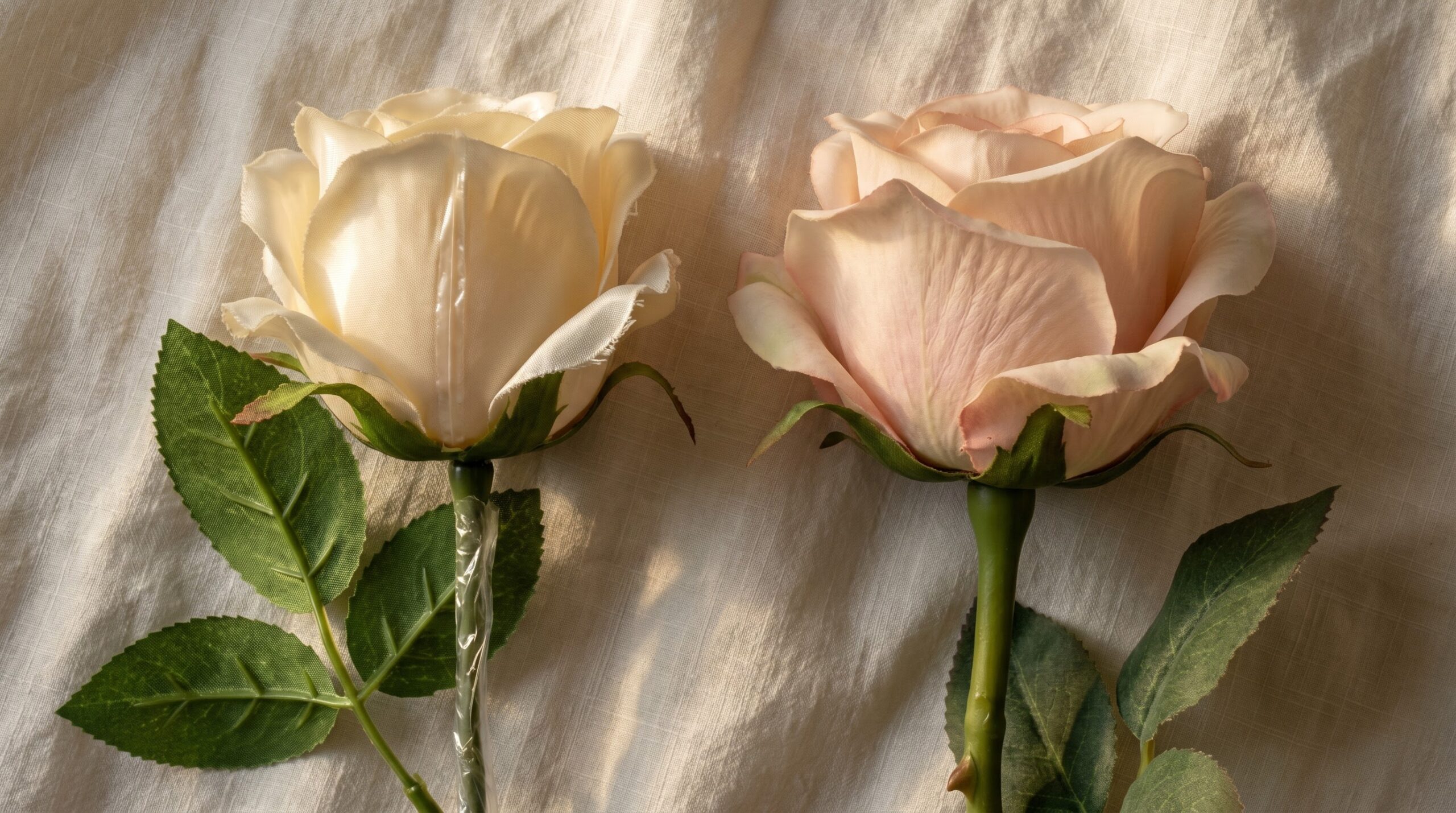
That depends almost entirely on tier, and the tiers are easy to tell apart in your hands. Bargain silk announces itself: sheen under light, visible fabric edges, a seam down the petal center, molded plastic leaves, stems that weigh nothing. Real-touch stems are built differently, with a soft polymer coating over the petal that reads matte, feels cool and slightly fleshy, and photographs without glare. Held side by side, the difference is immediate. At normal photo distance, quality silk passes clean; the "still asking who my florist was" stories come from exactly this tier.
Macro is the exception. An extreme close-up of a live orchid still beats its silk copy, and even The Knot's silk explainer ends by admitting that the best silk can't replace the look of a live orchid or the scent of a real rose. If your photographer's portfolio leans hard on ring-and-bouquet close-ups, that argues for keeping the bouquet fresh and going artificial at distance, the hybrid this page returns to at the end.
One bride's verdict after testing tiers holds the whole section: "the cheaper ones looked very obviously fake to me. 2) the higher quality ones from Ling's Moments were good, but the price difference honestly wasn't worth having to do it myself." The look problem is solvable. Whether the price of solving it fits your row in the table above is the real decision.
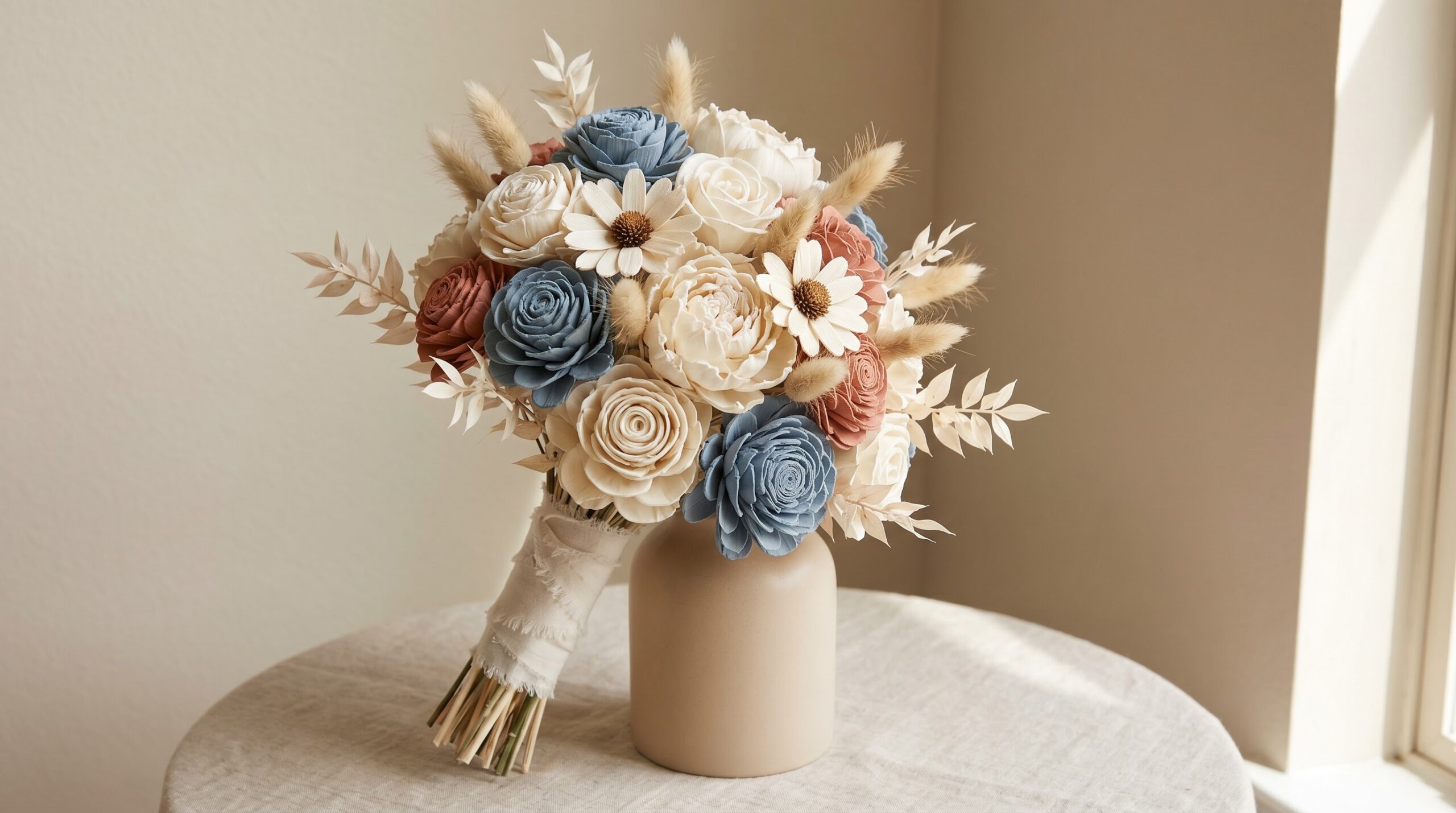
There is also a third aesthetic that opts out of the realism contest entirely. Sola wood flowers, shaved from tapioca root and dyed to order, look handcrafted instead of imitative, and their fans like exactly that: "I like that they aren't trying to look real." They weigh little, keep forever, and never face the up-close test, because they aren't pretending.
Renting, buying used, and selling yours after
Three routes the fake-versus-fresh articles skip, and each one changes the math.
Renting first. Companies like Something Borrowed Blooms ship professionally designed silk pieces a few days before the wedding and take them back after, with published ranges of $65 to $75 for a bridal bouquet, $24 to $40 for bridesmaid bouquets, $28 to $55 for centerpieces and $7 to $14 for boutonnieres. One complaint follows the model around: "Something Borrowed charges same to RENT as Ling's to BUY... rip off." At the single-bouquet level that complaint has a basis, since quality purchase bouquets start around $75, right where rentals sit, and buying leaves you owning the thing. Scale flips the verdict. Renting fifteen centerpieces, already designed, with no assembly weekend and no storage afterward, undercuts buying, building and later offloading the same fifteen. Rent when your volume is in décor and you want zero afterlife admin. Buy the pieces you'll want on a shelf the morning after.
Secondhand is the quiet bargain. Marketplace listings run on the phrase "half price, used once," and that's usually exactly what they are: a full wedding's silk, one day old. Apply the tier test to the listing photos, sheen and seams and fabric edges, and ask which shop the pieces came from. A secondhand real-touch set beats brand-new bargain silk at the same price.
Resale is the one superpower fresh can never match: silk is the only wedding flower you can sell afterward. Brides do it cheerfully. "I will never regret spending thousands less to have flowers that look the same and that I can resell lol." One large silk retailer puts realistic recovery around 40 to 50 percent of retail. Treat that as a bonus, though, and keep it out of your budget column. You'll be listing against the same shops' new stock, the boxes are bulky to ship, palettes date, and plenty of resell-after boxes are still sitting in closets. Decide as if you're keeping everything. If it sells, dinner is on the flowers.
The tiebreakers that have nothing to do with money
Silk's quietest advantage is the calendar. Everything can be finished months ahead, checked, photographed, boxed, which is why brides keep describing it as "one less worry" for the week of the wedding itself. Silk also survives a suitcase, which matters for destination weddings, carries no pollen for an allergic bridal party, and becomes a keepsake with zero effort.
The fresh column answers every point. Scent, which no coating has faked yet. The macro-photo texture only living petals have. Compost at the end of the night instead of a storage box, and the waste argument is felt, in readers' own words: "throwing fake ones away feels super wasteful," because silk you neither keep nor sell becomes very durable trash. Even the allergy point is contested; the fresh camp's top-voted voice insists commercially grown blooms "are not allergy triggers." And the keepsake argument has a fresh-side answer too, since keeping a real bouquet forever is a craft of its own.
Make the call, then price it like for like
The compromise both camps endorse, thread after thread, is per-element. Fresh for the bouquet and personals, the pieces held in hands, smelled, and shot in macro all day. Artificial for the arch, the aisle and the cake without hesitation, and for centerpieces too if you buy the tier that survives a seated guest's stare. Guests photograph the far pieces and scrutinize the near ones, so let each material do what it's good at.
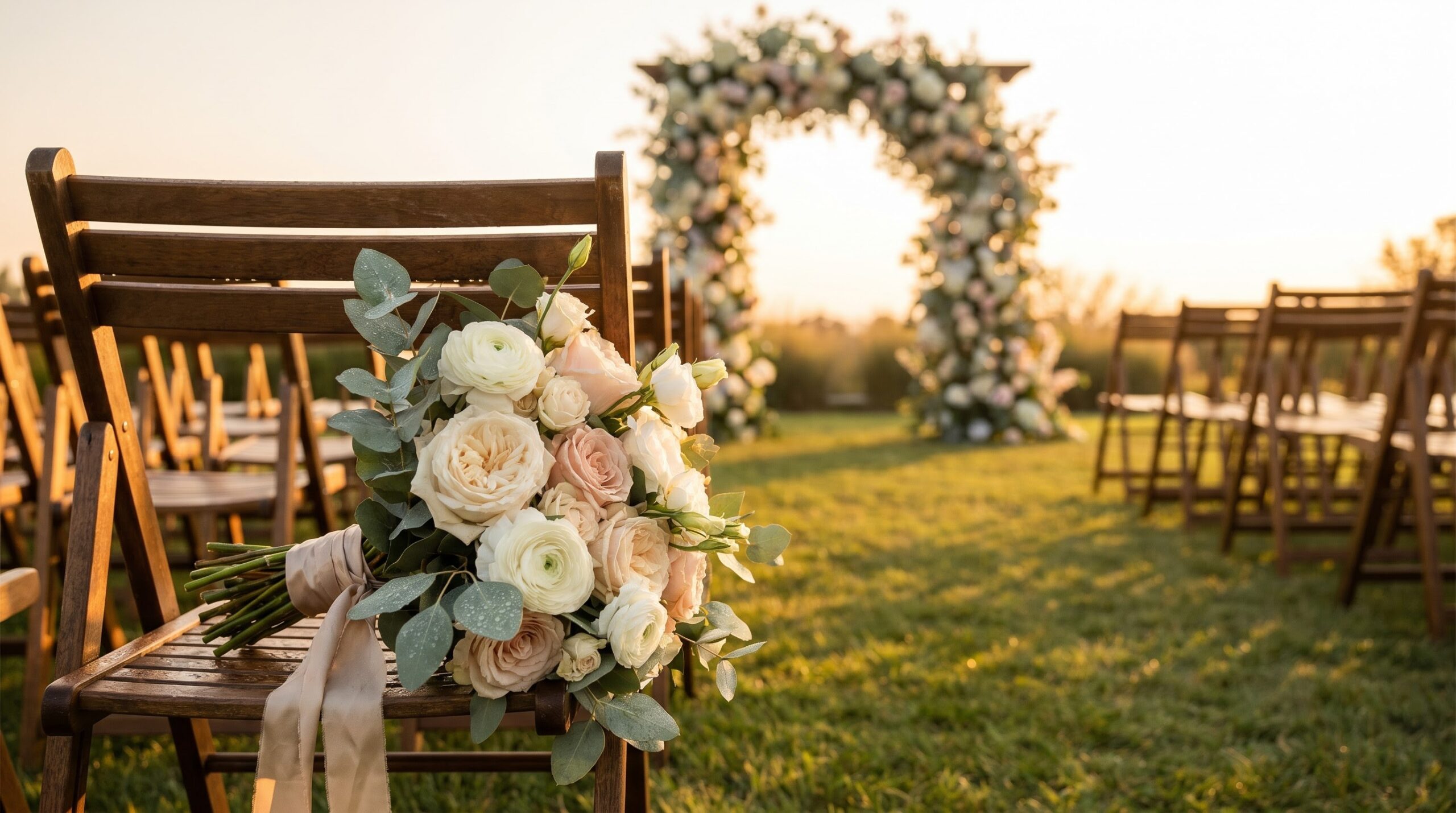
Then pressure-test the money before you commit. Pick the row of the table that fits your labor tolerance and your afterlife plan, and price the identical design in the neighboring row: your DIY silk list against DIY fresh wholesale, a full-service silk quote against a full-service fresh one. If a chart swaps the amount of labor between its two columns, you're reading a pitch. For calibrating the totals, what $500, $1,500 and $3,000 actually buy shows the same budgets spent three ways. Same labor to same labor. Same tier to same tier. That rule settles the fake flower question better than any verdict about taste ever will.
Enjoying our flower guides? Add YourFlowersGuide as a preferred source on Google. It helps more readers find us.
Add to Preferred Sources