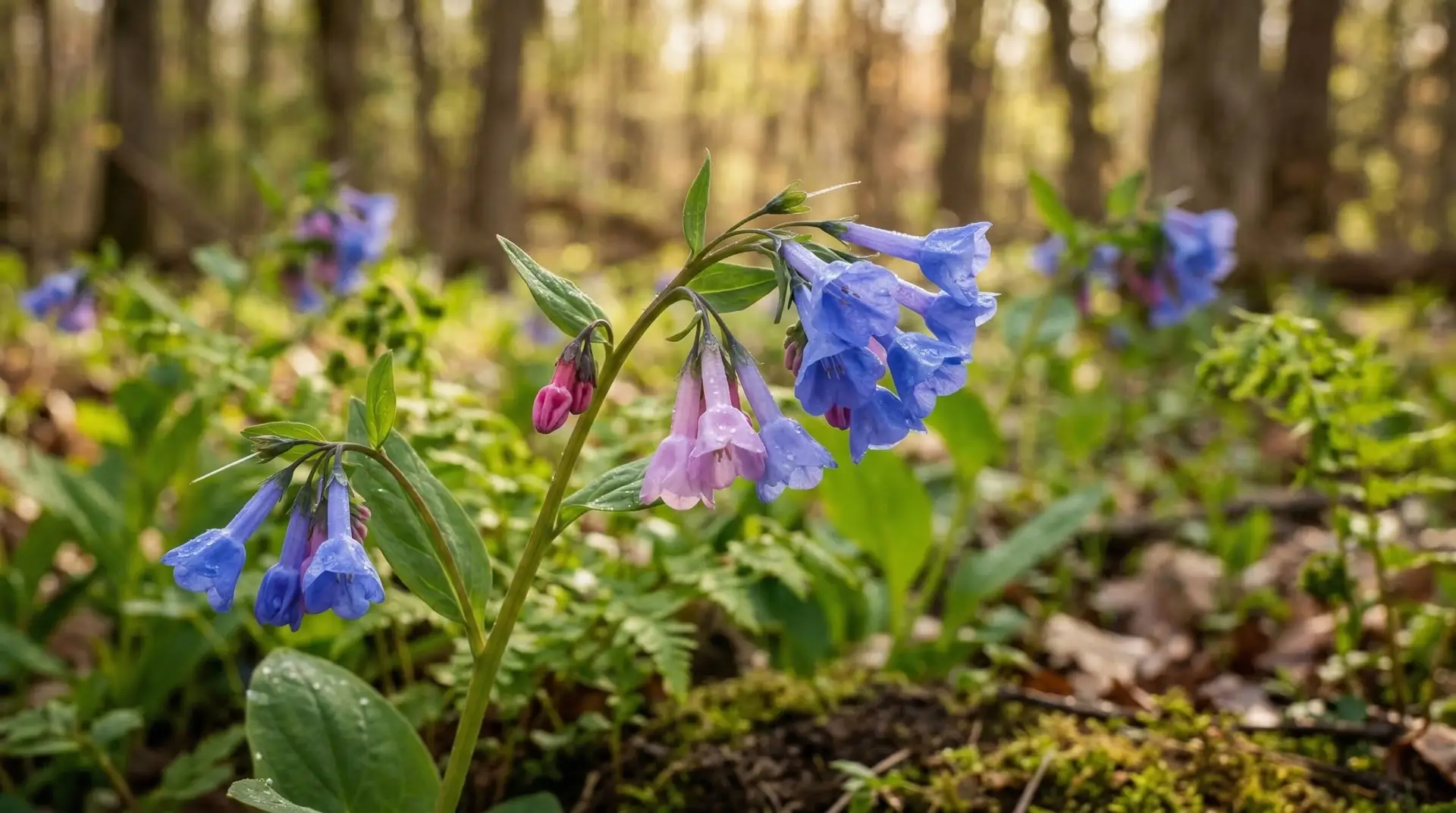
Virginia bluebells shift from pink buds to blue flowers because the internal pH of their petal cells changes as they mature. The shift has nothing to do with the soil they grow in. Young buds contain acidic cell sap, which causes the anthocyanin pigments inside them to reflect pink light. When the petals open, the sap becomes more alkaline, altering the pigment chemical structure and turning the flower a clear, sky blue. Understanding this mechanism requires looking inside the plant cellular vacuoles rather than testing your garden soil.
Contents 3 sections
The chemistry of anthocyanins in petal cells
Anthocyanins are water-soluble pigments responsible for the red, purple, and blue colors in many plants. These molecules act as natural pH indicators within the plant cellular fluid. In Mertensia virginica, the specific anthocyanins react instantly to the concentration of hydrogen ions in the cell sap. A high concentration of hydrogen ions creates an acidic environment. This acidity forces the anthocyanin molecules into a shape that absorbs blue and green light while reflecting red and pink wavelengths back to our eyes.
The speed of this chemical reaction depends heavily on ambient spring temperatures. During a cold spring, the plant metabolic processes slow down, and the transition from pink to blue takes several days. The buds hold their pink coloration longer, creating a distinct bi-color effect on the stem. When temperatures spike early in the season, the enzymatic activity accelerates. The plant pumps hydrogen ions out of the vacuoles rapidly, causing the buds to flush blue almost immediately upon opening.
The transformation begins the moment the flower prepares to open. The plant actively pumps hydrogen ions out of the petal cell vacuoles, lowering the acidity of the sap. As the pH moves toward a neutral or slightly alkaline state, the anthocyanin molecules lose a hydrogen proton. This structural change alters how the pigment interacts with light. The newly shaped molecules absorb red light and reflect blue light, completing the visual transition just as the reproductive parts of the flower mature.
Soil acidity versus internal cellular pH
Gardeners frequently confuse the color-changing mechanism of Virginia bluebells with the behavior of other landscape plants. The classic comparison is Hydrangea macrophylla, which changes from pink to blue based on aluminum availability in acidic soil. Virginia bluebells operate on a completely different biological system. Their color change is entirely internal and genetically programmed into the development of the flower. Altering your soil pH will not change the color of your bluebells, nor will it force them to stay pink or turn blue faster.
You should still pay attention to soil conditions to keep the plants vigorous. Virginia bluebells require rich, moist soil with a slightly acidic to neutral pH of 6.0 to 7.0 for optimal root health. Amending the planting area with leaf mold or compost provides the exact nutrient profile these ephemeral plants need before they go dormant in early summer. Adding sulfur or aluminum sulfate to the soil in an attempt to manipulate flower color will only damage the shallow rhizomes. Leave the chemistry to the plant and focus on maintaining consistent spring moisture.
Supporting the energy demands of this rapid cellular transformation requires proper siting in the garden. Virginia bluebells need the rich, undisturbed environment of a deciduous woodland floor to fuel their brief above-ground life cycle. Plant them under deep-rooted hardwood trees where they receive full spring sun before the tree canopy leafs out. This early solar energy powers the metabolic pumps that alter the petal pH. Once the canopy closes and the shade deepens, the plant has already finished its chemical display and begins storing energy for the next year.
Visual signals for woodland pollinators
The dramatic shift from pink to blue has a specific ecological function in the spring woodland. Early emerging bees use these color cues to forage efficiently in cool weather when their stored energy is low. A pink bud signals that the flower is immature, offering neither pollen nor nectar. Foraging insects bypass the pink buds entirely, saving energy that would otherwise be wasted probing unopened blooms. The blue color is a direct advertisement that the flower is fully open and the nectar rewards are accessible.
This signaling strategy is common within the Boraginaceae family. You can observe the exact same pink-to-blue progression in the closely related Forget-Me-Not, which uses identical anthocyanin chemistry to guide its own pollinators. The mechanism also appears in other members of the borage family like lungwort and comfrey. Once a Virginia bluebell flower is successfully pollinated, the plant stops maintaining the specific alkaline pH in those petal cells. The blue color begins to wash out, and the flower eventually drops off the stem. This rapid fading directs late-arriving bees to the remaining bright blue, unpollinated flowers on the cluster.
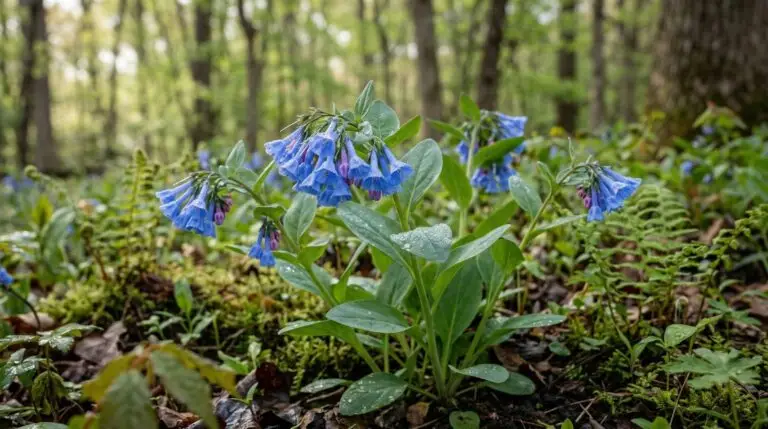
You can track this cellular process easily in your own garden by watching a single flower cluster over three days. The tightest buds at the bottom of the cyme show deep pink, while the fully open bells at the top display clear blue. Intermediate flowers often show a purple or violet phase as the cellular pH slowly shifts from acidic to alkaline. Cutting the stems for indoor arrangements does not stop the chemical progression. The flowers will continue to pump hydrogen ions out of their cells and turn blue in a vase just as reliably as they do in the ground.
More About Virginia Bluebells
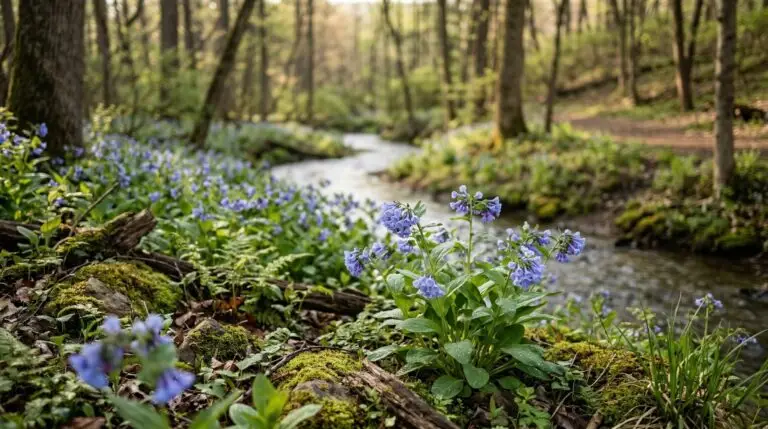
Where to see Virginia bluebells in the wild and the best springtime woodland hikes
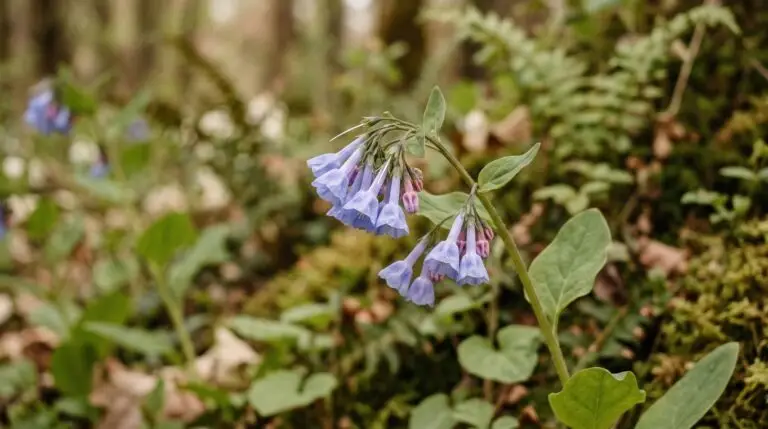
Virginia bluebells flower meaning and the native wildflower that colors eastern woodlands blue
Virginia bluebells as spring ephemerals and planning for the gap when they vanish in summer
How to grow Virginia bluebells for dreamy blue drifts in spring woodland gardens
Growing Virginia bluebells in containers for a spring shade garden on a patio
Virginia bluebells companions: what to plant and avoid
Naturalizing Virginia bluebells in woodland areas for expanding blue carpets every spring
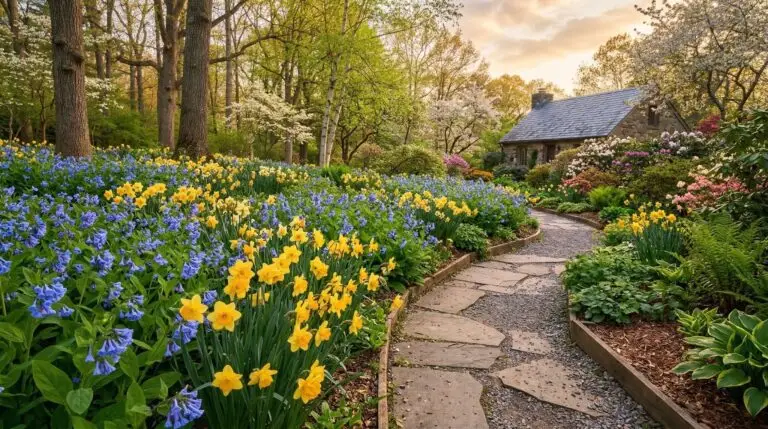
Virginia bluebells combined with daffodils for the ultimate spring woodland color combination
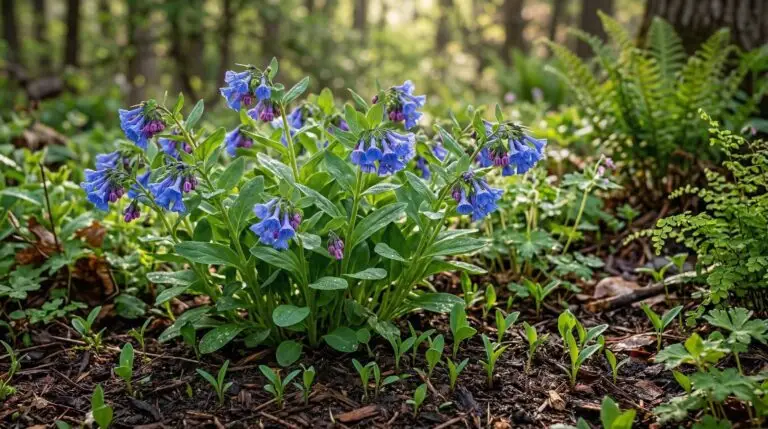
Growing Virginia bluebells from seed and the double dormancy that tests your patience
Enjoying our flower guides? Add YourFlowersGuide as a preferred source on Google. It helps more readers find us.
Add to Preferred Sources