What to plant with verbena
The pairing · pick a flower
All verbena companions
What not to plant near verbena
The best companions for garden verbena, explained
Garden verbena rarely works as a standalone specimen. Its low, spreading mounds and small clustered flower heads read best as connective tissue between bigger plants in a border, or as the filler and spiller that ties a mixed container together, and the strongest companions lean into that role rather than fighting it. Lantana is the closest match available: full sun, genuine drought tolerance, and nonstop bloom through the same punishing summer heat, so the two share a bed without either one outcompeting the other for water or light. Salvia brings the one thing verbena’s flat, clustered heads can’t supply on their own, an upright spiky bloom that reads as a clean vertical accent against verbena’s horizontal mass, and it draws the same bees and hummingbirds while asking for the same lean, well-drained soil. Coneflower does similar work with a different shape, its daisy form rising above verbena’s shorter mounds for a layered look that a border built entirely from low, spreading plants can’t achieve on its own.
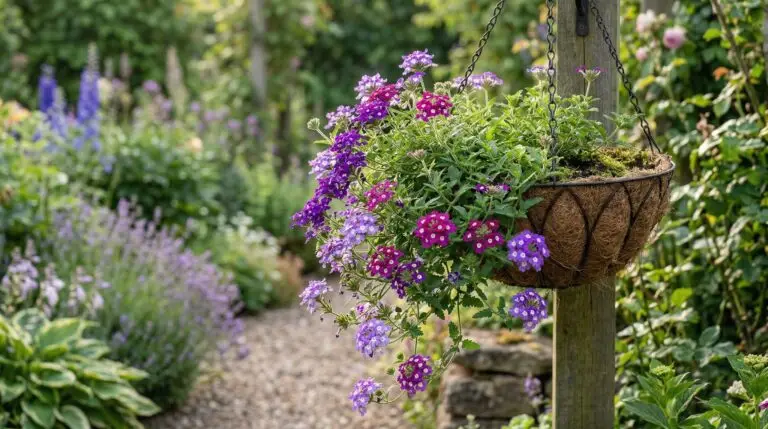
For containers, the pairing that shows up again and again in real planting recipes is calibrachoa, and it earns that reputation honestly: identical spiller habit, identical sun and heat needs, and small trumpet flowers that read as a distinct texture next to verbena’s clusters even in a pot only a foot across. Petunia does the same job at a slightly larger scale, its wide trumpet blooms breaking up what one grower called verbena’s "pixelated" texture in a big terracotta pot, though it asks a touch more deadheading and handles hard rain less gracefully than verbena does. Angelonia and ornamental grasses solve a different problem entirely: verbena itself has almost no height, so a border or a pot built around it usually needs something to supply the vertical structure verbena was never going to provide, and both are sold constantly in the same tough-annual category verbena occupies. Dusty miller’s silver foliage is worth naming on its own, since it does real design work rather than decorative filler, cooling verbena’s saturated magenta, purple and scarlet tones instead of just sitting next to them. None of these pairings require guesswork about whether the two plants will actually thrive together; every one of them wants the same hot, dry, well-drained bed verbena already demands.
What not to plant near garden verbena
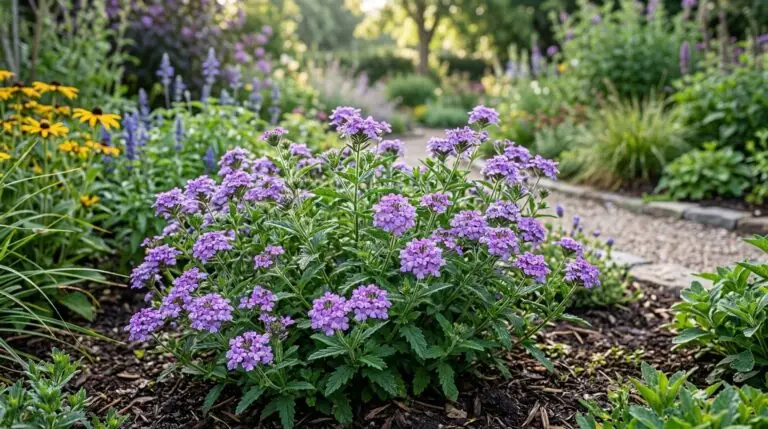
Verbena’s avoid list is shorter and less dramatic than a rose or hydrangea’s, and that is itself an honest fact worth stating rather than padding out with borrowed drama. The real mechanism is almost entirely a conditions mismatch, not chemical warfare or pest transfer. Anything that wants regular moisture or afternoon shade, hosta, astilbe, ferns, most impatiens, will either shade verbena’s bloom out or push a gardener toward overwatering to keep the shade-lover happy, and verbena tolerates soggy soil badly enough that root rot is one of its most commonly cited failures. The second real avoid mechanism is crowding itself rather than any specific plant: verbena is genuinely prone to powdery mildew, and university extension sources are explicit that poor air circulation from tightly spaced planting is the primary non-chemical driver of the disease, right alongside excess fertilizing pushing lush, disease-prone growth at the expense of bloom.
What’s worth naming honestly is the genre of "plants that hate verbena" lists circulating on gardening blogs, because most of it doesn’t hold up. Geranium gets listed repeatedly as releasing chemicals that stop verbena’s growth, and no extension or peer-reviewed source backs that claim; in real nursery beds, geranium and verbena are commonly planted together and thrive, since both want full sun and moderate-to-low water. Peppers and fennel show up on the same lists with vague nutrient-competition or allelopathy claims recycled wholesale from vegetable-garden companion-planting content, but neither is a genuine pairing question anyone actually faces, since peppers and fennel belong in a vegetable bed and verbena in an ornamental one. Mint’s aggression is the one claim with a real mechanism behind it, rhizomatous spreaders genuinely do crowd out small neighbors, but for verbena specifically the more honest story is that mint simply wants more water than verbena’s bed should ever hold, which sinks the pairing before the roots even become a problem.
Do they like the same conditions?
Full sun, 6 to 8 hours minimum, is verbena’s single most non-negotiable requirement, and every companion candidate should be tested against it before anything else. Verbena is drought-tolerant once established and actually prefers to dry out somewhat between waterings, which puts it at the opposite end of the water spectrum from a plant like hydrangea; well-drained soil matters more than rich soil, and average-to-lean fertility is genuinely fine, possibly even preferred, since heavy feeding tends to produce leafy growth at bloom’s expense and can worsen disease pressure. Garden verbena is grown as a warm-season annual across nearly the entire country, which is a real and honest distinction from perennial-border companions like rose or hydrangea: pairs here are chosen for one growing season rather than for how they will look together in five years, so a pairing only has to hold up for a single summer’s worth of heat and bloom. Heat tolerance is the trait every strong candidate should share beyond the basic sun-and-drainage match, since a companion that wilts or bloom-shies in the punishing weeks of July and August is a weaker fit even when its listed light and water needs technically overlap on paper. Trailing container cultivars like the Superbena and EnduraScape series cascade 2 to 3 feet and function as spillers, while upright bedding types stay 8 to 18 inches and work as fillers or edgers, and though both share verbena’s exact conditions, they play different roles in a design and are worth distinguishing rather than lumping together.
How to plant them together
In a border, set taller companions like salvia, coneflower or ornamental grass 18 to 24 inches from verbena’s crown, giving both plants enough room to reach full size without one shading the other’s base. Verbena itself spreads wide in a single season, so leave 12 to 18 inches between individual plants even within a mass planting of verbena alone, since the instinct to plant tight for instant fullness is exactly what invites powdery mildew later in the summer. Lower, front-of-bed companions like dusty miller or sweet alyssum can sit closer, 8 to 12 inches, since neither competes for the same vertical space verbena’s spreading mounds already claim. In a container, the classic thriller-filler-spiller structure does the organizing work for you: a grass, canna lily or angelonia thriller anchors the center, calibrachoa or petunia fills the middle as a heavy, continuous bloomer, and verbena trails over the rim as the spiller, or takes the filler role itself if something else is doing the spilling. Water container combinations on a schedule that suits the thirstiest plant in the pot, since verbena tolerates being on the drier side of that compromise far better than most fillers do; if canna lily is the thriller, that means the whole pot runs a touch moister than verbena’s ideal bed would, a fair trade for the height and drama only canna can supply. Whichever setting, resist the urge to fill every visible gap the day you plant. Verbena and nearly everything on this list are fast, vigorous fillers within a few weeks, and the empty-looking spacing that feels wrong in May is exactly what keeps the bed’s air moving through the humid stretch of July.
Does companion planting actually work for garden verbena?
For the conditions-match pairings, yes, in a way that is straightforward to verify rather than take on faith: lantana, salvia and coneflower genuinely share verbena’s sun, drainage and drought tolerance, and extension sources document each one’s requirements independently, which is a stronger form of evidence than a listicle simply repeating that two plants "look nice together." The container pairings carry real weight too. Mississippi State University Extension’s own container garden recommendations pair verbena as a spiller with calibrachoa and petunia as fillers, which means the single most-repeated pairing in consumer gardening content also shows up in an actual extension publication rather than recycled blog copy alone. Where the evidence gets thinner is anywhere claiming a specific chemical or pest-repelling benefit rather than a conditions match or a design pairing, and verbena’s list is honestly shorter on those claims than flowers like rose or marigold, since nobody has built a strong repellent-companion case around verbena the way they have around alliums or marigolds. The powdery mildew story is the one place where the science moves past design and conditions into an actual documented mechanism: overcrowding and poor airflow are named directly by university sources as drivers of the disease, which makes "give it room" the rare companion-planting rule for verbena that is genuinely proven rather than merely repeated. The geranium, pepper, fennel and mint "enemy" claims fail this test outright. None of them trace back to a real source, and real-world nursery practice contradicts at least the geranium claim directly, so spacing and sun stand as the load-bearing rules here, while the enemy-plant lists are noise.
FAQ
What can I plant in front of garden verbena?
Low, front-edge plants that share its sun and drainage needs work best: dusty miller for silver foliage contrast, sweet alyssum for a low white or purple carpet, or a shorter verbena cultivar itself if you want a uniform edging look. Keep anything you plant in front short enough that it doesn’t shade verbena’s crown as it fills in.
What should you not plant near verbena?
Avoid shade-lovers and consistently moist-soil plants like hosta, astilbe, ferns and most impatiens, since verbena’s bloom drops off in shade and its roots resent soggy soil. Beyond that, avoid crowding anything tightly against verbena regardless of what it is, since poor airflow is the main documented driver of the powdery mildew verbena is prone to.
Does verbena attract butterflies and pollinators?
Yes, genuinely and well-documented. Tall verbena (Verbena bonariensis) in particular is named repeatedly by university extension sources as a strong butterfly and hummingbird magnet, and garden verbena’s smaller relatives draw bees and butterflies too, especially when planted in the same bed as other pollinator-friendly bloomers like salvia and coneflower.
What’s the best thriller for a container with trailing verbena?
Ornamental grass, angelonia or canna lily are the most commonly used, since verbena itself supplies almost no height and a pot needs a vertical anchor. Canna is the one worth a caveat: it prefers steadier moisture than verbena’s ideal, so a canna-verbena pot should be watered a touch more generously than a verbena-only planting would need.
Can I plant upright bedding verbena and trailing container verbena together?
They share the same growing conditions, so nothing stops it, but they play different design roles. Upright bedding types work as fillers or low edging in a border, while trailing types are built for spilling over a container’s edge, so mixing them usually means picking one role per planting rather than combining both in the same bed.
Sources
Clemson HGIC: Verbena · NC State Extension Gardener Plant Toolbox: Verbena x hybrida · UC ANR, Under the Solano Sun: Powdery Mildew on Verbena · Mississippi State University Extension: Four Container Garden Combos · Wisconsin Horticulture Extension: Verbena bonariensis
More About Verbena
Best verbena varieties from trailing Superbena to tall bonariensis purple towers
Verbena flower meaning and the sacred herb that ancient Romans used for altars and oaths
Verbena as a butterfly garden essential that attracts dozens of species all summer
Why verbena gets powdery mildew and how to prevent the white coating on leaves
Growing verbena from seed and cuttings for more plants from your favorites
Growing verbena in hanging baskets and containers for trailing summer cascades
Homestead Purple verbena the tough perennial ground cover that blooms for months