What to plant with lilies
The pairing · pick a flower
All lilies companions
What not to plant near lilies
A true lily is not the peace lily on a windowsill or the calla lily in a bridal bouquet, both different genera entirely. This page covers Lilium, the bulb that pushes up a single bare stalk each spring and tops it with a cluster of trumpet or bowl-shaped blooms, Asiatic, Oriental, and trumpet types sold and searched as one flower even though they differ in scent, height, and timing. That single unbranched stalk is the whole design problem: there is no basal foliage clump the way a daylily or hosta has, so the companions that actually work are the ones built to solve a bare-stemmed, top-heavy, short-blooming plant’s specific problems, not just anything pretty from a catalog.
The best companions for lilies, explained
The strongest lily pairings all do one of three jobs: they hide the bare lower stem, they physically prop up a top-heavy stalk, or they carry color once the lily’s own short bloom window closes. Hardy geranium is close to the ideal case for the first job, a low, dense mound that shades the soil right where the bulb sits while covering the naked stalk above it, and it tolerates the shade at ground level rather than fighting the lily for the direct sun the flowers need overhead. Catmint does similar work from a different angle: its silvery, aromatic foliage softens the visual transition to the stem and asks for the same drought-tolerant, well-drained ground, so neither plant is fighting the other’s preference. Daylily earns a rarer distinction, an extension source names it directly as a lily companion, on the strength of a genuinely different bloom mechanic: each daylily flower lasts one day but the clump reblooms for weeks, which means it is still going once most lily stalks have finished their two-to-four-week flush.
The second job, keeping a tall stalk upright, is where tall garden phlox does its best work. Planted close enough, its own dense, upright stems act as a kind of living brace a top-heavy Oriental or trumpet lily can lean on in wind or rain, and its rounded flower domes bloom on nearly the same summer calendar while giving the trumpet-shaped lily blooms real visual contrast. Peony and bearded iris both solve the succession problem from the early side of the calendar: peony’s shallow, non-competing roots and full-sun preference make it a safe close neighbor, and its own foliage stays attractive well after its late-spring bloom ends, quietly covering the bed while the lily comes into its own. Bearded iris blooms even earlier, handing off color right as lily stalks are budding, and its shallow surface rhizome occupies a different root layer than the lily bulb buried below it. On the late end, fall aster and feather reed grass close the loop, aster flowering from August into fall in the same sun the lily bed already has, and the grass holding a narrow, upright winter silhouette long after the lily stalk has been cut to the ground.
What not to plant near lilies
Lily carries two specific, well-documented fears that go well beyond the usual conditions-mismatch worry, and they deserve to be named plainly rather than folded into a generic avoid list. The sharpest is tulips: the Royal Horticultural Society is direct that tulip breaking virus infects both tulips and lilies, the only two genera it naturally attacks, and the virus travels between plants on aphids feeding in a non-persistent manner, meaning an aphid that feeds on an infected tulip can carry the virus to a nearby lily on its very next stop. The practical fix is not a precise planting distance, since the risk travels on an aphid’s wings and on unwashed cutting tools rather than through soil contact alone, it is keeping tulips and lilies in genuinely separate beds and never dividing or handling both plants with the same blade. The second concrete fear is fritillaria, which red lily beetle feeds and breeds on almost as readily as it does true lilies. Planting fritillaria nearby does not summon beetles that would not otherwise exist, but it does hand an established local population a second breeding site right next to the lily bed, and that raises pressure on both plants at once.
The remaining avoids are more familiar mismatches, still worth naming because they show up constantly in lily beds specifically. Dense, mat-forming groundcovers, English ivy, vinca, sweet potato vine, pulled up tight against the stem trap moisture right where the bulb sits, and lily basal rot, a named disease caused by Fusarium oxysporum f. sp. lilii, develops fastest in exactly that kind of persistently wet soil. A tall shrub or perennial planted too close and too tall is the simplest mismatch of all: lily wants a full-sun spot, and anything that shades the flowers thins the bloom in a way that is easy to see and easy to avoid. Aggressive mint-family herbs round out the list for a much more generic reason, their runners and fibrous roots outcompete nearly any neighbor for root space, which is true of most garden beds and not a finding specific to lily.
Do they like the same conditions?
The rule worth stating plainly, because it is not obvious from the plant’s tall, sun-loving silhouette, is that lily wants full sun on its flowers and a cool, shaded root zone at the same time, a combination gardeners often shorthand as head in the sun, feet in the shade. SDSU Extension confirms the first half directly, most lilies perform best in a full-sun location, and the second half is exactly why a low mounding companion at the base is doing real mechanical work rather than just filling space decoratively. Water needs sit in a narrower band than most perennials: the plant wants consistent moisture during active growth, but the bulb itself is unusually prone to rot if it sits wet, which is a sharper needle to thread than a simple keep-it-moist rule, and it is why both drought-loving companions and dense, damp-mat groundcovers cause real problems from opposite directions.
Drainage is the load-bearing constraint here, more than sun or pH. SDSU Extension recommends a raised bed if the native soil is heavy clay, precisely because standing water at the bulb is the direct route to basal rot. Soil pH, by contrast, barely matters: no strong pH requirement shows up in the available extension sourcing, and lily tolerates slightly acidic to neutral ground without the fussiness a plant like azalea or blueberry shows. USDA hardiness varies meaningfully by type rather than sitting at one clean number, Asiatic hybrids run the hardiest end of the range, while some Oriental and trumpet types need more winter protection, so treat any single zone figure for lily as a rough guide rather than a precise cutoff.
How to plant them together
Layer by the job each companion is doing rather than by height alone. Low mounders meant to shade the root zone and hide the bare stem, hardy geranium and catmint, belong closest in, 10 to 18 inches from the stalk, close enough to actually shade the soil without crowding the bulb itself. Structural companions meant to physically brace a top-heavy stalk, tall garden phlox especially, want a tighter spacing of 12 to 24 inches, though phlox’s own mildew sensitivity means real airflow still has to exist between the two plants rather than a solid wall of foliage. Succession partners sit a little further out, 15 to 24 inches, since bearded iris and peony both want their own undisturbed footprint and dislike being crowded once established, and the same distance works for aster and feather reed grass at the back of the planting, where their larger mature size needs real room to fill in without shading the lily’s own sun.
Plant lily bulbs roughly 6 inches deep, and keep the top few inches of soil around the emerging stem relatively undisturbed once companions are in, since lily produces stem roots along the buried portion of the stalk in addition to its basal roots, meaning that zone is doing real work for the plant’s own root development, not just holding a decorative underplanting. In containers, the same head-in-sun, feet-in-shade logic holds at a smaller scale: a large pot with sharp drainage lets a low, shallow-rooted companion like catmint or a compact hardy geranium sit right at the rim, shading the pot’s own soil surface, as long as the container never sits in standing water after a heavy rain.
Does companion planting actually work for lilies?
Some of this is genuinely proven, and some of it is closer to a design habit dressed up as fact, which is worth separating honestly. The tulip and fritillaria avoids are the strongest claims on this page, both backed by real sourcing rather than repeated blog folklore: RHS names the tulip-lily virus connection directly, and multiple university extension sources independently confirm fritillaria as a documented alternate host for red lily beetle. The shared-conditions matches are solid ground too, catmint, bearded iris, and peony all genuinely want the same full sun and well-drained soil lily does, and hardy geranium’s own shade tolerance is exactly what makes it useful at the bulb’s shaded feet, which is a real, checkable overlap rather than a marketing line. The daylily pairing carries unusual weight for a companion claim in this category, since it is one of the few places an extension source names a specific companion by name rather than leaving the pairing to consumer garden sites.
Where the evidence thins out is the mechanical-support framing for phlox and the aggressive-herb avoid. It is mechanically plausible that a dense-stemmed neighbor like phlox helps brace a leaning stalk, and lily’s single unbranched form genuinely lacks the structure a bushier plant has, but no extension source formally documents this as tested fact, so it stays a reasonable, honestly labeled Partial rather than a settled claim. The mint-family avoid is closer to Folklore outright: it is true of nearly any garden bed with an aggressive spreader nearby and carries no lily-specific research behind it. The honest verdict is that this flower’s moat is unusually strong on the fear side, the tulip and fritillaria warnings are real, specific, and well-sourced in a way most flowers in this category do not get, while the design-and-succession side works the same way it does everywhere else in the garden: match the conditions, layer by height and bloom timing, and treat anything claiming more than that as unproven until shown otherwise.
Frequently asked questions
What can I plant in front of lilies?
Low, mounding plants that stay under two feet and share the bed’s well-drained soil work best, hardy geranium tolerates the shade at ground level while catmint prefers full sun to partial shade, and both hide the bare lower stem without shading the blooms above.
What should you not plant near lilies?
Keep tulips and fritillaria at real distance, both carry genuine, sourced pest and virus risks specific to lily, and avoid dense moisture-trapping groundcovers like English ivy or vinca pulled up tight against the stem, which raises the risk of basal rot.
Can I plant tulips and lilies together?
Better not to. Tulip breaking virus infects only two genera, tulips and lilies, and it spreads by aphids feeding on an infected plant and moving to the next one, so growing them in the same bed or dividing them with the same tool raises real infection risk.
What blooms after lilies finish flowering?
Fall aster picks up from August into October in the same sun a lily bed already has, and feather reed grass holds a narrow, upright silhouette well into winter, both extending the season once the lily stalk has been cut back.
Do fritillaria and lilies attract the same pests?
Yes, in a meaningful way. Red lily beetle feeds and breeds on both true lilies and fritillaria almost exclusively, so planting them close together does not summon a new infestation but does give an existing local beetle population a second food and breeding source.
Is daylily the same plant as true lily?
No, daylily is a different genus, Hemerocallis rather than Lilium, but it is one of the few plants an extension source names directly as a good lily companion, since its foliage clump and long rebloom period genuinely complement a true lily’s bare stem and short bloom window.
Sources
RHS (Royal Horticultural Society), Lily diseases · UMass Center for Agriculture, Food, and the Environment, Lily Leaf Beetle (Lilioceris lilii) · SDSU Extension, Growing Lilies in the Home Garden · Penn State Extension, Greenhouse IPM: Lily Basal Rot and Bulb Mites in Easter Lilies · University of Illinois Extension, Cranesbill, Hardy Geranium · NC State Extension Gardener Plant Toolbox, Phlox paniculata · NC State Extension, Peonies for the Home Landscape · University of Connecticut Home Garden Education Center, Iris · NC State Extension Gardener Plant Toolbox, Nepeta x faassenii · Wisconsin Horticulture (UW-Madison Extension), Feather Reed Grass, Calamagrostis x acutiflora ‘Karl Foerster’
More About Lily
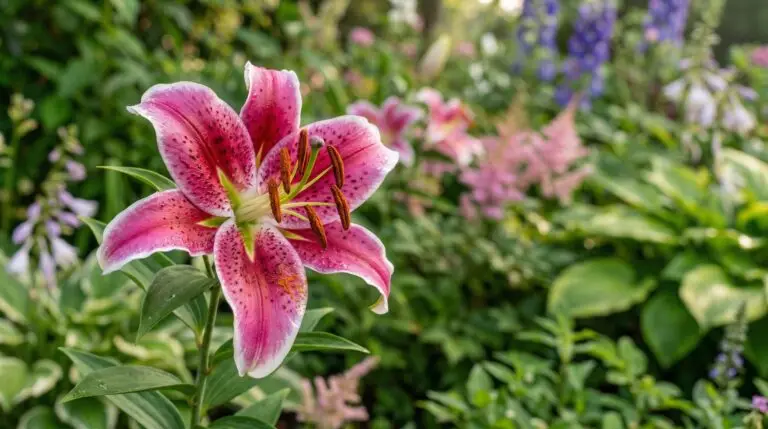
Lilies as magnificent cut flowers and how to arrange them without staining everything
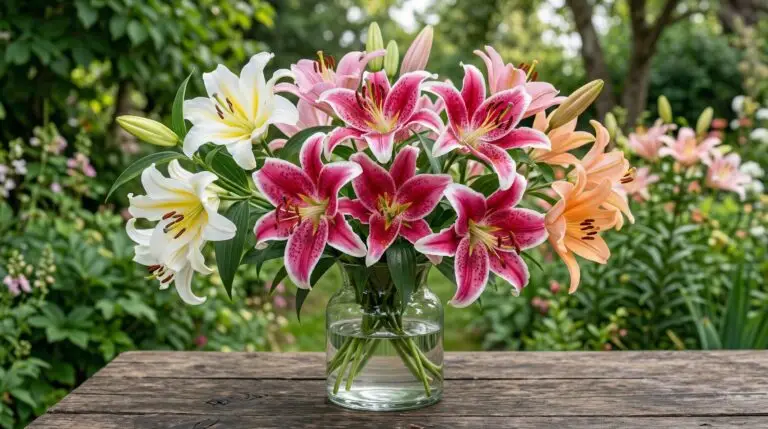
Oriental lilies for intoxicating fragrance that fills the garden on summer evenings

Planting lilies in layers with spring bulbs for a succession of blooms from March to August

Lilies in wedding flowers and the timeless elegance of white Casablanca arrangements
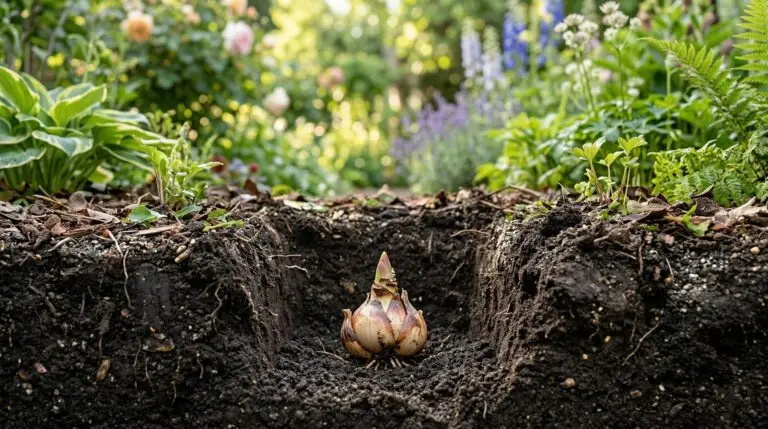
How to grow true lilies for towering fragrant blooms that crown the summer garden
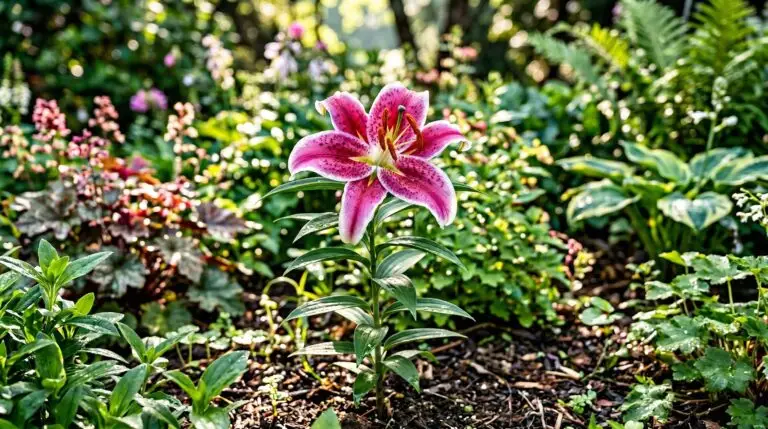
The red lily beetle invasion and how to protect your lilies from this destructive pest
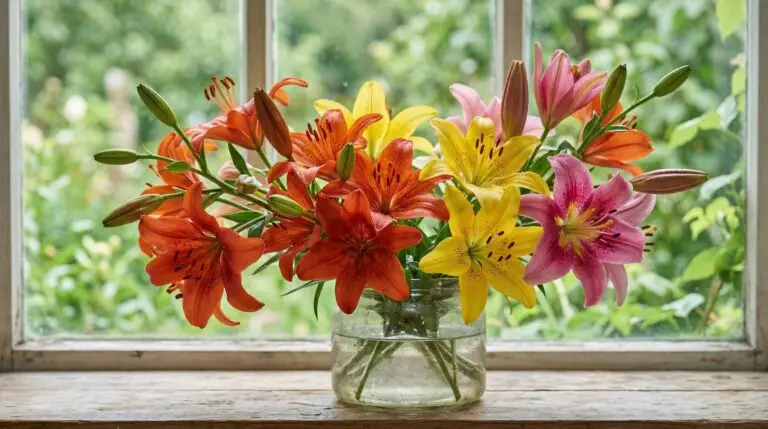
Best lily varieties from elegant Oriental Stargazer to towering Orienpet tree lilies
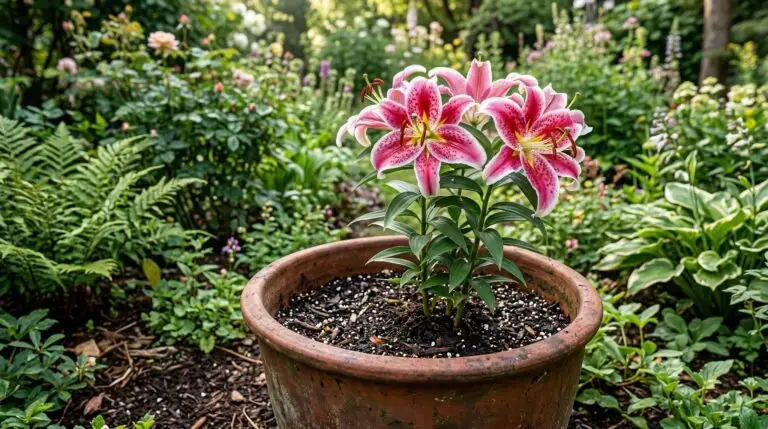
Growing lilies in containers for balcony and patio gardens with dramatic height