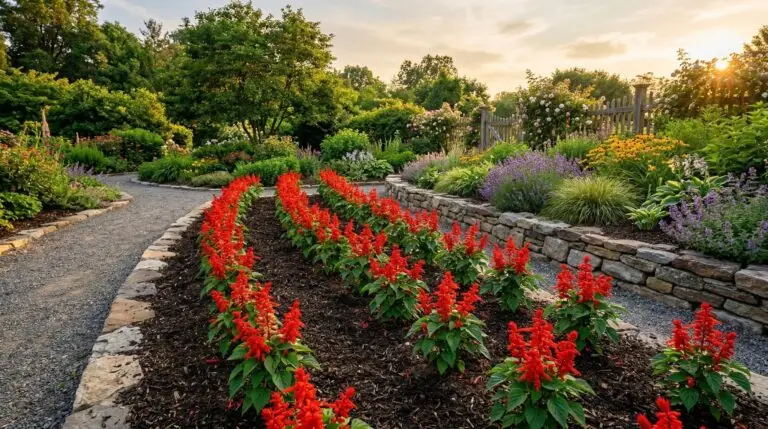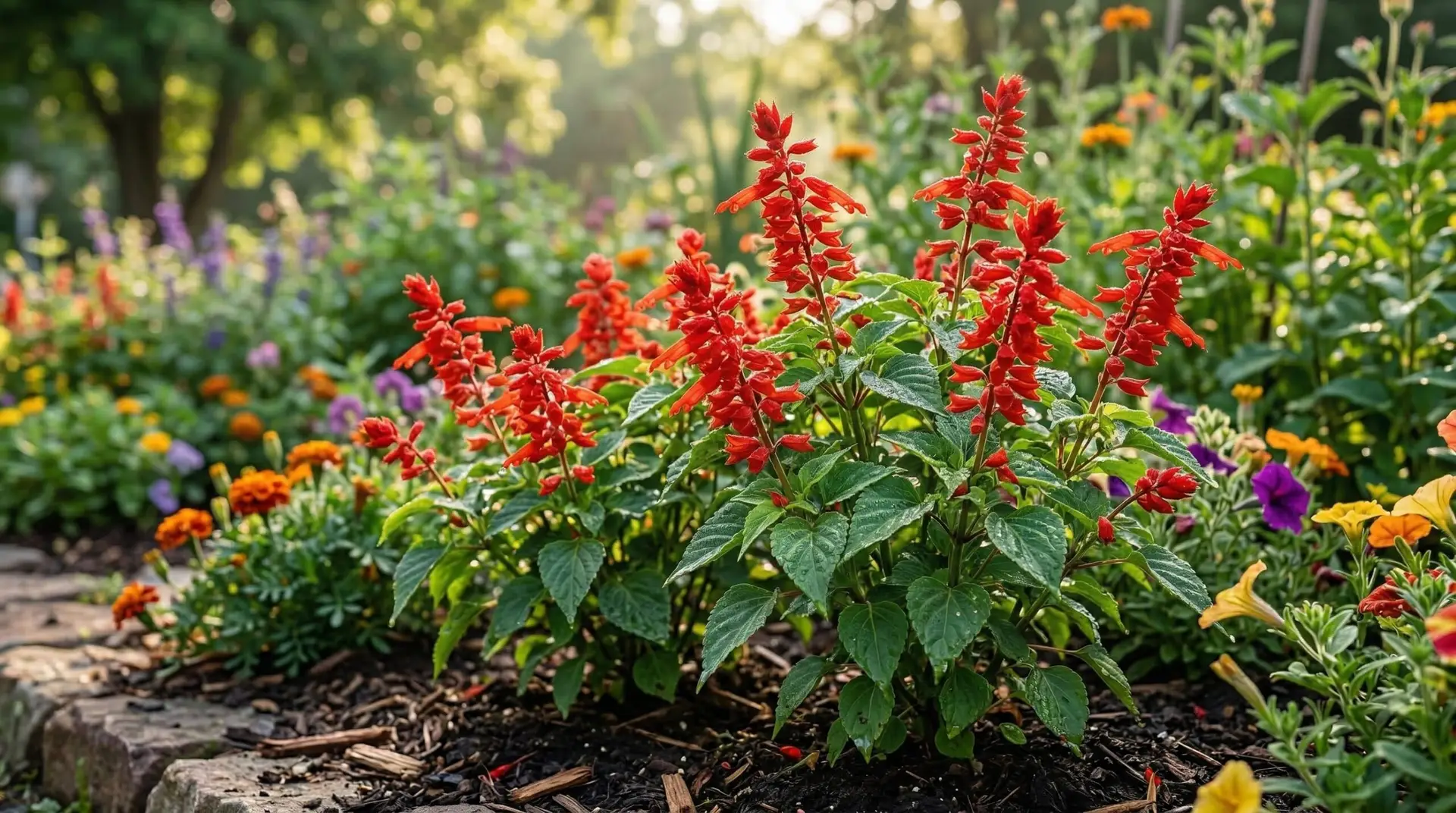
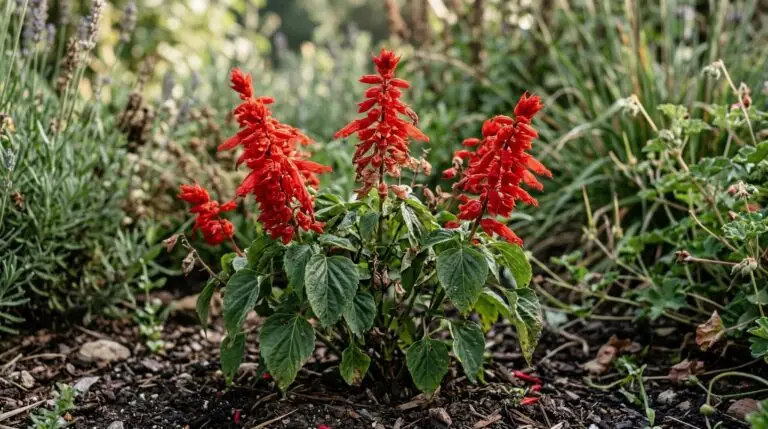
Scarlet sage, known botanically as Salvia splendens, is a plant I have grown in trial gardens and public borders for over thirty years. Most gardeners treat this Brazilian native as a reliable summer annual, though it is technically a tender perennial in frost-free zones. The intense, primary red of the species type is difficult to replicate in the garden, providing a solid block of color that remains visible even at dusk. When you plant a large drift of red salvia, you are essentially installing a beacon for local hummingbird populations. The birds are drawn to the tubular flowers, and I often watch them defend a particularly rich patch of sage from rival hummingbirds. Understanding how this plant grows in its native habitat helps us replicate those conditions for maximum performance in our own garden beds.
To get the most out of growing scarlet sage, you need to look closely at the flower structure. The color we see actually comes from two separate parts of the plant: the true flower petals, called the corolla, and the modified leaves that hold the flower, called the calyx. Long after the true flower drops off, the brightly colored calyx remains on the stem, giving the illusion of a much longer bloom time. This biological trait makes the plant highly valuable for continuous garden color throughout the hottest months of the year. I have found that older heritage varieties can reach three to four feet in height, while modern breeding has focused on creating compact, uniform plants for the nursery trade. Both types have a place in horticulture, but choosing the right one dictates how you will manage the plant as the season progresses.
Site selection and soil preparation
The foundation of good salvia splendens care begins with the soil profile and light exposure. Scarlet sage prefers a slightly acidic soil with a pH ranging between 6.0 and 6.5, which allows the roots to absorb nutrients efficiently. If your soil is heavily alkaline, you might notice the foliage turning a pale, sickly yellow, a condition known as chlorosis. Amending the planting area with well-rotted compost before setting out transplants improves both the nutrient content and the drainage capacity of the soil. While the plant tolerates poor soils, it truly thrives when the root zone remains evenly moist but never completely saturated. Heavy clay soils that hold standing water will rot the root system within a matter of days during a wet spring.
Light requirements for this plant require a bit of regional interpretation. In northern gardens, scarlet sage demands full, unobstructed sunlight to produce its characteristic dense flower spikes. However, if you garden in regions with intense summer heat, the plants benefit greatly from a few hours of afternoon shade. The foliage will quickly scorch and turn brittle if subjected to baked, dry conditions combined with late afternoon sun. I usually recommend planting them in a location that receives strong morning light and dappled shade by three o’clock. This balance keeps the plant vigorous while preventing the rapid evaporation of soil moisture that leads to wilted stems.
Cultivar differences and companion planting
Walking through a modern garden center, you will mostly encounter dwarf cultivars of scarlet sage like the ‘Vista’ or ‘Salsa’ series. These compact varieties are bred to be determinate, meaning they grow to a specific height of about twelve inches, produce a flush of flowers, and then stop vegetative growth. These are excellent for the front of a border or for tight container plantings. If you want the tall spikes that historically defined this species, you will need to seek out older selections like ‘Van Houttei’, which grows into a substantial sub-shrub reaching four feet tall. The taller varieties weave beautifully through other heat-tolerant summer annuals in the middle of the border. I frequently plant the tall forms of scarlet sage alongside zinnia varieties to create a sturdy, pollinator-friendly matrix that holds up well into late autumn.
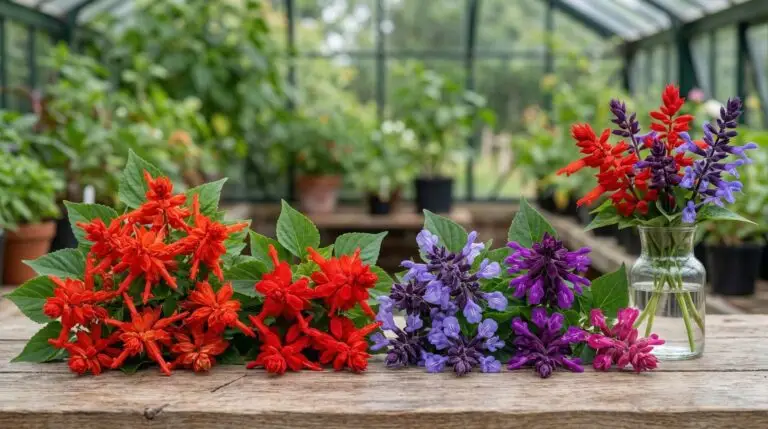
Choosing companion plants involves matching water and temperature needs so the entire bed thrives under the same irrigation schedule. Scarlet sage requires slightly more consistent watering than some of the extremely drought-tolerant summer annuals. For example, while it pairs nicely in color with lantana, you must ensure the soil retains enough moisture for the salvia without waterlogging the other plants. A two-inch layer of shredded hardwood mulch applied early in the season helps regulate the soil temperature and slows down evaporation. The dark green, somewhat triangular leaves of the sage provide a solid visual anchor that makes the bright flowers of neighboring plants stand out clearly. You can also mix different salvia species together, using the upright red spikes to contrast with the cooler, spikier forms of blue salvia in the same garden bed.
Pruning and maintenance for continuous bloom
The most common mistake gardeners make with scarlet sage is failing to remove the spent flower spikes. Once the brightly colored calyx eventually fades and turns brown, the plant begins to shift its energy toward seed production. To interrupt this process and force the plant to create new flowers, you must practice regular deadheading. Use sharp bypass pruners to cut the faded flower stem back to the next set of healthy leaves. This simple mechanical action stimulates the dormant buds located in the leaf axils, prompting them to push out fresh side shoots. Within two weeks of a hard pruning, you will see a completely new crop of red spikes forming on the plant.
Feeding your scarlet sage correctly is the second half of the maintenance equation. Because these plants expend massive amounts of energy to produce continuous flowers, they deplete the surrounding soil nutrients quickly. I recommend applying a balanced, water-soluble fertilizer every three to four weeks during the peak growing season. Avoid fertilizers that are excessively high in nitrogen, as this will result in massive, leafy plants with very few flower spikes. If you notice the internodes, the spaces on the stem between the leaves, becoming long and stretched out, the plant is likely reaching for light or receiving too much nitrogen. Adjusting your feeding schedule and ensuring adequate sunlight will keep the growth habit tight and focused on floral production.
As the season winds down and nighttime temperatures begin to drop below fifty degrees Fahrenheit, scarlet sage will naturally slow its growth. The plant is highly sensitive to frost, and a single freezing night will turn the entire plant to black mush. Before the first frost arrives, you can take four-inch tip cuttings from the healthiest, non-flowering stems to root indoors for the following year. These cuttings root easily in a mix of perlite and peat moss when kept warm and humid. Overwintering the rooted cuttings on a bright windowsill allows you to preserve specific heritage varieties that are difficult to find from seed. By propagating your strongest plants, you guarantee a ready supply of robust red blooms for your garden when the soil warms again next spring.
More About Scarlet Sage
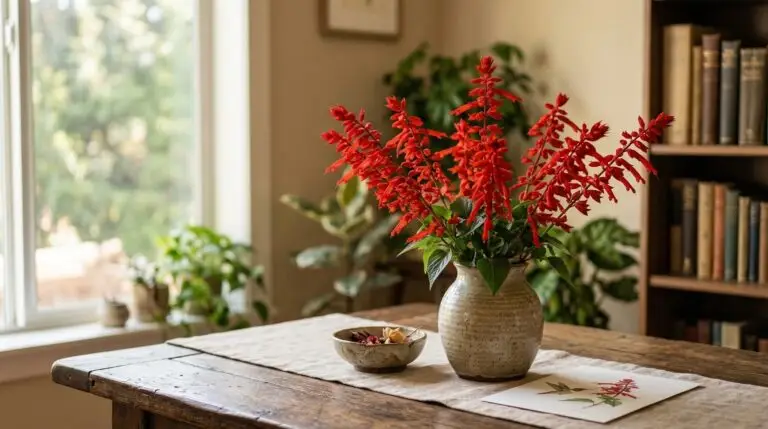
Scarlet sage as a hummingbird garden essential for non-stop feeder-free attraction
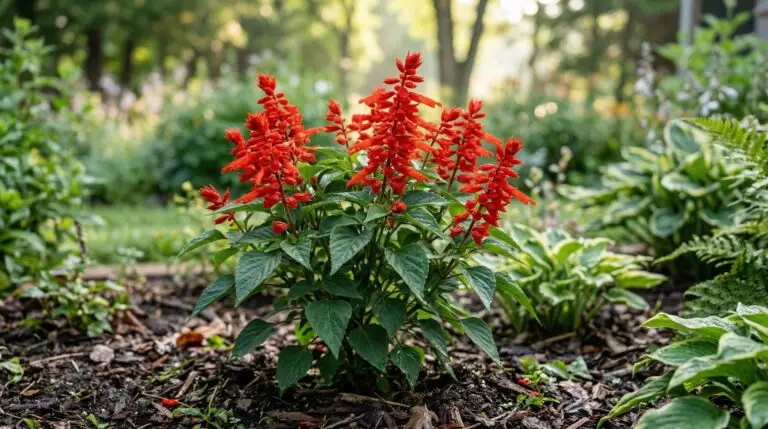
Growing scarlet sage from seed versus buying transplants and which saves money
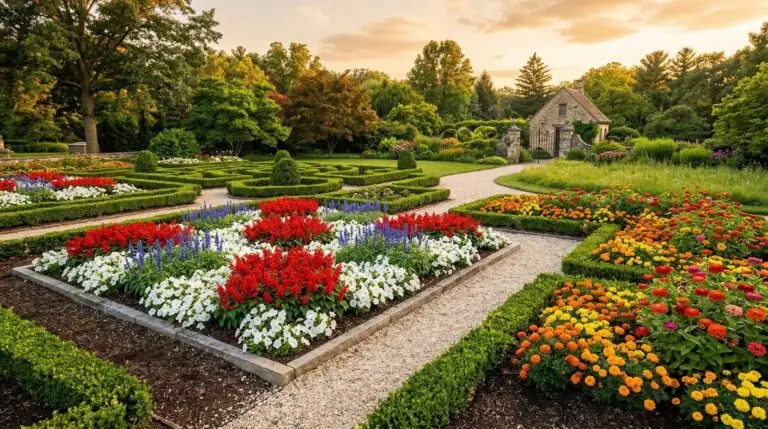
Companion plants for scarlet sage: what to grow and avoid
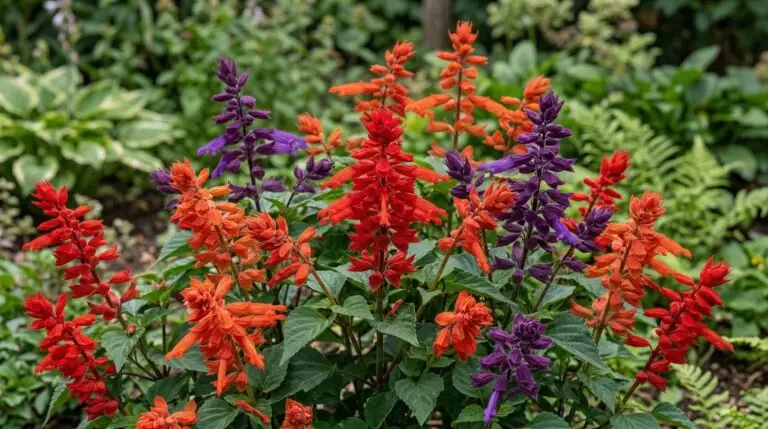
Best scarlet sage varieties beyond basic red including salmon coral and burgundy
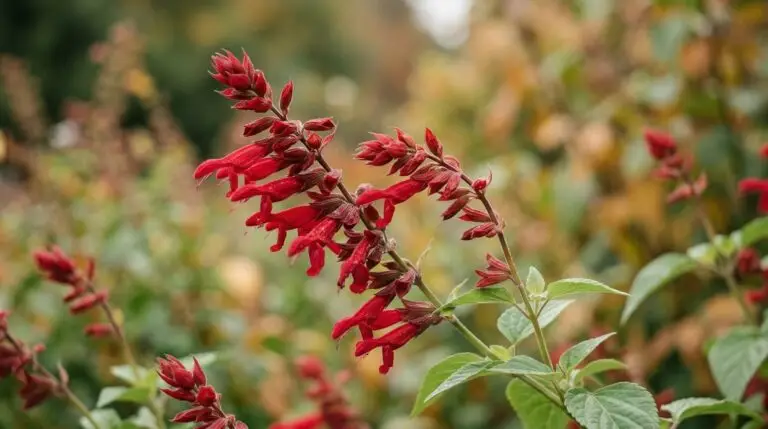
Scarlet sage flower meaning and the fiery passion this red bloom represents
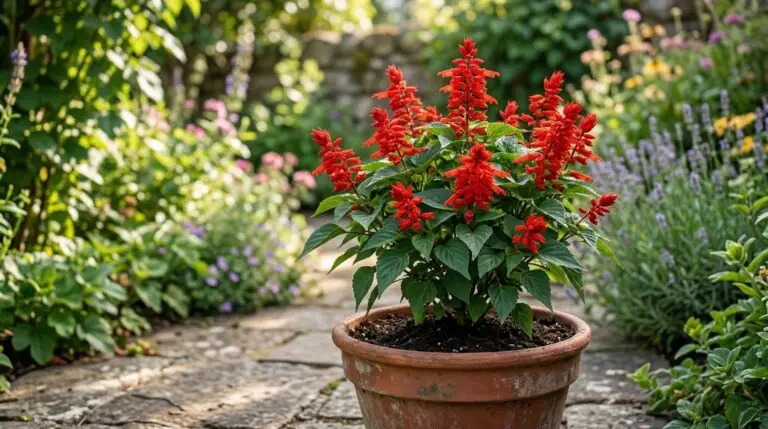
Growing scarlet sage in containers for fiery patio displays and front door drama
Why scarlet sage gets leggy in midsummer and the pinch-back method for bushy plants
Scarlet sage versus blue salvia and choosing the right salvia for your garden design