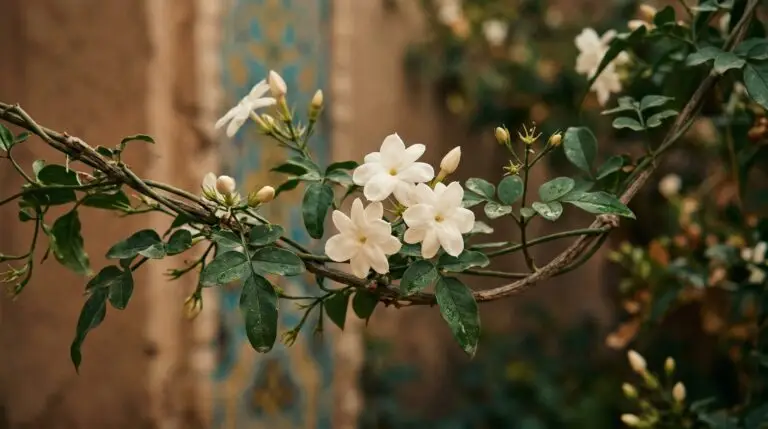
What to plant with jasmine
The pairing · pick a flower
All jasmine companions
What not to plant near jasmine
The best companions for jasmine, explained
Jasmine asks a different companion question than most flowers on this site, because it is not a bed plant at all. Common jasmine is a rapid, twining vine that can climb 15 to 40 feet given a trellis, pergola, or fence, so the real planning happens in three layers: what shares the actual climbing structure with it, what covers the bare, woody lower stems it leaves behind as it reaches upward, and what extends the evening fragrance that is the entire point of growing it. Clematis is the standout for the first layer. It wants the same run of sun to part shade and steady, well-drained moisture jasmine does, and its flower color range, from deep purple to soft pink, fills the gaps around jasmine’s small white stars without asking the vine to compete for anything but a little extra trellis space. Moonflower does the same job seasonally: this white, trumpet-shaped annual vine opens after dusk, exactly when jasmine’s scent peaks, so the two read as one continuous night display instead of two separate plants fighting for attention.
At the base, gardenia earns its long-standing pairing with jasmine honestly, though not for free. Both plants carry a heavy, complementary evening fragrance and both suit the same warm, part-shade-tolerant zones, but gardenia genuinely needs acid soil under pH 6.0, while jasmine tolerates average garden soil without complaint. The fix is simple: give gardenia its own amended, acidified pocket a few feet from the jasmine so each keeps its own soil recipe. Nicotiana sylvestris, flowering tobacco, adds a third fragrance layer at a different height, its tall white tubes opening after dark on stems that keep going well past jasmine’s own bloom window. Lower down, hardy geranium and other spreading perennials tackle the one job jasmine’s own structure cannot: hiding the bare, leggy stems a climbing vine leaves at its feet once it has grown up and away from the ground. None of these plants need to fight jasmine for anything. Each one takes a role the vine itself does not fill, which is the whole logic of companion planting a climber instead of a border flower.
What not to plant near jasmine
The live version of this page had nothing at all to say about what to avoid, which is the single biggest honesty gap a companion page can have, so it is worth being specific here. Two plants come up again and again as genuine problems, and they fail jasmine for two different mechanical reasons rather than one generic "it competes" excuse. Mint spreads by underground rhizomes that root wherever they touch soil and are, in the words of one university extension guide, nearly impossible to eradicate once established. Left in open ground anywhere near jasmine’s base, mint runs straight into the vine’s root zone and starts competing for moisture and nutrients at exactly the spot where jasmine’s own roots are working hardest. The fix is not distance, it is a container: grow mint in a pot with drainage, set on a hard surface, and it stops being a threat to anything nearby.
English ivy is the more serious problem, and North Carolina State Extension is blunt about why: ivy is flagged as an invasive species whose aggressive, climbing habit lets it scale and eventually kill the trees and shrubs it grows on. Put it on the same structure as jasmine and it is not decoration, it is competition for the exact climbing surface and light the vine needs, with ivy’s own dense growth generally winning that fight over time. The same logic extends to any second equally vigorous twining vine sharing jasmine’s trellis, honeysuckle is the one named most often, since jasmine itself is already a rapid climber capable of reaching 40 feet with support, and putting two fast twiners on one structure invites a straightforward space fight rather than a layered display. A genuinely lower-stakes caution, because jasmine tolerates average soil and is documented as drought tolerant once established, is not planting true bone-dry, gravelly-soil specialists directly in its root zone; the mismatch is real but narrower than it would be for a thirstier flower, so treat it as a caveat rather than a hard rule. Heavy nightshade vegetable plantings, tomatoes, peppers, eggplant, tucked right against jasmine deserve a softer mention: their pest overlap with jasmine’s own aphids and whitefly is plausible since both are broad, non-specific pests, but the connection is not documented specifically for jasmine, so keep it as a mild, unverified caution rather than a confirmed rule.
Do they like the same conditions?
Jasmine’s real growing profile is more forgiving than most fragrance vines, and getting this right changes which of the above cautions actually matter. North Carolina State Extension lists common jasmine’s light range as full sun through partial shade, roughly 2 to 8 hours of direct light, with flowering dropping off noticeably below about 6 hours even though the plant itself keeps growing. On water, the extension record is specific: jasmine prefers consistently moist, well-drained soil enriched with organic matter, but it is separately documented as drought and pollution tolerant once it is established, a genuinely different story from a plant that wilts the moment moisture dips. Soil tells the same honest story. Despite a preference for rich, light soil, NC State states plainly that jasmine tolerates average garden soil, which is a real, useful fact against any source implying it is a fussy, soil-specific plant the way its evening-garden partner gardenia actually is.
That gap between jasmine and gardenia is worth stating directly rather than glossing over, because it is the one place two celebrated companions genuinely disagree on soil. Gardenia is documented as needing acidic soil, specifically below pH 6.0, while jasmine’s own extension listing gives no such requirement and calls it an average-soil plant. The two still work together in the same bed, but only because the planting plan gives each its own soil pocket instead of assuming one recipe fits both; a page that pretends they share identical needs is not being straight with the reader. Jasmine’s hardiness range, USDA zones 7b through 10b, is also meaningfully narrower and warmer than most flowers covered on this site, which matters for companion choices in colder gardens: readers outside that range are usually growing jasmine in a container and bringing it indoors for winter, and companions there need to tolerate the same pot-and-overwinter routine rather than being chosen for an open border.
How to plant them together
Start with the structure, since jasmine’s growth habit is what makes this flower different from a bed plant. Give the vine its own dedicated support, whether that is a trellis, arbor, or wire system against a wall, and train any co-climber like clematis onto a clearly separate section of that same structure from the start, rather than letting both vines find their own way and tangle. A spacing gap of 12 to 18 inches between the two plants’ root zones is enough to keep them from competing hard underground while their top growth mingles overhead exactly as intended. At the base, plant low, spreading companions like hardy geranium in a ring a foot or so out from the jasmine’s main stem, both to hide the bare wood the vine leaves behind as it climbs and to act as a living mulch that keeps the root zone from drying out between waterings.
Shrub anchors like gardenia or boxwood belong a bit farther out, 24 to 36 inches from the jasmine, both because they are larger plants that need their own root space and, in gardenia’s case, because that separation makes it realistic to amend and acidify a smaller pocket of soil without having to treat the entire bed. Sun-loving, drier-soil herbs like lavender and rosemary do best at the outer, sunniest, driest edge of the planting rather than tucked against jasmine’s own regularly watered base, since crowding a lean, dry-soil plant into rich, moist ground is one of the more common ways gardeners lose it. For container growers, and there are genuinely more of them with this particular vine given its warm-zone restriction, keep the same logic in miniature: a large pot for jasmine with its own trellis insert, a smaller pot of a compatible low grower like geranium set alongside rather than crammed into the same container, and everything moved in together for winter if the garden sits outside zone 7b.
Does companion planting actually work for jasmine?
Some of what belongs on this page is genuinely proven horticulture, and some of it is design taste dressed up as science, and jasmine is actually a clean flower to draw that line on because its own documented needs are unusually mild. The shared-conditions logic for clematis and nicotiana is real: both are separately confirmed by extension sources to want the same sun-to-part-shade light and consistently moist, rich soil jasmine does, so pairing them is not a guess, it is matching documented plant profiles. English ivy’s danger is just as solidly proven, since NC State Extension does not hedge on calling it invasive and describing its habit of climbing and killing the plants it shares space with. Nicotiana’s fragrance overlap and clematis’s co-climbing fit both rest on real, checkable data rather than tradition.
A few pairings on this page lean more on design taste than on a documented growing overlap, and it is worth naming which ones. Extension sources confirm moonflower’s own growth habit, bloom timing, and full-sun needs, but nothing ties its pairing with jasmine specifically to shared soil or pest conditions; the two work together because a night-opening white flower next to another night-scented vine reads as one continuous evening display, which is a real and defensible reason to plant something, just not a horticultural finding. Rosemary and boxwood are documented plants in their own right, with confirmed soil, light, and growth habits, but their fit with jasmine rests on shared warm-zone structure and Mediterranean-garden logic rather than any benefit specific to this vine. The honest verdict is that jasmine rewards a gardener who separates the two categories cleanly: match conditions and avoid documented conflicts first, then layer in the plants that simply make the evening garden smell and look the way you want it to.
Frequently asked questions
What can I plant at the base of jasmine to hide the bare stems?
Hardy geranium and similar low, spreading perennials work well, since they share jasmine’s tolerance for average soil and part shade and form a living skirt around the woody lower growth a climbing vine always leaves behind.
What should you not plant near jasmine?
Keep mint and English ivy away from its root zone and climbing structure; both are documented aggressive spreaders, with ivy specifically flagged as invasive by NC State Extension for its habit of climbing and killing the plants it shares space with.
Can I grow clematis and jasmine together?
Yes. Clematis is one of the most reliable co-climbers for jasmine, since both want the same sun-to-part-shade light and steady, well-drained moisture, and their different flower colors and forms extend interest across the same trellis.
Does jasmine need acidic soil?
No. NC State Extension states that common jasmine tolerates average garden soil, despite a mild preference for rich, well-drained conditions; that is a real difference from its frequent companion gardenia, which genuinely does need acid soil below pH 6.0.
Will jasmine choke or take over my other plants?
Common jasmine is a rapid twining climber, so it can crowd a shared trellis if paired with an equally vigorous vine like honeysuckle, but it is not generally described as invasive the way its look-alike, star jasmine (Trachelospermum jasminoides), can be in some regions; give it its own dedicated support and it stays manageable.
Sources
NC State Extension Gardener Plant Toolbox: Jasminum officinale · NC State Extension Gardener Plant Toolbox: Gardenia jasminoides · NC State Extension Gardener Plant Toolbox: Hedera helix (English ivy) · NC State Extension Gardener Plant Toolbox: Lavandula angustifolia · NC State Extension Gardener Plant Toolbox: Nicotiana sylvestris · NC State Extension Gardener Plant Toolbox: Ipomoea alba (moonflower) · NC State Extension Gardener Plant Toolbox: Salvia rosmarinus (rosemary) · NC State Extension Gardener Plant Toolbox: Geranium sanguineum · NC State Extension Gardener Plant Toolbox: Buxus sempervirens ‘Suffruticosa’ · RHS Growing Guide: Clematis
More About Jasmine flower
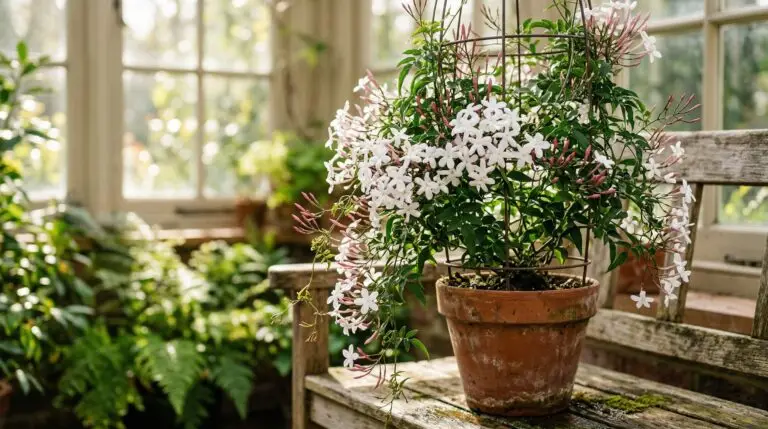
Growing jasmine indoors for fragrant winter blooms from a houseplant vine
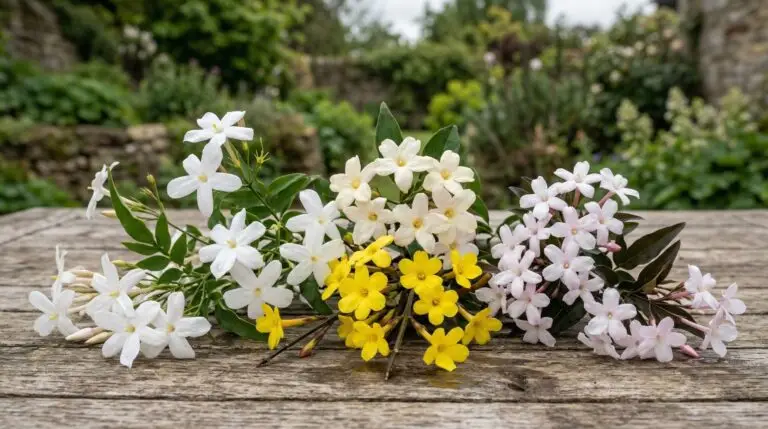
Winter jasmine for cheerful yellow flowers on bare branches in the coldest months
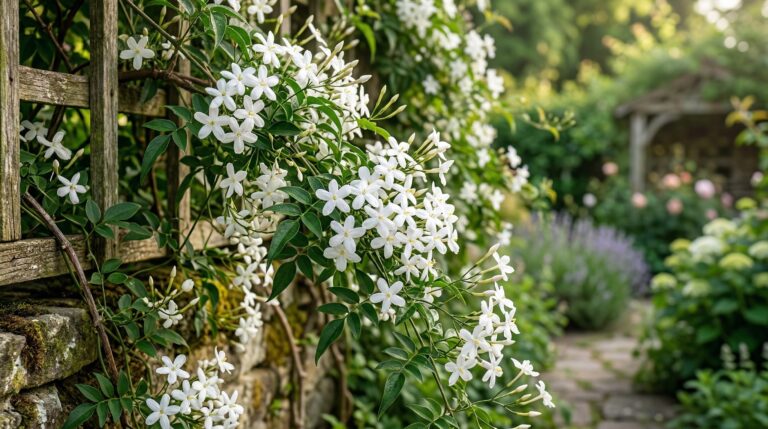
How to grow jasmine for intoxicating evening fragrance that fills the entire garden
Why jasmine is not blooming and the cold night temperatures it needs to set buds
Jasmine essential oil and why this is one of the most precious fragrances on earth
Training jasmine vines on arbors trellises and pergolas for fragrant garden structures
Best jasmine varieties from hardy winter jasmine to intensely fragrant Arabian jasmine
Jasmine tea and the ancient art of scenting tea leaves with fresh jasmine flowers