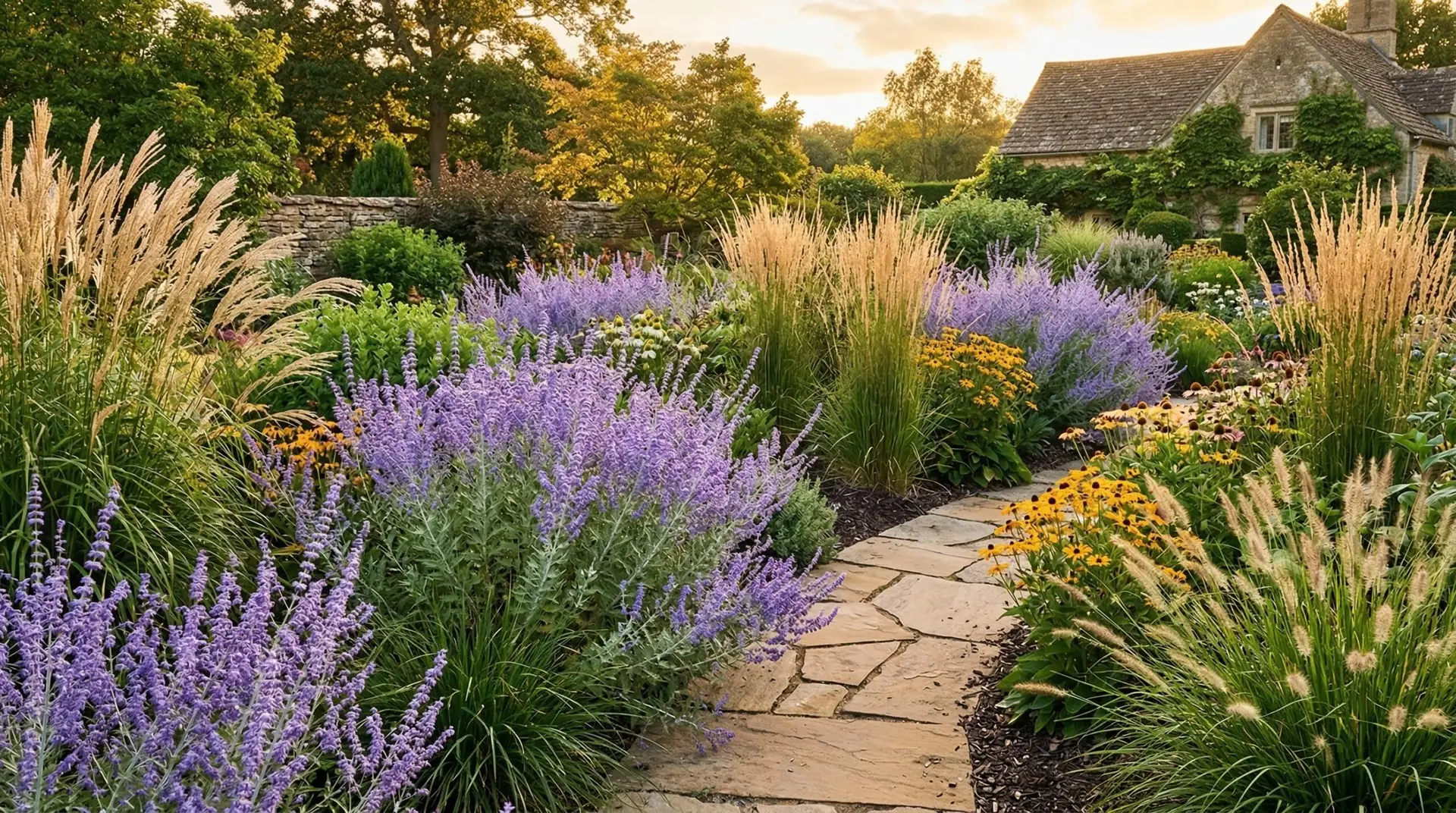
Russian sage functions as a visual weaver in the garden composition. It softens the hard edges of stone pathways and blurs the boundaries between more rigid, structured plants. The plant offers a cloud-like mass of cool violet-blue flowers suspended on silver-white stems. Designers rely on this airy quality to create depth, because the hazy blue tones naturally recede in the visual field and make tight garden spaces appear larger. When you look at a well-planned perennial border, Russian sage rarely acts as a singular focal point. Instead, it is the essential connective tissue that unifies disparate colors and forms into a cohesive design.
To use Russian sage effectively, you must understand its habit and texture. The foliage is finely cut, grayish-green, and highly aromatic, growing in an upright but loose, branching shape. Because the plant tends to sprawl as the season progresses, it requires the physical and visual support of sturdier companions. Planting it entirely on its own often results in a messy, unkempt appearance by late August. You need to surround it with plants that offer solid geometry to anchor its billowing form. The silver stems provide lasting winter interest long after the flowers fade, making it a valuable structural element even when dormant.
Creating structural contrast with bold forms
The most successful companion plantings for Russian sage rely on a sharp contrast in flower shape. Because the sage produces loose panicles of tiny flowers, it pairs well with large, daisy-like blooms that offer a clear geometric silhouette. A classic pairing involves planting it alongside the coneflower, which provides rigid, upright stems and prominent, stiff seed heads. The flat, wide petals of the coneflower act as visual resting places for the eye amidst the hazy cloud of the sage. Pink and magenta coneflowers create a rich, jewel-toned harmony with the violet-blue sage, while white varieties offer a crisp, cooling effect in the high heat of summer. The sturdy structure of the coneflower also helps physically prop up the outer branches of the sage after heavy rains.
Another highly effective strategy involves contrasting the vertical lines of Russian sage with strong horizontal elements. You can achieve this specific structural tension by introducing yarrow into the planting scheme. Yarrow produces flat, plate-like flower clusters that hover above feathery foliage, creating a distinct horizontal plane in the garden. When you plant these two together, the wispy, vertical spikes of the sage rise through and above the flat landing pads of the yarrow. This combination is highly functional in dry, sun-baked borders where both plants thrive with minimal supplemental water. The architectural contrast between the flat umbels and the vertical spikes keeps the garden visually engaging even before the blooms fully open.
Playing with color theory and warm complements
Understanding the color wheel is essential when deciding what to plant with Russian sage. Violet-blue is a cool color that brings a calming, restful quality to the garden, but it can sometimes disappear in the bright midday sun. To make the blue tones read clearly from a distance, you need to introduce their direct complement on the color wheel. Yellow and gold flowers provide the necessary friction to wake up the cool blues and silvers. The black-eyed Susan is perhaps the most reliable partner for this specific color strategy. The saturated, golden-yellow petals and dark brown centers of these daisies create a high-contrast pairing that defines late summer borders.
The contrast between these two plants extends beyond just their flower colors. Black-eyed Susans have coarse, slightly fuzzy, dark green leaves that look entirely different from the delicate, silvery foliage of the sage. This difference in foliage texture is just as important as the floral display, because the leaves are visible for months before the flowers appear. When designing this combination, you should place the black-eyed Susans in the middle ground of the border with the Russian sage rising behind them. The dark green leaves of the daisies provide a solid visual base that makes the silver stems of the sage look even brighter by comparison. This specific arrangement draws the eye through the planting bed and establishes a clear sense of foreground and background.
Designing a continuous silver and blue theme
If high contrast feels too aggressive for your space, you can use Russian sage to build a soothing, monochromatic garden design. Silver and blue theme gardens rely on subtle shifts in texture and tone rather than loud color clashes. You can pair Russian sage with lavender to create a seamless transition of cool colors and aromatic foliage. While both plants share a similar color palette, they occupy different spatial roles in the garden composition. Lavender forms tight, dense, rounded mounds that work perfectly as edge-defining plants along a stone walkway or retaining wall. You can then place the Russian sage directly behind the lavender to carry the silvery-blue theme higher into the vertical space of the border.
This silver-on-silver layering is particularly effective in spaces that receive hot, intense afternoon sunlight. Silver foliage reflects light, giving the entire garden a luminous quality that changes as the sun moves across the sky. To prevent a monochromatic scheme from looking flat, you must rely heavily on texture and form. The tight, needle-like leaves of the lavender provide a dense, solid base, while the deeply lobed leaves of the sage create an airy, transparent upper canopy. Both plants require excellent drainage and lean soil, meaning they will happily share the same growing conditions without competing for heavy nutrients. The resulting combination feels intentional, refined, and deeply rooted in dry-climate design traditions.
Building movement with ornamental grasses
Modern garden design often incorporates the prairie-style aesthetic, which prioritizes movement, light, and seasonal progression. Russian sage is a natural fit for this approach because its loose habit responds well to the wind. Pairing it with mid-sized ornamental grasses creates a dynamic, kinetic planting scheme that catches the low autumn sunlight. Grasses like little bluestem or switchgrass provide fine, linear textures that complement the feathery nature of the sage. As the season turns from late summer to fall, the grasses shift from green to shades of copper, amber, and burgundy. These warm autumnal tones provide a rich background for the lingering violet flowers and the increasingly prominent silver stems of the sage.
The relationship between Russian sage and ornamental grasses becomes especially important during the winter months. A well-designed garden must maintain its structure long after the first hard frost kills the foliage. When you leave both the grasses and the sage standing through the winter, they create a striking, structural composition in the dormant landscape. The bleached white stems of the sage stand rigid against the tan, weeping blades of the grasses, catching the frost and light snow. This combination requires careful attention to scale when planting. You should select grass varieties that reach roughly the same height as the sage, allowing the two plants to intermingle their stems and form a continuous, interwoven mass.
The most effective way to use Russian sage in any of these combinations is through the principle of repetition and massing. Planting a single Russian sage often looks like a mistake or an afterthought in a large border. Instead, you should plant them in drifts of three, five, or seven, weaving these groups through your other perennials and grasses. This repetition creates a visual rhythm that guides the eye naturally down the length of the garden. By treating Russian sage as a recurring, unifying thread rather than a specimen plant, you establish a professional, cohesive design that feels both wild and highly intentional.
More About Russian Sage
How to grow Russian sage for airy lavender-blue clouds that float above the summer border
Russian sage versus lavender and which silver-stemmed blue bloomer is right for your garden
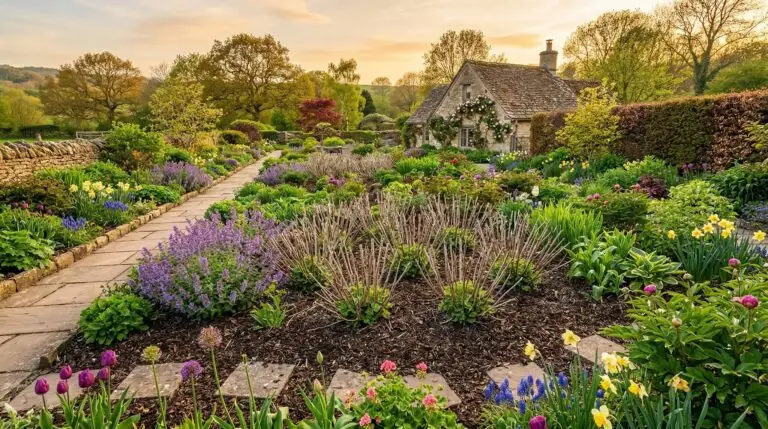
How to prune Russian sage in spring without ending up with a woody tangled mess
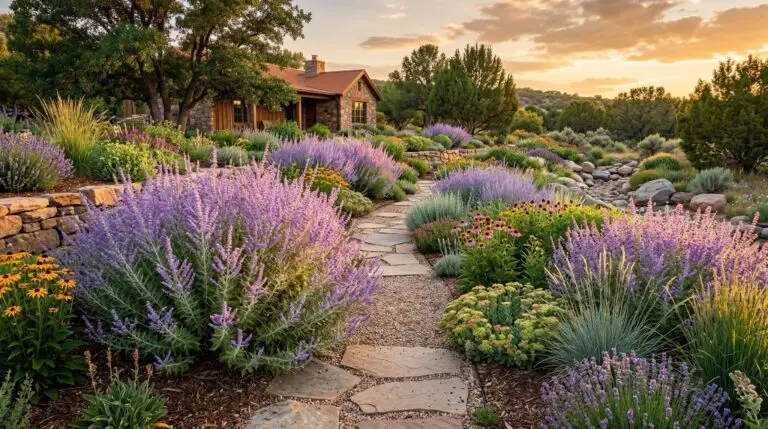
Russian sage as a drought-tolerant superstar for waterwise and xeriscape gardens
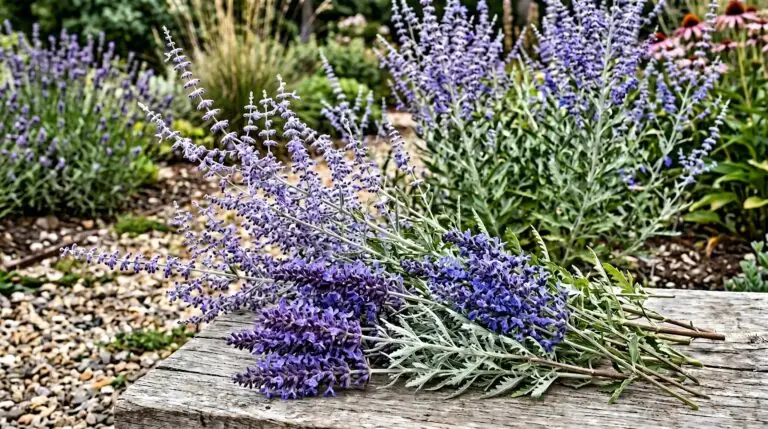
Best Russian sage varieties from compact Little Spire to silvery Blue Jean Baby
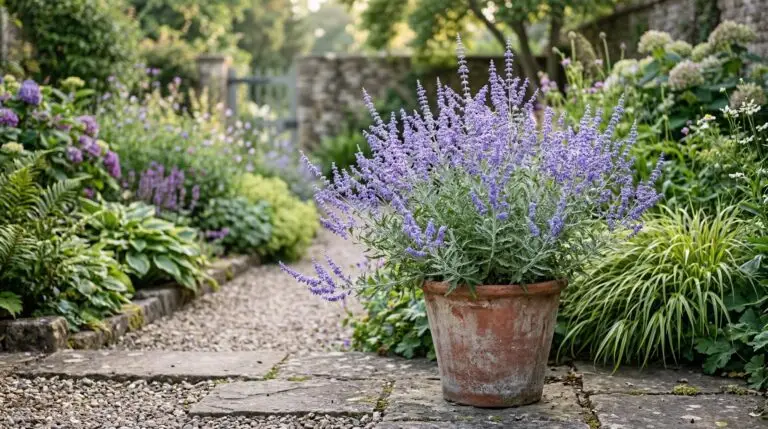
Growing Russian sage in containers for silver-blue drama on sunny patios
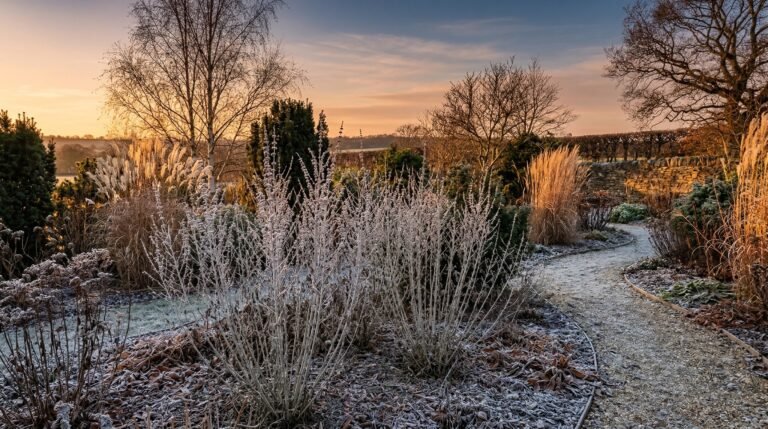
Russian sage in winter and the silver-white stems that bring structure to the frozen garden