Anthurium
Anthurium is a houseplant you keep indoors for its glossy leaves and waxy, heart-shaped blooms that hold their color for weeks. Sold as the flamingo flower or tailflower, what reads as the flower is actually a colored spathe wrapped around a spadix, the finger-like spike of tiny true flowers. Grown in bright indirect light with an airy mix, it blooms in waves almost year-round, and the same spathes make long-lasting cut flowers.
Get three things right and the rest follows. The plant wants bright but filtered light rather than direct sun, a chunky mix that drains fast so the roots get both water and air, and warm, humid air like the tropical forests it comes from. Most trouble people run into traces back to one of two failures: too little light, which stops it flowering, and a soggy mix, which rots the roots and yellows the leaves.

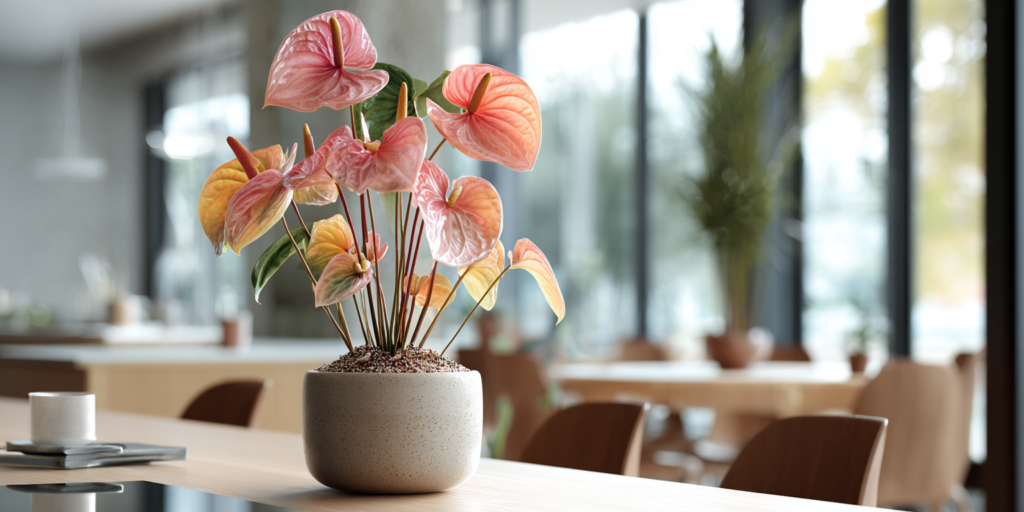
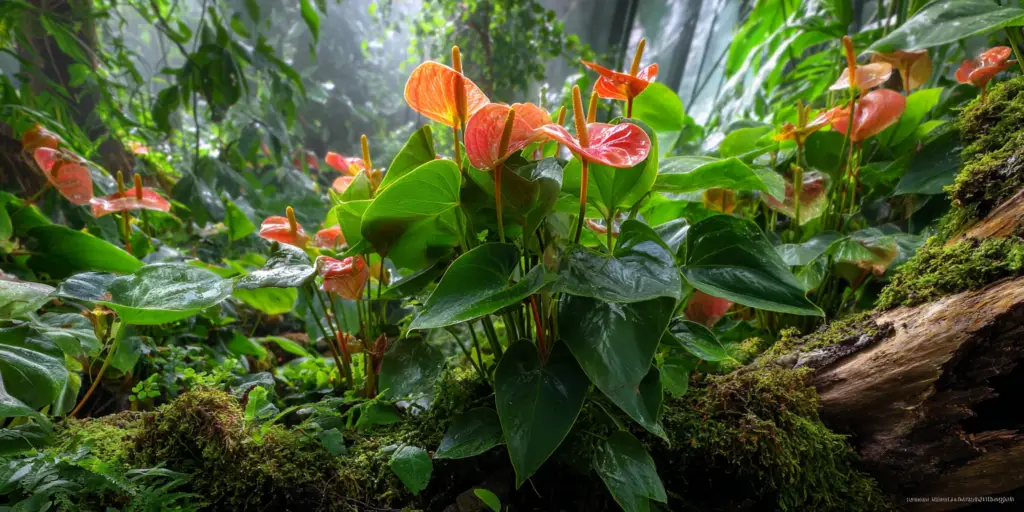
A clear, step-by-step guide to soil, planting, watering, feeding, pruning, and winter care. Includes zone timing, container tips, companions, and quick fixes for common problems.

Bouquet Ideas
Explore simple, beautiful bouquet ideas for the home, gifts, and special occasions from romantic mixes to clean, minimal styles. Each idea includes suggested flower combinations, color palettes, and sizes, with photos for quick inspiration.
Anthurium versus peace lily and which tropical houseplant suits your home better
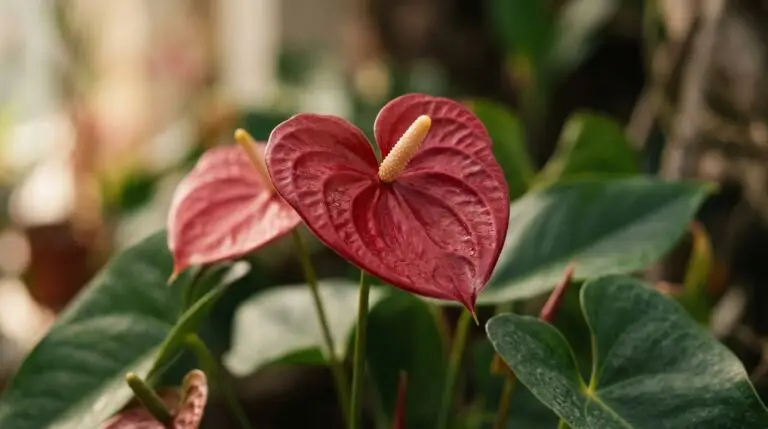
Anthurium flower meaning and why it is the perfect gift for lasting love
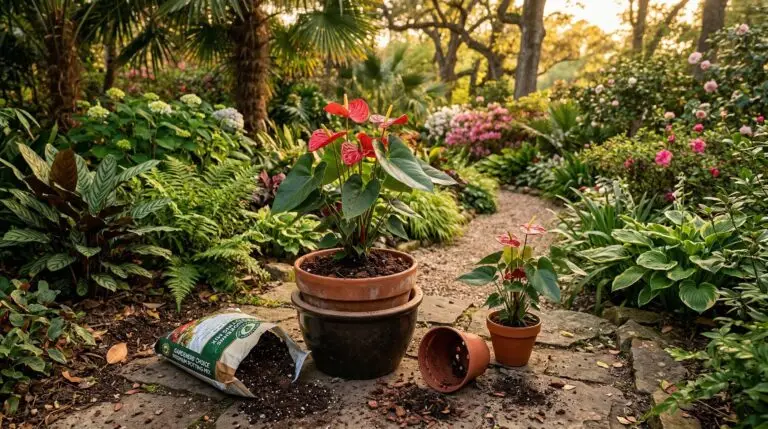
How to repot anthurium plants and when to know it is time for a bigger pot
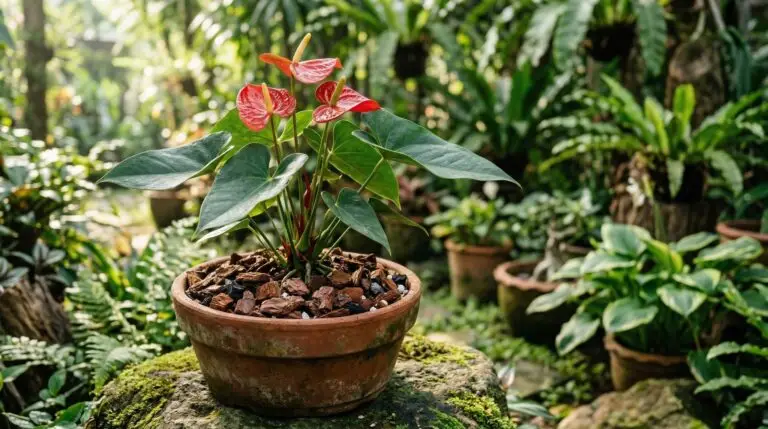
Best soil mix for anthurium plants that prevents root rot and promotes growth
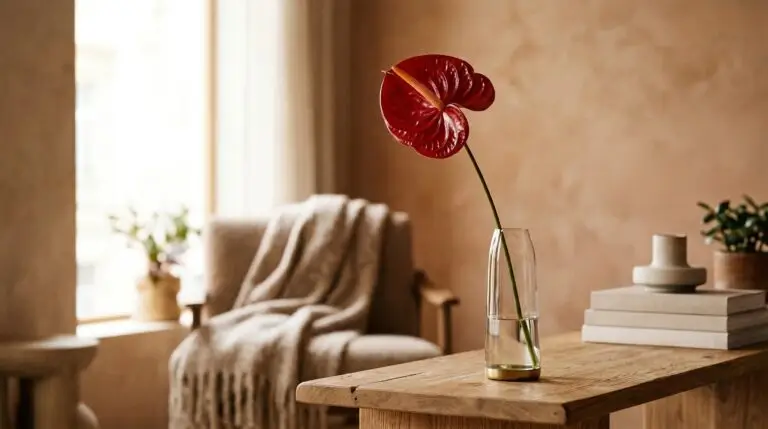
Using anthurium flowers in modern minimalist home decor and arrangements
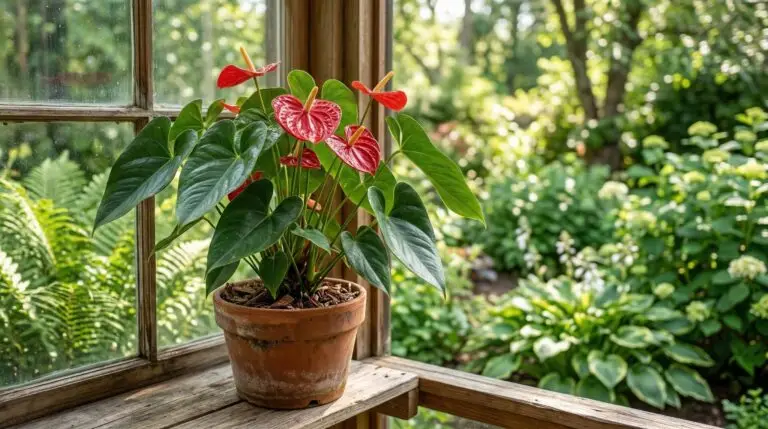
How to care for anthurium houseplants so they bloom all year long
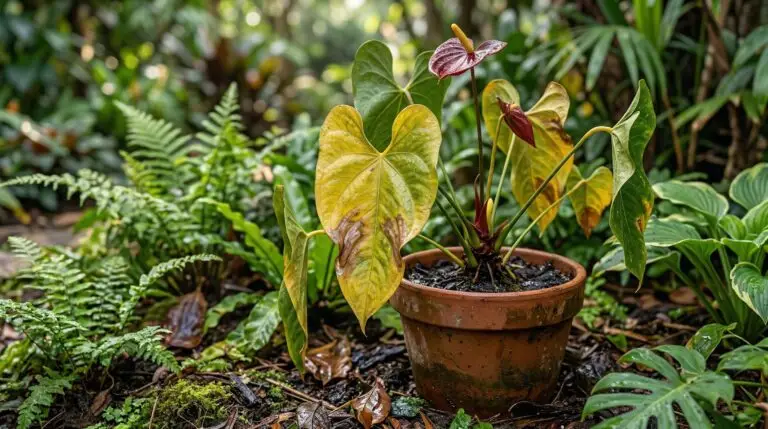
Why your anthurium leaves are turning yellow and brown and what to do about it
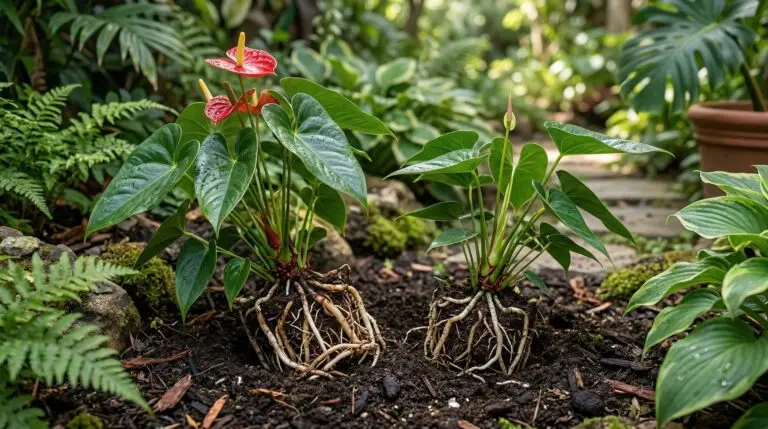
How to propagate anthurium by division and stem cuttings for more plants
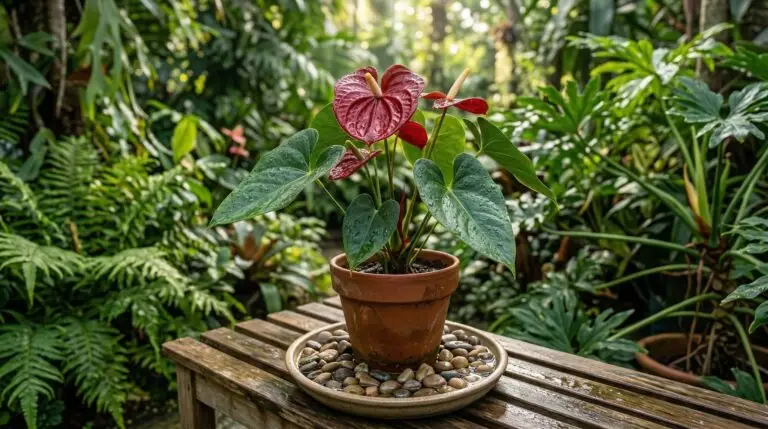
How to increase humidity for anthurium plants without a greenhouse
On this page
🌱 Taxonomy and origin
Anthurium belongs to Araceae, the arum family, alongside familiar houseplants such as the peace lily, philodendron, and the calla lily. It is the largest genus in that family, with roughly 1,000 species, native from northern Mexico down through Central America and much of South America into the Caribbean. Many grow as epiphytes, perched on tree branches in humid cloud forests, while others root in the ground, and that epiphytic habit is why the roots crave air as much as moisture. The name joins the Greek anthos, flower, with oura, tail, a nod to the tail-like spadix. The houseplants people actually buy trace mostly to Anthurium andraeanum, native to Colombia and Ecuador, and Anthurium scherzerianum, native to Costa Rica, and modern plants are largely hybrids bred for richer spathe color and sturdy, heart-shaped leaves.
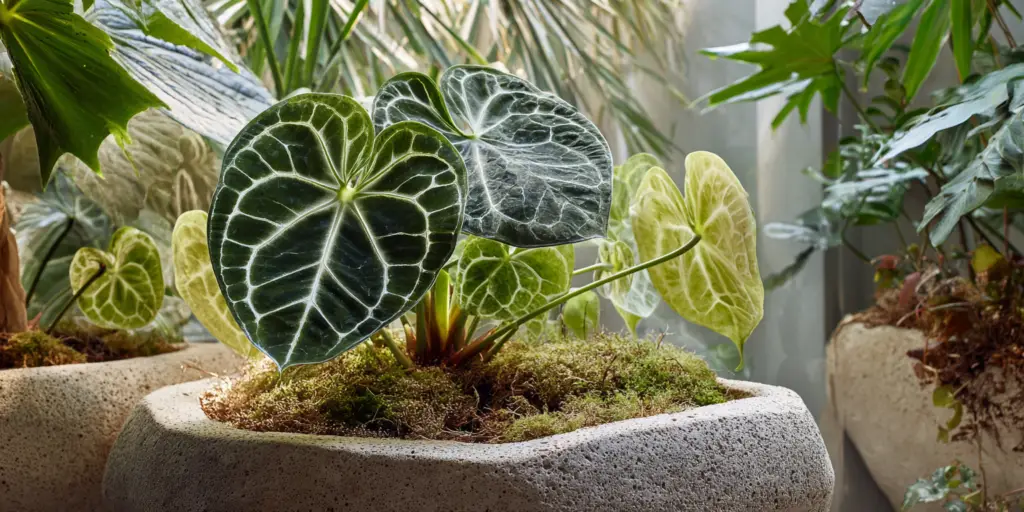
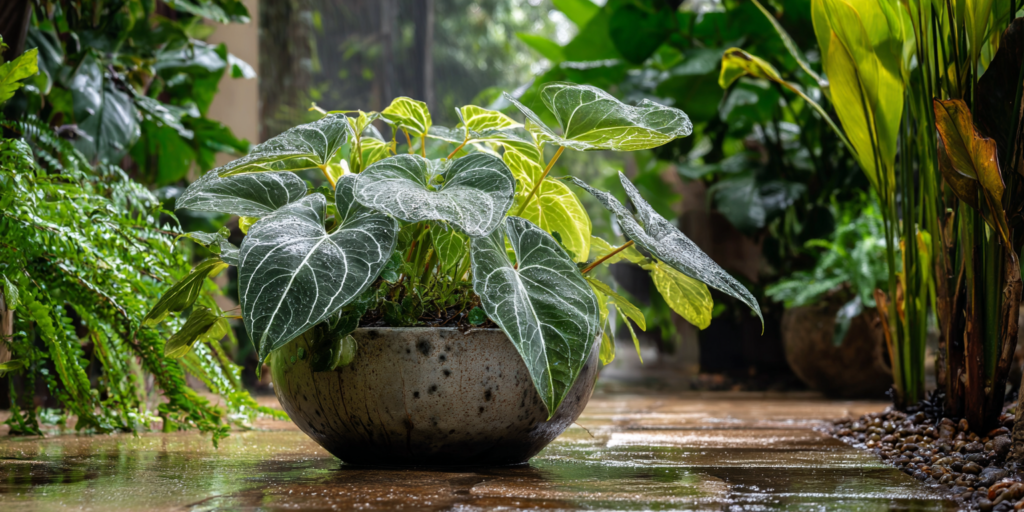
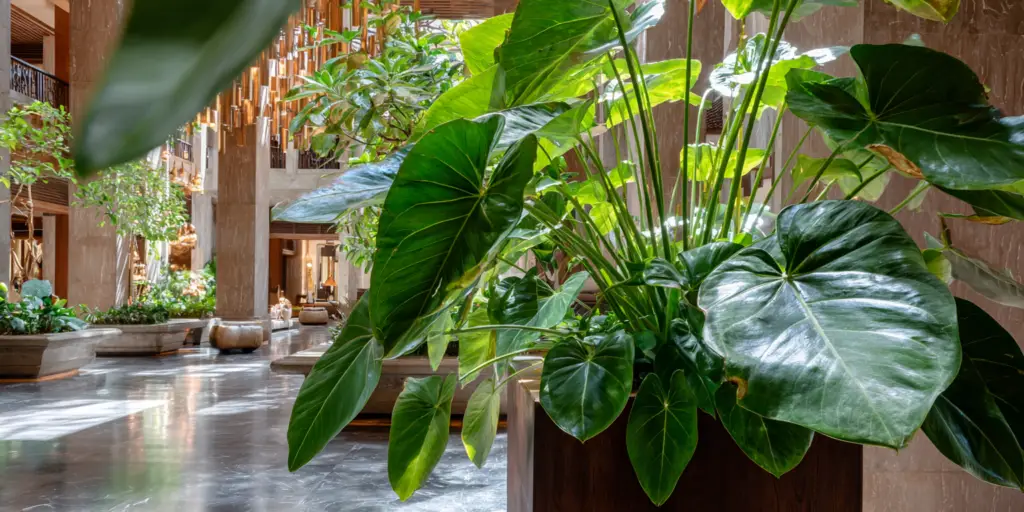
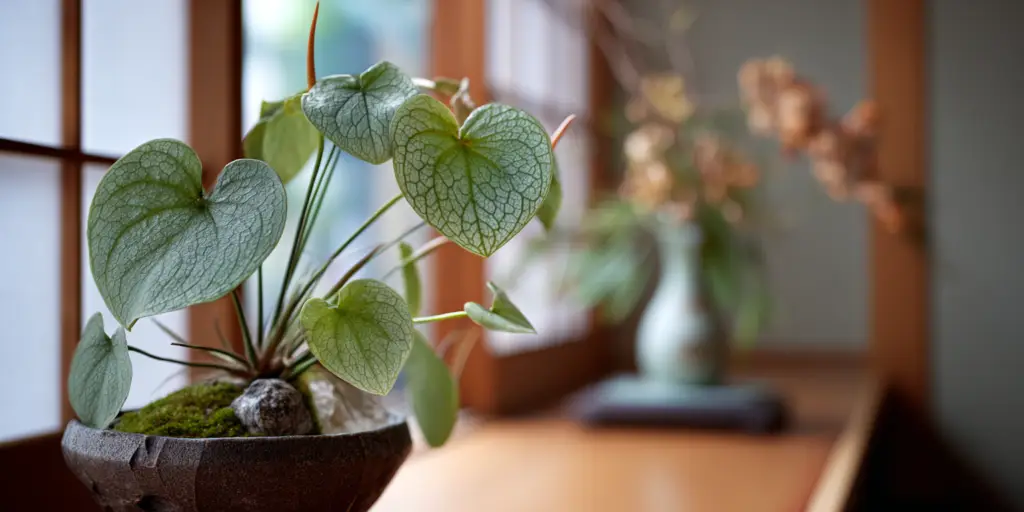
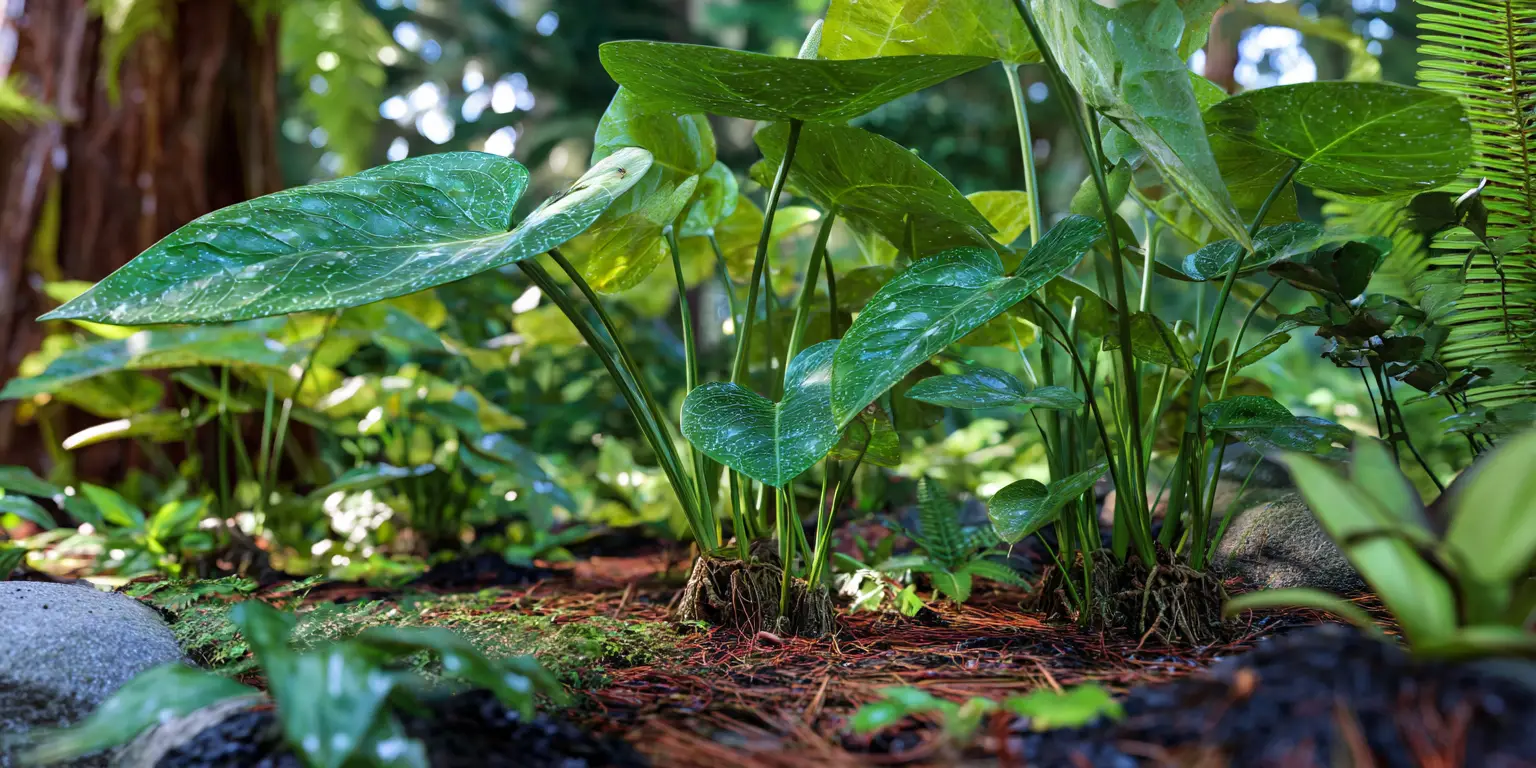
It helps to know that anthurium splits into two worlds before you shop. One is the flowering houseplants grown for their spathes; the other is a group of velvet-leaf collector species grown purely for their foliage, the kind the tabs on this page show. The table below sorts the common names people meet.
| Anthurium type | Grown for | Signature look | Note |
|---|---|---|---|
| Anthurium andraeanum | Flowers | Classic waxy, heart-shaped flamingo flower with a straight spadix | The plant most stores sell; the source of most hybrids |
| Anthurium scherzerianum | Flowers | The pigtail anthurium, with a curled, corkscrew spadix | More compact; tolerates slightly cooler rooms |
| Anthurium clarinervium | Foliage | Dark, rounded leaves with bold white veins | A collector plant; wants high humidity |
| Anthurium crystallinum | Foliage | Velvety heart-shaped leaves with silvery veining | Similar care to clarinervium |
| Anthurium warocqueanum | Foliage | Long, pendulous “queen” leaves | Advanced; demands steady warmth and humidity |
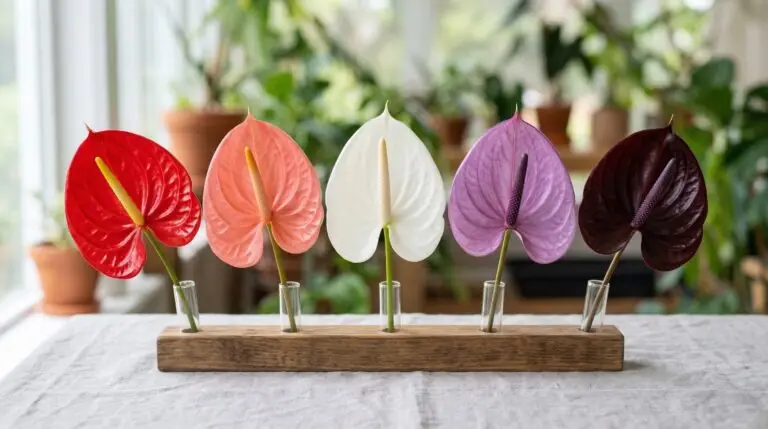
Flowering anthuriums come in red, pink, white, purple, green, orange, and near-black shades, and breeders keep pushing the palette. One caution worth carrying to the shop: a true blue anthurium and a bright, uniform yellow are not natural colors. Those are dyed, and the dye fades, so a red bloom sits at the honest center of what anthurium owns among red flowers.
🌸 Bloom time
Indoors, anthurium can flower at almost any time of year given steady warmth, light, and humidity. It blooms in waves rather than on one seasonal schedule, and each spathe holds for several weeks, sometimes longer, so a healthy plant can look as though it is always in bloom. That “always something open” state is the goal, and it is reachable, but only when the plant has what it needs to fund flowers.
When flowering stalls, light is almost always the first lever to check. Enough bright, indirect light is the single biggest factor in reblooming; a plant sitting in a dim corner puts its energy into leaves and skips flowers. The second lever is feeding: during active growth, a fertilizer slightly higher in phosphorus supports bloom production, so a plant that has gone hungry for months will hold back. The third is the pot. Anthurium likes to be a little snug and even blooms better slightly root-bound, but a plant packed hard against the wall of an exhausted pot, or one that has been starved of nutrients, will stall until it is refreshed. Steady warmth and humidity round it out. Move a non-flowering plant brighter, feed it through the growing season, and keep it warm, and spathes usually return.

📏 Height and spread
Most potted anthuriums stay compact, roughly 12 to 18 inches tall (30 to 45 cm) with a similar spread. The leaves run about 4 to 8 inches long on slender stems rising from a short central crown. Over time the plant forms a small clump as new growth pushes up from the base, which is also what gives you divisions later. A few species grow much larger in the wild, but they rarely turn up as ordinary houseplants.
☀️ Light
Bright, indirect light is the heart of good anthurium care. An east-facing window is close to ideal, catching gentle morning sun, or set the plant back from a brighter window behind a sheer curtain. Strong midday sun is the thing to avoid: direct rays scorch the leaves and fade the spathes, bleaching that waxy color you bought the plant for. Too little light causes the opposite problem, fewer flowers and slower, leggier growth. The plant will tell you which way to move it. Deep green leaves paired with no blooms for months means it wants more light, so shift it closer to the window. Pale, washed-out patches or crisp, browned edges mean it is getting too much direct sun, so pull it back.

💧 Water
Water when the top inch of the mix feels dry to the touch. When you do, soak the pot thoroughly until water runs from the drainage holes, then empty the saucer so the roots never sit in standing water. The rule that keeps anthurium alive is that its roots want moisture and air at the same time; the mix should be damp, never soggy. In practice this often lands around once a week, but the real interval depends on light, temperature, and pot size, so trust your finger over the calendar. Because it is a tropical plant, humidity matters as much as watering, especially in dry winter air when heaters strip moisture from a room. A pebble tray under the pot or a small humidifier nearby keeps the leaves from crisping at the tips.
🌍 Soil and pH
Anthurium needs a loose, chunky, fast-draining mix, not dense potting soil. A blend of regular potting mix with orchid bark and perlite works well, as does a ready-made aroid or orchid mix. The goal is a medium that holds some moisture while letting air move freely to the roots, which is exactly what an epiphyte expects. Aim for slightly acidic conditions, around pH 5.5 to 6.5, though the plant tolerates near-neutral soil as long as drainage stays sharp. Repot every couple of years, or sooner if the mix has compacted or the roots have filled the pot, moving up just one pot size so the plant does not sit in a large volume of wet soil.

❄️ USDA hardiness
Anthurium is a tender tropical that lives outdoors year-round only in USDA zones 11 to 12, so for almost everyone it is an indoor or greenhouse plant. It is happiest between about 65 and 80 F (18 to 27 C) and suffers once temperatures drop into the mid-50s or below. It can spend summer outside in a shaded, sheltered spot where nights stay warm, but it needs to come back indoors well before the first cool nights of fall, and cold drafts from an open door or a chilly window are worth guarding against even indoors.
🌼 Propagation and longevity
The easiest way to make more anthuriums is division. When you repot in spring or early summer, look for offsets, the small plantlets that form at the base of the crown, and separate a section that has its own roots and at least one leaf. Pot each division into fresh, airy mix and keep it warm, lightly moist, and humid until new growth signals it has taken. A well-kept plant lives many years indoors. It has no true dormancy, though growth slows through winter, so it asks for little more than repotting every couple of years, the odd trim of tired leaves, and light feeding during active growth. Older plants tend to stretch, dropping lower leaves and revealing a longer bare stem; you can refresh one by repotting it deeper or by cutting the top and re-rooting it.

👃 Fragrance
Anthurium is essentially fragrance-free. The showy “flower” is a spathe wrapped around a spadix, admired for its color and sculptural form rather than any scent. That makes it an easy choice for scent-sensitive homes and for rooms where a strong floral perfume would be unwelcome.
⚠️ Toxicity and pet safety
Anthurium is toxic, and this is not a plant to be casual about. Like many members of the arum family, it carries insoluble calcium oxalate crystals throughout its tissue, and chewing any part releases them, causing burning and irritation of the mouth and throat. A pet that bites a leaf may drool, paw at its mouth, or refuse food, and the sap can leave the skin and eyes irritated as well, so it is worth washing your hands after pruning or repotting. The ASPCA lists it, under the name flamingo flower, as toxic to cats, dogs, and horses, and NC State notes the same calcium oxalate irritation for people. Keep it well out of reach of pets and small children, and if you share your home with curious animals, browse genuinely pet-safe flowers and plants for the spots they can reach.

🌿 Vase life
Cut anthurium spathes are among the longest-lasting flowers you can put in water, commonly holding 2 to 3 weeks and stretching further in a cool room. Some individual stems fade sooner, closer to 10 to 14 days, so 2 to 3 weeks is a realistic upper range rather than a guarantee. Start with a clean vase, change the water every few days, and trim a little off the stem each time you refresh it. Keep the arrangement out of direct sun and away from both heaters and cold drafts, and the spathes will reward you with weeks of color, which is why anthurium anchors so many long-life bouquets alongside another tropical stayer, the orchid.
🐛 Pests and diseases
The pests that find anthurium indoors are the usual houseplant culprits: mealybugs, scale, spider mites, and aphids. Check the undersides of leaves and the joints where leaf meets stem, since that is where they gather. A rinse in the sink or shower knocks many of them off, and you can follow up with insecticidal soap used per its label, repeating every week or so and isolating the plant while you treat it. Disease, when it comes, almost always traces back to water: root rot in a waterlogged mix is the main killer, and leaf spots appear when foliage stays wet with no airflow. A fast-draining mix, watering only once the surface dries, and skipping constant misting prevent nearly all of it. Remove the worst-spotted leaves with clean scissors and improve air movement around the plant.
Most day-to-day complaints are cultural rather than pest-driven, and they follow a short list of patterns. The table below reads a symptom back to its likely cause and the fix.
| Symptom | Likely cause | Fix |
|---|---|---|
| Yellowing leaves | Overwatering and soggy mix leading to root rot; also cold drafts or old lower leaves aging out | Let the top inch dry before watering, improve drainage, and check roots for rot; one or two old lower leaves yellowing is normal |
| Brown, crispy leaf tips | Low humidity, underwatering, or salt and fluoride buildup from tap water | Raise humidity with a pebble tray or humidifier, water more evenly, and flush the pot or switch to filtered water |
| No flowers | Too little light, missed feeding, or the plant is starved in an exhausted pot | Move it to bright indirect light, feed with a higher-phosphorus fertilizer in the growing season, and refresh the mix |
| Leggy stem, little new growth | Insufficient light or an aging plant with a long bare stem | Increase light; repot deeper or cut and re-root the top to rejuvenate it |
| Brown, mushy stem base | Advanced root or crown rot from staying wet | Unpot, cut away all rotted tissue, and re-root any firm, healthy top section in fresh airy mix |


FAQ
How do I get my anthurium to bloom again?
Light first. Enough bright, indirect light is the number-one reason an anthurium flowers or refuses to, so move a stalled plant closer to an east window or behind a sheer curtain. Then feed it through the growing season with a fertilizer slightly higher in phosphorus, keep it warm and humid, and do not let it sit starved in a spent pot. Anthurium likes to be a touch root-bound, so snugness itself is fine; a well-lit, well-fed plant blooms in waves and can stay in color most of the year.
Why are my anthurium's leaves turning yellow?
The most common cause by far is overwatering and a mix that stays soggy, which suffocates and rots the roots. Let the top inch of mix dry before you water again, make sure the pot drains freely, and check the roots for soft brown rot if yellowing spreads. Light extremes and cold drafts can also yellow leaves, and an occasional lower leaf turning yellow as it ages is simply the plant’s normal turnover. Brown, crispy tips are a different signal, usually low humidity, underwatering, or salt buildup from tap water.
How often should I water an anthurium?
Water when the top inch of the mix feels dry, which often works out to about once a week but varies with light, warmth, and pot size. Soak thoroughly, let it drain fully, and empty the saucer so the roots never sit in water. The mix should be moist but never soggy, since the roots need air as much as moisture.
Are anthuriums toxic to pets?
Yes. Anthurium contains insoluble calcium oxalate crystals and is listed as toxic to cats, dogs, and horses by the ASPCA. Chewing it irritates the mouth and throat and may cause drooling, and the sap can irritate skin and eyes, so keep the plant out of reach of pets and small children.
Can anthuriums grow in low light?
They survive in low light but rarely thrive in it. In a dim spot the plant tends to stop flowering, grow slowly, and stretch toward the nearest window. It will keep its leaves in moderate light, but for the weeks-long spathes people grow it for, it needs bright, indirect light.
How long do anthurium blooms last?
Each spathe holds for several weeks on the plant, and cut spathes commonly last 2 to 3 weeks in a vase, longer in a cool room. Because the plant flowers in waves, a healthy anthurium usually has something open at almost any time of year.
How do I propagate an anthurium?
Divide it. When repotting in spring or early summer, separate an offset from the base that has its own roots and at least one leaf, then pot it into fresh airy mix and keep it warm, lightly moist, and humid until it puts out new growth.
Interesting tips
Wipe dusty leaves with a soft, damp cloth every few weeks so they can breathe and shine, and skip commercial leaf-shine sprays, since the film they leave behind only attracts more dust. When shopping, remember that anthurium’s real colors run red, pink, orange, white, green, and bicolor; a true blue is not natural and a uniform bright yellow is uncommon, so treat vividly dyed plants with a little caution because that color washes out over time. The plant carries a warm meaning of hospitality and welcome, which is part of why it turns up so often as a housewarming gift, and it is grown commercially across the tropics precisely because those spathes last so long in arrangements. For a flowering houseplant that keeps its color for weeks on end, anthurium is a rewarding pick: give it bright filtered light, an airy mix, and steady but never soggy moisture, and it largely takes care of itself.
Related Guides & Flowers
- Moth Orchid (Phalaenopsis)
Short note: Another long blooming tropical houseplant that likes bright, indirect light and steady warmth. Great for a similar indoor, elegant look. - Oncidium Orchid
Short note: A different orchid style with airy sprays of blooms, still fits the same tropical, indoor plant vibe as Anthurium. - Orchid
Short note: A general orchid guide page that pairs naturally with Anthurium for indoor care, humidity, and bright indirect light topics. - Bird of Paradise
Short note: Bold tropical foliage and statement blooms, ideal if the reader wants the same exotic, modern interior feel but on a larger scale. - Calla Lily
Short note: Similar visual effect with a sleek spathe shape, popular in modern decor and bouquets, good as a related flower lookalike. - Gardenia
Short note: Another premium indoor or patio plant with glossy leaves and a luxury vibe, strong contrast to Anthurium because fragrance is the main feature. - Jasmine Flower
Short note: If your reader wants a tropical style plant plus fragrance, jasmine is a strong next step, especially for bright windows and trellises. - Begonia
Short note: Decorative foliage, indoor friendly, and color impact in smaller spaces, good for readers who want easier care options.
References
Written by: Your Flowers Guide editorial team
We are a small independent group of flower lovers who research and review each guide using trusted horticultural and educational sources. Learn more about us