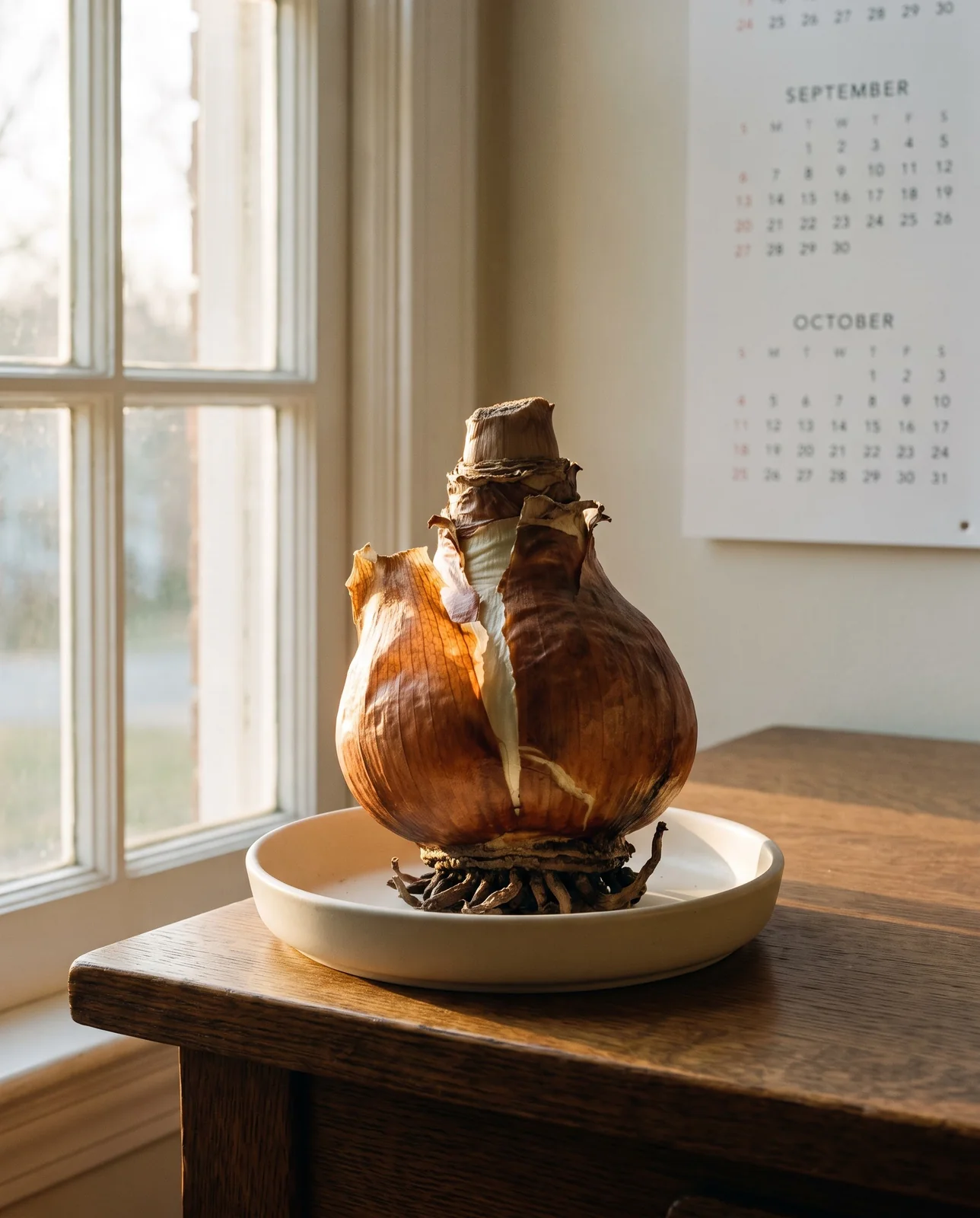
An amaryllis bulb takes four to eight weeks from potting to open flowers indoors, so a bulb meant for a holiday table has to be counted backward from the date rather than potted whenever it comes home from the store. Get that wrong and the trumpets open weeks after the guests have gone home, on stems that stood through the party as tall green stalks. The width of that four-to-eight-week window is the whole problem: it is wide enough that a guess can miss the day by a month.
Christmas cactus, cyclamen, and poinsettia all set their buds in response to changing day length, which puts their schedule largely outside your control. A forced bulb runs on something simpler: ambient warmth, the first thorough watering, and the carbohydrate reserves already packed inside it. That is why the temperature of the room, the format the bulb was sold in, and how long it sat dry before you bought it decide where the flowering lands inside the window. What follows covers how long a bulb really takes and why the published figures disagree, the plant-by dates for Thanksgiving, Christmas, and New Year, what changes with a wax-dipped bulb, a boxed kit, or a loose bare bulb, and why a bigger bulb buys a fuller display rather than a faster one.
On this page 5 sections
How long an amaryllis actually takes to bloom
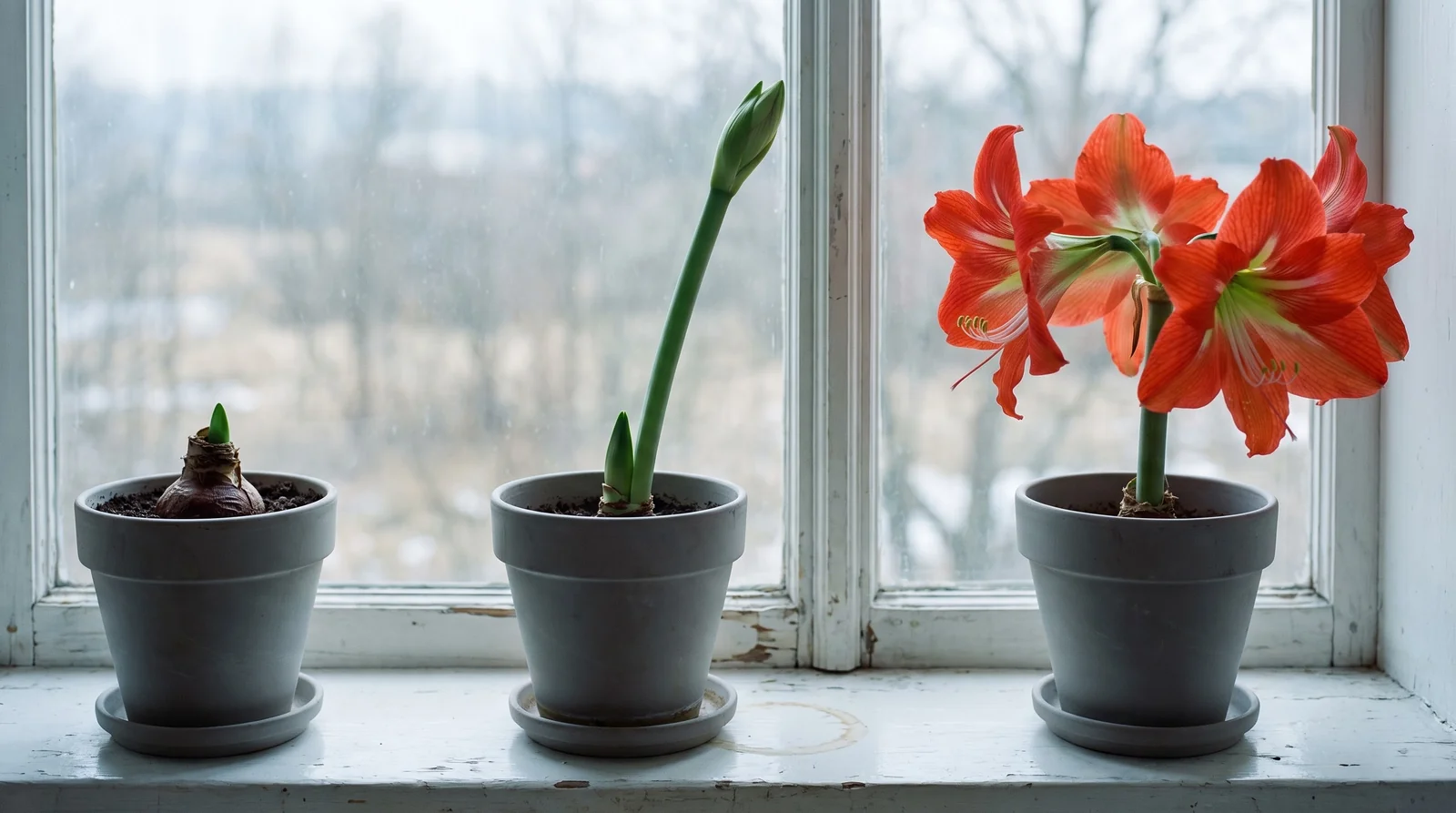
Published figures for a potted amaryllis forced indoors do not agree, and the spread is worth seeing before you count backward from a date. University of Wisconsin-Madison Extension and the Royal Horticultural Society both put flowering at six to eight weeks after planting. Clemson Cooperative Extension gives four to eight weeks for bulbs potted in early to mid-November, and the North Carolina State Extension Plant Toolbox lists roughly five weeks. That leaves about a month between the fastest and the slowest number in print for the same plant. None of them is careless work: environmental conditions, the genetics of the bulb itself, and its storage history all change how fast it develops.
Room temperature drives most of the spread. Clemson Extension and the Royal Horticultural Society both put the growing range at 70 to 75 degrees Fahrenheit (21 degrees Celsius) while roots form and the stalk pushes up; a room at 60 to 65 slows that enough to move the bloom back by weeks. Heat past that range backfires, since bulbs grown too warm send up weak, floppy stalks and smaller flowers. Shelf time is the other half of the answer. A bulb potted soon after it reaches the store roots faster than one that has sat drying out on a warm garden-center shelf for several weeks.
Plant-by dates for Thanksgiving, Christmas, and New Year
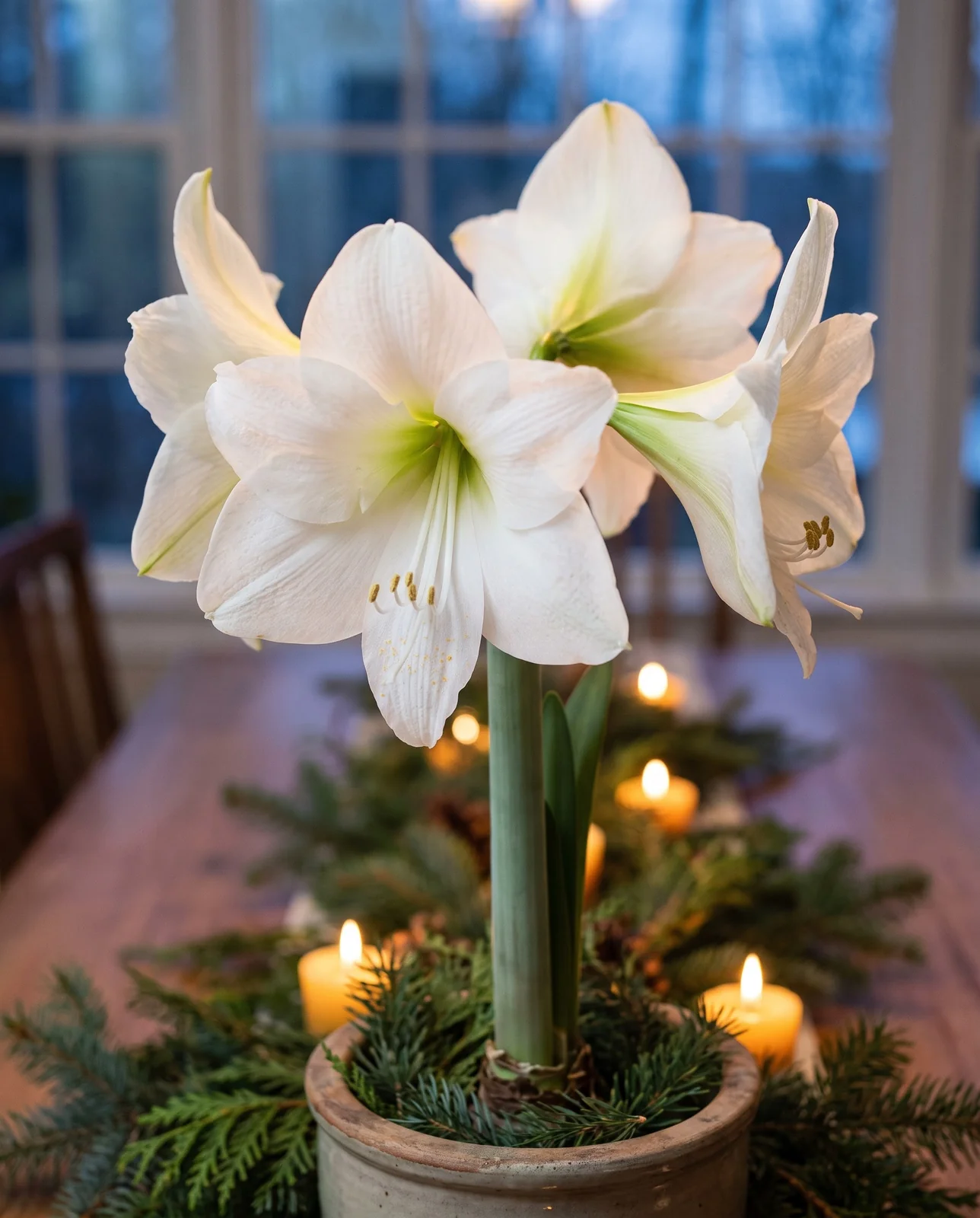
The dates below are YourFlowersGuide’s own arithmetic, worked backward from the extension ranges above rather than copied from a chart. The safe date subtracts the full eight weeks, which covers a cool living room, a slow-rooting bulb, or store stock of unknown age. The latest realistic date subtracts four, and it holds only if the room stays warm and the bulb is active. Staggering the purchases and potting them across consecutive weeks is the low-effort insurance: the flowers then arrive in sequence across the holiday season instead of all riding on one uncertain date.
Planting dates by target holiday
Each date works backward from the six to eight week bloom cycle. The safe date builds in a margin; the latest realistic date only holds up if the room stays at a steady 70 to 75°F the whole time.
Waxed bulb, potted kit, or loose bulb: which one do you have?
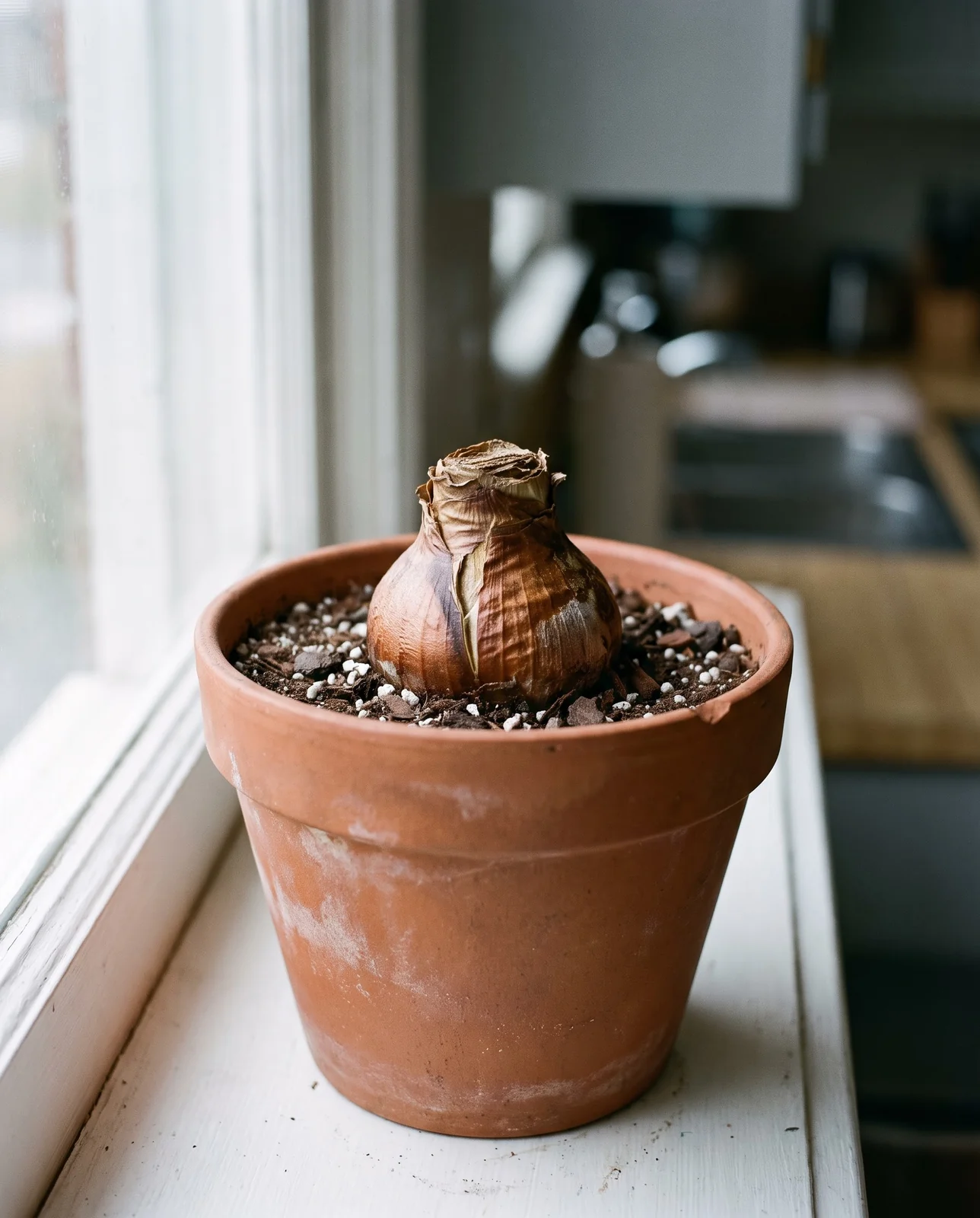
Amaryllis reaches the shelf in three formats, and the format decides how much of the timing is still in your hands. A loose bare bulb gives the most control and the most to get wrong. Clemson Extension pots amaryllis with one-third to one-half of the bulb standing above the growing medium, University of Wisconsin-Madison Extension leaves the top half clear, and across the Atlantic the Royal Horticultural Society keeps two-thirds above the compost. The numbers differ; the reason behind all three is the same, which is keeping the neck of the bulb dry and out of reach of red blotch, a fungal disease. Set the bulb in a pot one to two inches wider than the bulb itself, in equal parts peat and perlite, soak it thoroughly once, then leave it alone for a full week until growth starts.
A boxed kit is that same standard bulb with a plastic pot and a compressed peat disc packed around it, so it runs on the same six-to-eight-week clock once the disc is rehydrated and the pot sits in a bright room at 70 to 75 degrees Fahrenheit. Wax-dipped bulbs work on a different principle: they need no potting soil and no water at all. Clemson Cooperative Extension explains that they carry enough stored energy to flower for the season on their own. That energy is a one-time budget: the bulb flowers once and is meant to be thrown out afterward. No extension service publishes a separate week count for wax-sealed bulbs, so the six-to-eight-week range is a rough guide here, and the timing printed on the package is worth more than any general figure.
What type of amaryllis bulb are you holding?
The form it arrived in decides the routine. Match yours below before doing anything else to the bulb.
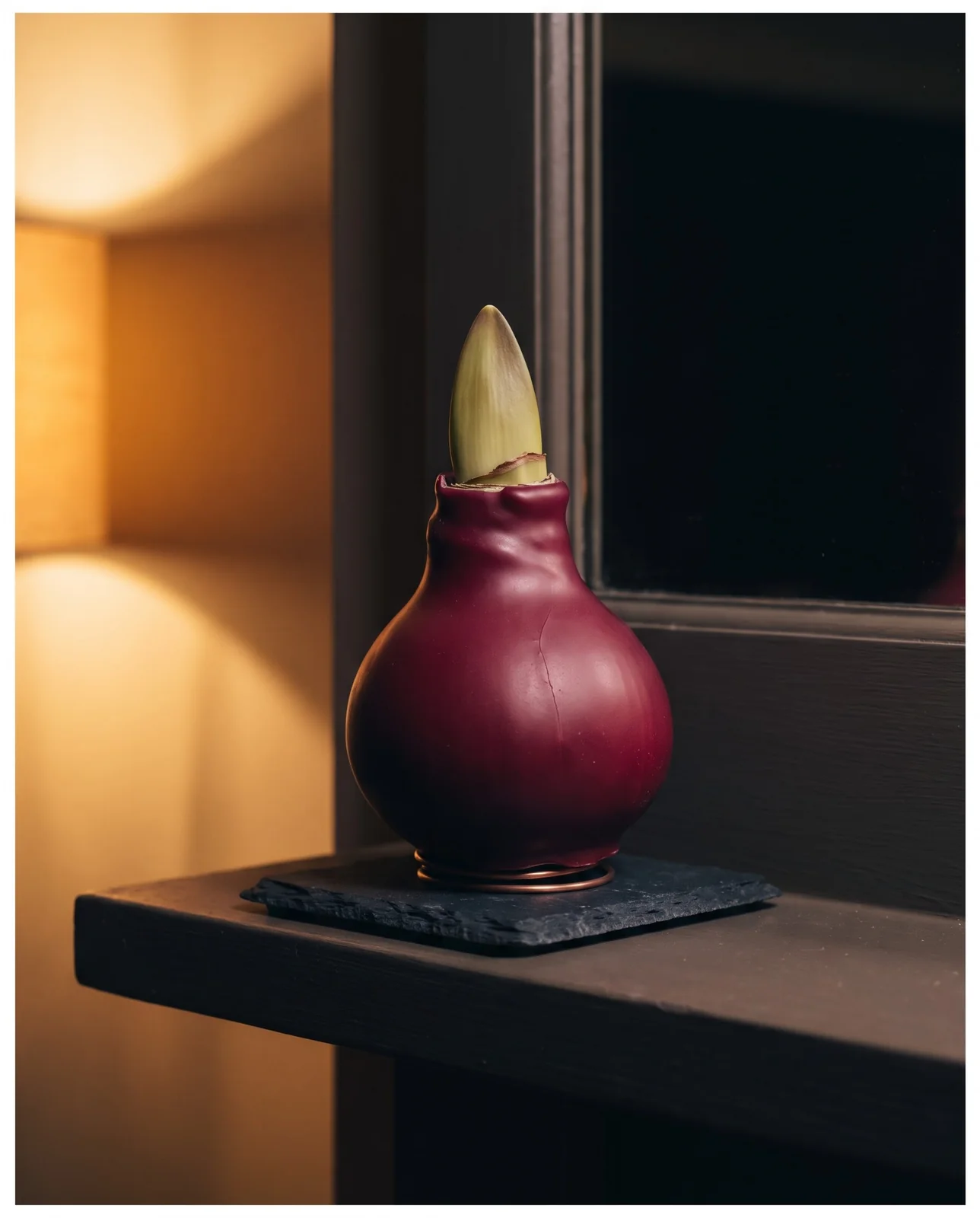
Bigger bulb, more flowers
Bulb size on the garden-center bench predicts how full the display will be rather than how soon it opens. A bulb 30 to 32 centimeters (11.8 to 12.5 inches) around generally sends up two stalks carrying three to four flowers each. Clemson Cooperative Extension points out that the bigger bulbs in the bin are usually a year older in cultivation, and those push up to three stalks with four to five blooms apiece. The stalks do not always arrive together. University of Wisconsin-Madison Extension records them emerging either at the same time or one after the other, which stretches the flowering out.
That second habit is the useful one for a holiday centerpiece. A large bulb will not open a single day sooner than a small one, so it buys no margin on the calendar; what it buys is depth. If the first stalk opens a few days early and starts to go over, a second one coming up behind it puts fresh buds on the table on the night that matters. When the date is fixed and the bloom window is a range, the few extra dollars for circumference are the cheapest hedge on the shelf.
Frequently asked questions
Common questions about amaryllis bulbs and timing
Is it too late to plant an amaryllis in late November for Christmas?
Late November is the last realistic call, and it is a gamble. Four to five weeks is the fast end of the published range, confirmed by Clemson Extension and North Carolina State Extension, and it happens only with an active, healthy bulb in a room held at 70 to 75 degrees Fahrenheit. Pot later than that and the flowers open in January.
Do waxed amaryllis bulbs need water or peeling?
No. Clemson Extension states that a waxed bulb carries enough stored moisture and nutrients to finish its whole flowering cycle without water or soil, which is the point of the format. Leave the wax on and keep the base dry. Peeling the coating or standing the bulb in water rots the tissue underneath.
Can I speed up or slow down amaryllis flowering with temperature?
Warmth speeds it up. A pot moved to a steady 70 to 75 degrees Fahrenheit sends up its stalk faster, and no chilling is involved at any stage, unlike outdoor bulbs such as daffodils and narcissus. Past 75 degrees the gain reverses, and University of Wisconsin-Madison Extension warns that stalks come up weak with smaller flowers. Once the buds show color, a move to a 60 to 65 degree room slows the pace and holds the display longer.
How do I make the holiday flowers last as long as possible?
Move the pot out of direct sun as the petals open and keep the room between 60 and 65 degrees Fahrenheit. The Royal Horticultural Society and Clemson Extension both tie those cooler temperatures to a longer show, on the order of three to four weeks of usable bloom.
Are amaryllis plants toxic to household pets?
Yes. The ASPCA lists amaryllis as toxic to cats, dogs, and horses, on account of lycorine and other alkaloid compounds. A nibbled plant brings on vomiting, diarrhea, abdominal pain, hypersalivation, and tremors. Clemson Extension and North Carolina State Extension both note that every part is poisonous and that the bulb carries the highest concentration.
Will a potted amaryllis rebloom on the exact same holiday date next year?
Not on its own. A bulb bought in fall arrives commercially conditioned to flower on a holiday schedule, and holding that same date a year later takes deliberate work. Clemson Extension has growers stop all water and fertilizer for eight to ten weeks in late summer to force the rest period the bulb needs first. The main amaryllis guide covers the full reblooming sequence.
More About Amaryllis
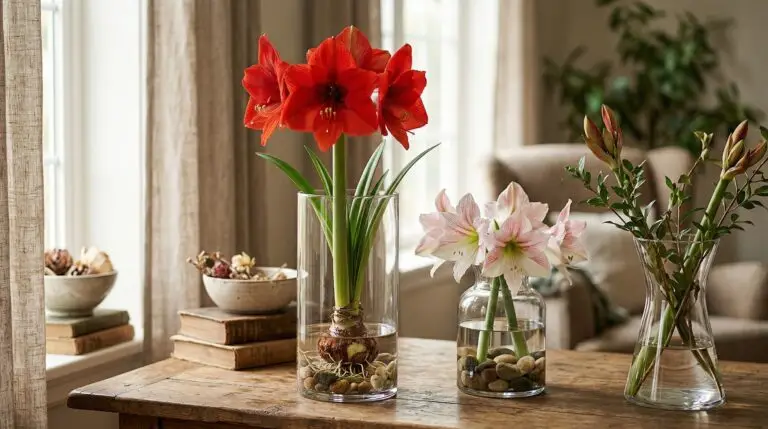
Creative ways to display amaryllis bulbs as winter home decor
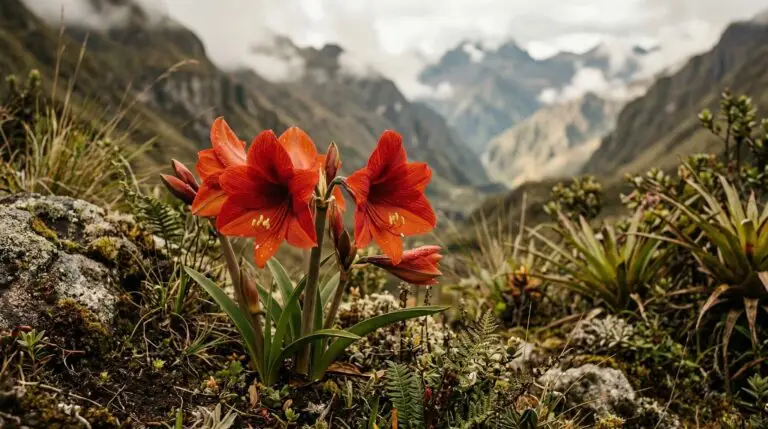
The fascinating history of amaryllis from South American wildflower to holiday tradition
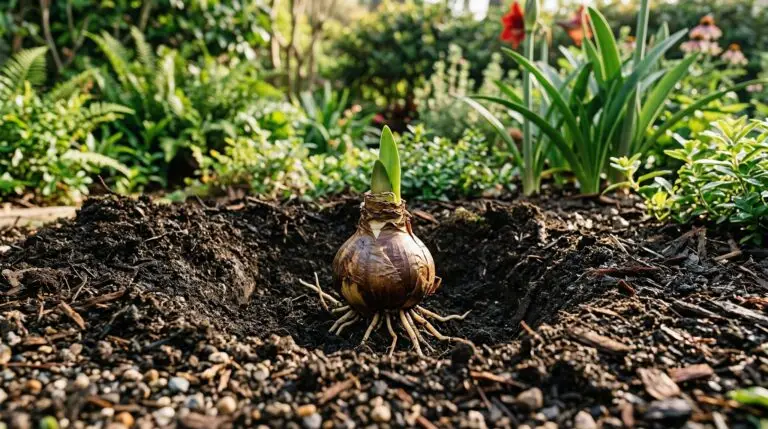
How to grow amaryllis outdoors in warm climates for year-round garden color
Common amaryllis problems including leaning stalks and split bulbs
Amaryllis color guide and the most striking varieties to grow at home
How to force amaryllis bulbs to bloom indoors for the holidays
Amaryllis gift ideas and how to choose the perfect bulb for someone special
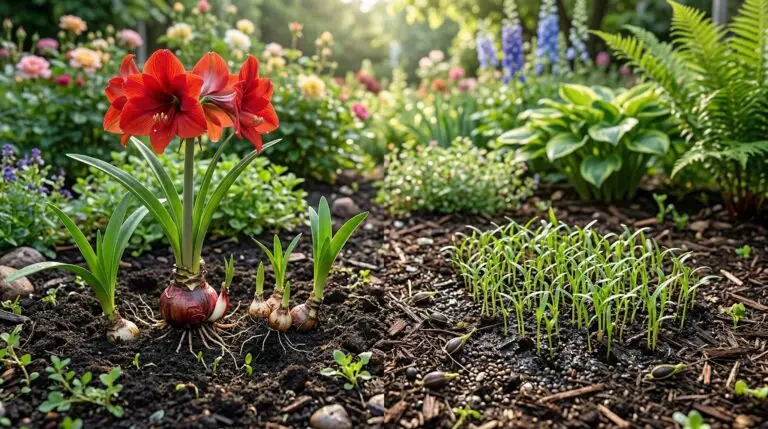
How to propagate amaryllis from offsets and seeds for a growing collection
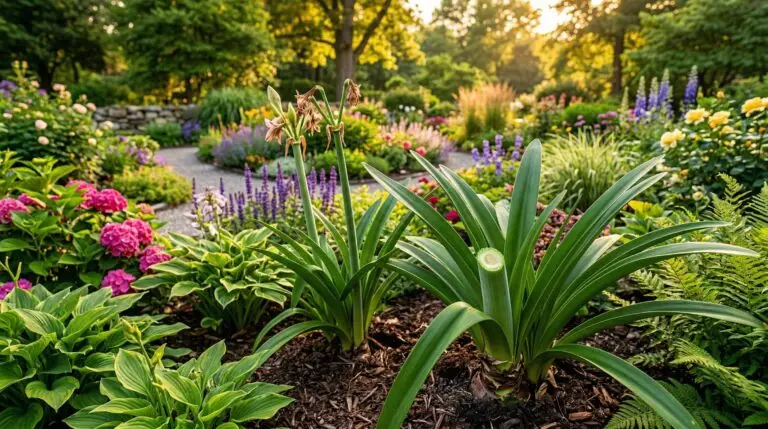
What to do with amaryllis after it finishes blooming so it flowers again next year
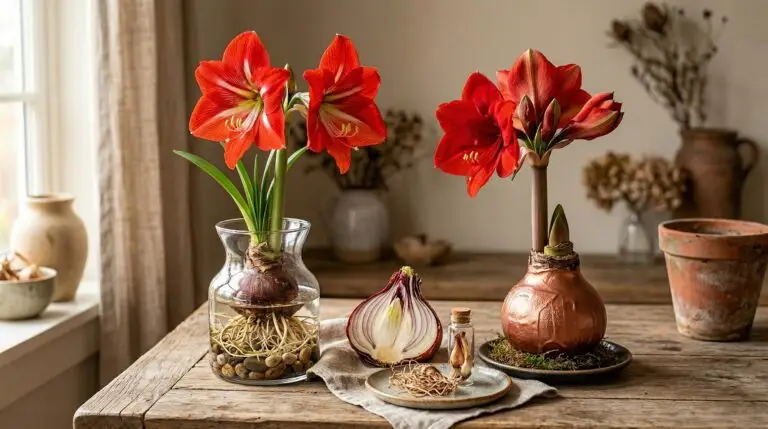
Growing amaryllis in water with no soil using the waxed bulb method
Enjoying our flower guides? Add YourFlowersGuide as a preferred source on Google. It helps more readers find us.
Add to Preferred Sources