What bee balm is, and the other thing called bee balm
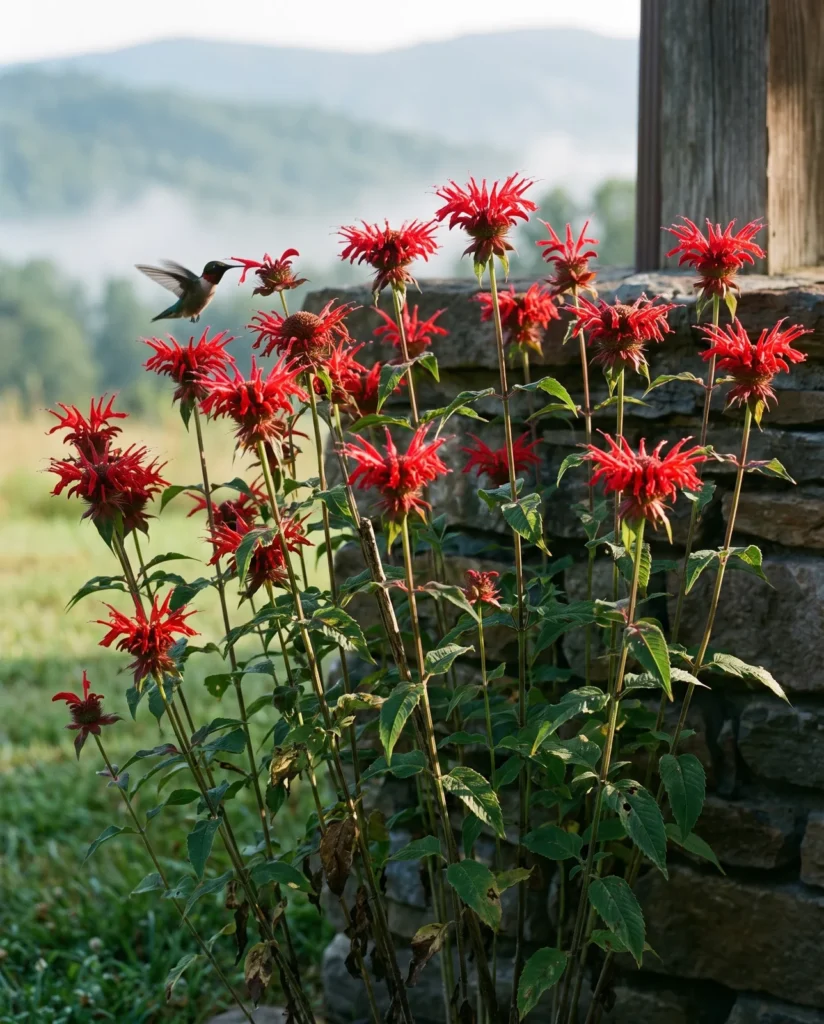
Bee balm is a North American perennial in the mint family, though the name also belongs to a cosmetic lip balm that ranks above the live plant. The plant itself is Monarda, a genus of 25 recognized species native to North America. Gardeners also call it beebalm, bergamot, Oswego tea, and horsemint. That bergamot flavor in Earl Grey tea comes from the rind of the bergamot orange, a citrus fruit. The name bee balm comes from its old use as a soothing treatment for bee stings.
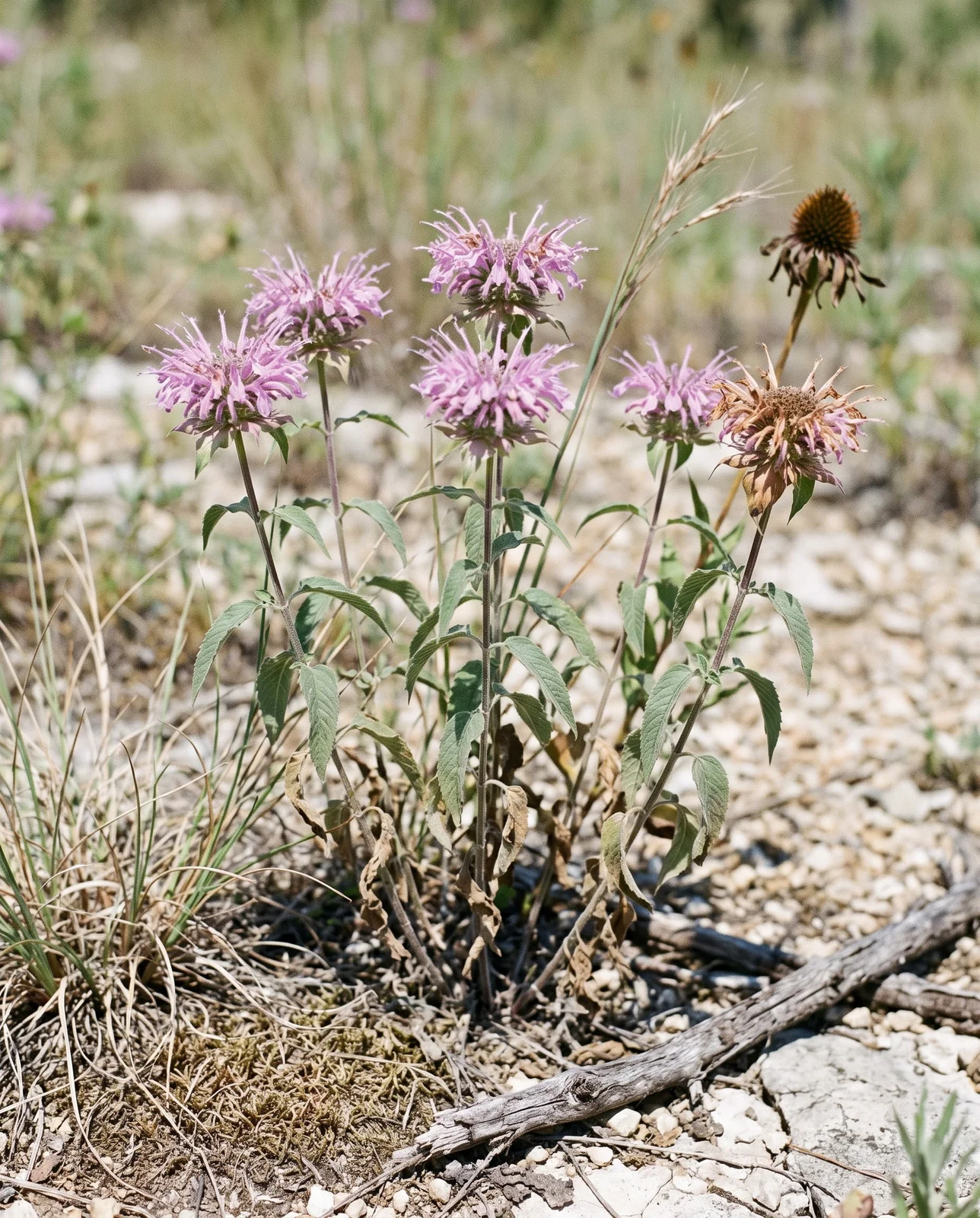
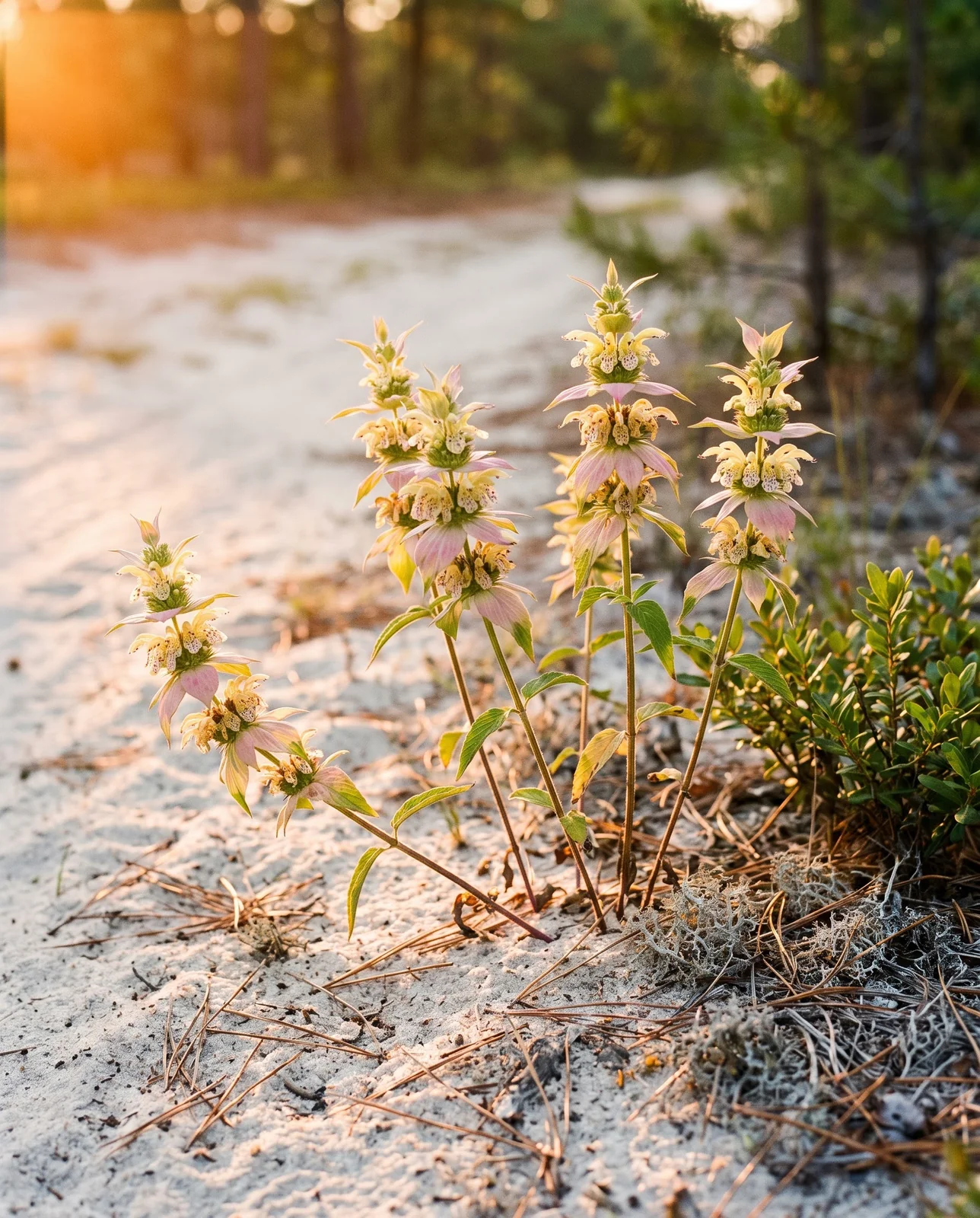
Belonging to the mint family explains what you notice first in the garden. The stems stand erect and square with opposite leaves, and the foliage smells like a mix of mint, oregano, and citrus. As herbaceous perennials, the top growth dies back each winter while the clump rebuilds from the crown in spring. Three species appear most often in gardens: scarlet bee balm, wild bergamot, and spotted bee balm. They differ in where they grow wild, how much water they need, and how well they handle powdery mildew.
What bee balm looks like
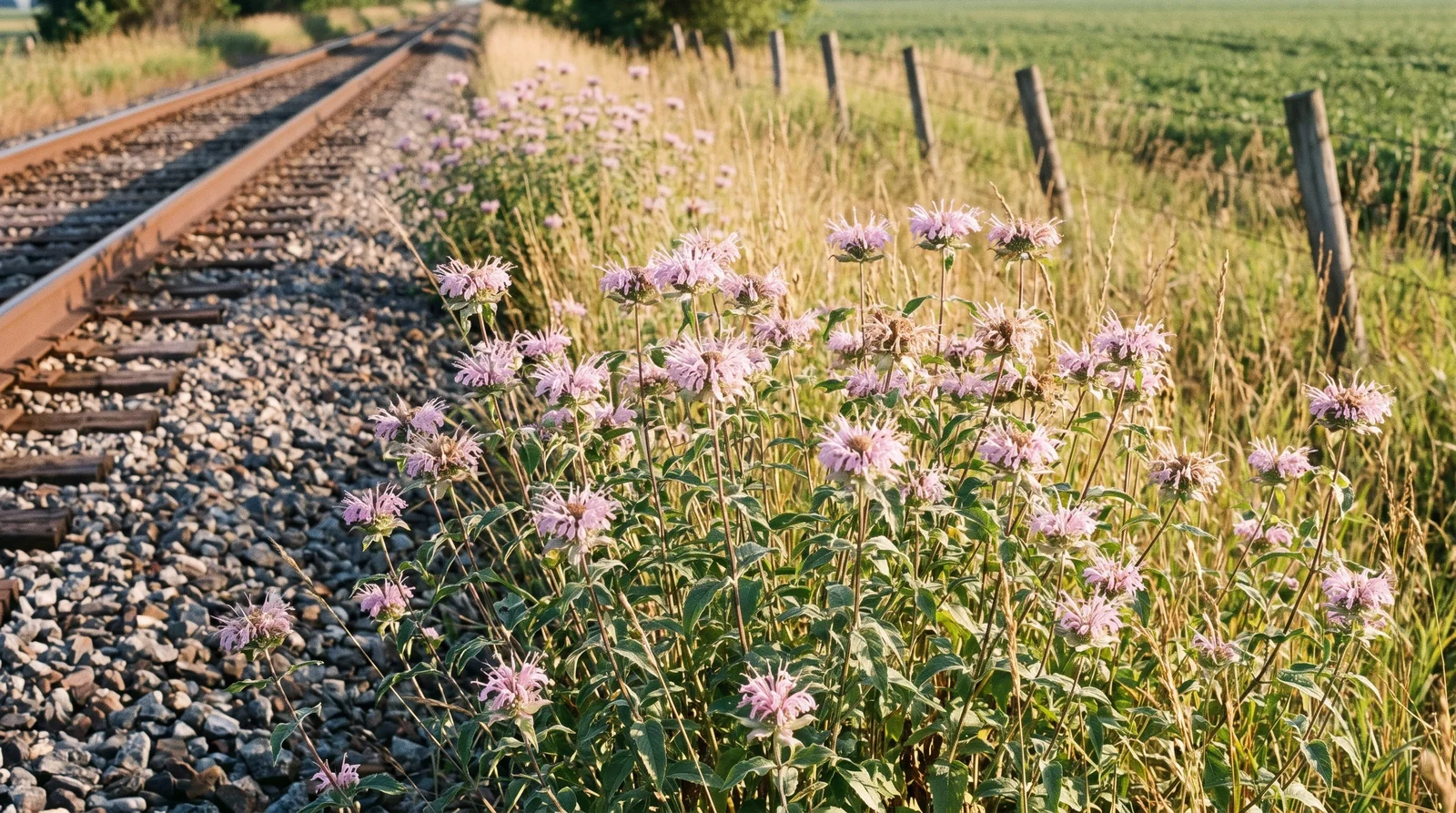
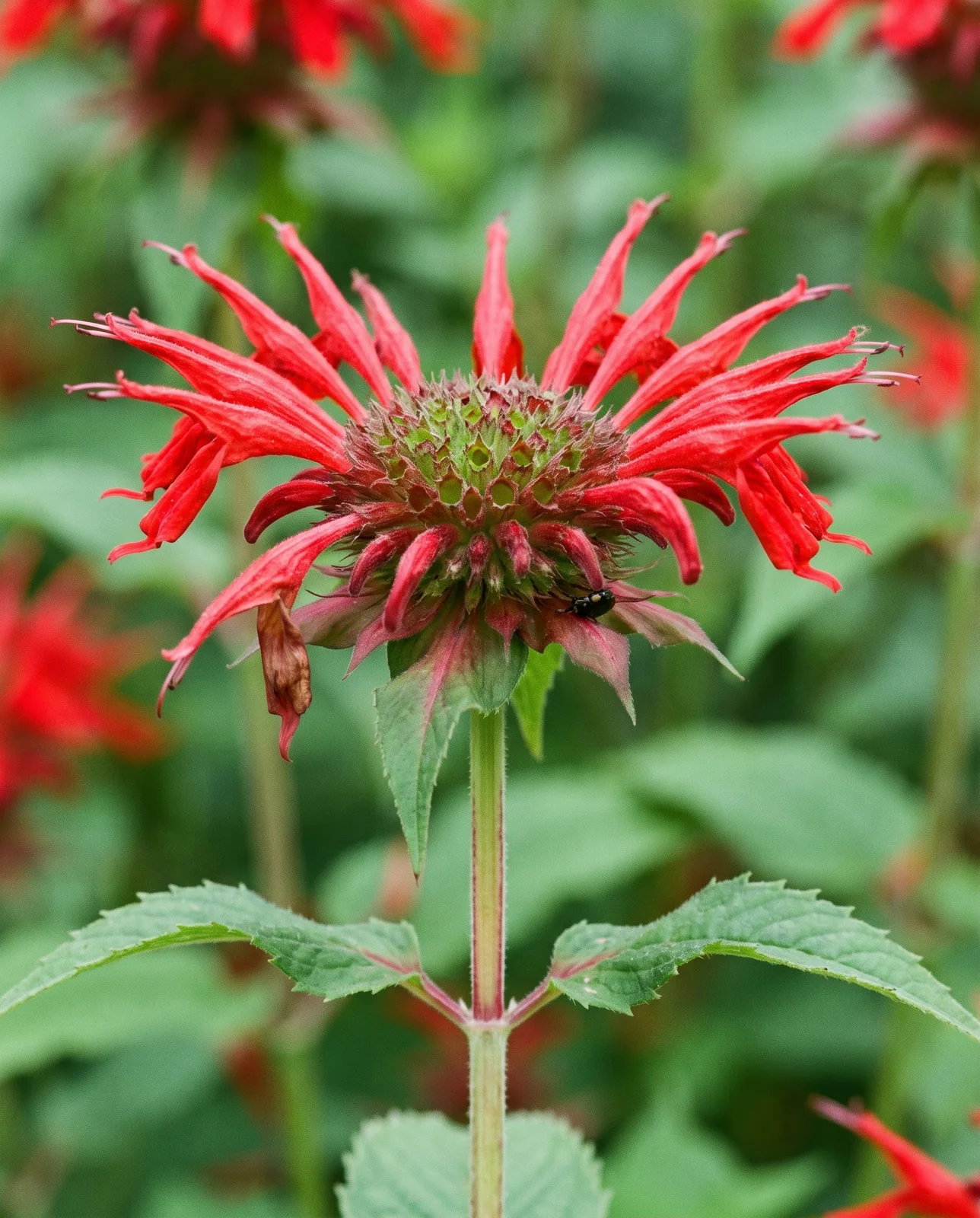
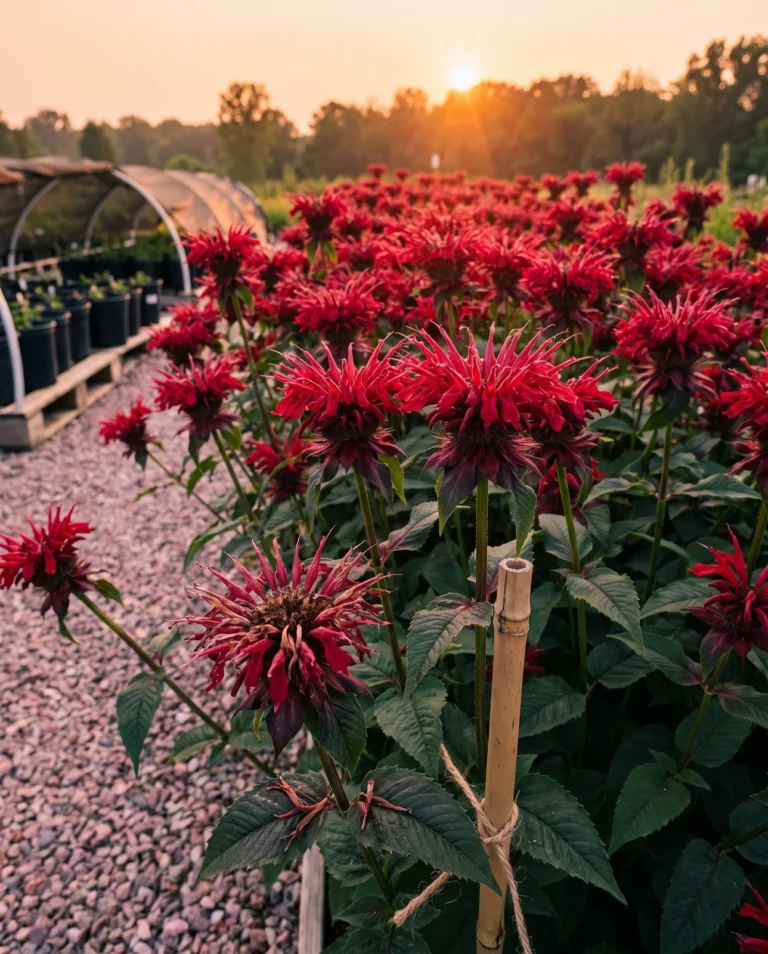
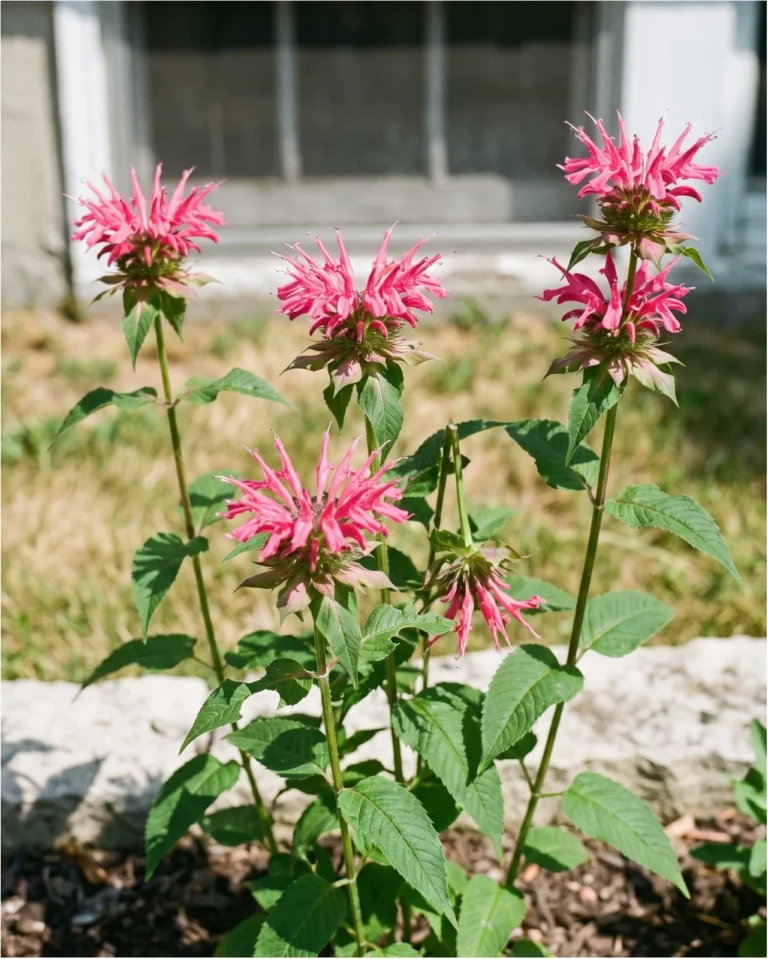
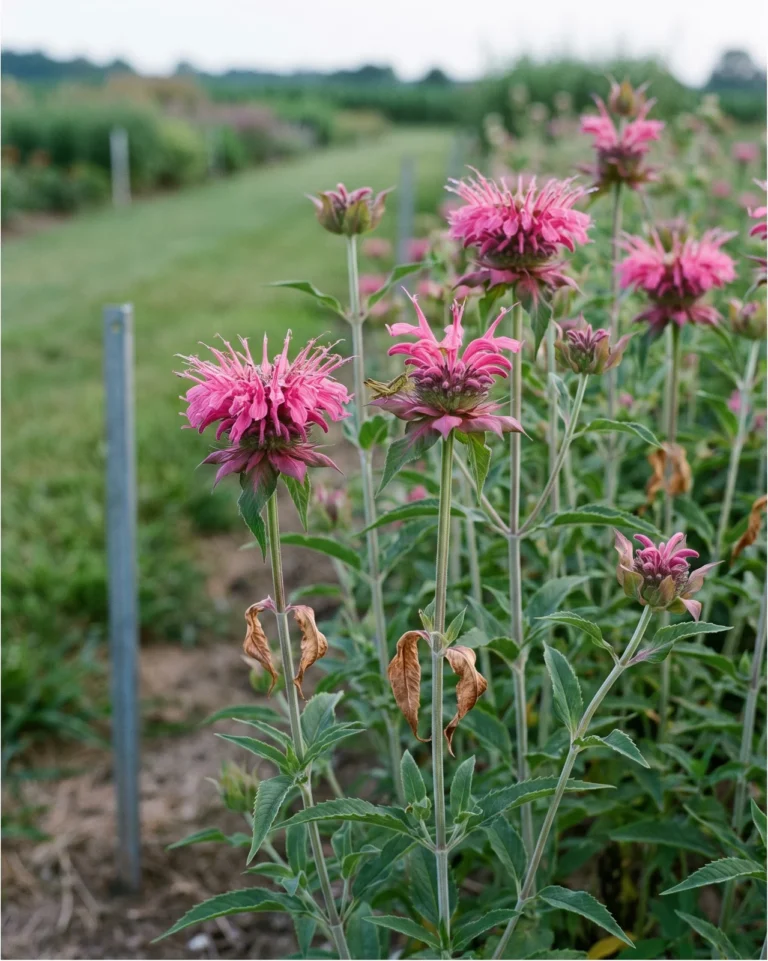
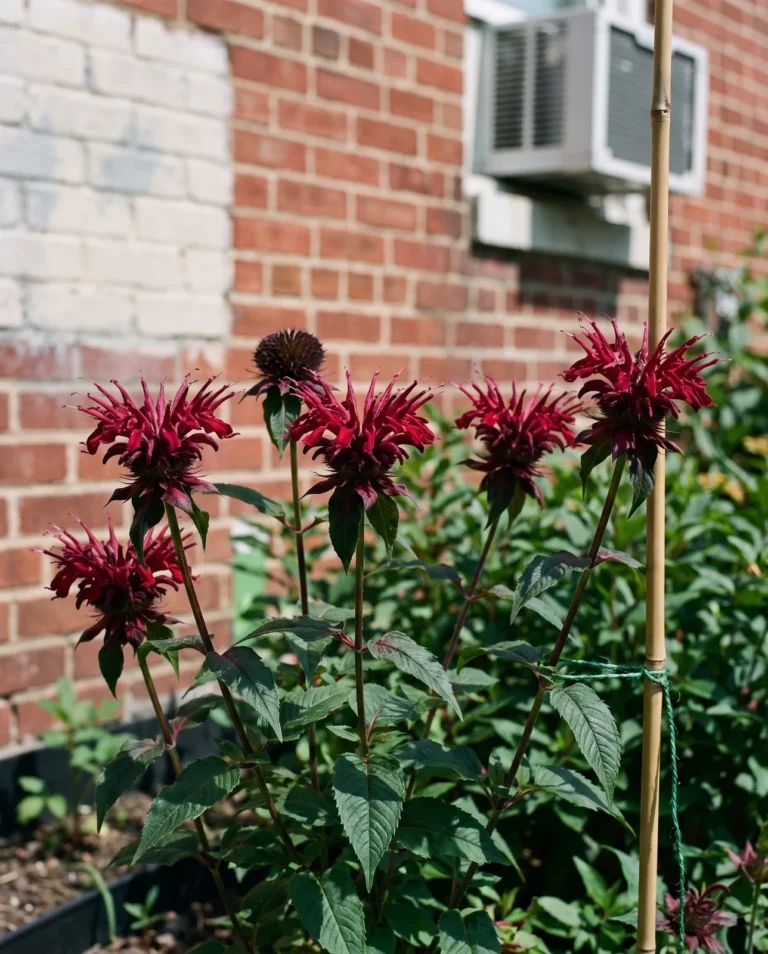
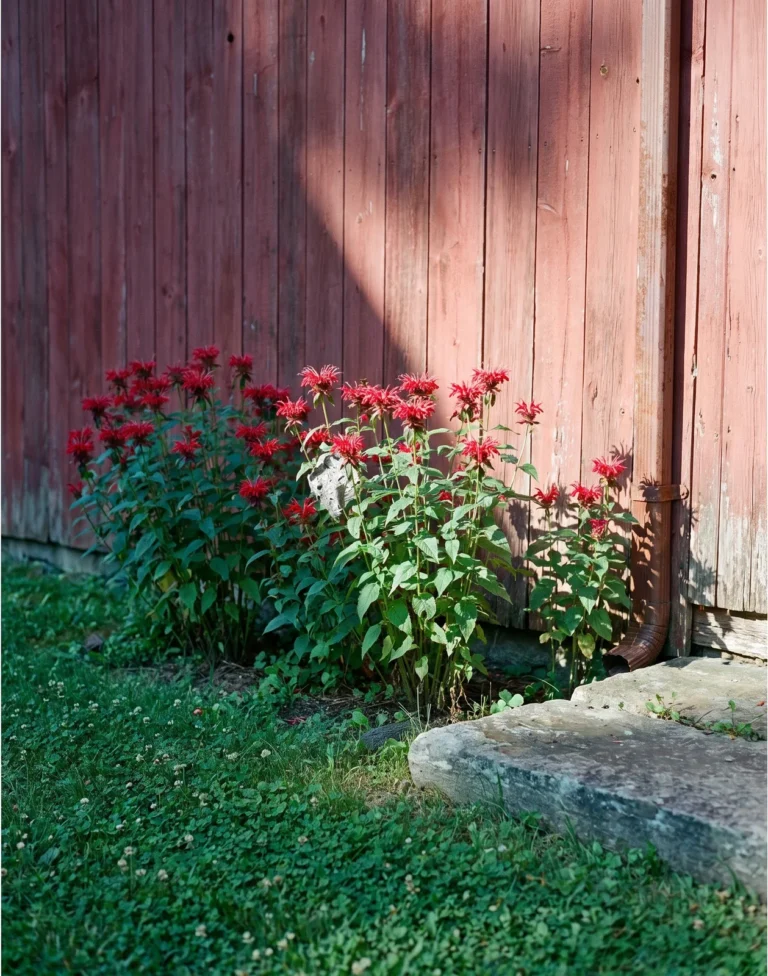
Each flower head is a dense cluster of narrow tubes perched at the top of a square stem, with some tubes too small for bumblebees to enter. Color runs from the bright red of scarlet bee balm to the lavender pink of wild bergamot, alongside pink and dark red cultivars. Below the blooms, the square, erect stems carry opposite leaves that are toothed and aromatic. Wild bergamot has oblong, grayish-green leaves, spotted bee balm smells cleanly of Greek oregano, and the genus as a whole carries an herbal scent of mint, oregano, and citrus. In a garden bed, clumps grow 2 to 4 feet tall and 2 to 3 feet wide. Spotted bee balm stays shorter and noticeably more compact.
That neat clump changes as the summer moves along. Scarlet bee balm blooms from July into August, and wild bergamot flowers from July into September. Once blooming ends, the seed heads stand through fall and winter to feed visiting birds. The foliage changes as well, because severely infected leaves may turn yellow and drop off. On spotted bee balm, mildew and rust usually arrive late in the season after flowering.
Which Monarda do you have
These three species share the same common name, but they differ in habitat, moisture needs, and how well they resist powdery mildew late in the season.
What people mistake bee balm for
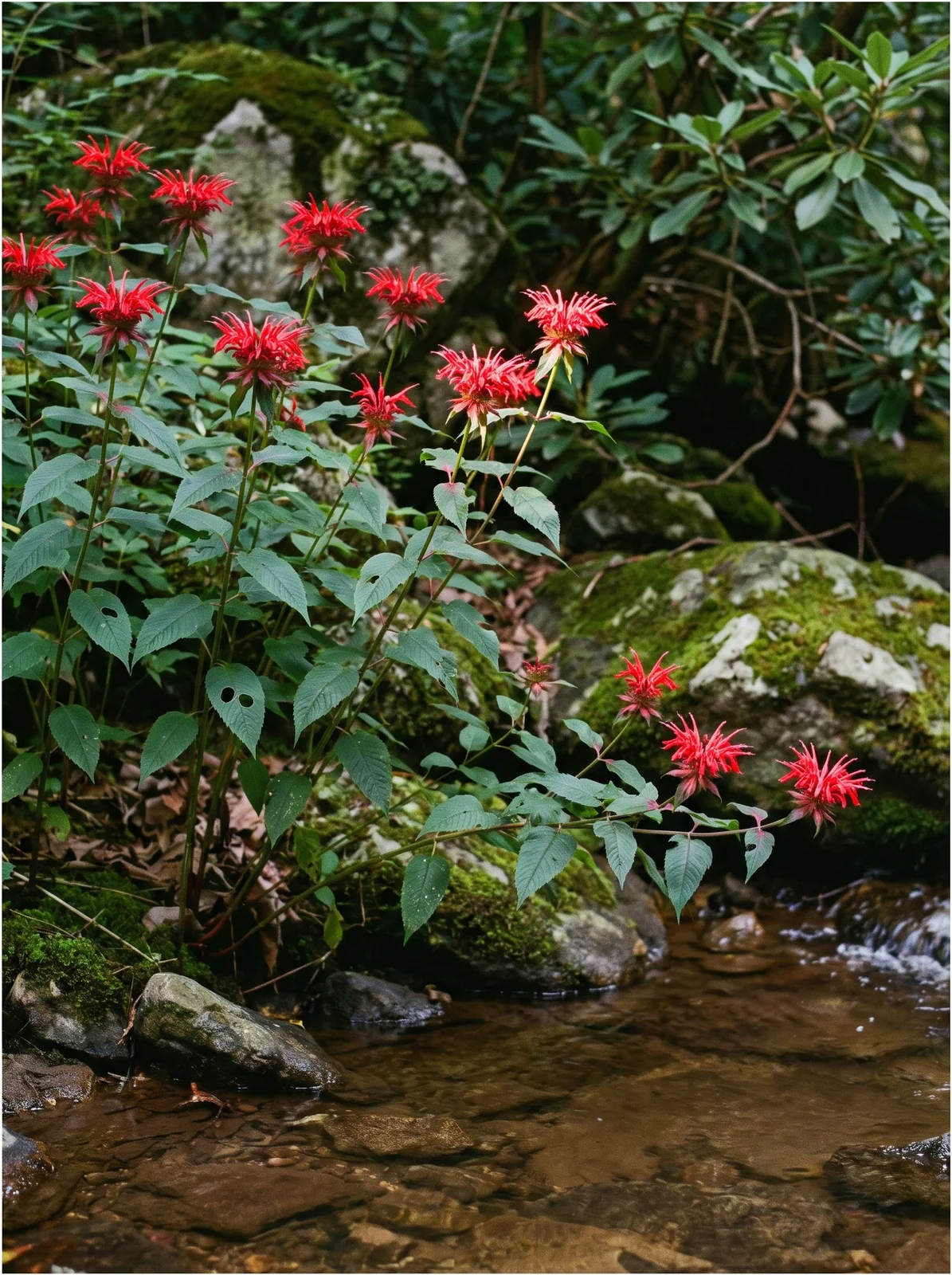
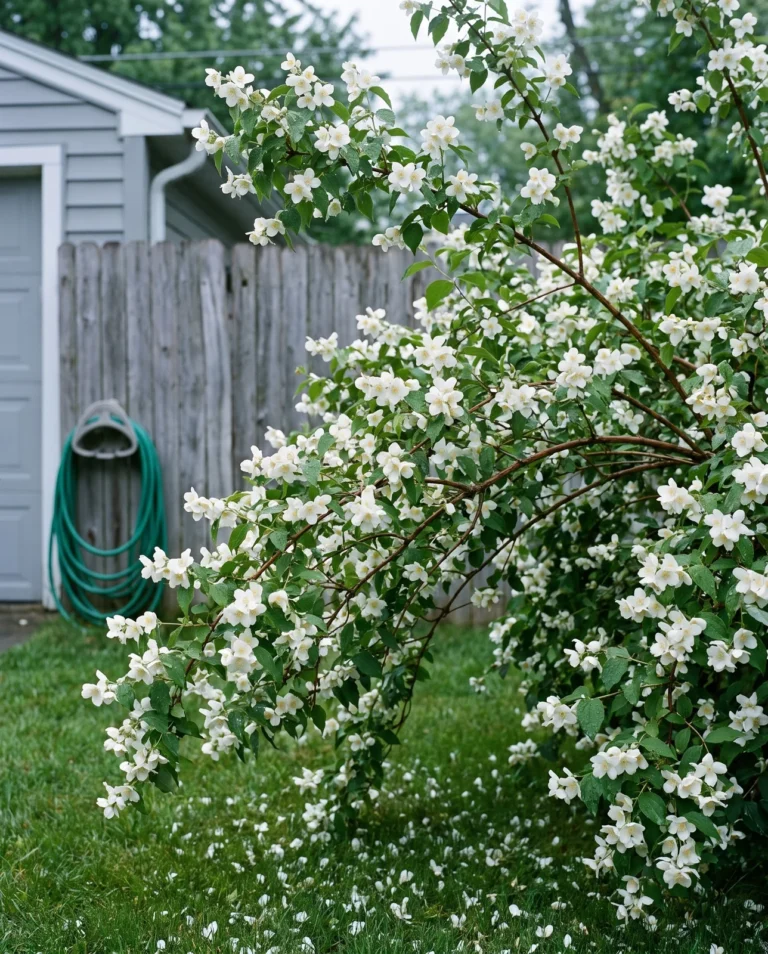
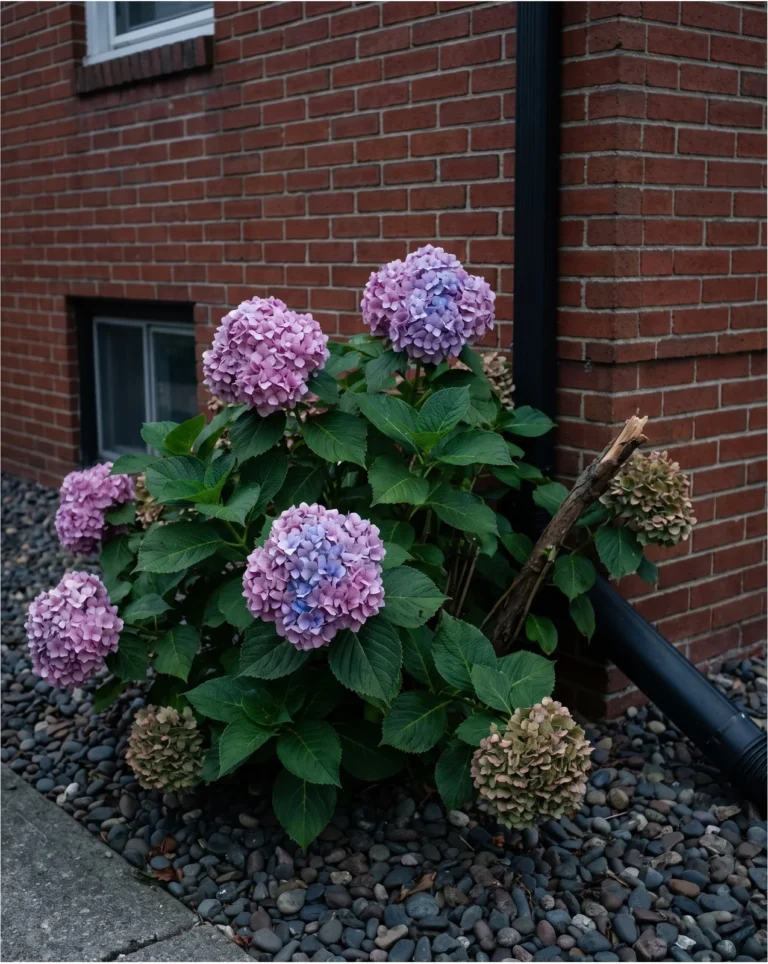
Two kinds of mix-ups happen often: mistaking a shrub for bee balm from a distance, or confusing different Monarda species up close.
What bee balm brings in, and what it keeps out
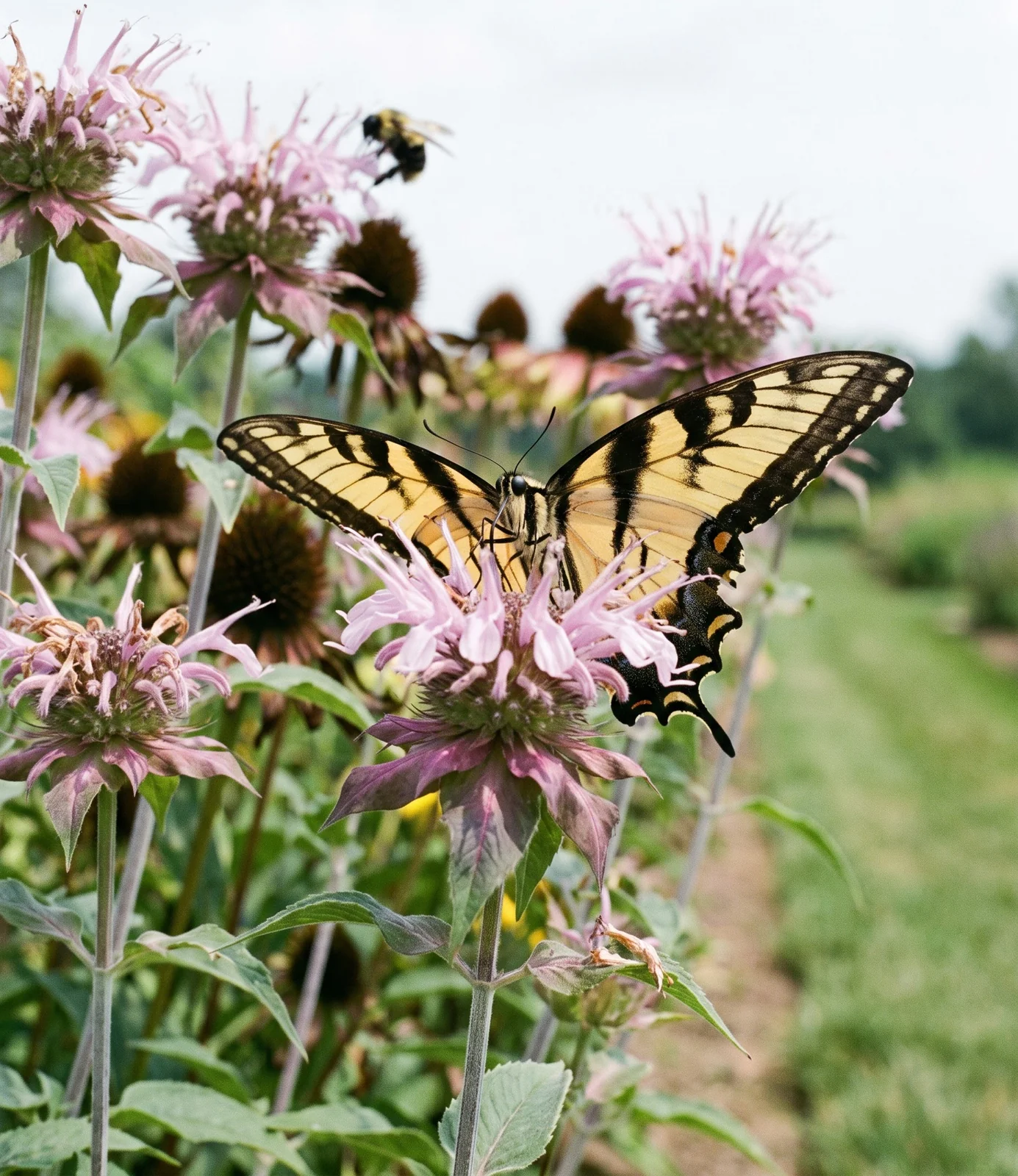
Bee balm earns its garden spot for the wildlife it brings in. Ruby-throated hummingbirds visit the tubular blossoms, alongside bumblebees and swallowtail butterflies, with spotted bee balm drawing in moths as well. The genus also supports three specialist bees: Dufourea monardae, Perdita gerhardi, and Protandrena abdominalis. Scarlet bee balm feeds the caterpillars of the hermit sphinx, orange mint moth, and raspberry pyrausta, while spotted bee balm hosts gray marvel and snout moths. Midsummer chewed leaves often mean those caterpillars are growing. The plant provides nectar and seeds for butterflies, bees, hummingbirds, and clearwing moths, with the seed heads feeding birds through fall and winter.
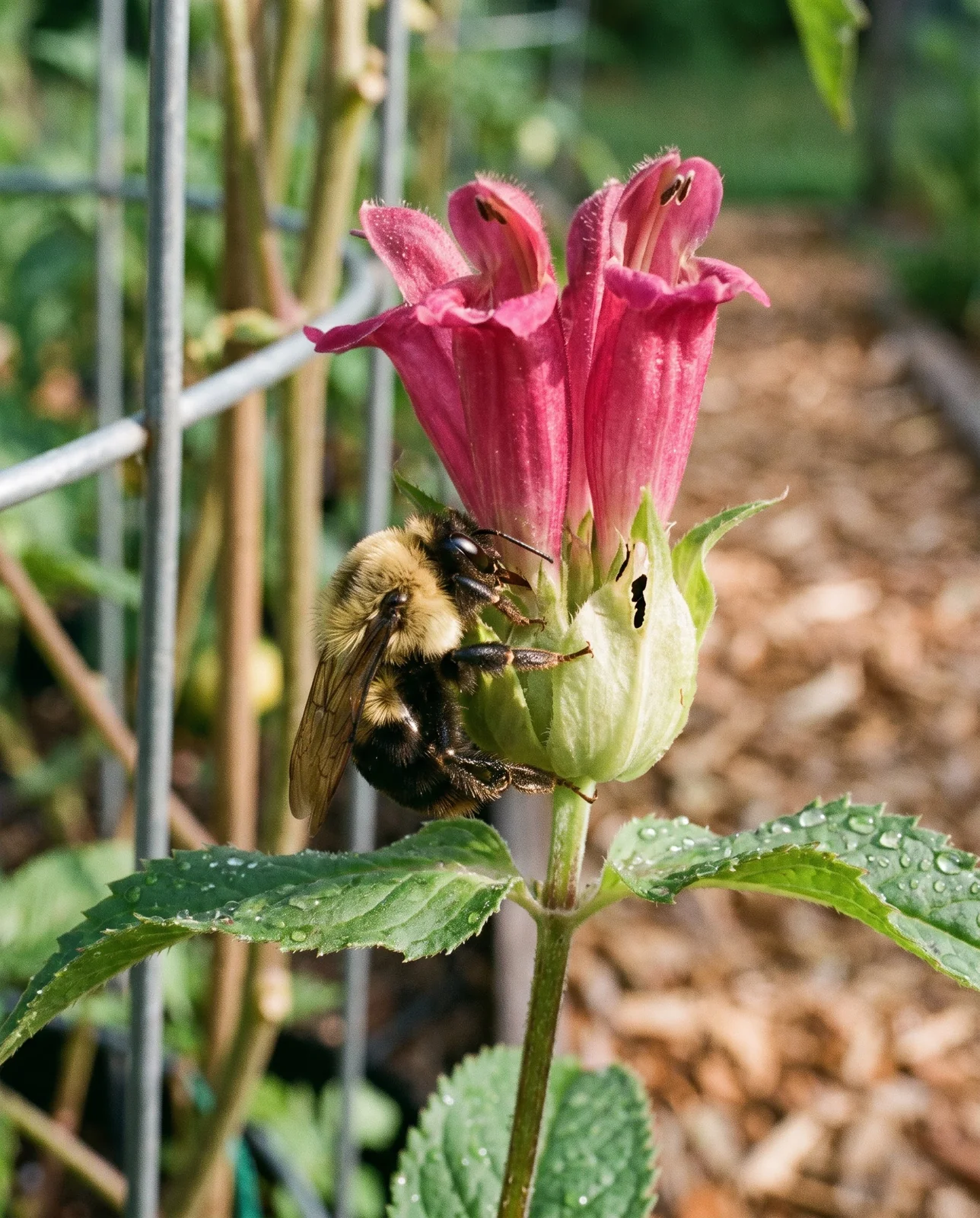
Not every insect visitor pollinates. Bumblebees and a few other insects are too large to squeeze into the smaller flower tubes. They bite small holes at the base of the blossom to sip nectar without pollinating the plant. This habit is called nectar robbing, and it does not significantly harm the plant. You can spot it when bumblebees work around the outside of the flower cluster and skip the opening.
The other side of the wildlife story is what stays away. Deer and rabbits tend to avoid scarlet bee balm, wild bergamot is resistant to damage from both animals, and spotted bee balm is tolerant of deer browsing. Wild bergamot handles tough conditions as well, tolerating drought, clay, dry soil, shallow rocky ground, and black walnut roots. Strong scent deters grazers, a trait bee balm shares with catmint in a sunny bed.
Where to plant bee balm
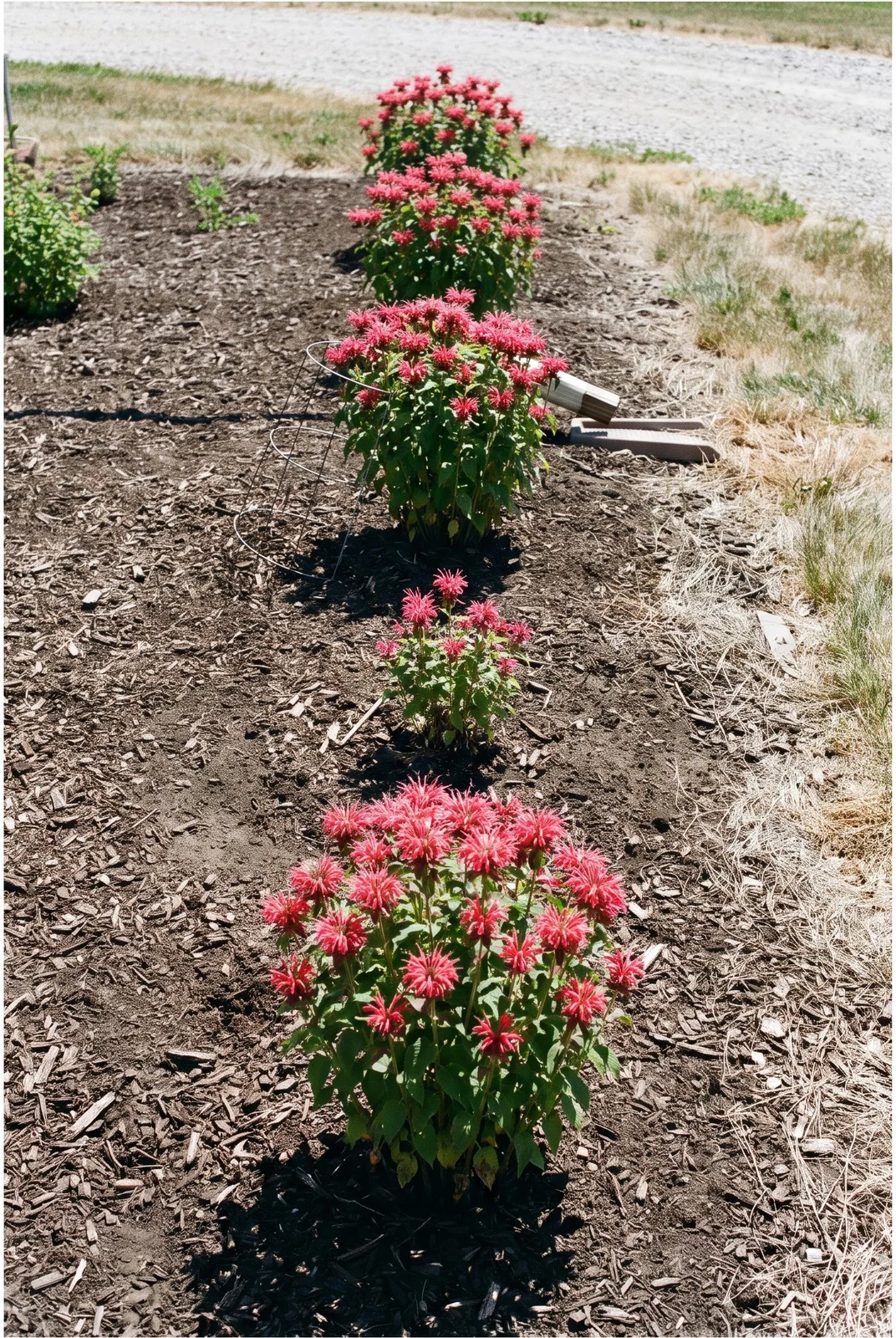
Give bee balm full sun and plenty of room right from the start. It flowers best with at least 6 hours of direct sun daily, while shade cuts down blooms and leaves foliage more prone to powdery mildew. It prefers moist, well-drained soil and full sun, but will tolerate some shade. Roots stressed by dry soil become increasingly susceptible to disease, and water-stressed wild bergamot is more prone to mildew even though it tolerates occasional drought. Young plants need generous spacing when they go into the ground, because overcrowding encourages powdery mildew, which can become a serious problem in crowded plantings with poor airflow.
Generous spacing is really a preventive health measure. Giving the clump plenty of room lets air move through the stems and helps sunlight reach the lower leaves. Plants pushed against a wall or crowded by taller perennials lose that breeze, setting up conditions where mildew can turn serious. Because the roots expand over time, dividing clumps every few years prevents overcrowding and helps control their spread.
Powdery mildew on bee balm
The white film that coats bee balm leaves is powdery mildew, and the plant is very susceptible to it alongside peony, zinnia and garden phlox. The fungus commonly winters over on dormant buds, stems and fallen leaves. It can also form dark, hard resting structures called chasmothecia that protect spores through winter. Cleaning up infected plant debris at season's end helps keep those resting spores from carrying over.
As the infection advances, leaves may curl, stay dwarfed, turn yellow and drop off, and on bee balm the fungus can cause severe leaf loss. Even so, plant death from powdery mildew is rare. The disease is considered more unsightly than harmful, often leaving foliage less attractive without causing significant damage. When the dusting stays light and does not reduce growth or flowering, you can simply tolerate it.
Powdery mildew can affect every bee balm species, especially in crowded plantings where airflow is poor. The individual species respond differently. Wild bergamot carries good resistance, while scarlet bee balm can suffer serious mildew in stagnant, crowded spots. Spotted bee balm also catches both mildew and rust, but usually late in the season after flowering.
Prevent it, treat it, or tolerate it
You can prevent mildew, treat it, or simply live with it. Fungicides will not cure or remove an infection already on the leaves. The most helpful steps happen before the white powder arrives, though light cases that do not harm flowering can be tolerated.
Mildew resistant is a relative claim
Mildew resistance is a matter of degree, yet commercial plant lists often label sixteen varieties as resistant without distinction. In 1993, the Chicago Botanic Garden started a four-year evaluation project to measure mildew resistance across commercial bee balm selections. Forty-one selections were grown and evaluated between spring 1993 and autumn 1996. The trial defined its scale precisely: excellent meant no injury, good was under 25% infection or leaf drop, fair 26 to 50%, poor 51 to 75%, and very poor over 76%. That detailed range shows why a single blanket label for sixteen varieties tells you very little.
Eight cultivars proved highly resistant to mildew, including 'Colrain Red', 'Marshalls Delight', 'Purple Mildew Resistant', 'Raspberry Wine' and 'Rose Queen'. 'Marshalls Delight' had the lowest infection level, with no more than 5% ever observed. Only 'Purple Mildew Resistant' stayed completely free of mildew throughout the evaluation. Yet the trial judged it an inferior plant because of its susceptibility to rust. Weather can also test any cultivar: with few exceptions, even the most resistant selections saw mildew levels climb above 50% during the especially hot, humid summer of 1994.
A second trial at Mt. Cuba Center offers a helpful comparison. Over three years, 40 species and cultivars were evaluated weekly on habit, foliage quality, floral display and disease resistance. Two cultivars from the Chicago list, 'Colrain Red' and 'Raspberry Wine', landed on its top-performer list as well. Seeing both gardens agree gives solid guidance on those two selections. The two gardens parted company on spotted bee balm. Every plant died over the first winter in the zone 5b trial, while the milder zone 7a/6b garden rated the species 4.0 out of 5. The Chicago evaluation ran between spring 1993 and autumn 1996, showing how those plants grew in those seasons.
Bee balm problems, ranked by how often they come up
Listed from the most common issues down, starting with the powdery white growth that gardeners frequently see from Chicago to Ontario and wonder what to spray. Other recognized diseases include fungal leaf spot, rust, and southern blight.
Symptoms: a white powdery film on the foliage, heaviest where plants are crowded and air movement is poor. Cause: powdery mildew, which can be a big problem across the genus. What to do: choose cultivars that carry some mildew resistance, and rely on good cultural practices to reduce the severity of the disease.
Symptoms: spotted bee balm develops rust alongside powdery mildew, especially late in the season after flowering. Cause: crowded garden conditions where air cannot circulate freely. What to do: space clumps well, and prune to thin foliage so airflow and light reach throughout the plant.
Symptoms: severely infected leaves may turn yellow and drop off, while advancing disease can dwarf foliage, make it curl, and cause it to drop. Cause: powdery mildew spreading on older leaves. What to do: tolerate low levels that do not reduce plant growth or flowering.
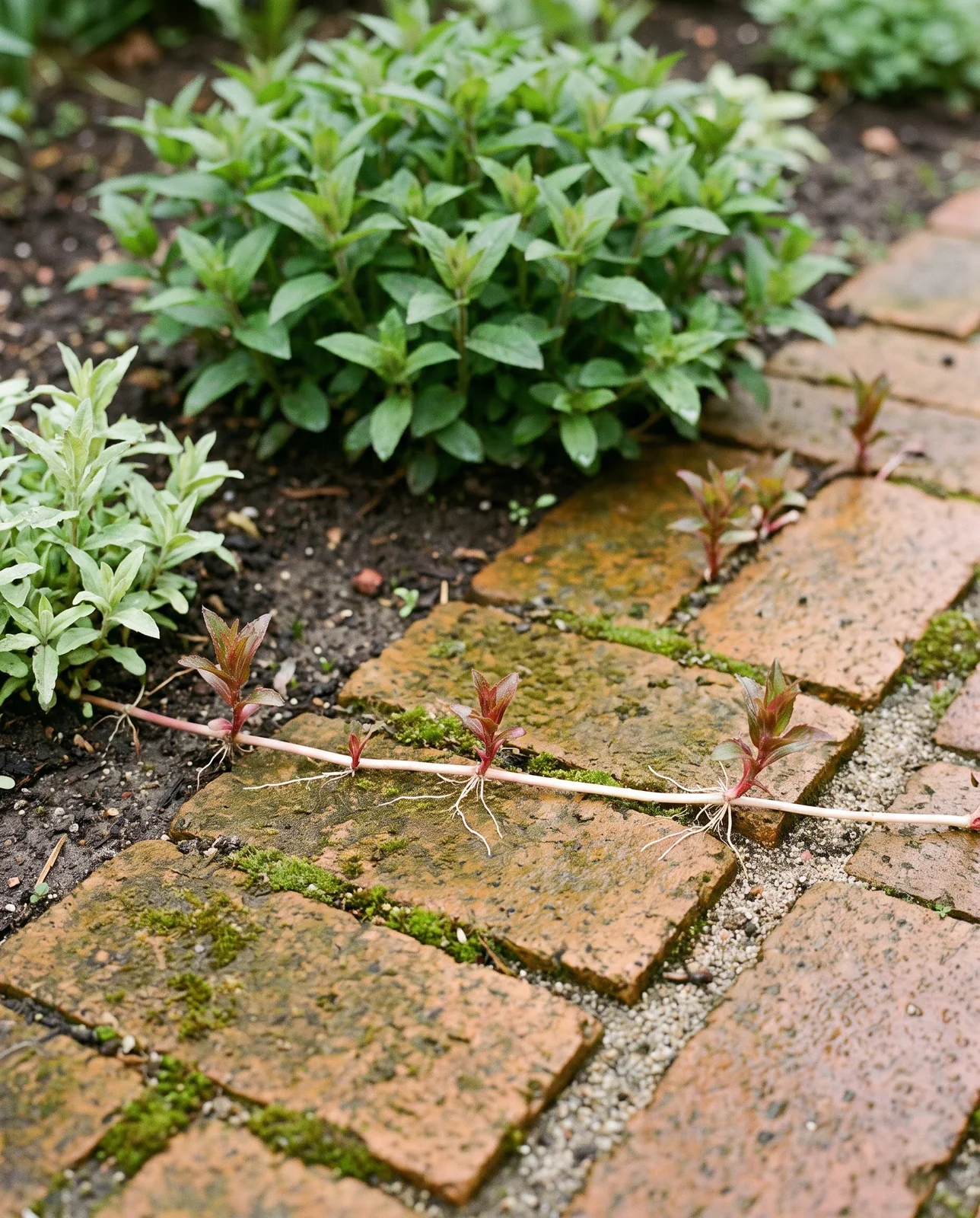
Symptoms: stems spread aggressively by rhizomes and can invade adjoining beds and paths. Cause: vigorous creeping root systems on certain species and cultivars. What to do: divide the clumps every few years to prevent crowded conditions.
Symptoms: the rapid growth rate crowds the middle of the clump, which dies out after three or four years. Cause: an overcrowded crown that thins from the center outward. What to do: lift and divide the clump every two to four years to prevent overcrowding.
Symptoms: plants produce fewer flowers when grown with less sun. Cause: inadequate light, or excessive soil fertility. What to do: check your fertilizer before moving a shaded clump, because too much nitrogen encourages leafy growth at the expense of flowers and increases disease risk.
Bee balm not blooming, and yellow leaves
When bee balm refuses to bloom, shade is usually the first reason, cutting down flowers while leaving foliage vulnerable to mildew. Overfeeding causes similar trouble, because too much nitrogen encourages leafy growth at the expense of flowers while increasing disease risk. Stems can stretch about 3 feet long before any leaves or flowers appear. Crowding also cuts down flowering as older centers die out, so dividing clumps every few years prevents that congestion.
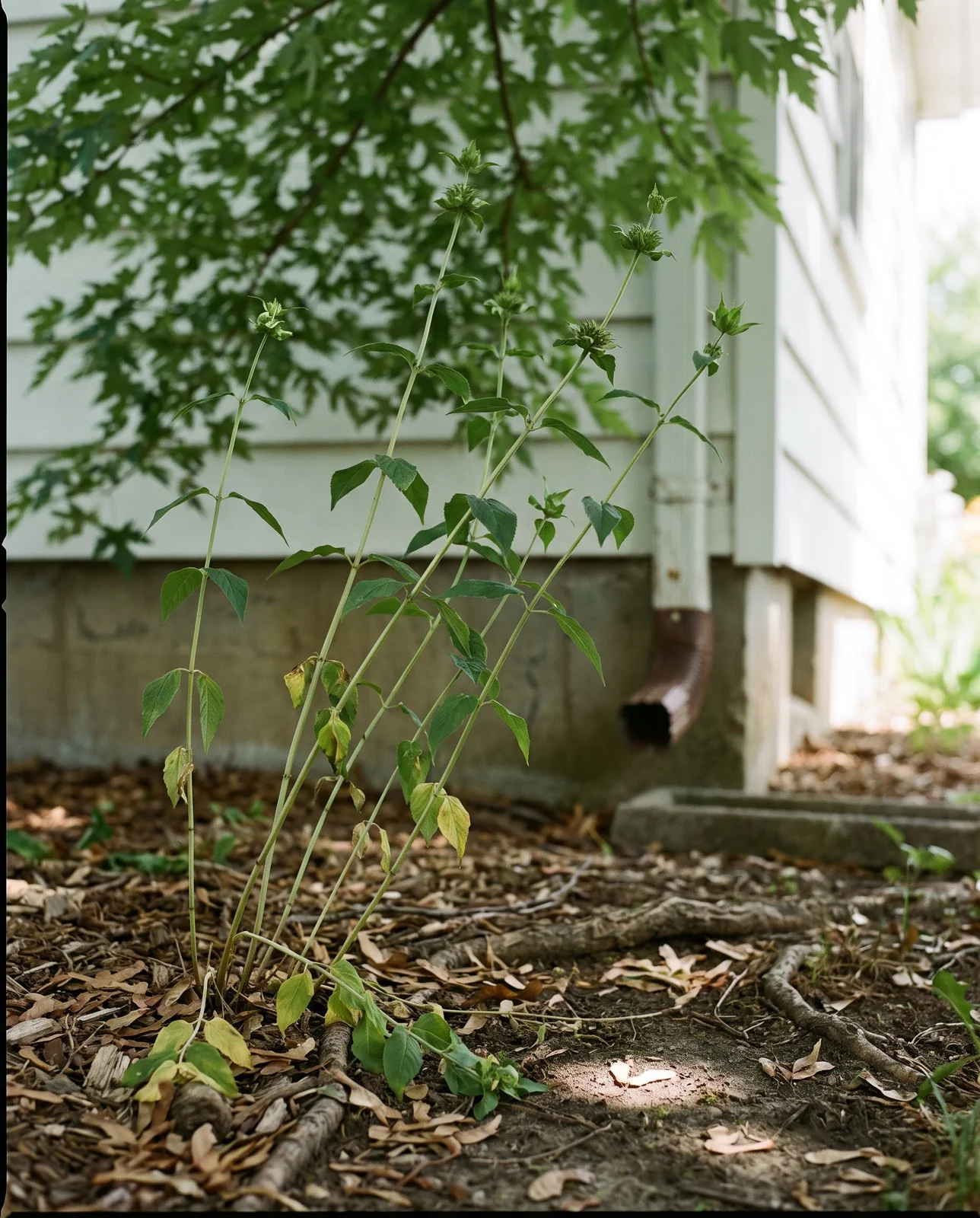
Yellow leaves usually point to advanced powdery mildew, where severely infected leaves turn yellow and fall off. Dry soil makes the problem worse, and even wild bergamot is more susceptible to mildew when water-stressed, despite tolerating occasional drought.
How far bee balm spreads
Bee balm travels by rhizomes, but how far it spreads depends on what you plant: some species and cultivars spread aggressively and can invade adjoining beds and paths. Scarlet bee balm spreads rapidly by underground stolons. Spotted bee balm forms large clumps by rhizomes, but is not considered too aggressive. While most bee balms naturally spread, a few cultivars remain more clump-like.
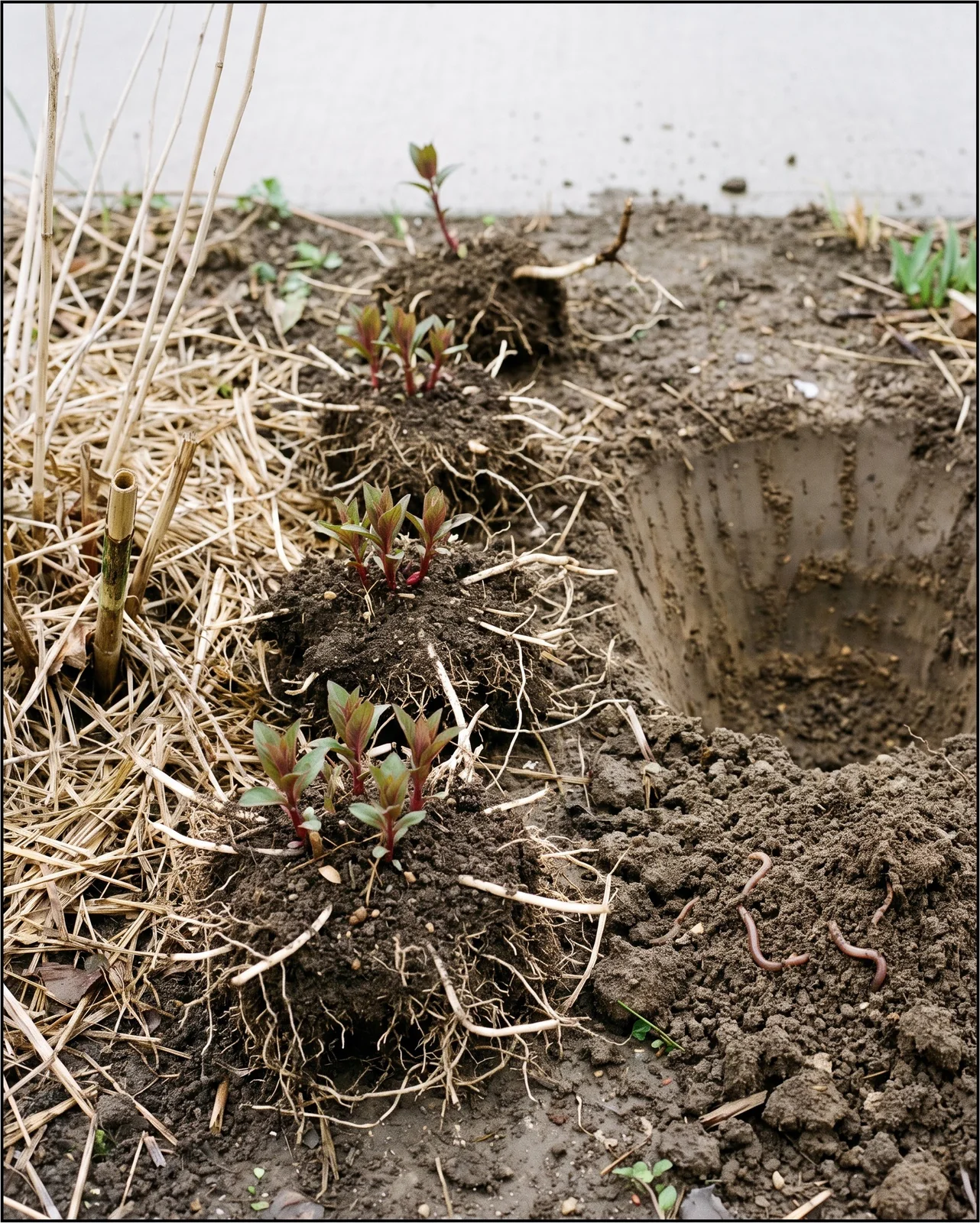
Dividing the clump solves both problems at once, checking the runners and renewing the center. Lift and divide the plants every 2 to 4 years to control spread, maintain vigor, and prevent overcrowding. That division keeps the middle from dying out, which often happens after 3 or 4 years as the clump crowds itself. Replanting only the strong outer shoots thins the stand, helping light and air reach through the stems.
Bee balm hardiness zones
Bee balm is generally hardy in USDA zones 4 to 9, though the exact limits move slightly depending on the species. Scarlet bee balm thrives across zones 4 to 9, or zones 4a through 9b. Wild bergamot extends further north into zones 3 to 9, tolerating winter cold down to zone 3a, which fits a plant that grows wild on prairies and rocky woods. Spotted bee balm handles cold down to zone 3a but fades earlier in heat, stopping in zone 8b, with the genus as a whole spanning zones 3a through 9b. Some ranges run from zones 3 to 11, though zones 4 to 9 is far more common. That cold end fits wild bergamot and spotted bee balm down to zone 3a, but heat past zone 9 is more than these woodland and prairie plants can tolerate.
How to plant bee balm, and how far apart
When planting bee balm, give each clump plenty of room and break dense roots apart before they go into the ground. If a plant arrives as one solid mass, gently divide it into a few smaller chunks so the shoots do not crowd each other as they grow. Space the plants 18 to 24 inches apart, or up to 2 to 2.5 feet, because they spread quickly. That gap may look wide at planting, but the rhizomes spread outward and can easily wander into neighboring beds. Siting matters just as much as spacing: pick an open spot that receives at least 6 hours of direct sun every day.
Dividing, cutting back, and the mildewed stems
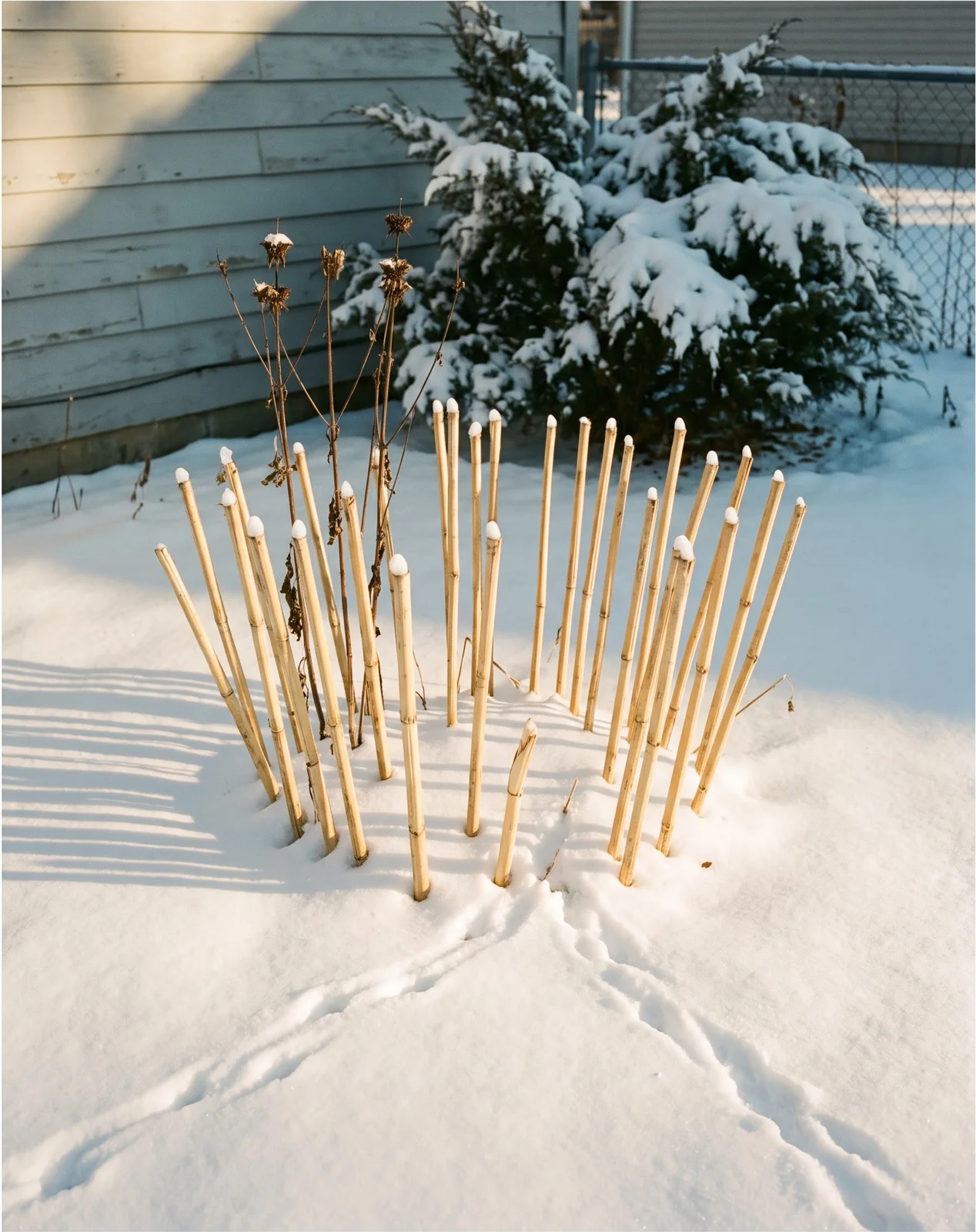
How you cut bee balm back in fall depends on whether the foliage stayed healthy. If stems stayed clean, cut them back to 12 to 24 inches and leave them standing until they disintegrate on their own, giving native bees a place to nest. When mildew has taken hold, clear the debris away: remove and destroy infected plant debris in fall, because that debris can carry spores into the next growing season. Removing diseased foliage destroys the overwintering stage of the fungus.
A summer cut can give tired clumps a fresh start. Bee balm often declines after flowering, and cutting it to the ground late in summer promotes fresh, healthy shoots. Earlier in the year, you can remove about a quarter of the stems in early spring to let more light and air reach through the clump. When clearing away infected cuttings, you can burn the debris where local rules allow, bury it, or hot compost it.
Bee balm varieties worth telling apart
In garden trials, standout selections earned ratings of 4.0 and 4.5 out of 5. Eight cultivars proved highly resistant to mildew in long-term evaluations, where a fair rating means less than half of a study cohort died from the disease. Both deep red 'Jacob Cline' and bright pink 'Marshall's Delight' show good to excellent resistance to powdery mildew.
Oswego tea and the kitchen
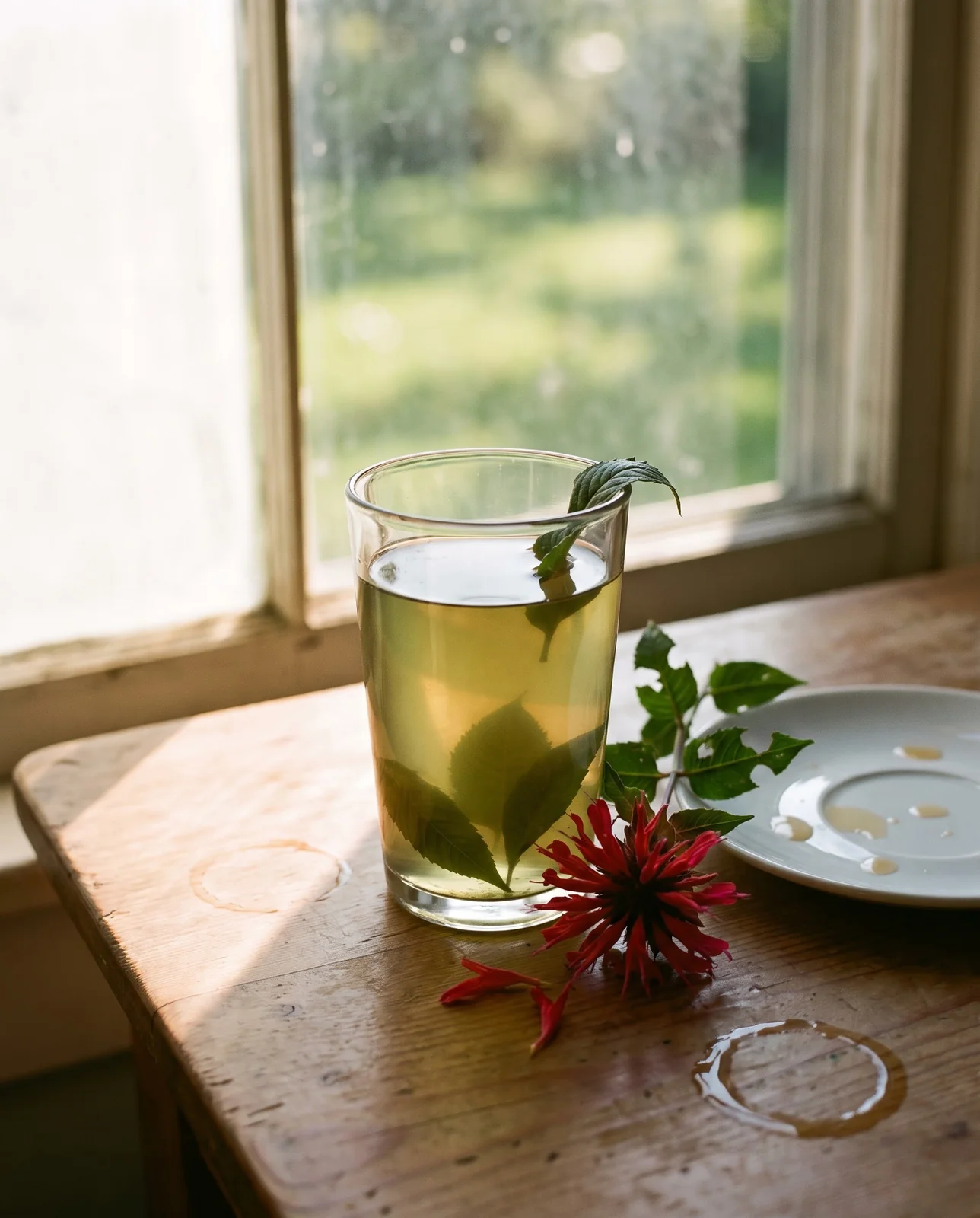
The entire plant above the roots is edible, and the petals can be used to make Oswego tea. That traditional tea takes its name from a Native American word for a river in present-day New York. In the kitchen, scarlet bee balm flowers and leaves flavor teas, jellies, soups, stews, and fruit salads. Wild bergamot's aromatic, grayish-green leaves may also be used in teas, and spotted bee balm leaves can be used in teas as well. The leaves and stems carry a scent similar to a mix of mint, oregano, and citrus, while spotted bee balm smells of Greek oregano.
Light
Bee balm flowers best in full sun, needing direct light to bloom with real vigor. The main species share that love of sun but handle shade differently: scarlet bee balm prefers full sun, but it will tolerate some shade. Wild bergamot performs best in full sun and moderately moist ground, while spotted bee balm typically occurs in full sun to part shade. Giving the plants plenty of room increases air circulation and the light reaching each stem. Pruning to thin dense foliage also increases airflow and light throughout the plant.
Soil and water
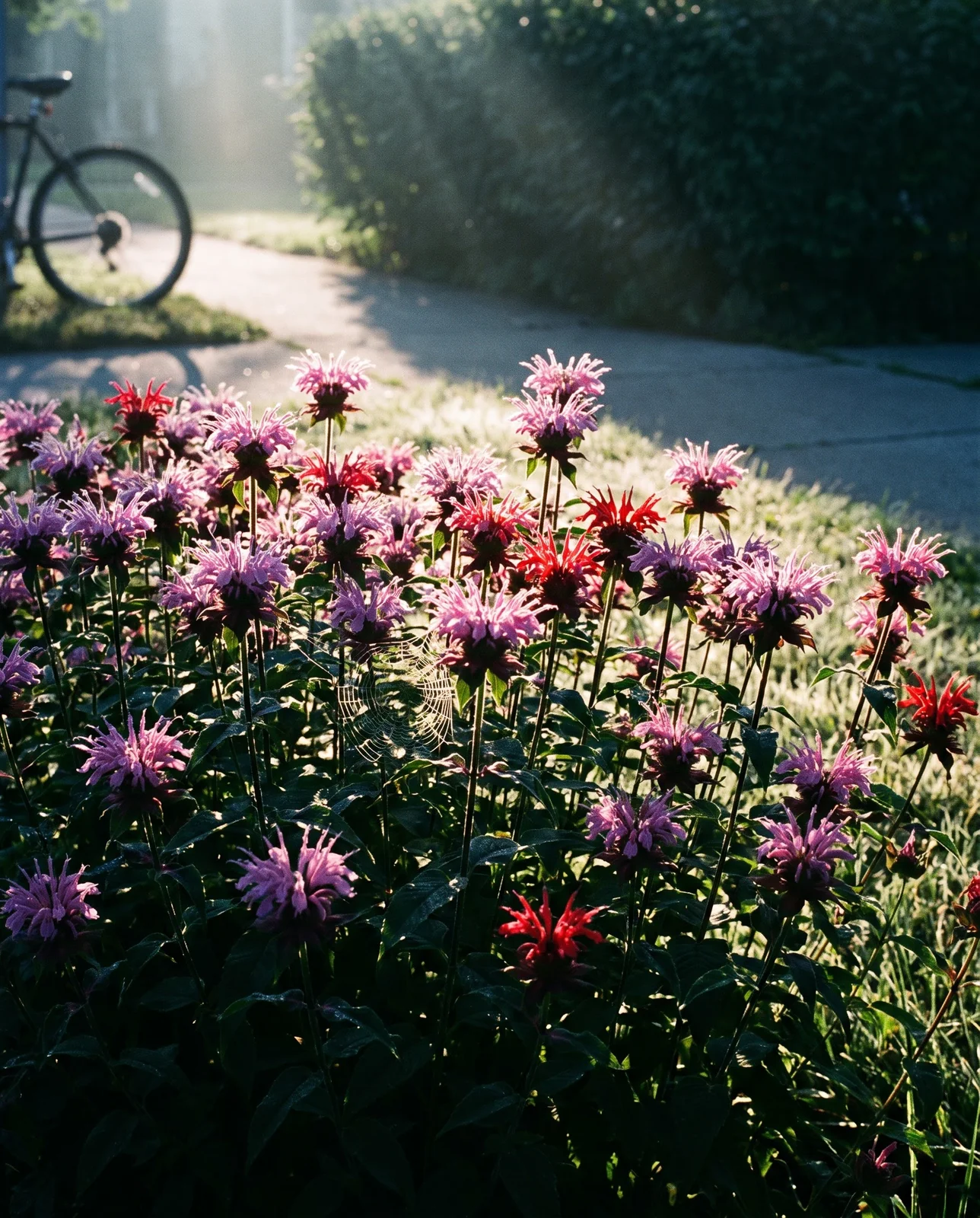
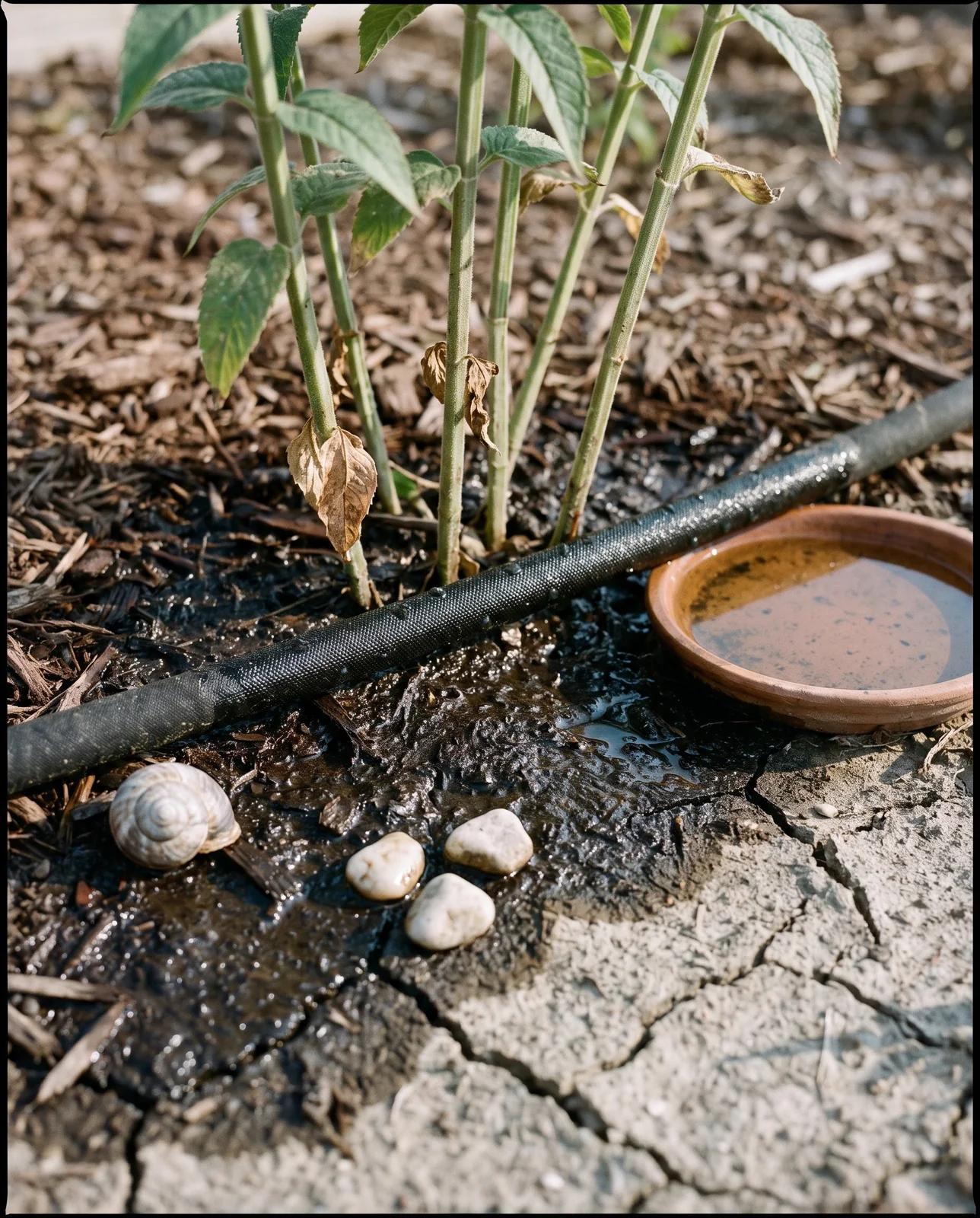
Bee balm prefers moist, well-drained soil, soaked every 7 to 10 days to wet the ground 6 to 8 inches deep. Water needs vary across the different kinds. Scarlet bee balm takes medium to wet soil, wild bergamot handles dry to medium ground, and spotted bee balm is drought-tolerant but short-lived. Water early in the day, and avoid handling the clump while the foliage is wet because touching damp leaves spreads disease. Do not let the ground dry out, because plants stressed by dry soil become increasingly susceptible to disease.
Height and spread
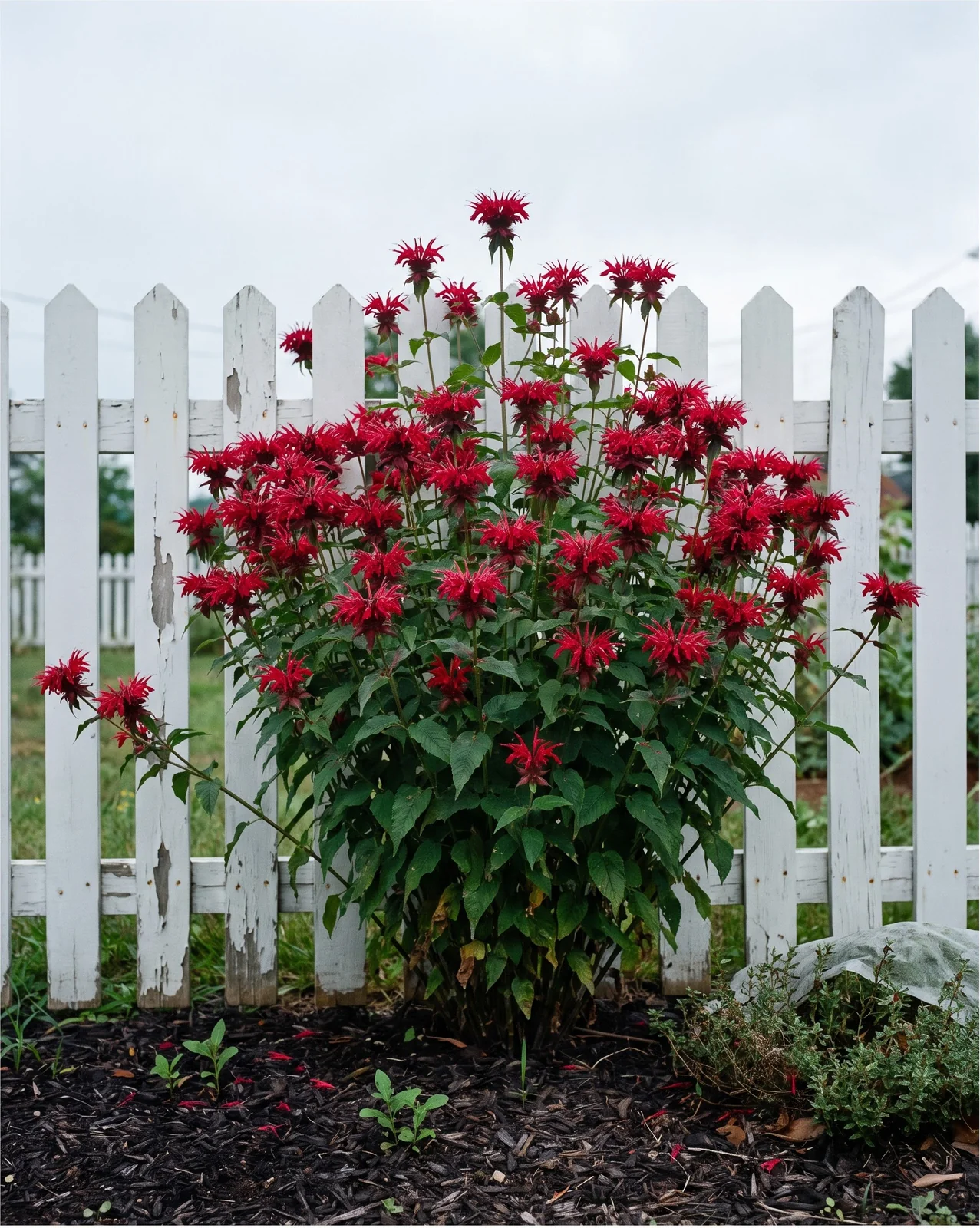
Most garden bee balms grow 2 to 4 feet tall and 2 to 3 feet wide, though spotted bee balm is much shorter. Scarlet bee balm can reach 4 feet tall, and wild bergamot typically grows 2 to 4 feet. Spotted bee balm forms a smaller clump, typically growing 1.5 to 2 feet tall. Clump width rarely stays fixed, because the underground runners continually push outward into new ground.
Bee balm in containers
Growing bee balm in a container keeps its runners within bounds, but confined quarters make mildew harder to prevent. Give the container plenty of direct sun daily, with space around it so fresh air and light reach all sides. Stagnant air encourages powdery mildew, which spreads quickly when foliage stays crowded. Rapid growth eventually crowds the middle of the pot, so container plants need regular division to stay vigorous.
What to plant with bee balm
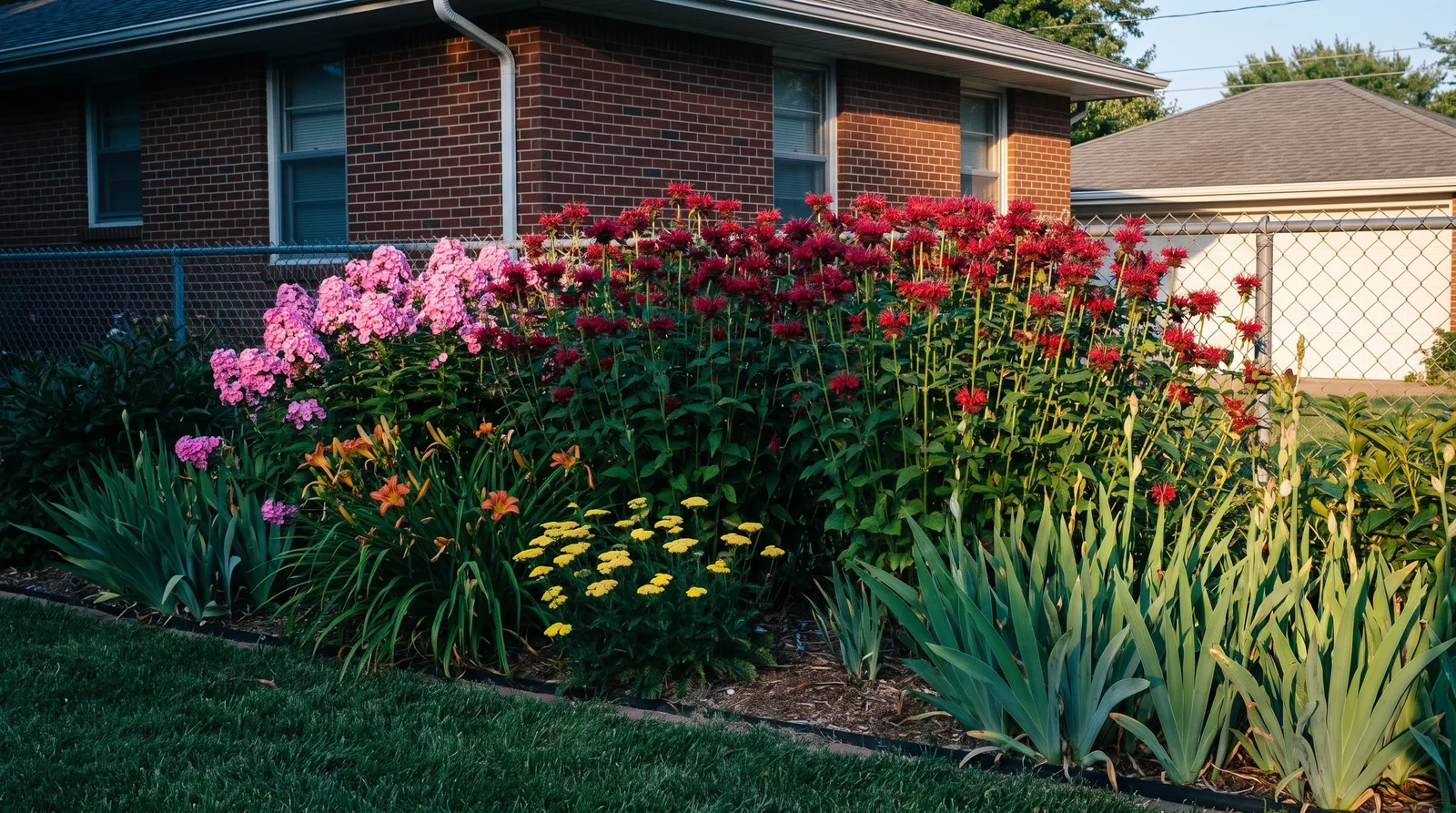
Bee balm mixes easily with other summer perennials, particularly phlox, iris, daylilies, and yarrows. Tough prairie neighbors like coneflower also stand up well beside it in full sun. Choose sturdy partners that hold their ground, because aggressive runners can overwhelm timid neighbors. Scarlet bee balm spreads rapidly underground, easily outgrowing delicate plants. Give your companion plants generous space so breeze keeps the foliage dry, and divide the clumps every few years to keep the planting open.
What to expect, year by year
Bee balm follows a predictable rhythm over its first few seasons, from settling in to spreading wide.
In your first summer, break a dense potted clump into a few smaller chunks at planting so the new crowns do not crowd each other. Space those pieces about 18 to 24 inches or up to 2.5 feet apart to give them room to expand. Blooms follow in midsummer, lasting from July into August on scarlet bee balm and July into September on wild bergamot.
Powdery mildew can be a big problem across the genus. In damp summer heat, it can feel like bee balm gets mildew no matter what you do. Even so, good cultural practices can reduce the severity of the outbreak. A clump often declines after flowering, but you can cut it to the ground late in the summer to promote the regeneration of healthy shoots.
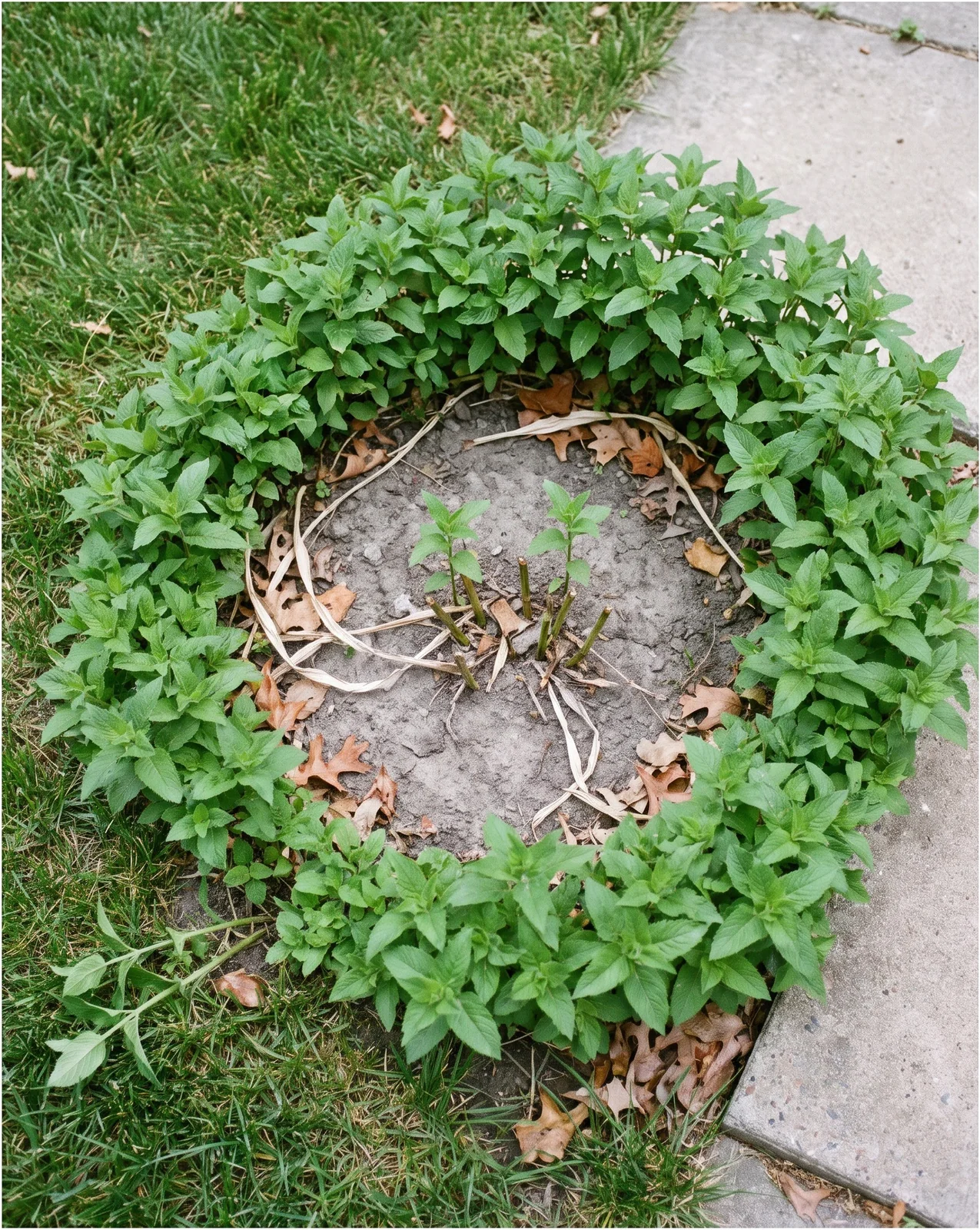
By the third or fourth season, rapid growth causes the center of the clump to become overcrowded and die out. Plan to divide clumps every few years to prevent crowded conditions and keep the patch vigorous. Simply lift the ring and break it into a few smaller chunks so the plants do not crowd each other as they grow.
Bee balm myths
Four persistent claims about bee balm often mislead growers, but the real plant behaves quite differently.
The myth: Powdery mildew will kill the plant.
The reality: Death of the plant from powdery mildew is rare, and the infection is considered more unsightly than harmful. Even so, heavy outbreaks can cause severe leaf loss on bee balm, leaving stems stripped and ragged.
The myth: Milk and baking soda are equally proven home sprays.
The reality: A mixture of baking soda and light horticultural oil in water has been shown to be effective against powdery mildew. Spraying with milk does not provide an adequate fix. Neither treatment will rescue damaged foliage, because fungicides will not cure or remove existing powdery mildew infections.
The myth: A mildew-resistant variety will not get mildew.
The reality: Resistance is a sliding scale: excellent means no injury, good means under 25% infection or leaf drop, fair 26 to 50%, poor 51 to 75%, and very poor over 76%. With few exceptions, even the most resistant cultivars had mildew levels above 50% in the especially hot, humid year of 1994.
The myth: All bee balm spreads aggressively.
The reality: Some species and cultivars spread aggressively by rhizomes and can invade adjoining beds and paths. Other kinds stay far better behaved. Spotted bee balm spreads by rhizomes into large clumps but is not considered too aggressive, and a few cultivars remain more clump-like.
FAQ
Should you cut down bee balm with powdery mildew?
Yes. Monarda often declines in health after flowering, but a clump can be cut to the ground late in the summer to promote the regeneration of healthy shoots. Removing the diseased leaves and stems also destroys the overwintering stage of the fungus.
Why are the leaves on my bee balm turning yellow?
Powdery mildew is the usual cause. As the disease progresses, severely infected leaves may curl, stay dwarfed, turn yellow, and drop off. On spotted bee balm, this trouble usually arrives late in the season after flowering, especially in crowded gardens.
Why does my bee balm never bloom?
Shade and heavy feeding explain most blooming troubles. Bee balm grows best in full sun, and plants grown with less sun produce fewer flowers. Overfeeding also cuts down on blooms, because too much nitrogen encourages leafy growth at the expense of flowers while increasing disease risk.
Can a plant recover from powdery mildew?
Yes. Death of a plant from powdery mildew is rare, and the disease is considered more unsightly than harmful. Fungicides will not cure or remove an infection already on the leaves, so recovery depends on new growth, as cutting down the spent foliage after bloom helps healthy shoots regenerate.
Does bee balm come back every year?
Yes. Both scarlet beebalm and wild bergamot are herbaceous perennials in the mint family. Their top growth dies back each winter, and the crown pushes up fresh stems every spring.
What are the cons of bee balm?
Mildew on the foliage and wandering roots are the two main troubles. Powdery mildew can be a big problem on the plants, while beneath the surface, some species and cultivars spread aggressively by rhizomes and can invade adjoining beds and paths.
What should not be planted near bee balm?
Avoid slow or delicate plants that can be crowded out. Scarlet beebalm can reach a height of 4 feet and spreads rapidly by underground stolons, and some varieties can invade adjoining beds and paths. Spotted beebalm is more restrained, spreading by rhizomes to form large clumps without being considered too aggressive.
What is the best growing zone for bee balm?
Across the genus, bee balm is hardy in zones 4a through 9b. Wild bergamot runs a step colder in zones 3a through 9b, while spotted beebalm is hardy in zones 3a through 8b.
Can bee balm grow in a container?
Yes, and a pot keeps running rhizomes from invading adjoining beds and paths. Give the container plenty of open space, because crowded conditions with poor air circulation are where powdery mildew can become a serious problem.
Is bee balm toxic to dogs and cats?
Whether bee balm is safe for pets is unsettled. It is considered non-toxic, but the ASPCA has no entry for the plant under bee balm, bergamot, Oswego tea, or Monarda. To stay on the safe side, keep dogs and cats from grazing on the stems.
Interesting tips
- Cut stems for the vase just as the flowers begin to open, and the side shoots will keep blooming on the plant. In water, they last about 7 days.
- Mildewed stems and leaves can be buried, hot composted, or burned where local ordinance allows.
Related Guides & Flowers
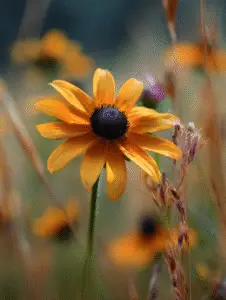
Black-eyed Susan
The other native prairie perennial that flowers through the same weeks of summer.
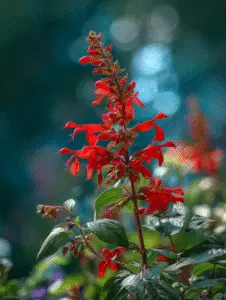
Scarlet sage
Another red tubular flower hummingbirds work, for a reader who came only for the birds.
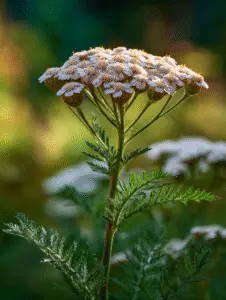
Yarrow
One of the summer perennials the trial notes list as a match beside bee balm.
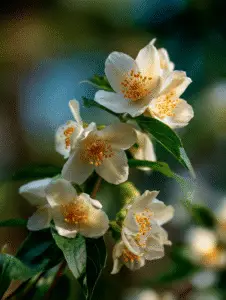
Mock orange
The white-flowered shrub taken for bee balm at a distance in a live identification thread.
Enjoying our flower guides? Add YourFlowersGuide as a preferred source on Google. It helps more readers find us.
Add to Preferred Sources