Taxonomy and origin
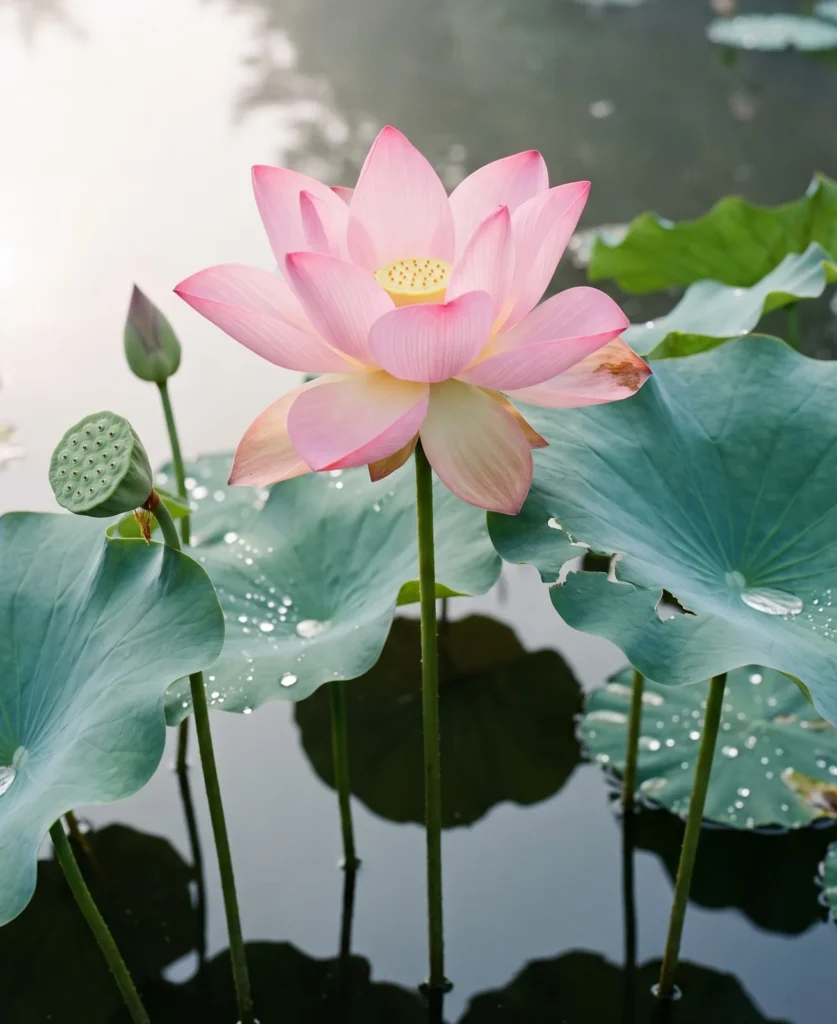
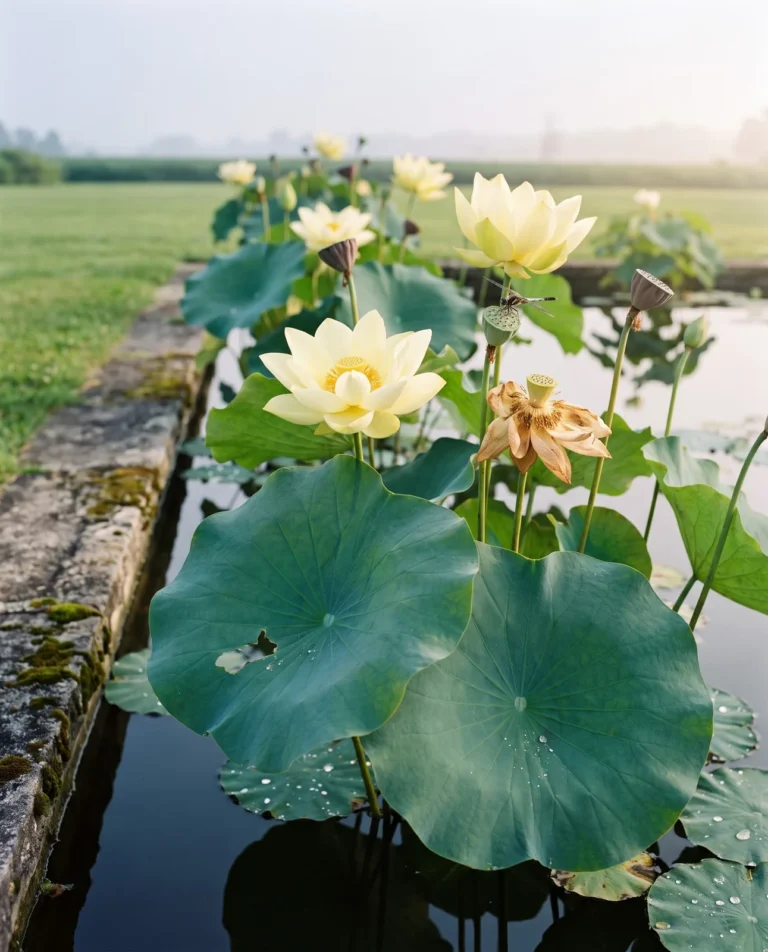
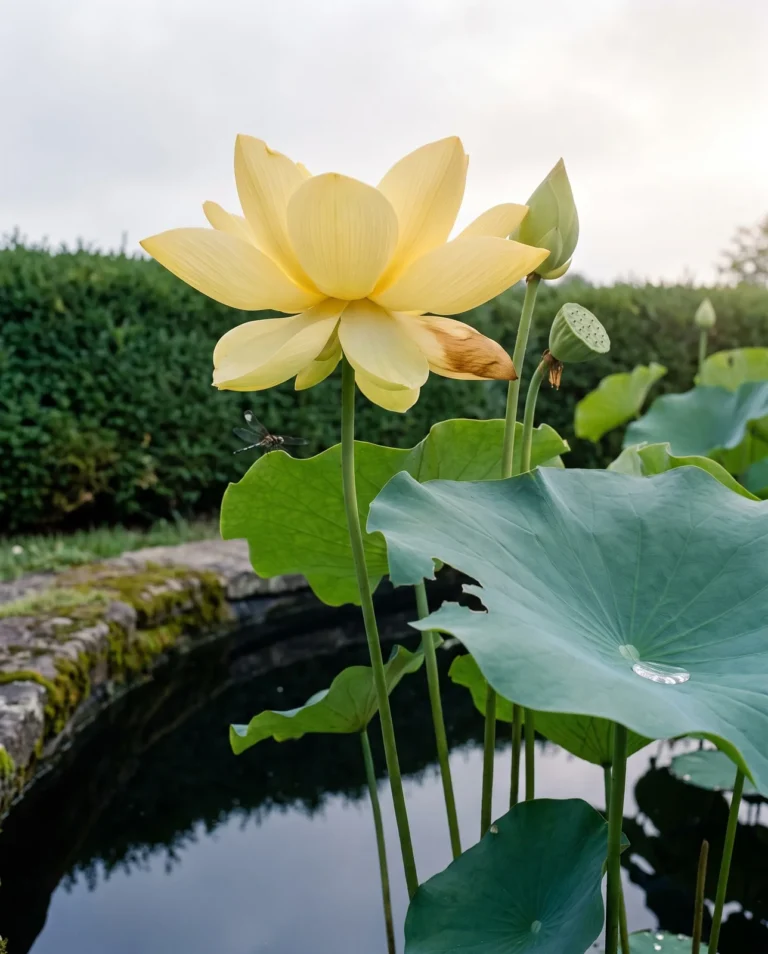
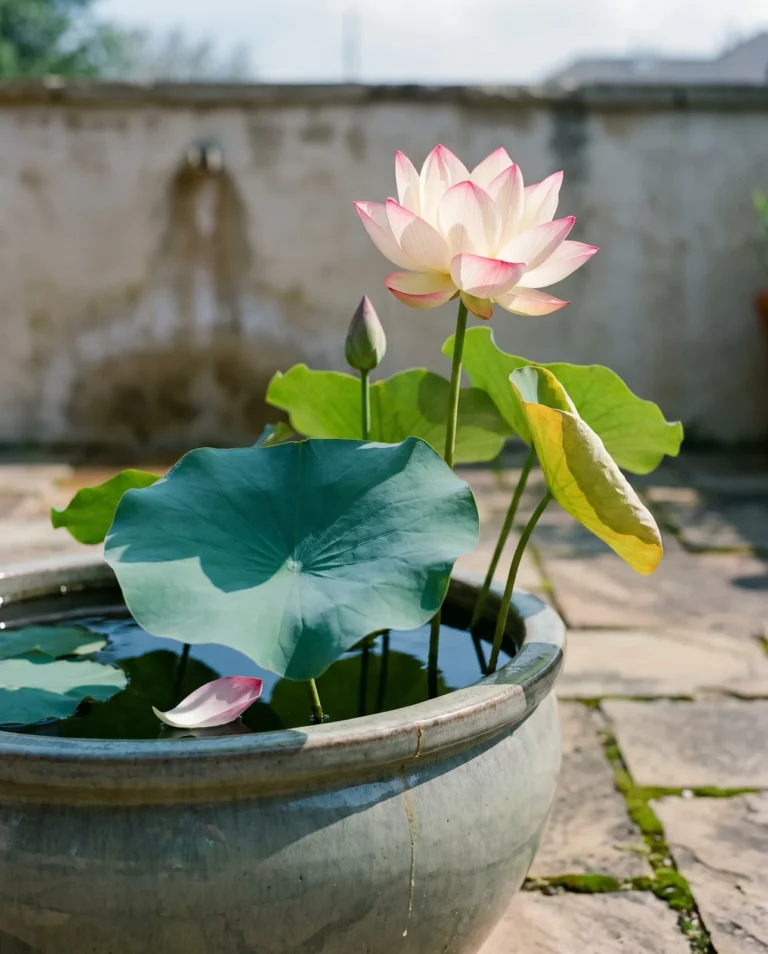
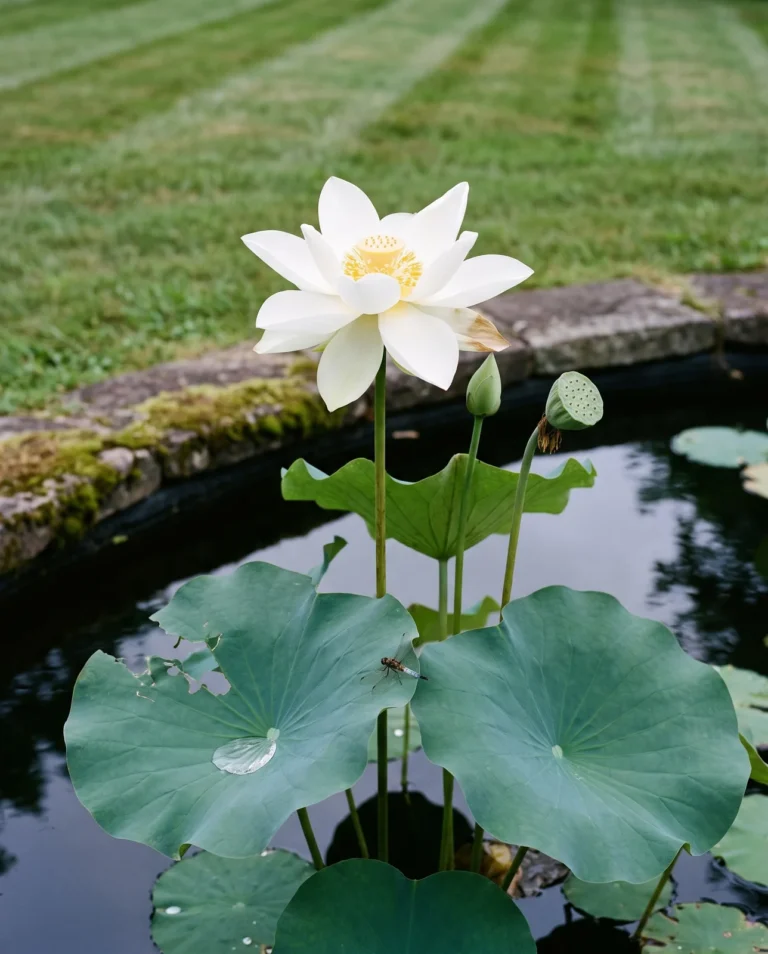
Lotus is the common name for two species of Nelumbo. They hold a family of their own, Nelumbonaceae, not the Nymphaeaceae of the true water lilies, inside the order Proteales. The name travels loosely enough that people still call a lotus a water lily. Sacred lotus is the Asian species, native from Iran through China and Japan to New Guinea and Australia. It is introduced in the southeastern United States, Italy, Puerto Rico, Trinidad, and the Leeward and Windward Islands. American lotus is the only lotus native to the Americas, from southeastern Canada to Mexico, the Greater Antilles and Colombia. It grows wild from southern Ontario to Florida and from Minnesota to Texas. Color separates the two at a distance: sacred lotus opens in shades of pink through white, American lotus in light yellow with a deeper center.
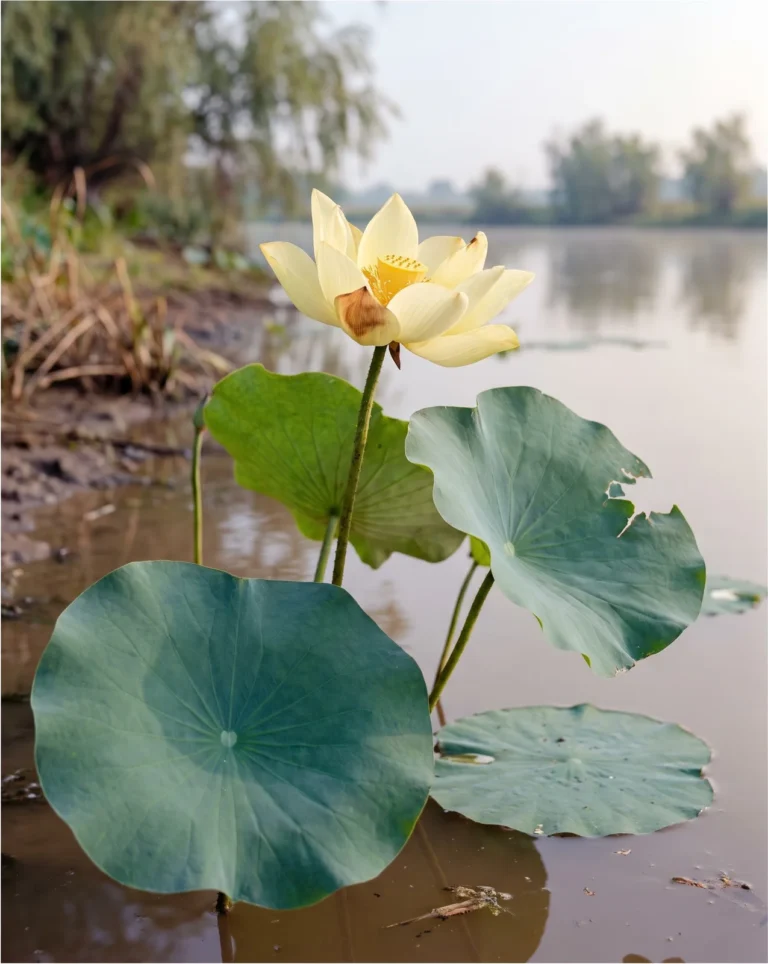
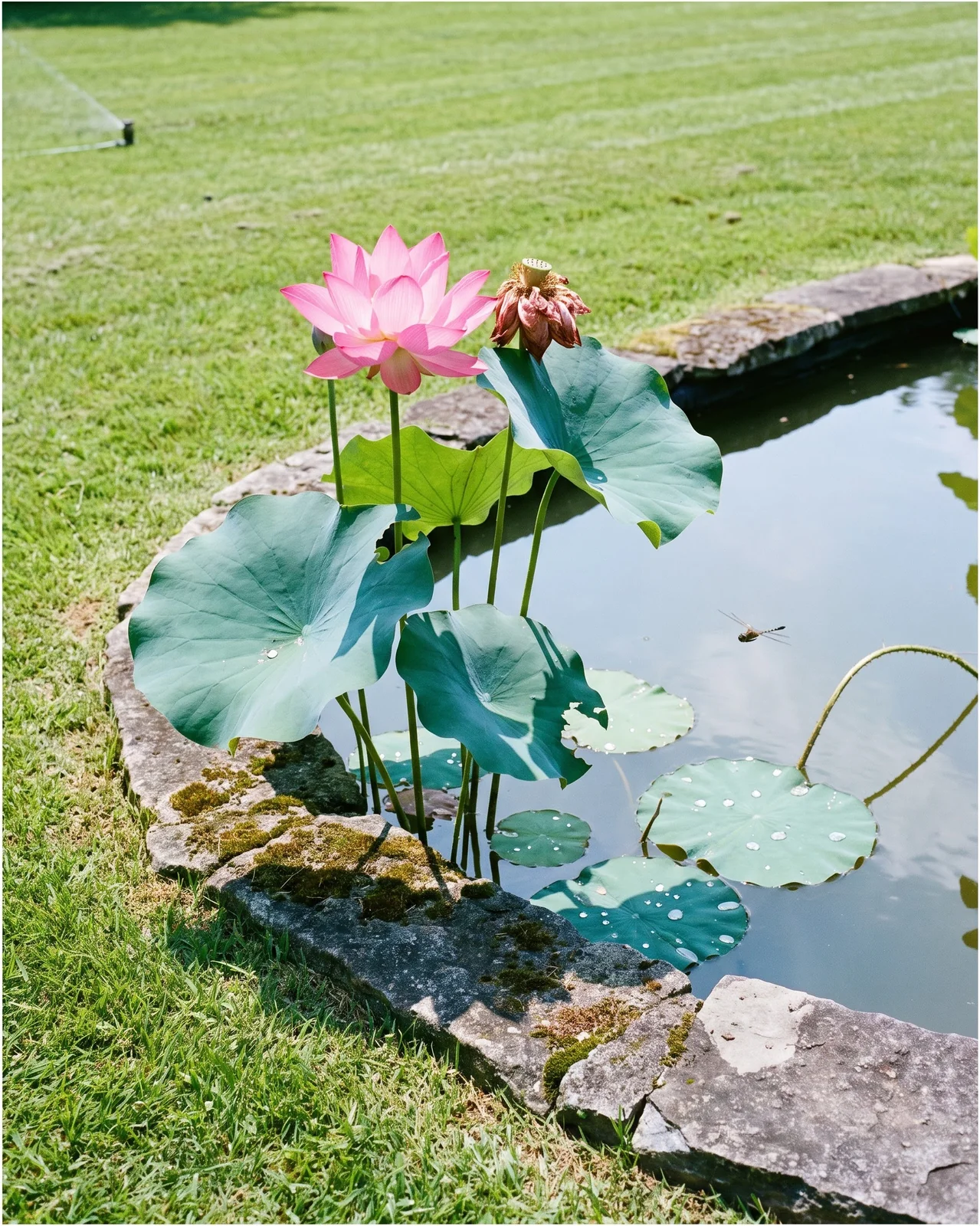
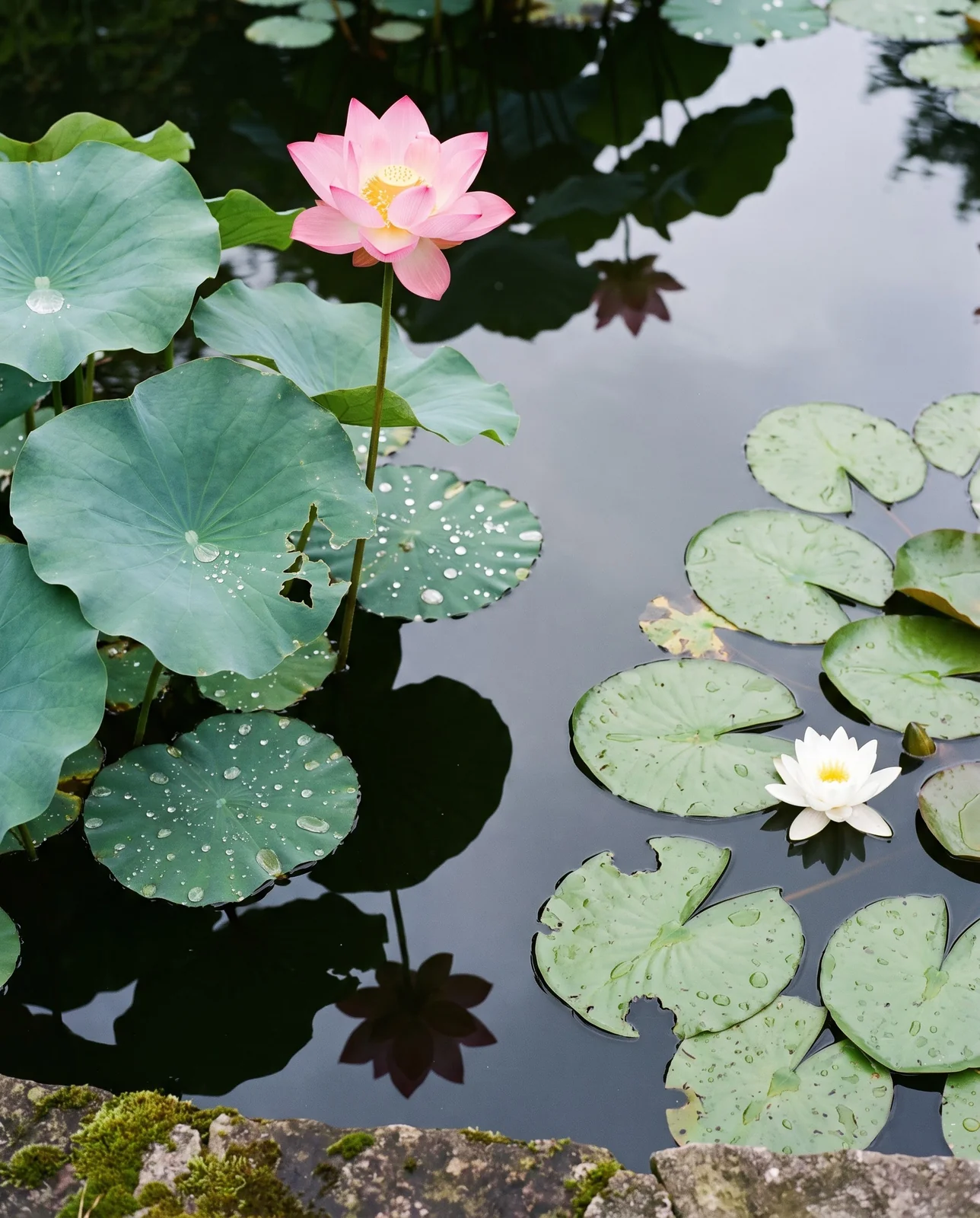
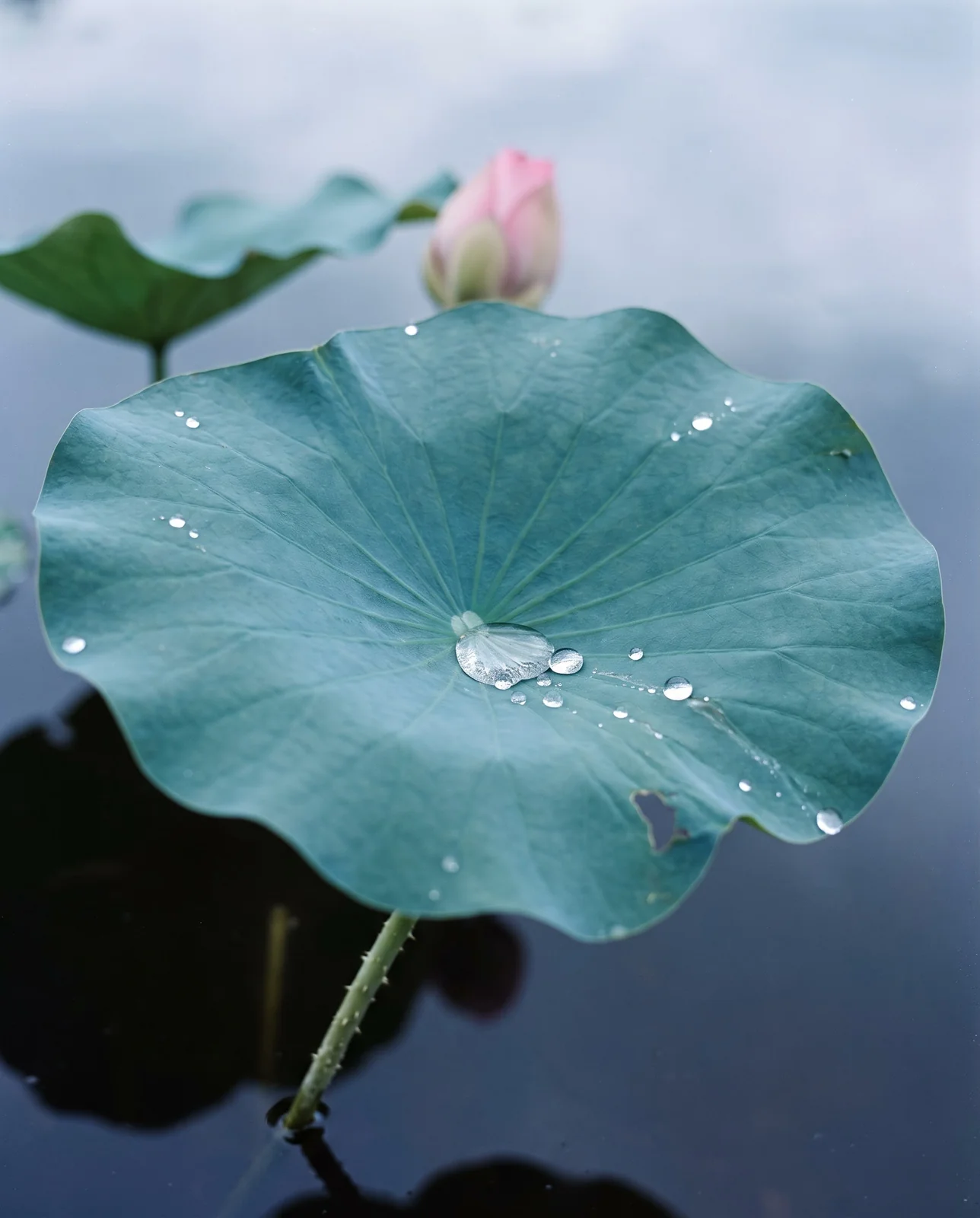
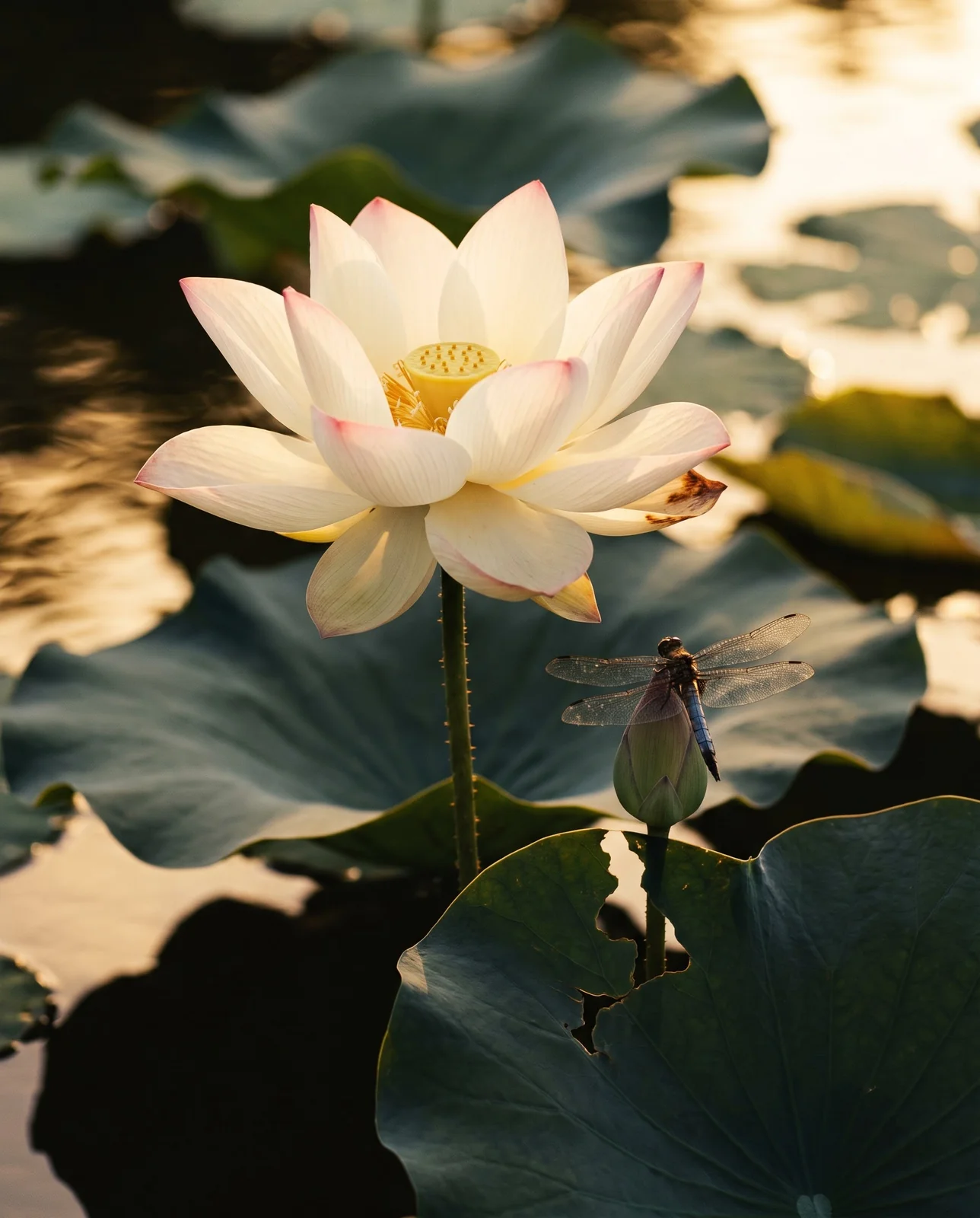
The leaves give the plant away long before it flowers. Circular blades 1.5 to 3 feet across stand on their own stalks, clear of the surface, cupped like a parasol. They shed water so completely that a leaf in a muddy pond stays clean, an effect named for this plant. The flowers follow on stiff stems, cupped, fragrant and 8 to 12 inches across. They are the largest flowers of any plant native to North America, ahead of magnolia and hibiscus. Beetles do most of the pollinating, with some help from bees, and the flower meets them warm, holding 86 to 95 degrees Fahrenheit inside while the air outside sits at 50. Sacred lotus has thrown countless varieties and natural hybrids, American lotus exactly one, 'Yellow Bird'.
Bloom time
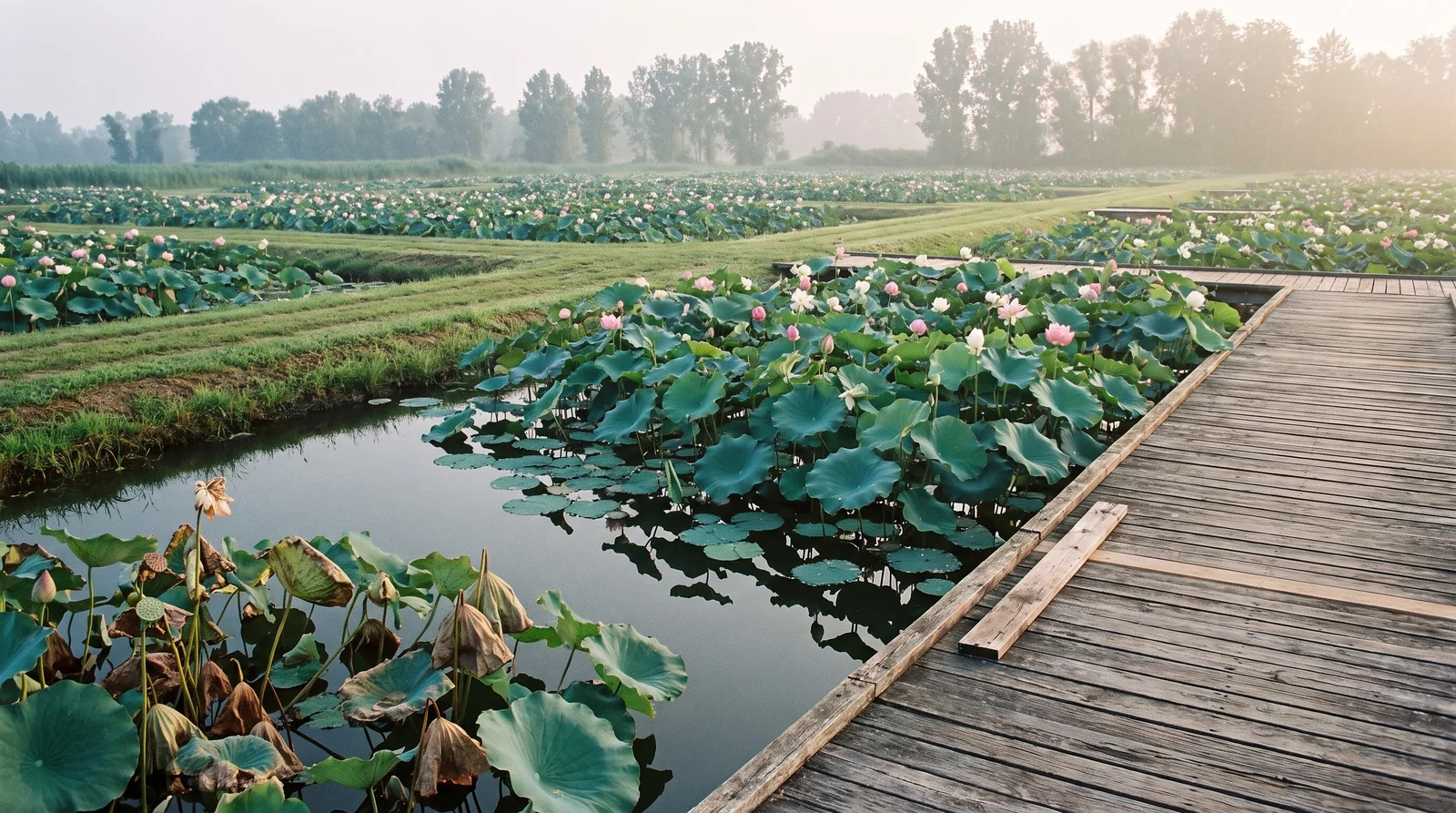
Lotus blooms in summer. Sacred lotus opens around June and July, and American lotus carries longer, June through September. The water starts the season before the air does. Growth resumes once it passes 70 degrees Fahrenheit, so a shallow tub on a southern patio runs weeks ahead of a deep northern pond. Heat has a ceiling as well. Consecutive days above 90 degrees Fahrenheit hold blooming back, and a plant that flowered all July can go quiet in a hot August.
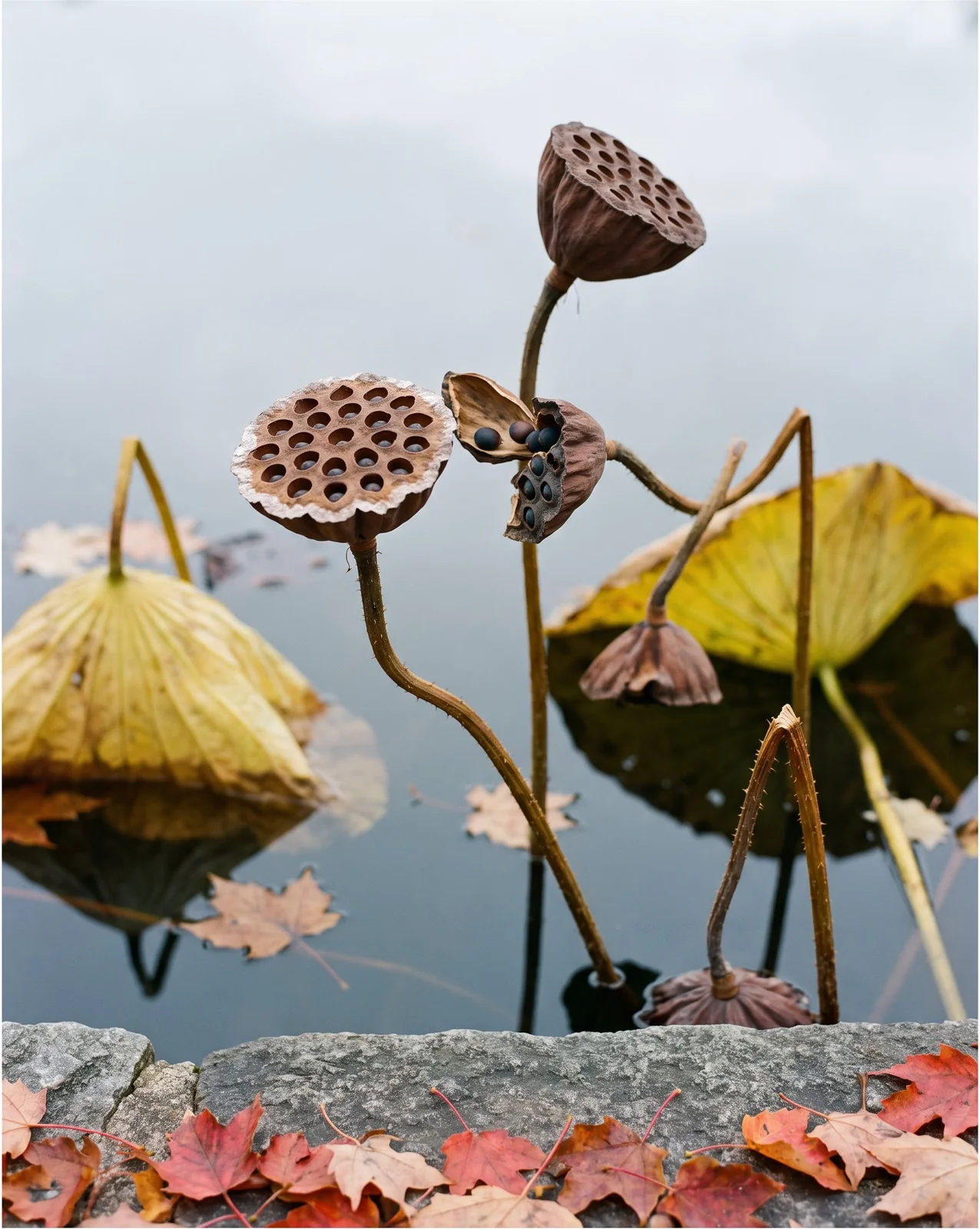
Each flower lasts three to five days. The daily cycle is shorter. A bloom opens early in the morning and draws up partly closed by midafternoon, so the same plant looks like two different flowers at noon and at dusk. The scent is subtler than a water lily, which comes on strong at opening and then fades. Buds keep coming while the warm weather holds, so a well-fed plant looks continuously in flower. Fruit stands on the plant from June into October, and the receptacles break off in the end and fall into the water.
Lotus or water lily: the tell for each
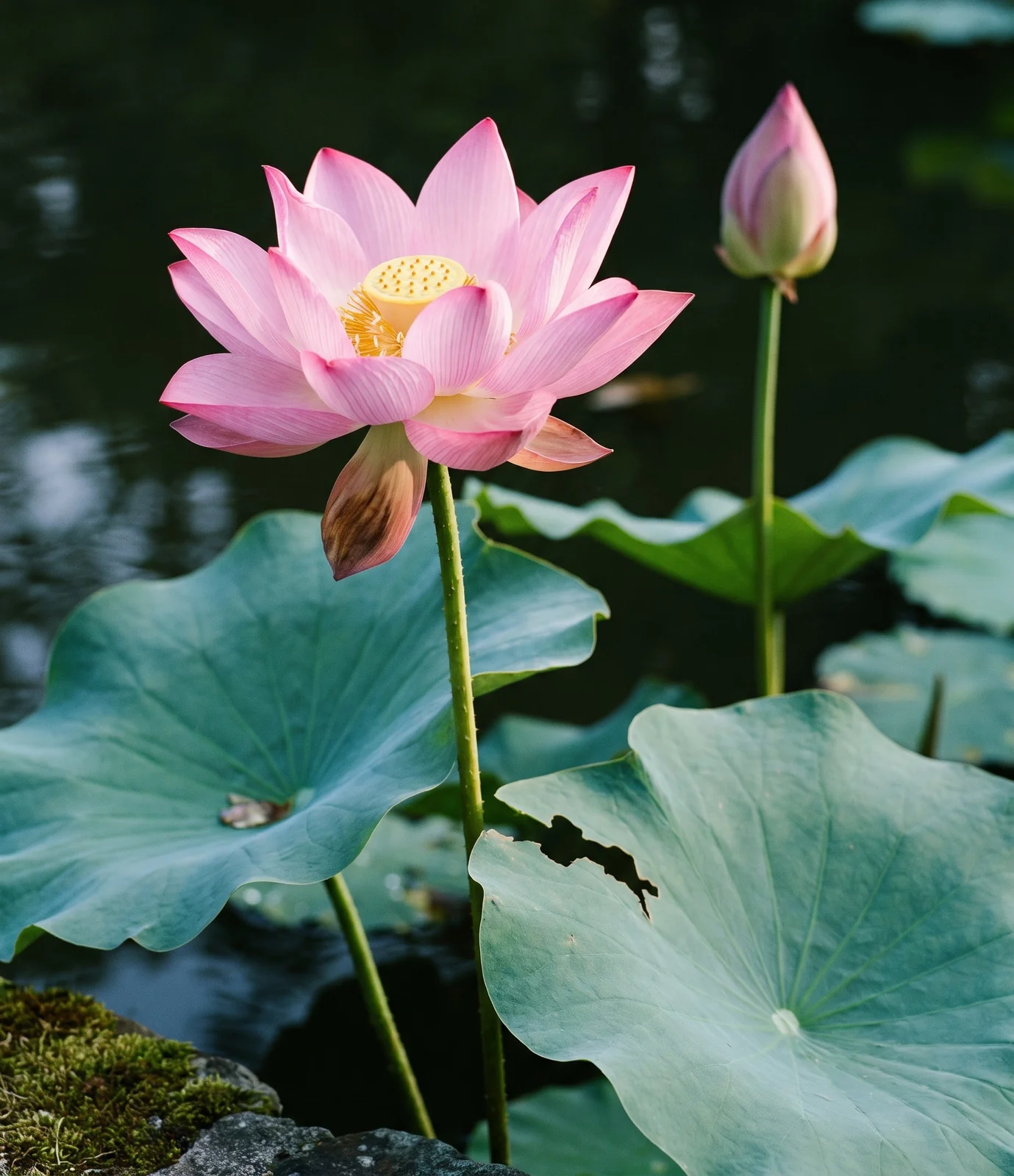
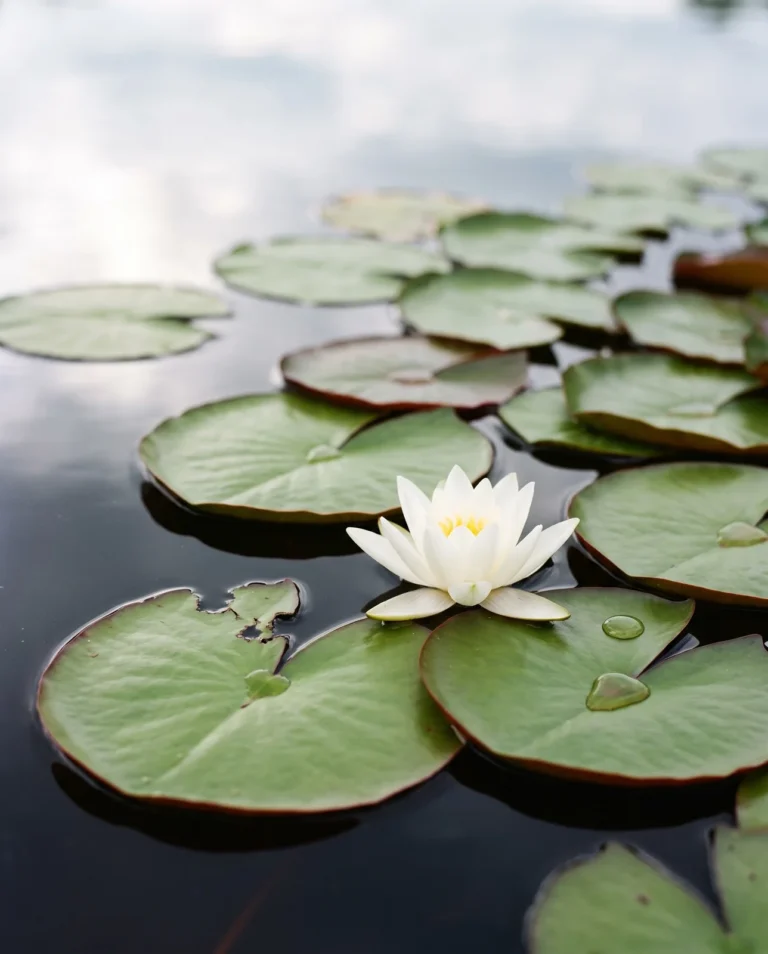
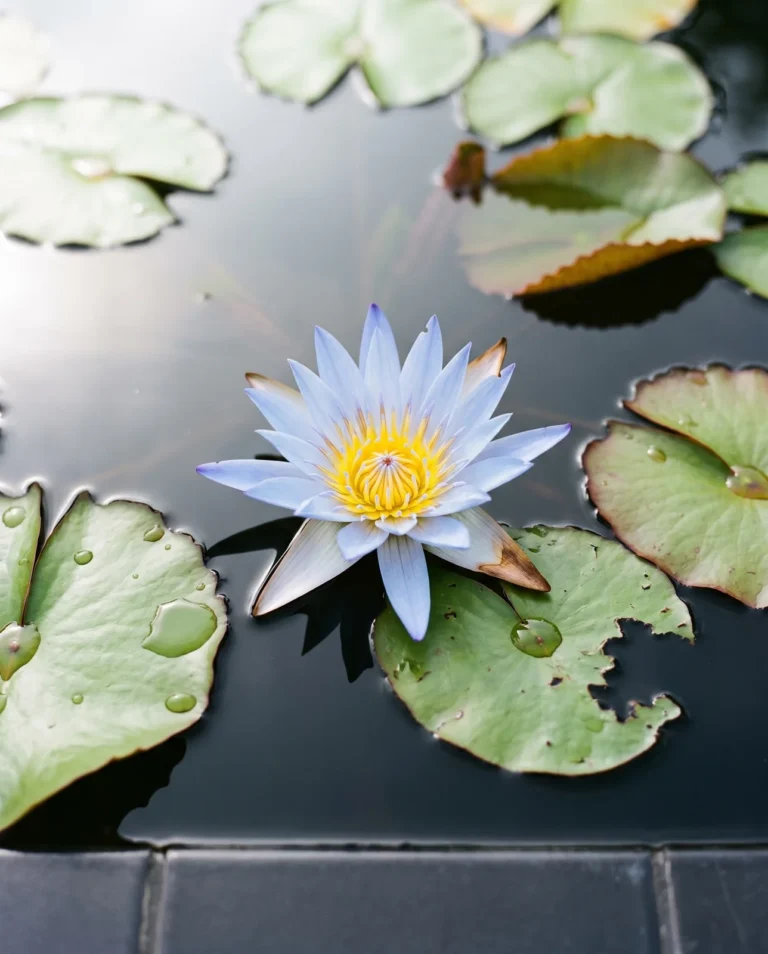
The leaf settles it before any flower opens. Look at where the blade sits, then at its edge.
How to grow a lotus in a pot or tub
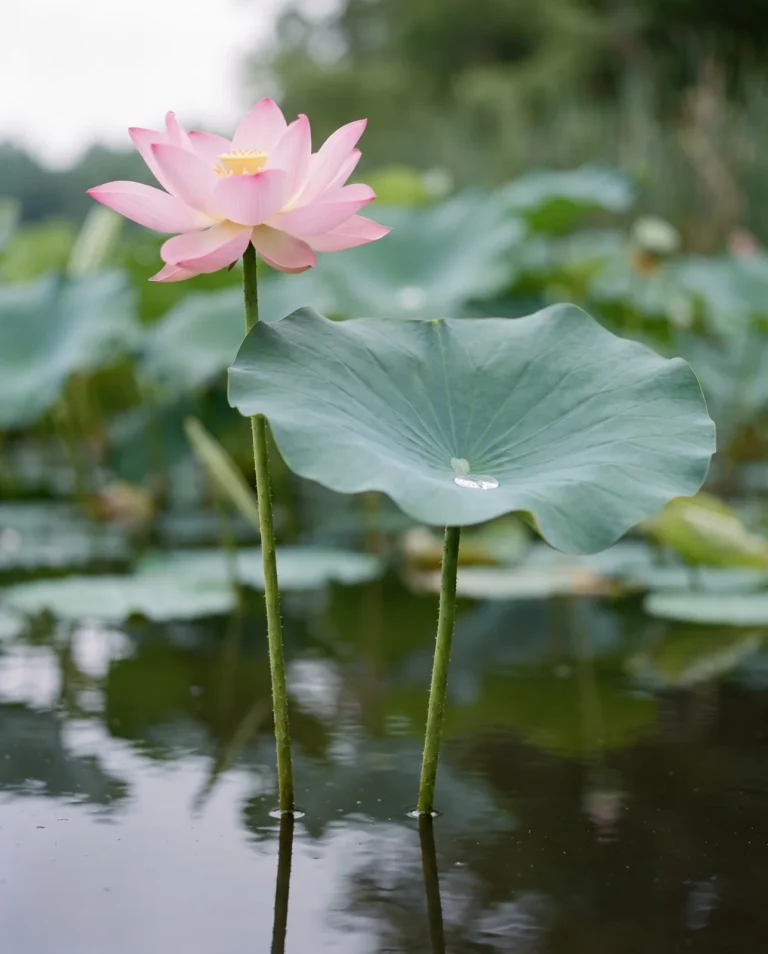
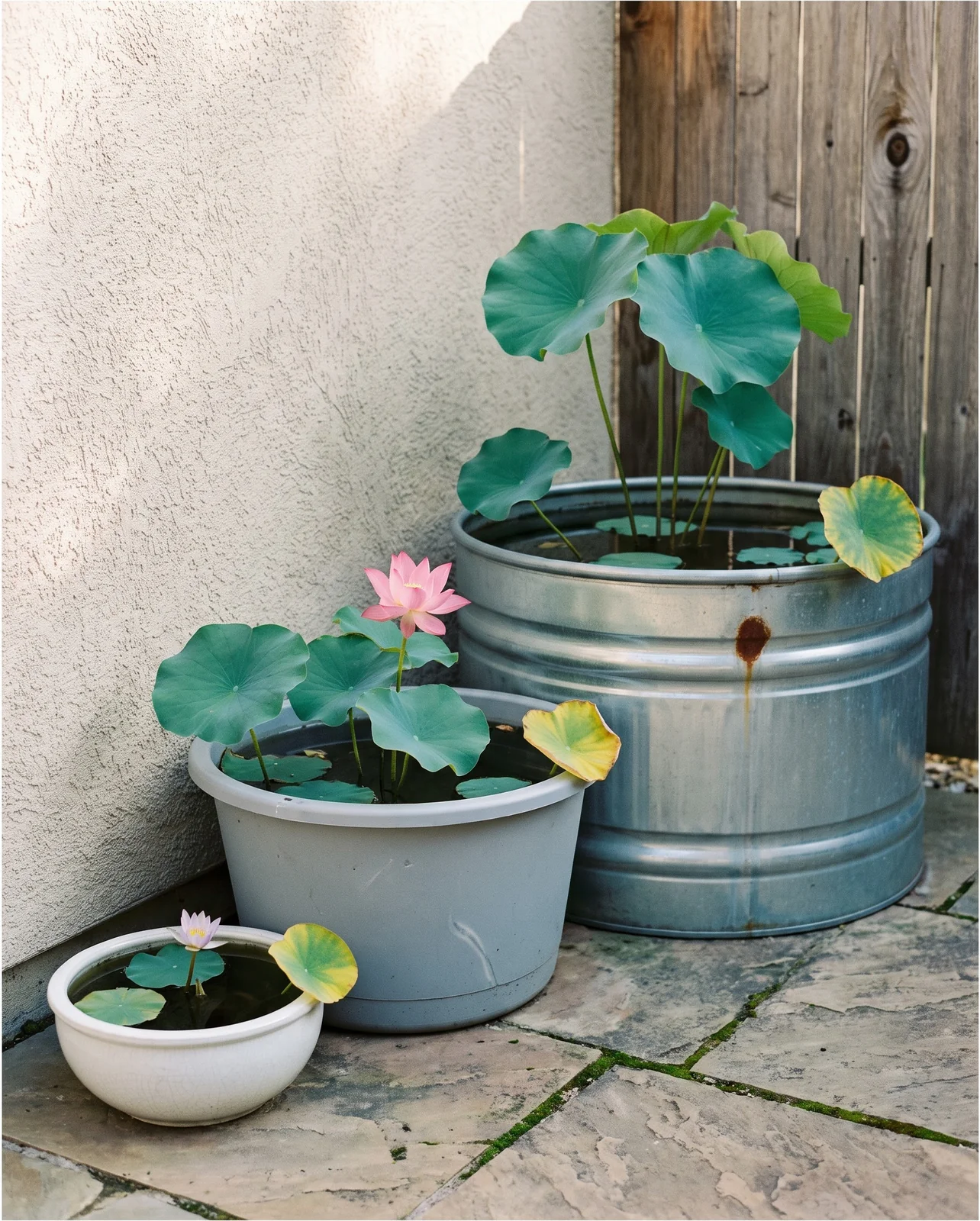
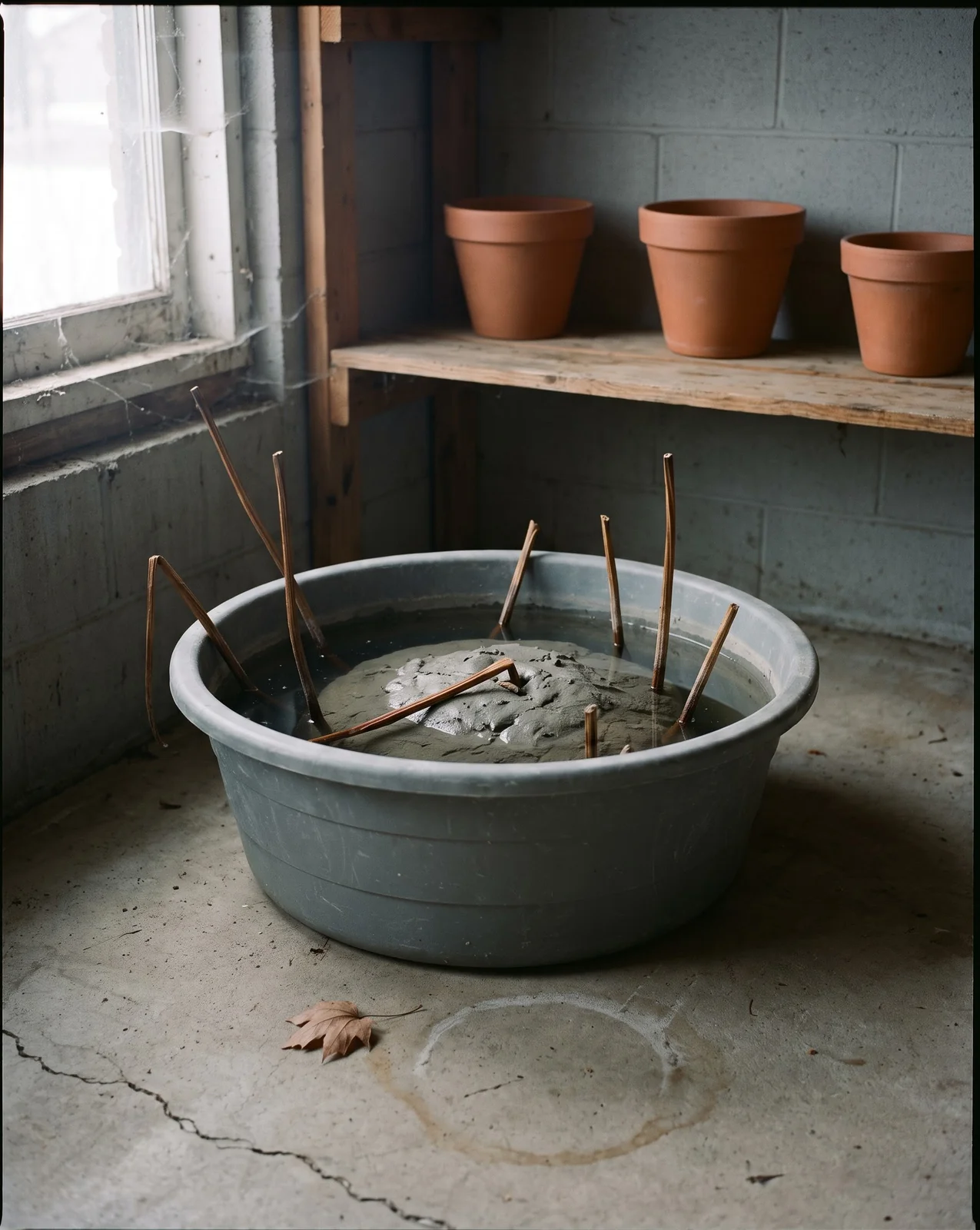
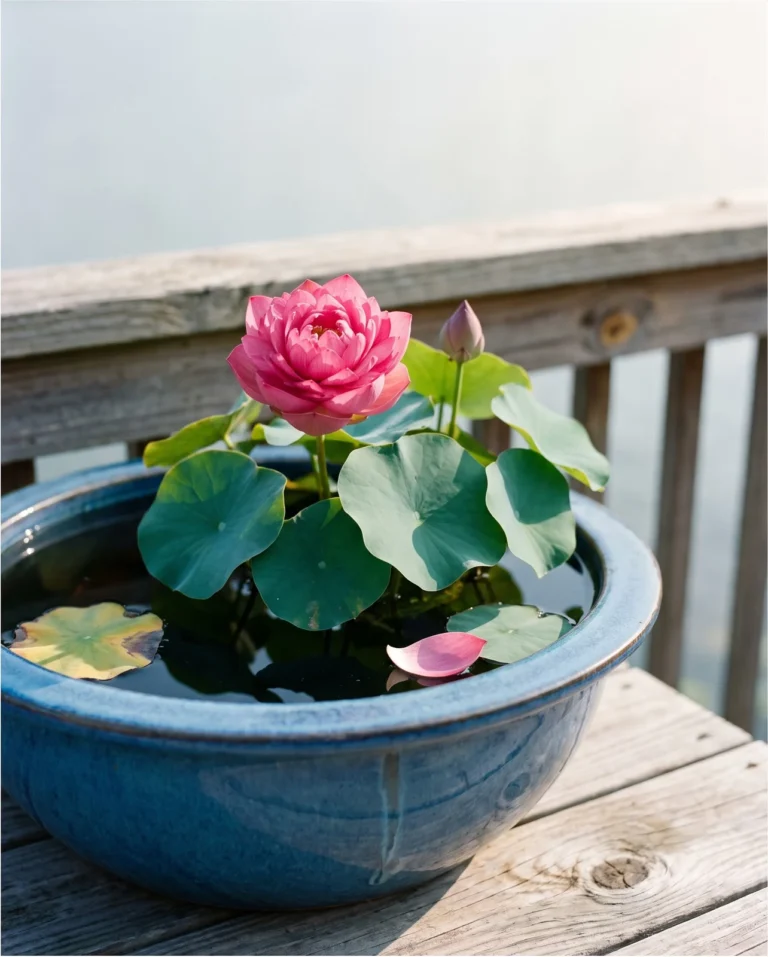
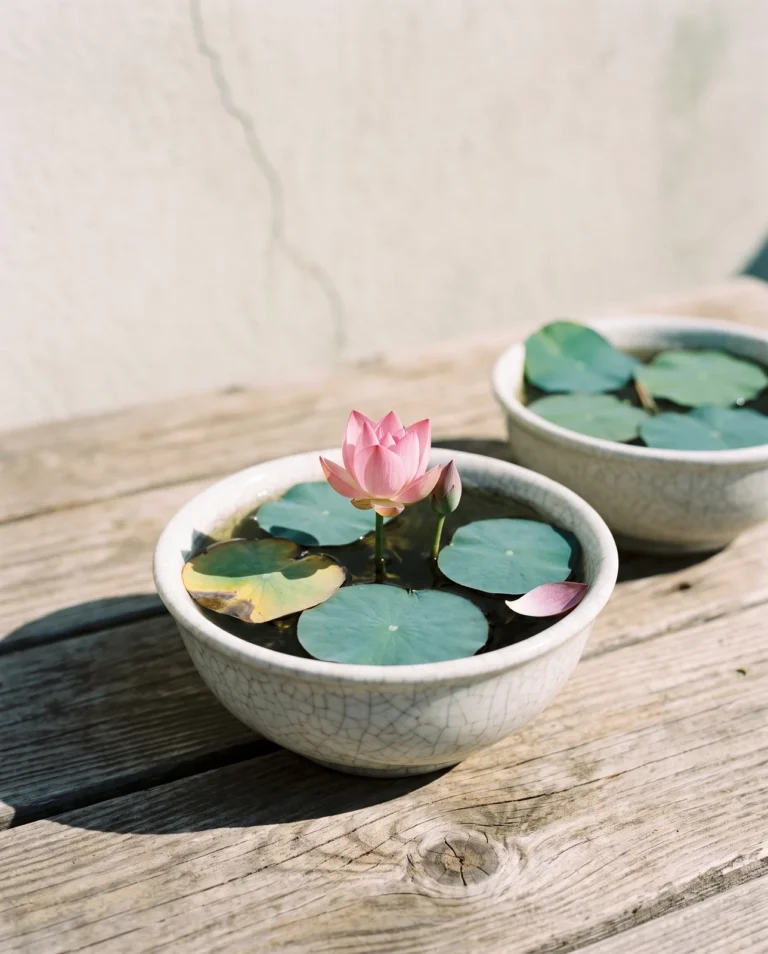
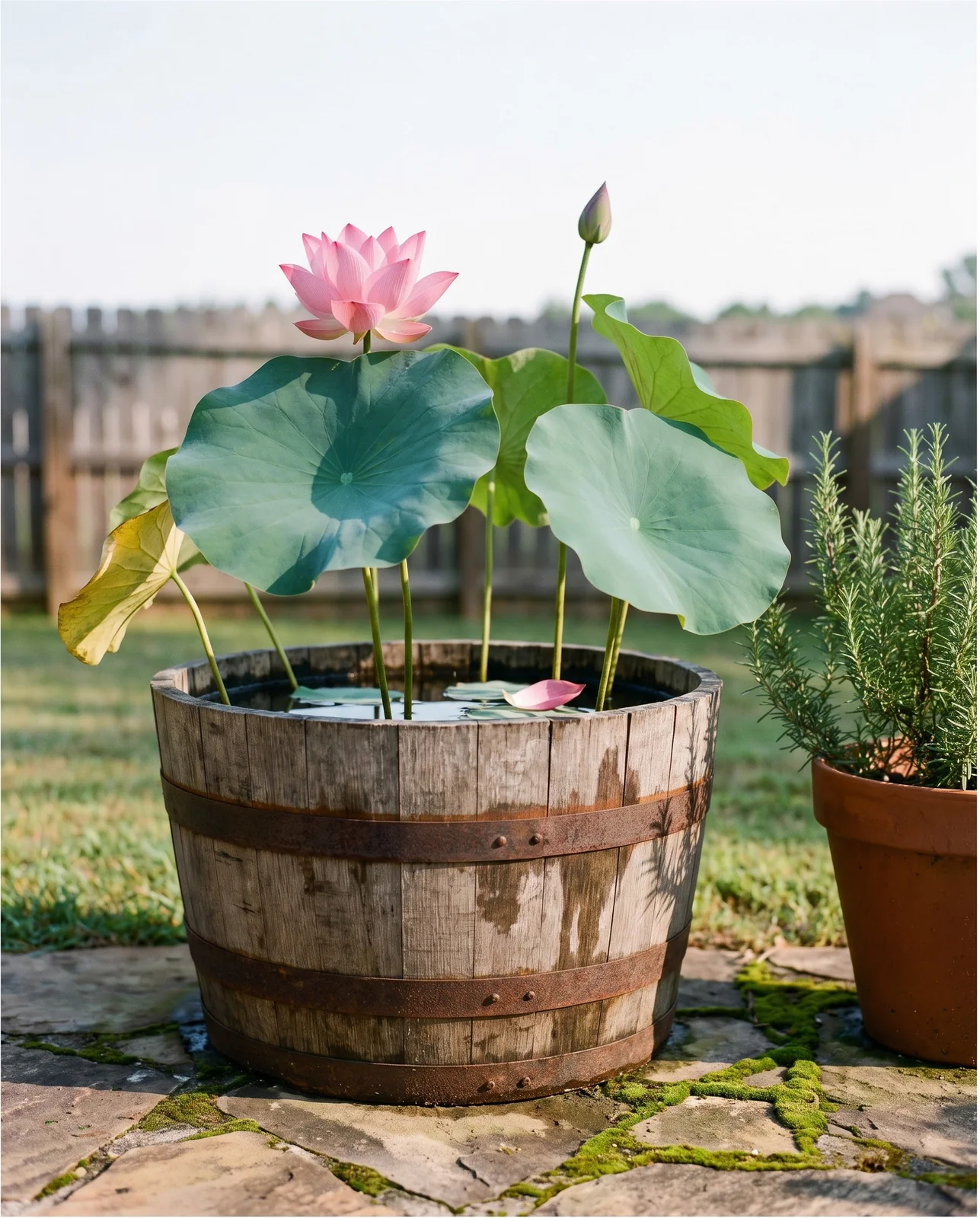
A lotus grows in a watertight container with no drainage holes, a few inches of heavy clay in the bottom, and standing water above that. Start with a pot at least 12 inches deep and 24 inches wide. A glazed ceramic pot works once the drainage holes are plugged with waterproof silicone, and a black plastic 15-gallon feed tub handles the larger varieties. Dwarf cultivars will flower in hole-free pots as small as 12 inches. Soil is where most first attempts come apart. Potting mix floats, so the fill is soil rich in clay, sometimes two parts heavy clay to one part sand. Four or five inches of plain garden loam in the bottom is enough.
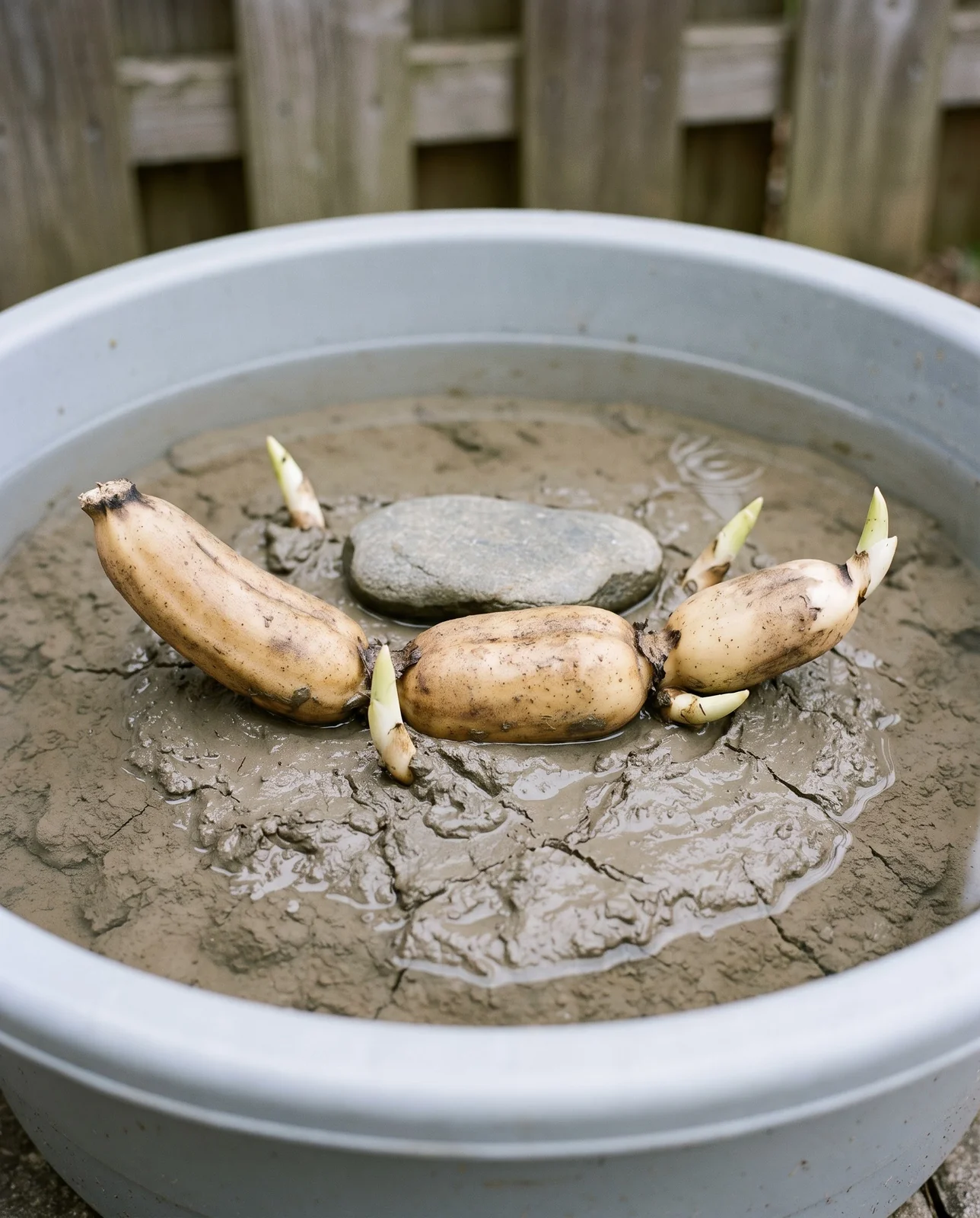
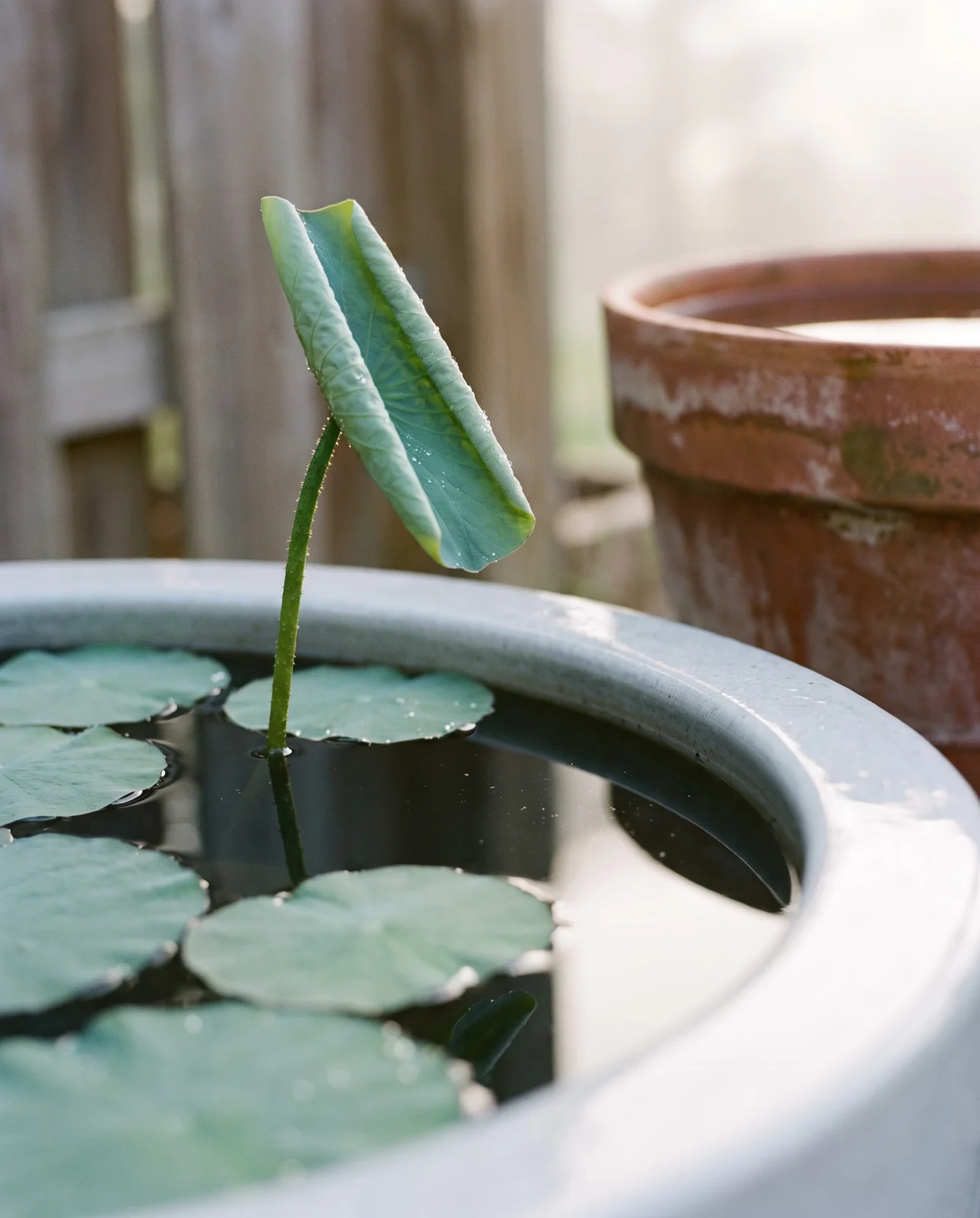
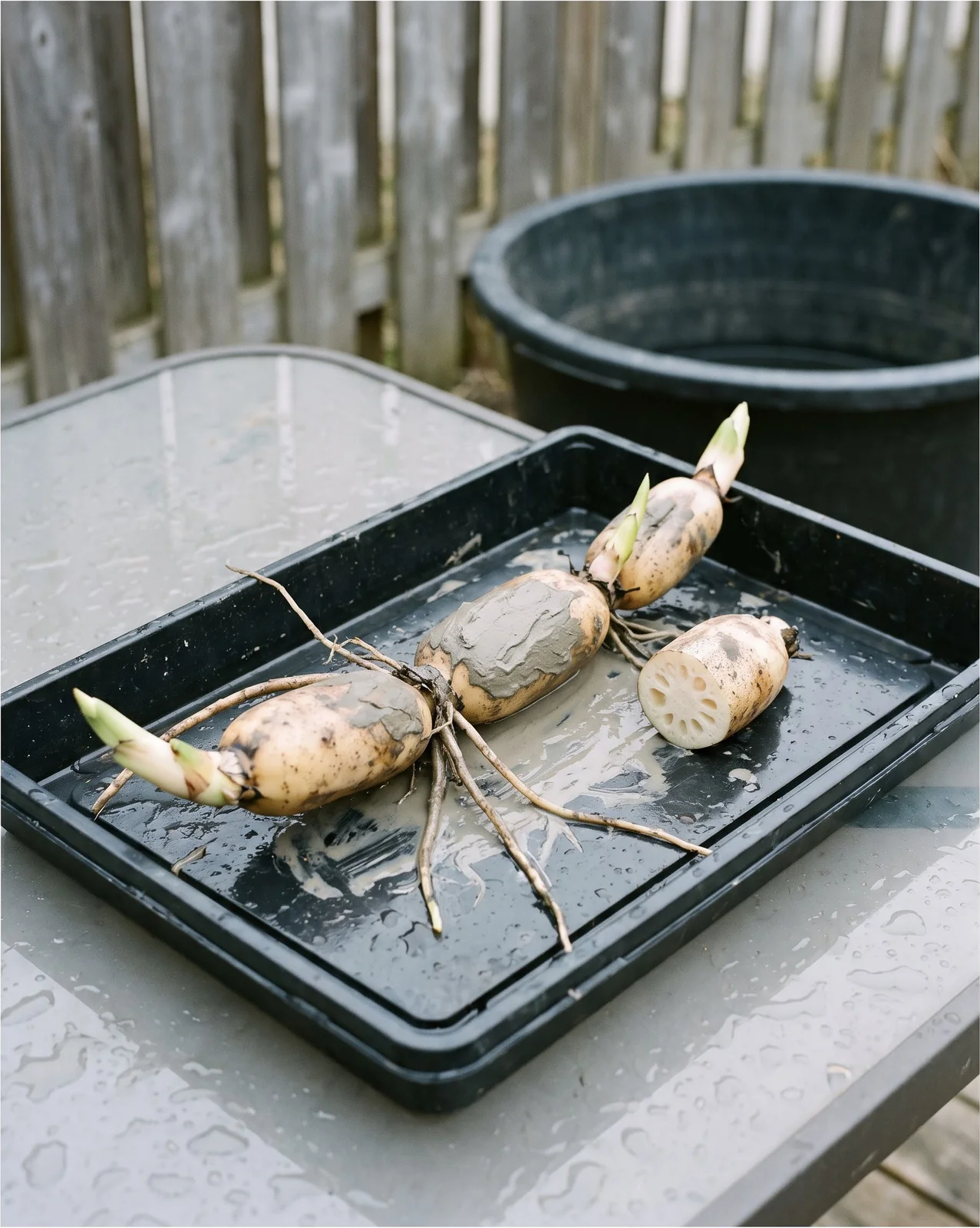
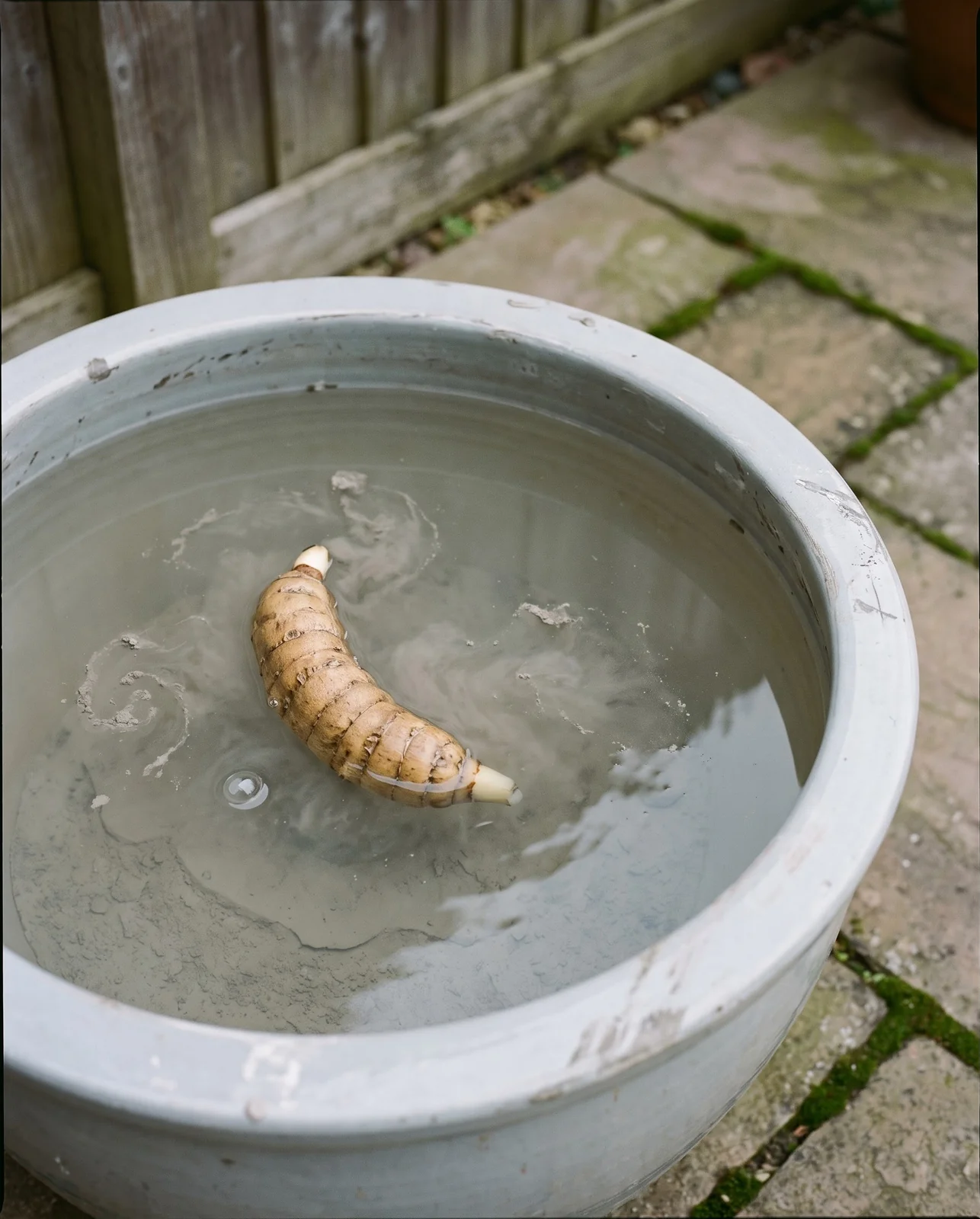
A lotus tuber is about the size of a sweet potato and far more fragile. It arrives in the mail with new growth already pushing from one end, and that tip is the part to protect. Break it during planting and the whole tuber can die. Plant tubers carrying at least two growth points, which is what gives a flower the first season. Lay the tuber flat, cut end near the rim, tip toward the middle. Press it into the top inch of the soil and leave the tip uncovered. Then flood the container with 2 to 4 inches of water, and hold it that shallow while the plant is young.
Seed is the slower road, and it starts with a file. The coat is hard enough to keep a seed alive for centuries, so file through the dark outer layer until the cream-colored layer shows. Set the seeds in warm water on a sunny windowsill, around 75 to 87 degrees Fahrenheit. Sprouts appear in about a week, and the first flowers come in the second year. Middle and northern growers start seeds by May and set plants out by mid-June; southern growers begin in April.
A pond changes only the container. Set the tuber in a large basket or tub the same way, then sink it so no more than 24 inches of water covers the crown. A lotus takes the same basket-and-sink treatment a canna lily gets at a pond margin. Avoid planting straight into pond mud: given a mud bottom, the tubers run as deep as they can and become very hard to dig out.
Pot size by lotus type
Buy the container for the class of lotus first and fit it to the patio second.
Why a lotus will not bloom
A lotus that fills its tub with leaves and never sets a bud is short of sun, room, or food. Room is the one nobody suspects: pot width alone separates no flowers in a year from 20 to 30 flowers in one pot. Depth belongs to the same question, since bowl varieties sit 1 to 3 inches under the surface and taller ones 3 to 8 inches. Food stops a plant that already has the first two. Lotuses are heavy feeders, and steady fertilizer greatly improves how they bloom, while a feed high in nitrogen or short on micronutrients gives exactly this symptom, leaf after leaf and no flower.
Temperature sets the ceiling over all of it. Blooming takes at least three months of air between 75 and 85 degrees Fahrenheit, with water at 65 to 70. A cool, short summer delivers a healthy plant and no flowers at all. In Zone 6 and colder, tubers are started indoors and moved out once the water warms. A plant that still refuses in a long, bright season usually has a tuber filling the pot edge to edge; divide it into something wider in spring.
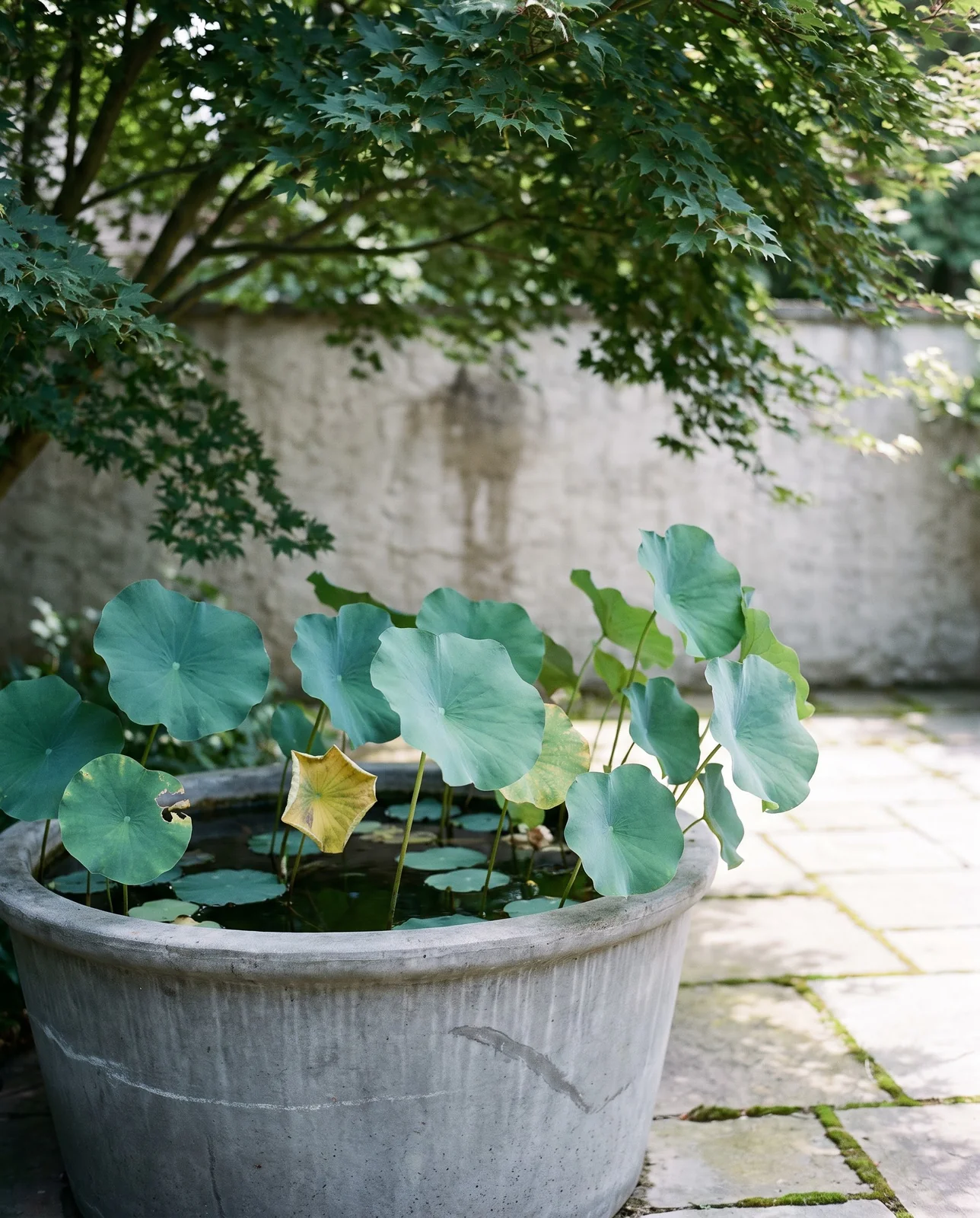
Leaves but no buds: what to check first
Light and room come before food, and the tuber is the last thing to blame.
Winter and dormancy
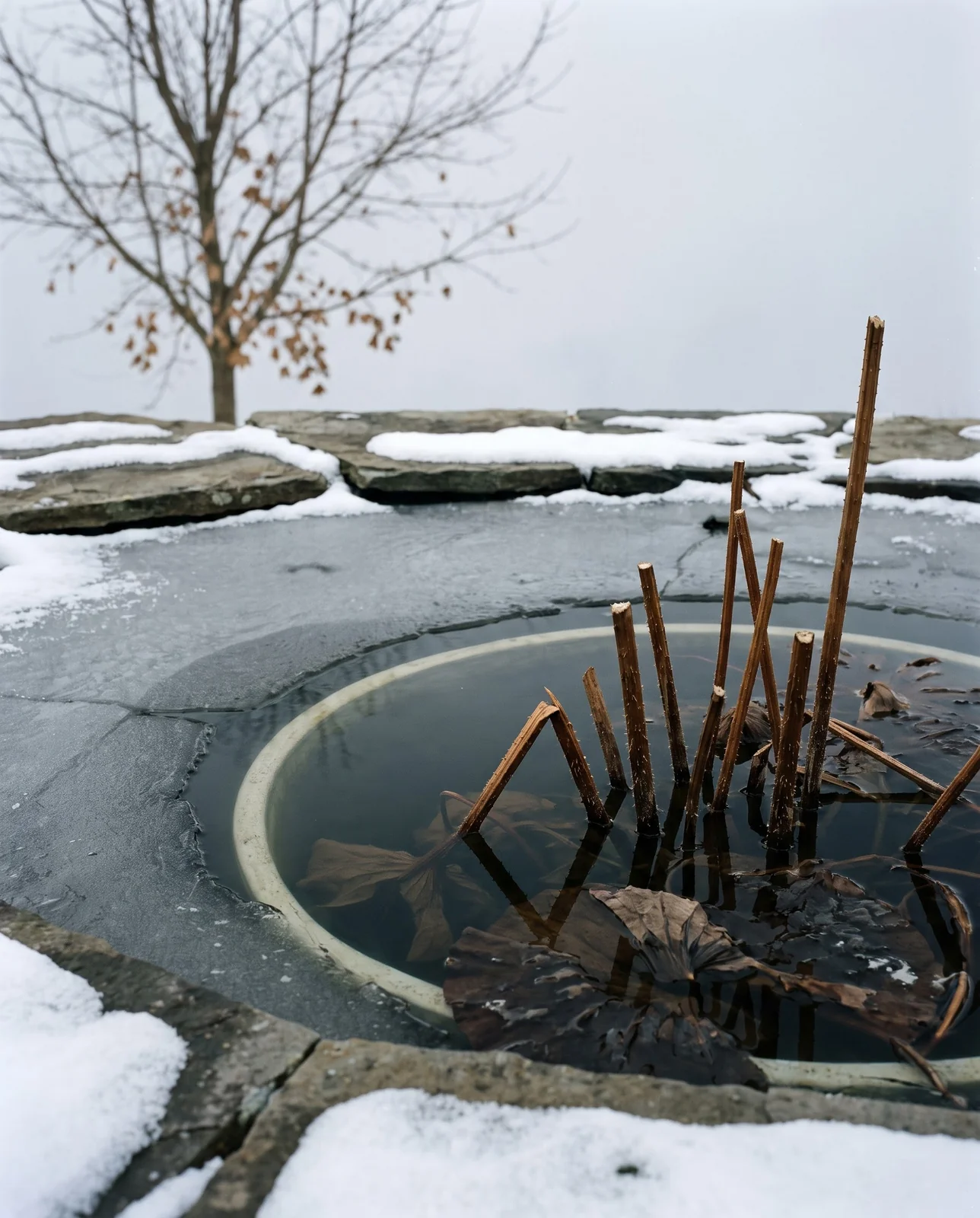
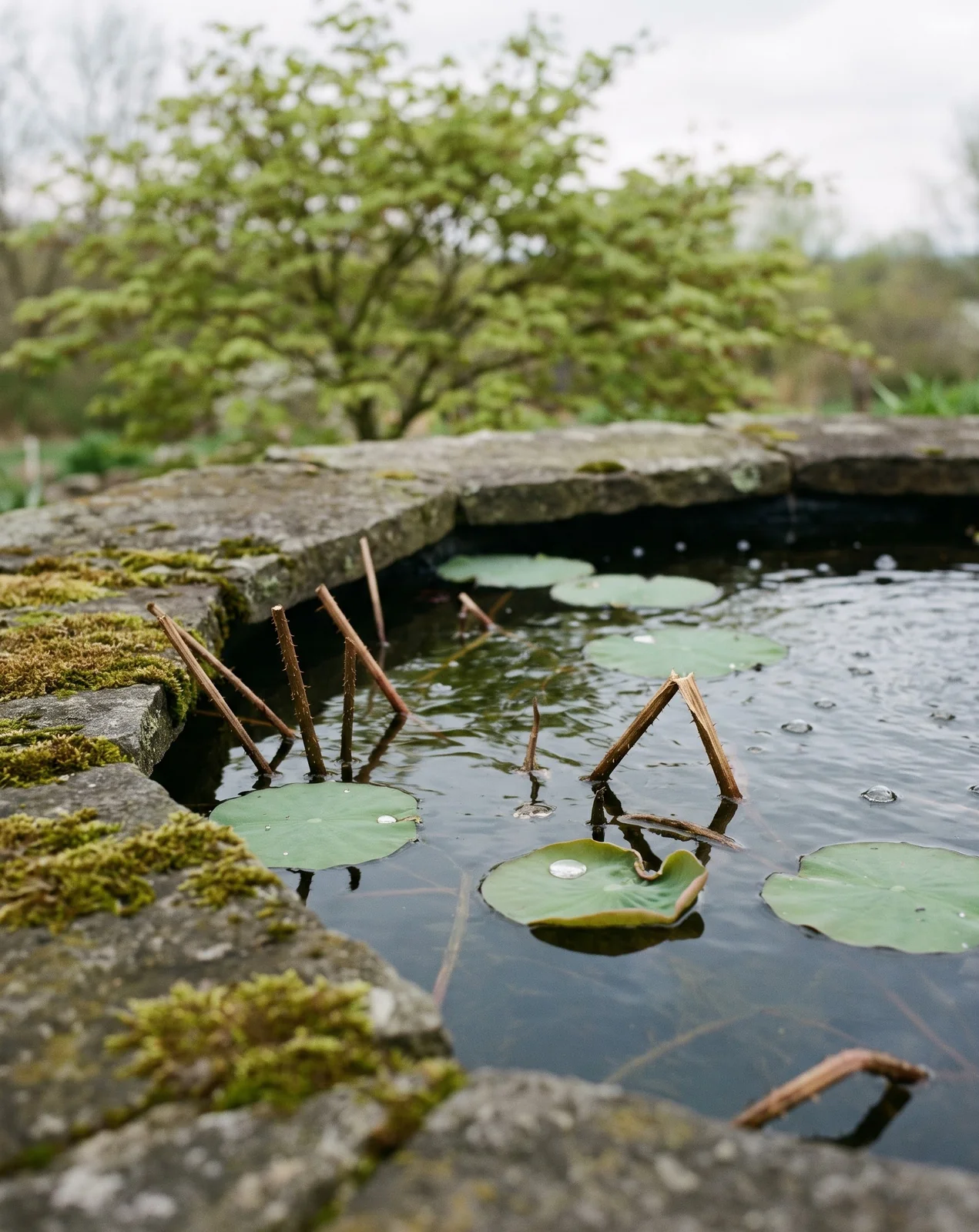
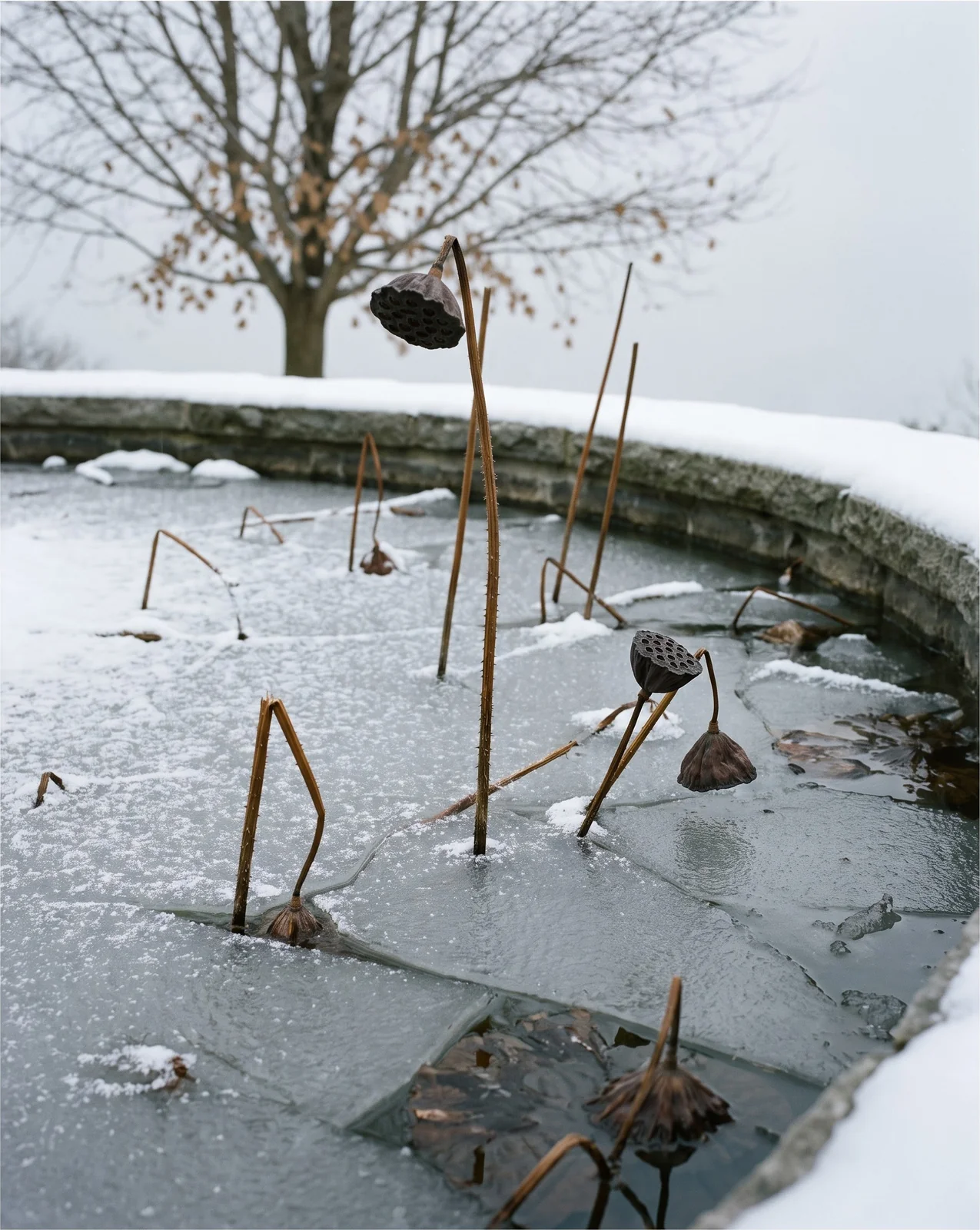
A lotus in winter looks dead and usually is not. The leaves yellow and the plant dies back to nothing above the water. Two things decide whether it wakes. Ice is the first: the water must not freeze down to the roots. The second is the cut. A lotus stem is hollow, and a cut below the surface runs water straight into the tuber, so dead stems come off above the water line. In a pond, sink the containers well below the level where ice forms. Containers sitting in less than 6 inches of water are the ones at risk, and they go deeper or indoors before hard frost.
A patio tub has no deep end, so it needs a decision by late fall. One method drains most of the water and moves the container somewhere cool that will not freeze, an unheated garage or a cold cellar. Another carries the whole pot into a basement or root cellar for the winter. Tubers can also be lifted after die-back and stored cool, which is how dwarf cultivars such as 'Momo Botan' are handled. Either way the pot has to stay cold without freezing solid. In a cold zone, treating a potted lotus as an annual and buying a fresh tuber is a real option.
Overwintering by zone
The zone decides where the tuber spends winter, and every band below has a version that works.
Light
Lotus wants full sun, 6 or more hours of direct light a day. Size makes no difference to that figure: a bowl lotus on a balcony rail needs the same minimum as a full-size plant in a stock tank. What counts is open sky over the water itself, since the pot is also the pond. A tub against a north wall or under a tree canopy still makes leaves, and it makes them at the cost of buds. A container can be picked up, so the sunniest square yard on the property is worth chasing before the tuber gets any blame. An open, breezy spot pays twice, since moving air discourages aphids from settling on a bowl.
Water and feeding
Lotus wants still water, and not much of it at the start. It roots in mucky, submerged soil under calm water and will grow in a pond as deep as 6 feet, so a fountain aimed into a tub works against it. The shallow start a fresh tuber sits under is raised as growth takes off, and by the end of the first season the pot can go under 2 feet of water. Settled plantings do well under 12 to 18 inches. A wide tub in full sun loses water quickly, so top it off through the summer.
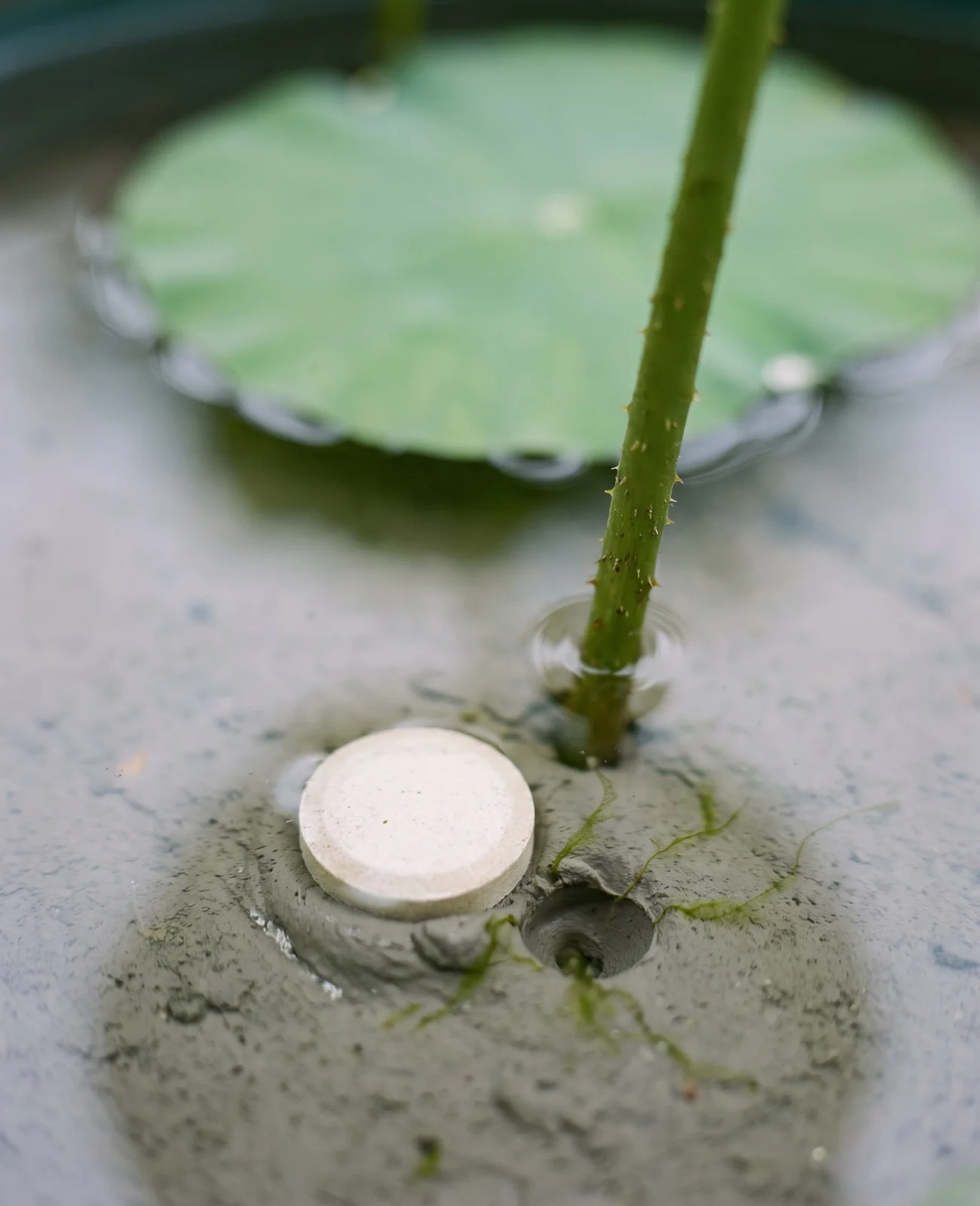
Feeding is the other half of the same job. A common starting rate is one 10-gram tablet of 10-26-10 fertilizer for every one to two gallons of soil at potting time. Aquatic tablets follow every three weeks through the growing and blooming season, and going as often as twice a month raises the number of blooms. A bowl lotus holds a fraction of that soil and takes about half a tablet every two weeks. A closed container has no outflow, so whatever grows on the surface stays there: skim duckweed and algae off as they appear.
Height and spread
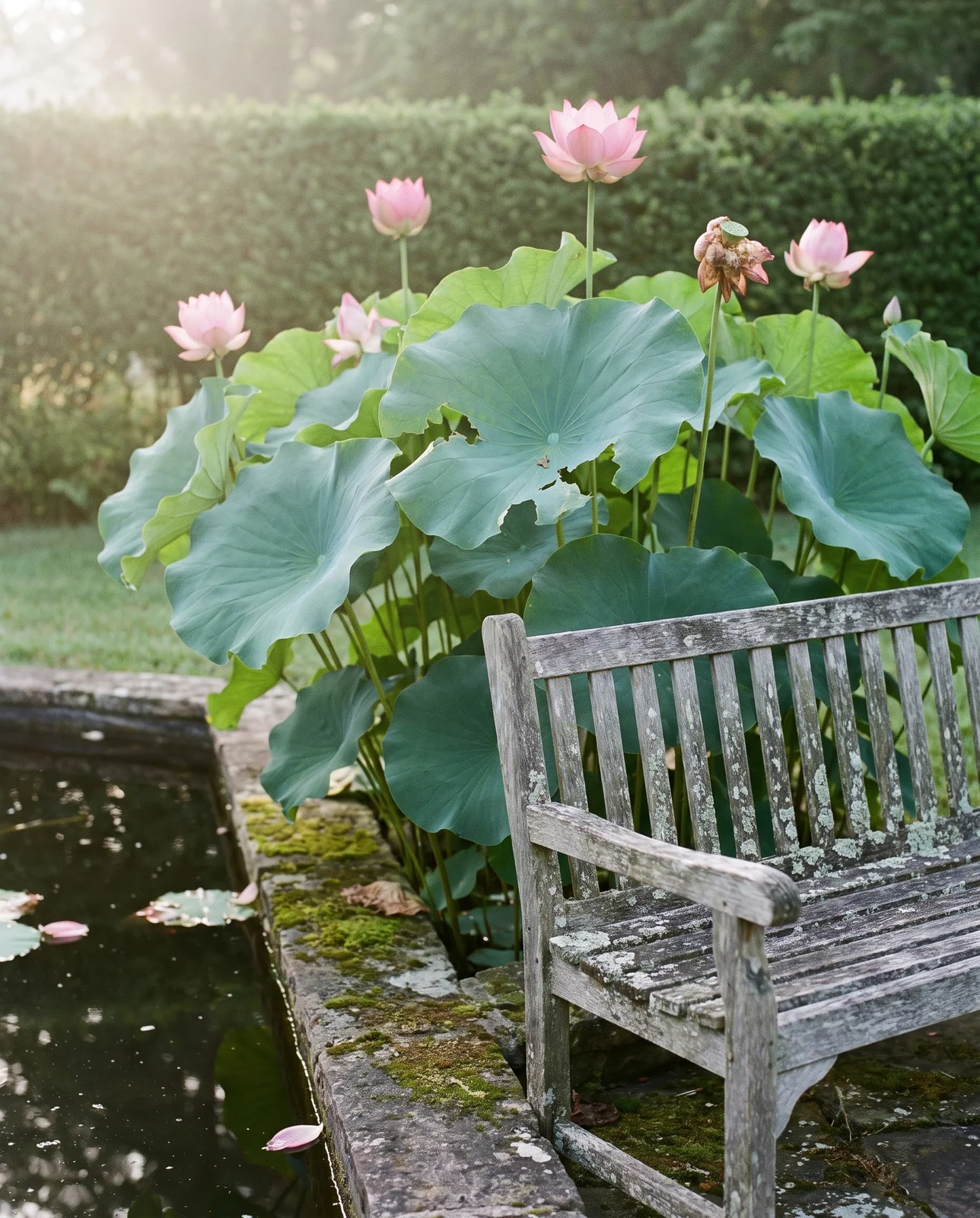
A lotus stands 3 to 6 feet above the water and takes 3 to 4 feet of surface for each plant. The American species matches it, spreading by the same thickened rhizomes and sometimes doing it aggressively. In open water that vigor is the whole problem. A planting can take over a shallow pond outright, and the native species moves fast through the warm, sunny shallows it likes. Some Midwestern states class sacred lotus as a noxious weed, worth checking before a tuber goes into water anyone else shares. A tub settles all of it: it is a fence a rhizome cannot cross.
USDA hardiness
Lotus is hardy from zone 4 through zone 10, and the disagreement inside that range is unusually wide. The New York Botanical Garden calls the plant hardy only to zone 9, while Missouri Botanical Garden rates it winter hardy to zone 4 as long as the roots do not freeze. That second clause explains the split. The rating turns on whether ice ever reaches the rhizome, more than on the air temperature over the pot. A tuber sunk deep in an unfrozen northern pond sits safer than the same tuber in a shallow bowl several zones south. Two growers in one state can report opposite results and both be telling the truth: one container froze through and the other did not. The native species has the same range.
Lotus varieties worth telling apart
Size is the first line to read on a lotus label: the container you can put outside decides which of these can flower for you.
Propagation and longevity
A lotus is increased by cutting up its own rhizome. It spreads underground by thickened rhizomes rooted in the mud. A pot that has filled edge to edge is emptied in spring and the rhizome broken into pieces, each with its own growing points. The pieces are reset about 4 to 6 inches below the soil of the new container. Handle them the way you would handle a bought tuber, since the growing end decides whether a division lives. A rhizome that is neither frozen through nor rotted keeps going, widening every season until the container stops it.
Pests and diseases
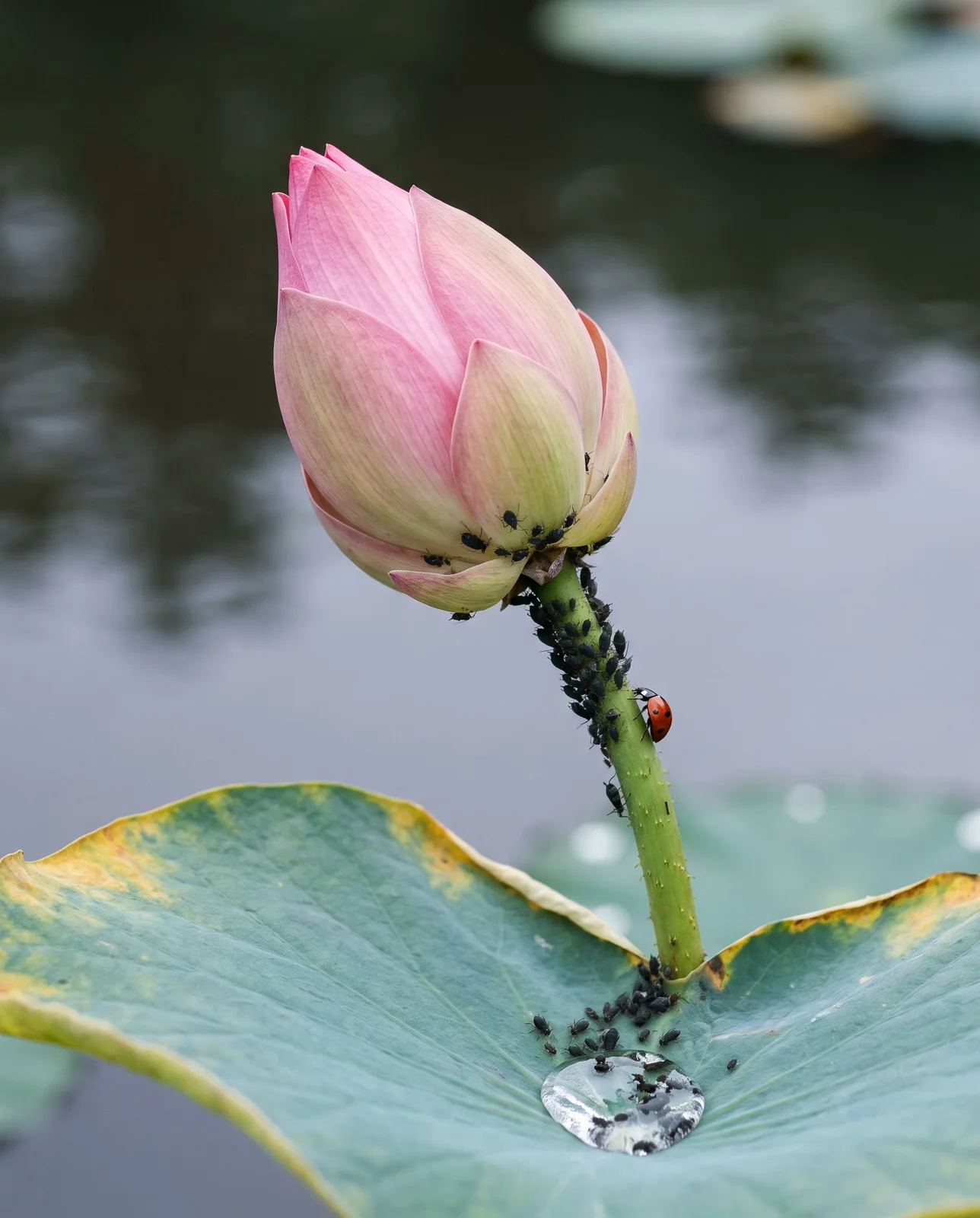
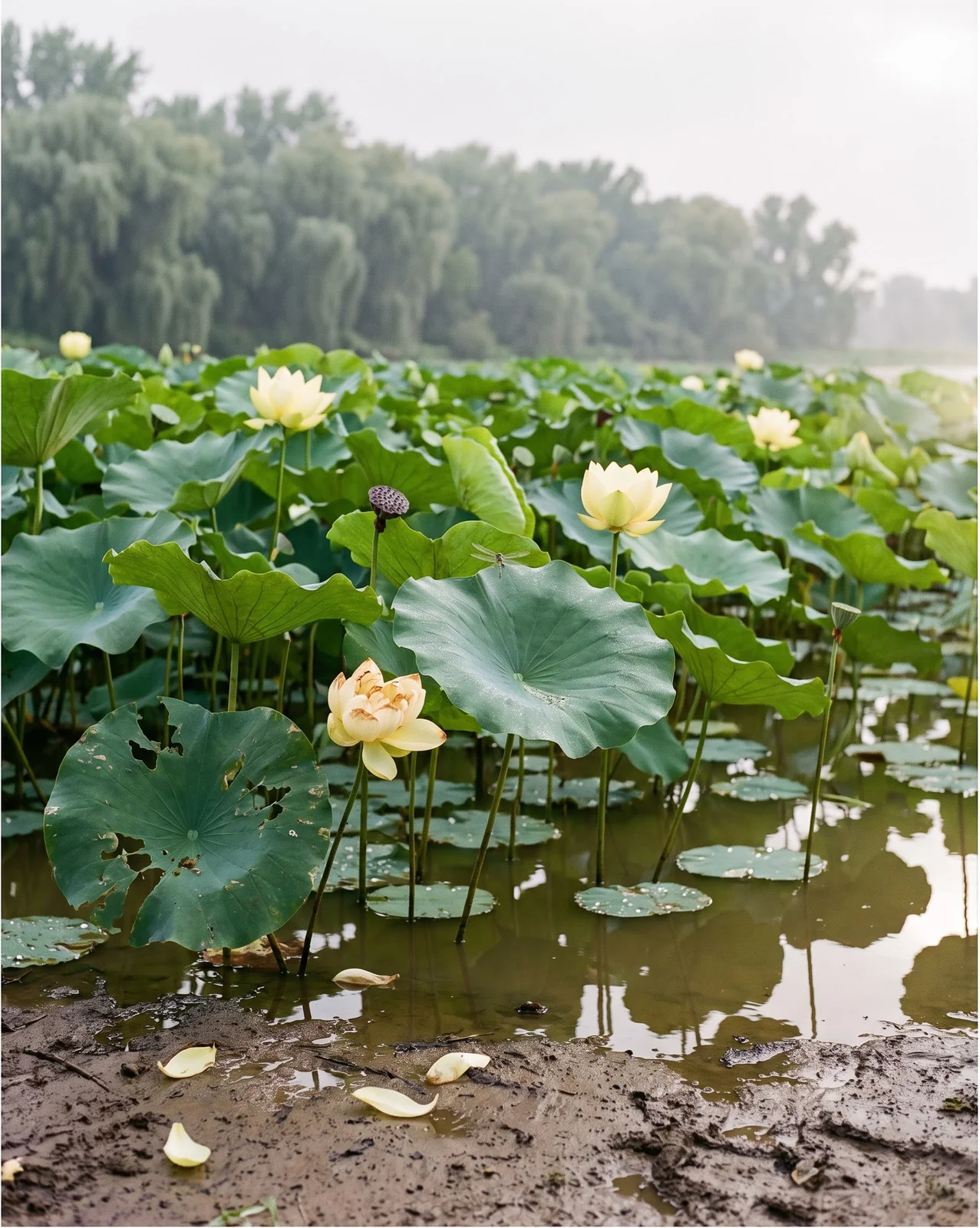
Lotus has almost no pest list. Sacred lotus picks up aphids and red spider mites now and then, and little else. The aphids collect on new growth where the air sits still. The specialist worth knowing by name is the China mark moth, whose larvae work on floating lotus leaves and water lilies. They cut shot holes a quarter inch to three quarters of an inch across along the leaf edge, and the late-stage larvae eat the whole leaf. The damage looks like vandalism and rarely finishes an established plant. The real risk sits below the water line: rot in a rhizome that sat cold and wet through winter, showing up in spring as a soft, dark tuber in a pot that never restarts.
What actually goes wrong, most common first
Five failures cover almost everything that happens to a lotus in a tub.
Symptom: a disappointing first season and a repot every spring. Cause: the tub was sized by what fits the patio. Fix: pick the container for the class of lotus before the tuber is ordered, since a bowl type and a standard variety want very different pots.
Symptom: a pot full of aerial leaves, sometimes into a second year, with no bud. Cause: too little sun, too little pot width, or the wrong feed for a heavy feeder. Fix: work the six checks above in order and leave the tuber for last.
Symptom: a bare pot from the first frost and no sign of life in early spring. Cause: normal die-back, restarting on water that warms later than the air. Fix: feel the tuber for firmness before you tip the container out.
Symptom: a mail-order tuber that softens and darkens within weeks, sometimes with visible fungal growth. Cause: a growing tip nicked while unpacking, or a tuber pushed too deep. Fix: keep the tip uncovered in the top inch of soil and handle the shipment by its other end.
Symptom: a fresh container going green or milky in its first weeks. Cause: a closed body of water in full sun on new soil. Fix: skim what floats and wait, since the water usually clears on its own by the second season.
Toxicity and edibility
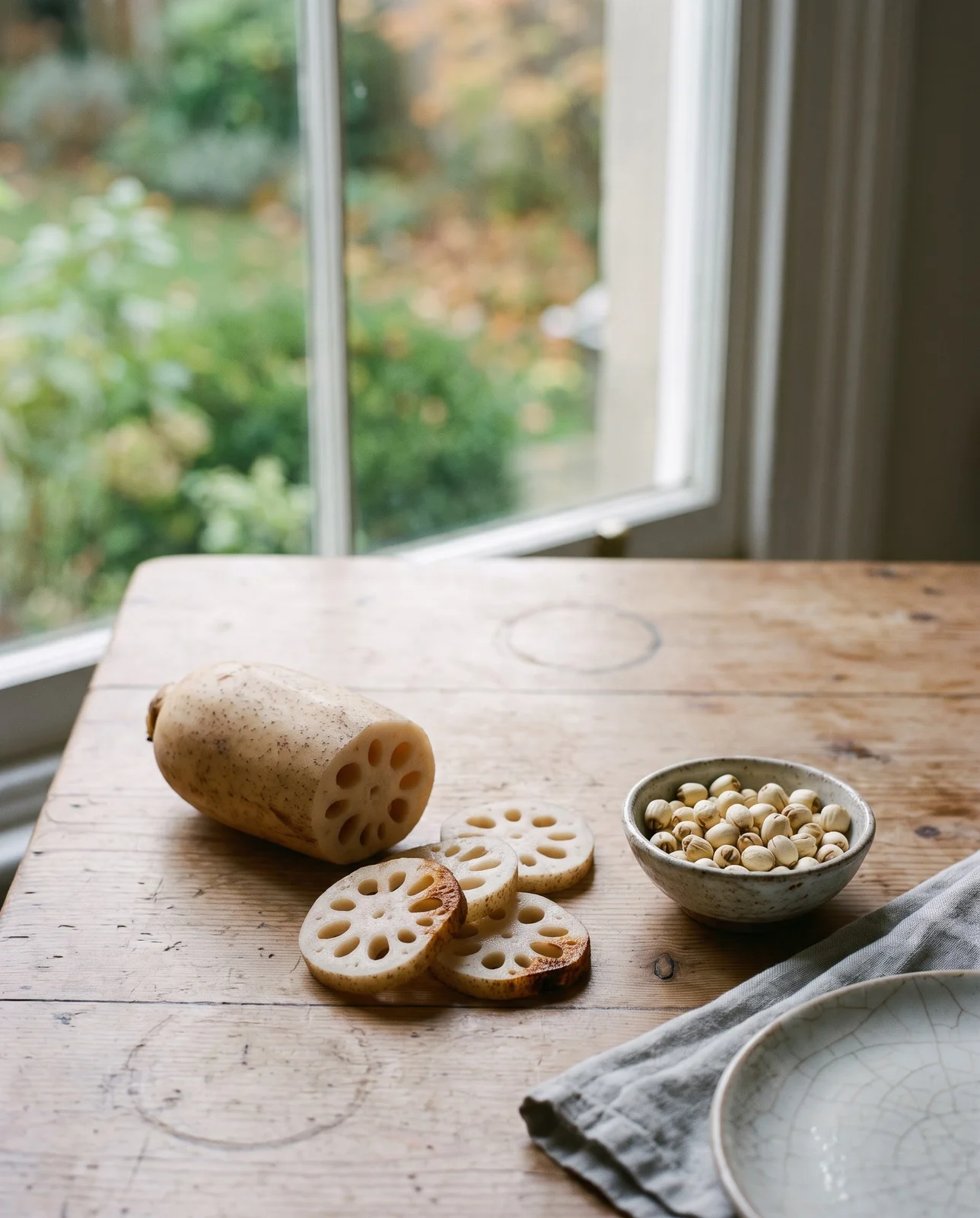
Lotus is edible from root to seed, and it is absent from the standard pet-poison list. No entry for lotus or Nelumbo appears on the ASPCA list of plants toxic to cats and dogs. All parts of sacred lotus are edible, the rhizome and the seeds most of all, and Asian and other cooking uses the leaves, the seeds and the rhizome. Native peoples in North America ate the young leaf stalks and leaves, the rootstock and the seeds of the American species. Raw petals, leaves and rhizome carry a risk of parasite transmission, so every part is cooked before it is eaten. A patio tuber has also had fertilizer tablets in its soil all summer, so keep the tub and the kitchen apart.
Meaning and symbolism
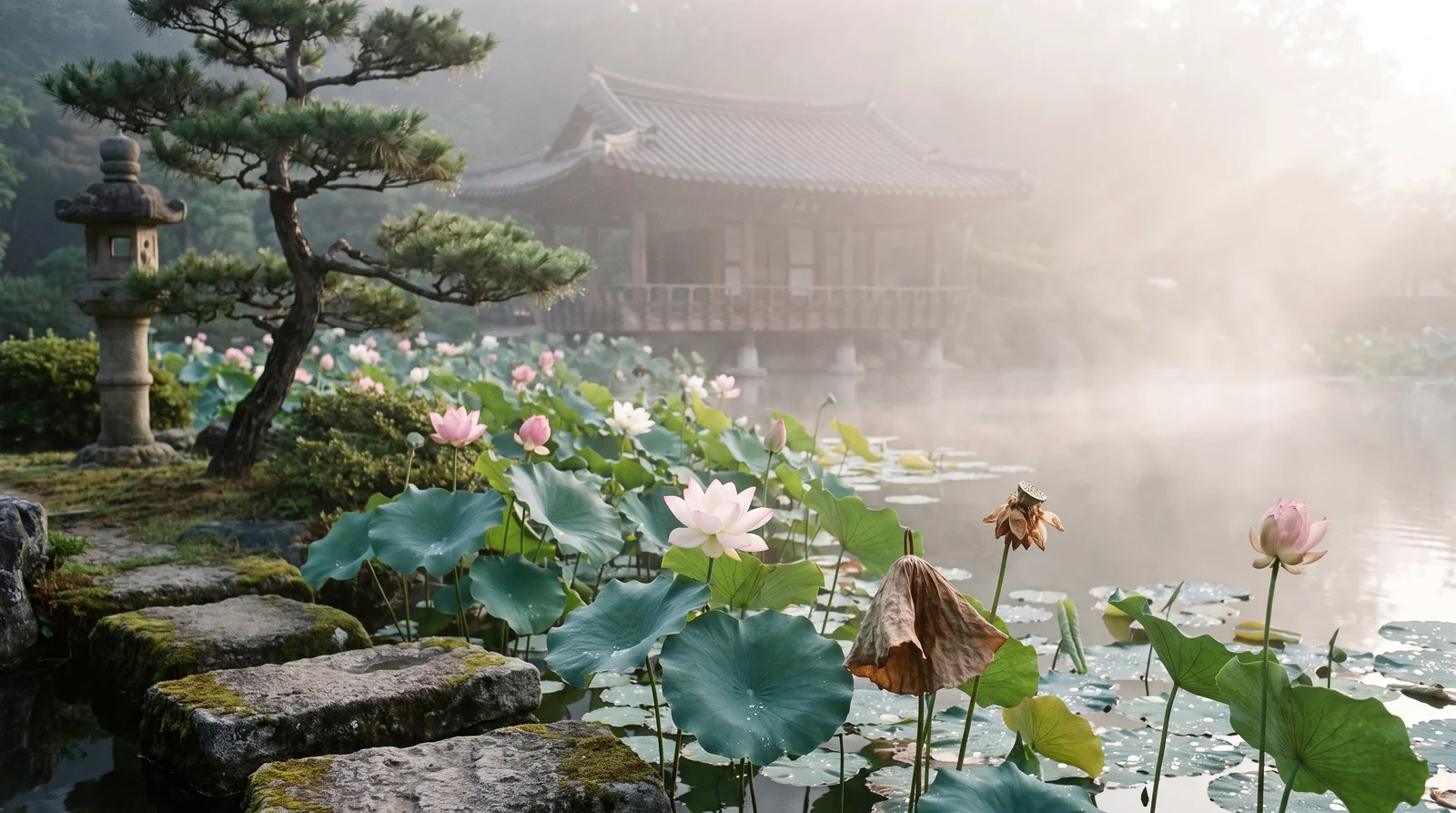
The lotus stands for purity, and the image behind that meaning is a literal one. The Chinese scholar Zhou Dunyi described the flower as rising from the mud yet remaining unstained. At a pond edge you see exactly that: clean petals on a stalk out of black silt, over leaves that shed the muck they grow in. The plant carries the same weight into food, since lotus seed paste fills the mooncakes eaten at the Mid-Autumn Festival. The longer reading of the symbol, what the colors carry, and what people mean by it in a tattoo sit in the lotus flower meaning guide.
What people get wrong about lotus
Each of these gets repeated with confidence, and each one sends a first-time grower the wrong way.
The myth: A pot with nothing in it by November is a dead lotus.
The reality: Die-back is how the season ends for a healthy plant. The restart is keyed to the temperature of the water, which in a cold spring comes weeks after the air feels like summer.
The myth: Lotus and water lily are two names for the same pond plant.
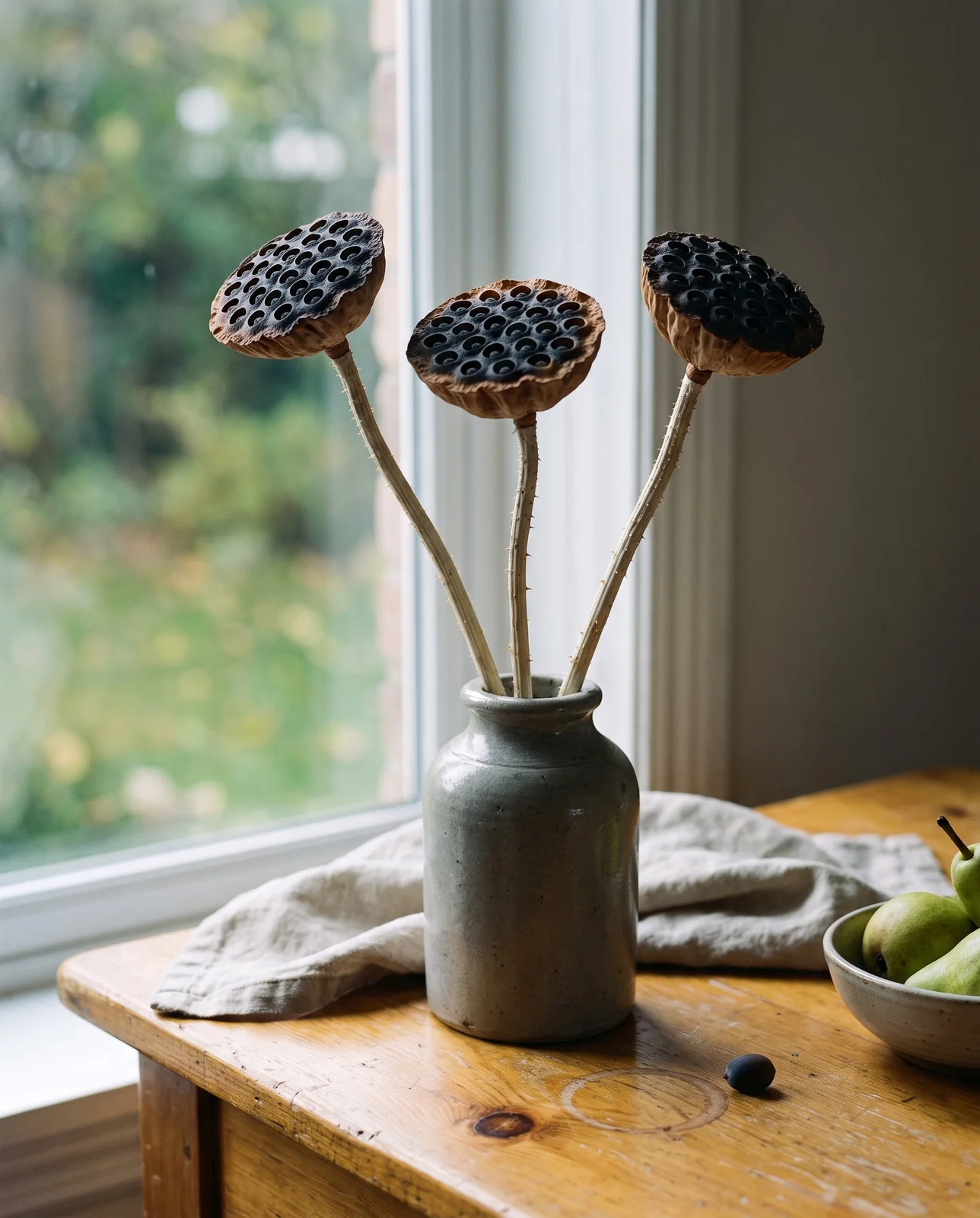
The reality: They part company after the flower as plainly as before it. A water lily bloom lasts up to two weeks and then wilts away beneath the surface. A lotus leaves a hard seed pod standing above the water for the rest of the season.
The myth: A lotus will grow in a jar of plain water.
The reality: It roots in mud and builds a large root system in the quiet water of ponds and slow streams.
The myth: Lotus seeds never die.
The reality: They outlast almost every other seed. One recovered from a dry lake bed in northeastern China, dated at roughly 1,300 years old, germinated. Most plant seeds hold viability for 20 years or less.
In the vase and the dried pod
A lotus earns its place indoors as a seed pod more than as a cut flower.
Flower photos
FAQ
Is a water lily the same thing as a lotus?
No. In a photograph the petal decides it: a water lily petal is pointed and makes a star-shaped bloom, while a lotus petal is rounded and sometimes ruffled.
Can lotus and water lilies share the same pond?
Yes, in separate containers at separate depths. Lotus sits under about 12 inches of water, water lilies in 2 to 5 feet.
Is the lotus flower legal in the United States?
The garden plant is ordinary nursery stock, though some Midwestern states treat sacred lotus as a noxious weed and planting it is prohibited in Wisconsin. The question people usually mean is about blue lotus, which is Nymphaea caerulea, a water lily and a different plant.
Is the lotus native to the United States?
One of the two species is. American lotus is native to much of the eastern United States and can be aggressive in the warm, sunny water it likes.
Do lotus flowers have a scent?
Fragrance runs by variety. 'Momo Botan' is very fragrant and 'Chawan Basu' only slightly so.
What eats a lotus in a pond?
Beavers and muskrats consume the rhizomes, which makes it a pond problem far more than a patio one.
Why does my lotus leaf have holes chewed in the edge?
China mark moth larvae, working in from the rim. The late-stage ones stop nibbling the edge and take the whole blade.
Which lotus is the most popular one to buy?
'Mrs. Perry D. Slocum' outsells other lotus cultivars, helped by blooms that change color as they age.
What colors do lotus flowers come in?
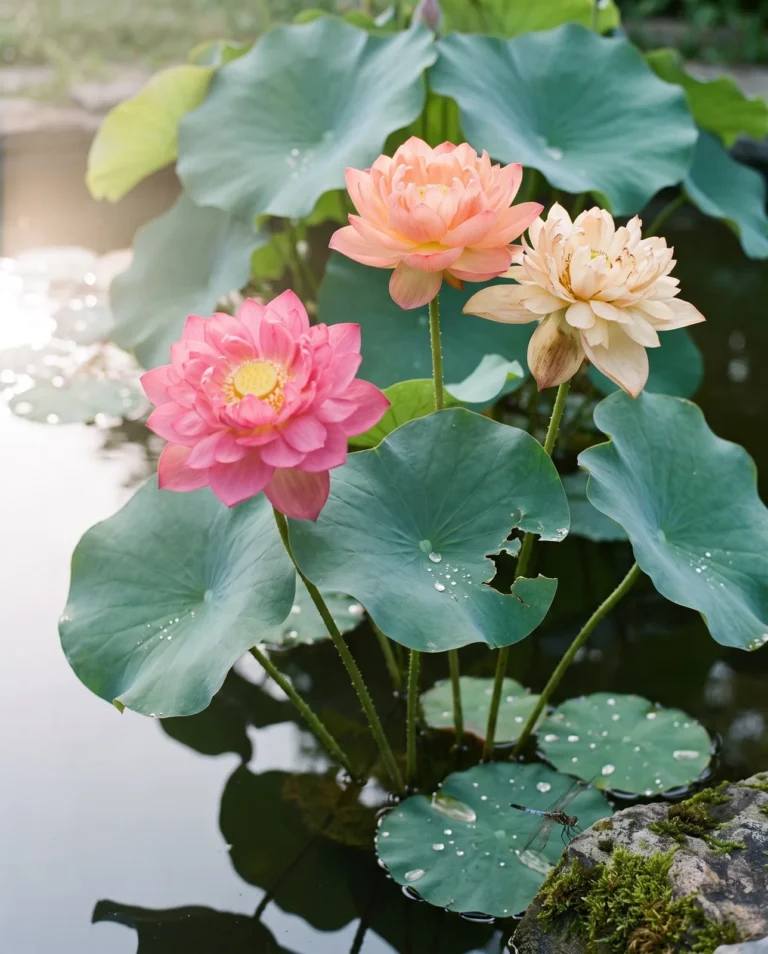
Pink, yellow, and white, and white is the most common of the three. The American species is the yellow one.
Is lotus root the same plant as the flower?
Yes. Lotus root is the rhizome of the sacred lotus, crisp and mild in flavor and standard in Kashmiri cooking.
Interesting tips
- A lotus bloom shuts itself every day, some by midafternoon and some not until night.
- The insect behind chewed lotus leaves is easy to overlook: the adult China mark moth is small and orange-brown with a wingspan of about 1 inch. Where the larvae need treating, Bacillus thuringiensis kurstaki and spinosad are the options.
- If a pond or a patio runs too cold for lotus, water lilies reach farther north, with some grown as far as zone 3 or 4.
Related Guides & Flowers

White flowers
More white-flowered plants to set beside a white lotus, from beds to borders.
Irises
The other classic waterside flower, and the one that will take the wet margin a lotus tub sits on.
Hibiscus
Dinner-plate flowers on dry land, for the sunny spot next to the water garden.

Types of flowers
The full catalog of flowers on this site, sorted by type and season.
Enjoying our flower guides? Add YourFlowersGuide as a preferred source on Google. It helps more readers find us.
Add to Preferred Sources