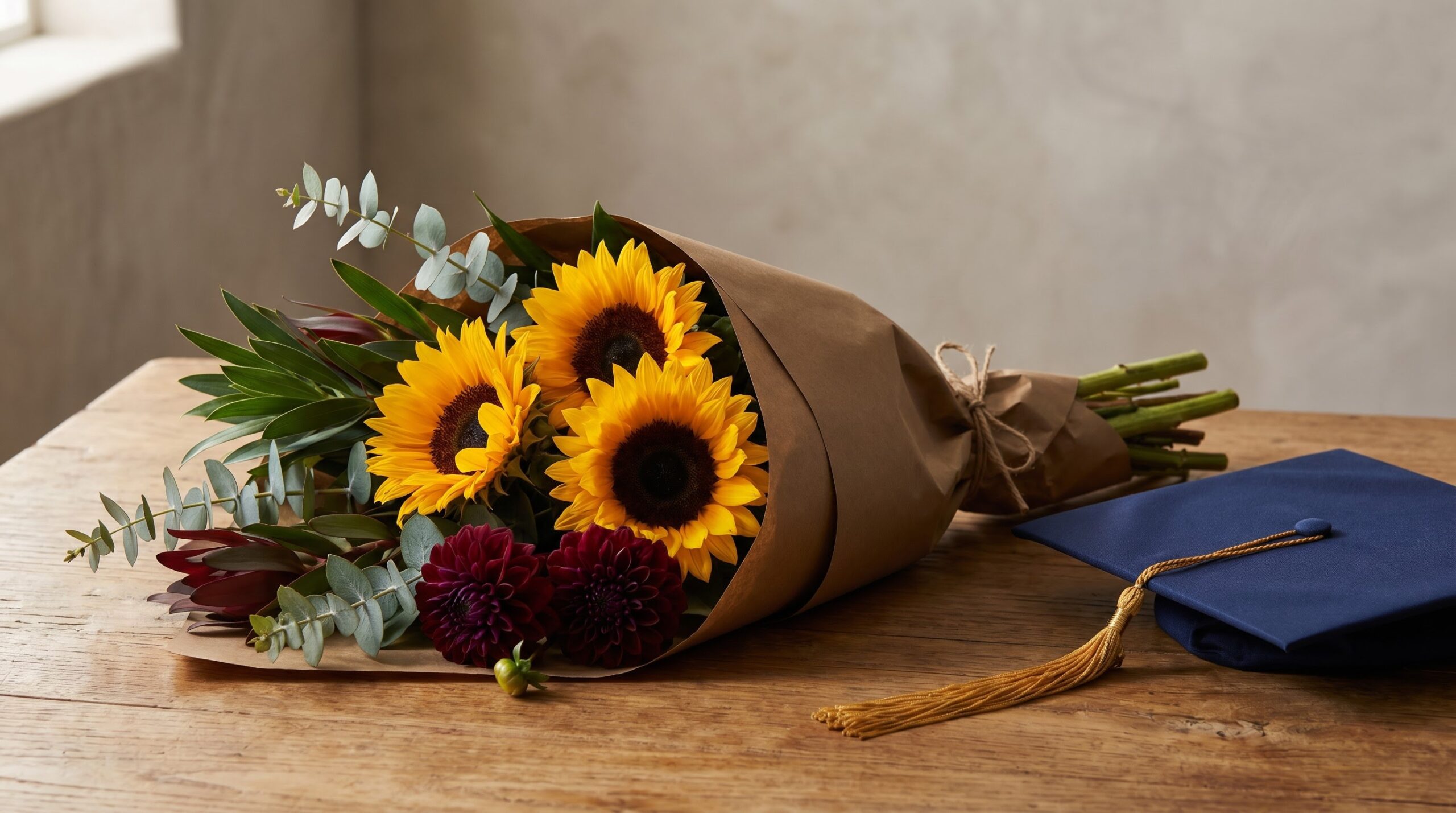
Somebody says it every graduation season, usually right after the gift already sits wrapped on the counter: flowers aren't for men, you know? A twenty-one-year-old on Reddit heard that exact line from her own mother the day she picked out a bouquet for her seventeen-year-old cousin's graduation, and it did what it always does. It turned a kind, obvious idea into a doubt she couldn't shake. Give him the flowers anyway. Every real number on this question points the same direction, and none of them point toward that doubt.
Yes, a guy can get flowers at graduation
The top reply in that same Reddit thread put it plainly: flowers are definitely a graduation gift, a gift of celebration in general, and it doesn't matter whether the graduate is a boy or not. Another poster, years removed from his own commencement, put the record straight from memory, asking where the rule book is that says you can't give a man flowers at graduation, when he remembers plenty of guys walking off that stage holding exactly that. Neither of them is wrong. There's no rule book, and there never was one, just a habit built over a century of florists marketing almost entirely to women while men opted out of a gesture nobody told them was theirs to use too. It always was.
People searching for a "male equivalent" of graduation flowers, something that swaps the blooms for something more properly masculine, are chasing a myth. There isn't a real swap. Cufflinks and a card are fine gifts, but neither one says someone stopped, thought about this exact day, and picked out something a little extravagant for it the way a bouquet does. What's changed isn't the gesture itself. It's that now there's a number attached to it.
What the numbers actually say
Ask around and you'll get confident opinions in both directions, so here's what surveys turn up instead of instinct. The Society of American Florists, citing research from florist network Interflora, found that a solid majority of men would welcome flowers as a gift, while only a small fraction have ever actually received them. A separate 2021 survey of 2,000 adults, run by SWNS/72Point, measured what happens once a man actually gets a bouquet, and measured what the public still assumes about bouquets in general. Both surveys are summarized here.

| What was measured | What the data says |
|---|---|
| Men who say they'd love to receive flowers | over 60% (Society of American Florists, citing Interflora) |
| Men who say they've actually ever received them | around 12% |
| Recipients who liked it once they actually got a bouquet | 78% (SWNS/72Point, 2021 survey of 2,000 adults) |
| Recipients who said it made them feel appreciated | 48% |
| Recipients who said it made them feel loved | 45% |
| Adults overall who still call bouquets a "feminine" gift | 72% |
Swipe →
Read the six numbers together and the shape is consistent. Most men want this. Few have gotten it. The ones who did mostly loved it. And the general public, men included, is still calling the gesture something reserved for women. A continent away, a 2021 study across the Netherlands, Germany, the UK and France by the Plants and Flowers Foundation Holland found a similar contradiction in different words: flowers don't crack the top ten gifts men typically receive there either, given to men far less often than gift cards or clothes, even though many men say they would genuinely like getting flowers. This blind spot isn't uniquely American.
The clearest evidence that this isn't a stray statistic comes from a peer-reviewed study out of Rutgers University. Researcher Holly Hale, working with psychology professor Jeannette Haviland-Jones, ran two groups of men through a simple test: one group got a surprise bouquet, the other didn't. The men who received flowers showed more eye contact, sat closer to the people they were talking with, and produced visibly more genuine smiles than the control group, all measured on video, not self-reported on a survey afterward. Haviland-Jones summarized the result by saying men and women turn out to land on the same emotional ground once the flowers are actually in their hands. A camera recording someone's face is harder to argue with than an opinion about what men supposedly like.
How to pick an arrangement that reads right
If the doubt is less about whether to give flowers and more about which flowers, the fix is almost entirely presentation. Soft, pastel, cellophane-wrapped bouquets read as romantic, or read as a generic "girl gift," because that's the default template every grocery store and delivery site reaches for. Swap the template. A structural, almost architectural arrangement, sunflowers or other bold single-headed blooms, deep greenery, a dark kraft-paper wrap tied with plain twine instead of a curling ribbon bow, reads as a deliberate choice rather than a leftover from the flower aisle. Sunflowers do a lot of that work by themselves. Part of what sunflowers mean leans toward pride, warmth and admiration rather than romance, which happens to be exactly the note a graduation card is trying to hit anyway.
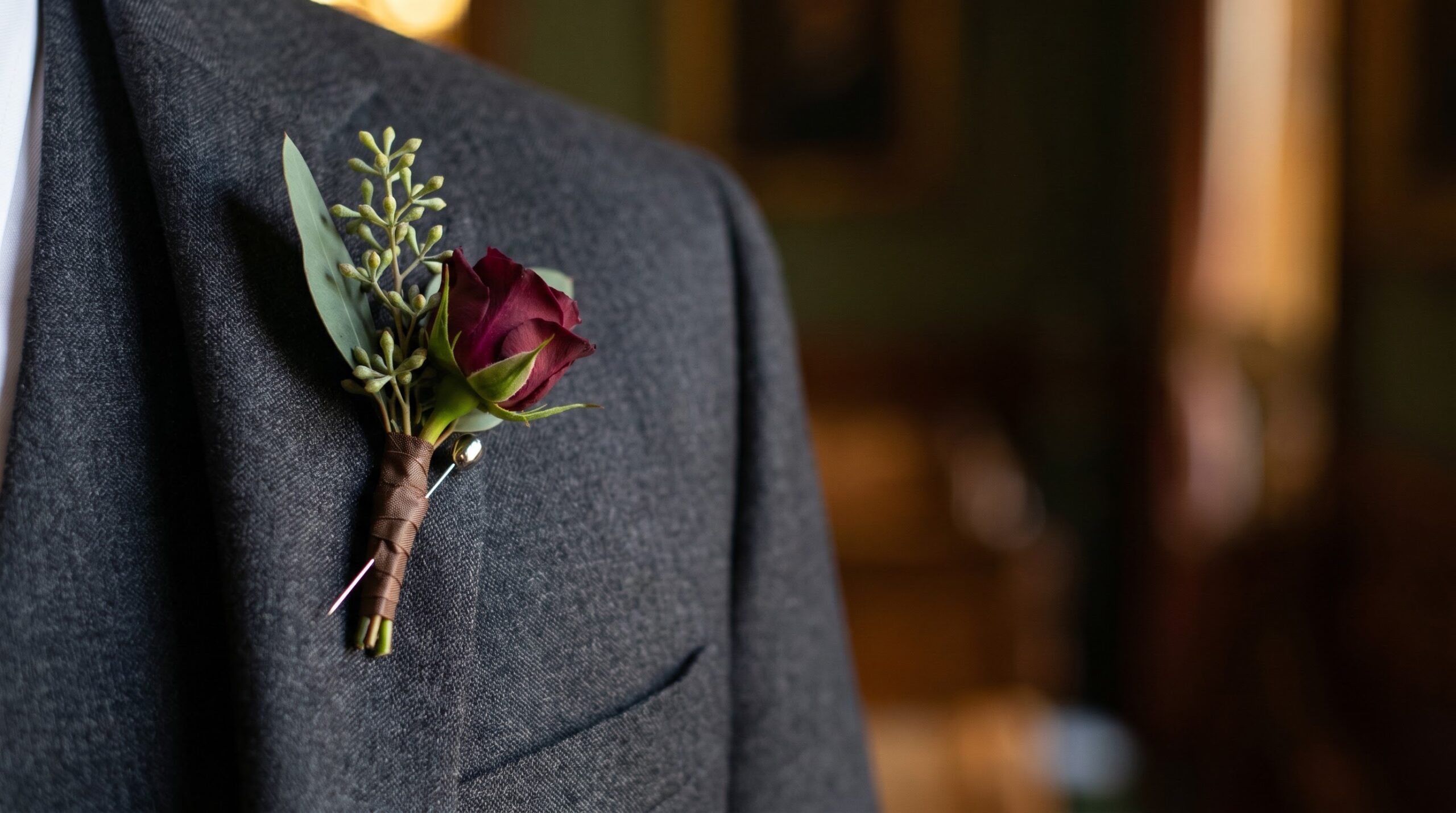
One thing worth being direct about: skip an arrangement built entirely from roses, especially red ones. The color isn't really the issue. Any dozen-rose bouquet, in almost any shade, reads as a romantic gesture to most recipients and most bystanders, and a platonic graduation gift that gets mistaken for a date invitation is a worse outcome than no flowers at all. If the recipient is visibly the type who'd want the gesture but not the spotlight, a single boutonniere, the kind worn on the lapel during the ceremony itself, does the same emotional work at a fraction of the visibility. It says "I'm proud of you" just as clearly as a two-foot bouquet does, and it's much easier for a nervous eighteen-year-old to wear something the size of a coin than to carry something that draws every eye in the row.
Who's giving matters as much as what you give
The numbers hold up in general, but the specific relationship between giver and recipient still changes how the gesture lands. One Reddit poster summed up the pattern from experience: plenty of guys receive flowers at graduation, but usually from a parent or an aunt, not from someone the recipient barely knows or has unresolved feelings about. Family reads as celebration almost automatically. A near-stranger, particularly someone close to the recipient's own age, running the exact same gesture risks reading as a romantic overture instead, whatever the actual intention behind it was.

Even so, familiarity isn't the whole rule. In one account from r/dating_advice, a mother gave her friend's son flowers at his graduation, someone he barely knew personally, and he cried on the spot. What seems to matter more than raw closeness is register: a family friend, an aunt twice removed, someone's mom from church, all of that reads as celebration even without a close personal bond. What tends to read differently is a peer, someone closer in age and closer to the kind of relationship where flowers usually mean something else.
None of this guarantees a perfect reaction every time. One reply to a "will my brother like flowers" post on r/NoStupidQuestions was honest about the limits: teenage boys in the US are genuinely likely to feel a little embarrassed being handed flowers in public, whatever the research says about liking them privately. Another reply in the same thread put the actual stakes in perspective, saying the message a gesture like this sends is worth as much as the flowers themselves, and that even someone who doesn't personally care for flowers can still appreciate what giving them says. A slightly awkward eighteen-year-old accepting a bouquet in front of his relatives isn't proof the gift failed. Give it anyway, and let him be a little awkward about it.
Flowers for men aren't just a graduation thing
Graduation is where this question shows up loudest, but it's far from the only place it comes up. The same hesitation resurfaces at birthdays (the same question comes up every year at his birthday, often nearly word for word), at a first promotion, a new job, an engagement, even a new house. None of those scenarios need a different answer than the one graduation gets: most men would welcome the gesture, few have had the chance to test that in real life, and presentation does most of the work in making it land. The wider picture, new jobs, promotions, engagements and the rest, gets its own full treatment on the main congratulations flowers guide, worth a look if graduation isn't actually the occasion in front of you.
For the graduation itself, the two questions this page doesn't answer are which specific flowers and colors to bring, covered in full on the graduation flowers guide, and exactly when to actually hand the flowers over, and which venues won't let you bring them in, given how strict some ceremony venues have gotten about what you can carry inside. Pick something that leans structural rather than soft, wrap it in kraft paper instead of cellophane, and hand it to him without the apology in your voice. The data already did the arguing for you.