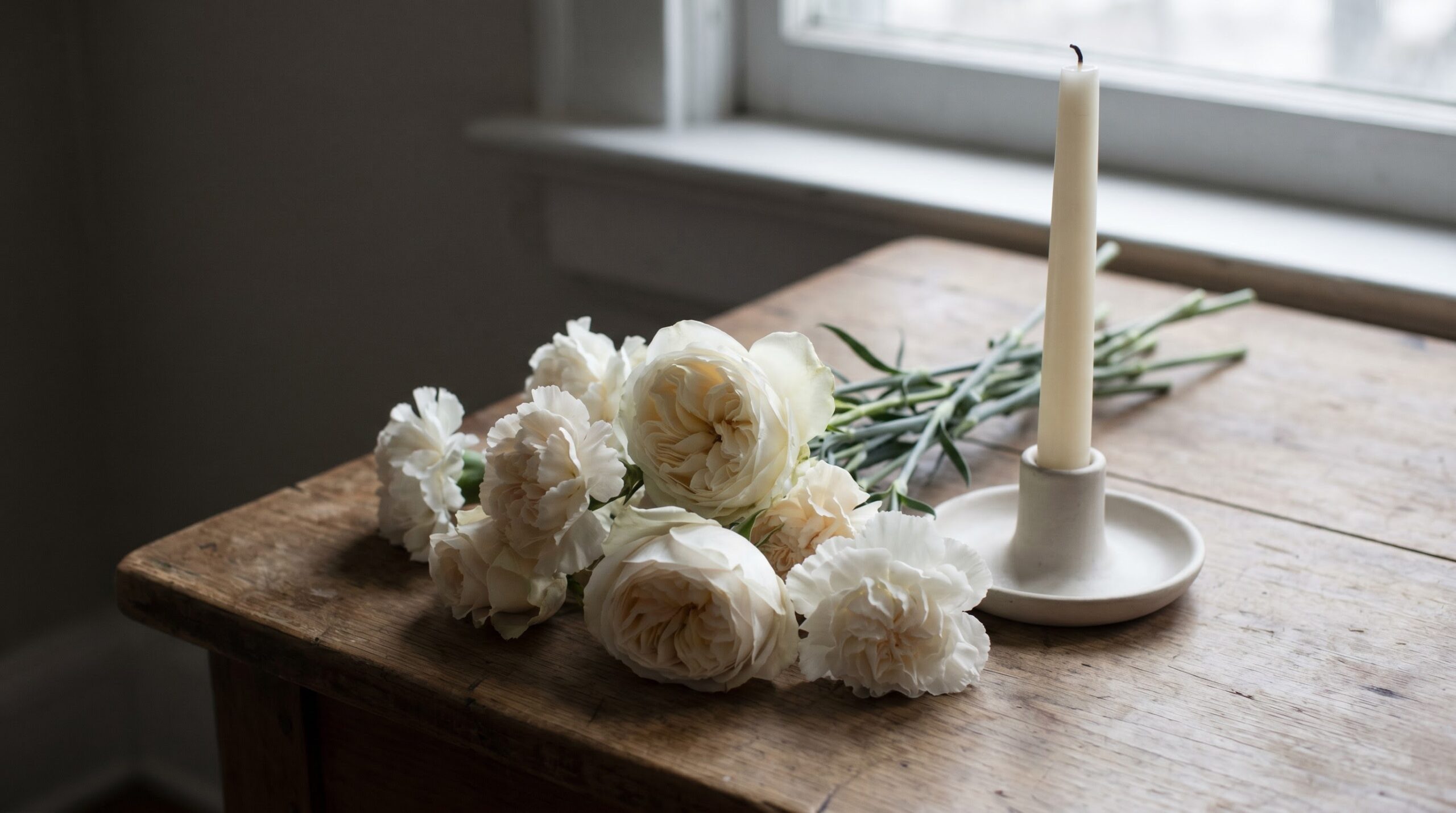
A colleague loses a parent, and by lunchtime someone in the office is quietly asking whether to send flowers. If the family is Jewish, the answer is short: don't. Sending flowers to a Jewish funeral, or to the shiva house afterward, is close to the one rule in this entire topic that nearly everyone in Jewish community forums agrees on without exception. One workplace story making the rounds online involved a manager who caught the mistake just in time, after a Jewish neighbor explained that flowers read as "too colorful and are for celebrations," not mourning. Bring or send food instead: a cooked meal, a fruit basket, something the family can eat without having to cook during the week of shiva. That single answer resolves the loudest fear behind this whole question. Four other major faiths each answer the same yes-or-no differently, and none of them share Judaism's flat no.
Why Jewish funerals skip flowers, and when they don't
The custom traces back further than most people expect. Jewish teaching holds that everyone should be buried simply and equally, rich or poor, and that placing perishable flowers at a grave where they will wither unseen wastes something that could have been put to better use elsewhere. Chabad.org, the Chasidic outreach and education organization, lays out the halachic reasoning behind the practice: Jewish law calls for treating the dead equally regardless of wealth, forbids deriving personal benefit from a burial site, and asks mourners to focus on the eternal part of a person rather than a decorative gesture that means nothing to someone who has died. Casual explanations tend to frame it as flowers being too festive for grief, and that is not wrong exactly, but the deeper reasoning is about redirecting the gesture toward something the living family can actually use.

Even so, the rule is not identical in every Jewish household. Observant Orthodox and most Conservative families hold to it strictly, and a bouquet showing up at their door or their service can land as a genuine misstep. US Funerals Online notes that some Conservative and Reform families have started allowing a small floral tribute on the casket, generally with a rabbi's approval, while Reform and secular Jewish families tend to be considerably more relaxed about the whole question. None of that is visible from the outside. A guest cannot tell a family's observance level from an obituary or a Facebook post. When the family's practice is unclear, the safer move is contacting the funeral home handling the service directly. They field this exact question constantly and can answer it in a single phone call.
What's welcome at Catholic, Buddhist, Hindu and Muslim services
For faiths and situations where flowers are the right call, the full guide to funeral flower types, colors and who sends what walks through arrangement types, safe color palettes, and message wording by relationship. The faith-by-faith basics run like this.
| Faith | Are flowers welcome? | What to send | Where they go |
|---|---|---|---|
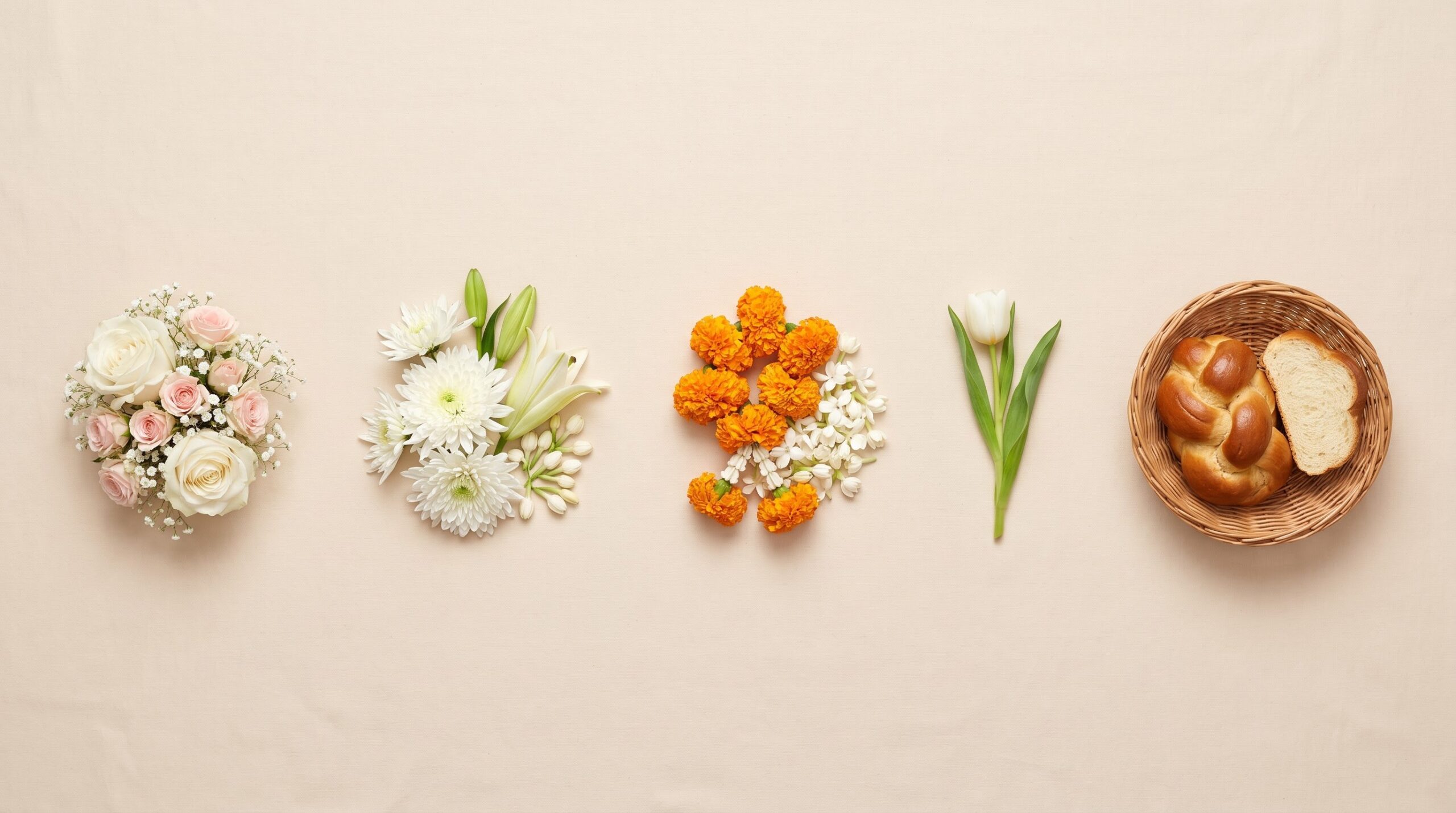
| Catholic | Yes, generally | White or soft-toned arrangements such as lilies, roses, or chrysanthemums; skip anything overtly festive | Family home or funeral home is the safest default; some parishes limit flowers inside the church itself |
| Buddhist | Yes, with a color rule | White flowers are the traditional mourning color; keep red out of the arrangement entirely | Family home or the funeral service, depending on what the family has arranged |
| Hindu | Not usually from guests | The family and priest choose marigold, jasmine, or lotus for the body and the rites | Guests generally don't send flowers at all; check with the family before sending anything |
| Muslim | Not customary | If sending anything, keep it modest and simple, and skip the funeral service itself | Send to the family home during the mourning period after burial, not to the coffin or graveside |
Swipe →
The Catholic column undersells one detail worth knowing ahead of time: some parishes restrict flowers inside the church during Lent, and a few limit them at the altar year round in favor of simplicity, though none of that touches flowers sent to the family home or the funeral home, which is why that stays the safer default when the specific parish's habits are unknown. Catholic funeral flowers also carry symbolism worth knowing, most visibly the white lily, which draws on the lily's long history as a Christian symbol of purity, and reads as entirely appropriate at a Catholic service.
Islam's answer is the least settled of the five. General practice leans toward skipping flowers altogether, in keeping with a broader preference for modesty over display at a funeral, but the reasoning gets specific once examined closely. The Mufti of the Federal Territory in Malaysia, a government Islamic authority, ruled that placing flowers directly on the coffin is not permitted, tracing the practice to non-Muslim funeral custom and to a Quranic passage about not seeking forgiveness on behalf of the dead, while flowers placed on a grave after burial are treated differently and allowed under some scholarly opinions. That distinction rarely changes what a guest should actually do today: skip flowers at the service itself, and if a gesture still feels necessary, send something modest to the family's home after the burial instead.
Hindu funerals flip the usual assumption. Flowers are everywhere at the ceremony itself, marigold garlands draped over the body, jasmine and lotus worked into the rites, but nearly all of it is chosen by the family and the priest performing them, not brought by guests. Attendees typically arrive empty-handed and dressed simply in white. Anyone who wants to contribute something floral should ask the family directly first. The marigolds, jasmine, and lotus belong to the family's own rites, chosen by them and the priest performing the ceremony.
The color layer: what reads as mourning instead of celebration
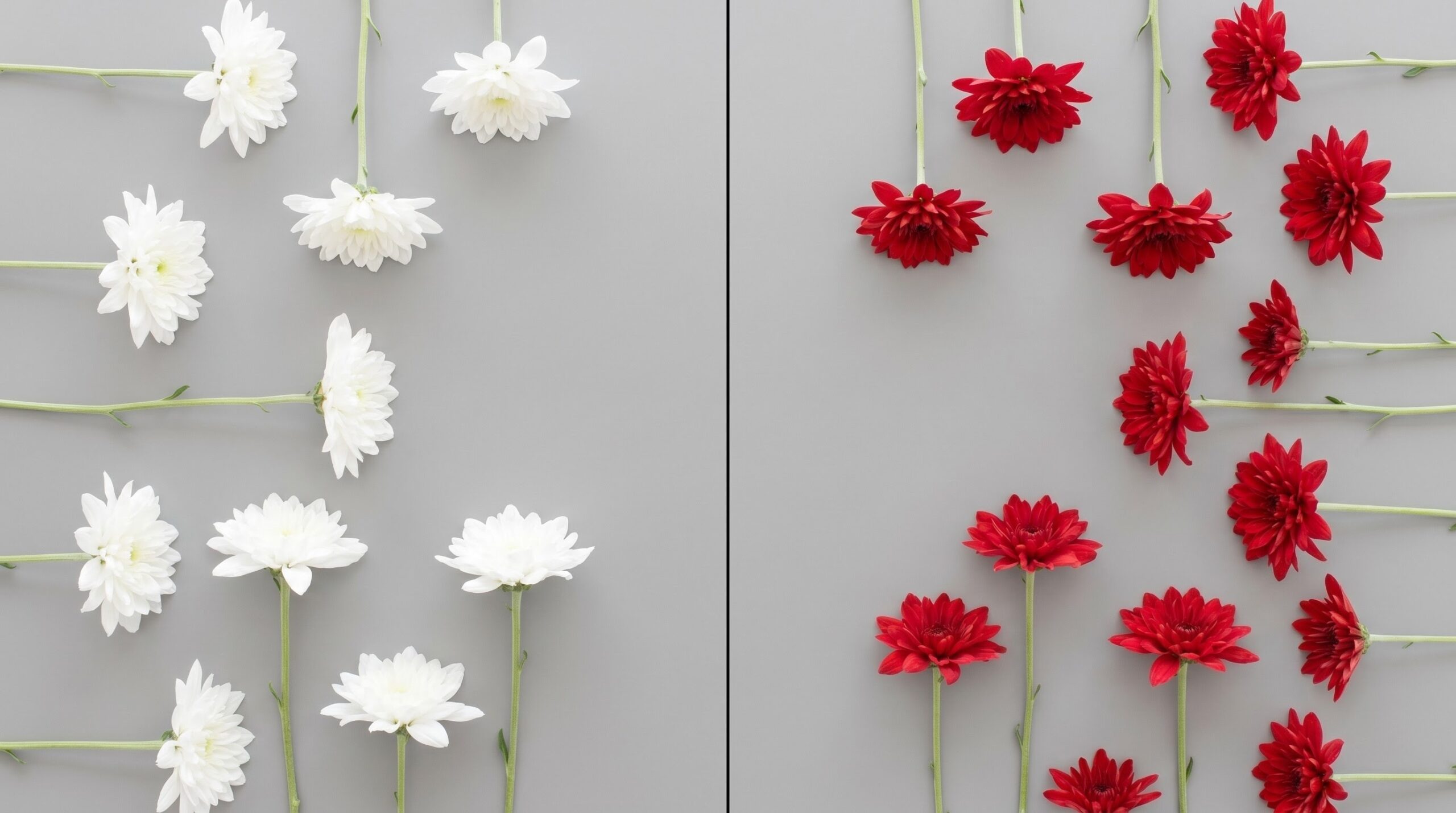
One more wrinkle sits underneath all five faiths above: color can carry a different message once a family's background traces to East Asia. In much of China and Korea, white is the historic color of mourning and death, the reverse of how it tends to read in most Western funeral guidance, where white signals purity and peace instead. Red runs the opposite direction. It reads as the color of joy, luck, and celebration across Chinese culture, which makes a red-heavy arrangement feel jarringly festive, even disrespectful, at a funeral rather than comforting. The South China Morning Post has traced part of this back to a practical origin: heavily scented white blooms, chrysanthemums and lilies among them, were once placed near a body to mask the smell of decomposition before modern embalming existed, and the association between those particular flowers and death outlasted the practical need by centuries.
This color layer is not a sixth faith to add to the list above; it runs alongside Buddhist and other East Asian family traditions and can matter even when religion itself is not the deciding factor. A closer look at how mourning colors split between Japan and Europe covers the wider picture, including why the same chrysanthemum reads as an imperial symbol in one country and a graveside flower in the next.
When flowers aren't the custom, and who to ask when you're unsure
The single biggest mistake in this whole topic is treating one relative's or one coworker's answer as the rule for an entire religion, when observance level, country of origin, and even which branch of a faith a family belongs to can change the answer completely. A Reform Jewish family may welcome flowers that a more observant one would find upsetting. A Catholic parish mid-Lent may have a rule your last Catholic funeral never ran into. The fastest, most reliable check takes one phone call, confirming what's expected directly with the funeral home hosting the service: they already know the family, already know what's been said about flowers, and can answer in under a minute whether to send them, bring food, or do neither.
When the answer comes back no, food and charitable giving fill the space flowers would have taken. For Jewish families that usually means a meal or a fruit basket sent to the shiva house; for other faiths, it's worth asking the funeral home what the family has requested instead, since many obituaries now list a preferred charity outright. One phone call settles it.
Enjoying our flower guides? Add YourFlowersGuide as a preferred source on Google. It helps more readers find us.
Add to Preferred Sources