
Someone posting to r/relationships_advice laid the situation out plainly: he'd "met her mom a few times" and had no idea whether flowers would land as thoughtful or as trying too hard. The replies split into two camps within the hour. One side said it would be so sweet, that it would make a genuinely good impression. The other side was blunter: if she's not your mom, you don't actually owe her anything. Neither camp is wrong. They're answering different situations, and that's the real shape of this question everywhere it shows up, whether the woman in front of you is a girlfriend's mother, a future mother-in-law, or a stepmother you're still getting to know. Three things decide it every time: how serious the relationship is, whether she has actually met you, and whether you were invited to be any part of her day at all.
Get an honest read on those three and the size of the gesture takes care of itself. A relationship where you haven't met her mother yet calls for nothing directly from you, maybe a line inside your partner's own card. A relationship that clears all three gates calls for a card and a modest bouquet, the kind that reads as thoughtful rather than as an audition. What follows covers exactly where each situation lands, plus the two questions that tend to come right behind it once the flowers themselves are settled: whose day this actually is when more than one mother figure has a claim on it, and what changes in your first year as someone's boyfriend, son-in-law, or stepson.
The three questions that actually decide it
Every version of this question, a girlfriend's mom, a future mother-in-law, a new stepmother, collapses into the same three-part check, the short version of reasoning that runs through half a dozen advice threads on the subject.
| Where things stand | Has she met you and were you invited into the day | What actually fits |
|---|---|---|
| A few months in, haven't met her mom yet | No | Nothing directly from you; a line inside your partner's own card if she wants one |
| Met her a handful of times, invited to be part of the day | Yes | A card plus a modest, non-romantic bouquet |
| Serious and long-term, but you haven't met her or you're apart this year | Not yet | Skip flowers this year; let your partner handle her own mother, revisit next Mother's Day |
| Married in; she's your mother-in-law now | Yes, by default | Card plus modest bouquet, and expect to repeat it every year going forward |
| A distant mother-in-law or grandmother you rarely see in person | Not applicable | Delivered flowers plus a phone call, standing in for the visit you can't make |
| New stepmother, first year living in the same house | Yes | A small card and a modest posy, nothing bigger than a first-year gesture should be |
Swipe →
Whatever row you land on, treat it as the baseline for every Mother's Day after this one. It's the single most repeated warning across these threads, worded almost identically by different people: "you're setting a precedent." The practical version of that advice, also repeated close to verbatim, is to never start something at the beginning of a relationship that you wouldn't be fine repeating forever. A card and a small bouquet is easy to keep up for a decade. A dozen roses and an oversized arrangement send the message that this year was somehow bigger than the ones that follow, and next year you're stuck either matching it or explaining why you didn't.
Who actually gets the day, mom or wife
For anyone juggling more than one mother figure on the same Sunday, mom, mother-in-law, grandmother, and possibly a wife who is a mother herself now, the order of priority isn't really up for debate once you've read enough of these threads. One widely quoted line from r/Marriage puts it directly: Mother's Day should go "in the trenches" order, meaning whoever is actually changing diapers this year gets first claim on the day. The reasoning laid out across r/beyondthebump is that the day itself, the actual hours and attention, belongs to the mother living the hardest version of motherhood right now. A more distant mother figure, one your kids see occasionally or one who lives states away, gets delivered flowers plus a phone call standing in for the visit you can't make. That delivery still counts as showing up, a delegate for the presence you genuinely can't give in person that day.
The failure mode worth naming, because it shows up again and again in the same threads, is a husband who quietly redirects the whole day toward his own mother and treats his wife's empty hands as an oversight rather than a choice. A widely read PSA on the subject describes exactly this pattern: years of posts about husbands who make Mother's Day entirely about their own mothers while doing nothing for the mother of their own children, on the reasoning that "you're not my mom." The fix costs almost nothing: make plans with your actual mother on a different day that same weekend, and keep Mother's Day itself for your wife and kids.
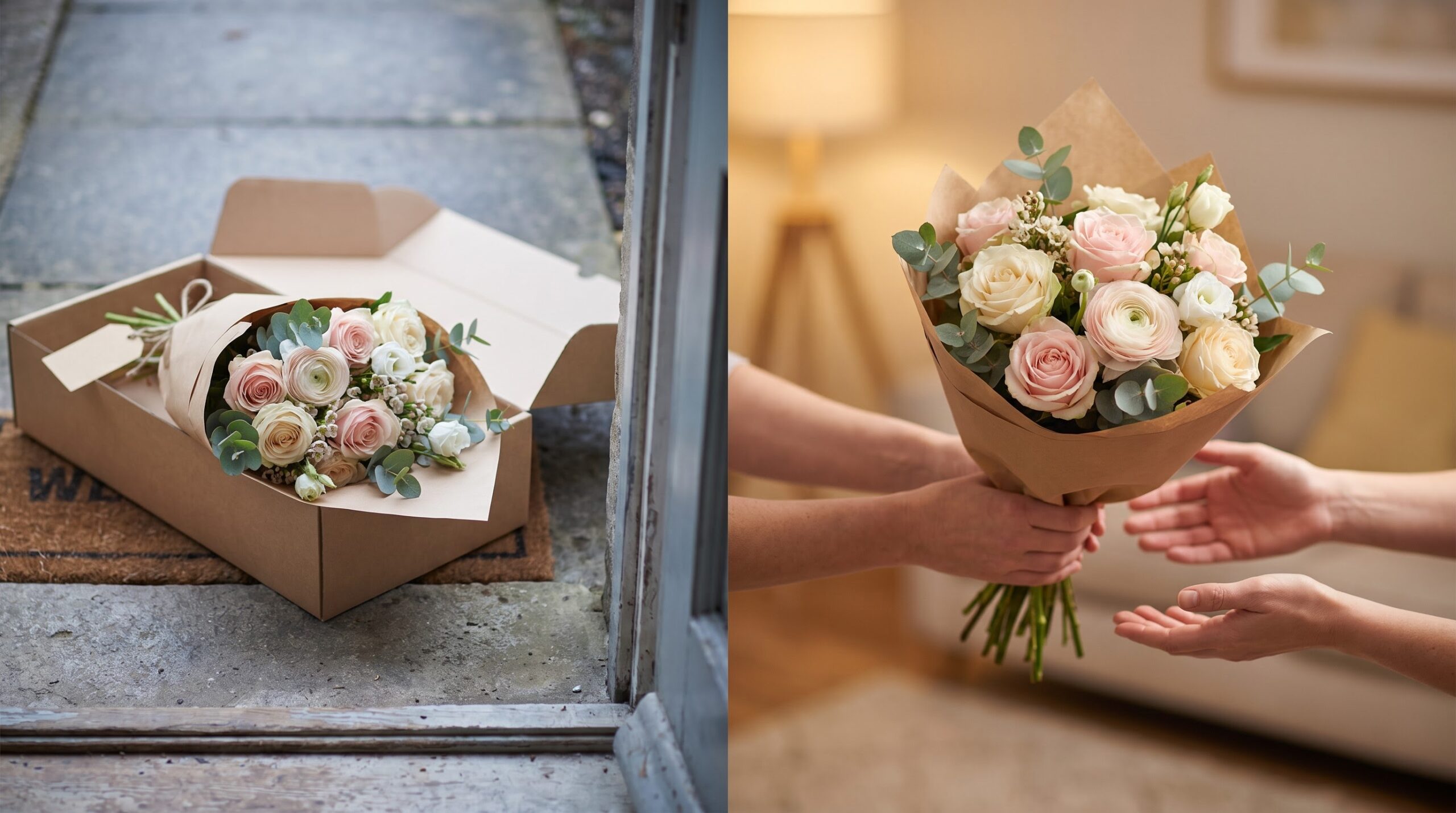
For a distant mother-in-law or grandmother, the logistics of that delegate bouquet matter more than the flowers themselves. Getting flowers delivered on time to a mother-in-law who lives far away covers what it actually takes, since the failure mode there is usually logistics, not sentiment.
Your first Mother's Day in a new role
If this is your first year as someone's boyfriend meeting her mother around the holiday, her son-in-law, or her stepson, the logic above still holds, but a few specific situations come up often enough to name directly. A pregnant partner who hasn't given birth yet is the sharpest version of this. One woman described asking her husband for flowers and being told "you're not technically a mom yet," a line that landed badly enough to become its own small case study in these threads. The responses were close to unanimous: pregnancy is the version of motherhood she is living through right now, and withholding acknowledgment over a technicality nobody asked for misses the point entirely. What she actually wanted, in her own words afterward, was modest, something "acknowledged" and small, a card or flowers, nothing elaborate.

A new stepmother is a case nobody in these threads addresses by name, which is itself useful information. There's no ready-made script for it the way there is for a girlfriend's mom, so the safest move is to run her through the same three questions from above rather than improvising something bigger. If you live with her and this is functionally your family now, a small card and a modest posy fits the relationship without overstating how established it is if you're only a year or two in. The same goes for a brand-new son-in-law or daughter-in-law: scale the gesture to how long you've actually been part of the family.
Getting the gesture right without overreaching
Once you've decided flowers are the right call, the version that reads best across nearly every thread on the subject is the same: a card plus something modest, never a dozen red roses and never an arrangement large enough to need its own explanation. Red roses read romantic no matter who they're for, which is exactly the signal you don't want to send a girlfriend's mother or a new mother-in-law. What to actually pick once you've decided flowers are the right call walks through colors and budgets that avoid that trap. And if you want the gesture to say something more specific than a generic happy Mother's Day, the color meaning behind a carnation is worth a look before you pick.
Two smaller things keep the gesture from going visibly wrong. Buy two separate bouquets: one for your own mother, one for hers, so a kind gesture toward a girlfriend's mother never accidentally reads as forgetting your own. The advice shows up close to verbatim across more than one thread, usually framed as a plain reminder that your own mother needs your care on Mother's Day too. And if you're picking up something for her mother and her father on the same trip, keep the gift even for both rather than defaulting to flowers for her and a bottle of something for him; more than one commenter on the subject called that exact split out as reading "a little bit sexist" even when nobody involved meant it that way, and matching the gift for both sidesteps the problem entirely. The same overstepping question comes up outside of Mother's Day too. Birthday flower etiquette walks through the coworker and new-relationship versions of it.
If this Mother's Day happens to be the first one without your own mother, or without hers, that's a different question than the one this page answers, and it deserves a fuller one than a line here can give it. What to do if this is the first Mother's Day without her is the place to start.
Run the three questions once, settle on where you land, and act on it this week instead of relitigating it every year it comes back around. If the question in your head was really about your wife rather than a mother figure, or about which flowers to actually buy rather than whether to give any at all, the two guides linked above pick up exactly where this one leaves off.
Enjoying our flower guides? Add YourFlowersGuide as a preferred source on Google. It helps more readers find us.
Add to Preferred Sources