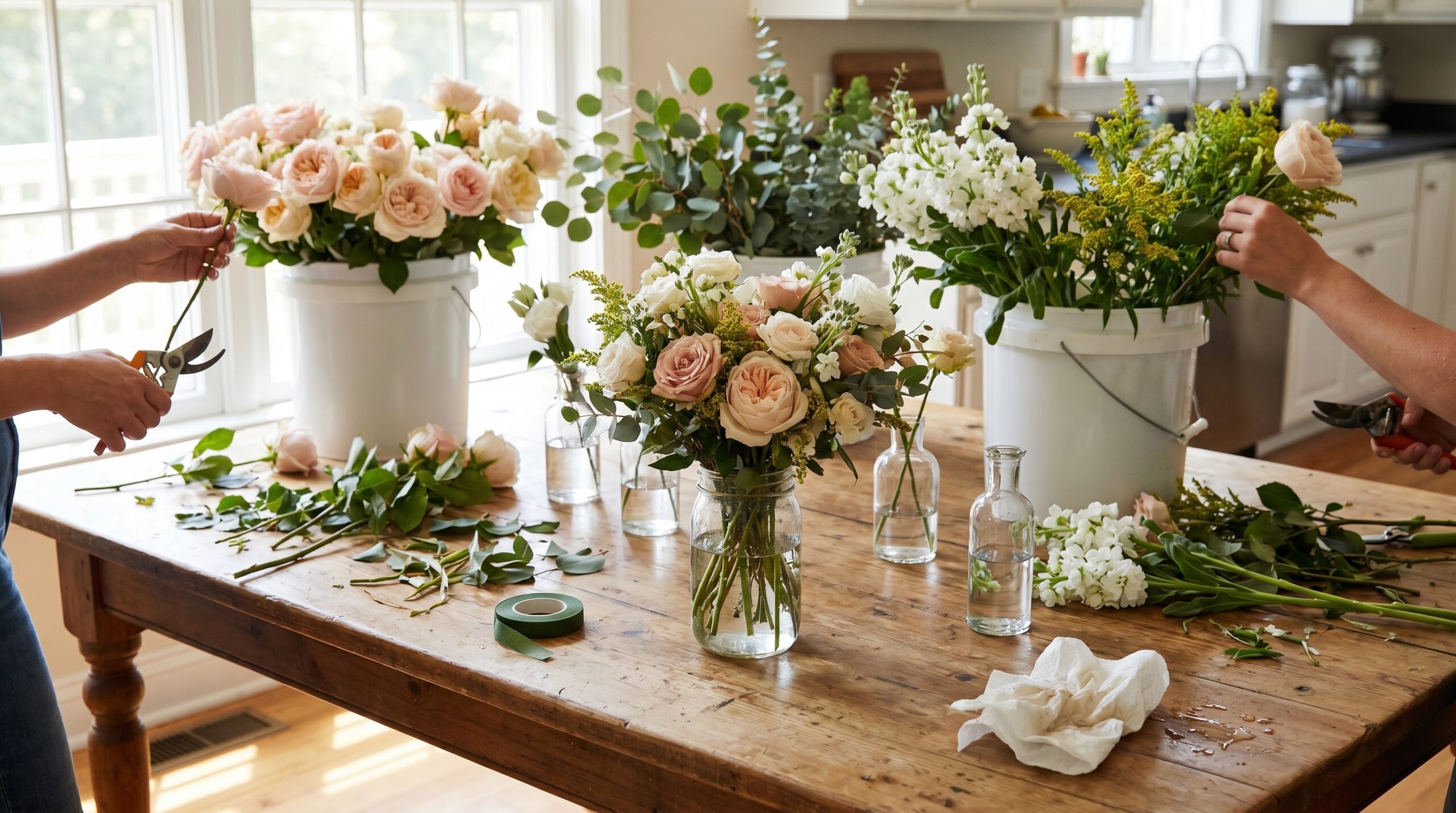
You can do your own wedding flowers without spending the night before your wedding elbow-deep in buckets. Every DIY story that ends well runs on the same schedule: stems delivered Wednesday, arranging done Thursday with help, Friday left completely alone. Hold onto that, because it removes the scenario you are most afraid of. The money answer is plainer than the seller sites make it sound. Wholesale stems really do cost 50-60% less than florist-made pieces. Then the quieter costs arrive. Some 20-30% of wholesale stems come bruised, short, or unwilling to open. The buckets, clippers and vases add a few hundred dollars. The labor runs 20 to 40 hours in the busiest week of your life. Counted fully, the typical cash saving on a mid-sized wedding lands closer to $400 to $800, not the thousands you may be picturing after a quote that "feels like a lot" hit your inbox. For some weddings that trade is still excellent. For others it is a bad deal dressed as a bargain. The math below, a five-question test, and the exact last-week plan will tell you which one yours is.
Will DIY actually save you money?
Start from what florists charge. The Knot's Real Weddings Study, drawing on 10,474 couples married in 2025, puts the average spend on wedding flowers at $2,800. The spread matters more than the average: a quarter of couples spent under $900, half stayed under $1,900, and a quarter went past $4,800. Guest count moves the number too, from about $1,600 for weddings under 50 people to $3,300 past 100. If your own quote came in far above these figures, that has its own explanations, and we walk through what florists actually charge, and why quotes run far above the internet averages separately.
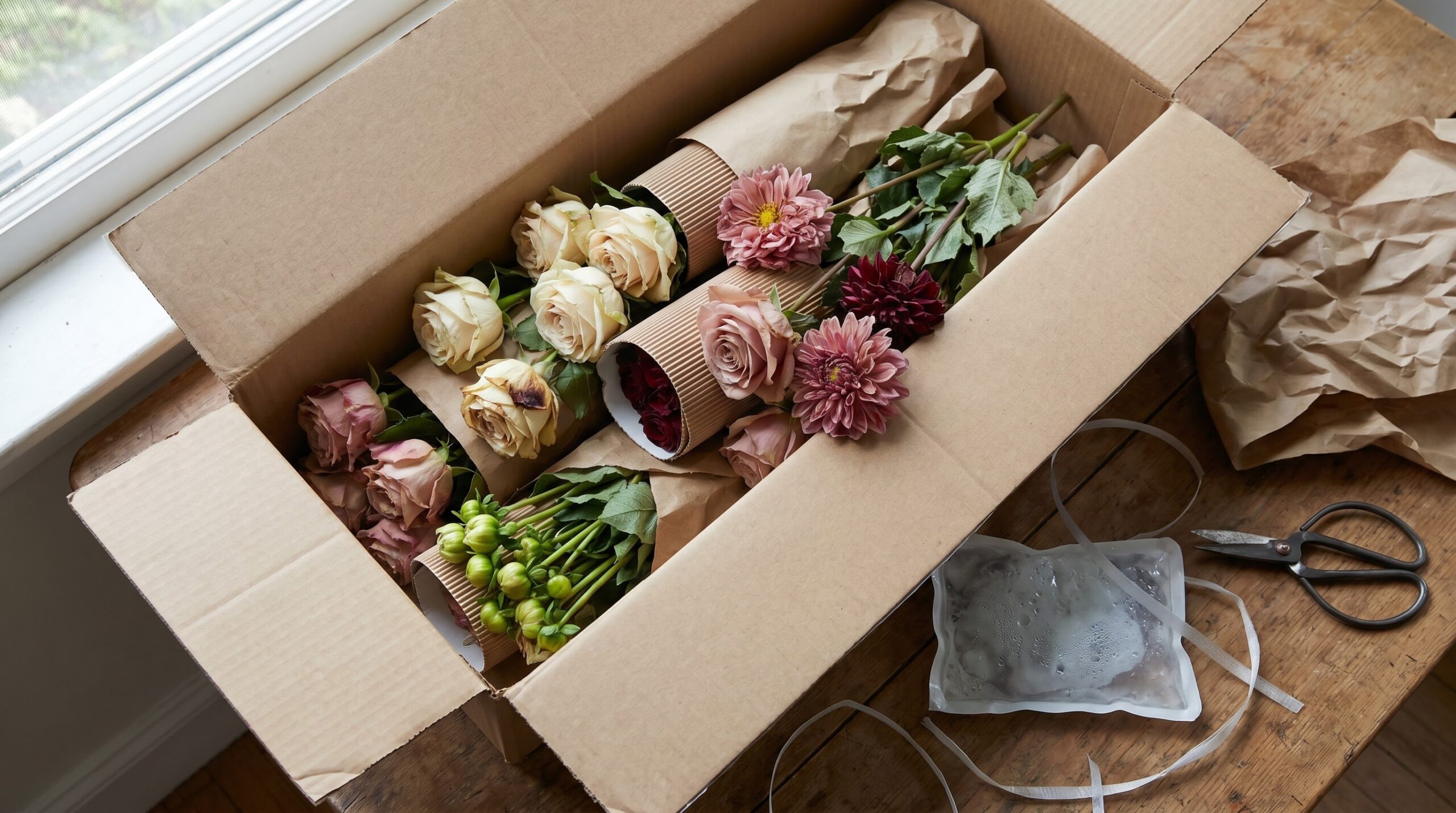
Now the seller side. Flower Moxie, a company that sells DIY wedding stems, publishes a price comparison: a florist bridal bouquet at $120 to $300 against $45 to $130 in wholesale flowers, boutonnieres at $10 to $20 against $1 to $5, and the claim that "on average, you can save between 50 and 60%" by making your own. FiftyFlowers, another stem seller, prices a professional bouquet at $250 against $76 DIY. The per-piece numbers hold up. What they compare, though, is the price of flowers against the price of flowers plus a professional's labor, cooler, delivery, setup and cleanup. Then the counting stops.
Poppy Flowers, a wedding floral company that publishes an unusually complete cost breakdown, fills in the missing lines. Plan on 20-30% of wholesale stems being unusable: damaged in shipping, too short, or refusing to open on schedule. Hard goods such as clippers, floral tape, wire, buckets, flower food and vases run $295 to $575. If you have no spare fridge, cooler rental adds $100 to $250. And its task-by-task labor estimate totals roughly 22 to 39 hours, which it describes as a full work week compressed into the 2-3 days before your wedding.
| Cost line for a 100-guest DIY wedding | Realistic range | In the sellers' 50-60% claim? |
|---|---|---|
| Wholesale stems, ordered 20-30% over your recipe to cover losses | $1,200 to $2,000 | Only the base stems |
| Hard goods: clippers, tape, wire, buckets, flower food, vases | $295 to $575 | No |
| Cold storage if you have no spare fridge | $100 to $250 | No |
| Your labor across the wedding week | 20 to 40 hours | No |
| Cash total | $1,600 to $2,800, plus a work week | |
| Full-service florist for the same wedding | $2,500 to $5,000 |
Swipe →
So the answer depends entirely on which florist number you compare against. Against a $5,000 quote, DIY can keep $2,000 or more in your pocket, and for plenty of couples that is real money worth a hard week. Against a modest quote or a budget floral service, the gap collapses; Poppy's own math puts the difference against its service at just $400 to $800. That is why the community verdicts sound contradictory. One much-circulated comment puts the case against: "Most DIY is not a cost saver because your time, labor, lack of sanity and skills all cost minimum wage per hour in addition to cost of supplies." And yet the single most upvoted DIY wedding post in those same forums reads: "We DIYed all our flowers, and while it gave a lot of stress, we're so happy with the result." Both are true. They describe different weddings, and different people. To price your own case rather than an average, start by counting how many stems each bouquet and table actually needs, then multiply by live wholesale prices.
The five questions that decide it
Read enough success stories and regret threads and the pattern gets almost boring. The outcome is settled months before anyone picks up clippers, by the shape of the wedding itself. Ask yourself five things.
| Question | The DIY-friendly answer |
|---|---|
| How many guests? | Under 75. Every table past that is another centerpiece, another bucket, another half hour on Thursday. |
| How simple is the design? | Bud vases, loose hand-tied bouquets, greenery runs. Arches, cascades and flower walls are professional work. |
| Do you have 2-3 helpers, named, booked for two days before the wedding? | Yes, and they know it is a work shift, not a hangout with snacks. |
| Do you have real cold storage? | A spare fridge with the shelves pulled out, a rented cooler, or at minimum a dark room that stays cool. A hot garage kills flowers. |
| Can you enjoy slightly imperfect flowers in your photos? | Yes. Wholesale stems open on their own schedule, and the arrangements will look homemade in the best and worst senses. |
Swipe →
Five yeses and you are the wedding DIY was built for: take the timeline below and go. Four, and the smart move is a hybrid, hiring out exactly the piece your "no" touches, most often the bridal bouquet or a big installation. Two or more nos and the flowers should not be your project; put that energy into what a fixed $500, $1,500 or $3,000 actually buys and negotiate from knowledge instead.
One more thing the forums make clear: a striking share of the people planning DIY wedding flowers are mothers of the bride or groom, quietly practicing six months out. The comments under one grocery-store bouquet tutorial say it plainly: "scared to death, I have zero crafting talent" and "pray for my arthritic thumbs." If that is you, be reassured on the skill and realistic about the load. A bud vase takes three stems and no talent whatsoever, and a practice run with grocery flowers in February will teach you most of what your hands need to know. The five questions still apply, though. You count as one of the helpers, so recruit two more, and let someone younger haul the buckets while you do the fine work.
The last week, day by day
The single most repeated piece of advice across every DIY thread is a schedule, and one planning-forum post says it best: "The gamechanger for us was finding out we should target Wednesday delivery for a Saturday wedding, with Thursday for putting the arrangements together. Knowing I wouldn't be fussing day before or day of made it a no brainer."
| Day (for a Saturday wedding) | The work |
|---|---|
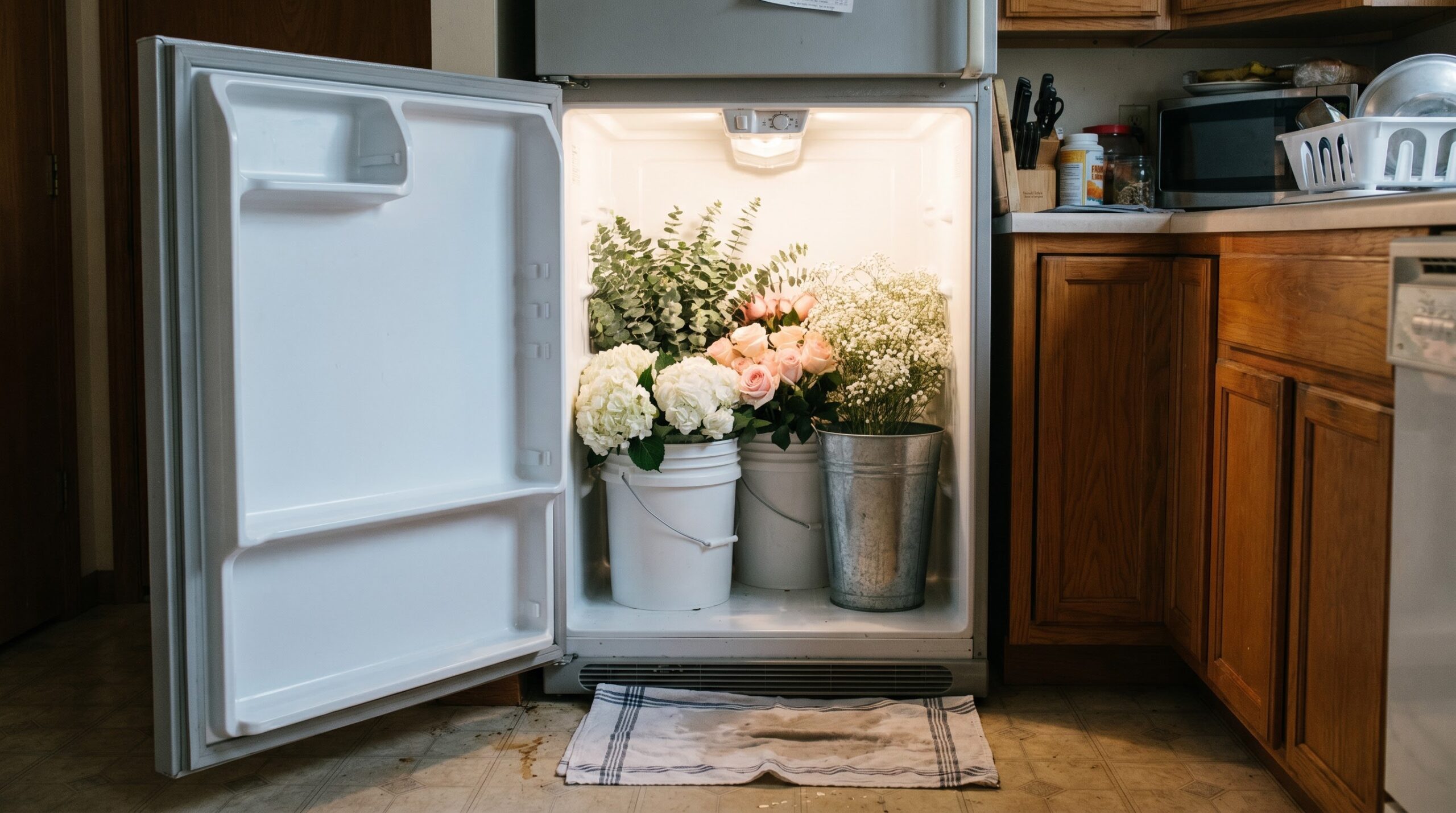
| Wednesday | Stems arrive. Open every box within the hour, cut each stem at an angle, get everything into clean water, then into the cold. Two hours, unglamorous, decisive. |
| Thursday | Arranging day, helpers on site. Centerpieces first while hands are fresh, bouquets and personals last so they stay youngest. Everything goes back into the cold overnight. |
| Friday | Nothing. Top up the water, swap any stem that sulked, and go to your rehearsal as a guest. |
| Saturday | Flowers travel last, upright, in water, in an air-conditioned car. Bouquets come out of the fridge about an hour before photos. |
Swipe →
Cold storage is the part first-timers underestimate, and florists watch it with open exasperation. "The amount of brides that don't understand that cut flowers need to be in water to look good is honestly mind boggling," one wrote. "You can't just store them 3 days in the back of your car." The home version of a florist cooler is simple, and DIY veterans pass it along constantly: "take the shelves out of your fridge and put the flowers in water inside the fridge." Keep fruit out of that fridge entirely, since ripening fruit releases ethylene and ethylene ages cut blooms fast. No spare fridge means a rented cooler, or the coolest and darkest room you have with the air conditioning doing real work.
Book the help before you book the flowers. The playbook post quoted above is blunt about it: "Figure out if you can get some extra help 2 days before your event. This is critical." That particular couple ended up with eight people on deck for a full build. You need two or three at minimum, confirmed for Thursday, and treated like the crew they are.
The failure stories share a shape too, and it is worth staring at before you commit. Someone plans to arrange the day before, on top of everything the day before already holds; even fans of warehouse-club flowers admit the catch is the calendar: "so smart but give me major anxiety considering I have so much to do already day before wedding." Someone picks up delicate varieties at the last minute: "I picked up my bouquet of cactus dahlias the evening before my wedding. They were completely wilted by my noon wedding!" Someone books a May date without checking the flower calendar and discovers that Mother's Day weekend and graduation season strip shelves and block wholesale order dates; one bride "started crying in a grocery store" when the fifth shop in a row had already promised its baby's breath to graduation bouquets. And under all of it sits the structural risk: on Saturday morning there is no florist to call. Keep a plan-B line in the budget, a couple hundred dollars for an emergency grocery run and spare greenery, and choose forgiving flowers over fragile ones.
Buying is its own small science. Online wholesalers deliver to your door, which suits the Wednesday plan best; Costco, Sam's Club and Trader Joe's cost less per stem but put transport and timing on you; bigger cities have flower markets. Order windows, blocked dates around flower holidays, and per-stem prices live in our guide to when and where to order bulk stems, so here just one rule: pick your source early and check its calendar before you set the delivery date.
The middle path when full DIY feels like too much
The compromise both florists and DIY veterans recommend is a split. Hand a professional the pieces that appear in every photograph and cannot be allowed to fail, usually the bridal bouquet and the personals, then make the rest yourself: bud vases, table clusters, the welcome table. Some couples run the split the other way and keep the bouquet for sentimental reasons. Either direction, the point is the same. Shrink Thursday to something two people can finish before dinner.
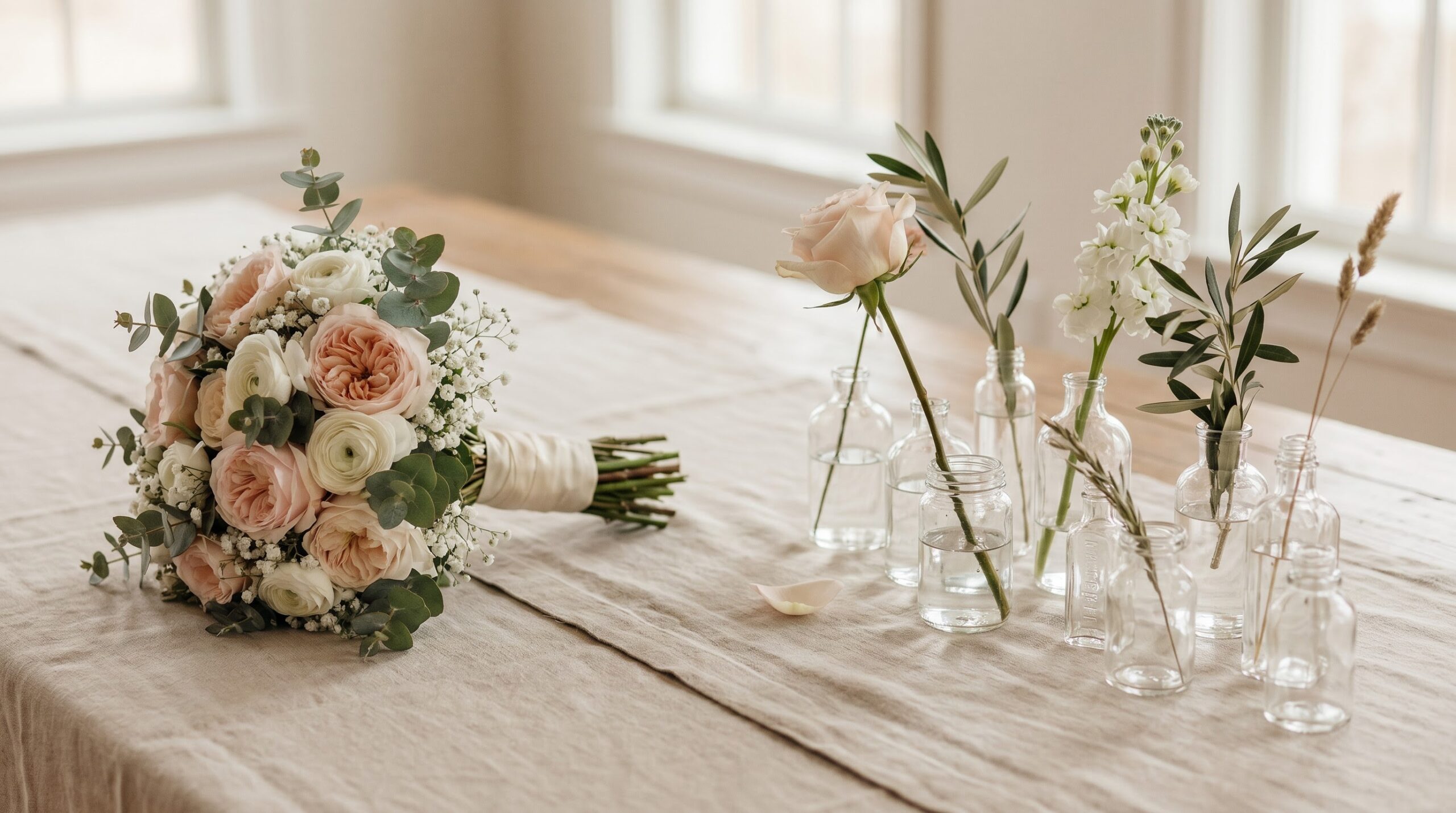
DIY-in-a-box kits sit halfway as well: pre-matched flowers, recipes, video support, at a price between raw wholesale and a florist. The candid reviews are worth reading first. One bride summed up her kit experience this way: "It worked okay, but I was less than thrilled with the results. I really wish I could have afforded a regular florist. Be prepared for a lot of work and mental bandwidth." We compare what DIY-in-a-box kits actually ship you separately. And if cold storage is the question that breaks your setup, silk and sola stems remove it entirely; artificial arrangements can be built months ahead, in front of the television, with zero refrigeration and zero Wednesday.
So run the test tonight. Count your guests, look at your inspiration photos with a cold eye, name your two helpers out loud, open the fridge, and answer the fifth question truthfully. Five yeses: copy the Wednesday, Thursday, Friday plan into your wedding doc, text the helpers a date before someone books that weekend, and set stem delivery for the Wednesday. Anything less: price the hybrid split with a local florist and hand over only what your "no" touched. Either way, decide now, months out, in a calm chair. The flowers are settled long before Thursday, and Friday stays empty no matter what you choose.
Questions that come up next
Can I make my bouquet the day before the wedding?
Yes, if it goes straight into water and spends the night in a fridge. What fails is building or collecting it the evening before and leaving it out dry; soft-stemmed flowers like dahlias can wilt within hours. Arrange on Thursday, refrigerate in water, and keep Friday for touch-ups only.
Do DIY wedding flowers need to be refrigerated overnight?
They need cold, dark and water, and a fridge is the most reliable way to get all three at once. Shelves out, buckets in, no fruit alongside. If a fridge is impossible, a rented cooler or a genuinely cool dark room with stems in deep water can carry two nights.
How far ahead can you make the arrangements?
Fresh arrangements hold their look for about two days when kept cold and watered, which is exactly the window the Wednesday-to-Saturday plan uses. Hardy greenery can be prepped a little earlier. Anything fresh built more than three days out is a gamble. Silk and sola pieces can be finished months ahead.
Can the mother of the bride do the wedding flowers?
Often she is the best person for it: motivated, organized, and willing to practice months in advance. The cautions are the same as for anyone. Book two extra helpers, keep the design simple, and protect your Friday. A trial run with grocery-store stems answers most of the fear.
Enjoying our flower guides? Add YourFlowersGuide as a preferred source on Google. It helps more readers find us.
Add to Preferred Sources