Wedding Flowers Guide | Step-by-Step

Wedding Flowers

Wedding flower budgets stretch farther when priorities match the photos and the flow of the day. The first decision is separating “must-have photos” items from “nice-to-have decor.” Must-have photos items are pieces that will be held, worn, or framed in close-ups: the bridal bouquet, a small set of personal flowers, and one ceremony focal moment (often the couple’s standing area). Nice-to-have decor is everything guests glance at briefly or see from far away: aisle markers for every row, extra clusters on every sign, and a fully dressed cake table when the cake is only viewed for ten minutes.


A practical way to set priorities is to name three hero moments that will appear in most photos and videos. For many weddings, those are the couple’s portraits, the ceremony “yes” moment, and one wide reception shot that shows the room. Flowers should support those moments first. That usually means spending on the bridal bouquet shape and finish, a grounded ceremony feature (even a simple pair of arrangements can do the job), and centerpieces that match the palette without trying to be unique at every table.


Priorities also shift with wedding size. Micro weddings (about 2 to 20 guests) can lean hard into personal flowers and one dramatic ceremony area because fewer tables need coverage. A mid-size wedding (about 40 to 120 guests) benefits from repeating a simple centerpiece style so the room feels planned without paying for dozens of different designs. Large weddings (150+ guests) often look best when money is concentrated into fewer big statements, like one strong entry moment and a consistent table plan, instead of trying to “decorate everything.” Large rooms punish thin floral coverage, so consistent scale matters more than rare flower varieties.

Season changes what is worth paying for. Spring weddings can get a lot of impact from airy textures and fresh greens, so couples can spend less on heavy blooms and more on shape. Summer heat can shorten vase life, so sturdy flowers and smart water management often matter more than a fragile star bloom. Fall weddings can look rich on a controlled budget because warm tones and textured foliage do a lot of visual work. Winter weddings often require more imported product and more protection from cold exposure, so it can be smarter to spend on fewer pieces that are built to travel well and hold up indoors.


Style changes priorities too. Classic weddings rely on clean shapes, tidy mechanics, and flowers that read “wedding” instantly, such as roses, lisianthus, and ranunculus in white and blush with green. Modern weddings often look best with fewer stems per piece, stronger negative space, and bolder shape, like a minimal bouquet with calla lilies and anthurium plus one clean foliage line. A modern look can cost less if it uses fewer focal blooms, but it can also cost more if it requires specialty shapes and premium stems. The budget lever is not “classic vs modern.” It is stem count, waste, and how many separate moments need fresh flowers.

Budget-smart swaps work when they keep the same overall silhouette. A bouquet can look expensive because it is well-shaped, not because every bloom is rare. Roses can stand in for peonies in many classic designs when the color is right and the bloom is open. Carnations can fill volume in a soft pastel palette when they are used intentionally, not as an afterthought. Greenery choices also matter: eucalyptus and Italian ruscus give a polished feel without demanding a high bloom count, while fragile vines can add labor and risk.

Table of Contents

Wedding Flowers Quick Chooser is a vertical, phone-friendly infographic on a warm off-white background. A rounded headline bar sits at the top, followed by a large rounded-corner table with seven rows that compares wedding floral pieces. Columns include floral piece, best flowers, palette, budget tier, vase life, low scent, and a short risk note. Each best-flower cell includes tiny realistic flower thumbnails paired with short flower-name text, while small icons repeat across the table to quickly scan timing, scent, and risk. A bottom strip explains the icon legend and includes a small Safe default box with a simple bouquet formula for reliable results. Watermark yourflowersguide.com appears in the bottom-right corner.

The Step-by-Step Wedding Flowers Plan (Timeline + Decisions)

A wedding flower plan is easier when couples pick a service path early, because the path determines deadlines and responsibilities. A full-service florist covers design, sourcing, delivery, and setup, and often strikes flowers at the end of the night. This path costs more, but it buys time, experience, and problem-solving on the day.

A la carte pickup or drop-off is a preset collection model. Couples choose from a menu of designs and quantities, then pick up finished items or receive a simple delivery. This path can fit mid-range budgets and simple venues, but it requires someone reliable to place pieces and handle water and storage.

Partial DIY plus grow-it-yourself is a mix. Couples might order personal flowers and key ceremony pieces, then DIY bud vases or small arrangements, and add seasonal garden stems for texture. This path saves money when labor is realistic and the designs are simple. It fails when the plan depends on perfection, rare blooms, or tight timelines without enough hands.

A smooth plan combines creative decisions with logistics. Flower choices are not just “what looks pretty.” They are also availability, lead time, temperature risk, setup time, and where everything lives before it is placed. The steps below keep the process grounded so couples and guests are not improvising on the wedding weekend.


  1. 9 to 12 months out: Choose the service path and set a working floral budget range with a clear max.
  2. 8 to 10 months out: Confirm venue rules on candles, aisle width, attachment methods, and what time vendors can enter.
  3. 7 to 9 months out: Define the color direction and two must-have photo moments for flowers.
  4. 6 to 9 months out: Book a florist or a la carte provider, or lock in DIY suppliers and a setup team lead.
  5. 5 to 7 months out: Build a “pieces list” with quantities by wedding size and decide what can be reused between ceremony and reception.
  6. 4 to 6 months out: Pick a seasonal flower menu with two to three flexible substitutes for every key bloom.
  7. 3 to 4 months out: Finalize personal flowers, ceremony focal pieces, and reception table plan with container sizes and heights.
  8. 2 to 3 months out: Confirm delivery windows, pickup times, and where flowers can be stored safely at the venue or hotel.
  9. 4 to 6 weeks out: Walk through setup and teardown with names and phone numbers for who moves what, and when.
  10. 2 to 3 weeks out: Confirm final counts after RSVPs and adjust quantities while keeping designs consistent.
  11. 1 week out: Prepare supplies for a la carte or DIY, including buckets, labels, scissors, towels, and table protection.
  12. Day before: Receive flowers, hydrate properly, store cool, and keep personal flowers separate and clearly labeled.
  13. Day of: Place ceremony pieces first, then personal flowers, then reception tables, and keep a “repair kit” on hand.
  14. End of night: Decide what returns to the couple, what goes to family, and what is donated or composted.

Wedding size changes how the plan is paced. Micro weddings often compress the design process and benefit from a single delivery or pickup, with minimal placement needs. Mid-size weddings usually need a clear staging area and a short setup window plan so tables do not delay other vendors. Large weddings require earlier load-in, more labeled zones, and a firm decision on what is worth installing versus what can be skipped without anyone noticing.

Wedding Flowers That Look Good in Photos is a vertical infographic on a warm off-white background with a rounded headline bar at the top. Below it, a Best picks section shows a two-column grid of six rounded tiles, each with a small realistic flower illustration and a short benefit line for common wedding staples. A Palette swatches row follows with five rounded color chips labeled white, fresh green, blush, pale peach, and muted mauve. Next is a Do-not-do checklist of eight common wedding flower mistakes, each paired with a simple icon for quick scanning. A bottom Fast fixes strip presents five tiny icon tips in one row. Watermark yourflowersguide.com appears in the bottom-right corner.

Seasonal Flower Menu (4 Seasons) Plus Smart Substitutes

Seasonal planning is not about limiting options. It is about choosing flowers that behave well in that season and keeping a substitution plan ready. Most weddings can hold a white-green base with a soft pastel layer year-round. The difference is which flowers deliver that look with the least risk.


Spring weddings often shine with soft movement and fresh greens. Reliable options include tulips, ranunculus, anemones, hyacinth (used carefully for scent), sweet peas (as an accent), lisianthus, and early garden roses when available. For greenery, Italian ruscus, eucalyptus, and smilax are common, and flowering branches like cherry or quince can add scale. A spring white-green signature look can be built around white tulips and ranunculus with clean ruscus and a little vine for softness. A soft pastel direction can lean into blush ranunculus, pale peach tulips, and cream lisianthus, keeping greens crisp so the palette stays light in photos. Substitutions are common in spring because the weather can shift supply. When tulips are short, lisianthus and roses keep a similar soft profile. When sweet peas are unavailable, stock or airy spray roses can add gentle texture without changing the color story.

Summer weddings need flowers that hold up in heat and long photo times. Reliable blooms include roses, spray roses, lisianthus, dahlias (with heat-aware handling), zinnias (great for DIY), cosmos, sunflowers (when the look fits), and hydrangea (beautiful but thirsty). Greenery like eucalyptus, salal, and leatherleaf fern is often used for toughness, while delicate vines should be limited outdoors. A summer white-green signature look can be white roses and lisianthus with eucalyptus and a touch of hydrangea only in shaded or indoor settings. For soft pastels, pale peach spray roses, blush dahlias, and cream lisianthus read cleanly, especially when paired with silvery greens. Substitution rules matter most in summer because some blooms wilt fast. When dahlias are too risky for midday outdoor ceremonies, roses and lisianthus can carry the same palette with higher reliability. When hydrangea is used, it should be reserved for pieces that can stay in water until the last possible moment.

Fall weddings often benefit from texture and deeper greens, even when the palette stays white-green and pastel. Reliable options include roses, lisianthus, chrysanthemums (used in modern shapes), dahlias, scabiosa, aster, and foliage like eucalyptus, ruscus, and seasonal branches. Fall white-green can look modern and clean with white roses, white mums used sparingly, and structured greens that keep the arrangement from looking muddy. Soft pastels can tilt warmer in fall without becoming “orange.” Dusty blush roses, muted mauve accents, and cream lisianthus can read romantic if the greens stay fresh and not too gray. Substitutions in fall are usually about color temperature. When a blush flower reads too pink under warm indoor lights, shifting to cream and adding a tiny touch of mauve can calm the photo. When dahlias are limited, garden roses or standard roses can replace them without changing the overall feel.

Winter weddings are often indoors, which helps, but winter also brings transport risk and more imported product. Reliable winter-friendly choices include roses, spray roses, lisianthus, carnations (great for volume), anemones in some markets, and sturdy greens like Italian ruscus, eucalyptus, and seasonal evergreens. White-green winter looks can be especially classic with white roses, clean ruscus, and small evergreen accents that feel intentional rather than “holiday.” Soft pastels work well in winter when they are kept pale and paired with crisp whites so the room does not feel dim. Substitutions in winter often happen when a specialty bloom is delayed. The safe approach is choosing designs that look complete with the core flowers, then treating specialty stems as optional accents rather than structural needs.


Universal substitutions that rarely look wrong:

  • Lisianthus for peony-like softness when color matches
  • Spray roses for airy filler in classic or modern pieces
  • Carnations for budget-friendly volume in pale palettes
  • Ruscus for clean greenery when vines are fragile
  • Chrysanthemums in modern shapes when a round bloom is needed
Wedding Flowers

Color Palettes That Photograph Well (White-Green + Pastels, Classic vs Modern)

White and True Green feels calm, crisp, and timeless. It matches classic weddings in any season and also reads modern when shapes are minimal and negative space is used. The common mistake is mixing too many green tones, especially gray-green plus yellow-green plus deep forest green, which can look muddy under warm indoor lighting. A tighter green range, plus clean whites, photographs better.


Ivory, Blush, and Soft Sage reads romantic and gentle, most often classic, and it works especially well in spring and fall. The mood is warm without being loud. The mistake to avoid is pushing blush too saturated, which can turn “sweet” into “hot pink” in photos, especially with flash. Keeping blush pale and adding ivory as the dominant tone holds the look.


Cream, Pale Peach, and Eucalyptus Gray-Green feels modern-classic and is a safe summer choice. It looks soft but still fresh, and it works well in indoor receptions with warm lighting. The mistake is stacking too many beige tones, which can flatten skin tones and make arrangements disappear against wood tables. Adding a brighter white focal, even a small amount, keeps the palette alive.


White, Soft Lavender, and Clean Green feels light, airy, and a bit garden-like, and it fits spring and early summer in both classic and modern settings. The mistake is using lavender that reads blue-purple under certain LEDs, which can clash with bridesmaid dresses or uplighting. Keeping lavender very pale and using white as the anchor avoids color drift.


White, Dusty Rose, and Muted Mauve brings a quiet fall romance and works well in classic designs with rounded bouquets. It can also lean modern when paired with clean lines and fewer varieties. The mistake is mixing dusty rose with too many brown or burgundy accents, which can make greens look dull. A cooler green and more white space keeps the palette from feeling heavy.


White, Pale Yellow, and Fresh Green feels sunny and modern in spring and summer when done lightly. It also suits daytime weddings with bright natural light. The mistake is using too much yellow across many pieces, which can dominate photos and reflect on white clothing. Keeping yellow as a small accent and choosing pale, buttery tones prevents harsh contrast.

Signature Wedding Looks (Simple "Recipes" That Work)

A strong wedding look is a repeatable formula, not a one-time masterpiece. The best “recipes” use a small set of flowers, a consistent green, and one clear shape rule. That is what makes the ceremony and reception feel connected, even when budgets are mixed and some pieces are reused.

A classic white-green recipe can be built around white roses, white lisianthus, and Italian ruscus, finished with a tidy ribbon wrap. The bouquet shape stays round or softly domed, with just a little airy edge so it does not feel stiff. Centerpieces work best as low compotes or low rounded arrangements that allow conversation, with greens tucked cleanly rather than spilling everywhere. The budget lever is swapping a portion of standard roses for spray roses and keeping the variety count low so labor stays efficient.

A modern minimal recipe uses fewer stems but higher intention: white calla lilies or white anthurium paired with one clean green like ruscus or a single eucalyptus type. The bouquet shape is minimal and elongated, often with visible negative space and a strong line. Centerpieces can be bud vases in small groups or a single medium-height piece with clean mechanics and no loose filler. The budget lever is using fewer total pieces and repeating them, rather than increasing stem quality across dozens of tables.

A soft pastel garden recipe leans airy and relaxed while still photographing cleanly. It can use blush spray roses, cream lisianthus, pale ranunculus, and a touch of sweet peas when available, with ruscus as the stable green backbone. The bouquet shape stays airy and slightly asymmetrical, not messy, with a few stems allowed to arc. Centerpieces work well as mixed bud vases plus one small compote per table, which spreads color without requiring large foam-based builds. The budget lever is shifting from full centerpieces to bud vase groupings and using one focal bloom type per piece instead of many.

A “green-forward with white highlights” recipe works when couples want calm, natural style with strong greenery presence. It uses eucalyptus, Italian ruscus, and seasonal foliage with white accents like white roses or white mums used intentionally. The bouquet shape can be slightly cascading or loose round, depending on classic vs modern preference, and it reads especially good in outdoor venues. Centerpieces can be greenery garlands with small clustered flower moments, which look generous without requiring heavy bloom counts. The budget lever is placing flowers only at key points along greenery rather than building full-flower coverage across every inch.

Wedding Flowers

By Floral Piece (What You Actually Need, Typical Counts, and Alternatives)

Wedding flowers feel simpler when each piece has a job. Personal flowers handle close-up photos and help people look “finished.” Ceremony flowers define the most important moment. Reception flowers create the room’s first impression and keep the palette consistent from table to table.


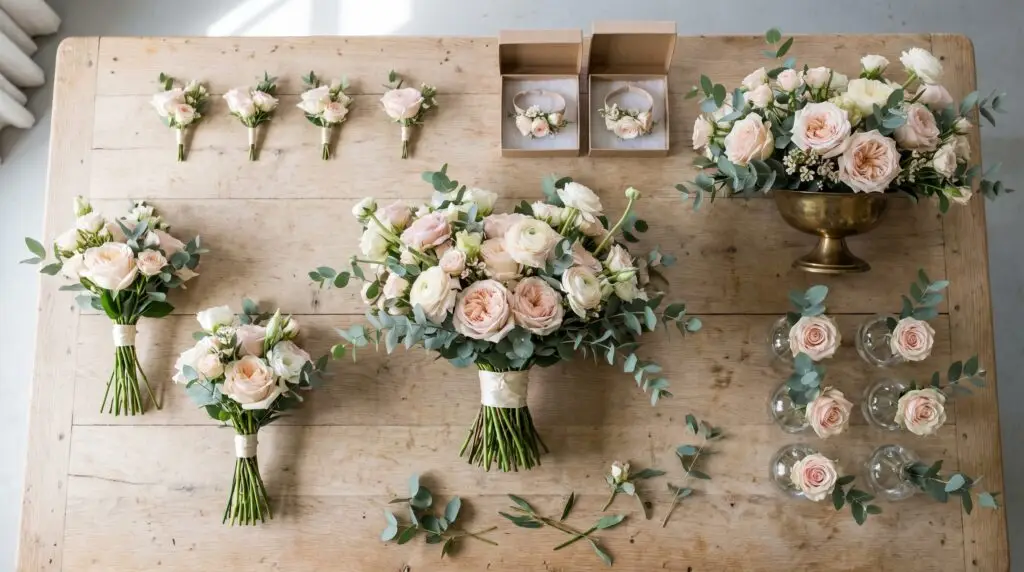
The bridal bouquet is usually the top priority because it appears in portraits, walking shots, and detail photos. For micro weddings, one well-built bridal bouquet plus a small ceremony focal moment can carry the whole floral story. For mid-size weddings, the bridal bouquet should match the room’s style rule, not fight it with a different palette. For large weddings, it is still the hero, but the finish and durability matter more because the day is long. A simple alternative for budget control is keeping the bouquet slightly smaller and investing in better shape and ribbon work, rather than chasing a very large count of premium blooms.


Bridesmaids bouquets are optional in the strict sense, but they add rhythm in group photos. A common mid-budget approach is giving bridesmaids smaller bouquets with the same flowers as the bridal bouquet, or switching to one dominant flower and one green so the bridal bouquet remains distinct. In modern weddings, alternatives like single stems, small posies, or even no bouquets can look intentional if the bridal bouquet is strong and the palette appears elsewhere. For large weddings, consistency matters more than size, and small bouquets that match the palette can read better than a mix of different styles.


Boutonnieres and corsages should be treated as comfort items, not tiny sculptures. They need to survive hugs, heat, and photos. One boutonniere per key person is typical, but couples can save by limiting them to the couple, wedding party, and immediate family, rather than extending to every extended relative. Corsages can be replaced by simple nosegays or a single bloom pin if wrists are uncomfortable or if allergy sensitivity is unknown. DIY is possible for boutonnieres when designs are simple, but it often fails when timing is tight and the flowers are fragile.


Ceremony flowers can be done well without covering every surface. Aisle markers look great when they are placed only at key points, like the first few rows or the aisle entrance, instead of every chair. Arches and ground arrangements must be built stable, so they are less DIY-friendly for most couples unless someone has experience with mechanics and transport. A practical rule is to spend on one focal point where the couple stands, then keep the rest minimal so the photo background stays clean.


Reception centerpieces depend on table count and room scale. For micro weddings, a few larger pieces can be reused across the space. For mid-size weddings, repeating one or two centerpiece styles is the simplest way to look cohesive. For large weddings, centerpieces must read from a distance, and it is often smarter to choose medium-height designs or grouped bud vases that fill visual space without creating tall top-heavy risk. DIY is easiest when using bud vases, simple greenery, and sturdy blooms that can handle handling and transport.


Welcome table, bar, and cake flowers are “nice-to-have” pieces that should be chosen only if they support photos or guest flow. A welcome table arrangement can be small but well-placed and still photograph. Bar flowers can be skipped unless the bar is a major visual feature. Cake flowers should be handled carefully and placed by someone who understands food-safe separation and stability, or replaced with a floral topper that is prepared in advance.


Toss bouquets and flower girl petals are optional. A toss bouquet can be made from leftover stems to avoid throwing the main bouquet. Petals can be beautiful, but they also create slip risk and cleanup labor, and many venues restrict them. A safer alternative is having a flower girl carry a small basket with a few secured blooms or a mini bouquet.

Venue and Weather Planning (Rules, Heat, Wind, AC, Travel)

Venue and weather planning is where weddings either feel effortless or feel stressful. Flowers are living material. They react to heat, wind, dry air, and travel, and the plan needs to match those realities.


Outdoor heat is the most common risk. High temperatures and direct sun pull moisture fast, especially from thin-petaled blooms and greenery that is out of water for long periods. The safest approach is choosing sturdy flowers, keeping ceremony pieces in water until the last possible moment, and limiting how long personal flowers sit in a hot car or on a sunny table. Hydration habits matter more than chasing a “perfect” flower. Shade planning, fast placement, and a cool holding area can protect the investment.


Wind affects stability and appearance. Arches, aisle pieces, and tall centerpieces can become hazards if they are top-heavy or lightly anchored. Grounded arrangements tend to perform better outdoors because they have a lower center of gravity. Attachment methods should follow venue rules and should not damage structures. In windy areas, fewer loose trailing elements are safer, and designs should be built to look good even if the wind shifts a few stems.


Indoor air conditioning can also be harsh. Cold air dries petals and greens, and strong vents can cause arrangements to lean or dehydrate faster than expected. Flowers should be placed away from direct vents when possible. If a room is very cold, some blooms can bruise if they press against each other in tight wraps. A slightly looser packing style and careful storage can prevent damage.


Church and venue restrictions need to be confirmed early. Many venues limit open flames, restrict what can be attached to pews or chairs, and require clear aisle widths for safety. Some also restrict petals, rice, or confetti. These rules change what is realistic for ceremony decor. A simple pair of focal arrangements can often meet both style and safety rules without triggering restrictions.


Beach venues add humidity and salt air, which can stress some flowers and corrode mechanics. Designs should be built with materials that can tolerate moisture, and containers should be heavy enough to resist gusts. Lighter, airy pieces can still work, but they need strong anchoring and a plan for fast setup. Barn venues add dust and uneven surfaces, so table protection, sturdy bases, and cleanup planning matter. Arrangements that shed pollen or small petals can create extra mess, so low-shedding choices and good conditioning help.


Fragrance and pollen planning should be practical, not medical. When sensitivity is unknown, it is safer to avoid heavily scented blooms in tight indoor spaces and to keep strongly fragrant pieces away from dining areas. Choosing low-scent options and keeping flowers clean and hydrated reduces irritants. Powdery pollen near clothing can be a nuisance in photos, so pollen-heavy blooms should be handled carefully, and open anthers can be removed by a florist when appropriate.


Destination travel changes everything. Flying with large fresh arrangements is risky because temperature swings and delays are common. It is usually safer to use a local florist at the destination, or to carry only small personal flowers that are built for travel and can be replaced if needed. If flowers must travel, sturdy varieties, strong packaging, and a backup plan should be assumed from the start.

Wedding Flowers

Guest Flowers and Etiquette (Bring, Send, or Skip)

Guests often wonder whether bringing flowers is thoughtful or awkward. In many US weddings, guests give a card and a registry gift, and flowers are not required. Flowers can still be appropriate when they are chosen in a way that does not create work for the couple or the venue.


Flowers are usually not a good idea to bring to the ceremony itself. Guests arriving with a bouquet create a problem: where it goes during the ceremony, who holds it at dinner, and how it travels home. Small venues and tight seating make this worse. Destination weddings also make guest flowers impractical because travel and hotel logistics are already complex. If the invitation requests “no gifts” or indicates a charity contribution, flowers can conflict with the couple’s request unless they are sent privately to the couple’s home.


Sending flowers can be a better option than bringing them. A small arrangement delivered to the couple’s home after the wedding avoids day-of burden and still feels personal. Timing matters. Delivering to the venue is risky because venues may refuse deliveries, flowers can sit unattended, and the couple may not have transport space. Delivering to a hotel can work only if the hotel is confirmed as willing to receive deliveries and the couple will be there long enough.


Style and size should be chosen to fit the couple’s setting. A compact arrangement in a stable vase is easier than a wrapped bouquet that needs trimming and a container. White-green or soft pastel choices are safe because they rarely clash with the wedding palette. Very tall arrangements can be hard to carry and can feel like decor rather than a gift. Heavy fragrance is also risky, especially for indoor events, so low-scent choices are a safer default when preferences are unknown.


A note matters more than the flowers. A short, tasteful card is enough. It should not compete with the couple’s own florals, and it should not include complicated instructions. The goal is a gentle gesture that the couple can enjoy later. Examples that stay appropriate are simple and warm: “Wishing both of you a beautiful start to married life.” “So happy to celebrate this day with you.” “With love and congratulations.” If a close relationship exists, a brief personal line can be added without turning the card into a long message.

Safety, Mechanics, and Foam-Free Options (Make It Stable and Venue-Friendly)

Wedding flowers look best when they are built to survive the day. Stability is not optional. It protects guests, prevents damage to clothing and tables, and keeps the room looking consistent in photos.


Arrangement stability starts with the base. Containers should be heavy enough for the design height, and the center of gravity should stay low. Tall arrangements need secure internal mechanics and should never wobble when the table is bumped. Arches must be anchored for wind and uneven ground, and they should be installed by someone experienced. A beautiful piece that tips over is not just a loss of flowers. It becomes a safety hazard and a stress point in the timeline.


Aisle safety is another common problem. Aisle markers should not narrow the walkway, create tripping edges, or require guests to step around them. Ground arrangements must be placed where they do not block entrances or exits. Venues often have clear safety rules for paths and fire exits, and flowers need to respect those. Even indoors, busy foot traffic can catch on loose trailing greens, so designs should be tidy where people walk.


Fire safety matters around candles. Even when candles are allowed, open flames near dry foliage and paper decor are a risk. Clear distance should be maintained, and anything that sheds small dry bits should be kept away from heat sources. If the reception has many candles, it can be safer to keep florals lower and tighter so flames are not close to petals or greenery.


Water management is less glamorous but critical. Centerpieces can leak, and water rings can damage linens and wood tables. Waterproof liners, stable vases, and table protection prevent stains. Any transport plan should assume that buckets tip easily. A simple workflow with towels, trash bags, and a designated “wet zone” during setup prevents last-minute cleanup problems.


Foam-free mechanics can be simple and still professional. For compotes and low arrangements, chicken wire can be used to create a stable nest that holds stems in place while allowing water to flow. Floral frogs (pin holders) work well in heavier containers and create clean, repeatable designs. Taped grids across a vase opening can support simple arrangements and are easy for DIY teams. Foam-free pieces often last better because they can be refreshed with water, and many venues prefer them because cleanup is cleaner.


Transport and setup should be treated like a mini production. Pieces should be labeled by location, loaded in order of placement, and protected from shifting. Personal flowers should travel separately so they do not get crushed. Setup should place ceremony pieces first, then personal flowers, then reception tables. A small repair kit helps: extra ribbon, pins, floral tape, scissors, and a few spare stems that match the palette.


If pets or small kids will be close to flowers, safer directions are worth choosing. Some common flowers can cause irritation if chewed, and curious hands and paws do not mix well with delicate mechanics. The simplest safety approach is keeping risky stems out of reach, avoiding loose berries or small choking hazards, and choosing sturdy flowers for low arrangements where kids might touch.

Wedding Flowers

FAQ + Common Mistakes

Costs vary widely by region, season, and guest count. A simple micro wedding can be far less than a large wedding with full room coverage. A useful approach is setting a maximum budget and building a priorities list rather than chasing a specific national average.

Choosing a white-green base plus one pastel accent direction reduces decision fatigue. Then a small list of reliable seasonal flowers can be chosen with substitutes ready. Fewer varieties usually look more cohesive and cost less in labor.

Many couples book 6 to 9 months out, sometimes earlier for peak dates. A la carte providers can fill up too, especially in spring and fall. Booking earlier helps couples secure delivery windows and design time.

A loose palette and service path can be chosen early. Final decisions on ceremony and reception pieces should wait until venue rules, load-in times, and room scale are confirmed. Venue logistics often decide what is realistic.

They are optional. They help group photos and provide a consistent look, but alternatives like smaller posies, single stems, or no bouquets can work. The key is making the choice look intentional.

Most favorite-flower ideas can be translated into a look rather than a specific stem. Substitution rules and color control keep the design consistent. A florist can often recreate the mood with a seasonal equivalent.

Reusing ceremony pieces at the reception helps. Repeating one centerpiece style instead of mixing many styles also helps. Using fewer flower varieties and leaning on clean greens can keep the room full without excessive stem counts.

Low-scent choices and good ventilation are safer defaults. Strongly scented flowers should be limited in tight indoor spaces and near dining areas. Keeping pieces hydrated and clean also reduces irritation.

Candles can be safe when venues allow them and when clear distance is maintained. Flowers and foliage should not hover over flames or be placed where heat dries petals. Flameless candles can reduce risk while keeping the same mood.

Usually not to the ceremony. Bringing flowers can create a burden for seating, transport, and storage. If a guest wants to give flowers, sending a small arrangement to the couple’s home after the wedding is often easier.

It depends on the venue’s delivery policy and whether someone will receive and store them. Many venues will not accept deliveries, and unattended flowers can sit in poor conditions. Sending to the couple’s home is typically safer.

Many bouquets look good for several days with good hydration, trimming, and cool storage. Heat, sun, and time out of water reduce life quickly. Preserving flowers is possible, but results depend on flower type and handling.

Common mistakes

Budget mistakes often come from buying “a little of everything.” The room can still look thin because money is spread across too many small moments. Another budget problem is paying for premium blooms but skipping the labor needed to place and refresh them, especially in heat. A tighter plan with fewer pieces that are done well usually looks more expensive.

Timing mistakes happen when pickups are too early or when setup time is underestimated. Flowers are often brought in before a cool storage plan exists, then sit in warm rooms. Another timing issue is trying to DIY personal flowers on the night before the wedding, when hands are tired and decisions get rushed.

Design mistakes show up in photos. Mixing too many tones of blush, beige, and gray-green can look muddy under indoor lighting. Using too many different flower varieties in one piece can also look busy rather than elevated. Scale mistakes are common too, like tall centerpieces that block conversation or tiny centerpieces that disappear in a large room.

Venue and logistics mistakes create stress. Aisles get narrowed by decor, pieces are placed where staff must move them, and water leaks damage linens. Outdoor plans often fail when wind and sun are treated as minor problems. A backup plan for shade, anchoring, and quick placement prevents most of these issues.

Comfort and sensitivity mistakes are avoidable. Overly fragrant flowers near dining areas can bother guests, and powdery pollen can stain clothing in photos. Simple choices like low-scent options, clean handling, and careful placement reduce risk without turning the wedding into a medical checklist.

Care mistakes reduce flower quality fast. Buckets are left dirty, water is not refreshed, and stems are not trimmed. Bouquets are kept wrapped too tight, or flowers are left in hot cars. Good care is boring, but it protects everything couples paid for.

Written by: Your Flowers Guide editorial team
We are a small independent group of flower lovers who research and review each guide using trusted horticultural and educational sources. Learn more about us