Contents
Catmint
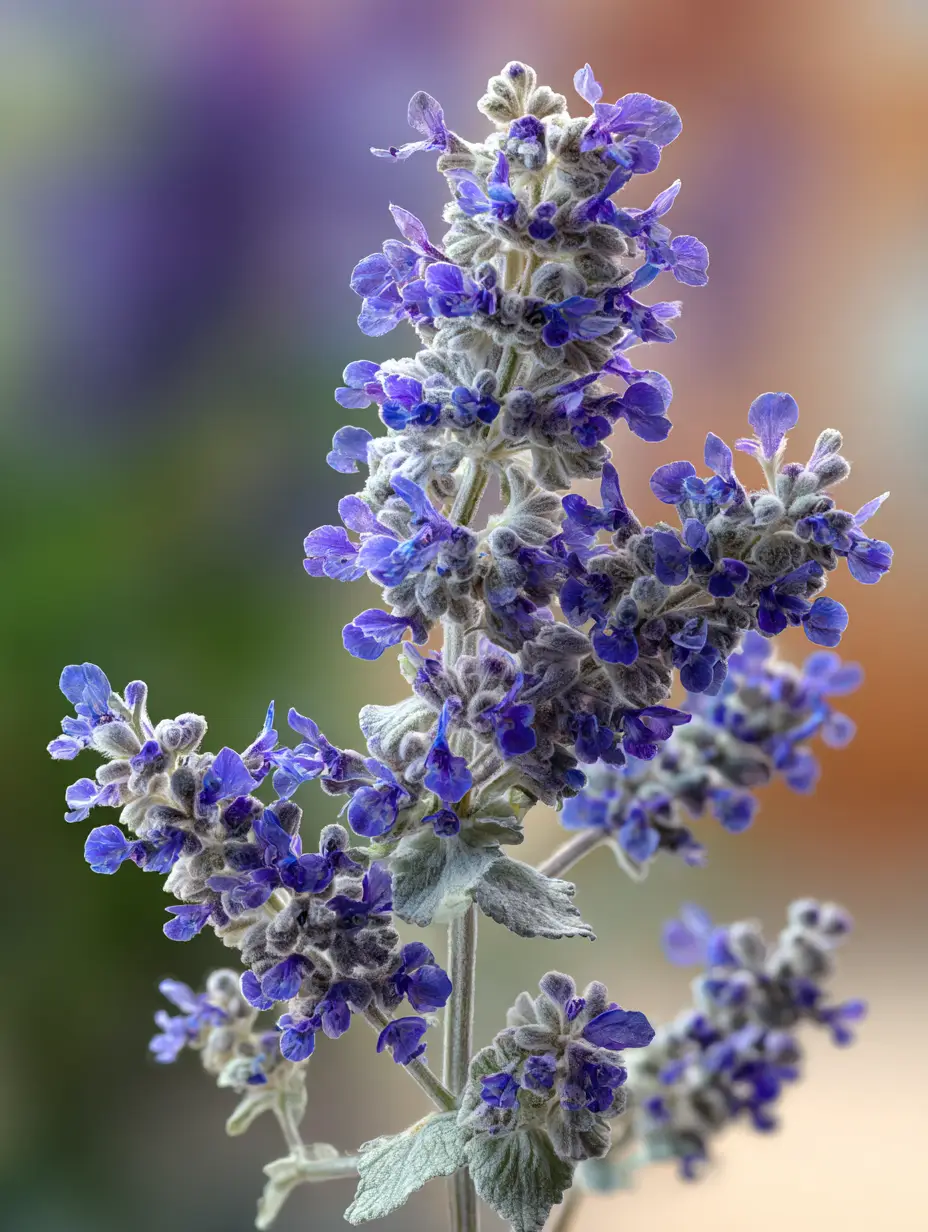
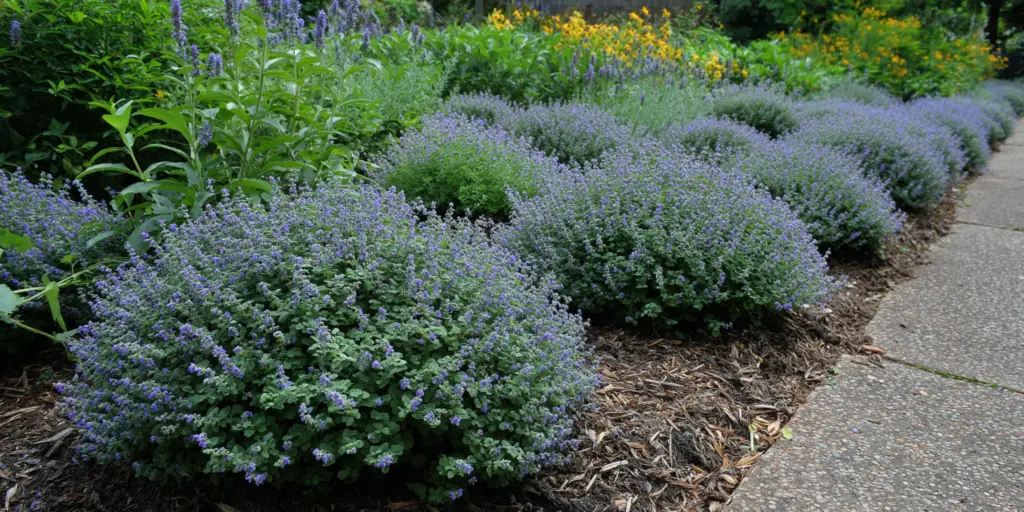
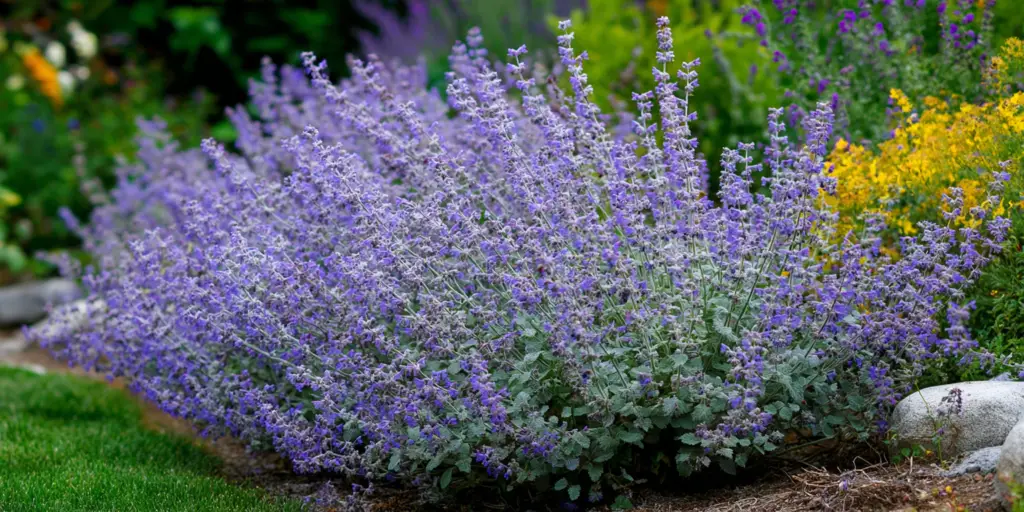
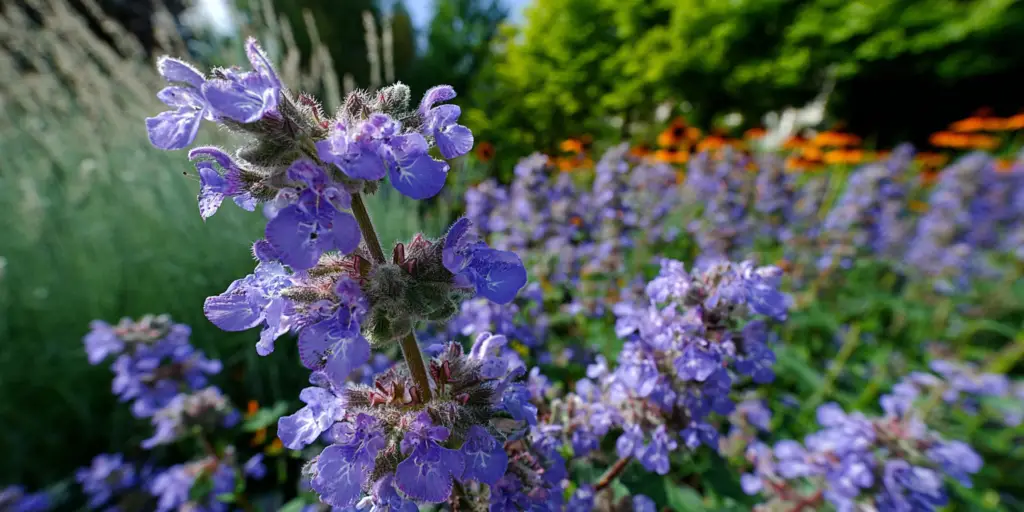
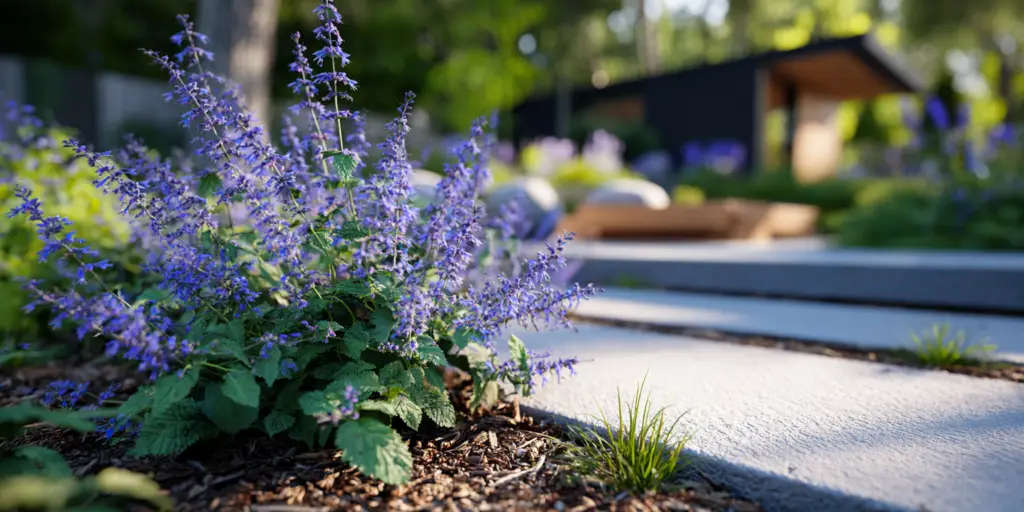
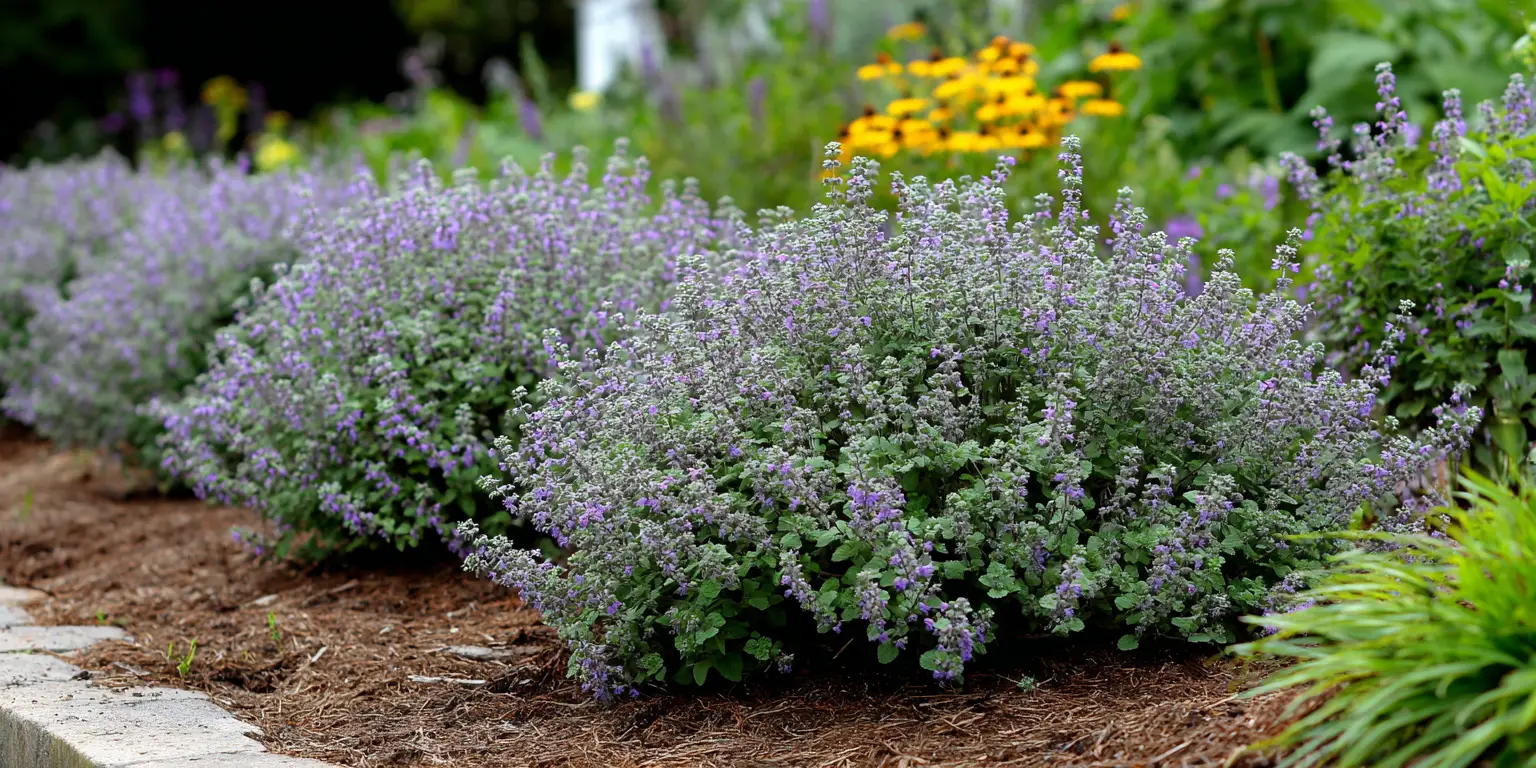
Catmint (Nepeta) is a popular hardy perennial herb cherished for its billowing masses of soft blue flowers and aromatic, gray-green foliage. Resembling its relative lavender in form and color, this mint-family plant has become a staple of cottage gardens and water-wise landscapes alike. Gardeners prize Catmint for its exceptionally long bloom time, easygoing nature, and ability to thrive where fussier plants struggle. It forms neat mounds of leaves that erupt in a haze of lavender-purple blossoms from late spring through summer, attracting clouds of bees, butterflies, and other pollinators. Highly adaptable and drought-tolerant once established, catmint excels in sunny borders, along pathways, and as a groundcover beneath taller shrubs. Its aromatic leaves even help repel browsing pests, making catmint an ideal companion for roses and other pest-prone plants, or a lovely low border in front of taller bloomers like sunflower. In all, Catmint offers a reliable combination of beauty and toughness, bringing a charming informality to plantings while requiring minimal care.

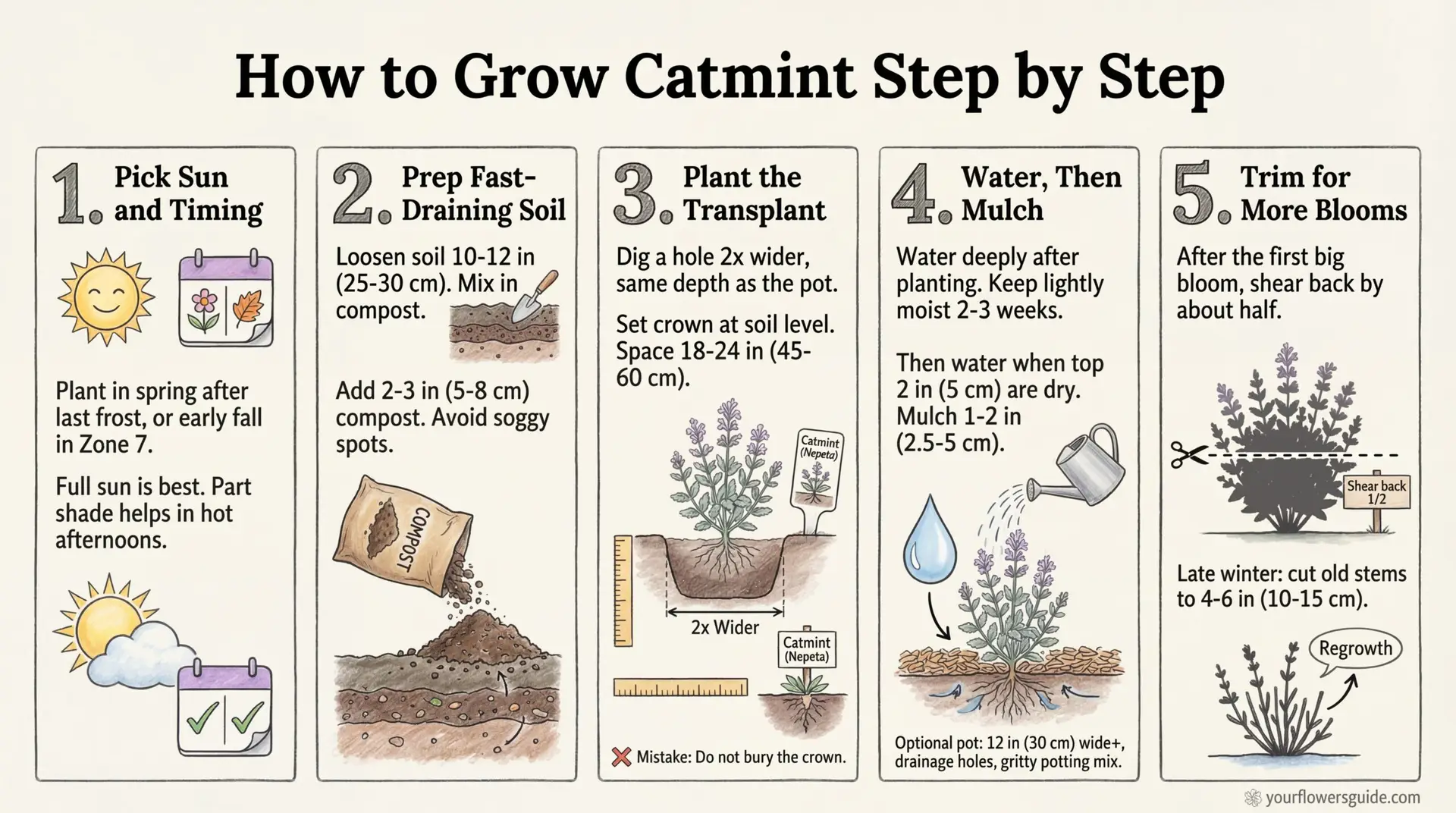
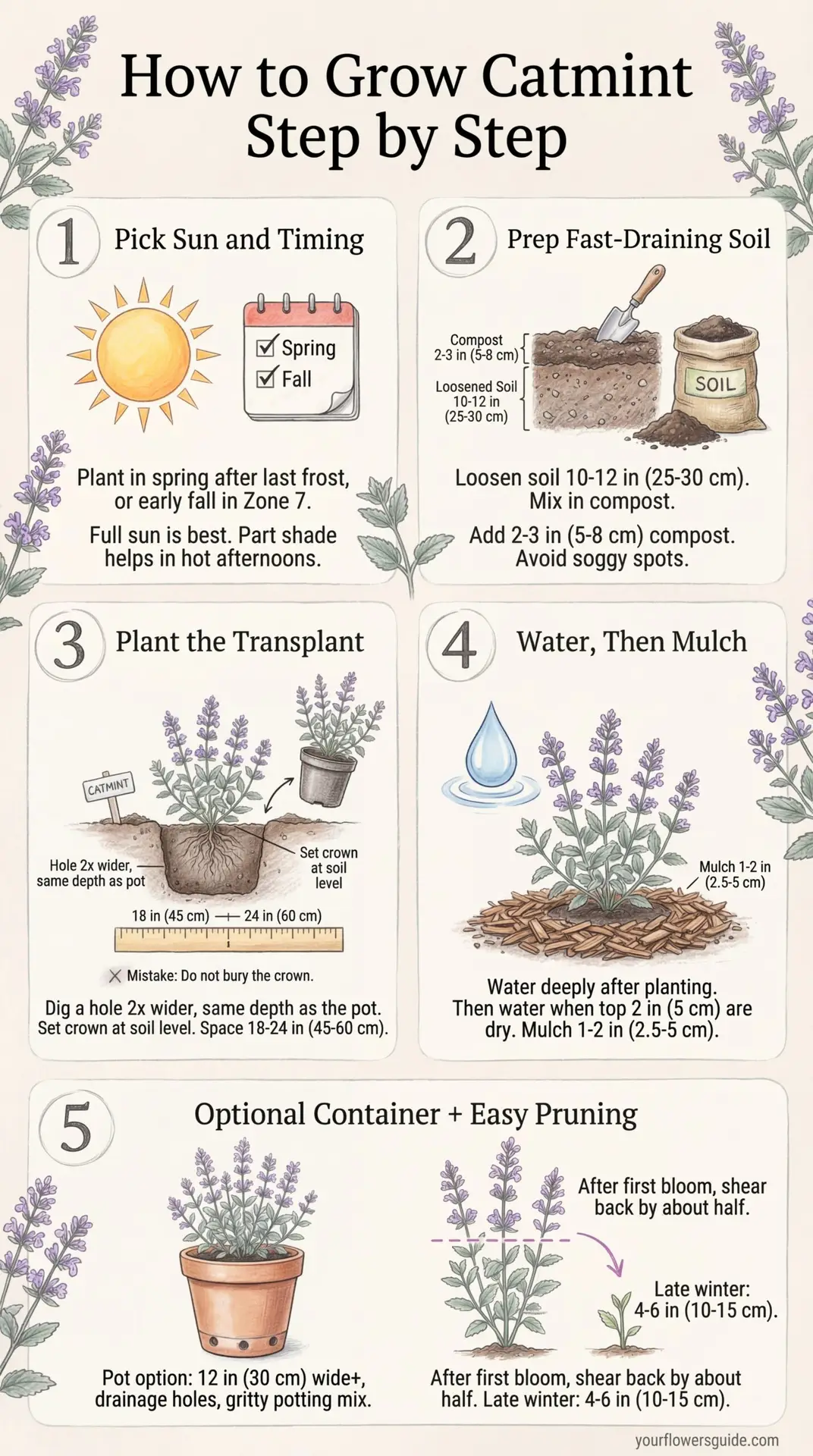
A clear, step-by-step guide to soil, planting, watering, feeding, pruning, and winter care. Includes zone timing, container tips, companions, and quick fixes for common problems.

Bouquet Ideas
Explore simple, beautiful bouquet ideas for the home, gifts, and special occasions from romantic mixes to clean, minimal styles. Each idea includes suggested flower combinations, color palettes, and sizes, with photos for quick inspiration.
Catmint versus lavender and which fragrant purple perennial works better in your garden
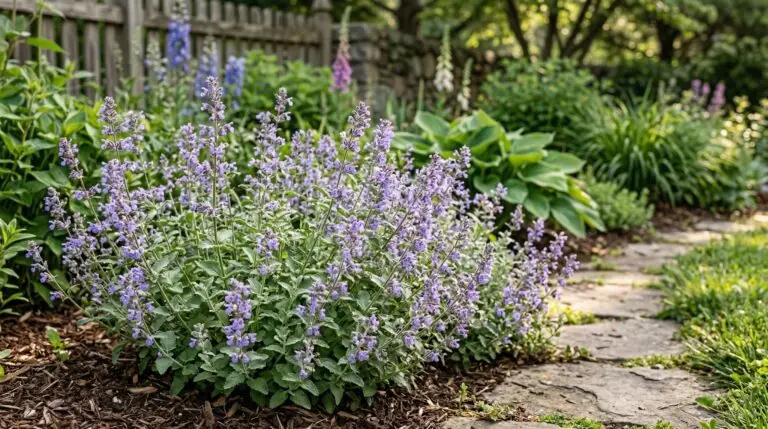
Catmint as the ultimate deer-resistant and drought-tolerant perennial for easy gardens

Designing a low-water perennial border with catmint as the anchor plant

How to shear back catmint for a second flush of blooms and a tidy appearance
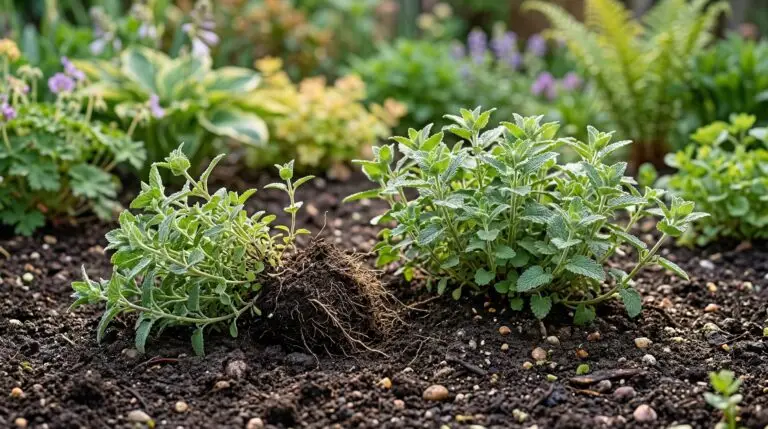
How to propagate catmint from stem cuttings and division in spring

How to use catmint as a flowering ground cover that chokes out weeds
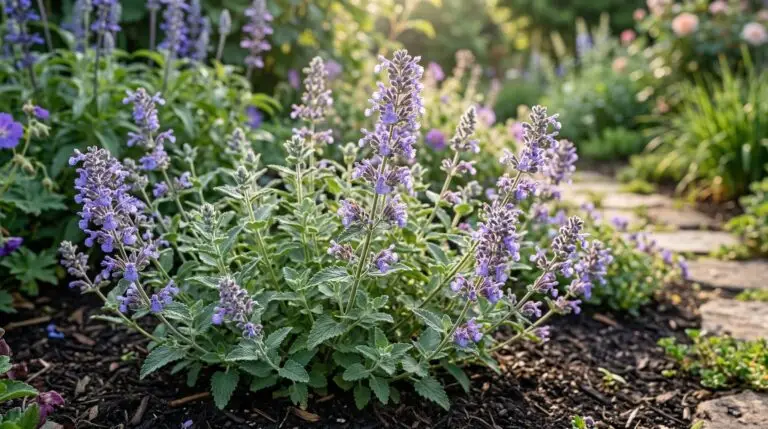
Catmint versus catnip and why they are different plants with different garden uses
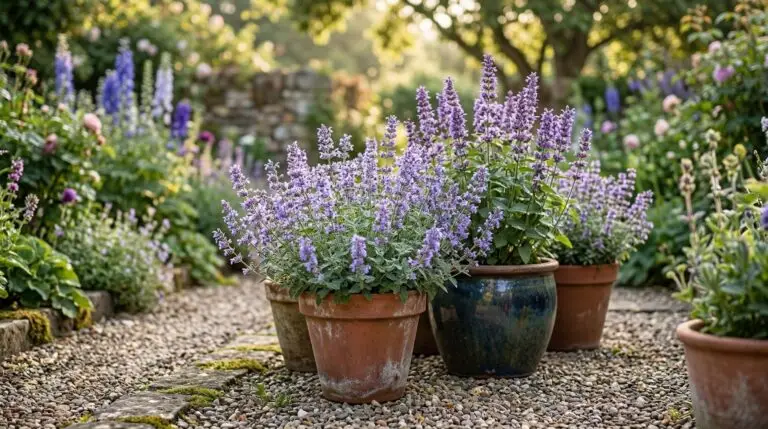
Growing catmint in containers for a fragrant pollinator-friendly balcony
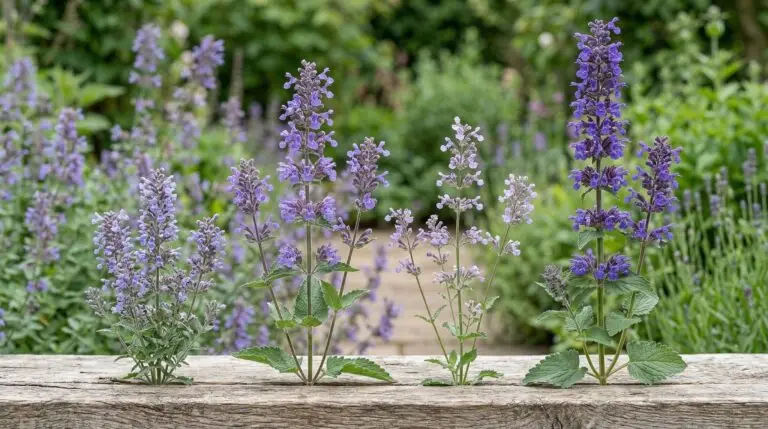
Best catmint varieties from compact Walker’s Low to towering Six Hills Giant

Catmint and roses planted together for the classic English garden combination
🌱 Taxonomy and origin
Botanically, Catmint belongs to the genus Nepeta in the mint family (Lamiaceae). Nepeta comprises roughly 250 species of herbaceous plants native to Europe, Asia, and Africa. The genus name is believed to derive from Nepete, an ancient town in Italy, hinting at the plant’s long history of cultivation. Common names “catmint” and “catnip” come from the notable effect certain species have on cats – a response to the compound nepetalactone found in the foliage. The species Nepeta cataria, or true catnip, originated in southern Europe and Asia and was later naturalized in North America. However, many ornamental catmints used in gardens today are hybrids such as Nepeta × faassenii, bred for prolific blooms and landscape performance. These cultivated catmints typically have more showy purple flowers and a mounding habit, distinguishing them from the weedier appearance of common catnip. Throughout history, Nepeta plants have been valued not only as ornamentals but also as medicinal herbs and feline favorites.
🌸 Bloom time
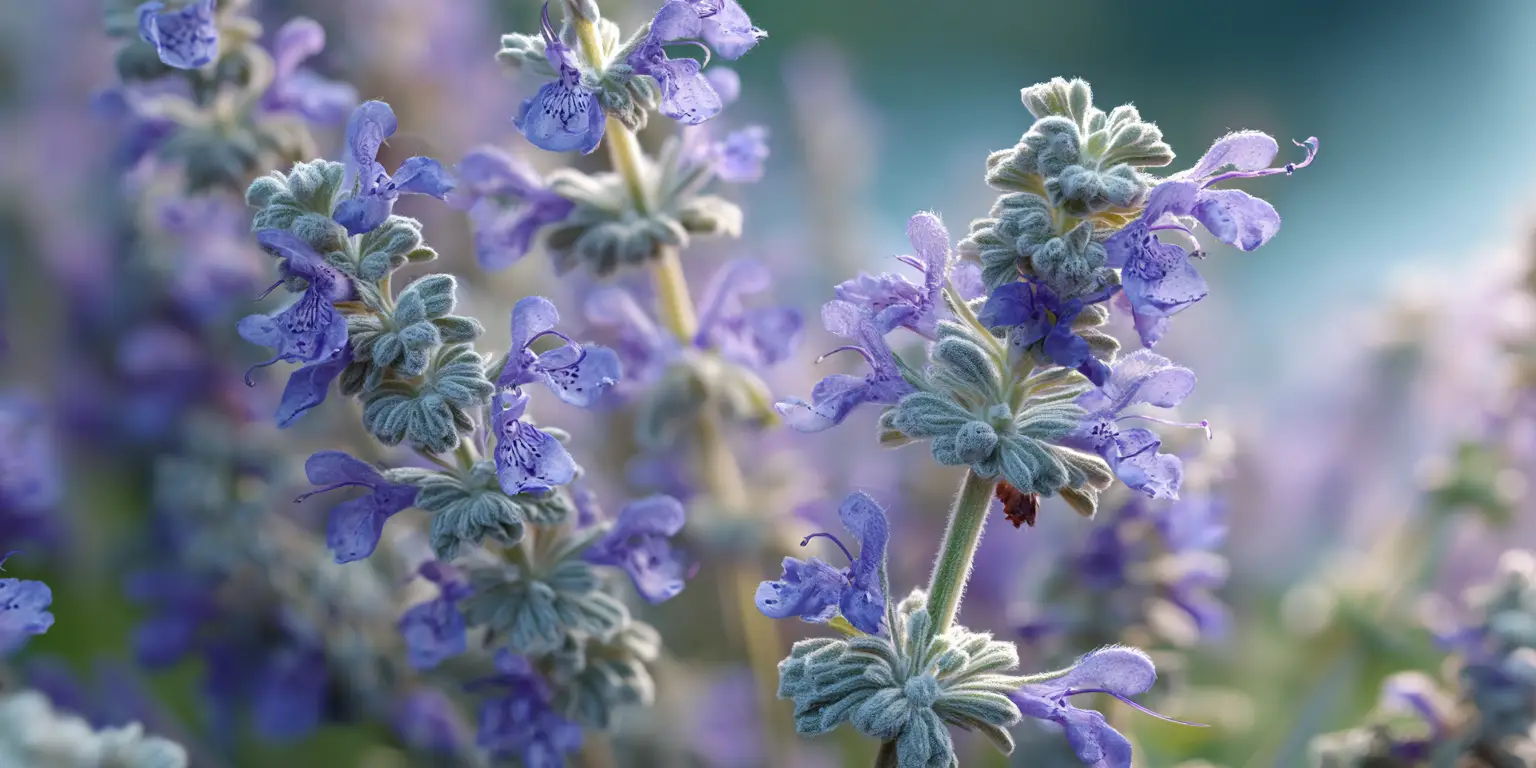
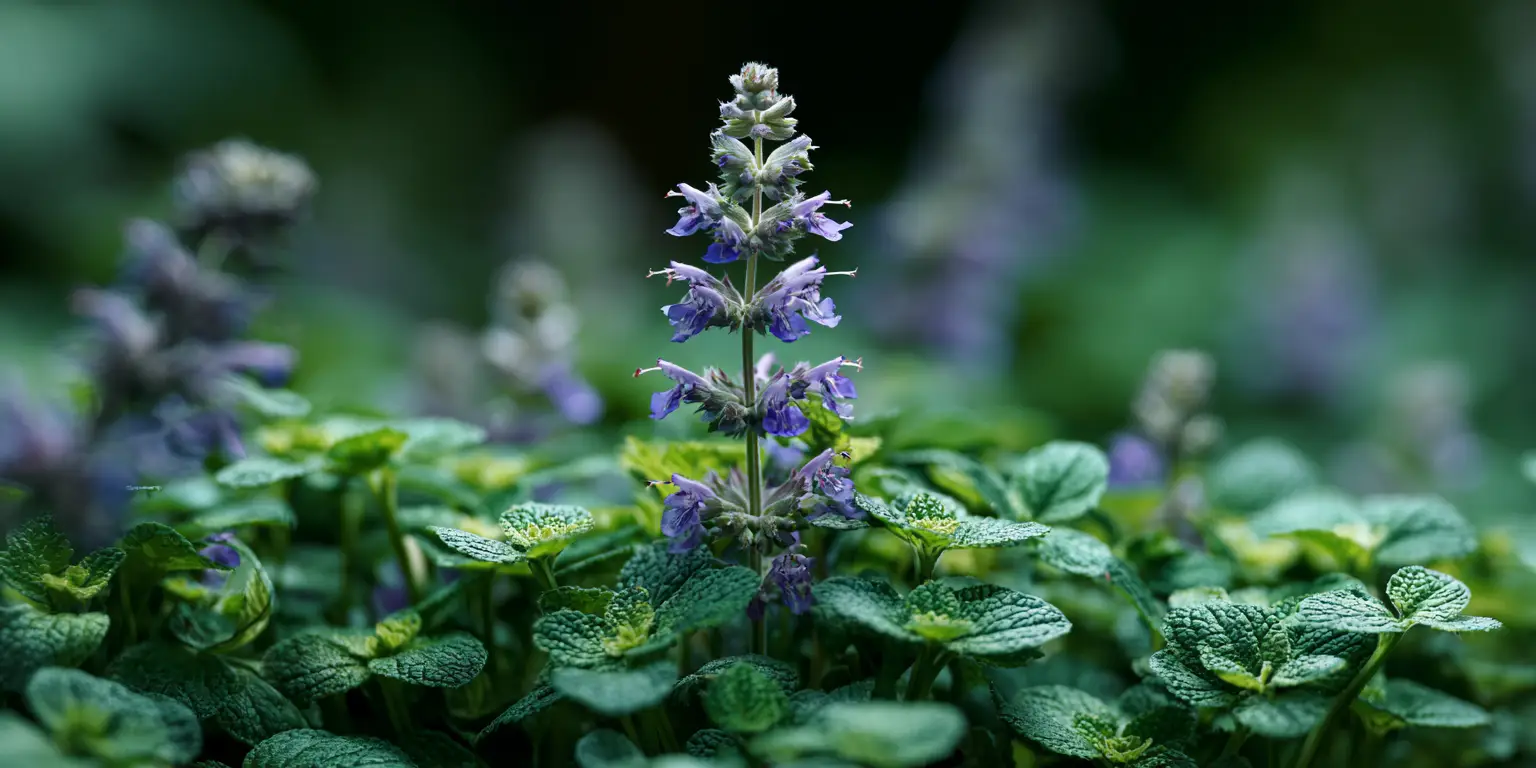
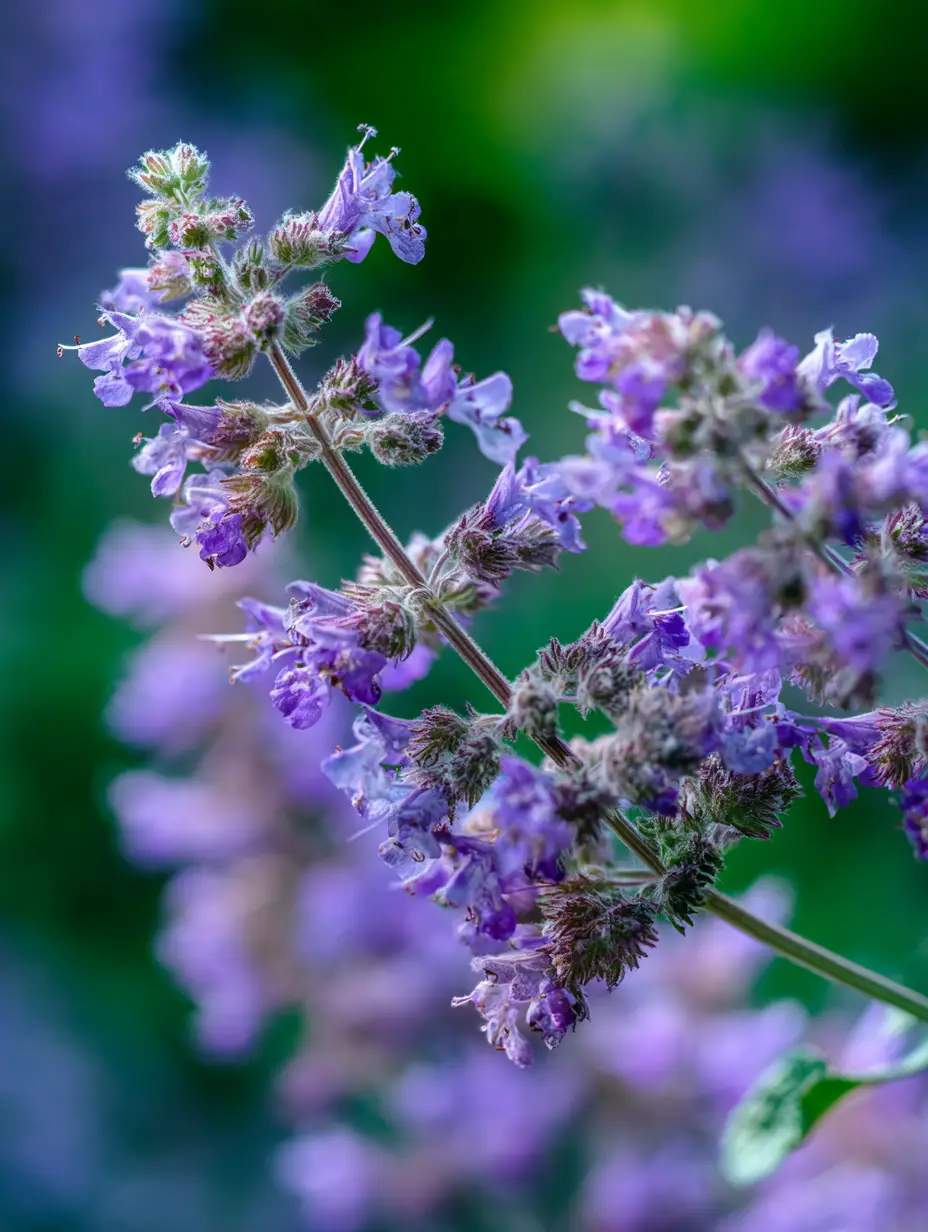
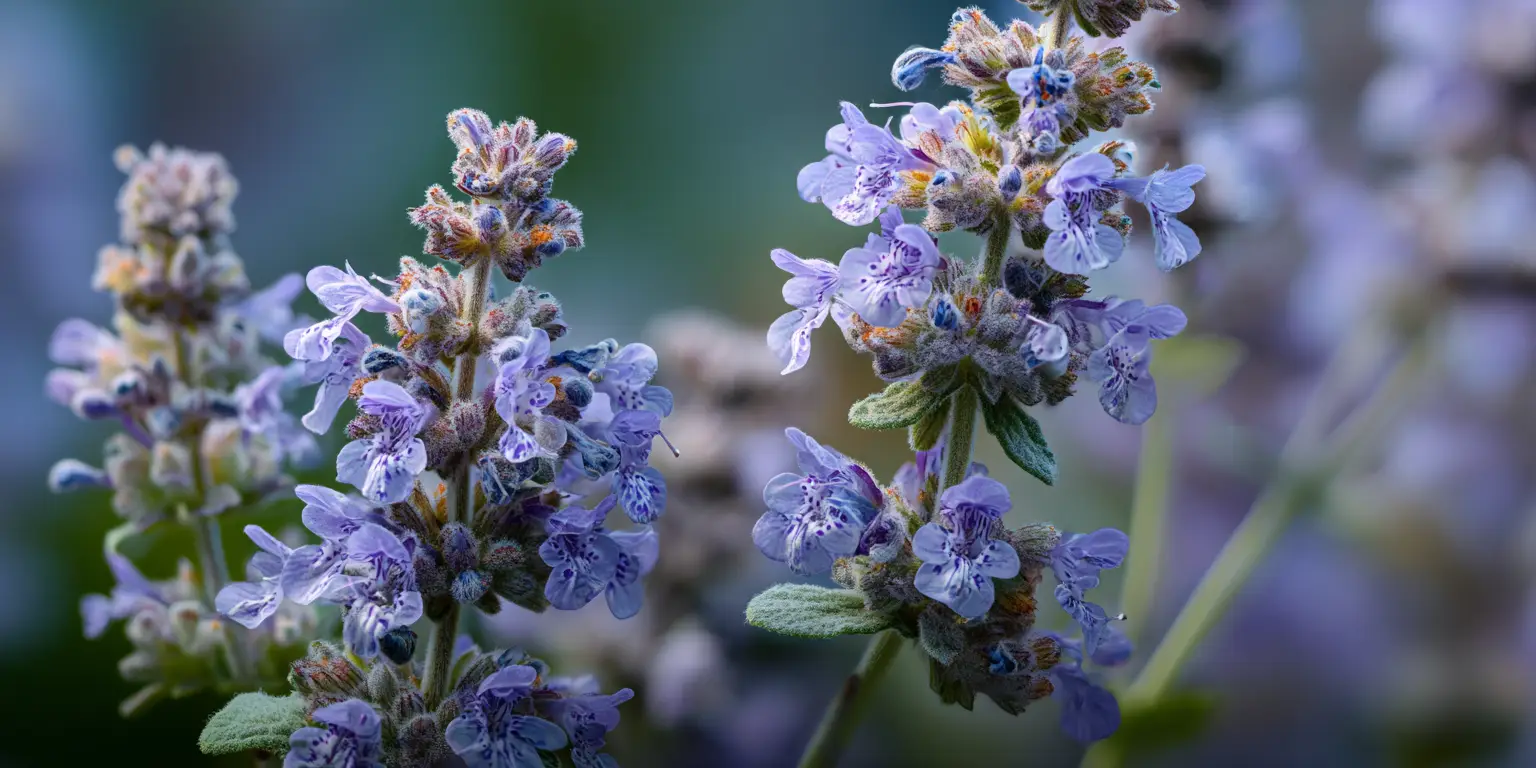
Catmint is renowned for its remarkably extended bloom season. The first flush of flowers typically appears in late spring (around May in temperate regions), just as spring bulbs like tulips and lilacs are fading. Lavender-blue flower spikes stand above the foliage in abundance, creating a soft, hazy display of color. Unlike many perennials with a brief flowering window, catmint keeps blooming for months on end. With proper care – such as removing spent flower spikes (deadheading) or shearing back the plant mid-season – catmint can continue to produce blooms through summer and even into early fall. Gardeners often enjoy a second, lighter flush of flowers in late summer after a midsummer trim. The individual blossoms are small tubular blooms arranged in whorled clusters, rich in nectar and highly attractive to pollinators. Bees, butterflies, and even hummingbirds flock to Catmint when it’s in bloom, much as they do to other fragrant purple flowers like salvia or summer phlox. The prolonged bloom time of catmint makes it an excellent choice for sustaining garden color and wildlife interest well beyond the spring season.
📏 Height and spread
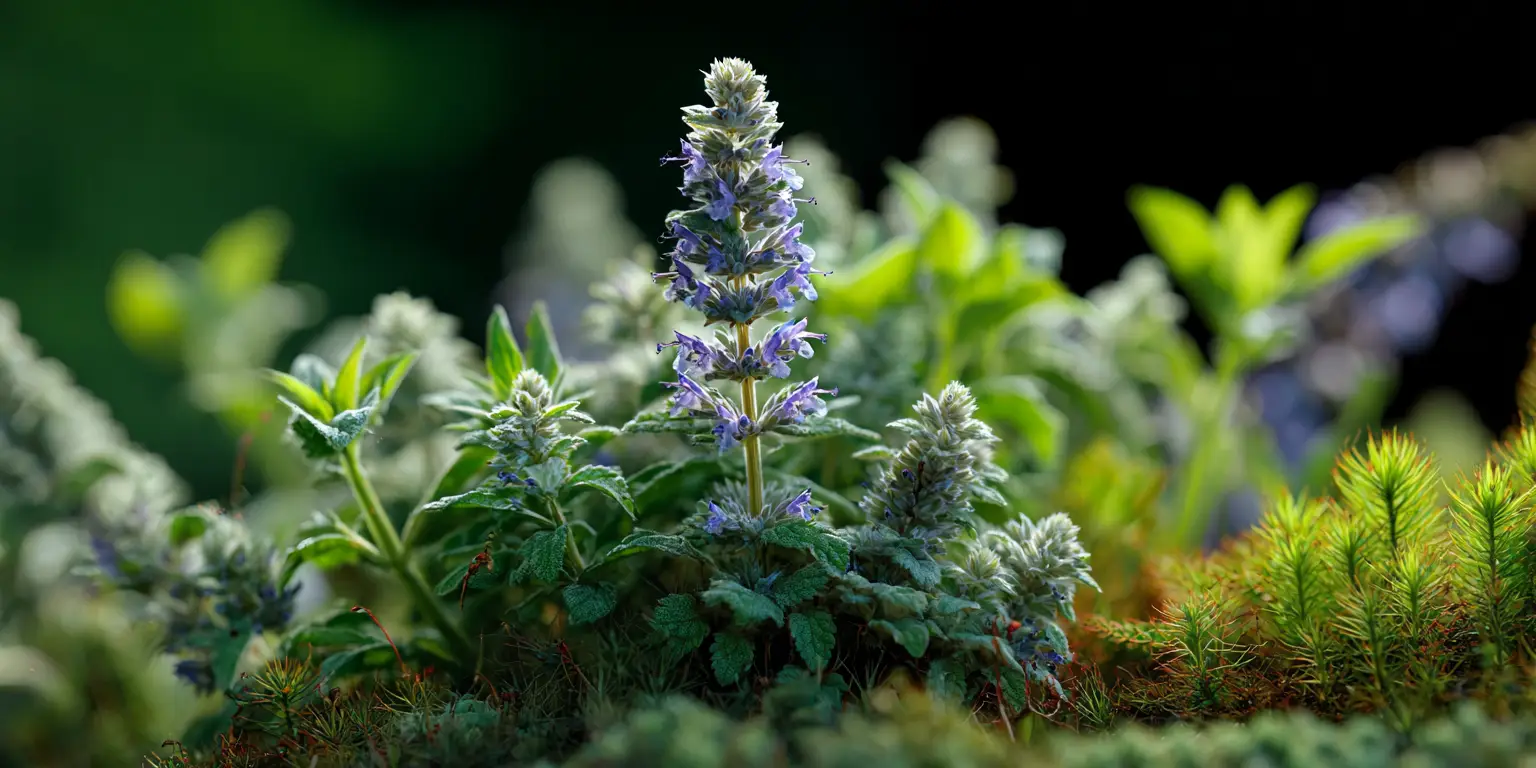
Most Catmint varieties form low to medium-sized clumps, making them suitable for the front or middle of borders. A typical catmint plant grows between 1 to 3 feet tall (about 30-90 cm), with a spread of roughly 1.5 to 4 feet (45-120 cm) wide. The growth habit is usually mounding or gently spreading: arching stems emerge from a crown and are densely clothed in foliage, often billowing outward as they flower. There is some variation depending on the specific species or cultivar. Dwarf cultivars like Nepeta ‘Little Trudy’ may stay as small as 10-12 inches tall, while robust types such as Nepeta ‘Walker’s Low’ can reach around 24 inches high and sprawl 3-4 feet across. Despite its common name, catmint is not a trailing vine nor an aggressive groundcover; rather, it expands gradually from the crown. Over time a healthy clump can enlarge into an attractive drift if left undivided. The stems are slender and tend to lean under the weight of flowers, giving older clumps a soft, fountain-like silhouette. Overall, Catmint provides a lush but controlled presence, filling space without overwhelming its neighbors.
☀️ Light
In the garden Catmint thrives best in ample sunlight. Full sun exposure (at least 6 hours of direct sun per day) is ideal to ensure abundant flowering and a compact growth form. In regions with very hot summers, catmint can tolerate light afternoon shade and may even benefit from a break from intense midday sun. However, too much shade will cause the plants to become floppy, with fewer flowers. Under dense shade, catmint will stretch and lose its neat mound shape, and bloom production will diminish significantly. It truly flourishes in open, sunny sites – one reason it is so valued in cottage gardens and xeriscapes. When comparing catmint to more shade-loving plants like hydrangea macrophylla or camellia, it’s clear that catmint is adapted to bright conditions and relatively high light intensity. Planting Catmint along sunny pathways, in open borders, or in any spot that mimics its native sunny meadows will yield the best results. Providing plenty of light not only encourages profuse blooming but also helps keep the plant’s growth dense and robust.
💧 Water
One of Catmint’s standout qualities is its low water requirement once established. These plants prefer evenly moist soil when getting started (especially in their first growing season), but mature catmint is quite drought-tolerant. In fact, catmint performs well in xeric (low-water) gardens and is a common choice for water-wise landscaping. Its deepening root system allows it to tap moisture reserves and endure dry spells that might wilt thirstier plants. After initial planting, provide regular water to help the roots establish. Thereafter, moderate watering is usually sufficient – roughly the same schedule you might use for other hardy perennials. Avoid overwatering, as consistently soggy or waterlogged soil can lead to root rot and decline. Catmint does not demand high humidity or frequent irrigation; it actually prefers conditions on the dry side rather than overly wet. In prolonged drought or extreme heat, a weekly deep watering will keep it looking fresh, but the plant can survive on rainfall in many climates once settled. Gardeners should note that excessive fertilizer and water can cause catmint to grow too lush and floppy. Compared to moisture-loving flowers like certain roses or hydrangea macrophylla, Catmint is very forgiving of lean conditions and will bounce back quickly even after drought stress.
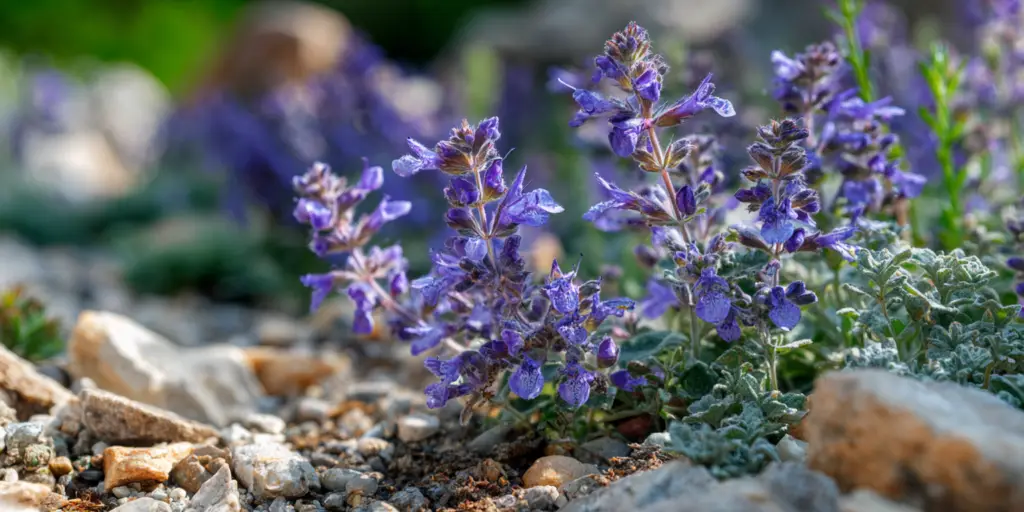
🌍 Soil and pH
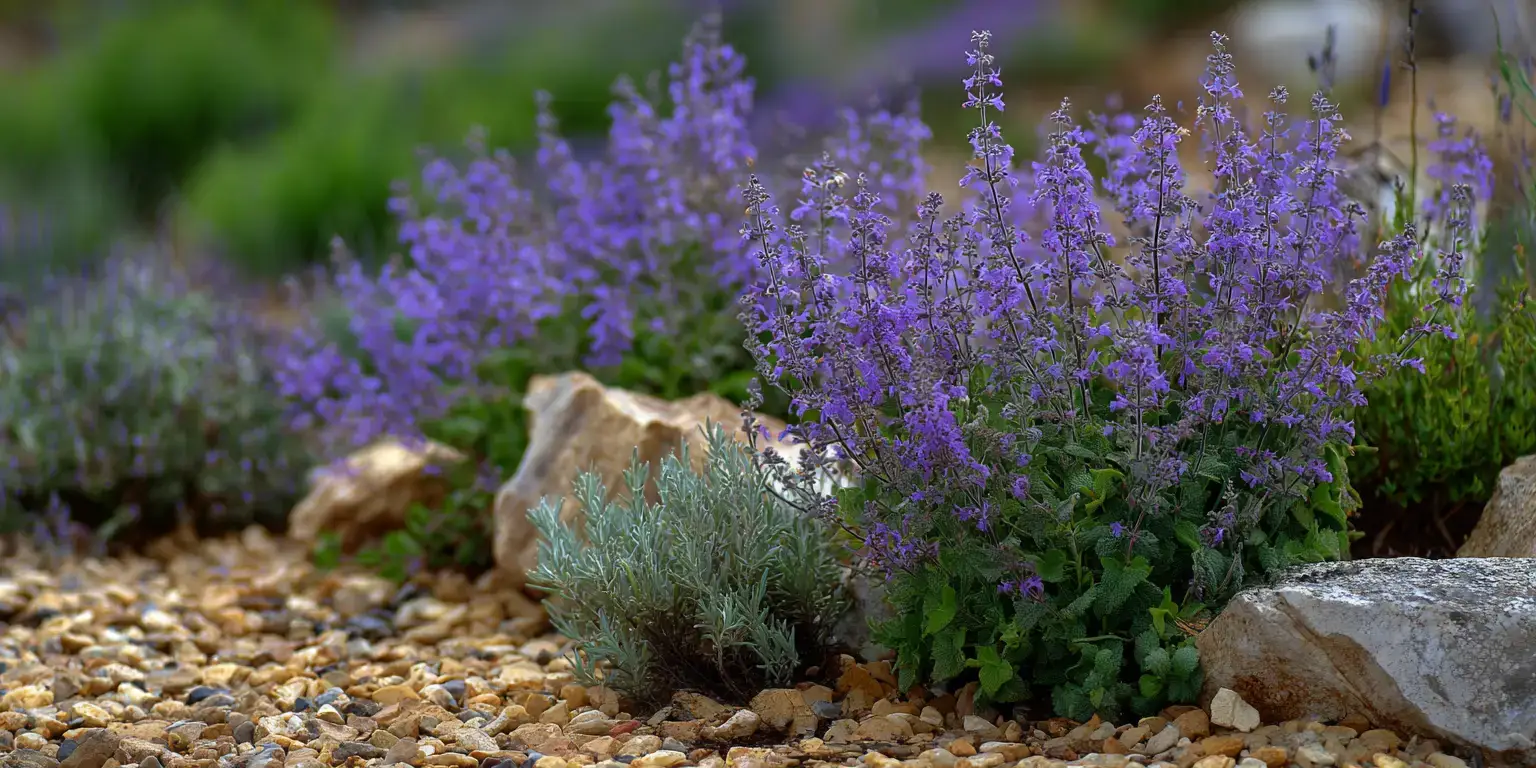
Catmint is not very fussy about soil, as long as the drainage is good. In its native habitats, Nepeta often grows in rocky, gravelly, or sandy soils that do not hold water around the roots. Similarly in the garden, catmint will thrive in average soil or even poor, dry soils where many other perennials might struggle. Heavy clay can be a challenge only if it tends to stay wet; improving clay soil with organic matter or planting on a slight mound can help prevent waterlogging around the roots. Catmint’s nutrient needs are modest – soil that is too rich or heavily amended can encourage rank growth at the expense of flowering. As for pH, catmint tolerates a broad range. It grows well in neutral soils and has a slight preference for alkaline conditions, but it will also manage in mildly acidic soil. Gardeners have reported success with catmint in soils anywhere from about pH 6.0 up to 7.5 or 8.0. This flexibility contrasts with the requirements of more acid-loving plants like camellia or certain rhododendrons. In essence, if the site offers reasonable fertility and, above all, good drainage, Catmint is likely to establish and flourish without much fuss over soil chemistry.

❄️ USDA hardiness
One reason Catmint is so widely grown is its excellent cold-hardiness. Most catmint species and cultivars are reliably perennial in USDA hardiness zones 3 through 8. This means they can survive winter lows down to approximately -35°F (-37°C) or even colder when well-mulched, making them suitable for gardens in chilly northern climates. In zone 3 or 4, catmint will die back to the ground each winter and re-sprout vigorously in spring once the soil thaws. In warmer regions up to zone 8, it remains a tough perennial as well. Some varieties may even perennialize in zone 9, particularly in areas with cooler nights or if given some afternoon shade, though the extreme heat and humidity of zone 9-10 climates can be challenging for these plants. At the upper end of its range, catmint might act more like a tender perennial or require extra care to get through very hot summers. Generally, though, catmint handles frost and freezing temperatures with ease. In winter it typically goes dormant (the top growth dies back after a hard freeze), and the roots overwinter, ready to send up fresh shoots when spring arrives. No special winter protection is needed in its hardiness range aside from perhaps a layer of mulch in the coldest zones to buffer the soil. The broad hardiness of Catmint means it can be grown in a huge swath of the United States, from cold northern gardens to mild temperate zones, with equal success.
🌼 Propagation and longevity
Gardeners have several options for propagating Catmint, thanks to its cooperative nature. One of the simplest methods is division. Established catmint clumps can be dug up and split into sections (each with some roots and shoots attached) in either early spring or early fall. These divisions transplant easily and typically take off without issue in their new locations. Another propagation route is via stem cuttings: softwood cuttings taken in late spring or early summer will readily root in a moist medium, especially for hybrid varieties that do not set seed. Some species of Nepeta can also be grown from seed. Catnip (Nepeta cataria) and certain others will germinate from seed sown indoors in late winter or direct-sown after frost, often blooming in their first summer. However, many popular ornamental hybrids (like Nepeta × faassenii cultivars) are sterile and won’t produce viable seeds, which makes division or cuttings the go-to propagation strategies. In terms of longevity, catmint is a reasonably long-lived perennial but not truly indefinite. A healthy clump can thrive and bloom well for many years – often on the order of 5 to 10 years – before it might start to show signs of decline in the center. If an older plant begins to die out in the middle or becomes woody and sparsely foliated, it is a cue to divide and replant the vigorous outer portions. Doing so every few years can essentially renew the plant and extend its life in the garden. With this periodic rejuvenation, Catmint can effectively maintain its presence in a perennial bed for well over a decade. Even without division, many catmint plants will persist and flower for a considerable time, gradually expanding their clump. They are not prone to sudden death after a set lifespan, but performance is maximized by occasional propagation and refreshment.

👃 Fragrance
A defining feature of Catmint is its fragrant foliage. Like most mint family members, catmint’s leaves contain aromatic oils that are readily released when the plant is brushed against or leaves are crushed. The scent is often described as a pungent minty or herbal aroma with hints of lemon or spice, similar in some ways to oregano or thyme. Many people find it pleasant, though somewhat strong; cats, of course, find it positively enticing. The compound nepetalactone in catmint’s essential oil is famously responsible for inducing euphoric behavior in domestic cats – rubbing, rolling, and playfulness – particularly with Nepeta cataria (true catnip). Interestingly, this same chemical has been found to act as a natural insect repellent, helping to ward off mosquitoes and certain pests in the vicinity. As for the flowers, they too have a light sweet fragrance, though much subtler than the foliage. On warm days, a patch of blooming Catmint can give the surrounding air a gentle, sweetly herbal note that contributes to the sensory experience of the garden. Another benefit of the plant’s aromatic nature is that it tends to be deer and rabbit resistant; the strong smell and taste deter these animals from browsing. Gardeners often plant catmint near more delicate, pest-prone species as a protective companion. While primarily grown for its look and hardiness, catmint’s fragrance is an added bonus – whether enjoyed in the garden, dried in sachets, or appreciated by feline friends.
⚠️ Toxicity and pet safety
Catmint is generally a safe and non-toxic plant, which is one reason it’s so commonly found in pet-friendly gardens. In fact, the classic catnip species (Nepeta cataria) is intentionally grown for cats to sniff and nibble. When cats encounter catmint or catnip, they may chew leaves, rub on the plant, or even roll on it in delight. This behavior is harmless, and the plant itself is not poisonous to felines. At most, a cat that eats a large quantity of catnip leaves might experience mild digestive upset (vomiting or diarrhea), but serious illness is very unlikely. Typically the euphoric effect lasts only about 10-15 minutes per exposure for cats, and then they lose interest for a while. For dogs and other household pets, catmint poses no toxicity. Most dogs tend to ignore it (they do not have the same attraction that cats do), and even if a curious dog sampled a bit of the herb, it would not be expected to cause harm aside from potential minor stomach irritation. Likewise, catmint is not known to be toxic to humans – on the contrary, people have used catnip in herbal teas and remedies for centuries. Of course, it’s always wise to discourage pets from gorging on any ornamental plant, but by and large Catmint can be considered pet-safe. If enthusiastic cats are a concern (since they sometimes crush plants by rolling in them), some gardeners protect young catmint plants with a small fence or cage until the plant is large enough to withstand a visit from a frisky cat.
🌿 Vase life
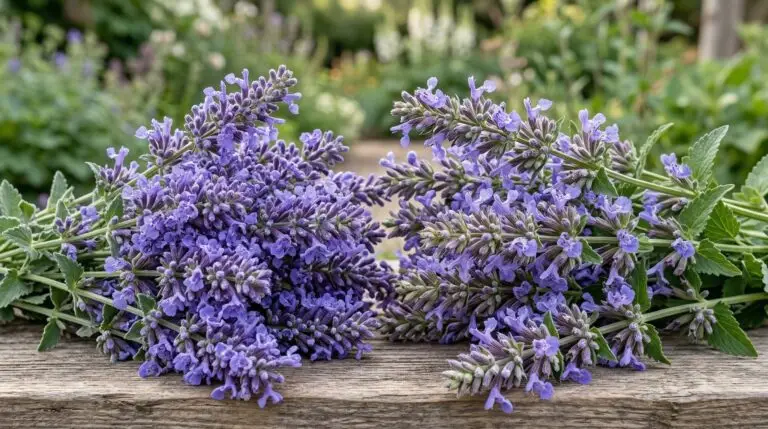
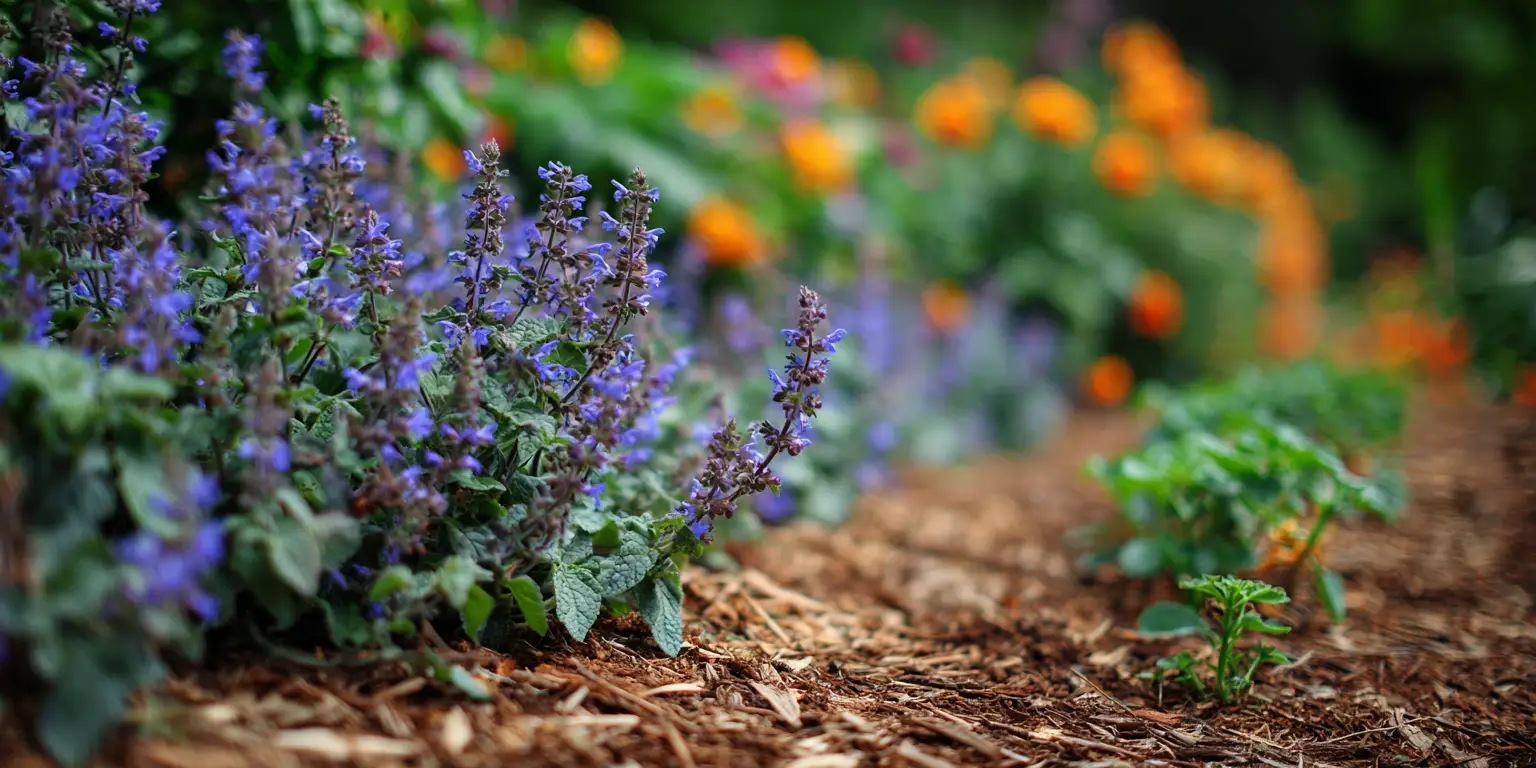
Although Catmint is not a traditional florist flower, it can make a charming addition to casual arrangements as a filler or airy accent. When cut, catmint stems bring a wispy informality and a splash of gentle color to bouquets. The vase life of catmint can be surprisingly good if the stems are harvested and conditioned properly. Typically, fresh catmint cuttings will last around 5 to 7 days in water, with some reports of the blooms holding on for over a week. For best results, cut the stems in early morning or evening when they are well hydrated, and choose stems that have just begun to flower (with a mix of buds and open blooms). Immediately place the cut stems in water to prevent wilting. It helps to strip off the lower leaves that would sit below the water line, as catmint’s foliage can otherwise decay and cloud the water. A cool floral preservative solution can further extend the longevity. Keep in mind that the tiny individual florets may occasionally drop off (shatter) as they age, but the overall effect of the spike is maintained. One consideration is the strong minty scent of the leaves – while not unpleasant, it can be noticeable indoors. Some people enjoy the herbal fragrance in arrangements, whereas others may prefer to use catmint sparingly so it doesn’t dominate the bouquet’s scent. In any case, having a flourishing clump of Catmint in the garden means you’ll have plenty of delicate lavender-blue sprigs to snip for rustic vase displays throughout the summer.
🐛 Pests and diseases
One of the reasons Catmint is so valued by gardeners is its resistance to most pests and diseases. Thanks to the same aromatic oils that give catmint its scent, the plant experiences very little insect damage – common pests like aphids, caterpillars, or beetles tend to leave it alone. In fact, catmint’s presence in a mixed planting may even help deter certain insects from neighboring plants (some gardeners interplant catnip near vulnerable roses or vegetables to ward off aphids and squash bugs). Likewise, larger herbivores such as deer and rabbits usually avoid catmint, finding its smell and taste unappealing. This means catmint can be relied upon as a deer-resistant perennial in areas where browsing wildlife is a problem. On the disease front, catmint is generally trouble-free. The plant’s foliage has a bit of fuzz and inherent toughness that makes it less prone to foliar diseases. In humid conditions with poor air circulation, there is a slight possibility of powdery mildew or leaf spot, but such issues are quite uncommon. The most serious threat to catmint’s health is root rot, which can occur if the plant sits in waterlogged soil for extended periods. Ensuring good drainage virtually eliminates this problem. In essence, a well-sited Catmint clump will suffer from very few problems over its life. The biggest “pest” you might have to manage is the occasional cat flattening the plant while enjoying its effects! Other than trimming and basic garden hygiene, catmint requires little intervention to stay healthy and vigorous.
FAQ
Is catmint the same as catnip?
Catmint and catnip are closely related, but they are not exactly the same. “Catnip” usually refers to the species Nepeta cataria, which has a less showy appearance but a stronger effect on cats. Catmint often refers to ornamental varieties (like Nepeta × faassenii) that have more abundant flowers and a neater growth habit. Both are in the Nepeta genus and both attract cats, but catnip is the one famous for driving most cats wild, whereas catmint is valued more for its garden beauty.
Does catmint attract cats like catnip does?
To some extent, yes – many cats are attracted to Catmint’s scent, since it contains the same compound (nepetalactone) that causes the familiar catnip reaction. However, ornamental catmint cultivars tend to have a milder effect than true catnip. Not every cat will bother with catmint in the garden, but some definitely will take an interest, rolling on or nibbling the plant. If you have cats or neighborhood felines, you may notice them visiting your catmint patch occasionally. The effect on cats is harmless and wears off quickly. If cats start to flatten your plant, you can protect it with some fencing, but often the damage is minimal.
Is catmint invasive or does it spread aggressively?
Catmint is not considered invasive. Most garden catmint varieties form tidy clumps and do not run or take over areas like some mint relatives do. They also typically do not self-seed much (many hybrids are sterile). The wild catnip (Nepeta cataria) can self-seed freely and pop up around the garden, which some might consider a bit weedy, but it’s easy to pull out unwanted seedlings. In general, ornamental catmints stay where you plant them and expand slowly outward from the clump over time. You might find your clump gets a bit wider each year, but it won’t aggressively crowd out other plants or colonize far-flung spots. Regular pruning and dividing every few years will keep catmint within bounds.
How much sun does catmint need?
Catmint thrives in full sun. Aim to give it at least around 6 hours of direct sunlight per day for best flowering. In partial shade (for example, a half day of sun or dappled light), catmint will still grow but may not bloom as profusely and can become looser or flop over. In dense shade, it will struggle – you’ll get leggy growth and very few flowers. So, plant catmint in a sunny spot if possible. In very hot climates, a bit of afternoon shade can help prevent scorching, but generally more sun equals more blooms and a sturdier plant.
How do I prune or deadhead catmint?
Pruning Catmint is straightforward and helps keep the plant looking its best. After the first major flush of blooms (often in early summer), you can shear back the plant by about one-third to one-half of its height. This trim encourages fresh foliage and often a second round of flowering later in the season. You can also deadhead spent flower spikes individually throughout the bloom period – just snip off the faded flower stalks above a leaf node to spur new buds. In the fall, after frost kills the top growth, catmint can be cut down to a few inches above the ground. Alternatively, some gardeners leave the dried stems and seed heads over winter for a bit of interest and then clean up the plant in early spring. Either approach is fine, as catmint will reliably sprout new shoots from the crown when the growing season resumes.
How can I propagate catmint?
Catmint is easy to propagate. The most common method is dividing an established clump. Dig up the plant in early spring or fall and split the root ball into sections, then replant those divisions – they will quickly re-establish. You can also take cuttings: for example, snip 4-6 inch stem tips in late spring, remove the lower leaves, and place them in moist potting mix. They often root within a few weeks. Growing from seed is possible for certain species like catnip or Greek catmint (Nepeta mussinii), but many ornamental catmints are hybrids that won’t come true (or are sterile). If starting from seed, sow indoors in late winter or outdoors after the last frost, and be patient – you might not get blooms until the second year. Overall, dividing healthy clumps every few years is an easy way to create new plants and also rejuvenate the original plant.
Is catmint edible or medicinal?
Yes, the leaves of Catmint (especially Nepeta cataria, catnip) have a history of use in herbal medicine and teas. Humans can brew catmint/catnip leaves to make a mild sedative tea that has been used to relieve stress, insomnia, and digestive upsets. The flavor is herbaceous and minty, albeit somewhat bitter. Aside from tea, catmint isn’t commonly used in cooking as a culinary herb (unlike some other mint family herbs), but it is safe to consume in modest amounts. Always make sure any catmint used for tea hasn’t been treated with pesticides. Medicinally, catnip was traditionally valued for its calming effect and was even used in folk remedies for colds or cramps. While it’s not a mainstream medicine today, it remains a popular herb in natural remedy circles. In any case, catmint is non-toxic to people and can be enjoyed as an herb if desired.
Do deer or rabbits eat catmint?
Generally, no – Catmint is considered deer-resistant and rabbit-resistant. The same strong scent and taste that appeals to cats tends to repel browsing animals like deer, rabbits, and even groundhogs. Most deer will pass by catmint in favor of less aromatic foliage. This makes catmint a useful plant in areas plagued by deer; you can mass it around more susceptible plants as a kind of scented barrier. Of course, if food is extremely scarce, a very hungry rabbit or deer might sample anything, but catmint is usually one of the last things they’d choose to eat. Gardeners consistently report that their catmint plants remain untouched even when other perennials get nibbled.
When is the best time to plant catmint?
The ideal times to plant Catmint are in the cooler, gentler weather of spring or early fall. Planting in spring (after the last frost has passed) gives catmint an entire growing season to establish its root system before winter. Planting in early autumn can also work well, especially in warmer climates – the soil is still warm and the heat of summer has eased, so roots can grow until the ground freezes. Avoid planting catmint in the peak of summer heat, as the stress of high temperatures can make it harder for a new transplant to settle in. Whenever you plant, be sure to keep the young catmint well-watered for the first few weeks so it can get established. With a spring or fall planting and a little initial care, your catmint should quickly take off and thrive.
Interesting tips
- Award-Winning Plant: Catmint gained a surge in popularity after the cultivar ‘Walker’s Low’ was named 2007 Perennial Plant of the Year. This award highlighted how attractive and reliable catmint is in a variety of garden settings. Today, many gardeners consider catmint a “must-have” perennial thanks to its proven performance.
- Natural Mosquito Repellent: The essential oil in catmint (nepetalactone) doesn’t just drive cats crazy – it also repels mosquitoes and other insects. Studies have found that catnip oil can be as effective as, or even more effective than, DEET in warding off mosquitoes. While planting Catmint in the garden won’t instantly clear the area of bugs, crushed catmint leaves or catnip sachets have been used traditionally to keep pests away.
- Not All Cats Respond: Only about two-thirds of cats are sensitive to catnip/catmint’s effects. The response is hereditary – some cats (and many wild big cats like leopards and lions) experience the euphoric reaction, while others show no interest at all. Kittens also generally don’t react to catnip until they’re a few months old. So if your cat ignores your Catmint plants, it may just be among the unlucky (or lucky) minority with no genetic attraction.
- Historical Herbal Tea: Long before traditional tea from the Camellia plant became common in Europe, catnip was used as a soothing herbal brew. Medieval households grew Catmint as a remedy – brewing it into tea to calm nerves, aid sleep, or relieve colic. This age-old use is why catnip appears in many old herbals and why it’s still enjoyed as an herbal tea today, though its popularity has been overtaken by other teas and remedies.
- Etymology: The name “Nepeta” is thought to come from Nepete, an ancient Etruscan city in Italy (now called Nepi). This hints that Catmint has been associated with human cultivation for a very long time. The plant was important enough in the classical world to lend the town its name, underlining catmint’s status as a venerable herb in gardens and medicine through the ages.
- Cats and Insect Defense: An interesting hypothesis from recent research is that cats’ love for catnip/catmint might have an evolutionary benefit. When cats rub, roll on, or chew catmint, the released nepetalactone could coat their fur and act as an insect repellant, protecting them from mosquito bites. In essence, cats may unconsciously be using Catmint as a natural bug spray. Whether or not this was nature’s intent, it’s a fascinating example of the complex relationships between plants and animals.
Related Guides & Flowers
- Lavender
Aromatic, sun loving, drought tolerant plant with purple blooms that pairs naturally with catmint in borders and cottage style beds. - Salvia May Night
Deep violet flower spikes and the same full sun, well drained soil preference, great for pollinators. - Blue Salvia
A long blooming blue to violet accent that looks great next to catmint mounds and keeps the same low maintenance vibe. - Russian Sage
Airy lavender blue haze in summer, heat tolerant and drought tolerant, a classic companion for catmint color schemes. - Verbena
Light, continuous color and strong butterfly appeal, useful when you want a longer season look with catmint. - Globe Thistle
Bold blue round blooms, very drought tolerant, adds structure and contrast to catmint soft texture. - Yarrow
Tough pollinator perennial with flat flower clusters that complements catmint in sunny, dry beds. - Aster
Late season color that helps extend the pollinator buffet after catmint peaks.
References
- Nepeta x faassenii Walkers Low, Wisconsin Horticulture Extension
Good background on catmint identity, habit, and why Walkers Low became so popular. - Nepeta x faassenii, NC State Extension Plant Toolbox
Clear care notes on sun, soil drainage, drought tolerance, and shearing after bloom for rebloom. - Catmint, University of Illinois Extension
Quick practical guidance for garden use and basic culture in plain language. - Poisonous Plant Garden booklet, University of Illinois College of Veterinary Medicine
Useful for a safety note because it lists catnip Nepeta cataria and potential GI signs if pets ingest it.
Written by: Your Flowers Guide editorial team
We are a small independent group of flower lovers who research and review each guide using trusted horticultural and educational sources. Learn more about us