What bleeding heart is, and why it carries two names
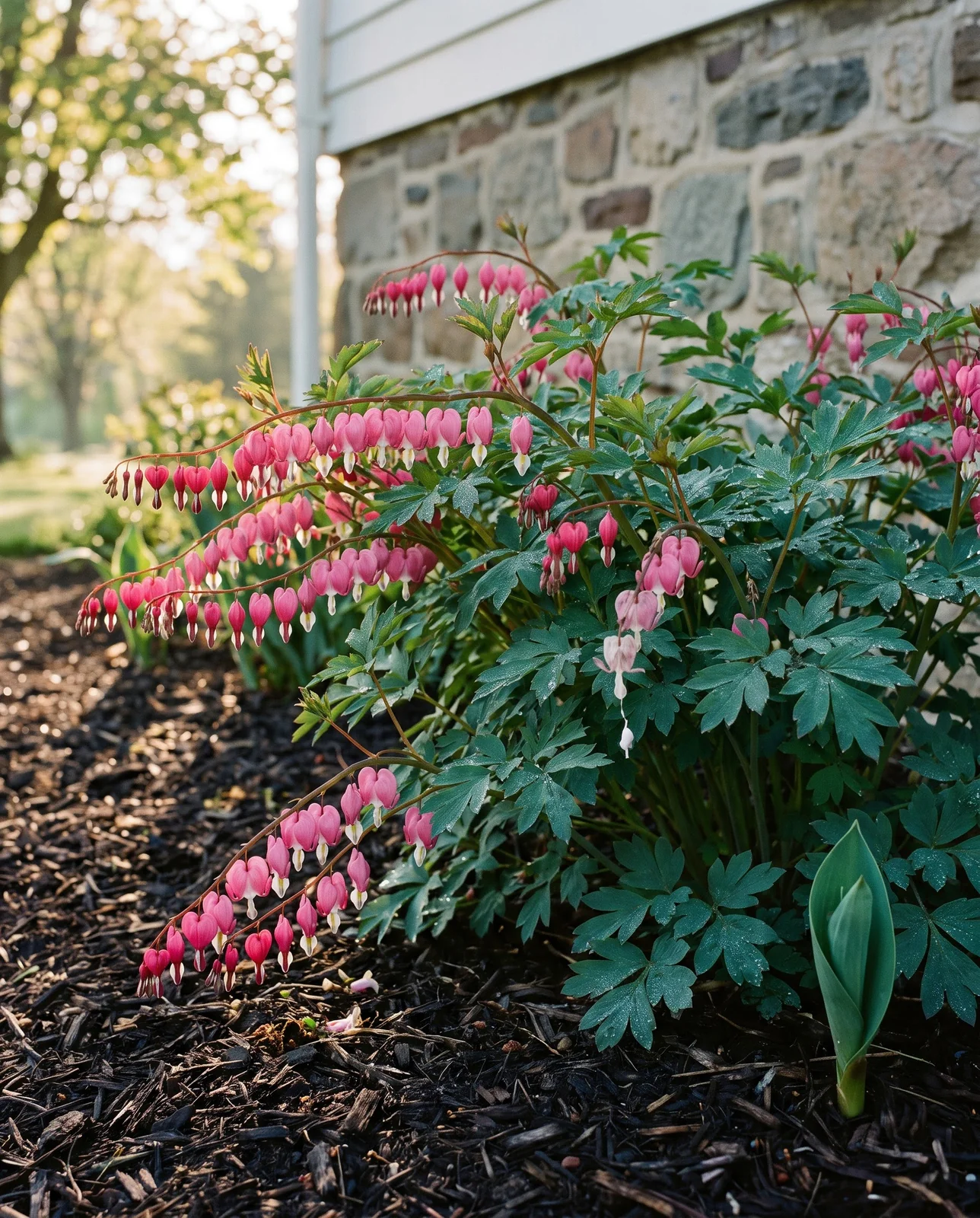
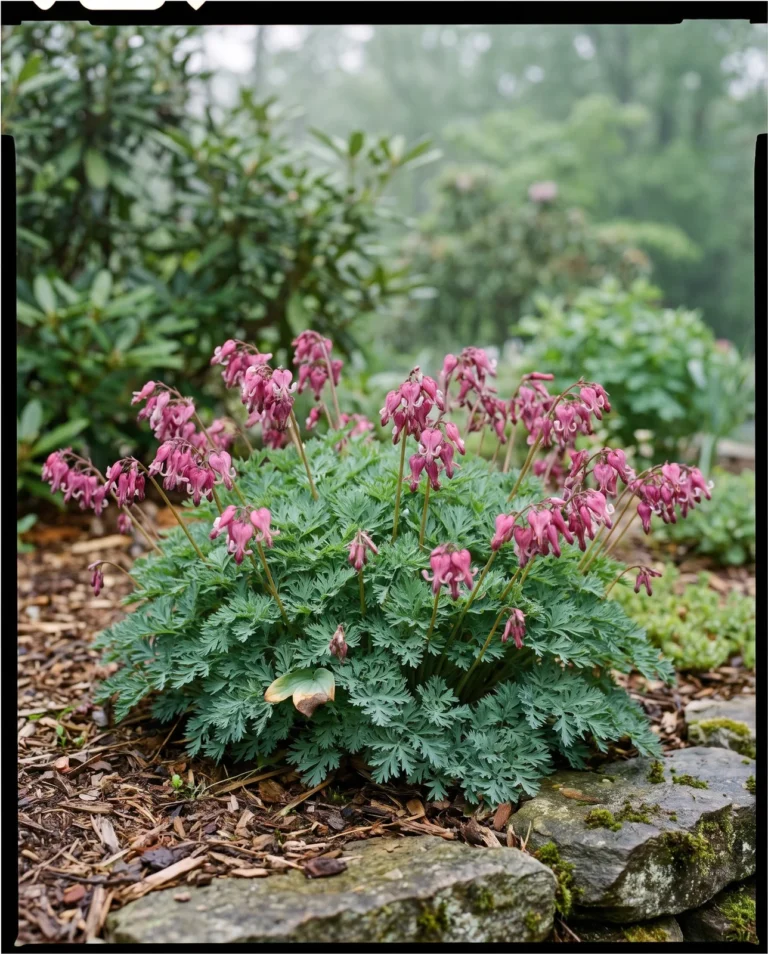
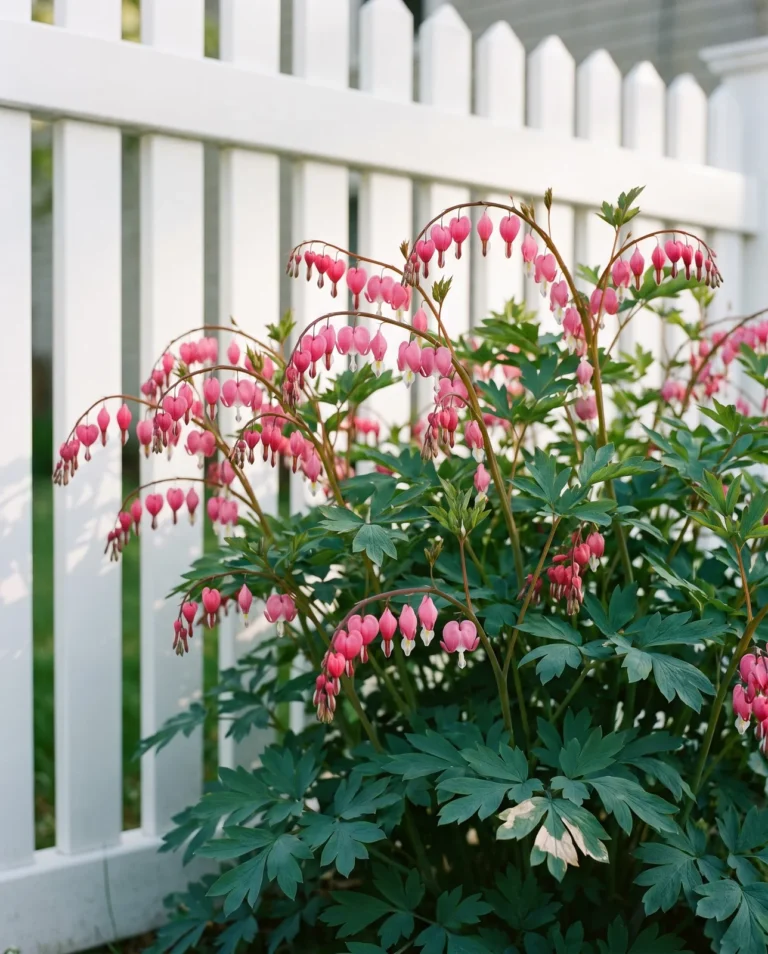
Bleeding heart is a hardy woodland perennial from East Asia, correctly named Lamprocapnos spectabilis and still sold everywhere as Dicentra spectabilis. The current name was published in 1997, the older one has been in print since 1847, and the trade never made the switch. It grows wild from northeastern China into northern Korea, and in Siberia and Japan, in moist grassland and shady forest. It belongs to the poppy family, Papaveraceae, filed in older books under Fumariaceae. What people buy is the flowering stem: an arching spray of 7 to 15 hearts, each split by the inner petals that appear to bleed out of it. Mature clumps stand 2 to 3 feet tall and 2 to 4 feet wide.
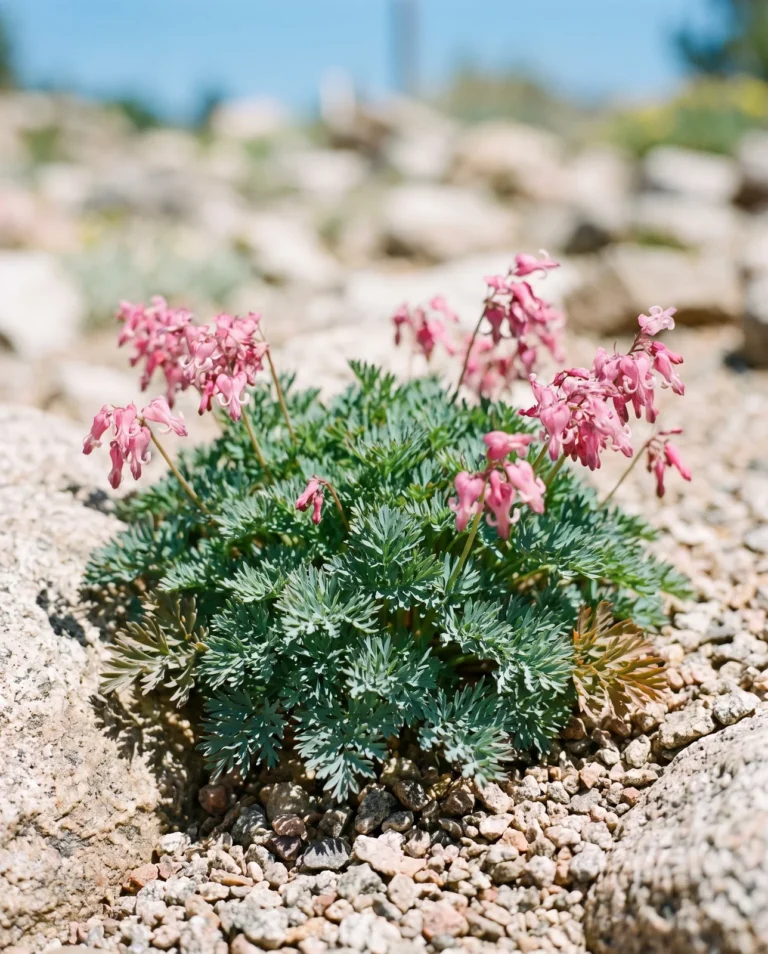
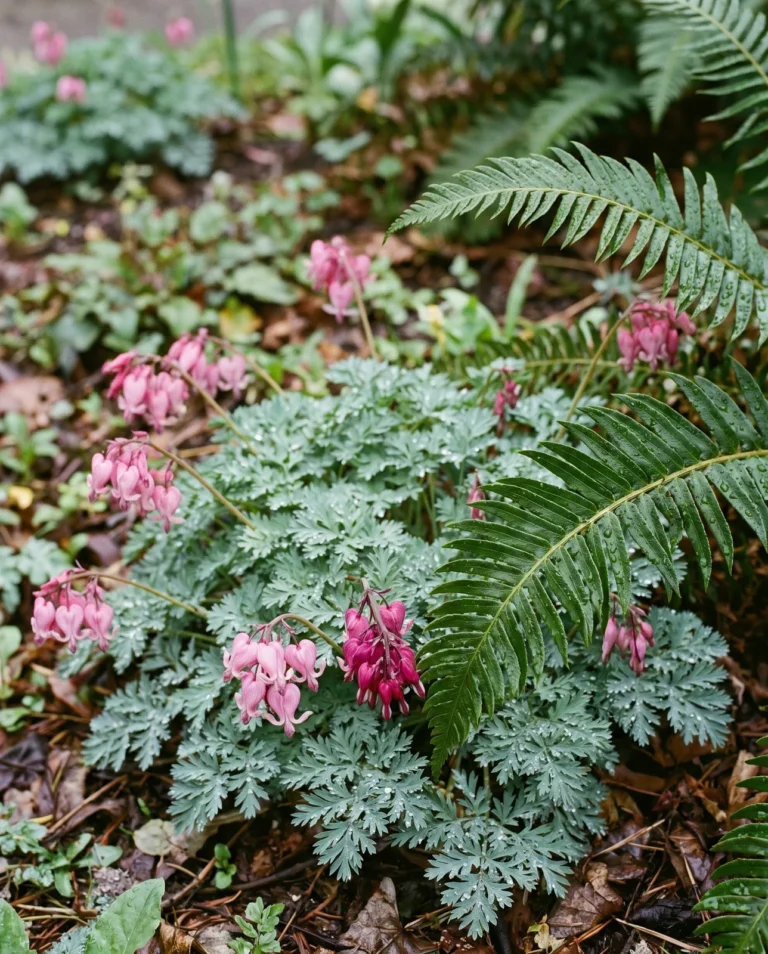
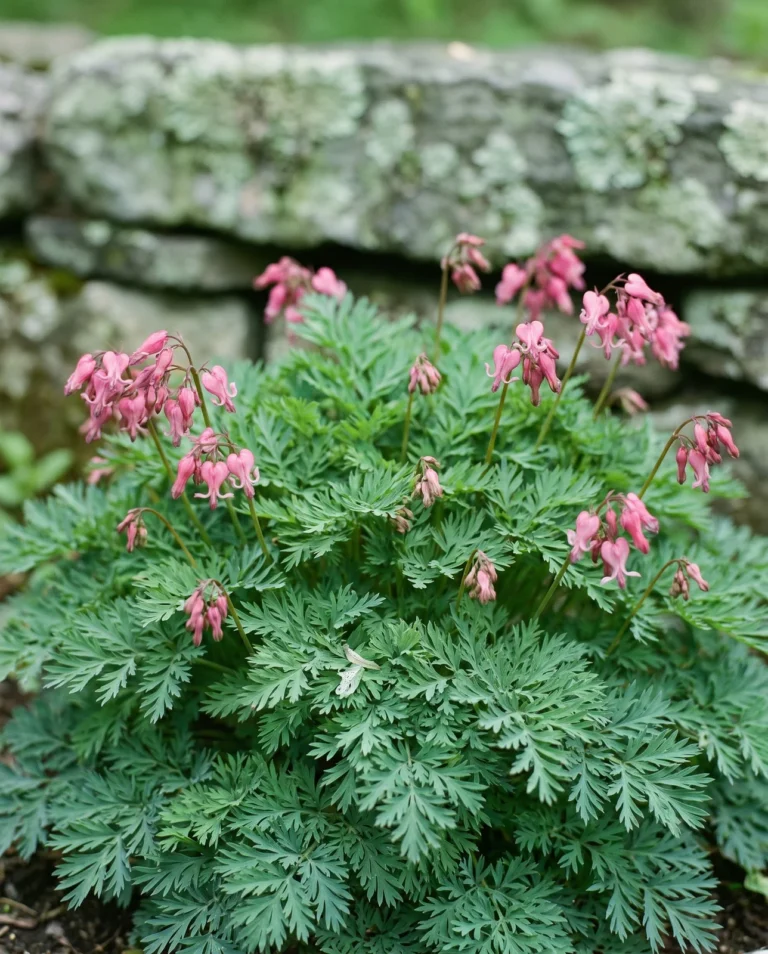
Dicentra survived the reclassification, and the plants that kept the name are worth telling apart. It is a genus of eight species from moist woodland in North America and western Asia. Two of them reach American gardens as the fringed bleeding hearts. Dicentra eximia is the eastern one, from the mountains between Pennsylvania and Tennessee, a much smaller plant at 6 to 18 inches tall. Dicentra formosa is the western one, from the northwest United States, with several forms grown in gardens.
Bleeding heart vine is a different plant
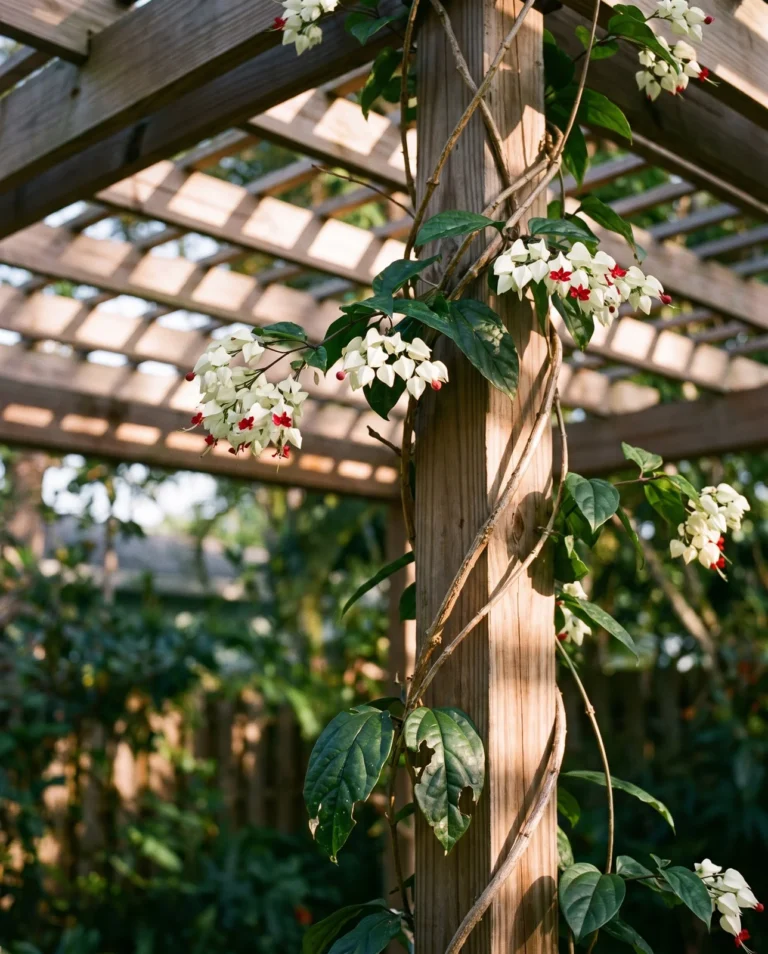
Bleeding heart vine is not a climbing form of the perennial, and the two are not related. It is Clerodendrum thomsoniae, a twining evergreen vine from tropical western Africa in the mint family, with white flowers that carry dark red corollas. It lives a different life. It is hardy in zones 10 to 12 and reaches 12 to 15 feet tall and wide where it comes from. Its roots are hardy only to zone 9a, so it comes indoors when temperatures fall below 45 degrees Fahrenheit. It blooms most of the year given light and warmth, and it is cut back after flowering because it flowers on new growth. It also sells as glory bower, bagflower and glory tree.
The same name produces a second mix-up, and this one has no plant behind it at all. Black bleeding hearts do not occur: the genus flowers only in pink, white, red and yellow, and what gardeners call black is a deep burgundy cultivar such as 'Valentine' that reads nearly black in certain light.
Where to plant it, and what the soil should be
Plant it in morning sun with afternoon shade, in ground that stays moist and drains freely. It takes heavy shade and partial shade as well, and it will grow in dark shade. Full sun works only where the climate itself is cool and moist. Deer and rabbits leave it alone, and it also shrugs off black walnut toxicity. If the rest of that corner is bare, the same conditions suit a long list of flowers that grow in shade.
Soil matters more than pH here. It wants rich humus that holds moisture and still drains, over clay or sand. On acidity it is easy going, from slightly acid to a little alkaline, with about 6.0 to 7.0 the middle of the range. It is hardy through zones 3 to 9.
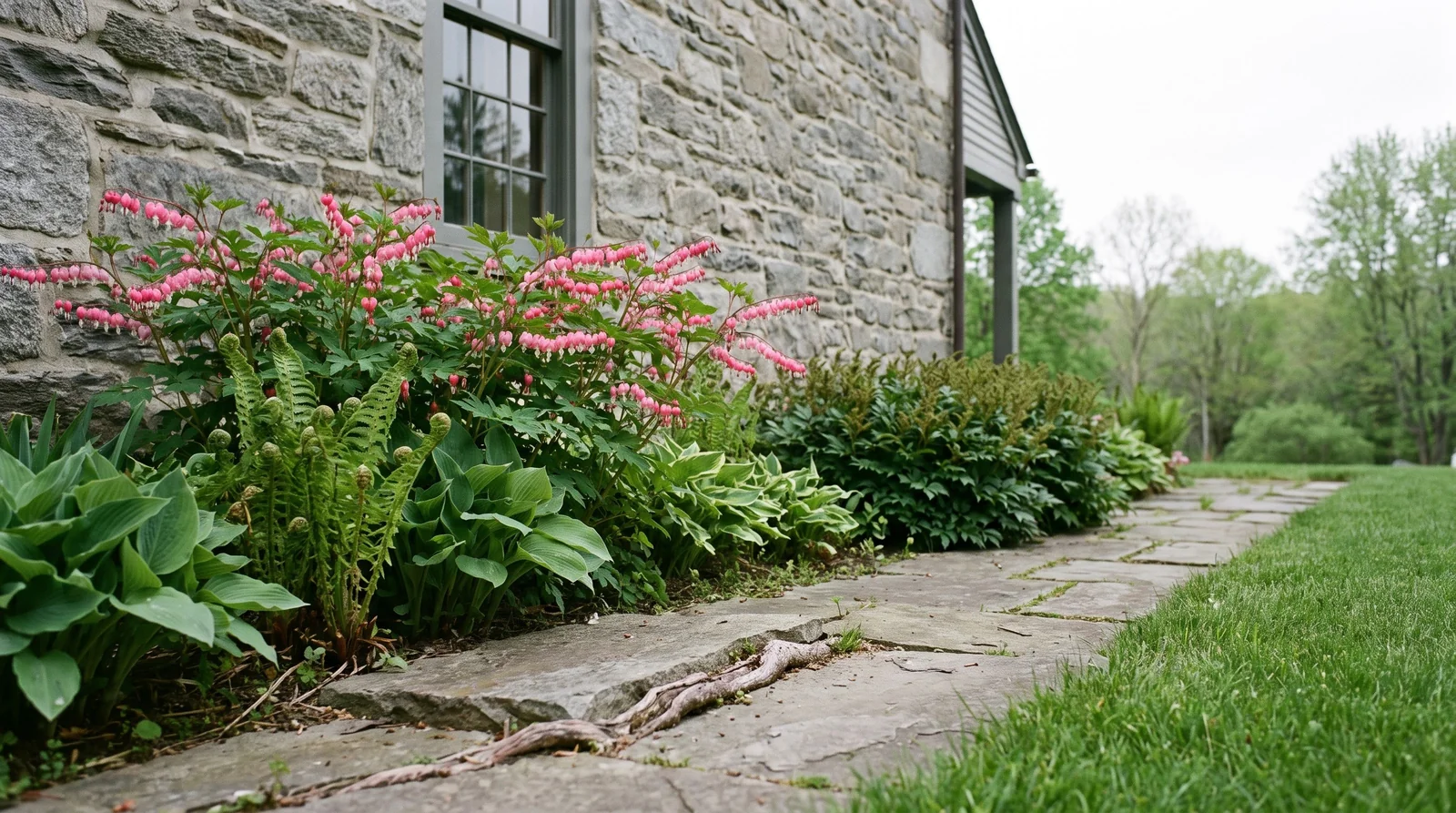
The other planting decision is what goes beside it. The foliage recedes by late summer, so set bleeding heart through a loose ground cover or among later perennials that fill the gap: hostas and ferns, astilbes and heucheras. The plant leaves a hole in the bed in July, and something has to grow into it.
It disappears in summer, and that is normal
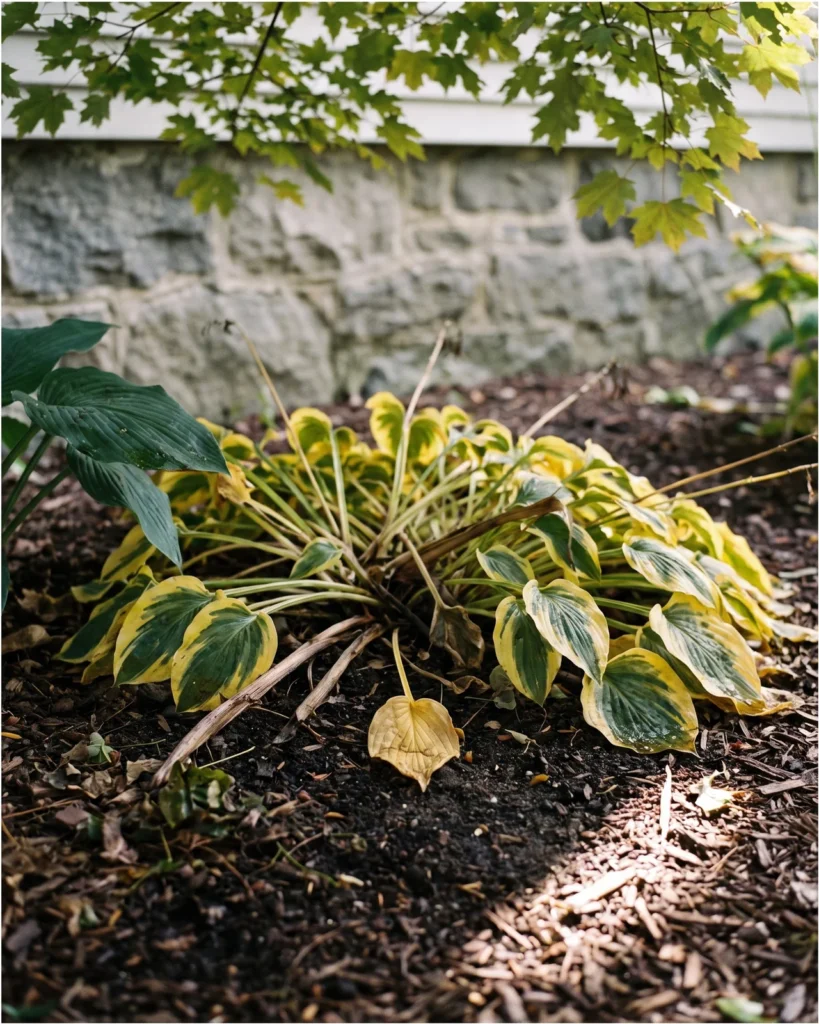
A bleeding heart that yellows and vanishes in midsummer is finishing its year, not dying. After blooming ends the leaves decline, turn yellow and drop by midsummer, and steady water keeps them on longer. The process has a name, partial senescence: the top dies back while the roots stay alive underground, and warm, dry conditions speed it up. The foliage often goes well before fall, sometimes as early as August. A clump cut to the ground after it has died back comes up again in spring.
The habit comes from where the plant grows. Bleeding hearts live under large deciduous trees and go dormant in early summer, keeping the schedule of the spring bulbs: flower while light still reaches the forest floor, then shut down when the canopy closes and the ground dries. Water moves that date without cancelling it. Leaves yellow sooner in hot or dry weather, and sometimes last the season in cool, moist conditions. A plant you want to keep in leaf needs plenty of water, and it comes back bigger next spring either way.
Cut it back or leave it alone
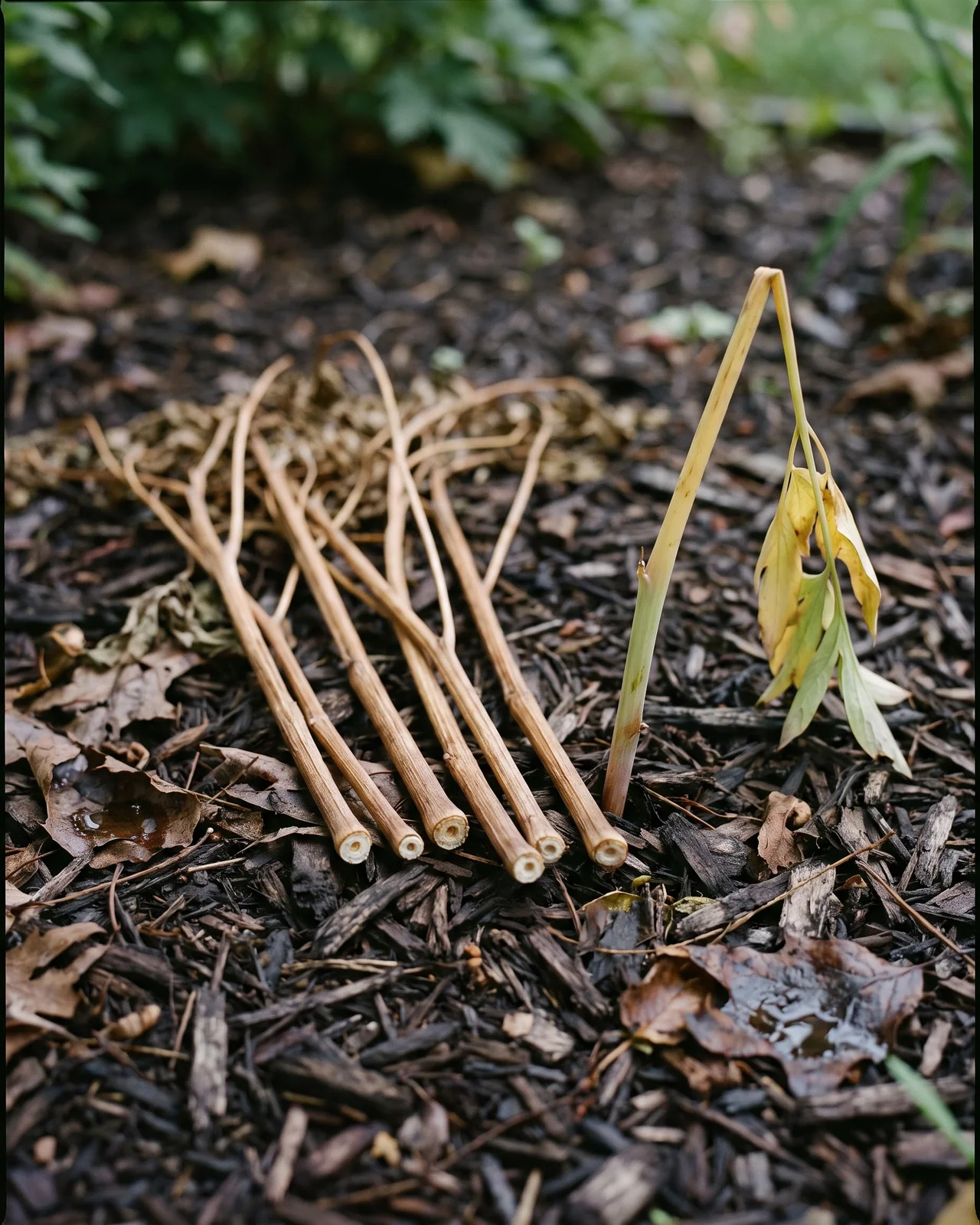
Leave the stems standing until the foliage has yellowed and died, then cut them to the ground. The plant gives you a physical test for the same moment: a stem that has died back completely lifts out when pulled. If it resists, it is not ready. Tidying a yellow plant changes nothing either way, since the clump comes up again in spring. Foliage left standing can come off after a killing frost, or whenever it becomes unattractive.
There is a second cut with the opposite timing, and it is a choice about flowers. Cutting the plants back hard right after flowering may delay senescence and promote another flush of blooms. That trades ripening foliage for a longer green season, and it is the only cut that changes what the plant does. Watering follows the leaves: reduce it once the foliage begins to die back, so the roots are not sitting wet while inactive.
How to tell a dormant plant from a dead one
The question in August is whether the crown under the soil is still alive. The checks run in order, from the ones that cost nothing to the one that puts a trowel in the ground.
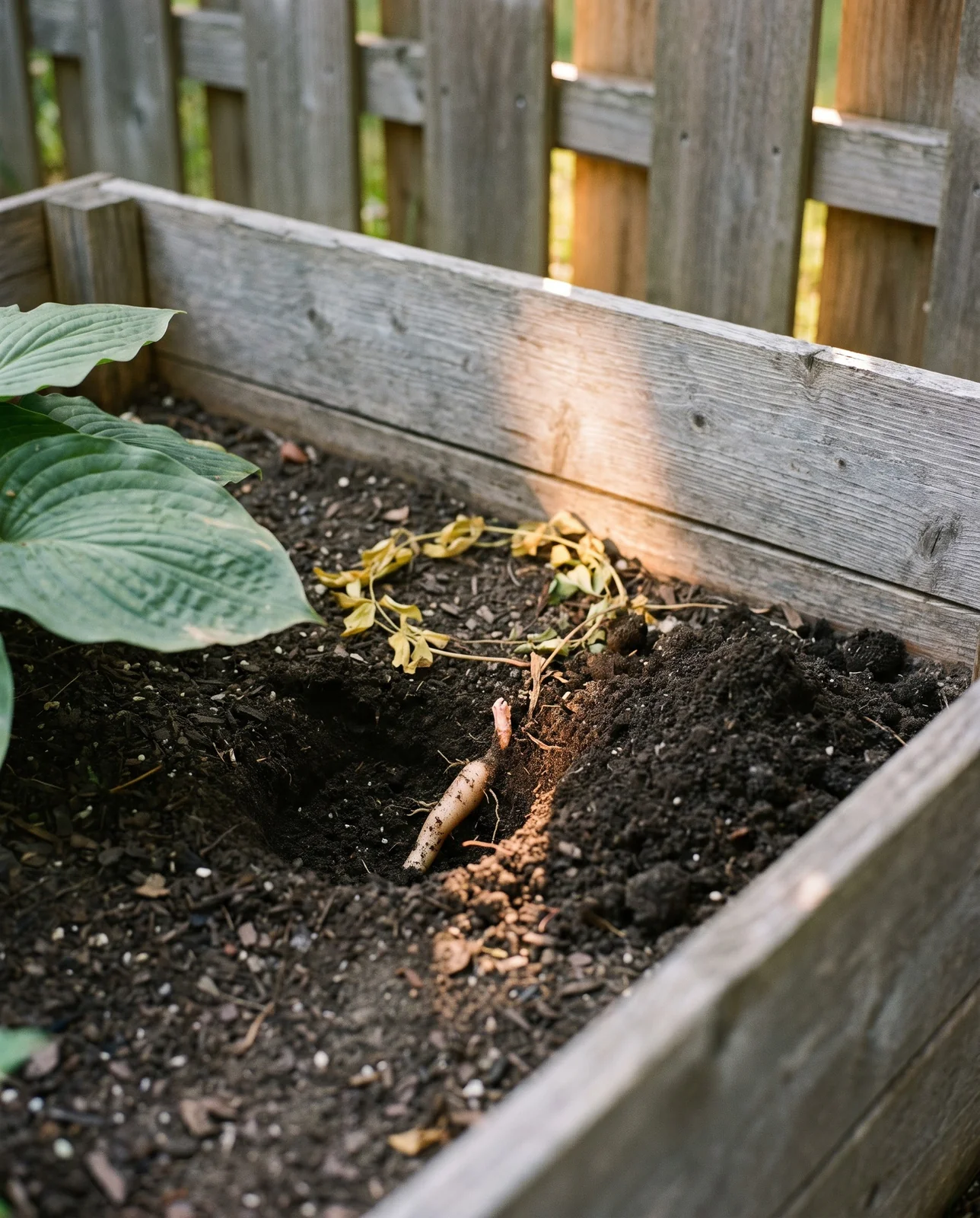
Will it come back next year
Yes, from the same crown, every spring. It is a hardy herbaceous perennial that returns reliably after dying back to the ground, and the new foliage pushes up reddish and fast, among the first flowering perennials of the year. Longevity is the quiet argument for planting one: the species keeps going around abandoned homesteads long after anyone was tending it. Seedlings are another matter. It self-seeds lightly at best, never freely enough to become a nuisance. The seedlings that appear take 2 to 3 years to bloom, and moving an established plant may delay flowering for a year or more, although the plants move easily.
Two kinds of bleeding heart, and which one to buy
The two kinds sold under this name part company in June. The classic old-fashioned plant flowers once in spring and then goes under. The fern-leaved kinds keep working: both American species behind those hybrids, Dicentra eximia and Dicentra formosa, flower longer than common bleeding heart and hold their foliage through the growing season. The tell is in the leaf before either one flowers. The American species carry fine, ferny foliage, where the Asian plant has larger, deeply cut compound leaves on arching stems about 2 feet tall. If you want a plant still standing in August, the ferny group is the purchase.
Summer bloom is where the sales copy runs ahead of the plant. 'King of Hearts' is a compact hybrid of the Japanese Dicentra peregrina with two American species, Dicentra formosa subspecies oregana and Dicentra eximia. It blooms in May and June, slows or stops in summer heat, and may flower again when the weather cools; only where summers stay cool does it run right through. The parent species behave the same way. What survives an American summer is the foliage.
Two things go wrong at the counter. 'King of Hearts' is sometimes sold as a cultivar of Dicentra formosa despite that three-way parentage, so the label may not describe what is in the pot. And 'Pink Diamonds', sold as a fern-leaved bleeding heart that blooms spring through fall, is an alpine plant. It wants full sun and sharp drainage, and it will not take heavy clay or the deep, moist soil the rest of the group needs. Taken home for a shady bed, it is wrong for the spot before it goes in the ground.
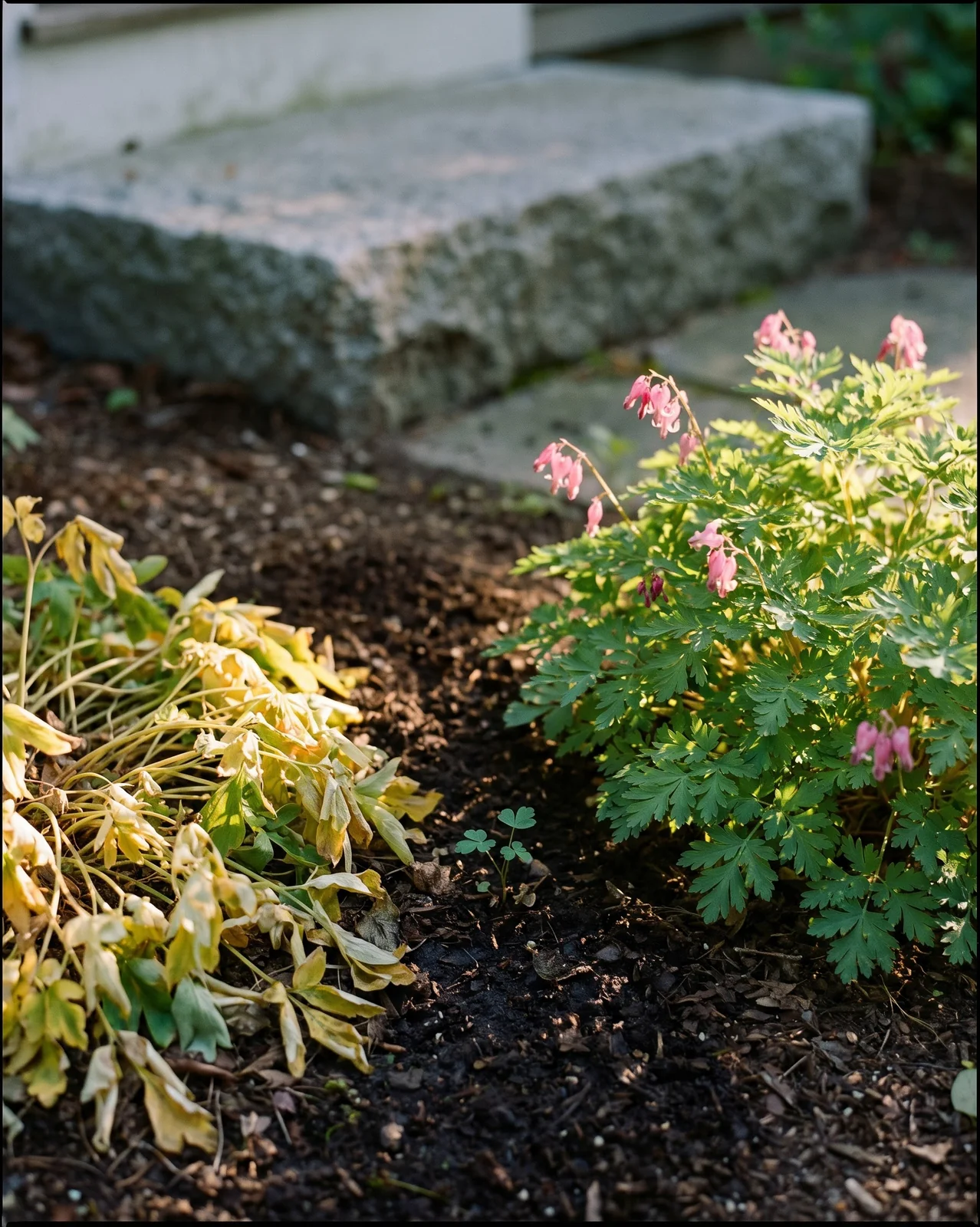
Bleeding heart varieties worth telling apart
Three groups reach the shelf: the old-fashioned Asian plant, its cultivars, and the ferny American species with their hybrids. The species pink is the one most people picture, and it sits with the other pink flowers that open in shade in spring.
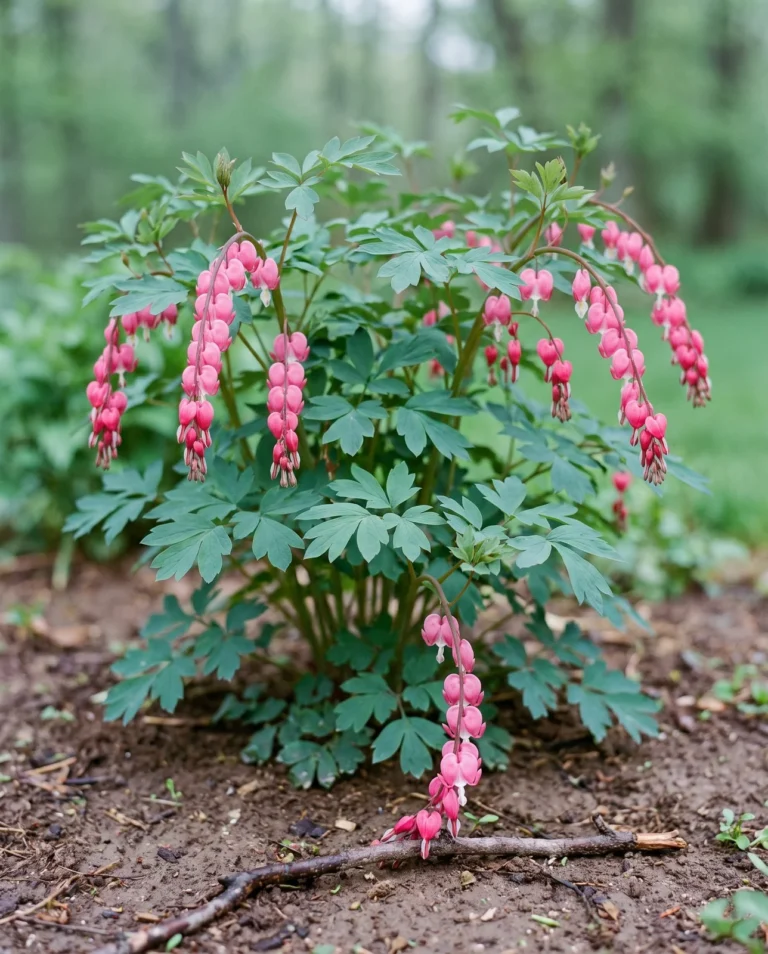
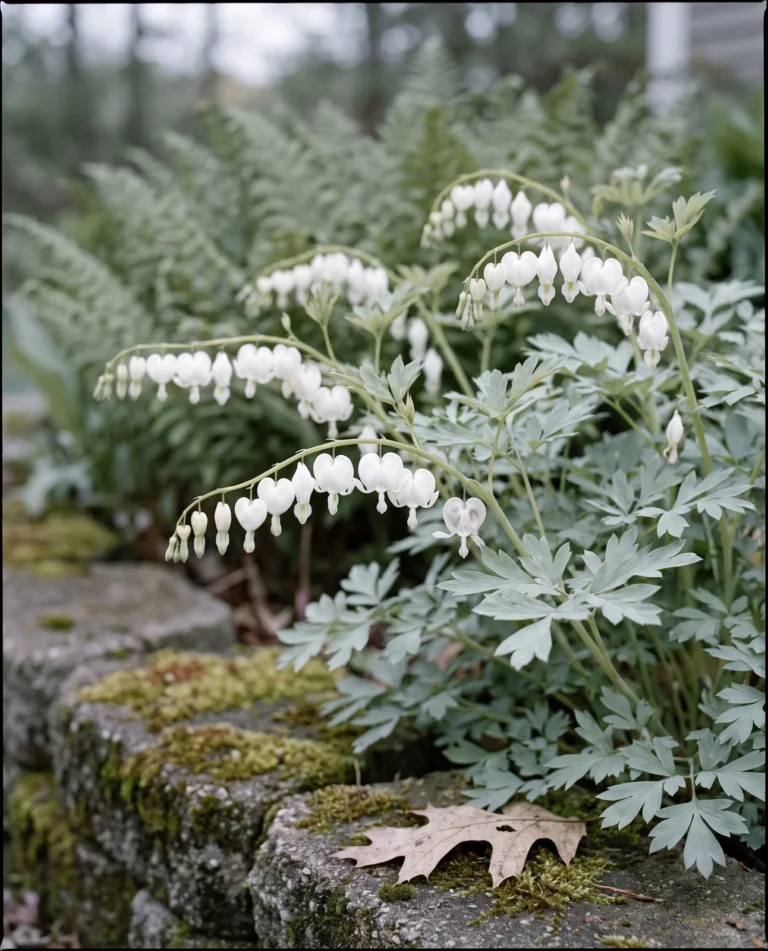
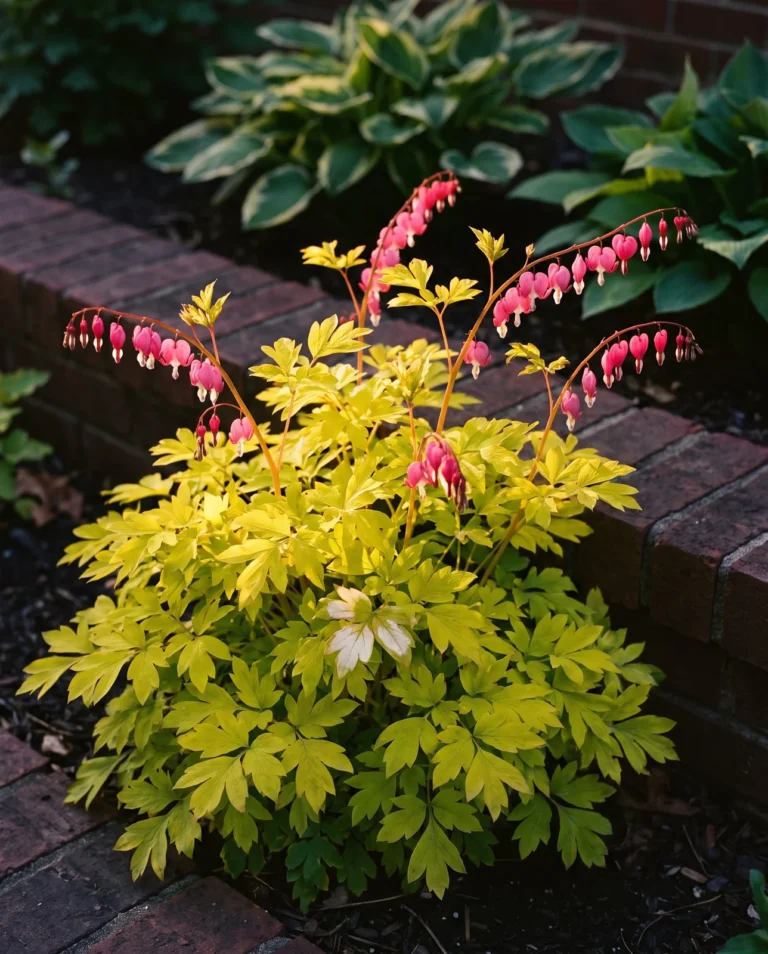
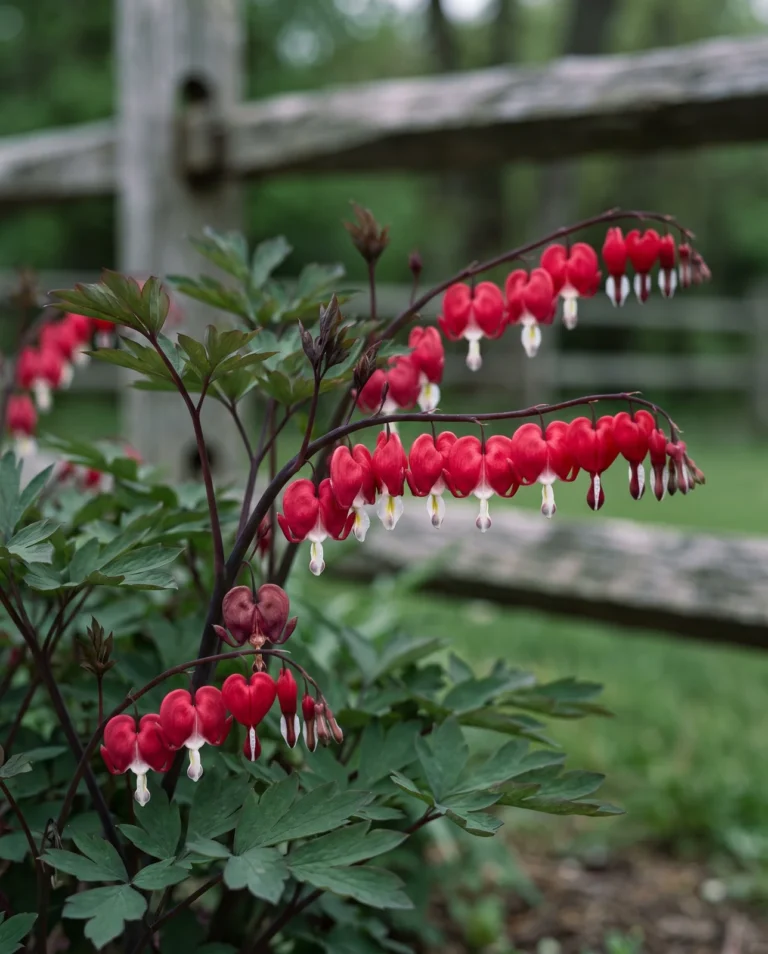
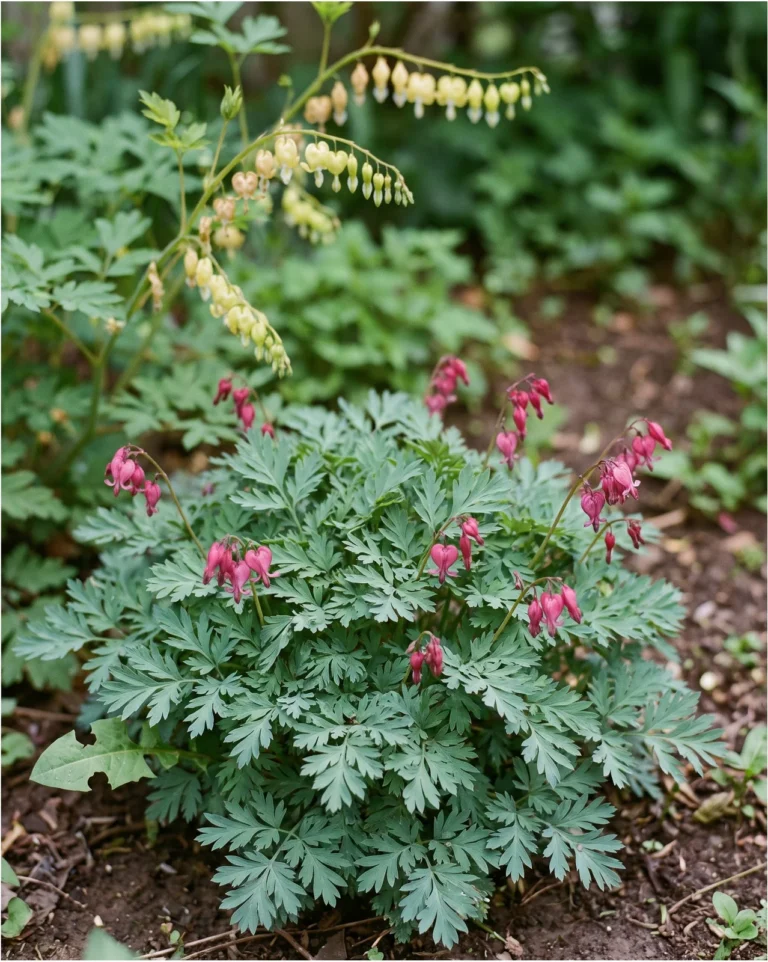
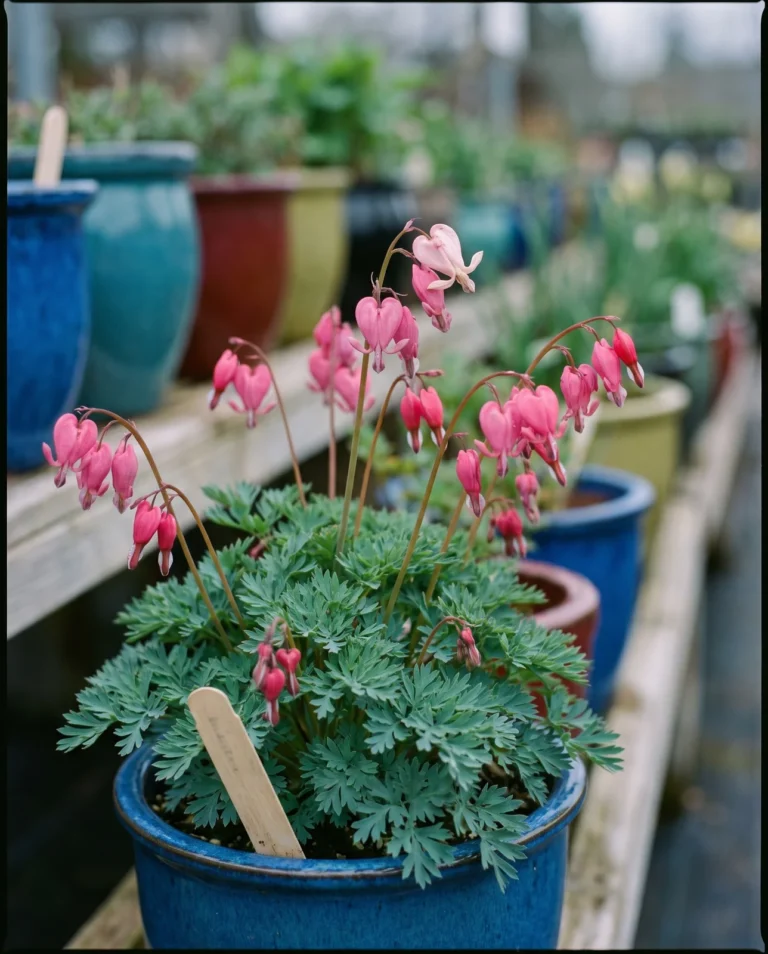
Hardiness and size by kind
The kinds sold under this name differ in size more than in looks, and the fern-leaved hybrids carry their own zone ratings.
Is the white one weaker than the pink
On summer heat the white form does better, and on general vigor it is the weaker plant. 'Alba' comes true from seed, takes summer heat better than the ordinary pink, and is not as vigorous. What gardeners ask about is cold: whether a white bleeding heart comes through a hard winter that the pink one survives. Nobody has compared the two on winter survival, and vigor is a different measurement. 'Alba' is a plain white April flower on a plant of 2 to 2.5 feet, one of the white flowers that will bloom in a shaded bed.
How poisonous it is, and what touching it does
Every part of the plant is poisonous if eaten, and the severity is low. Flowers, fruit, leaves, roots, sap, seeds and stems all count. The symptoms are trembling, staggering, vomiting, diarrhea, convulsions and labored breathing, and the toxic principle is a group of isoquinolone alkaloids. All parts are mildly toxic to people, and the same mild rating covers the native fringed species. The two garden species sit at low severity, while the wider Dicentra genus carries a medium rating drawn across many more species than anyone grows. Either way, it has to be eaten before it does harm.
Skin contact has a documented answer. NC State Extension records contact dermatitis for bleeding heart, puts skin irritation after repeated contact among the poison symptoms, and advises gloves when handling the foliage. On the eastern fringed species that irritation is mild and short lasting. Repeated handling is the trigger, so it matters for the gardener who cuts a clump down every summer or divides one by hand. For cats and dogs, treat it as mildly toxic and keep them from chewing the leaves.
Planting and care through the year
Set the crown about 2 inches below the soil surface, because that depth flowers better. What you bought changes the number: a potted plant goes in with its crown at soil level, a bare root of the old-fashioned type sits 2 inches under, and smaller bareroot varieties go 1 inch under. Then lay 2 to 3 inches of shredded leaves or compost over the root zone, which holds moisture, steadies soil temperature and keeps weeds down.
Watering is the one lever that changes what the plant does in summer. Water deeply once or twice a week through the growing season, about 1 inch in total. Dry ground pulls the leaves down early, and steady moisture keeps them on longer. Feeding barely enters into it: heavy fertilization is not needed, and compost spread in early spring is enough, part of why this counts as a near maintenance-free perennial for moist shade. The last job comes after everything else, a light mulch laid on once the ground has frozen to hold the crown against winter heaving.
Dividing an old clump and moving one
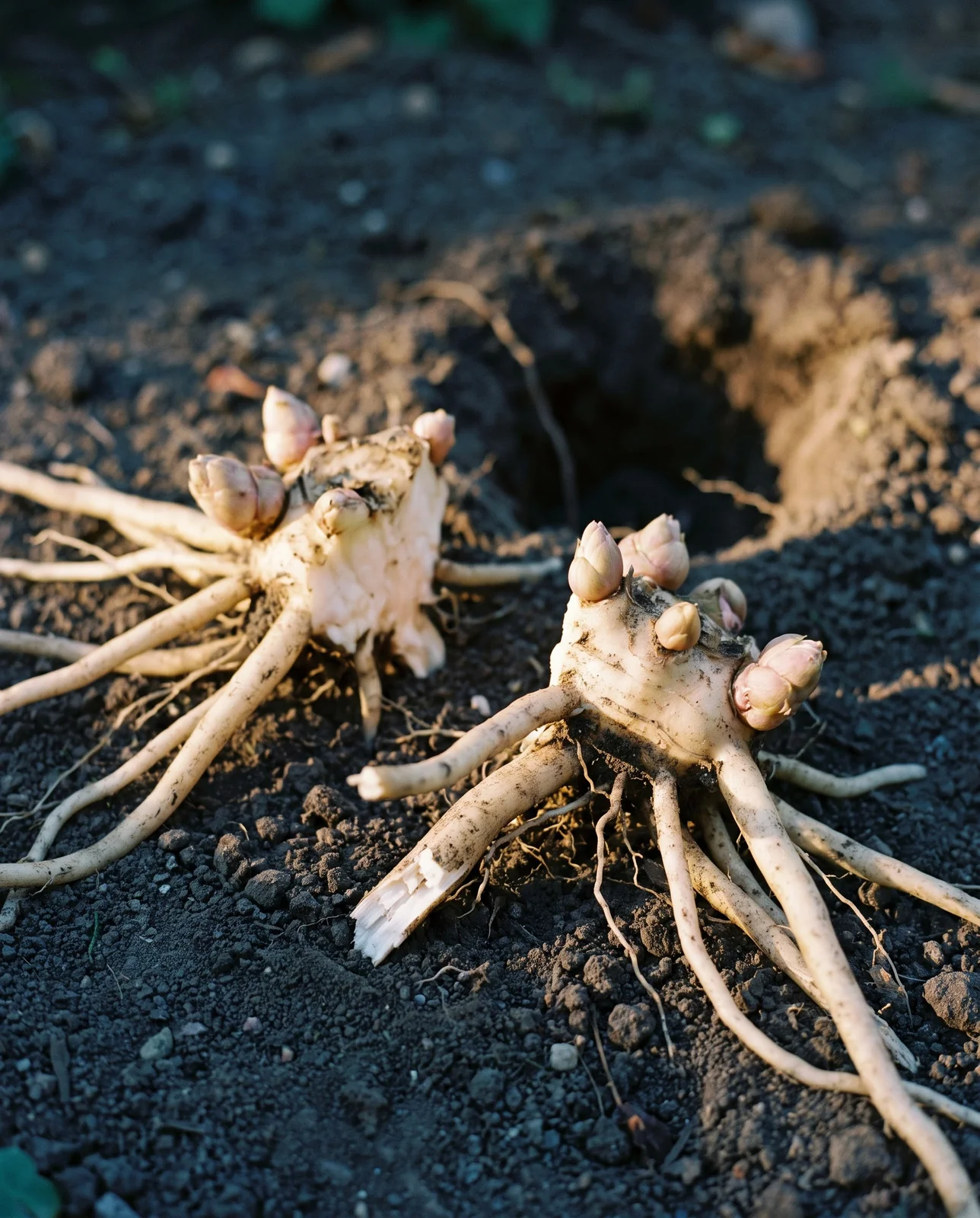
Divide in very early spring before the shoots get away, or in late fall once the plant has gone down, leaving a share of roots on every piece. In spring, lift gingerly, separate the brittle roots by hand and replant vigorous pieces from the outer edge. In fall the eyes for next year are already visible on the crown. Aim for at least 3 eyes on each division, and replant at the depth the piece came out of. You can also cut the roots into sections, checking that every one carries noses, the buds new shoots come from. Brittle is the word that matters: the roots snap where they are bent, so the spade stays out of it.
Growing it from seed
Seed works, and it is the slow road nobody takes. The seeds are fertile, but division is the usual method. Seed germinates slowly and needs a cold, moist stratification period before it will move at all, and what gets sown is fresh seed. 'Alba' is the exception worth knowing, since it comes true from seed. Where seedlings turn up on their own the plant did the work: the eastern fringed species naturalizes by seed carried off by ants.
Pests and diseases
Almost nothing eats this plant, and no serious disease is recorded for it. Aphids visit occasionally, on the flower stems in particular, and slugs feed on the leaves. Both arrive while the plant is in leaf, a short window that closes by midsummer on the old-fashioned type. Soil does the real damage. Crowns rot in poorly drained, wet ground, and that is why mulch is kept several inches back from the base. Set beside most garden flowers that is a short list, and what goes wrong here is water and heat.
What goes wrong most often
The complaints that come up most often about this plant, commonest first, each with the check that settles it.
Asked every July. Dying back to nothing by midsummer is the plant's normal yearly cycle, and firm, fleshy roots a few inches down settle it.
The tropical vine sold under the same common name, the fringed native the Asian plant gets confused with, and 'King of Hearts', sold as a cultivar of D. formosa when it is a three-species hybrid.
Cut the stems to the ground once the foliage has turned yellow and died, and check by pulling: a fully dead stem lifts out of the ground.
'Alba' takes summer heat better and is not as vigorous a plant, and nobody has compared the two on winter survival.
Steady water keeps the leaves on longer, and they go sooner in hot, dry weather. Water moves the date, and the yearly cycle still runs.
Mostly the fern-leaved kinds, bought for a long season. Flowering slows or stops in summer heat and returns when it cools, running through the summer only in cool northern climates.
The one that causes people to dig. Bleeding heart is often the last thing in the bed to show.
What you may have got when the label said bleeding heart
Three checks separate the plants that reach a cart under this name: the shape of the leaf, the month the flowers open, and whether the stems arch or mound.
Where it came from and what people read into it
The plant reached Western gardens twice, and only the second attempt held. It came to England in 1810 and did not establish, then arrived again after a plant collecting trip to the Far East in 1846 and settled in. What people read into it comes from the shape of the flower. A Japanese legend takes the bloom apart as a story: the outer petals as slippers, the inner petals as earrings, the white tip as a dagger, gifts a prince once offered a maiden.
Five things people get wrong about bleeding heart
Each of these turns up in care advice or in the answers gardeners give each other about a plant that has just disappeared.
The myth: It died in July.
The reality: The leaves and stems die back while the roots stay alive underground, a partial senescence that speeds up in warm, dry conditions.
The myth: Cut it down as soon as it starts to yellow.
The reality: The stems come off after the foliage has turned yellow and died. A stem that has died back completely pulls out of the ground by hand.
The myth: Bleeding heart vine is the climbing version of the same plant.
The reality: It is Clerodendrum thomsoniae, a twining evergreen vine from tropical west Africa in the mint family, unrelated to the perennial. Its roots are hardy only to zone 9a, and it comes indoors below 45 degrees Fahrenheit.
The myth: There is a black bleeding heart.
The reality: Black flowers do not occur in the genus, which gives pink, white, red and yellow. What gets called black is a deep burgundy cultivar such as 'Valentine' reading nearly black in some light.
The myth: It needs deep shade and no sun at all.
The reality: It grows best in morning sun with afternoon shade, takes heavy and partial shade, and tolerates full sun where the climate is cool and moist. It will also grow in dark shade, which is a different claim from needing it.
What to expect, year by year
The arc of one plant from the spring it goes in to the third season, when the clump is finally the size the picture on the tag promised.
The first spring arrives early and fast. Reddish new foliage pushes out of bare ground and grows quickly, putting the plant among the first flowering perennials of the year, though it can be slower to appear than its neighbors. A first-year plant runs smaller than a settled one, which reaches 2 to 3 feet across.
The first summer is quiet and easy to misread. After bloom the leaves decline, yellow and drop by midsummer, the top dying back while the roots stay alive below, sometimes as early as August. That leaves a hole in the bed, and it is the argument for hostas and ferns beside it, or astilbes and heucheras planted to grow into the gap. Cut the stems when they lift away on a pull, and leave the crown alone.
By the third spring the clump is doing what it was bought for. It returns from the same crown every year and persists around abandoned homesteads for decades. Self-sown seedlings take 2 to 3 years to flower. This is the point at which a crowded clump is worth splitting, with vigorous pieces taken from the outer edge.
FAQ
Where is the best place to plant bleeding hearts?
Morning sun with afternoon shade, in rich ground that stays moist and drains freely. Keep it out of a spot that bakes dry in July, with hostas or ferns beside it to fill the gap.
Do bleeding hearts come back every year?
Yes. It is a hardy herbaceous perennial that returns from the same crown each spring, and it can outlast the garden around it.
How poisonous is a bleeding heart plant?
All parts are poisonous if eaten, at low severity for the two garden species and medium across the wider genus. All parts are mildly toxic to people, cats and dogs.
Do bleeding heart plants go dormant?
Every year, by design. After flowering the leaves decline, turn yellow and drop by midsummer, the top dying back while the roots stay alive.
How long do bleeding hearts last in the summer?
Usually into midsummer, and the foliage often goes well before fall, sometimes as early as August. Steady water keeps the leaves on longer.
Why is my bleeding heart dying back?
Heat, and the end of its flowering year. Leaves yellow sooner in hot or dry weather, and a heat wave can send it under by midsummer, with growth returning once temperatures cool.
Is it okay to cut back bleeding heart plants in the summer?
Once the foliage has yellowed and died, yes, cut the stems to the ground; fully dead stems pull out by hand. Cutting hard right after flowering is a different move that may bring a second flush.
Can bleeding heart plants grow in shade?
Yes. Morning sun with afternoon shade is best, and it will grow in heavy shade, dark shade and under black walnut trees.
Which bleeding heart blooms all summer?
The fern-leaved kinds come closest: both American species hold their leaves and flower longer than the common type. Flowering still slows in summer heat and returns when it cools.
What happens if you touch a bleeding heart plant?
Repeated handling can irritate skin. Contact dermatitis is documented and gloves are advised when handling the foliage; on the eastern fringed species the irritation is mild and short lasting.
Interesting tips
- A dormant crown is not an inert one. Rhizomes lifted while they are resting and brought into a cool greenhouse in late winter can be forced into flower in time for Valentine's Day.
- The flowers are built around one visitor. Bees hang upside down to reach the nectar held inside the heart, pushing past the pollen-bearing anthers on the way in and pollinating the flower as they go.
Related Guides & Flowers
Virginia bluebells
The other spring woodland perennial that flowers, yellows and vanishes by midsummer.
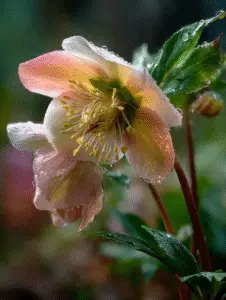
Hellebore
A shade perennial that keeps its leaves all year, useful where bleeding heart leaves a hole.
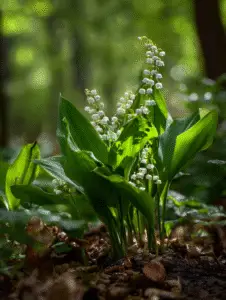
Lily of the valley
Flowers in the same weeks and the same damp shade, and spreads on its own.
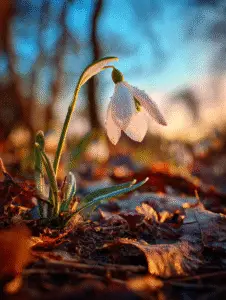
Snowdrops
The bulbs that open before it under the same deciduous trees, on the same woodland clock.
Enjoying our flower guides? Add YourFlowersGuide as a preferred source on Google. It helps more readers find us.
Add to Preferred Sources