What a bromeliad actually is
Bromeliaceae is a family, not a plant, and no single care instruction covers it. About 3,000 species sit in it, across 56 genera or more. Every species but one is native to the tropical New World, the exception an African outlier, Pitcairnia feliciana. Europeans met the family in 1493, when the Carib people of the West Indies were already growing pineapple. About half of them live on trees and rocks, the rest in the ground or in cliff crevices.
Most of them share one shape: a rosette whose leaf bases overlap tightly enough to hold water, a funnel that works as a tank. The largest hold up to two gallons. Water and nutrients come in through the leaves and the cups at their base, so the roots of an epiphyte grip bark or rock and do little feeding. It is not a parasite: it uses the tree as furniture and photosynthesizes on its own. Scale like trichomes cover the leaves, and their density sets the color, so plants from hot dry country read silvery white and those from humid country look green. Indoors they run from an inch tall to two or three feet, though the giant Andean Puya raimondii stands more than 33 feet on a flowering stem of 15 feet.
It blooms once, and then it dies
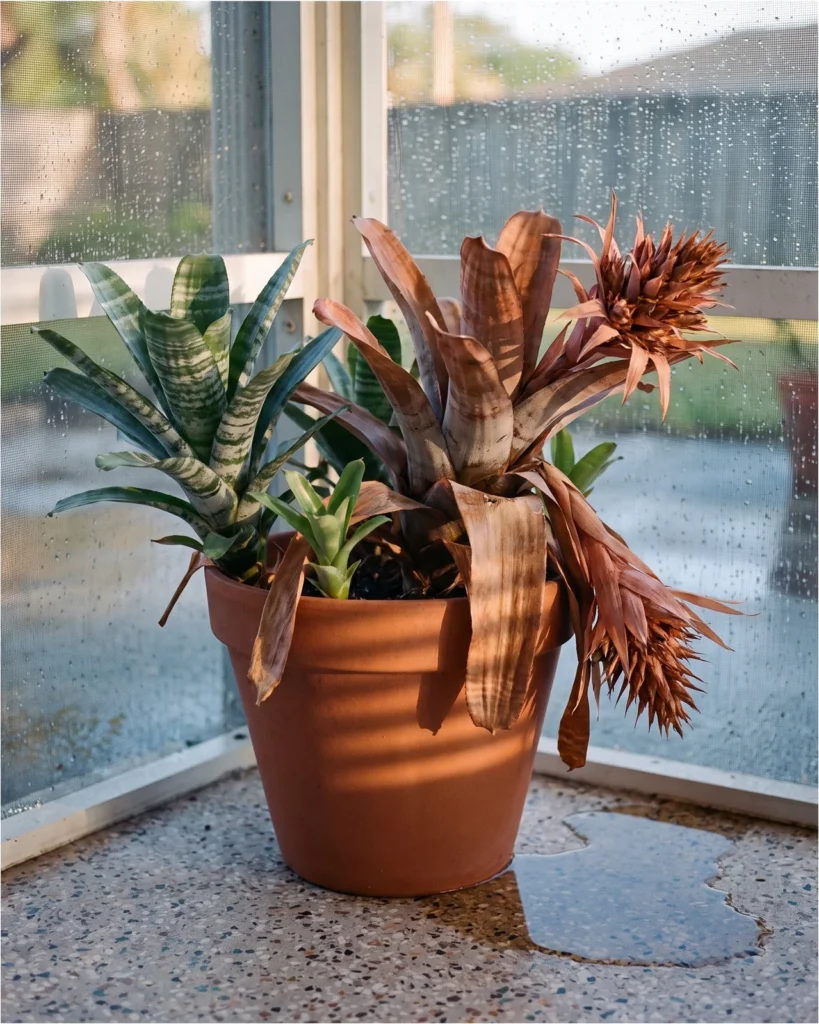
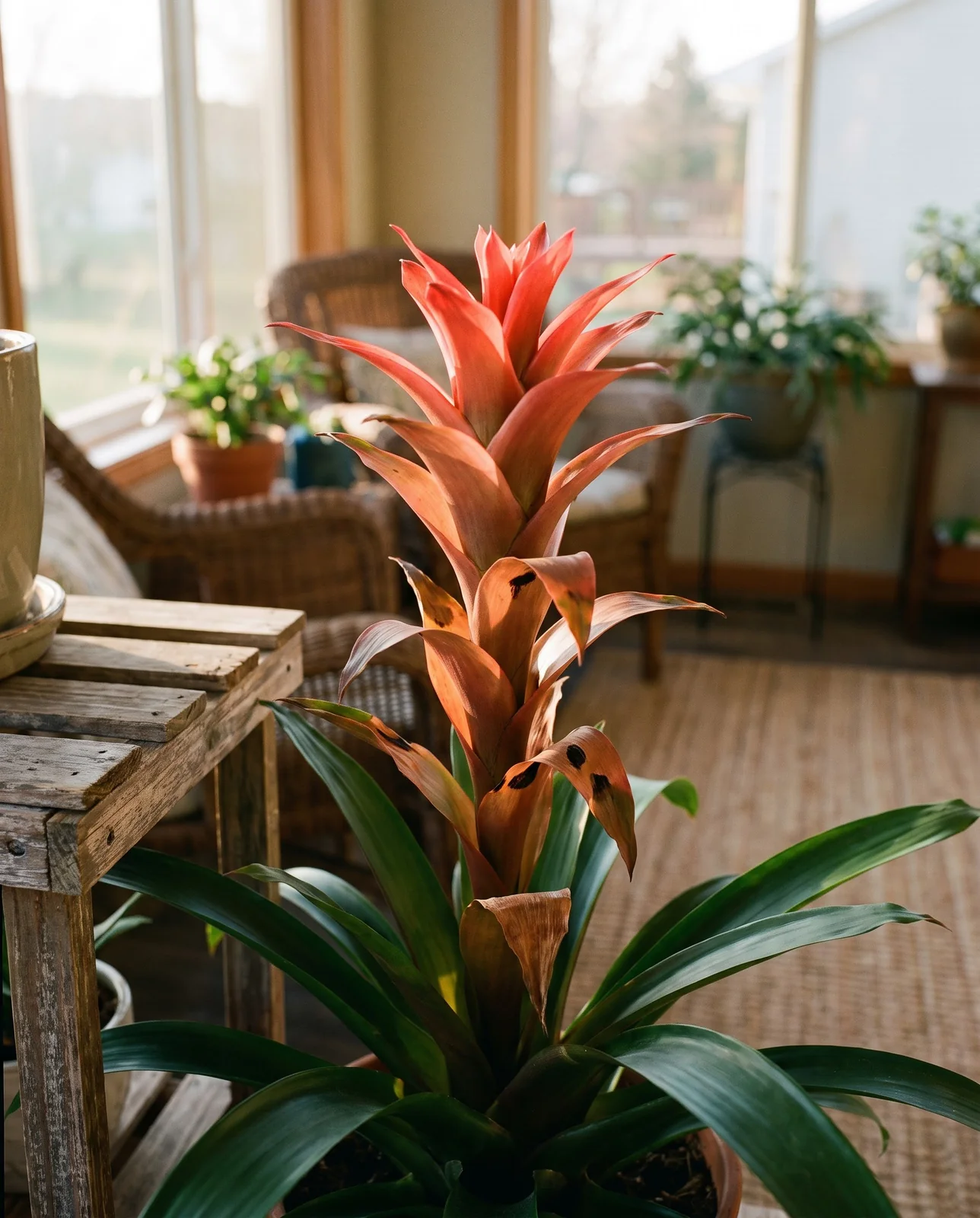
A bromeliad rosette flowers one time and then dies, and that is the plant working correctly. Most species are monocarpic: the rosette blooms once, declines, and pushes out pups to carry the line on. The dying is slow, and the slowness is what frightens people. While the mother fades above, the pups swell around her base. One genus opts out: a Dyckia rosette does not die after flowering.
A wet pot kills the same plant, and from the outside the two look alike. Crown rot is real, it comes from a root zone kept damp, and once confirmed it cannot be treated. What separates the two is the base. In true crown rot the base keeps disintegrating, the lower leaves die where they attach, and no pups form at all. A rosette that is simply finished has pups to show for it. Bromeliads do not feed through their roots, so one can push pups even after some roots have rotted, given enough light.
Cup types and dry types, and how to tell which you own
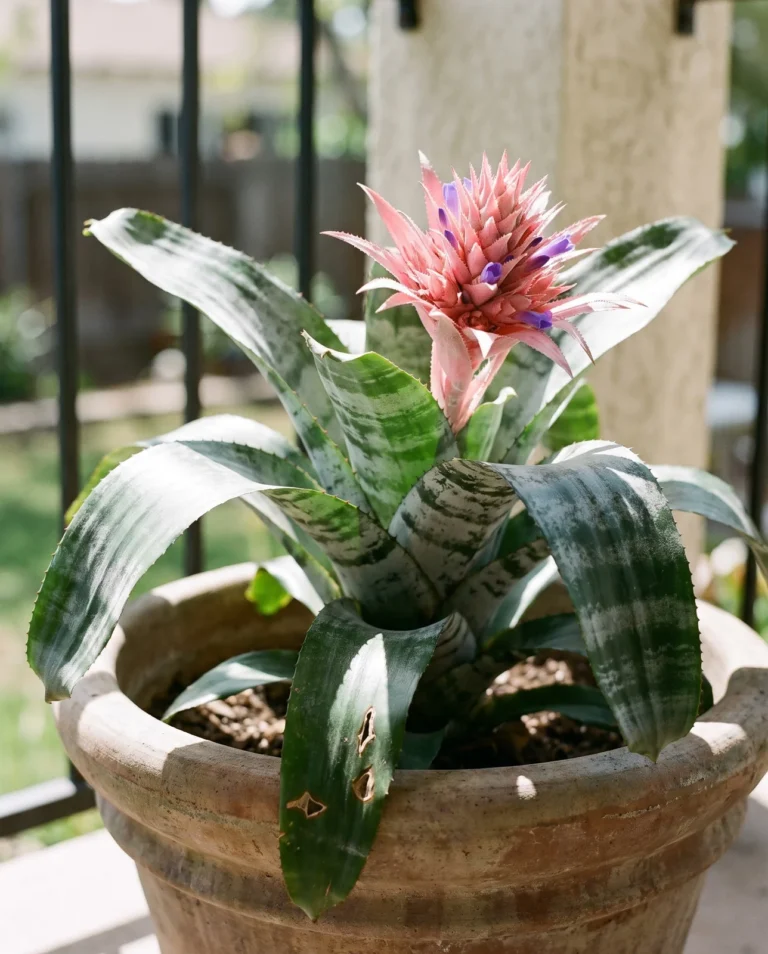
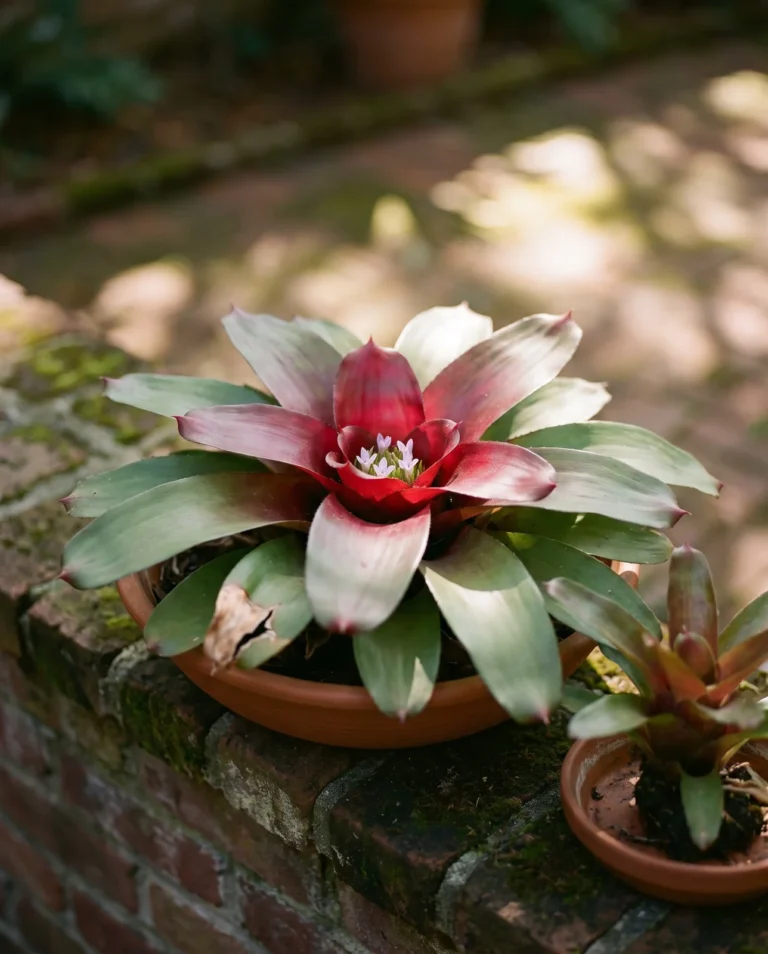
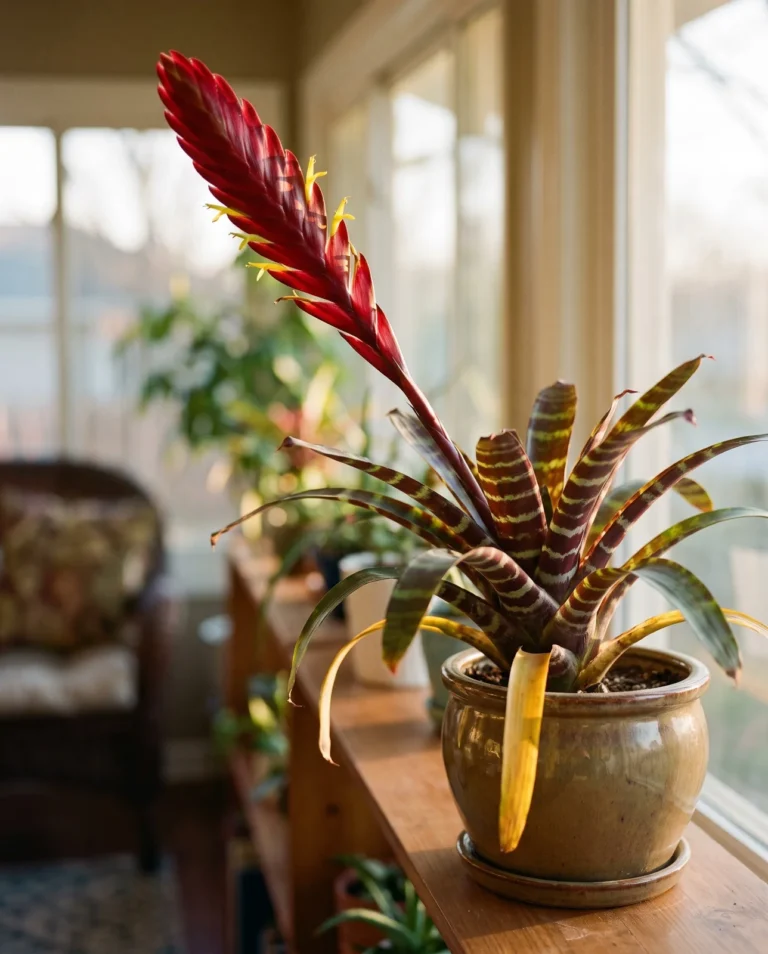
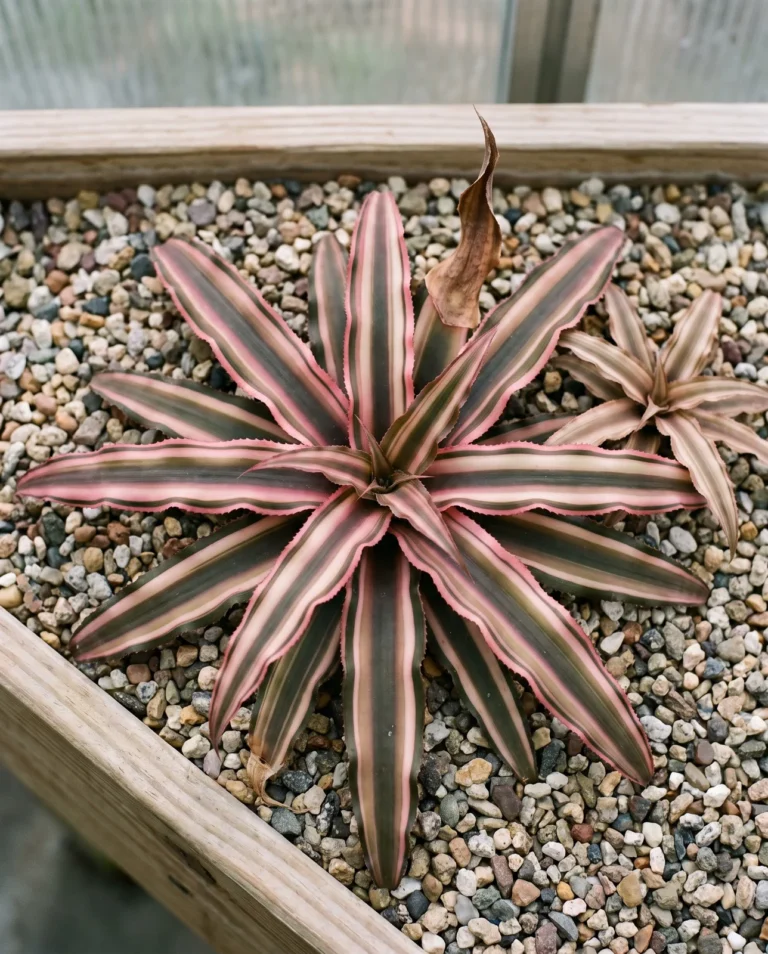
Which bromeliad you own decides everything else, and the split that matters is whether the rosette holds water. Tank types keep a reservoir in the center, and that is where the water goes. Aechmea runs to nearly 200 species, all tank epiphytes with bowl shaped rosettes and sharp toothed leaf edges. Guzmania holds more than 150, mostly tank plants from shadier habitats that take lower light. Neoregelia has about 100, grown for colored foliage with inconspicuous flowers. Vriesea covers about 250, mostly tank epiphytes with flattened, sword shaped spikes.
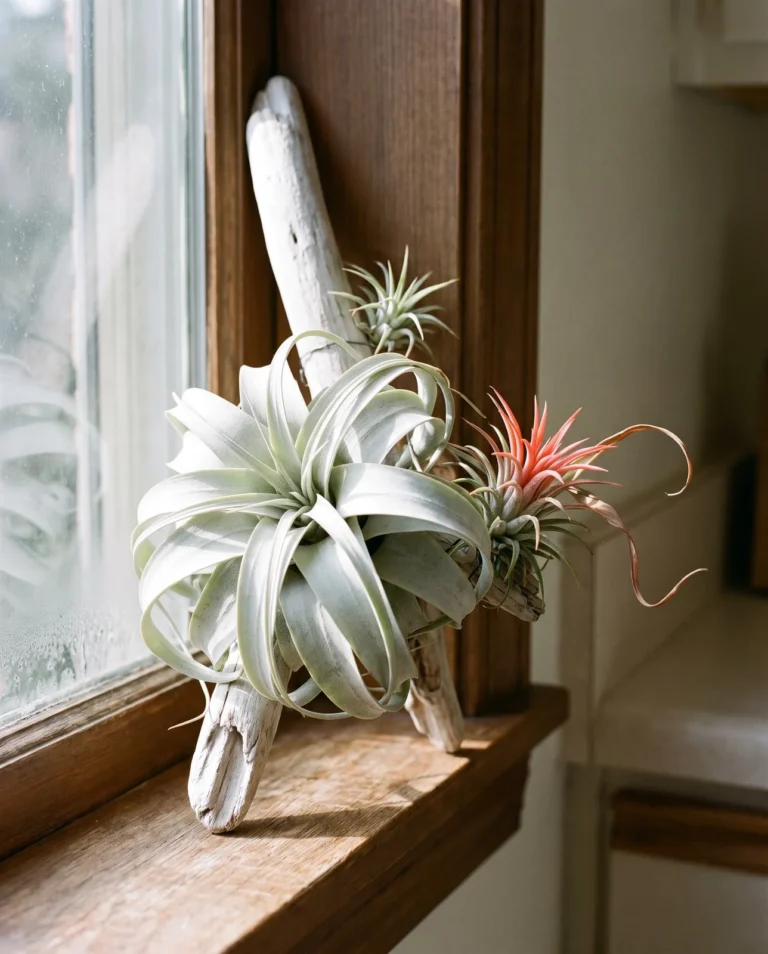
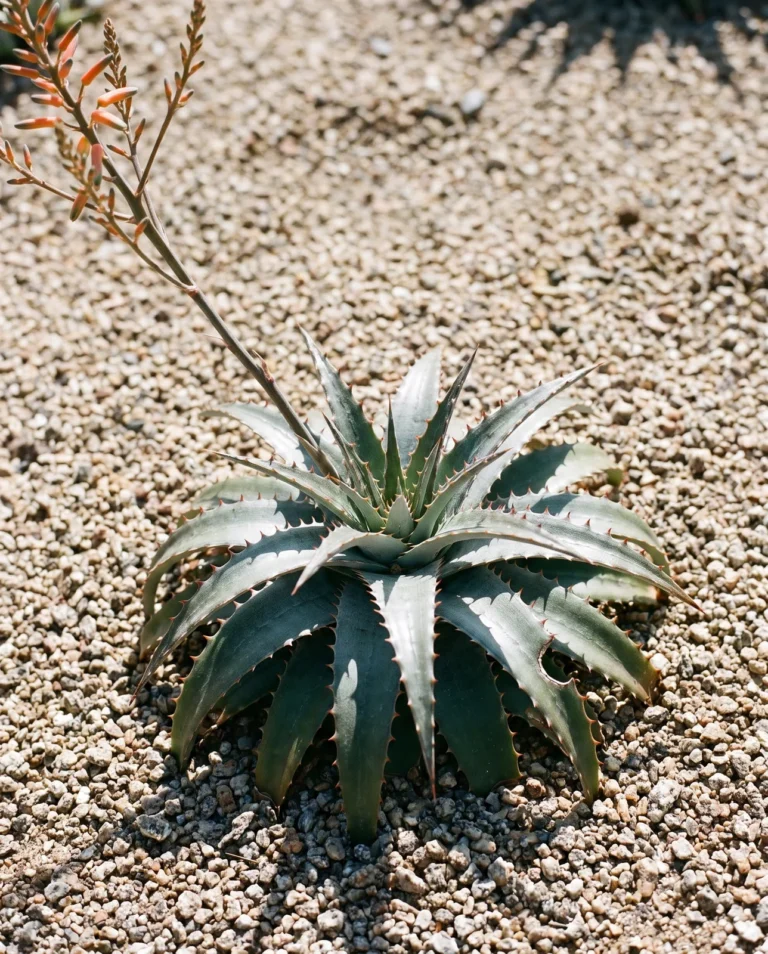
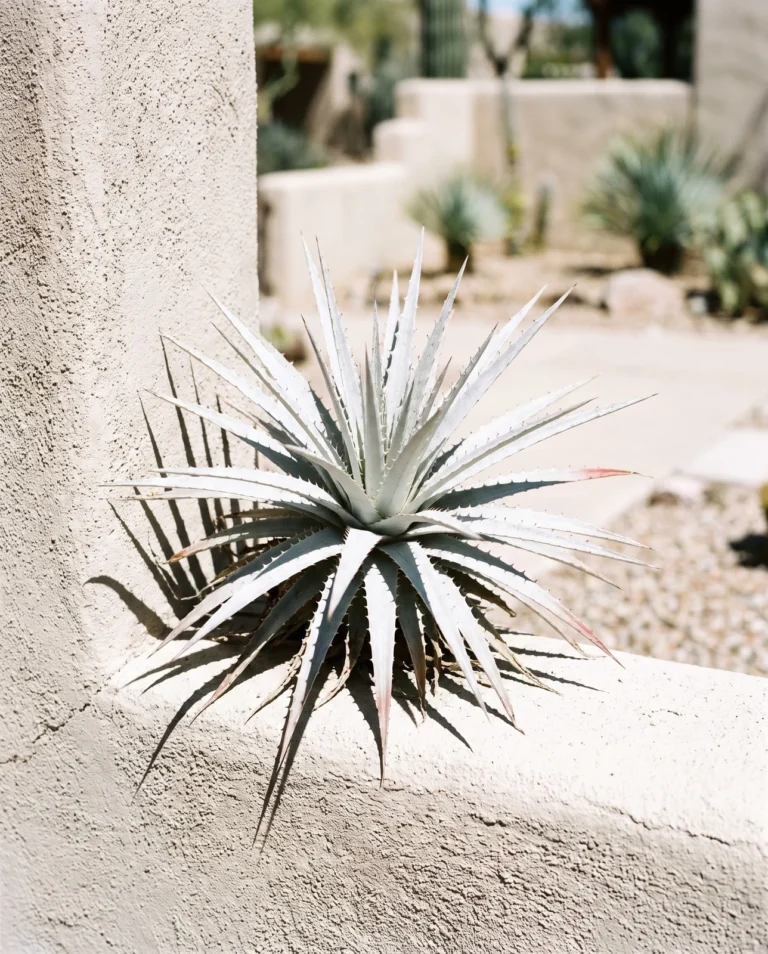
The rest of the family has no tank, so filling one is not an option. A Dyckia rosette holds no water at all. Cryptanthus, the earth star, is terrestrial too, with a nearly flat rosette that holds nothing. Hechtia wants full sun in the home. Tillandsia, the air plants, are the largest group in the family at 550 described epiphytic species. For less mosquito habitat, plant a genus with no tank: Cryptanthus, or some Tillandsia.
Watering the cup, the pot, and how often to flush
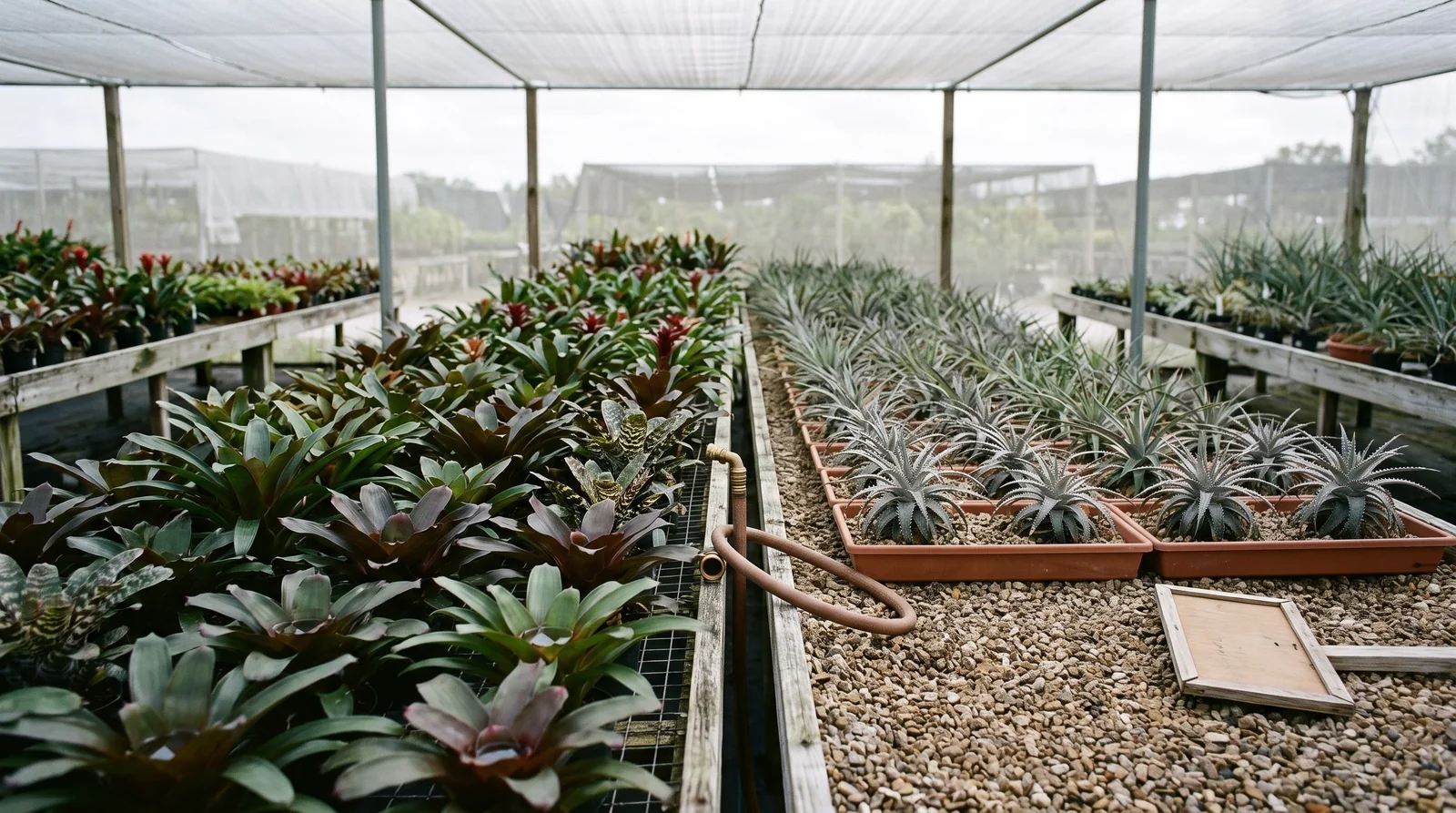
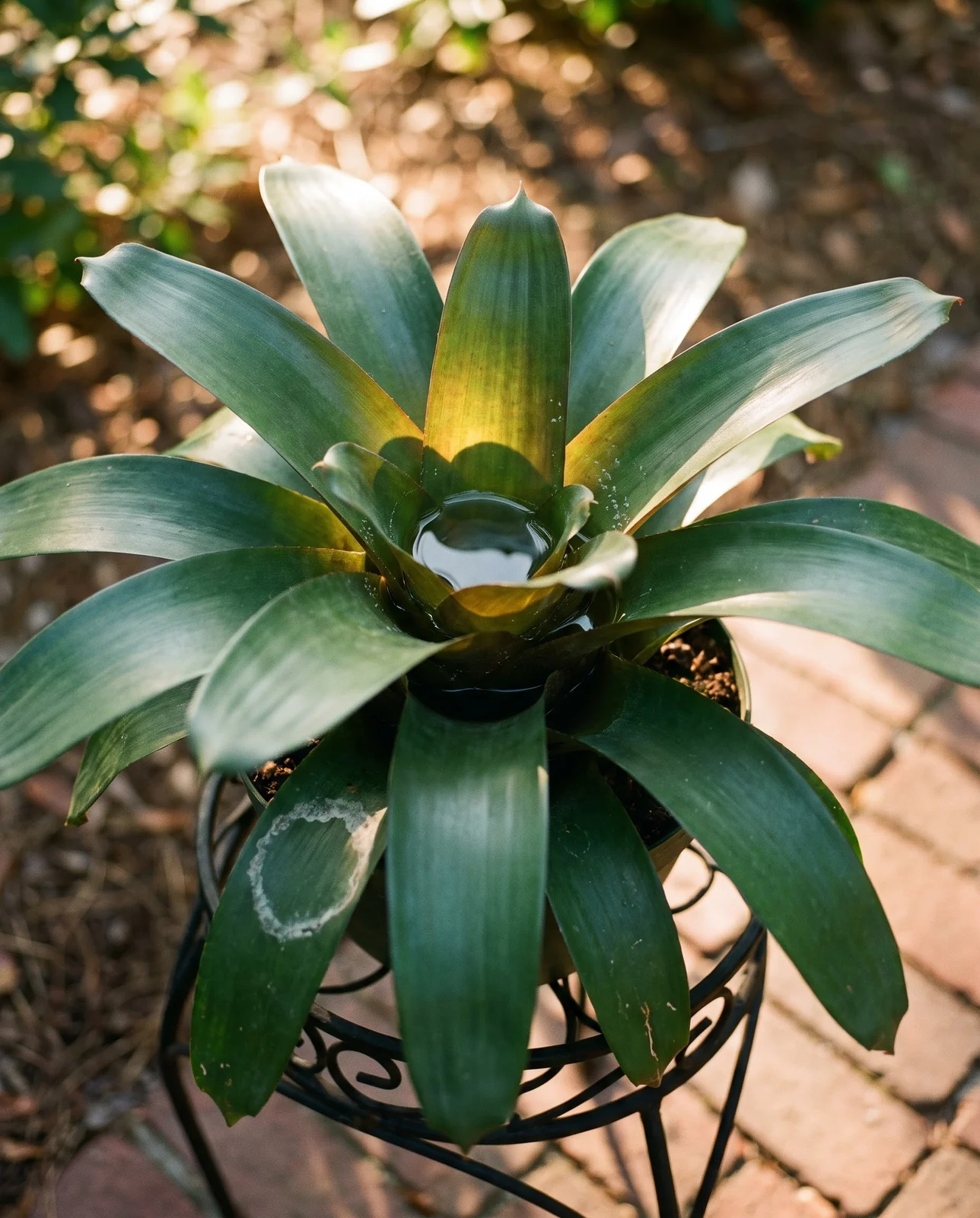
For a tank type most of the water goes into the cup and very little into the pot. How full to keep that cup has two answers. One fills the tank and keeps it filled, with the fill water off the soil and a periodic flush: pour fresh water in, invert the plant, fill again. That clears stagnation and salt buildup. The other lets an indoor cup run slightly dry between waterings, and saves daily flushing for plants outdoors and in greenhouses. One warning covers both: never keep the cup full and the root zone damp at the same time.
The potting mix is a smaller question. Let it dry between waterings, since a wet mix rots Guzmania at the root. Water less in winter, and keep the cup fuller through summer. Epiphytic types get no water on the soil at all. The leaves sit in what you pour, so water quality counts. Softened water carries sodium and is best kept away. Bromeliads prefer water on the acid side, pH 4.0 to 7.0, and miniature species want distilled water always.
For the tankless genera the answer flips. A Dyckia tolerates months of drought, then takes copious water through the growing season. Standing water in the cup is a household matter too. Mosquito eggs need water to hatch, and the larval and pupal stages are aquatic, developing in the water filled tanks and leaf axils. In Florida that includes the invasive Aedes aegypti and Aedes albopictus. Outdoors, send fresh water through the cups from time to time and the larvae go with it.
Light, warmth, and where the plant should stand
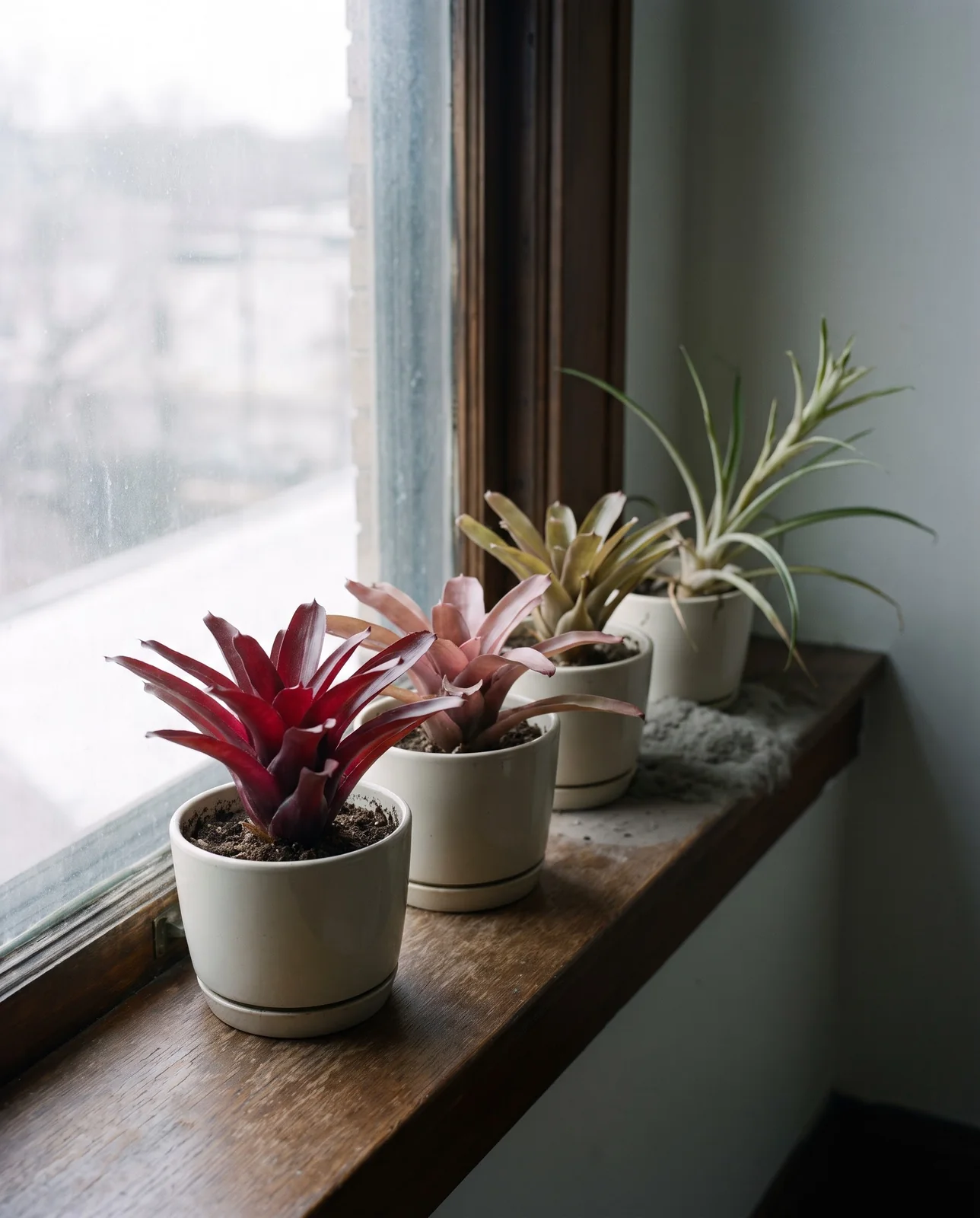
Most bromeliads want bright light without direct sun. The working rule is to give one as much light as it takes without burning or bleaching, for 12 to 16 hours a day. The plant tells you which way it is wrong. Too little light makes the leaves long, thin and greener, too much makes them shorter, thicker and paler. Brown leaf tips can be plain sun scorch. Tolerance varies by genus: Guzmania does well in low light and under artificial light, Dyckia wants it very bright.
The optimum is 70 to 90 degrees Fahrenheit by day and 50 to 65 at night, with relative humidity of 50 to 75 percent. Misting will not get you there, and wet foliage invites fungal problems. Air plants are the exception, and they want the water on the leaves: mist them every two to three days, or soak the whole plant for half an hour every week to ten days. Even then a mist alone falls short of the humidity they want. Outdoors is a summer arrangement only, since no bromeliad survives freezing.
What happens after the flower fades
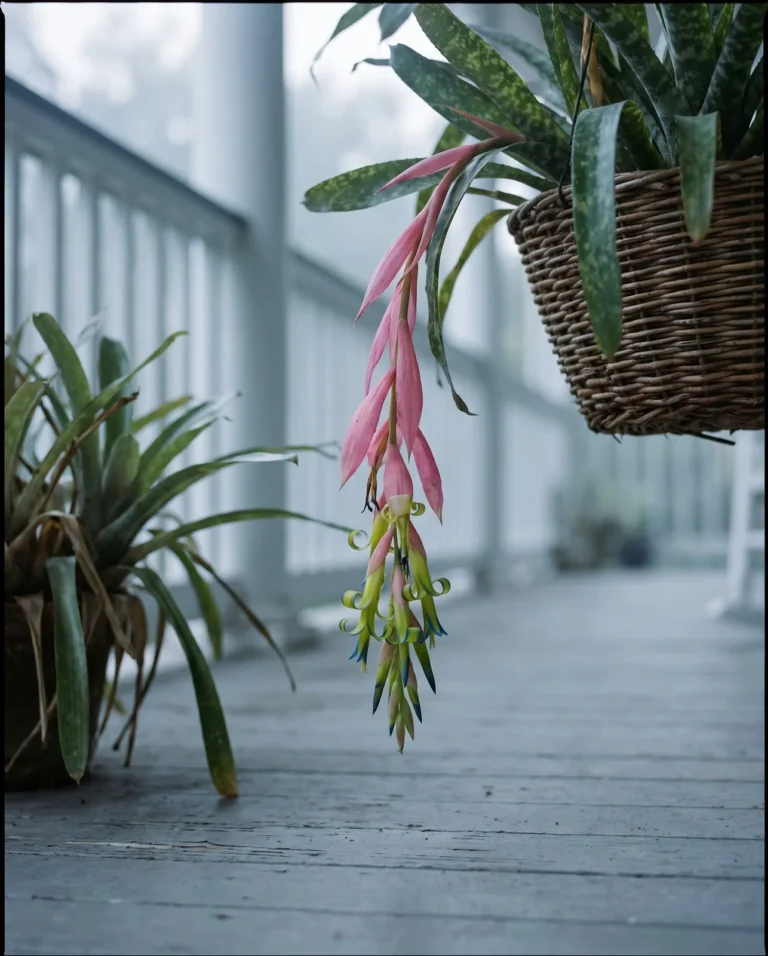
The colored part of a bromeliad is not the flower, and it does not come back. What holds color for months is a set of bracts, modified leaves, with the true flowers small inside them. How long it lasts depends on the genus. A Guzmania often holds color for two to four months. Urn plant bracts stay showy for several months, up to six. Tillandsia runs from a couple of weeks to a full year by species. Billbergia's hanging spikes last only a fortnight, so it is grown as a foliage plant.
Most rosettes will not flower a second time. A peace lily flowers again from the same crown year after year; a bromeliad shoot blooms once and dies, and the offshoots take over. The apple trick is real, and it is aimed at a plant that has never bloomed. Seal a mature urn plant into a clear bag with a ripe apple for one to two weeks, out of the sun. Flowering follows in six to fourteen weeks depending on the type. It starts a first bloom on a plant old enough to carry one. It brings nothing back.
How to take a pup off the mother
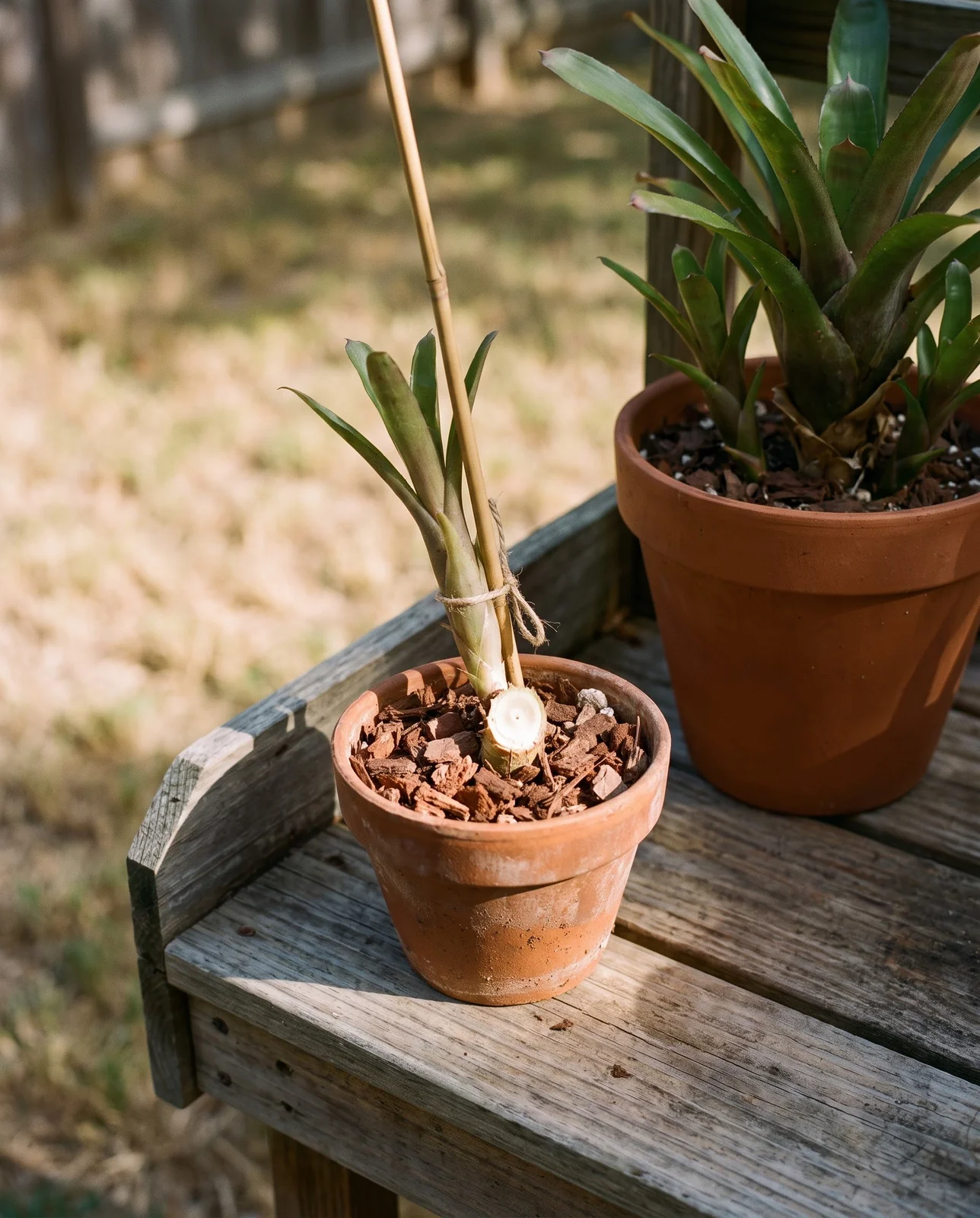
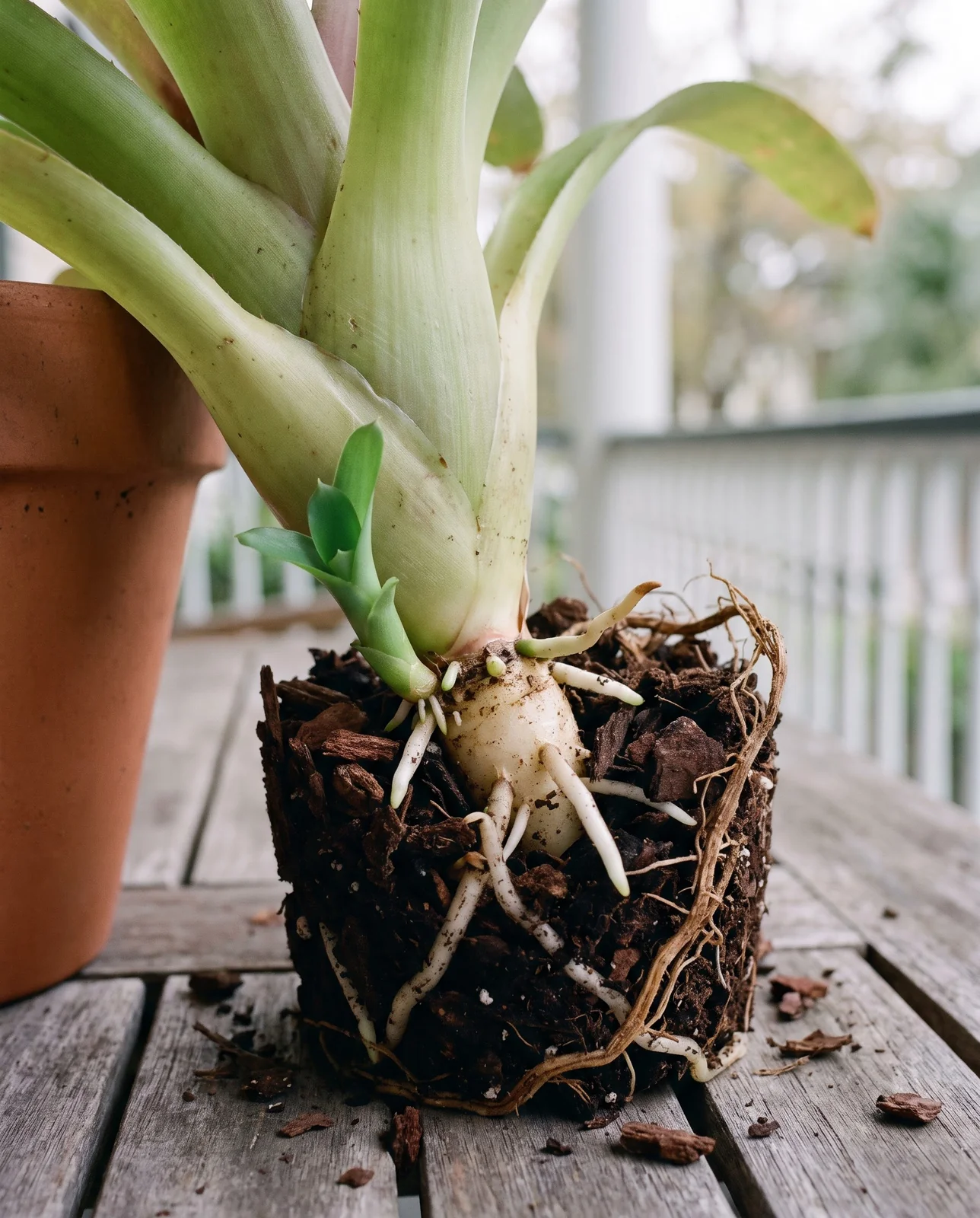
The pup is the plant you keep, and the mother is the packaging it arrived in.
Is it dying, or is this normal?
Several things make a bromeliad look like it is dying, and they need different answers. Stop at the first line that matches.
What actually goes wrong
Too much or too little water, plus insects and mites, are the main problems bromeliads meet indoors.
Symptoms: the bloom goes over, the outer leaves dry, and pups swell at the base. Cause: the rosette is monocarpic and finished. What to do: nothing helps that rosette. Keep it in good light while the pups size up.
Symptoms: a base that will not hold the plant up, and no pups. Cause: a root zone that stayed wet. What to do: there is no cure once confirmed, so the work is prevention. Let the mix dry between waterings; urn plants are likeliest to rot during propagation.
Symptoms: larvae swimming in the tank or down in the axils. Cause: water left standing too long. What to do: sprinkle Bti granules into the cups, sold with methoprene as larvicides in home and garden stores. Pulling the plants out is not the answer, since the data do not support it as vector control.
Symptoms: crusted or sticky patches in the leaf axils, fine webbing in dry air, spotting on the leaves. Cause: sap feeders sheltering where the leaf bases overlap. What to do: part the axils and look there. Guzmania takes leaf spots, scale, spider mites and mealybugs, Neoregelia aphids, thrips and scale, Cryptanthus mealybugs and scale.
Symptoms: a pup grown on for a year or more with no spike. Cause: too little light, or too little time. What to do: stand it outside from April to October, in morning sun and afternoon shade.
Bromeliad types, genus by genus
A supermarket label almost never gives the genus, and the genus decides the light and the water. Buyers pick by the color of the bract, so one shelf of red flowering plants can hold several genera at once.
Are bromeliads toxic to cats and dogs?
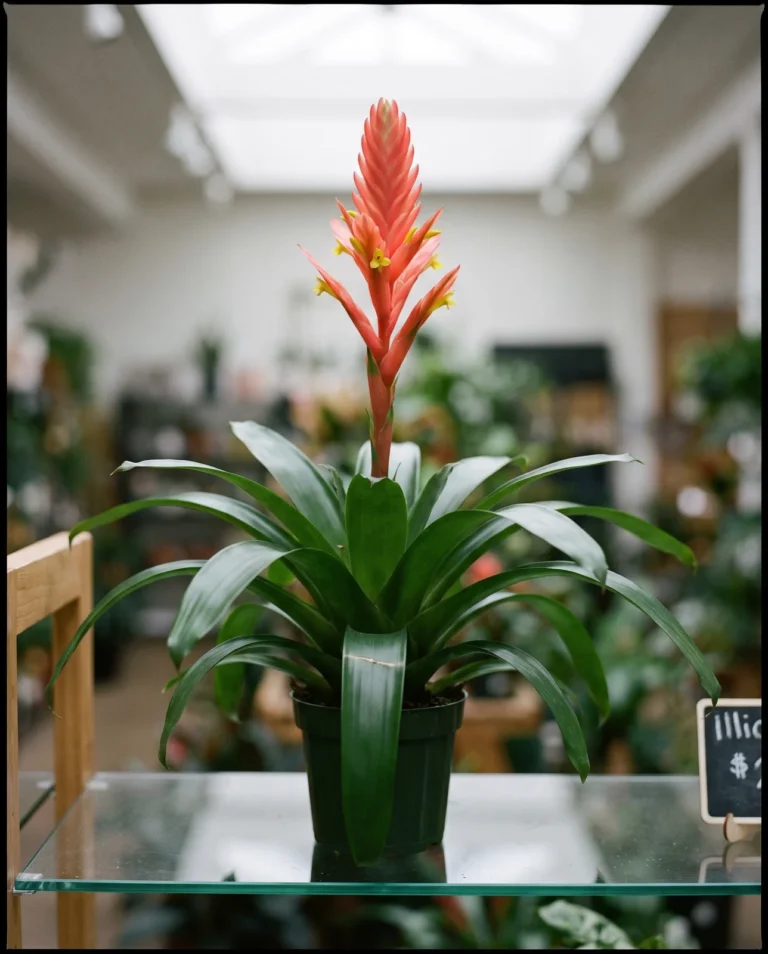
The bromeliads that have been tested come back non-toxic, and the rest have simply never been tested. ASPCA carries Guzmania under the trade name Orange Star, non-toxic to dogs, cats and horses, and again as Mosaic Vase. Neoregelia is there under half a dozen common names at once, Blushing Bromeliad and Crimson Cup among them, non-toxic to dogs and cats. So the two genera most often sold as houseplants are both clear. Nothing else in the family appears on the list at all. The real hazard in a house with animals is mechanical: an urn plant carries sharp teeth down every leaf margin, and a cat that pushes through a rosette finds them.
The mix, and why the pot should be small
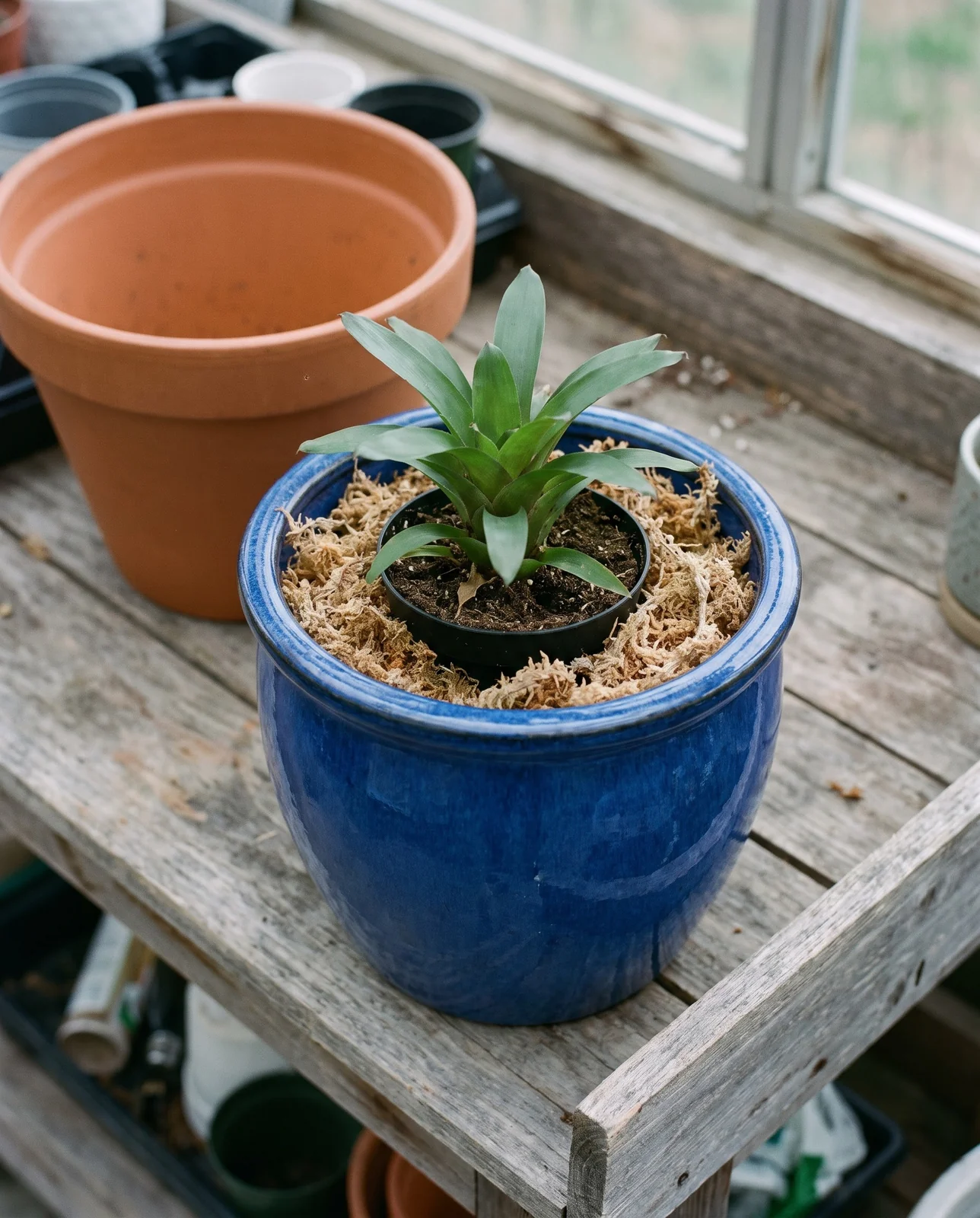
The mix in a bromeliad pot holds the plant steady and does not supply the roots with water and nutrients, so ordinary potting soil is the wrong thing to reach for. Garden soil does not belong in it at all, since almost any acidic, moisture holding, fast draining mix does that work. Two recipes work: orchid bark with coarse perlite and humus, the blend sold for Cymbidium orchids, or one part peat, one part bark, one part coarse sand. Pot size matters more than either of them. Bromeliad root systems are small, so the pot should be much smaller than one used for another plant of the same size. A larger container goes on the outside as a support sleeve, which keeps a top heavy Vriesea from going over.
Feeding, and how little it takes
Bromeliads are fed lightly or not at all, and the schedules differ only in how light. The heaviest calls for frequent feeding with an acidic, water soluble fertilizer at a quarter to an eighth of label strength, drenching medium, foliage and central tank together. The lighter one holds at half strength or less through the summer, misted onto the leaves. Neoregelia takes very light feeding or none at all as it nears maturity. One point in the heaviest schedule contradicts a common warning: the central tank is part of the drench. Fertilizer in the cup is not the error it is often called, as long as the dilution is weak.
Pests, and the one disease that kills
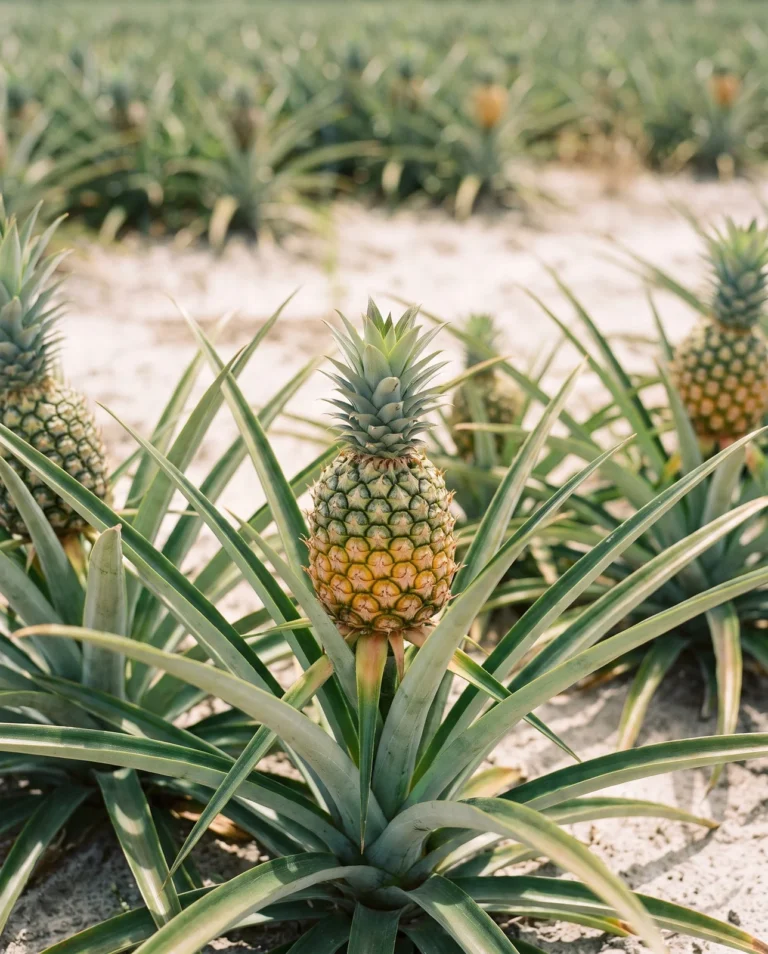
Bromeliads carry few real diseases. Much of what gets called one is something else: a bract running out of color, a spent mother, or larvae in the cup. Rot is the disease that matters. The insects are sap feeders that work down in the leaf axils, and the same short list repeats from one genus to the next. The pineapple is the exception, carrying significant wilt and root rot on top of nematodes, scale, thrips and mealybugs. Dry indoor air favors the mites. Everything else on the list answers to how the pot and the cup are watered.
Growing bromeliads outdoors
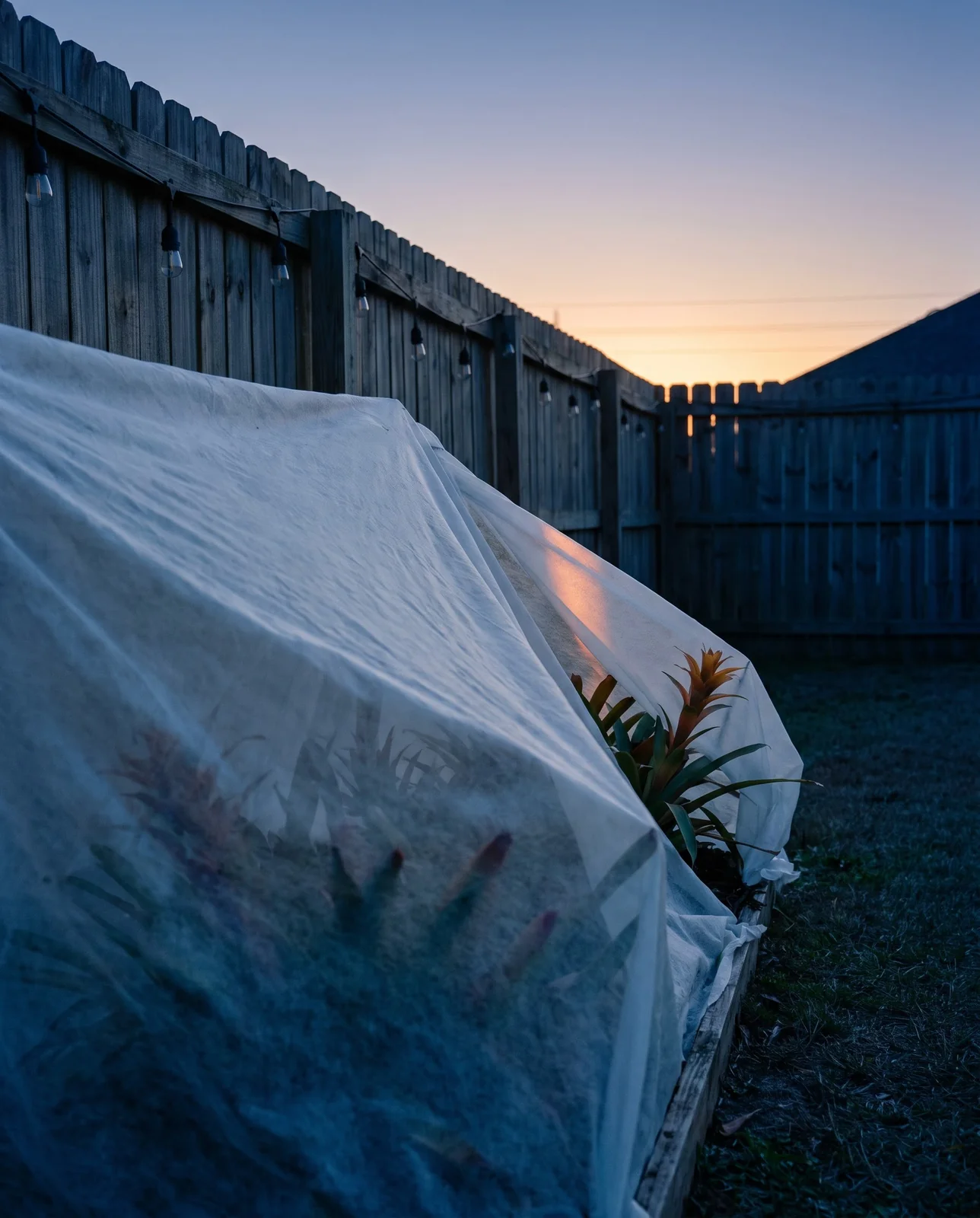
Bromeliads live outside year round only in the warmest corners of the country, in zones 10 to 12 and no colder. Florida is the one state with a wild population of its own: 16 native species and two natural hybrids, all of them epiphytes. Cold tolerance is uneven. Thicker leaves generally mean more cold, which puts many Dyckia species on the tougher end with some Aechmea, Nidularium and Vriesea. Puya survives to 20 degrees Fahrenheit. In any doubt, throw frost cloth or a blanket over the plant. A plant summering outside wants part of the day in shade. Freezing ends any bromeliad, so one cold night settles the whole exercise.
How long a bromeliad lasts
How long a bromeliad lasts has two answers, and only one of them ends. The rosette on the shelf is finite: it flowers once, and then it goes. The line it leaves behind is not. A separated pup reaches its own bloom in one to three years, flowers, and pushes pups in turn. A pot holds a living plant for as long as somebody keeps dividing it. Among the types of flowers grown indoors that is an unusual arrangement. Bromeliads are fairly long lived and slow growing, and they survive for months or even years in conditions well short of ideal.
Myths worth dropping
Five things get repeated about bromeliads that send the owner the wrong way at the moment it matters most.
The myth: The mother went brown because you overwatered it.
The reality: A one-time bloom and the slow death after it are the normal course, and the advice that goes with it is not to panic. Water kills differently: no pups form at all.
The myth: The cup should be kept full to the brim at all times.
The reality: An indoor cup can do better run slightly dry between waterings, with daily flushing left to outdoor plants. A low-maintenance Guzmania needs only a little water in the cup once a week. The combination to avoid is a full cup over a damp root zone.
The myth: Misting raises the humidity around the plant.
The reality: Misting waters the plant, but it does not raise the humidity around it. For the air plants the humidity has to come another way, since misting alone is not adequate for what they need.
The myth: Feed it well and it will flower again.
The reality: After flowering the parent declines and dies while its offshoots renew the plant, and fertilizer does not reach that decision. What heavy feeding does reach is the foliage: on Neoregelia it turns the colored leaves plain green.
The myth: All bromeliads are air plants that need no soil.
The reality: About half the family grows on trees or rocks and the other half roots in the ground. The true air plants are one genus, Tillandsia, among the 56 or more the family holds.
What to expect, year by year
One rosette, one bloom, and then the pot changes hands. This is the shape of the first few years with a bromeliad bought in flower.
The first phase, in bloom. The plant arrives at the top of its display and holds it, and nothing asks for a decision. The color sits in the bracts, modified leaves, and it drains slowly and unevenly, never dropping the way a cut flower does.
The fade, and the first pups. As the main bract goes over, the mother begins to decline while pups develop around her base. The dieback is slow enough to look like a problem when it is not one. This is the stretch where the plant looks worst and asks for least. Keep it in light and let the pups reach about a third of the mother's size.
The pup's own bloom. A separated pup flowers one to three years after it leaves the mother, and then it all happens again in the same pot. The plant on the shelf years later is a descendant of the one that came home in a sleeve.
FAQ
Is a bromeliad a good indoor plant?
For most rooms, yes. They are long lived and slow growing, they hold on in conditions well short of ideal, and the genera most often sold are non-toxic to dogs and cats. The catch is that the rosette flowers once and then dies.
How do you take care of a potted bromeliad?
Water into the cup and let the mix dry between waterings. Feed weakly if at all, at a quarter to an eighth of label strength. A Dyckia has no reservoir to fill, so it takes water differently.
What do you do with a bromeliad after it blooms?
Leave it in light and wait for pups: the parent dies while its offshoots renew the plant. Take a pup at about a third of the mother's size, cut it at the base with a sharp sterile tool, and pot it in a 3 or 4 inch pot of fast draining mix.
How long will a bromeliad last?
The rosette you bought lasts through one bloom and then declines. The pot can continue indefinitely, since each separated pup flowers one to three years later and makes pups of its own.
Should bromeliads always have water in cups?
Not always, and not every bromeliad has a cup. Keeping the tank filled with a periodic flush works, and so does letting an indoor cup run slightly dry between waterings. Avoid a full cup over a damp root zone.
What does an overwatered bromeliad look like?
A base that keeps disintegrating, lower leaves dying where they attach, and no pups forming at all. That last part is the tell, since a rosette finishing normally leaves pups behind.
How do you save a dying bromeliad plant?
It depends what is dying. A spent mother cannot be saved and does not need to be, and crown rot cannot be treated once confirmed. The line can still be saved: a plant with rotted roots pushes pups if it gets enough light.
What are common problems with bromeliad pups?
Size and roots. Separation is fair from a quarter of the mother to a half, a third being the usual call. No roots is not a problem, since a potted pup forms its own. A wobbly one gets staked, never buried deeper.
How do I know what kind of bromeliad I have?
Look at the leaf edges and the spike. Sharp teeth with a broad bowl-shaped rosette point to Aechmea; color in the leaves with inconspicuous flowers to Neoregelia; a flat sword-shaped spike to Vriesea; a flat star-shaped rosette holding no water to Cryptanthus.
Do you water bromeliads from top or bottom?
From the top, into the funnel of leaves, for the tank genera, not onto the mix. Terrestrial types get their soil watered when it is dry to the touch.
Interesting tips
- The pineapple on the kitchen counter is a bromeliad, and it starts from the top. Twist the leafy crown off a store-bought fruit and remove any yellow fruit tissue. Dry it a day or two, root it in a moist mix or in water, then pot it in well-draining bromeliad soil.
- Mounting one on wood changes the routine. Many types can be fixed to decay-resistant wood, and a mounted plant wants higher humidity and more frequent watering than a potted one. An urn plant takes moss packed around the roots, wired to a board or a piece of bark.
- Labels are unreliable at genus level. Tillandsia cyanea gets sold as a terrestrial variety, though the genus is epiphytic. The rosette and the leaf edge tell you more than the tag does.
Related Guides & Flowers
Moth orchid
The other gift plant sold in full bloom, and one that flowers again from the same plant.
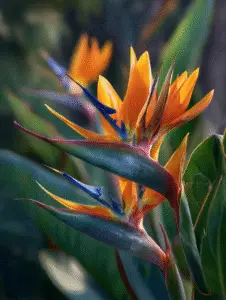
Bird of paradise
A warm-room tropical with the same light needs and a far larger footprint.
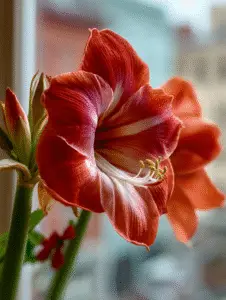
Amaryllis
Another pot plant whose next flower often comes from an offset rather than the original bulb.
Orange flowers
The color hub for orange bloom, from bedding annuals to long-holding bracts.
Enjoying our flower guides? Add YourFlowersGuide as a preferred source on Google. It helps more readers find us.
Add to Preferred Sources