Taxonomy and origin
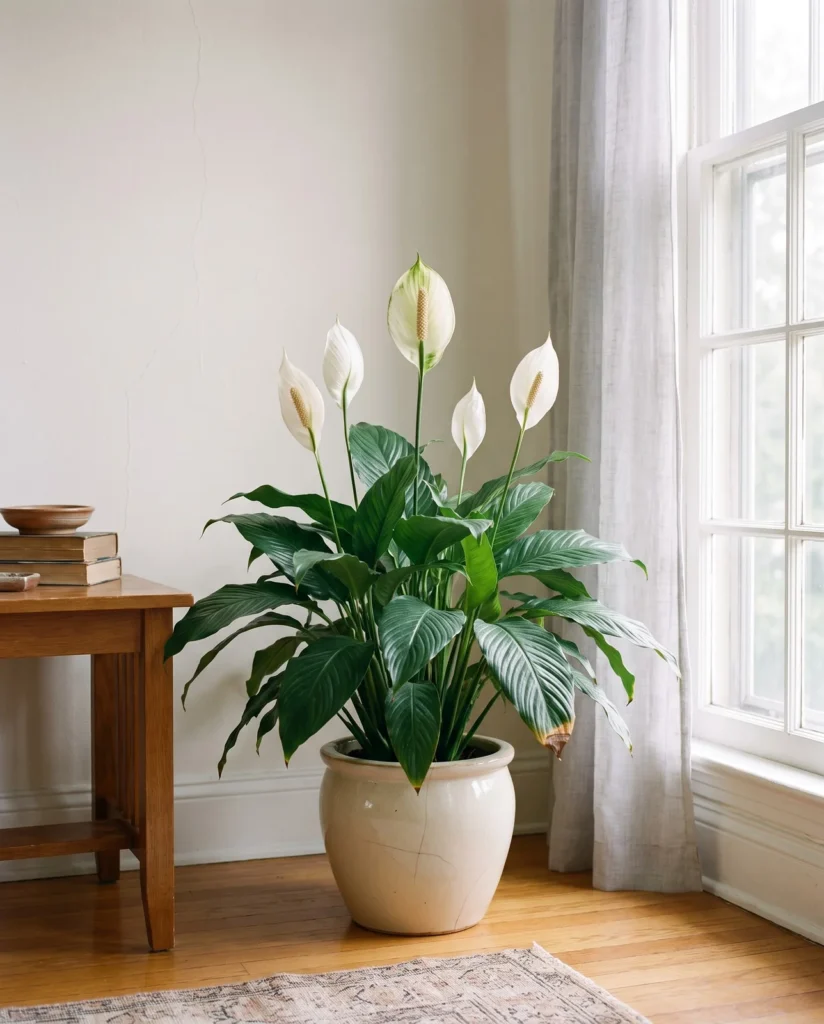
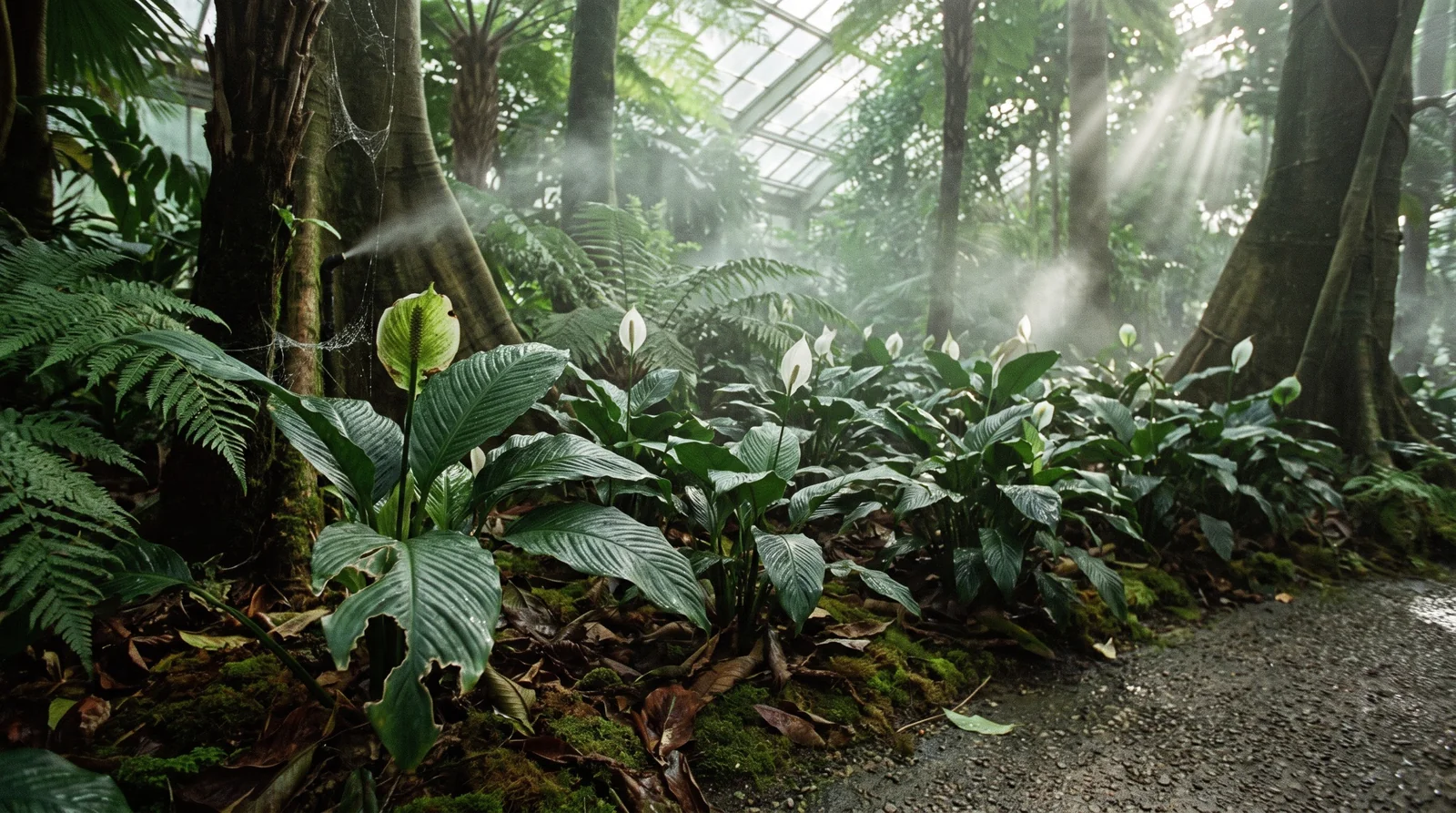
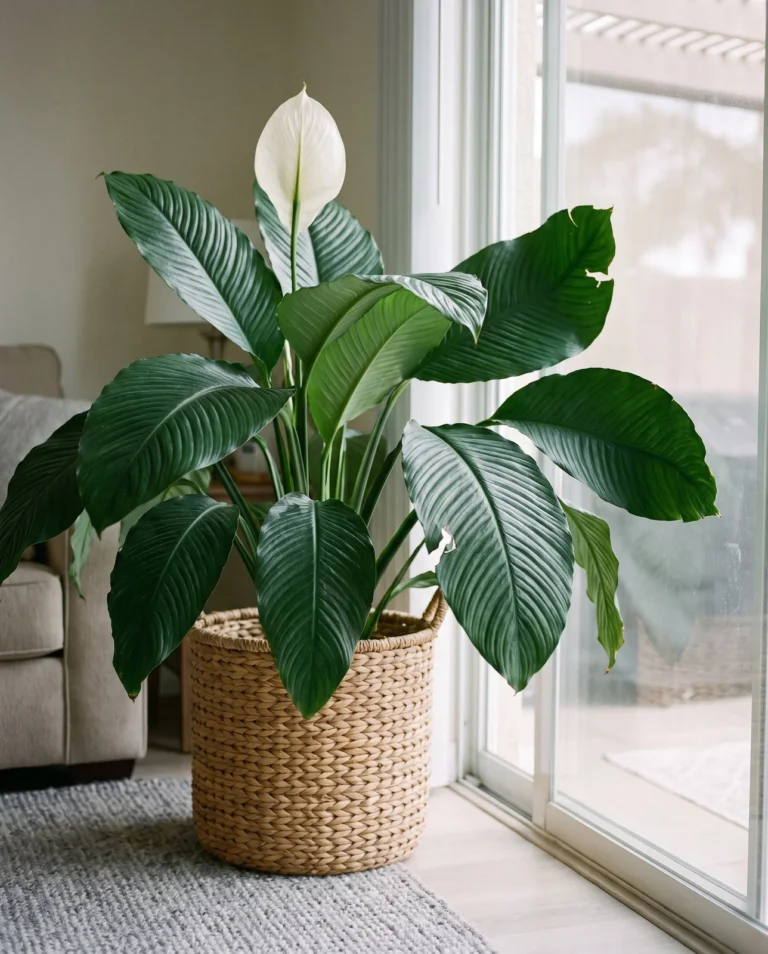
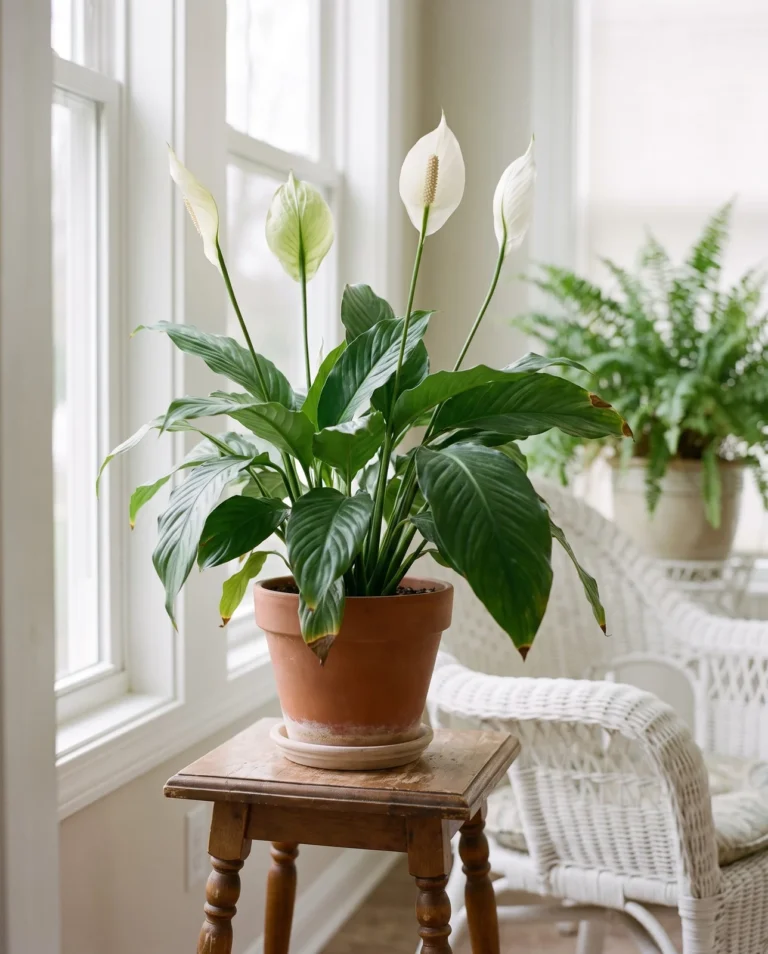
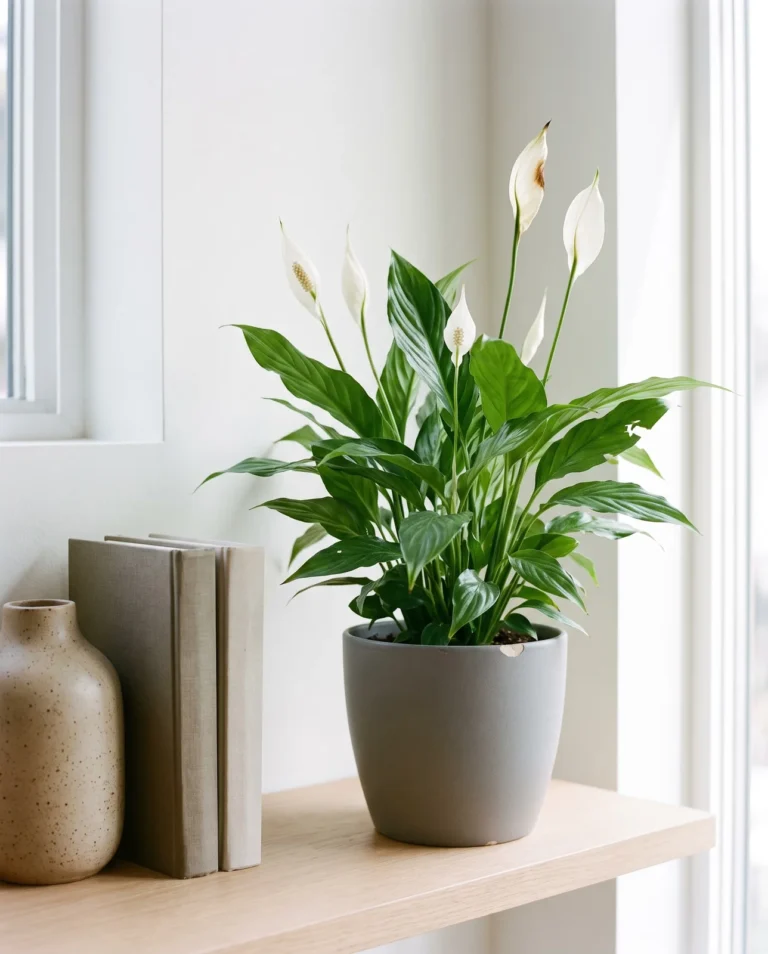
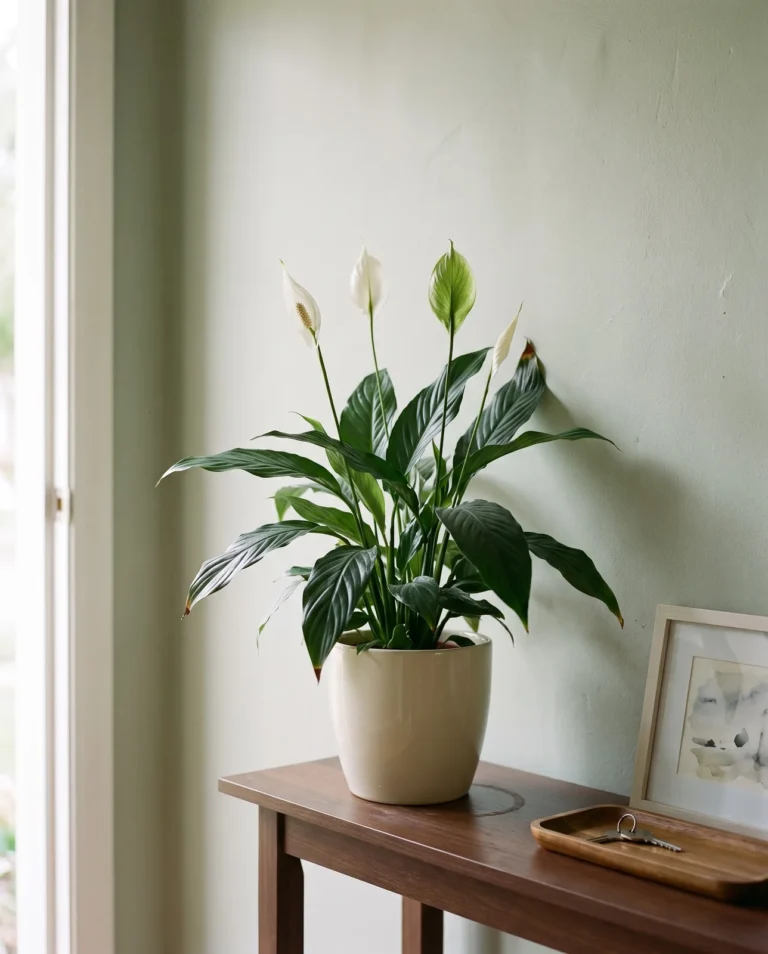
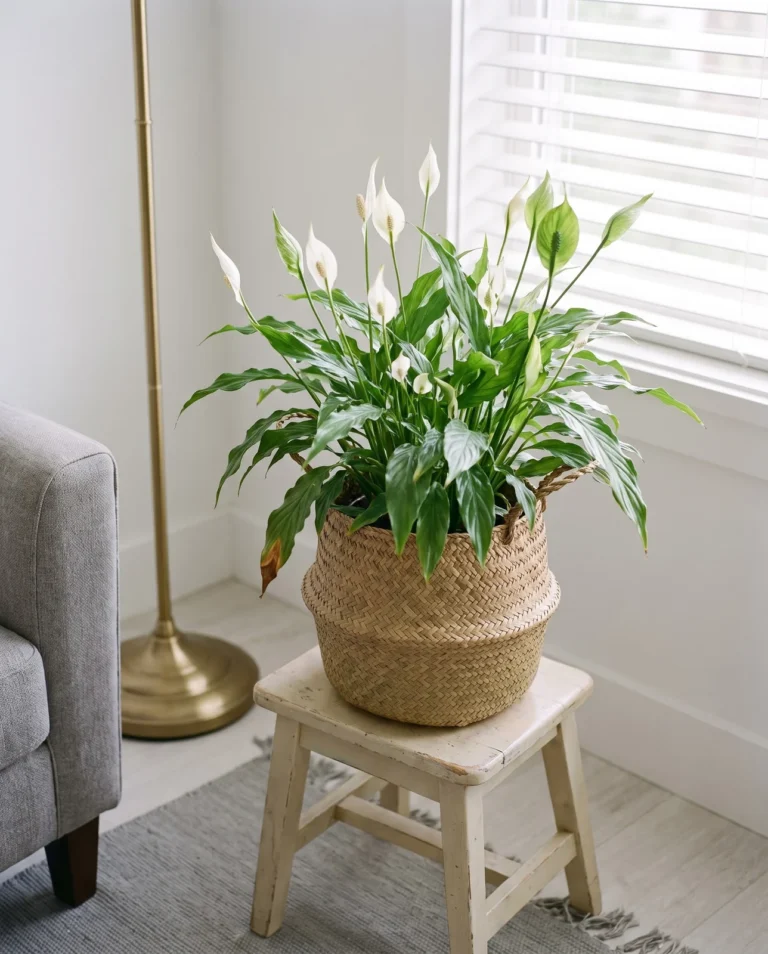
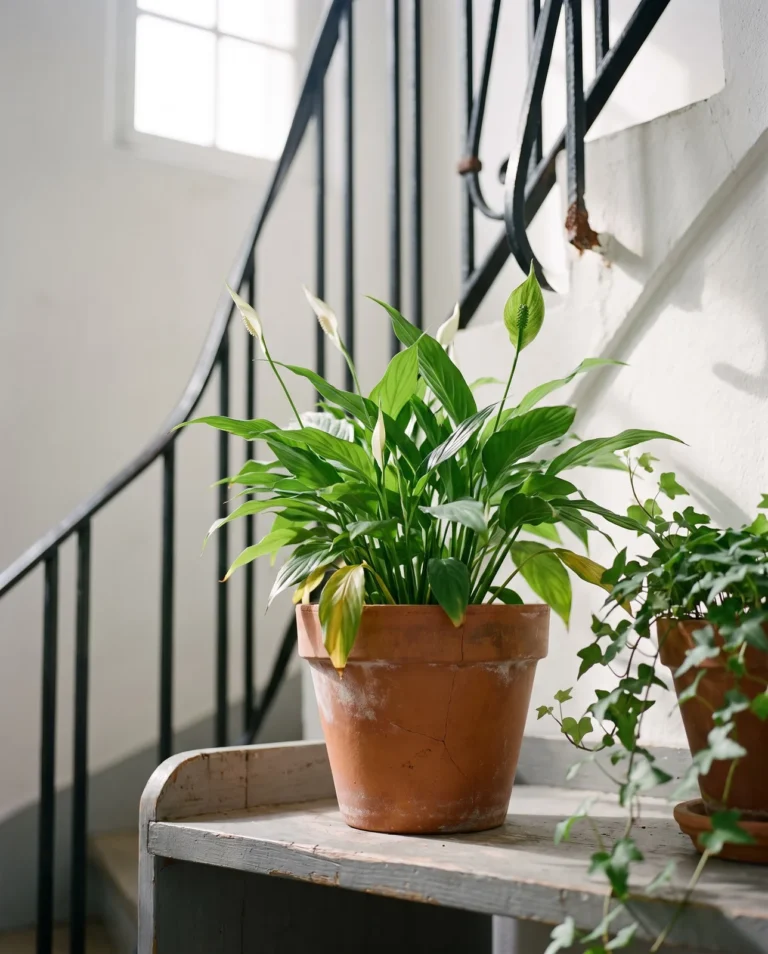
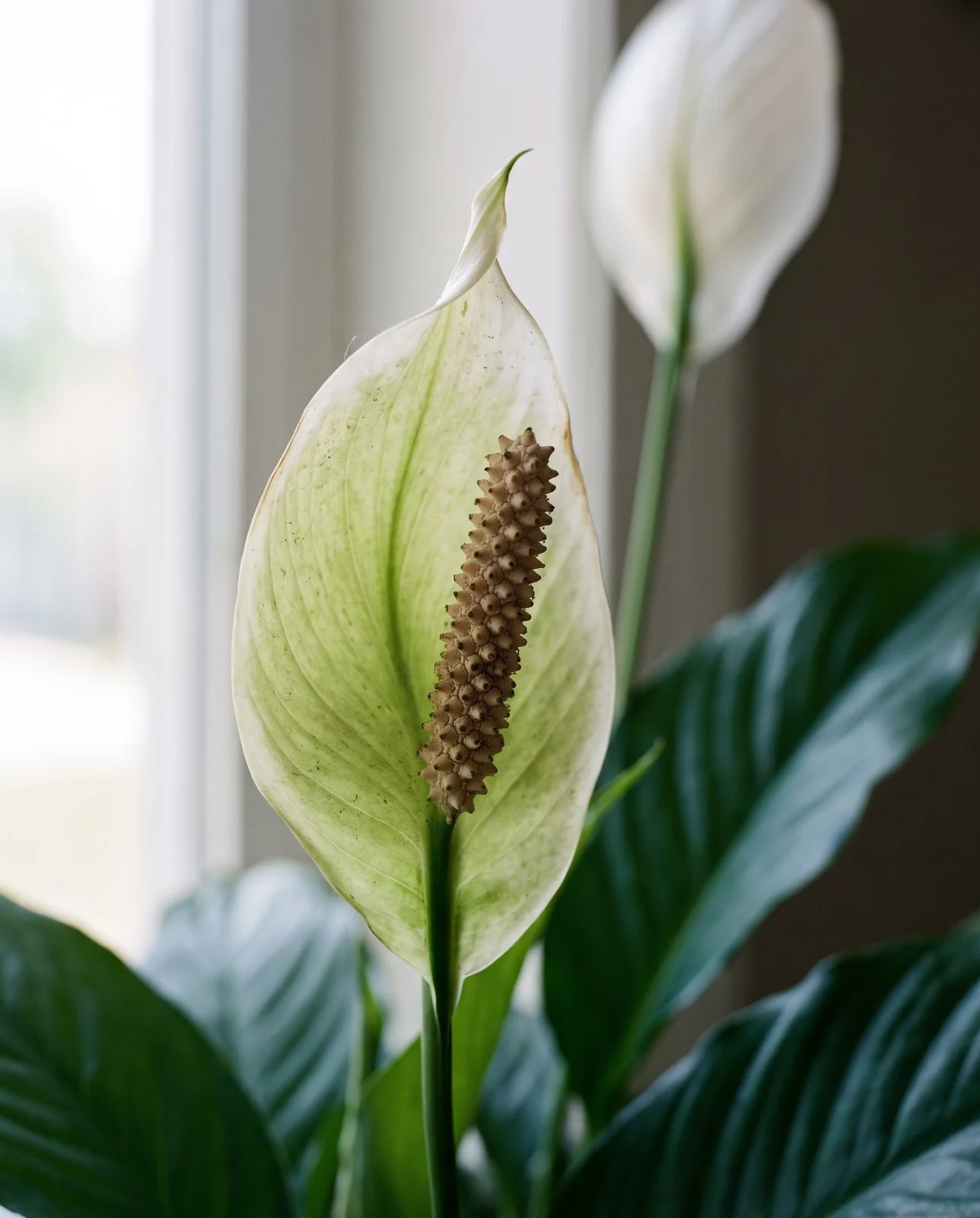
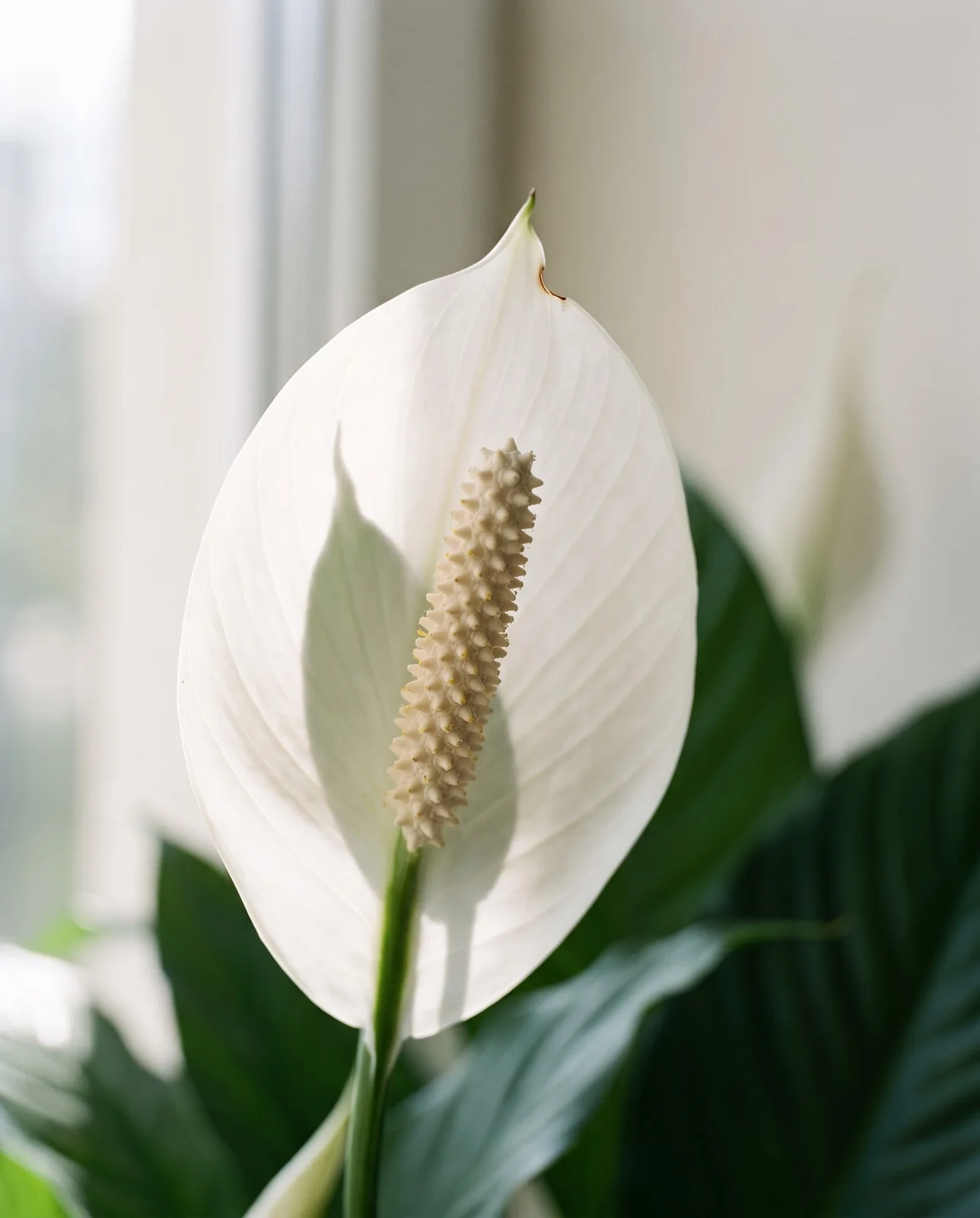
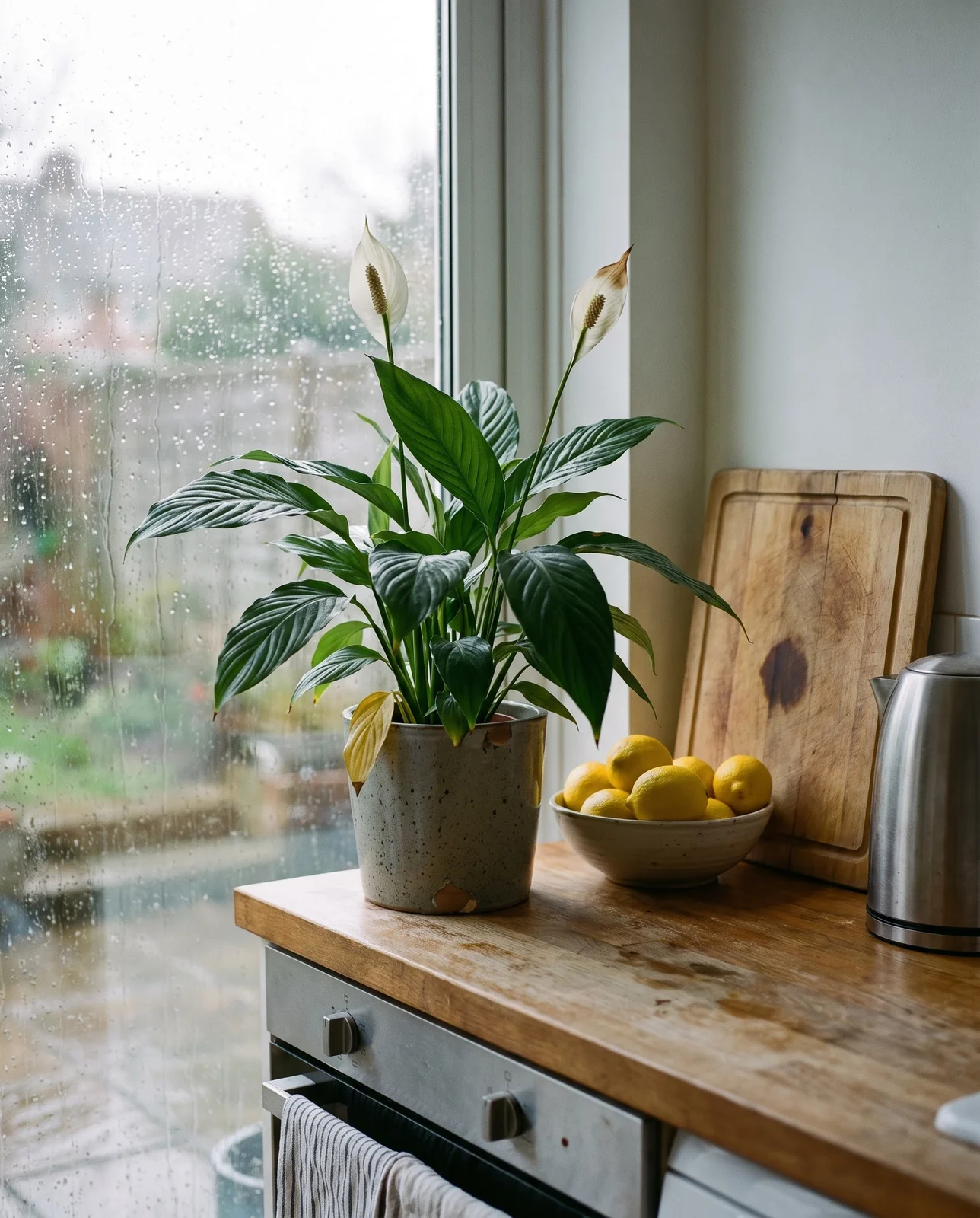
The peace lily is not a true lily. It belongs to the arum family, Araceae, alongside caladiums, elephant ears and callas. What everyone calls the flower is an inflorescence: a leaf-like spathe wrapped around a spike-like spadix. The white hood is a modified leaf, and the tiny true flowers sit on the cream spadix inside it. The sails stand 4 to 12 inches above the foliage. Leaves run 4 to 25 inches long in a basal rosette, so a mature plant reads as a mound rising from one crown. Tags sell it as spath, white sails or white anthurium, and that last name belongs to a different aroid, so peace lily and anthurium get confused on the same shelf. The species grow wild in humid understory shade from Panama and Colombia to the Philippines. A plant built for broken light under a canopy can live in a room, and the nickname closet plant followed.
Bloom time and the flower
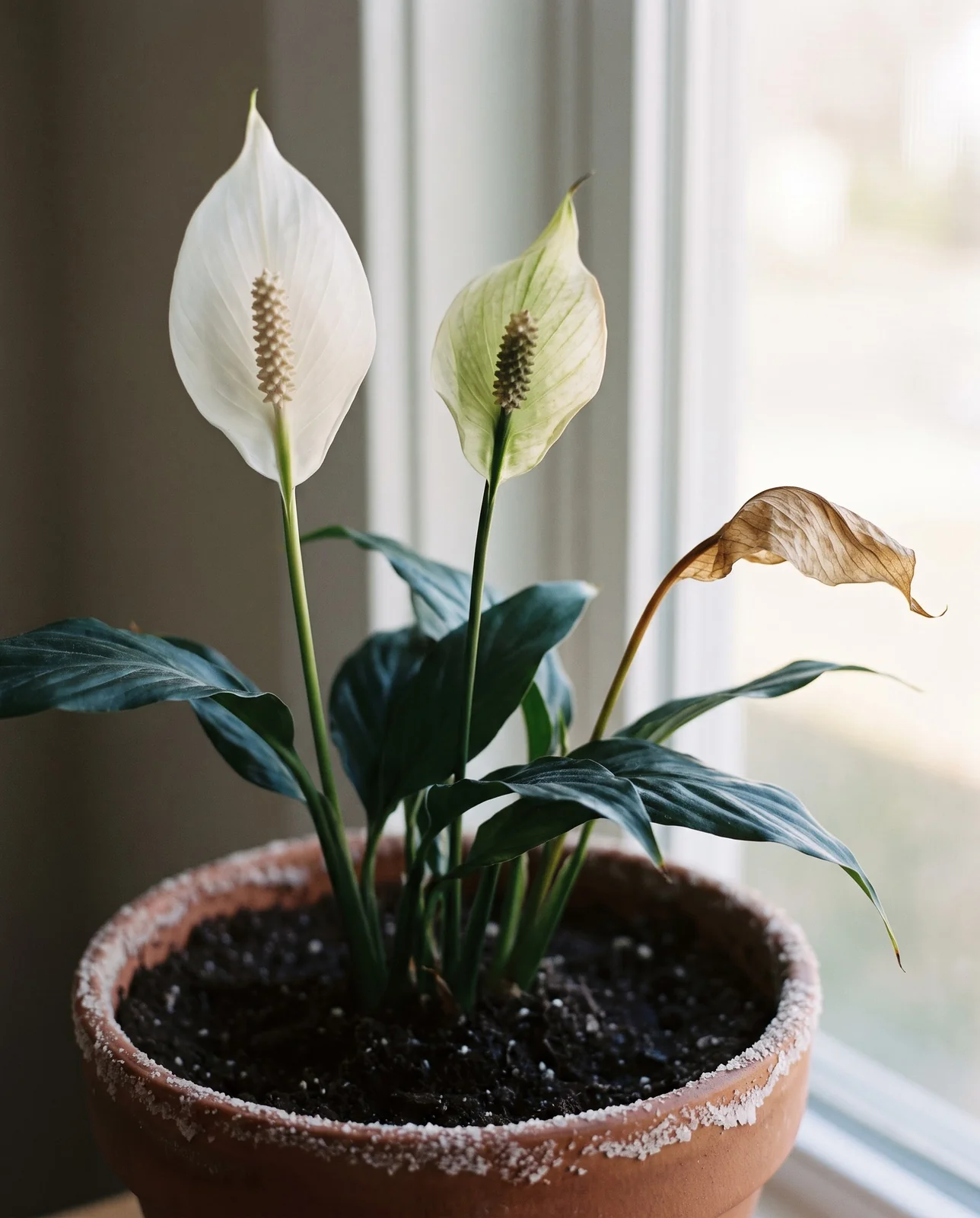
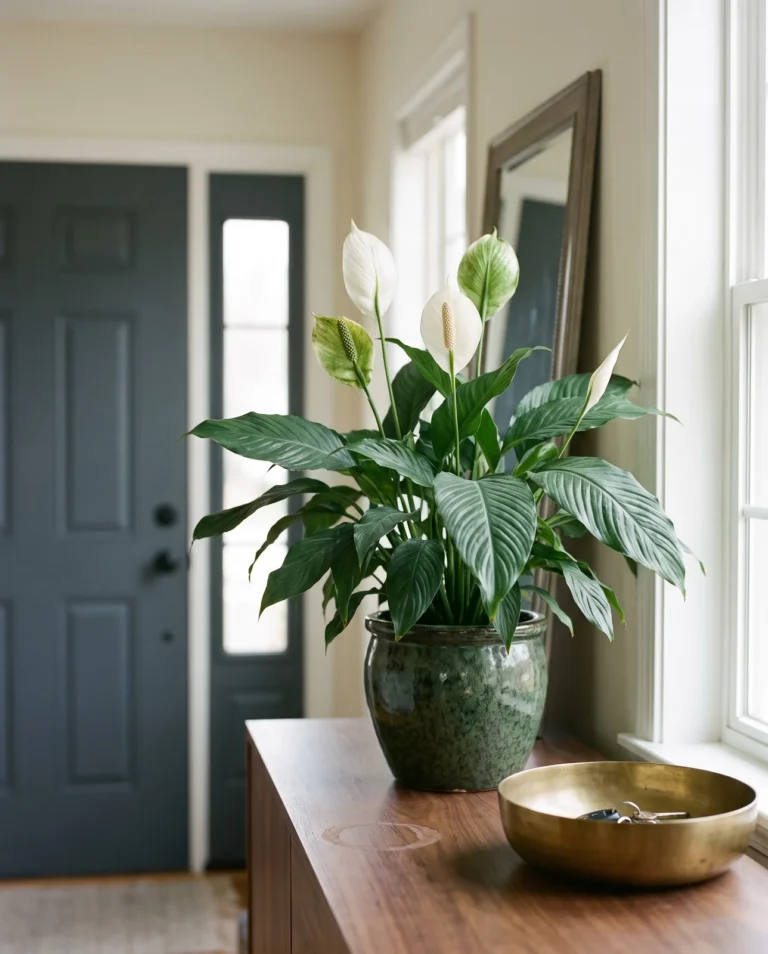
Most cultivars flower from January to August, and a plant grown on for 9 to 15 months usually blooms between February and April. Some keep no fixed season and flower freely. One bloom lasts about a month indoors. The spathe turns pale green after about 10 days and then holds for at least another month. That greening is age: the spathe pales as the flower gets older and finishes green. The blooms are lightly fragrant, and their shape is close enough to a calla lily that the two get compared constantly.
The reason a peace lily bloomed in the store and never again has little to do with the owner. A single foliar spray of gibberellic acid makes the plant flower, a trick out of the University of Florida in Apopka, and growers have used it at 250 parts per million ever since. Flowers appear 70 to 110 days later, whatever the season. Before the spray, a plant in bloom meant more than a year of growing to mature size in a large container. The buyer inherits the side effects: smaller flowers, a share of distorted blooms, stretched growth in some varieties and narrow strap-shaped new leaves.
Why a peace lily will not bloom
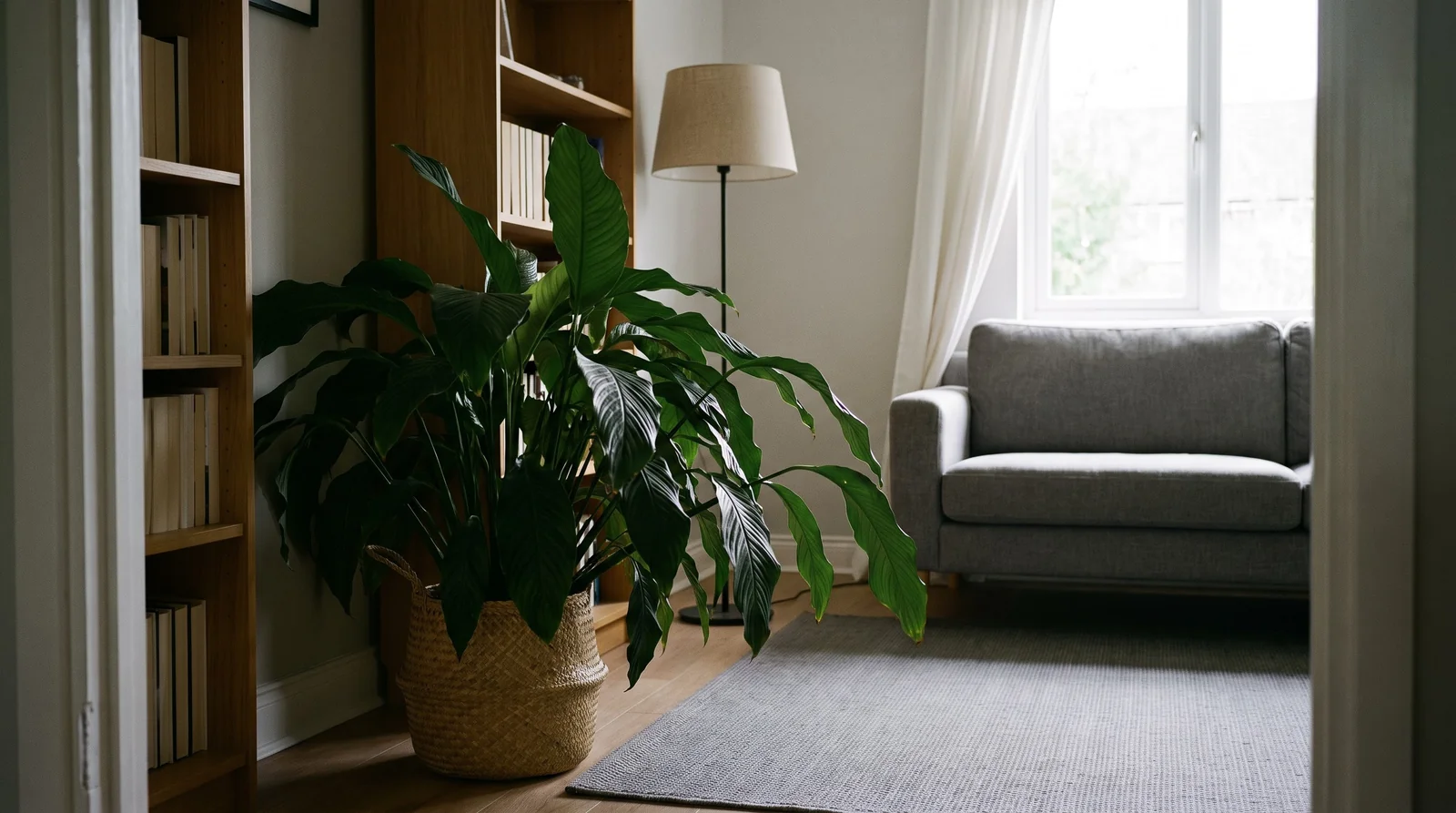
A peace lily that makes leaves and no flowers is short of light or short of age. Flowering fails when a plant is under a year old or standing in insufficient light. It will flower in low light, which few foliage plants do, but it flowers best in bright indirect light. Most disappointed owners sit in the gap between the two. Most cultivars, 'Petite', 'Tys Pride' and 'Viscount' among them, flower only after reaching the age their variety needs, and then only in spring and early summer.
Season, pot and feeding decide the rest. Buds for a spring bloom are set the previous December or January, so a winter in a cold dark corner has already cost the flower. Peace lily wants a large pot but likes to be kept somewhat pot-bound, and moving a sulking plant into a much bigger container keeps the mix wet and brings root rot. Blooms that open green mean too much nitrogen, so cut the fertilizer back. A feed sold for flowering carries more phosphorus, 15-30-15 against 20-20-20 for foliage, and phosphorus is what plants draw on to bloom. Fix the light in autumn and the flower, if it comes, arrives the following spring.
Bloom troubleshooting, in order
The first two checks settle most cases, and nothing below them matters while the light is wrong.
Varieties worth telling apart
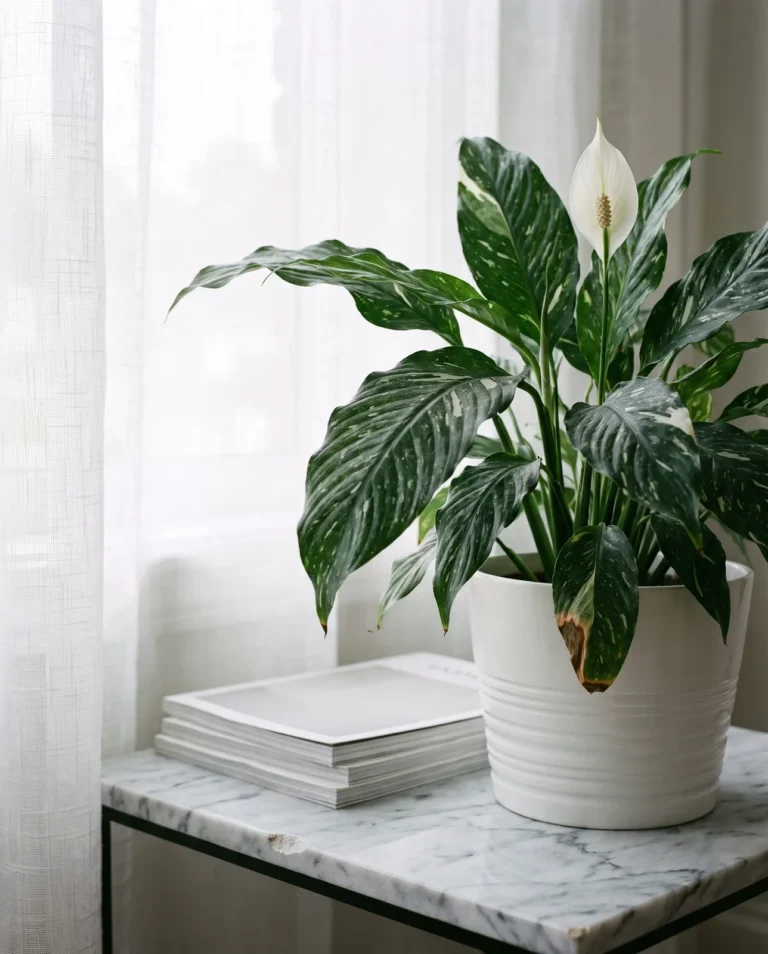
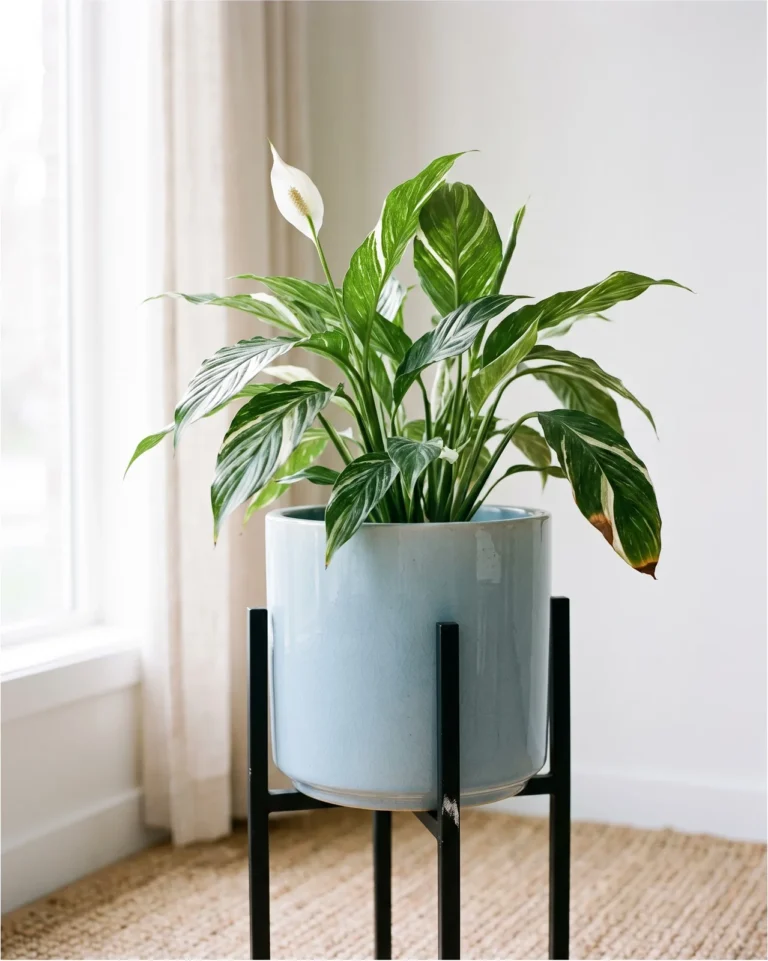
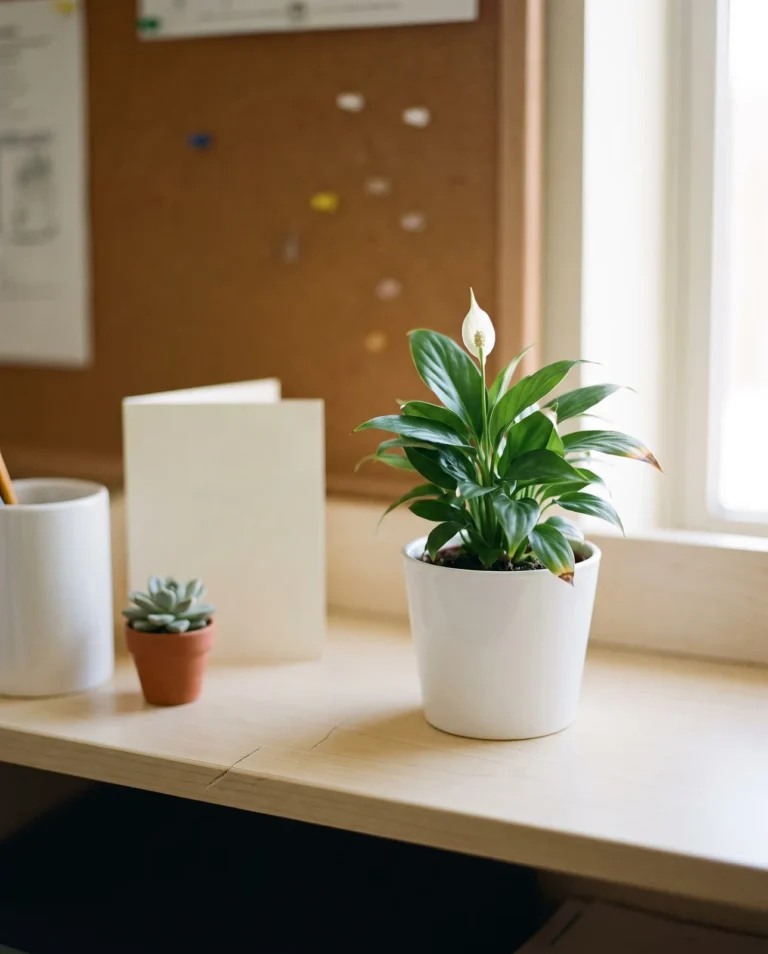
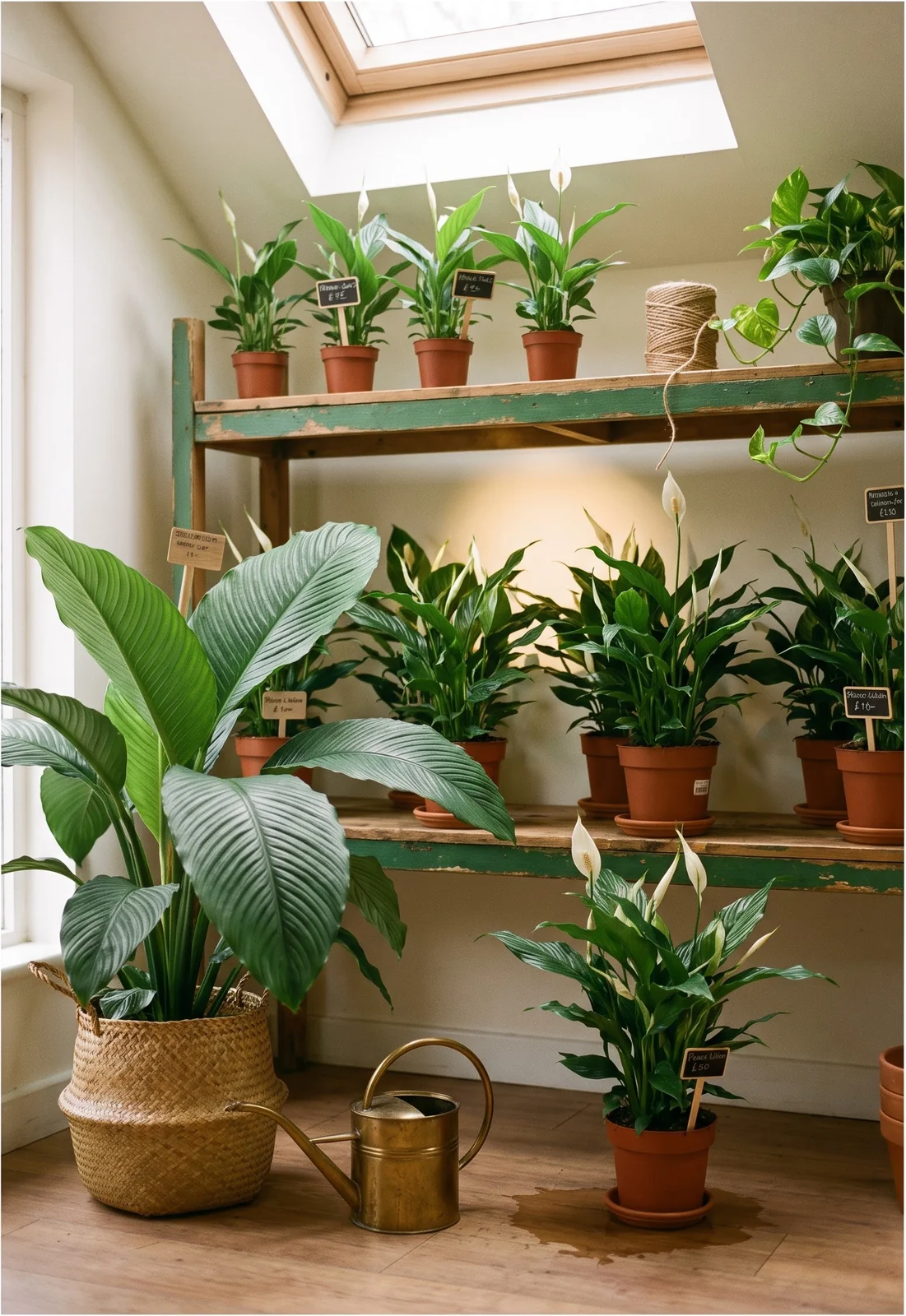
Size is the real choice, because the same white flower sits on plants from 8 inches to 6 feet. Variegation is rare: 'Domino' and 'Gemini' are the two carrying white stripes.
Light and where to put it
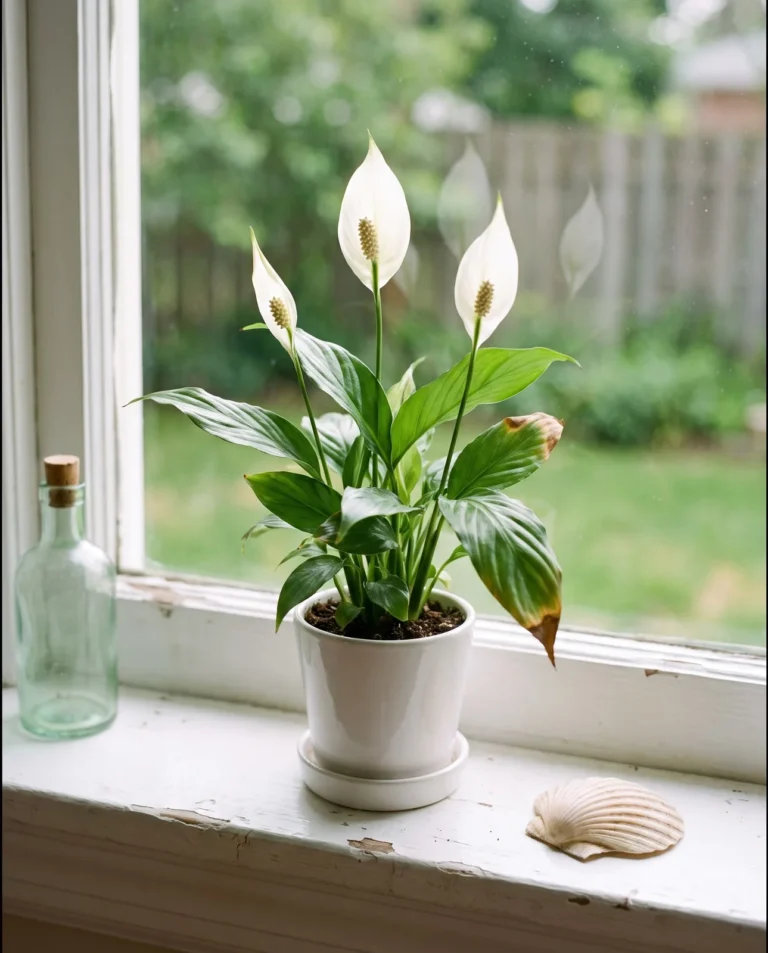
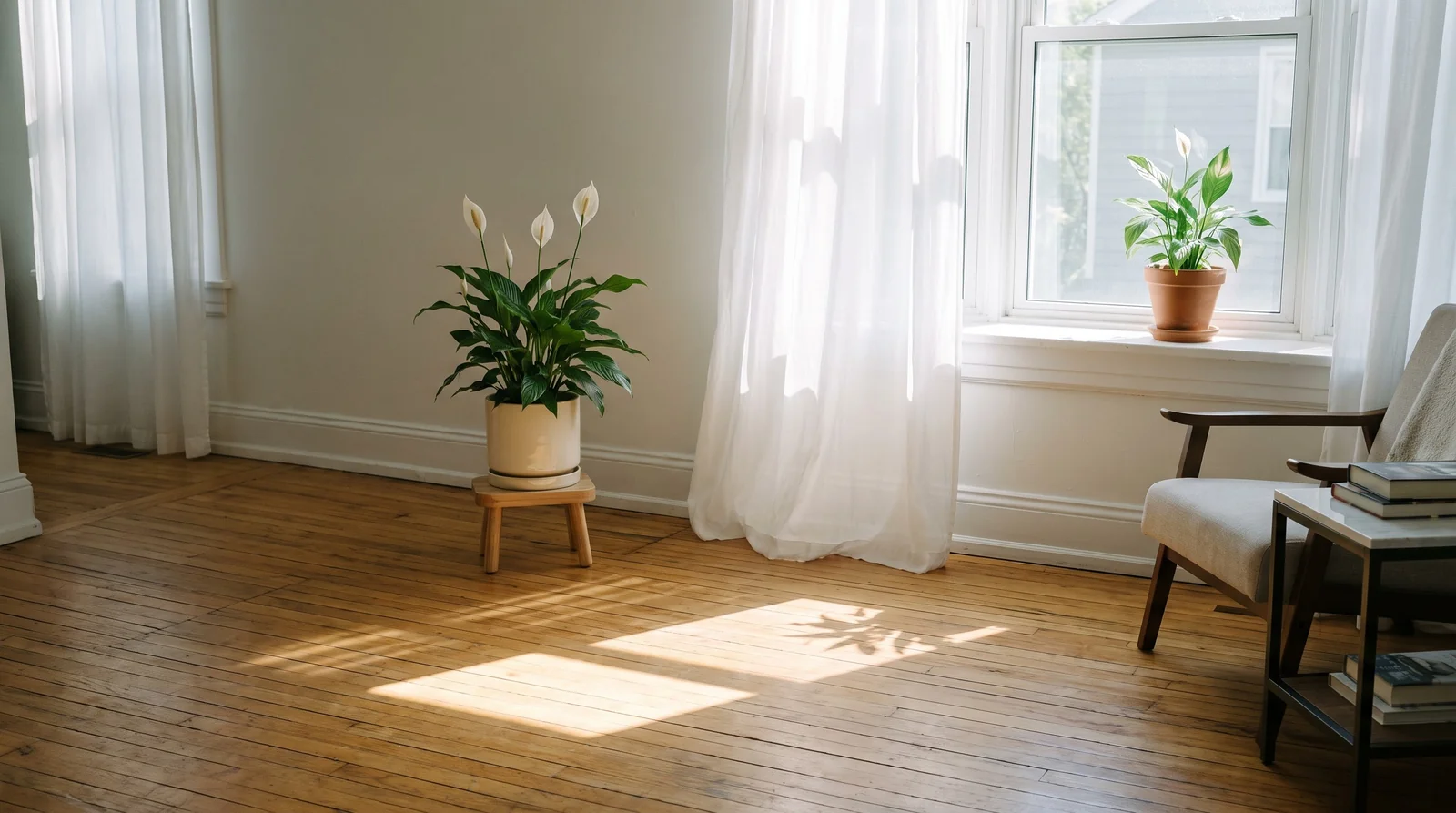
Put a peace lily in bright indirect light, out of direct sun. An east window with morning light, or a north window, comes closest to the shade it grows in naturally. It takes partial to deep shade and sits happily several feet back from an eastern exposure. Low light is survivable; direct sun scorches the foliage. Too much light or heat curls the leaves and burns the margins and tips, and the bleached color that follows gets misread as a nutrient deficiency. Under fluorescent lamps, give it 16 hours of light and 8 of darkness. Dust on those wide glossy leaves also blocks photosynthesis.
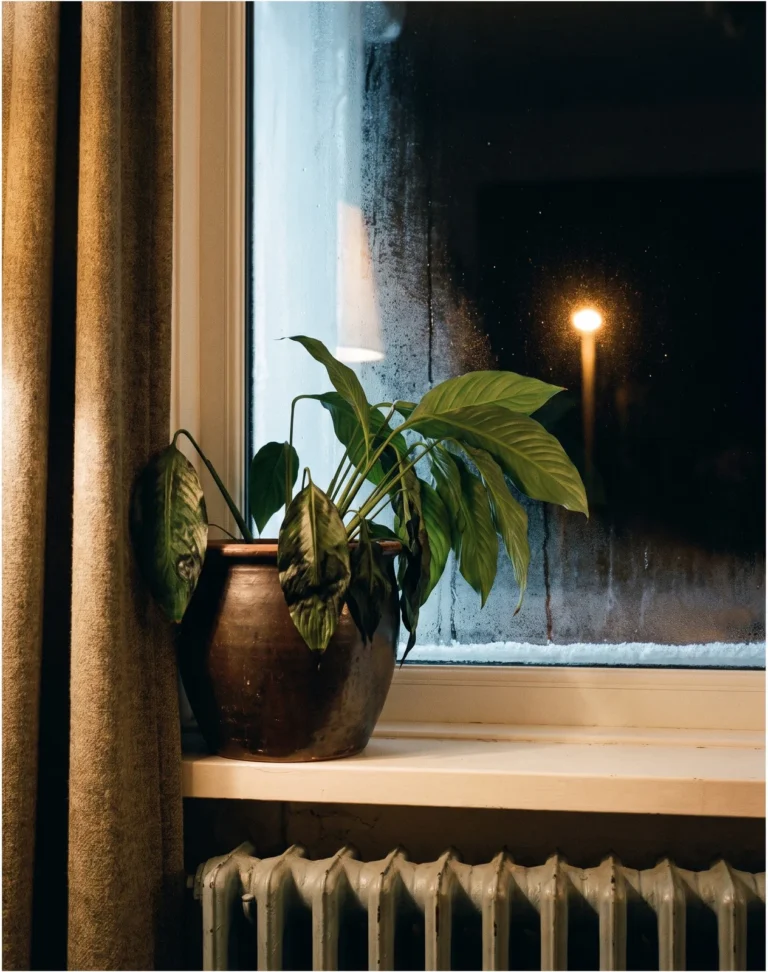
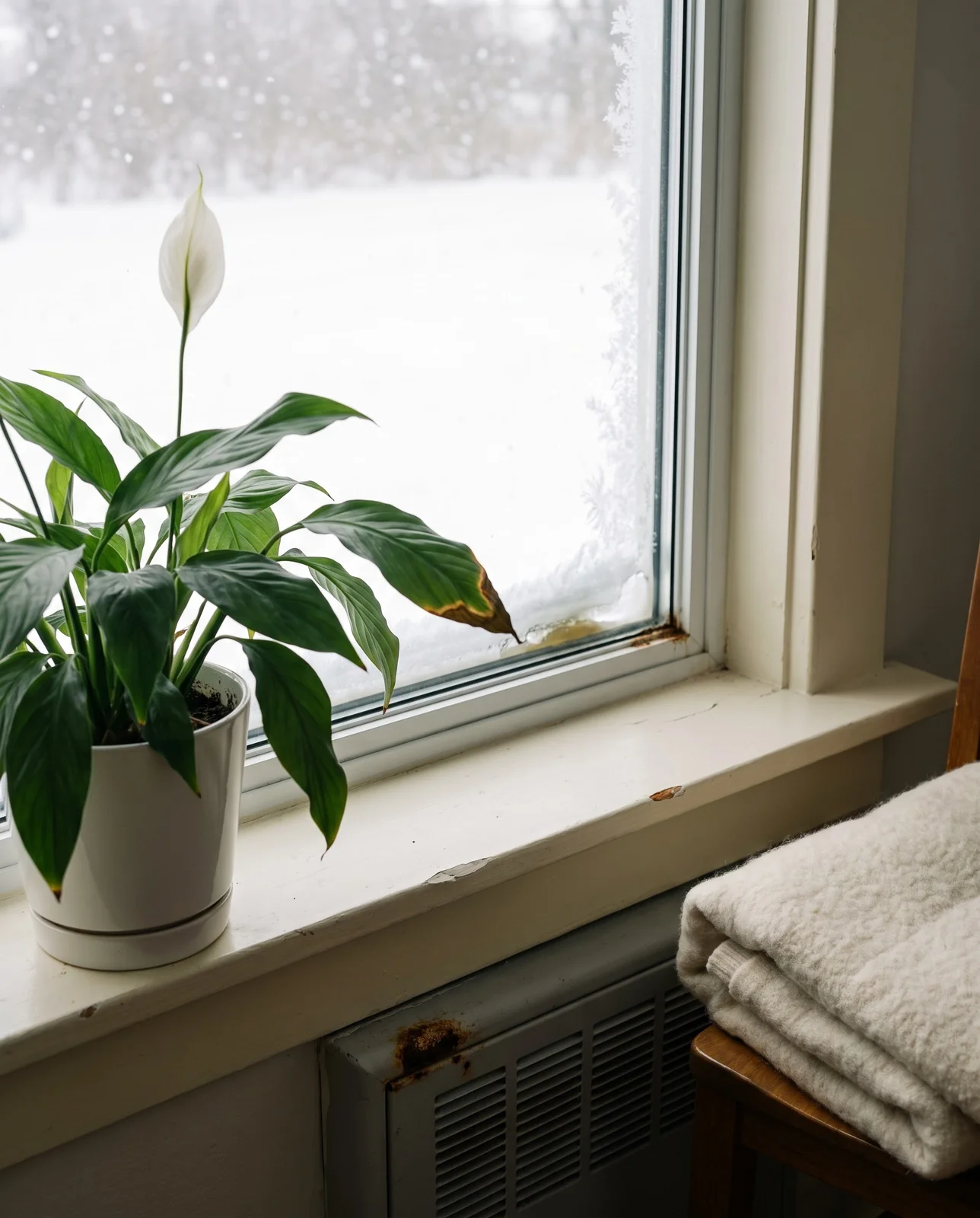
Which room that lands in depends on air as much as light. Dry rooms show as slow growth, dried-up flower buds and brown leaf tips, so pick a room that holds its humidity. Standing several plants together raises the humidity around all of them. Two positions are wrong in any room. One is the path of a heating or air-conditioning vent, since hot, cold and drafty exposures damage the plant. The other is against winter glass, where air of 40 to 60 degrees Fahrenheit slows growth.
Water and the droop
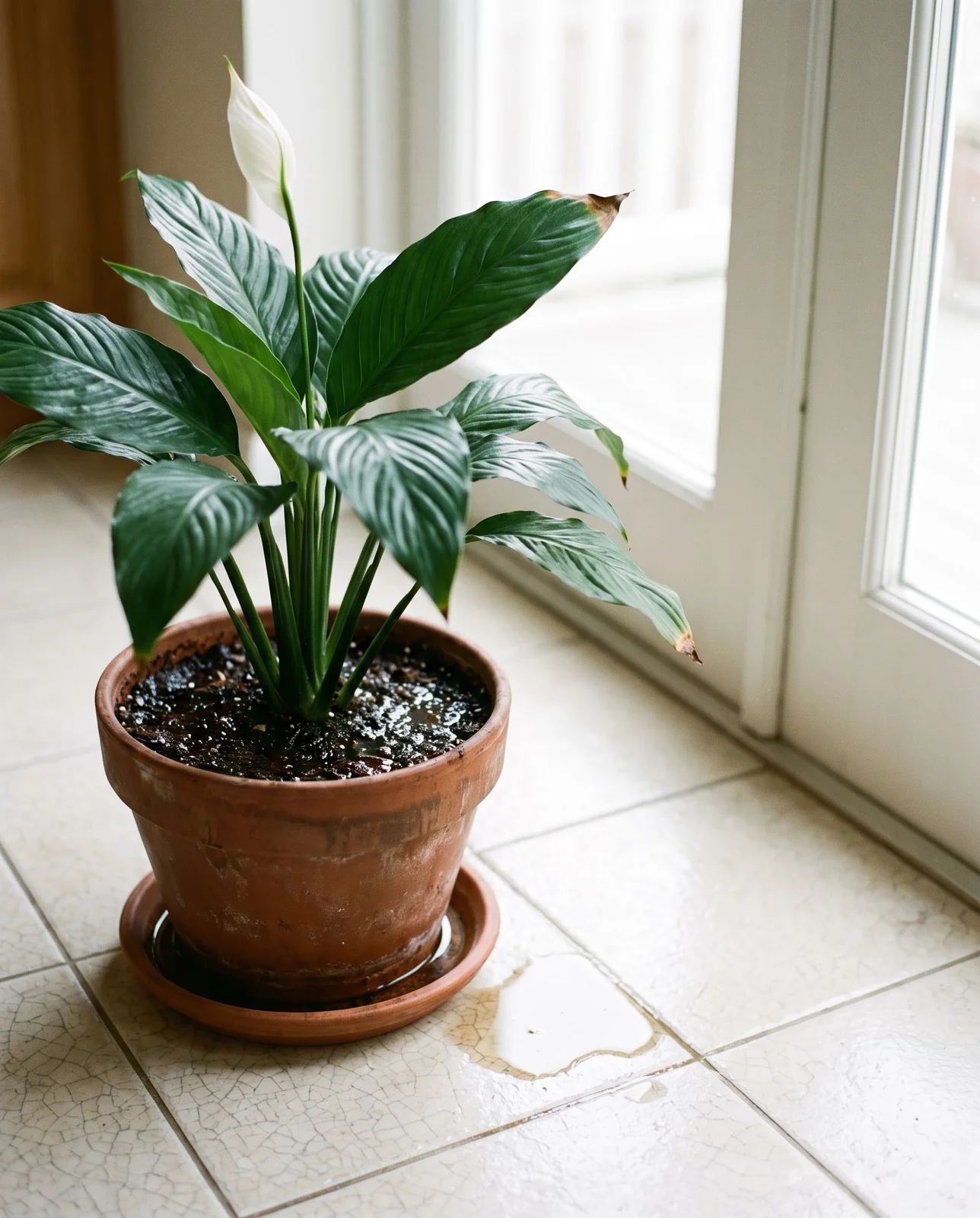
Water thoroughly when the mix has started to dry, and let it dry slightly between waterings. Push a finger in to the first joint: dry at the fingertip means water. Water until it runs out of the bottom, which soaks the lower two thirds where the roots sit and washes out salts. Empty the saucer, because a plant left standing in water rots at the roots. Use water of 62 to 72 degrees Fahrenheit, left standing overnight so the chlorine evaporates. Avoid softened water, since it adds sodium and chloride to the mix. If a peat mix has gone very dry and repels water, water once and again half an hour later.
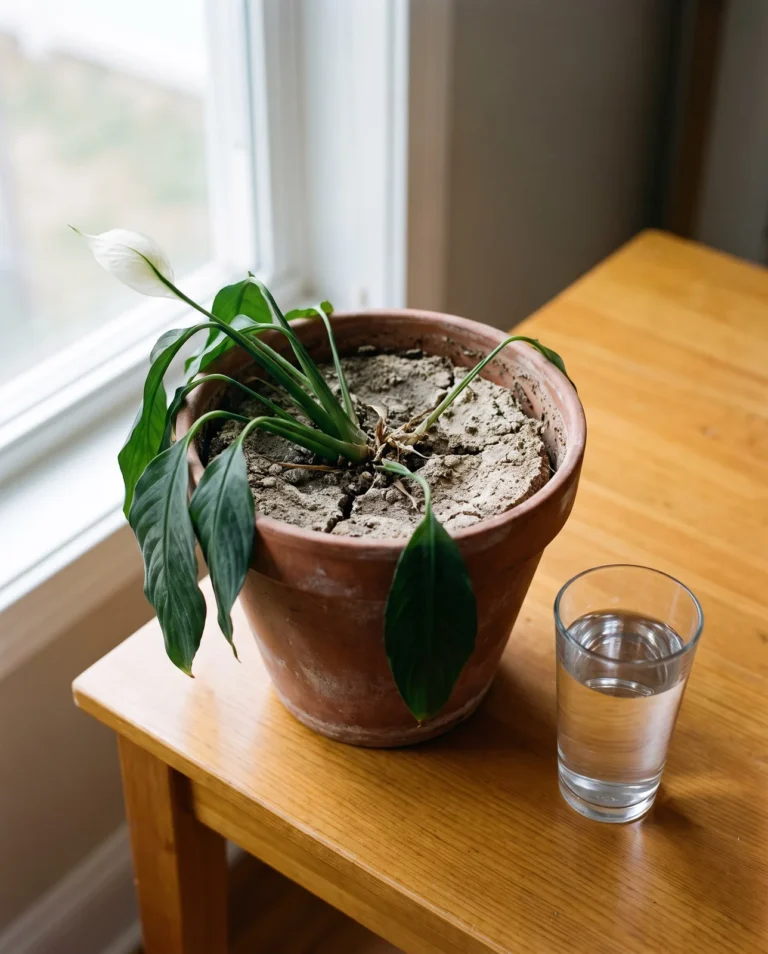
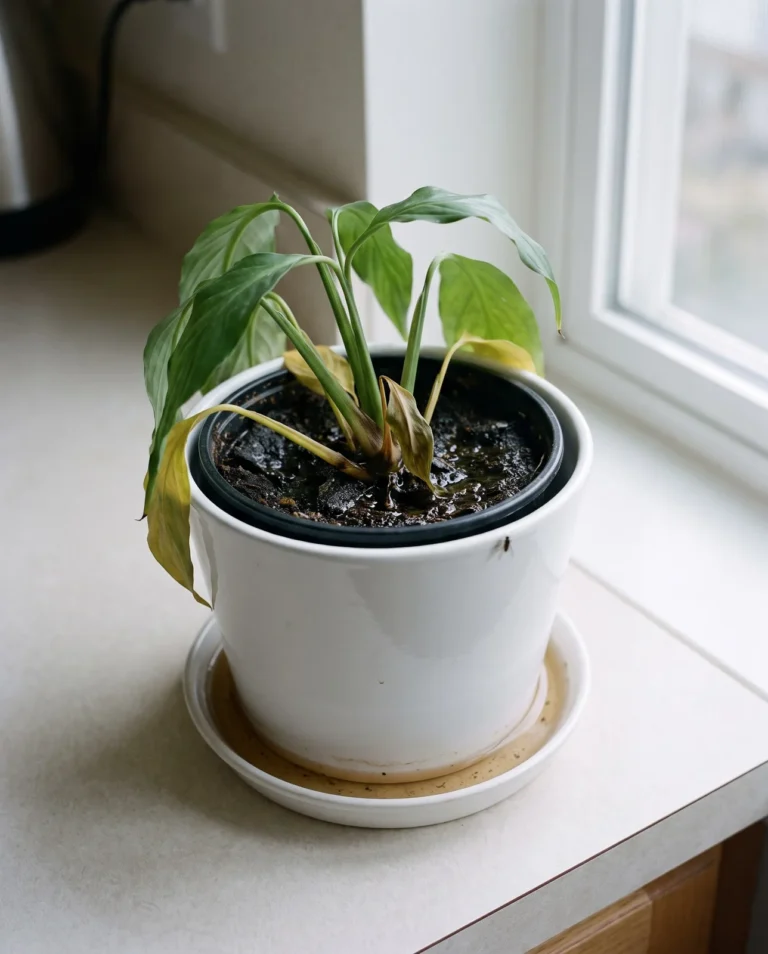
The droop is the plant's own gauge, and reading it is most of peace lily care. A severely wilted plant stands back up within hours of a thorough soak. The habit is expensive, though: frequent drooping browns the tips and edges, and soil dried out excessively yellows the leaves and their margins. Not every droop is thirst. In bright light above 80 to 85 degrees Fahrenheit the plant may slump late in the day with the mix still moist. The opposite cause looks the same. Root rot injures the roots and cuts the plant's ability to take up water, so watering a wilted plant then deepens the damage. Over-watering is the main cause of death of potted plants. For anyone who keeps overshooting, watering from below works well.
Soil, pot and repotting
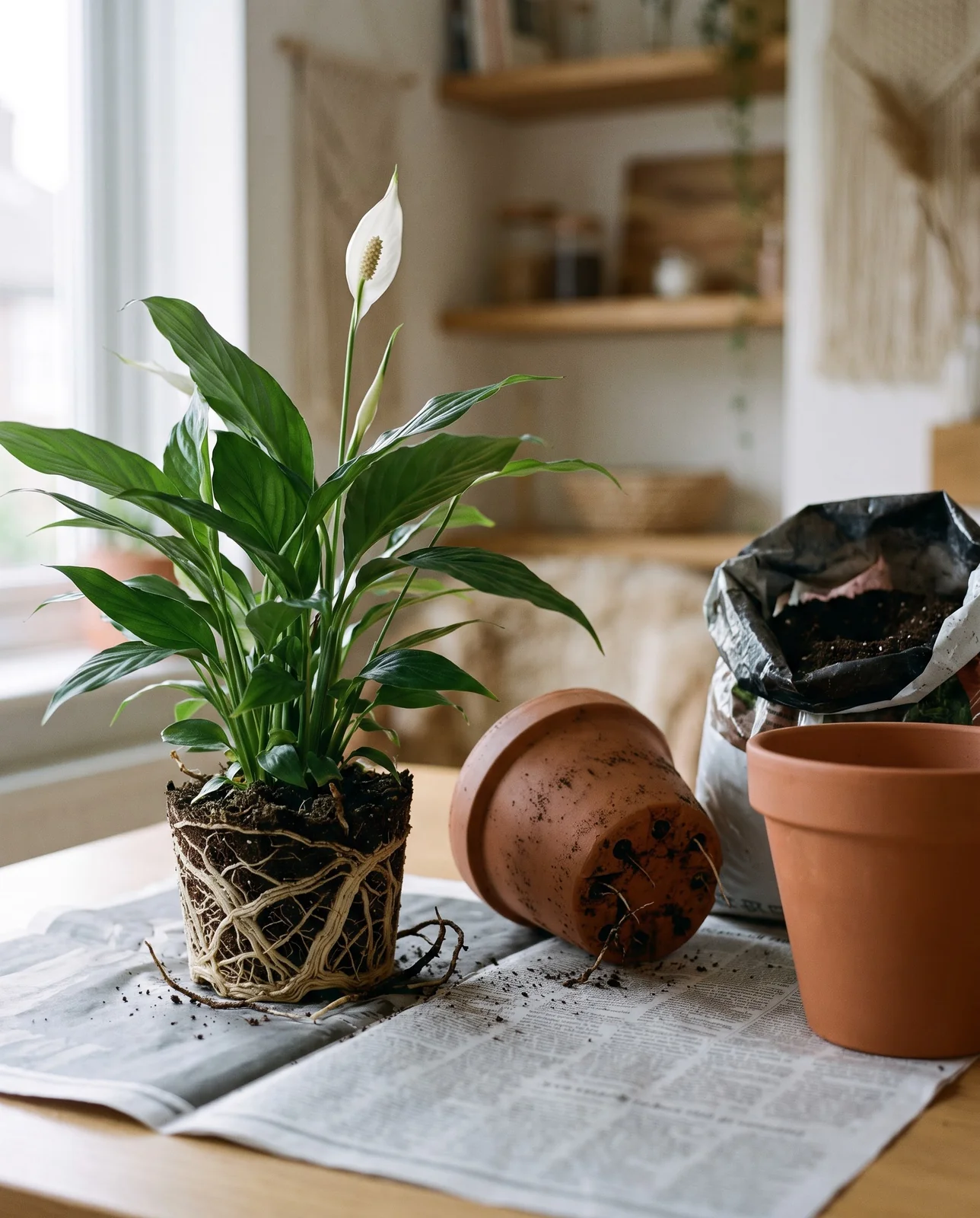
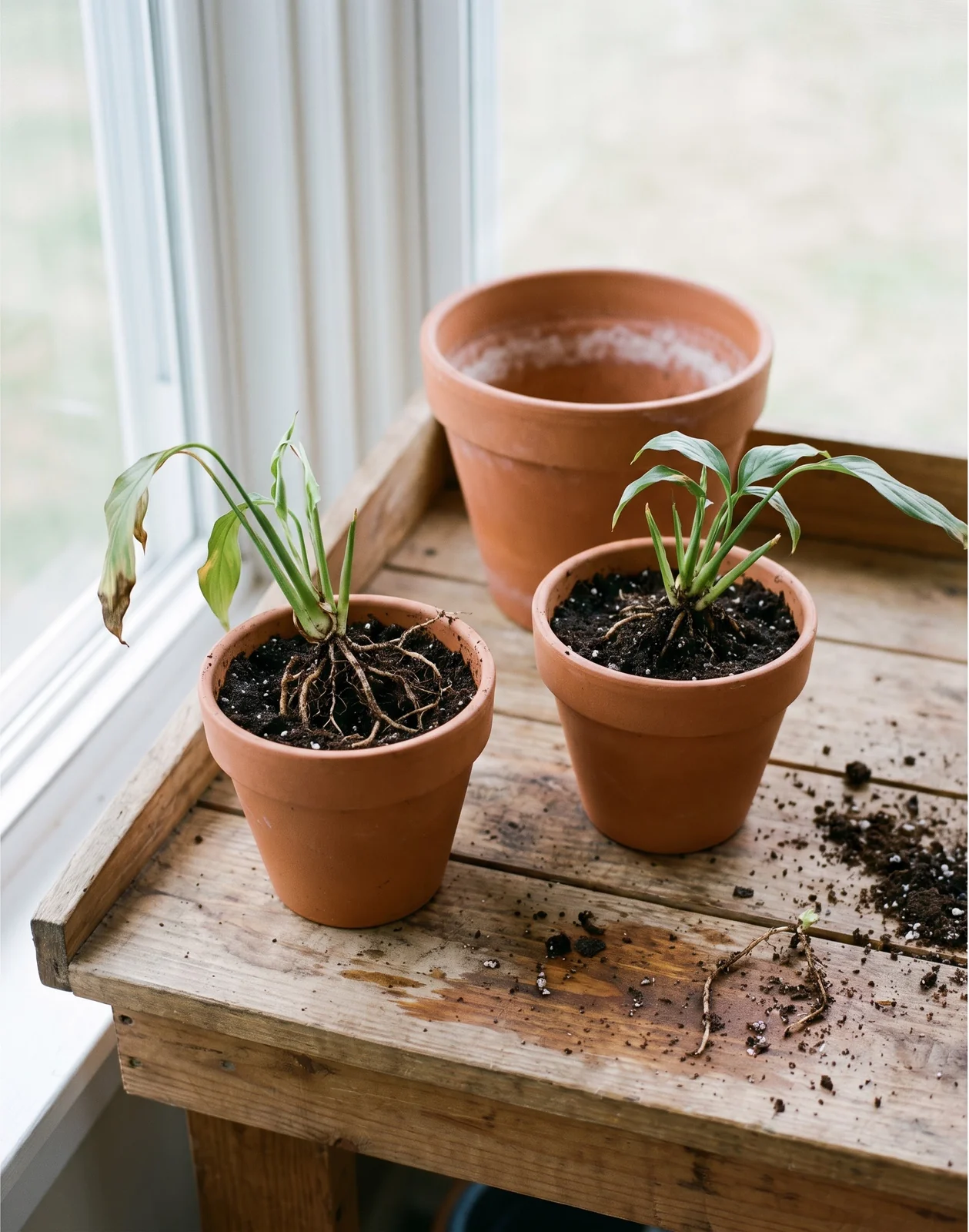
Peace lilies grow in almost any well-drained potting mix, best of all one high in organic matter at an acid pH below 6.0. A bagged houseplant mix is close to the nursery substrate, Canadian peat at 50 to 60 percent by volume with pine bark or coir. The pot needs drainage holes. Repot when roots appear through them or circle the top of the soil. Pot size is where the damage gets done: step up one to two inches, because a much larger container keeps the mix too wet and leads to root rot. Repotting works at any time of year, though the plant recovers quicker in the growing season, and February or March is the usual window.
Temperature and humidity
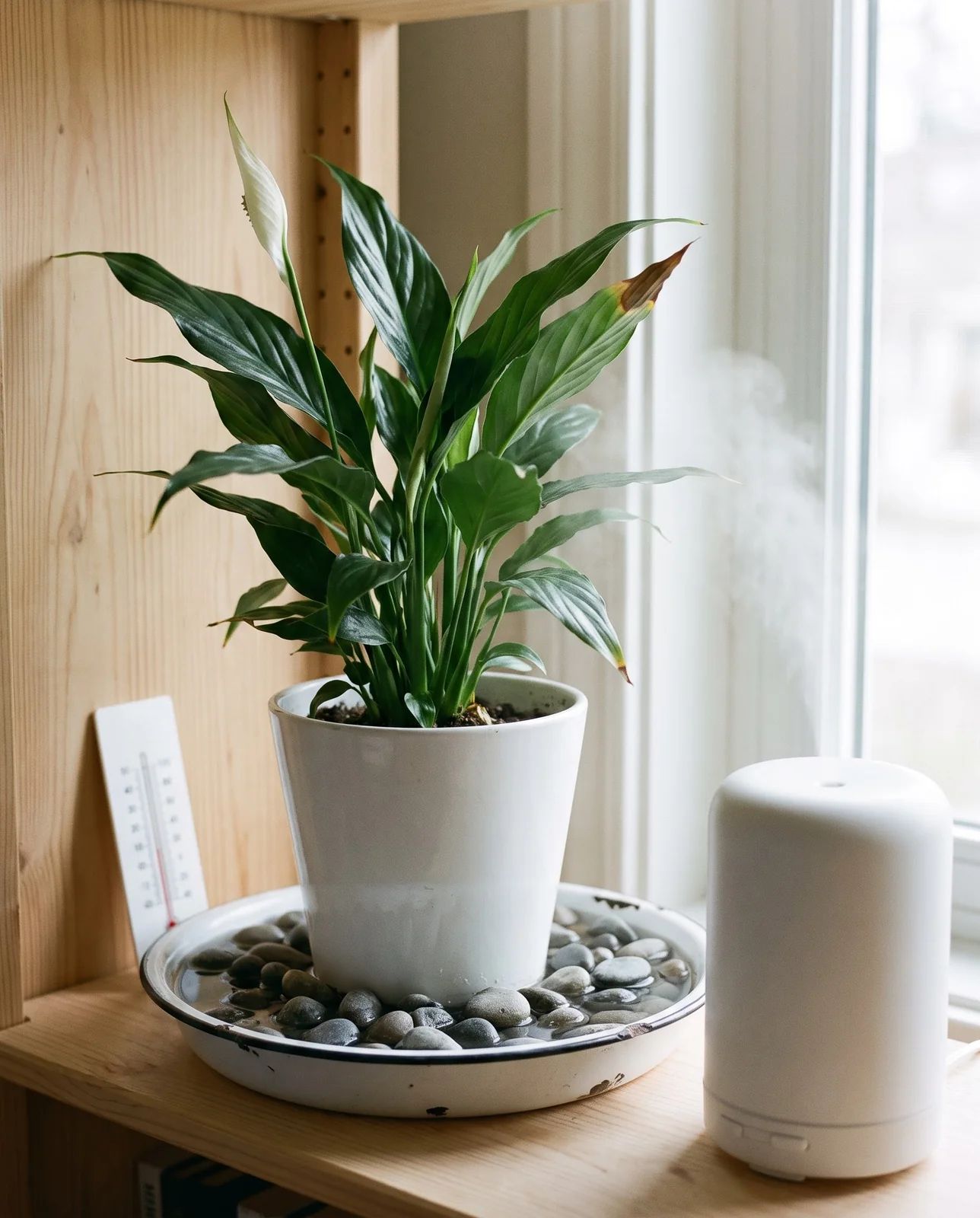
Peace lilies want ordinary indoor warmth: 68 to 85 degrees Fahrenheit by day, with nights about 10 degrees cooler. That daily swing of 10 to 15 degrees suits most houseplants, and some need it in order to flower. The cold floor sits somewhere between 40 and 60 degrees Fahrenheit, which means keeping the plant out of an unheated room and off a windowsill on a winter night. Humidity is looser. Peace lily manages in below-average humidity and enjoys high humidity when it gets it, while tropical houseplants in general do best at 40 to 50 percent. Misting does not raise the humidity around a plant and can spread disease; a moistened tray of gravel under the pot is the recommended way.
The numbers where things change
The temperatures and light levels that decide what this plant does.
Feeding
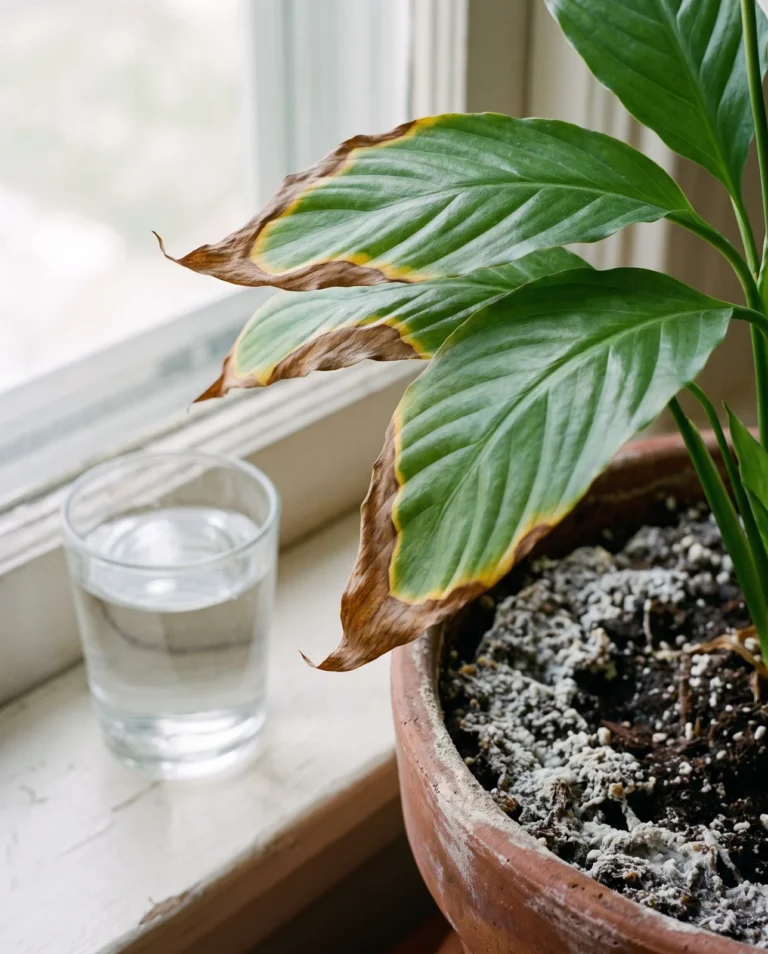
Peace lilies need very little fertilizer, and the damage comes from giving too much. Feed at one quarter of the recommended strength, since interior plants need less than greenhouse plants, and flush the soil between applications. A balanced 20-20-20 at that strength every six to eight weeks through spring and summer covers it. Organic fertilizer suits it too, since peace lilies are very sensitive to chemicals. Overfertilizing burns the leaf tips and roots brown, and salt buildup shows as reduced growth, brown leaf tips, dropping lower leaves and wilting. A white film on the soil or a white crust on the pot rim says it has already happened. Reduced growth with yellowing leaves in cold soil is a nutrition problem.
Drooping, brown tips, yellow leaves
Five problems produce a similar unhappy plant, and two of them need opposite treatment.
What actually goes wrong, most common first
Ordered by how often owners run into them, with the tell and the move that follows it.
Wilting is not proof of thirst, because root rot cuts the plant's ability to take up water just as dryness does. Feel the mix and check the roots before watering.
Root and stem diseases are the most common peace lily problem and they follow over-watering. Tip the plant out and judge the roots before treating the leaves.
Flowering fails when a plant is less than a year old or is growing in insufficient light. Move it into bright indirect light and wait for spring.
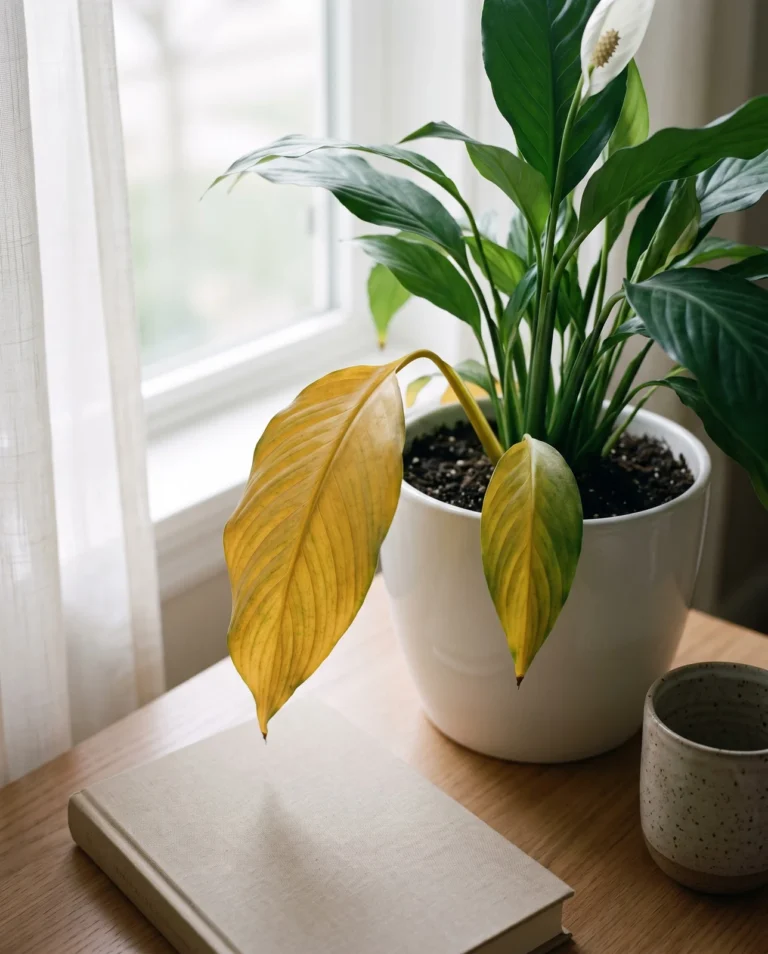
One or two of the oldest leaves at the base is the age of the leaf, or a plant wanting root room. Pull them off at the bottom of their stalks and check the roots.
A spathe that greens late is the flower finishing its run. Blooms that open green on a leafy plant point to too much nitrogen, so cut the feeding back.
A crowded plant moved into a container several times the size sulks, because the extra room holds the mix wet enough to rot the roots. Go back to a pot barely larger than the root ball.
Gnats usually start a week or two after a repot into fresh mix, and mealybugs, spider mites and scales turn up as well. Let the surface dry between waterings and wipe the undersides of the leaves.
Propagation by division
Division is the way to increase a peace lily, the plants take to it easily, and spring is the season. There is no second method at home. What comes apart are crowns: clusters of leaves, each with its own root system. Slide the plant out of its pot and pull the clump apart where it wants to separate. Cut through the crown with a clean knife where it does not, leaving several leaves on every piece. Each division goes into fresh well-drained mix, in a pot barely bigger than its roots, at its old depth. Do it at a repot, since the plant recovers quicker in the growing season.
Pruning and cleaning
A peace lily is never pruned in the shrub sense, only tidied. Take dead blooms and leaves off as soon as possible. Cut the spent stalk at the base where it leaves the crown, and take a yellow leaf the same way. Trimming brown portions with scissors is cosmetic, and the browning returns unless the cause is fixed. The wide glossy leaves want a regular wipe with a damp cloth, which also takes off the pests that gather on the underside. Skip leaf shine products, since the waxy residue may interfere with air exchange.
Growing one in water without soil
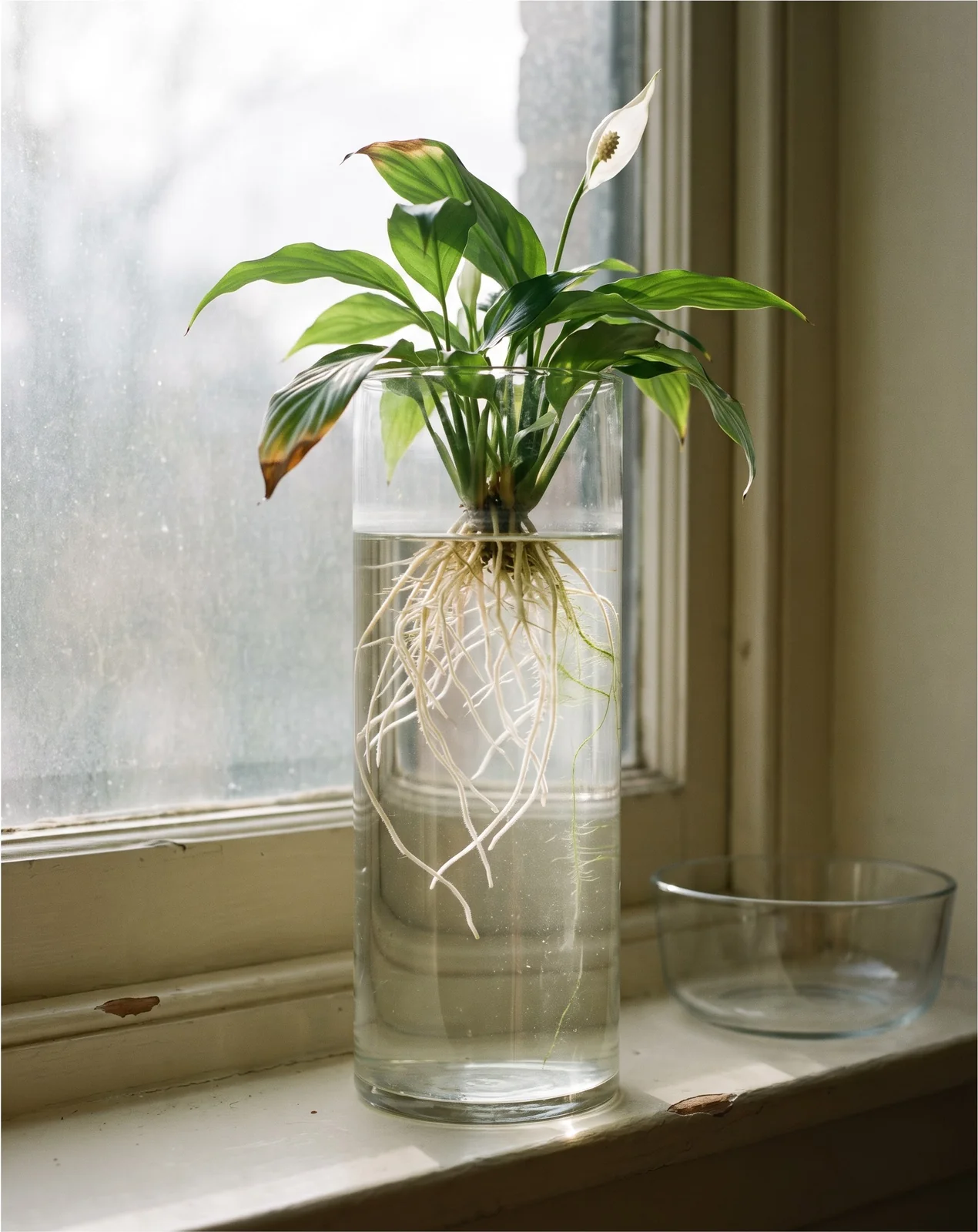
A peace lily can grow in water alone, and plenty of them are sold that way, standing in a vase with no soil. One detail decides how long it lasts. The base of the plant sits above the water line, held up by a vase insert or a layer of small stones, so the roots reach the water while the crown stays dry; a base kept constantly wet rots. Nobody has tested how often to change the water or what to feed a plant with no soil.
Growing one outdoors
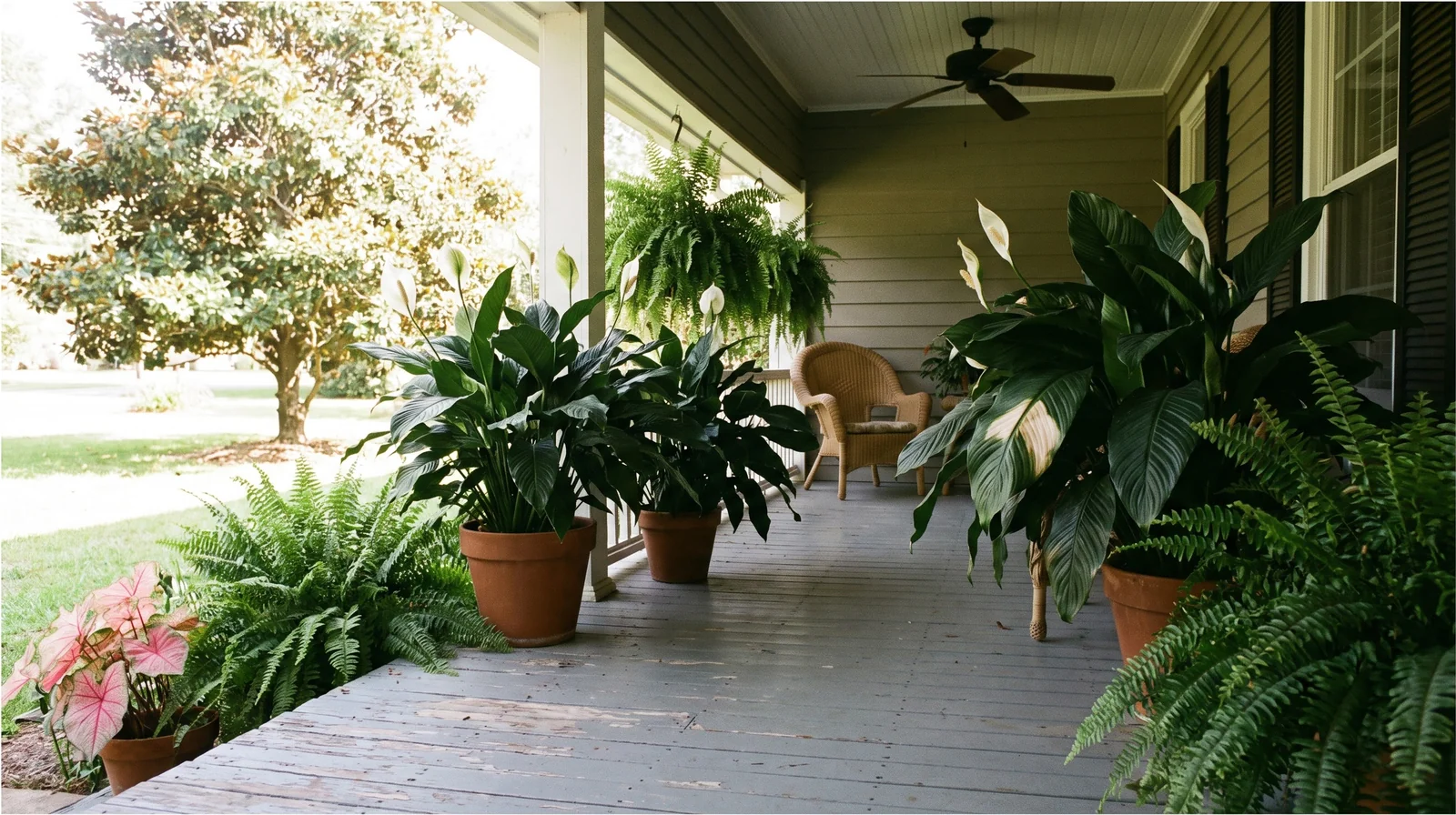
Outdoors, a peace lily is a plant for frost-free ground and nowhere else. It is hardy in zones 10 through 12, a band that on the mainland reaches only the far south. Where the air stays hot and humid it does well set straight in the ground; everywhere else the pot summers outside and comes back in. Shade is not optional out there, since direct sun scorches the foliage. Time the trip indoors by the thermometer: growers ship these plants at 55 to 60 degrees Fahrenheit.
Toxicity, pets, and the air-cleaning claim
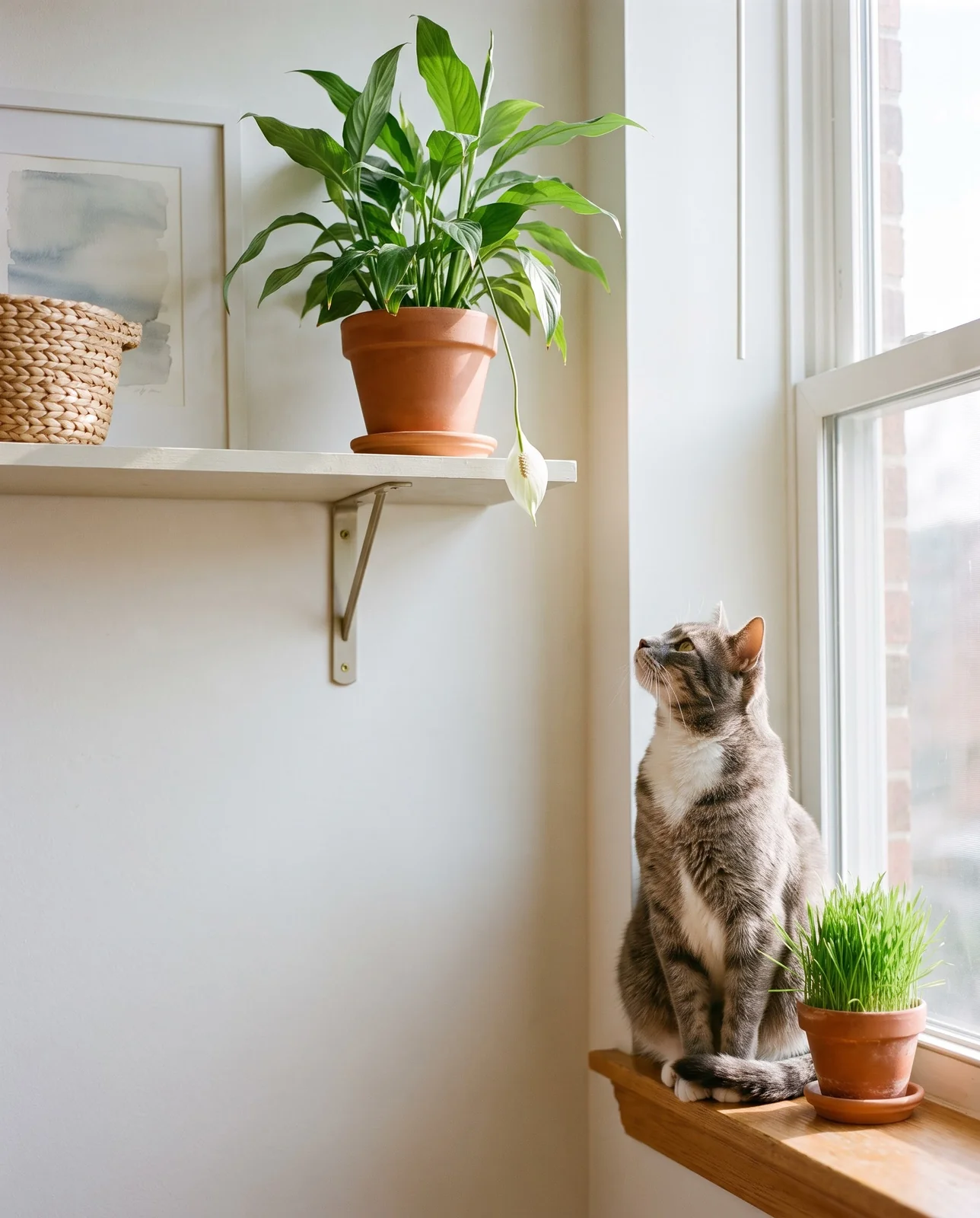
Peace lily is toxic to cats and dogs, and the toxic principle is insoluble calcium oxalates. The crystals sit inside the plant cells, and chewing releases them into the mouth. The signs are oral irritation, intense burning of the mouth, tongue and lips, drooling, vomiting and difficulty swallowing. ASPCA names dogs and cats; horses and children are at risk too, without the vomiting in horses. The leaves are the poisonous part, though all parts contain calcium oxalate, and a large amount eaten can irritate the stomach or the airway. The crystals are ordinary equipment in a houseplant collection, shared with philodendrons, daffodils and hyacinths, so the answer is the usual one: stand the plant where an animal cannot get its teeth into it, and pick up the leaf pieces that fall. Where a pet decides what lives in the house, a list of flowers that are safe around cats and dogs is the place to start.
The air-cleaning claim is the plant's best-known selling point and the weakest thing said about it. NASA praised peace lily in the Clean Air Study for removing formaldehyde, benzene and carbon monoxide from interior air, and it still heads the air-purifying lists. That work dates to 1989 and was aimed at the air aboard space stations. The test sealed one potted plant in a chamber of a cubic meter or smaller and injected a single compound. Plants dissipate volatile compounds orders of magnitude slower than the ordinary air exchange of a building. Matching that exchange would take between 100 and 1,000 plants per square meter of floor. Sleeping in a room with one is safe: the documented harm needs the leaves to be eaten.
Meaning, sympathy, and the plant people inherit
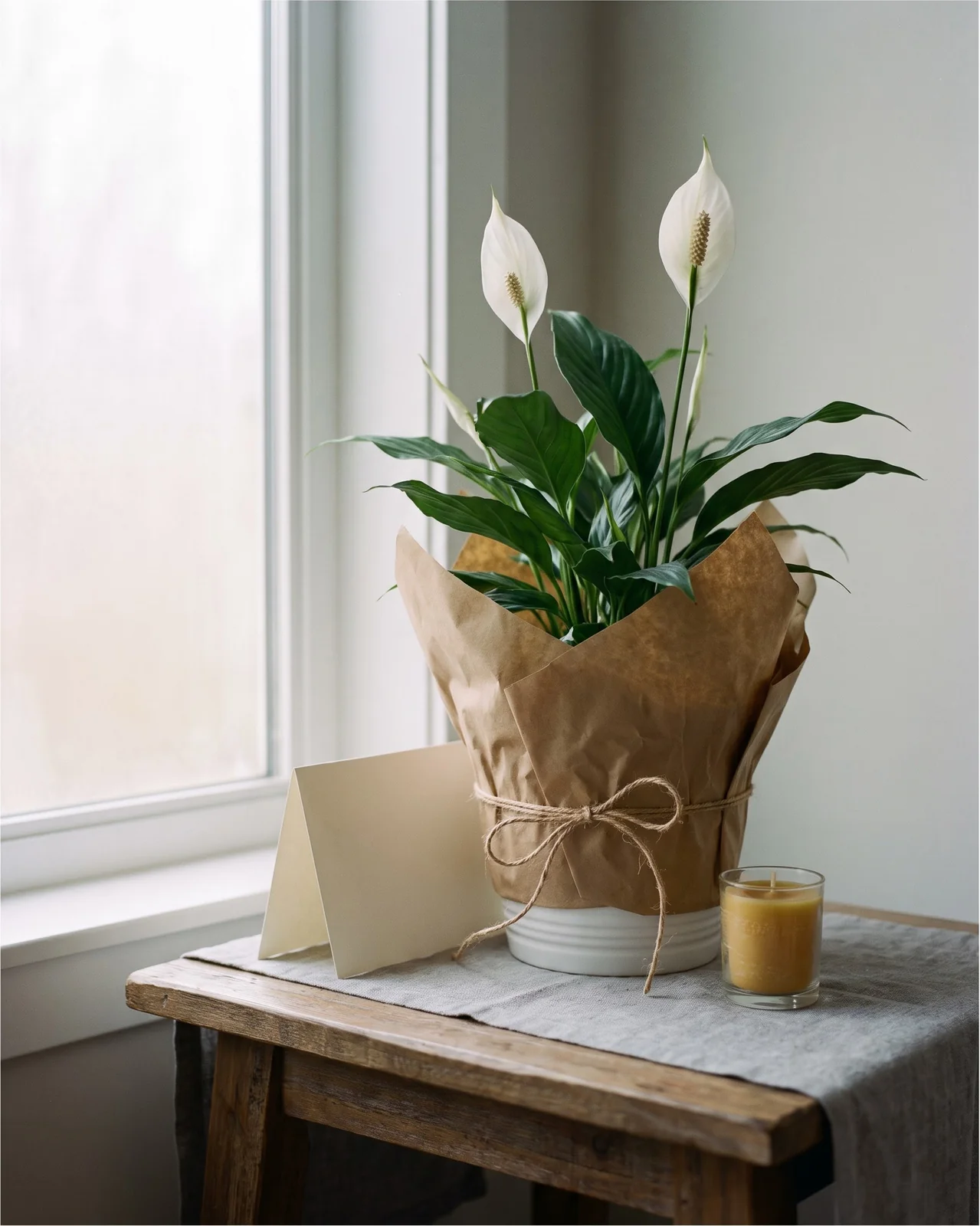
The meaning comes from the look of the flower: white spathes standing above green leaves resemble white flags of peace, and the common name followed. The plant holds up in the role, since long-lasting flowers on something a beginner can keep alive survive being given, shipped and left in a hallway. A peace lily that arrives after a funeral needs nothing sentimental, only the brightest indirect corner in the house and water judged by the state of the mix.
Height and spread
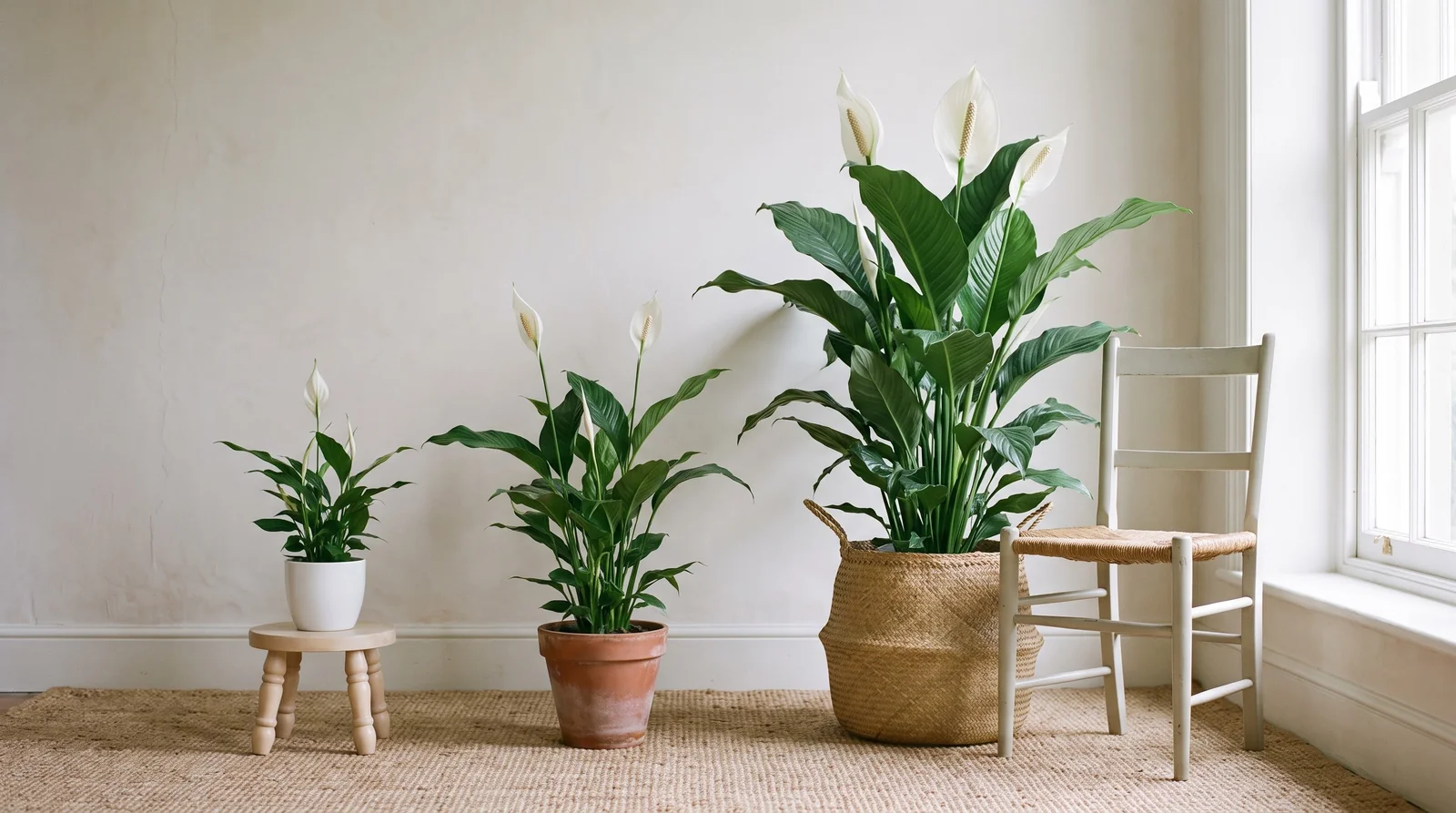
Most peace lilies grow 1 to 4 feet tall and about as wide, and a few cultivars reach 6 feet in both directions. Spread means a crown thickening as new leaf clusters build, since nothing runs sideways underground. Indoors, 3 feet high and wide is typical, inside a full range of 1 to 5 feet. The cultivar on the tag settles it: interior types run from 12 inches to 4 feet, and Spathiphyllum wallisii tops out around 12 inches.
Myths worth dropping
Five ideas that circulate in comment sections and plant groups, and what happens instead.
The myth: A cup of sugar water once a week makes it bloom.
The reality: Sugar does nothing. Light decides: a peace lily grows in low light but flowers best in indirect sunlight.
The myth: It is a lily, so it can kill a cat.
The reality: It carries none of the toxins found in true lilies, which cause acute kidney failure in cats. Its calcium oxalate crystals burn the mouth, throat and tongue of a pet or child that chews it.
The myth: A drooping peace lily is dying.
The reality: A severely wilted plant resurrects in a matter of hours from one thorough watering.
The myth: A bigger pot is kinder to a crowded plant.
The reality: The plant wants a large pot but should be kept somewhat pot-bound. The next container up is one to two inches larger, because too much room keeps the mix wet.
The myth: Tap water is fine for every houseplant.
The reality: Peace lilies are sensitive to chemicals in tap water, fluoride among them, which may brown the leaf tips over an extended period. Softened water is worse, since it adds sodium and chloride to the mix.
What to expect, year by year
A peace lily runs on the nursery's clock for its first year and on its own after that.
Year one is mostly recovery from the nursery. The blooms it came home with finish on their own schedule, and a long stretch of leaves follows while the plant grows toward the size at which it flowers unaided. Placement and water are the whole job.
Years two and three are when a home-grown bloom becomes possible. Most cultivars flower only once they reach the age their variety needs, and only in spring and early summer. Plants grown on for 9 to 15 months usually bloom between February and April.
After that it grows into a clump, and the maintenance shifts to root room. Split the crowns at a repot in spring if it has outgrown its corner. Final size belongs to the variety, from a dwarf holding at 12 to 15 inches to a plant maturing at 6 feet tall and wide.
How long the flower lasts indoors
Peace lily is kept as a flowering houseplant, so the numbers that matter are what the spathe does in its pot.
Flower photos
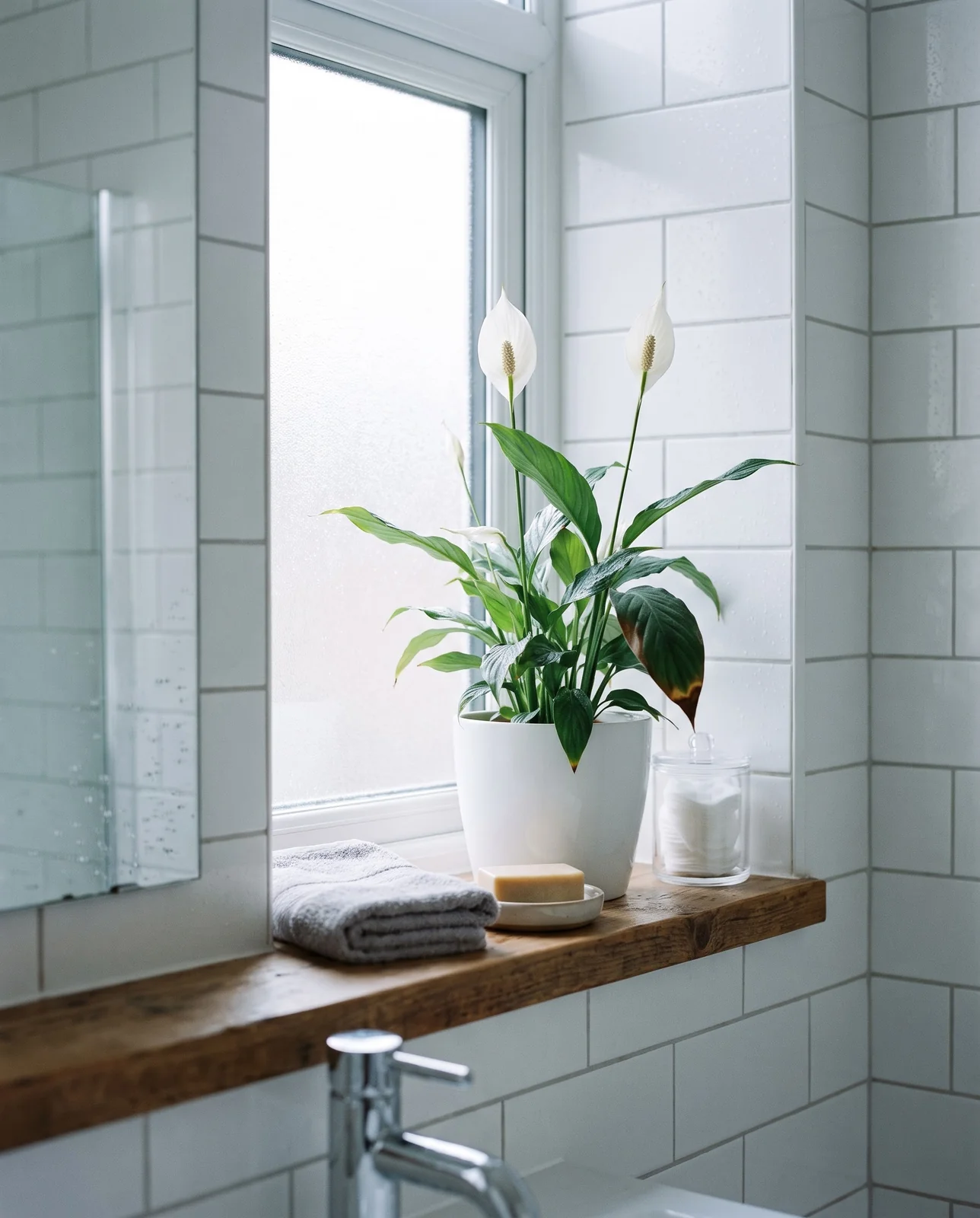
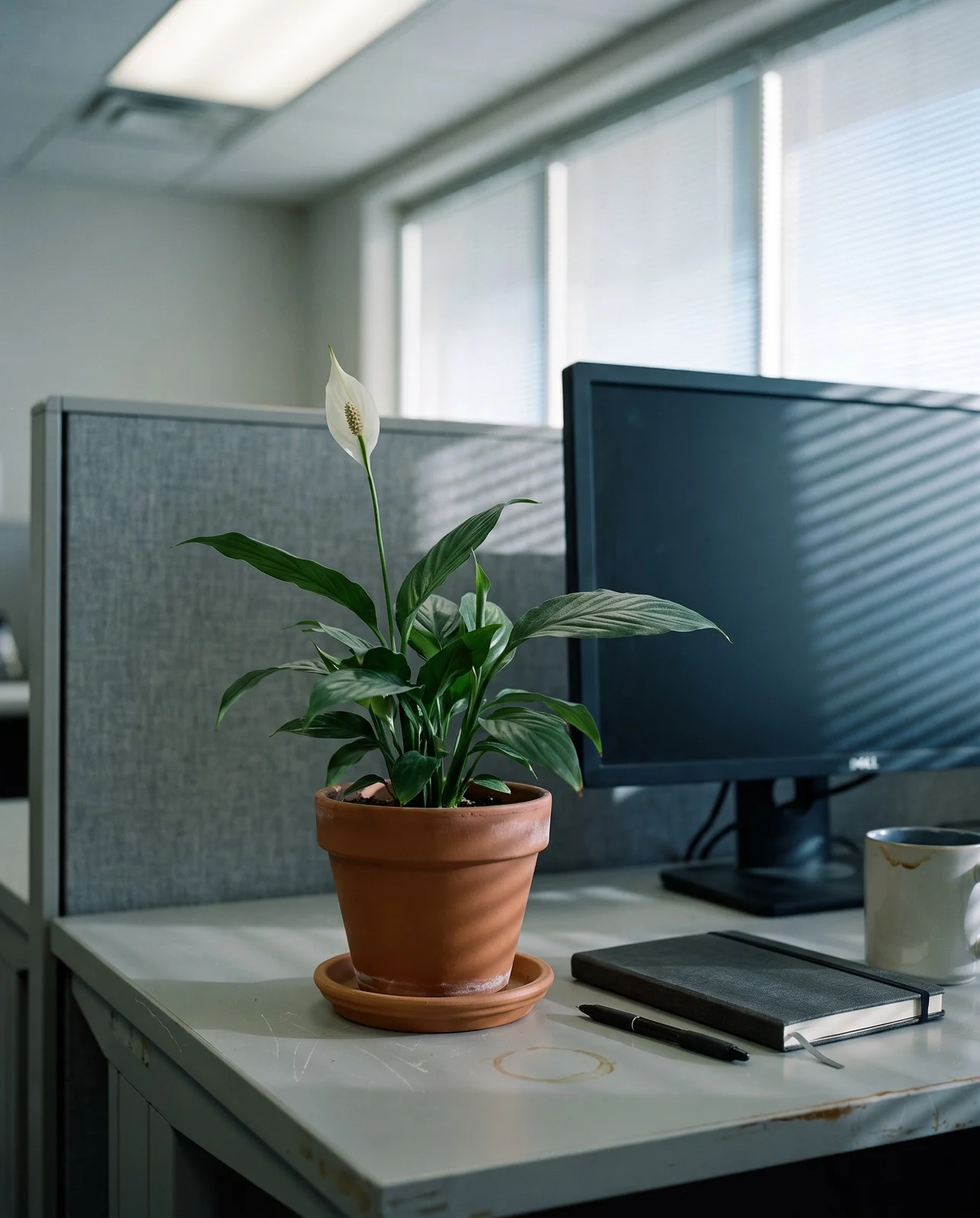
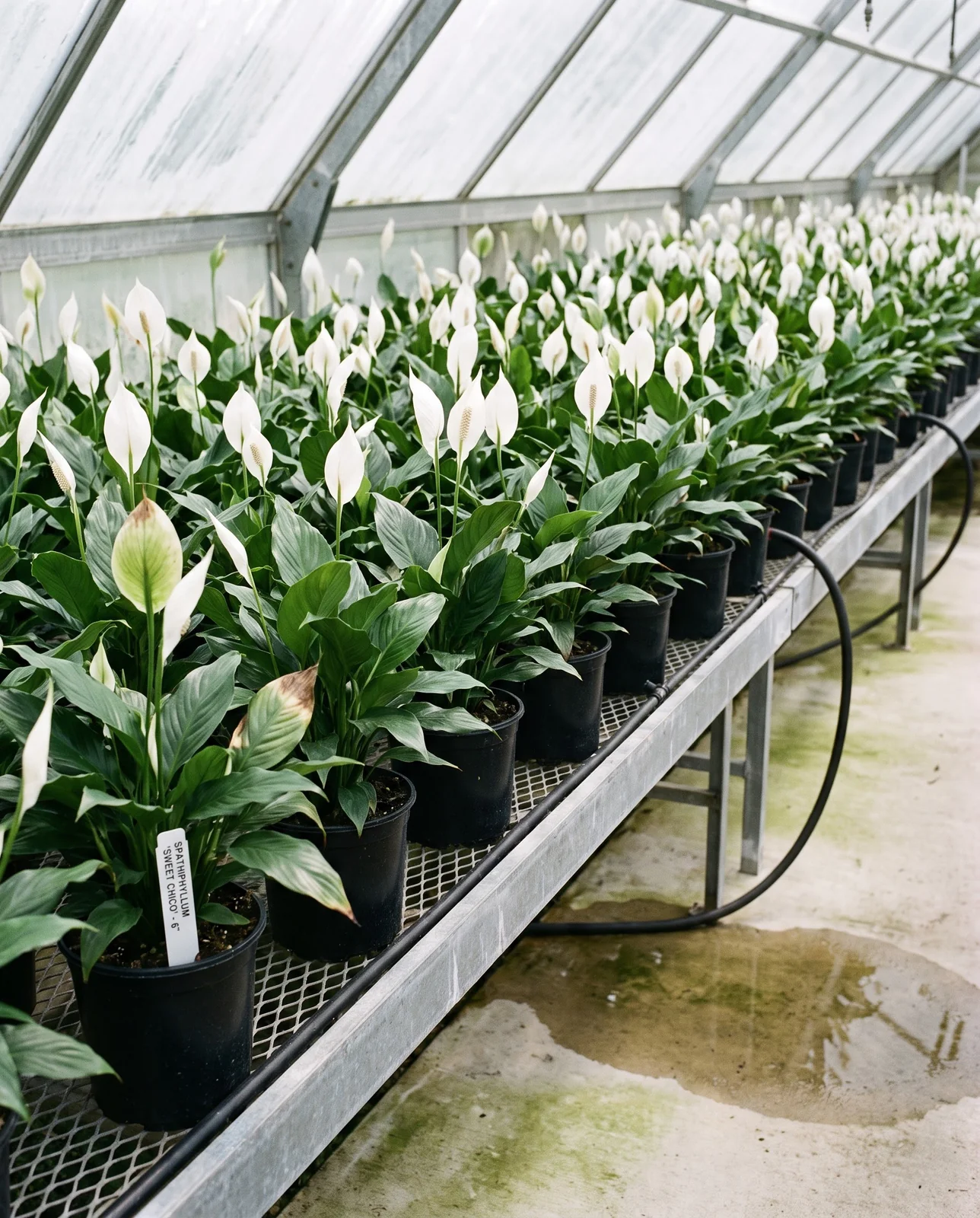
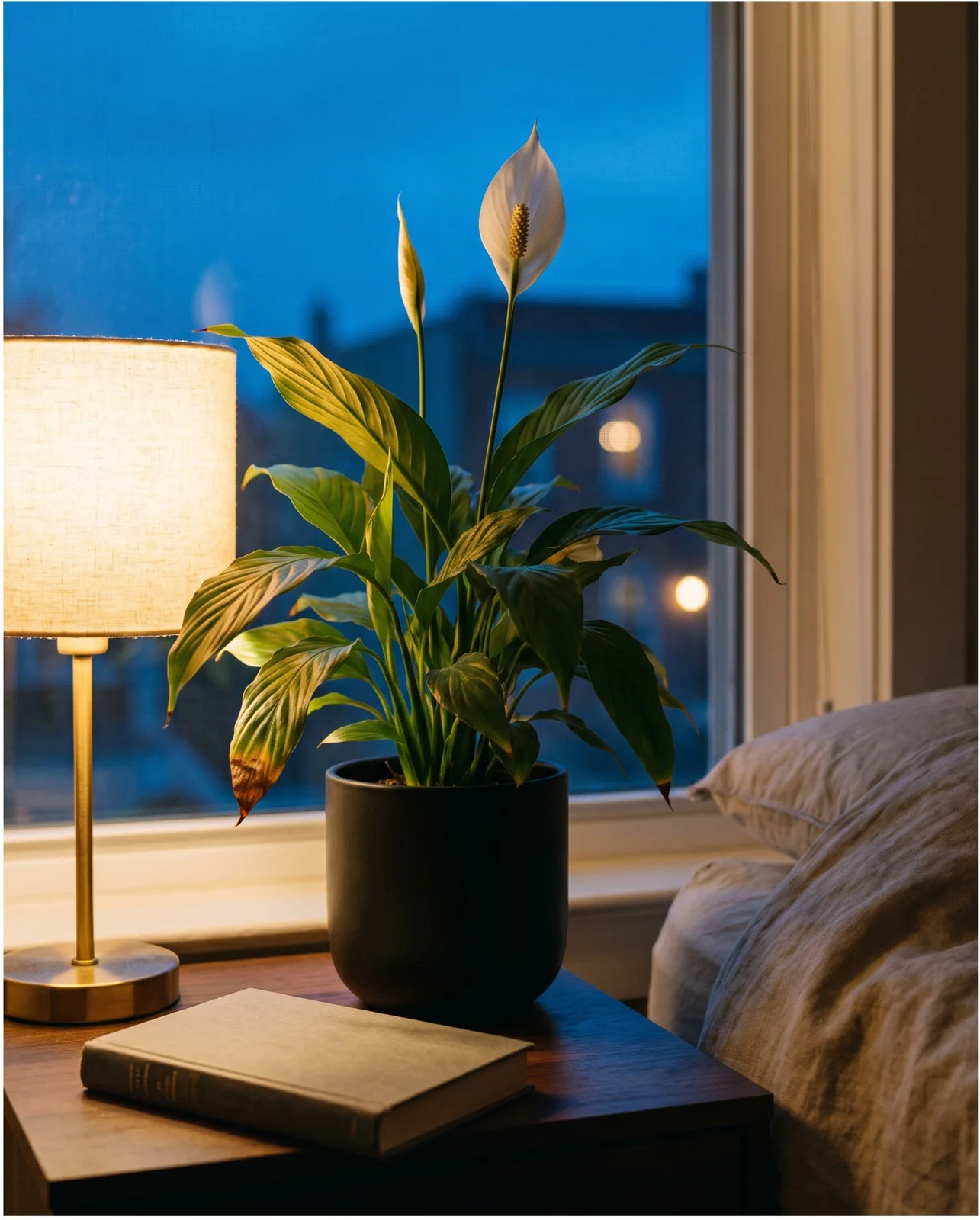
FAQ
Where is the best place to put a peace lily in the house?
An east window with morning light, or a north window. Favor a room that holds its humidity, because dry air dries up flower buds and browns leaf tips.
How do you care for a peace lily indoors?
Bright indirect light, water when the mix has dried slightly, and very little fertilizer. Keep it at 68 to 85 degrees Fahrenheit by day with nights about 10 degrees cooler.
What are the disadvantages of a peace lily?
It burns the mouth of a cat or dog that chews it, it collapses whenever the mix dries out, and in a dim room it keeps its leaves and gives up the flowers.
Can I sleep with a peace lily in my room?
Yes. It is a hazard only to someone who chews it, since all parts carry calcium oxalate and irritate the stomach or airway in quantity.
How do I fix brown tips on a peace lily?
Trim them for looks, and the browning returns until the cause changes: low humidity, too much light, over-fertilizing or low water, and long dry spells between waterings.
What does an overwatered peace lily look like?
Wet mix, sparse roots that are sometimes black at the tips, and often a white film on the soil surface.
How do I revive a drooping peace lily?
Feel the mix. Dry means water thoroughly, and it revives in a matter of hours; wet means stop, because rotted roots are what stopped it drinking.
Why does my peace lily have leaves but no flowers?
Light and age settle nearly every case: flowering fails under a year old or in insufficient light, and most cultivars flower only once they reach the age their variety needs.
Why is my peace lily not blooming in winter?
Most cultivars only flower from January to August, so a bare plant in late fall is on schedule. Winter decides the spring bloom, since those buds are set in December or January.
Are peace lilies poisonous to cats?
Yes, though not in the way the name suggests: it is not a true lily. Its insoluble calcium oxalates burn a cat's mouth, tongue and lips, with drooling and vomiting to follow.
Interesting tips
- Not every peace lily is the same dark green mound. 'Mojo Lime' has lime-green foliage, and 'Power Petite' was bred for dense growth in small containers.
- The plant sold as Cleveland peace lily is a named hybrid, Spathiphyllum x clevelandii, and it sits with 'Mauna Loa' on the short list of indoor plants for low-light rooms.
- The true flowers are the small bumps covering the cream spadix inside the white sail. They all mature at the same moment, and the spadix sheds pollen for up to four days.
Related Guides & Flowers
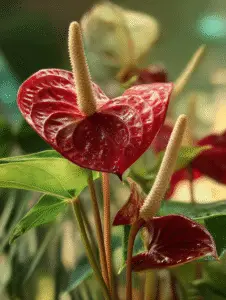
Anthurium
The other aroid sold for a colored spathe held above the leaves, and the plant peace lilies are most often mistaken for.
Calla lily
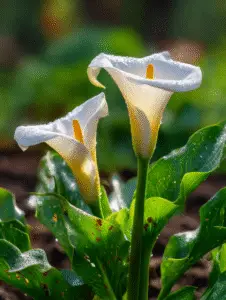
The flower a peace lily bloom is always compared to, grown outdoors in beds and pots.
Lily
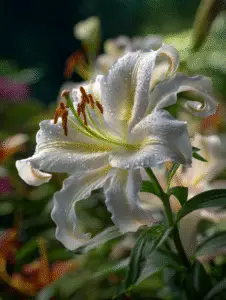
The true lilies, the ones carrying the toxin a peace lily does not, and how they are planted and grown.

Flowers safe for cats and dogs
A working list of what an animal can be trusted around when the peace lily has to live out of reach.
Enjoying our flower guides? Add YourFlowersGuide as a preferred source on Google. It helps more readers find us.
Add to Preferred Sources