Taxonomy and origin
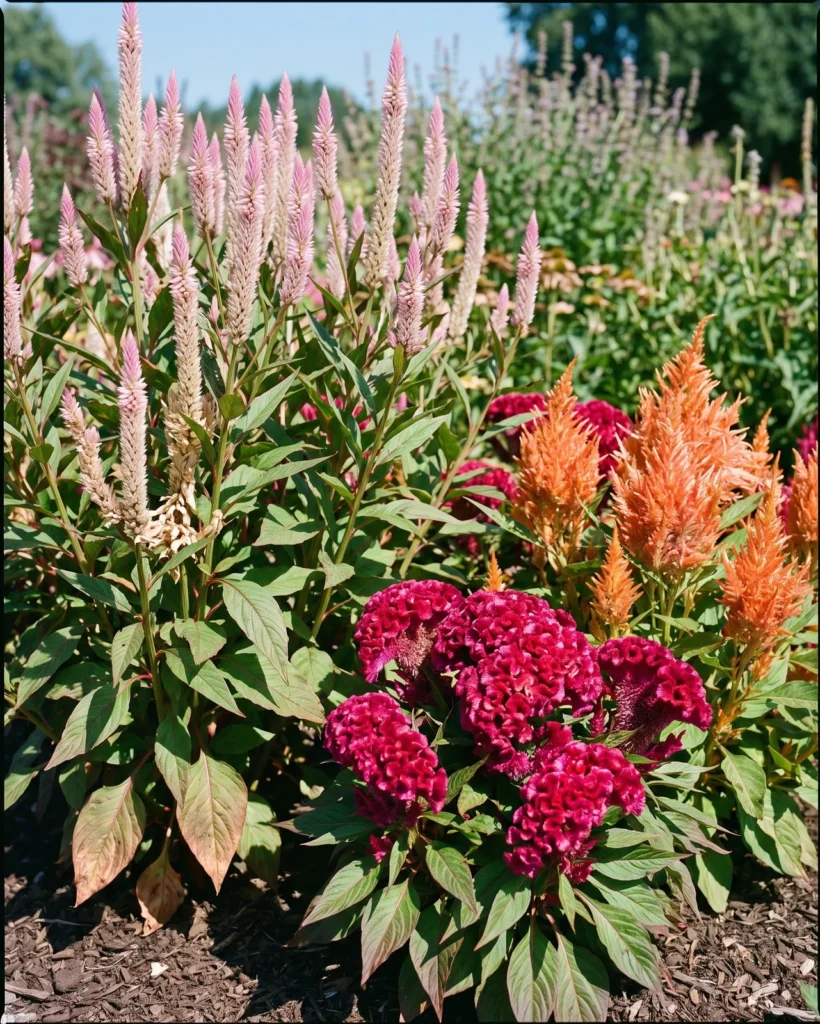
The genus Celosia holds 45 species in the Amaranthaceae family, which puts the showiest annual in the border on the same branch as the pigweed pulled out of the vegetable row and the culinary amaranths. Missouri IPM calls it pigweed's attractive cousin, and the kinship shows in the constitution: the same appetite for heat, the same tolerance of rough, dry ground. The genus is native to tropical Africa and the Americas and naturalized across subtropical Asia, and it grows the way that origin suggests, fastest in heat and hard light. The botanical name traces to the Greek keleos, burned or burning, for the red, orange and yellow of the flower spikes.
Celosia argentea has a second life as a vegetable, grown under its own name, Lagos spinach. University of Minnesota Extension puts the flavor of the young leaves close to ordinary spinach, and in Indonesian, Indian and West African culinary traditions those tender greens are steamed or simmered into soups and stews. The harvest window closes the moment the plant starts to flower, when the foliage turns bitter and stringy for good. That makes it a choice rather than a bonus: a plant picked young for greens never blooms, so gardeners who want both keep separate plantings, one row for the kitchen and one for the border alongside warm-season companions like marigolds.
Bloom time
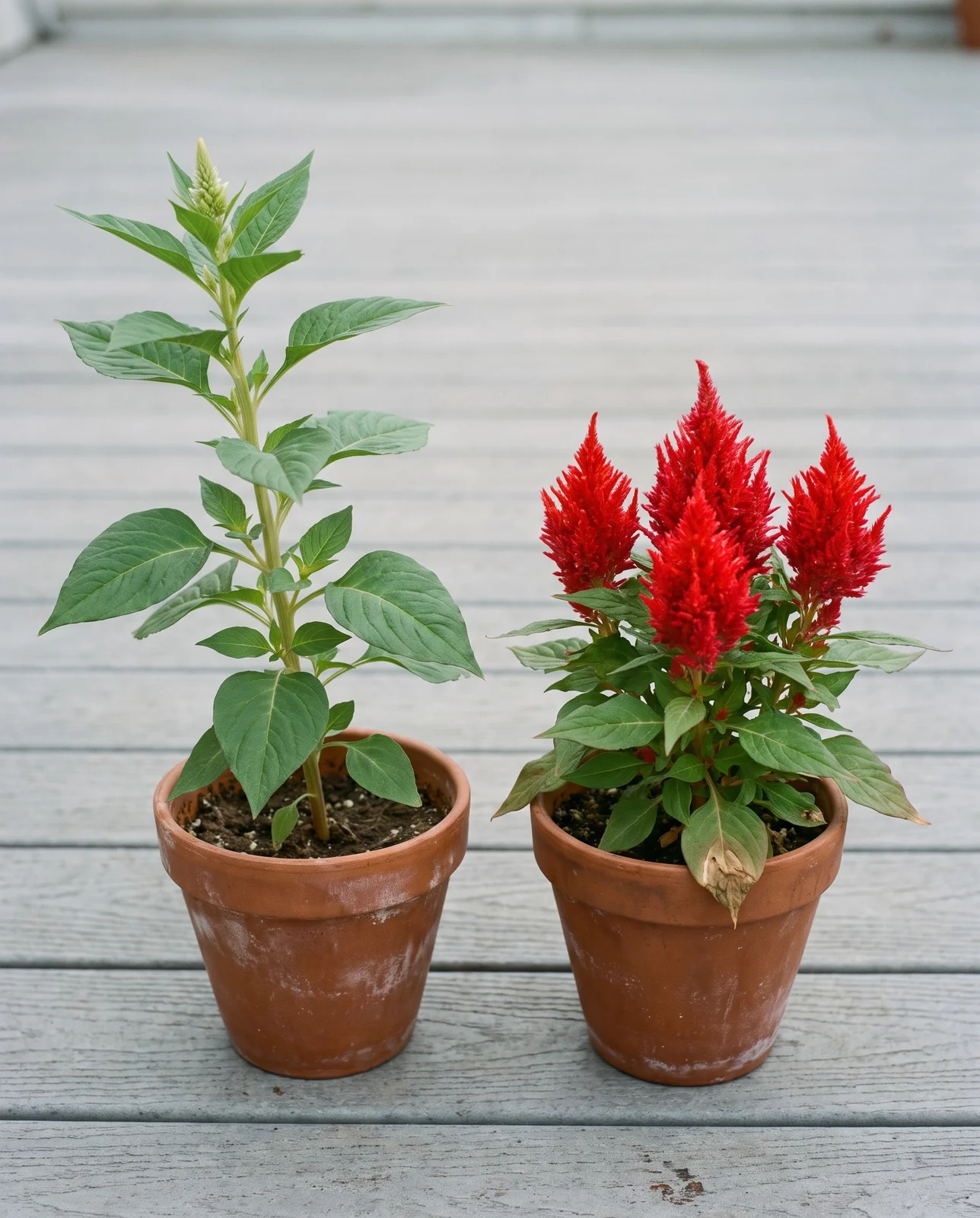
Celosia opens its first flowers in late spring and keeps producing until the first autumn frost kills the plant outright. The pace is tied to day length: Mississippi State Extension classes celosia as a quantitative short-day plant, meaning it will set buds under any photoperiod but flowers faster once days shorten to 14 hours or less. That is why the display peaks in late summer and early autumn, when individual heads reach their largest size and deepest pigment, holding the bed alongside other types of flowers that bloom all summer long.
Deadheading is the one job that changes the length of the season. Missouri Botanical Garden advises cutting spent, fading heads before they mature seed, which keeps the plant pushing lateral flowers instead of shutting production down. The heads themselves last unusually well because they are built from tightly packed modified stems and bracts rather than petals, so a single bloom holds its dense texture and color for weeks on the plant and only loses saturation slowly as the seed ripens underneath it.
Height and spread
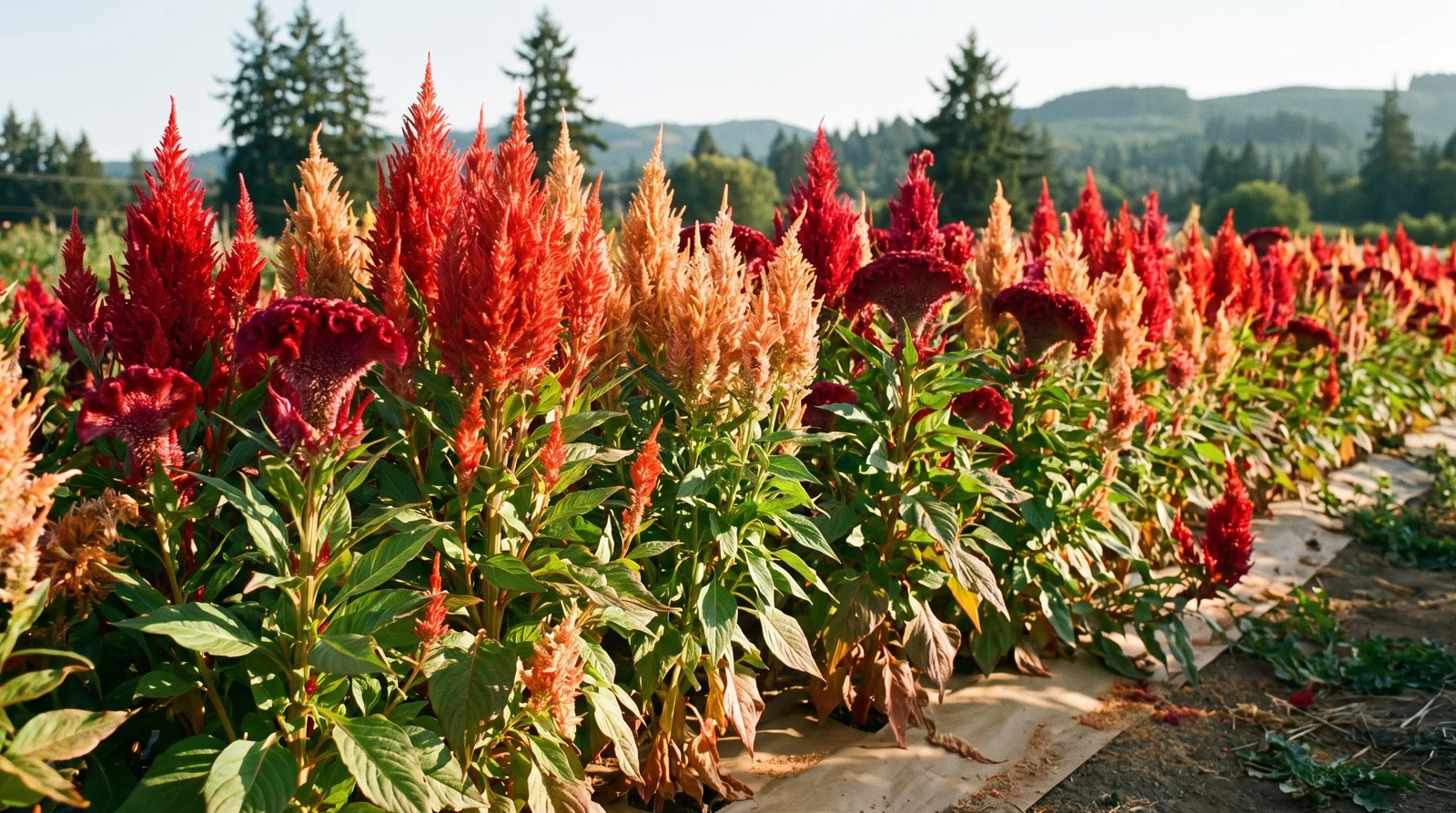
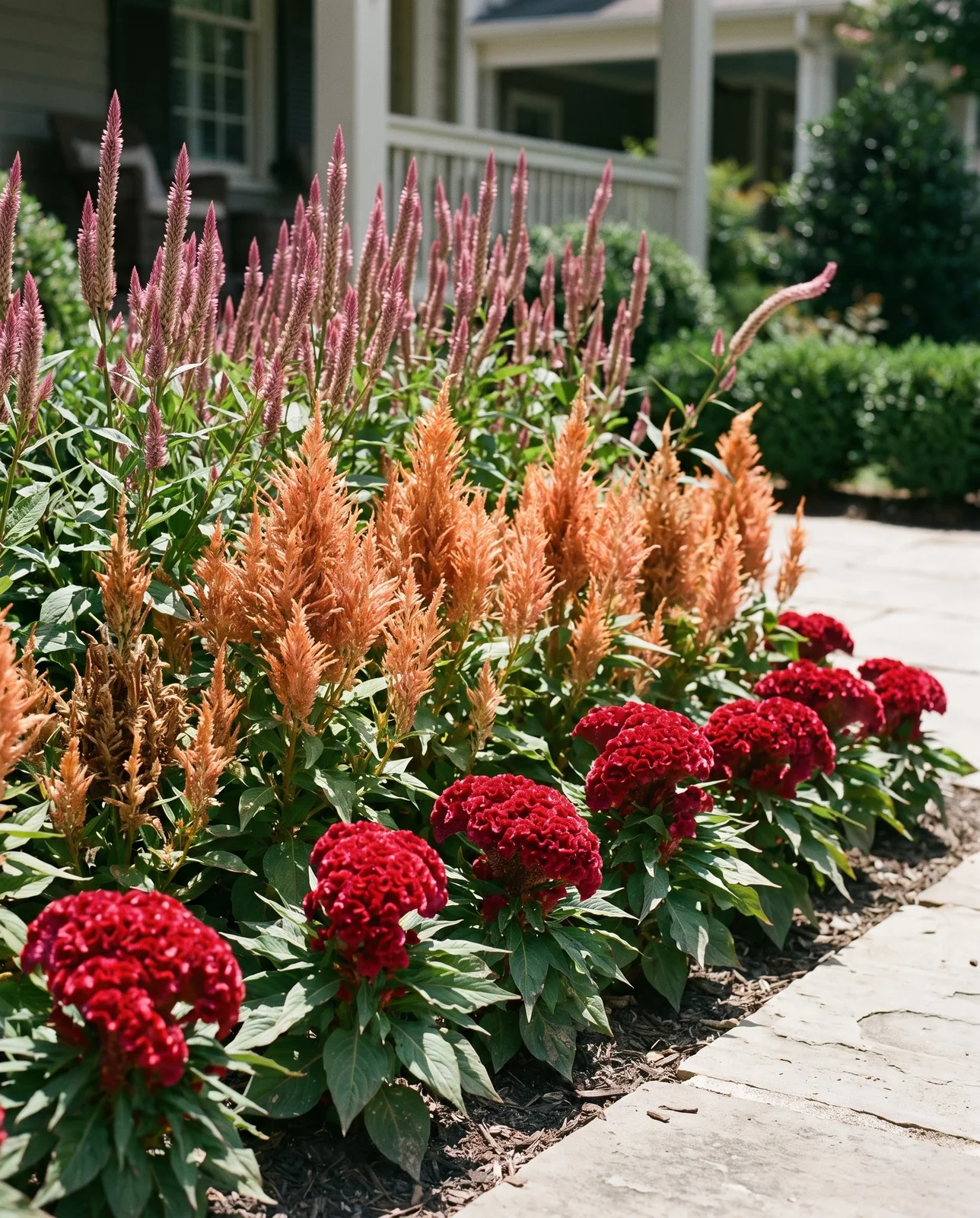
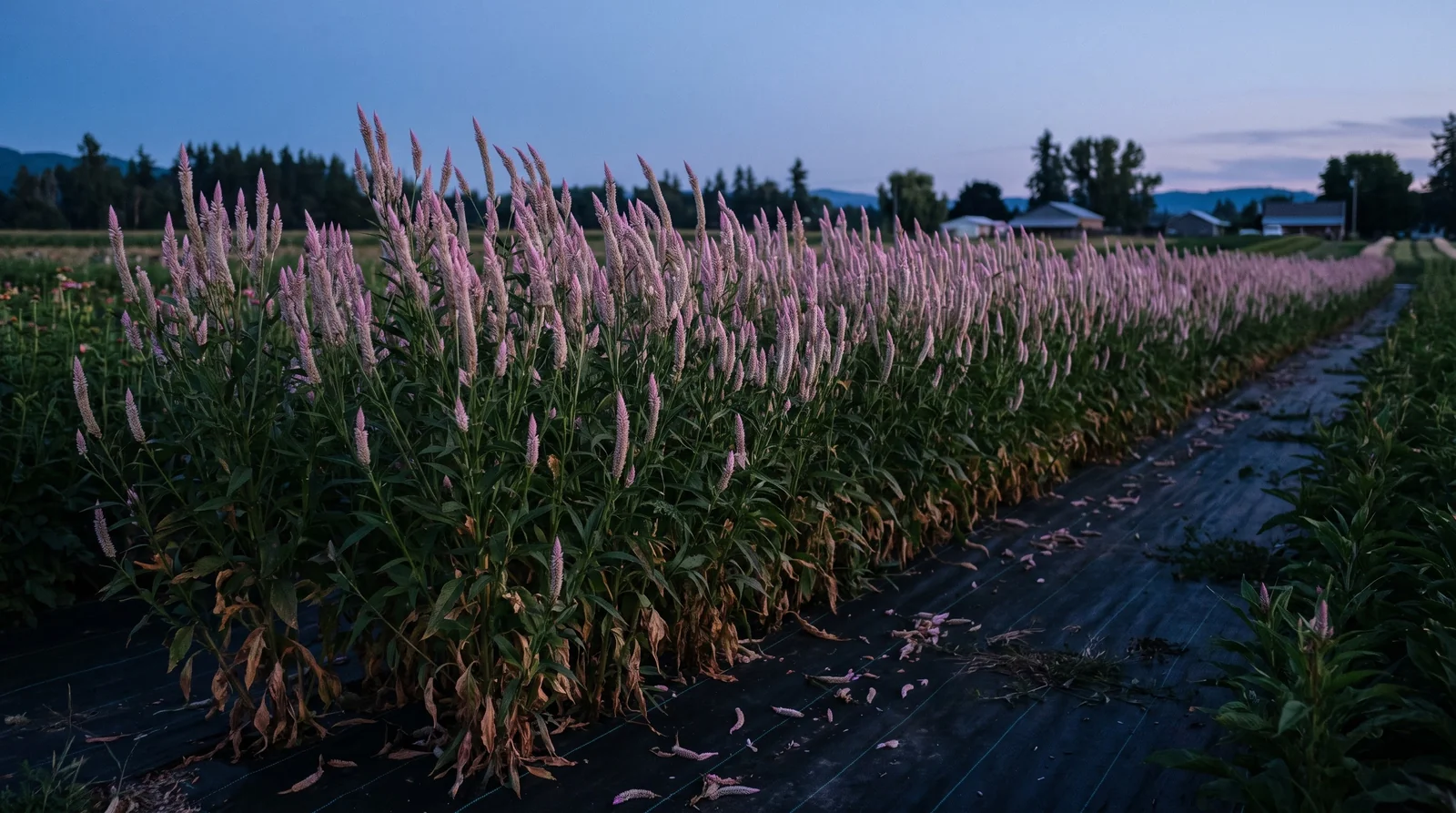
Size follows the type, not the color on the tag. Crested cockscomb runs from 6-inch dwarf selections for a bed edge to sturdy 24-inch cut-flower cultivars. Plumed types reach 8 to 36 inches, building bushy upright plants that spread 12 to 18 inches. Wheat celosia is the tallest group, commonly 24 to 40 inches on long, slender stems that give a border vertical structure and give a cutting row usable length.
Spacing splits along the same fork. Mississippi State Extension sets plumed celosia at a tight 6 by 6 inches when the crop is grown for a single-stem, single harvest, and widens that to 8 to 12 inches, up to 18 for large cultivars, where plants are meant to branch and yield stems all summer, which is how a home bed works. The same guidance calls for pinching cockscomb at 8 to 12 inches tall, taking out the terminal growing point so the plant throws lateral stems and heads of even size rather than one heavy crest.
Light
Full sun is the requirement celosia does not bend on, and the extension services put different numbers on the same phrase. University of Minnesota Extension asks for 8 or more hours of direct sun a day, NC State Extension sets the floor at 6, and Missouri IPM gives 6 to 8. The spread matters less than the direction it points: the more unobstructed light the plant gets, the shorter and stiffer the stems and the denser the color in the heads.
Why celosia grows lush leaves but never blooms
Zero flower heads on an otherwise healthy plant trace back to one of four causes, checked in order.
If none of the above apply: the plant may be an immature late-season cultivar still waiting for day lengths under 14 hours to trigger terminal buds.
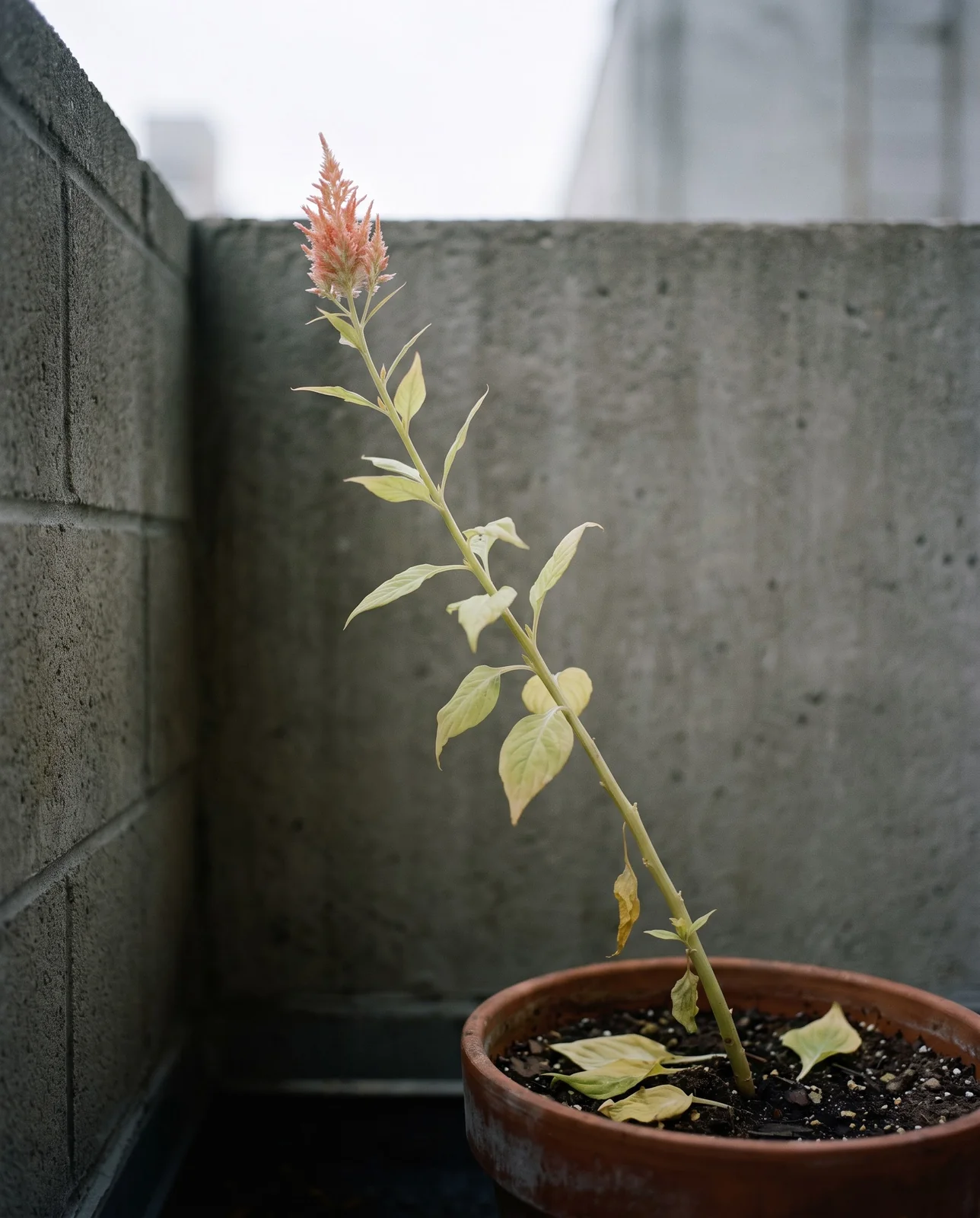
Planted in partial shade or under the skirt of a taller shrub, celosia stretches instead. Internodes lengthen, stems go weak and floppy, and everything the plant makes goes into broad, pale green leaves. That is the mechanism behind the familiar home-garden complaint of a celosia that grows vigorously for 60 days and never produces a single bloom.
Water
Celosia tolerates dry soil far better than wet, so the watering can does more damage in most gardens than the drought does. University of Minnesota Extension puts the trigger at the top 1 to 2 inches of soil going completely dry. Once the plant is established in the ground, a thick, fibrous root system and tropical ancestry carry it through the dry summer stretches that flatten softer annuals.
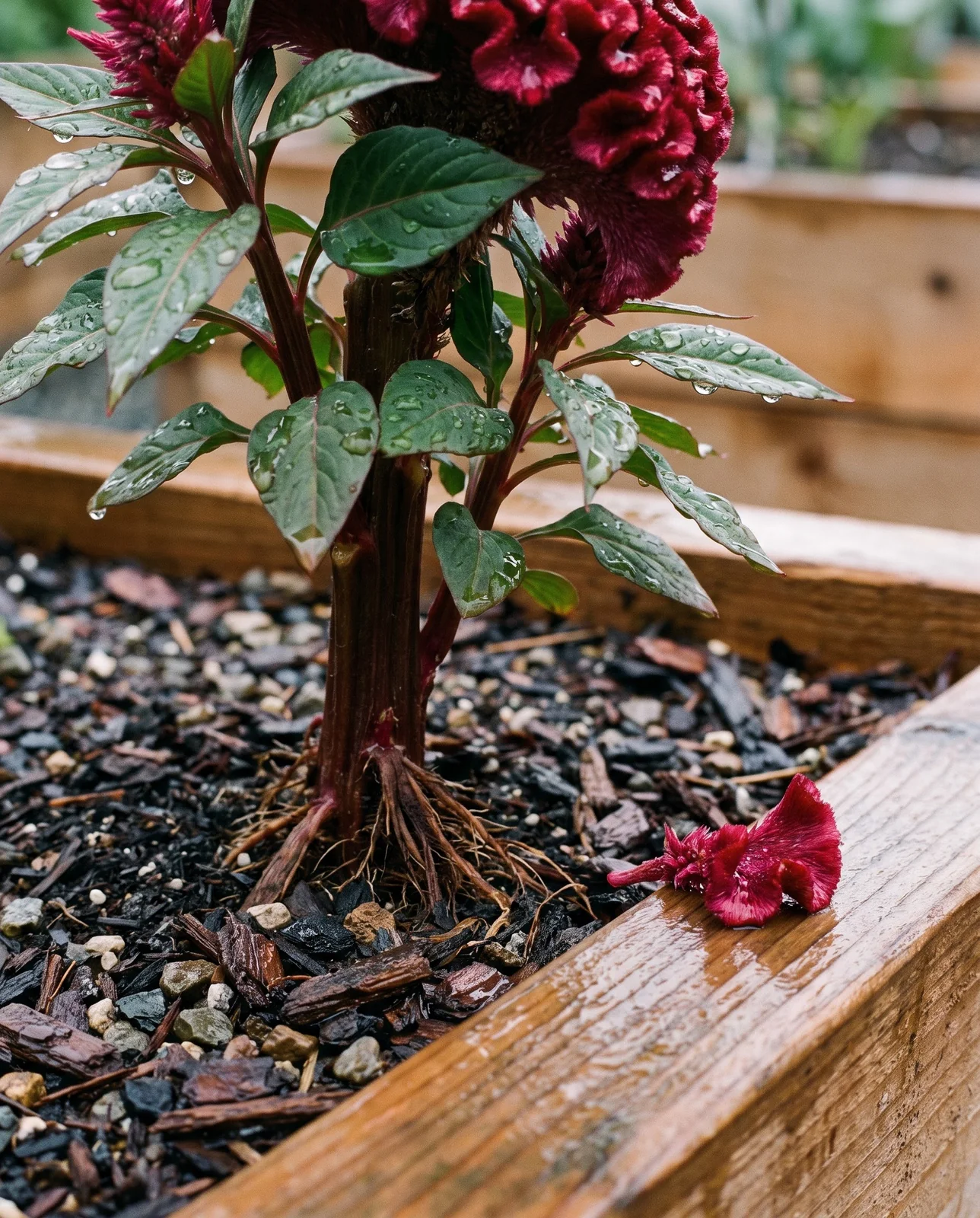
Too much water is the usual way the plant dies. Missouri Botanical Garden flags root rot as the main disease risk, and it takes hold in poorly drained ground where standing water pushes oxygen out of the root zone. The signs are yellowing lower foliage, sudden wilting in soil that is plainly wet, and blackened decay at the soil line. Water at the base with a drip line or soaker hose rather than overhead, since sprinklers soak the dense flower heads and hold moisture exactly where fungal rot starts.
Soil and pH
Loose, fertile ground with plenty of organic matter suits celosia, as long as water moves through it quickly. The two extension recommendations on pH do not match: University of Minnesota Extension puts the preference at 6.0 to 6.5, while NC State Extension lists a wider neutral tolerance of 6.0 to 8.0. Ordinary garden loam sits inside both ranges, and slightly acidic to neutral soil is where root growth goes easiest, so the gap is worth knowing about rather than worth correcting for.
Browning celosia: normal aging or a real problem
Three symptoms get confused with each other as the season turns, and each has a different cause underneath it.
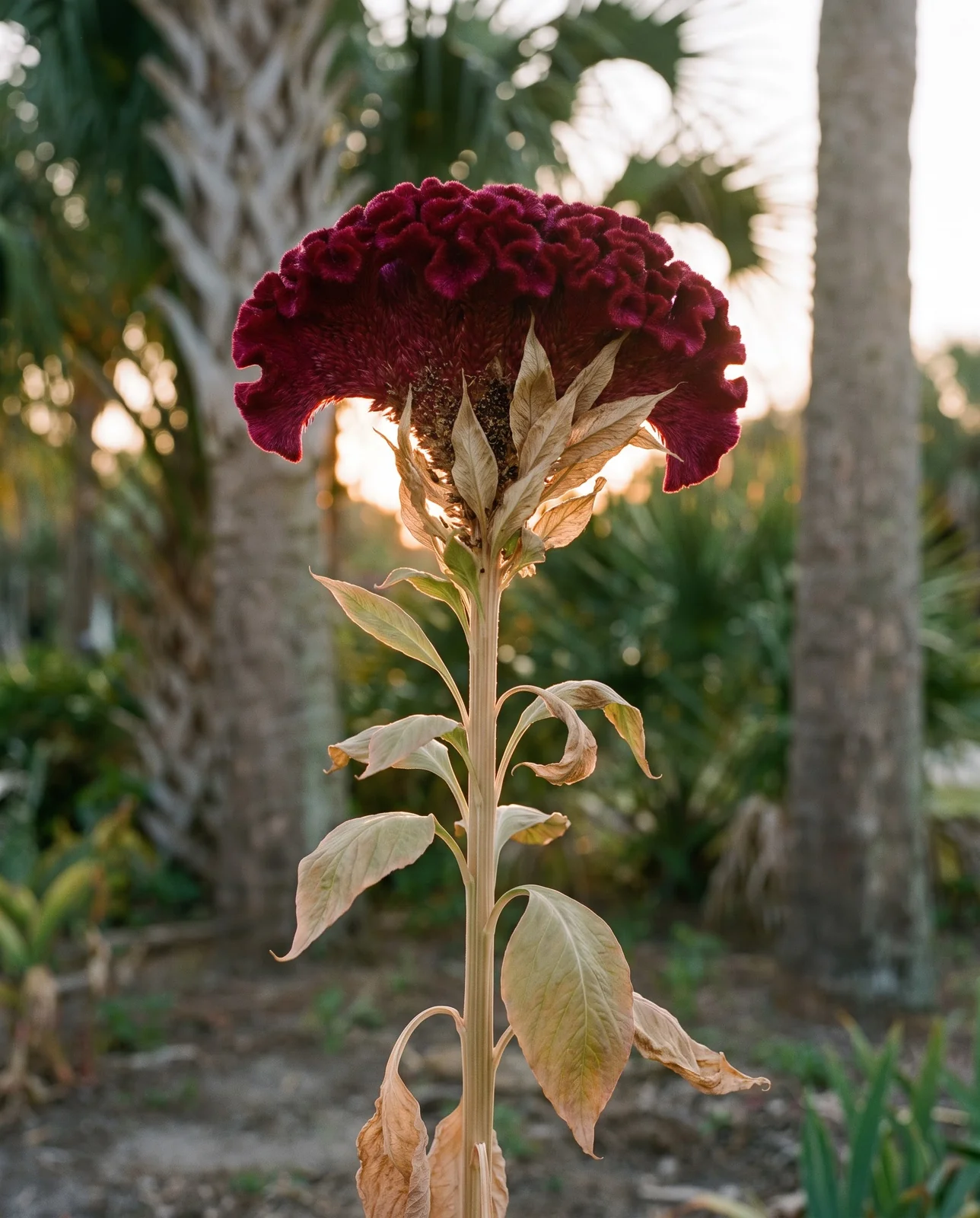
Normal physiological aging as the flower head finishes seed production. Deadhead to encourage new lateral blooms, or leave the head in place to harvest for drying.
Caused by poor drainage and saturated soil, per Missouri Botanical Garden. Remove and discard affected plants and improve bed drainage before replanting.
Flagged by Missouri IPM. Improve air circulation, space plants adequately, and avoid overhead watering to keep foliage dry.
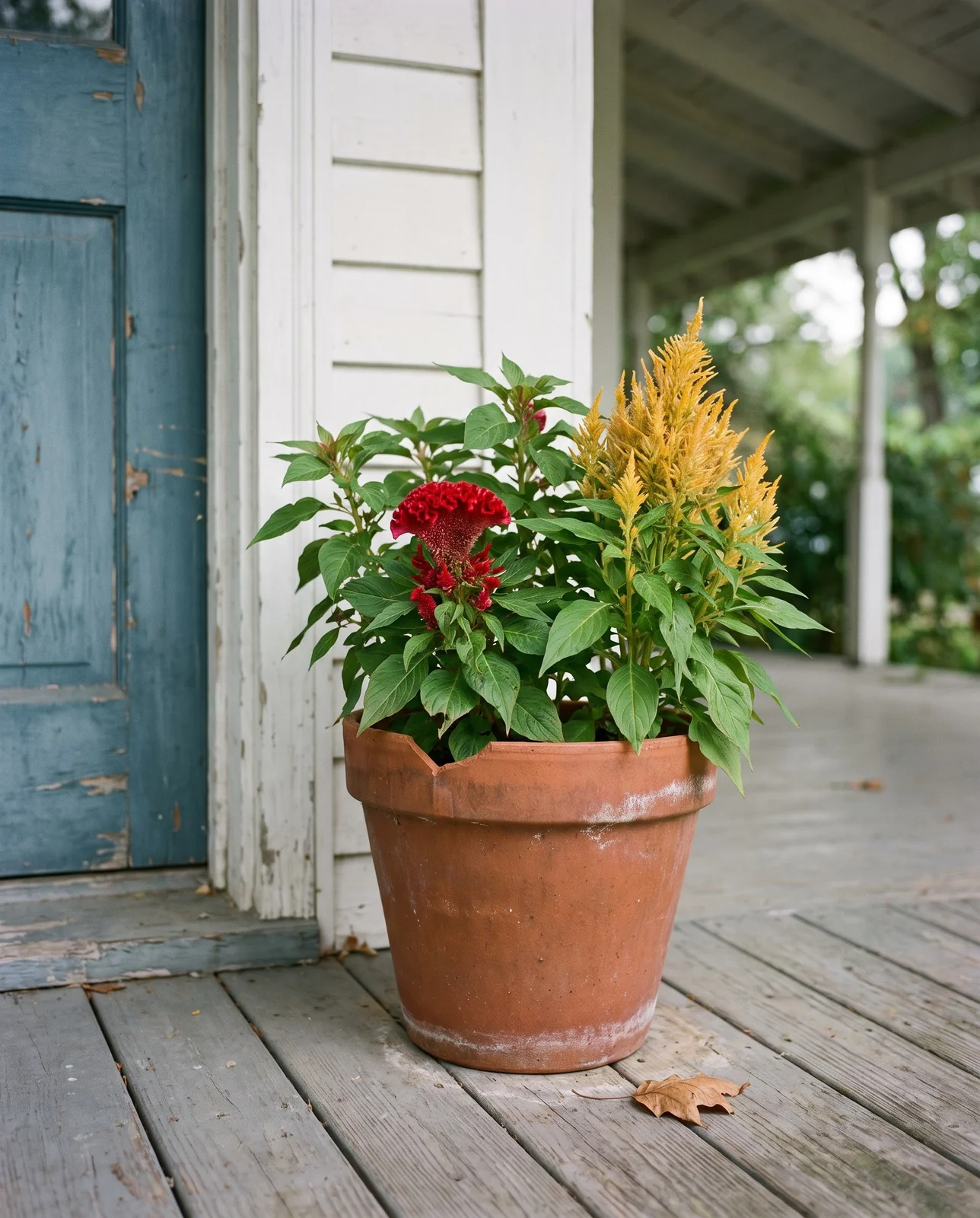
Growing mode matters here more than soil chemistry does. University of Minnesota Extension states plainly that celosia performs best in garden beds and is often stunted in containers: the restricted root volume of a decorative pot caps root expansion and pushes the plant into small, premature terminal heads. A pot is the compromise, not the default. Where a container is the only option, use a deep, high-volume planter with unobstructed drainage holes rather than a shallow decorative pot.
USDA hardiness
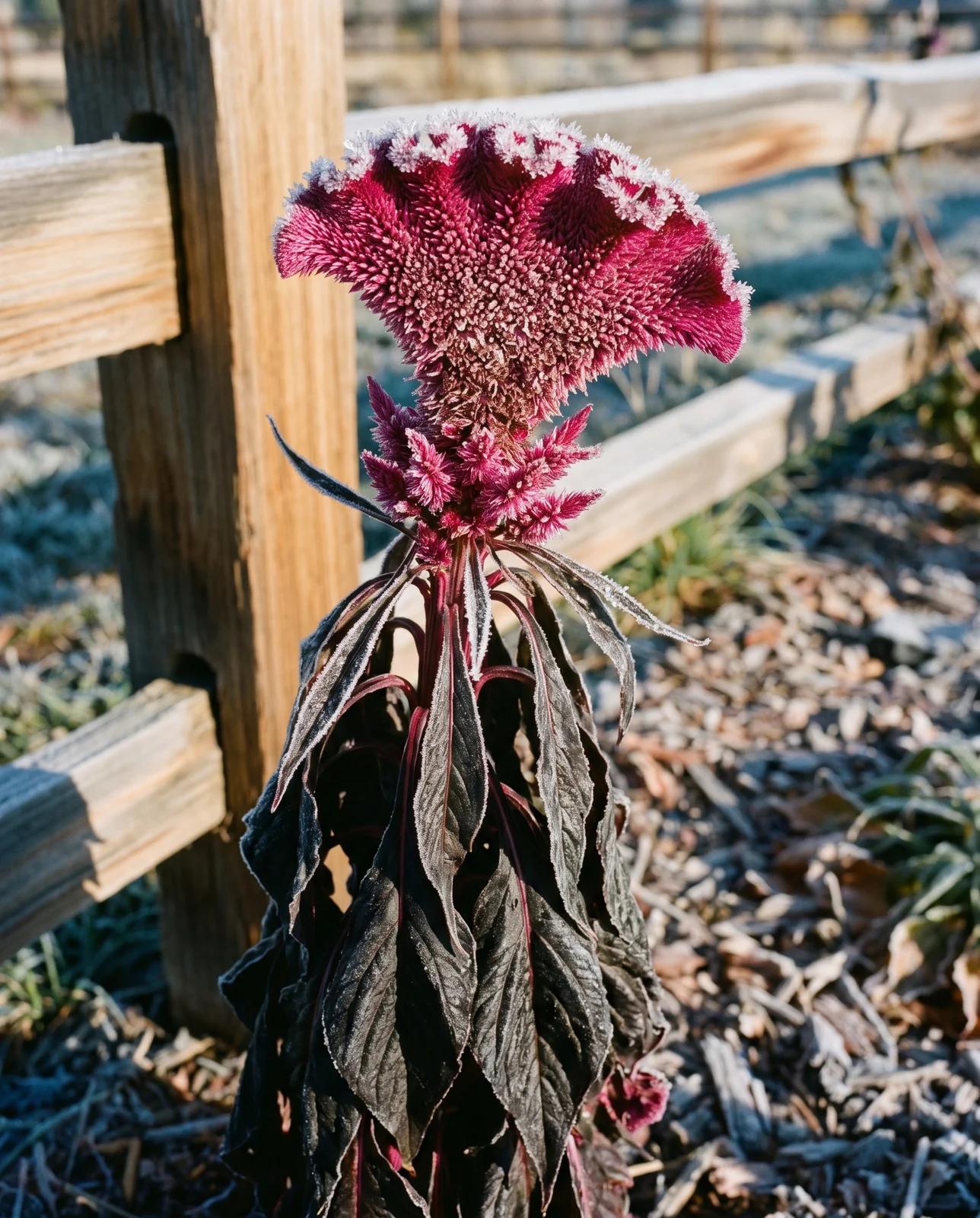
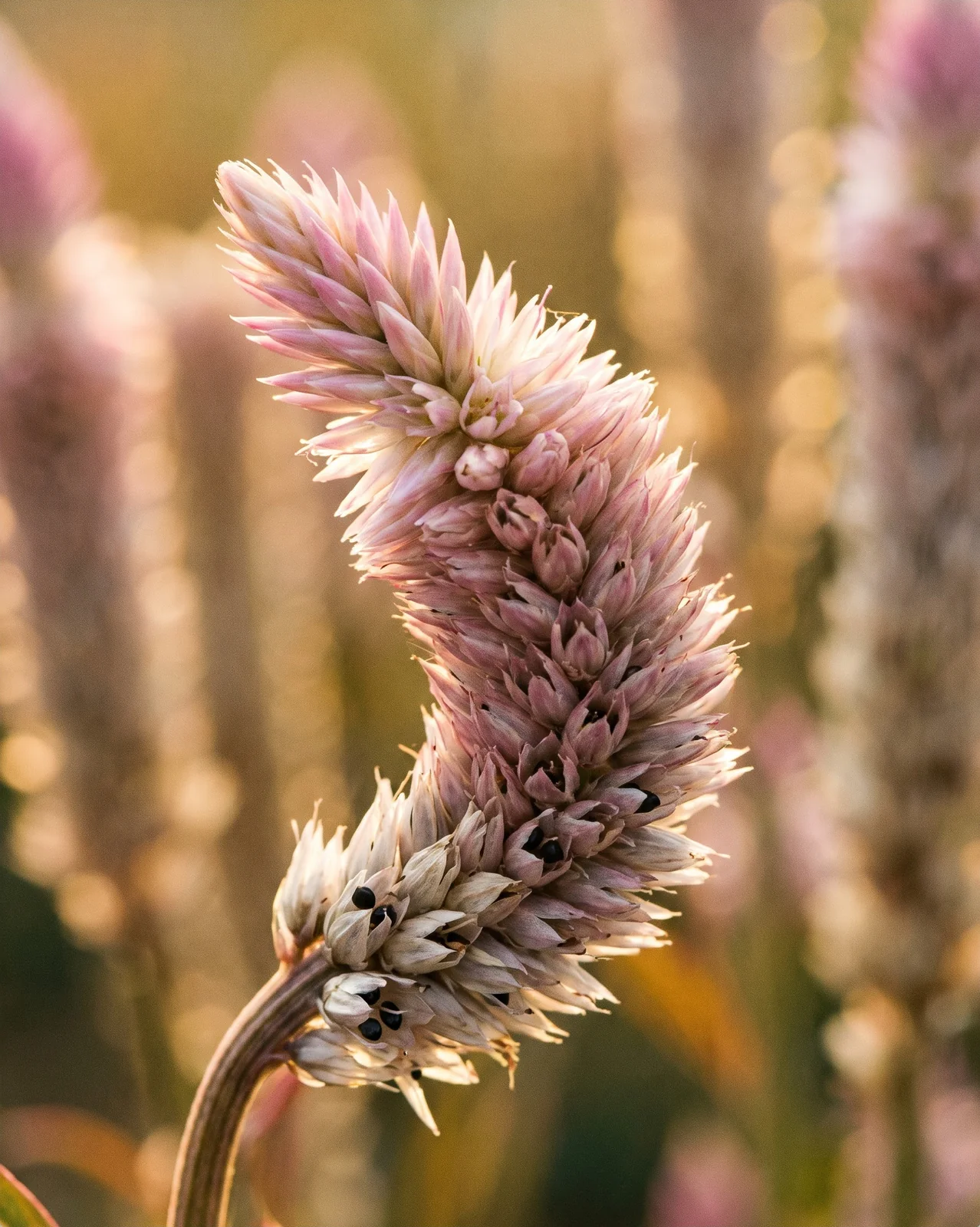
Celosia has no frost tolerance at all, which makes it an annual across almost all of North America. At 32 degrees Fahrenheit the tissue in the stems and flower heads collapses, the foliage turns black, and the plant is finished for the year. Through USDA zones 2 to 9 that means fresh seedlings or nursery transplants every spring, set out only after the last frost date has passed.
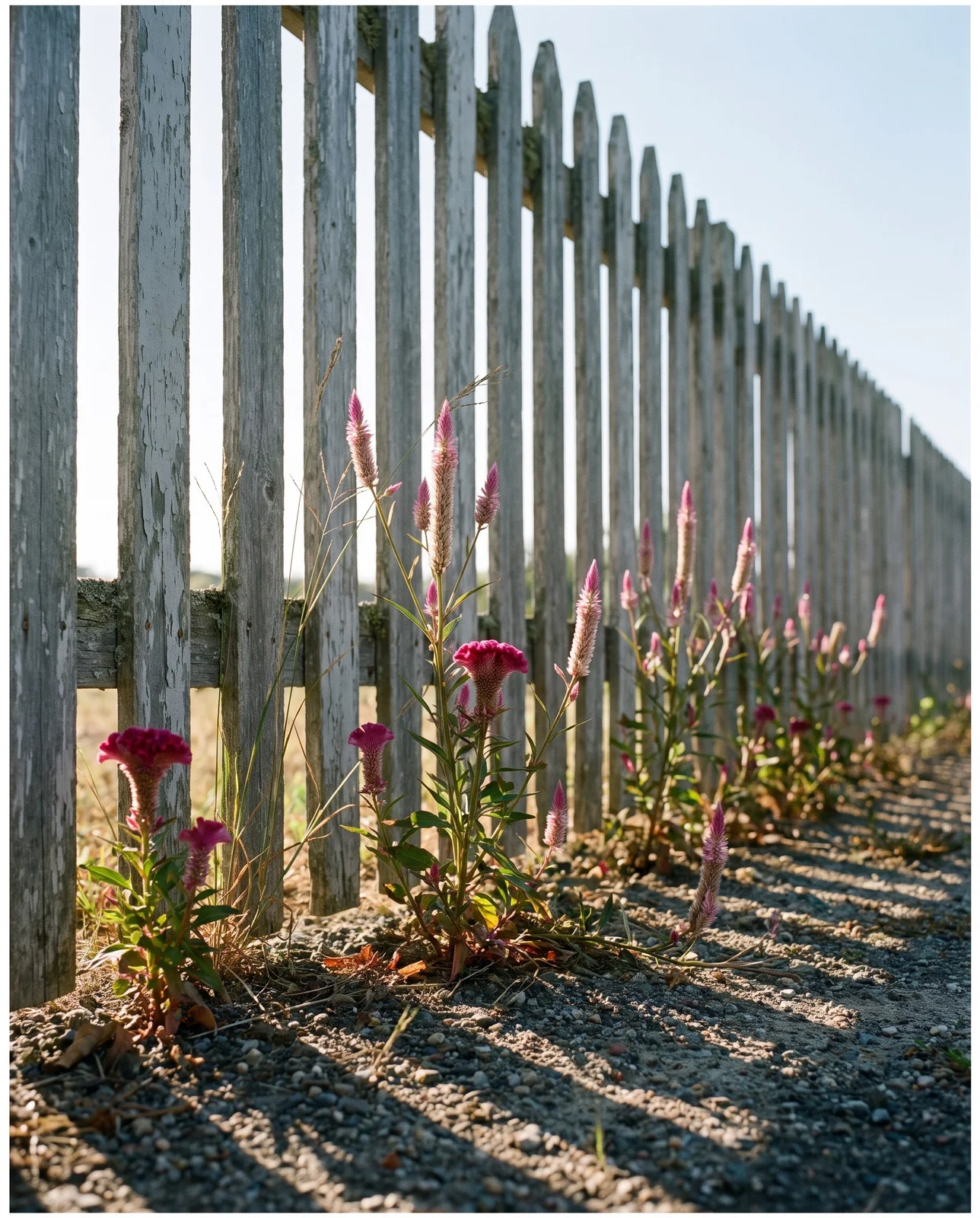
In frost-free ground it behaves differently. NC State Extension lists Celosia argentea as perennial in zones 10a, 10b, 11a and 11b, while Missouri IPM extends tender-perennial behavior to zones 10 through 12. There the base of the plant goes woody over time and carries through mild winters, throwing successive flushes of flower. Farther north, the celosia that appears in the same bed the following June is not the same plant: those are volunteer seedlings from dropped seed, which is why celosia has a reputation for coming back that its roots do not support.
Celosia planting and bloom calendar by zone
Indoor-sowing and transplant dates follow University of Minnesota Extension and Mississippi State Extension guidance; the year-round zone band reflects the true perennial range NC State Extension gives for celosia, zones 10a to 11b.
Propagation and longevity
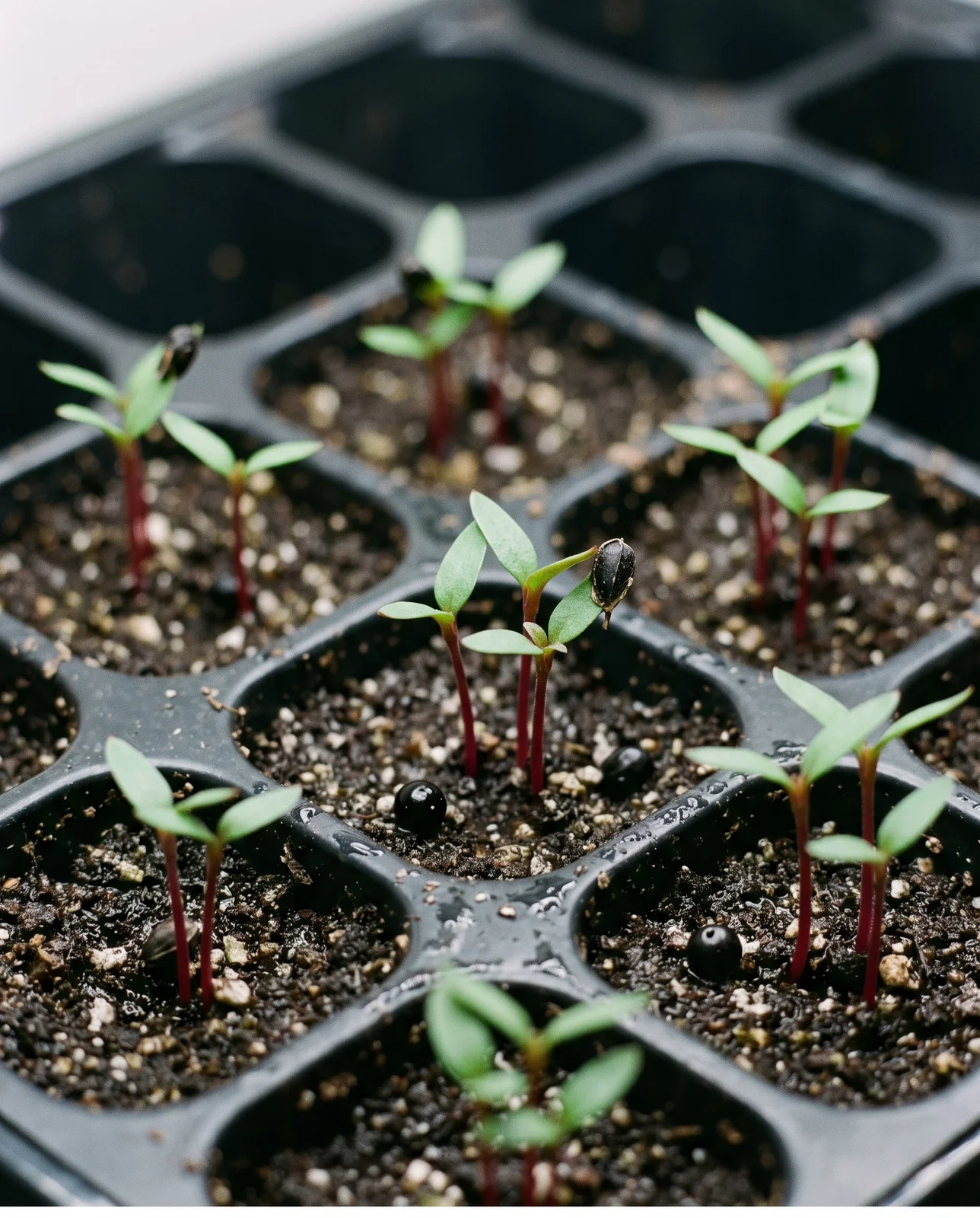
Seed is the normal route, and the two timing recommendations sit about a month apart. University of Minnesota Extension starts seed indoors roughly 10 weeks before the outdoor planting date, while Missouri Botanical Garden sows 6 to 8 weeks before the last spring frost. Germination itself is quick either way: 7 to 10 days at 75 to 80 degrees Fahrenheit.
Celosia from seed to frost, week by week
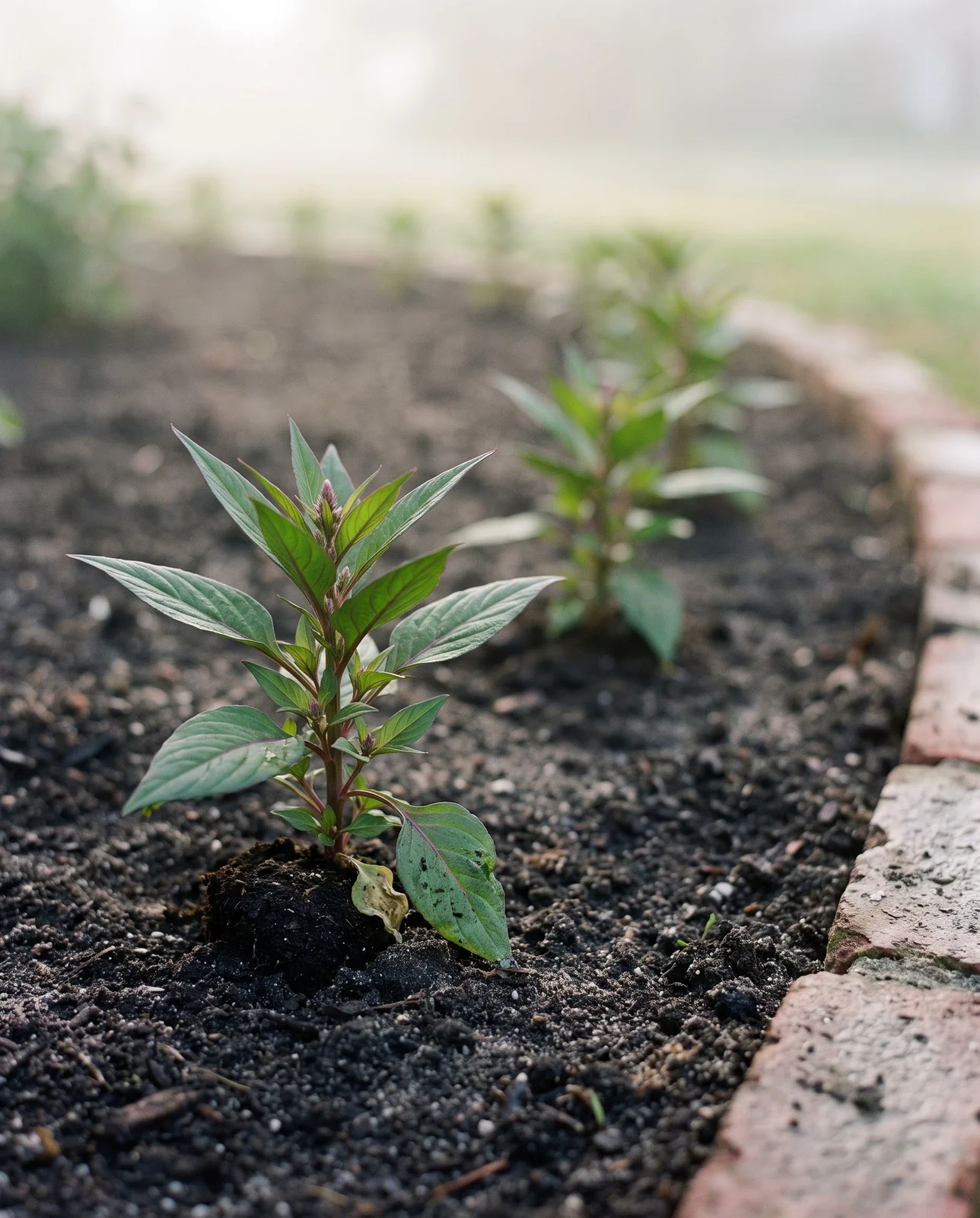
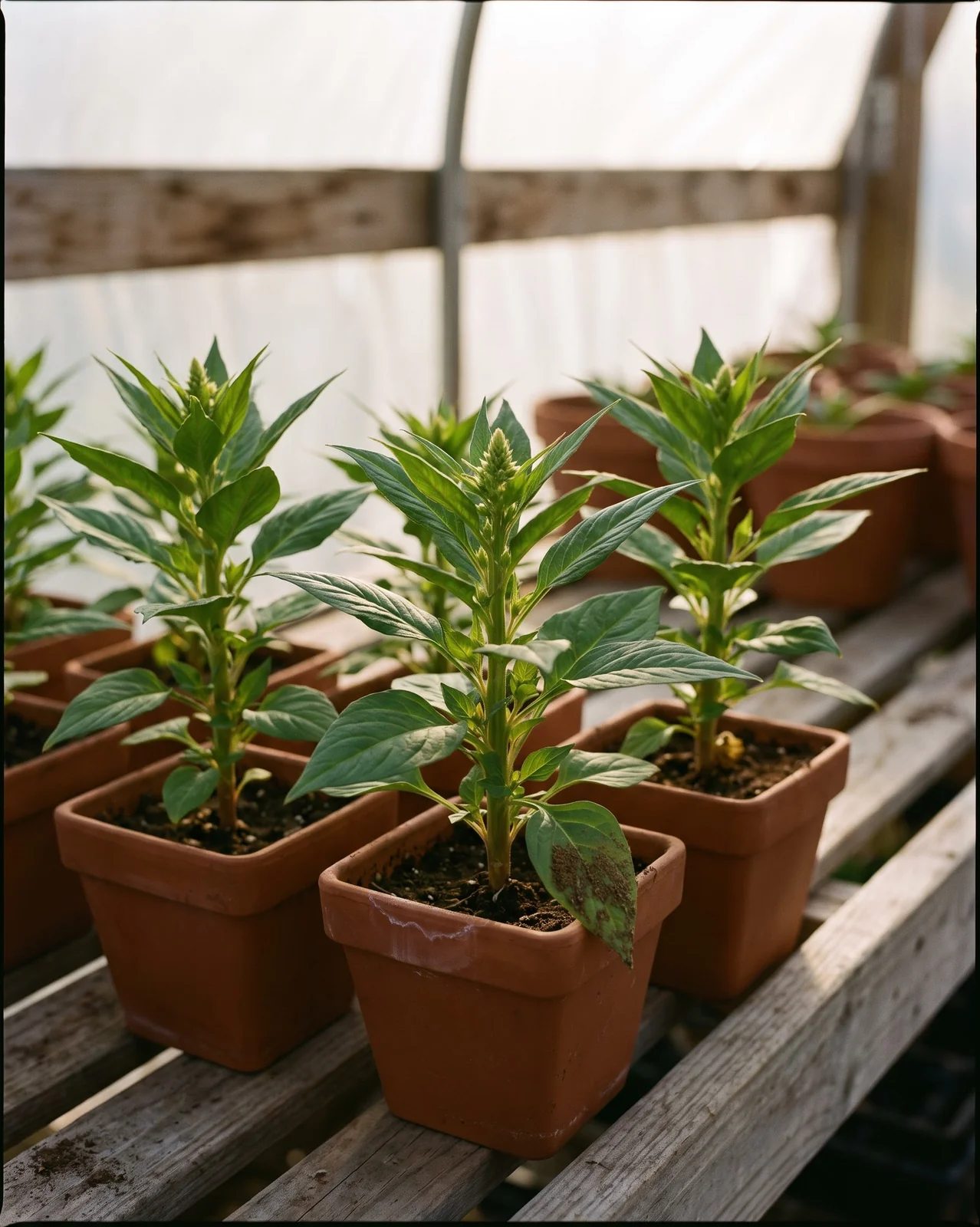
Indoor sowing runs weeks one and two: seed goes into a moist germination mix at 75 to 80°F and gets pressed lightly into the surface rather than buried, since Mississippi State Extension notes celosia needs light to germinate. Seedling development follows through weeks three to six under bright grow lights near 70°F, with each cell thinned to one strong plant. Hardening off and planting out span weeks seven to ten: seedlings acclimate to outdoor sun and wind over about seven days, then move into a garden bed once the soil exceeds 55°F, per University of Minnesota Extension. Vegetative growth and pinching take weeks eleven through fourteen, as the plant builds an extensive root system and, for cockscomb types, gets pinched back at 8 to 12 inches tall to force lateral branching, a step Mississippi State Extension specifically recommends. Peak bloom and floral harvest run weeks fifteen through twenty-two, when terminal flower heads reach full color and stems get cut for bouquets or for drying as the heads thicken toward maximum density. The season ends at the first autumn freeze: temperatures under 32°F kill the plant outright, and the last task is collecting the mature black seed before clearing the frost-killed stems from the bed.
One detail decides whether the seed tray works. Celosia seed needs light to germinate, though Mississippi State Extension notes the intensity required is very low, so seed is pressed lightly onto the surface of the mix instead of buried. Outdoors, wait until the soil is over 55 degrees Fahrenheit, because cold, damp ground stalls root growth and invites damping-off pathogens. Cuttings are the other route: terminal stem cuttings set in moist potting media root in roughly 3 to 4 weeks, according to University of Minnesota Extension.
Choosing among cockscomb, plumed, and wheat celosia
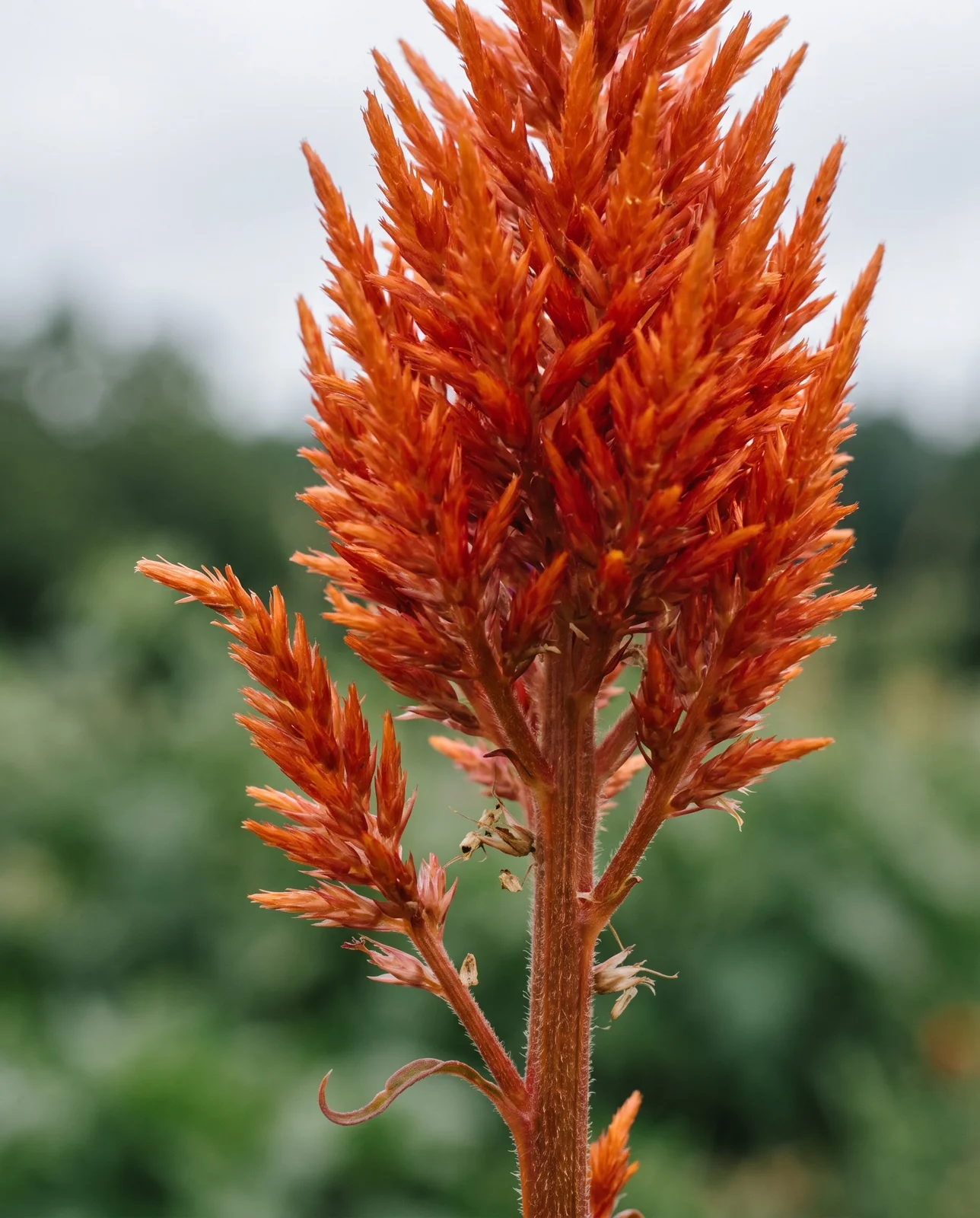
The choice worth making first is form, not color. The three garden types are varieties of one species: crested cockscomb (Celosia argentea var. cristata), plumed celosia (Celosia argentea var. plumosa) and wheat celosia (Celosia argentea var. spicata). They differ in stem structure, branching habit and how long a flower holds, and those differences decide what each one can do in a bed or a bucket.
The three celosia flower forms, and the varieties that represent them
Crested cockscomb carries dense, convoluted, rooster-comb crests built for structural focal points and dried craft. Plumed celosia branches into feathery, flame-shaped plumes suited to bedding mass and airy bouquet filler. Wheat celosia sends up tall, tapering spikes that read as texture in a naturalistic cutting row.
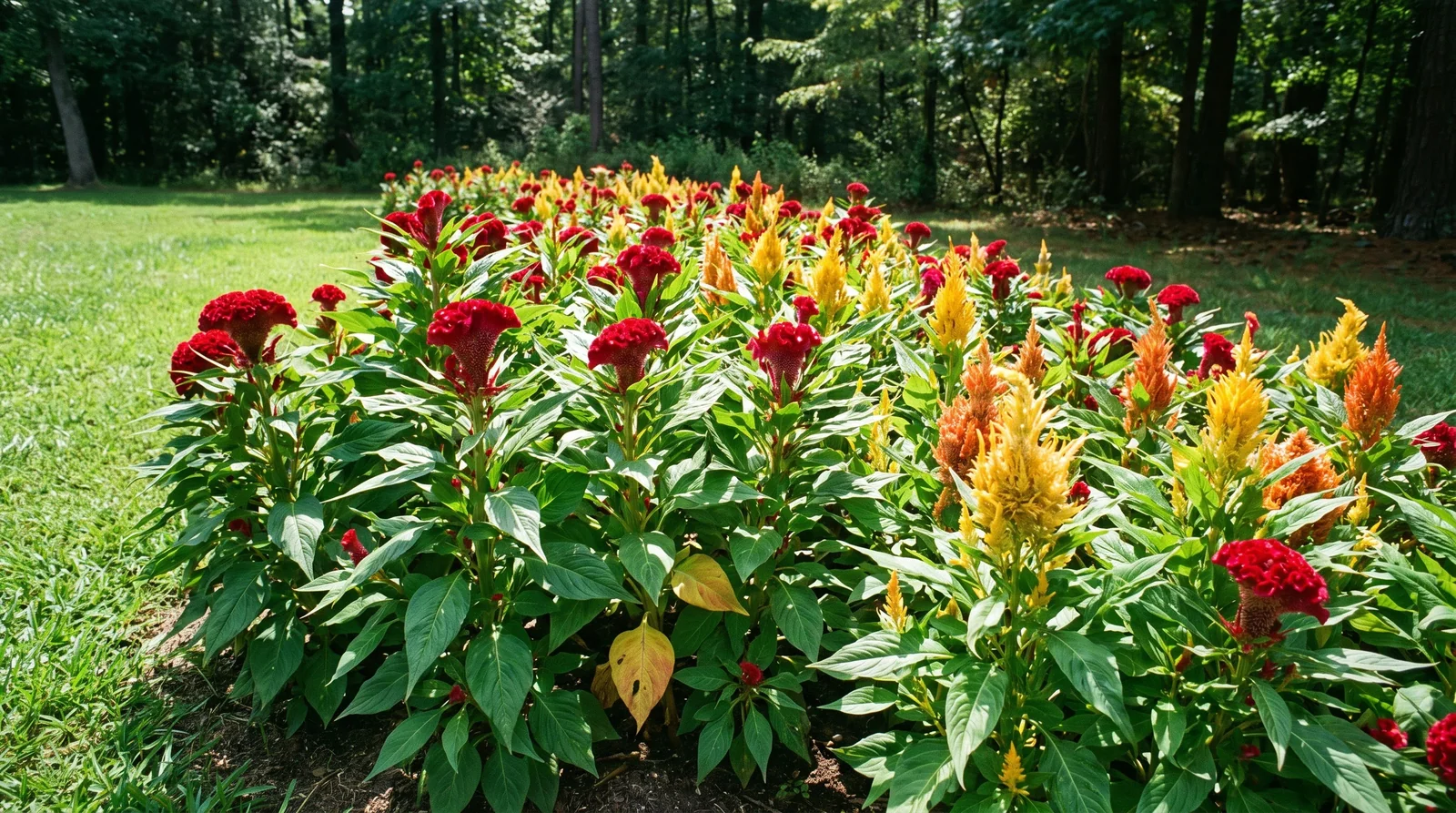
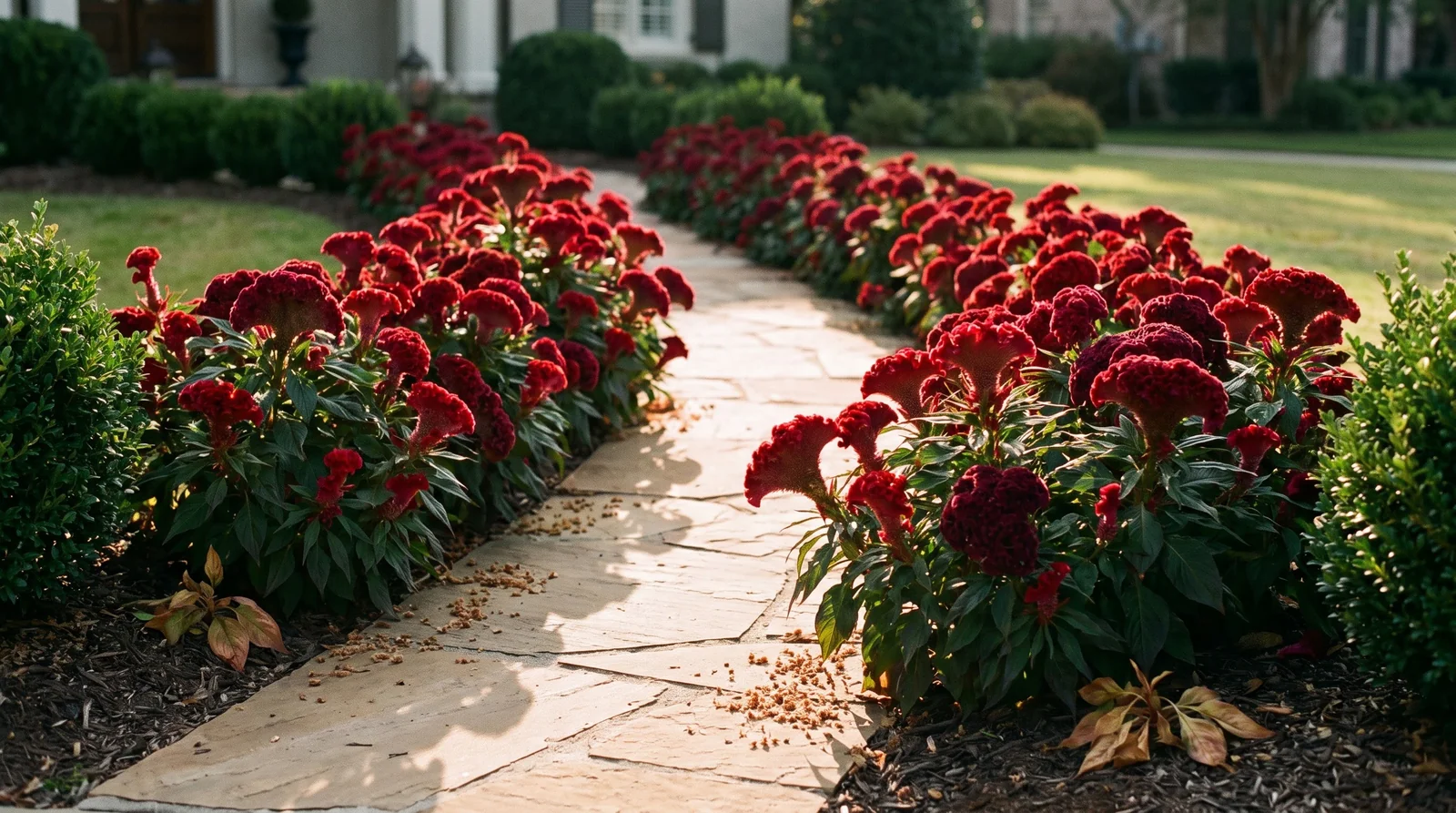
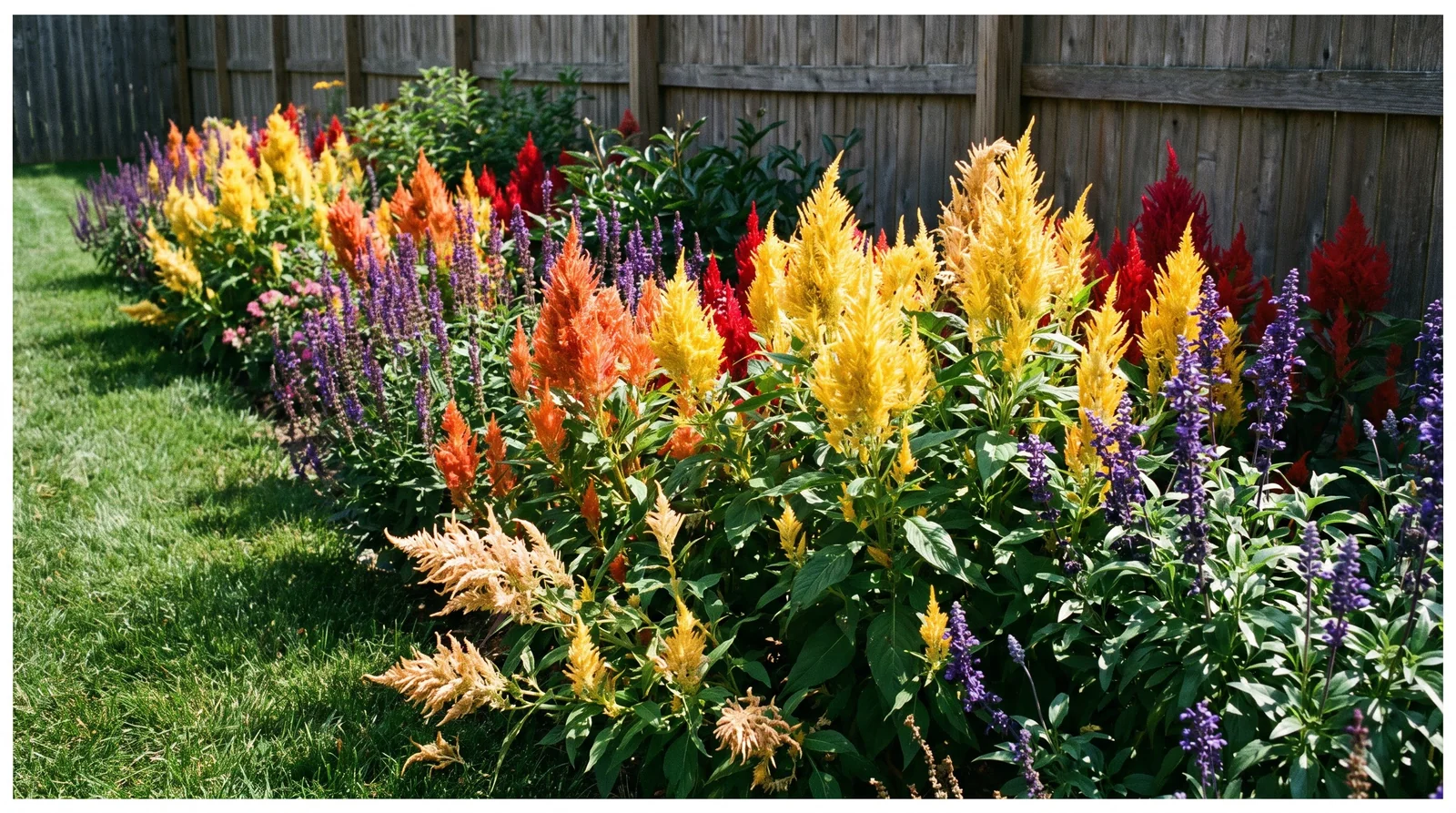
Crested cockscomb makes dense, velvety ridges of fasciated florets that look like a rooster's comb or a piece of brain coral. That rigid structure makes it the strongest focal point in a formal border and the first choice for dried arrangements, since the shape comes through drying almost intact. Plumed celosia carries soft, feathery panicles that catch the light, which suits mass bedding and works as filler among cut flowers like zinnias and cosmos. Wheat celosia sends narrow, cylindrical spikes up wiry stems for the looser, meadow-like effect a naturalistic cutting garden is built on.
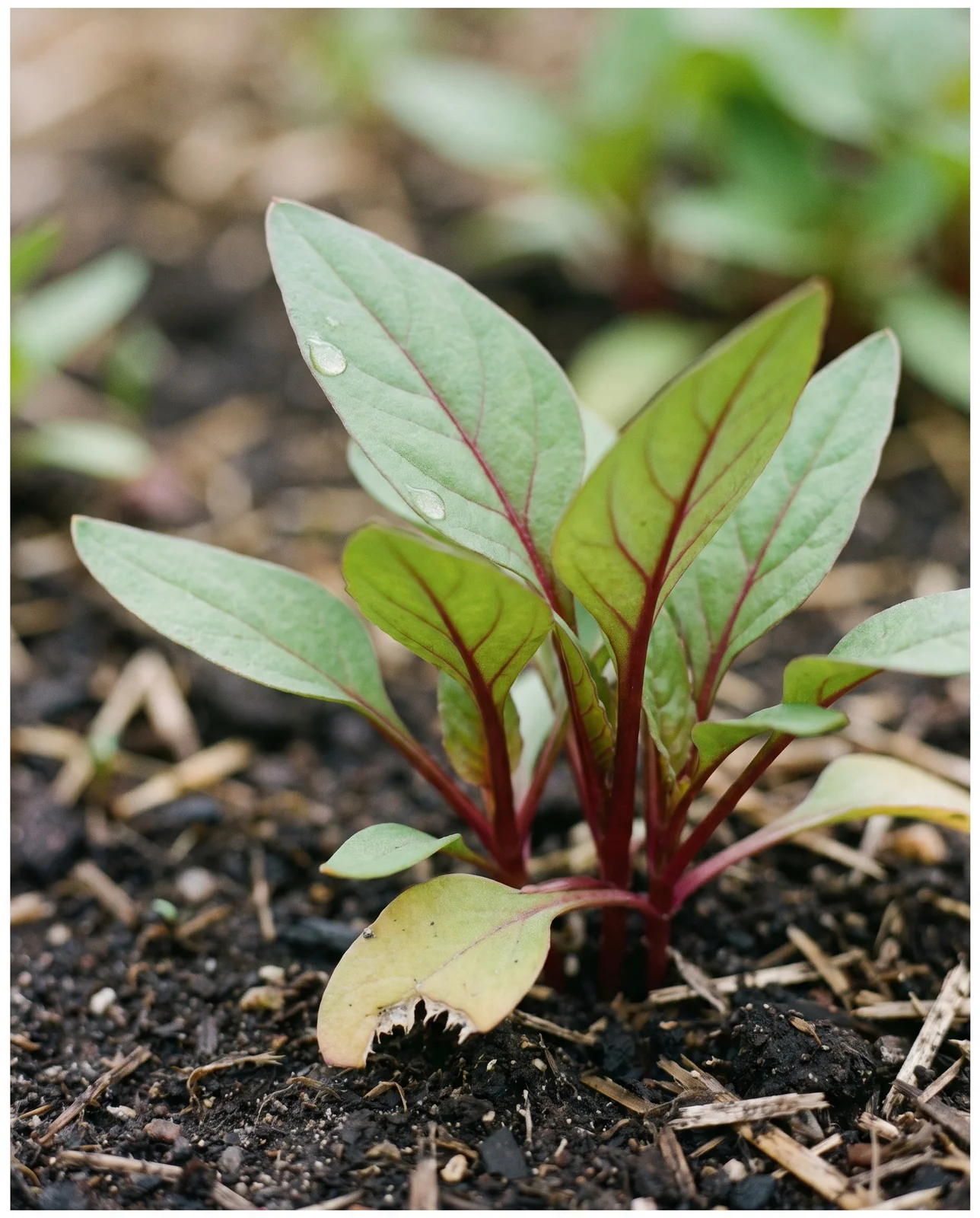
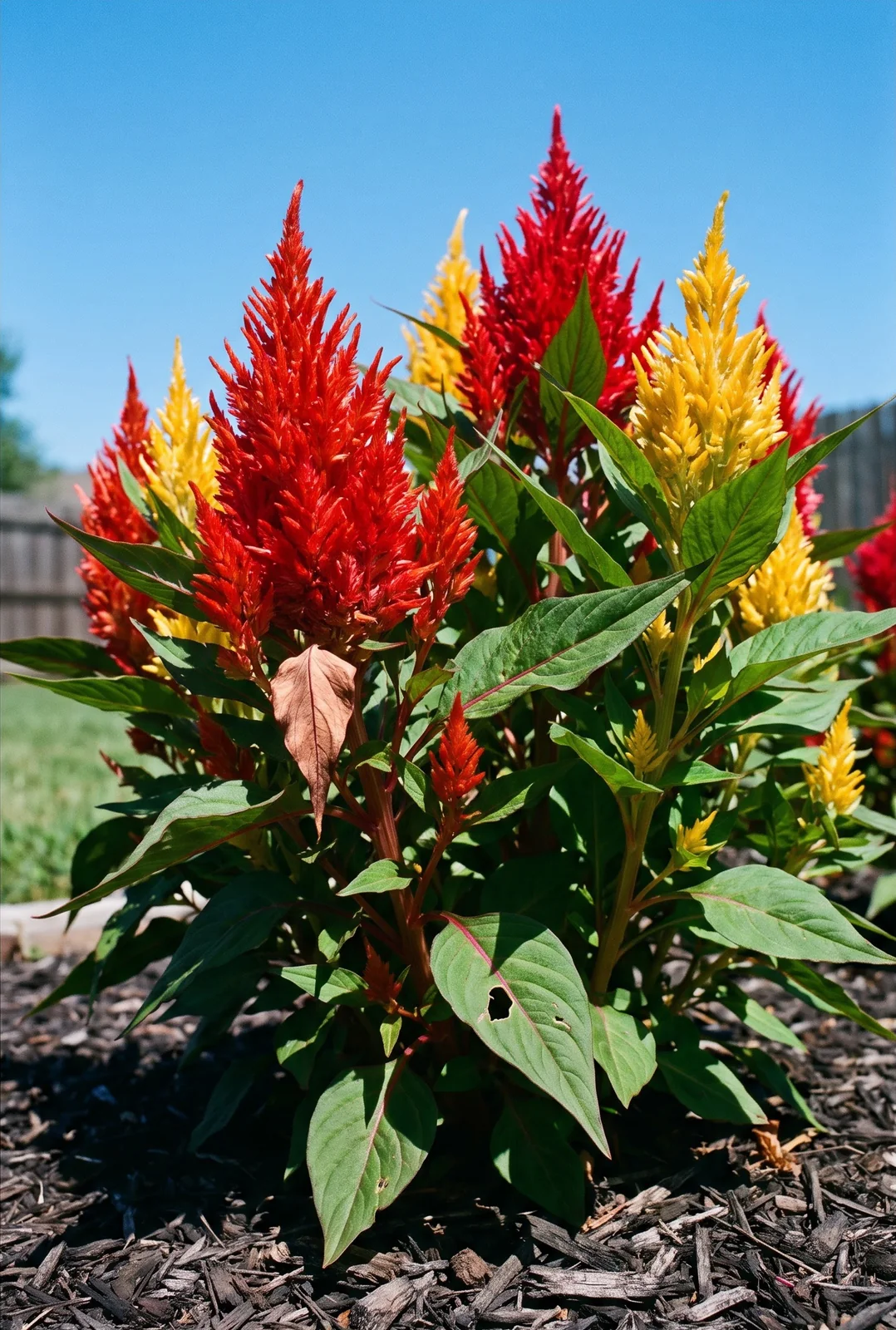
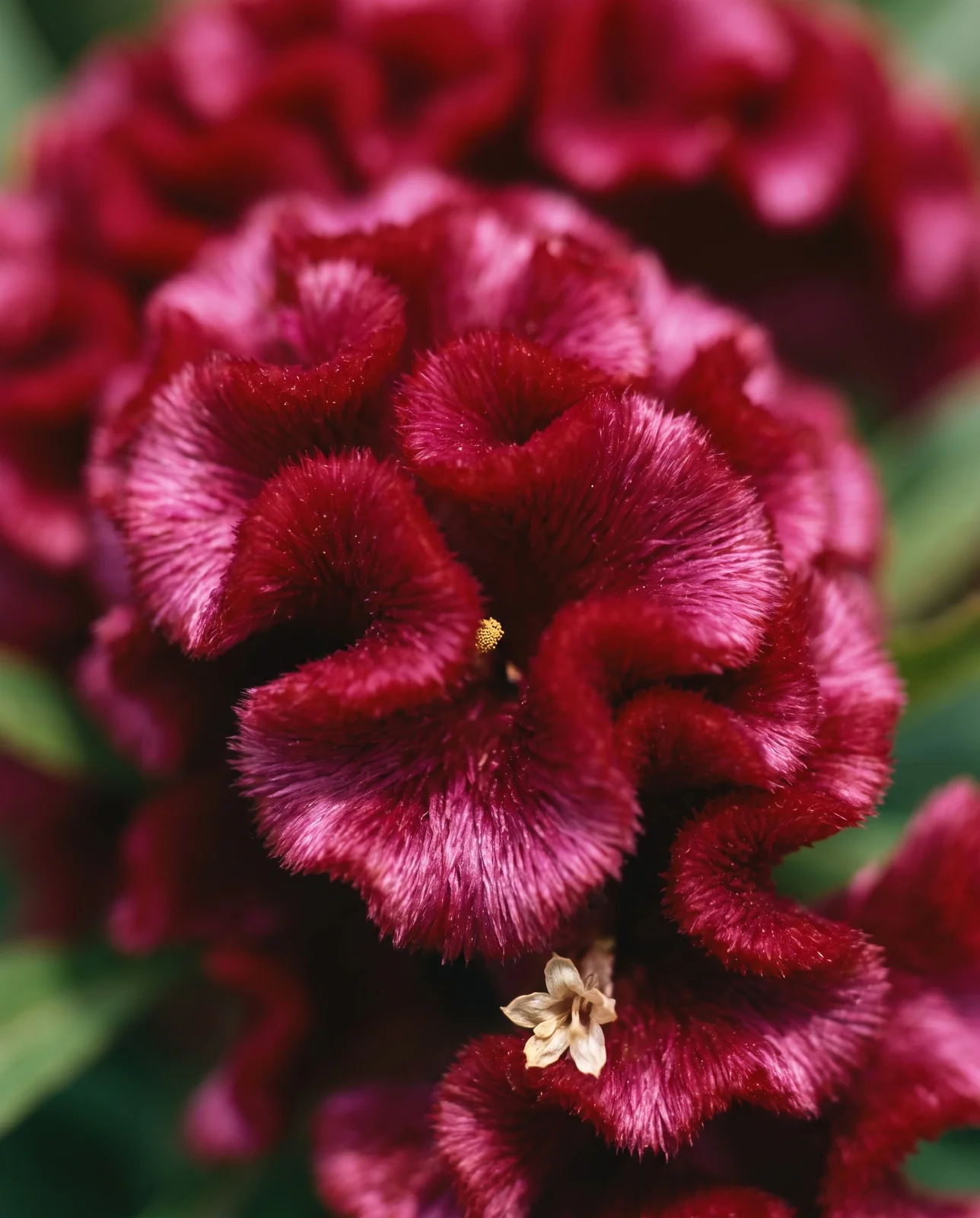
Fragrance
Celosia has no scent worth reporting. The flower heads work on color alone, and it is the nectar in the small florets, not perfume, that brings bees and butterflies to them.
Toxicity and pet safety
Celosia is one of the safer flowers to keep around animals. The ASPCA lists Celosia plumosa, Celosia spicata and Celosia globosa as non-toxic to dogs, cats and horses, three separate rulings covering the three forms gardeners actually grow, and NC State Extension records no systemic poisoning hazard in Celosia argentea for companion animals or people. That places it squarely among the types of flowers safe for cats and dogs.
Non-toxic is not the same as inert. A puppy or kitten that works through a mouthful of tough, fibrous leaves or a whole dense flower head can still be sick from it, usually as mild vomiting that passes on its own. The irritation there is mechanical rather than chemical, since the plant carries no toxic alkaloids or harmful glycosides, and nothing about it calls for fencing off a border or moving a porch planter out of reach.
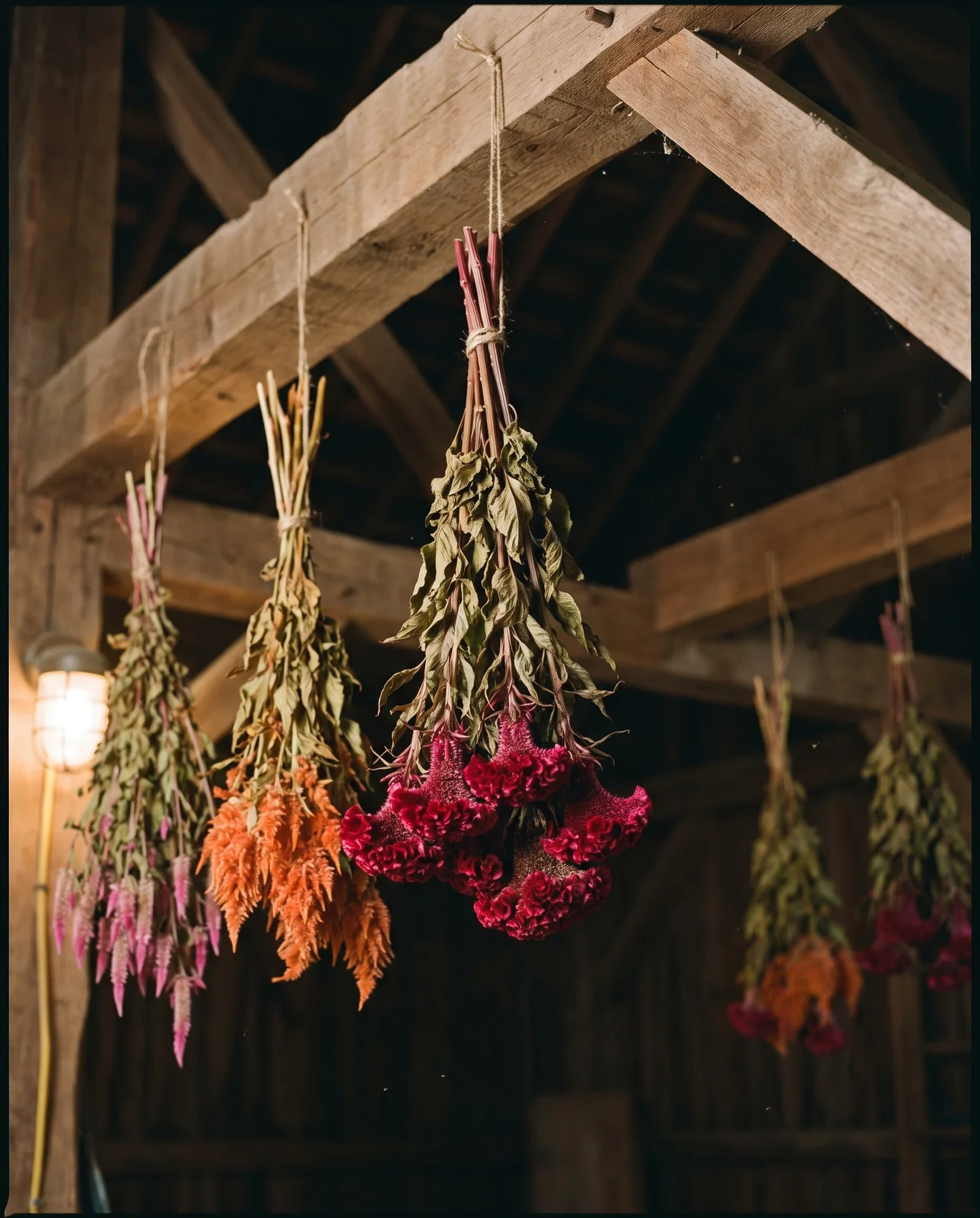
In the vase and dried
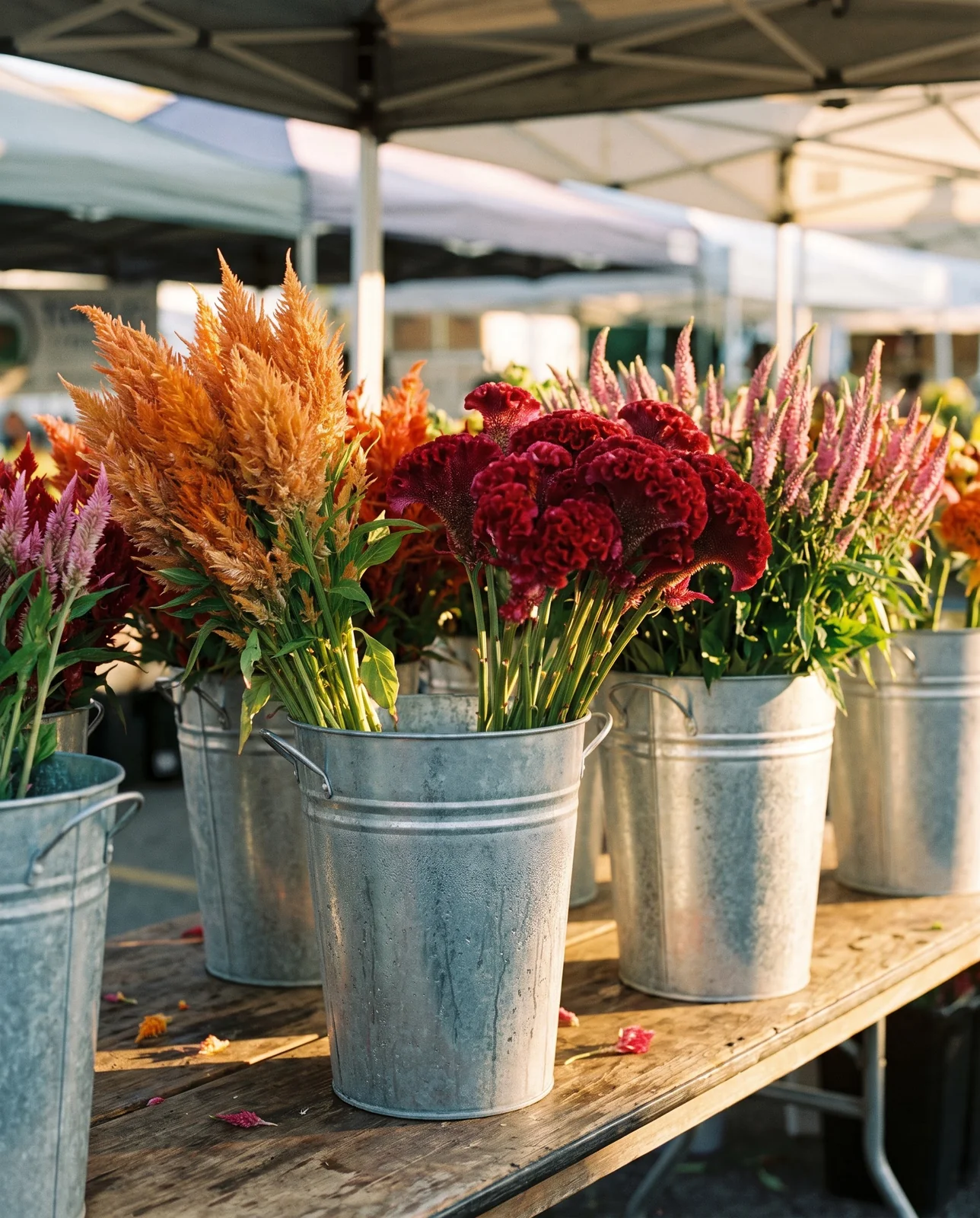
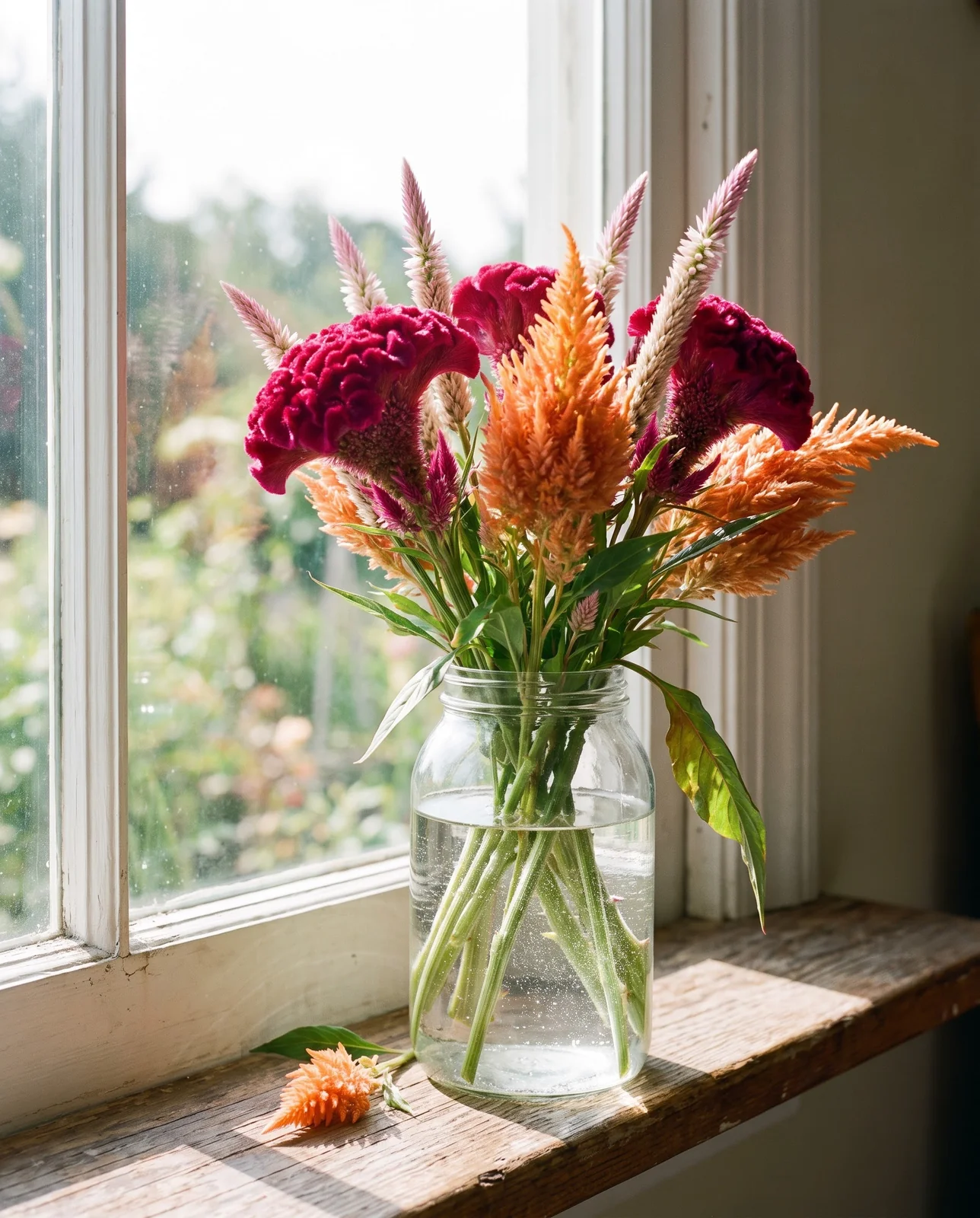
Cut celosia holds in water for 5 days to 2 weeks depending on the cultivar, a range Mississippi State Extension gives from farmer-florist trials, along with an ideal cold-storage temperature of 36 to 41 degrees Fahrenheit for stems that will be held before sale. Cut in the cool of the morning, once the heads are fully formed but before the lower florets begin shedding black seed. Keep the bucket away from ripening fruit and decaying foliage, because celosia is sensitive to ethylene gas and answers it by dropping florets early.
Celosia after the cut: fresh vase life and the everlasting drying method
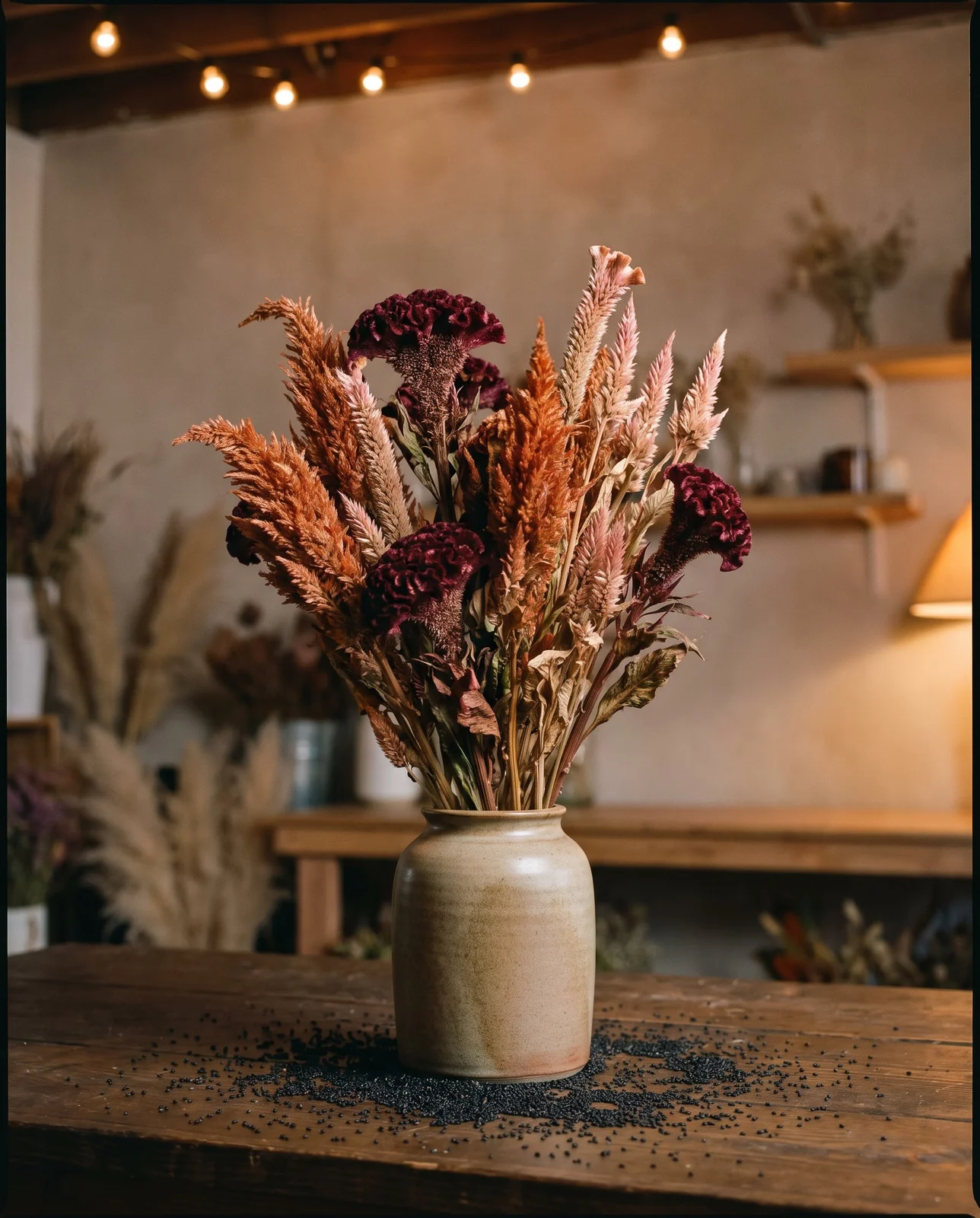
Celosia works two ways once the stem is cut: a short fresh vase life measured by Mississippi State Extension, or a long-lasting dried everlasting once air-dried in the dark.
Dried, celosia is one of the few garden flowers that keeps both its architecture and its color. University of Minnesota Extension and Missouri IPM give the same method: tie stems into small bundles and hang them upside down in a warm, dark, well-ventilated space for about two weeks, though a large crested head or a humid room stretches that to three or four. Hanging upside down is what keeps the heads straight instead of drooping as they stiffen, and the dark is what keeps ultraviolet light from bleaching the pigment out of them. Silica gel is the faster alternative: whole heads buried in the granules give up their moisture quickly and hold the three-dimensional contour of a crest better than air drying does.
Pests and diseases
Missouri IPM treats celosia as a low-maintenance annual with few pest problems, given full sun and soil that drains. The insect that turns up most is the spider mite, in the hottest weeks of midsummer, and its damage reads as brownish-bronze foliage that goes dry and brittle. Mississippi State Extension names aphids and thrips as the common pests of cut-flower plantings, and NC State Extension adds snails and slugs, which chew irregular holes in lower leaves and young flower crests during damp spells.
What goes wrong with celosia, most common causes first
Ranked by how often each issue turns up in home-garden diagnosis, following University of Minnesota Extension, Missouri Botanical Garden and Missouri IPM guidance on what actually goes wrong with the plant.
Caused by insufficient sunlight, under 6 hours of direct light a day, or by excessive nitrogen fertilizer. Move the plant to full sun of 8 or more hours and cut out the high-nitrogen feeding.
Comes from container root restriction or planting into soil still under 55°F, an issue University of Minnesota Extension flags directly. Plant straight into garden beds once spring soil has warmed past that point.
A fatal fungal disease flagged by Missouri Botanical Garden, driven by overwatering or waterlogged, poorly draining soil. Water only once the top 1 to 2 inches of soil have dried, and make sure the bed drains freely.
A frequent visual false alarm in late summer: normal end-of-season senescence and seed maturation, not disease. Deadhead spent heads to keep the plant blooming, or harvest the stems for drying.
The primary insect pest identified by Missouri IPM: spider mites, active in hot, dry summer weather. Rinse the undersides of the leaves with water sprays or apply insecticidal soap.
Two beliefs worth checking before you plant or panic
The myth: Browning, darkening bloom heads mean the plant is infected with a fatal disease.
The reality: Normal end-of-season senescence turns the base of mature flower heads brown and dry as shiny black seeds develop inside. True root rot, per NC State, blackens and softens the stem at ground level, while powdery mildew, per Missouri IPM, forms a white powdery film on leaves and bracts. Neither of those looks like ordinary browning at the base of an aging head.
The myth: Because celosia belongs to the pigweed family, it is an aggressive, invasive weed in a landscape bed.
The reality: Celosia is a well-behaved, non-invasive garden annual. Wheat celosia, var. spicata, self-seeds readily in warm soil, but the unwanted volunteer seedlings pull out easily or get suppressed with ordinary mulch.
Deer are where the sources contradict each other outright. Missouri IPM puts celosia among the plants deer do not favor, part of the low-pest case it makes for growing it in suburban beds. NC State Extension states the opposite in a single line: white-tailed deer will browse the plant. The two positions stand as they are, so a gardener in heavy deer country is safer treating celosia as browsable: hungry deer may graze the succulent young shoots and tender flower crests, particularly in early summer.
The disease side is short and comes down to water and air. Missouri Botanical Garden flags root rot in waterlogged soil, and Missouri IPM flags powdery mildew in humid weather. Spacing plants far enough apart for air to move between them and watering at the root zone instead of over the top handles both.
FAQ
Does celosia come back every year?
Not on its own roots, in most of the country. Celosia is grown as an annual and dies at the first autumn frost, when the temperature reaches 32 degrees Fahrenheit. In frost-free USDA zones 10a through 11b, NC State Extension notes that Celosia argentea behaves as a tender perennial, holding a woody crown through mild winters. Anywhere colder, the celosia that appears in spring is a crop of volunteer seedlings from dropped seed, not roots waking up.
Is celosia toxic to dogs, cats, or horses?
No. The ASPCA rates Celosia plumosa, Celosia spicata and Celosia globosa as non-toxic to dogs, cats and horses, and NC State Extension records no harmful systemic poisons in the species. A pet that eats a large amount of fibrous leaf can still have a brief, mild stomach upset, but that is bulk rather than toxicity.
Does celosia prefer full sun or partial shade?
Full sun, and the numbers behind that phrase differ by source: University of Minnesota Extension asks for 8 or more hours of direct sun a day, NC State Extension for 6 or more. Planted in partial shade, celosia stretches into elongated, floppy stems and lush green foliage and never sets a flower head.
Why is my celosia growing lush foliage but zero blooms?
Two causes account for most cases: under 6 hours of direct sun, or too much nitrogen in the soil. High-nitrogen fertilizer drives leaf expansion and suppresses bloom initiation. Move the plant into full sun and stop the nitrogen feeding, and if it is in a pot, check whether the roots have run out of room before you go looking for a pest.
What does the celosia flower symbolize?
In traditional floral symbolism, celosia stands for boldness, individuality and humor, drawn from the oddness of its fiery crests. In East Asian traditions, the crested cockscomb form is tied to the rooster it resembles, and through that to good fortune, courage and protection.
Can you eat celosia leaves?
Yes. The young leaves of Celosia argentea, known in the kitchen as Lagos spinach, are cooked as a leafy vegetable in Indonesian, Indian and African cuisines. University of Minnesota Extension puts the flavor close to spinach while the plant is young, but the leaves turn fibrous and bitter once flowering starts, which closes the harvest.
How do you pronounce celosia?
Celosia is pronounced si-LOH-zee-uh, with the stress on the second syllable.
Flower photos
The three forms photograph as three different plants: the convoluted velvety ridges of a crested cockscomb, the flame-shaped panicles of a plumed type, and the fine tapering spikes of wheat celosia, all in the red, orange, magenta and yellow range the genus is named for.
Interesting tips
Missouri IPM's framing is that celosia is the ornamental member of the pigweed family, Amaranthaceae, carrying the rugged heat tolerance of the wild amaranths along with intense floral color. The National Garden Bureau named celosia its Annual Flower of the Year in 2023.
Most of what the plant asks for is settled before it goes in the ground: open ground rather than a container, soil warmed past 55 degrees, a bed in full sun, and a light hand with fertilizer. Get those right in spring and celosia runs itself until frost, holding stocky stems, continuous color and enough material for both fresh bouquets and a bundle hung to dry in the dark.
Related Guides & Flowers
Marigolds
A heat-loving annual that shares celosia's need for full sun and its tolerance of poor soil.
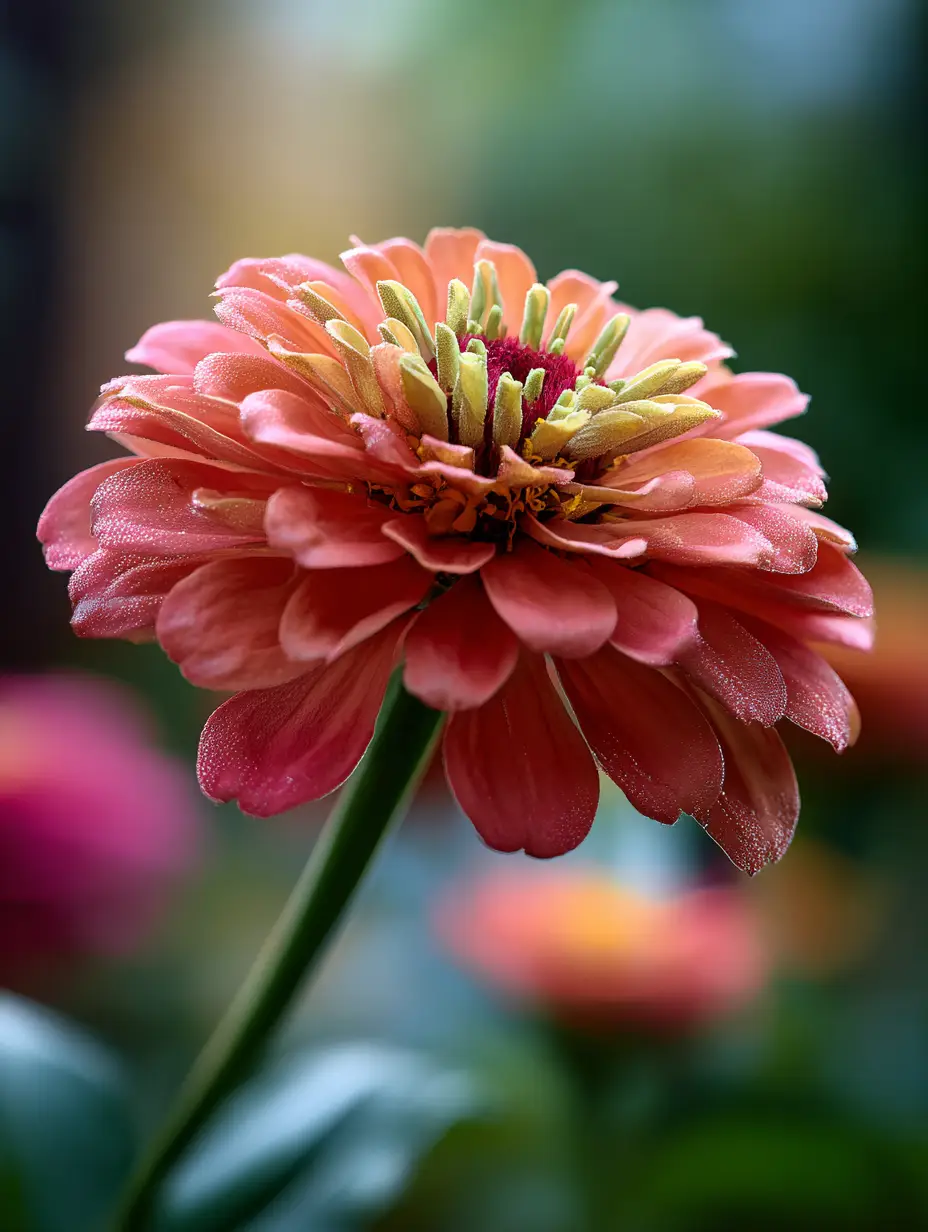
Zinnias
Direct-sown summer annual that peaks alongside celosia from midsummer to frost.
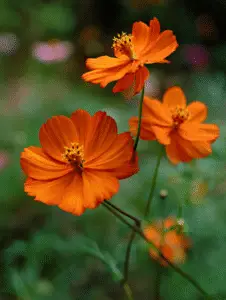
Cosmos
An airy summer annual that lightens celosia's dense plumes and combs in mixed beds and bouquets.
Sunflower
Another warm-season annual sown after the last frost that holds up in the same heat.
Enjoying our flower guides? Add YourFlowersGuide as a preferred source on Google. It helps more readers find us.
Add to Preferred Sources