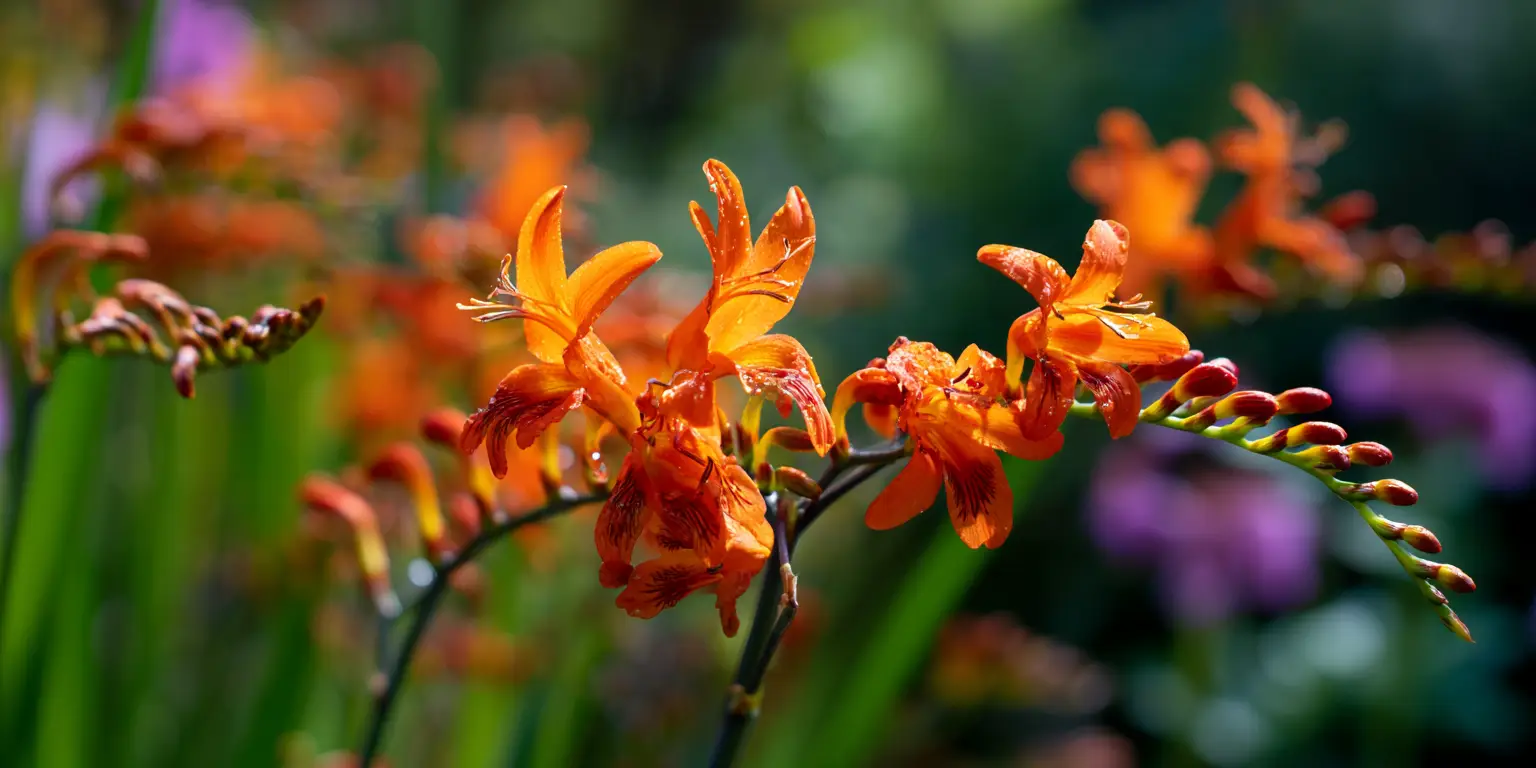
Emily McKenzie
Montbretia; Crocosmia × crocosmiiflora · Ken McKenzie, 1951, UK
At‑a‑glance
- Group/Class: Montbretia; Crocosmia × crocosmiiflora
- Height × spread: 24-33 in (60-85 cm) × 12-20 in (30-50 cm)
- Bloom window: late summer
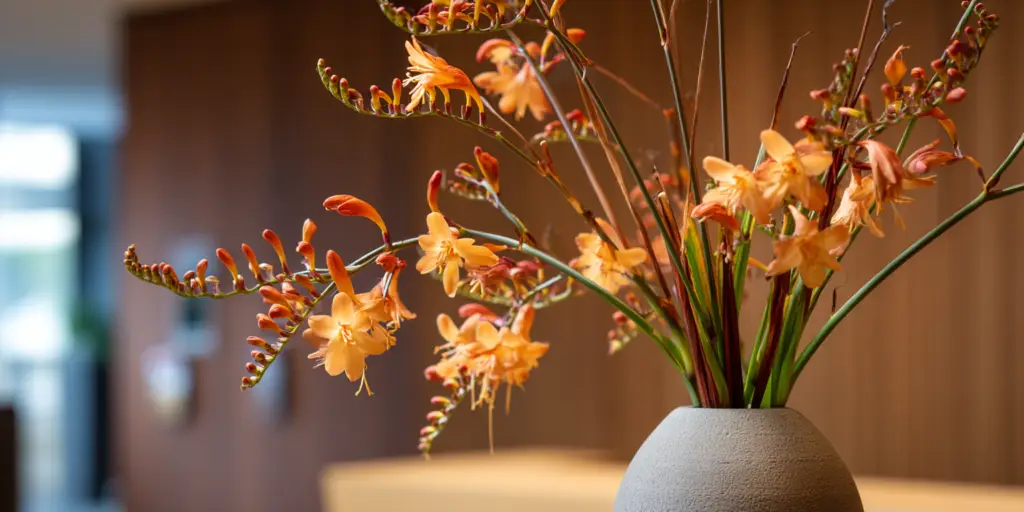
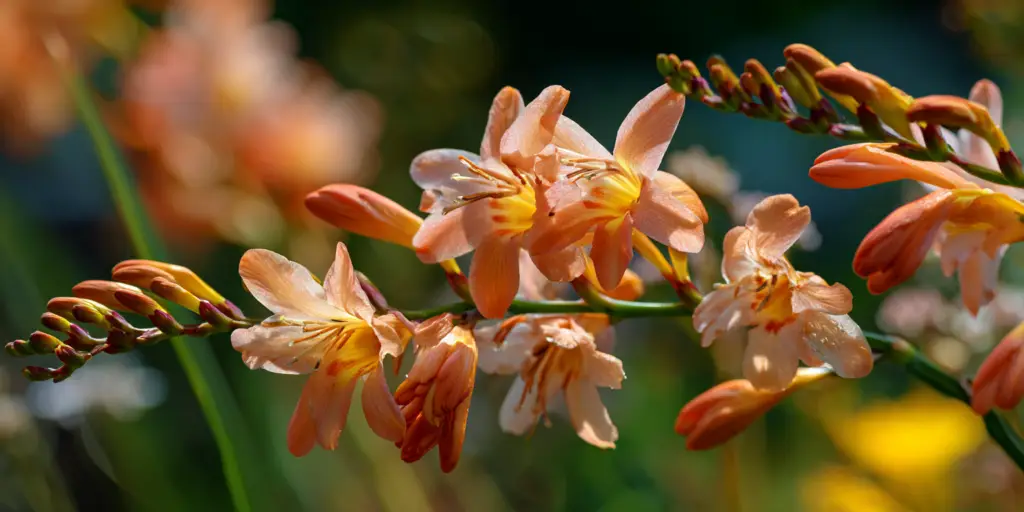
- Color & flower form: bright orange with dark red throat; star-like, slightly nodding
- Fragrance: 0 none
- USDA hardiness: zones 6-9
- Breeder / Year / Origin: Ken McKenzie, 1951, UK
- Awards/registration: RHS Award of Garden Merit (AGM)
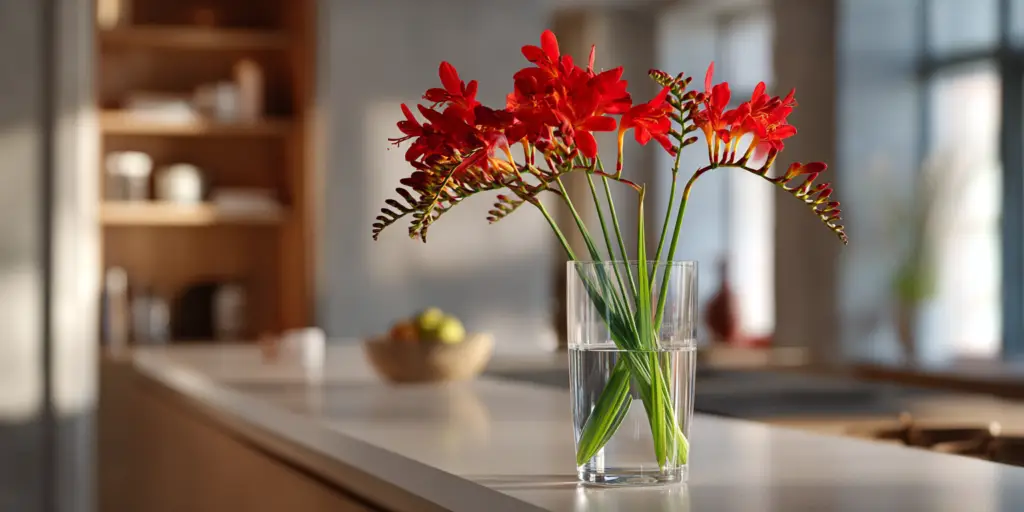
- Cut-flower notes: well-regarded in trials; stems hold in the vase when cut as buds begin to open.
- Pet safety: avoid
How it differs
- Distinct bicolor flowers with a bold central eye.
- Performs best with steady moisture; not suited to hot, dry sites.
- Mid-height habit for front to mid border.
Strengths
- AGM holder with consistent garden performance.
- Eye-catching color contrast for mixed borders and bouquets.
- Attracts hummingbirds and other pollinators.
Care in one minute
Choose a site with full sun to light afternoon shade in hot summers.
Soil: moderately fertile and well drained with steady moisture; avoid waterlogged clay.
Plant corms 3 to 4 in deep and 3 to 4 in apart in groups; point up and roots down.
Water during dry spells in summer; allow the surface to dry slightly between soakings.
Feeding: mix in compost at planting; a light spring feed is sufficient.
Deadhead spent sprays; leave foliage to yellow before cutting back; divide congested clumps in spring.
Shade: provide afternoon shade where summers are hot and dry.
Watch‑outs
- Spreads by corms; divide when clumps crowd.
- In hot, dry summers, flowering and stem quality may drop without irrigation.
Best uses (tags)
Provenance note
Selected in the UK in the early 1950s and named for Emily McKenzie; widely circulated since for its striking bicolor flowers.
References
- Royal Horticultural Society
- Royal Horticultural Society – Potentially harmful garden plants
Similar Flowers
Enjoying our flower guides? Add YourFlowersGuide as a preferred source on Google. It helps more readers find us.
Add to Preferred Sources