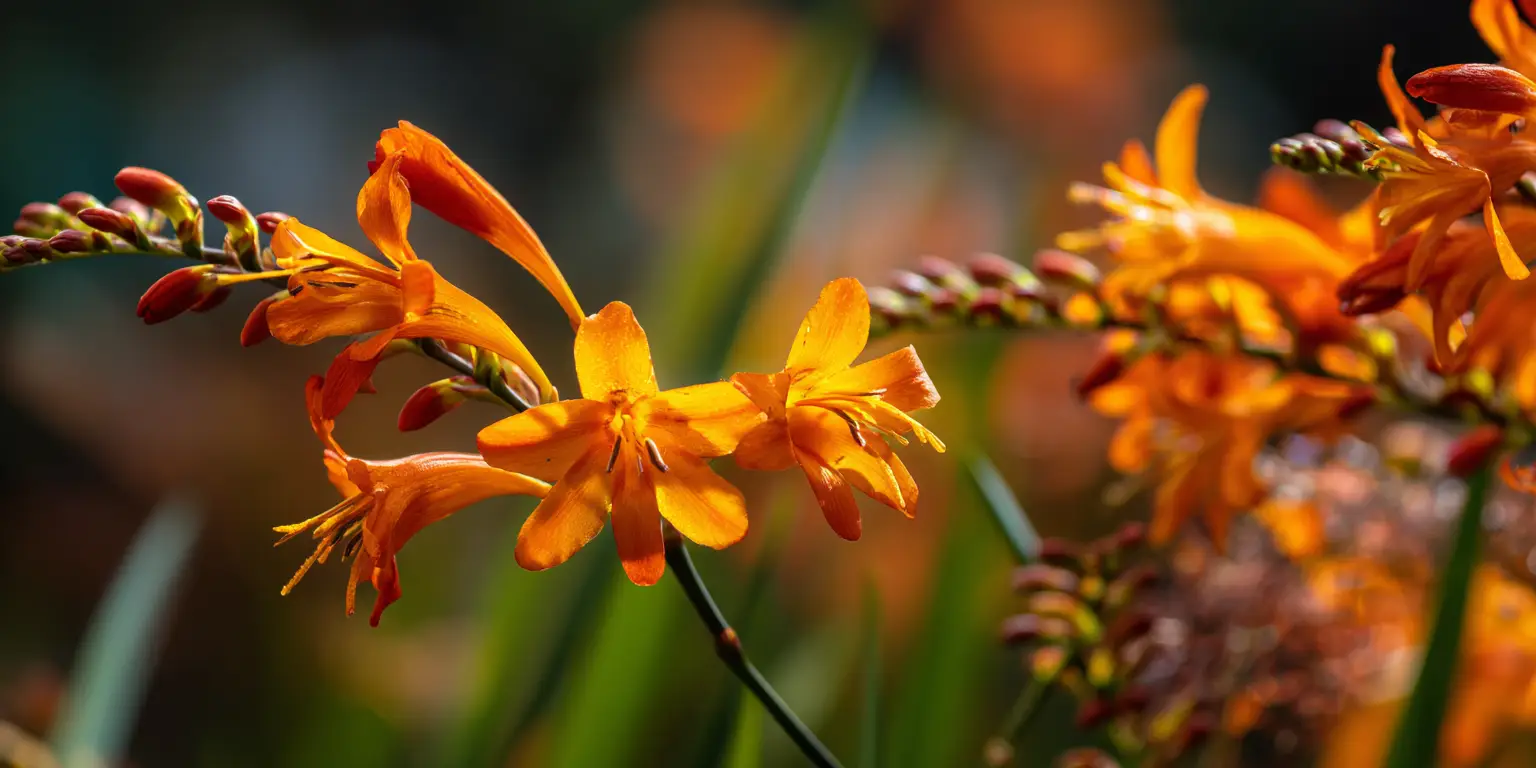
Star of the East
Montbretia; Crocosmia × crocosmiiflora · George Davison, 1912, UK
At‑a‑glance
- Group/Class: Montbretia; Crocosmia × crocosmiiflora
- Height × spread: 20-28 in (50-70 cm) × 12-20 in (30-50 cm)
- Bloom window: late summer to early fall
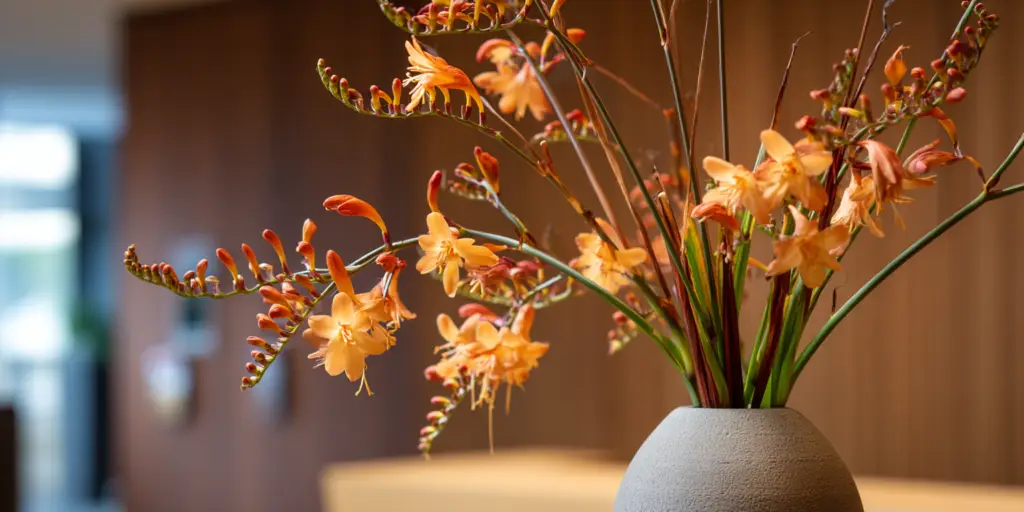
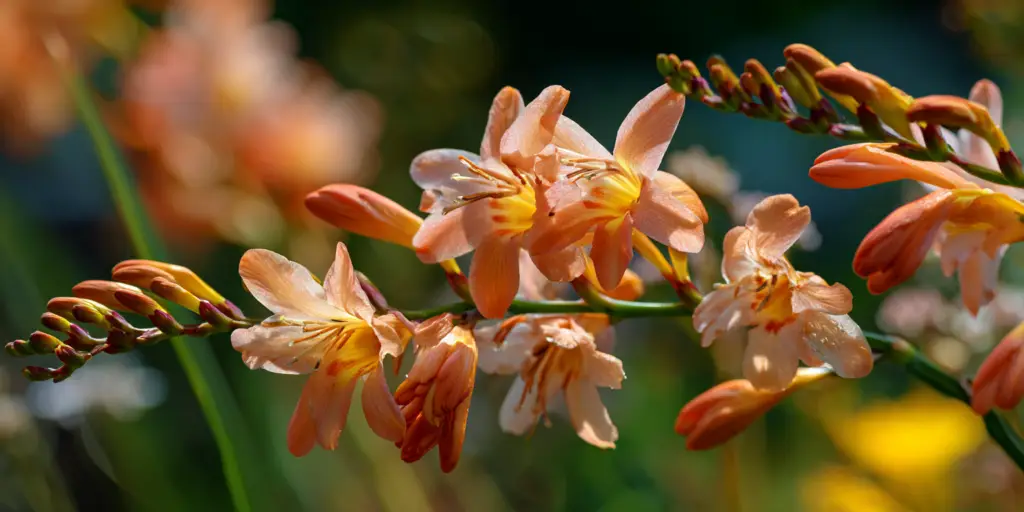
- Color & flower form: very large, soft orange, outward-facing flowers with paler center
- Fragrance: 0 none
- USDA hardiness: zones 6-9
- Breeder / Year / Origin: George Davison, 1912, UK
- Awards/registration: RHS Award of Garden Merit (AGM)
- Cut-flower notes: showy blooms on medium-length stems; condition well; typical vase life near one week.
- Pet safety: avoid
How it differs
- Larger flowers than most crocosmias and held more outward-facing.
- Tolerates wetter soils better than many selections.
- Shorter, clump-forming habit for front to mid border.
Strengths
- High visual impact from large flowers.
- AGM for dependable garden performance.
- Attracts pollinators.
Care in one minute
Choose a site with full sun to light afternoon shade in hot summers.
Soil: moderately fertile and well drained with steady moisture; avoid waterlogged clay.
Plant corms 3 to 4 in deep and 3 to 4 in apart in groups; point up and roots down.
Water during dry spells in summer; allow the surface to dry slightly between soakings.
Feeding: mix in compost at planting; a light spring feed is sufficient.
Deadhead spent sprays; leave foliage to yellow before cutting back; divide congested clumps in spring.
Moisture: do not allow soil to dry out during bud formation and bloom.
Watch‑outs
- Not suited to hot, dry sites; flowering can suffer without moisture.
- Spreads by corms; divide to keep clumps compact.
Best uses (tags)
Provenance note
Introduced by George Davison in the early 20th century and still grown for its exceptional flower size and clarity of color.
References
- Royal Horticultural Society – Crocosmia × crocosmiiflora ‘Star of the East’
- Royal Horticultural Society – Potentially harmful garden plants
Similar Flowers
Enjoying our flower guides? Add YourFlowersGuide as a preferred source on Google. It helps more readers find us.
Add to Preferred Sources