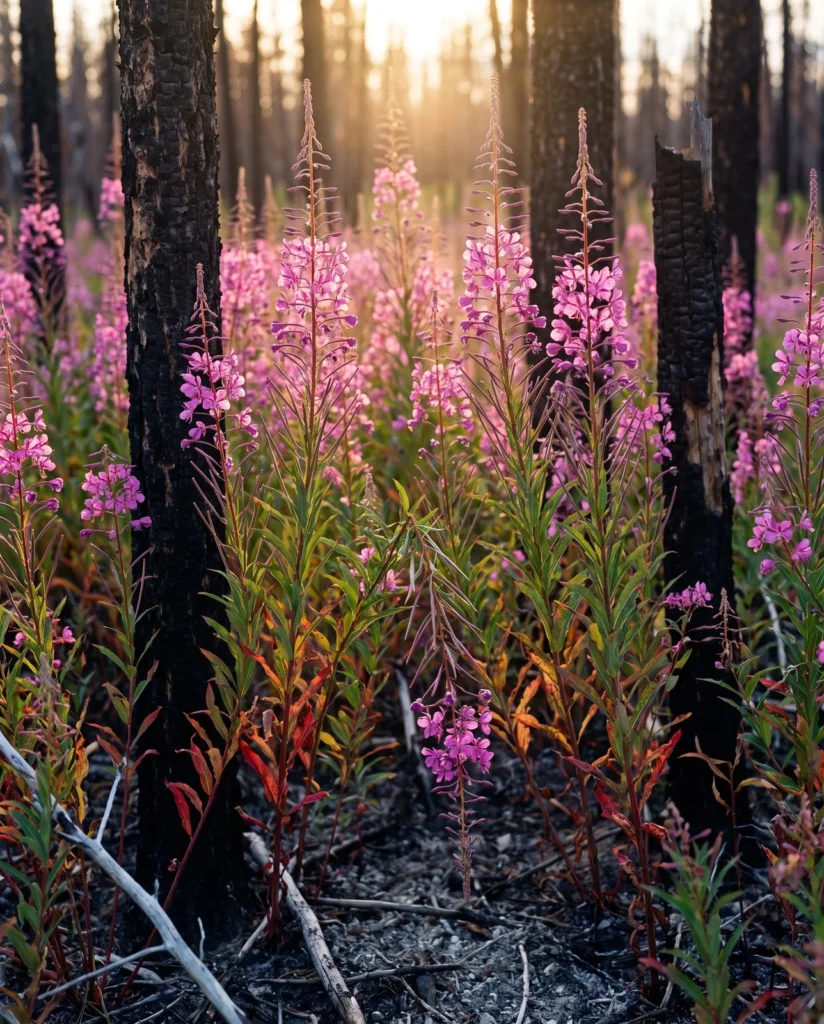
Two different plants are called fireweed
Two unrelated plants share the name fireweed, growing in different plant families on different continents. The tall magenta plant belongs to the willowherb family, while the other is an Australian daisy in the genus Senecio. Our fireweed sends up tall, single stems that may be very leafy. Each flower carries four magenta petals alternating with four narrow sepals. Senecio madagascariensis is an erect annual or biennial herb 4 to 24 inches tall. Its flower heads are small, yellow, and daisy-like, with up to 15 petals. That yellow daisy invades pastures and can poison livestock.
The Australian weed arrived from southeast Africa and was first seen in the Hunter Valley in 1918. It contains pyrrolizidine alkaloids that cause liver damage in grazing livestock. The harm is irreversible and worsens the more of the plant an animal eats. Poisoned horses can develop brain damage and sun-sensitive unpigmented skin. Sheep and goats are up to 20 times more tolerant of the toxins than cattle. In New South Wales, the weed must not be imported, sold, bartered, exchanged, or offered for sale. A single plant can produce up to 18,000 seeds. Still, it does not grow well in shade or wet ground and cannot survive waterlogging.
What fireweed is, and its three scientific names
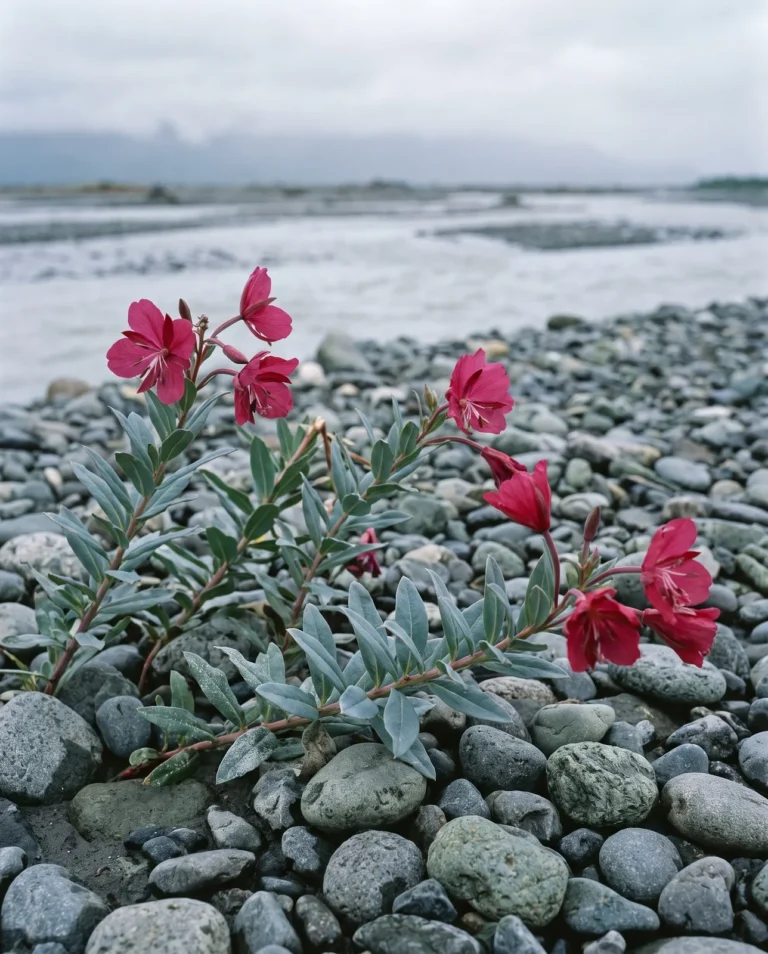
Fireweed is a hardy perennial that regrows from underground rhizomes and spreads quickly on windblown seed. As a circumboreal species, it grows in the Canadian provinces. It thrives in open, disturbed ground like cut-over woods, burned areas, avalanche paths, riverbars, and land where glaciers have pulled back. The genus name comes from the Greek chamai, dwarf, and nerion, oleander, because the leaves look like an oleander.
The name on the label depends on the source, and botanists still disagree. Over the years the plant has moved between four genera: Chamaenerion, Pyrogennema, Chamerion and Epilobium. Gene studies backed giving fireweed its own genus, Chamerion, and the plant fits that split: no floral tube, flowers with mirror symmetry, stamens of about equal length, and leaves set in a spiral. You will see Chamerion angustifolium most often, and the same plant also travels under Chamaenerion angustifolium and Epilobium angustifolium. A recent genome study from Kew uses Chamaenerion angustifolium, a name put forward soon after Linnaeus chose Epilobium, though it took two hundred years to be accepted. The two spellings caused confusion for years, because Chamaenerion was long thought to break the naming rules.
What fireweed looks like
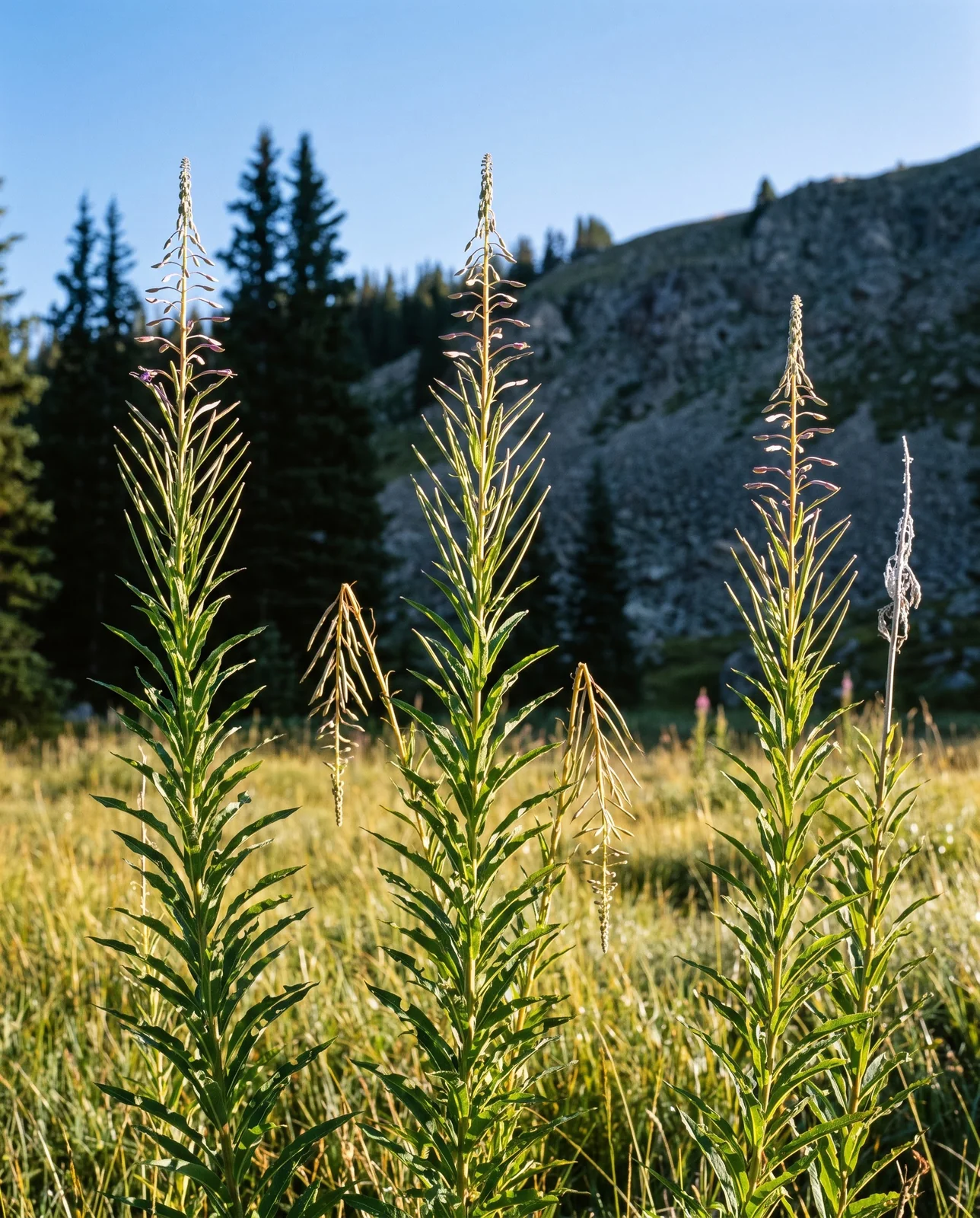
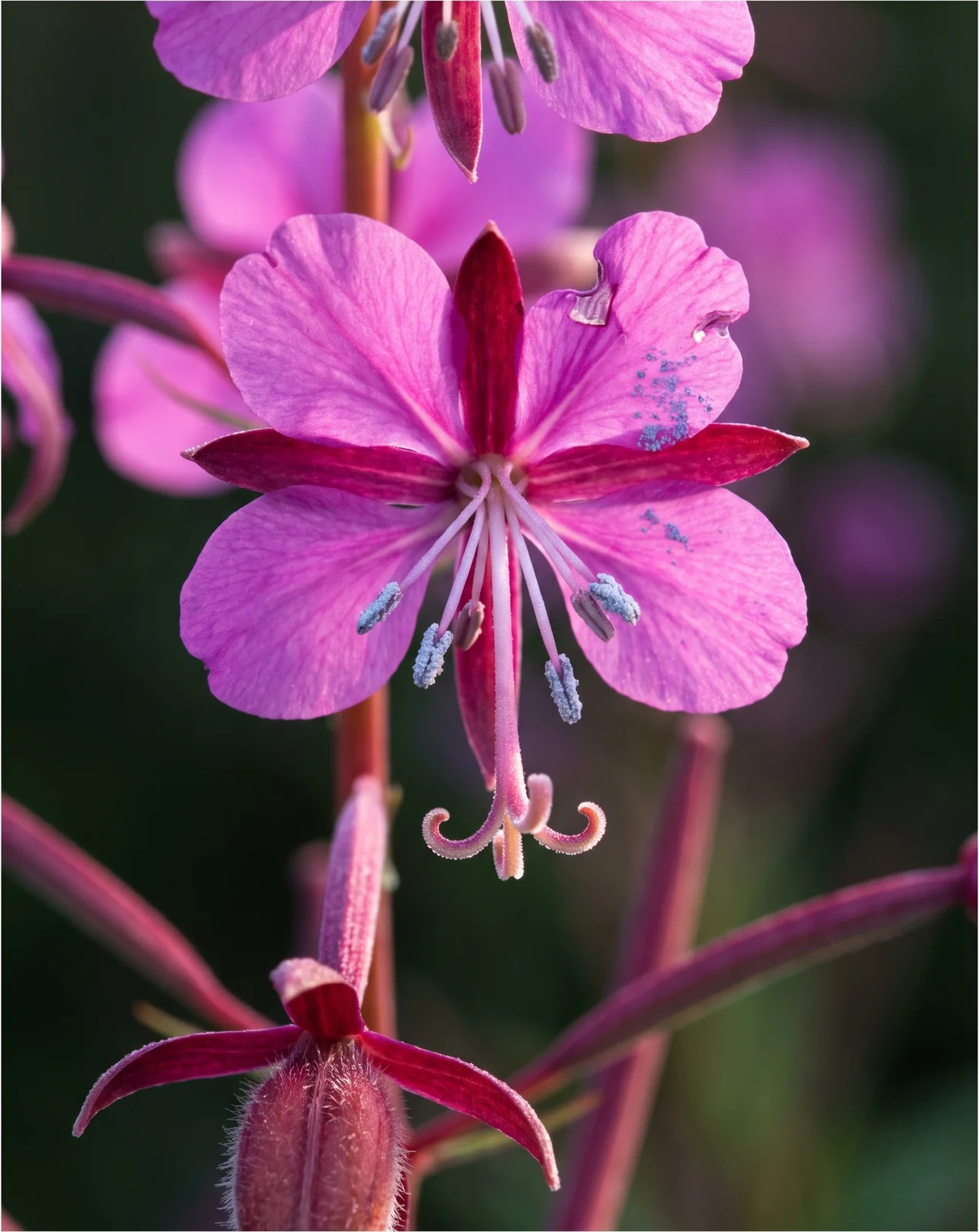
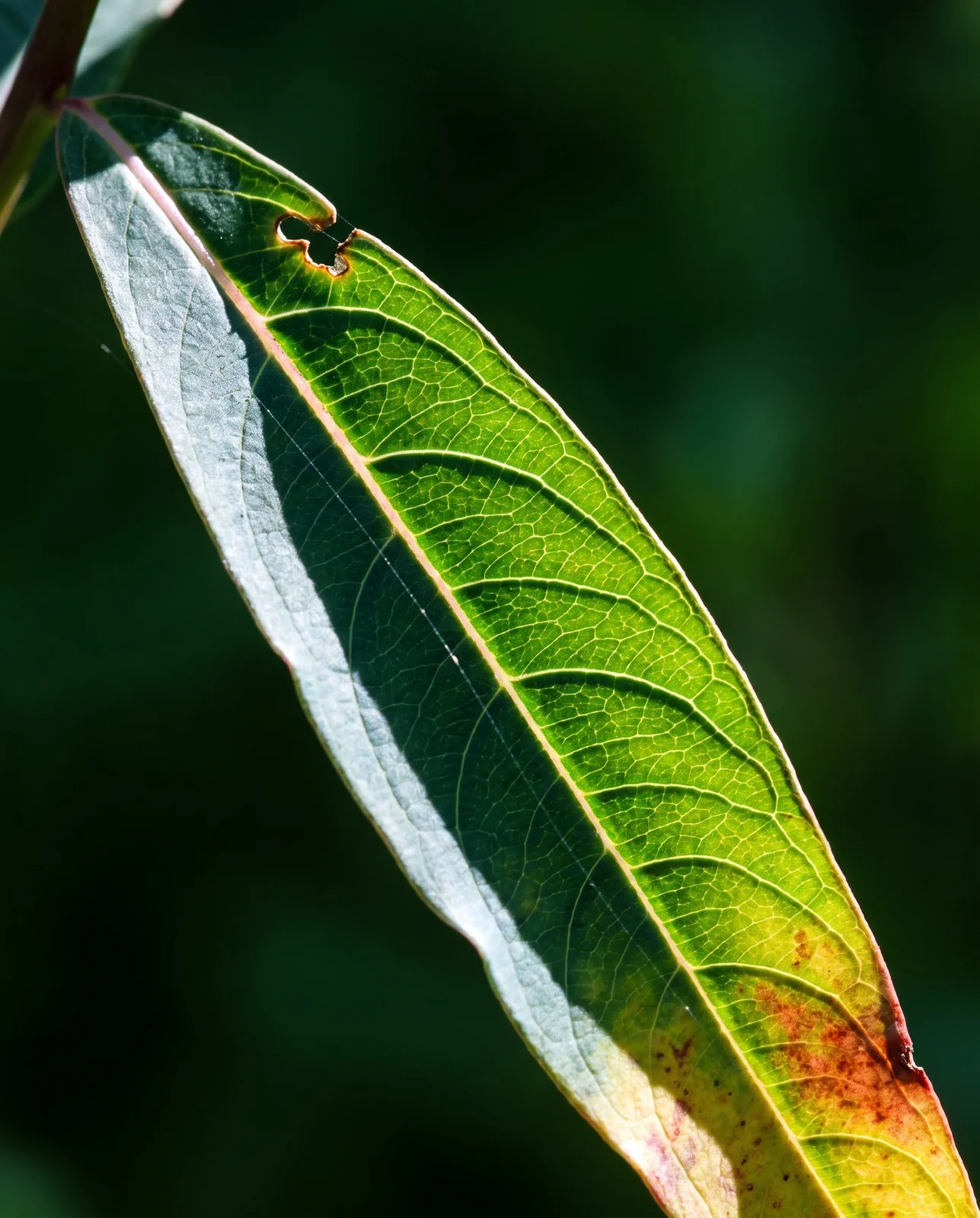
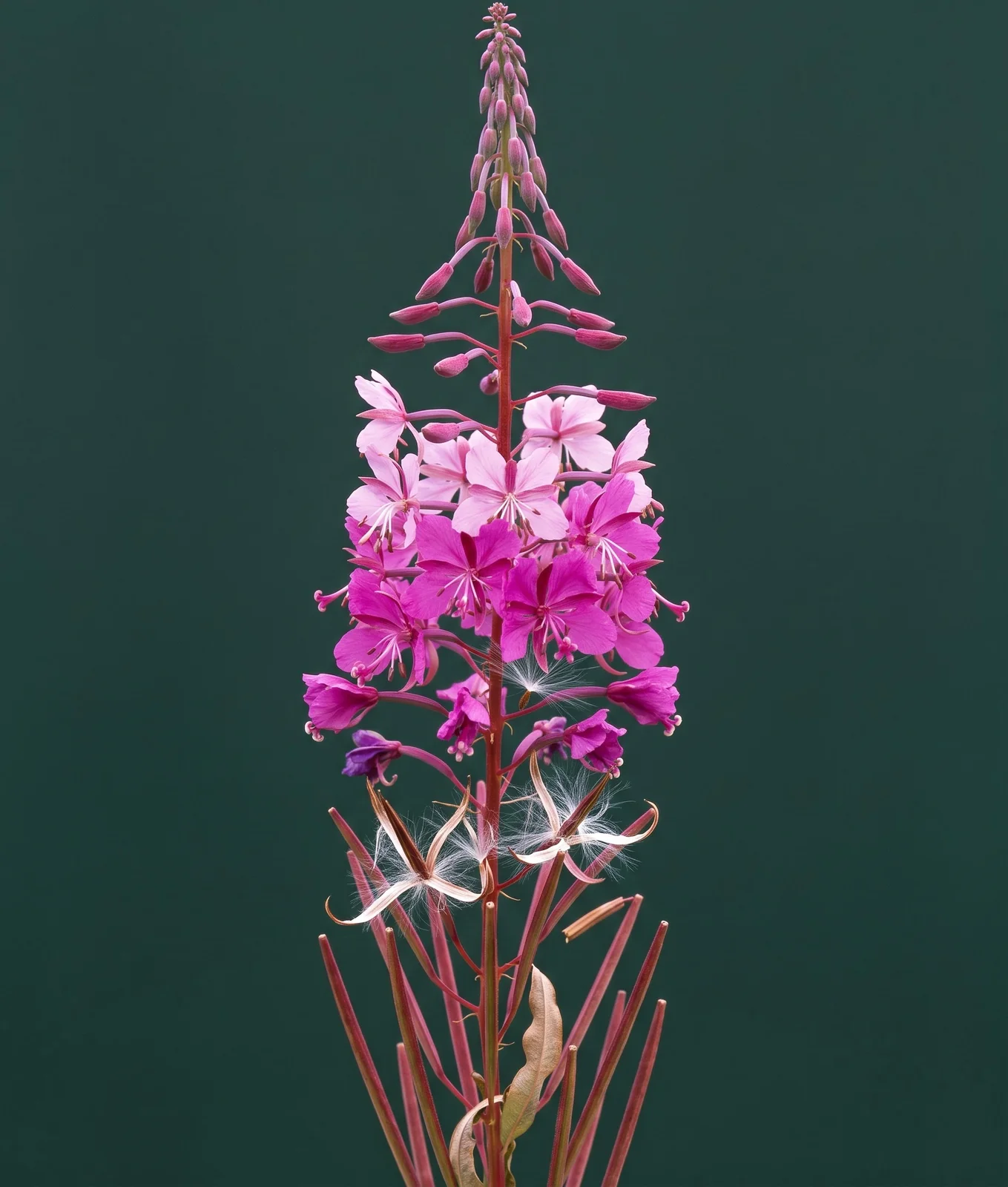
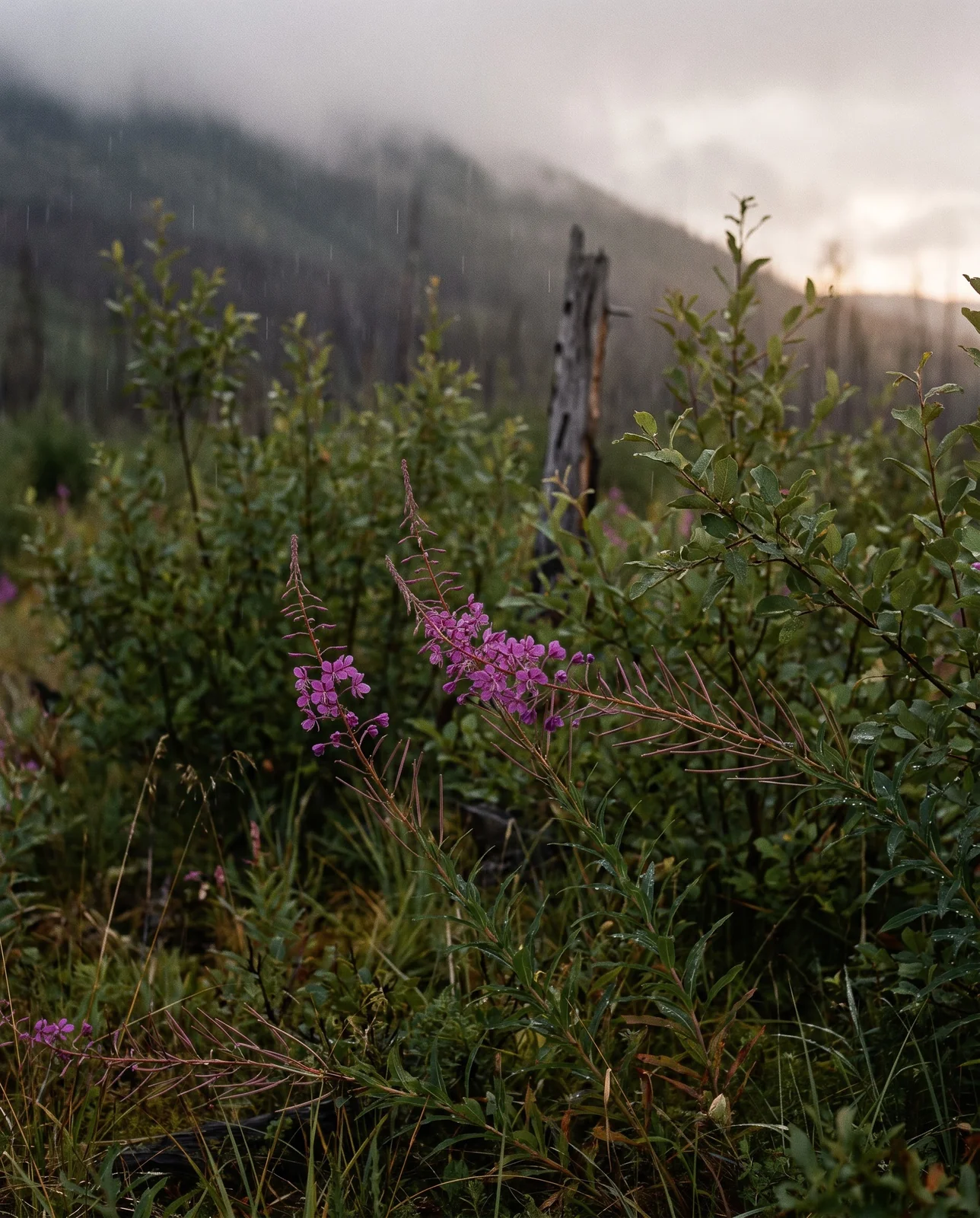
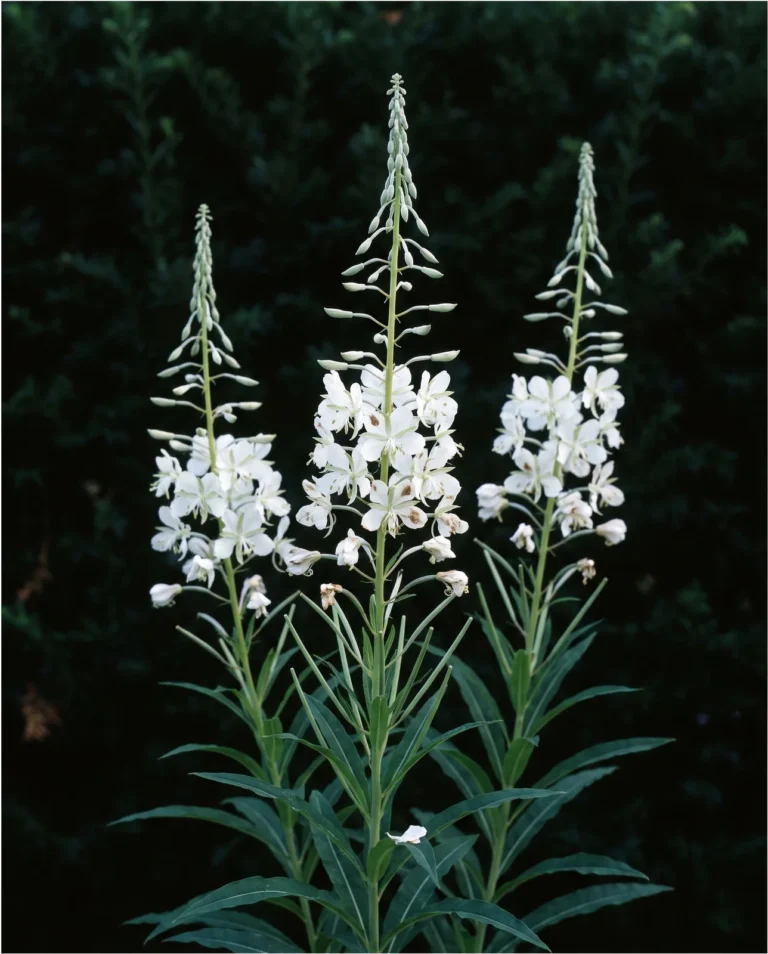
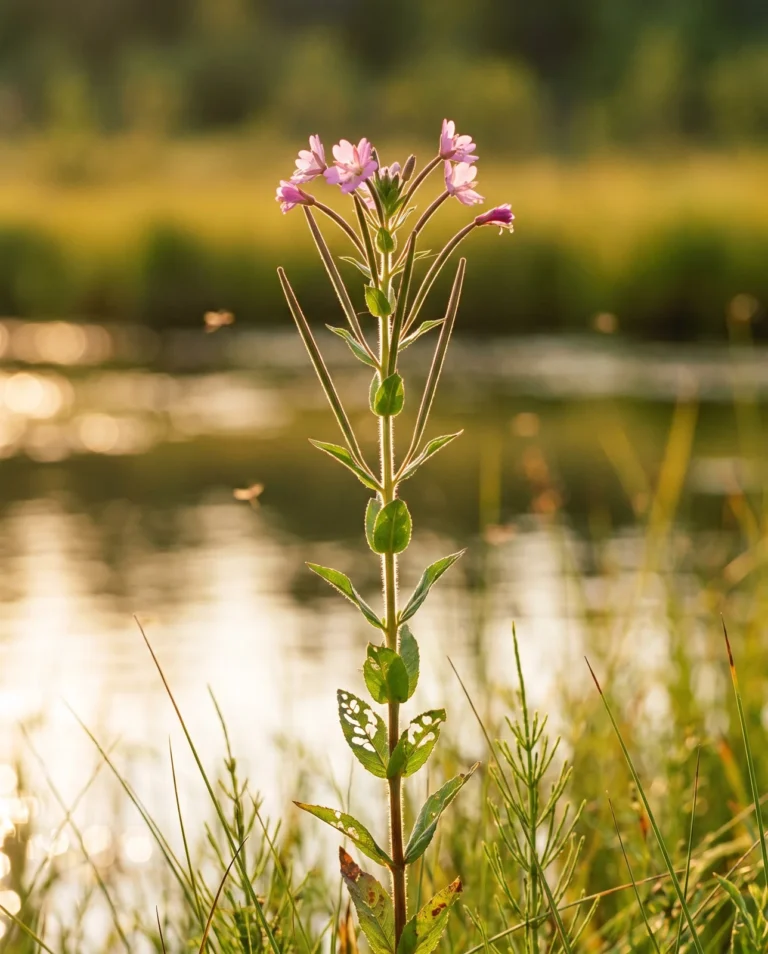
Fireweed is easy to recognize by its tall, single stems that are often packed with narrow leaves. The narrow leaves have circular veins that loop together without running out to the edges. A tall spike holds up to 50 or more pink to rose-purple flowers at the top of the stem. Each blossom opens into a saucer shape with four bright pink to lilac-purple petals, rarely white, and a stigma that stands out past the petals.
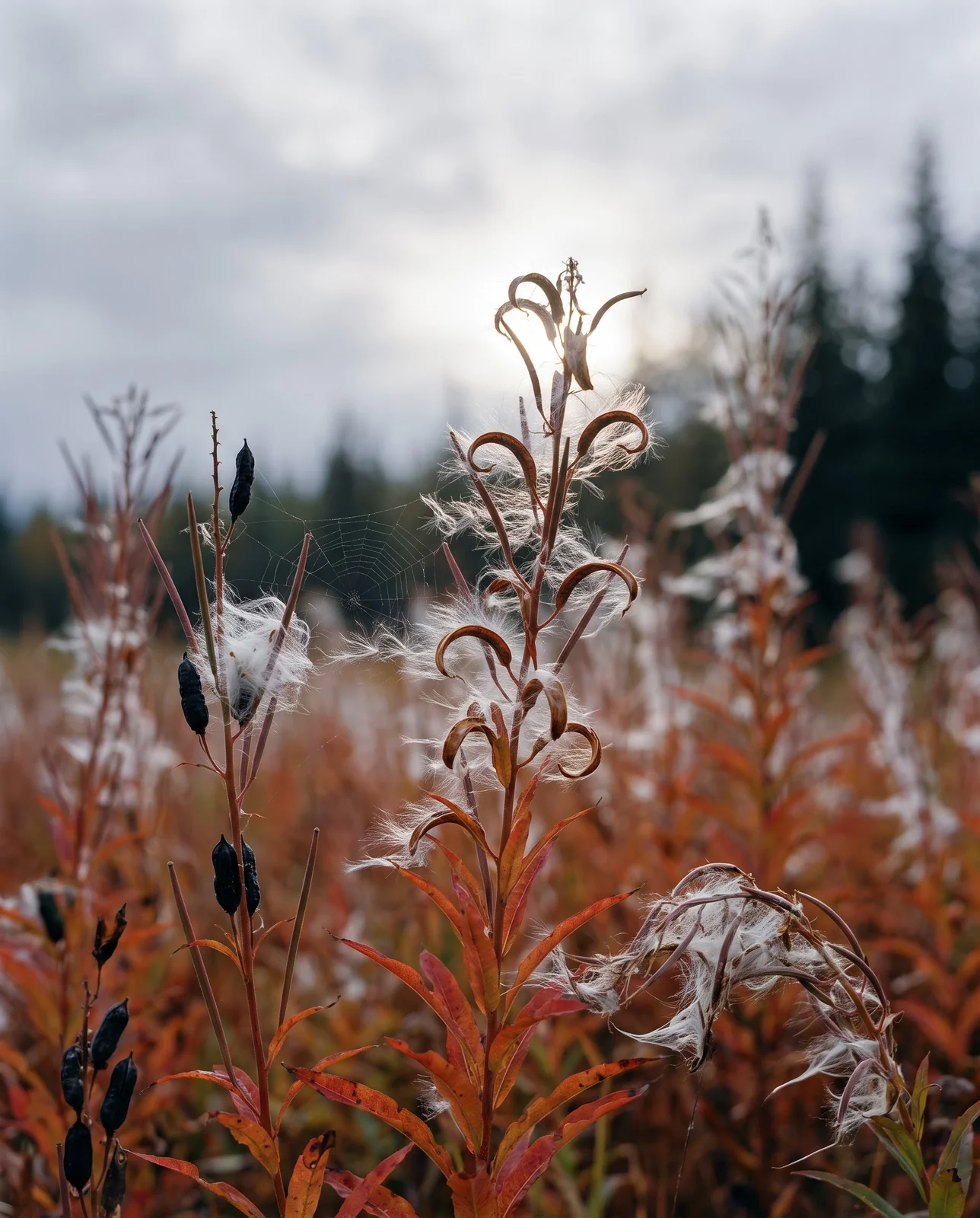
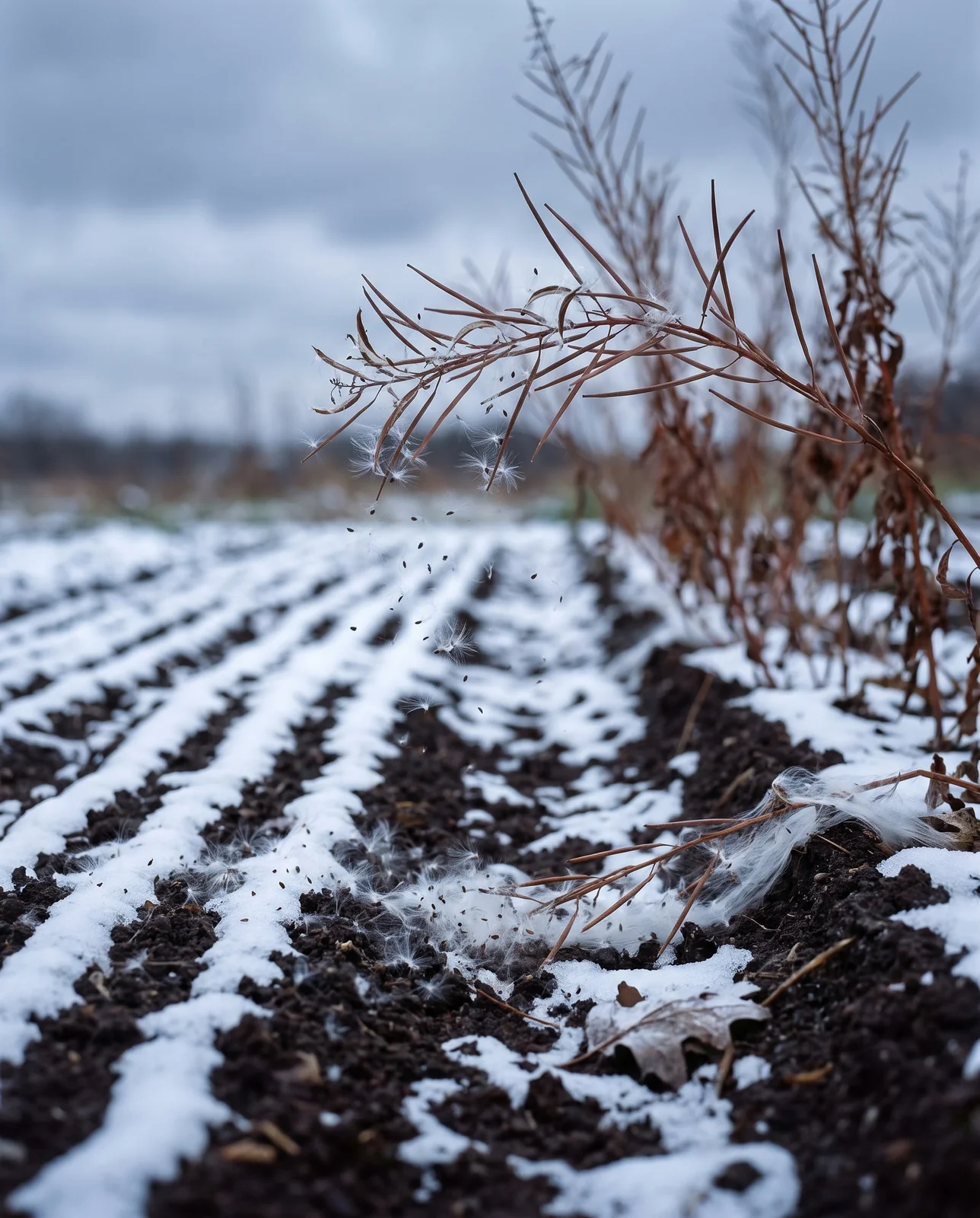
Beneath each flower sits a long cylindrical capsule packed with seeds tufted in silky hairs. A single capsule holds 300 to 500 of them. When the pods split open, the stand turns into a cloud of white fluff as the seeds ride the wind.
The flower clock: bottom to top
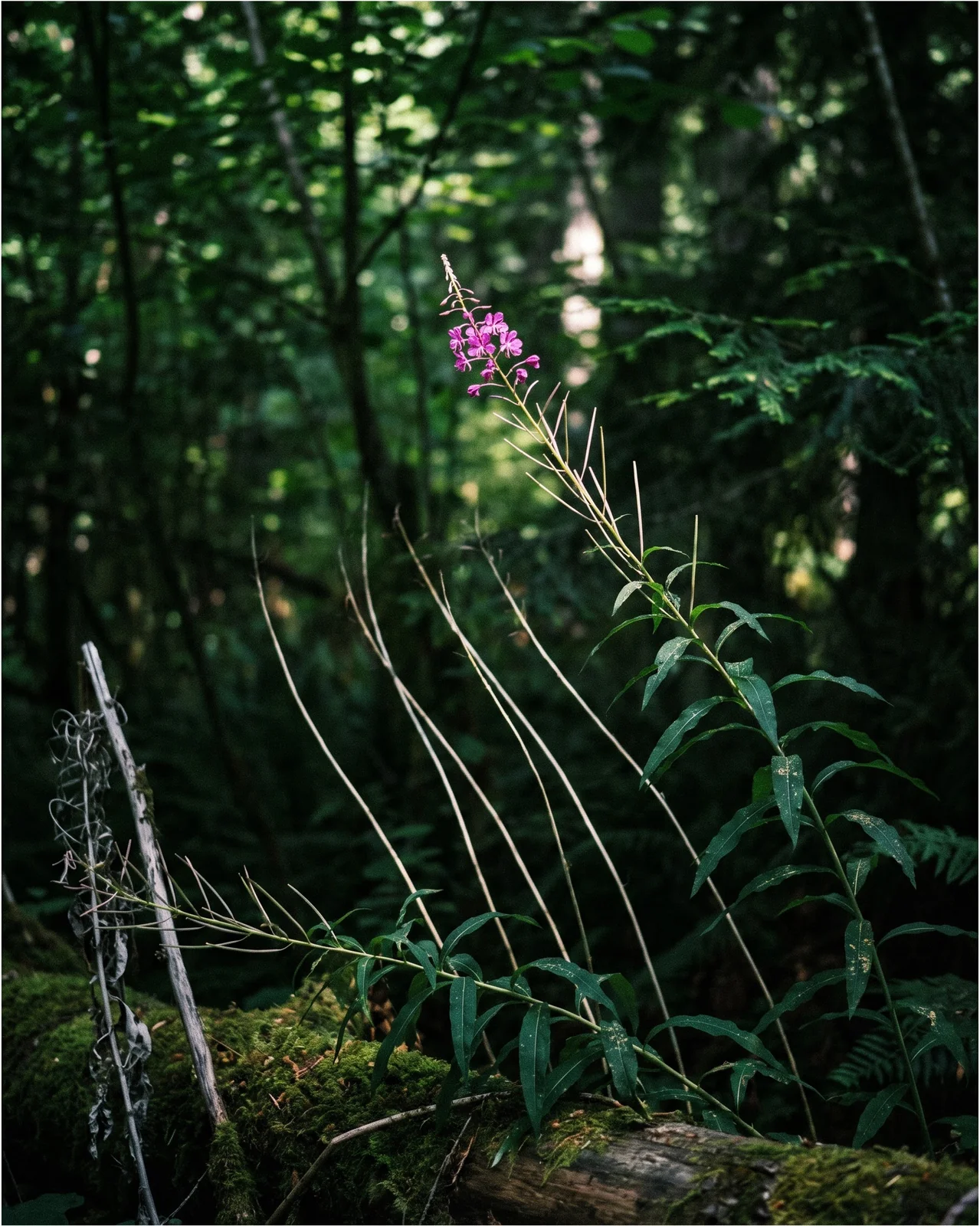
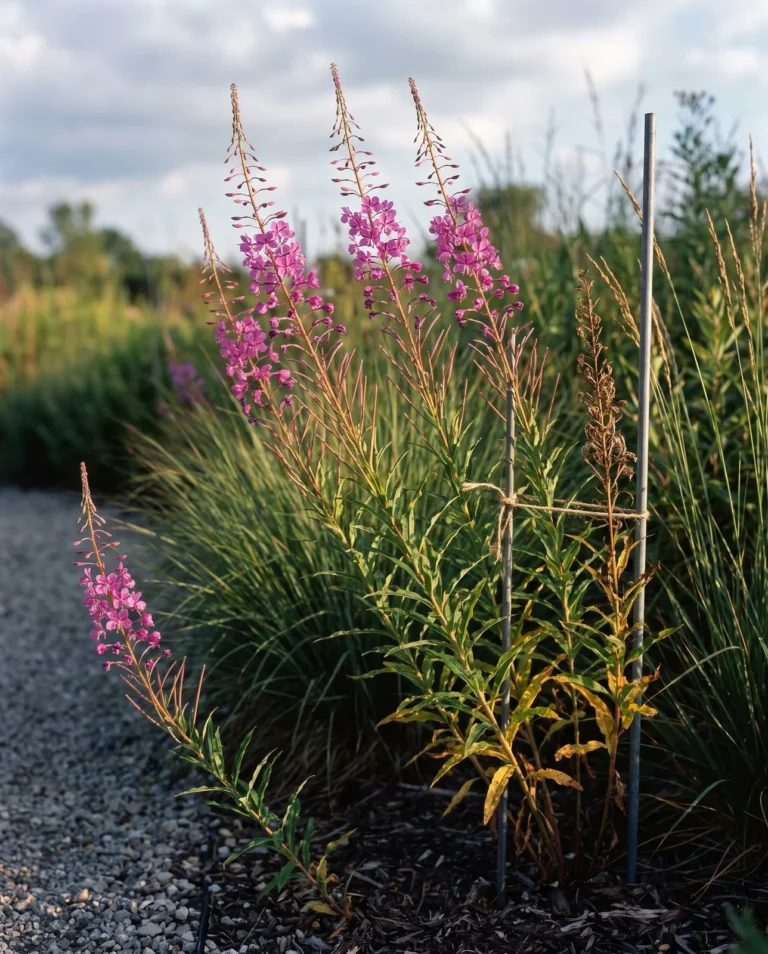
Fireweed flowers open in summer from the bottom of the stem upward. Because of that steady climb, a single stem can carry seed pods at the base, open flowers in the middle, and fresh buds at the top on the same day. That upward march lasts over a period of a few months, keeping the plant in flower through July, August, and September. In a garden, this steady pace means the band of color travels upward week after week.
In Alaska, people read this sequence like a summer calendar. Summer begins when the lowest blossoms open, and the season is ending once flowers reach the top of the stalk. A familiar northern saying marks the final change: when fireweed turns to cotton, summer will soon be forgotten. That cotton appears when the seed pods split and let their tufted seeds go, ending a bloom that climbs from base to tip over a period of a few months.
Why fireweed takes over after a fire
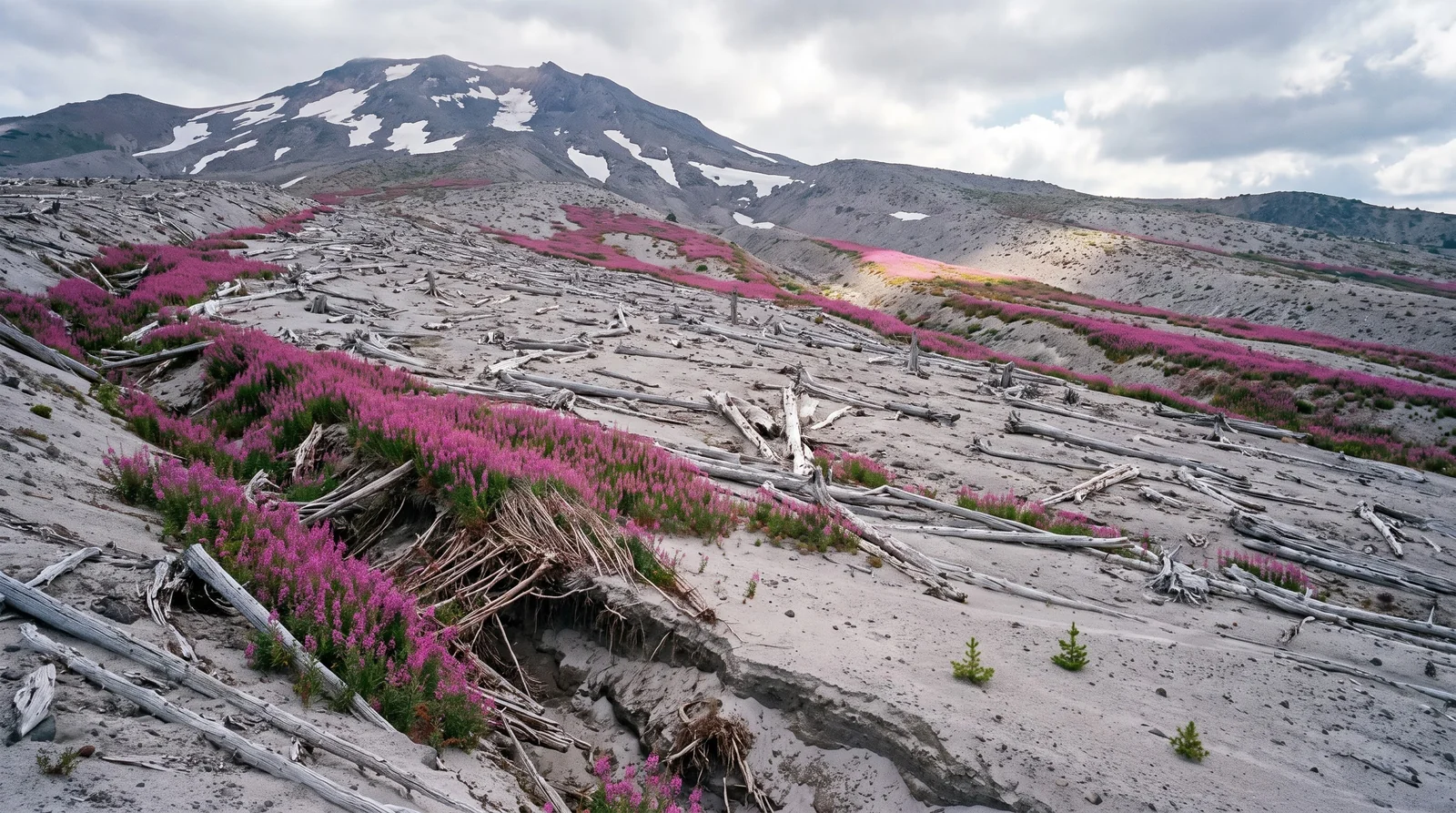
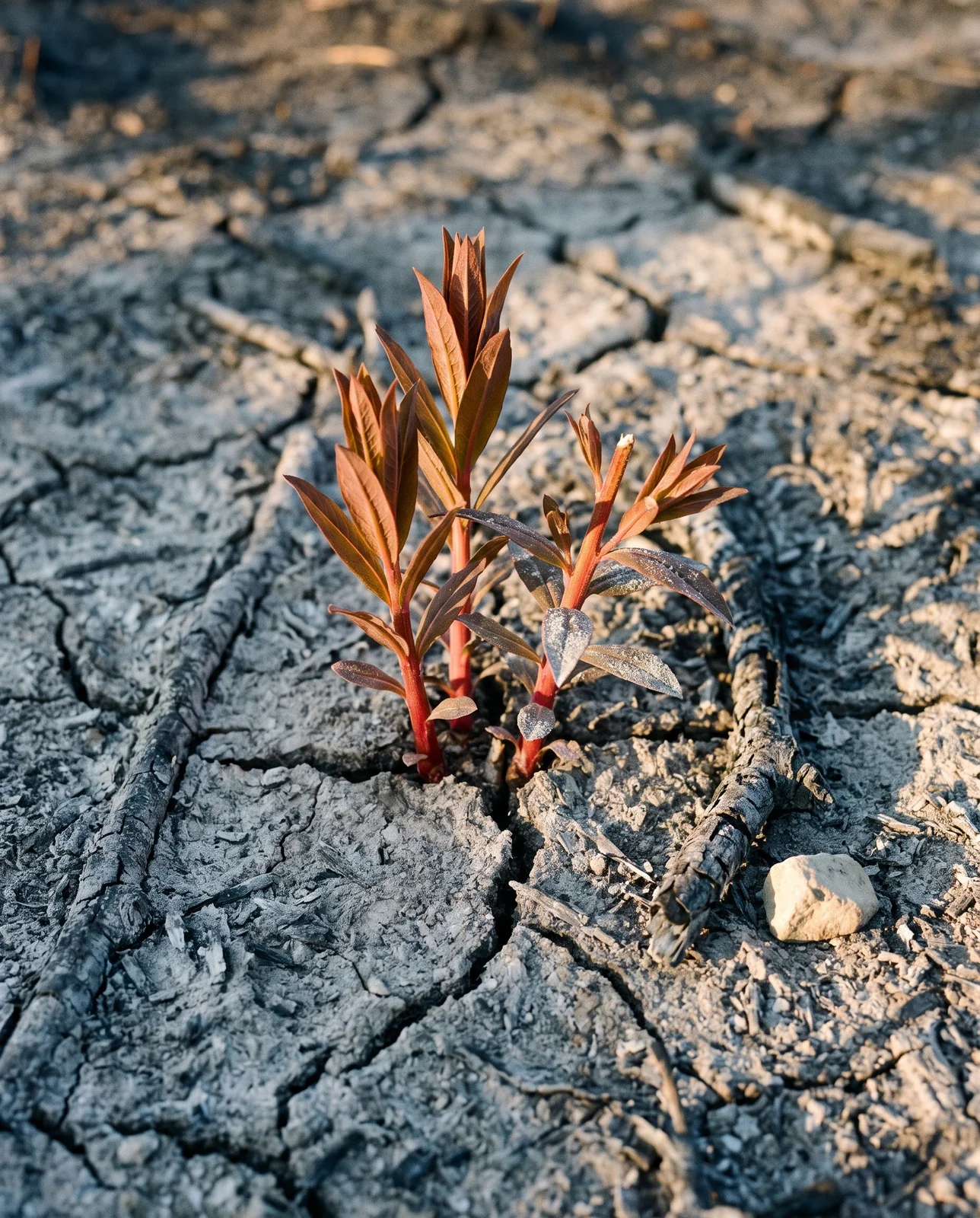
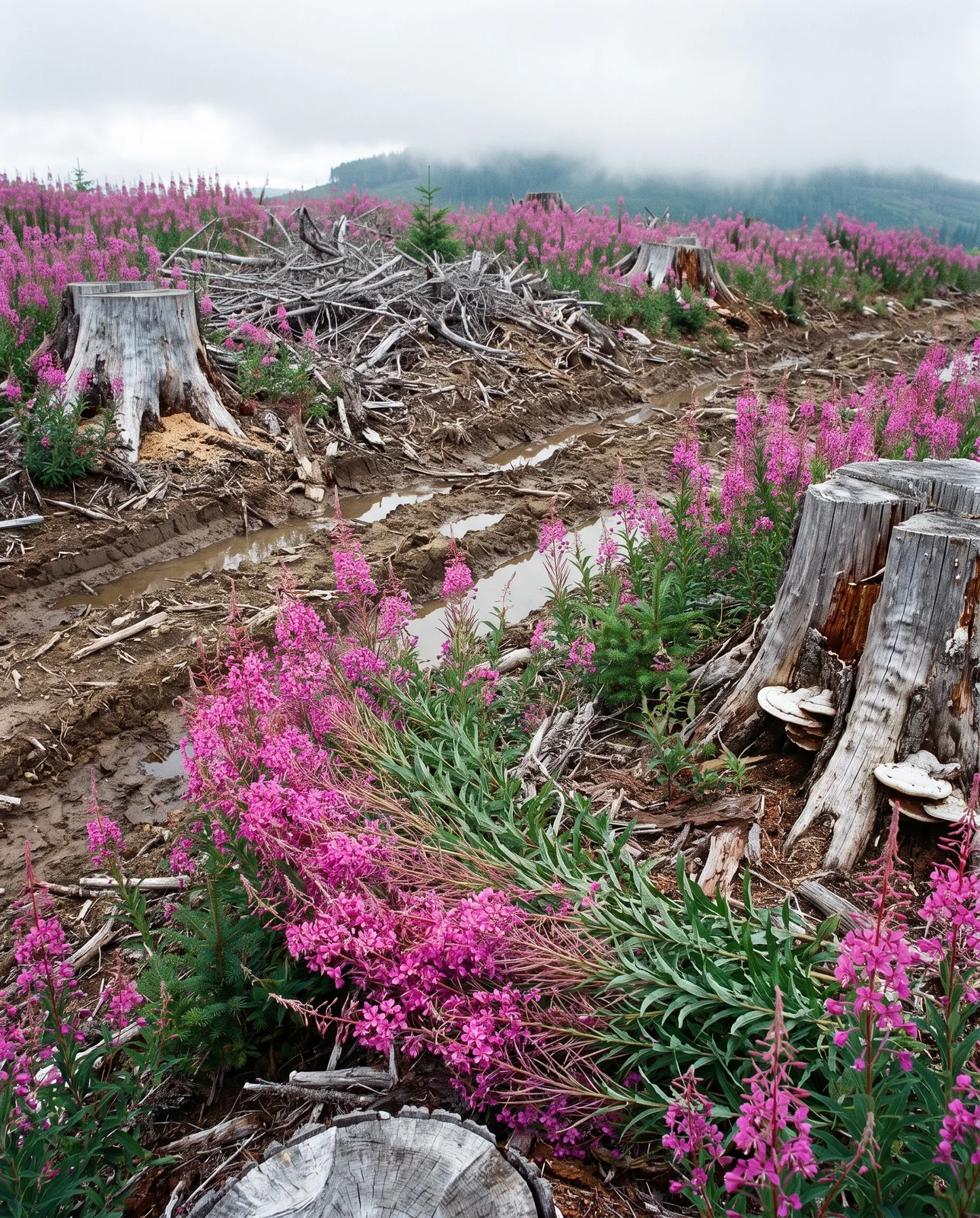
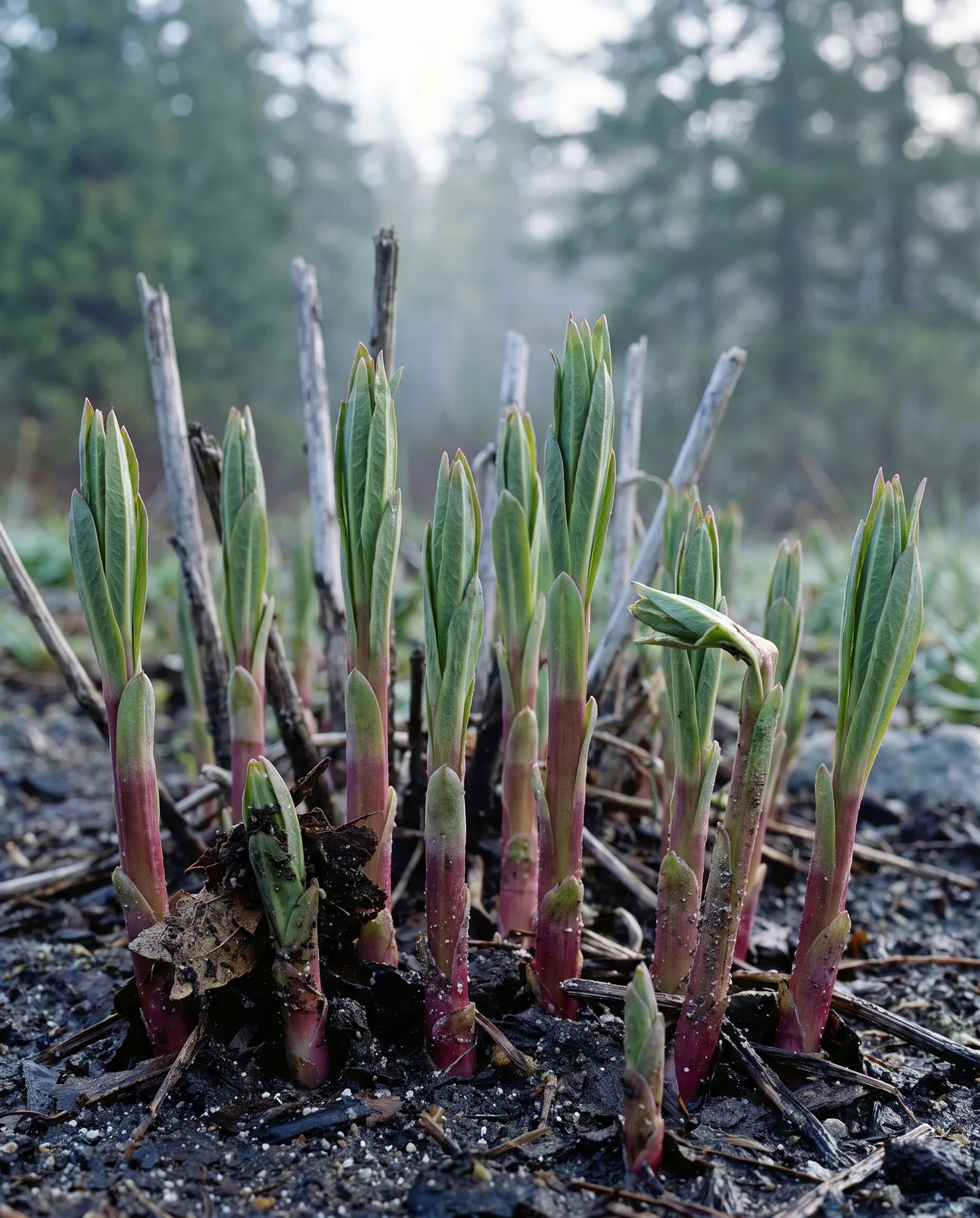
Fireweed takes over after a fire because the burn creates the exact conditions its seed requires: bare mineral soil and high light. Severe fires expose that favored mineral seedbed. Its roots and rhizomes sit shallowly in the mineral soil. Surface temperatures during a fire can exceed 1800 degrees Fahrenheit and kill top growth. Because soil conducts heat poorly, the ground a few inches down stays cool enough for those rhizomes to survive. The plant itself is not considered flammable, carrying high ash and moisture content. Shoots pushing up from surviving rhizomes can bloom within 1 month of the disturbance.
Fireweed was a residual survivor of the Mount St. Helens eruption, sprouting from rhizomes that lived through the blast. Just one year after the eruption, 81 percent of the seeds caught in local traps were fireweed. The plant enters bare ground by two routes at once, sprouting from surviving roots and colonizing quickly from airborne seed. That toughness makes it a classic pioneer in the wild, and it brings that same vigor into a garden bed.
In a garden, that pioneer habit cuts both ways. Fireweed demands open sun and is shade intolerant, thinning out as an overhead canopy closes. Even across an open expanse of 20 acres, other plants will eventually crowd it out as the site matures. It holds ground only while the soil stays open, giving way once surrounding growth fills in. In the wild, it persists only where fresh disturbance keeps the ground open and bare.
Should you plant fireweed where you live?
Whether you should plant fireweed depends on where you live. Fireweed holds native status in the Lower 48, Alaska, Canada, and Greenland. Within that home range, it ranks as noninvasive. It is grown as an ornamental plant, though it can become an aggressive weed. Both points matter together, and that vigorous habit is something every garden bed has to handle.
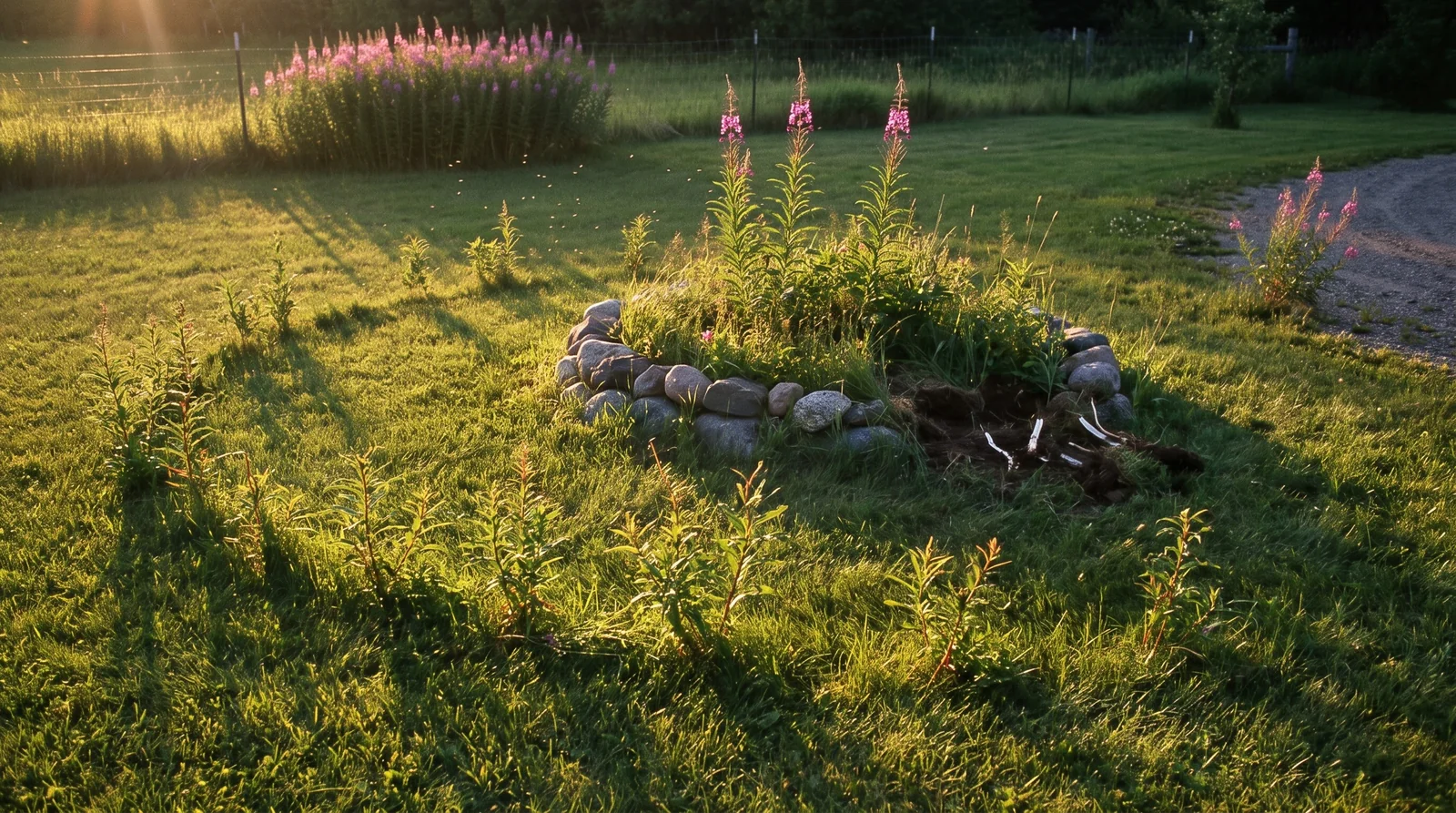
With regular moisture, it spreads aggressively by rhizomes, so care is needed in small plantings. Because it spreads by root and by self-seeding, it can be persistent and aggressive in a garden. Even in a wild garden, its use is limited unless it is carefully checked and confined. Gardeners pairing fireweed with spreading meadow plants like yarrow will need firm edging to keep the planting in bounds.
Checking before you plant comes down to three points. The first is native status where you live. The second is garden size, because heavy seed production behaves differently in a small border than in an open field. The third point is still unsettled: whether it is safe to plant fireweed outside its native range, particularly when moving Alaskan plants into eastern states like New York. Check where the seed or plug came from before you put it in the ground.
Does fireweed spread, and how far
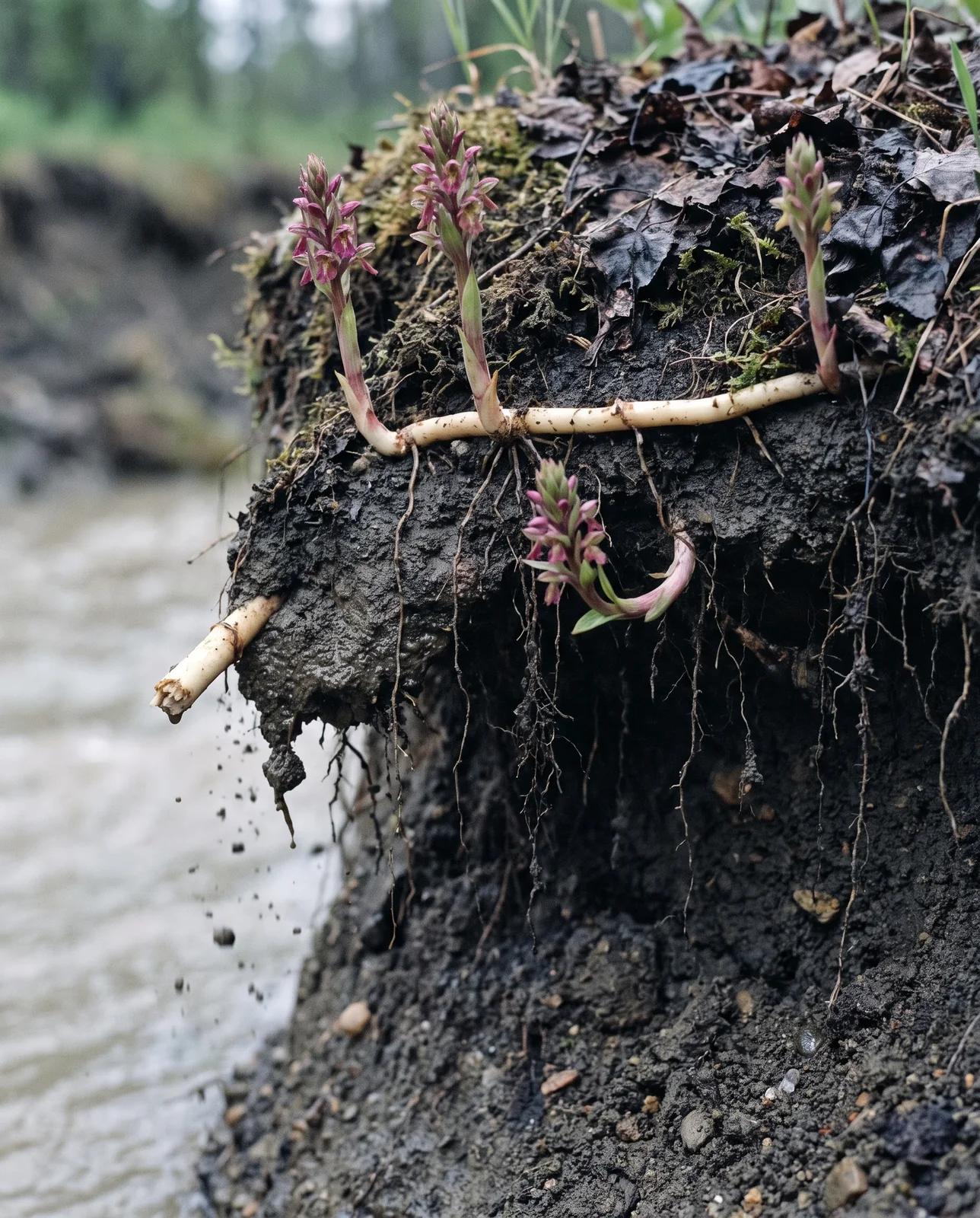
Fireweed spreads in two directions at once, traveling both underground and through the air. Its vigorous rhizomes build wide patches that may be classed as weedy. A 4-year-old rhizome can stretch 20 feet long and carry 56 growing buds. Fine roots and rhizomes reach down to 18 inches, with most growth in the top 6 inches of soil. Edging sunk at least 6 inches deep helps contain those rhizomes, though deeper roots can still reach 18 inches down. Without that barrier, fireweed will send its underground runners straight into neighboring clumps of goldenrod and other border plants.
Above ground, a single plant can produce about 80,000 seeds a year, and a pound contains roughly 6,800,000 of them. The lightweight seed drifts far on the wind, making up 20 to 50 percent of the seeds sampled 328 feet above burned forest ground. How long those seeds remain viable in the soil is unsettled. Most seeds lose viability after 18 to 24 months, though dormant seeds can lie in the ground for years.
Underground rhizomes are manageable with 6 inches of solid edging, even if occasional roots wander deeper. Windblown seeds present a wider challenge, traveling in huge numbers across great distances downwind. Whether those drifting seeds take hold depends on the surrounding ground, because they need open soil and bright light to sprout.
Fireweed zones, and what the warm end means
Fireweed handles winter cold across USDA zone 2 down to zone 7, stretching through zones 2a to 7b, though some boundaries stop at zone 5. It tolerates winter cold down to zone 2. The difference comes down to how far south it can grow, and that depends on summer heat.
Summer heat sets the southern boundary. Fireweed can struggle in hot southern summers, needing afternoon shade and moist soils, and it prefers part shade in hot summer climates generally. In North Carolina, it does best in the mountain region and stays restricted to that cooler high country. That habit matches its native range, climbing from sea level to 5,300 to 12,500 feet in Colorado. In zone 7, summer heat means the plant can still struggle.
Sowing fireweed, and buying it
Sow fireweed seed outside in fall, letting winter weather condition it. Sowing on the surface in late fall or winter allows snow to handle that stratification naturally. If you sow indoors, one month of cold stratification at 40 degrees Fahrenheit may improve germination. Root growth can begin at 40 degrees Fahrenheit before any stems emerge, so the plant gets moving early underground. A standard packet holds 500 seeds and an ounce contains 800,000. Optimum conditions for germination are warm, well lighted and humid.
Fresh seed comes up quickly, with newly collected seed germinating at nearly 100 percent within 10 days under warm, moist conditions. Subalpine seed from the Sierra Nevada gave a lower 55 to 68 percent germination under day and night temperatures of 62 and 55 degrees Fahrenheit, or 81 and 73 degrees. In nature, seed release begins in August and continues after frost kills the shoots, setting up the timing that fall sowing copies.
Buying started plants is often harder than starting from seed. Fireweed has poor success as a potted crop, making dormant bare roots the usual choice for started stock. When setting out bare-root plants, give them generous room to spread. Sowing seed outdoors in late fall onto open ground remains the simplest path.
Why fireweed is not blooming
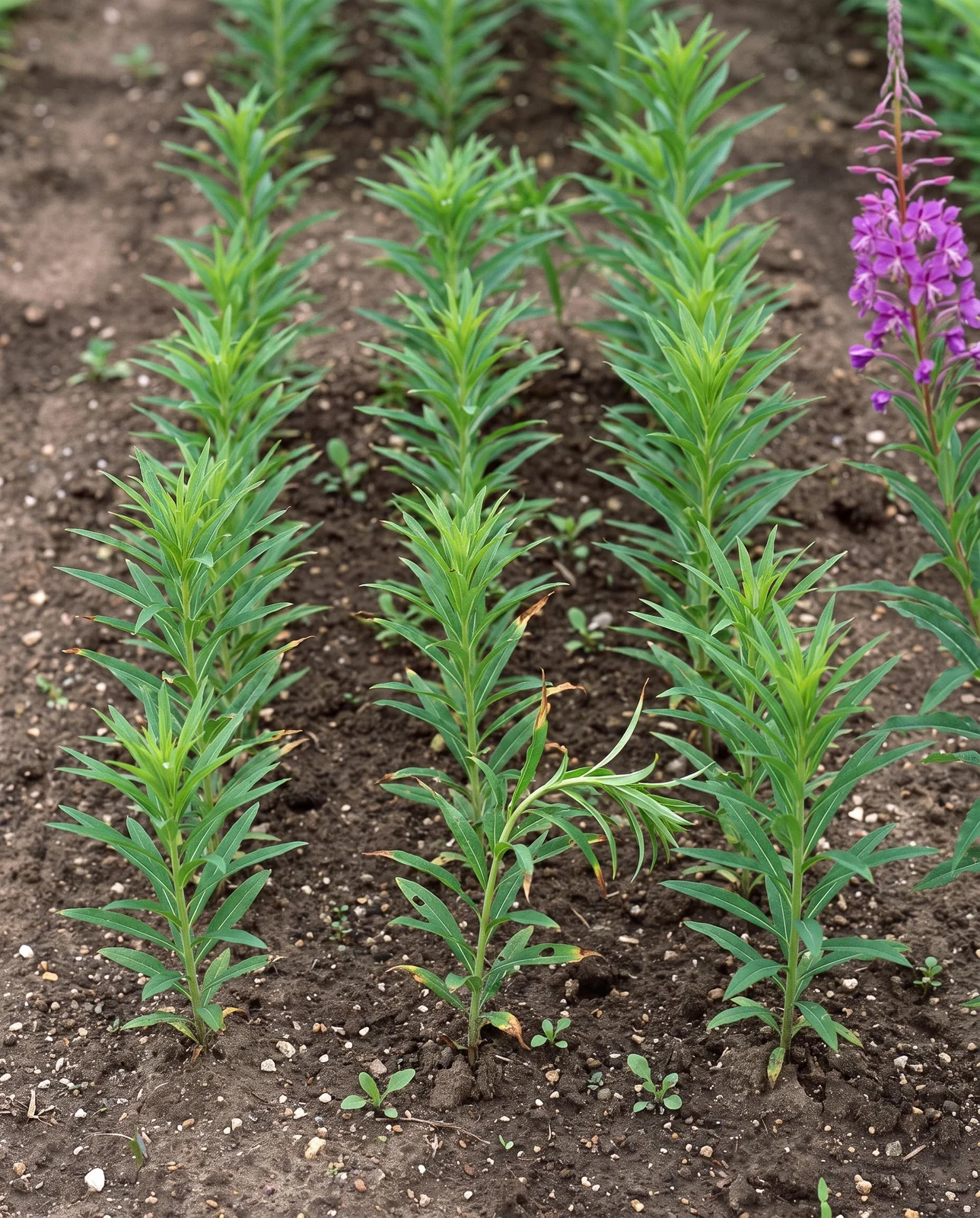
When fireweed fails to bloom, plant age is usually the cause, followed by overhead shade. Seedlings raised from a fall sowing flower in their second year, so a leafy first summer without a bloom spike is on schedule. On established plants, missing flowers often point to lost sunlight when neighboring growth closes overhead.
No specific degree-day requirement or threshold of warm days is confirmed to trigger flowering. Pests, diseases, and nutrient shortages also rarely explain healthy leafy stems that fail to bloom. Reliable flowering comes down to age and sun: allow seedlings time to reach their second year, provide full direct sunlight daily, and prevent taller growth from crowding out the sun.
Work down the bloom checks in order
Work down these five checks in order, stopping at the first one that matches your plant.
Yellow and red lower leaves
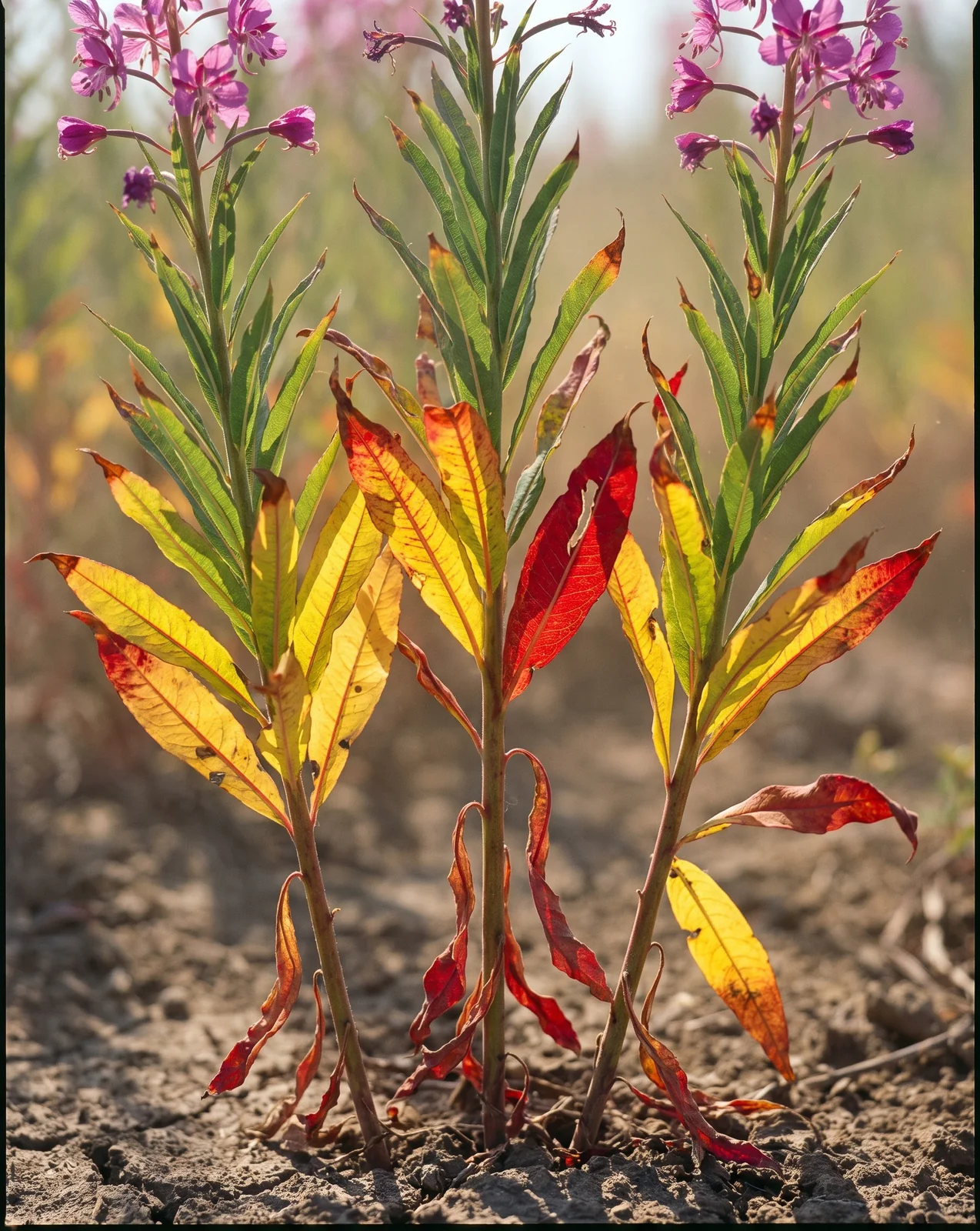
Yellow and red coloring at the base of the stems in late summer is a normal drought response. Foliage turns color with limited water availability in late summer and fall, and the aerial parts turn red before dying back for the year. The season and soil moisture explain the shift, so check the garden hose and the calendar before suspecting a disease.
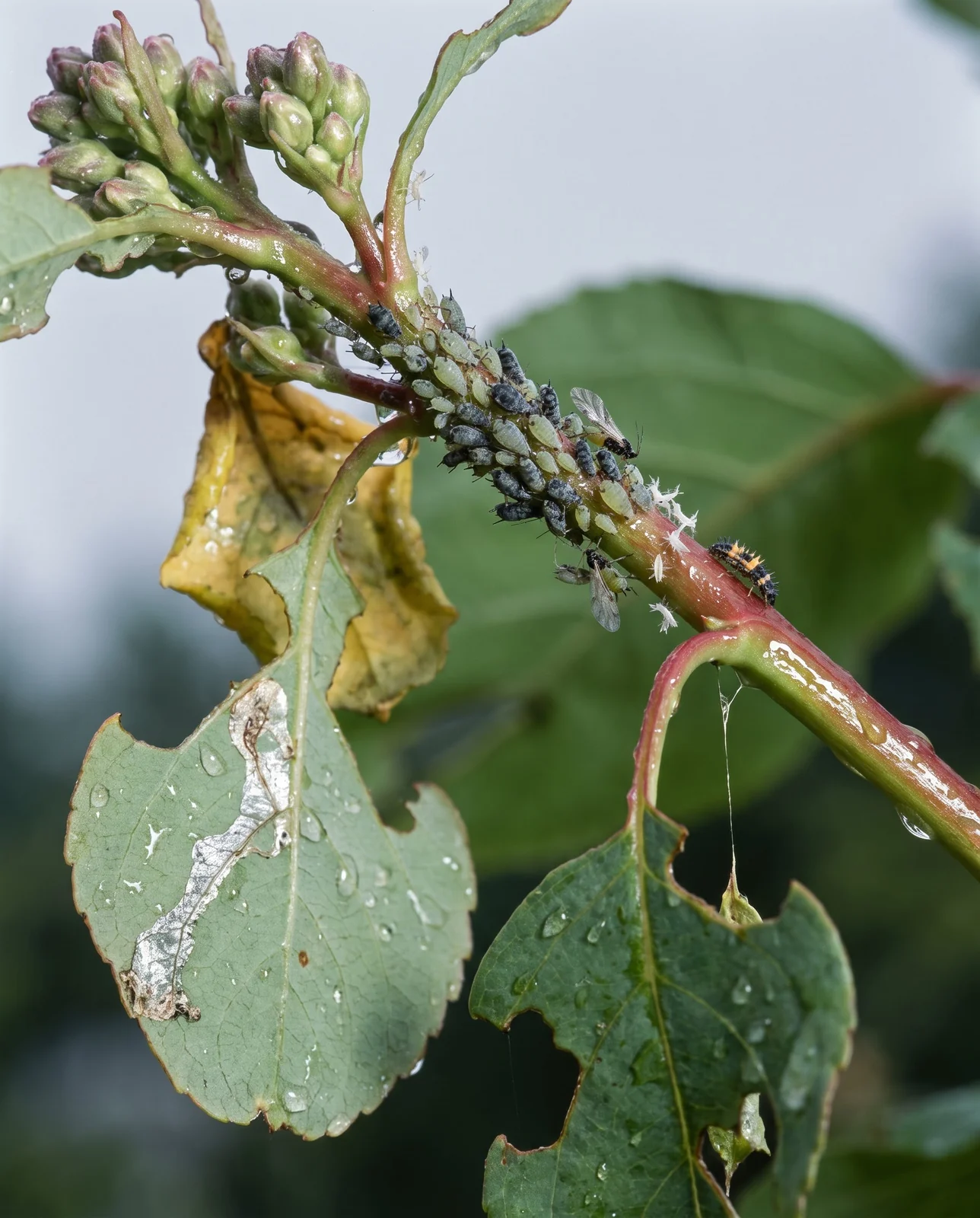
Leave dead stems standing through winter so pollinating and other insects can shelter in them. Pests and diseases are uncommon on fireweed. The plant has no serious insect or disease problems, though snails, slugs, powdery mildew, rust, and leaf spot turn up as occasional troubles, alongside some susceptibility to downy mildew and fungal leaf spots. How much those issues matter in a garden remains minor.
Problems, and how short the list is
Fireweed has no serious insect or disease problems, though five minor troubles turn up on occasion.
Rust is an occasional problem on fireweed. It also matters to neighboring trees, because fireweed serves as an alternate host for the rust that causes needle rust on balsam fir.
Powdery mildew and leaf spot are occasional problems on the foliage, and plants show some susceptibility to downy mildew and fungal leaf spots. Neither issue tends to cause lasting harm to a patch.
Snails and slugs are occasional visitors on fireweed, representing the animal pests noted for the plant.
Fireweed may act as a reservoir for root-rotting Armillaria honey fungi, which parasitize lodgepole pine. The possibility matters where pines grow beside the bed.
Growing fireweed in a container
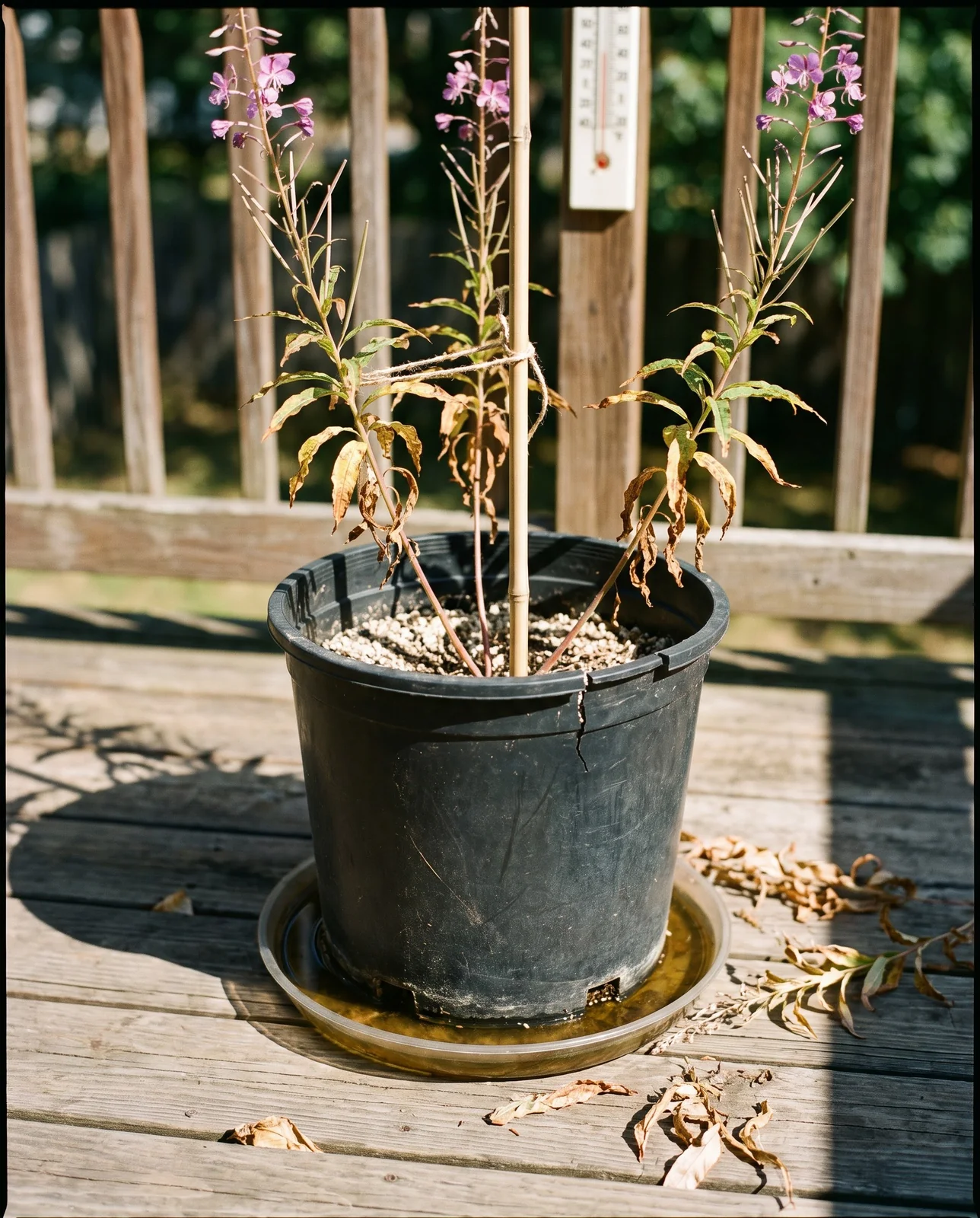
A container may be best if you want the spires without letting the roots run through the whole garden. Potted plants still need rich, moist soil and full sun. The roots and underground runners can reach fairly deep, so choose a pot with generous depth.
It is often easiest to start fresh from seed each spring, as potted plants do not overwinter well. Keeping fireweed in a container lets you enjoy its tall spires alongside clumping perennials like black-eyed Susan without letting the roots run into the rest of the garden.
Is fireweed edible
Several parts of the plant make good eating if gathered young. The tender shoots and leaves can be eaten raw in salads, pickled, or cooked like asparagus and greens. On older stems, you can split the stalk to scrape out the soft pith for soups and stews, saving the tough outer fibers for twine and netting. Pacific Northwest peoples, including the Nuxalk of British Columbia, gathered young fireweed shoots and stems to eat raw, boiled, blanched or steamed.
Tea made from the leaves can be mildly laxative, so drink it in moderation. True fireweed has no toxicity warnings attached to its shared common name, and it is non-toxic to cats, dogs and horses. Warnings about toxic liver damage belong to that other plant, Senecio madagascariensis. Checking the botanical identity settles the question before anyone eats it.
Fireweed honey
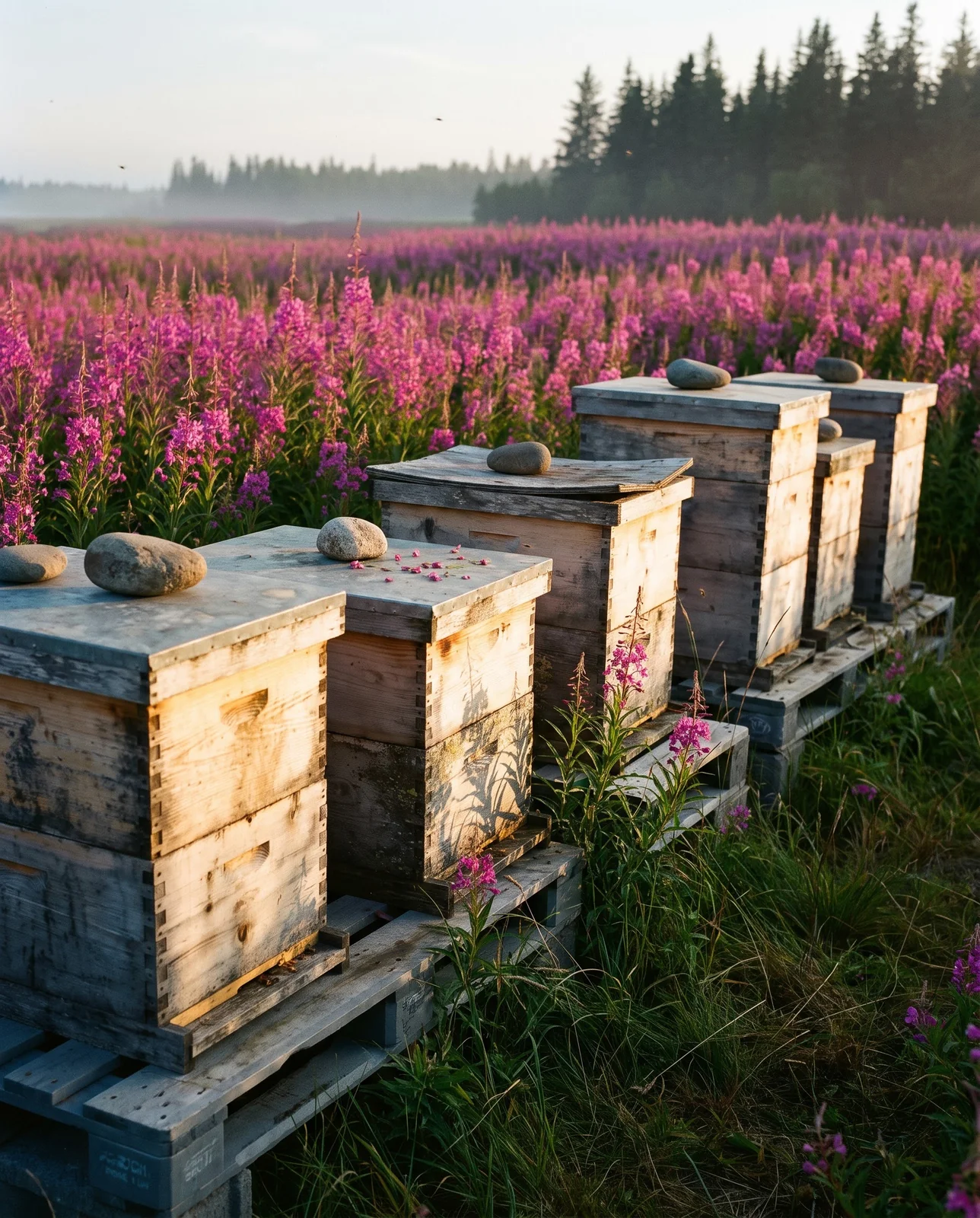
Fireweed produces abundant nectar wherever wide stands open across the north. It is an important nectar plant for the Canadian honey industry, and on Alaska's Kenai Peninsula it is the most fed-upon flower for managed bees. In the Soviet Union, honey yields reached 892.2 pounds per acre, with beekeepers moving hives between fresh forest clearings to stay on the nectar flow. In Alaska, where the plant grows in abundance, the harvest also goes into popular honey, jelly and syrup.
Wildlife and pollinators
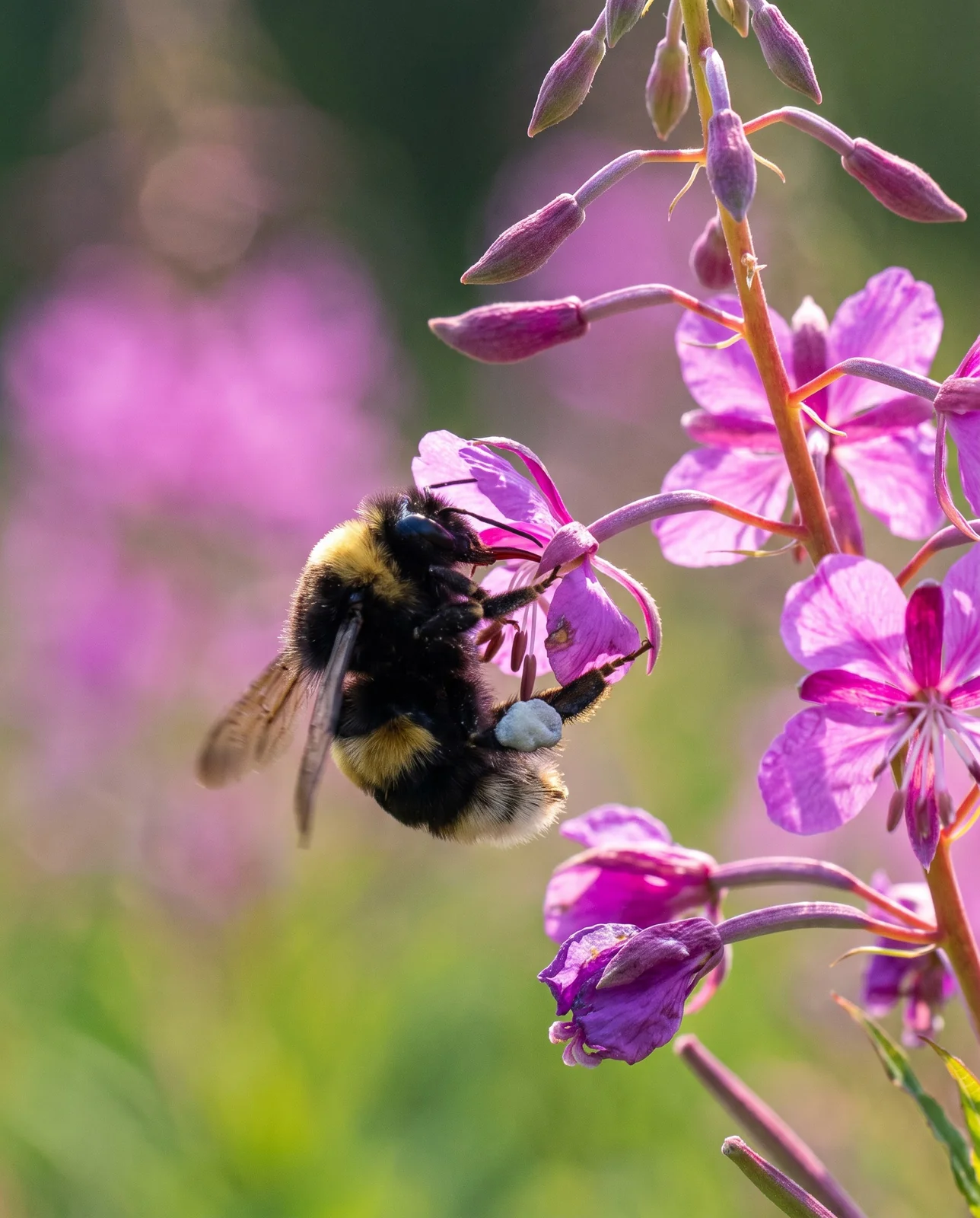
Five species of bumble bees visit fireweed, among many native bee genera, while butterflies feed on both the nectar and pollen. Along northern roadsides and burn edges, wild lupine often settles the same disturbed ground, blooming beside it through midsummer.
Larger wildlife rely on the foliage through the summer months. It provides an important summer food for elk in the Rocky Mountains and mountain goats in Alaska. Alaskan moose browse the plants before they flower but rarely touch them once blooms open, because flower tannins reduce the protein an animal can digest.
The plants sold as fireweed, and beside it
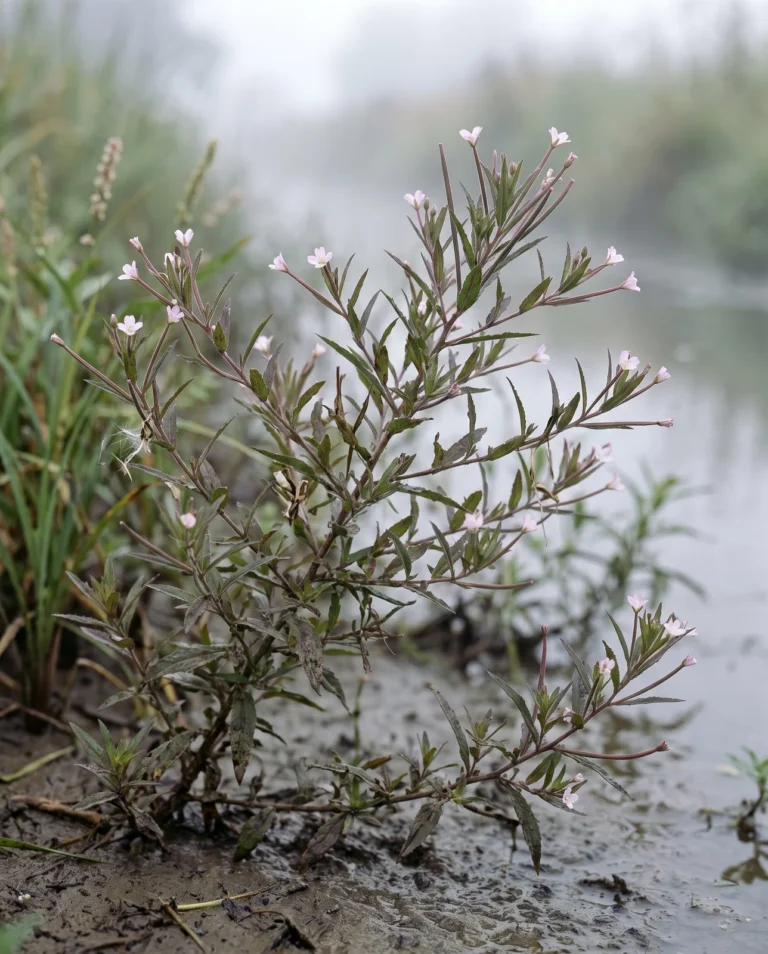
True fireweed, its garden selections, and the closely related willowherbs often offered right beside them.
Light
Fireweed thrives in full sun, which means 6 or more hours of direct sunlight each day, though it tolerates partial shade of 2 to 6 hours. Where summers turn hot, afternoon shade helps protect it from the heat.
Soil and water
Fireweed grows easily in loose, organically rich soil that drains well, but it is not recommended for heavy clay. The plant needs regular moisture, thriving along riverbanks and damp margins in the wild while stopping short of standing water. Most roots and rhizomes run through the top 2 inches of soil, so take care not to disturb that shallow layer when weeding around the clump.
Height and spread
How tall fireweed grows depends largely on its soil and setting. In garden beds, clumps usually grow 2 to 5 feet tall and spread 1 to 3 feet across, though cultivated plantings can reach 3 to 6 feet with 2-foot spacing. In wild ground, single leafy stems can range from 3 to 9 feet tall, often standing 4 to 6 feet high but occasionally reaching 9 feet. That height makes it a natural backdrop plant, suited to the rear of a border where its spires have room to rise.
What fireweed stands for
In garden lore, fireweed's symbolism centers on quick recovery and rebirth. It is the official floral emblem of Canada's Yukon Territory, chosen on March 27, 1957 and formally approved that November. The territory chose it because it is hardy and common across every district, lining the Alaska Highway and northern roads from June through August in purple borders. In England, it was called bombweed after rapidly colonizing open bomb craters in London during World War II. Today, it carries the spirit of the phoenix, representing new growth rising after fire.
What to expect, year by year
How fireweed develops through its first seasons, from fresh seed to an established colony.
The first season goes into roots and leaves. Sowing seed outdoors in fall produces seedlings that wait until their second year to bloom. Root growth can start down at 40 degrees Fahrenheit, well before green shoots appear above ground. Fresh seed gets moving quickly in warm, moist conditions, germinating at nearly 100 percent within 10 days.
In the second summer, flowering stretches through July, August and September as flower spikes open steadily from bottom to top over several months. Seed pods begin releasing silky seed in August, continuing to shed well after frost kills the stems. Underground runners spread wide, where an excavated 4-year-old rhizome reached 20 feet long with 56 overwintering buds.
As seasons progress, surrounding vegetation decides how long a patch lasts. In large open spaces, even on plantings of 20 acres, competing brush and grasses can eventually crowd it out. Stands persist where ground disturbance recurs, such as burned woods, logged slopes, avalanche paths and gravel riverbars. Every autumn finishes on bright scarlet leaves as the seed capsules split open in the breeze.
Three things people get wrong about fireweed
These three mix-ups come from mistaking fireweed for another plant, or guessing how it grows and spreads.
The myth: Fireweed is the poisonous weed a government warns about.
The reality: Two unrelated plants share the name fireweed. The weed behind that warning is a daisy in the aster family. It contains pyrrolizidine alkaloids, which cause liver damage in livestock that eat it. Fireweed itself is a willowherb in the family Onagraceae. The ASPCA confirms it is non-toxic to dogs, cats and horses.
The myth: It needs a fire to grow.
The reality: Fireweed seed needs bare mineral soil and high light to sprout. A fire exposes the mineral seedbed the plant favors. The plant also grows without fire on riverbars, cut-over forest, avalanche slopes, and ground left by melting glaciers. The plant itself is not considered flammable, because it has high moisture and high ash content.
The myth: It is invasive everywhere.
The reality: Fireweed is native and noninvasive across its home range. That range covers the Lower 48, Alaska, Canada and Greenland. Whether it turns invasive outside that range is unsettled.
FAQ
Is fireweed the same plant as the fireweed that poisons livestock?
No, two unrelated plants share the name. Garden fireweed is a willowherb in the Onagraceae family, while the toxic pasture weed is a daisy in the genus Senecio. The pyrrolizidine alkaloids that cause liver damage in livestock belong to that pasture daisy.
What time of year does fireweed bloom?
Fireweed blooms through the summer, flowering across July, August and September. Each flower spike opens from the bottom of the stem to the top over a period of a few months.
What is the ideal growing zone for fireweed?
Fireweed grows across zones 2 to 7, or zones 2a through 7b, though some recommendations stop at zone 5. It can struggle in hot southern summers, where it needs afternoon shade and moist soil.
Does fireweed spread aggressively?
Yes, it spreads quickly by both airborne seeds and creeping rhizomes. An excavated four-year-old rhizome measured 20 feet long with 56 perennating buds, and a single plant can produce about 80,000 seeds a year. To keep the rhizomes contained, sink edging at least 6 inches deep into the soil.
Can humans eat fireweed?
Yes, you can eat the young shoots and leaves raw, in salads, pickled, sauteed, or steamed like asparagus. The stem pith is also edible and works well in soups and stews. Tea made from the plant can be mildly laxative, so drink it in moderation.
Should you cut yellow leaves off fireweed?
You do not need to cut them off. Leave the dead stems standing through winter to provide shelter for pollinating and other insects.
What nutrient deficiency causes fireweed leaves to turn yellow?
Yellow leaves are usually a response to dry soil and the changing season. Foliage naturally changes color when water runs low in late summer and fall, and the stems turn red before dying back. Yellow and red coloring at the base of the plant is a normal drought response as it sheds older leaves.
Is fireweed toxic to dogs and cats?
No, fireweed is non-toxic to dogs, cats and horses. The ASPCA confirms that this applies to our species, Epilobium angustifolium in the family Onagraceae.
Does fireweed come back every year?
Yes, fireweed returns every year from underground rhizomes. New shoots sprouting from those rhizomes can bloom within one month of a disturbance, though a stand thins as a forest canopy closes over it.
Where can I buy fireweed plants?
Potted fireweed is hard to find because it struggles as a greenhouse crop. Nurseries often supply bare-root stock, or you can start from seed packets that hold 500 seeds.
What does fireweed symbolize?
Fireweed symbolizes rebirth after fire, carrying the imagery of the phoenix rising from the ashes. In England, it earned the name bombweed after colonizing London's bomb craters during World War II. It is also the official floral emblem of the Yukon Territory in Canada.
Interesting tips
- If you grow fireweed in a container, feed it twice a month with an organic fertilizer.
- In years when pollinators are scarce, fireweed can self-fertilize as a backup strategy.
- At first glance, fireweed is sometimes confused with dame's rocket and two invasive plants, hairy willowherb (Epilobium hirsutum) and purple loosestrife (Lythrum salicaria).
Related Guides & Flowers
Foxglove
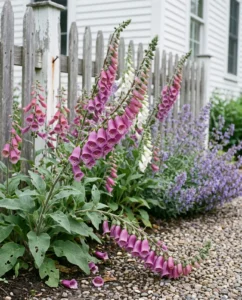
The other tall garden spire that opens its flowers from the bottom of the stem upward.
Coneflower
A meadow perennial for the same open, sunny bed, without the roots that travel.

Aster
The late native that carries a bed after the fireweed spikes have gone to cotton.

Types of flowers
The full catalog of flowers on the site, grouped by kind.
Enjoying our flower guides? Add YourFlowersGuide as a preferred source on Google. It helps more readers find us.
Add to Preferred Sources