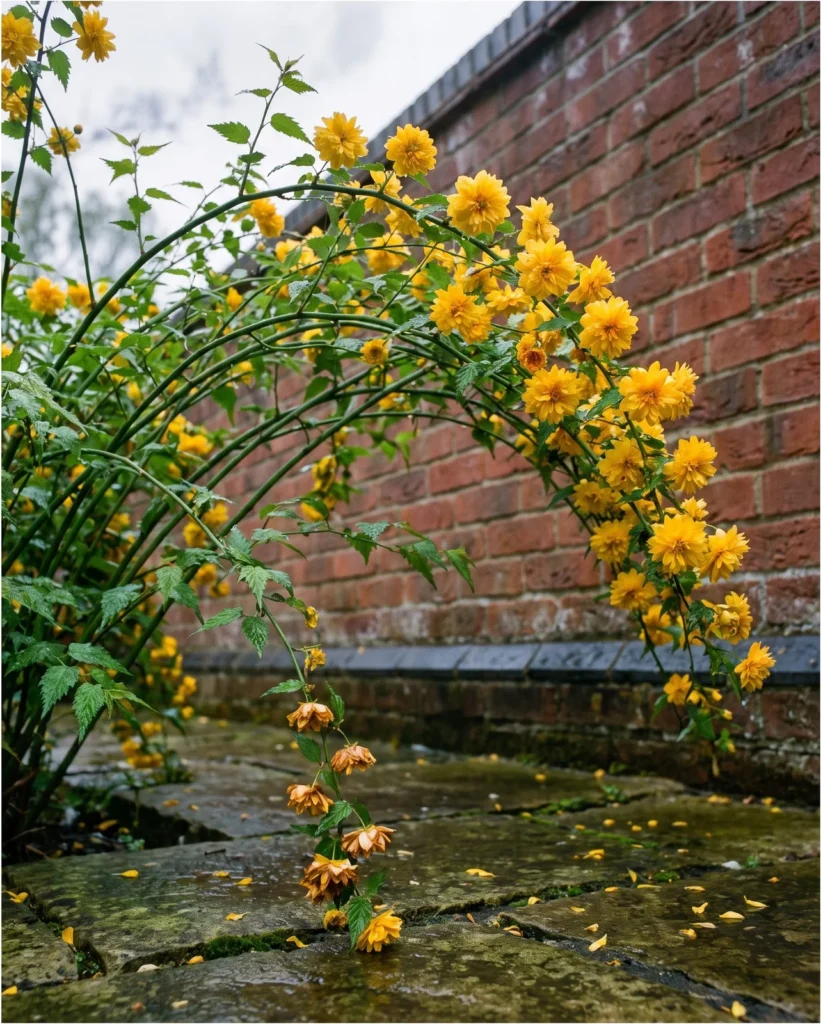
What kerria is and where it comes from
Kerria is a deciduous shrub in the rose family, and there is only one of it: Kerria japonica is the single species in the genus. The japonica in that name and the common name Japanese kerria both mislead, because the plant grows wild from central and southern China through southern Korea to Japan. The family tie is real, and a flat single flower reads as a small wild rose to anyone who grows roses, but the shrub is not a true rose. The double form 'Pleniflora' sells widely as bachelor's buttons. Gardeners in the south central states often call the shrub the Yellow Rose of Texas, and because the flowers open around Easter it answers to Easter rose as well.
The genus is named for William Kerr, a nineteenth-century plant collector who worked in China, Java and the Philippines. He reached Guangzhou in 1803 as the first professional plant hunter posted permanently in China, and what he shipped home in 1805 was the double-flowered form. The single-flowered species followed in 1834, and the double is still the one most gardens grow. Kerr died in Ceylon in 1814.
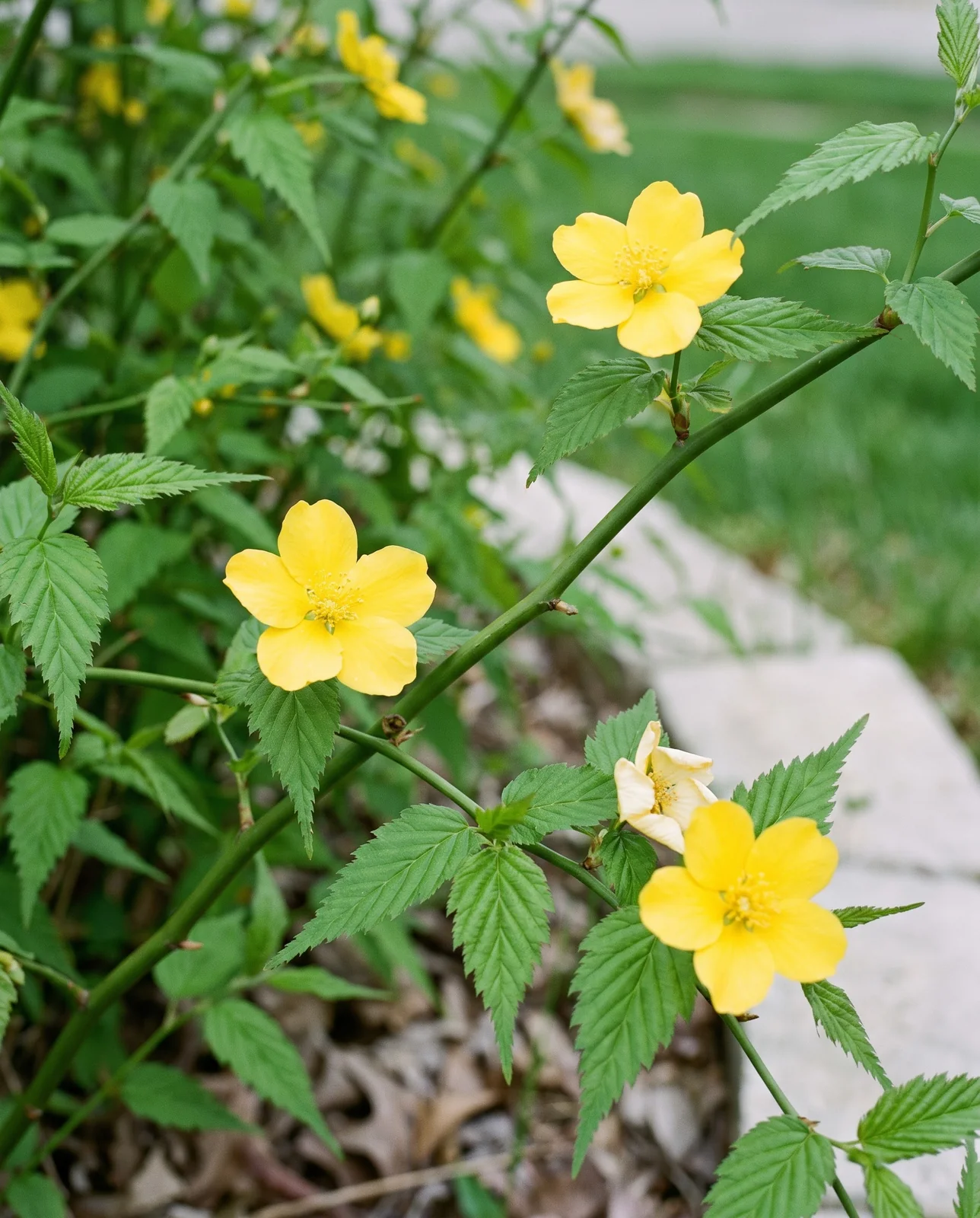
What kerria looks like through the year
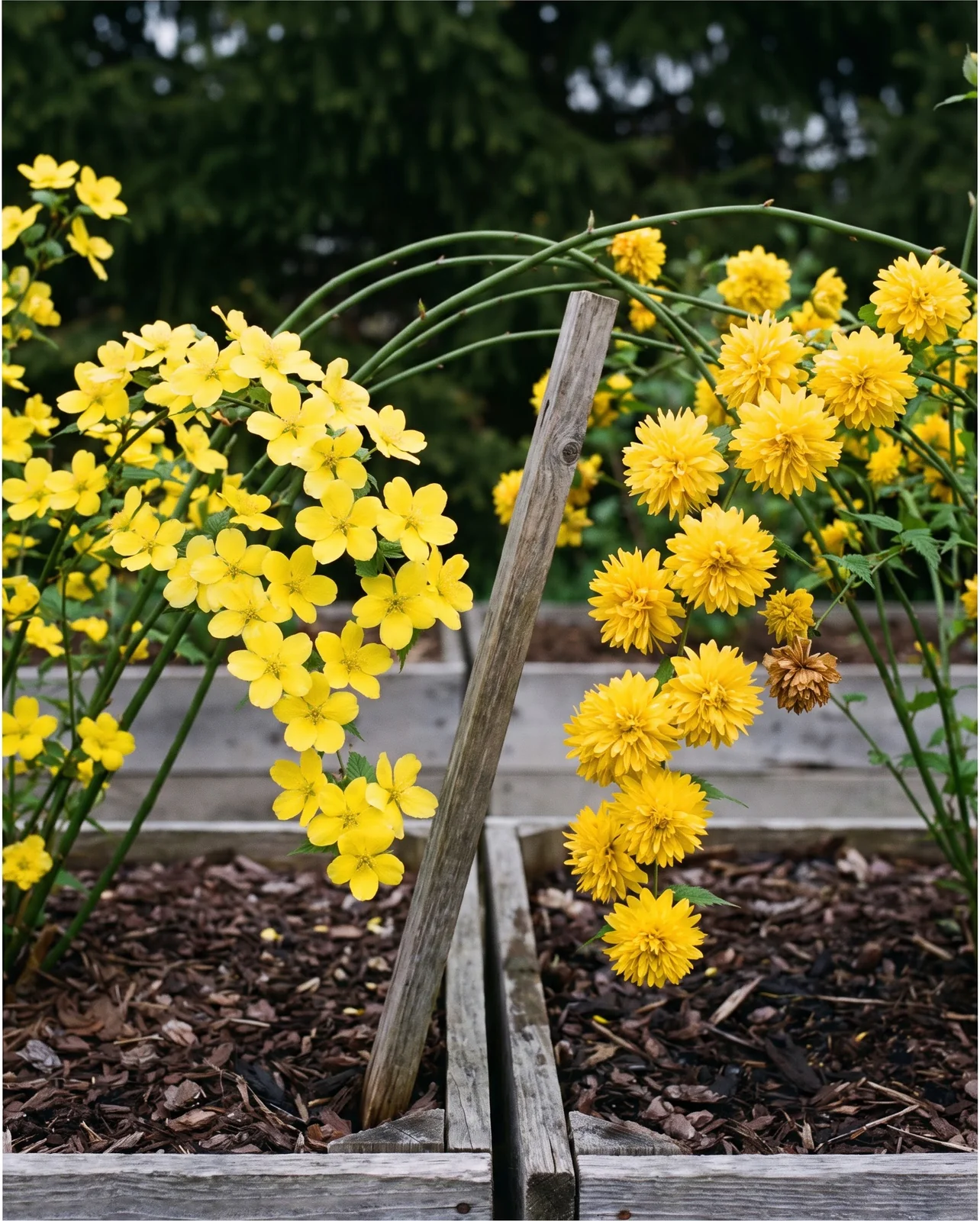
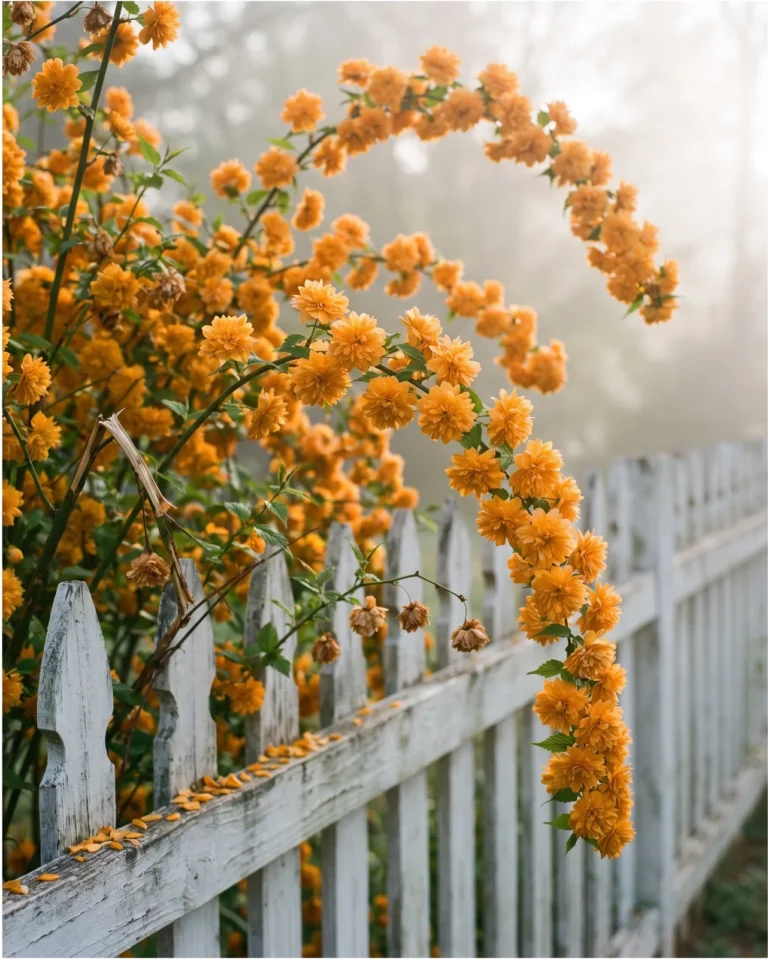
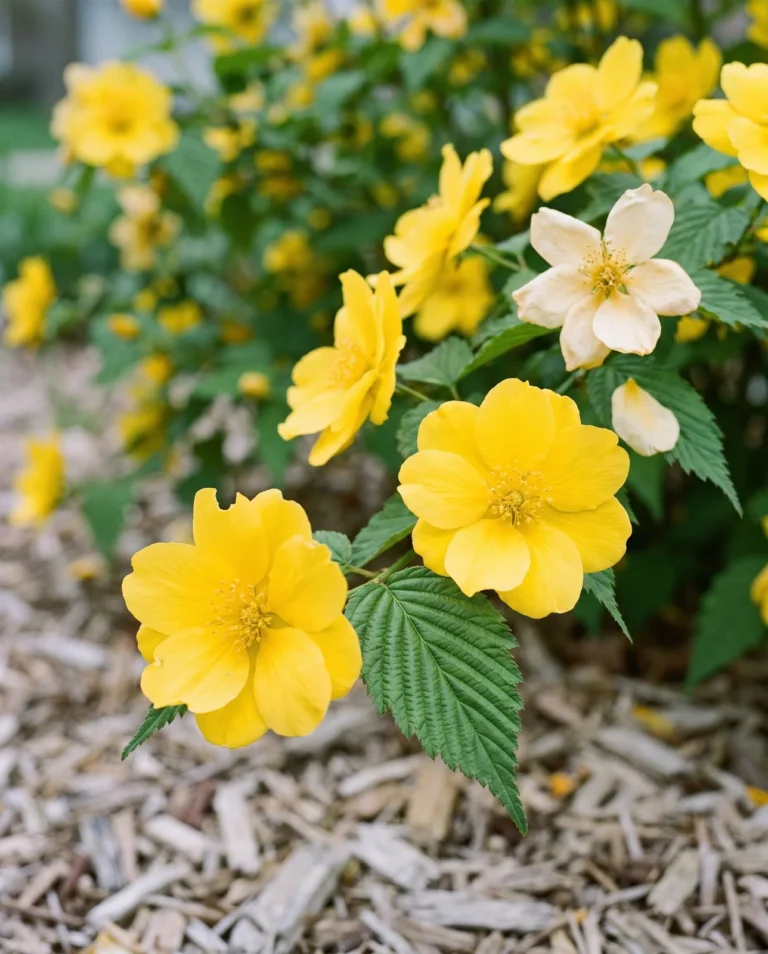
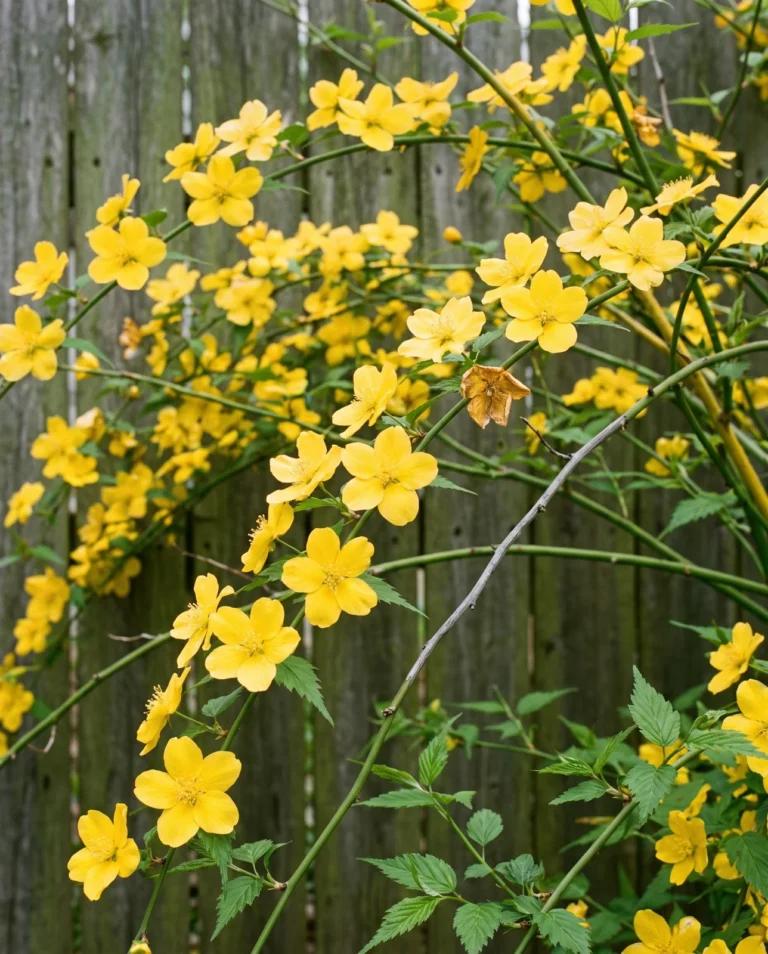
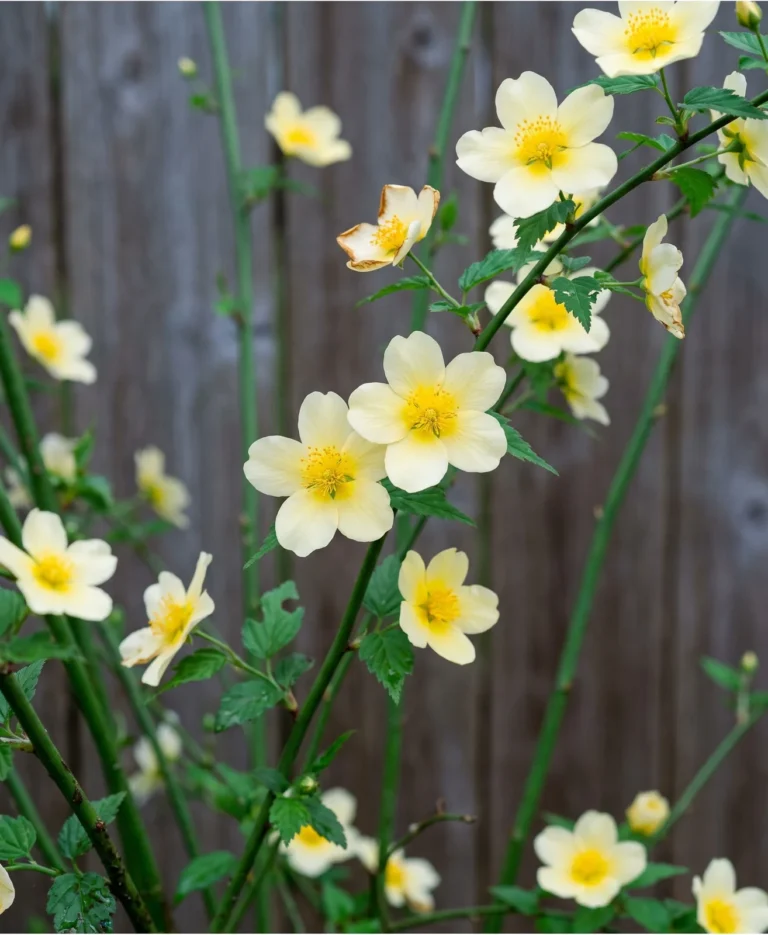
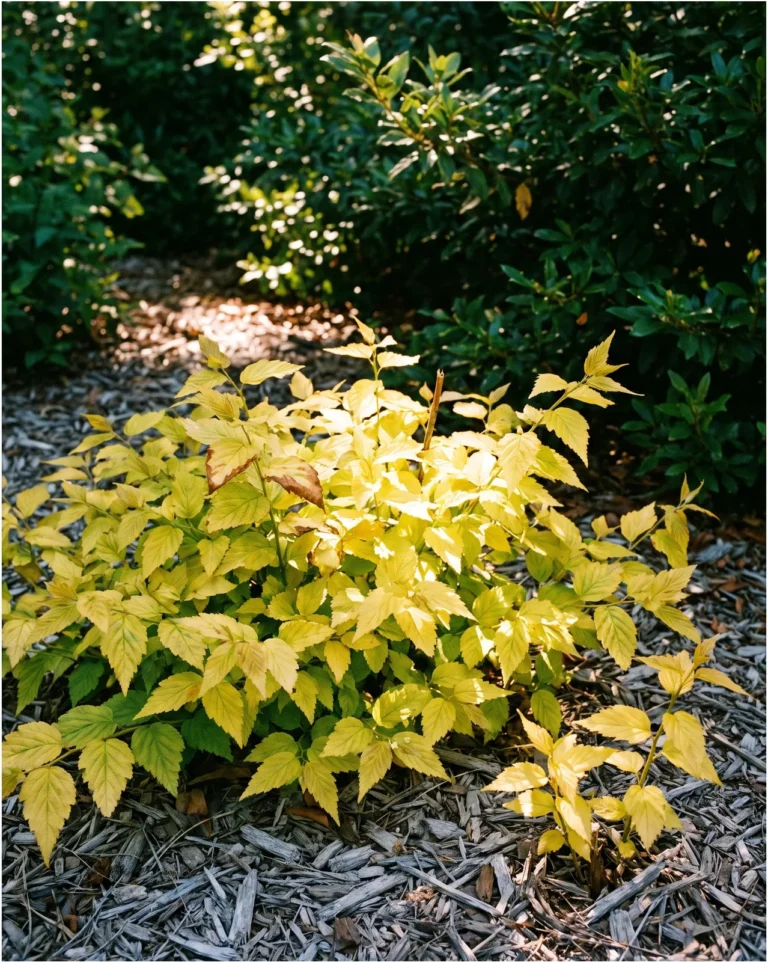
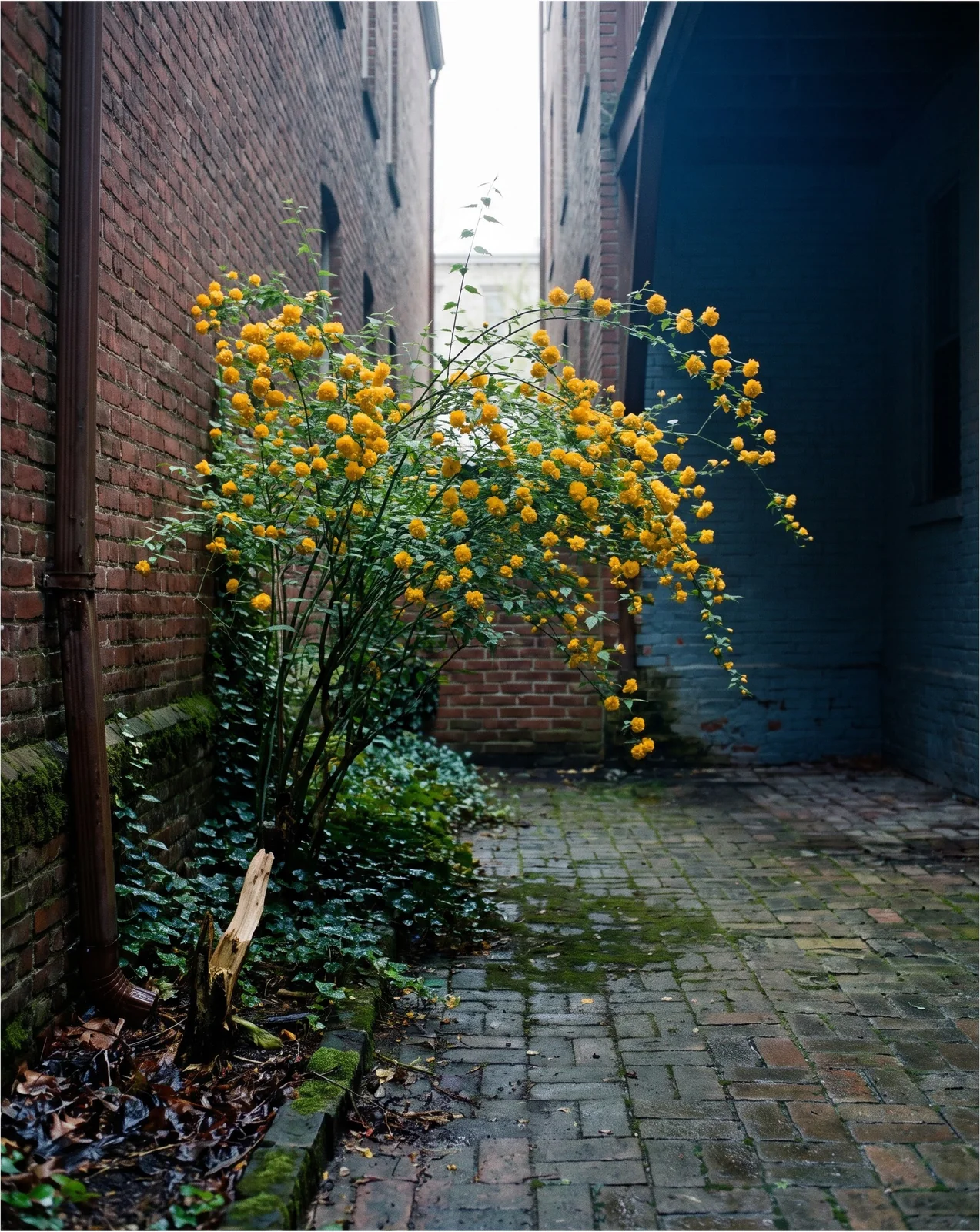
The species and the popular double form look different enough to pass for separate plants. The species carries single, flat, five-petaled yellow flowers up to about 1.5 inches across, one to a stem and shaped like a small wild rose. 'Pleniflora' carries dense double pompoms with an orange cast to the yellow, closer to a small chrysanthemum than to anything rose-shaped. Bloom comes early and it lasts, a single flower holding two to three weeks, with scattered reflowering through the summer. The foliage turns chartreuse in fall and hangs on through November.
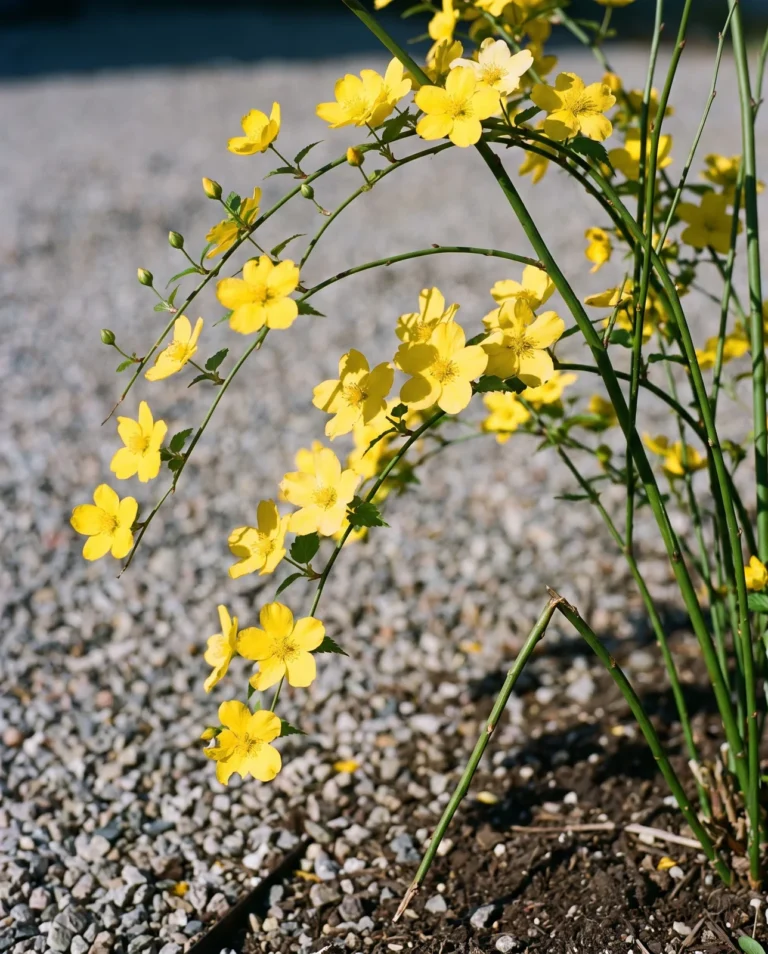
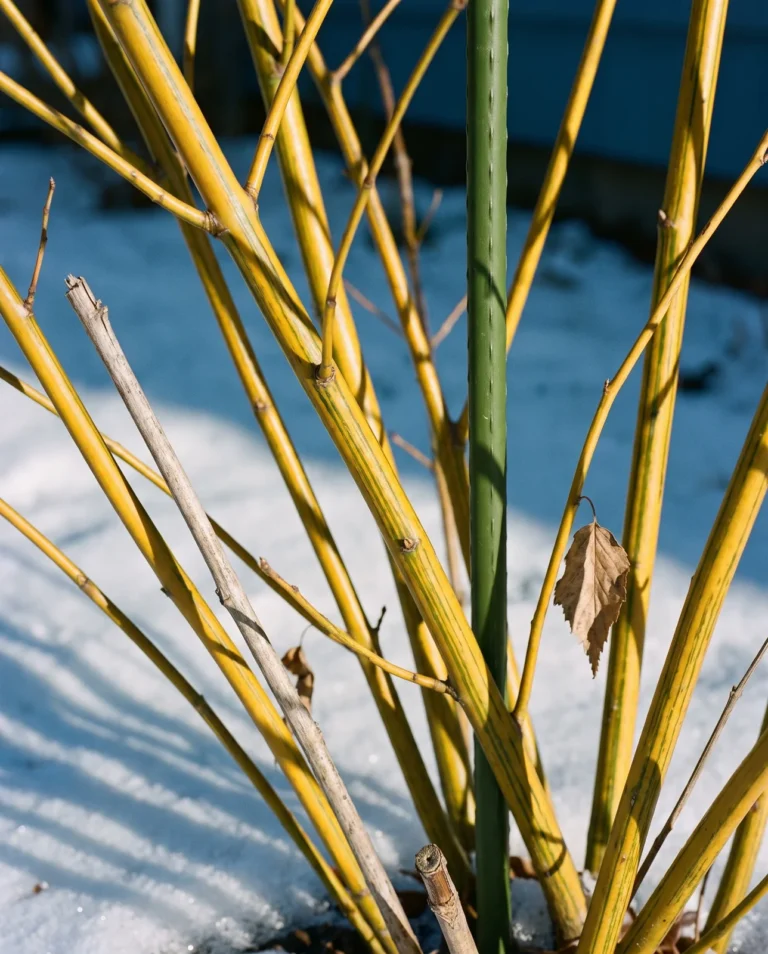
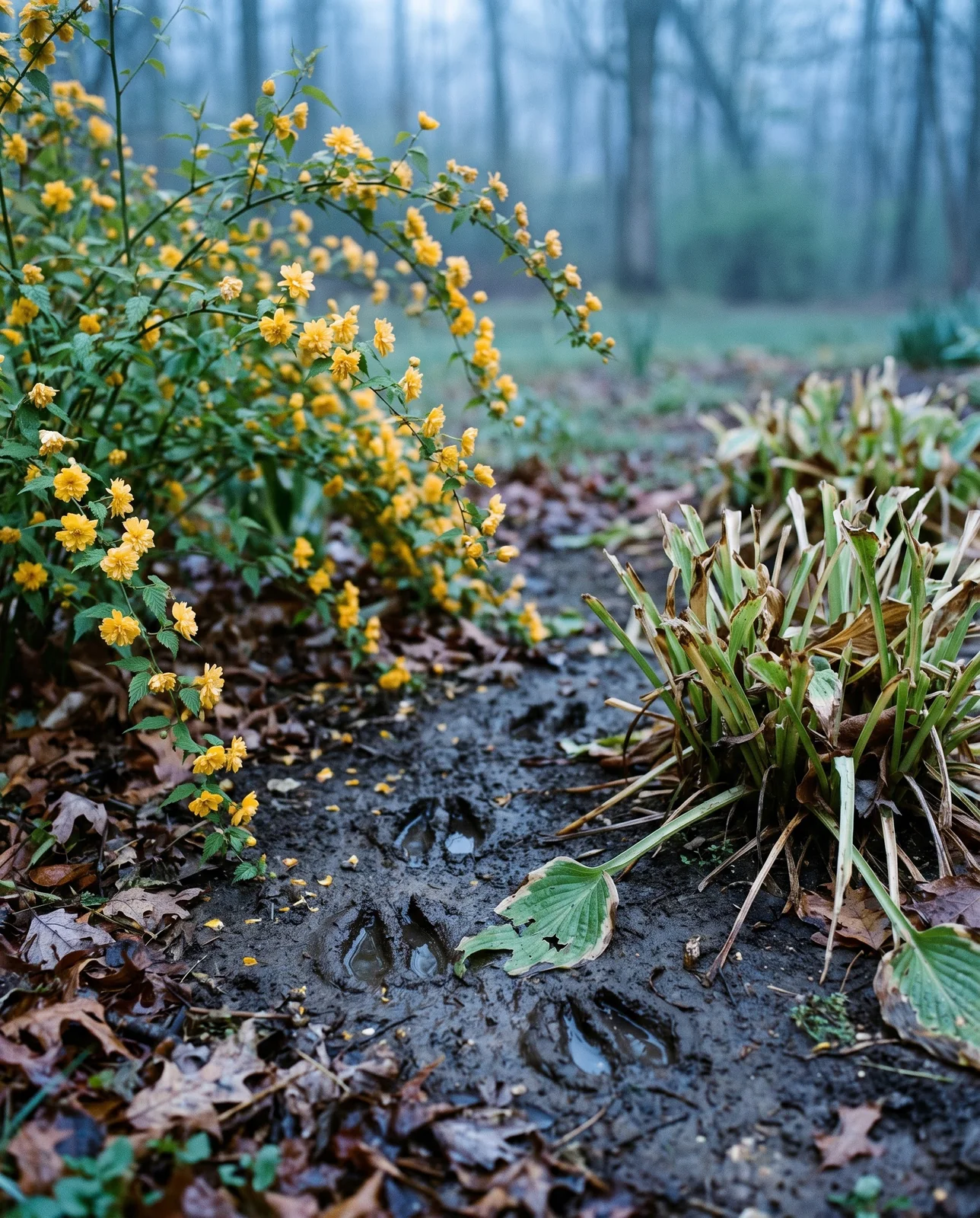
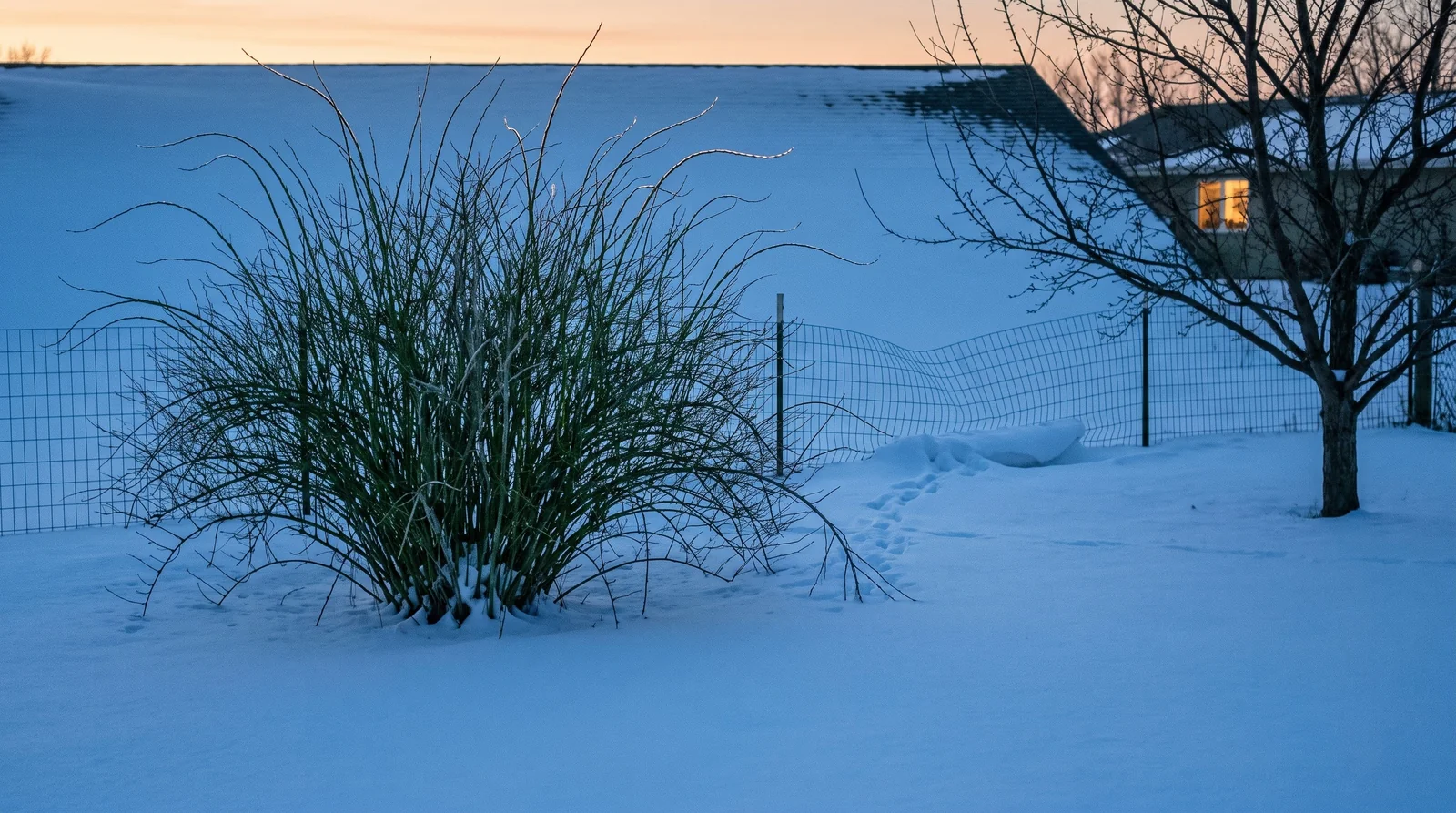
The stems are the other half of the plant. They are slender and cane-like, zig-zag between the joints, hairless and glossy, and they stay green once the leaves are gone. That green can turn yellow-green over the course of winter. The habit is arching and open, and a settled clump usually ends up wider than it is tall, filling out from the base as new canes come up.
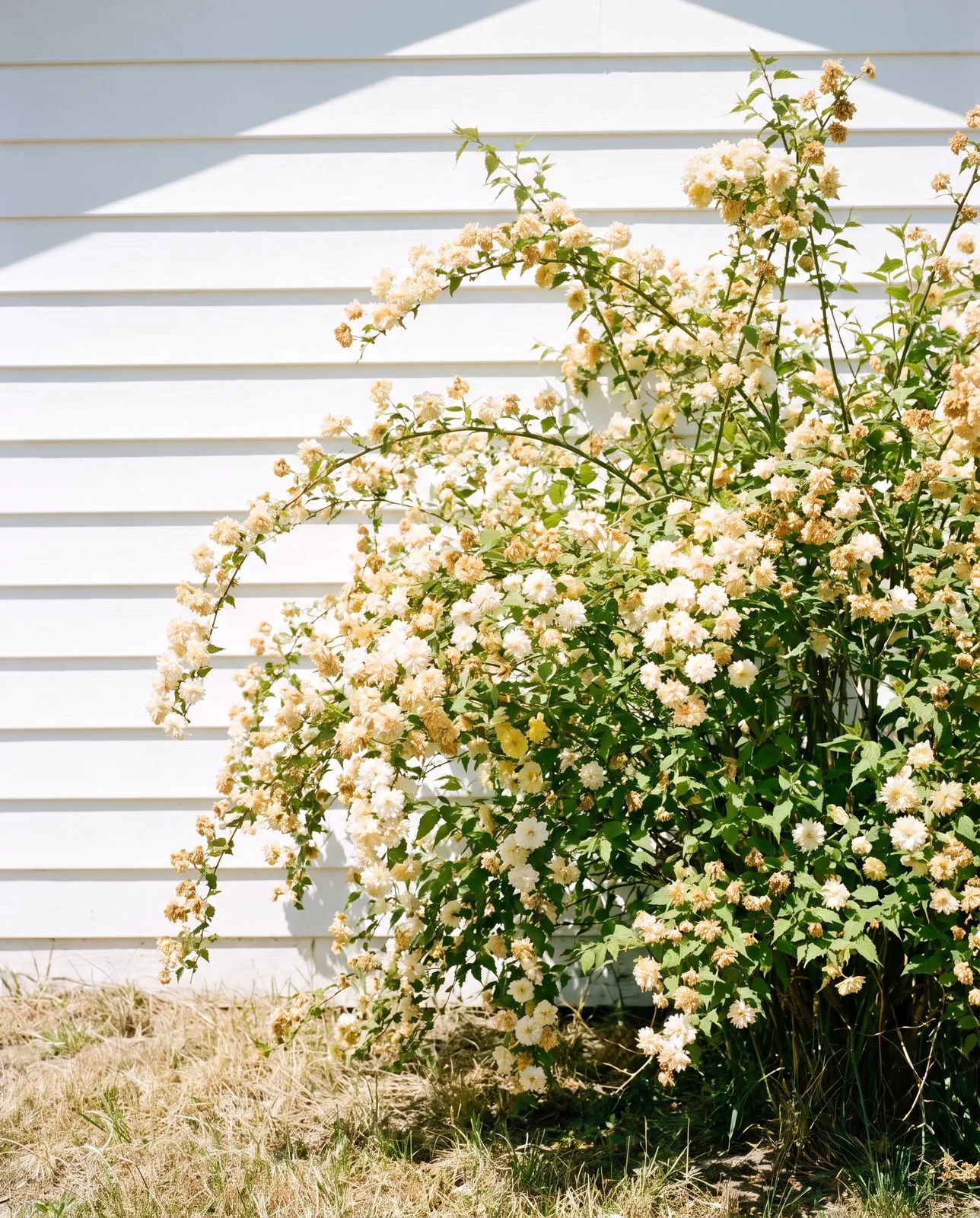
Shade keeps the color, and full sun bleaches it
Plant kerria where something shades it for part of the day, because full sun takes the color out of the flowers. In full sun the shrub grows perfectly well and the flowers bleach out. The same plant in an open lawn stays leafy and healthy while its flowers read pale cream; against a north wall it holds a deep egg-yolk yellow. Direct sun can wash the bright yellow out quickly, and too much of it pales the flowers even where the shrub is otherwise thriving.
Shade is not a compromise here. Kerria belongs in the shade garden precisely because its flowers fade in sun, and it is unusual among flowering plants for blooming heavily in partial shade. Anyone weighing kerria against forsythia for early yellow can settle it on light alone, since this is the one that flowers in the shade. The good spots are morning sun with afternoon shade, high open shade under trees, a north wall, and the dry ground under old maples.
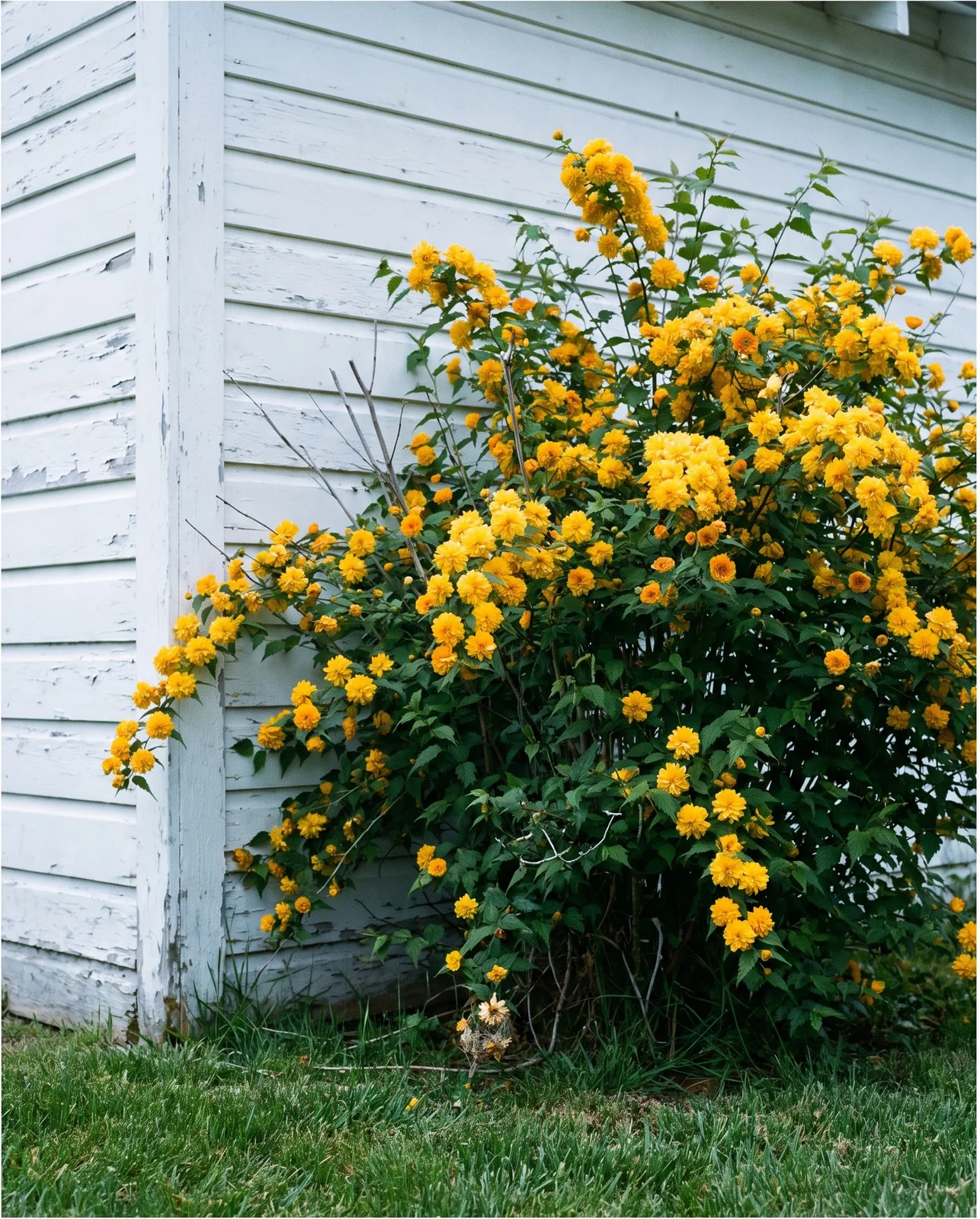
Where kerria belongs in a yard
The best places for kerria are the ones other flowering shrubs turn down. Dry shade under established trees suits it, and it flowers there and holds its looks in every season. It works as a specimen or an accent, several plants in a row and pruned together read as a hedge, and it belongs in a drought-tolerant planting once settled. Spacing matters more than it looks, because plants sucker as they mature and the gap left between them has to allow for a clump that widens with age. On a bank or a rough corner that widening is the point, since the same habit makes kerria useful for naturalizing an area and for holding soil against erosion. At the cold end of the range, wait for the freeze and thaw cycle to finish before planting, so the first season goes into roots.
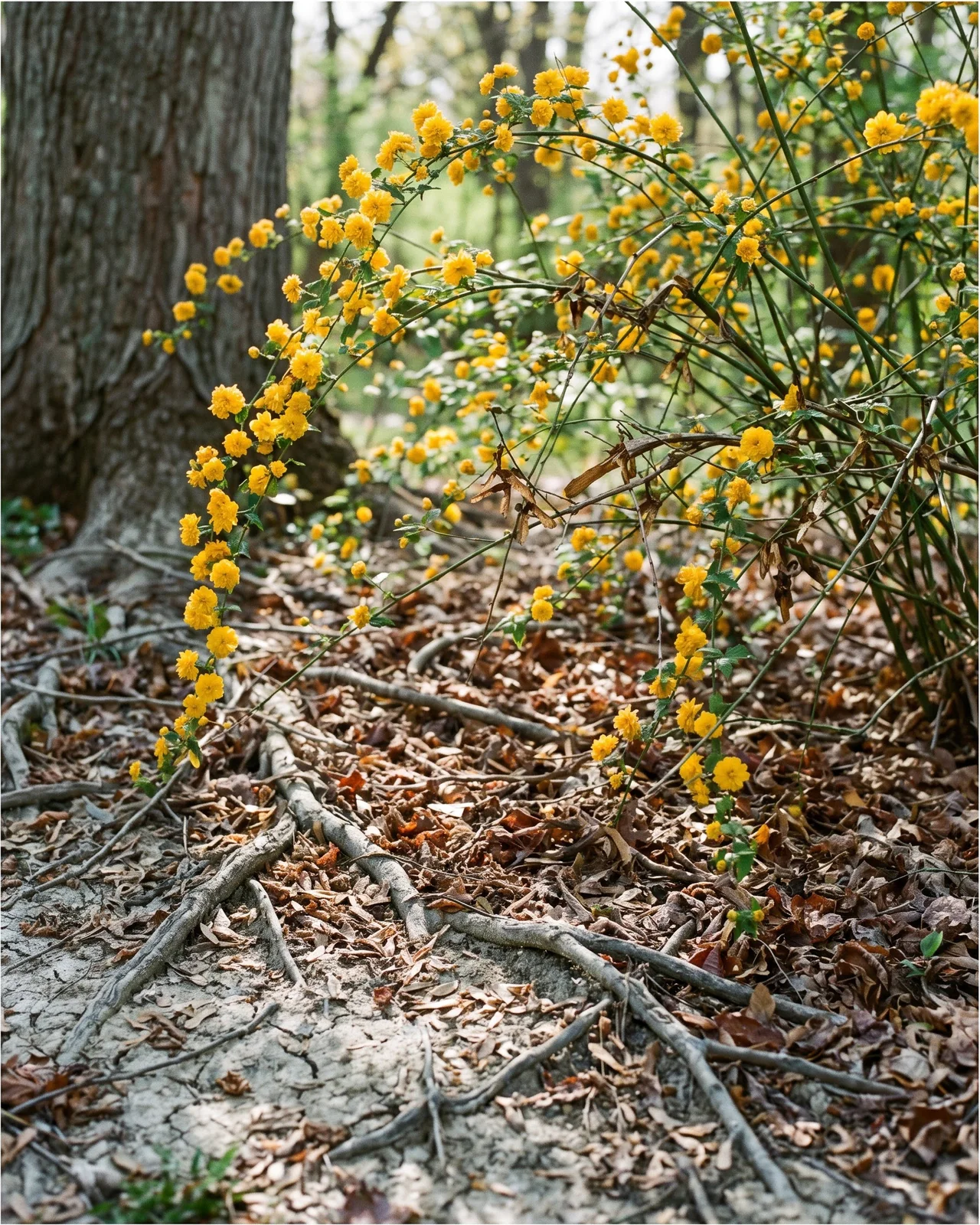
Kerria hardiness zones and the cold end argument
Kerria is hardy from zone 4 to zone 9. That range is printed in North Carolina, South Carolina, Oklahoma and Oregon alike, and North Carolina puts the finer point on it at 4a through 9b. Around Chicago the same 4 to 9 comes with a local note: northern Illinois sits at zone 5 and the city itself at zone 6.
The cold end is disputed, and it matters at the edge of the range. Connecticut gives kerria hardy to zone 5, and useful in zone 4 only with snow cover. Minnesota's state hardiness list sets a minimum of zone 5 for 'Kerria Superba', the cultivar sold as Golden Guinea, and Illinois prints the range as 5 to 9. The mechanism sits in that same Connecticut entry. In a severe winter the twigs can be killed back to the snow line, and that is the wood the flowers would have come from. In a zone 4 garden the snow is doing the work. A bare, snowless cold snap takes the canes above the line and the spring flowers with them.
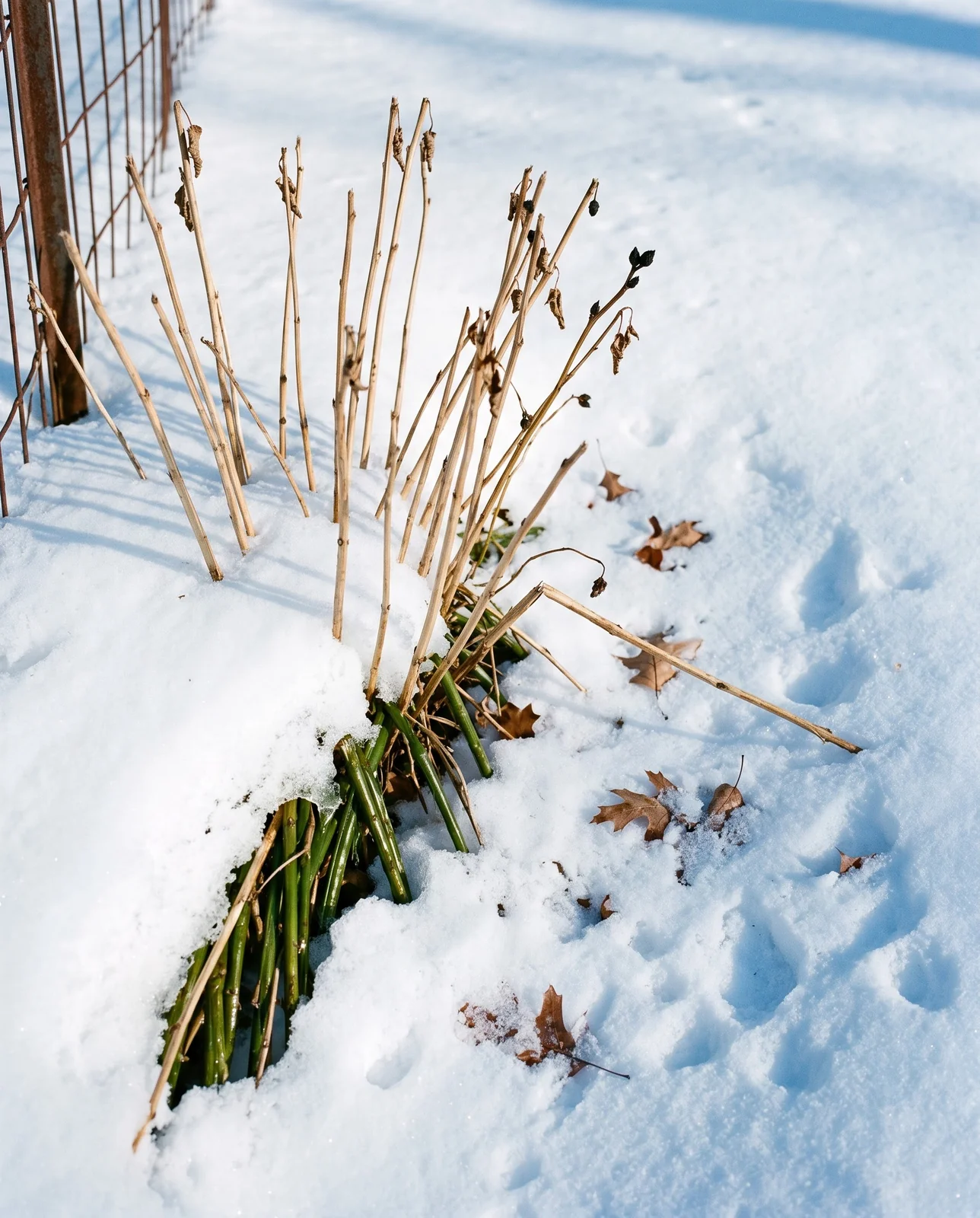
When to prune kerria and which canes to cut
Prune kerria right after the flowers drop, because it flowers on the previous year's wood. That one rule decides most of what happens to the plant. Cut in fall or winter and you take off the wood that was carrying next spring's flowers. On a kerria that has stopped blooming, the month of the last cut is the first thing to check. The window opens as the flowers fade and closes soon after the petals have dropped; in upstate South Carolina it falls between late March and mid-April. Heavy autumn or winter pruning of any kind is a mistake. Dead wood is the exception and comes off whenever it shows, with dead tips and any diseased stems pruned out each spring.
Inside the window the work is simple. Take out the oldest canes at the base, take out anything crossing or already dead, and remove the ground suckers that are widening the clump past its allotted space. Kerria renews from the base, so a cane cut low is replaced by new green growth from the crown. An old, overgrown plant flowering thinly can be cut to the ground. Make that cut after flowering, or in early summer where the whole shrub is being renovated. Heavy pruning of this kind brings an overgrown shrub back into shape and into better flower, and it can be repeated every few years.
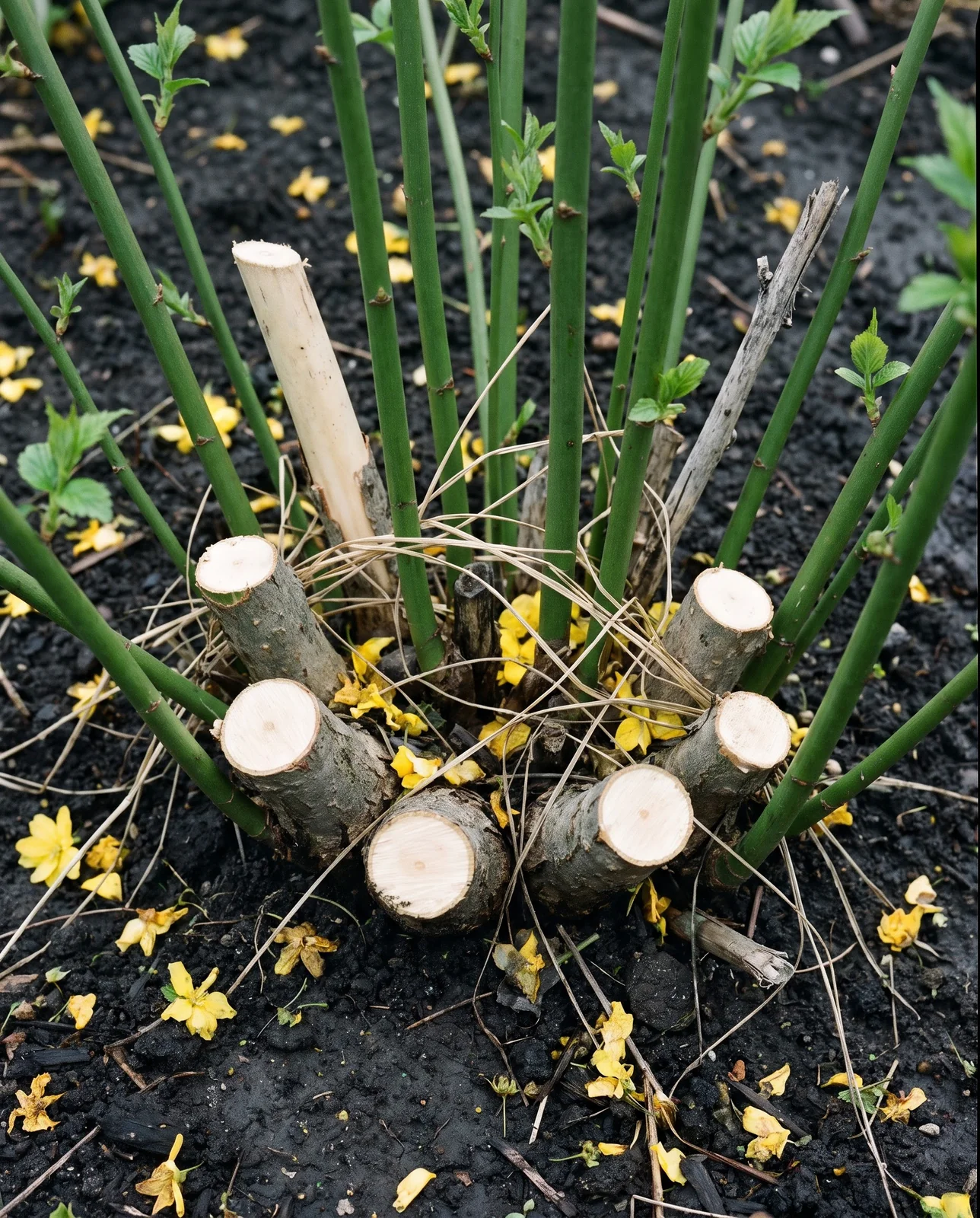
Why a healthy kerria stops flowering
Start with the calendar and the fertilizer bag, because shade is rarely the problem on this plant. Kerria carries its buds on the previous year's wood, so a cut made outside the window after flowering takes the flowers off before they open. Feeding is the other cause: over-fertilizing promotes leafy growth and cuts flowering. A lawn feed spread up to the base of the shrub does exactly that. The standard advice for a shy shrub, more sun and less nitrogen, is only half right here, because kerria grows, thrives and flowers in full shade.
Cold and youth account for most of the rest. After a severe winter the twigs can be killed back to the snow line, which takes the flowering wood with them and limits the bloom that follows. A young plant may simply not be ready, and in the first years healthy leaves with a few flowers count as a good sign. A new kerria needs ample moisture through its first growing season. The answer is water, patience, no fertilizer, and a saw kept in its place until the flowers have dropped.
Kerria blight or drought: reading the yellow leaves
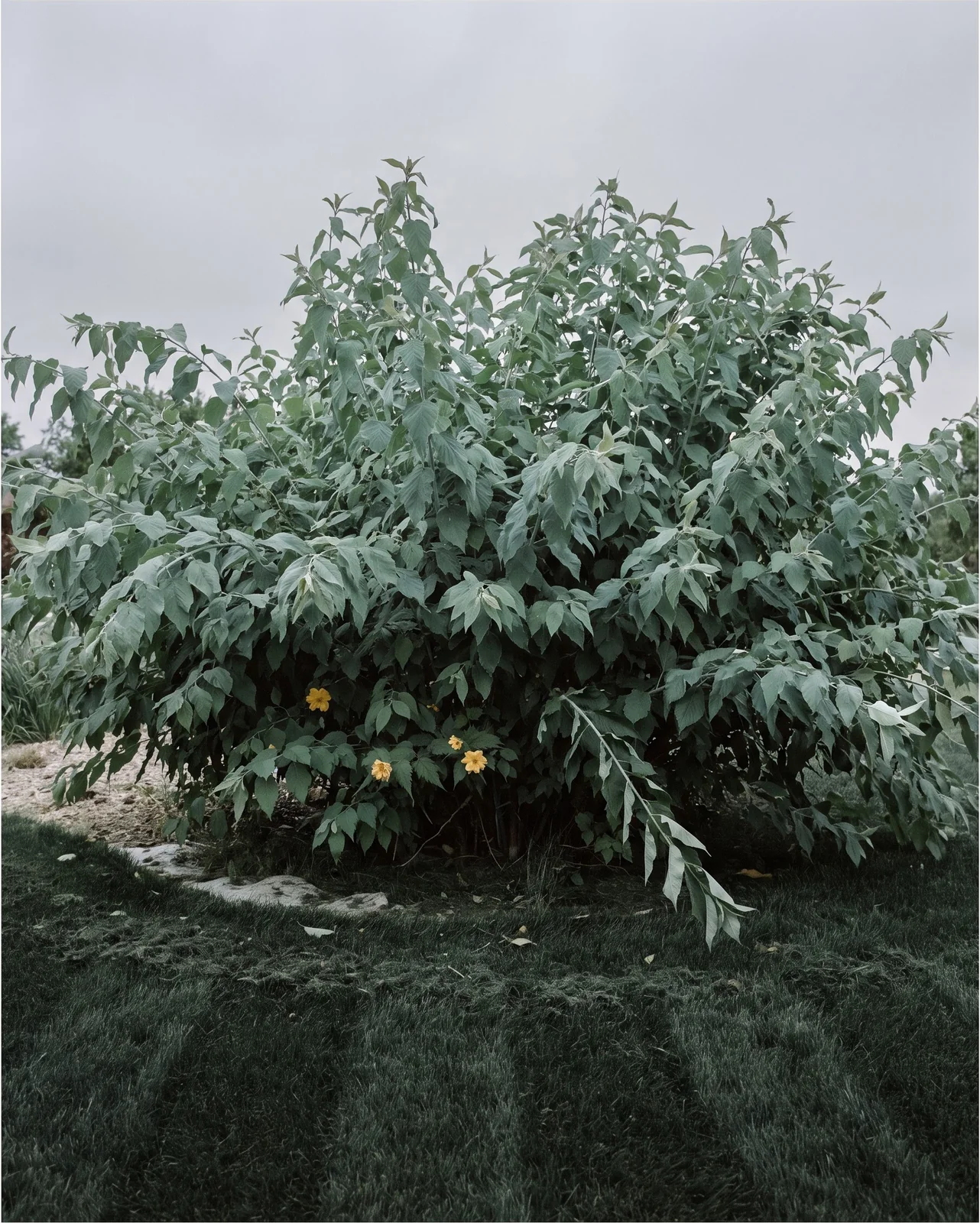
Look at the pattern on the leaves and the color of the stems, because two different problems turn kerria foliage yellow and they call for opposite work. Kerria twig and leaf blight is a fungal disease, Blumeriella kerriae. It shows first as numerous small red-brown spots on the foliage, 1 to 5 millimeters across, with dark purple borders and yellow haloes. Those spots typically run together, the leaf turns yellow to brown, and it drops, and a badly infected plant may defoliate severely. The stems carry the clearer sign: purple-brown, slightly sunken, elliptical cankers that stay visible on the wood all year and can girdle a stem and kill everything above it. Those cankers may crack open to show black fruiting bodies underneath. The fungus appears to be specific to kerria, so nothing else in the garden is thought to be at risk.
Spotting is what separates the two. Drought damage carries no spots at all: on an established plant that has gone dry, the leaves turn rusty brown and whole stems die back. Repetition decides a doubtful case. A few older yellow leaves toward the inside of the shrub may be nothing worse than age, while repeated spotting across many leaves followed by leaf drop points to blight. White and brown lesions on the canes are the same disease under whatever name it gets given. Drought damage is handled by cutting out the dead growth, waiting for new growth to appear, and watering properly through dry spells.
Blight treatment starts with sanitation and with water discipline. Clean up diseased leaves and stems, rake fallen foliage in autumn, prune diseased stems hard in summer, and switch irrigation to soaker hoses or drip lines so the foliage stays dry. Fungicides are where the advice divides, and the division changes what you buy. American guidance starts sprays at the first sign of disease, with chlorothalonil every two weeks through wet summer weather, or chlorothalonil or thiophanate-methyl before symptoms become severe. British guidance recommends against fungicides for this disease, on grounds of biodiversity and soil health. It asks instead that infected material be removed and burned, or taken away for municipal composting, since a home compost heap rarely reaches a temperature that kills the fungus.
The problems that actually turn up on kerria
Kerria has no serious insect or disease problems, and it is hit occasionally by blights, cankers, leaf spots and root rot. The list below is what actually turns up on the shrub, and the order is not a measure of how often each one happens.
Symptoms: red-brown leaf spots with dark purple borders that typically run together, then sunken purple-brown cankers on the canes that stay visible on the wood all year. What to do: clear out the diseased material, keep water off the foliage, and rotate Bio Advanced Disease Control with a product containing chlorothalonil.
Symptoms: rusty brown leaves and dying stems on a settled plant that has gone dry. What to do: water deeply through dry spells, because a drought stressed plant is also more subject to winter injury, and remove the dead growth once new growth appears.
Symptoms: a leafy, healthy shrub that skips its bloom. Check the month it was last cut. What to do: the flowering wood is the previous year's, so anything cut outside the weeks after bloom takes next spring with it.
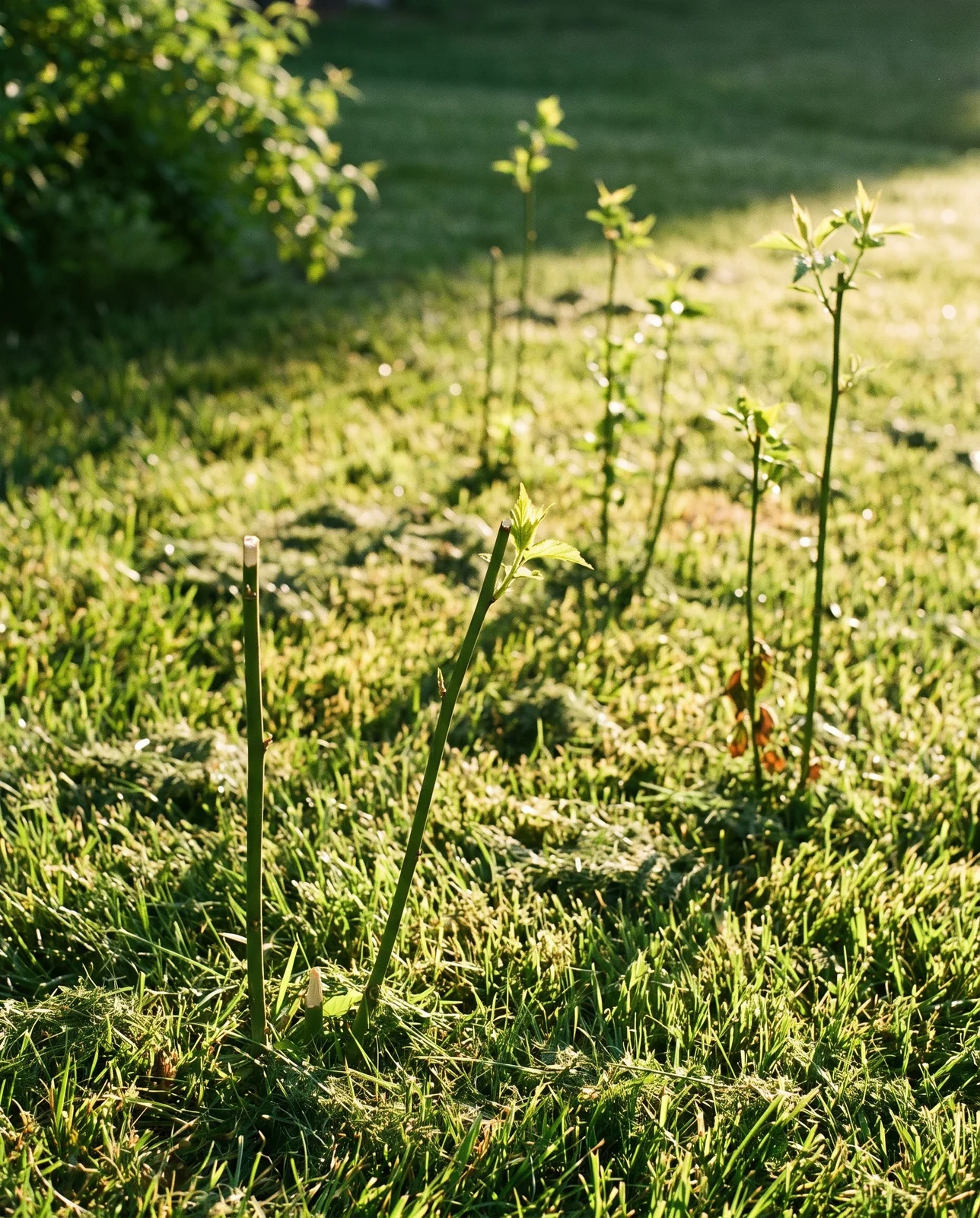
Symptoms: new green canes pushing up through lawn and beds at the edge of the shrub and beyond it. What to do: cut them off during the same prune that follows flowering. Where the spread is wanted, it is what makes kerria good for naturalizing and for holding a bank.
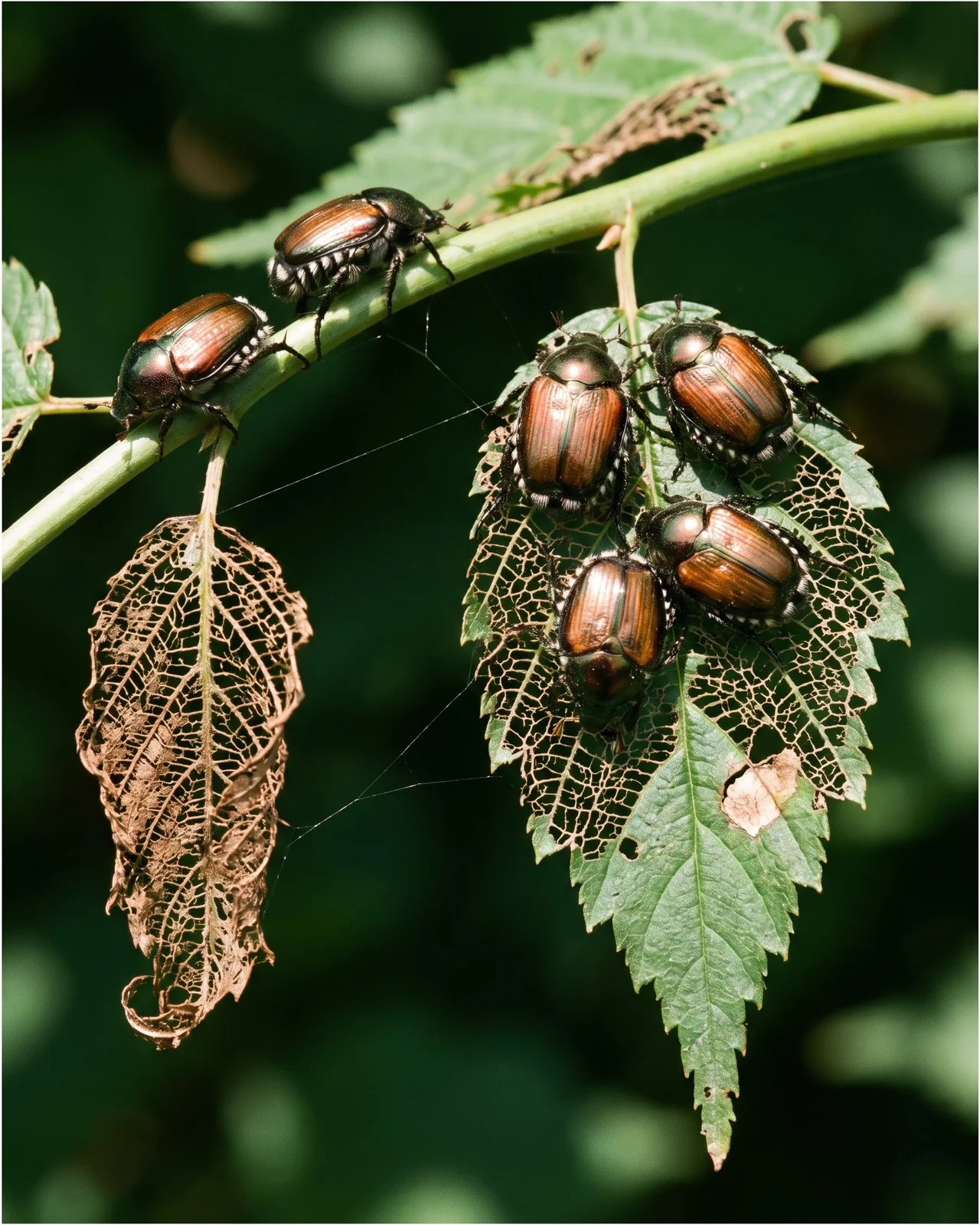
Symptoms: adult beetles feeding on kerria leaves, at their most abundant around the middle of July. What to do: expect the damage to vary, since populations swing between seasons and drop drastically through drought periods.
Symptoms: dead twig ends found in spring after a severe winter, with a thinner bloom to follow. What to do: prune the dead tips out each spring, and in the coldest gardens count on snow cover, since zone 4 comes with that condition attached.
Symptoms: a shrub failing in dense soil that holds water, since kerria is susceptible to root rot alongside leaf spots, cankers and blights. What to do: it will not take heavy, poorly drained ground, so work compost into the planting area before the shrub goes in.
Does kerria spread, and is it invasive
Kerria spreads by suckering from the roots, and the pace is genuinely unsettled: slow suckering into small colonies at one end, free suckering that colonizes ground at the other. North Carolina lands between them. Moderate spread by underground suckers is the one drawback it names, in the same breath as calling the shrub excellent for naturalizing an area and for preventing soil erosion. Suckers should come off even though the plant is otherwise well behaved. The mechanism is the same either way. New canes rise from the roots at the edge of the clump. The shrub widens where it is left alone and stays put where the suckers come off with the annual prune.
On invasiveness the accurate answer takes a sentence more than a yes or a no. Kerria japonica has an entry in the national invasive plant atlas as a plant exotic to the United States. Behind it sit a county list from Virginia, an Oregon native plant group's list from 2008, and a 1994 doctoral dissertation on introduced woody plants. None of the three is a regulation. California's invasive plant council reads the shrub the other way and puts kerria among the plants it recommends in place of invasive ornamentals.
Kerria cultivars and what separates them
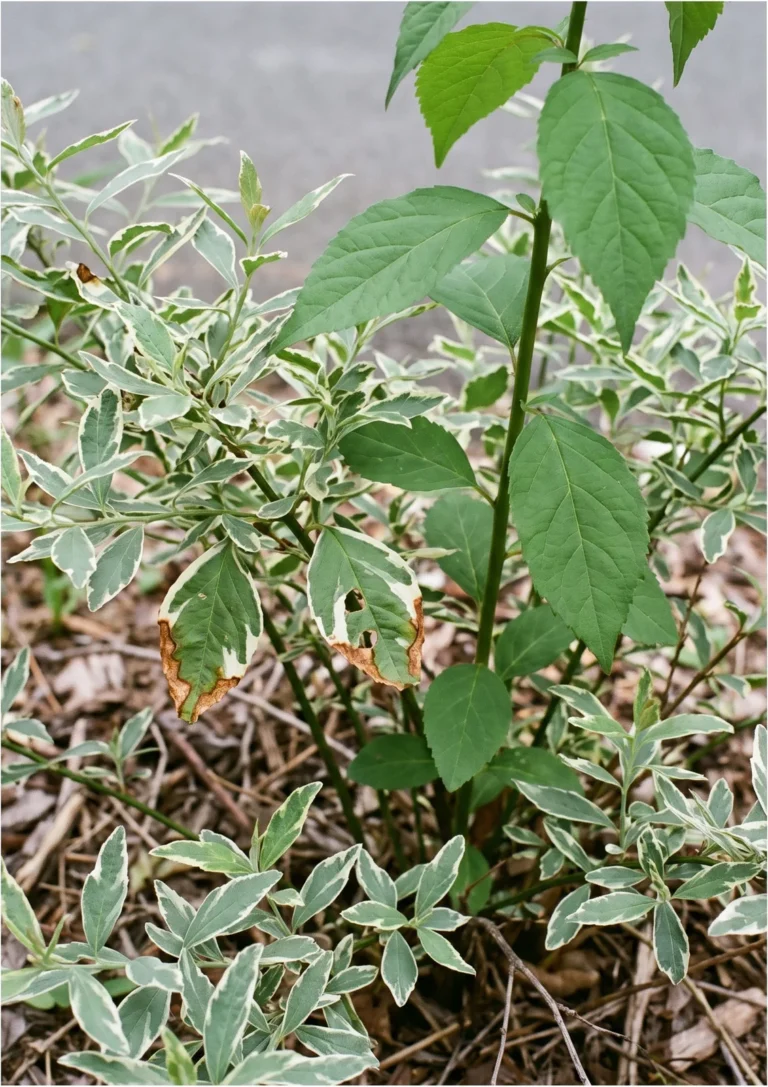
North Carolina names six cultivars: 'Albescens', 'Golden Guinea', 'Picta', 'Plena', 'Pleniflora' and 'Simplex'. The eight below are the ones described in enough detail to tell apart. Sizes belong to the cultivar named, not to the species.
How much light kerria needs
Kerria takes shade. Its exposure runs from full shade to partial shade, and the shrub grows, thrives and flowers even in full shade, which makes it the answer to a difficult dark spot. In a yard that covers the north side of a house, a bed under high limbs, and the same shaded ground you would give azaleas.
Soil kerria will and will not take
Drainage decides it and the rest is negotiable. Kerria adapts to most average, well-drained soils, clay among them, though North Carolina tells gardeners to avoid heavy clay. What it asks for is ground that drains, leaning slightly acidic, or moist and loamy with reasonable fertility. The limit is standing water. Kerria does not tolerate heavy, poorly drained soils, so work compost into the planting area before it goes in.
Watering a new kerria and an established one
Water a new kerria steadily and an established one rarely. The plant wants regular water when it is first planted and becomes quite drought tolerant once it has settled in. Keep a first-year plant consistently moist, then give an established one an occasional deep soak through a prolonged dry spell. It is heat and drought tolerant, but that describes a plant with its roots down.
Feeding kerria, and how little it takes
Kerria does not need feeding. An occasional layer of compost or a minimal organic fertilizer is plenty. Where a schedule is wanted, one light spring application of a slow-release product covers it. Ground with reasonable fertility of its own already does most of the job.
How big kerria gets
Kerria stands 3 to 8 feet tall, usually ends up wider than it is tall, and can spread as far as 10 feet. A settled plant is commonly 3 to 6 feet tall and 6 to 9 feet wide. Cultivar accounts for part of the range. The species runs 3 to 6 feet tall by 6 to 8 feet wide, and 'Pleniflora' reaches 5 to 10 feet by 6 to 10 feet.
How to propagate kerria
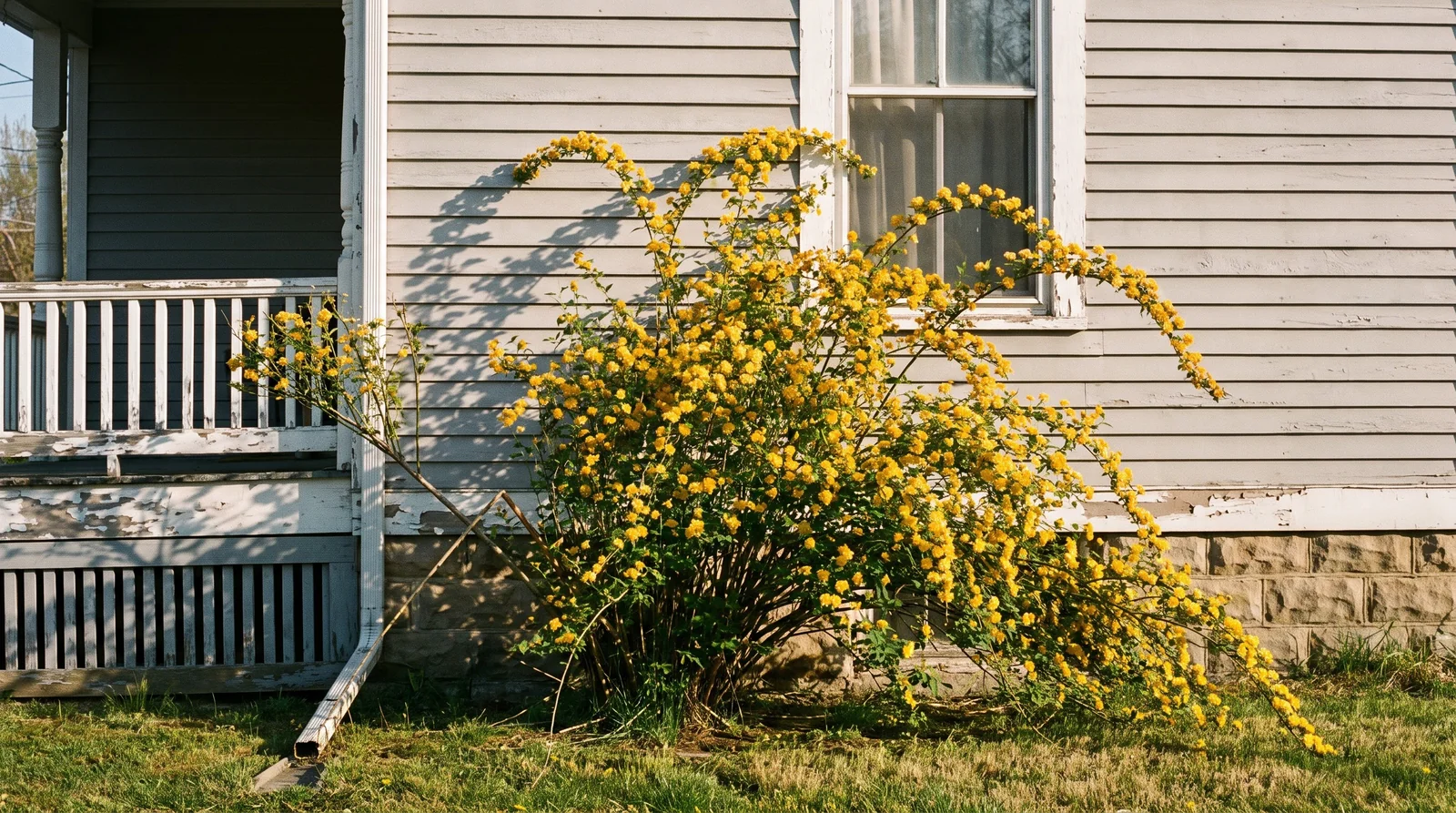
Kerria roots easily from cuttings, and the window opens in the weeks after it flowers. It is very easy from softwood cuttings: take terminal stem cuttings for rooting between May and July, and use a rooting hormone containing IBA for a better root system. Division works too, and it works because the plant has already done the hard part. Dig sucker growth from around the perimeter of the shrub and replant it, which turns growth you would otherwise cut away into new plants. Seed is on the list too, though that is a grower's route and not a sign of the shrub sowing itself around.
Deer and rabbit resistance
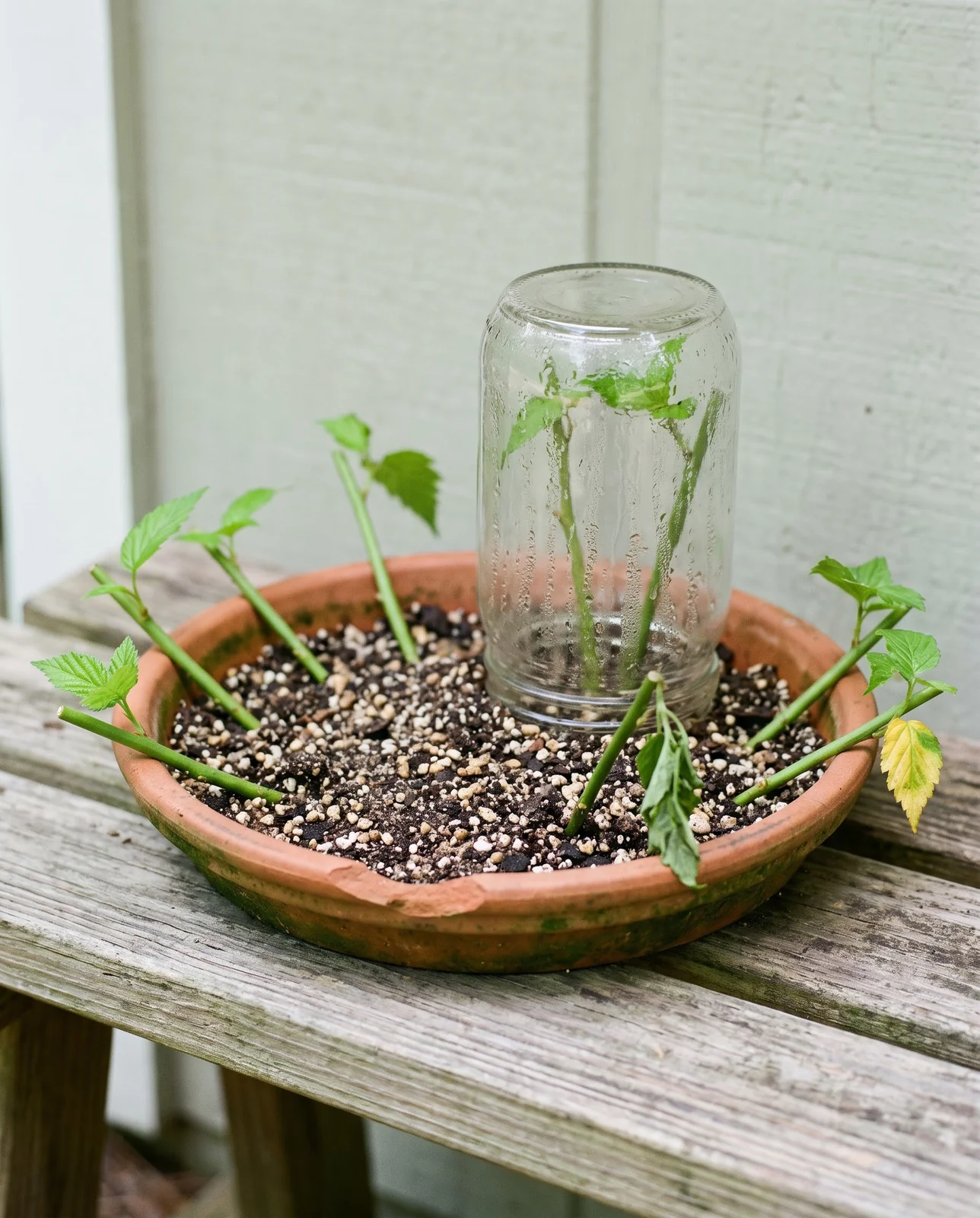
Kerria is resistant to deer and to rabbits, and low maintenance with it. Drought sits on the same resistance list as deer. Resistant is not the same as untouched: it means the animals eat other things first.
Winter interest and the green canes
Kerria earns its place in winter after the leaves drop, when the canes are all that is left and they are still green. The stems are bright green and arching, the young ones zig-zag from joint to joint, and that Kelly green is what the shrub gives a winter garden. The color can shift toward yellow-green as the winter runs on. In a shaded bed that might also hold a viburnum, this is the plant still showing color in January.
What kerria means
Kerria stands for wealth and prosperity. The older association is literary and it is Asian. Kerria japonica turns up often in the Man'yoshu, the oldest surviving collection of Japanese poetry, assembled in the first millennium. A Qing dynasty poet, Chen Hao, wrote on the plant's beauty in an agricultural treatise called the Flower Mirror.
What to expect from a kerria year by year
Three stages, from a plant that looks like almost nothing to one that has to be cut to the ground.
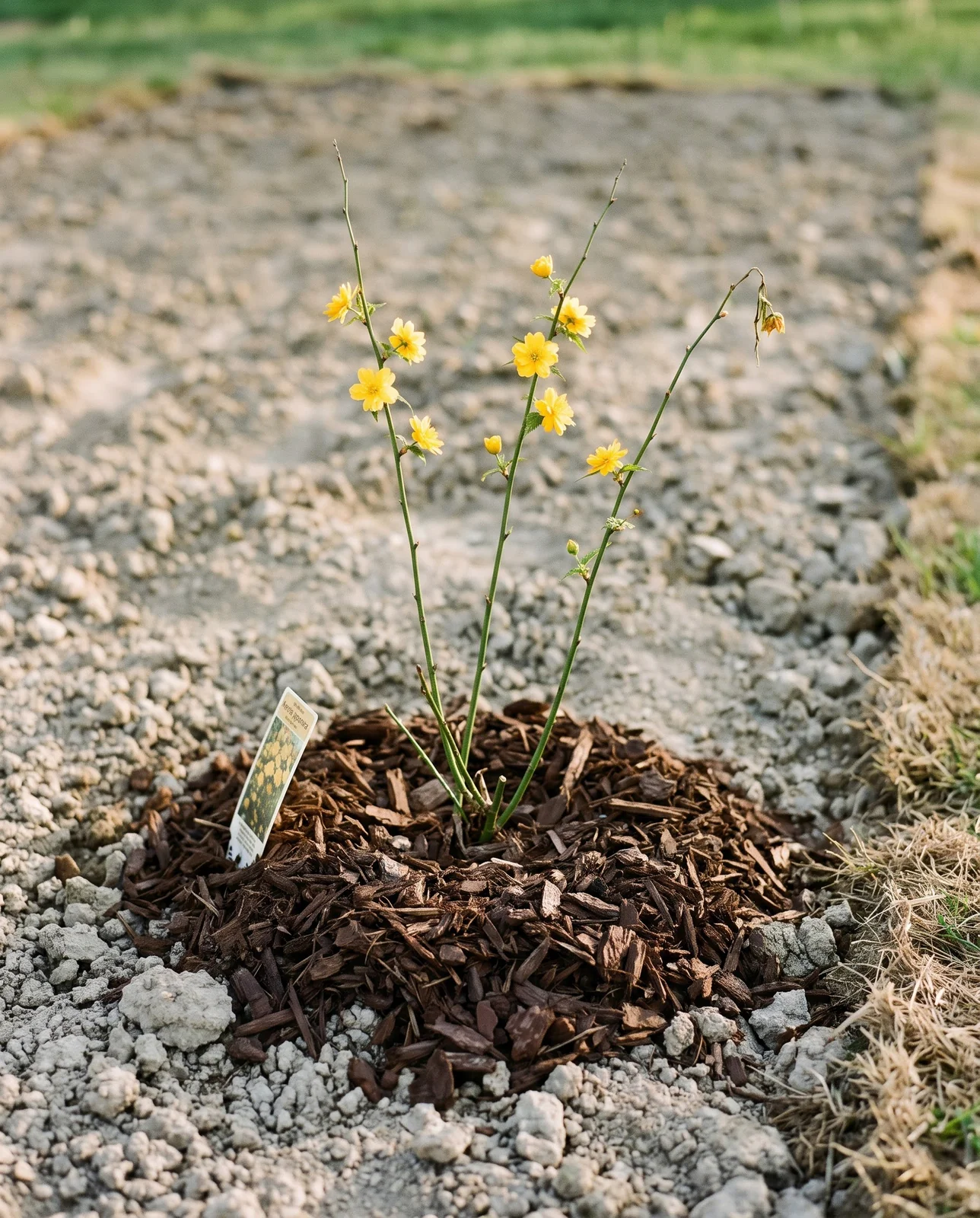
Planting year. A new kerria is a few thin canes carrying a handful of flowers, and most of what it does that season happens underground. Keep the soil consistently moist right through that first growing season.
Once it is established. The plant flowers along the length of the canes it grew the year before. The first suckers show at the edge of the clump, slowly in one garden and freely in the next. Spacing decided at planting gets tested here. Each flower holds two to three weeks, with scattered reflowering through the summer.
An old thicket. Canes of several ages stand together, some of them dead and gray, and the clump has widened past its original footprint. This is the stage for a hard cut: the whole plant can be taken to the ground, and that rejuvenation can be repeated every few years. Heavy pruning brings an overgrown shrub back into flower and shape.
Four things people get wrong about kerria
These four come up again and again around kerria, and each one has a straight answer.
The myth: More sun means more flowers.
The reality: Not on this shrub. Kerria blooms heavily in partial shade, which is unusual among flowering plants, and it grows, thrives and flowers in full shade.
The myth: Yellow leaves mean the shrub is thirsty.
The reality: Yellow leaves have two candidates. Drought turns the leaves of an established plant rusty brown and kills whole stems. Small red-brown spots with dark purple borders, repeated across many leaves and followed by leaf drop, point to blight.
The myth: It stays where you plant it.
The reality: Kerria spreads by suckering underground, slowly in some gardens and freely in others. Those same suckers are the standard way to divide the plant, dug from the perimeter and replanted.
The myth: White kerria is white.
The reality: 'Albiflora' is sold as the white one and was recorded in Oregon as a single white flowered cultivar, but its flowers are pale butter yellow with bright yellow stamens.
FAQ
Does kerria prefer sun or shade?
Shade, or at least part shade. The plant itself does fine in full sun while the flowers bleach out there, so it belongs in the shade garden.
Is Kerria japonica invasive?
Not by regulation. The national invasive plant atlas carries it as exotic to the United States, citing a Virginia county list, a 2008 Oregon native plant group list and a 1994 dissertation. California's invasive plant council recommends kerria in place of invasive ornamentals.
When should Japanese kerria be cut back?
Right after the flowers drop, because it flowers on the previous year's wood. In upstate South Carolina that window falls between late March and mid-April.
Why did my kerria not flower?
A cut made outside the window after bloom removes the flowering wood, and over-fertilizing pushes vegetative growth and reduces flowering. A severe winter can also kill twigs back to the snow line and limit the bloom that follows.
What is the hardiness zone of Kerria japonica?
Zones 4 to 9. Connecticut puts the cold end a zone higher, hardy to 5 and useful in 4 only with snow cover. Minnesota's state hardiness list sets a minimum of zone 5 for the cultivar sold as Golden Guinea.
How big does Japanese kerria get?
Between 3 and 8 feet tall and usually wider than it is tall, with spreads reaching 10 feet. The double form 'Pleniflora' is the biggest, at 5 to 10 feet tall by 6 to 10 feet wide.
Is kerria poisonous to dogs or cats?
There is no rating to give. The national animal poison control plant list has no entry for kerria under any of its names, and its page titled Easter rose is a hellebore, Helleborus niger, whose data does not transfer. The one measurement recorded for kerria itself is 0.002 percent hydrogen cyanide in the leaves and roots.
How do you propagate kerria?
Softwood cuttings and division. Take terminal stem cuttings between May and July, and use a rooting hormone containing IBA for a better root system. For division, dig suckers from the perimeter and replant them.
What does the kerria flower symbolize?
Wealth and prosperity. The older association is literary: kerria appears often in the Man'yoshu, the oldest surviving collection of Japanese poetry.
Is kerria fragrant?
The species has no recorded scent. The one scent note sits on the cultivar 'Golden Guinea', whose large single flowers are slightly fragrant.
Is kerria really a rose?
It belongs to the rose family, Rosaceae, without being a true rose, and Kerria japonica is the only species in its genus.
Interesting tips
- 'Honshu' carries larger single sunny-yellow flowers, about 2 inches across, on a plant to 5 feet tall and 3 feet wide.
- The tender shoots are rich in vitamin C. A decoction of the flowering shoots with honey has been used in China against coughs and gynecological disorders, and the plant is credited with anti-inflammatory properties.
- Cut early in spring, kerria holds in water and makes a good, long-lasting cut flower.
Related Guides & Flowers
Flowers that grow in shade
The wider list of plants that flower where direct sun never reaches, grouped by how deep the shade gets.
Yellow flowers
Other yellow flowering plants for beds and borders, from bulbs to shrubs, with the season each one covers.
Camellia
Another shrub for a shaded bed, flowering in the months when most of the garden has nothing to show.
Types of flowers
The full index of flower guides here, arranged by type and by name.
Enjoying our flower guides? Add YourFlowersGuide as a preferred source on Google. It helps more readers find us.
Add to Preferred Sources