What nasturtium is and where it comes from
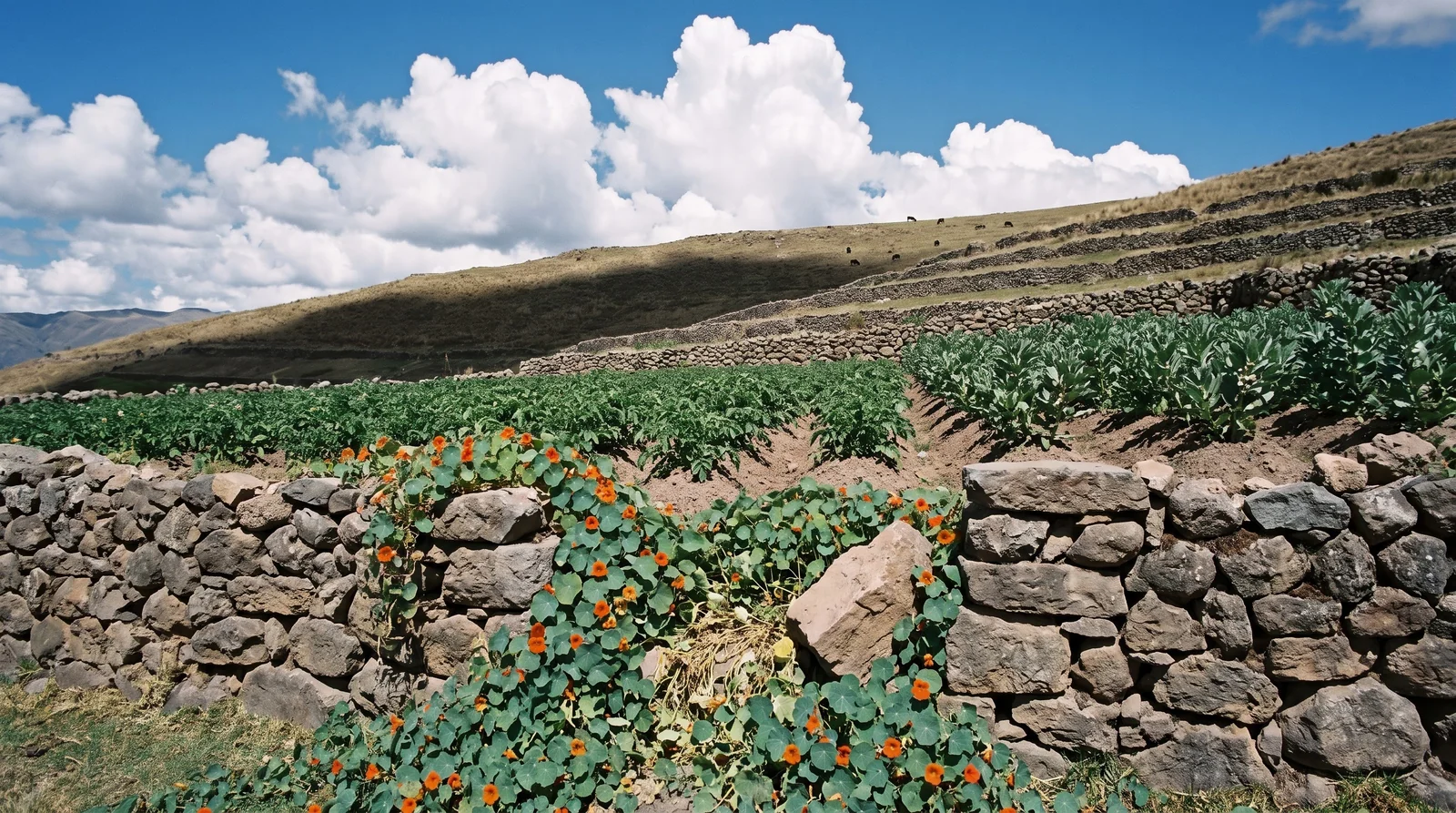
Garden nasturtium is a fast-growing annual in the Tropaeolaceae family, native to Central and South America. It has no close botanical ties to true watercress, which belongs to a different genus in the cabbage family. Linnaeus named the genus Tropaeolum from the Greek tropaion, or trophy, because the plant reminded him of a classical trophy. The common name nasturtium comes from the Latin nasus tortus, meaning twisted nose. It describes the sharp pinch the leaves give the nose when eaten. In the 16th century, Spanish conquistadors brought the plant from Peru and Mexico into Spain, where early English herbalists called it Indian cress.
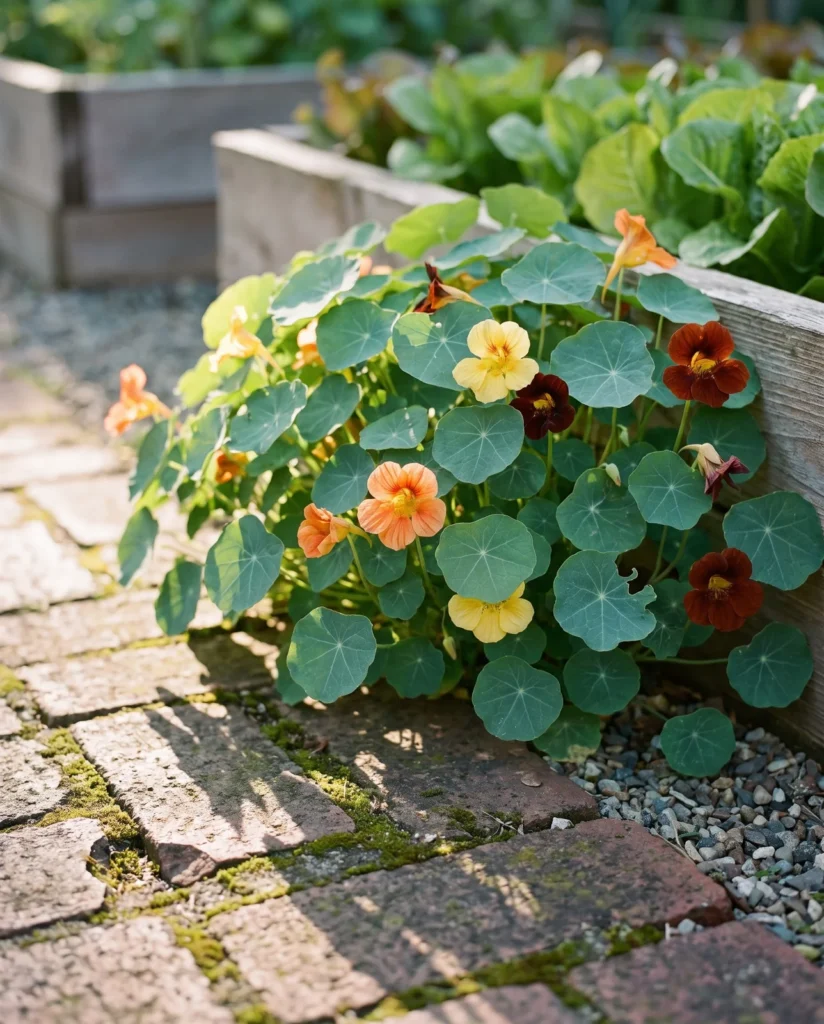
Its exact wild range remains unsettled. Records place its wild home in the Andes from Bolivia north to Colombia, or across cool mountain highlands from Mexico to central Argentina and Chile. Both accounts center on cool mountain terrain across Central and South America, which explains how the plant behaves in summer heat. The rounded leaves are peltate, with each stem attaching near the middle of the blade like a small parasol. Long-stalked, funnel-shaped flowers span about 2.5 inches wide with five petals in red, orange, yellow, pink and cream. Each blossom carries eight stamens and a slender nectar spur 1 to 1.2 inches long at the back.
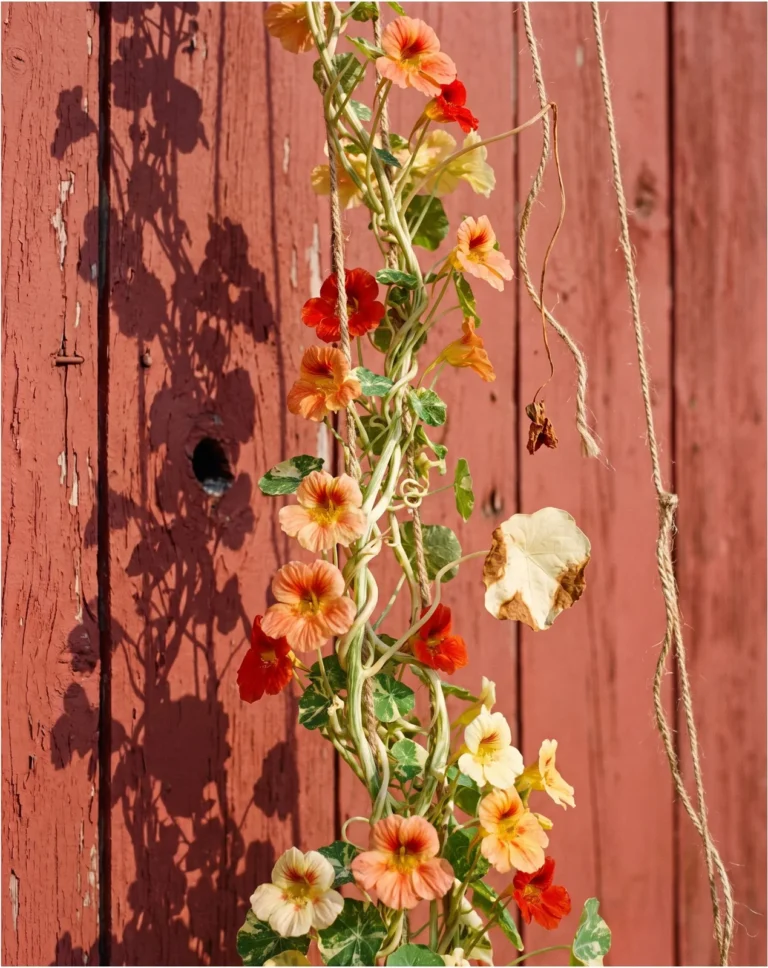
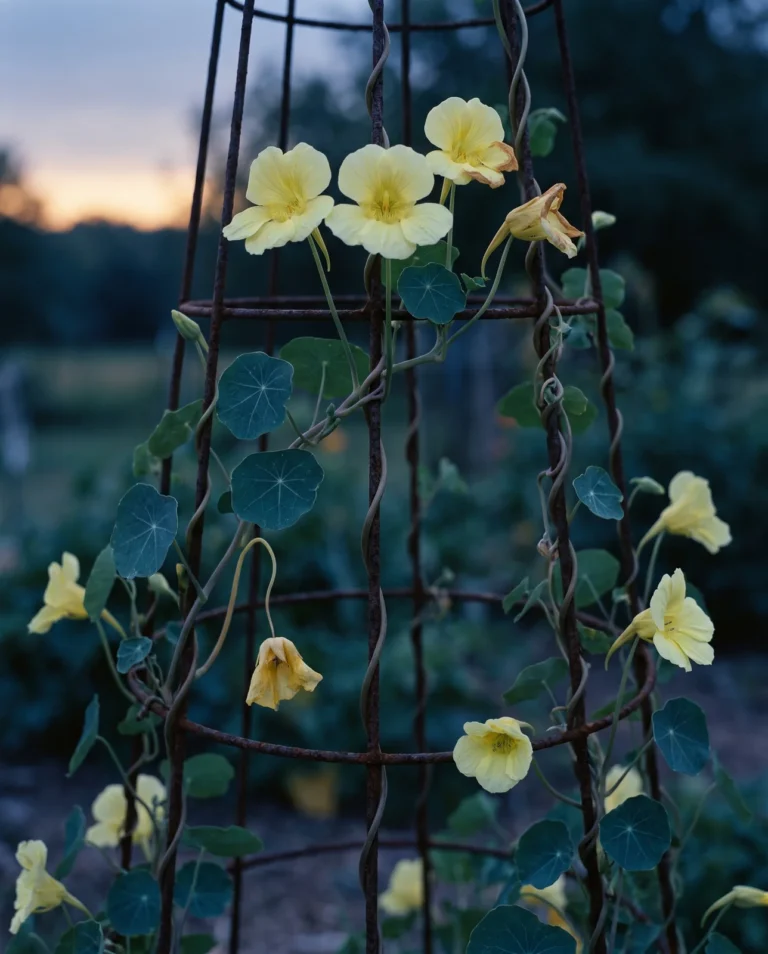
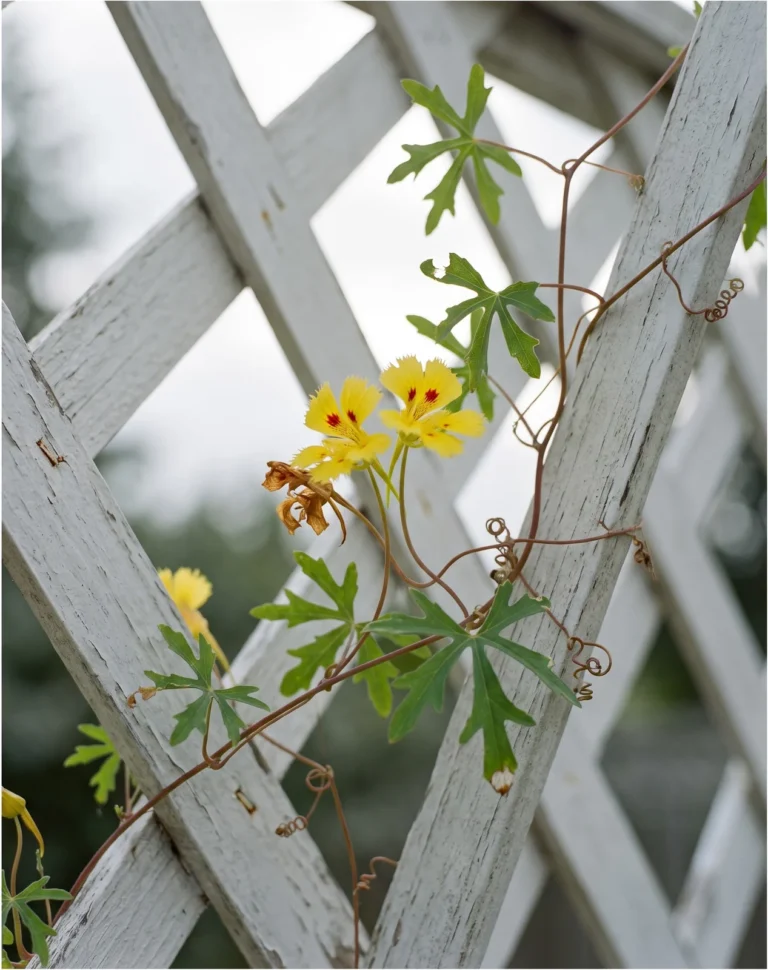
Two species supply most garden varieties: Tropaeolum majus, the trailing nasturtium, and T. minus, the bush nasturtium. Canary creeper (Tropaeolum peregrinum) is a tender climbing perennial hardy to zone 9a. Gardeners in cold winter climates grow it as an annual. It climbs quickly on a trellis and bears pale yellow flowers, often with red spots at the base of the petals. Each bloom is tipped with a half-inch nectar spur. In the Andes, mashua (Tropaeolum tuberosum) is grown for edible tubers that are cooked or roasted like root vegetables. This related perennial climber grows 7 to 13 feet tall, with peltate leaves whose stalks twine weakly without true tendrils. Common garden nasturtiums climb by twining. Because the plants lack tendrils, they do not climb well on their own and need ties to support them.
Eating nasturtium: leaves, flowers, buds and green pods
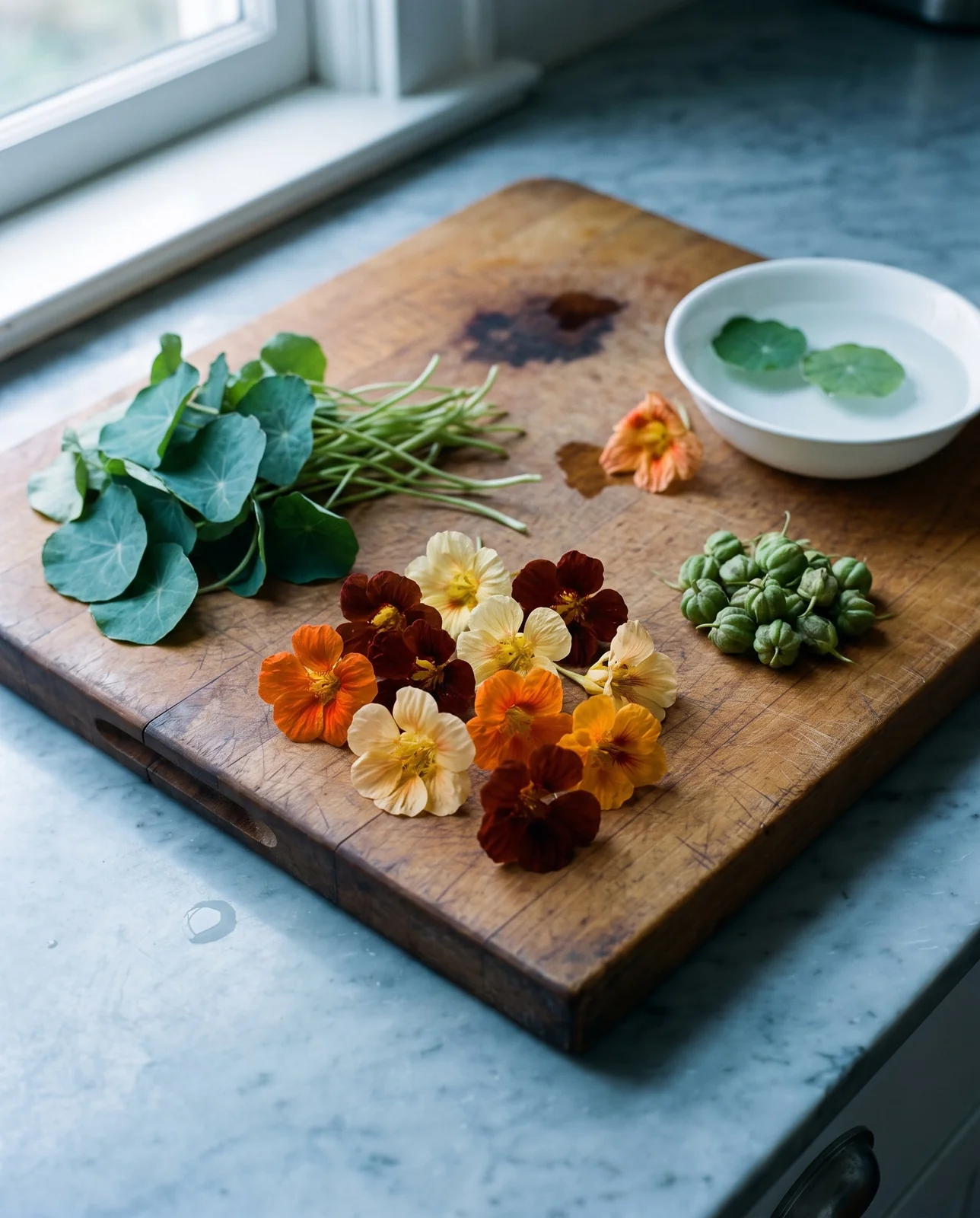
Every part of the plant above the ground is edible, offering peppery leaves, buds, flowers, young pods and seeds, with only the roots left out. That peppery kick comes from mustard oil, which is concentrated enough in the flower buds that they can be pickled or used as a seasoning. The flavor resembles watercress and turns spicier when the plant grows in hot, sunny weather. Heat-stressed plants often produce more pungent leaves and blooms, but keeping the soil well watered moderates that spicy bite. Flowers carry a milder taste than leaves, and you should pick foliage young because older leaves can turn bitter. The blooms also offer real food value, containing about 130 milligrams of vitamin C and up to 45 milligrams of lutein per 100 grams. Use them in green salads, potato salads, egg and seafood dishes, or steep them in soups and flavored vinegars.
Harvest the seed pods while they are still green and immature, then drop them into spiced vinegar to pickle as a peppery substitute for capers. Eaten raw and unripe, they offer a crisp, peppery flavor reminiscent of watercress. Plan your harvest ahead of time, because the pods take about 4 months after seeding to develop. Removing faded blooms encourages fresh buds, but clearing away every spent flower stops it from setting pods. To enjoy both flowers and pickled pods, keep one patch deadheaded for continuous color and leave another alone from midsummer to form seed.
Harvest young, tender leaves and freshly opened blossoms for the best flavor, picking flowers the day you use them or at most one day ahead. Snip stems cleanly with garden scissors so you do not tear the vines, and avoid taking more than a third of the plant at once. Stored in plastic bags in the refrigerator, fresh leaves and flowers will hold for about 3 to 7 days. Inspect every blossom before serving, because aphids often hide inside the flowers. Avoid using pesticides on or near any plants you intend to eat. Systemic chemicals are absorbed by the roots and travel through all parts of the plant, meaning they cannot be washed away.
Companion planting and the aphid trap crop question
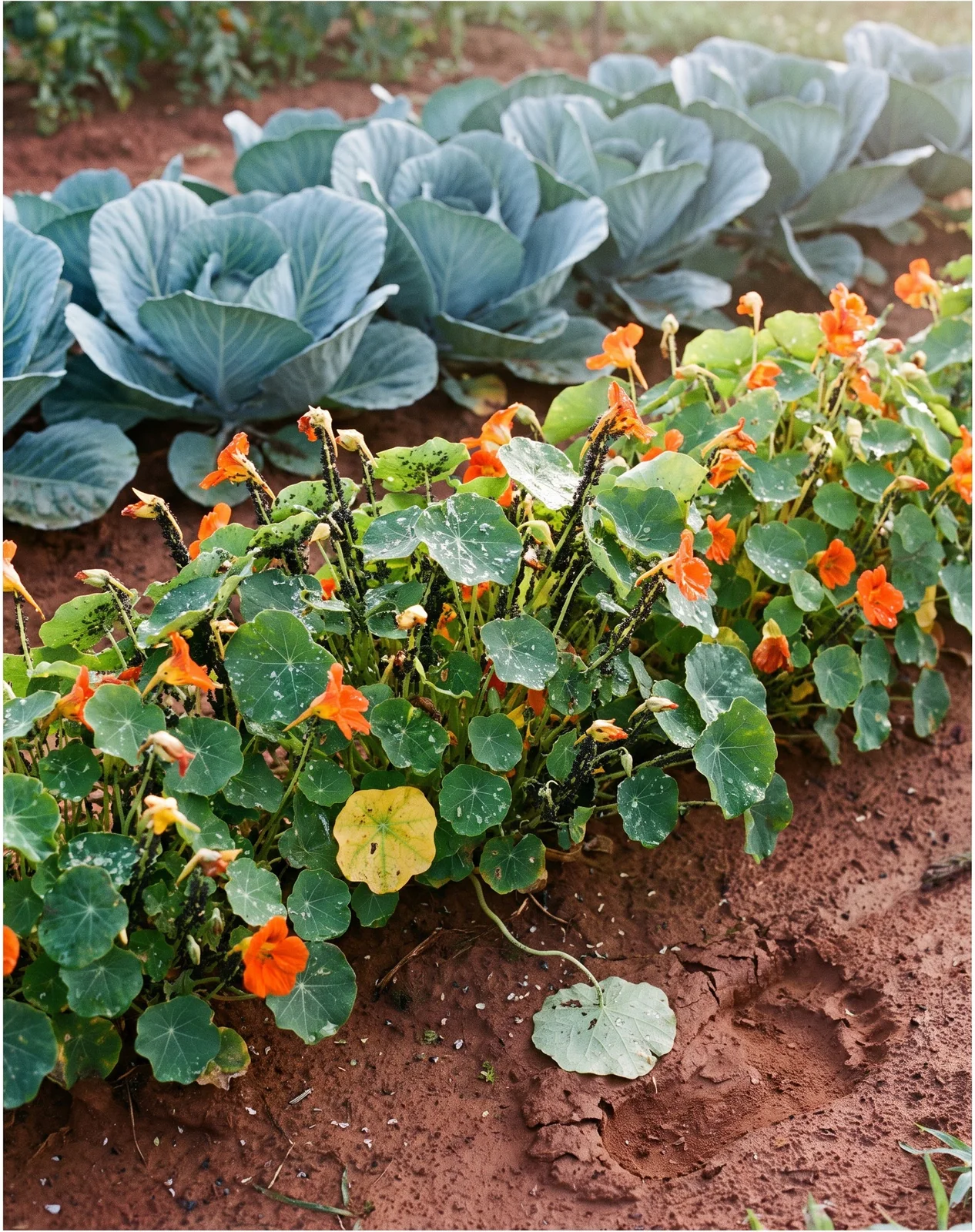
In the vegetable garden, nasturtium works as a trap crop. It acts as a sacrificial plant to draw damaging insects away from your main harvest. Gardeners plant it most often near broccoli, cabbage and other brassicas. There it draws aphids, along with the occasional caterpillar, flea beetle, slug, snail or whitefly. Black bean aphids especially love the vines, crowding onto stems and inside flowers. Because the plant lures pests in, the method works only if you clear the insects once they arrive.
For best results, sow your trap crop 3 to 4 weeks before planting your main crop. Aim for about 10 to 20 percent as many trap plants as vegetable plants. If you plant them as a border, keep that strip at least 5 feet away from your main crop. Once pests settle on the trap plants, destroy them by hand or with insecticide so they do not spread to your vegetables.
Nasturtiums are also commonly planted beside brassicas, cucumbers, melons and squash. Mixing flowers among vegetables can mask the plant scents that pests follow, while drawing in helpful insects. That mix is the heart of companion planting. The blossoms welcome butterflies, hummingbirds and other pollinators. They give off a spicy scent that hummingbirds seek out. Nasturtiums also pair well with spring bulbs, spreading lush leaves that hide dying bulb foliage while it fades.
Sowing nasturtium seed
Sow seeds directly in the garden half an inch deep once frost danger has passed and the soil warms to 55 to 65 degrees Fahrenheit. Direct sowing into the bed gives the best results because nasturtiums do not transplant well. Covering the seed is necessary because they need darkness to germinate. Space the plants 8 to 12 inches apart, though seeds can also be spaced 3 to 4 inches apart under a 1-inch soil covering. Seedlings emerge in 7 to 10 days at 55 to 65 degrees, 7 to 14 days at 60 to 65 degrees, or 9 to 12 days under varied garden conditions. Soaking seeds in water for 8 to 24 hours before planting can speed up germination.
Starting seeds indoors is generally not recommended because nasturtiums do not transplant well. If you choose an early start, sow seeds indoors 3 weeks before the last frost with 2 seeds in a 4-inch pot covered 1 inch deep. Seeds can also be started indoors 4 weeks ahead, or they can be started 4 to 6 weeks before the final frost in peat pots. Set trellises in place before planting trailing varieties, because installing supports later disturbs tender roots, and the vines will need gentle tying or weaving to climb.
In many areas, you can continue sowing seeds throughout the season for an extended display of flowers. You can also propagate plants from cuttings, an easy option if you want to keep a favored trailing selection going indoors.
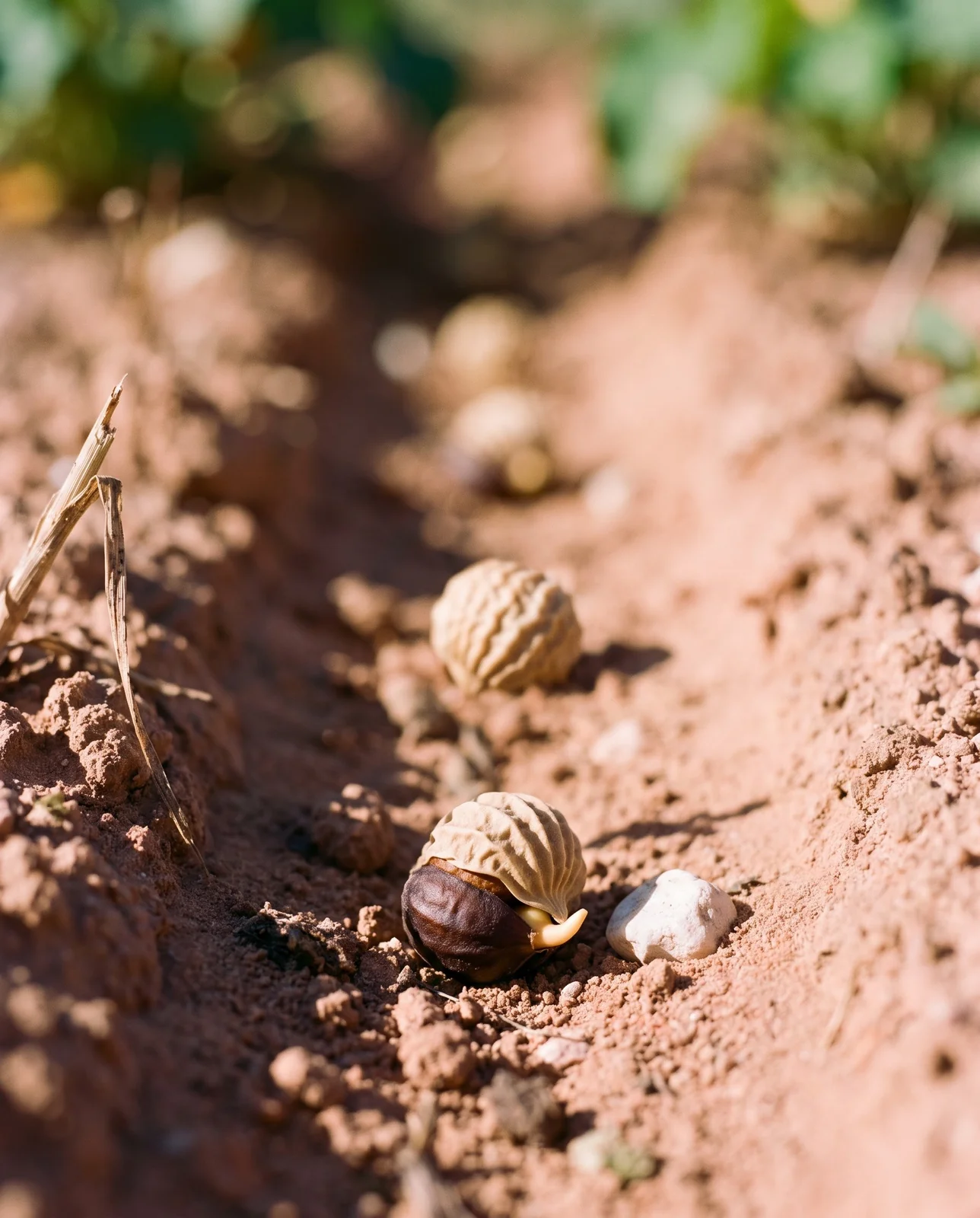
When to sow, by region
Nasturtiums bloom from May to September, though your local climate decides which part of that window brings flowers.
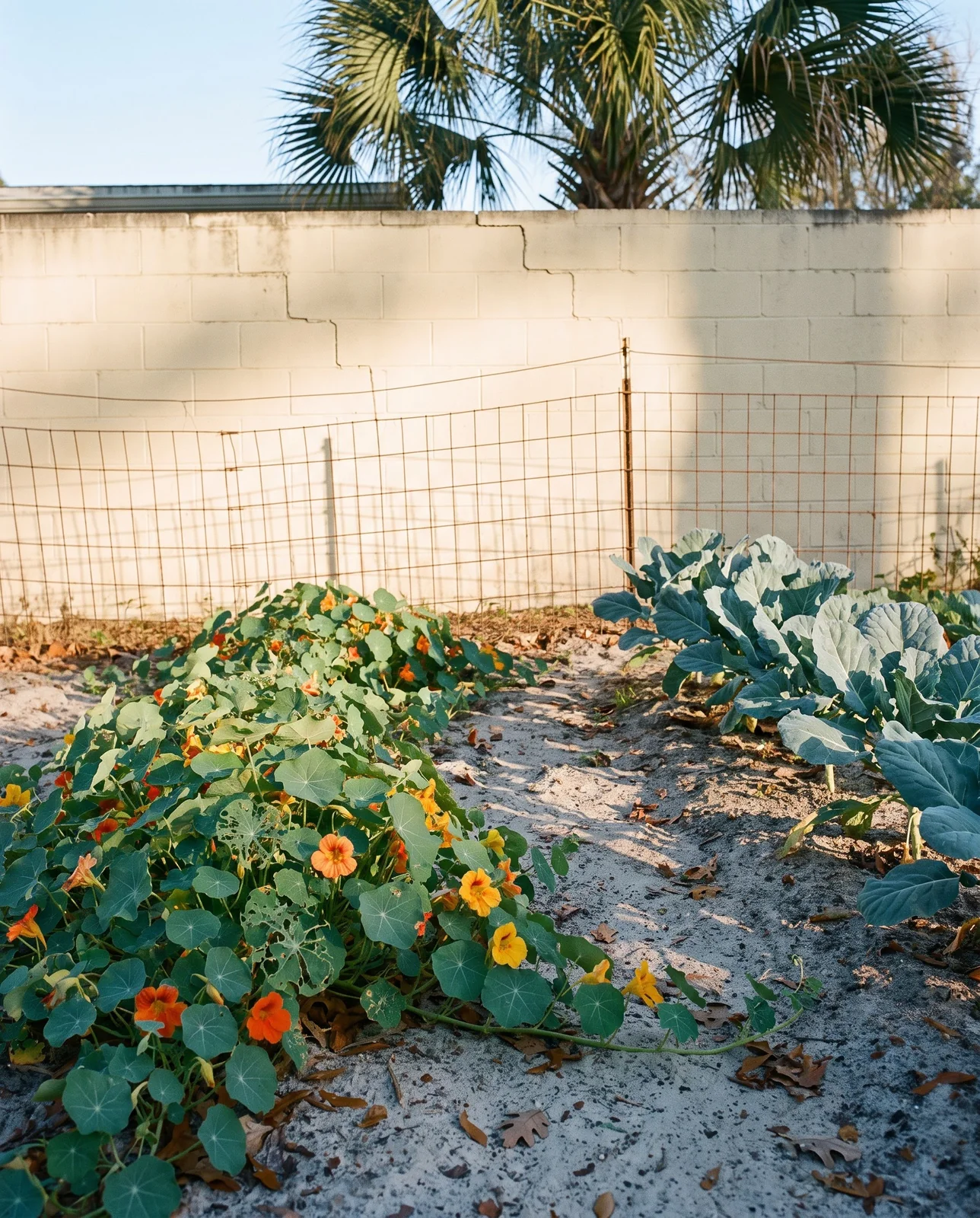
Why your nasturtium has leaves and no flowers
A nasturtium that grows a thick mound of green leaves with few flowers has usually been fed too well. The plant is a light feeder that does best in poor soil, where rich ground or added fertilizer pushes lush leaf growth at the expense of blooms. If your plant sits in rich potting mix, you cannot pull the nutrients back out, so add nothing more and sow your next batch into leaner soil.
Sunlight is the other piece gardeners often miss. When nasturtiums fail to flower, they are often getting too little sun or too much nitrogen. Shaded plants still spread readily, but they hold back on flowers without enough direct light. Intense summer heat can also bring a temporary stall, though plants usually rebound once temperatures moderate. Afternoon shade helps where summers run hot, and steady watering keeps blossoms coming.
Two simple garden chores will coax blossoms back. If plants look tired or stretched out in midsummer, a light pruning restarts growth that carries them into fall. Picking flowers makes an equal difference: removing faded blooms or harvesting fresh petals for the kitchen extends flowering and prompts new buds right until frost.
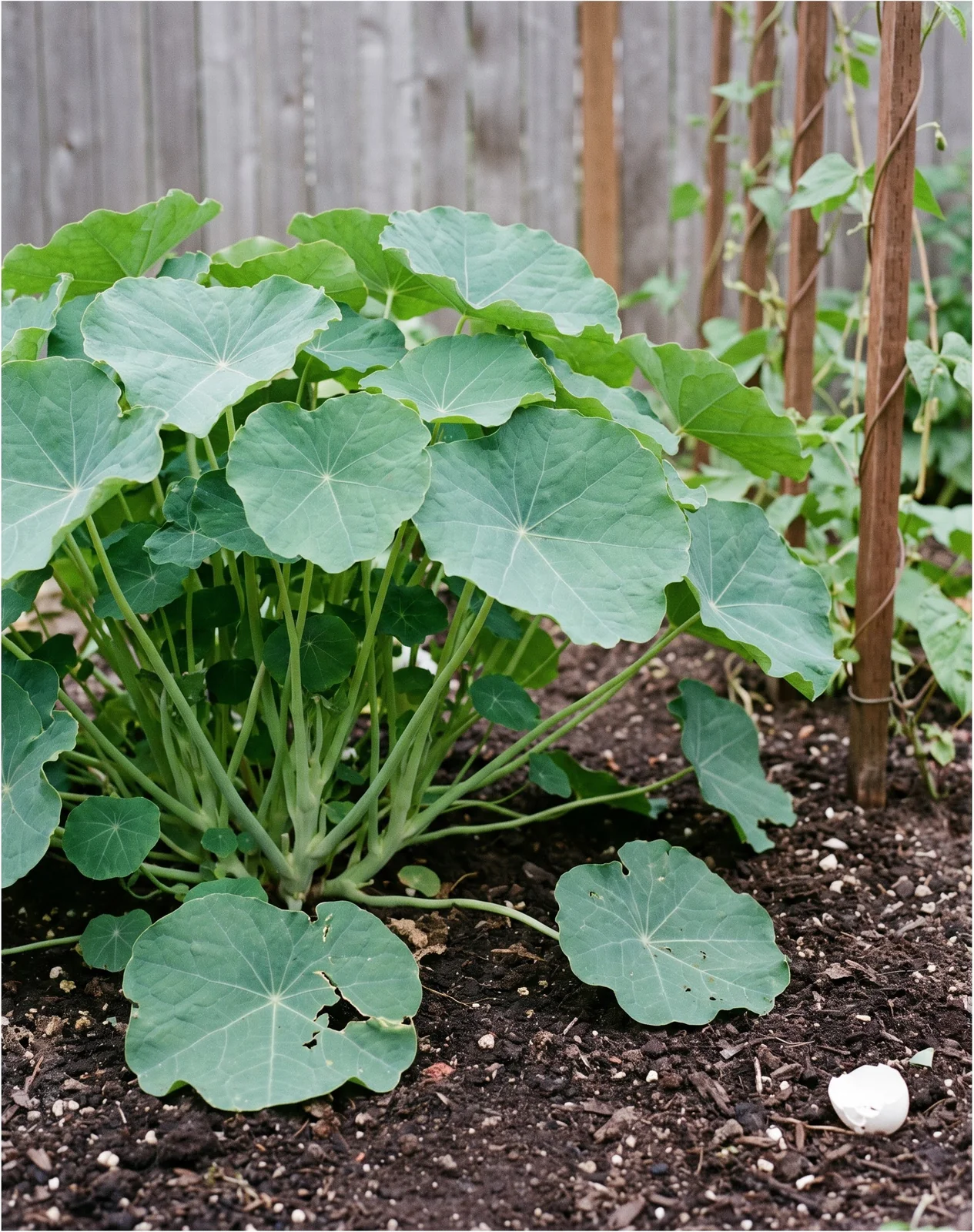
No flowers: work down this list
Work down this list in order, and act on the first match you find. It starts with problems you can fix right away and ends with weather you simply wait out.
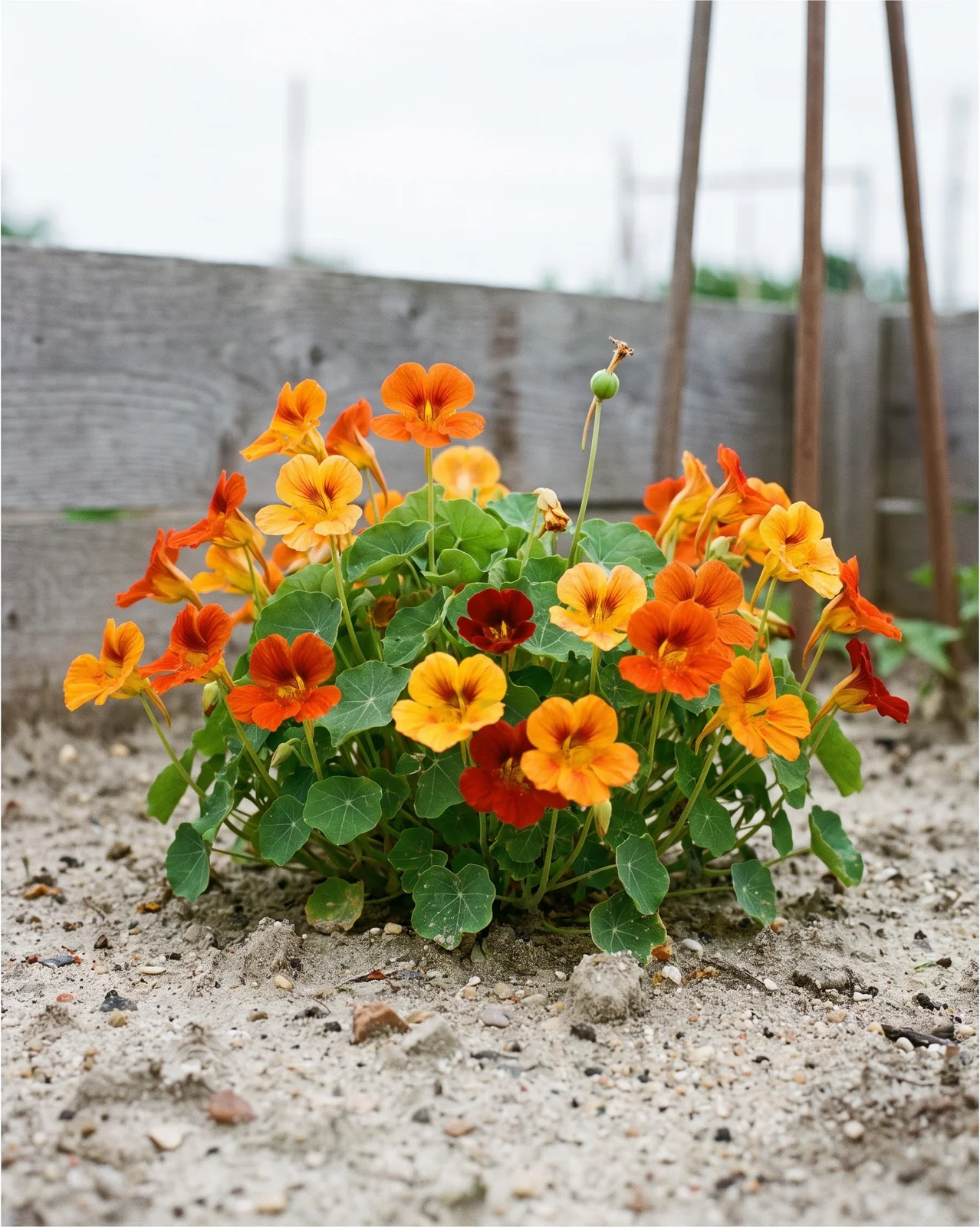
Leggy stems and yellowing leaves
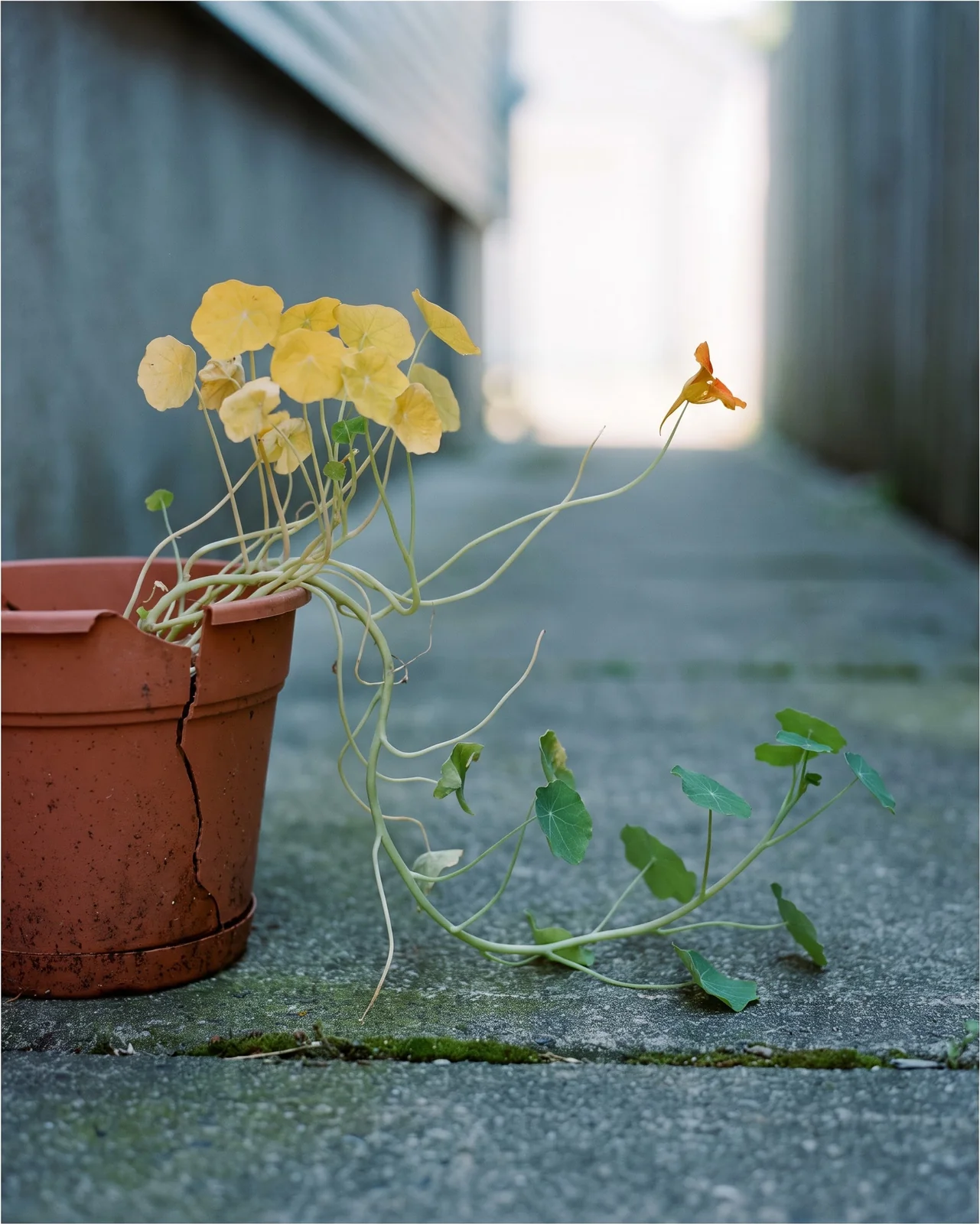
Leggy stems usually mean your nasturtium is reaching for sun. Low light creates thin, spindly stems, and moving the plant to a brighter spot corrects the stretch. Windowsill seedlings stretch for the same reason, so sowing seed directly outdoors keeps them sturdier. If mature plants sprawl or lose steam in summer heat, a light cut back can spur fresh shoots that carry the rest of the season. Some sprawling is natural, as trailing varieties love rambling or cascading down walls.
Yellow leaves have several possible causes, but severe disease is rarely the culprit. Serious garden diseases are uncommon, though leaf spots and wilts do occasionally strike. Check under the leaves and around the stems before doing anything else, since aphid colonies often gather on stems and inside blooms. You can safely snip off yellow foliage with clean scissors to keep the plant tidy.
Nasturtium varieties, sorted by habit
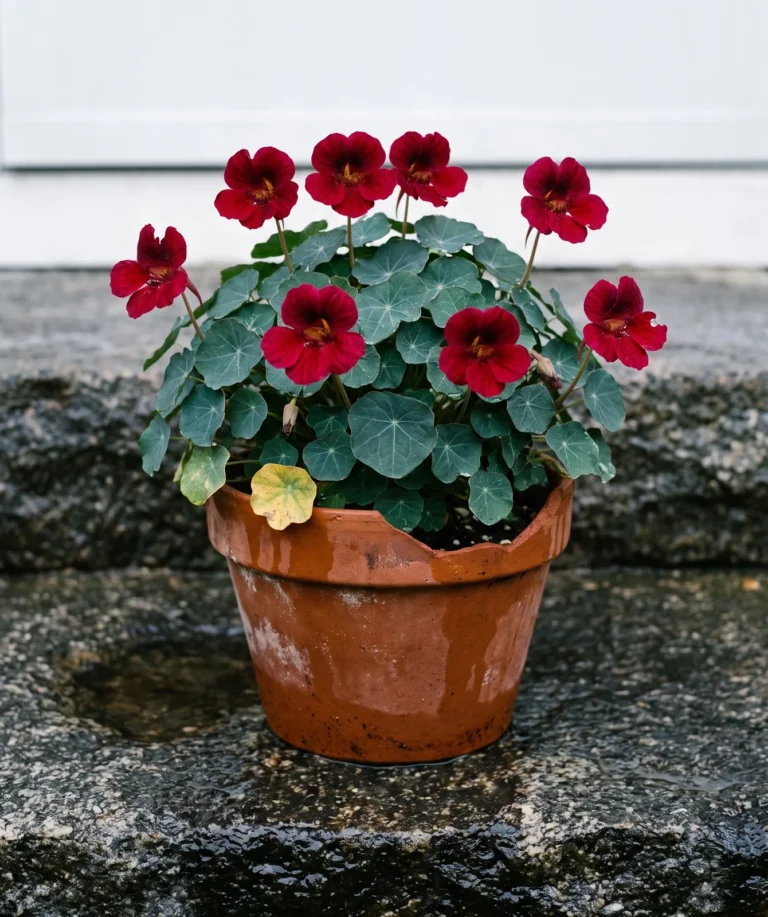
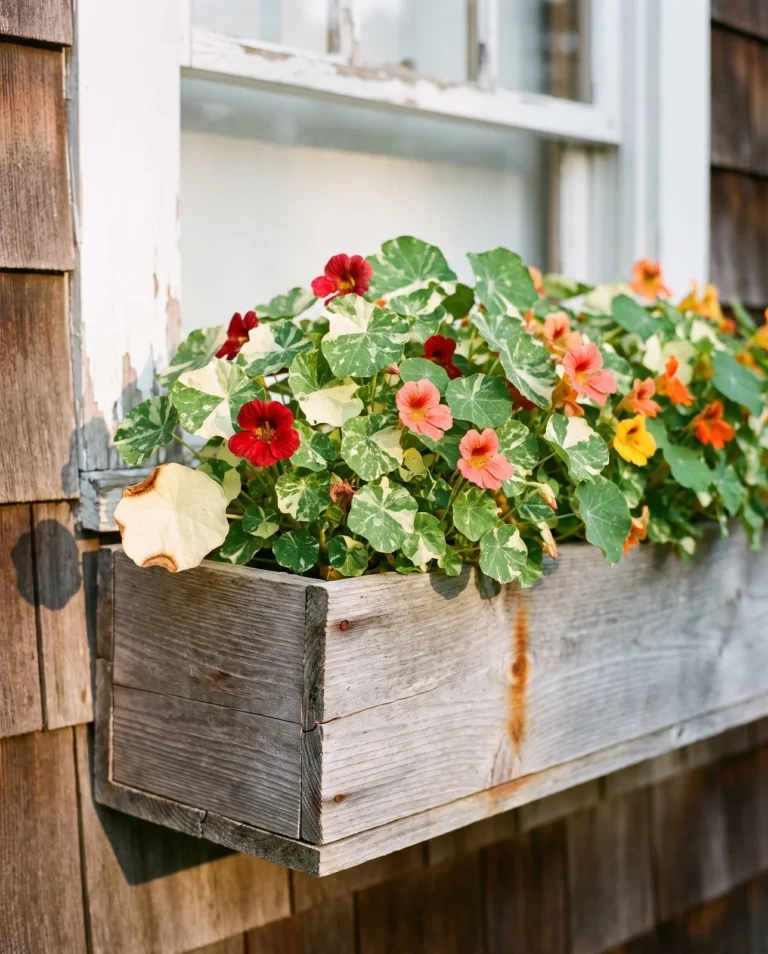
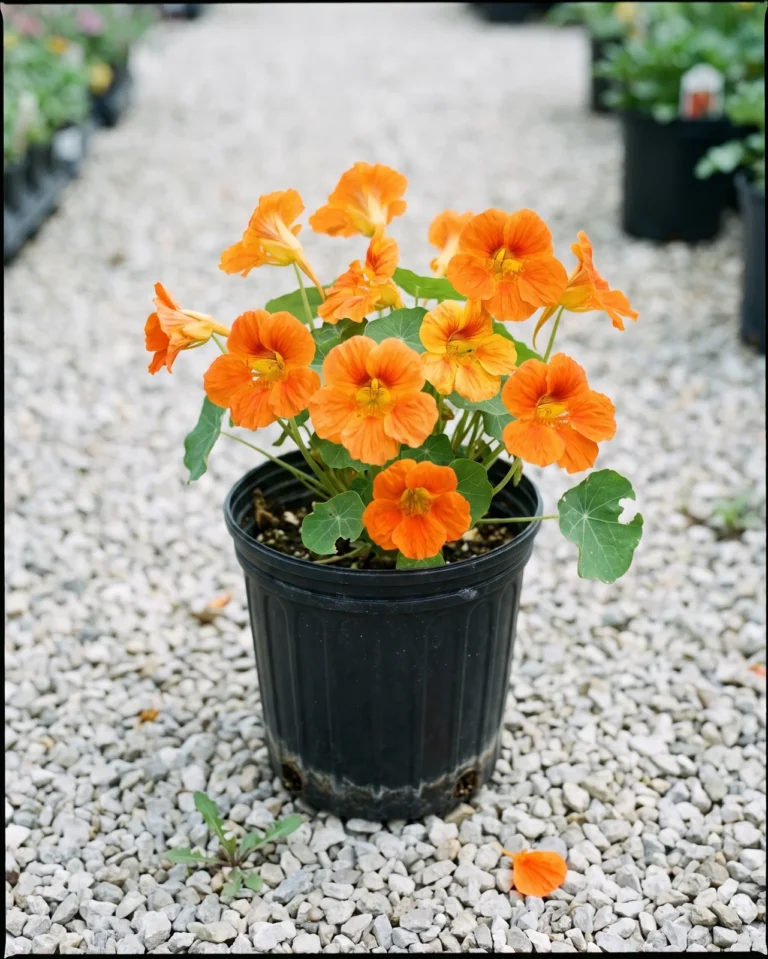
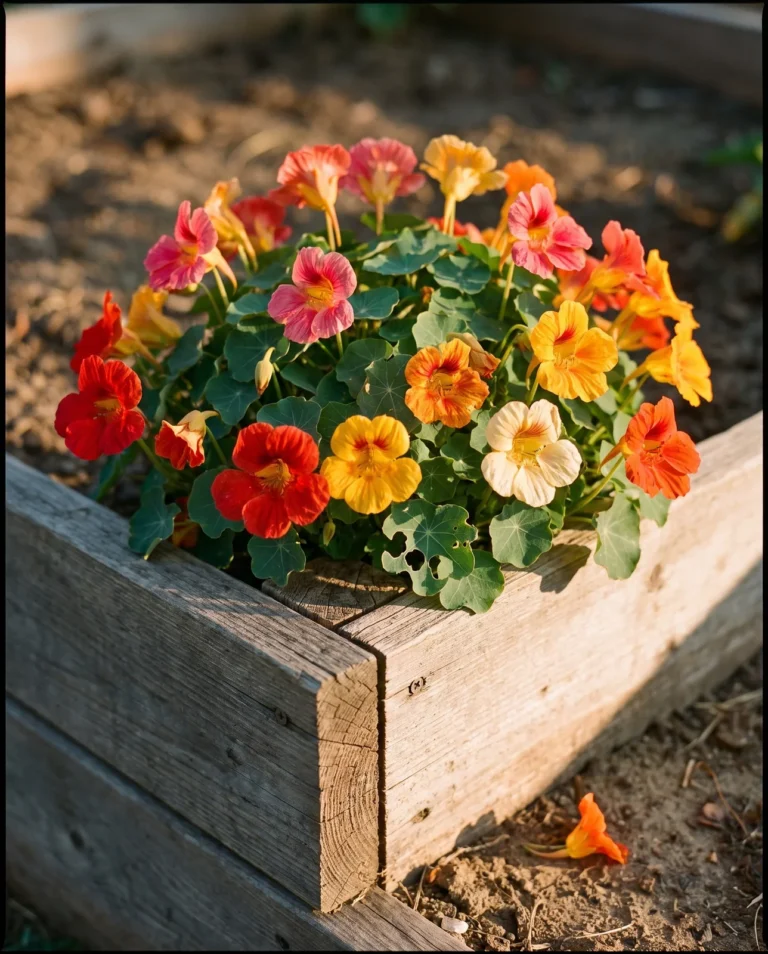
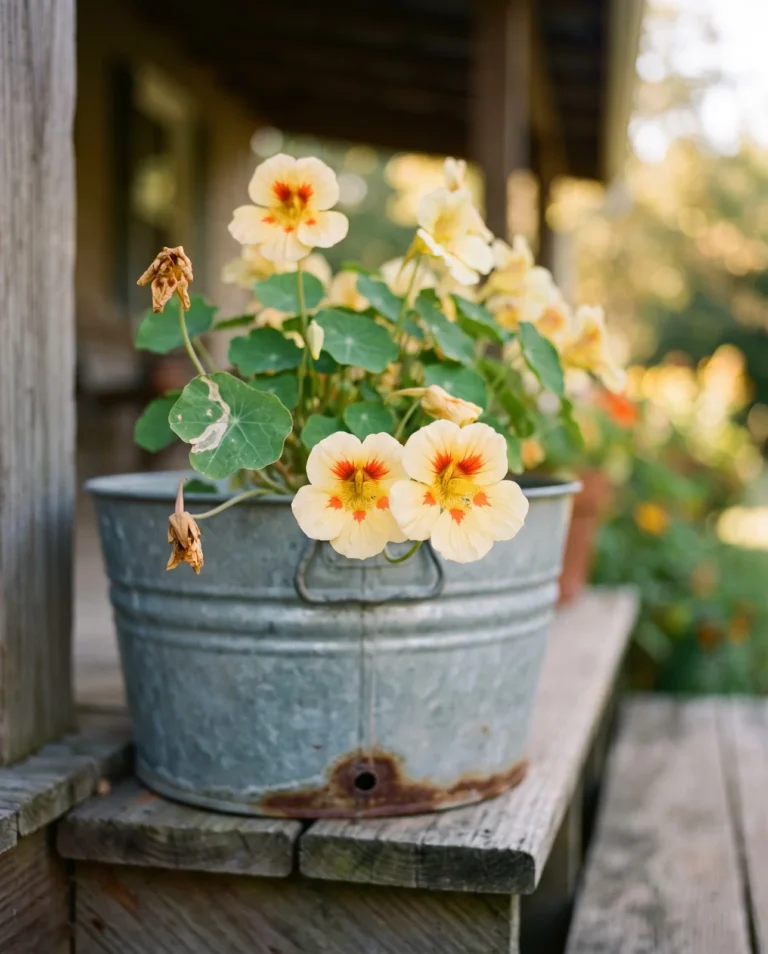
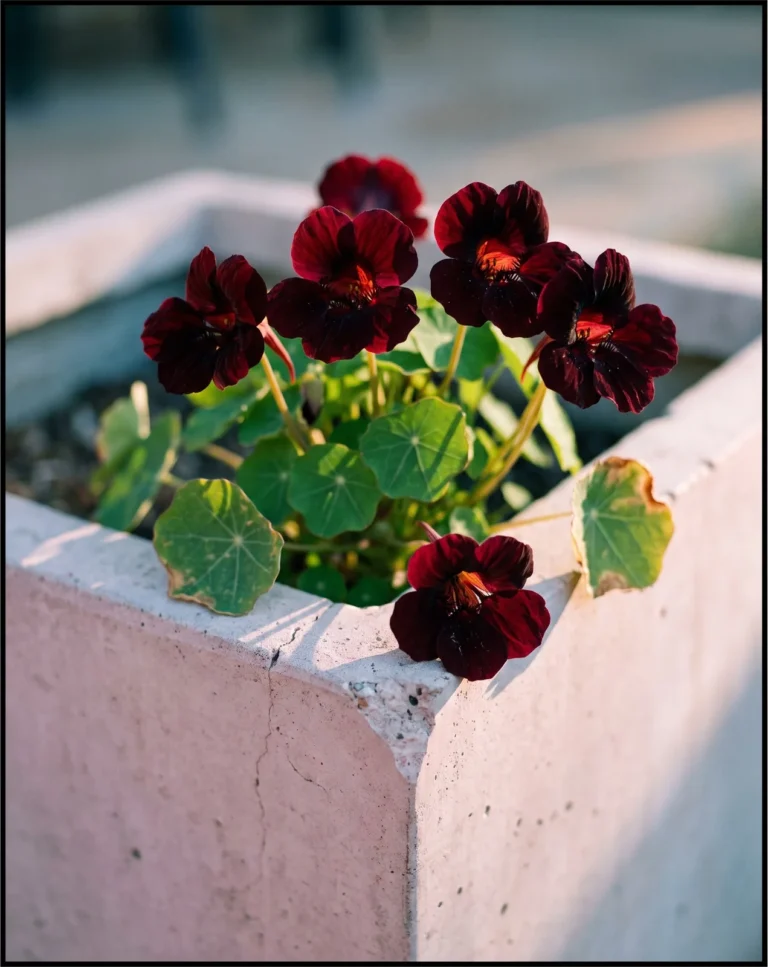
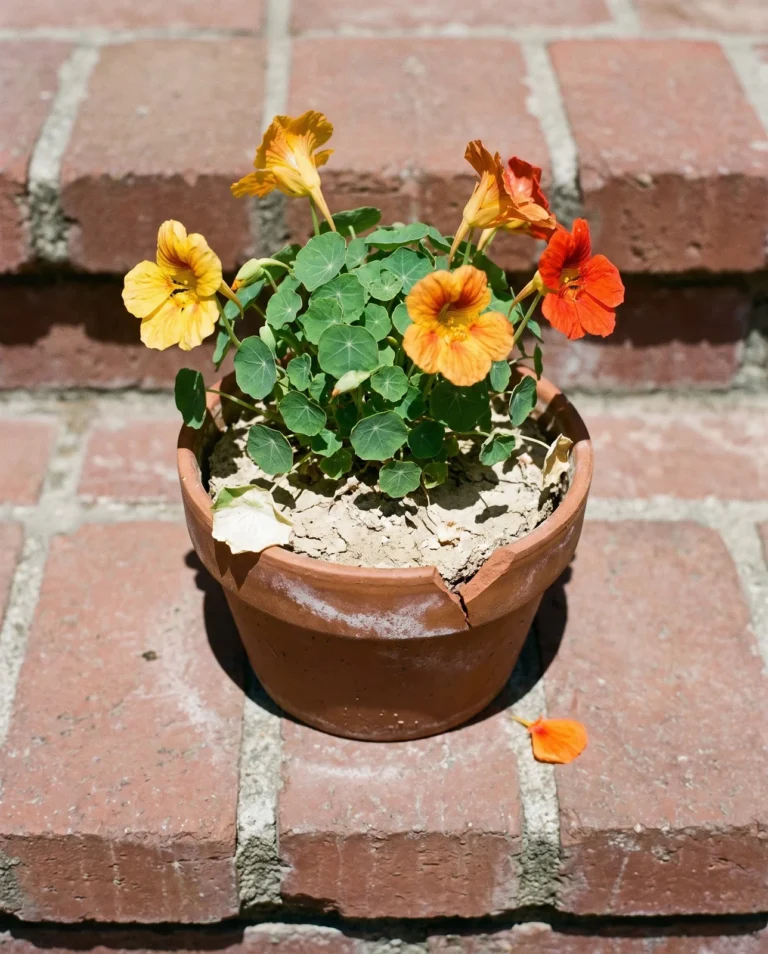
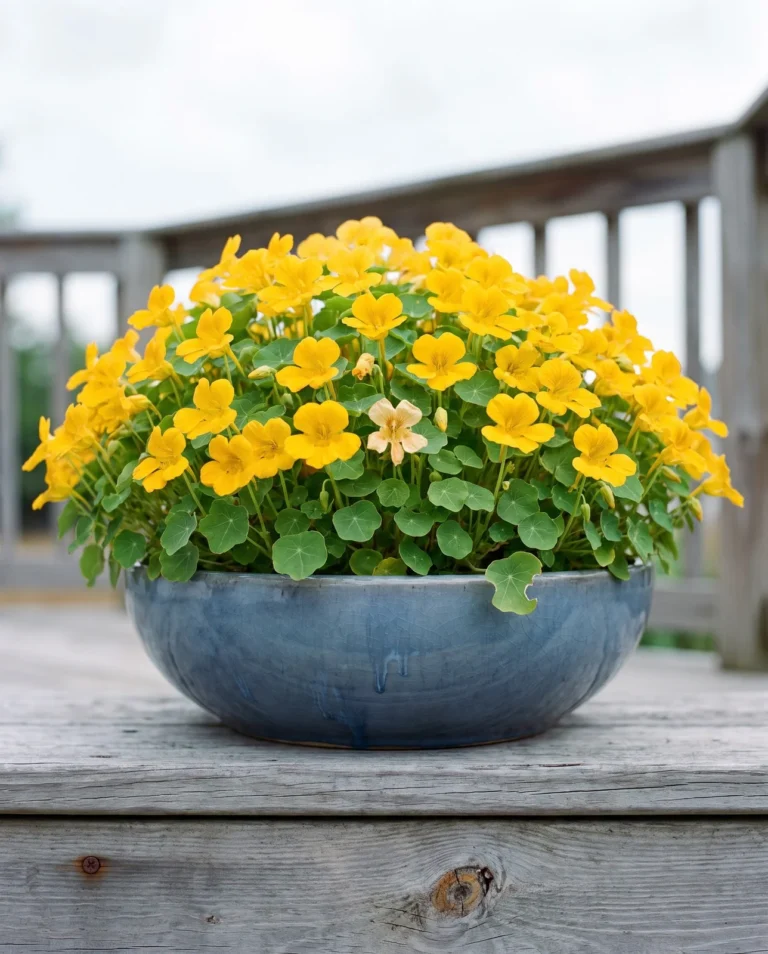
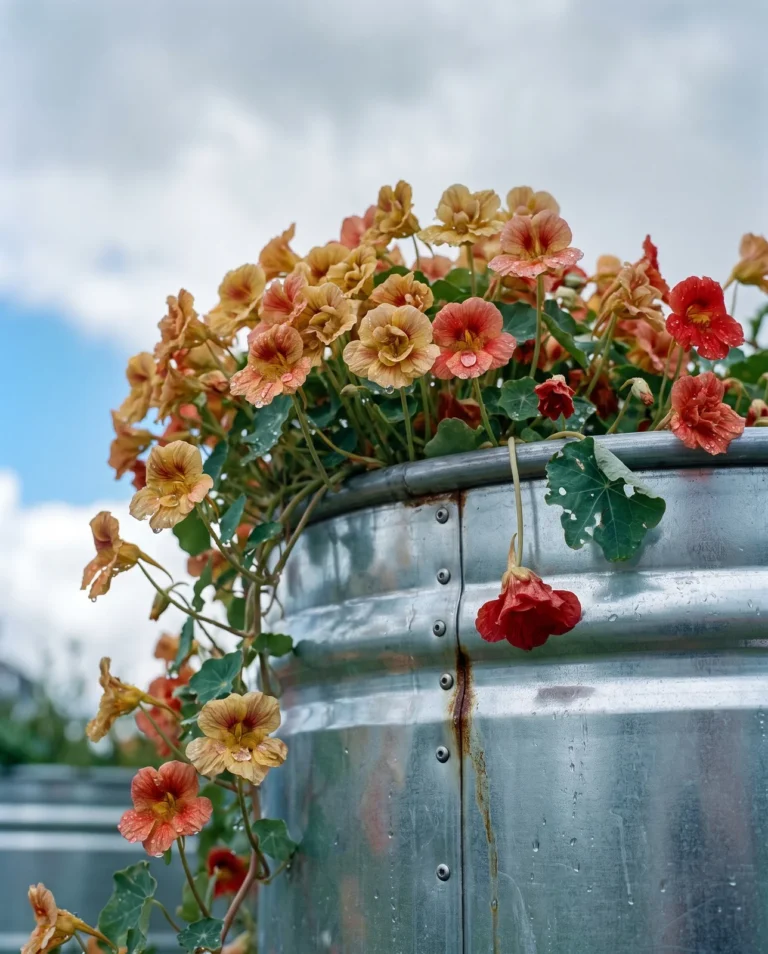
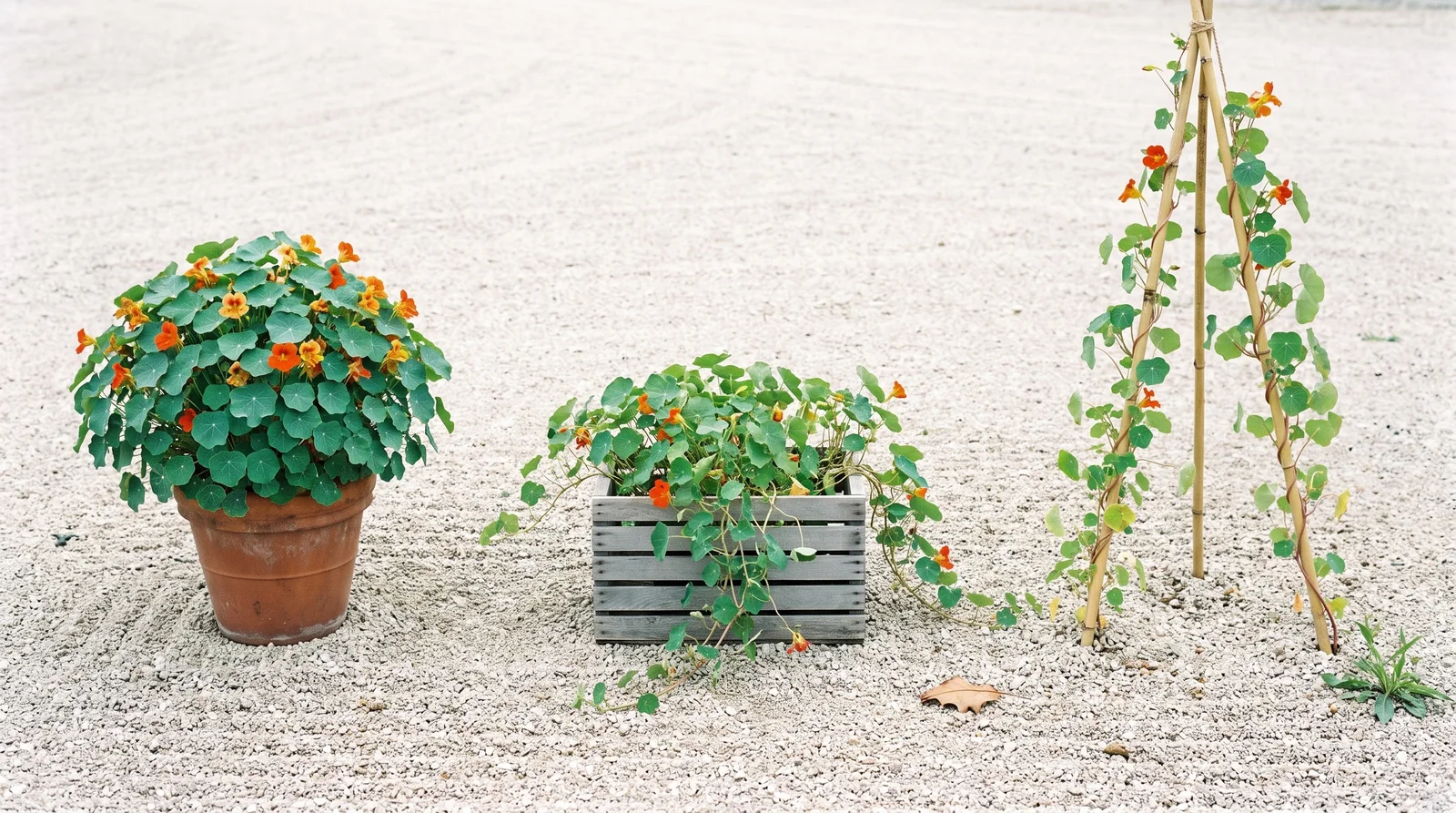
Growth habit matters more than flower color when choosing a nasturtium. Bushy dwarf selections stay compact at about 12 inches tall and 2 feet across. Trailing types spread along the ground, while climbing selections easily reach 6 to 8 feet on a trellis.
How much sun nasturtium needs
Nasturtiums flower best in full sun, which means 6 or more hours of direct sunlight every day, though they can manage on partial sun. Cut that light down to 2 to 6 hours, and the vines stay green while stingily holding back buds. Edible flowers as a group thrive on 6 to 8 hours of direct sunshine daily. In hot climates, long stretches of blazing weather put foliage under stress, so some filtered afternoon shade helps. Gardeners can grow them across patios, slopes, walkways, hanging baskets, and pots, which makes chasing the sun simple by moving containers.
Soil, pH, and why not to feed it
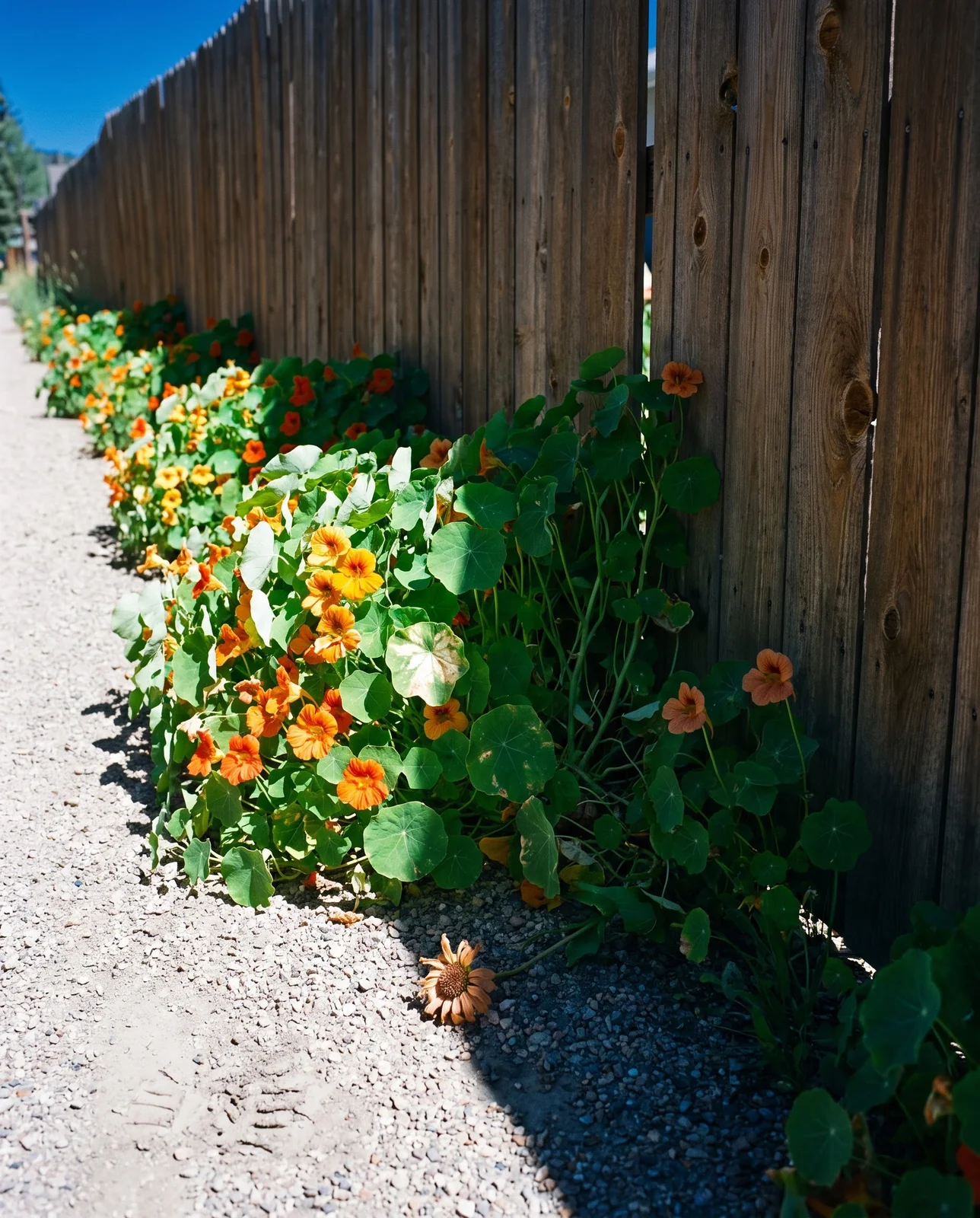
Nasturtiums grow best in poor to average soil that drains well. They prefer lean sand or loam, because overly rich ground deters flowering. Soil chemistry rarely causes trouble, since plants tolerate acid conditions below 6.0, neutral ground, and alkaline dirt above 8.0 as long as the drainage is good. Feeding increases foliage while reducing flowers, and high nitrogen levels promote leafy growth over blooms. Left in lean ground with little fuss, the plant tolerates both drought and neglect.
Watering nasturtium
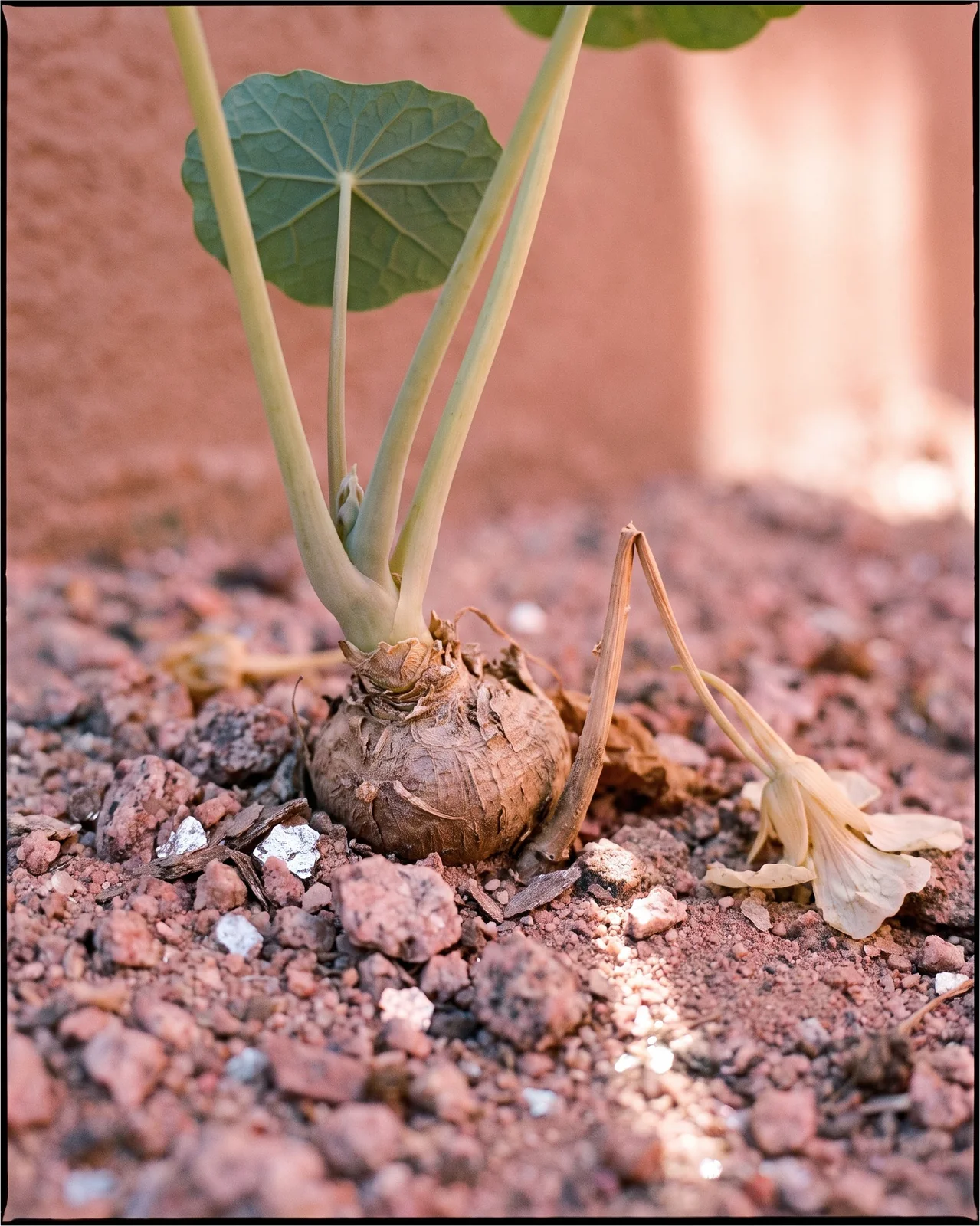
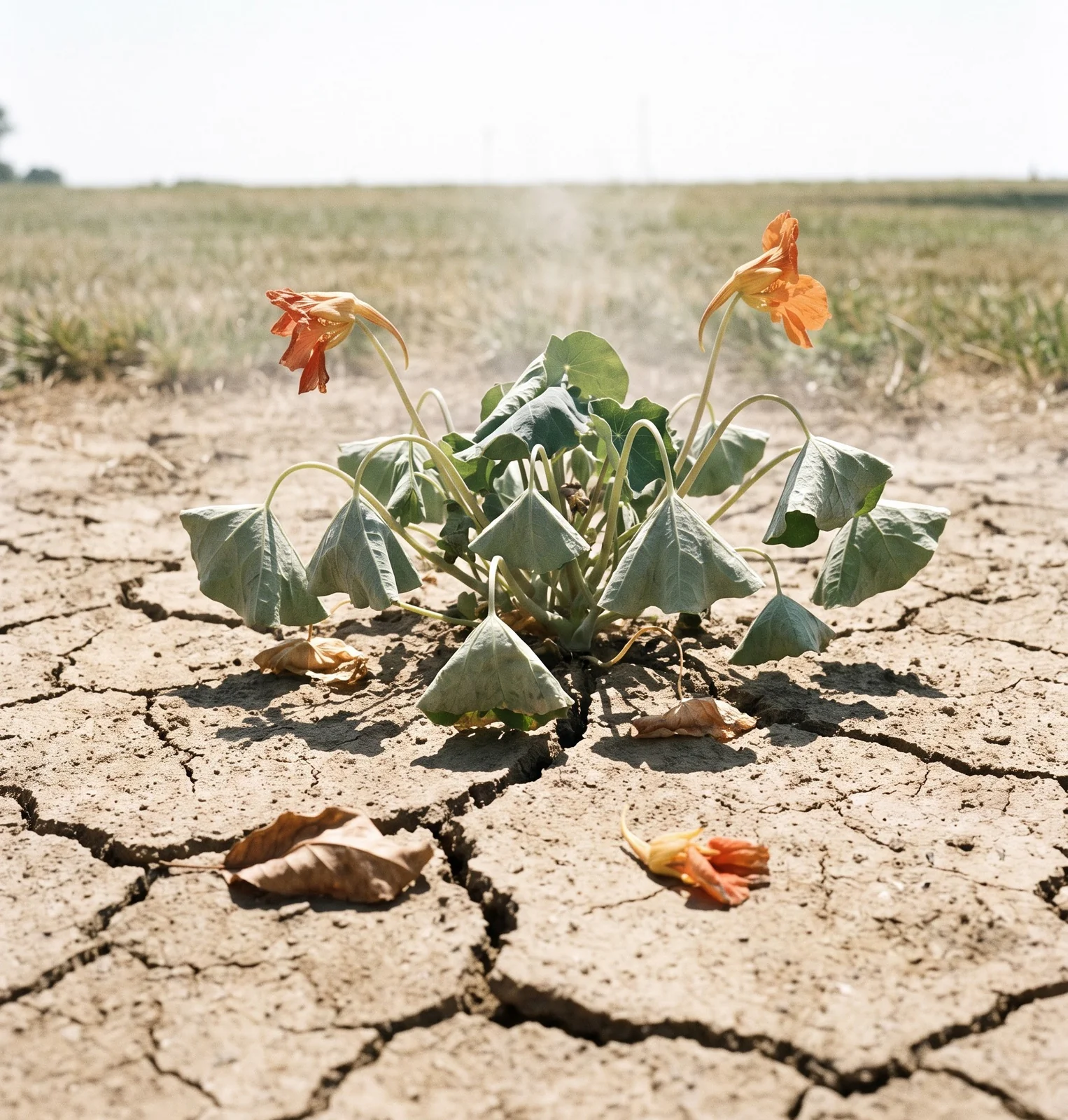
Nasturtiums have moderate water needs. Water when the top 1 to 2 inches of soil feels dry, but avoid overwatering because soggy ground can rot the roots. Once established, plants have some tolerance for dry soil and drought, though they bloom best with regular watering. Potted plants dry out faster than garden beds, so check container soil more often. Regular moisture also keeps the peppery leaves and flowers pleasantly mild, while heat-stressed plants turn noticeably sharper to the taste.
How big nasturtium gets
Most garden nasturtiums reach 1 to 3 feet in height and spread, though across the species plants range from 1 to 10 feet tall and 1 to 3 feet wide. Growth habit decides where a plant lands within that range. Bushy dwarf varieties stay around 12 inches tall and 2 feet across, while trailing forms make low mounds or trail up to 3 feet. Vining types reach 6 to 8 feet, and canary creeper grows very fast, where it may climb 8 to 12 feet on a trellis. With rapid growth and low maintenance needs, plants fill out quickly in a single summer.
Hardiness, frost, and whether it comes back
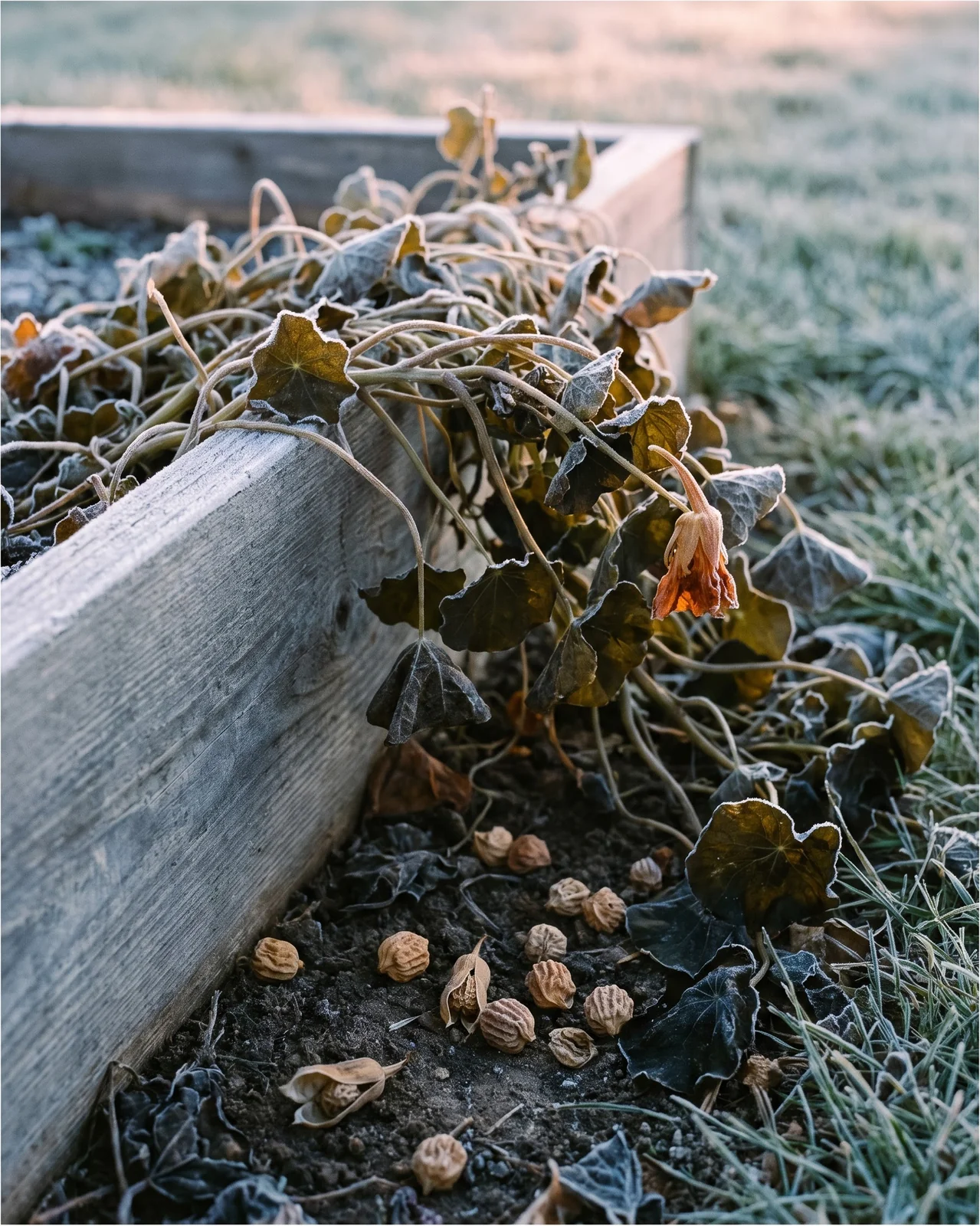
Nasturtiums grow as annuals across most climates. The plant behaves as a tender perennial hardy to zone 9a, though in mild winter areas across most of Florida it grows year-round and dies back to the ground only in a freeze. In frost-free climates plants may persist year-round with light mulch and occasional watering, while in colder regions they are pulled at the end of the season. Because gardeners grow them everywhere as warm-season annuals, their planting range covers USDA zones 2a through 11b or zones 2 to 11.
When nasturtiums return the following spring, they come from dropped seed, as plants self-seed readily and self-seeding can cause them to spread. In warm, mild climates they bloom and set seed year-round and can turn invasive, while in cold regions reseeding causes no trouble. A patch that reappears in the same corner is simply a fresh colony of volunteers, flowering in whatever mix of colors the parent seeds held.
Pests and diseases on nasturtium
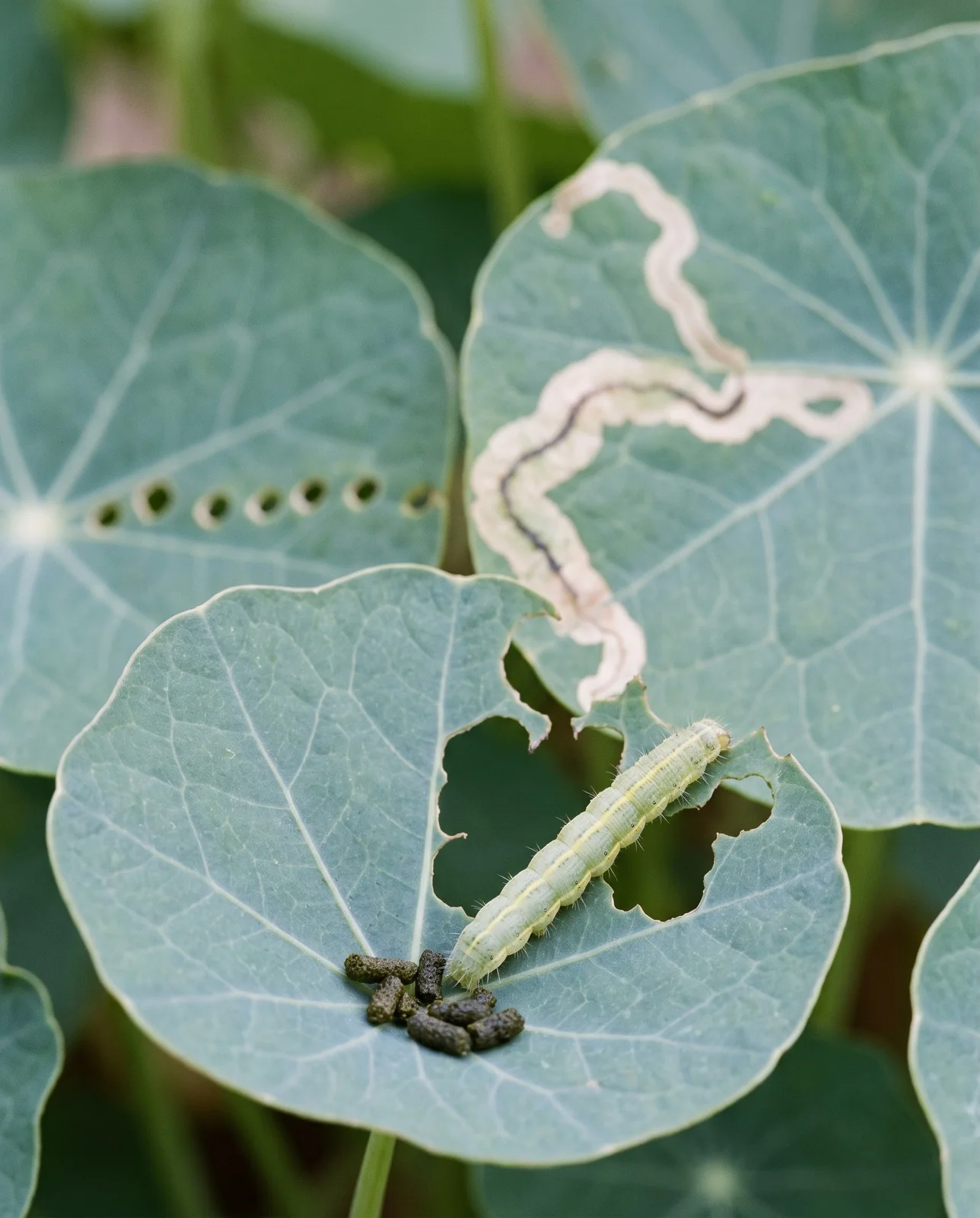
Nasturtiums rarely suffer from serious pests, but you should keep an eye out for aphids, mealybugs, and whiteflies. These insects settle on both flowers and foliage. Black bean aphids often cluster thickly on stems and inside blooms. Imported cabbageworm caterpillars and aphids are the most common pests. The foliage also feeds the larvae of some moths and butterflies, including the dot moth, garden carpet moth and cabbage white butterfly. Spider mites and tarnished plant bugs turn up as well. Caterpillars, flea beetles, slugs, and snails appear occasionally. Leafminers can leave winding trails through the leaves, but they do not hurt the plant. Gardeners often tuck nasturtiums beside marigolds along vegetable rows, right where insects gather.
Serious diseases rarely bother nasturtiums in home gardens, though mosaic viruses, leaf spot, and blight sometimes turn up. The known troubles include bacterial wilt, fungal leaf spot, and bacterial leaf spot. Southern bacterial wilt is also among its common problems. Hand-picking pests or pulling heavily infested plants is usually enough, since few pests or diseases bother the vines anyway.
The problems people actually report
Listed from the most frequent complaint down, with the symptoms, the cause, and what to do for each.
Symptoms: a dense mound of round leaves all summer with very few buds or open flowers. Cause: rich soil, added plant food, or too much shade, as plants in partial shade grow well but bloom poorly. What to do: stop feeding the plants, since fertilizer increases foliage while decreasing flowers, and move them where they get plenty of direct sun.
Symptoms: black colonies packed along stems and hidden inside flower throats. Cause: black bean aphids multiplying on tender new growth. What to do: strip the colonies off by hand or pull heavily infested plants, avoiding pesticides if you plan to eat any part of the plant.
Symptoms: nasturtiums fill with aphids, and neighboring vegetables soon show the same pests. Cause: insects multiplying on the trap crop and spreading once crowded. What to do: eradicate the pests promptly once established so they cannot move to the main crop, and next season plant the trap crop 3 to 4 weeks ahead of your vegetables.
Symptoms: bare ground long after the sowing date. Cause: seed left in light on the soil surface, or cold soil. What to do: plant seeds half an inch deep because they need darkness to germinate. Wait until soil temperatures reach 55 to 65 F, where seeds sprout best. Soaking seeds in water for 8 to 24 hours before planting can speed germination.
Symptoms: plants droop, stall, or stop blooming during a summer heat wave. Cause: heat stress during intense summer temperatures, which may slow or temporarily halt flowering. What to do: give the plants time, as they often rebound when temperatures moderate, and provide some afternoon shade in areas with prolonged high heat.
Symptoms: stretched, spindly stems with leaves spaced far apart, especially on indoor windowsills. Cause: low light stretching the growth. What to do: move plants to a sunnier spot if possible, and cut them back lightly to produce fresh growth for the rest of the season.
Symptoms: bare ground in spring where last year's plants grew. Cause: nasturtiums have an annual life cycle and survive winter as tender perennials only in zone 9a or warmer. What to do: sow fresh seed in spring, or watch for volunteer seedlings if the previous plants self-seeded.
Symptoms: foliage turning yellow from the oldest leaves outward. Cause: aging foliage, soggy soil, or aphid colonies feeding on stems and leaves. What to do: check leaf undersides for pests, and clip off yellow leaves with clean scissors without taking more than a third of the plant at once.
Containers and hanging baskets
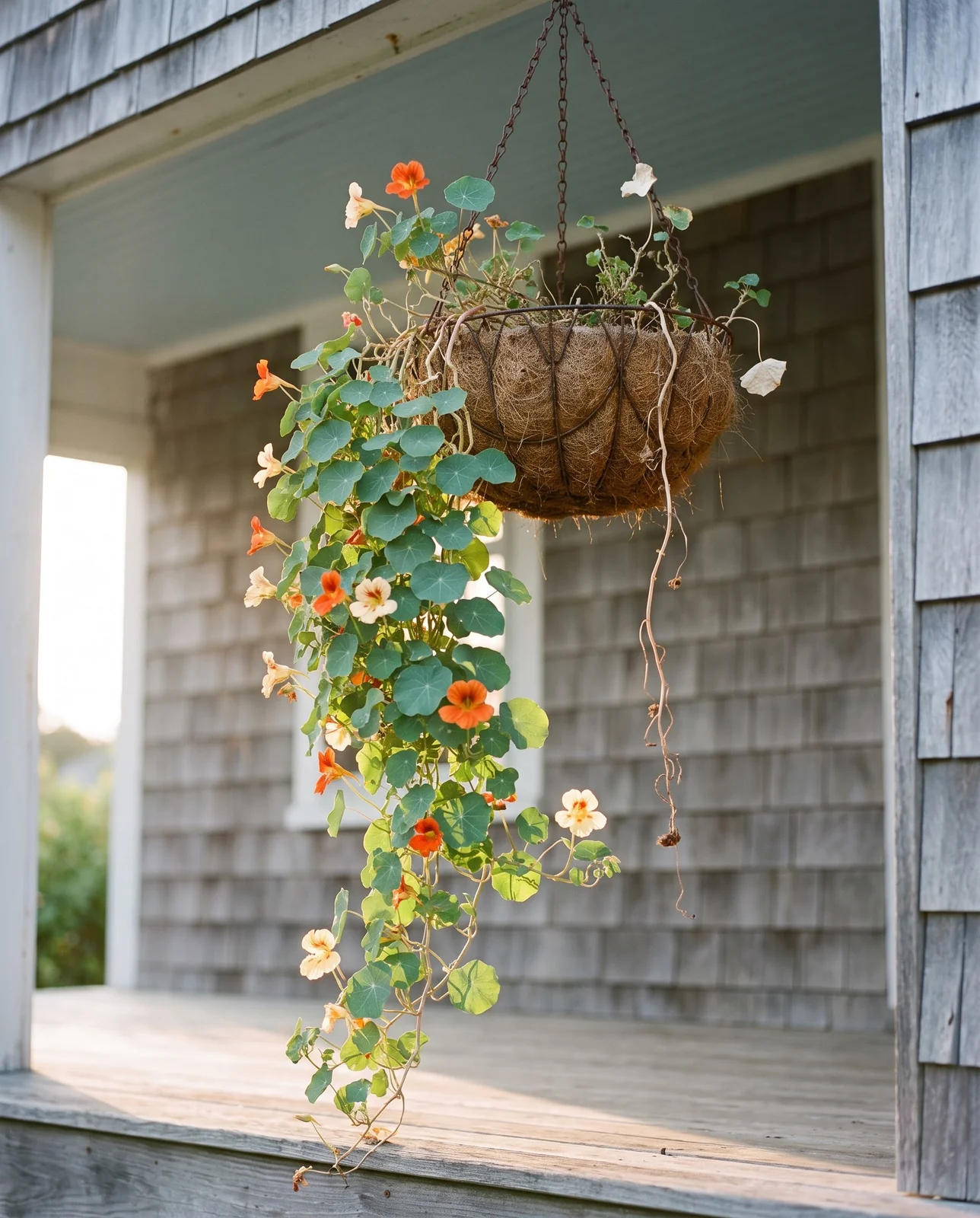
Nasturtiums suit containers and hanging baskets well. Trailing types work especially well here, using their rambling habit to spill out of window boxes or cascade down walls. Spread is what matters most when picking a variety. The 'Vintage' variety grows about 1 foot tall and 3 to 4 feet wide. Vines in the 'Troika' series spread 3 to 4 feet. Trailing types like 'Kaleidoscope Mix' extend about 16 inches. Thin seedlings to 3 to 5 plants in a hanging basket or a 10-inch container. Pots dry out faster than garden beds and may need more frequent watering, and in mixed containers you may need to trim plants back periodically so they do not crowd out companions. Give them full sun and a lean potting mix, since overly rich soil encourages leaves while holding back flowers. A basket of trailing nasturtiums will then carry orange and yellow flowers right at eye level.
Is nasturtium safe for dogs and cats?
Garden nasturtium is non-toxic to dogs, cats, and horses, with no records of toxic ingestion. Any confusion comes from true watercress, Nasturtium officinale, which the ASPCA lists as toxic to dogs, cats, and horses due to irritants that cause mild vomiting and diarrhea. Although they share a common name, the two plants belong to different families, putting safe garden flowers and toxic salad cress on opposite sides of pet guidance. Out in the yard, the plants also tolerate and resist browsing deer.
What nasturtium means, and where it has been planted
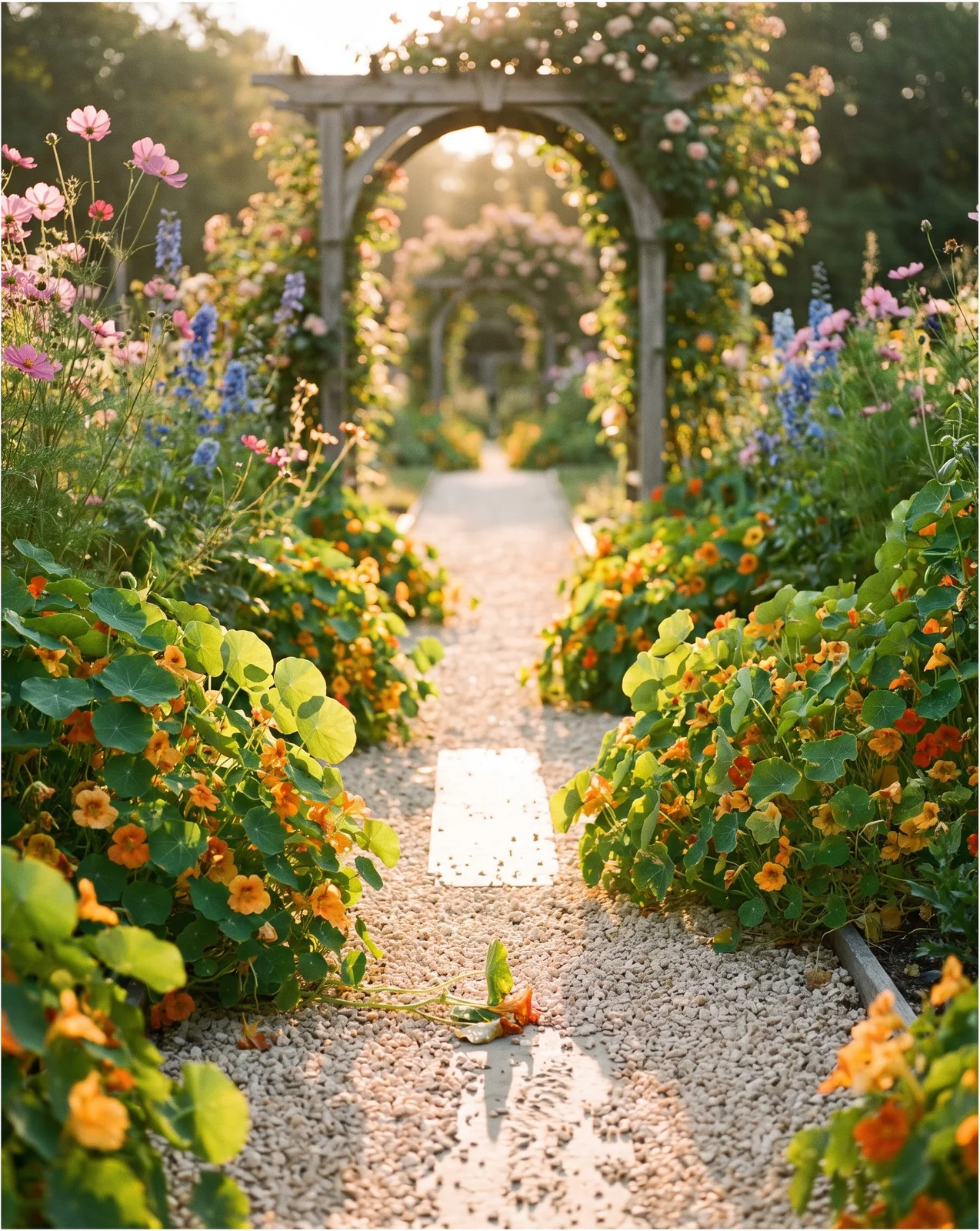
Nasturtium flowers are said to symbolize patriotism and victory in battle. Distinctive appearance, rapid growth, and easy culture characterize this once-popular annual. Monet planted nasturtiums in the border of the path leading to the front door of his home in Giverny, France, letting them spill across the gravel as the season progressed.
Four things people believe about nasturtium
Each of these beliefs changes how people grow the plant, but the reality is much simpler.
The myth: Nasturtiums repel garden pests.
The reality: A trap crop can be defined as a sacrificial plant that draws away damaging insects from the main crop. Planted near broccoli, cabbage and other brassicas, nasturtiums commonly attract aphids, and black bean aphids colonize the stems and flowers. Once damaging insects establish on the trap plants, eradicate them so they cannot move on to your main crop.
The myth: Feed them and you will get more flowers.
The reality: Feeding nasturtiums increases foliage while cutting down on flowers. They are light feeders that actually prefer poor soil, and rich ground often produces lush leaves at the expense of blooms.
The myth: Nasturtiums are perennials, so mine should have come back.
The reality: Nasturtium grows as an annual in cold climates, surviving as an easy tender perennial only in mild areas down to zone 9a. New seedlings that appear the next spring in colder gardens are volunteers from self-sown seed.
The myth: Only the petals are edible.
The reality: Except for the roots, every part of the plant is edible, including the leaves, buds, flowers, pods and seeds. You can harvest the unripe pods and drop them into spiced vinegar to pickle and use like capers.
What the season looks like
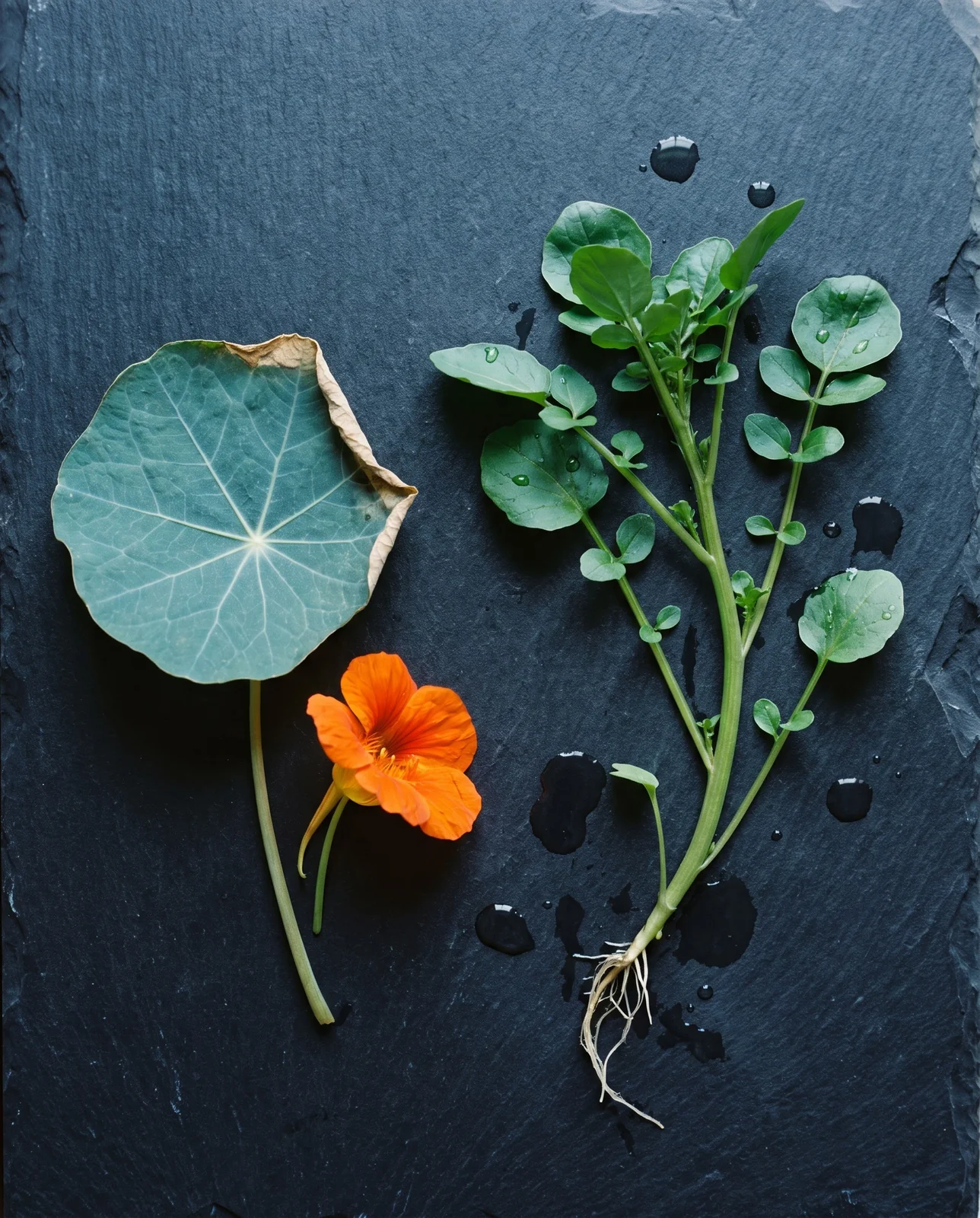
A single sowing shapes the whole year: a quick start in spring, a pause during high heat, and a fresh flush of bloom in fall.
Sowing to first flowers. Because seeds need darkness to germinate, sow them half an inch deep. Seedlings emerge in 7 to 10 days once the soil reaches 55 to 65 F. Growth after that is rapid. Flowers start opening in early summer and can bloom from May through September. In Texas, seed usually goes in around the average last frost and peaks in May and June.
Midsummer. Intense summer heat may slow or temporarily pause blooming, but plants often rebound as temperatures moderate. In most of Texas, flowering winds down once hot weather sets in, usually in June. Too little light can cause stretched, spindly stems, while black bean aphids may form colonies on stems and flowers. If plants decline or become leggy during summer, cut them back lightly to produce fresh growth for the rest of the season. Leaves picked during hot weather often taste spicier and more pungent than those harvested in cool conditions.
Fall and after. Flowering continues right until frost, and regular picking or deadheading encourages the plant to set more buds. Flowers left on the vine develop seed pods about 4 months after sowing. Frost finishes the plant across most regions where it grows as an annual, but in frost-free climates it may persist year-round with light mulching and occasional watering. Fallen seeds self-sow readily, sending up volunteer seedlings the following spring.
Nasturtium as a cut flower
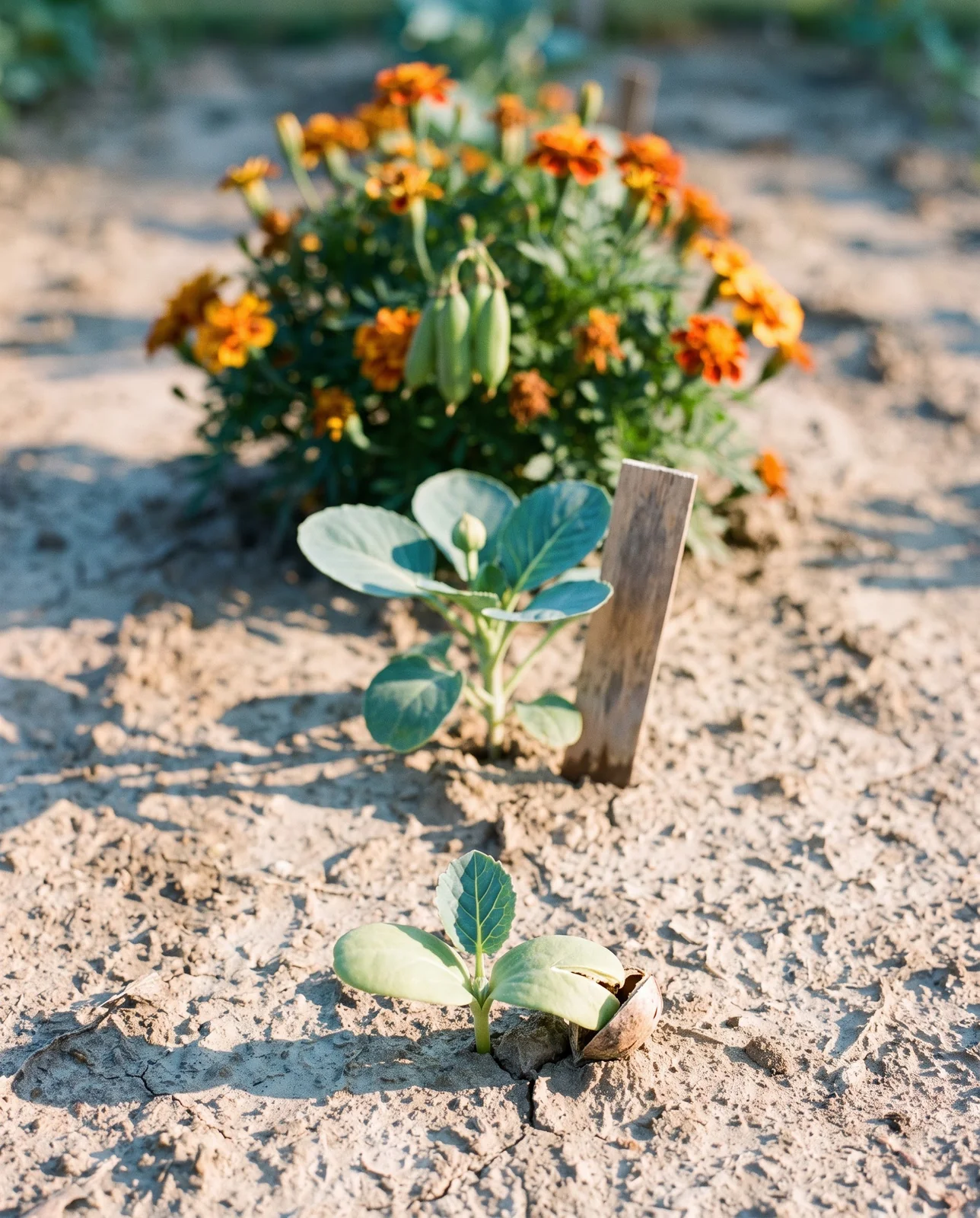
Nasturtiums make fine cut flowers for the home, and gathering stems costs the plant nothing because picking blooms only extends flowering. The long-stalked blossoms carry a mild scent. Because stems naturally trail or form low mounds, they suit a shallow bowl especially well. Cut a few leaves alongside the flowers, since the round foliage holds its own in the display.
FAQ
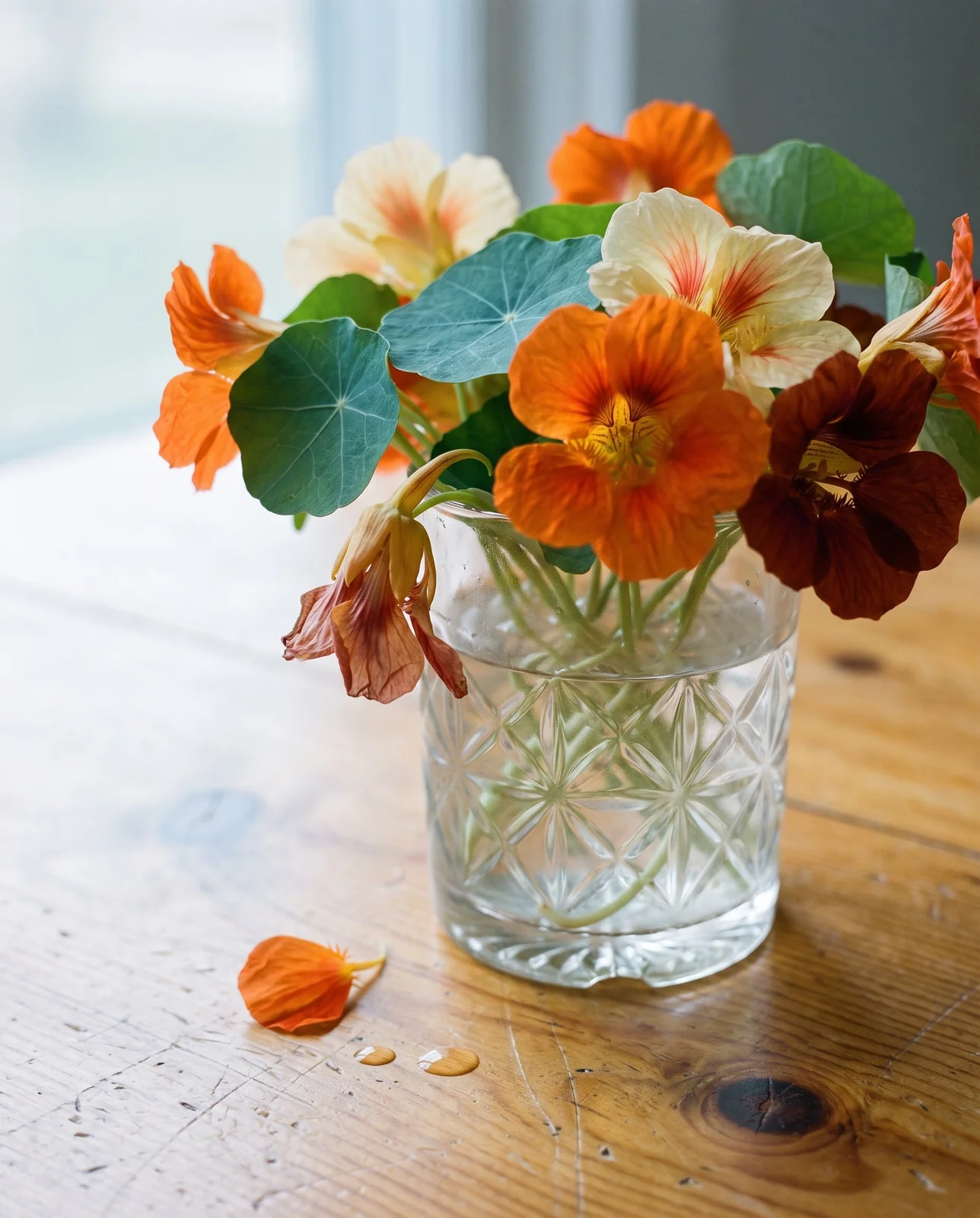
Do nasturtiums come back every year?
No in most climates, where they grow as annuals and are cleared away at the end of the season. They persist as tender perennials in zone 9a, and can grow year-round through most of Florida, dying back to the ground in a freeze. In colder gardens, plants that return in spring sprouted from self-sown seed.
Do nasturtiums keep bugs away?
No, nasturtiums pull insects in. A trap crop can be defined as a sacrificial plant that draws damaging insects away from the main crop. They commonly attract aphids when planted near broccoli, cabbage, and other brassicas. Once pests settle on the plant, destroy them before they move on to the vegetables you want to protect.
What is the best month to plant nasturtiums?
The right month depends on your local climate, because seeds sprout best once soil reaches 55 to 65 F after frost danger passes. In Texas, seed is usually sown around the average last frost date. Sowing runs from spring through fall across Florida and year-round in South Florida, while in colder gardens seed can be sown in late spring to early summer once all danger of frost has passed.
What are nasturtiums used for?
They are prized for the kitchen, where all parts above the roots are edible with a spicy, peppery flavor. In vegetable gardens, they can serve as a sacrificial trap crop that draws aphids away from brassicas. They also provide bright color across containers, hanging baskets, patios, slopes, and walkways.
Should you cut off yellow nasturtium leaves?
Yes. Snip them off with clean scissors or garden snips without tearing the stems, removing no more than a third of the foliage at one time. Check the stems and flowers while you trim, since black bean aphids can settle there in colonies.
How do you cut back leggy nasturtiums?
Trim the stems back lightly if the plant declines or becomes leggy in summer, and it will produce fresh growth for the rest of the season. Low light can cause those stretched, spindly stems, so move the plant to a sunnier spot if possible.
Do aphids like nasturtiums?
Yes, aphids are commonly drawn to the plant's foliage and flowers. Black bean aphids in particular build colonies along the stems and inside the blooms.
What should you not plant near nasturtiums?
No common garden plants cause trouble near nasturtiums, but their vigorous spread needs watching. In a shared container, you may have to trim them back periodically to prevent them from crowding out other plants. In warm, mild climates they bloom and seed year-round and may become invasive.
What grows well with nasturtiums?
Nasturtiums are commonly planted alongside brassicas, cucumbers, melons, and squash in vegetable beds. They are also a good choice to mix with spring-flowering bulbs, since their spreading foliage can hide fading bulb leaves as they mature. In bloom, the flowers bring in butterflies, hummingbirds, and other pollinators.
Are nasturtiums poisonous to dogs and cats?
No. Garden nasturtium is non-toxic to dogs, cats, and horses, and the ASPCA has no records of toxic ingestion. Confusion comes from true watercress, an unrelated species named Nasturtium officinale that is toxic to those same animals, causing mild vomiting and diarrhea.
Interesting tips
- At Boston's Isabella Stewart Gardner Museum, gardeners hang nasturtium baskets from the courtyard balconies every spring, training the vines to cascade nearly 20 feet for a three-week display.
- At dusk, nasturtium flowers can appear to flash or flicker, a phenomenon discovered by Carl Linnaeus's daughter Elisabeth at age 19 and named after her. Once believed to be electrical, the flash is now thought to be an optical reaction in the eye caused by the contrast between orange flowers and the surrounding green.
- The compact 'Tip Top' series blooms early and grows 10 inches tall in apricot, gold, scarlet, or a mix. 'Vesuvius' also stays compact, growing 10 to 12 inches tall and wide with salmon-orange flowers.
Related Guides & Flowers
Zinnias
Another annual sown straight into warm ground, grown for armfuls of cut flowers.
Sunflower
The other big-seeded annual you push into the soil with a finger, on a much larger scale.
Types of flowers
The full index of flowers on the site, sorted by kind.
Companion plants
Which flowers get planted among vegetables, and what each one is actually doing there.
Enjoying our flower guides? Add YourFlowersGuide as a preferred source on Google. It helps more readers find us.
Add to Preferred Sources