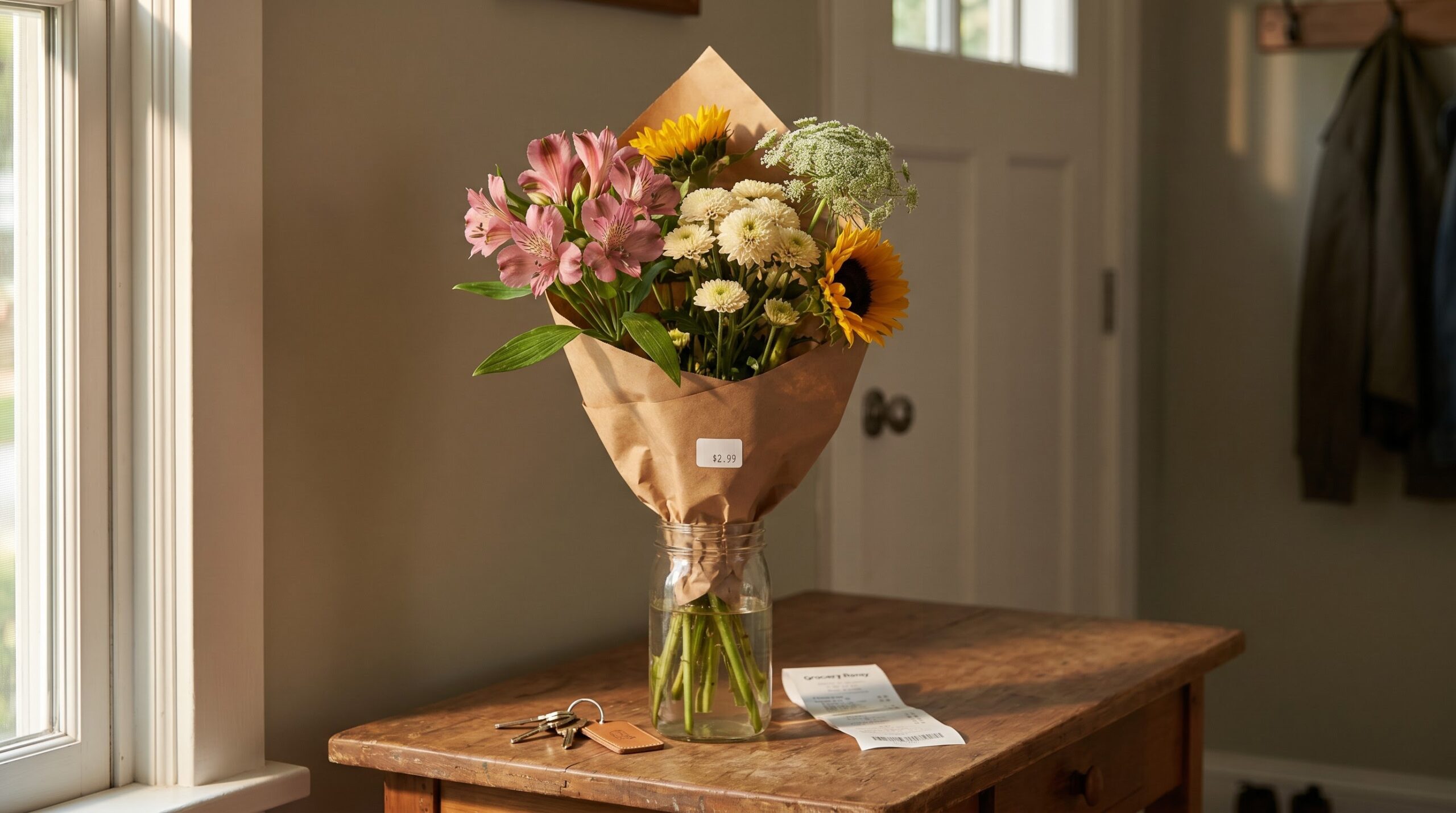
There is no single right frequency, and anyone selling you one hasn't done the math. What holds up, across enough couples who have actually settled into a working rhythm, is a range: somewhere between "once every few months, unprompted" and about twice a month, with the price running from a $4 to $11 grocery store bouquet up to a $30 to $60 florist arrangement when the moment calls for something with more presence. If you're standing in a supermarket aisle right now weighing whether a $6.99 bunch of carnations counts as a real gift, it does. The harder question isn't the floor. It's landing on a rhythm that keeps registering as thoughtful instead of sliding into either she can't remember the last time or oh, these again.
How often, and how much: the ranges that hold up
Ask around and the specifics vary, but the shape of the answer doesn't. Men describing their own habits in online relationship forums tend to cluster into two camps: a steady drip of small gestures, two or three times a month, often folded into a grocery run rather than planned as an event, or a slower, more deliberate rhythm, once every few months, arriving with no occasion attached and no warning. Women describing what they actually receive lean toward the second version more than the first: not scheduled, not requested, just something that shows up. Somewhere in between sits the most commonly reported settled pattern, roughly once a month, the kind one poster described as just a hey, I was thinking about you, before wondering aloud whether the habit would wear thin. It mostly doesn't, by most accounts, as long as the flowers themselves vary and the moment isn't identical every time.
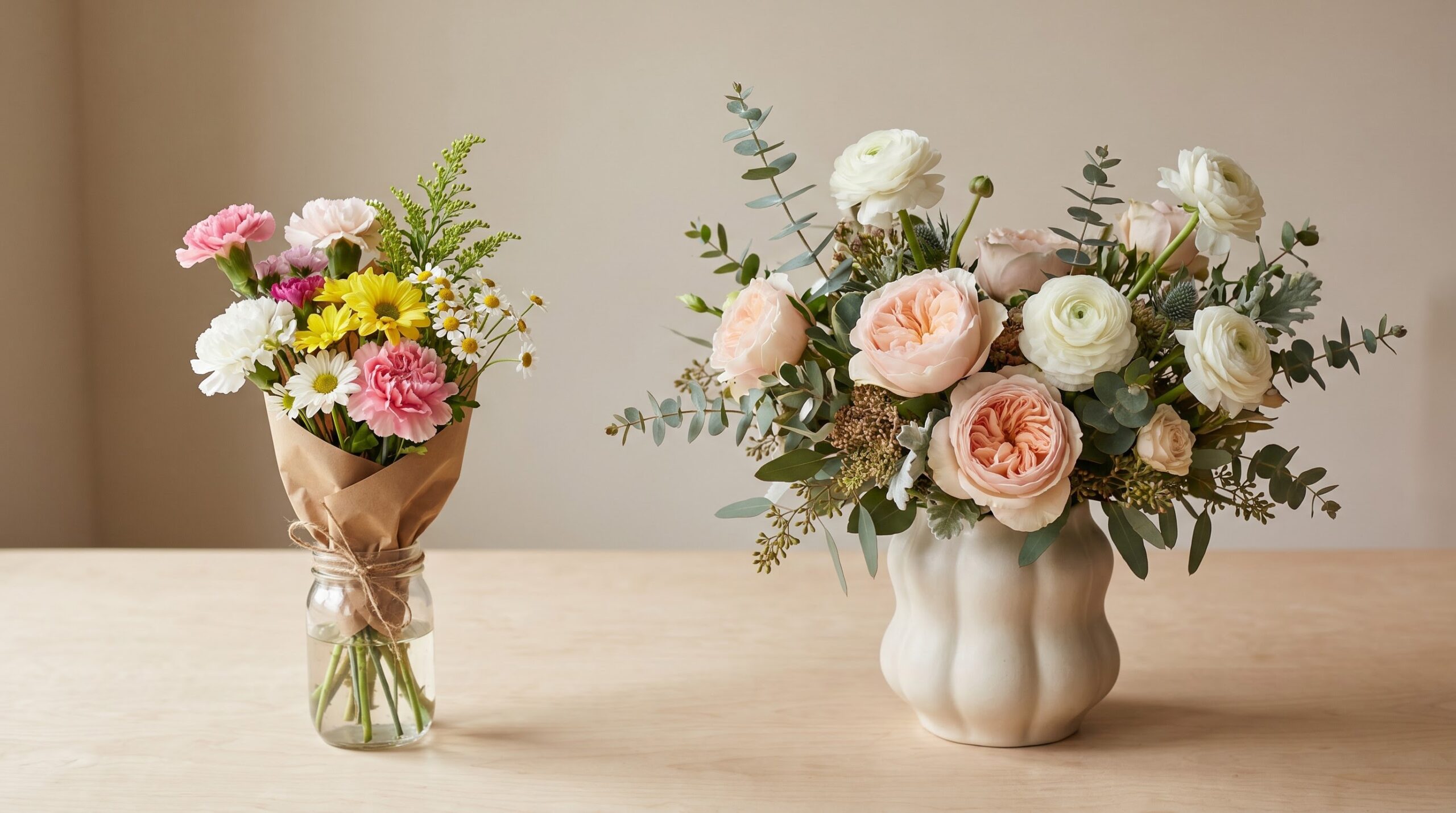
Where the money goes matters more than how much of it there is. A grocery store bouquet, the kind sold at Trader Joe's, Kroger, or Aldi for somewhere between four and eleven dollars, gets named again and again as the reasonable default: fresh, inexpensive, and available on the same trip where you're already buying dinner. A trip to a local florist, running thirty to sixty dollars for something fuller, earns its place for a birthday, an anniversary, or any moment that calls for more than a Tuesday gesture. What consistently gets flagged as the actual waste of money isn't spending on flowers at all, it's routing a routine bouquet through an online flower delivery aggregator, where the markup on a basic arrangement can double the price for a result that looks nothing like the photo. If you're buying for the rhythm rather than for one big occasion, the grocery store or a local florist's walk-in counter beats an app almost every time.
Laid out side by side, the pattern looks like this.
| How often | What it typically costs | How it tends to read |
|---|---|---|
| Once every few months, unprompted | $4 to $15 grocery bouquet or a small florist posy | Still lands as a surprise almost every time; the lowest-risk rhythm for never going stale |
| About once a month | $8 to $15 grocery bouquet, occasional $30 to $60 florist piece for something that matters | The most common settled rhythm reported by couples who have kept it going for years |
| Two to three times a month | $4 to $11 supermarket bouquet, folded into an existing errand | Reads as steady thoughtfulness if the flowers vary; risks feeling routine if the day or the bunch never changes |
| Every week | $8 to $12 grocery bouquet, close to $600 a year | Can work if she's told you this is genuinely what she wants; otherwise the gesture tends to stop registering |
| A dozen roses or a full formal florist arrangement, especially before month three or four | $60 and up | Reads as generous once the relationship has caught up to it; reads as intense or presumptuous delivered too early |
Swipe →
These ranges aren't rules so much as a record of what real relationships that haven't fallen into either extreme actually look like. If roses aren't the move this time, and often they aren't, there's no shortage of romantic flowers that read as just as considered, a decision worth making after picking which flowers actually suit her rather than before it. Color carries its own signal worth knowing before you choose, too: yellow roses worry people needlessly, a holdover from Victorian etiquette books that tied the color to fading affection, when today yellow simply reads as friendship and joy.
Why the cheap bouquet isn't the cheap option
Run the math on the upper end of that table and the number gets uncomfortable fast. A weekly bouquet at roughly eleven dollars a week comes to nearly $600 a year, the exact math one Reddit poster landed on before deciding he'd rather put that money toward a weekend trip instead. It's a fair conclusion for some people and the wrong one for others. A widely upvoted reply to that same thread pointed out that fifty two weeks of small joys can matter more to a partner than a single getaway, and that neither preference is wrong, just different. What both sides agree on, without quite meaning to, is that the twelve dollar grocery bouquet was never the lesser option to begin with. It's the option, full stop, for anyone whose partner values the gesture over whatever price tag happens to be attached to it.
There is research behind why the gesture lands regardless of what it cost. A 2005 study published in the journal Evolutionary Psychology found that receiving flowers reliably produced a Duchenne smile, the involuntary kind tied to genuine positive emotion, in nearly every participant who received them, far more consistently than a fruit basket or a scented candle did in the same experiment. The honest caveat: two of the study's three experiments were funded in part by the Society of American Florists, an industry group with an obvious stake in the outcome, and the finding should be read with that funding in mind rather than treated as neutral proof. Even discounted for that, it lines up with what couples report in their own words. The flowers don't need to be expensive to do the thing flowers are apparently for.
One frugal swap that sounds smart on paper and consistently fails in practice is reaching for a live potted plant instead of cut flowers. People who have tried it describe the opposite of the intended effect: what was meant as a thoughtful, longer lasting gift reads instead as a new chore, something she now has to keep alive, and more than one partner has said it felt like a way of trying to get out of buying real flowers rather than a gift in its own right. A cut bouquet that dies within a week is, for most people, still the better gift than a plant that survives and quietly turns into an obligation.
When it starts to feel expected, or way too much, too soon
There are two ways to get the rhythm wrong, and they sit at opposite ends of the table above. The first is frequency without variation: flowers on such a fixed, foreseeable schedule that they stop being noticed at all. One man's summary of his own rule, given in response to an online question about how often he brings his girlfriend flowers, captures the target better than any formula: often enough that she can't say he doesn't, not so often that it's just something expected. It's a feel more than a number, and it means the same Tuesday bouquet loses value fast if it always shows up on the same Tuesday.
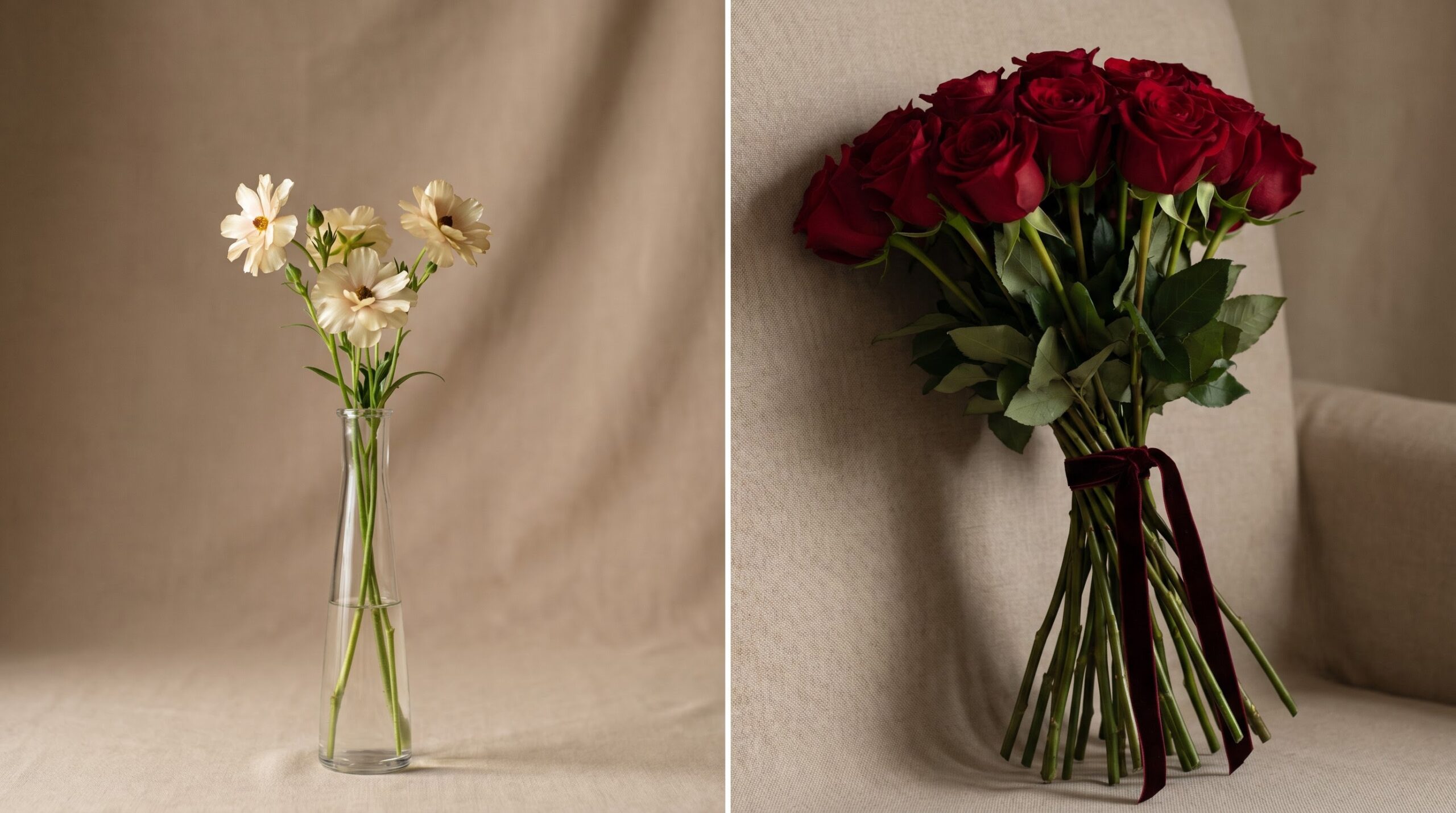
The second failure runs the other direction, and it's the one almost nobody else writing about this topic is willing to name: going too big, too soon. A dozen long-stemmed red roses delivered to her desk can be exactly the right gesture at month six of a relationship and exactly the wrong one in week three, before her coworkers have met you or she's even mentioned you're together. The flowers haven't changed; the timing and the scale have, and a gesture that would read as devotion later can read as presumptuous now. Workplace delivery carries its own separate etiquette split even once a relationship is established and public: some people say most women would melt at flowers arriving at their desk, others call it tacky unless it's a professional thank-you, arguing personal gifts belong outside of work hours. There is no universal answer here, only a read on whether this particular person likes a public gesture or would rather open the door to a private one at home.
Worth separating out here: an unscheduled bouquet that shows up completely outside your established pattern, with no birthday or anniversary attached, opens a different question than the one this page answers, closer to what it means when he shows up with flowers for no reason at all than to routine and rhythm. And whether flowers belong on a first date in the first place, before any rhythm exists to speak of, is its own conversation too.
If she wants flowers and you're not the one buying them
The chronic version of this problem, a partner who wants flowers and rarely or never gets them, comes up almost as often in relationship forums as the how-often question itself, and the advice converges on the same two points every time.
Say it directly. One frequently echoed piece of advice puts it plainly: tell him exactly what you'd like and when, your favorite kinds, your birthday, Valentine's Day, because most partners aren't withholding out of indifference, they simply aren't reading a cue that was never actually stated. A vague hope that he'll eventually notice tends to produce years of nothing instead.
The second point is less obvious and, for a lot of people, harder to accept: buying flowers for yourself in the meantime is not a consolation prize or something to hide. Several women describing exactly this situation online say they keep their own vases stocked and let a confused partner wonder who sent them, calling themselves passive aggressive about it with more humor than resentment. There's nothing embarrassing about enjoying flowers enough to supply your own while you work on getting a partner to supply his. What to actually write on the card, if you do end up on the giving end of one, is its own small decision, separate from the frequency question this page is built around.
Her mom, a rough week, and the other quick calls
A handful of situations come up often enough to deserve a fast answer rather than a page of their own. Flowers for her mother, especially the first time you meet her or around a holiday, read as basic good manners rather than romance, and a modest bouquet works better than an elaborate one that might upstage the occasion. Flowers when she's sick tend to land well precisely because they weren't expected; a small, uncomplicated bunch says you were thinking of her without turning a bad week into a production. Flowers after a fight are trickier territory: if they're meant to say sorry for something specific you did, apology flowers run on a different set of rules worth reading before you reach for a bouquet as a shortcut past an actual conversation. And flowers when she gets home from a trip, an unplanned welcome-back bunch waiting on the counter, shows up in enough accounts as one of the better received surprises on this whole list, precisely because it asks for nothing back.
Her birthday specifically runs on its own math, covered in the birthday flowers guide rather than folded into a general frequency habit. The same goes for Valentine's Day, where price surges and timing pressure change the calculation enough that treating it like an ordinary week would be its own mistake. What doesn't change, whatever the occasion or the lack of one, is the basic read: flowers work when they still feel chosen, and they stop working the moment they feel automatic. Pick a rhythm and a budget that actually fit your relationship and your wallet this week, whether that's a grocery bouquet on the way home tonight or a monthly habit you have been meaning to start, and if you are already sending a dozen roses to her desk in week three, that is worth dialing back before it reads as more than you mean it to.
Enjoying our flower guides? Add YourFlowersGuide as a preferred source on Google. It helps more readers find us.
Add to Preferred Sources