Pansies and violas are both cool-season bedding plants in the genus Viola, and the difference that matters when two flats sit side by side on the bench is size against numbers. A pansy carries fewer flowers, but each one is large, up to four inches across, usually with the dark central blotch gardeners call a face. A viola carries many small blooms at once, keeps replacing them, and takes a hard freeze better. Every pansy is a viola botanically. Not every viola is a pansy.
That trade-off decides where each one belongs. A large pansy bloom reads from across a yard, which is what an entrance urn needs, and it asks for more upkeep in return. Violas spill over a basket rim, fill in between larger plants, and keep flowering through a cold snap that stalls the pansies beside them, though they are the first to melt when early summer heat arrives. A third option, the panola, was bred to split the difference. What follows covers the petal-count test that sorts the two flats at the garden center, which plant actually flowers more, what a weekly-rated winter trial at NC State found about cold, where the panola fits, which plant suits which spot, the real parentage behind the “same plant” claim, and whether either one is safe around pets.
On this page 8 sections
- The physical differences that actually tell them apart
- Which one actually blooms more, and for longer
- Cold hardiness, with a real trial instead of a vague adjective
- Meet the panola, the hybrid that splits the difference
- Which to plant where
- The “they’re the same plant” myth, actually explained
- Are they safe around pets and kids
- FAQ
The physical differences that actually tell them apart
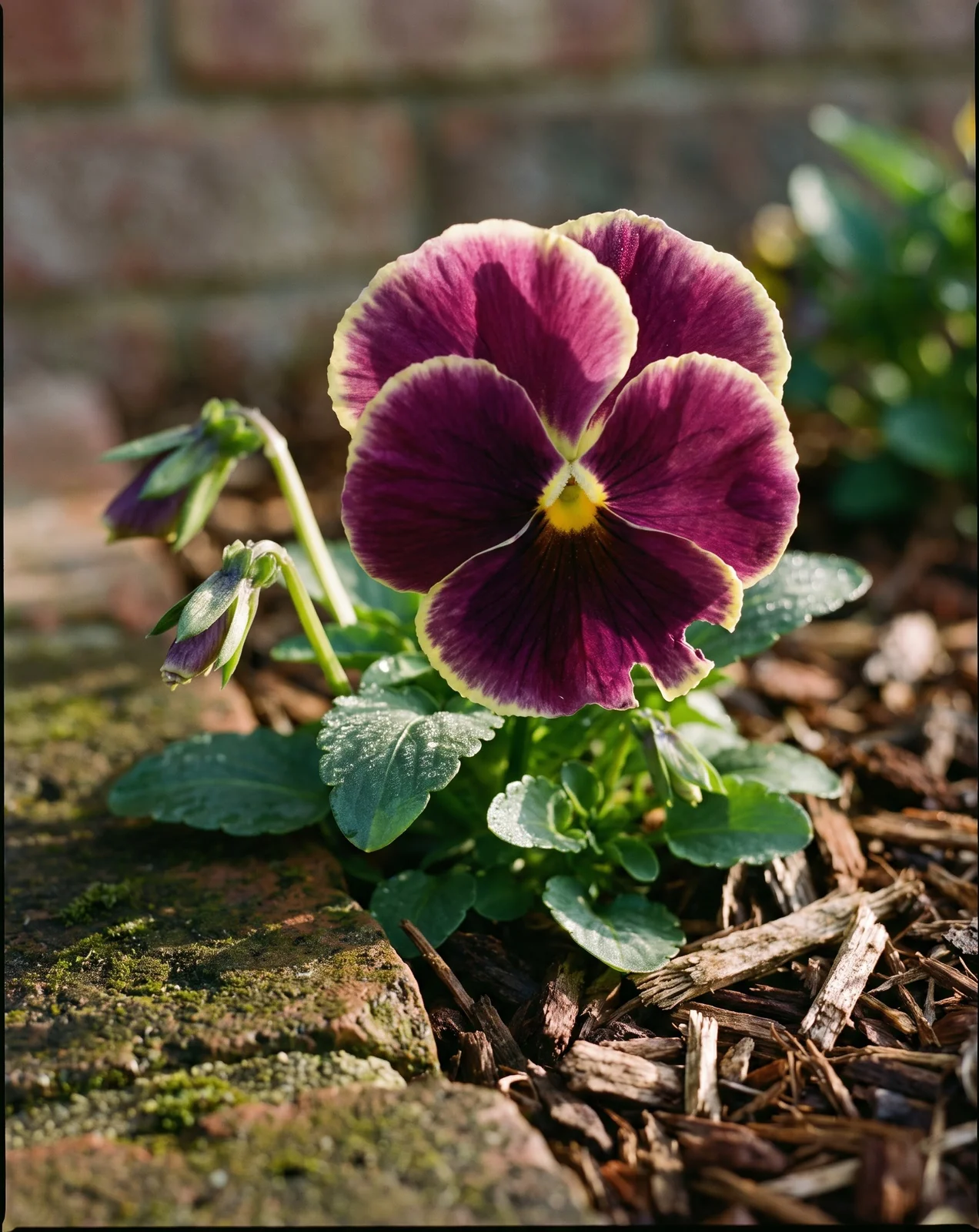
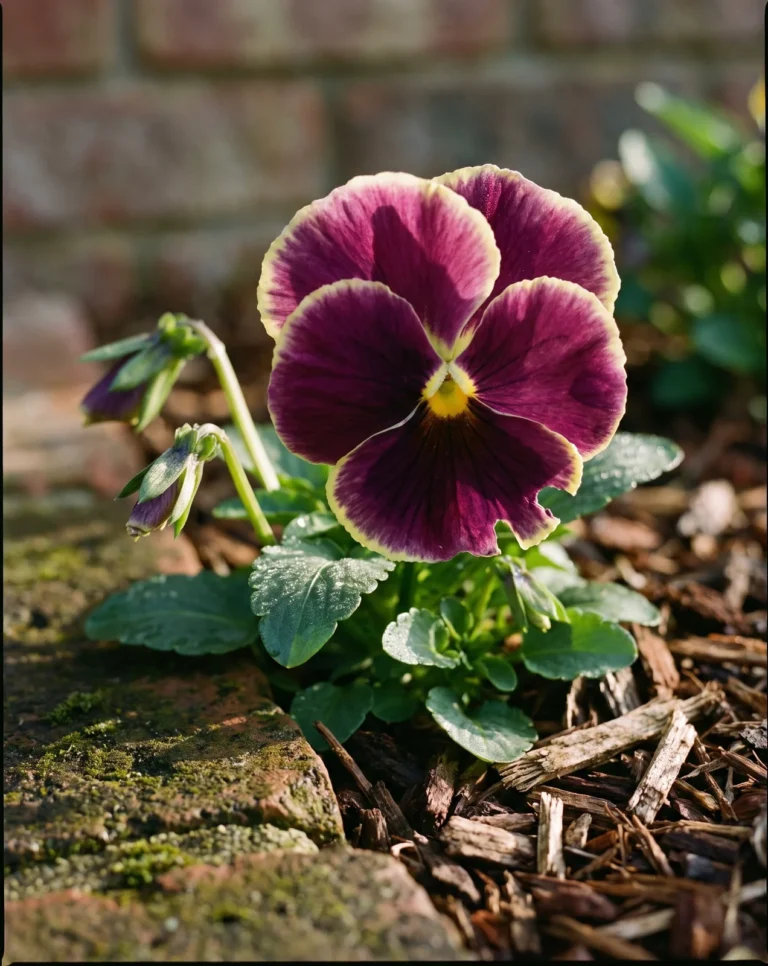
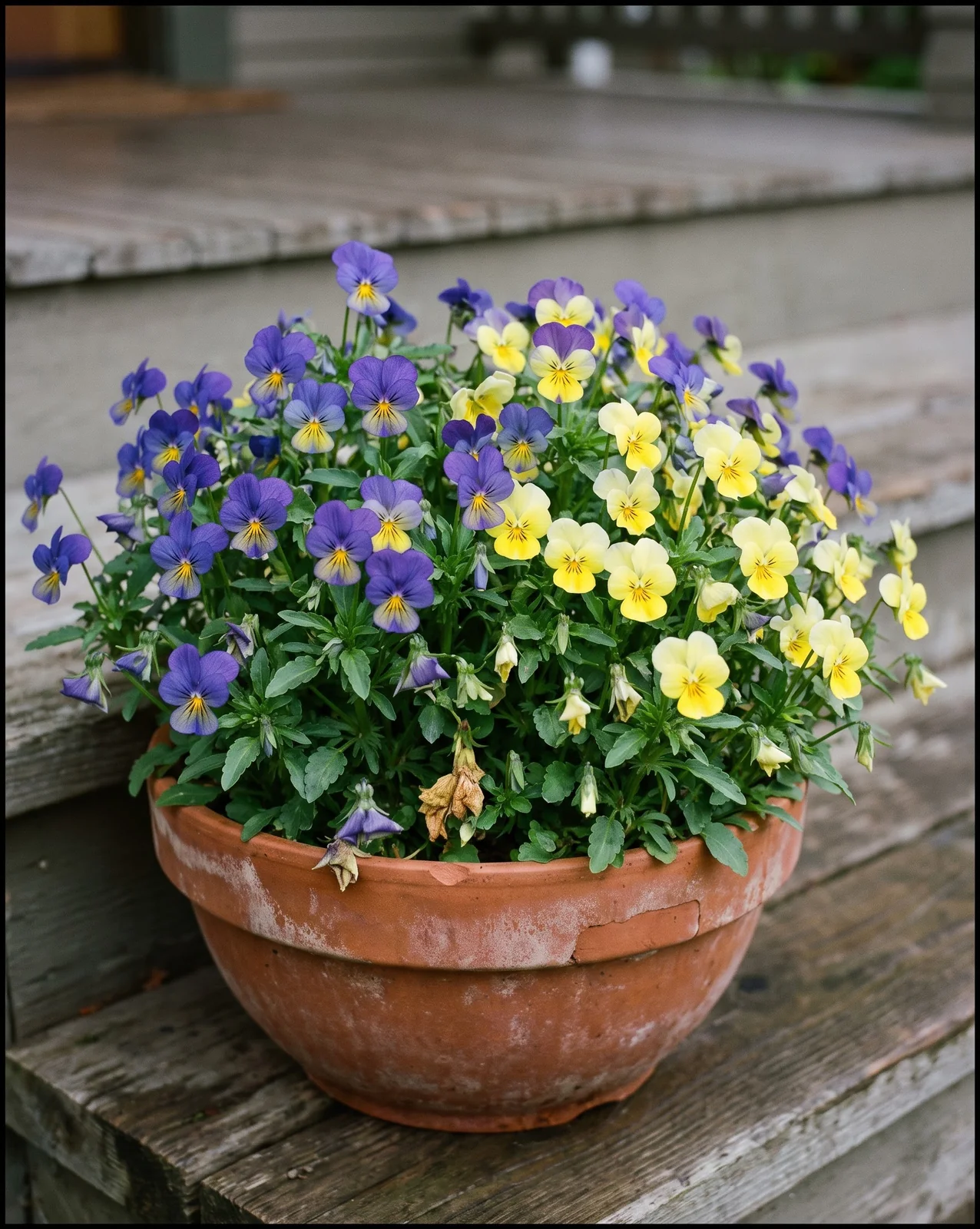
The quickest test on an unlabelled six-pack is to count the petals on one open flower and see which way they point. K-State Research and Extension states the rule in a line: a pansy holds four petals up and one down, a viola holds two up and three down, and that arrangement holds across cultivars. Markings sort the two almost as fast. Pansies usually carry a dark central blotch, the face, ringed by a wide band of contrasting color. Violas lean toward solid petals or fine whiskers radiating out of the throat, in violet, white, blue, and clear yellow.
Size settles whatever doubt is left. Iowa State University Extension puts pansy blossoms at 3/4 inch to 4 inches across on plants 4 to 10 inches tall with about the same spread, and Britannica puts garden pansy selections at up to 12 inches tall in rich, damp soil. A viola flower is smaller than a nickel. The pansy spends its energy on a few large faces built to be seen from across a yard, the viola on many small blooms spread over the whole plant, which is why a viola flat looks fuller on the bench even though no single flower on it holds the eye.
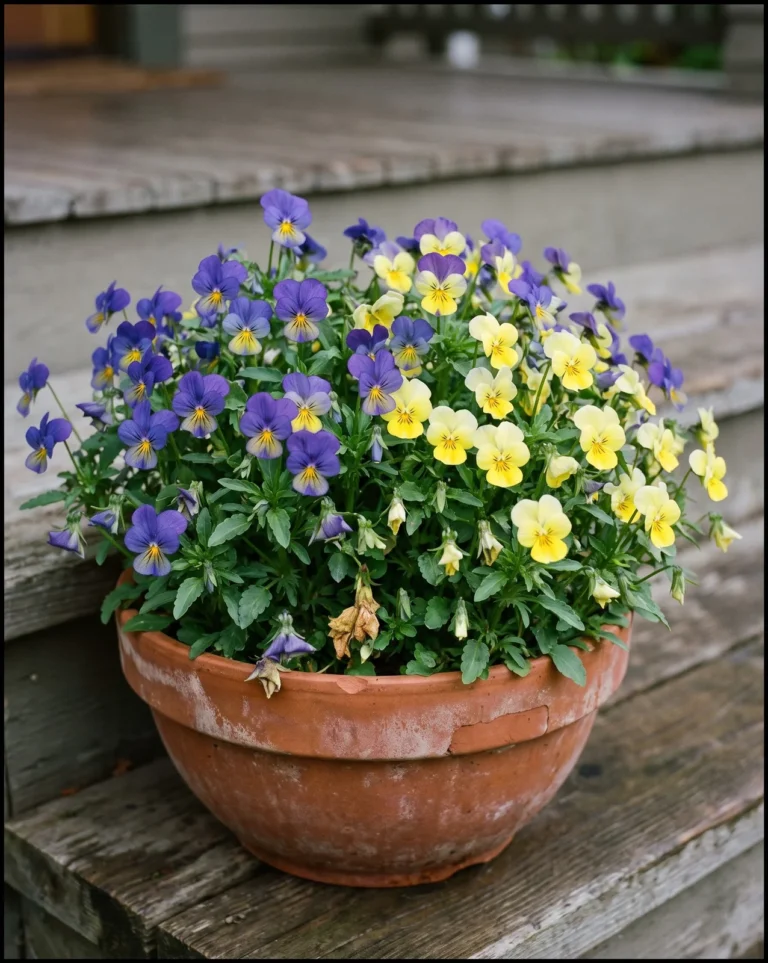
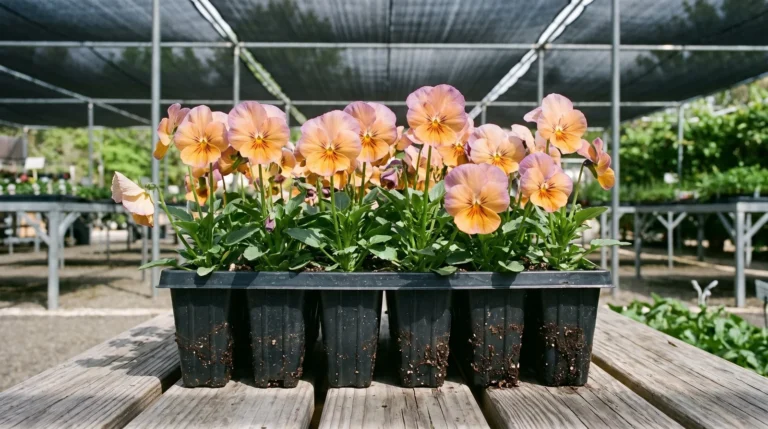
How to tell pansy, viola and panola apart from a photo
Three plants share a nursery tray in the same weeks each autumn. Petal count, and how many of those petals point up, is the fastest tell, before bloom size or habit.
Which one actually blooms more, and for longer
Over a full season a viola sets more flowers than a pansy, and Iowa State University Extension states the trade plainly: what violas lack in flower size they make up in flower quantity. K-State describes viola plants as the more abundant of the two. The mechanism is straightforward: a pansy spends its budget on a few large petals, a viola spends the same budget on volume. Deadheading widens the gap. A faded pansy flower turns into a seed capsule and the plant slows bud production once seed sets, so pinching spent heads off is the one habit that keeps a pansy flowering hard. Violas need much less of it.
Longevity comes down to temperature at both ends of the season. Iowa State University Extension puts the pansy’s best range at 55 to 65°F and notes that warmth above it, or too little light, turns the plant lanky; most violas fare worse still in real summer heat and can melt away as it climbs. In the cold the order reverses. Timing follows from all of that: spring planting lands in mid-March on K-State’s calendar and early to mid-April on Iowa State’s, and a fall stand set out in early September carries color until snow, well into late October or November. Barring a hard freeze into the low 20s, both plants keep flowering up through Thanksgiving and sometimes Christmas.
Cold hardiness, with a real trial instead of a vague adjective
Garden writing usually settles this with an adjective: violas are called slightly tougher, and that is the whole argument. Clemson Cooperative Extension at least says what happens: violas carry superior cold hardiness through severe winter stretches, while pansies stall or take foliage damage. Numbers come from one place. At NC State University, the JC Raulston Arboretum ran a winter color trial in which seven plants of each entry were rated by eye every week from November 11, 2013, through March 31, 2014, on a scale of 1 for very poor to 5 for excellent in half-point steps, with a 0 reserved for an entry whose plants all died. That winter supplied a genuine test, with single-digit temperatures on January 7, 2014.
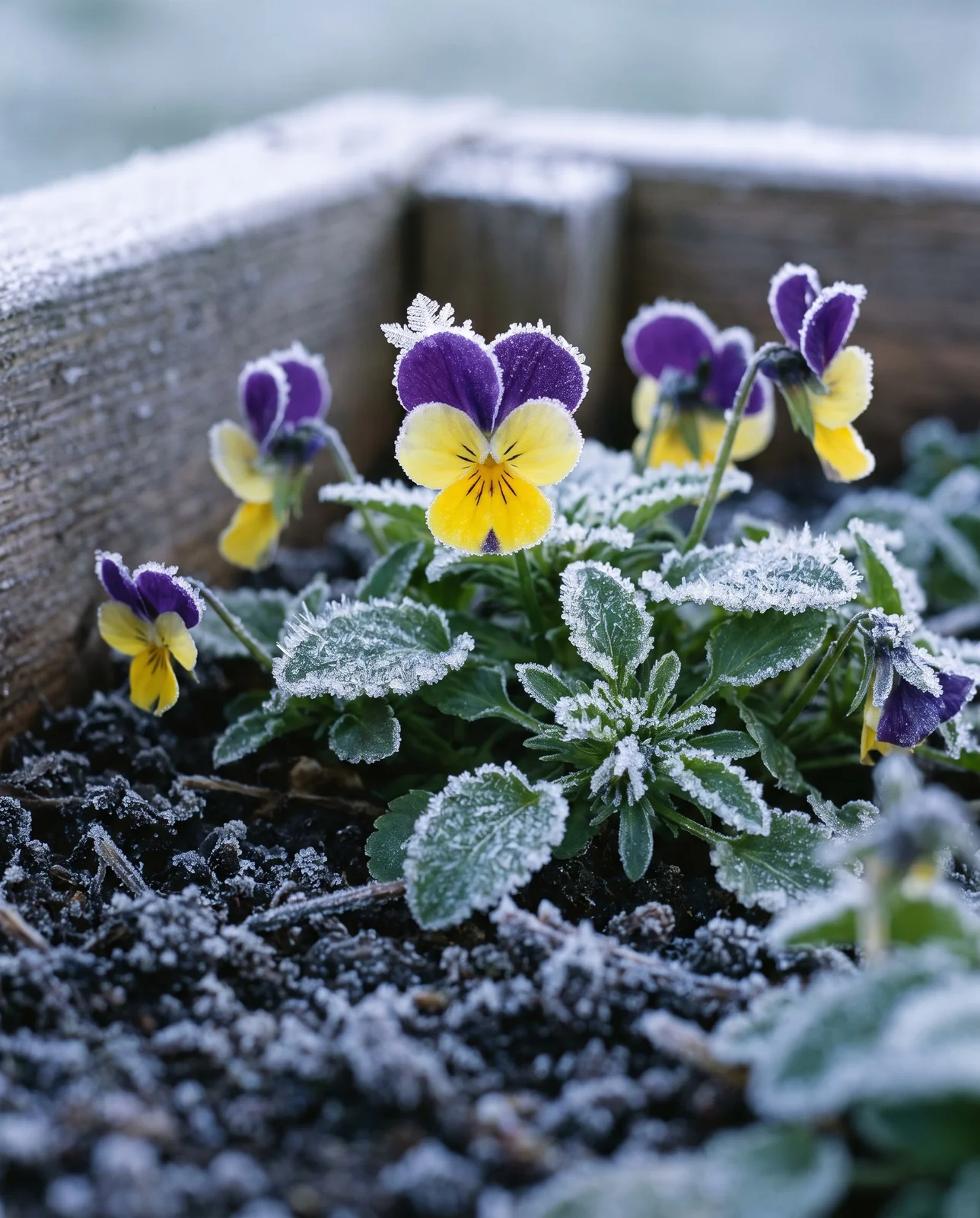
The results refuse to hand the win to either camp. The ten best winter performers split between straight Viola cornuta selections, among them Penny Primrose Blotch and the Endurio series, and pansy series bred for the season: Wonderfall, Cool Wave, and Spring Matrix. A well-bred trailing or spreading pansy can therefore outlast an ordinary viola through a deep freeze, which makes the series name on the tag more informative than the word above it. For a species baseline, the Royal Horticultural Society rates Viola cornuta at H5, hardy through severe winters down to -15 to -10°C, roughly 5 to 14°F. Whatever is in the bed, soak the soil before a forecast hard freeze: a plant that goes into the cold with water in it takes less damage.
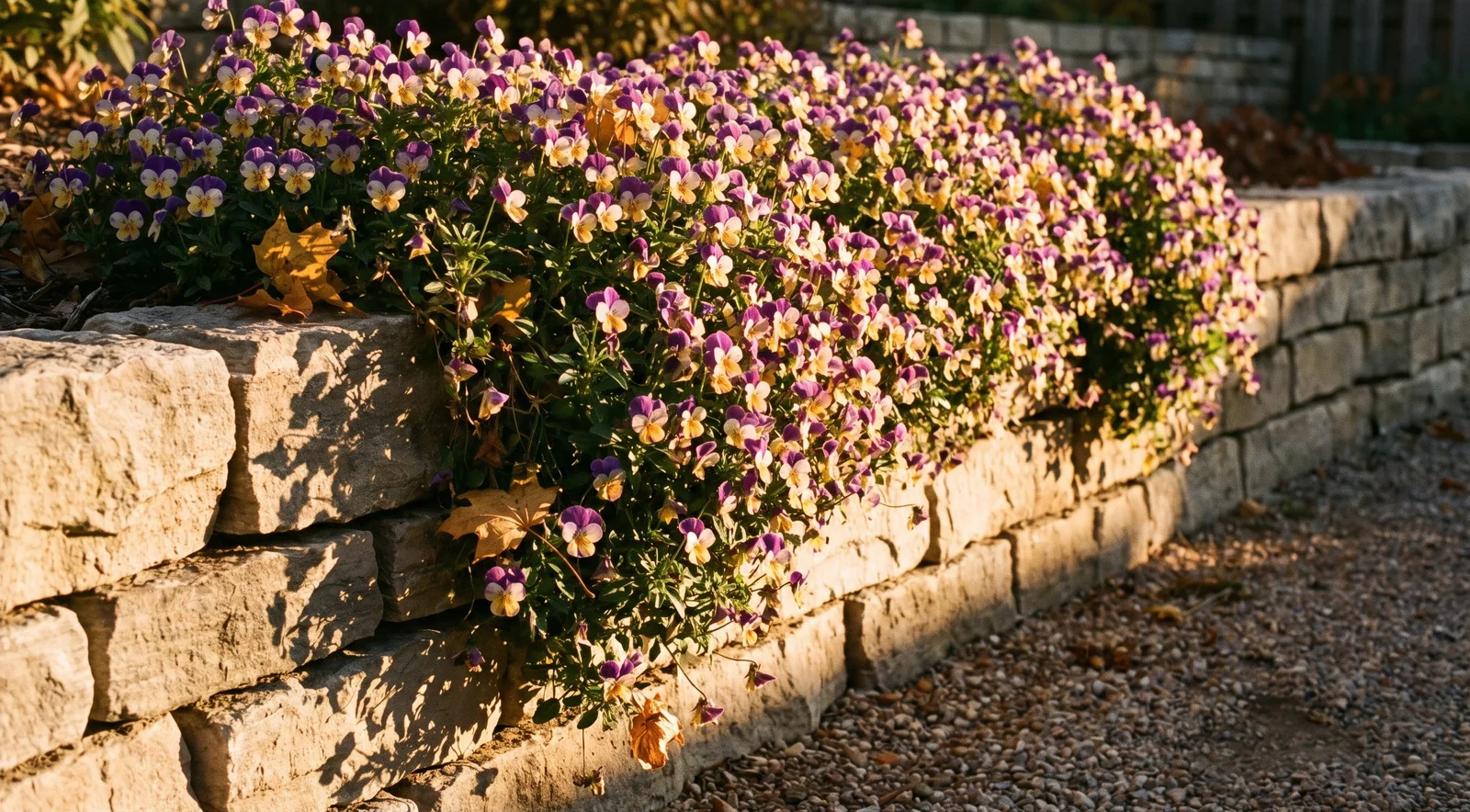
Cold hardiness and temperature thresholds
Four thresholds mark where pansies and violas shift behavior, from active growth down to the point only the toughest series come through intact.
Meet the panola, the hybrid that splits the difference
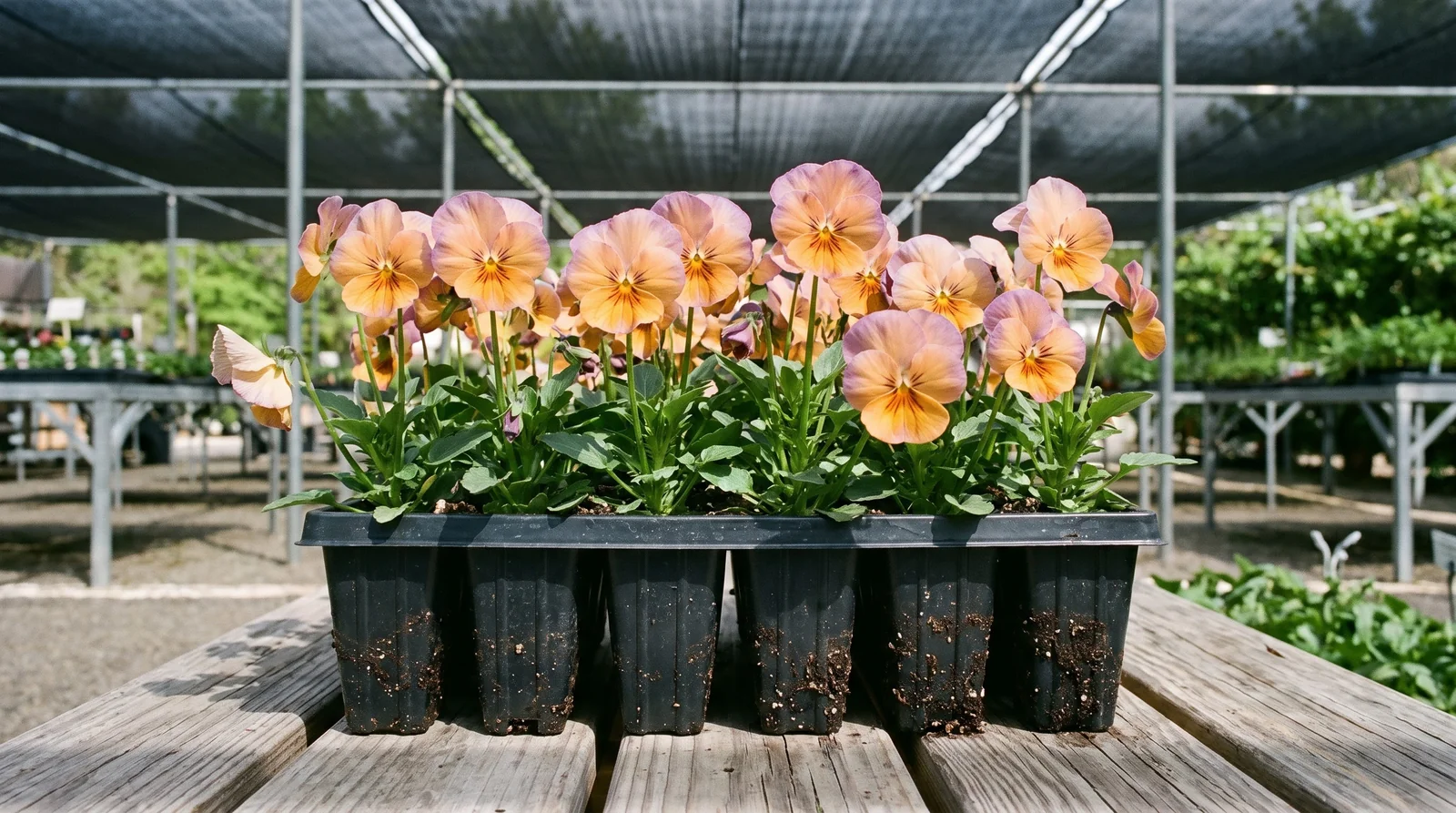
The panola exists so that gardeners torn between pansy bloom size and viola stamina do not have to pick one. Clemson Cooperative Extension describes it as a straight hybrid cross between garden pansies and violas, developed by the California breeder Waller Genetics, with the stated aim of carrying a viola’s cold hardiness and continuous bloom on the broader flower of a pansy. The flower that results is noticeably larger than a standard viola’s, big enough to register from a walkway, on a plant that keeps producing through the cold weeks when a full-size pansy stalls.
A panola also occupies space differently from either parent. It stands 6 to 8 inches tall and spreads roughly 10 inches, mounding into a rounded shape instead of holding the tight upright clump of a pansy, and without settling into the low flat mat that many spreading violas form. Growing conditions are the family standard: organically rich soil that drains freely, full sun for the heaviest flowering. Like violas, panolas take filtered sun better than pansies do, at the cost of total flower count. All three are heavy feeders, so a water-soluble liquid fertilizer every two to three weeks through the growing season keeps them pushing buds.
Which to plant where
Format decides this more than climate does. For hanging baskets, window boxes, and the top of a stone retaining wall, violas have the right habit: the stems spread and cascade over an edge into a curtain of color, and the smaller blooms resist wind tearing and rain damage. Violas and Johnny jump-ups (Viola tricolor) also naturalize well along walkway edges, in rockeries, and at bed margins, reseeding into crevices and corners on their own, which Iowa State University Extension treats as normal behavior for them. In dappled shade under a canopy, violas hold denser growth while pansies stretch, so in a bed that gets only partial light they sit naturally among other types of flowers that grow in shade.
Pansies belong where a single flower has to carry the view: an entrance urn, a formal patio planter, a bed read from the street. A 4-inch bloom with a face on it does that work and a viola cannot. Pansy petals also hold up as an edible garnish on a plate or a cake. For color that runs from autumn through late spring, the practical answer is both in the same container or bed, pansies supplying immediate scale and violas filling the interior gaps and carrying the display through a mid-winter cold snap that stalls the larger buds. One warning for containers, from Clemson Cooperative Extension: skip potting mixes sold with moisture-retention crystals, because soil that stays wet through a rainy winter takes these plants out with root rot.
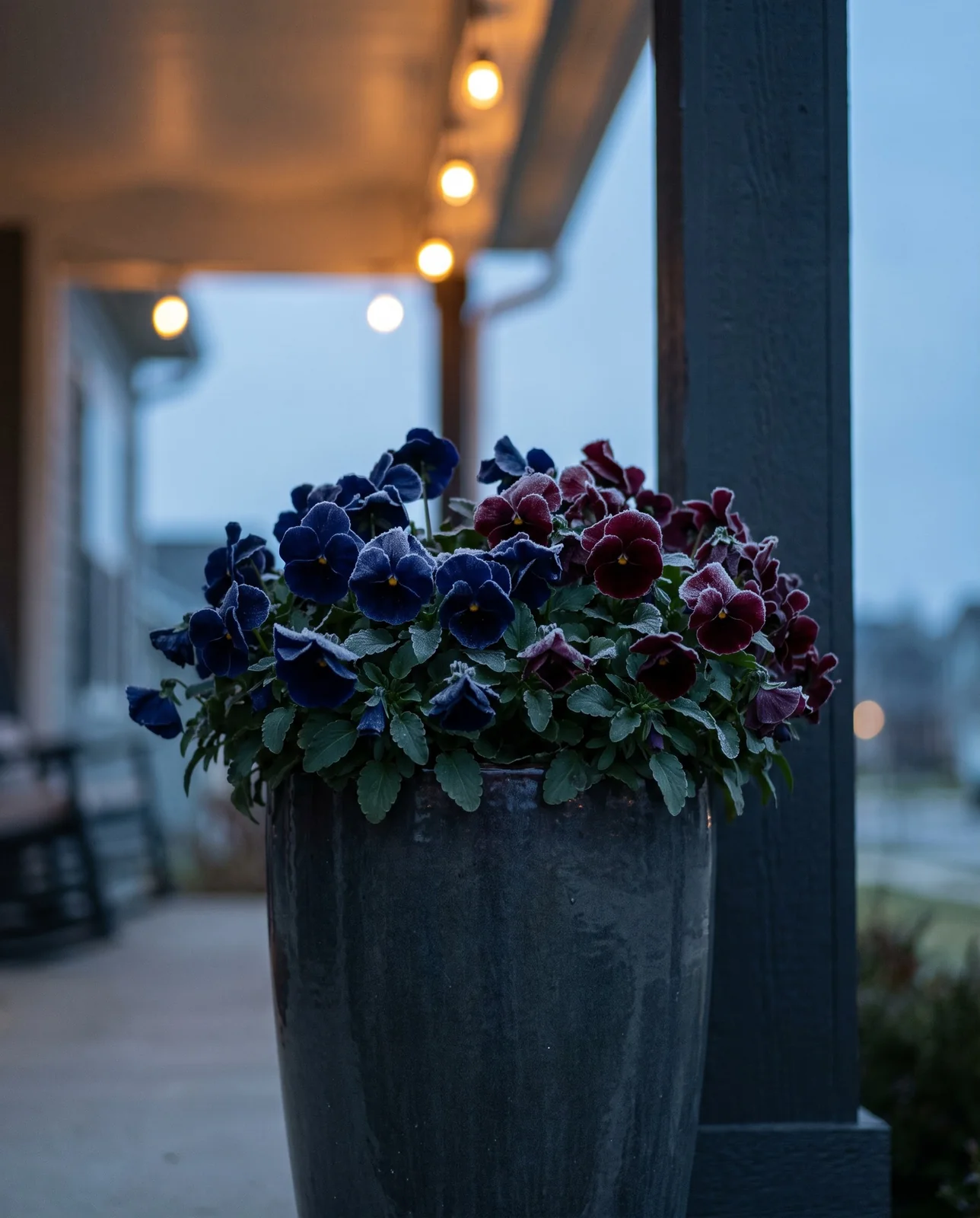
Where to plant pansy, viola or both
Four common planting spots, matched to the plant each one favors.
The “they’re the same plant” myth, actually explained
The line that pansies and violas are the same plant is half true, and it hides the more interesting half. Both sit in the genus Viola, but they arrived there by different routes. Britannica traces the garden pansy, Viola × wittrockiana, to a three-way cross: Viola tricolor, a weed of European grainfields, with Viola lutea and Viola altaica. That cross was human work, begun in the 1800s by an English breeder named William Thompson, who kept crossing viola species until he had the large blotched flower sold in flats today. The name is older than the plant it now belongs to: pansy comes from the French pensée, thought, which is the root of the flower’s long association with contemplation and remembrance and of everything written about pansy meaning since.
A garden viola usually has a much simpler pedigree. The horned violet, Viola cornuta, is a true species, a spreading evergreen perennial from the Pyrenees that runs to about 20 cm tall with light violet flowers 3 cm across, and the named garden violas are selections from it rather than three-species crosses. That is a different breeding history, not merely a smaller flower. It leaves one honest loose end as well. Clemson Cooperative Extension says violas flower prolifically without much deadheading, while the Royal Horticultural Society tells gardeners to deadhead and cut vigorous Viola cornuta back after flowering to hold a compact shape and extend bloom. Both are describing real plants, and the gap most likely comes down to cultivar and climate rather than an error on either side.
What gardeners get told, and what holds up
The myth: Pansies and violas are the same plant sold under two marketing names.
The reality: Garden pansies, Viola x wittrockiana, are three-species hybrids bred in the 1800s for large blooms. Many garden violas, Viola cornuta among them, are a distinct species native to mountainous regions like the Pyrenees.
The myth: Violas always survive freezing winter temperatures better than every pansy cultivar.
The reality: Violas average higher cold tolerance, but in the NC State winter trial the pansy series Cool Wave and Wonderfall finished among the top ten alongside the best violas through single-digit cold.
The myth: Violas never need deadheading under any circumstances.
The reality: The sources disagree. Clemson Cooperative Extension notes violas bloom freely without heavy deadheading, while the Royal Horticultural Society recommends deadheading and shearing Viola cornuta back to preserve its shape and extend flowering.
Are they safe around pets and kids
Both plants are safe to put where a dog or a cat can reach them. The ASPCA lists Viola species as non-toxic to dogs, cats, and horses, which means a mouthful is not expected to produce anything life-threatening. The same listing carries the standard caution that eating any plant material can bring on vomiting or an upset stomach, so a puppy that works through a whole flat may still have a bad afternoon. Plant them where the animals actually go, alongside other types of flowers safe for cats and dogs, and keep the bag of fertilizer-dosed potting mix out of reach rather than the flowers.
FAQ
Are pansies and violas the same plant?
No, though both sit in the genus Viola, which is where the confusion starts. The garden pansy (Viola × wittrockiana) is a hybrid of three wild species bred for large flowers, and it holds four petals up and one down. A viola is either a species such as Viola cornuta or a selection from one, with smaller flowers held two petals up and three down.
Which is more cold hardy, pansies or violas?
Violas as a group take severe cold better than pansies as a group. The NC State winter trial complicates that usefully: through a season with single-digit temperatures, the ten best performers split between Viola cornuta selections and pansy series bred for winter, including Cool Wave and Wonderfall. The series printed on the tag tells you as much as the word above it.
Which plant produces more flowers?
Violas, by a wide margin across a season. Each flower is small, smaller than a nickel, but the plant carries many at once and keeps replacing them. A pansy puts the same energy into a few blooms of up to 4 inches.
Can you plant pansies and violas together in the same container or garden bed?
Yes, and for a long season it is the usual advice. Pansies give the planting its scale straight away, and the violas around them fill the gaps and keep color coming through a mid-winter freeze that stalls the larger buds.
What is a panola?
A cross between a pansy and a viola, bred by Waller Genetics in California. It carries the medium-to-large bloom of a pansy on a plant with a viola’s cold hardiness and flower count, in a mounded habit 6 to 8 inches tall and about 10 inches wide.
Which plant works better for hanging baskets?
Violas. They spread and trail over a basket rim instead of sitting upright in the middle of it, and their small blooms resist tearing in high winds and heavy autumn rains.
Enjoying our flower guides? Add YourFlowersGuide as a preferred source on Google. It helps more readers find us.
Add to Preferred Sources