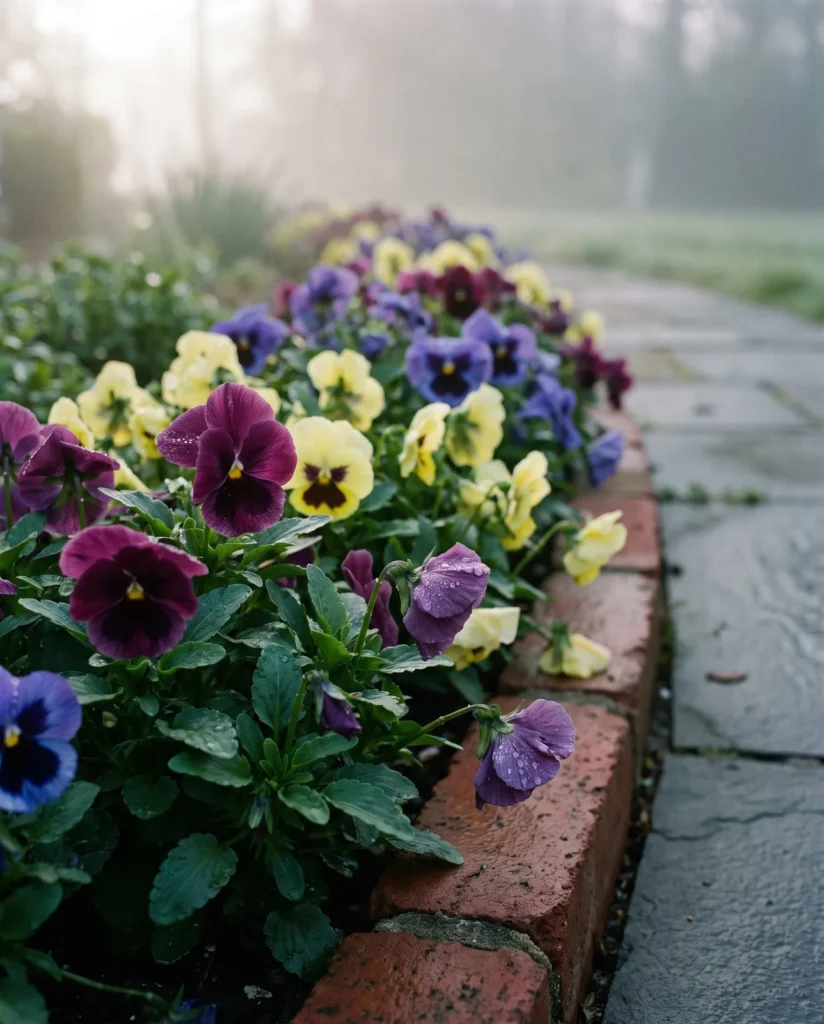
Pansy bloom time across the US
Interactive map
 See the interactive map
Drag the date and the bloom moves north across the country. Every point has its own window, and the map says where it has no records rather than guessing. Free, with nothing to sign up for. Open the pansy map.
City by city
Typical window, earliest first. Cultivars of the same flower can open days or weeks apart.
Taxonomy and origin
The garden pansy (Viola x wittrockiana) is a hybrid in the family Violaceae, bred from European wild violas and above all from the tricolor Johnny-jump-up (Viola tricolor). Breeders in England and on the Continent began that work in the early nineteenth century, selecting for wider flowers, better cold tolerance, and the dark central blotch that reads as a face on most modern cultivars. The common name comes from the Middle French pensée, meaning thought or remembrance, after the way the bloom nods forward on its stalk like a person deep in contemplation. Victorian gardens and Victorian verse both leaned on that idea, and it still sits underneath what a pansy is taken to mean today. Botanically the plant never left its genus: every pansy is a Viola, though not every viola is a pansy, which is why the same genus also carries the older symbolism of the violet.
Pansy, viola or Johnny-jump-up: three violas gardeners mix up
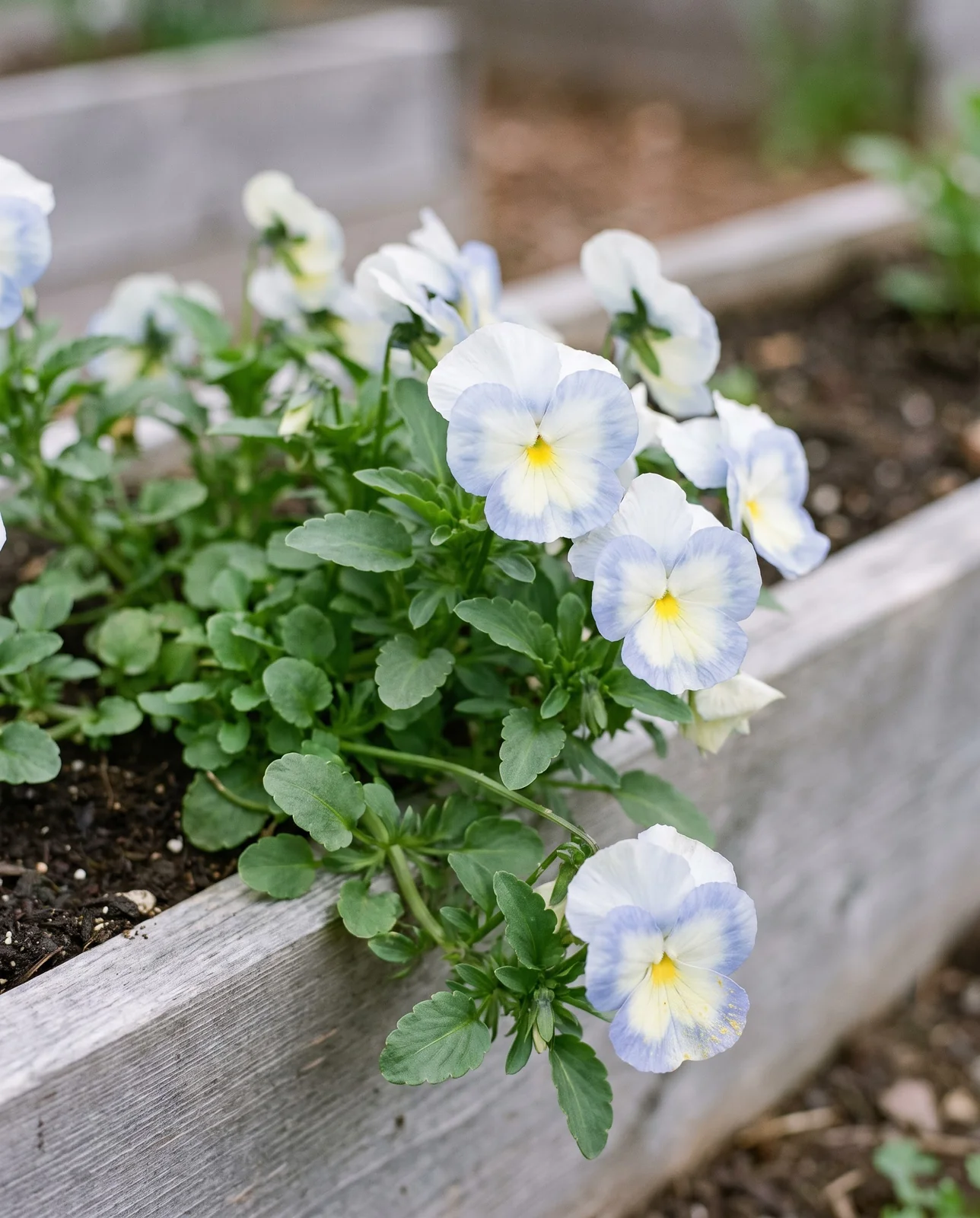
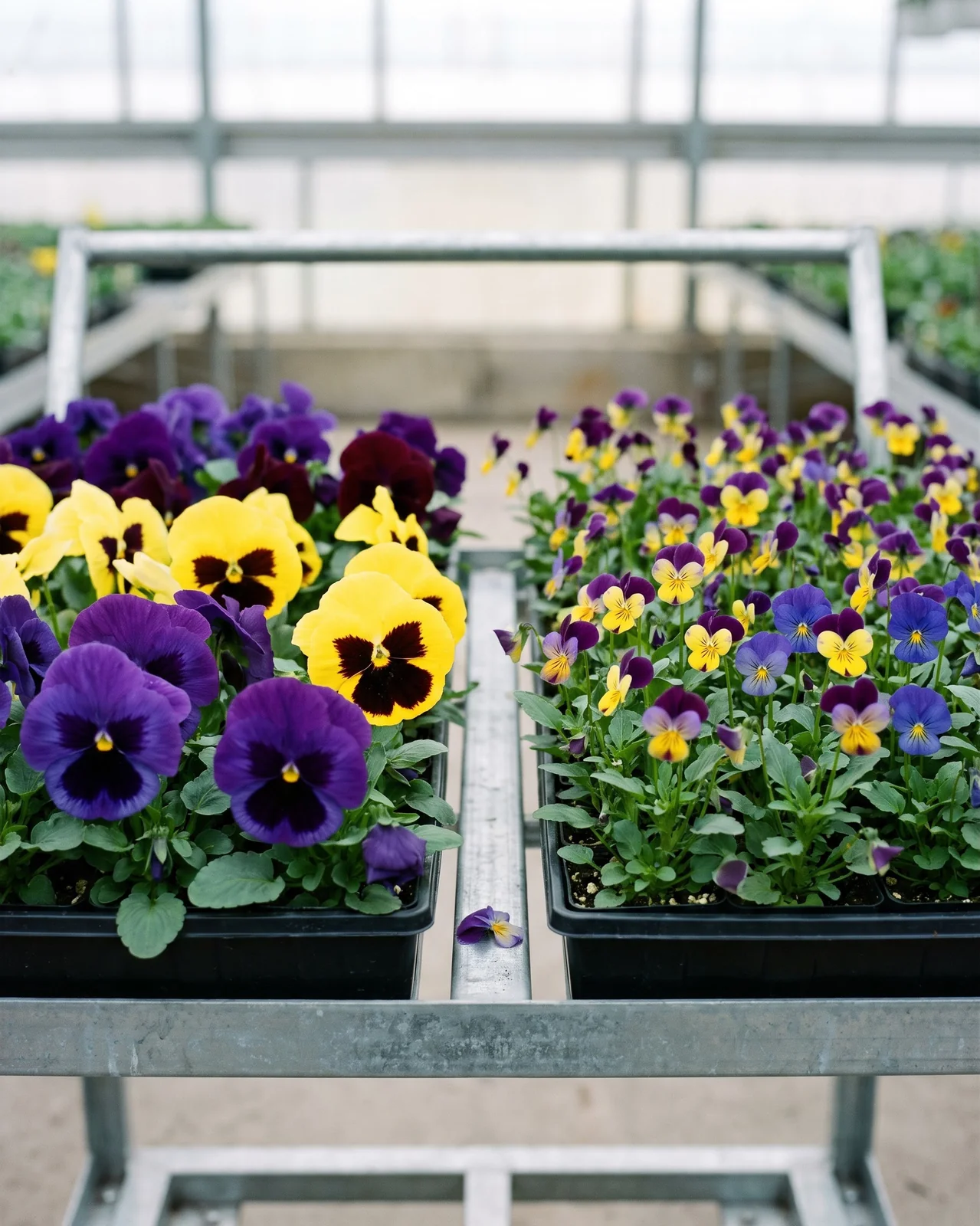
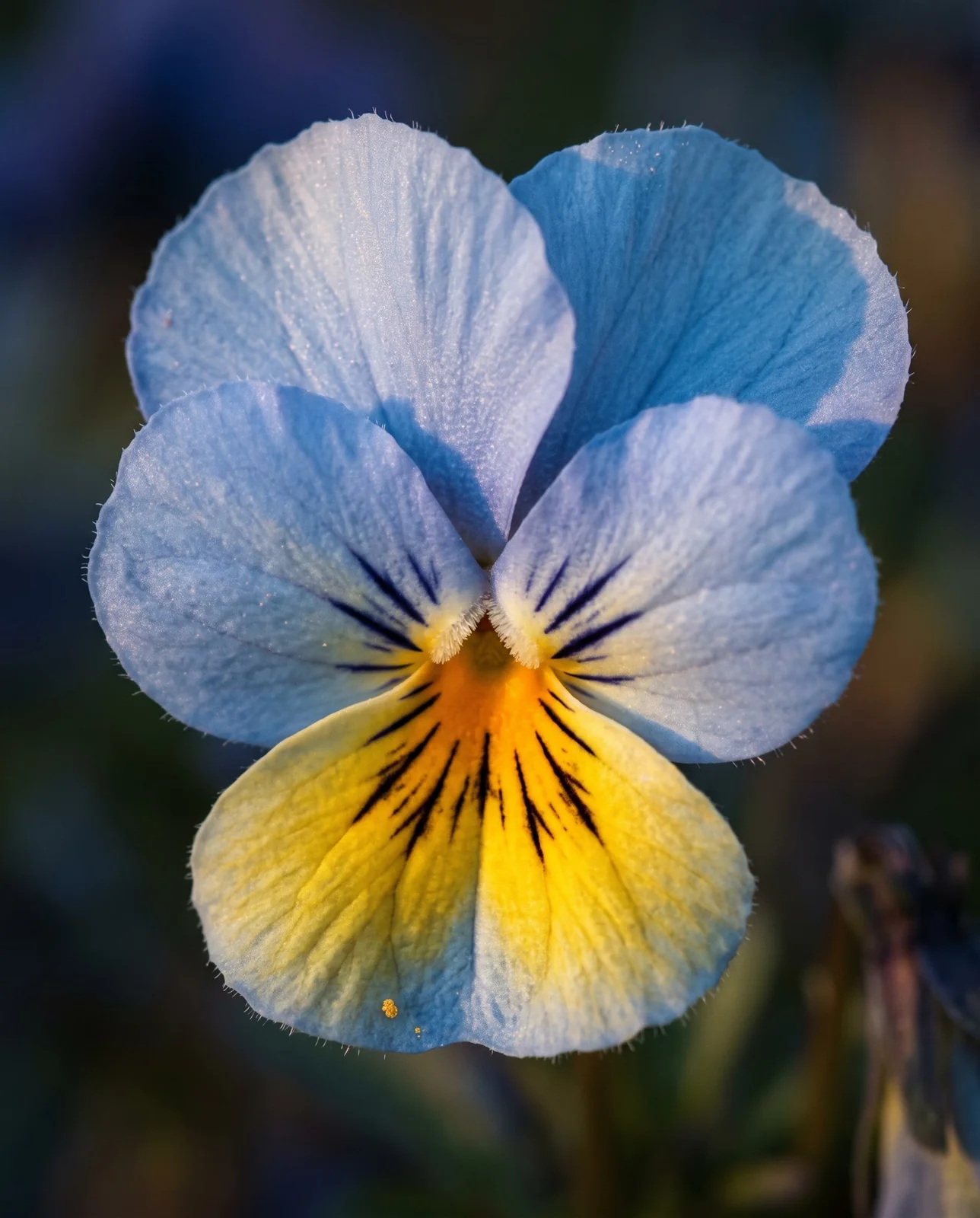
All three sit side by side on the same nursery bench, and the flower face sorts them out faster than the label does: count which way the petals point, then look at the size of the bloom.
Bloom time
Pansies can flower for four to six months in a single season, which is the range NC State Extension gives for the plant at its best. In cold-winter regions that run happens in spring: plants come on early, hold until the first hot spells, and stop. Where winters are mild and frost-free stretches are long, Utah State University Extension reports that strong plants bloom through fall and straight on into winter, the part most gardeners do not expect from a flower they file under spring annual. Deadheading stretches whatever run you get, because a plant allowed to set seed puts less into new buds. Heat is what ends it. Once daytime temperatures sit above 75 to 80 degrees Fahrenheit, stems elongate, flowers shrink and bud set stops. Snapdragon runs on the same cool-season clock, which is why the two so often share a bed and get pulled in the same week.
The pansy cultivars sold by series, not by single name
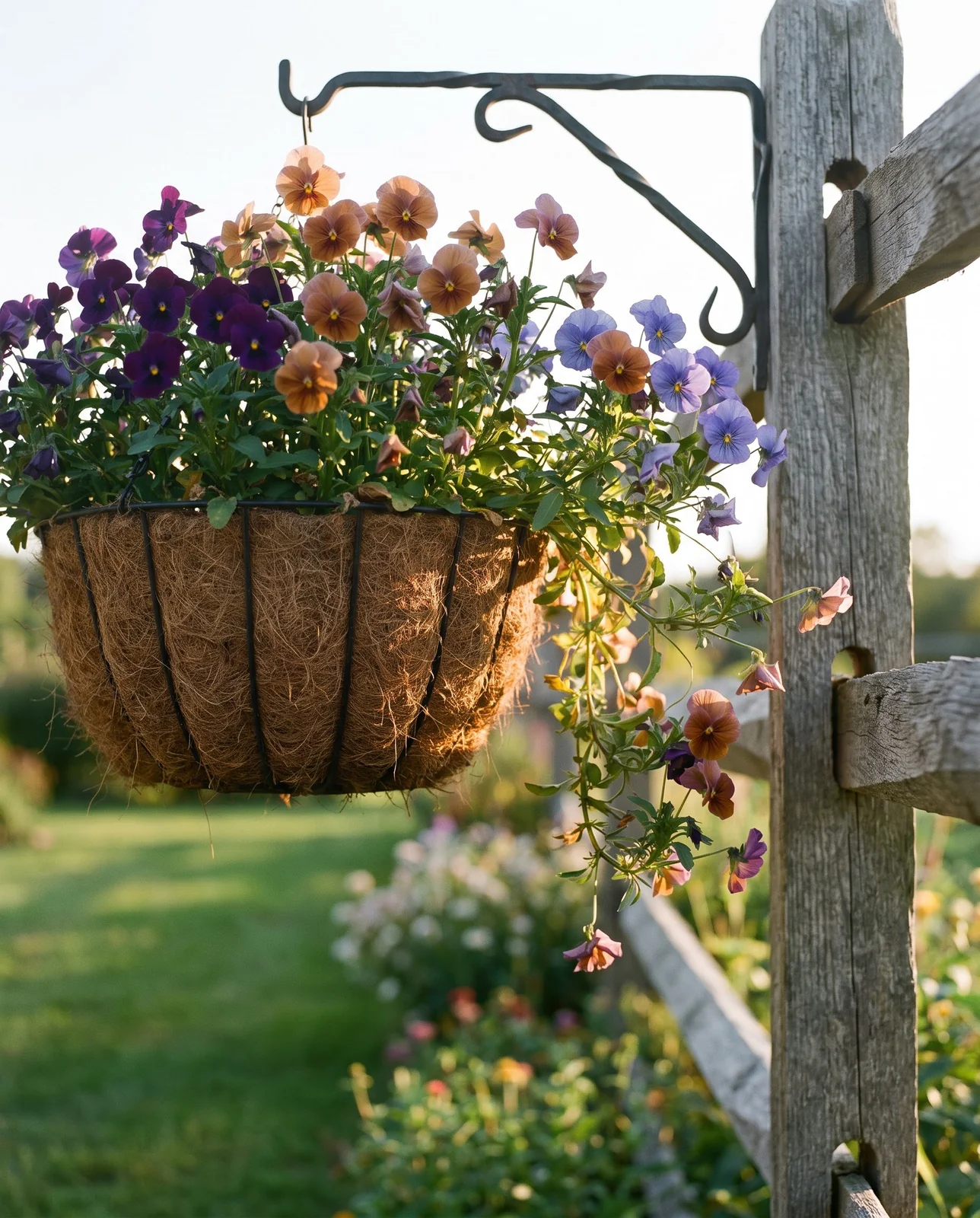
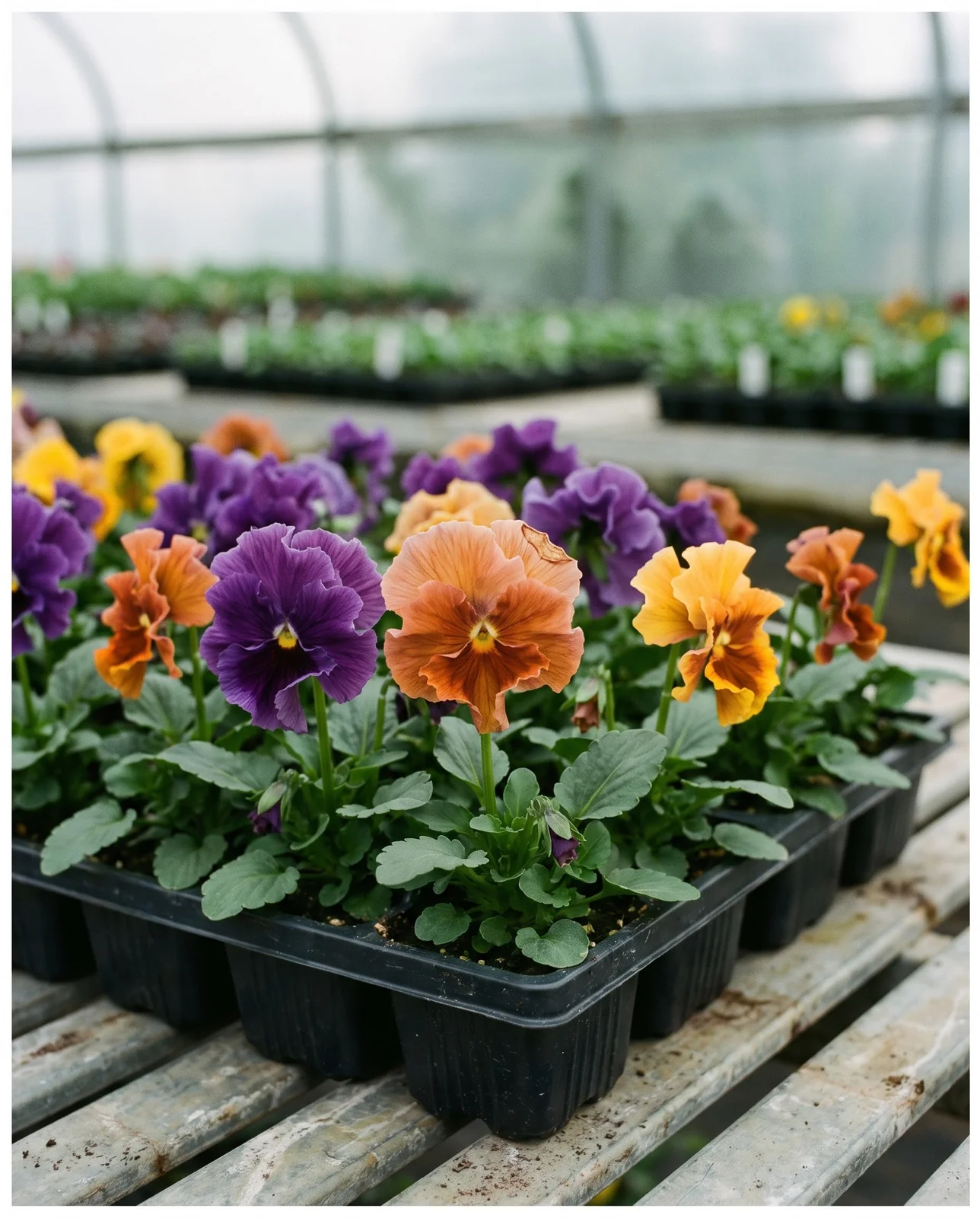
Pansies are bred and sold by series rather than as single named plants, and the series is what tells you the job the plant was built for. Four groups cover most of what a garden center stocks: trailing types for baskets, large-flowered types for beds, ruffled novelties, and F1 hybrids selected for heat tolerance. The heat-tolerant marks below follow the series descriptions themselves, not a separate claim.
Height and spread
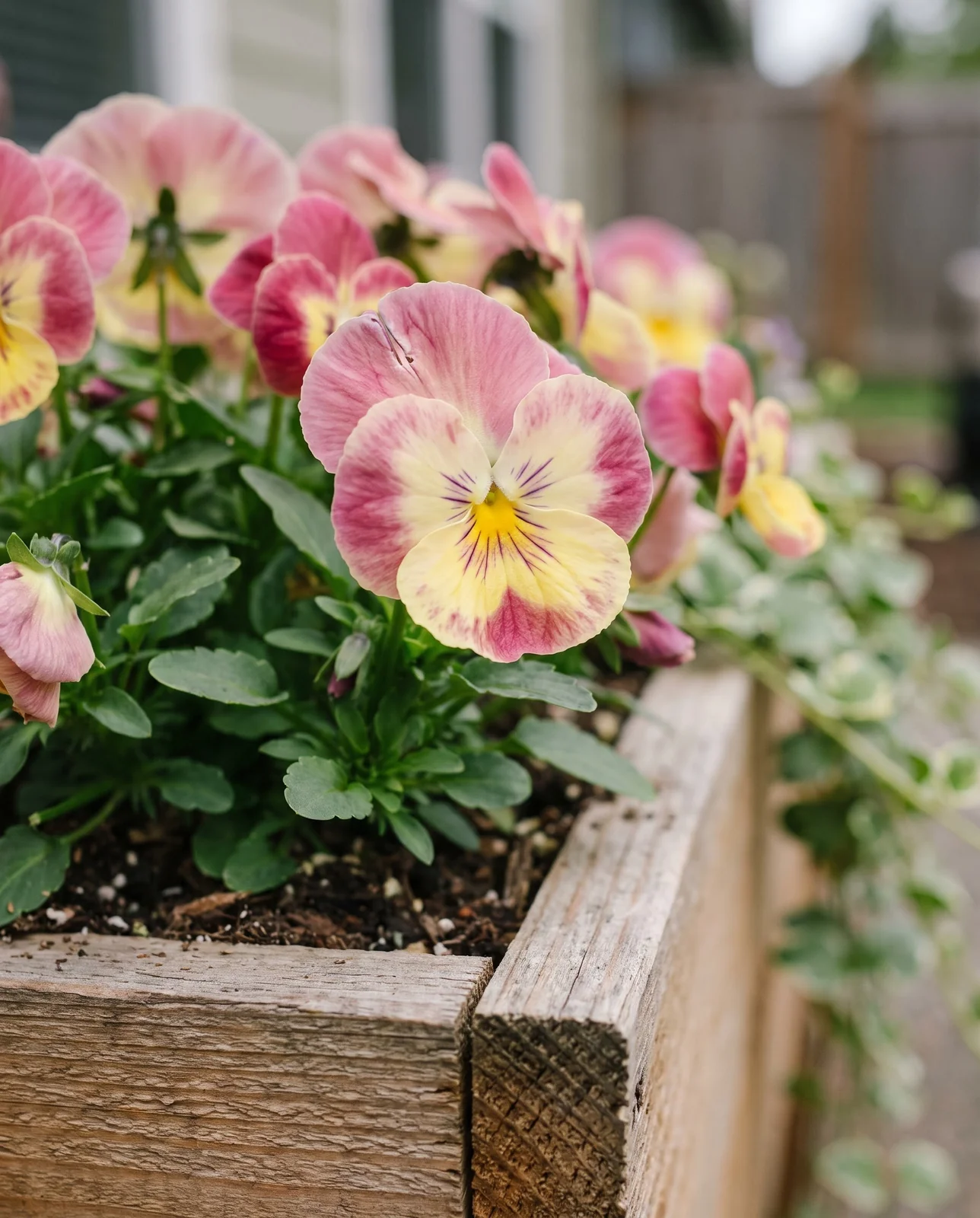
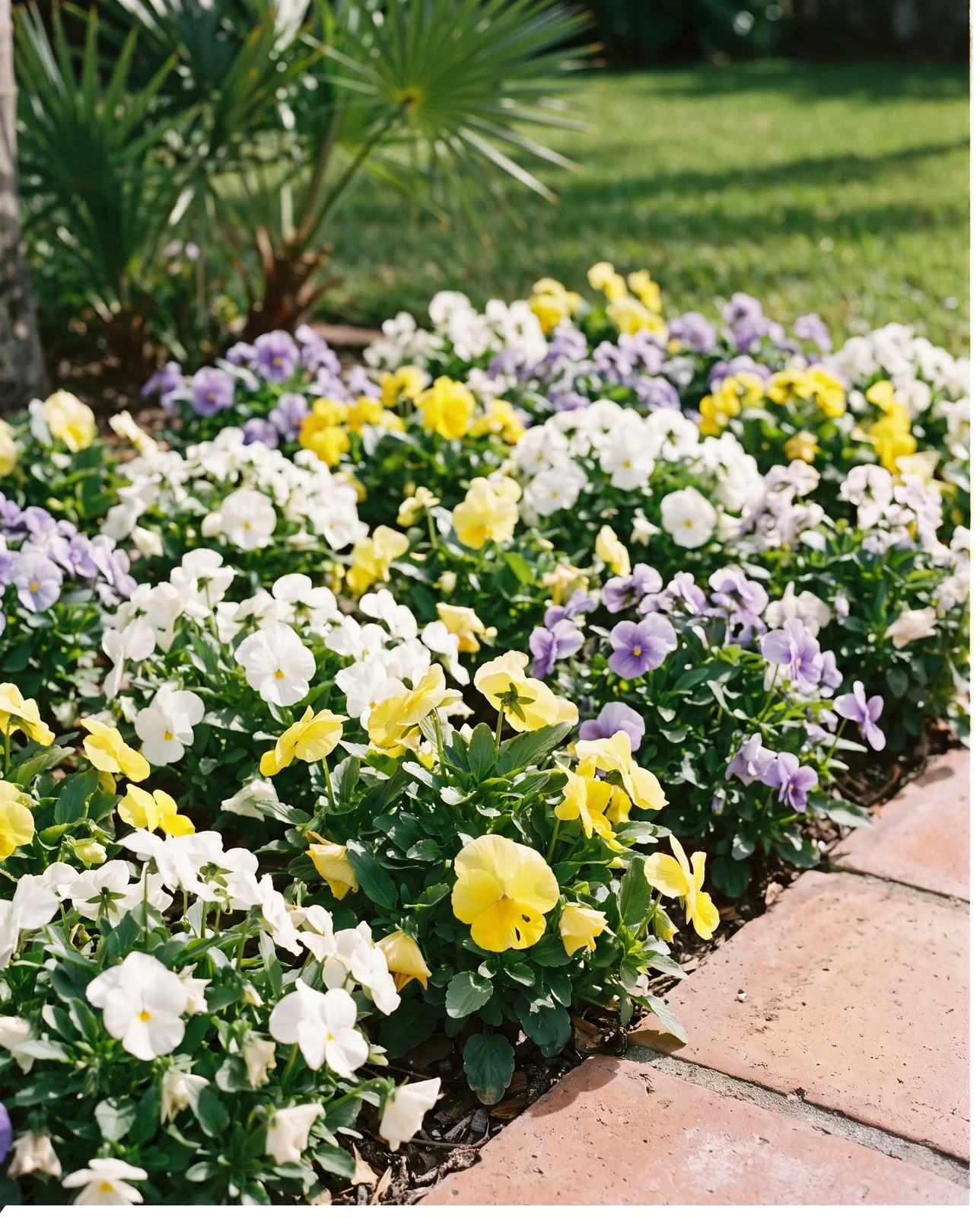
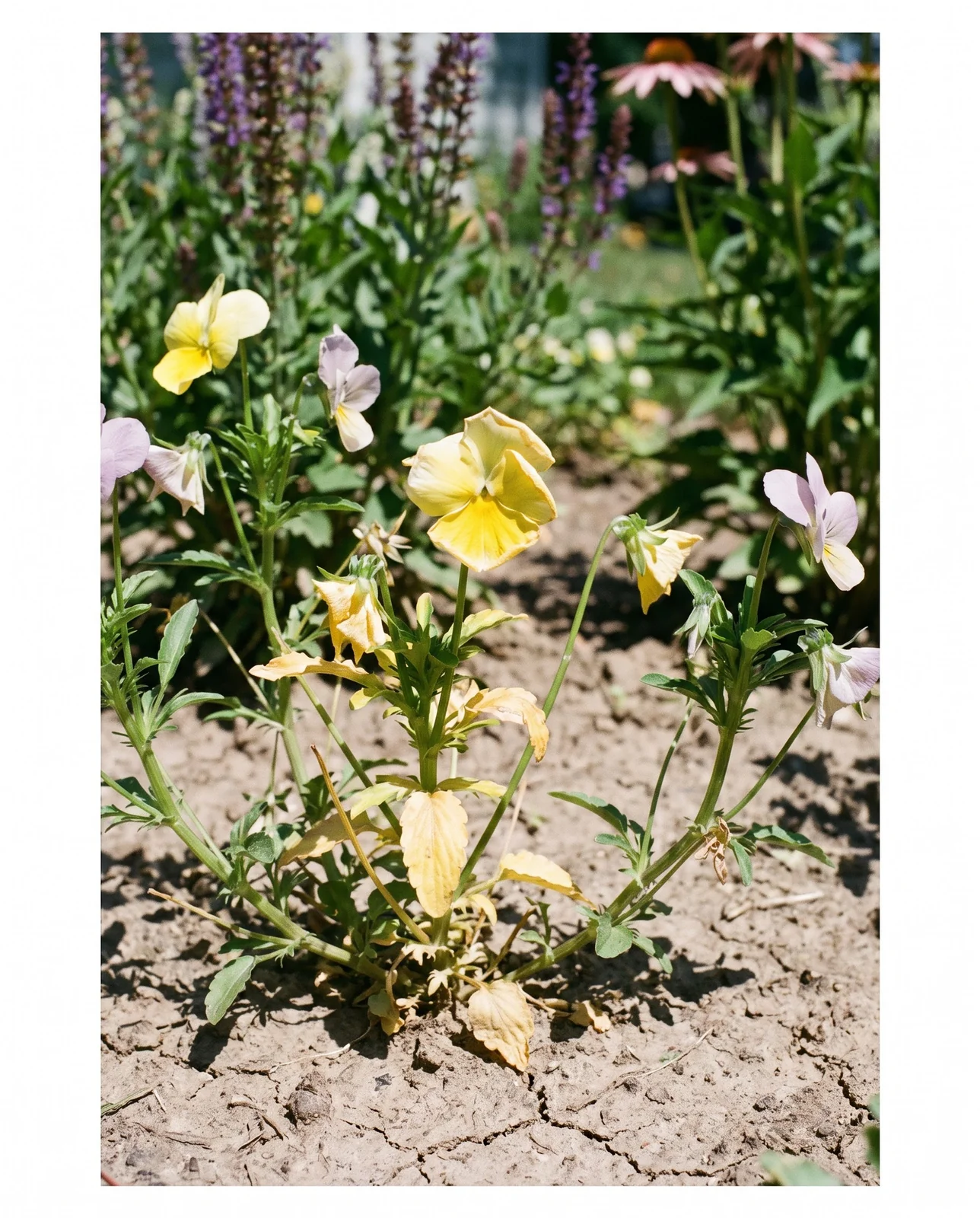
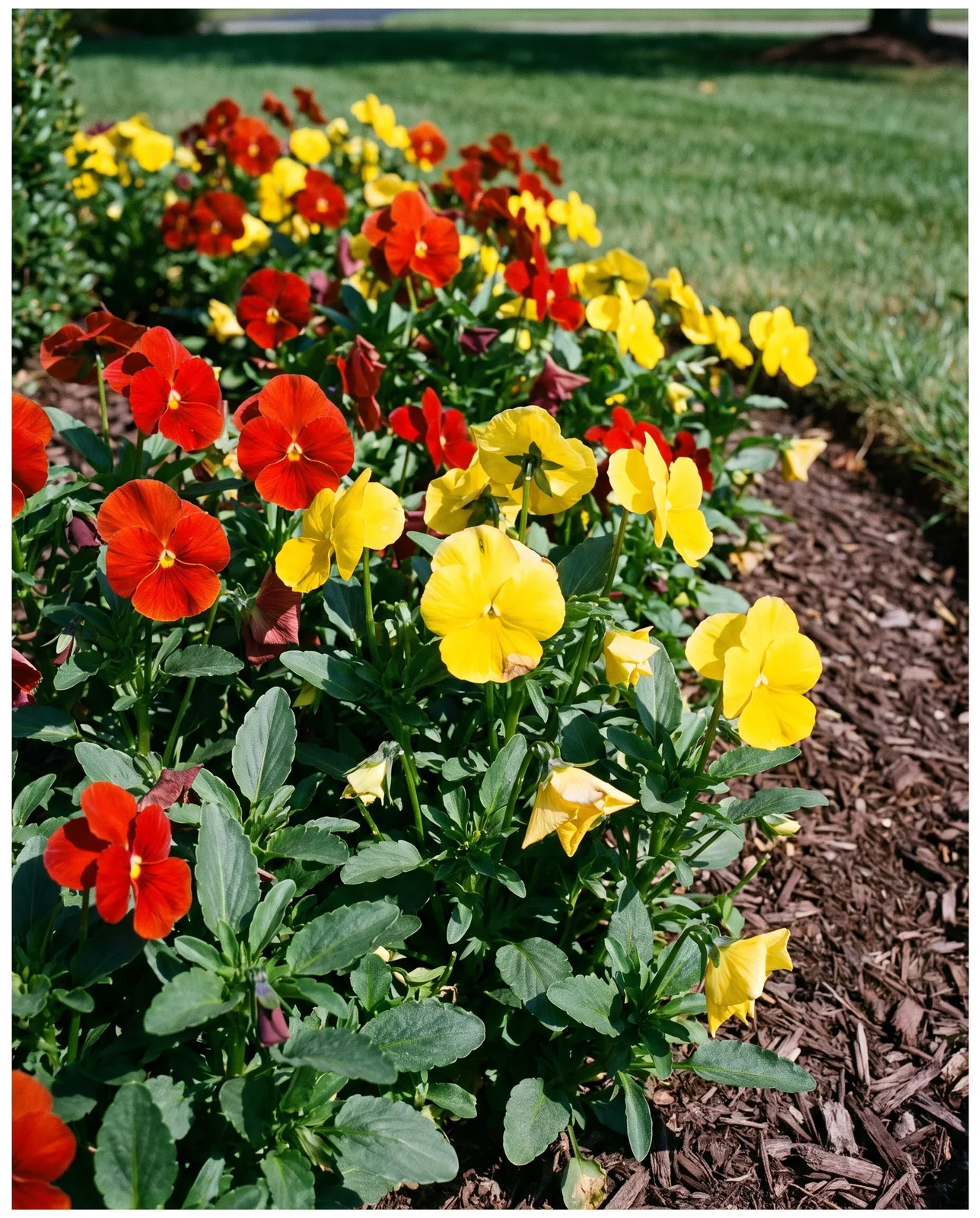
NC State Extension puts a garden pansy at 6 to 9 inches tall and 9 to 12 inches wide, and the F1 hybrids that dominate retail run to about 8 inches with flattened faces 2 to 4 inches across. Dwarf bedding selections stay tight and mounded in cool weather; trailing series spill instead, which is what makes them container plants rather than bed plants. Spacing then does more for how a planting looks and lasts than any of those figures. University of Georgia Cooperative Extension works with three intervals, 6, 8 and 10 inches. Six inches closes the canopy into solid color in about four weeks. Eight to ten inches keeps air moving around every crown, which holds the lower stems shorter and cuts the risk of a fungal leaf outbreak later in the season.
Light
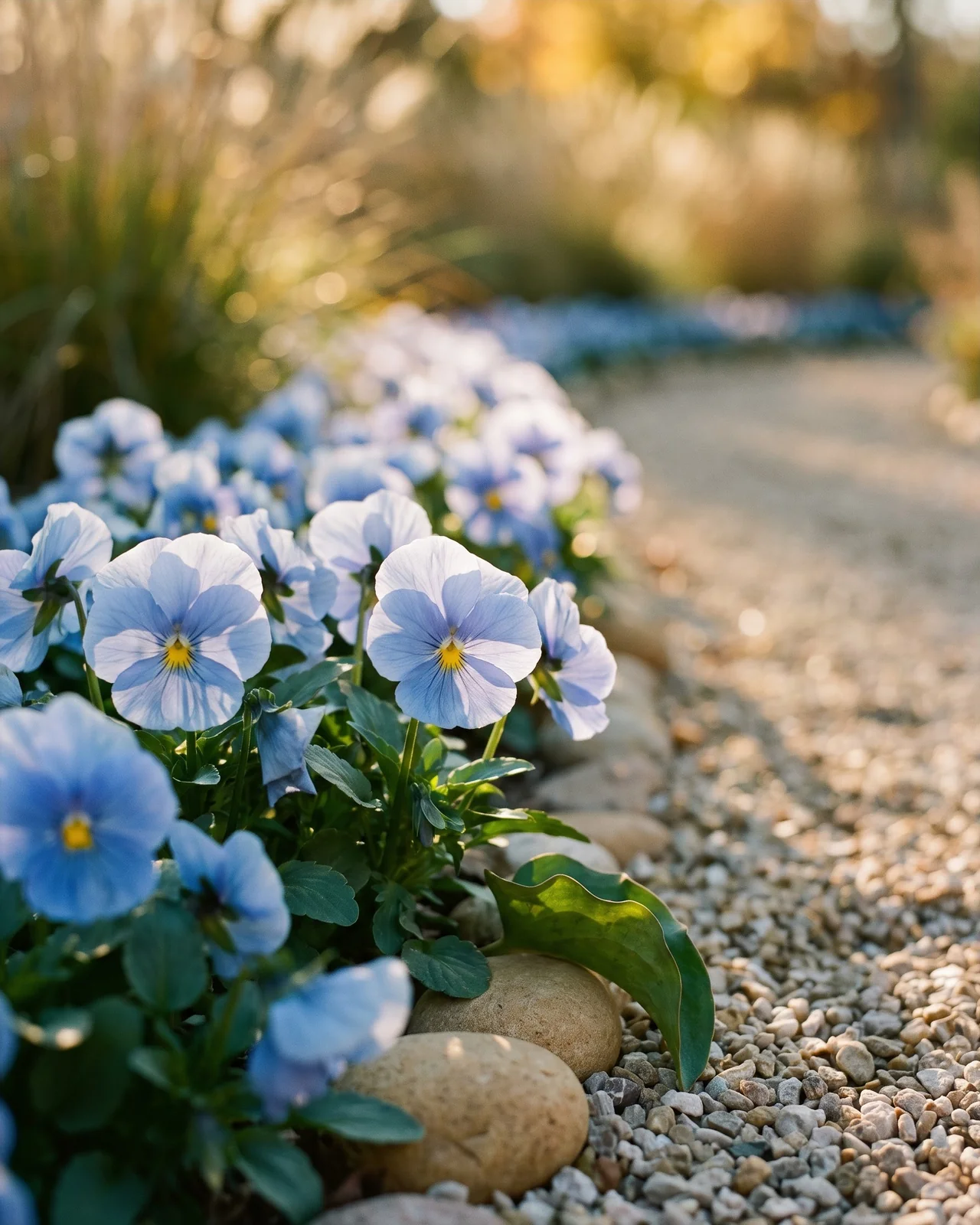
Pansies take full sun to part shade, and which end of that range they want depends on where you garden and when you plant. In northern beds and through cool spring weather, six hours or more of direct sun a day gives short internodes, thick stems and heavy bud set; in too little light the plants stretch, lean and flower thinly. In the South, and during the warm end of a fall planting window, afternoon shade is the safer half of the range. UF/IFAS Extension recommends some shade there, both to keep foliage out of the worst of the heat and to slow evaporation from the bed. Modern F1 hybrids handle full sun better than older strains, but morning sun with filtered afternoon light still prevents midday flagging and keeps soil temperatures off the shallow feeder roots.
Water
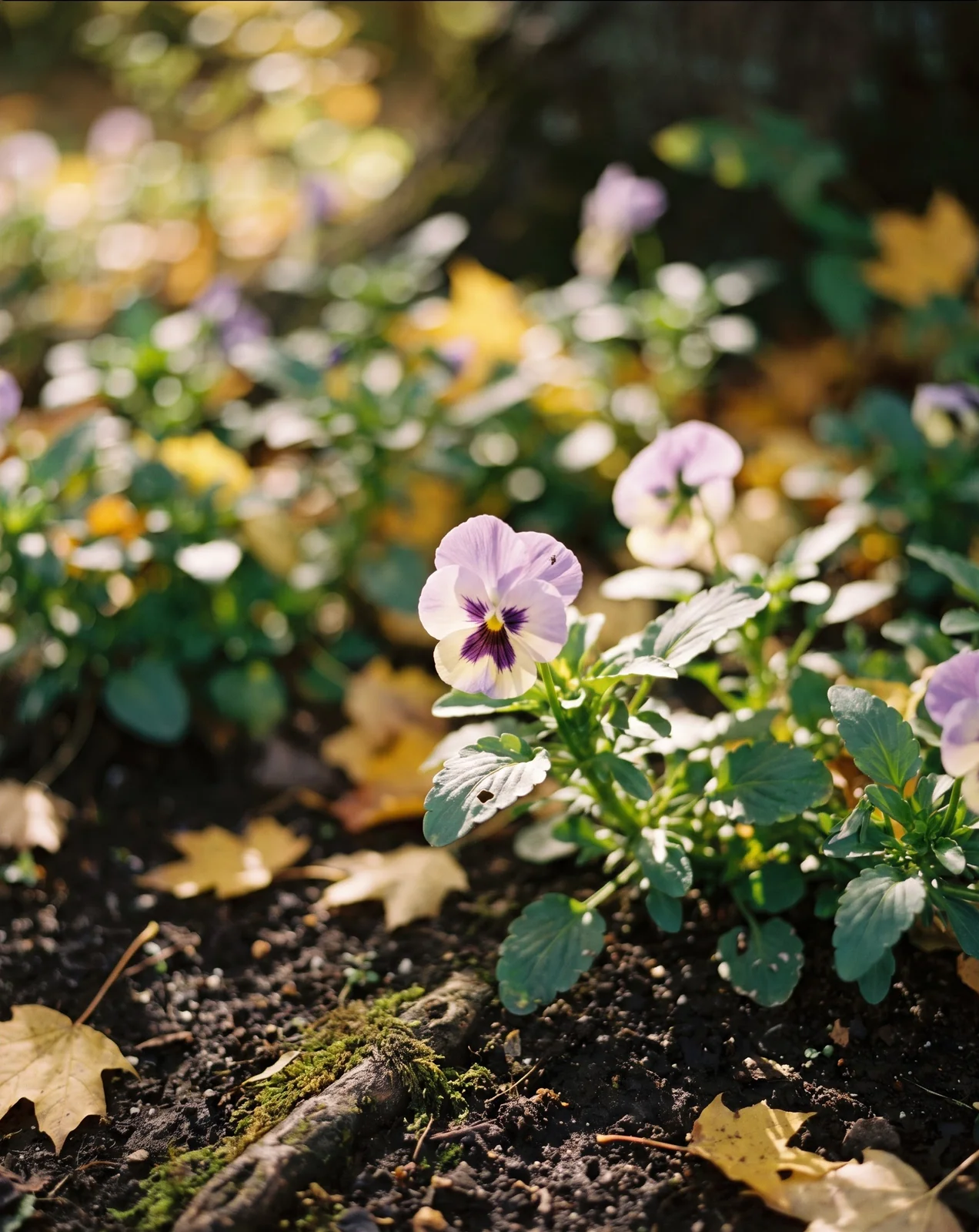
Utah State University Extension sets the rule at one thorough soak a week, about an inch of water, through the growing season. It has to reach the whole root zone; a quick pass with a hose that only dampens the surface trains roots to stay shallow. Two points of timing matter as much as the volume. Never water in the late afternoon or evening, because foliage that stays wet overnight is where fungal spores germinate. And let the top inch of soil dry between waterings, which is what UF/IFAS Extension recommends for the same reason. That wet-to-dry swing puts oxygen back into the root zone between soakings and makes the soil a poorer place for root-rotting fungi.
Soil and pH
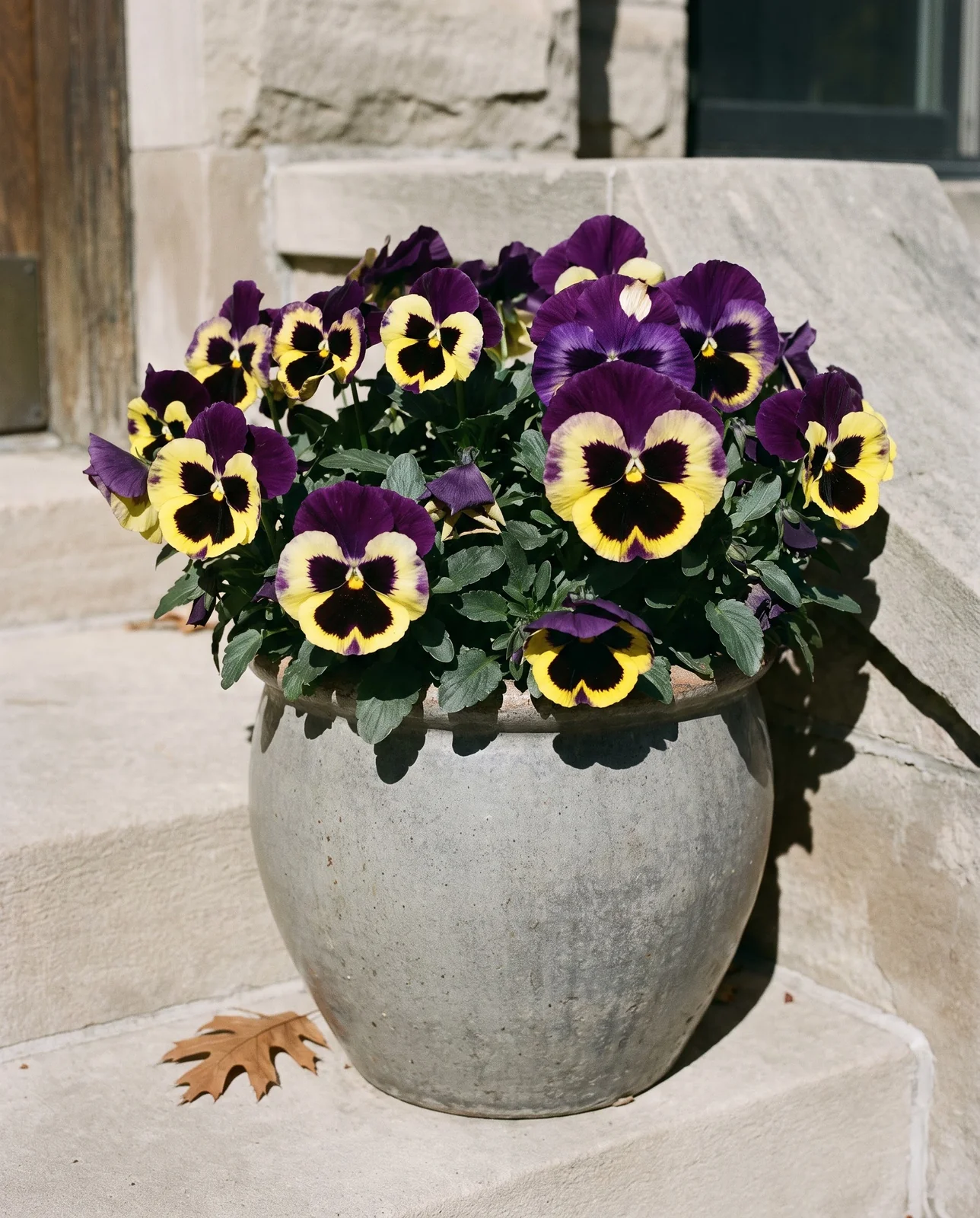
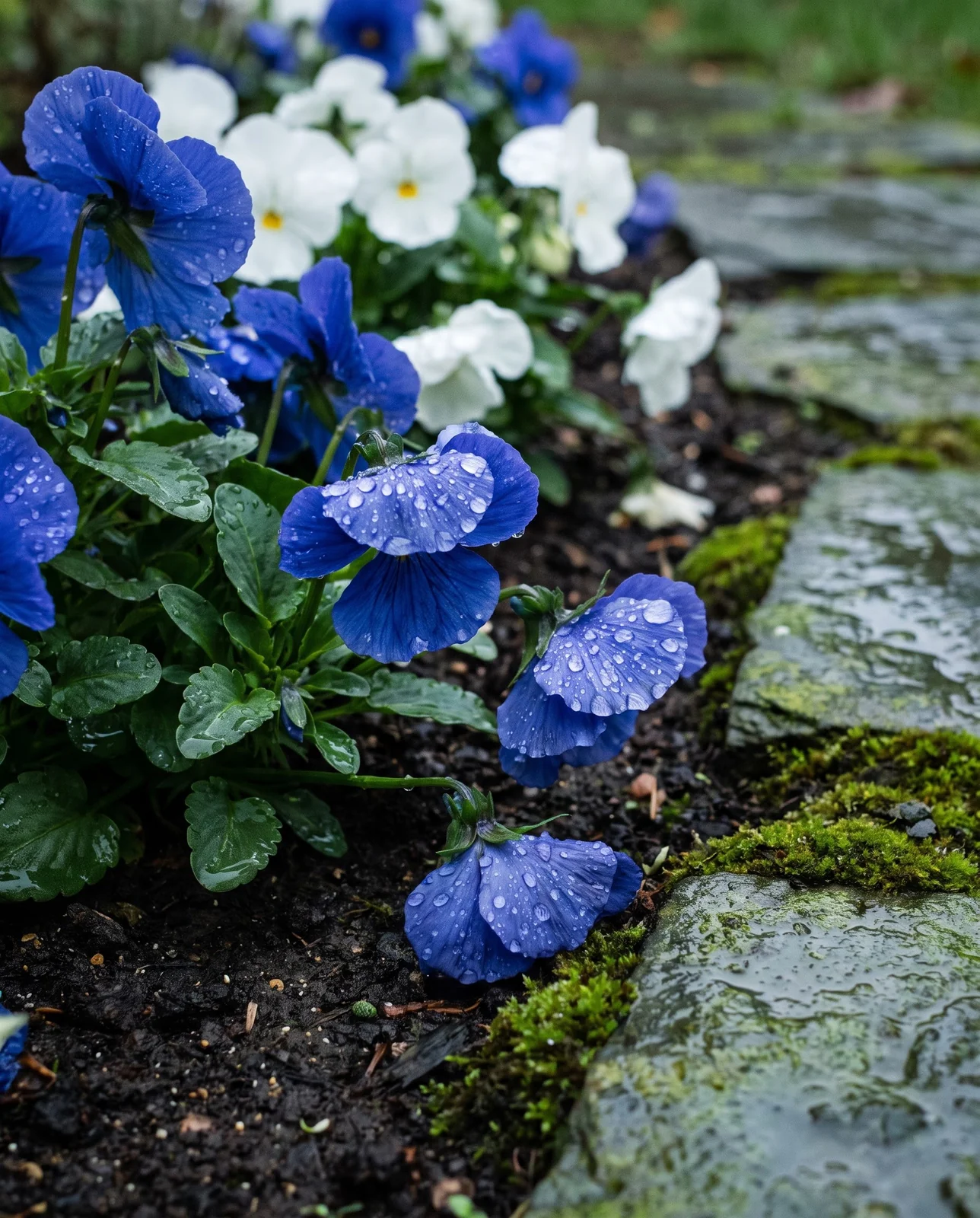
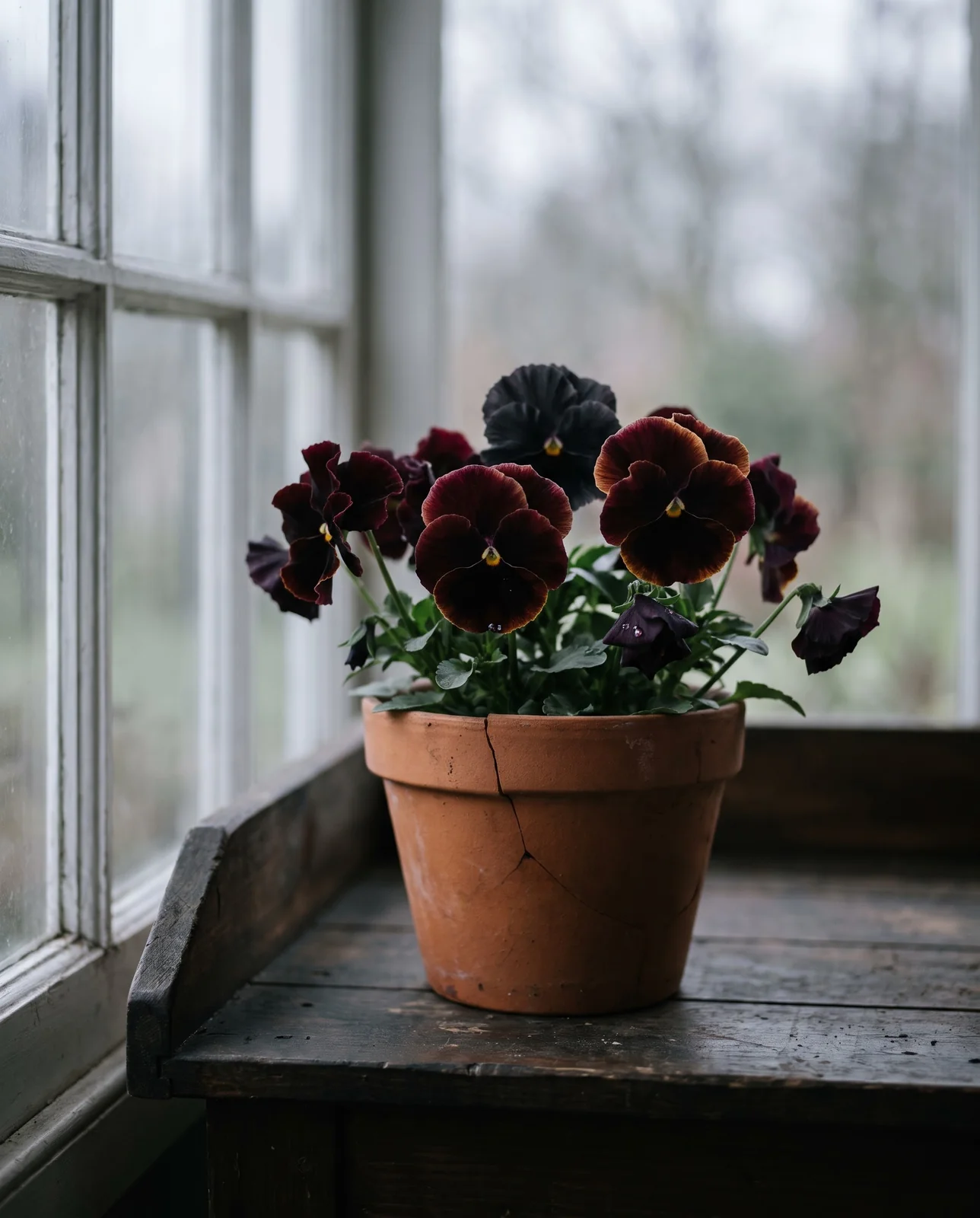
Pansies want rich, humusy soil that stays evenly moist and still drains, the combination Missouri Botanical Garden describes for the plant. In garden beds that usually means amending: University of Georgia Cooperative Extension puts the target at 3 inches of organic matter turned into the top 12 inches of soil, roughly 25 percent by volume. Heavy clay that holds water after rain suffocates roots and collapses a planting fast. Pansies are also fussier about pH than most bedding plants, wanting a distinctly acid 5.4 to 5.8. Above 5.8 they stop taking up boron and iron, the leaves yellow between the veins, and the incidence of black root rot (Thielaviopsis basicola) climbs. A soil test before planting is what tells you whether the bed needs elemental sulfur or an acidifying amendment, and it is the first thing to run on ground that has been limed for lawn or vegetables.
USDA hardiness
NC State Extension and Missouri Botanical Garden both rate Viola x wittrockiana as perennial in USDA zones 6 through 10, and both describe it the same way: a short-lived evergreen perennial that gardens treat as a cool-weather annual or biennial. UF/IFAS Extension comes at it from the other direction and says pansies can be grown anywhere in the United States, in any hardiness zone, as a cool-season bedding plant. Both hold, because they answer different questions: where the plant persists on its own, and where it performs for a season before it gets pulled. The widely repeated line that pansies are hardy in zones 4 to 8 traces to retail references rather than to any university source, which is reason enough to set it aside.
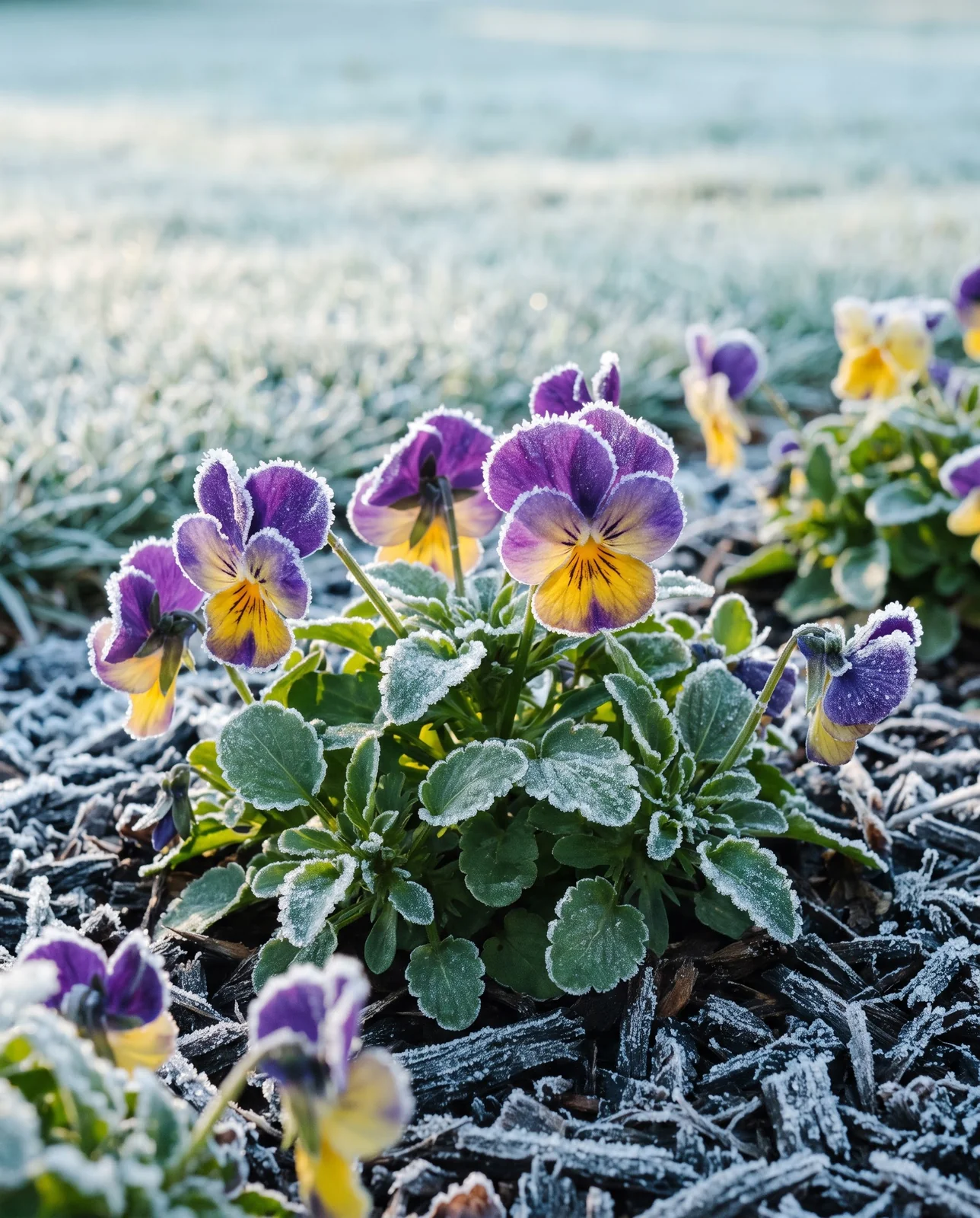
What matters more in a garden is what an established plant withstands. University of Georgia Cooperative Extension describes pansies surviving temperatures down into the single digits, freezing solid, and coming back with vigor once warm weather returns. That recovery is why a bed that looks flattened the morning after a hard freeze is usually not a bed to replace.
Propagation and longevity
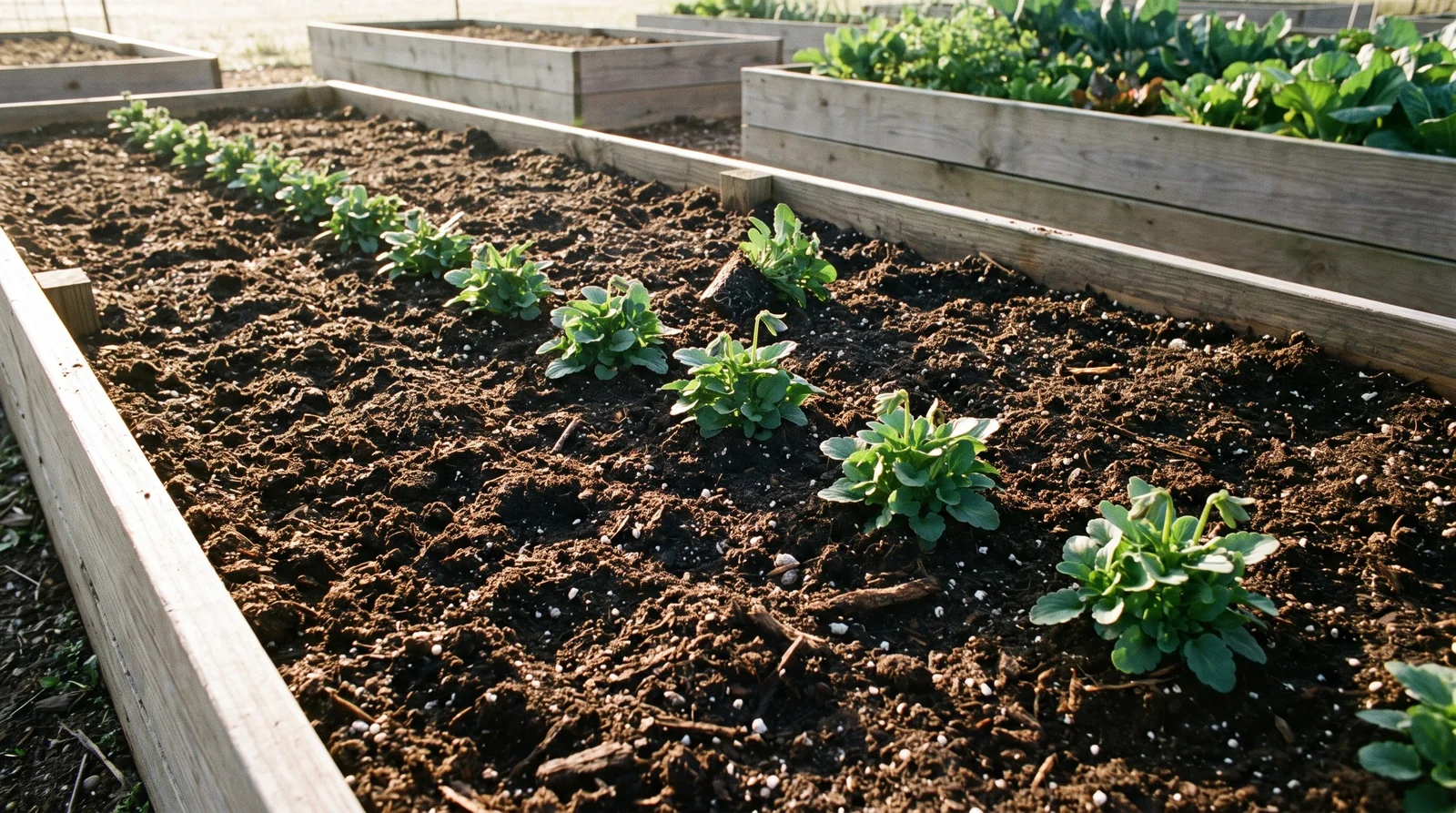
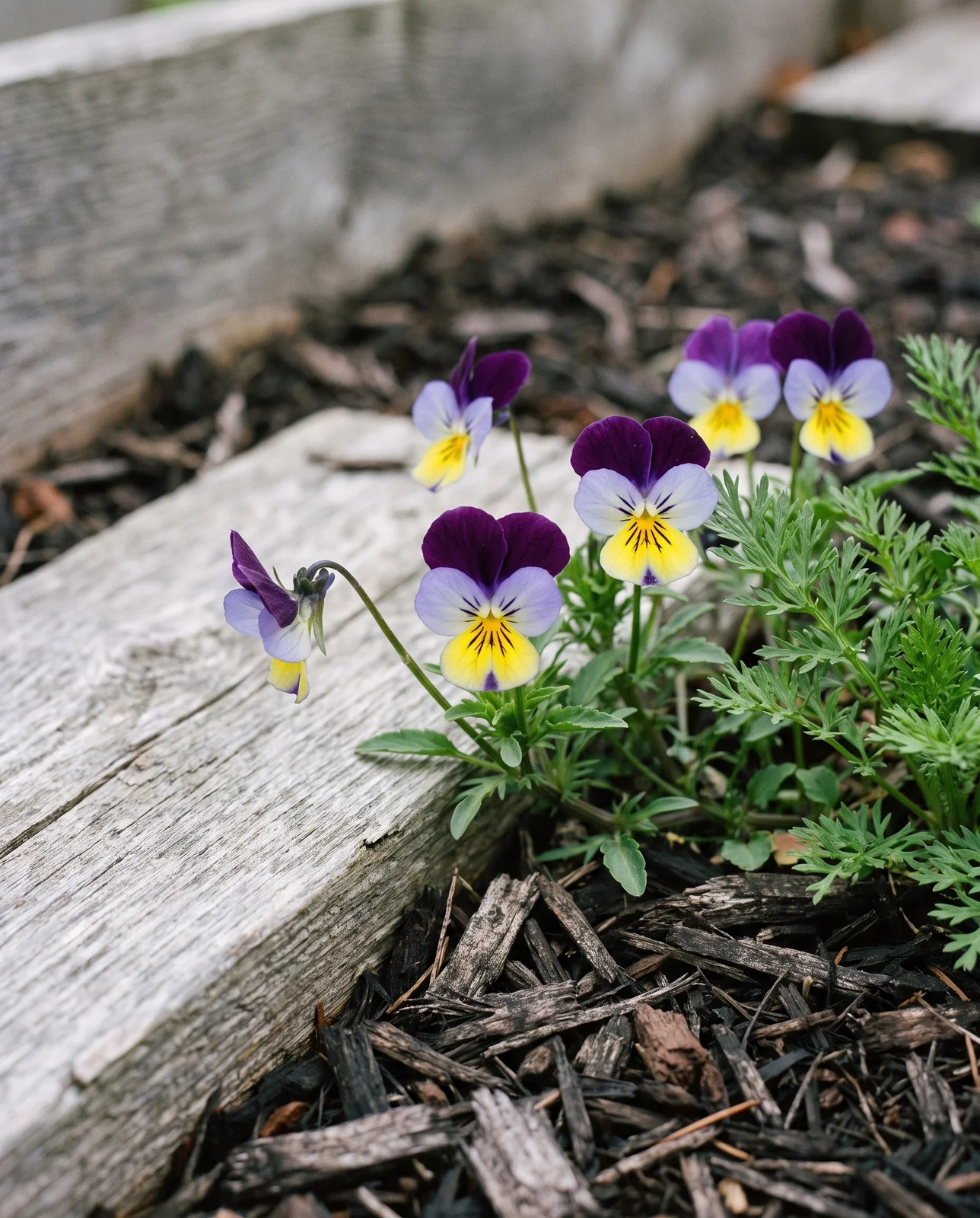
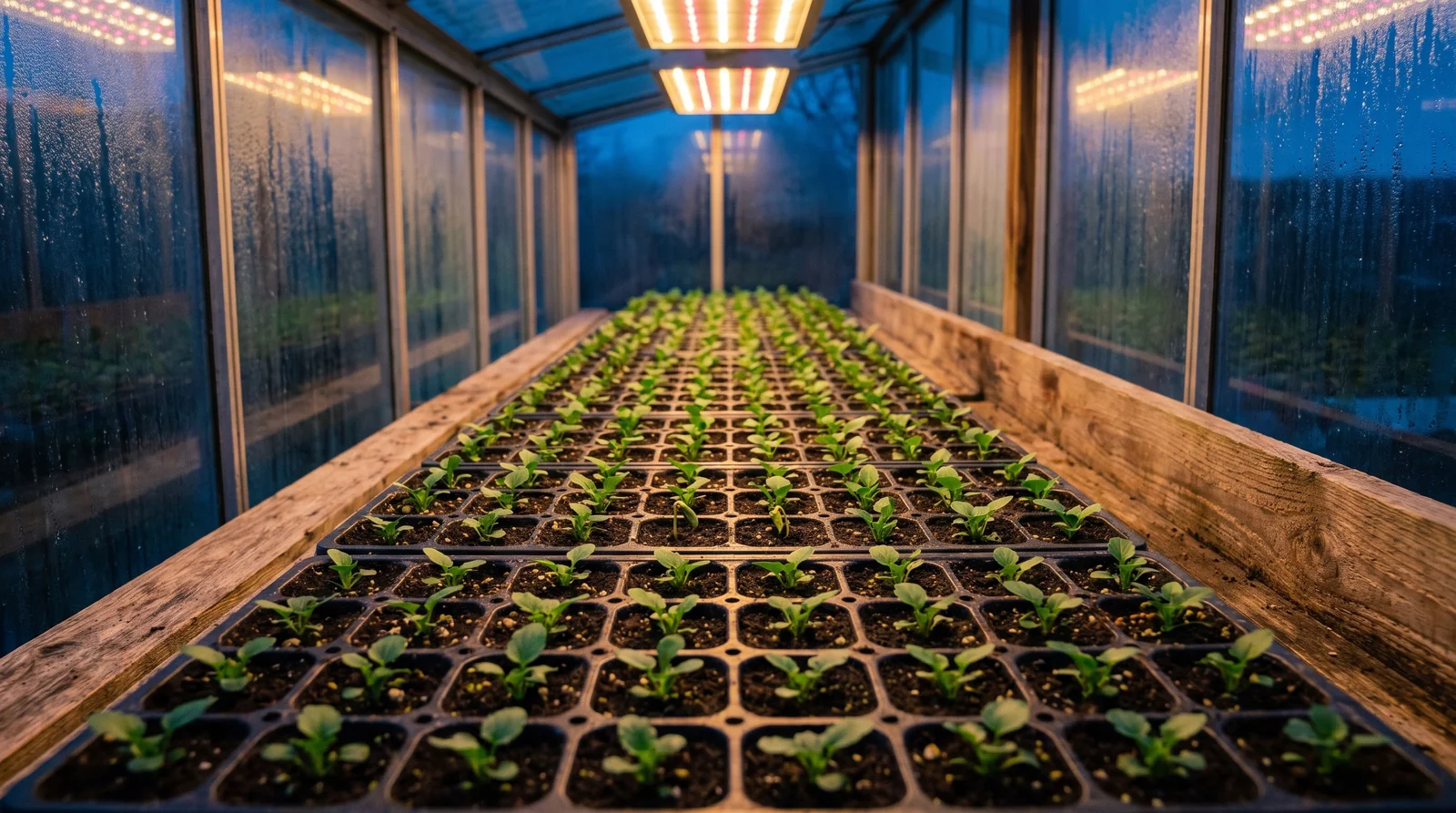
Seed is the slow route. Missouri Botanical Garden times an indoor sowing 12 to 14 weeks before the last spring frost, and the seed germinates at 65 to 75 degrees Fahrenheit, sprouting in about five to eight days in darkness under steady moisture. Trays go under strong light the moment the first seedlings show, or they stretch and never recover their shape. Most gardeners skip all of that and buy six-packs, which is why transplants fill every garden center bench in September and again in spring. Either way the plant is short-lived, and beds get cleared when summer heat arrives rather than carried over. One rotation rule goes with that: Utah State University Extension advises against planting pansies in the same bed soil more than three years running, because Pythium root rot builds up in ground that grows the same crop season after season.
Fall planting, cold snaps, and the second bloom
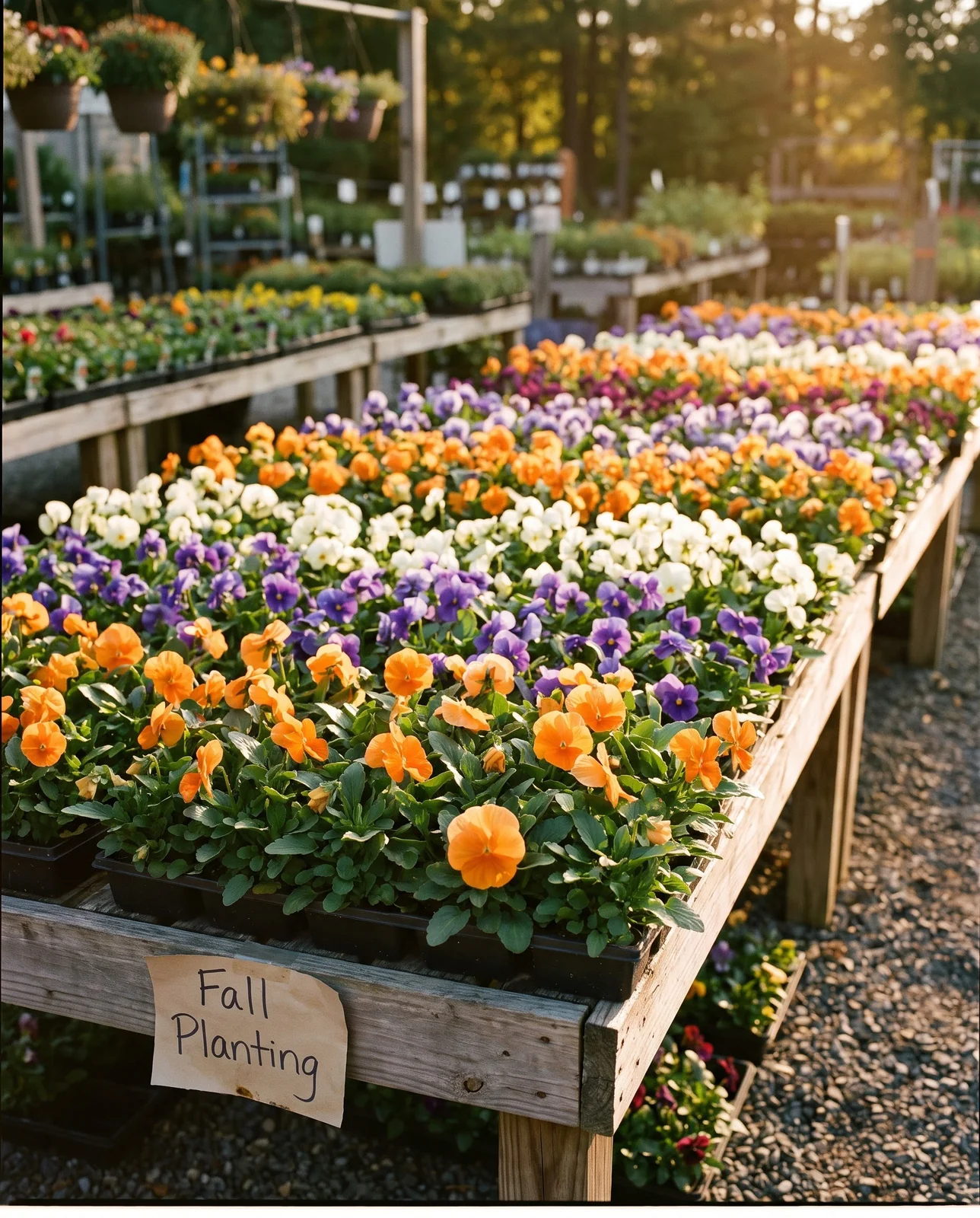
Fall planting gives the longest display across the transition zone and the South, and the windows are narrow enough that University of Georgia Cooperative Extension publishes them by zone: zones 6b and 7a plant between September 15 and October 1, zone 7b from October 1 to October 15, and zones 8a and 8b from October 15 to November 1. Florida runs later and longer, and UF/IFAS Extension gives zone 8 February plus October through December, zone 9 February plus November and December, and zones 10 and 11 November and December. For Midwestern gardens, Kansas State Research and Extension points to mid-March planting for a spring display. Where fall planting does work, pansies go in beside chrysanthemum at the same garden centers in the same weeks, and the pairing carries a bed from the last summer annuals into winter.
Establishment turns on soil temperature, not the date on the calendar. Roots work between 45 and 65 degrees Fahrenheit; below 45 they shut down and stop functioning, which is why a transplant set out late sits in the ground all winter without anchoring. Air temperature gives the second signal, and nights should be running below 65 degrees before anything goes in. Once the plants are in and rooted, cold does less than it appears to. Below 25 degrees the foliage wilts and turns gray-green, and that is a defensive response rather than injury; the plants stand back up. Kansas State Research and Extension notes that fall-planted pansies keep flowering into early winter unless a hard freeze into the low 20s stops them.
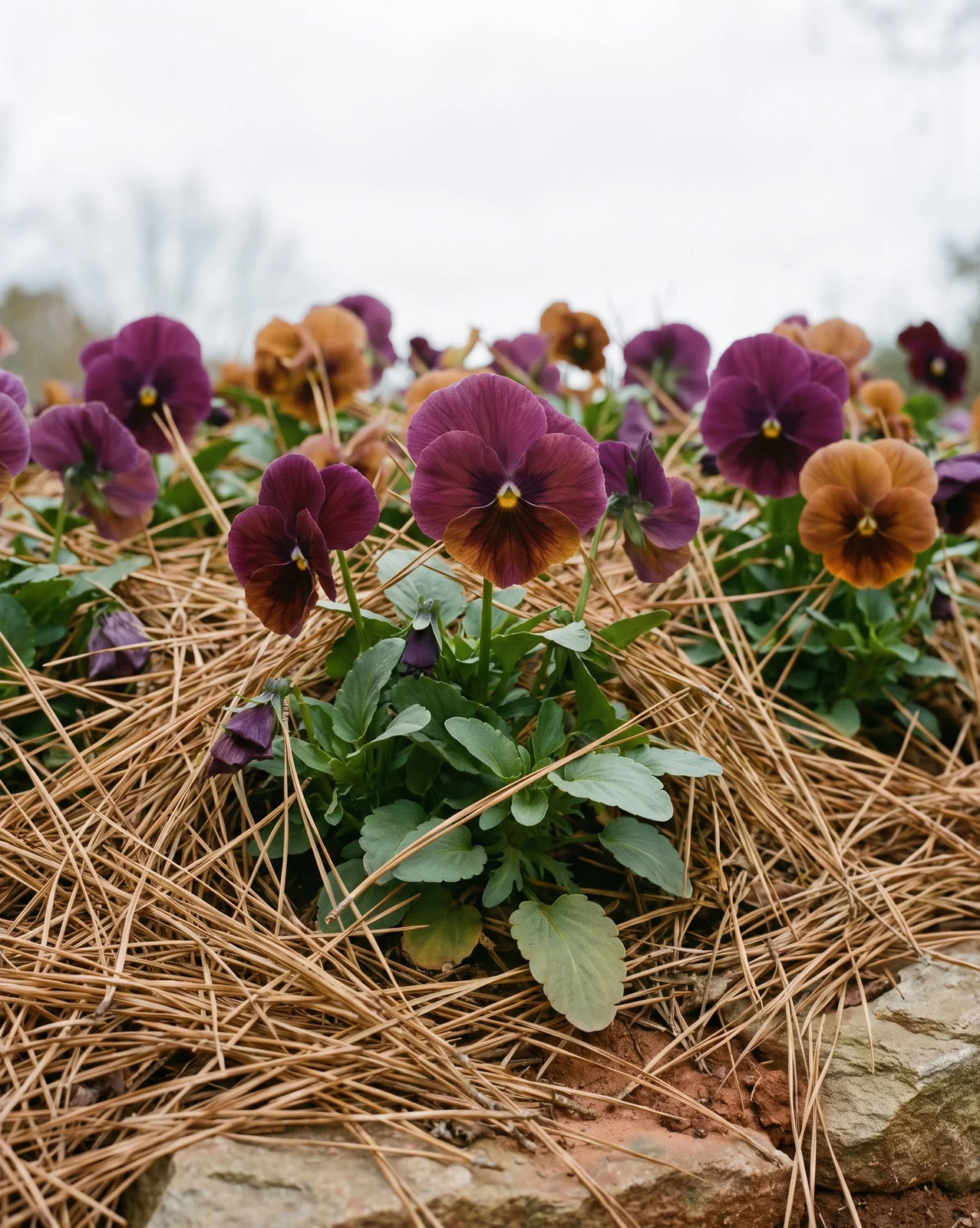
Intervention starts lower down the scale. When the forecast calls for several hours below 20 degrees with drying wind, 2 to 4 inches of clean pine straw laid over the whole bed, plants and all, is the single measure UGA singles out as the best way to save a planting from freeze injury. Sustained cold below 10 degrees for six to eight hours or more, with no snow and no mulch, is the line where crowns and roots are lost for good. Feeding works on the same problem: a high-nitrate 15-2-20 formula every 14 days through March 15 keeps growth firm, while heavy ammoniacal nitrogen in warm fall weather pushes soft, stretched stems that freeze at temperatures a hardened plant shrugs off. For bed preparation before any of that, Utah State University Extension puts the baseline at 1 pound of 5-10-5 per 50 square feet.
Temperature thresholds that decide what a fall pansy bed needs
Pansy performance tracks soil and air temperature more closely than any calendar date. These are the points where the plant changes what it is doing, from root establishment through the week the bed gets pulled.
Which pansy series fits the job
The same plant is sold for four different jobs, and the series that performs best changes with the job. Start from the goal, not from the color chart.
What a fall-planted pansy does across a full season
Early autumn, with soil temperature between 45 and 65 F, is when fall transplants anchor into still-warm ground, and a high-nitrate feed such as 15-2-20 carries them into an early flower flush. Growth then slows from late autumn into midwinter and the plant settles into a semi-dormant hold: foliage wilts below 25 F and stands back up, and in mild-winter zones flowering simply continues through this stage while in colder ones the plant holds green under snow or pine straw. Spring is the loud part. Once air temperature runs 40 F at night to 60 F by day, crowns push heavy new foliage and buds in quantity. That flush ends when sustained air temperature climbs past 75 F: stems stretch, flower size drops, bud set stops, and the bed comes out to make room for warm-season annuals. Root establishment through heat decline is a single season of work from one autumn purchase.
Four pansy beliefs worth checking against the source
The myth: Pansies are strictly spring-flowering annuals.
The reality: In zones 6 through 10 and other mild-winter climates, fall-planted pansies bloom through autumn and winter as well as spring.
The myth: Deer leave pansies alone.
The reality: The sources disagree. NC State Extension tags the plant deer resistant, while UF/IFAS Extension states that deer are known to nibble them. In deer country, plan for browsing.
The myth: Pansies are long-lived garden perennials.
The reality: Botanically they are short-lived evergreen perennials, but they lose vigor quickly and are grown as seasonal annuals or biennials.
The myth: Pansies need a high-phosphorus bloom booster in autumn.
The reality: A high-nitrate formula such as 15-2-20 is what fall pansies want; heavy ammoniacal nitrogen softens stem tissue ahead of the first freezes.
Fragrance
Pansies carry a light, honey-sweet scent, most noticeable in the early morning and again at dusk. Modern hybrids smell less than the wild species behind them, so this is a scent you find by crouching over the bed rather than one that reaches across a garden. Temperature and humidity move the volatile oils that carry the scent, which is why a cool, still morning with dew still on the petals is when it comes through best.
Toxicity and pet safety
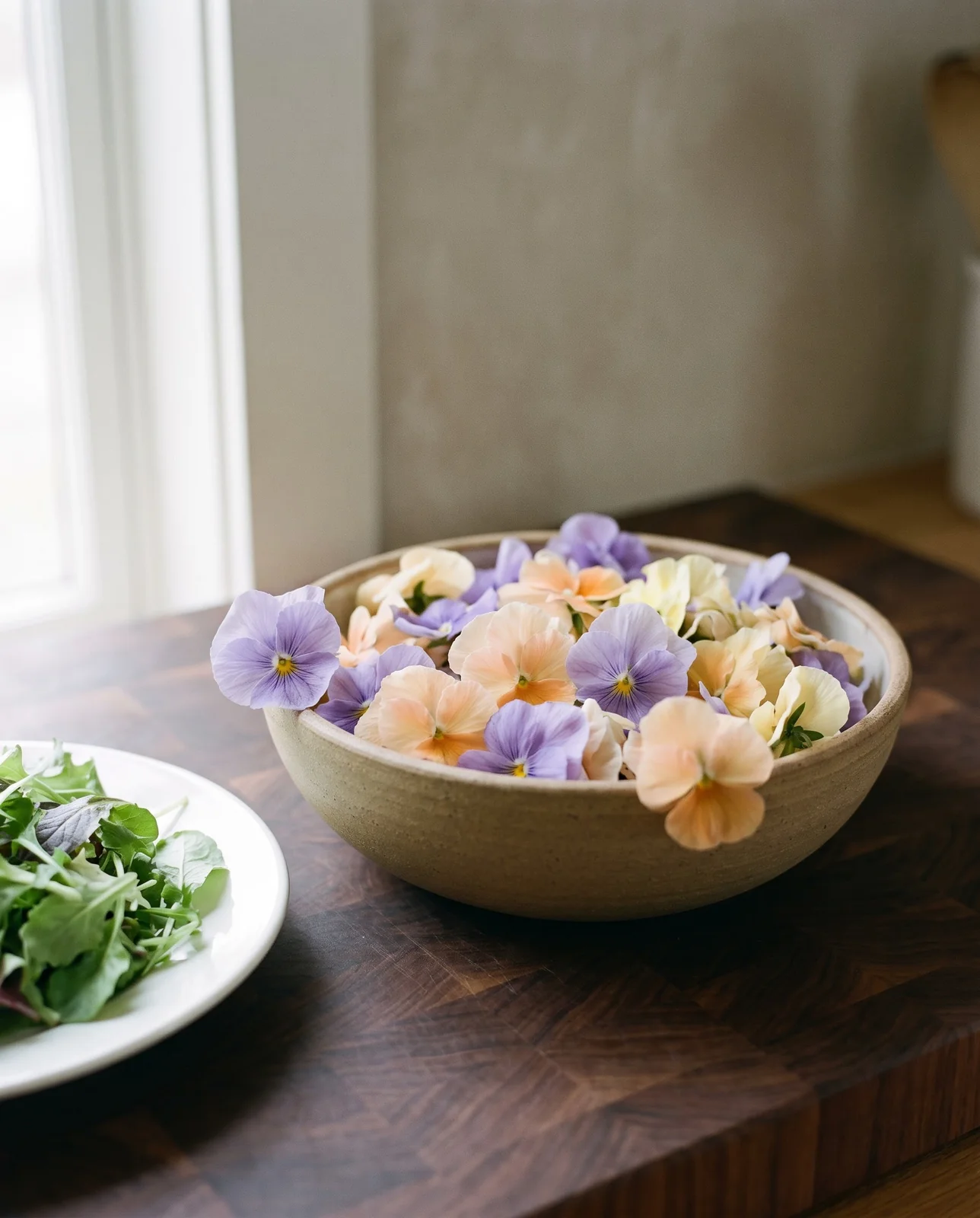
The ASPCA lists the garden pansy (Viola x wittrockiana) as non-toxic to dogs, cats and horses, with the standard caveat that eating any quantity of plant material can still leave an animal vomiting or with an upset stomach. Gardeners choosing plants around a curious dog can work from Types of Flowers Safe for Cats and Dogs. The flowers are edible for people as well, and UF/IFAS Extension lists them for salads and soups. The catch is where the plant came from: NC State Extension warns that stock bought at nurseries and garden centers may have been treated with systemic pesticides that are not cleared for food crops. Blooms for the kitchen should come off plants you grew from seed without sprays, or from a supplier selling certified edible flowers.
In the vase and dried
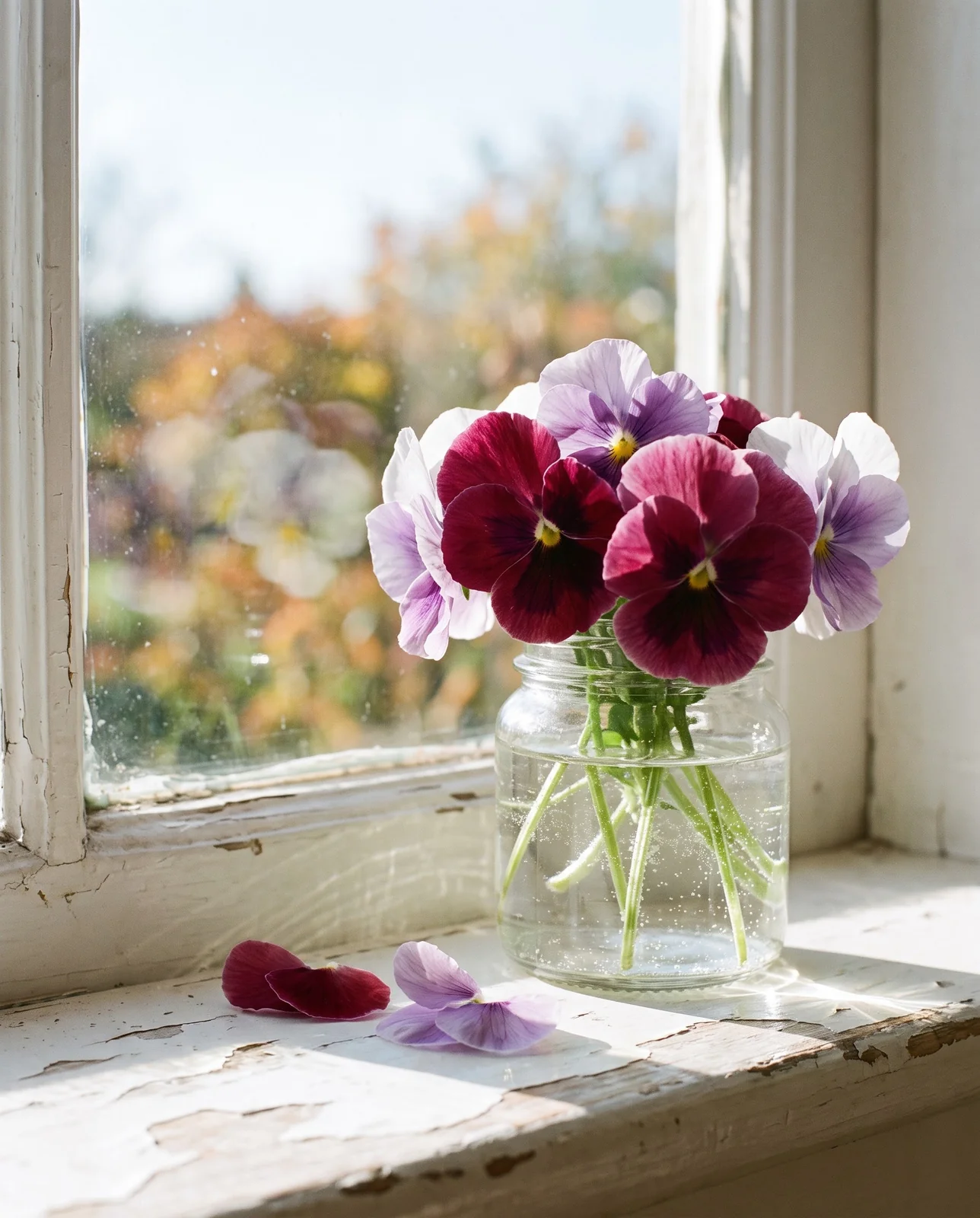
Pansies work as a small-scale cut flower with a vase life of 5 to 10 days. Cut stems in the cool of the morning, when the main bloom is just breaking out of the bud. What makes them worth the trouble is how they age: rather than shattering and dropping petals the way most garden flowers do, cut pansies fade cleanly, and the unopened side buds on the same stem keep expanding for several days in fresh cool water with floral preservative. Drying is the part that does not work. The petals hold too much water in thin-walled cells to hang and air-dry, and they shrivel and lose color when you try. A flower press or a bed of fine silica gel crystals keeps both the flat face and the color.
Cut pansies in a vase: what actually holds up
Pansy stems are short and do not last the way a florist's flower does. The handling below is what the vase-life window depends on.
Pests and diseases
NC State Extension lists slugs, snails and glasshouse red spider mites as the common pests, and Utah State University Extension adds aphids, thrips and leafhoppers. In early autumn the pansyworm, the caterpillar stage of the variegated fritillary butterfly, sometimes works on young leaves; it leaves chewed foliage rather than a lost bed. Deer are the real argument. NC State's own plant record tags pansies deer resistant, while UF/IFAS Extension states plainly that deer are known to nibble them. Where browsing pressure is real, the answers are temporary netting over border beds, repellent sprays, or moving the planting up onto a porch in containers.
The diseases that actually kill a pansy bed come out of the soil. Black root rot, caused by the soil-borne Thielaviopsis basicola (also known as Berkeleyomyces basicola), attacks the fine feeder roots, blackening them and stunting the top of the plant, and it gets worse as soil pH climbs above 5.8. Crown rot, caused by Phytophthora parasitica, is the most common landscape disease of pansies and shows up in warm, wet spells as a plant that folds over at the soil line. On foliage, University of Georgia Cooperative Extension names Cercospora leaf spot as the most common pansy disease in the Southeast, while Utah State University Extension adds anthracnose, gray mold (Botrytis), rust, powdery mildew and Pythium root rot. What holds all of them down is cultural rather than chemical: keep soil pH between 5.4 and 5.8, water early enough that the leaves dry before dark, let the top inch dry between waterings, and give the plants enough room that air moves through the canopy.
What goes wrong with pansies, most common first
Ordered from most to least common in the way the university pest and disease sources present them. No counted survey of pansy failures exists, so this is an order rather than a scored index.
Symptoms: stems clipped off cleanly, flower heads missing, bed edges stripped. Management: put up temporary netting, use scent-based repellents, or grow the plants in porch containers up off the ground.
Symptoms: lower foliage yellowing, plants badly stunted, feeder roots blackened. Management: hold soil pH at 5.4 to 5.8; keep the bed off the wet end of the range.
Symptoms: stems collapsing suddenly at the soil line during warm, wet weather. Management: move the planting to different soil every 3 years; work organic matter in to open up drainage.
Symptoms: round brown leaf spots, white powdery growth, spent blossoms rotting in place. Management: stop watering in the late afternoon; space plants 8 to 10 in apart; deadhead as flowers go over.
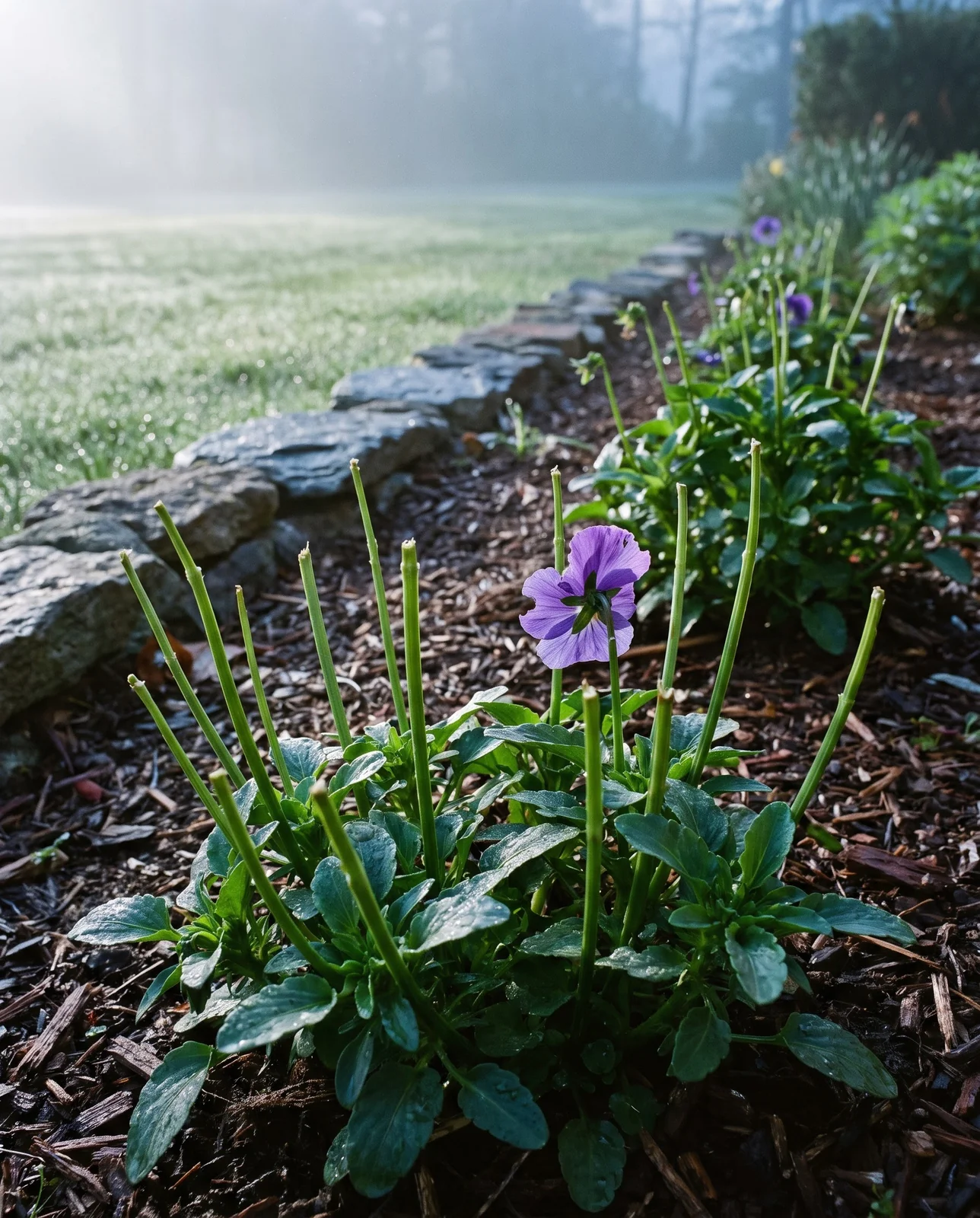
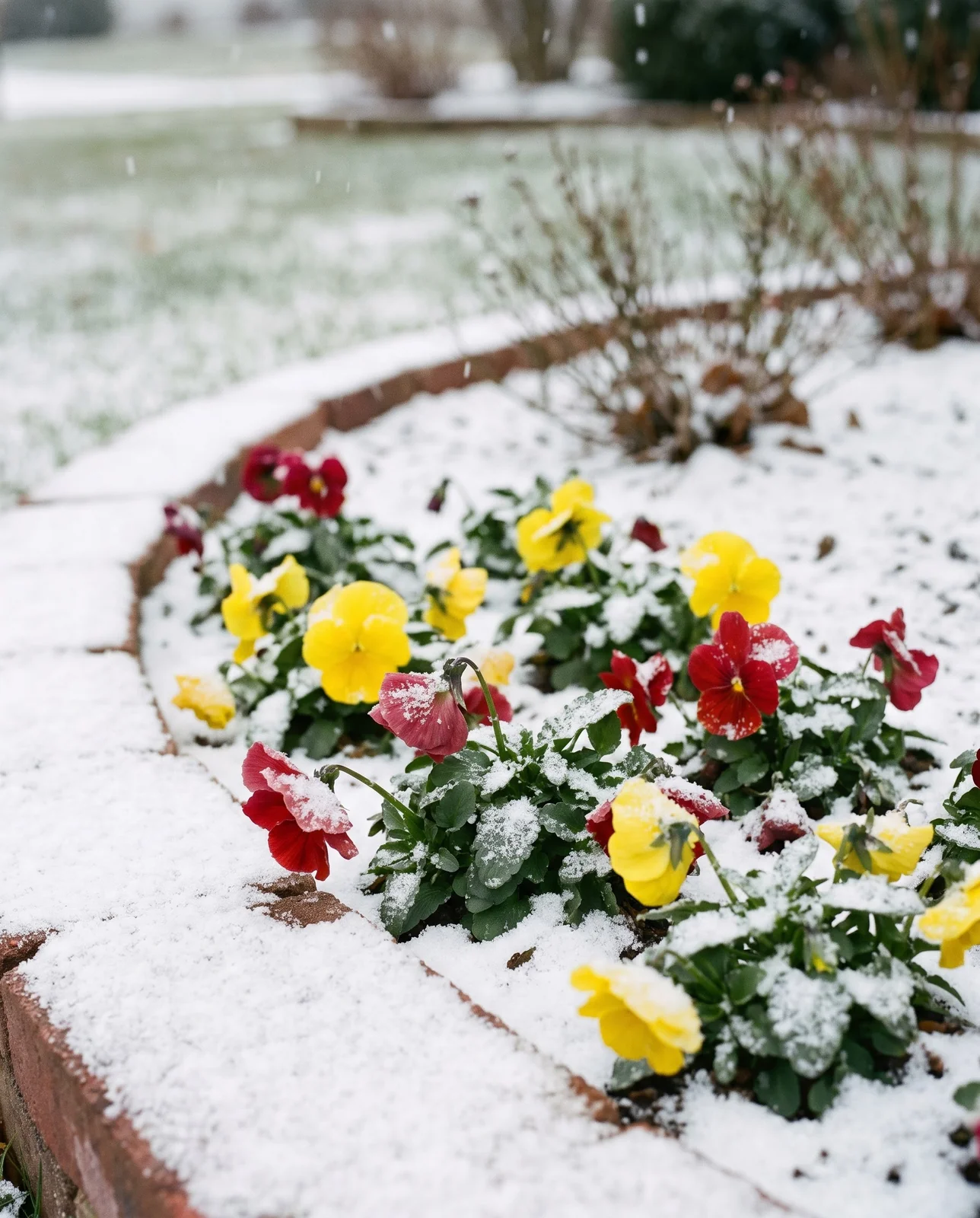
Flower photos
FAQ
Why is someone called a pansy?
The slang term began in the early twentieth century as an insult referencing the flower's delicate appearance, even though the word itself comes from the Middle French pensee, meaning thought.
What do pansies symbolize?
Pansies traditionally symbolize loving thoughts, remembrance and contemplation, rooted in that French etymology.
Is it pansy or pansies?
Pansy is the singular noun for one plant or bloom; pansies is the plural for multiple plants or flowers.
Do pansies prefer sun or shade?
Pansies prefer full sun in cool northern climates and early spring, but benefit from partial afternoon shade in hot southern zones.
What temperature will kill pansies?
Uncovered pansies risk permanent death when air temperatures drop below 10 F for 6 to 8 continuous hours, though a 2 to 4 in layer of pine straw mulch protects crowns into single digits.
How do you pronounce pansy?
Pansy is pronounced PAN-zee.
Interesting tips
- Deer go after pansies hardest in late winter and early spring because the plant is efficient food: tender, watery foliage at a browsing height of 6 to 9 inches at the season when almost nothing else green is on offer.
- The fullest six-pack on the bench is not the best buy for a fall bed. Small but well-established plants overwinter better than large ones, which go into the first hard freeze carrying soft growth they made in warm autumn weather.
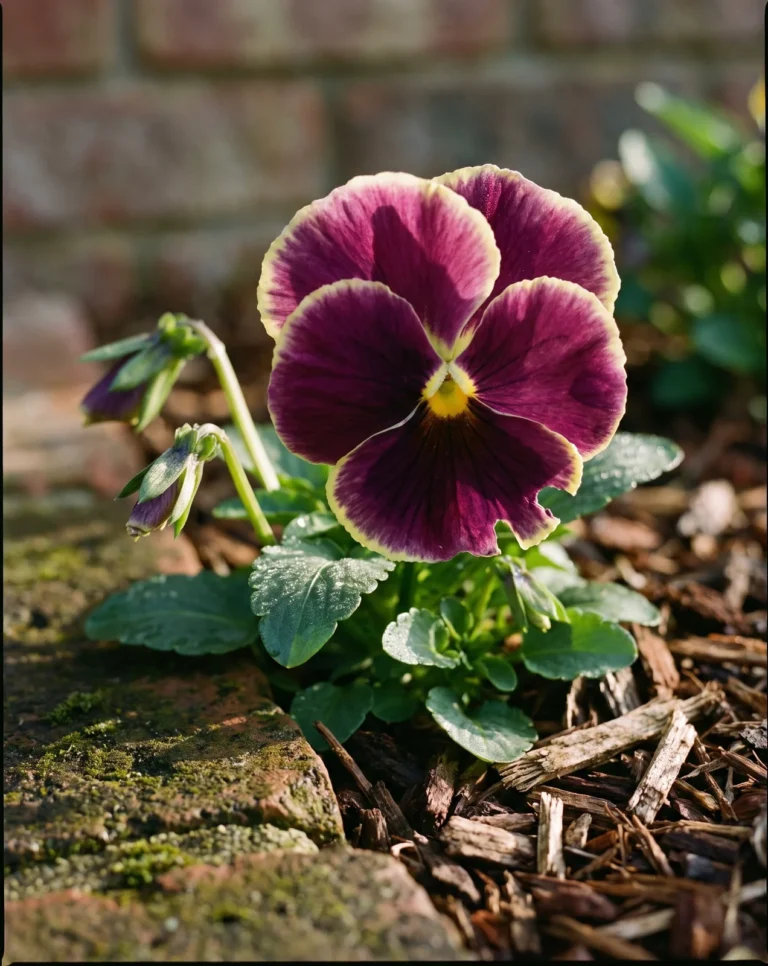
More about Pansies: types, care and when to plant them
Related Guides & Flowers
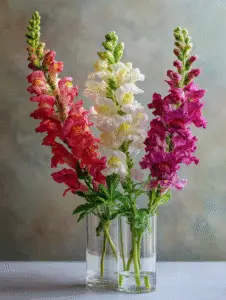
Snapdragon
Another cool-season bedding plant that goes out in fall in mild regions and shrugs off light frost.
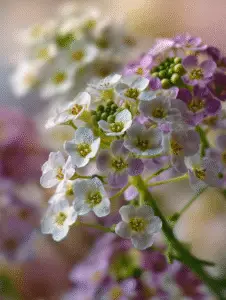
Sweet alyssum
The usual low edging partner for a pansy bed, set out at the same time and happiest in the same cool weather.
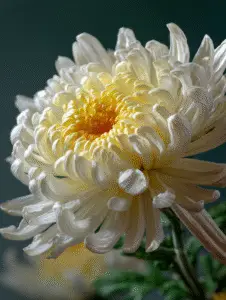
Chrysanthemum
The other fall bench staple: mums carry a bed through October, and pansies take over once frost settles in.
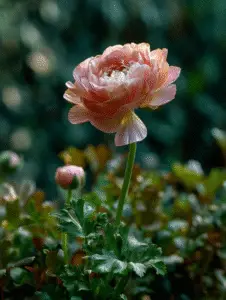
Ranunculus
A spring cut flower planted in fall in the mild-winter zones where pansies also overwinter.
Enjoying our flower guides? Add YourFlowersGuide as a preferred source on Google. It helps more readers find us.
Add to Preferred Sources